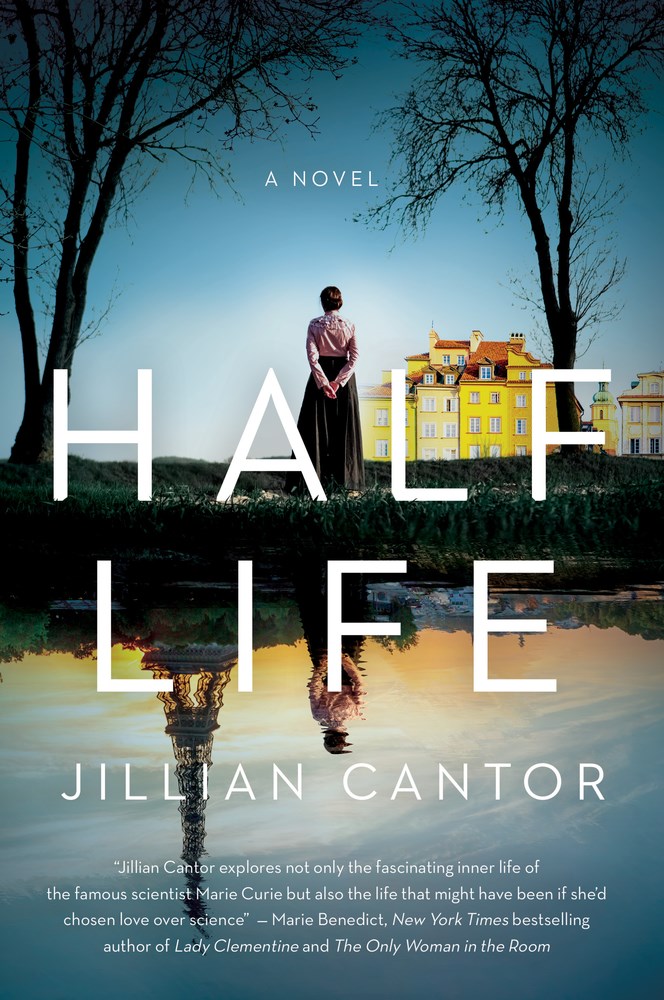

Book Reviews: Jillian Cantor Half Life Simon&Schuster, 2021, first published 2011 by Headline Publishing Group. Jillian Cantor’s novel is described by Marie Benedict, author of The Other Einstein as a ‘thoughtful, compelling story [which] delves into issues faced by modern women , while inviting readers to ruminate on their own life choices and the domino effect of those decisions’.
It seems most appropriate to complete Women’s History Month with a review of this novel.
Half Life begins and ends with the death of Marie Curie in France, 1934. She considers the choices she has made. Jillian Cantor devises an alternative life, with its own choices, an option that had not been open to Marya Sklodowska in Poland in 1891. She does not travel to Paris, instead she marries Kazimiera Zorawska. Books: Reviews

Heather Cox Richardson, Facebook, March 26, 2021 (Friday)
Georgia Governor Brian Kemp signed his state’s new voter suppression law last night in a carefully staged photo op. As journalist Will Bunch of the Philadelphia Inquirer pointed out, Kemp sat at a polished table, with six white men around him, under a painting of the Callaway Plantation on which more than 100 Black people had been enslaved. As the men bore witness to the signing, Representative Park Cannon, a Black female lawmaker, was arrested and dragged away from the governor’s office. It was a scene that conjured up a lot of history. Voting was on the table in March 1858, too. Then, the U.S. Senate fought over how the new territory of Kansas would be admitted to the Union. The majority of voters in the territory wanted it to be free, but a minority of proslavery Democrats had taken control of the territory’s government and written a constitution that would make human enslavement the fundamental law in the state. The fight over whether this minority, or the majority that wanted the territory free, would control Kansas burned back east, to Congress. In the Senate, South Carolina Senator James Henry Hammond, who rejected “as ridiculously absurd” the idea that “all men are born equal,” rose to speak on the subject. He defended the rule of the proslavery minority in Kansas, and told anti-slavery northerners how the world really worked. Hammond laid out a new vision for the United States of America.He explained to his Senate colleagues just how wealthy the South’s system of human enslavement had made the region, then explained that the “harmonious… and prosperous” system worked precisely because a few wealthy men ruled over a larger class with “a low order of intellect and but little skill.” Hammond explained that in the South, those workers were Black slaves, but the North had such a class, too: they were “your whole hireling class of manual laborers.” These distinctions had crucial political importance, he explained, “Our slaves do not vote. We give them no political power. Yours do vote, and, being the majority, they are the depositaries of all your political power. If they knew the tremendous secret, that the ballot-box is stronger than ‘an army with banners,’ and could combine, where would you be? Your society would be reconstructed, your government overthrown, your property divided… by the quiet process of the ballot-box.” Hammond believed the South’s system must spread to Kansas and the West regardless of what settlers there wanted because it was the only acceptable way to organize society. Two years later, Hammond would be one of those working to establish the Confederate States of America, “founded,” in the words of their vice president, Alexander Stephens, upon the “great physical, philosophical, and moral truth… that the negro is not equal to the white man.” Illinois lawyer Abraham Lincoln recognized that if Americans accepted the principle that some men were better than others, and permitted southern Democrats to spread that principle by dominating the government, they had lost democracy. “I should like to know, if taking this old Declaration of Independence, which declares … are equal upon principle, and making exceptions to it, where will it stop?” he asked. Led by Abraham Lincoln, Republicans rejected the slaveholders’ unequal view of the world as a radical reworking of the nation’s founding principles. They stood firm on the Declaration of Independence. When southerners fought to destroy the government rather than accept human equality, Lincoln reminded Americans just how fragile our democracy is. At Gettysburg in November 1863, he rededicated the nation to the principles of the Declaration and called upon his audience “to be dedicated… to the great task remaining before us… that this nation, under God, shall have a new birth of freedom — and that government of the people, by the people, for the people, shall not perish from the earth.” The United States defeated the Confederacy, outlawed human enslavement except as punishment for crime, declared Black Americans citizens, and in 1867, with the Military Reconstruction Act, began to establish impartial suffrage. The Military Reconstruction Act, wrote Maine politician James G. Blaine in 1893, “changed the political history of the United States.” Today, as I looked at the photograph of Governor Kemp signing that bill, I wondered just how much.
https://www.facebook.com/heathercoxrichardson?




E scooters were introduced into Canberra in August 2020. Orange scooters were quickly followed by Purple scooters. There has been enthusiastic take up of the scooters – as well criticism from the moaners who suggest that they are unsafe. I was passing a parent and child who had just unlocked the information available to customers, and this seemed to be fairly comprehensive. In addition there is information on line: scooters must be treated as any other vehicle. As with bicycles helmets must be worn, no drinking and driving, no passengers.
Perhaps some historical reading about the introduction of cars and the way in which they were regarded might be useful to people who dislike change.
Washington Post article from Women and Literature site.
How women invented book clubs, revolutionizing reading and their own lives
More than 150 years before Oprah and Reese Witherspoon, women began reading together in groups.

This image replaces the image with the original article which was not available for use. Illustration depicting young women in the 19th century
relaxing and reading on an August afternoon.
(Universal History Archive/Universal Images Group via Getty Images)
By Jess McHughMarch 27, 2021 at 10:00 p.m. GMT+11
The women met wherever they could get their hands on a few books and some quiet: in empty classrooms, backrooms of bookstores, at friends’ homes, even while working in mills.
In the late 18th and early 19th centuries, the first American reading circles — a precursor to book clubs — required little more than a thirst for literature and a desire to discuss it with like-minded women.
Journalist Margaret Fuller held one session of what she called her “conversations” in 1839, likely in a friend’s rented room on Chauncey Place, a few blocks from Boston Common.
Fuller — the first American female war correspondent, a magazine editor and an all-around feminist renegade — saw her club as anything but a substitute for embroidery. Instead, she rallied women who were, as she wrote: “desirous to answer the great questions. What were we born to do? How shall we do it?”ADhttps://7b013a2727d6b255c9b28678183567d0.safeframe.googlesyndication.com/safeframe/1-0-38/html/container.html
As one attendee recounted, Fuller “opened the book of life and helped us to read it for ourselves.”
The overwhelmed working mom who pined for a wife 50 years ago
Fuller’s “conversations,” much like many literary circles, were a way for women to pursue truth, knowledge and an understanding of themselves and the world around them. Megan Marshall, author of the Pulitzer Prize-winning biography “Margaret Fuller: A New American Life,” compared those meetings to consciousness raising groups of the 1960s and 1970s. “There was a sense of female power that was emanating from these sessions,” Marshall said.
Women may have been excluded from philosophical clubs and universities, but they found other ways of engaging with literature. Women’s chief role in founding the modern book club — a consequence of being marginalized from other intellectual spaces — has gone on to shape the book landscape in profound and unappreciated ways.ADhttps://7b013a2727d6b255c9b28678183567d0.safeframe.googlesyndication.com/safeframe/1-0-38/html/container.html
Once on the fringes, women are now one of the most important driving forces in the book world. They continue to amount for a staggering 80 percent of all fiction sales. One commentator went so far as to write: “Without women the novel would die.”
Celebrity book clubs — often run by female powerhouses such as Oprah Winfrey and Reese Witherspoon — are more of a guarantee of book sales than a glowing review. The book club, dismissed as a feminine, frivolous time to drink wine and gossip is also a radical activity: a rare place where women have long been able to engage with the transformative power of books.
American women had been getting together to study the Bible since the 17th century, but it wasn’t until the late 18th century that secular reading circles emerged, around the same time as their European counterparts. Reading circles ranged widely in what they read, from belles lettres to science.ADhttps://7b013a2727d6b255c9b28678183567d0.safeframe.googlesyndication.com/safeframe/1-0-38/html/container.html
An avowed interest in expanding women’s freedoms was often a driving force behind these groups. Hannah Mather Crocker, who founded a reading circle in 18th century Boston, was an advocate for women’s participation in freemasonry and would go on to write the foundational treatise “Observations on the Real Rights of Women.”
Literary circles encouraged women not just to read for their own edification or pleasure but to speak, to critique, and even to write. As early as the 1760s, poet Milcah Martha Moore collected women’s prose and poetry in her group, amassing nearly 100 manuscripts.
Reading circles crossed racial and class lines, too. In 1827, Black women in Lynn, Mass., formed one of the first reading groups for Black women, the Society of Young Ladies. Black women in other cities on the East Coast would soon follow suit.
Denied a teaching job for being ‘too Black,’ she started her own school — and a movement
By the onset of the Civil War, “nearly every town and village” in the United States had some kind of female literary group, said Mary Kelley, a professor of American intellectual history at the University of Michigan. Throughout the 19th century, women’s reading circles expanded, and some became outspoken on social issues such as abolition, foreshadowing the club movement of the end of that century.AD
Well into the 1900s, book clubs continued to serve these dual purposes: functioning as both an intellectual outlet and a radical political tool. Access to books — and book clubs — expanded, thanks in part to the rise of mass-market paperbacks and mail orders.
The first half of the 20th century was the heyday of the Book of the Month Club and the Great Books movement, both of which encouraged average Americans to take on hefty literary novels. As women continued to be barred from many top universities, the craving for a space to explore big ideas through books never went away.
After women began being accepted to institutions of higher education en masse in the 1960s, the role of these groups flipped: Where women once joined book clubs to make up for the education they were denied, now they joined to extend the pleasures they enjoyed at college, according to one expert.AD
About 63 percent of women in book clubs have an advanced degree, according to data from Book Browse. Despite increased demands on women’s time balancing work and child care, millions of Americans continue to join and participate in book clubs, and 88 percent of participants in private book clubs are women.
Oprah Winfrey’s launch of her book club in 1996 was a turning point in the history of book clubs — a moment that author Toni Morrison called a “reading revolution.” In the first three years, each book Oprah chose averaged sales of 1.4 million copies each.
Those who dismissed it as “schmaltzy, one-dimensional” missed its serious core: books ranged from Leo Tolstoy’s “Anna Karenina” to William Faulkner’s “The Sound and the Fury,” to Maya Angelou’s “The Heart of a Woman.”
In a way that is surprisingly reminiscent of those early women dissidents starting reading circles, Winfrey spoke about literature in civic terms. “Getting my library card was like citizenship, it was like American citizenship,” she told Life Magazine in 1997. “Reading and being able to be a smart girl was my only sense of value, and it was the only time I felt loved.”In her commencement address at Agnes Scott College, Oprah Winfrey said a closet full of shoes doesn’t fill up your life, but a ‘life of substance’ does. (Reuters)
That feeling of self-worth is a through line that has continued into book clubs today. “Talking about literature is not only about talking about literature. It is also examining one’s ideas, identities, thoughts, sense of self,” said Christy Craig, PhD, a sociologist who examines the subversive possibilities of women’s book clubs. Over the course of 2013 to 2015, she conducted research on book clubs in the United States and Ireland, interviewing 53 women ages 19 to 80.AD
Craig found that women turned to book clubs in times of upheaval, as a way of seeking wisdom both from books and from one another. Women relied on their book clubs at pivotal moments in life, such as after college, following divorce or the death of a spouse, or after children left the home.
“Women turned to book clubs to really construct important social networks, and that proved incredibly valuable,” she said. “Through these book clubs women found important partnerships to support themselves through things like chemotherapy.”
That has proved true during the pandemic, as book clubs meet online, and some have seen increased attendance. Readers seek out a particular intimacy that can be bridged through books. They find “real society,” as Margaret Fuller once wrote. In an uncertain world, book clubs can still serve as a place built on “patience, mutual reverence, and fearlessness.”AD
Correction: An earlier version of this story misstated where Margaret Fuller staged her book discussions. It was likely at a friend’s place.
Jess McHugh’s work has appeared in the New York Times and TIME, among others. Her book “Americanon,” a history of U.S. bestsellers, is being published in June.
A final word for Women’s History Month
Books About Not So Well-Behaved Women
Carole Barrowman’s Picks for Women’s History Mar 23, 2021 and last updated 7:27 AM, Mar 30, 2021.
Carole Barrowman is back with best new books about not so well-behaved women in honor of women’s history month.
When the historian, Laurel Hatcher Ulrich, said, “well-behaved women seldom make history,” she didn’t necessarily mean that we should be naughty to be noticed, she meant woman sometimes need to step outside society’s boundaries to get noticed.
The Beauty of Living Twice by Sharon Stone (Knopf) Stone played the ultimate femme fatale in the film, Basic Instinct. Her character wouldn’t even sit conventionally. That reputation followed her into her life. In her new memoir, she opens her story when she woke up in her hospital bed after suffering a life-threatening aneurysm and uses this second chance as the context to tell some wickedly funny and moving stories about her life and her work. If your book club is looking for a short smart read, I highly recommend this one.
The Soul of a Woman by Isabel Allende (Ballantine) Allende was considered “difficult and defiant” when she was growing up. She was expelled from school for “insubordination.” She’s now one of the most read and most inspiring Latina authors in the world. I teach her novel House of the Spirits regularly and my students love it. And we love her. President Obama awarded her the Presidential Medal of Freedom in 2014. This new book is her reflection on her lifelong fight against machismo and male dominance in Latin America and here.
Good Eggs by Rebecca Hardiman (Atria) This is Carole’s debut pick this month, mainly because one of the main characters is an 83 year old grandma who is far from well-behaved (some of it from dementia, some of it not). This is a delightful story chronicling three generations of an Irish family living in a small town outside Dublin. It’s elegantly written with good humor and charmingly flawed characters.
Nora by Nuala O’Connor (Harper) Carole is channeling St. Patrick’s Day in this list too. Best-selling Irish author, O’Connor, is known for biographical novels of the lives of famous and infamous women in her novels. In her latest, O’Connor brings passion and energy to a re-imagining the life of Nora Barnacle who was the muse and the model for many of the main female characters in James Joyce’s life. Nora challenged the norms of Irish society in the early 20th century to create a life that nurtured one of literature’s iconic writers. Carole loved this novel because it showed how much power Nora wielded to shape her husband’s literary career, especially at times when he was damaging it.
Find Carole at Carolebarrowman.com

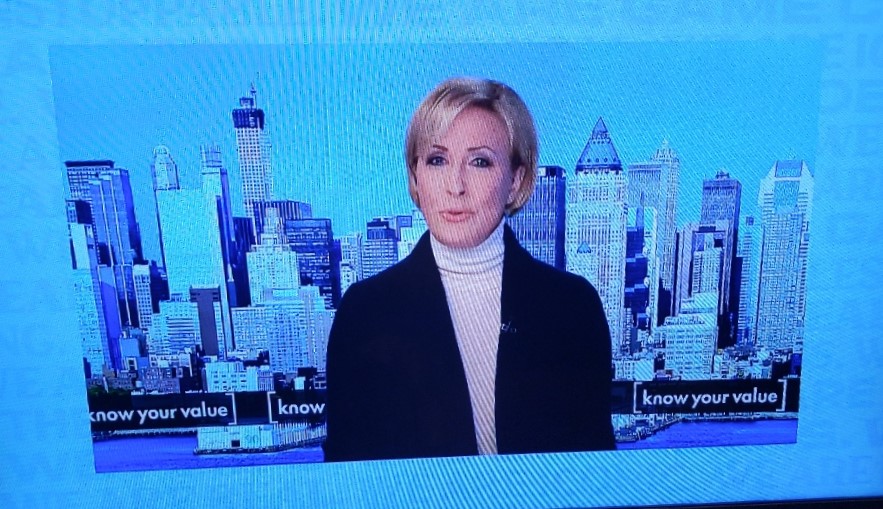
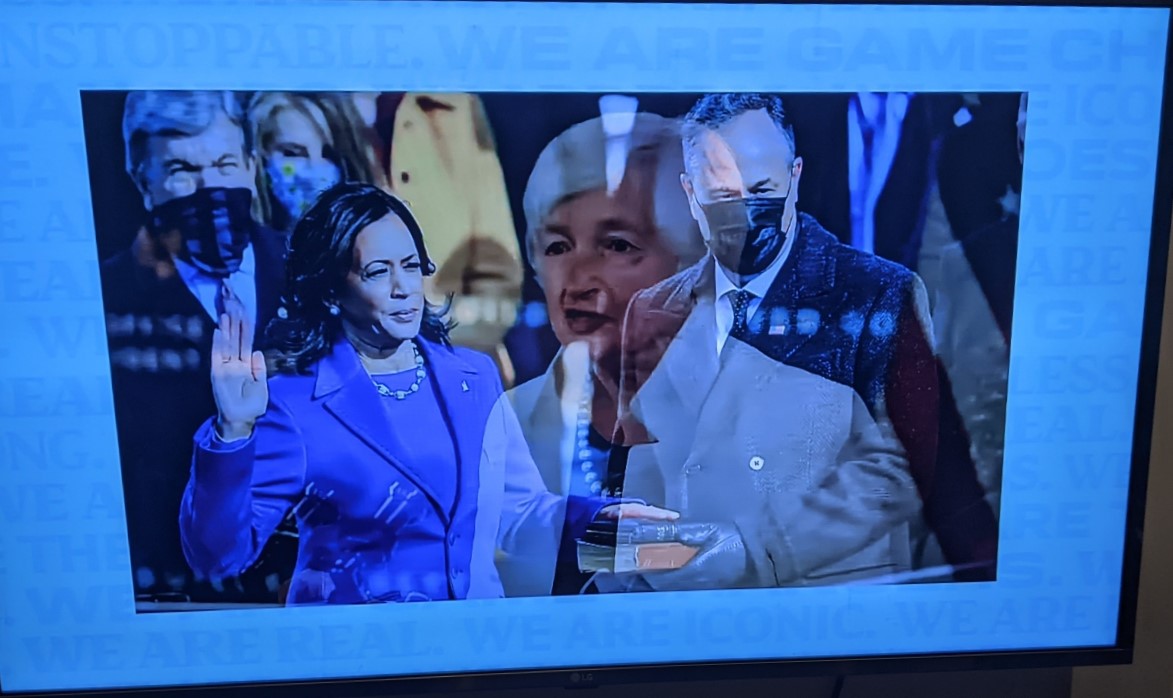

MSNBC celebrates Women’s History Month- an excellent initiative which would be great to see replicated on Australian television channels.
 Robin's Room