Book reviews this week include a thriller, a domestic drama, and a non-fiction book. The following books were provided to me as uncorrected proofs from NetGalley for advance reviews.

Bill Clinton; James Patterson, The President’s Daughter, Random house UK, Cornerstone Century, 2021.
My usual choice of reading does not include thrillers such as The President’s Daughter, but of course I was tempted by the thought of reading a novel with a clear political component contributed to by Bill Clinton. If you are like me, make sure that on this occasion you too are tempted. The President’s Daughter is an excellent read: it is well plotted; features nuanced and broad ranging political elements; gives women agency; and has a riveting major story line, with thoughtful sub plots.
Kerry Fisher, Other People’s Marriages, bookoutre, 2021.

Kerry Fisher is one of a small group amongst the writers of domestic drama with a feminist foundation that I admire and enjoy. Yes, there are others who attempt to write in this genre and succeed well enough to provide a satisfying and, at times, likeable read. However, Kerry Fisher does more. Her use of a familiar device, some older women friends, a secret, chapters that alternate between characters and past and present, is particularly well developed. Slices of the women’s lives, and secondary characters, brought together over time insist that the reader becomes drawn into the deliberations and lives enacted on the page. These lives are so full of comic moments, heartache, drama, friendship, enmity, and reality with which it is so easy to engage, that the women, likeable or not, with whom it is easy to agree or not, become a familiar part of the reader’s life, at the time, and after the book is finished.
Danielle J. Lindemann, True Story What Television Says About Us, Farrar, Strauss and Giroux, 2021
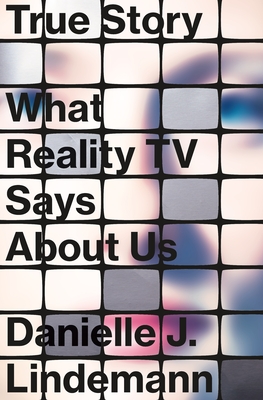
True Story is an amusing, as well as academic, romp through American reality television programs. Some of the programs will be familiar to readers from other countries: Keeping Up with the Kardashians, Big Brother and Survivor; make over programs; televised cooking competitions; The Apprentice; modelling, singing, and dancing competitive shows; and The Real Housewives. Some are American programs televised worldwide, others are home grown on the same model as the American programs. Some are entirely new to me, and possibly other readers will find the same. However, unfamiliar in their particulars they may be, but all reality television watchers will recognise the ‘rules’; the catch cries that belong to the genre – the television ‘characters’ and their audience; and, although we may need Danielle J. Lindemann to alert us, the way in which the shows play into the audiences’ lives while teaching new ways of looking at other people.
See Television: Comments for my article on Australian Big Brother and Britain’s The Apprentice in Jocelynne A. Scutt (ED.) Women, Law and Culture Conformity, Contradiction and Conflict. An abstract appears below.

‘It’s Time To go!’ ‘You’re Fired!’: Australian Big Brother (2005) and Britain’s The Apprentice (2014)
| Different cultures, programmes and years. However, a comparison of the way in which women are treated in Big Brother Australia (BB) and The Apprentice UK (TA) provides an insight into two examples of reality television and the prognosis for women who seek advancement through the process. Do the different formats and programme aspirations affect female contestants? How are they treated? Are women winners? Direct outcomes, such as the winner’s prize, are markedly different between the programmes. There is a greater similarity in the indirect benefits, which include media appearances in other reality shows and making radio and television programmes or appearances. Winners of BB are chosen by audiences, on which the programme relies entirely. While other experts’ opinions are sought, Lord Sugar delivers the final judgement on TA. The different processes have garnered both female and male winners, but the gender imbalance on BB is significant, both in numbers and in comparison with TA results. Both programmes rely on elements of drama as well as reality. Editing is inevitable and naturally the dramatic events with the purpose of ‘making good television’ influence what is aired. Audiences are familiar with reality television and its features and are adept at reading what they are seeing. In comparing Australian BB 2005, with so much of its emphasis on women displaying traditional feminine traits and The Apprentice 2014 demanding women demonstrate business acumen and traits traditionally male, it is ironic that women are more likely to win TA. | |
For the complete book reviews see: Books: Reviews.
‘It’s the real deal’: James Patterson and Bill Clinton discuss the true-life details of The President’s Daughter
In this exclusive interview transcript, the co-authors Lee Child called ‘the dream team’ discuss how the former president’s life, both in the White House and after, informed the plot of their latest novel.
| New post on Women’s Film and Television History Network – UK/Ireland |  |

| Raiding the Lost Archive: Finding the Irish Film Pioneers Ellen O’Mara Sullivan and Mary Rynne by daisyrichards7 My university’s archive collection is vast. The National University of Ireland, Galway (NUIG)[1] , is the only university on the west coast of Ireland. The majority of its archival materials relate to Galway and Ireland, with a specialisation in archives relating to the people and places of the west of Ireland. I love this archive and it has provided me with a wealth of original documents for my research. On a typical day I order boxes from the catalogue with reference to the people or places that have a bearing on my research. I go through these boxes of documents, letters, bills, photographs, books and leaflets in the hope that they will shine a light on the topic in hand. Usually they do. The process is logical, a listing in the catalogue leads to an archive. Or so I thought! My most recent archival find came via a recommendation from a colleague who works in the archives. She recommended that I should check out the archive of the retired Professor of Archaeology at NUIG, Etienne Rynne, for documents relating to the Film Company of Ireland. I followed her advice and discovered a document that sheds light on the finances of this early Irish film company and brings forth the story of two sisters and their support of and investment in this company. I research early and silent cinema and the Film Company of Ireland (1916-1920) is my current focus. Established by James Mark Sullivan and Henry Fitzgibbon, it was Ireland’s first significant fiction film company. Research indicates that James Sullivan’s wife Ellen O’Mara Sullivan played an important role in the running of the company. There is evidence to show that she invested money in the company and saved it from collapsing twice in 1917, the year they made their first feature length film Knocknagow (Fred O’Donovan, 1918). Evidence also shows that she worked with her husband in the offices of the film company and that they travelled to America together in 1918 to promote their films to various distributors in an attempt to break into the American market. All of this evidence comes from a variety of sources and has been built up by many researchers over many years. It is based on private letters from Ellen O’Mara Sullivan and her relations, interviews with her descendants, newspaper reports and archival documents. Thanks to this work the contribution of Ellen O’Mara Sullivan to Irish film history is being made known, although what we know about her is hampered by the fact that as a woman her existence was not often officially recorded. We have birth, marriage, death and newspaper reports of her financial investment in the company. In contrast, the record we have for her husband is more extensive: we have birth, marriage and death, along with records of his employment, his name on the registration of the Film Company of Ireland, his interviews about the films being made. The public life of a business man leaves a record that is not matched by the private life of a woman, even if she is involved with the running of a business. Any new information about women in early and silent cinema gives us a more rounded picture of the industry at that time and helps us to slowly reclaim the historical forgetting of their contribution to the development of the film industry. The archive my colleague directed me to, the Rynne Archive, contains documents relating to the retired Professor of Archaeology Etienne Rynne, his work and his family. Professor Rynne’s grand-aunt was Ellen O’Mara Sullivan. Letters in this archive from Professor Rynne’s father Michael confirmed Ellen O’Mara’s significant role in the Film Company of Ireland. This was wonderful; given the dearth of information regarding women in early cinema, any confirmation of existing knowledge makes that knowledge more secure, less tentative. This archive, however, offered a new insight, a legal document showing the purchase of shares in the company by Ellen’s sister Mary Rynne. This document showed that Mary invested in the company in March 1917 at a time when the finances of the company were in peril and Henry Fitzgibbon the co-director was uncontactable in America. Mary Rynne’s investment, alongside Ellen’s financial support for the company probably saved the company from financial ruin and most likely gave it the funds it needed to make its first feature film Knocknagow. In one document we can learn so much more about the history of Irish cinema and the contribution of women to that history. We have learned that the financial investment of two uncredited women kept the first significant Irish fiction film company afloat to allow it to move from making shorts to making feature length films. We have learnt more about Ellen’s role in the company, from investing her own money to securing other investors for the company. We learn too the name of a new woman to add to the people involved in the Film Company of Ireland, Mary Rynne, who not only made this investment in the company but who also had a bit part in the film that she helped fund. Veronica Johnson teaches Film Studies at the National University of Ireland, Galway. She is currently working on a history of the Film Company of Ireland (1916-1920). Veronica is a former Irish Research Council Awardee and a winner of the International Association for Media History (IAMHIST) Challenge 2020. This blog is based on her most recent article is “Seeking Traces of Women in Early Irish Filmmaking: The O’Mara Sisters and the Archive” Alphaville: Journal of Film and Screen Media, no. 20, 2020, pp. 28-37, DOI: https://doi.org/10.33178/alpha.20.03. She thanks Dr Geraldine Curtin for directing her to the treasures of the Rynne Archive at NUIG.WFTHN note: there is an entry in the Women Film Pioneers Project on Ellen O’Mara Sullivan – Women Film Pioneers Project; and Knocknagow (1918) can see seen, free, on the BFI website : Watch Knocknagow – BFI Player. |
 Robin's Room