This week I am catching up with reviews that I have written for NetGalley, posted to Goodreads, and other social networks, but not included in this blog. Both are fiction. The first, Waiting To Begin, by Amanda Prowse was a disappointment, but Louise Candlish’s The Heights was a very satisfying read.
‘The Bipartisan Infrastructure Deal will put plumbers and pipefitters to work replacing all of the nation’s lead water pipes so every American can drink clean water’ President Joe Biden.
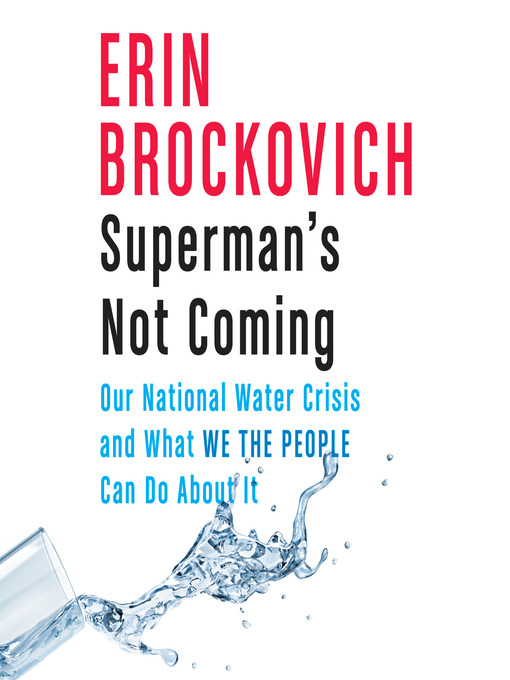
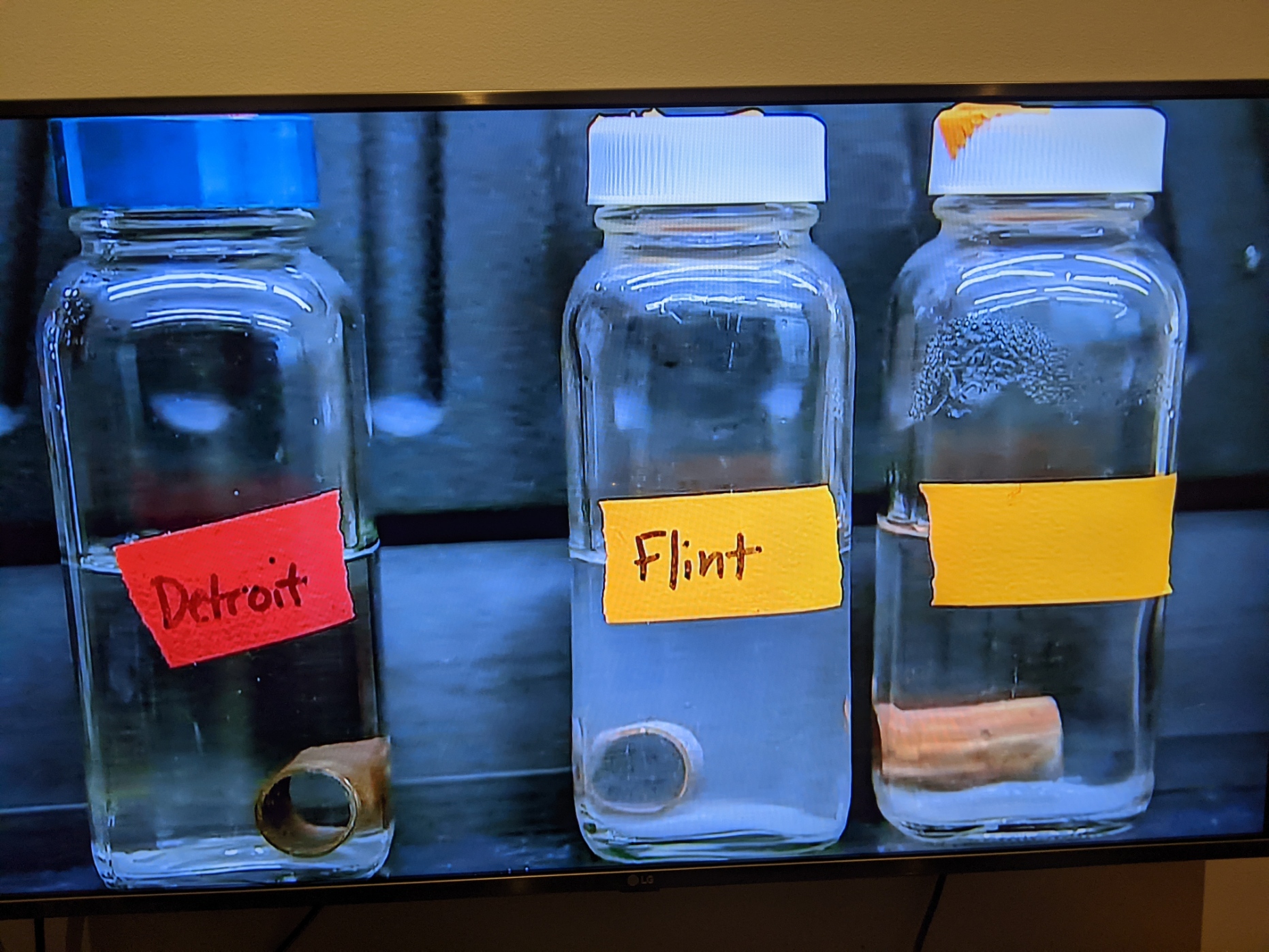
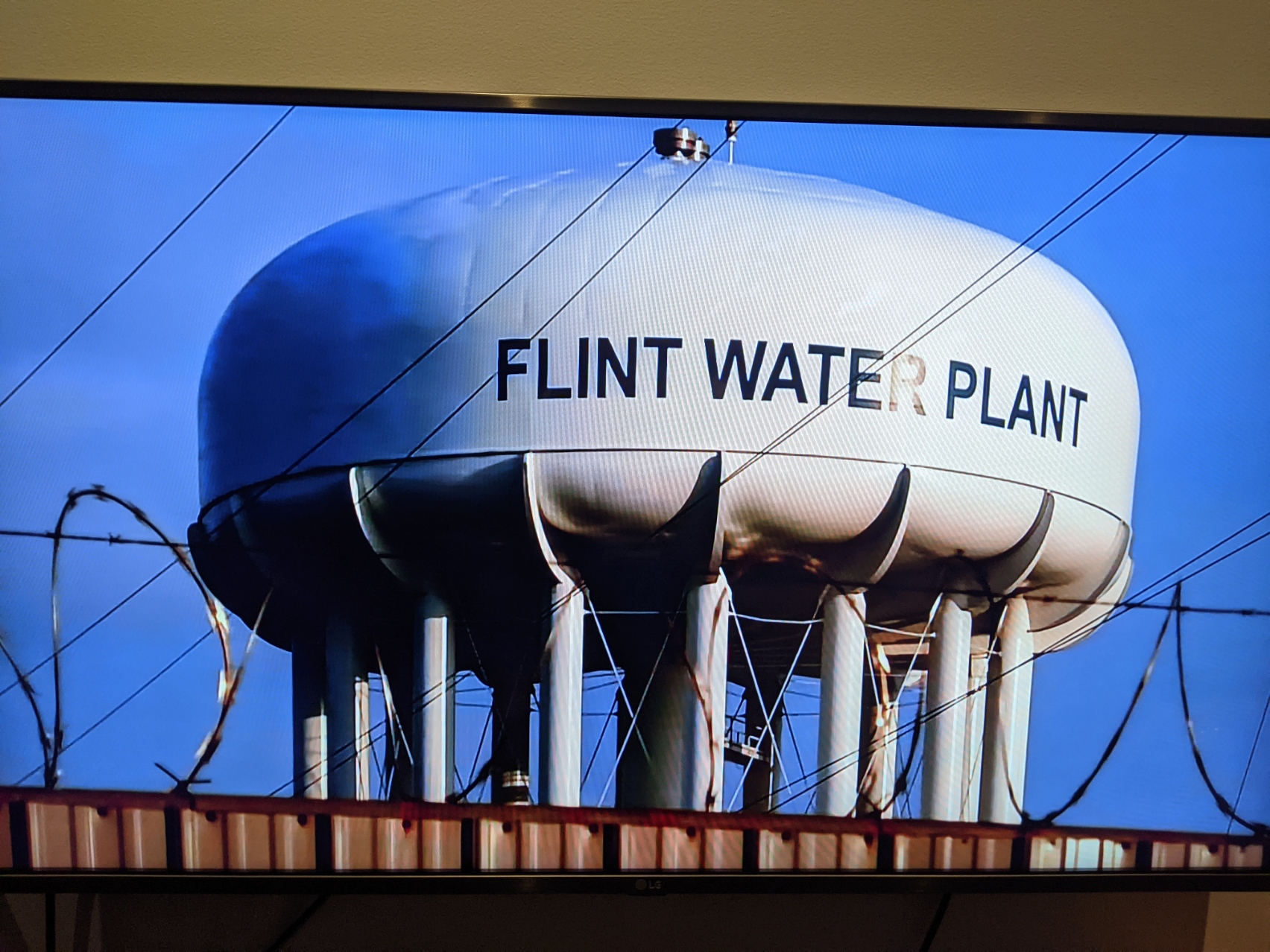
This quote and the work undertaken on the Infrastructure Bill resonates with Brockovich’s concerns about lead pipes raised in her book Superman’s Not Coming , so I draw attention to the review of that book at Books: Reviews , June 9 2021. Also relevant is the Heather Cox Richardson post from Facebook, below, where she discusses the Infrastructure Bill.
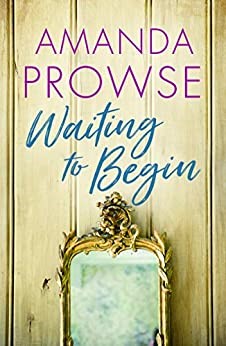
Amanda Prowse, Waiting To Begin, uncorrected proof, Lake Union Publishing, on sale June 2021.


In the works of most prolific writers, it is likely that a reviewer reads work that stands out, as well as that which is disappointing. I have mixed feelings about this novel. While it does not stand out, there are some delightful nuggets of humour and characterisation, and the story line is feasible. However, I could not warm to the main character, despite her harrowing story with which I would expect to have sympathy.


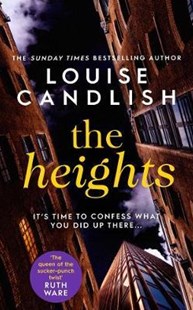
Louise Candlish The Heights Simon & Schuster, 2021


Louise Candlish has had me immersed in her fictional worlds from when I was introduced to her work through Our House. Now I have had the pleasure of engagement in such novels as Those People, The Sudden Departure of the Frasers, and The Other Passenger. Of course, there are more, but one of the pleasurable features of opening yet another  Louise Candlish novel is that each has something different to recommend it.  Although they are often introduced with comments about the twists and turns, this phrase has become overused. What I want is a twist that is smooth, is logical, and has a background in the information I already have about the plot and characters. In The Heights Louise Candlish has accomplished this once again.
Heather Cox Richardson: Oh, and here’s this week’s podcast. It’s on infrastructure, and what that really means, and has meant, in our history: apple.co/3BKM2cu
The Human Toll of InfrastructureNow & Then
- History
Listen on Apple Podcasts
On this episode of Now & Then, “The Human Toll of Infrastructure,” Heather and Joanne discuss the historical precedents for President Biden’s infrastructure proposals. What role did river infrastructure play in spurring the Constitutional Convention? What was the revolutionary impact of the Transcontinental Railroad and President Eisenhower’s championing of the Interstate highway system? What were the consequences of the Nixon administration’s veto of national childcare legislation? And turning to today, how does the congressional wrangling over Biden’s plans reflect a long-standing debate over the role that the government should play in how Americans connect to one another?
Join CAFE Insider to listen to “Backstage,” where Heather and Joanne chat each week about the anecdotes and ideas that formed the episode. And for a limited time, use the code HISTORY for 50% off the annual membership price. Head to http://www.cafe.com/history
Join us each Tuesday for new episodes of Now & Then, and keep an eye out for live events with Heather and Joanne and the rest of the CAFE Team.
For references & supplemental materials, head to: cafe.com/now-and-then/the-human-toll-of-infrastructure
Learn more about your ad choices. Visit podcastchoices.com/adchoices
Received from Joanna Penn, The Creative Penn: The Creative Penn. Writing, Publishing, Book Marketing and Making a Living with your Writing
Writing And Publishing Literary Fiction With Roz Morris
The first part of the transcript of this talk appears below. It begins with a discussion about literary and genre fiction – a question and discussion that Roz Morris suggests can be particularly emotional. The links to read the whole transcript or listen to the podcast are below.
| Writing And Publishing Literary Fiction With Roz Morris Posted: 25 Jul 2021 11:10 PM PDT How do you know when the seed of an idea is enough for a novel? What makes literary fiction different from other genres?  Roz Morris is a best-selling author as a ghost writer and an award nominated author with her own literary novels. She writes writing craft books for authors under the Nail Your Novel brand, and is also an editor, speaker, and writing coach. Roz Morris is a best-selling author as a ghost writer and an award nominated author with her own literary novels. She writes writing craft books for authors under the Nail Your Novel brand, and is also an editor, speaker, and writing coach. Today, we’re talking about writing literary fiction and Roz’s latest novel, Ever Rest. You can listen above or on your favorite podcast app or read the notes and links below. The difference between literary fiction and genre fiction How to know when an idea is right for exploring in literary fiction How Roz incorporates music into her writing process Research and preparation before the writing begins Revising a book the way music is mixed Giving a novel space to breathe while it is evolving How do you design a book cover that doesn’t fit into a genre? You can find Roz Morris at RozMorris.org and on Twitter @Roz_Morris Transcription of interview with Roz Morris Joanna: Roz Morris is a best-selling author as a ghost writer and an award nominated author with her own literary novels. She writes writing craft books for authors under the Nail Your Novel brand, and is also an editor, speaker, and writing coach. Today, we’re talking about writing literary fiction and Roz’s latest novel, Ever Rest. Welcome back to the show, Roz. Roz: Hi, Jo. It’s great to be back again. I love these shows. Joanna: We’ve literally been doing these on and off for over a decade now. You’re one of the regulars on the show. I’m excited to talk about this. So, as I said, you’ve been on the show a lot. People can go back and listen to your history, so we’re just going to dive into the topic. I wanted to start with a definition. What is literary fiction as compared to genre fiction? And why is it such an emotional question? Roz: Usually literary fiction is bigger than just the story and the characters. There’s usually a sense of universality. The writing is often more nuanced than…maybe sometimes poetic than genre fiction, if we’re comparing with the genre fiction. And if we are comparing it with genre fiction, it might not conform to genre tropes. So if you’ve got a murder in your book, for instance, in certain kinds of genres it’s very clear what must happen about that murder. In a cozy mystery, it’s got to go a certain way. It’s all got to be solved and it’s got to be put right. In something much darker, it might end with a much darker, more uncertain note. But usually, it would be very clear for each genre what has to happen about that murder. In literary fiction, almost anything goes. The murder might not be solved at all. And solving murder won’t necessarily be the point. It will be something else. So literary fiction doesn’t really conform to many genre tropes. However, this is where it gets quite fuzzy, genre novels might have certain literary qualities. And I think it has a continuum. Each writer might be very genre or very literary or somewhere along the whole rainbow that goes through the middle. I suppose you could say literary tends to be bigger, deeper, perhaps more mining for individual truths, more enigmatic than just being about the plot and the characters. And it’s an emotional question, as you say, and I think that’s because there are all sorts of issues that people might have with literary fiction or non-literary fiction. There’s a sense of superiority sometimes one over the other that literature is worthwhile and other kinds of books are ‘entertainment.’ You can hear the air quotes in my voice there. And indeed, you have to think about what entertainment is. These ideas changed drastically over the years anyway. In certain academic circles, Charles Dickens was not taught as literature because he was an entertainer. So tastes change all the time. It really depends what you like. Another example is that, again, if you talk to literary people about plot, they think that’s an absolutely filthy word. And, in fact, some very literary writing courses, I was talking to somebody I’m helping with her novel. She said she’s never taught about structure and pace, and she’s been on numerous writing courses. There is just very different values, I think, between certain factions of the writing world. But really, as far as I’m concerned, I write the kind of story that I hope has got great depth as well as entertainment value. Joanna: I like the idea of the continuum. I think that’s really good. And it’s that idea of you don’t have to be 100% one or the other. For example, I read a lot of horror, and horror suits literary writing very well, I think, because they’re so often standalone books. A lot of literary works are standalone. Would that be right? Roz: Yes, that’s true. Actually, I’ve never thought of that. But, yes. Joanna: And the other thing you did say bigger books. And you don’t mean bigger in terms of word count because obviously epic fantasy is going to probably be the biggest in terms of word count. Actually, often, literary books are a lot shorter. Roz: Yes, that’s a good point too. It’s not about word count. It’s bigger in terms of the scope of the writers’ imagination and the scope of the experience they’re trying to take you through. It’s not the mileage and the number of pages. Joanna: Now, you are very successful with ghost-written thrillers and you’re an official ghost so we don’t know the name. But now you’re writing your own literary fiction. And obviously, you know how to write these best-selling thrillers. See Writing And Publishing Literary Fiction With Roz Morris for the complete transcript. |
An aspect of Australia’s response to the upsurge in Covid 19 cases, particularly in New South Wales, is the suggestion by Anthony Albanese, Australian Labor Party Leader, that monetary incentives should be offered to encourage vaccination. A lively discussion on Facebook includes a wealth of judgmental comments about the proposal. Some focus on those who remain unvaccinated at the moment, and others on the use of tax payer’s money for such a proposal.
One economic argument for the proposal is the following:
Paying Australians $300 to get fully vaccinated would be value for money, The New Daily 6:00am, Aug 4, 2021
ANALYSISPeter Martin
I reckon Anthony Albanese on the right track. The Opposition Leader wants to pay $300 to every Australian who is fully vaccinated by December 1.
The Grattan Institute is on a similar theme. It has proposed a $10 million lottery, paying out $1 million per week from Melbourne Cup day.
Everyone who has been vaccinated once gets one ticket. Anyone vaccinated twice gets double the chance.
The costs are tiny compared to what’s at stake. Treasury modelling released on Tuesday puts the cost of Australia-wide lockdown at $3.2 billion per week.
Paying people to get vaccinated fits the government’s criteria of a response that’s “temporary, targeted and proportionate“.
And the published research on small payments shows they are extraordinarily effective, often more effective than big ones.
A few years back, Ulrike Malmendier and Klaus Schmidt of US National Bureau of Economic Research discovered that a small gift persuaded the subject of an experiment to award contracts to one of two fictional companies 68 per cent of the time instead of the expected 50 per cent.
Small incentives can be more effective than big ones
A gift three times as big cut that response to 50 per cent, which was no better than if there had been no gift at all.
The effect of small payments to pregnant British smokers has been dramatic.
Offered £50 in vouchers for setting a quit date, plus £50 if carbon monoxide tests confirmed cessation after four weeks, £100 after 12 weeks and £200 in late pregnancy in addition to the counselling and free nicotine replacement therapy given to the other pregnant smokers, those offered the payment were more than twice as likely to quit – 22.5 per cent compared with 8.6 per cent.
Never mind that these small sums ought to have made no financial sense.
The gifts were minuscule compared with the money the recipients would have saved anyway by not smoking, yet they worked so well that the researchers estimated the cost of the lives saved at just £482 per quality-adjusted year.
About 5000 British miscarriages each year are attributable to smoking during pregnancy.
The participants randomly assigned the offer of a payment not to smoke gave birth to babies that were on average 20 grams heavier.
The incentives can be even smaller.

Mai Frandsen at the University of Tasmania has trialled offering smokers half as much – a $10 voucher on signing up, then $50 per checkup in addition to support from a pharmacist.
The results are encouraging.
Lotteries are cheaper still. The Grattan Institute’s suggestion of a $1 million per week payout sounds like a lot, but it isn’t when divided by Australia’s population.
A preliminary analysis of Ohio’s Vax-a-Million lottery found it increased takeup by 50,000 to 80,000 in its first two weeks at a cost of $US85 per dose.
Beer, doughnuts, dope
Other incentives offered with apparent success in the US include free beer, donuts and (in Washington state) free cannabis.
They needn’t work for everyone.
A survey conducted by the Melbourne Institute in June found that of those who were willing to get vaccinated but hadn’t got around to it, 54 per cent would respond to a cash incentive.
Of those who weren’t willing or weren’t sure, only 10 per cent would respond to cash.
But the important thing about vaccination is that not everyone needs to do it.
The Grattan Institute believes 80 per cent of the population needs to be vaccinated before we can reopen borders.
The national cabinet has adopted a lower target: 80 per cent of Australians over 16, which is 65 per cent of the population.
Vaccination expert Julie Leask says when it comes to child vaccines, most non-vaccinating parents are simply “trying to get on with the job of parenting”.
If it’s made easy for them, they’ll do it.
There’s not a lot to be gained by trying to reach these who actually don’t want to be vaccinated. Try too hard, and you’ll get their backs up.
The tragedy of the government’s COVID vaccine rollout (aside from the difficulties with assuring supply) is that the government hasn’t made it easy.
Vaccination ought to be easy
The government could have made it easy.
When it sought advice last year from departments including the treasury, it was told to do what’s done for the flu vaccine – to distribute it through employers and pharmacies as well as general practitioners, so as to make it almost automatic.
The best part of a year later, it’s a view the Prime Minister is coming round to. Most of us don’t go to the doctor very often – it’s out of our way.
For a government that came to office promising to slash red tape
for business and offered businesses incentives to invest, this government appears not to have fully grasped the importance of red tape and incentives when it comes to health.
It might yet.
Prime Minister Scott Morrison said on Tuesday he had investigated something along the lines put forward by Mr Albanese. General Frewen, in charge of the COVID taskforce, said it wasn’t needed “right now”.
When the time comes, if we remain under-vaccinated, Mr Morrison can reach for it.
________________________________________________________
Peter Martin is Business and Economy Editor of The Conversation and a visiting fellow at the Crawford School of Public Policy at the Australian National University
This article is republished from The Conversation under a Creative Commons licence. Read the original article.
 Robin's Room