This week I review two Australian authors, one of whom uses an Australian setting, the other provides a background to a family who emigrate to Australia after the second world war. Tania Blanchard’s Echoes of War was provided to me by Simon & Schuster and NetGalley for review and Louise Guy’s Her Last Hope provided by Lake Union Publishing and NetGalley for review.

Louise Guy Her Last Hope Lake Union Publishing 2021
Abi and Lucinda are at a crossroads. Although they are unlikely to have met if this were not the case, surprisingly they have other things in common. Both risk losing their sons, they are leaving a familiar life behind and having to adapt to another, and secrets rule their behaviour. They become neighbours in a Melbourne suburb, in a run-down older apartment complex. Strange neighbours indeed. Abi has left a large architect designed house with grand furnishings and accoutrements, with a wardrobe full of designer clothing, in a salubrious neighbourhood, numerous business and personal friends and a full-time position of authority in a bank. Lucinda has arrived from a much smaller home in Queensland, with a rucksack and case of her and her four-year-old son’s belongings, departing a part time job as a dental assistant. She leaves behind her loving mother and a close friend. Where the women differ is in the reason for their single state: Abi’s home harbours the aftermath of her husband’s suicide; Lucinda’s husband is in gaol.

Tania Blanchard, Echoes of War, Simon & Schuster, 2021
Tania Blanchard’s story of the Tallariti family is set against the dramatic geographic extremes of mountains and ocean in a Calabrian village. Perhaps it is these surrounds of the villagers’ day to day lives that foster the diversity in the family and the preparedness of the villagers to at once maintain traditional attitudes towards women, while remaining uncommitted to the unification of Italy, preferring to strike their own paths, and later in the novel accepting a range of ideas about their attitudes to their government as the Allies advance in Italy. They are not a static people, rather, some defy conscription and others join the Italian Army; the professionalism of women healers is accepted by some, derided by others, but they have a place in the village society; some women marry, but others remain single as, for example, a restaurant proprietor or a farmer, without wide censor.
See Books: Reviews for the complete reviews of Her Last Hope and Echoes of War.
The airlift from Afghanistan has included the birth of three babies. This bit of news reminded me of the story of the intrepid Pan Am crew who airlifted babies from Vietnam. Julia Cooke’s Come Fly The World, reviewed on 17th March 2021, tells the story.
This post also covers Covid 19 lockdown in Canberra and lockdown walks in Canberra. Also, there are three excellent articles by Heather Cox Richardson about the situation in Afghanistan. Her commentary is amongst the best, measured and thoughtful with an historic perspective. It is well worth reading the articles below, and additional information on her website.
Day 7 Lockdown in Canberra
Today sixteen more cases of Covid 19 have been recorded. Two instances of public transport have been contact points. For the past few months ACT public transport has encouraged using the contact app and mask wearing and social distancing. Good public policy.
Day 7 lockdown walk




Day 8 Lockdown
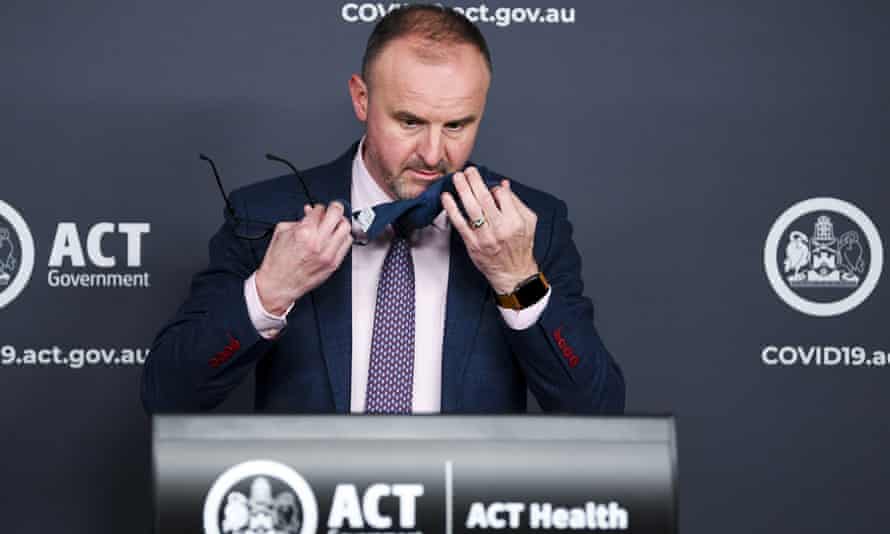
Twelve more cases were recorded in the ACT, fewer than yesterday. Andrew Barr, Chief Minister, tries to keep it that way by stating the obvious – the NSW Premier must take into consideration the ACT and other states in making decisions related to Covid 19.
We had a long daily walk, just under an hour, so this afternoon’s will be short. Leah does not feature in the walk photos, as I believe that Andrew deserves centre stage.
‘Horribly exposed’: ACT chief minister attacks Gladys Berejiklian’s handling of NSW Covid crisis
Exclusive: Andrew Barr says NSW premier is not just making decisions for her own state, but for Australia’s entire east coast
- Follow our Covid live blog for the latest updates
- NSW and ACT restrictions; NSW and ACT hotspots
- Covid vaccine rollout tracker
- Get our free news app; get our morning email briefing
Katharine Murphy Political editor@murpharooFri 20 Aug 2021 03.30 AEST
The chief minister of the Australian Capital Territory, Andrew Barr, has accused Gladys Berejiklian of putting young people at risk by not toughening restrictions in greater Sydney, and has called on his colleagues to stop presenting 70% or 80% vaccination targets as “freedom day”.
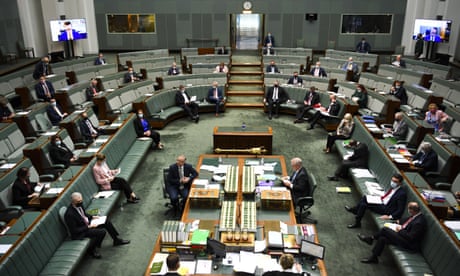
Ahead of what is likely to be a testy national cabinet meeting on Friday, Barr told Guardian Australia political leaders needed to be more frank with the community about when it will be safe to move past lockdowns, given the Doherty Institute modelling painted a much more nuanced picture than simply hitting certain vaccination rates.
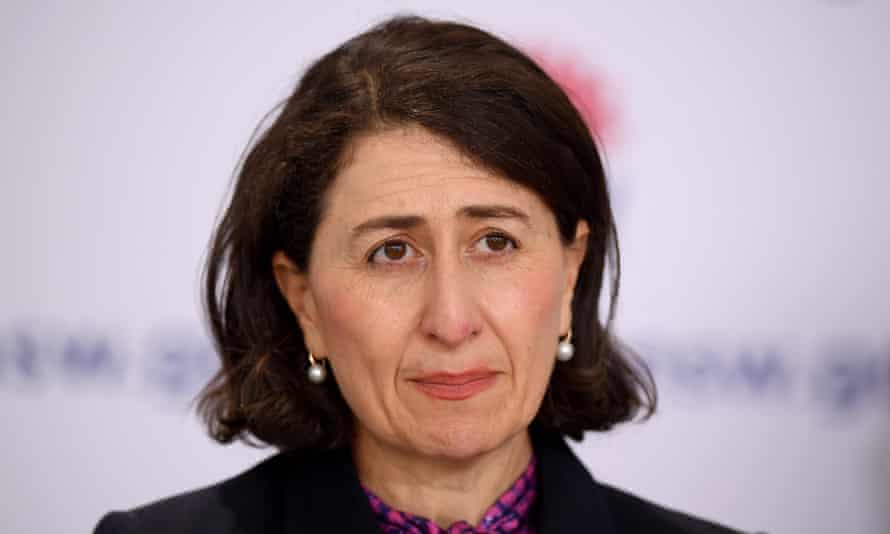
And after Berejiklian told reporters on Thursday “we can’t pretend that we will have a zero cases around Australia with Delta”, Barr said the New South Wales premier was making a decision not just for her own jurisdiction, but for the entire east coast of Australia, and that was “pretty concerning”.
Barr is battling a Delta outbreak in the national capital, with the bulk of new infections in unvaccinated young people. The chief minister told local reporters on Thursday his objective remained driving cases in the community down to zero – a similar approach to Victoria, Queensland and Western Australia.
Barr noted NSW was continuing to pursue elimination of the virus in regional areas, but Berejiklian’s approach to cases in Sydney was different.
“That decision has massive implications for the ACT, Victoria and Queensland, and then South Australia and the Northern Territory,” he said.
“The only two jurisdictions that can conceivably protect themselves from NSW’s decision to a certain degree are Western Australia and Tasmania.”
Barr said that if the ACT could successfully stamp out the current outbreak, there would then need to be a “a range of settings in place that assume constant incursion of the virus from NSW”.
“[And] that every day is a risk, and we are going to live with that every single day, and even beyond 80% vaccination rates.”
Barr said he was “realistic there is going to need to be an adjustment point” as vaccination rates increased and the country moved to Covid-normal, but not “when we, one of the best vaccinated jurisdictions in the country, are still sitting at 33%”.
“I just see young people being horribly exposed by the decision of another government and I don’t know what I can do to protect my community against that.”
Barr said political leaders also needed to be straight with the public about what the recently released Doherty modelling actually said – an issue he intends to raise at Friday’s national cabinet meeting.
The chief minister said rather than constantly referring to national vaccination rates of 70% and 80% as the trigger for ending lockdowns, there needed to be more discussion about effective vaccination rates.
https://www.theguardian.com/email/form/plaintone/4148
Barr said much of the political conversation around lockdowns ending didn’t take into account the time it takes for a vaccination to become clinically effective. He noted chief health officers were highlighting that nuance in daily briefings, but the political messaging was different.
“The note of caution we all need to have is that reaching 70% is not the day the magic number is reached in terms of a jab in an arm – it is three weeks after that,” Barr said.
He noted the Doherty modelling also did not envisage reopening would be happening in an environment of 600 new cases a day, and based on Sydney’s current effective reproduction rate of 1.3, “by the time everyone gets to 70% or 80% [Sydney] is going to have thousands of cases a day, not hundreds”.
My view is Australian parents will just not tolerate the country opening up with their kids being exposed
Andrew Barr
The chief minister said managing expectations was critical. “I think it is important that the 70% threshold is seen as a gentle step forward, not freedom day, and even at 80% there will still need to be a range of public health directions in place that will include everything from physical distancing, mask wearing, density limits, all of those things – 80% doesn’t mean a free-for-all either, and 80% presumes optimal test, tracing, isolation and quarantine arrangements”.
It was possible lockdowns could stop once the vaccination rate reached 80%, Barr said, “but it doesn’t mean there will be no measures”.
He said it was striking in the current Canberra outbreak that the median age of Delta infections was 19-and-a-half.
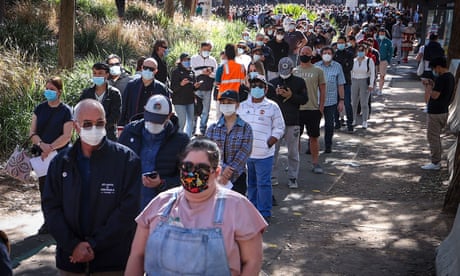
“More than half our cases are in young people, many of whom do not have access to a vaccine. This has not yet firmly featured in terms of the national cabinet discussion about when it is safe to reopen.
“My view is Australian parents will just not tolerate the country opening up with their kids being exposed, because that is where the virus is going to go.”
Barr noted the first wave of Covid ripped through aged care, but the Delta strain was problematic in schools and childcare centres.
“What we’ve experienced in the ACT in the last week gives a pretty clear indication that the vaccines are working to protect people because we are not having many cases in the older parts of the population who are vaccinated – but [removing public health measures] puts kids at risk.
Day 8 lockdown walk
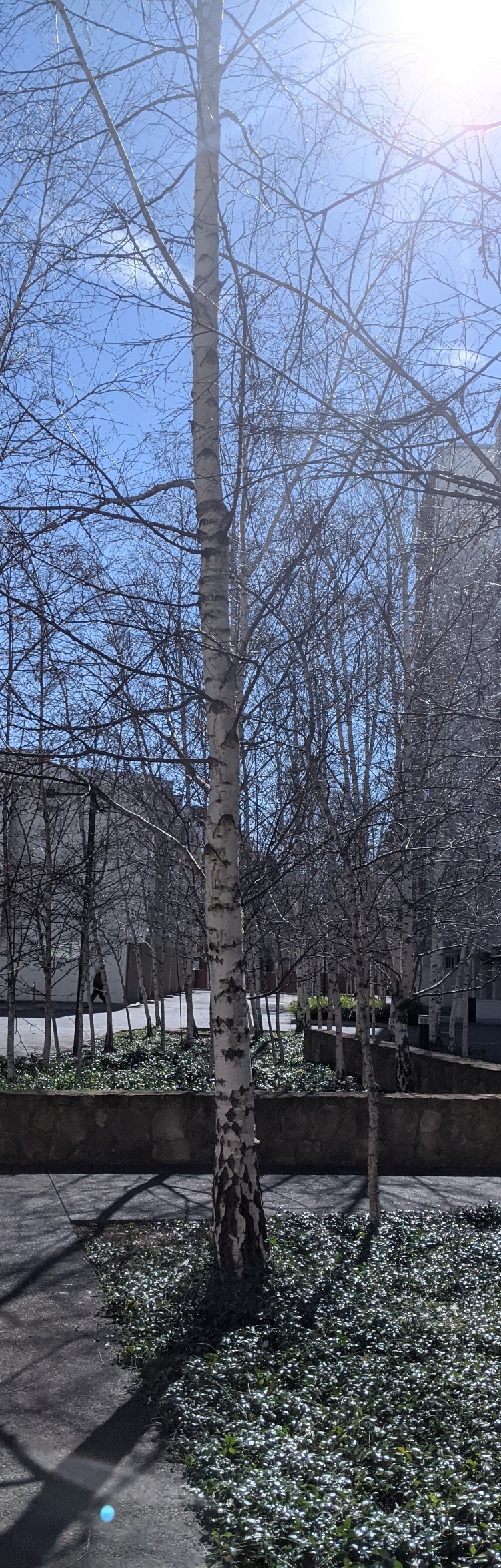
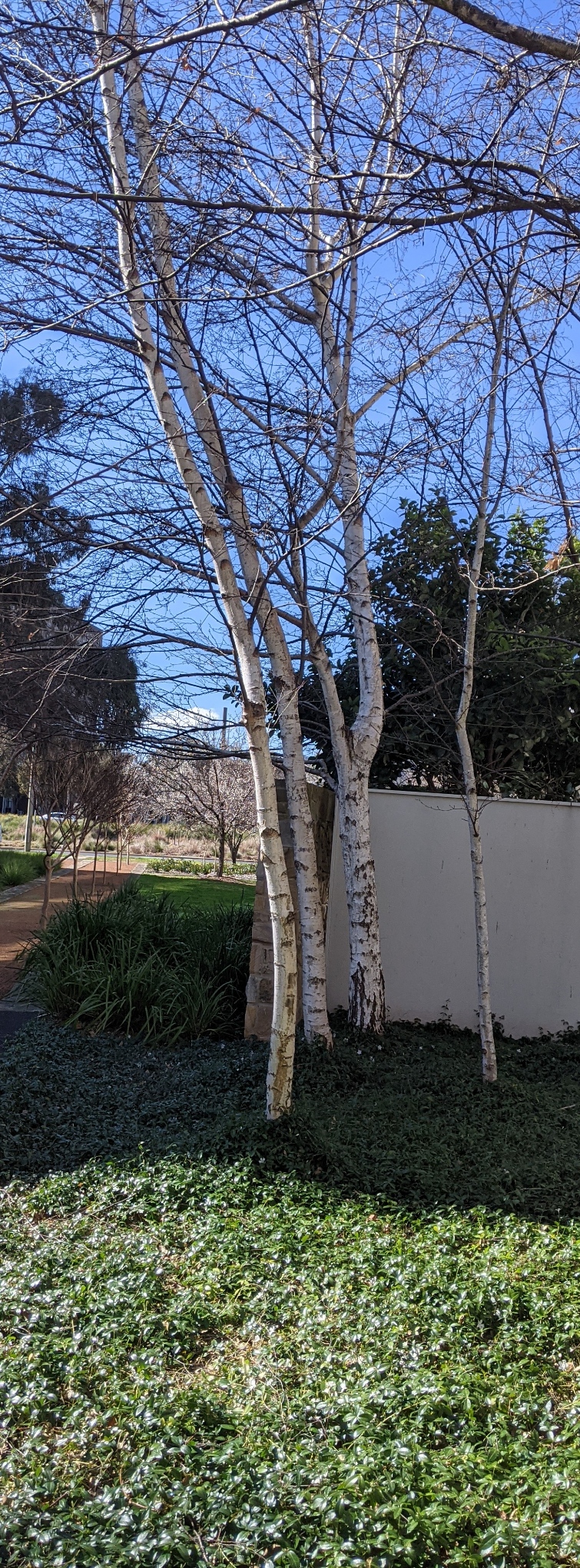
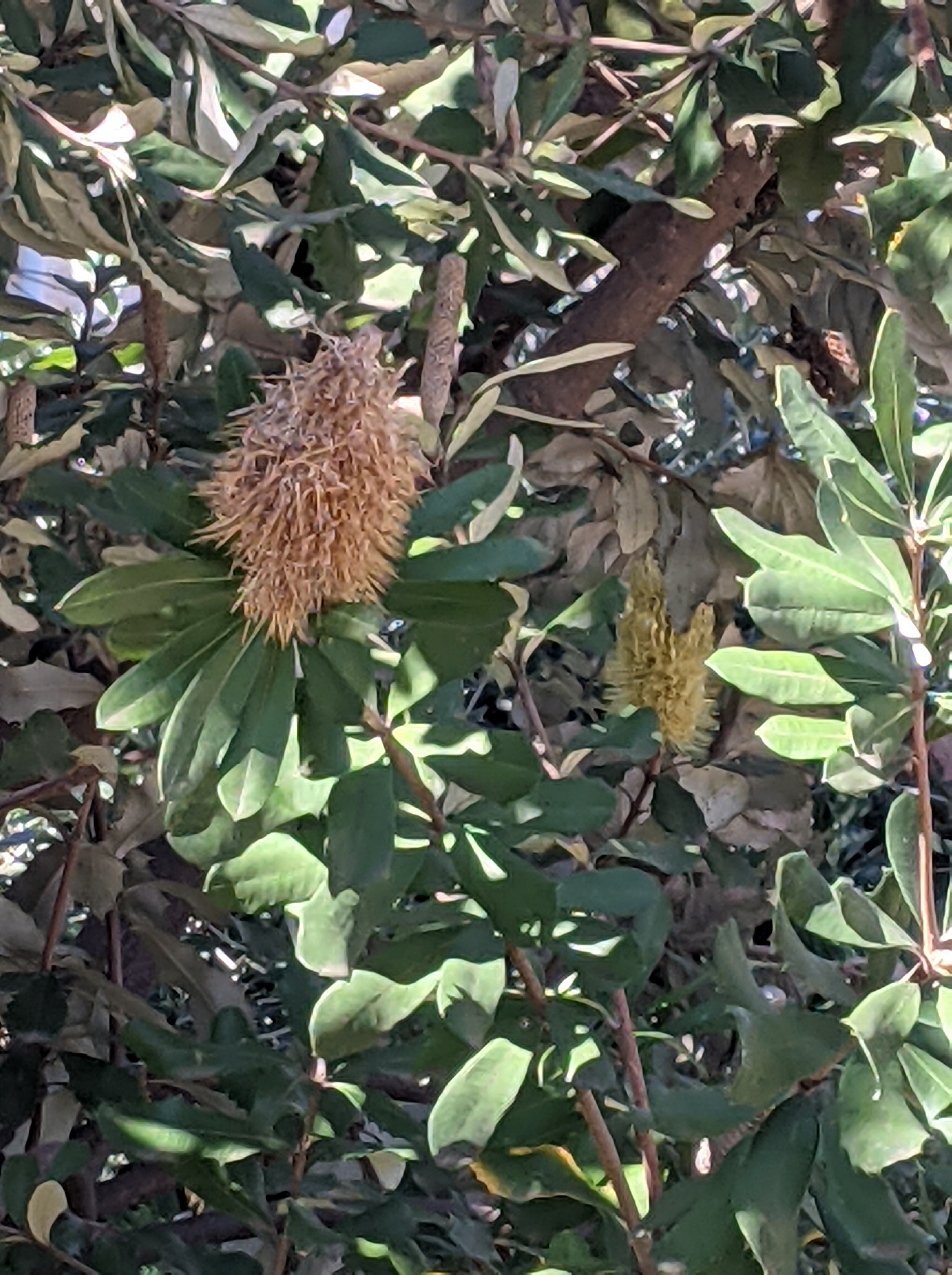

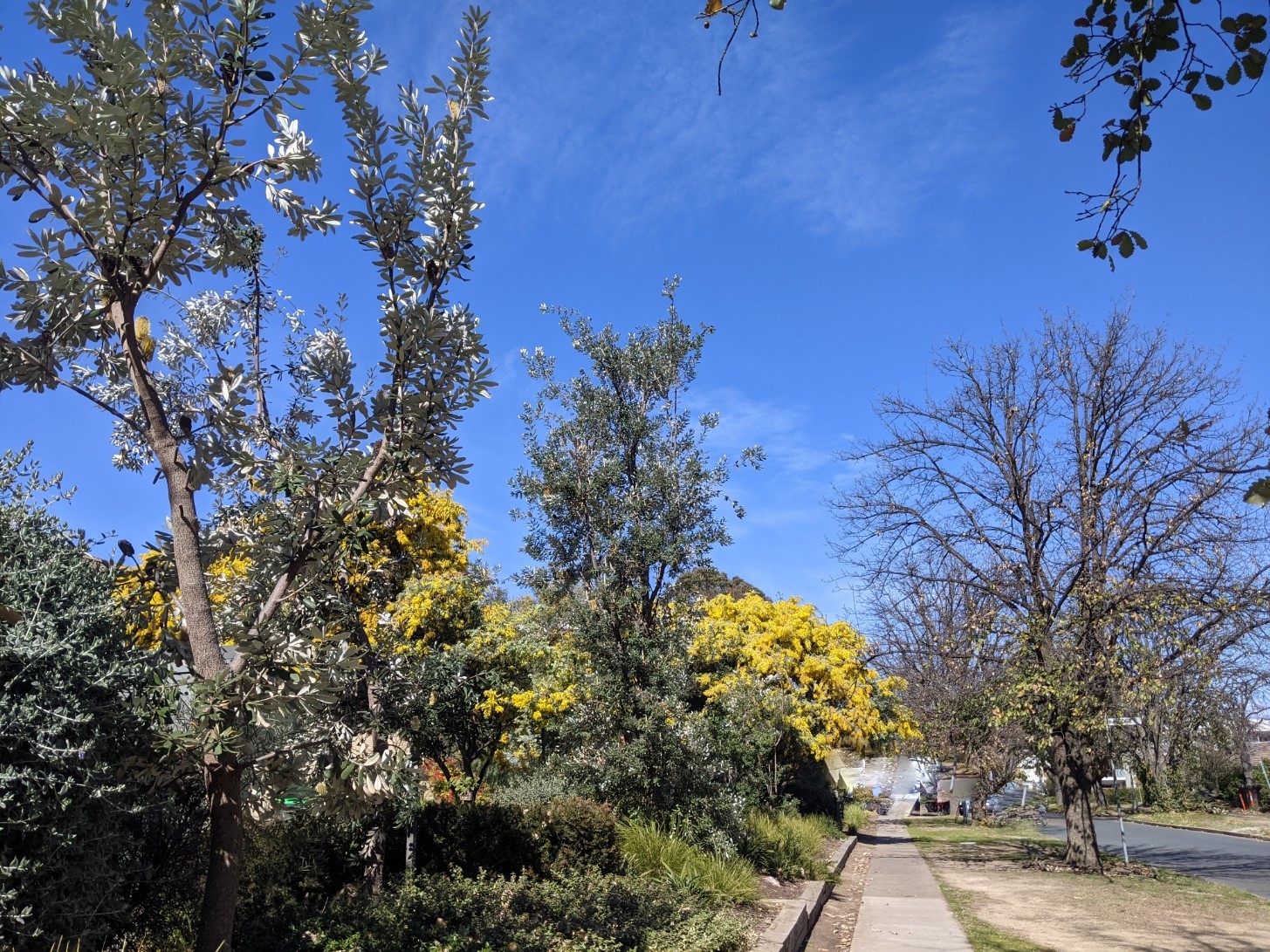


The birds are a bonus. During last lockdown they were in the trees and on the ground in droves. Now, we hear them early in the morning, and often while we walk, but this is the first time they have posed for me.
Day 9 Lockdown
Eight new cases have been recorded, and all are in isolation.
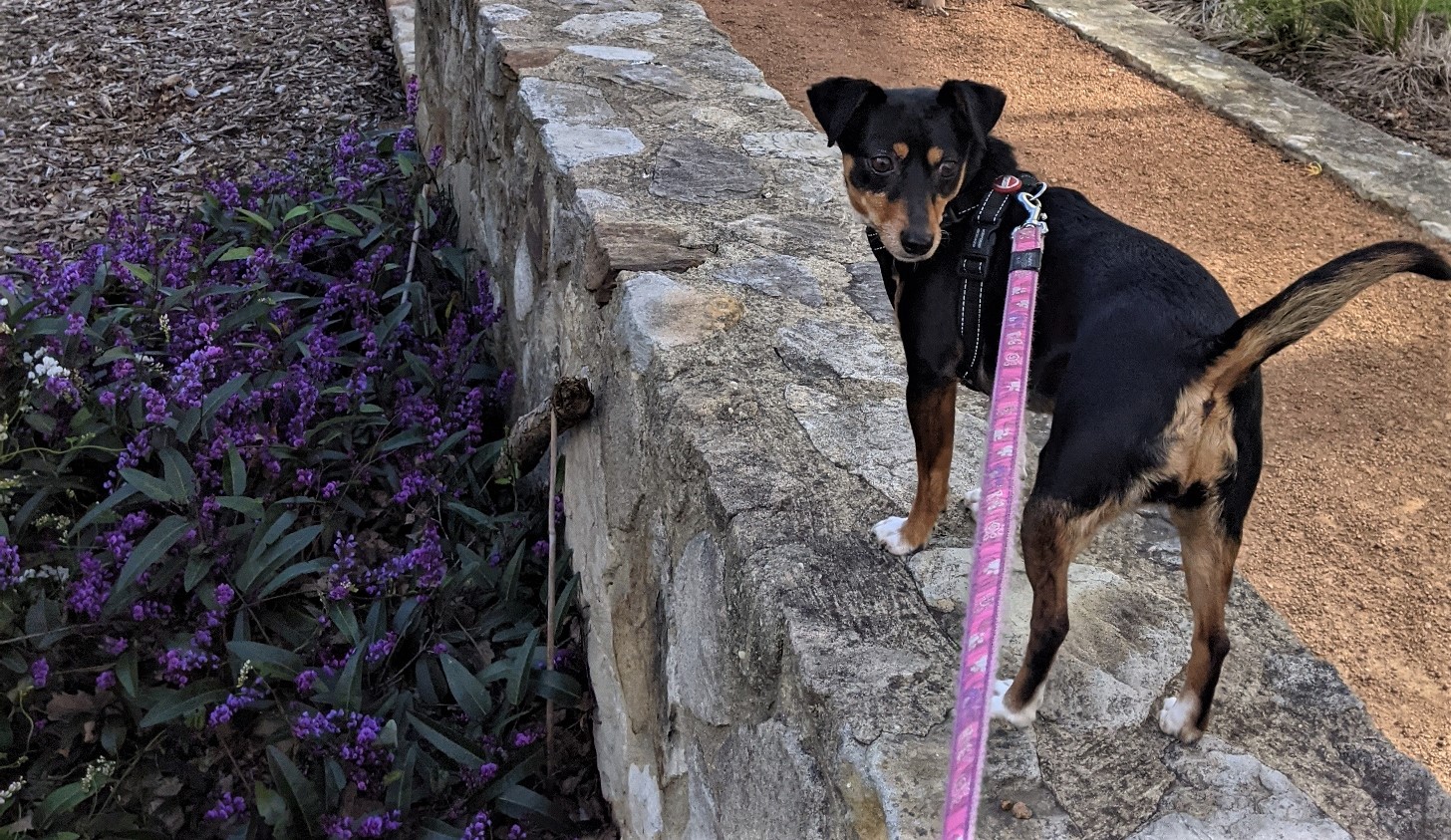
Day 9 lockdown walk





Day 10 Lockdown
Nineteen new cases have been recorded. They have not been proven to be connected to previous cases.
Day 10 lockdown walk




Day 11 Lockdown
Sixteen new cases have been recorded in the Australian Capital Territory. Three of these cases were infectious in the community. Mask wearing and social distancing are being observed everywhere walk. Good public policy and public behaviour.
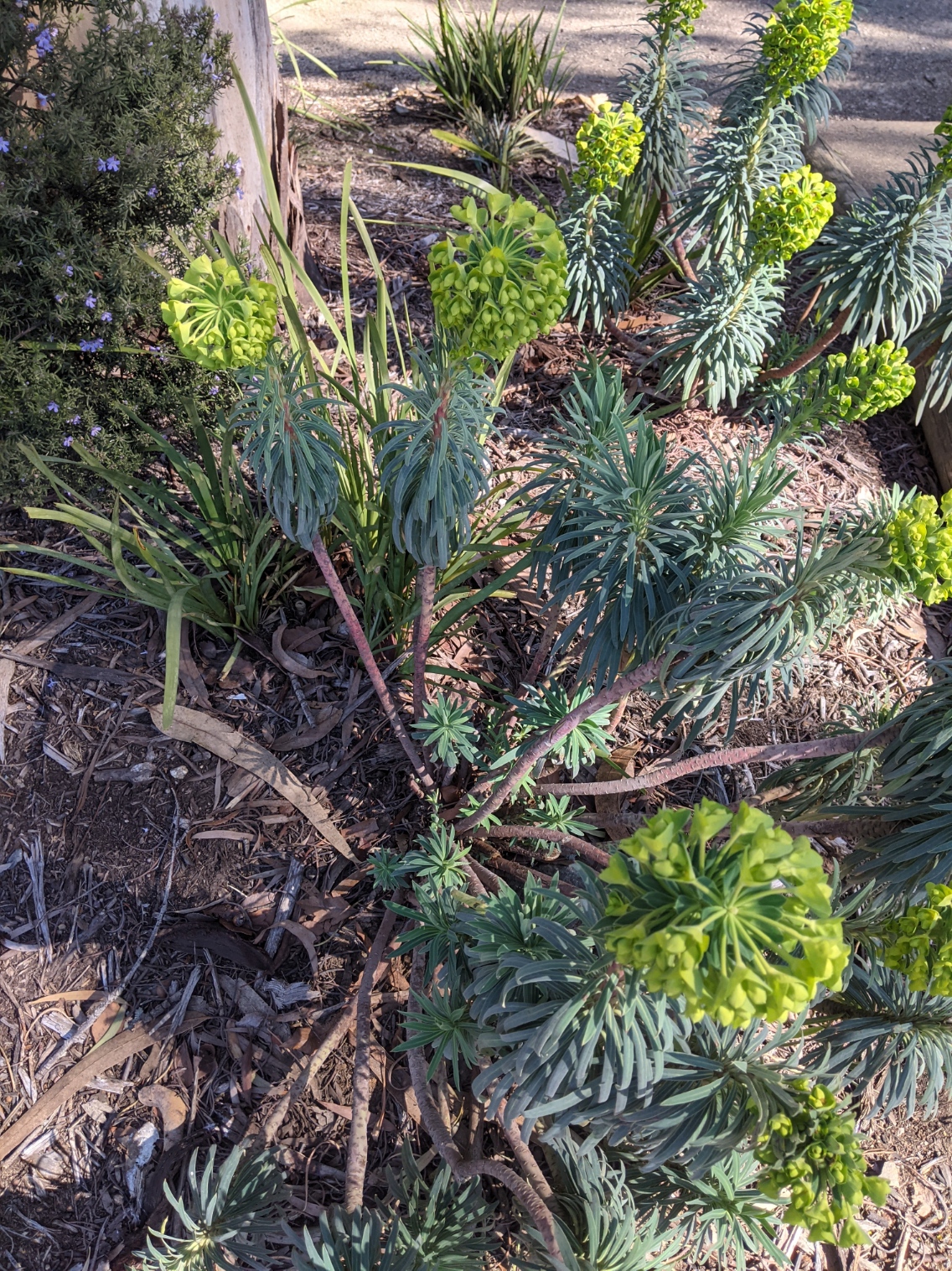
Day 11 lockdown walk



Day 12 Lockdown
There are now 30 more locally acquired cases reported, 25 of which are connected to previous cases. The remaining five are under investigation. Four people, one of whom is in ICU, are in hospital. Eleven infected people were in the community. In most cases they had not been aware of being infected – a result of the speed with which Delta transmits. Testing is proceeding at a fast pace. Registration for 16 to 30 years olds for vaccination with the Pfizer vaccine is high, but the vaccine will not be available until October because of the lack of supplies. This has lead Chief Minister, Andrew Barr, to suggest that people in this age range speak to their trusted medical practitioner to discuss being vaccinated with the Astra Zeneca vaccine which is available to this age group now. There is a broad response to cases which have just appeared in high density housing.
Day 12 lockdown walk



Day 13 Lockdown
Nine new cases have been reported in Canberra. Three were in quarantine already, four were in the community during their infectious period, and two are still being investigated. Chief Minister Andrew Barr has said that the new cases in the community means that lockdown will not end before the original date, 2nd September. Today we bought takeaway coffees. It was wonderful to know that the person who made them was vaccinated.
Day 13 Lockdown walk
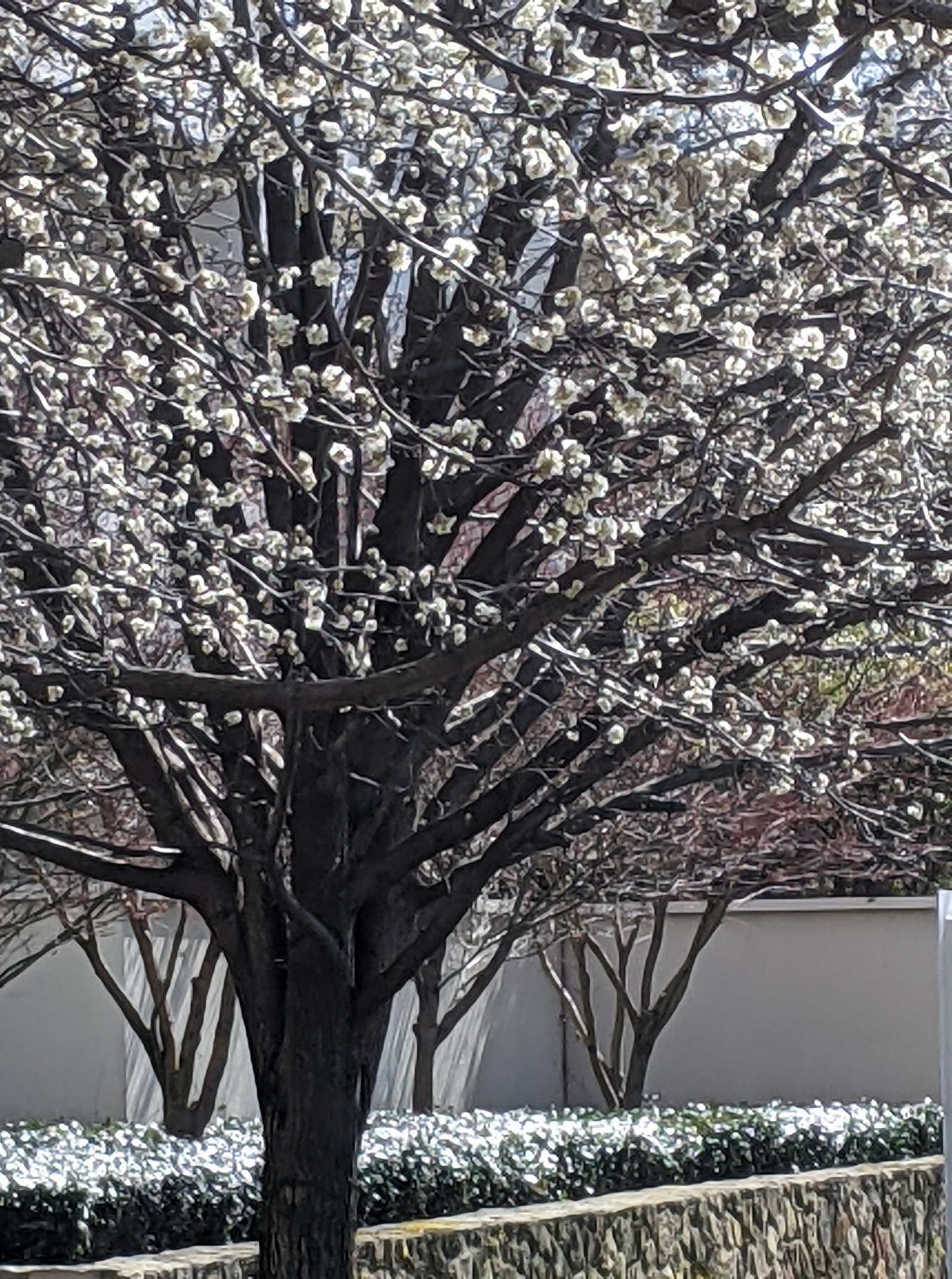
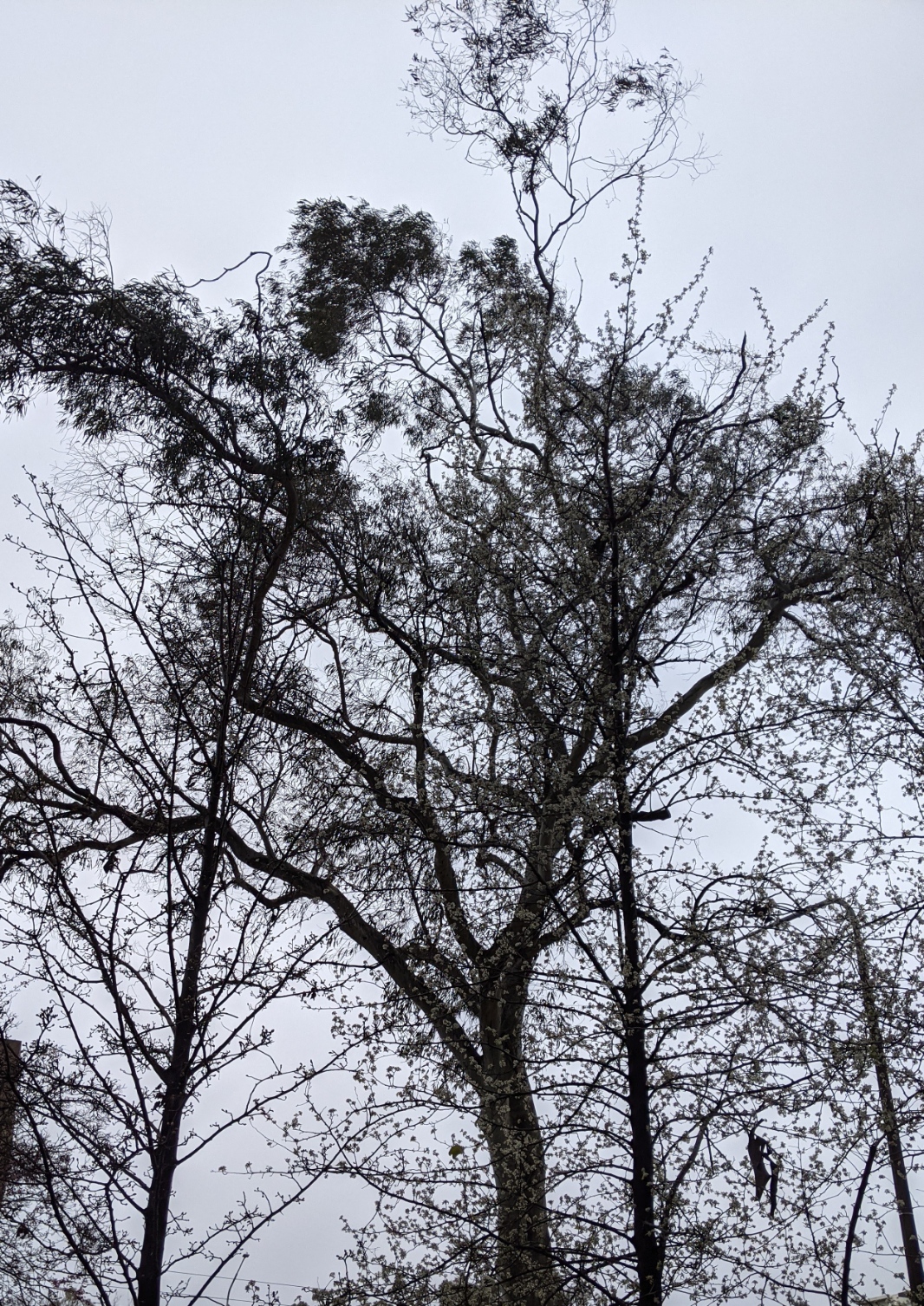
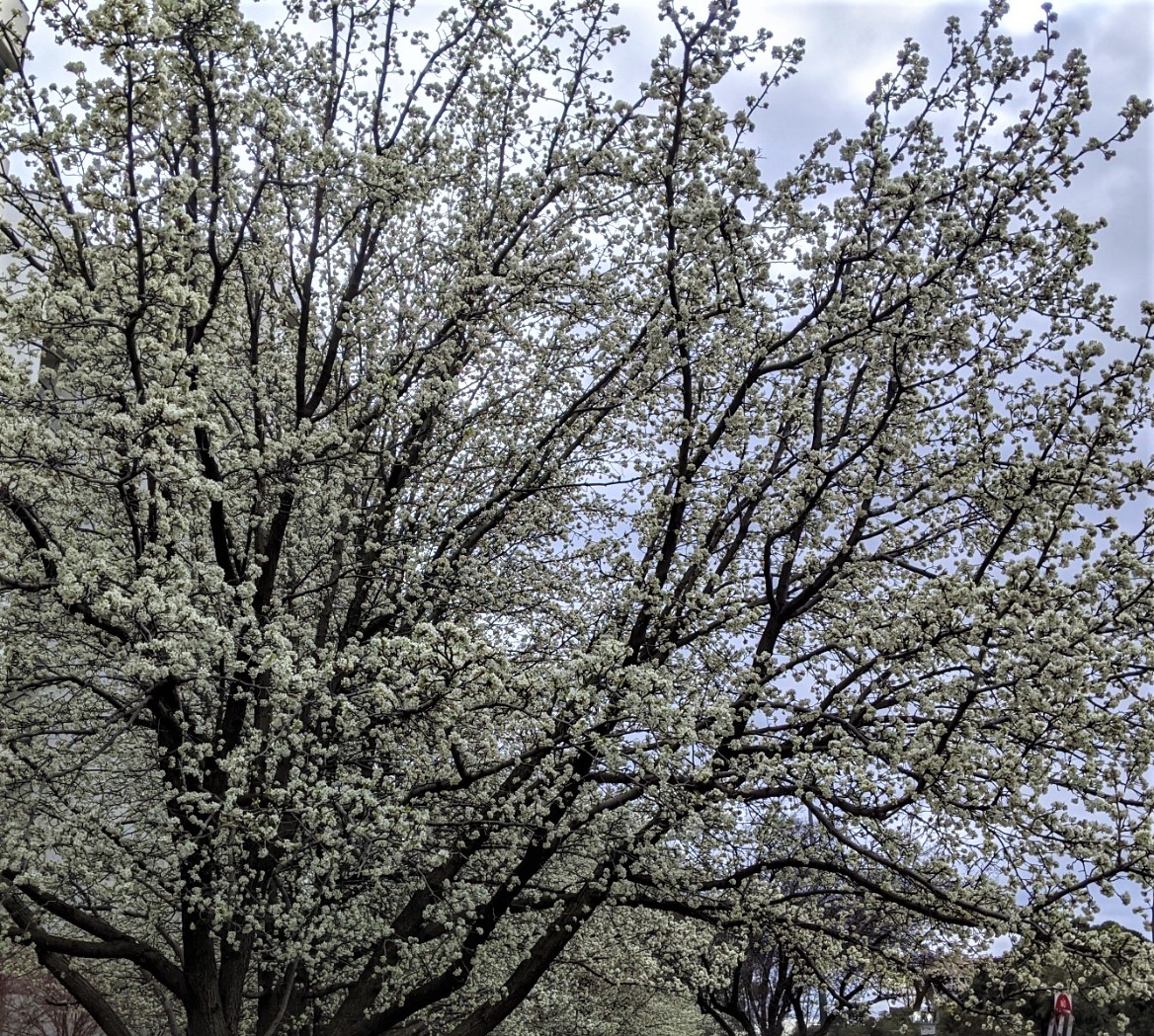
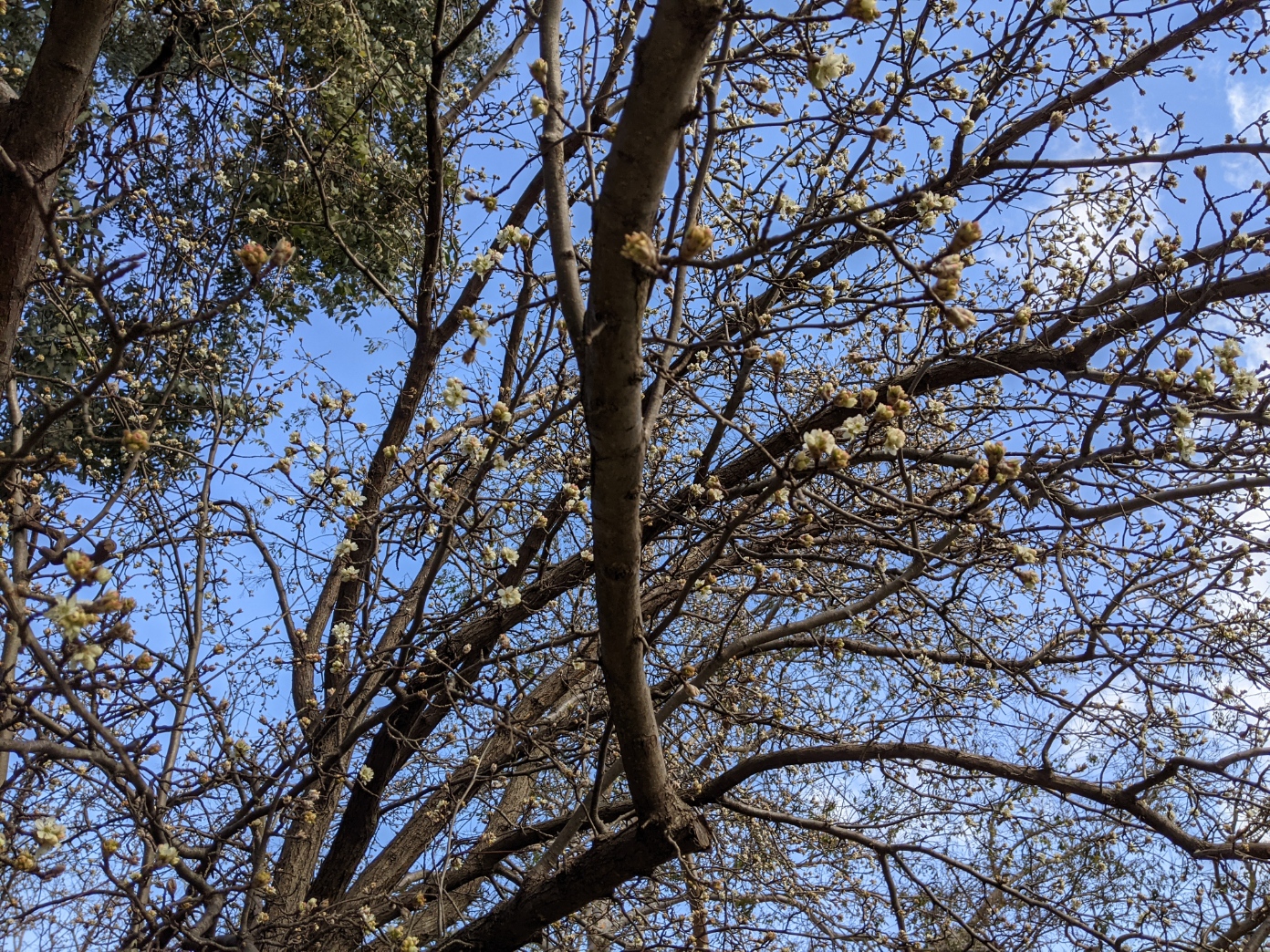
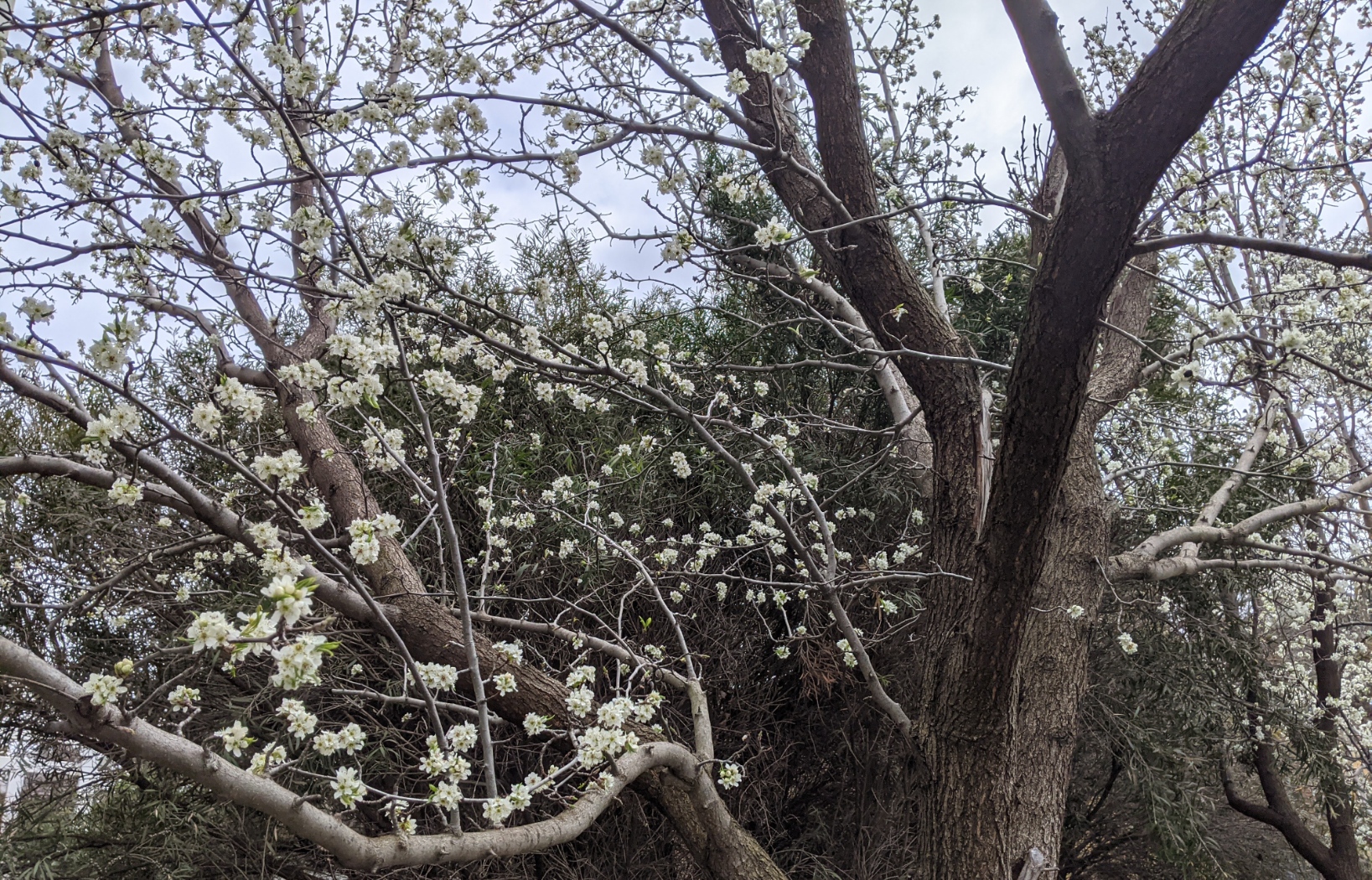
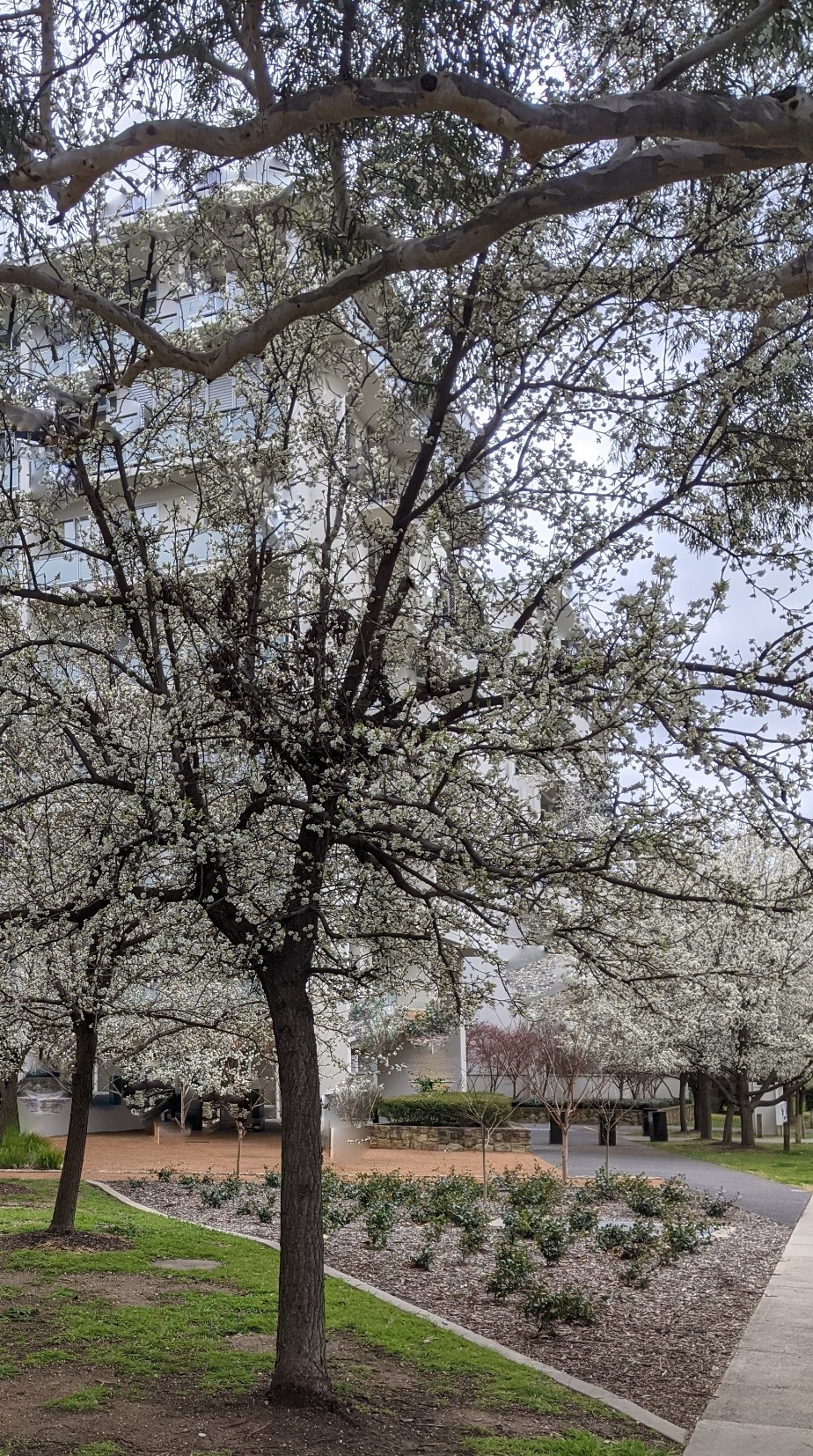
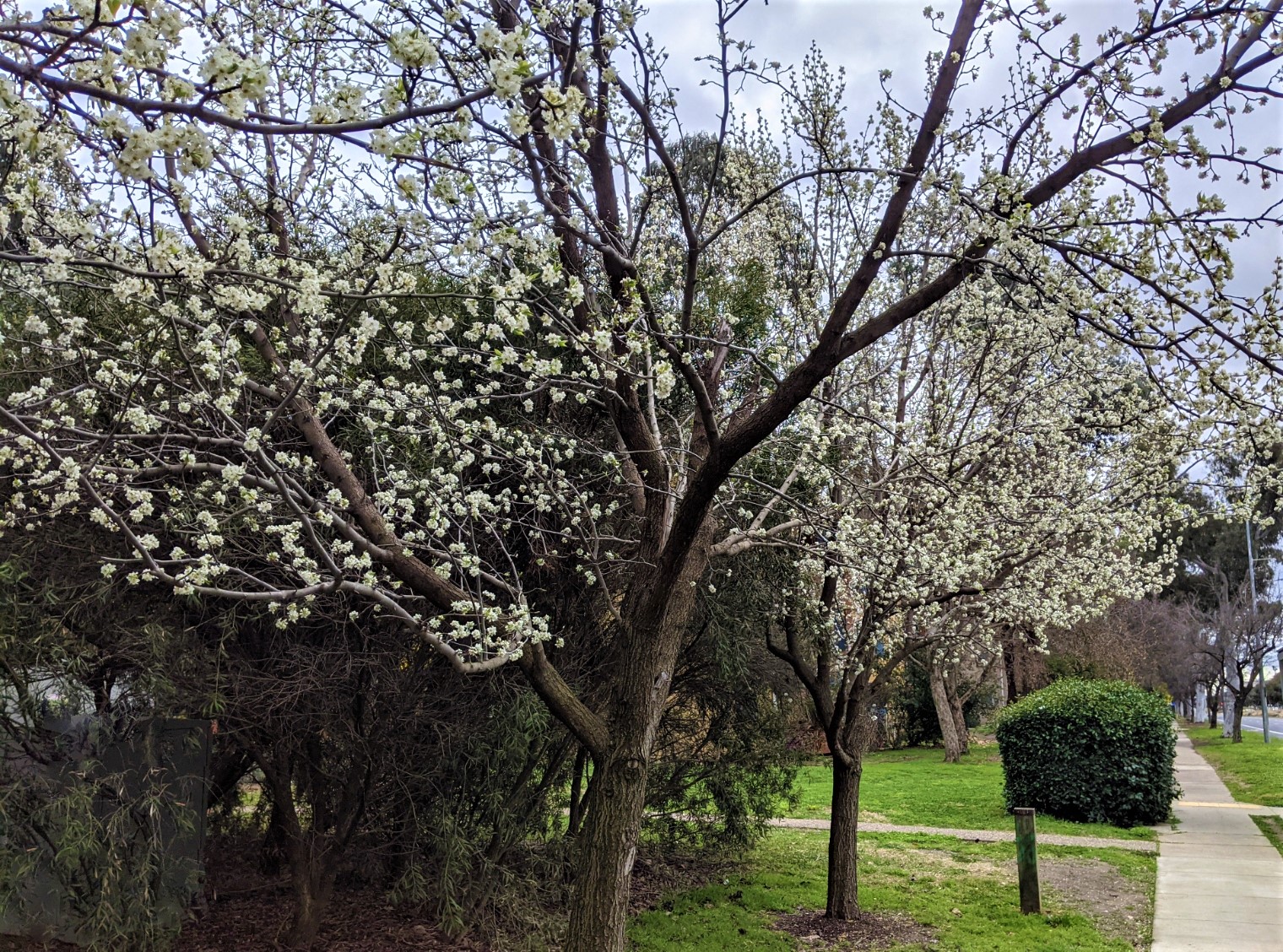
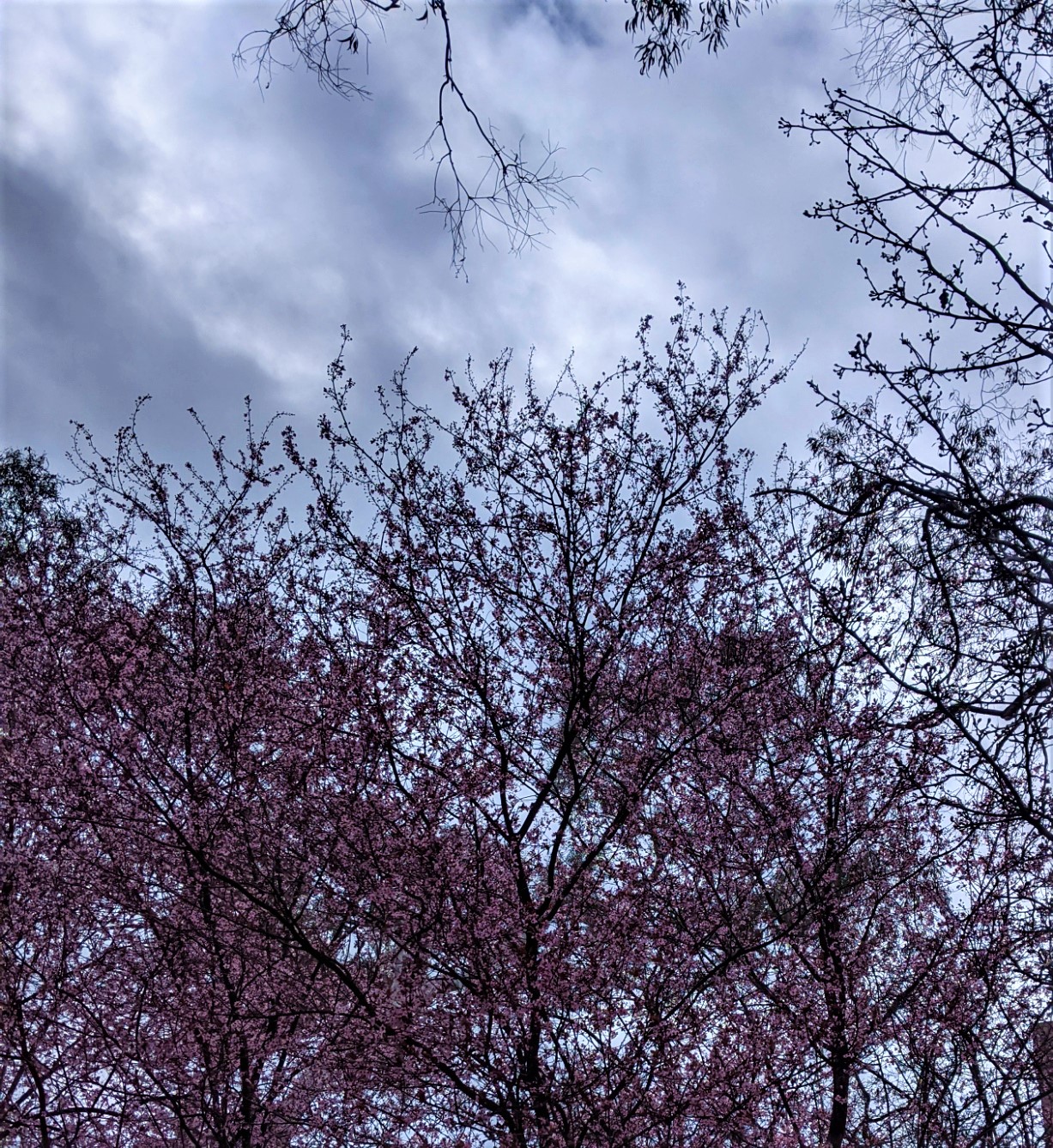
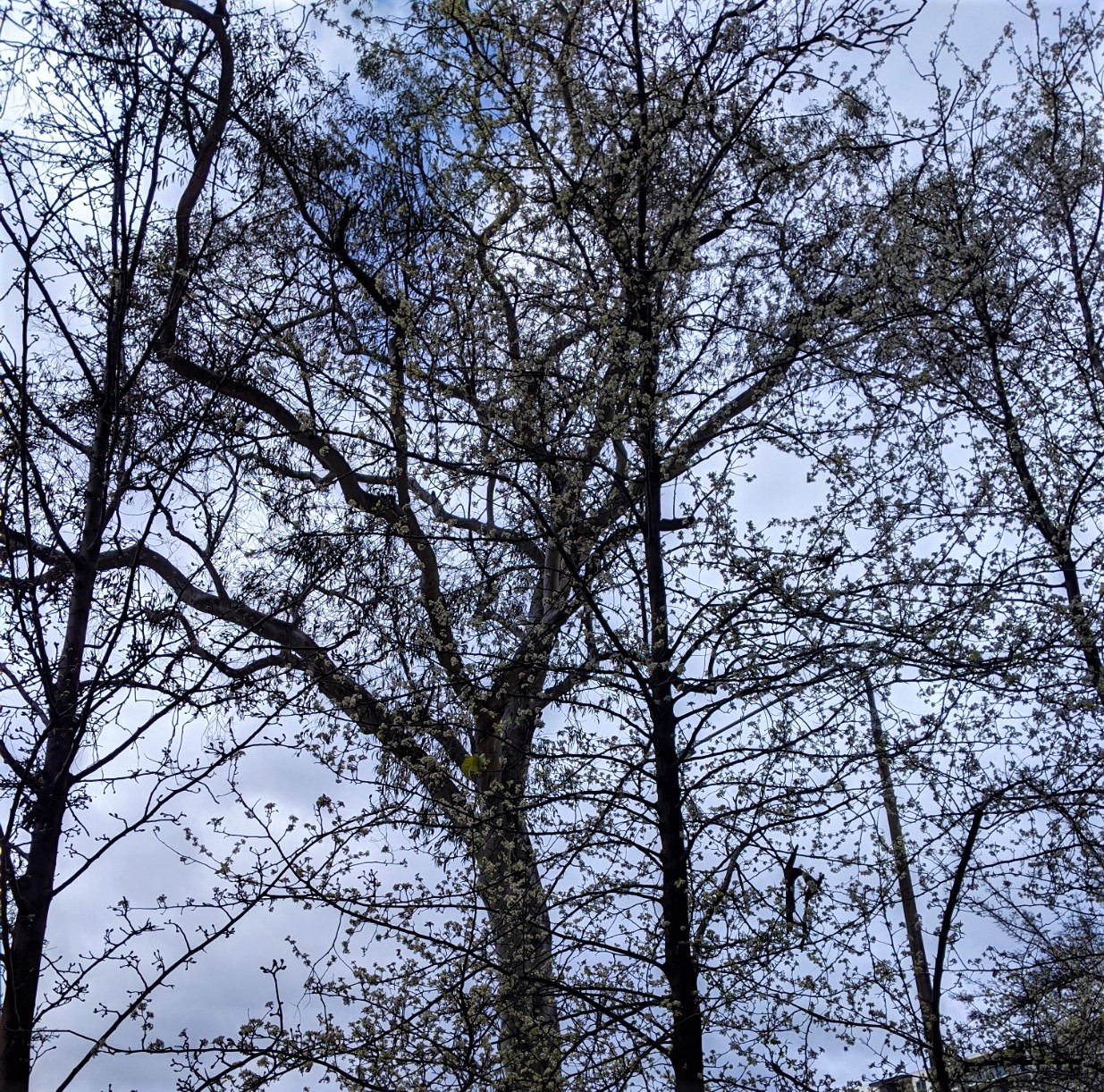
I had expected the blossoms to have changed in the week I have been recording them. It seems that some have, while others remain similar to the earlier photos. Fortunately the inclement weather has not blown the blossoms off the trees, and they can still be enjoyed.




American politics- domestic and international
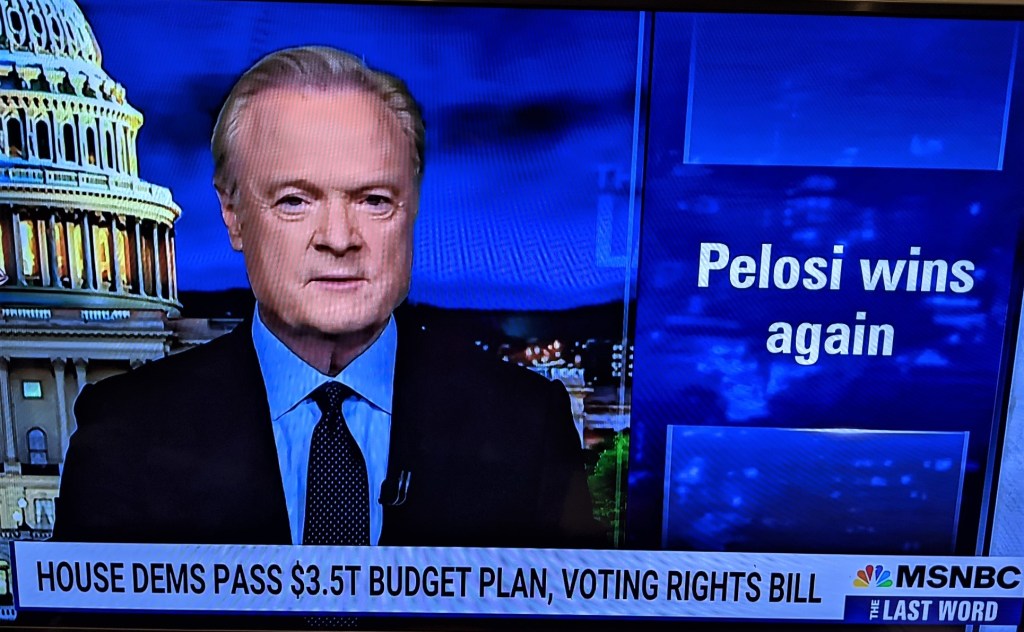
Speaker Pelosi Brought Democrats Together By Using The John Lewis Voting Rights Act
Every single Democrat in the House and Senate wants the John Lewis Voting Rights Act to pass. Pelosi had to get everyone to agree to put some assurances in writing in terms of the timing on the reconciliation infrastructure bill, but her true bit of genius was putting Democrats in a position of either coming together under one plan or sinking the John Lewis Voting Rights Act (excerpt from POLITICSUSA).
Heather Cox Richardson – three articles, 16th, 18th and 22nd August regarding the situation in Afghanistan and the Biden Administration response, media coverage, Republican comments and evacuation.

Heather Cox Richardson is a political historian who uses facts and history to make observations about American politics

1.4M followers
August 16, 2021 (Monday)
According to an article by Susannah George in the Washington Post, the lightning speed takeover of Afghanistan by Taliban forces—which captured all 17 of the regional capitals and the national capital of Kabul in about nine days with astonishing ease—was a result of “cease fire” deals, which amounted to bribes, negotiated after former president Trump’s administration came to an agreement with the Taliban in February 2020. When U.S. officials excluded the Afghan government from the deal, soldiers believed that it was only a question of time until they were on their own and cut deals to switch sides. When Biden announced that he would honor Trump’s deal, the process sped up.
heather.richardson@bc.edu
This seems to me to beg the question of how the Biden administration continued to have faith that the Afghan army would at the very least delay the Taliban victory, if not prevent it. Did military and intelligence leaders have no inkling of such a development? In a speech today in which he stood by his decision to remove U.S. troops from Afghanistan, President Joe Biden explained that the U.S. did not begin evacuating Afghan civilians sooner because some, still hoping they could hold off the Taliban, did not yet want to leave. At the same time, Biden said, “the Afghan government and its supporters discouraged us from organizing a mass exodus to avoid triggering, as they said, ‘a crisis of confidence.’” He explained that he had urged Afghan President Ashraf Ghani and Chairman Abdullah Abdullah of the High Council for National Reconciliation to clean up government corruption, unite politically, and seek a political settlement with the Taliban. They “flatly refused” to do so, but “insisted the Afghan forces would fight.” Instead, government officials themselves fled the country before the Taliban arrived in Kabul, throwing the capital into chaos.
Biden argued today that the disintegration of the Afghan military proved that pulling out the few remaining U.S. troops was the right decision. He inherited from former president Donald Trump the deal with the Taliban agreeing that if the Taliban stopped killing U.S. soldiers and refused to protect terrorists, the U.S. would withdraw its forces by May 1, 2021. The Taliban stopped killing soldiers after it negotiated the deal, and Trump dropped the number of soldiers in Afghanistan from about 15,500 to about 2,500. Biden had either to reject the deal, pour in more troops, and absorb more U.S. casualties, or honor the plan that was already underway. “I stand squarely behind my decision,” Biden said today. “American troops cannot and should not be fighting in a war and dying in a war that Afghan forces are not willing to fight for themselves. We spent over a trillion dollars. We trained and equipped an Afghan military force of some 300,000 strong—incredibly well equipped—a force larger in size than the militaries of many of our NATO allies…. We gave them every tool they could need. We paid their salaries, provided…close air support. We gave them every chance to determine their own future. What we could not provide them was the will to fight for that future.”
“It is wrong to order American troops to step up when Afghanistan’s own armed forces would not. If the political leaders of Afghanistan were unable to come together for the good of their people, unable to negotiate for the future of their country when the chips were down, they would never have done so while U.S. troops remained in Afghanistan bearing the brunt of the fighting for them.”
Biden added, “I’m left again to ask of those who argue that we should stay: How many more generations of America’s daughters and sons would you have me send to fight…Afghanistan’s civil war when Afghan troops will not?” The president recalled that the U.S. invaded Afghanistan almost 20 years ago to prevent another al Qaeda attack on America by making sure the Taliban government could not continue to protect al Qaeda and by removing Osama bin Laden. After accomplishing those goals, though, the U.S. expanded its mission to turn the country into a unified, centralized democracy, a mission that was not, Biden said, a vital national interest.
Biden, who is better versed in foreign affairs than any president since President George H. W. Bush, said today that the U.S. should focus not on counterinsurgency or on nation building, but narrowly on counterterrorism, which now reaches far beyond Afghanistan. Terrorism missions do not require a permanent military presence. The U.S. already conducts such missions, and will conduct them in Afghanistan in the future, if necessary, he said.Biden claims that human rights are central to his foreign policy, but he wants to accomplish them through diplomacy, economic tools, and rallying others to join us, rather than with “endless military deployments.” He explained that U.S. diplomats are secure at the Kabul airport, and he has authorized 6,000 U.S. troops to go to Afghanistan to help with evacuation.
Biden accepted responsibility for his decision to leave Afghanistan, and he maintained that it is the right decision for America. While a lot of U.S. observers have quite strong opinions about what the future looks like for Afghanistan, it seems to me far too soon to guess how the situation there will play out. There is a lot of power sloshing around in central Asia right now, and I don’t think either that Taliban leaders are the major players or that Afghanistan is the primary stage. Russia has just concluded military exercises with Uzbekistan and Tajikistan, both of which border Afghanistan, out of concern about the military takeover of Afghanistan by the Taliban. At the same time, the area is about to have to deal with large numbers of Afghan refugees, who are already fleeing the country. But the attacks on Biden for the withdrawal from Afghanistan do raise the important question of when it is in America’s interest to fight a ground war. Should we limit foreign intervention to questions of the safety of Americans? Should we protect our economic interests? Should we fight to spread democracy? Should we fight to defend human rights? Should we fight to shorten other wars, or prevent genocide? These are not easy questions, and reasonable people can, and maybe should, disagree about the answers.
But none of them is about partisan politics, either; they are about defining our national interest. It strikes me that some of the same people currently expressing concern over the fate of Afghanistan’s women and girls work quite happily with Saudi Arabia, which has its own repressive government, and have voted against reauthorizing our own Violence Against Women Act. Some of the same people worrying about the slowness of our evacuation of our Afghan allies voted just last month against providing more visas for them, and others seemed to worry very little about our utter abandonment of our Kurdish allies when we withdrew from northern Syria in 2019.
And those worrying about democracy in Afghanistan seem to be largely unconcerned about protecting voting rights here at home. Most notably to me, some of the same people who are now focusing on keeping troops in Afghanistan to protect Americans seem uninterested in stopping the spread of a disease that has already killed more than 620,000 of us and that is, once again, raging. *
August 18, 2021 (Wednesday)It is still early days, and the picture of what is happening in Afghanistan now that the Taliban has regained control of the country continues to develop. Central to affairs there is money. Afghanistan is one of the poorest countries in the world, with about half its population requiring humanitarian aid this year and about 90% of its people living below the poverty line of making $2 a day.
The country depends on foreign aid. Under the U.S.-supported Afghan government, the United States and other nations funded about 80% of Afghanistan’s budget. In 2020, foreign aid made up about 43% of Afghanistan’s GDP (the GDP, or gross domestic product, is the monetary value of all the goods and services produced in a country), down from 100% of it in 2009. This is a huge problem for the Taliban, because their takeover of the country means that the money the country so desperately needs has dried up. The U.S. has frozen billions of dollars of Afghan government money held here in the U.S. The European Union and Germany have also suspended their financial support for the country, and today the International Monetary Fund blocked Afghanistan’s access to $460 million in currency reserves.
Adam M. Smith, who served on the National Security Council during the Obama administration, told Jeff Stein of the Washington Post that the financial squeeze is potentially “cataclysmic for Afghanistan.” It threatens to spark a humanitarian crisis that, in turn, will create a refugee crisis in central Asia. Already, the fighting in the last eight months has displaced more than half a million Afghans. People fleeing from the Taliban threaten to destabilize the region more generally. While Russia was happy to support the Taliban in a war against the U.S., now that its fighters are in charge of the country, Russia needs to keep the Taliban’s extremism from spreading to other countries in the area. So it is tentatively saying supportive things about the Taliban, but it is also stepping up its protection of neighboring countries’ borders with Afghanistan. Other countries are also leery of refugees in the region: large numbers of refugees have, in the past, led countries to turn against immigrants, giving a leg up to right-wing governments.
Canada and Britain are each taking an additional 20,000 Afghan women leaders, reporters, LGBTQ people, and human rights workers on top of those they have already volunteered to take, but Turkey—which is governed by strongman president Recep Tayyip Erdogan—is building a wall to block refugees, and French President Emmanuel Macron asked officials in Pakistan, Iran, and Turkey to prevent migrants reaching their countries from traveling any further. The European Union has asked its member states to take more Afghan refugees. In the U.S., the question of Afghan refugees is splitting the Republican Party, with about 30% of it following the hard anti-immigrant line of former president Donald Trump. Others, though, especially those whose districts include military installations, are saying they welcome our Afghan allies. The people fleeing the country also present a problem for those now in control of Afghanistan. The idea that people are terrified of their rule is a foreign relations nightmare, at the same time that those leaving are the ones most likely to have the skills necessary to help govern the country. But leaders can’t really stop the outward flow—at least immediately—because they do not want to antagonize the international community so thoroughly that it continues to withhold the financial aid the country so badly needs. So, while on the streets, Taliban fighters are harassing Afghans who are trying to get away, Taliban leaders are saying they will permit people to evacuate, that they will offer blanket amnesty to those who opposed them, and also that they will defend some rights for women and girls.
The Biden administration is sending more personnel to help evacuate those who want to leave. The president has promised to evacuate all Americans in the country—as many as 15,000 people—but said only that we would evacuate as many of the estimated 65,000 Afghans who want to leave as possible. The Taliban has put up checkpoints on the roads to the airport and are not permitting everyone to pass. U.S. military leaders say they will be able to evacuate between 5000 and 9000 people a day.
Today, Chairman of the Joint Chiefs of Staff Mark A. Milley tried to explain the frantic rush to evacuate people from Afghanistan to reporters by saying: “There was nothing that I or anyone else saw that indicated a collapse of this army and this government in 11 days.” Maybe. But military analyst Jason Dempsey condemned the whole U.S. military project in Afghanistan when he told NPR’s Don Gonyea that the collapse of the Afghan government showed that the U.S. had fundamentally misunderstood the people of Afghanistan and had tried to impose a military system that simply made no sense for a society based in patronage networks and family relationships.
Even with Dempsey’s likely accurate assessment, the statement that U.S. military intelligence missed that a 300,000 person army was going to melt away still seems to me astonishing. Still, foreign policy and national security policy analyst Dr. John Gans of the University of Pennsylvania speculated on Twitter that such a lapse might be more “normal”—his word and quotation marks—than it seems, reflecting the slips possible in government bureaucracy. He points out that the Department of Defense has largely controlled Afghanistan and the way the U.S. involvement there was handled in Washington. But with the end of the military mission, the Defense Department was eager to hand off responsibility to the State Department, which was badly weakened under the previous administration and has not yet rebuilt fully enough to handle what was clearly a complicated handoff. “There have not been many transitions between an American war & an American diplomatic relationship with a sovereign, friendly country,” Gans wrote. “Fewer still when the friendly regime disintegrates so quickly.” When things started to go wrong, they snowballed.
And yet, the media portrayal of our withdrawal as a catastrophe also seems to me surprising. To date, at least as far as I have seen, there have been no reports of such atrocities as the top American diplomat in Syria reported in the chaos when the U.S. pulled out of northern Syria in 2019. Violence against our Kurdish allies there was widely expected and it indeed occurred. In a memo made public in November of that year, Ambassador William V. Roebuck wrote that “Islamist groups” paid by Turkey were deliberately engaged in ethnic cleansing of Kurds, and were committing “widely publicized, fear-inducing atrocities” even while “our military forces and diplomats were on the ground.” The memo continued: “The Turkey operation damaged our regional and international credibility and has significantly destabilized northeastern Syria.” Reports of that ethnic cleansing in the wake of our withdrawal seemed to get very little media attention in 2019, perhaps because the former president’s first impeachment inquiry took up all the oxygen. But it strikes me that the sensibility of Roebuck’s memo is now being read onto our withdrawal from Afghanistan although conditions there are not—yet—like that.
For now, it seems, the drive to keep the door open for foreign money is reining in Taliban extremism. That caution seems unlikely to last forever, but it might hold for long enough to complete an evacuation. Much is still unclear and the situation is changing rapidly, but my guess is that keeping an eye on the money will be crucial for understanding how this plays out.
Meanwhile, the former president of Afghanistan, Ashraf Ghani, has surfaced in the United Arab Emirates. He denies early reports that he fled the country with suitcases full of cash.
August 22, 2021 (Sunday)
A week after the Taliban took control of Kabul, the capital of Afghanistan, as the U.S. was withdrawing the forces that have been in the country since 2001, the initial chaos created by the Taliban’s rapid sweep across the country has simmered down into what is at least a temporary pattern. We knew there was a good chance that the Taliban would regain control of the country when we left, although that was not a foregone conclusion. The former president, Donald Trump, recognized that the American people were tired of the ongoing war in Afghanistan, which was approaching its 20th year, and in February 2020, his administration negotiated with the Taliban to enable the U.S. to withdraw. In exchange for the release of 5000 Taliban fighters and the promise that the U.S. would withdraw within the next 14 months, the Taliban agreed not to attack U.S. soldiers.
Trump’s dislike of the war in Afghanistan reflected the unpopularity of the long engagement, which by 2020 was ill defined. The war had begun in 2001, after terrorists affiliated with al-Qaeda attacked the United States on September 11 of that year. Taliban leaders in control of Afghanistan sheltered al-Qaeda, and after the attacks, the U.S. president, George W. Bush, demanded that Afghanistan hand over the terrorist leader believed to be behind the terrorist attack on the U.S: Osama bin Laden. In October, after Taliban leaders refused, the U.S. launched a bombing campaign. That campaign was successful enough that in December 2001 the Taliban offered to surrender. But the U.S. rejected that surrender, determined by then to eradicate the extremist group and fill the vacuum of its collapse with a new, pro-American government. Al-Qaeda leader bin Laden escaped from Afghanistan to Pakistan, and the U.S. project in Afghanistan turned from an anti-terrorism mission into an effort to rebuild the Afghan government into a modern democracy.
By 2002 the Bush administration was articulating a new doctrine in foreign policy, arguing that the U.S. had a right to strike preemptively against countries that harbor terrorists. In 2003, under this doctrine, the U.S. launched a war on Iraq, which diverted money, troops, and attention from Afghanistan. The Taliban regrouped and began to regain the territory it had lost after the U.S. first began its bombing campaign in 2001.By 2005, Bush administration officials privately worried the war in Afghanistan could not be won on its current terms, especially with the U.S. focused on Iraq. Then, when he took office in 2009, President Barack Obama turned his attention back to Afghanistan. He threw more troops into that country, bringing their numbers close to 100,000. In 2011, the U.S. military located bin Laden in Abbottabad, Pakistan, and launched a raid on the compound where he was hiding, killing him. By 2014, Obama had drawn troops in Afghanistan down to about 11,000, and in December of that year, he announced that the mission of the war—weakening the Taliban and capturing bin Laden—had been accomplished, and thus the war was over. The troops would come home.
But, of course, they didn’t, leaving Trump to develop his own policy. But his administration’s approach to the chaos in that country was different than his predecessor’s. By negotiating with the Taliban and excluding the Afghan government the U.S. had been supporting, the Trump team essentially accepted that the Taliban were the most important party in Afghanistan. The agreement itself reflected the oddity of the negotiations. Each clause referring to the Taliban began: “The Islamic Emirate of Afghanistan which is not recognized by the United States as a state and is known as the Taliban will….”It was immediately clear that the Taliban was not living up to its side of the bargain. Although it did stop attacking U.S. troops, It began to escalate violence in Afghanistan itself, assassinated political opponents, and maintained ties to al-Qaeda. Nonetheless, the Trump administration put pressure on the leaders of the Afghan government to release the 5000 Taliban prisoners, and they eventually did. Before Biden took office, Trump dropped the U.S. troop engagement in Afghanistan from about 13,000 to about 2500.When he took office, Biden had to decide whether to follow Trump’s path or to push back on the Taliban on the grounds they were not honoring the agreement Trump’s people had hammered out.
Biden himself wanted to get out of the war. At the same time, he recognized that fighting the Taliban again would mean throwing more troops back into Afghanistan, and that the U.S. would again begin to take casualties. He opted to get the troops out, but extended the deadline to September 11, 2021, the twentieth anniversary of the initial attack. (Former president Trump complained that the troops should come out faster.)What Biden did not foresee was the speed with which the Taliban would retake control of the country. It swept over the regional capitals and then Kabul in about nine days in mid-August with barely a shot fired, and the head of the Afghan government fled the country, leaving it in chaos. That speed left the U.S. flatfooted. Afghans who had been part of the government or who had helped the U.S. and its allies rushed to the airport to try to escape. In the pandemonium of that first day, up to seven people were killed; two people appear to have clung to a U.S. military plane as it took off, falling to their deaths. And yet, the Taliban, so far, has promised amnesty for its former opponents and limited rights for women. It has its own problems, as the Afghan government has been supported for the previous 20 years by foreign money, including a large percentage from the U.S. Not only has that money dried up as foreign countries refuse to back the Taliban, but also Biden has put sanctions on Afghanistan and also on some Pakistanis suspected of funding the Taliban.
At the same time it appears that no other major sponsor, like Russia or China, has stepped in to fill the vacuum left by U.S. money, leaving the Taliban fishing for whatever goodwill it can find. Yesterday, Josh Marshall of Talking Points Memo flagged tweets showing that members of the Afghan government, including the brother of the president who fled, are in what appear from the photos posted on Twitter to be relaxed talks about forming a new government. Other factions in Afghanistan would like to stop this from happening, and today Biden’s national security adviser Jake Sullivan warned that ISIS-K, another extremist group, is threatening to attack the airport to destabilize the Taliban.
Meanwhile, there are 10,000 people crowded into that airport, and U.S. evacuations continue. The Kabul airport is secure—for now—and the U.S. military has created a larger perimeter around it for protection. The U.S. government has asked Americans in Afghanistan to shelter in place until they can be moved out safely; the Qatari ambassador to Afghanistan has been escorting groups of them to the airport. Evacuations have been slower than hoped because of backlogs at the next stage of the journey, but the government has enlisted the help of 18 commercial airlines to move those passengers forward, leaving room for new evacuees. Yesterday, about 7800 evacuees left the Kabul airport. About 28,000 have been evacuated since August 14.
Interestingly, much of the U.S. media is describing this scenario as a disaster for President Biden. Yet, on CNN this morning, Matthew Dowd, who was the chief strategist for the Bush-Cheney ticket in 2004, noted that more than 20,000 people have been evacuated from Afghanistan without a single loss of an American life, while in the same period of time, 5000 Americans have died from Covid-19 and 500 have died from gunshots. *
- My emphasis
 Robin's Room