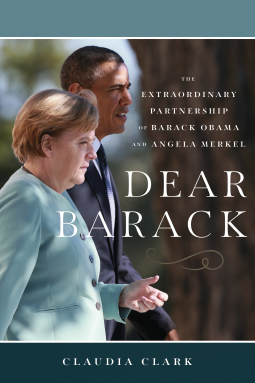
The nonfiction book review this week is Dear Barack, The Extraordinary Partnership of Barack Obama and Angela Merkel by Claudia Clark, provided to me by NetGalley. It is particularly pertinent reading as Germany will be electing a new Chancellor after Angela Merkel stepped down after four remarkable terms. Bob McMullan writes about the German election to be held on the 26th September in German Social Democrats have the momentum to win, to be found after the Canberra Covid 19 updates.
Claudia Clark, Dear Barack The Extraordinary Partnership of Barack Obama and Angela Merkel, Disruption Books NY, 2021.
With the partnership between Angela Merkel and Barack Obama over the eight years of the Obama Government as the focus, and a dedication to John Lewis, Stacy Abrahams, Beto O’Rourke and citizens who fight for Americans’ right to vote, Claudia Clark’s book had every possibility of being a winner for me. I was not mistaken. My only negative feeling is that sometimes the repetition of the nature of the closeness of the relationship became a bit cloying – but then, Claudia Clark would be fully justified in telling me what nonsense, this is what the book is about- the relationship between two politicians! It is, but there is so much more for anyone who feels (erroneously or not) as I did at times, to raise this book into the ‘must read’ category. It really is a winner.
See the full review at Books: Reviews
I also found an old review on GoodReads, after a reader ‘liked’ it, and thought it worth reprising here. Marge Piercy’s Fly Away Home is a good read, even in the 2020s, although her Gone to Soldiers, which formed an important part of one of my theses is, in my view, her strongest. Other people reminisce about Vida, a wonderful expose (in part) of the way in which left wing activists and women fighting for women’s rights worked together – uncomfortably. The fictional characters are based on real people from the anti -war movement.
Marge Piercy Fly Away Home Fawcett, 1985

I am re-reading this, as one of my read again novels. I was (and remain) particularly pleased by the way in which Piercy adapts a domestic task into a career for the main protagonist. Although Daria is remarkably aggravating at times, her clinging to the image of Ross, the husband she wed as a young, inexperienced woman is understandable. The conflict between the two daughters and their parents’ roles in their own images is also something to think about.
Complete reviews of both books can be found at Books: Reviews
Day 34 Lockdown
Fifteen more cases were recorded, with eleven linked to known cases or ongoing clusters. Four remain under early investigation. Five people were in quarantine and eight in the community for part of their infectious period. Two cases remain under investigation. Nine patients are in hospital, including one in intensive care requiring ventilation.
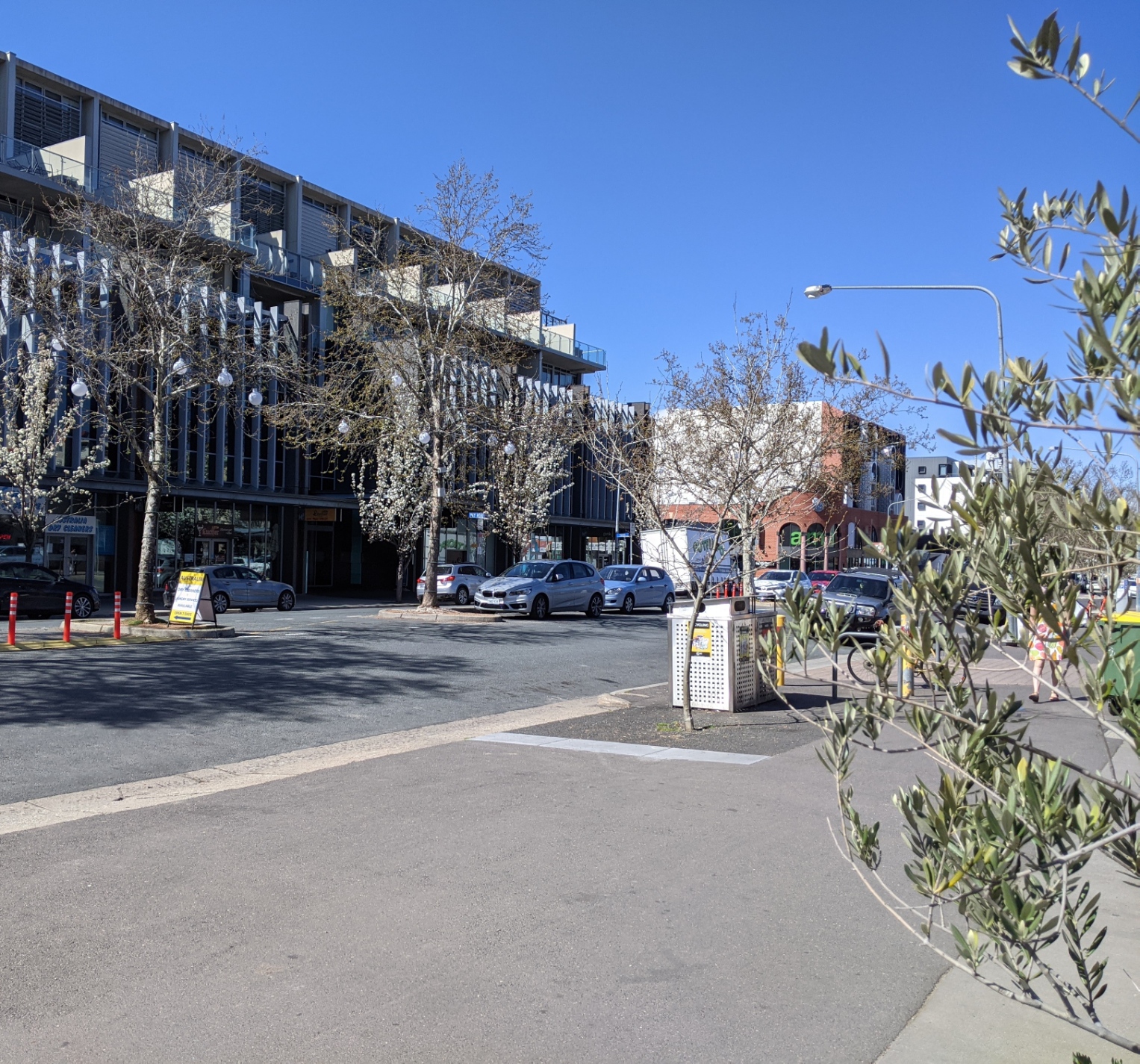
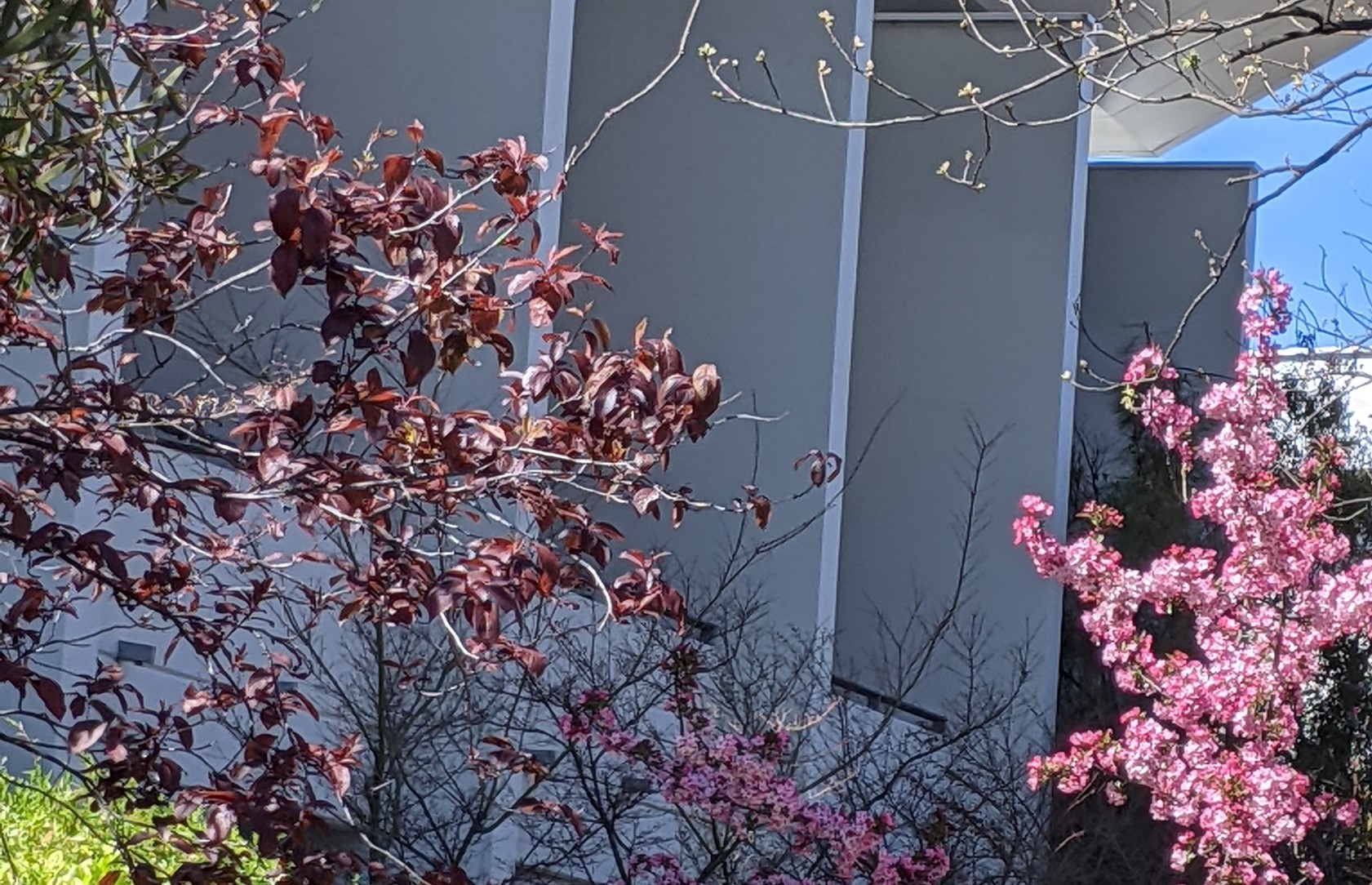
Day 34 lockdown walk – some blossoms remain; construction proceeds
Day 35 Lockdown
Thirty new cases were recorded today; there are 245 active cases and 341 have totally recovered. ACT Government managed vaccinations so that 55.3% Canberrans 16+ have been fully vaccinated (this figure does not include GP service providers, or staff and residents in disability and aged care residential care in the ACT, delivery of those vaccinations is being managed by the Australian Government).
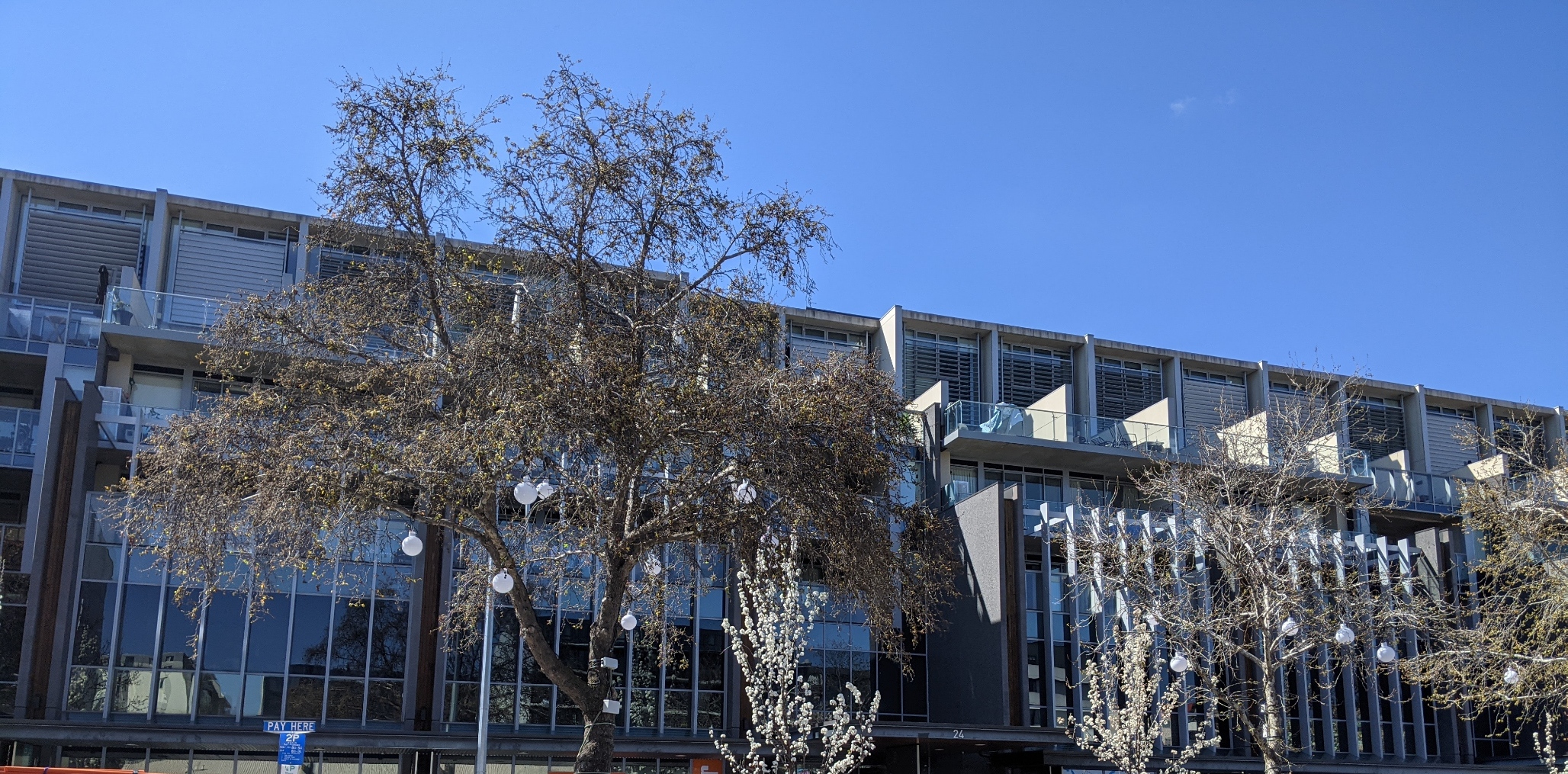
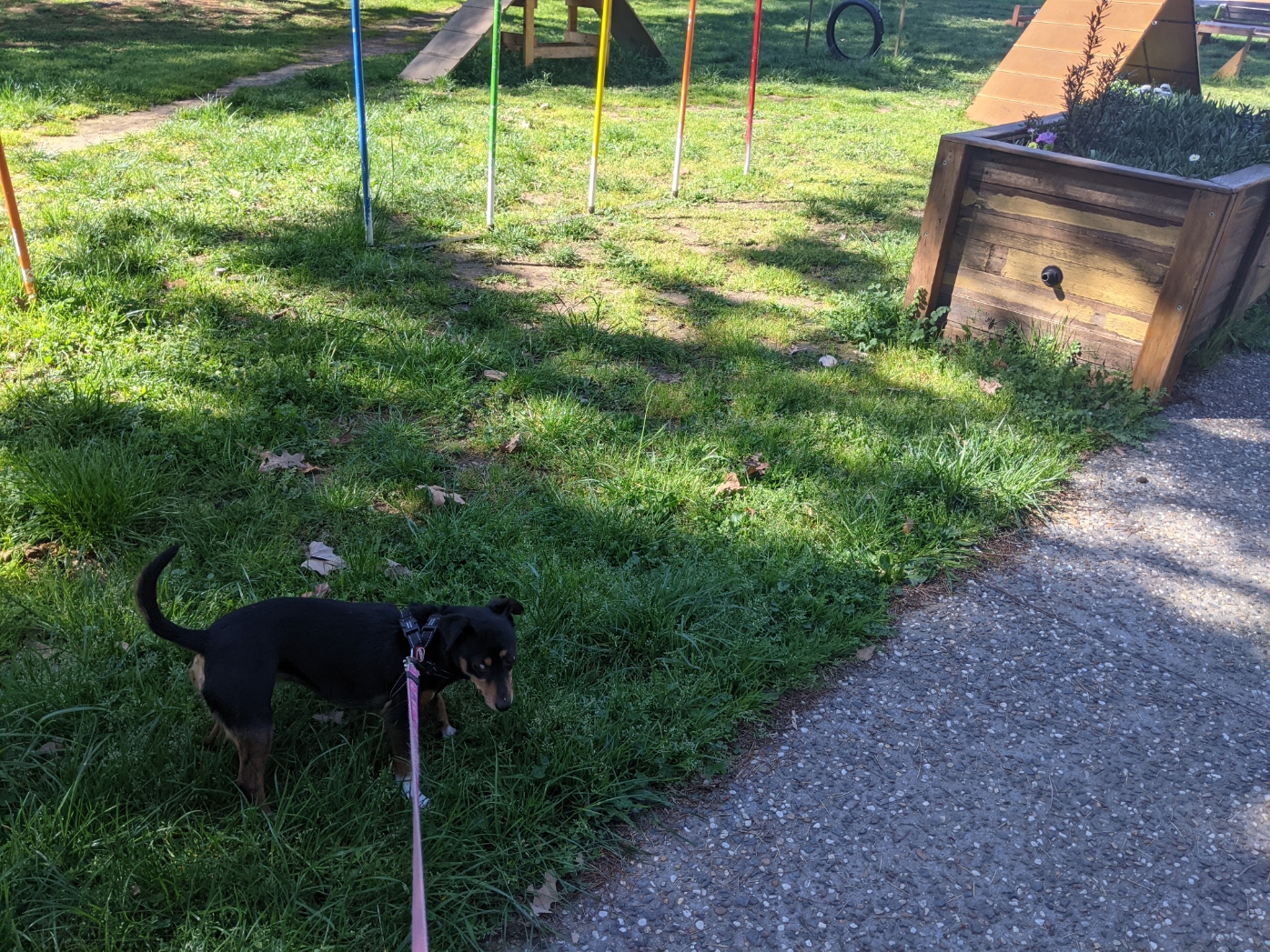
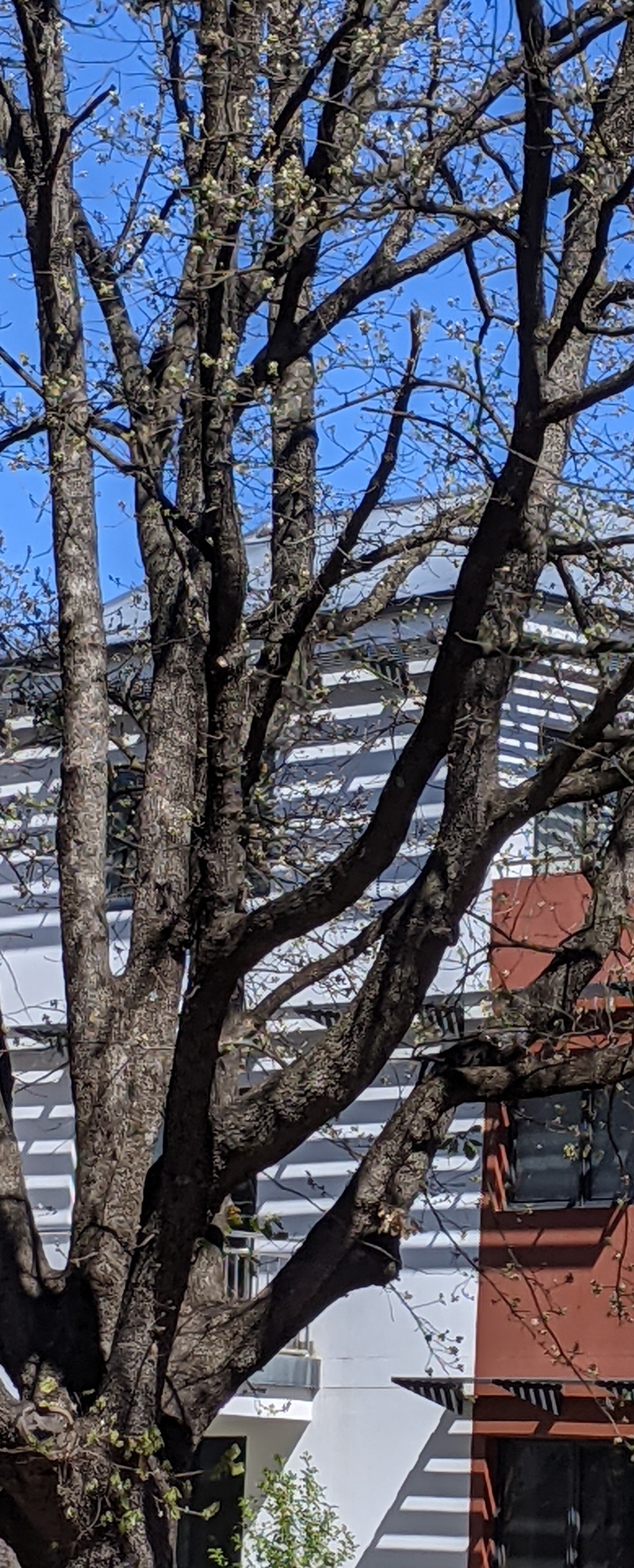
Day 35 lockdown walk – streetscape emptiness, but the trees are blossoming; Leah is welcome at the dog facilities, but we must check in.

Day 36 Lockdown
Thirty new cases have been recorded with seven spending some time in the community while infectious. Eight people are in hospital, including a child under twelve, and one remains in intensive care requiring ventilation. Chief Minister, Andrew Barr, has implemented more stringent border control. Forty three people from NSW were asked to leave the ACT. Andrew Barr also noted concerns about the opening up after 70% vaccination has been reached. He says that Doherty modelling suggests that even at 80% medium restrictions may need to stay in place. He suggests that the pace of vaccination in the ACT may mean that 90% is a viable target.
Day 36 lockdown walk – not Leah’s favourite as it was wet and even a few raindrops are anathema to her.




Day 37 Lockdown
There are seventeen new cases, eleven of which are linked to known cases or ongoing clusters, and six remain under investigation. Twelve were in the community during part of their infectious period. Twelve cases of the 376 cases of recovery, are in the last twenty-four hours. Eight people are in hospital, with two in intensive care and one requiring ventilation.
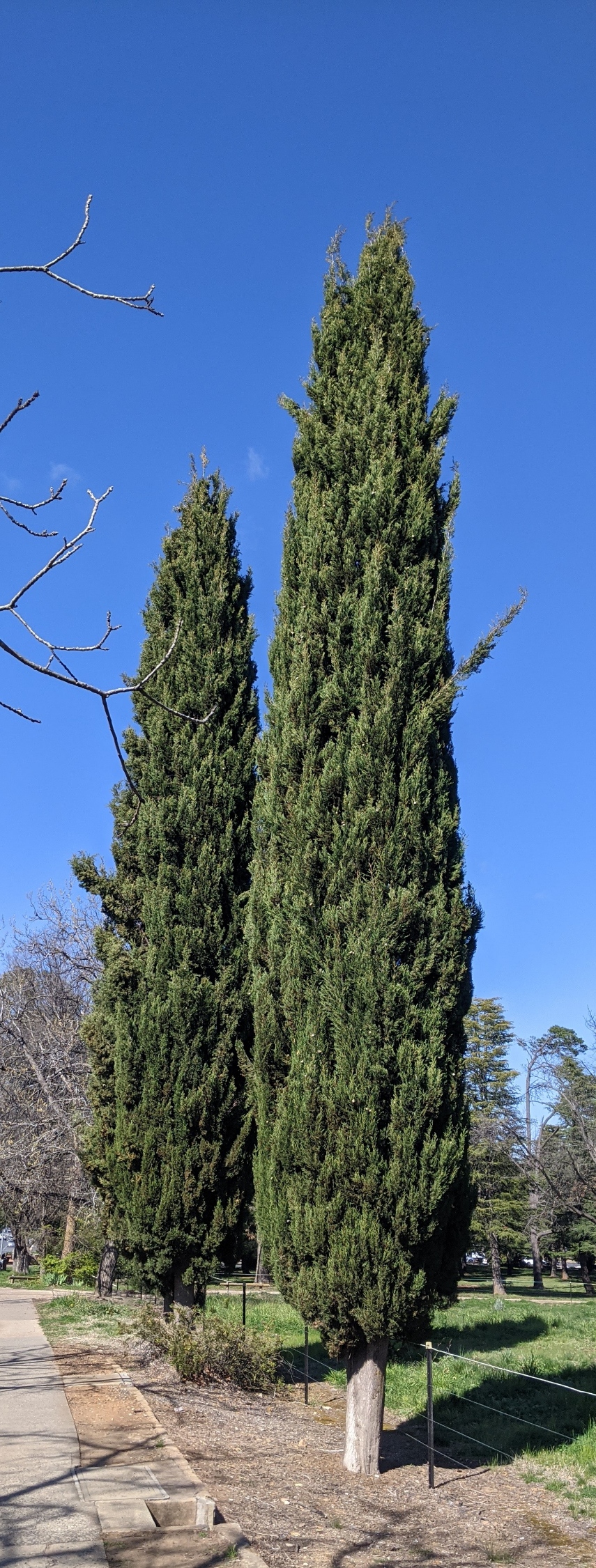
Day 37 lockdown walk

Day 38 Lockdown
Some Australian states have made plans to begin ending their lockdowns as the vaccination rates increase. In New South Wales, the case numbers have decreased to new cases of 935, with four deaths; there is one new case in Queensland; in Victoria there are 567 new cases and one death. The Northern Territory has recorded one new case after a man travelled from NSW to Darwin. In Victoria, Premier Dan Andrews, has produced a roadmap for ending lockdown, with it to end in late October. A regional town in NSW, Cowra, is going into lockdown, but the Premier has a a plan for ending restrictions. In the ACT seven new cases have been recorded with 233 cases active and 402 recovered. The total cases in the ACT is 625. Five people are now in hospital. Vaccinations are proceeding, with 79% of Canberrans having received their first dose and 54.1% both doses. There will be no significant easing of restrictions until an 80% vaccination result. There will be easing of restrictions through mid October to mid November. Pressure on the health system, through hospitalisations due to Covid are of major concern, as they are now in New South Wales and Victoria.
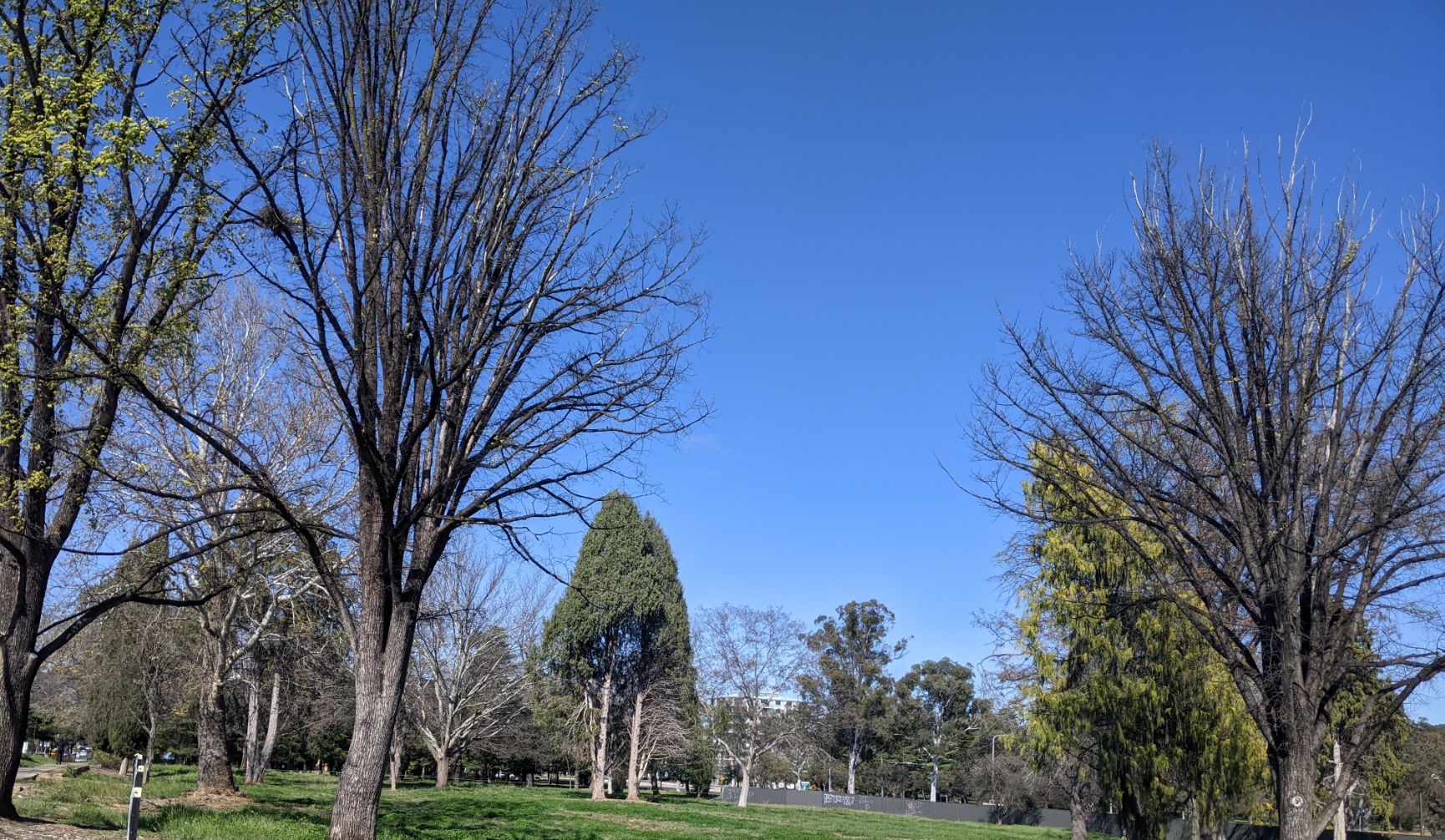
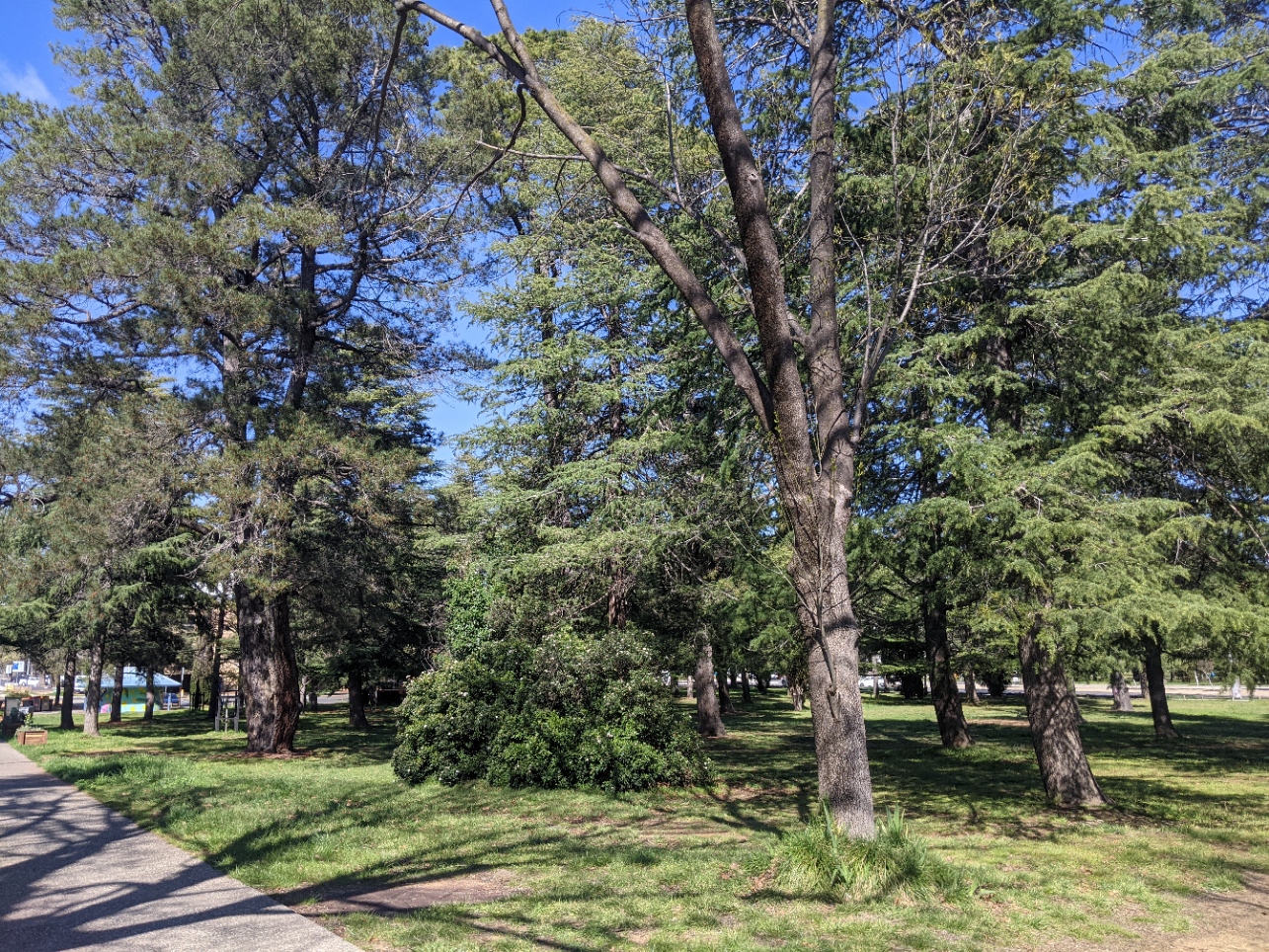
Day 38 lockdown walk


Day 39 Lockdown
Sixteen new cases have been recorded, with eleven being infectious while in the community.
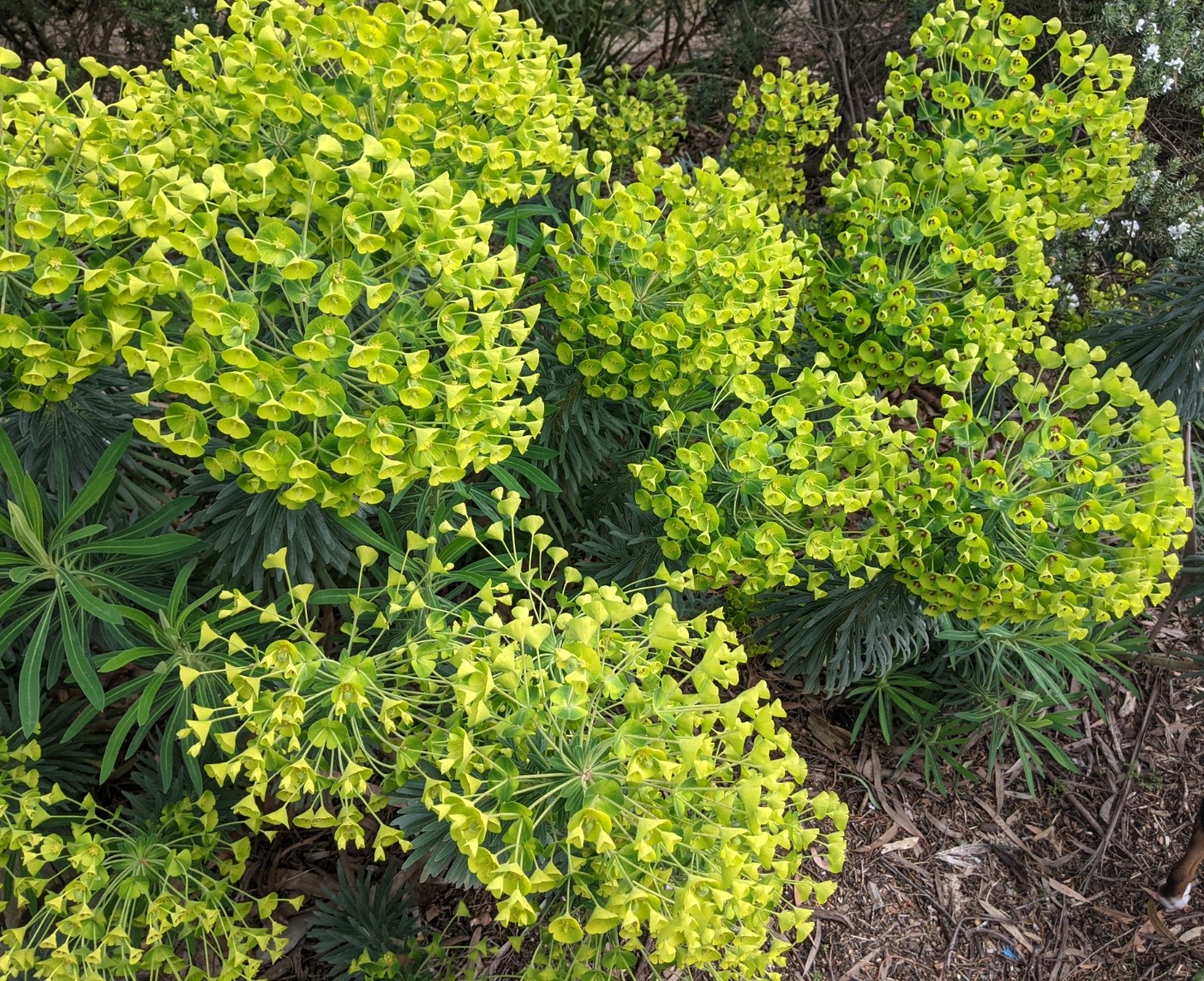
Day 39 lockdown walk – another cold day, with occasional bursts of sun


Day 40 Lockdown
Seventeen new cases have been recorded, with eleven cases being infectious in the community. Eight cases are unable to be linked to other known cases. Twelve people are in hospital with two patients in intensive care, both requiring ventilation. Border controls have been increased, as the virus has been introduced to the territory from at least ten different sources. Compliance within the city has been ‘generally good’. 55.8% of people over twelve have been vaccinated with two doses. More than 81% of people over twelve have received one dose. It is expected that more than 95% of eligible Canberrans will be fully vaccinated. Hospital places remain a concern, ACT accepts people from regional NSW adding to the need for nurses and hospital places.
Day 40 lockdown walk

German Social Democrats have the momentum to win
Bob McMullan

The German election on 26th September is globally significant and has been under-reported in the
Australian media.
Germany is of course a major economy in its own right. But its strong influence on the evolution of
the EU over the next decade makes it even more important.
Furthermore, while it has been understated in its exercise of diplomatic influence during the Angela
Merkel government, there is no doubt that it will grow in influence over the next decade. Its role in the Iran nuclear deal is an example of this growing influence.
Germany’s slightly different attitude from most of its NATO allies towards Russia and China is important and may be influenced by the outcome of the election.
Looking from afar and after consulting with some experts on the ground I believe the most likely outcome of the September 26 th German election will be a Social Democrat (SDP) led coalition.
On recent trends over the last decade this seems surprising. The SPD has been wallowing in the polls, particularly as a consequence of having served as the junior partner in a Conservative (CDU)/Social Democrat (SPD) coalition.
The key factor appears to be the credibility of the SPD candidate for Chancellor, Olaf Scholz. He has been the Finance Minister in the CDU/SPD coalition which was led until this election by Angela Merkel. He appears to have established himself in the public mind as the best of the three candidates on offer.
The latest polling shows Scholz with 30% support amongst voters, well ahead of the Greens candidate, Annelina Baerbock with 15% and the CDU candidate, Amin Laschet with a mere 12%.
None of them seem immensely popular but it is clear from this polling and the trends in the voting intention surveys that the SDP is gaining ground.
The most recent poll had the SPD ahead of the CDU for the first time in 15 years.
The current situation is fluid but the trend is clear from the following:
May 2
Greens 25%
CDU 21%
SPD 15%
July 22
Greens 19%
CDU 28%
SPD 16%
Aug 27
Greens 18%
CDU 23%
SPD 23%
September 7
Greens 17%
CDU 21%
SPD 25%
Germany has a two-tier election system with a combination of local members and a party list system similar to New Zealand. So, leader popularity is not a guarantee of success as it would be in a presidential system. But in this election when the voters will be, in effect, choosing the successor to
Merkel, the choice of Chancellor will be prominent in the mind of voters. Hers are big shoes to fill.
The election is still two weeks away and things could change. But the momentum is currently with the SPD and the trend is clear.
What are the risks? Local people are better placed to give a nuanced and comprehensive response to this question. But there appear to me to be two main risks.
The first is the recent change in approach from Laschet to attack Scholz and the Greens as a threat to German industry and jobs because of their positions on tackling climate change. The German government is not a global laggard like the Australian government. Nevertheless, there is considerable room for them to do more and this contest of ideas or of perceptions of threat could
change the course of the election.
The second obvious risk is the character of the coalition the SPD would choose to form. In Germany the safe option would be a coalition with the Greens and the small Liberal party (FPD). There are however two far left parties which if the middle ground of voters thought might be in the
government might send them back to the CDU.
Should the current trend hold the result will be significant. Of course, it will be significant for Germany. I don’t see dramatic changes but a more progressive policy on climate change and a move back towards Ostpolitik in its relations with Russia, as Scholz has indicated, would be significant for Germany, Europe and the global political climate.
Will the trend be maintained? Nothing is certain but up to 30% of voters are expected to vote early due to the pandemic. This makes early leads more significant. The Economist magazine’s analysis suggests the SPD have an 80% chance of being the largest party after the election, which would give
them a strong hand in subsequent coalition negotiations.
Such success for the SPD would also suggest that the forecasts of impending doom for Social Democratic parties have been overstated, which would be significant throughout Europe and potentially beyond.
 Robin's Room