Book reviews this week are Invite Me In by Emma Curtis and August by Maryann D’Agincourt, both novels were provided to me by NetGalley for review.
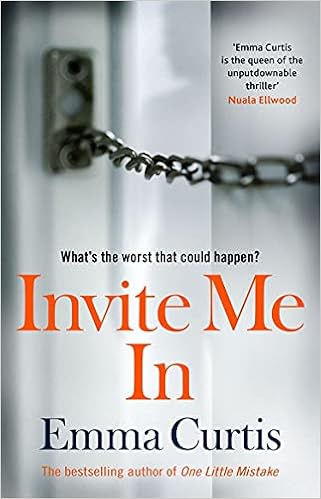
Emma Curtis Invite Me In Transworld Publishers, Penguin Random House, 2021, First published, Black Swan 2021.

Lies, addiction, revenge, abuse, and murder combined with domestic rites such as dropping children at school, arranging their playdates, admiring their drawings, and organising childcare enhance the complexities to be unravelled in this domestic thriller.

Emma Curtis makes the most of each component of the novel, from her characterisations, a solid plot, to the questions that roil endlessly in the reader’s mind. Moments that seem predictable, familiar ploys and clues, become immersed in other events that encourage the reader to ‘take the eye off the ball’. At times ‘we know it all’, but, no, we do not. And even when we do, it does not spoil a convincing read. I found the twist at the end unnecessary, but other readers will enjoy this tying up of ends with another outlook on the main character. I felt that I knew enough about Eliza Curran, her character, and motivations.

Maryann D’Agincourt August Portmay Press, New York 2021

August takes on several meanings in this novel. The Joseph Conrad quote with which it opens refers to ‘august light’, the month of August is significant, for the writer, as the ‘last full month of summer’, and, in the same last paragraph of the novel, august is a characterisation of a person with fortitude, one who can choose a path, has ‘majesty’. So, too does the writer slip from memories that are hazy, to events in August, to characters who have the opportunity to be august, but may well leave that to others. The lyricism of the writing draws the reader in to almost forgetting that some of the characters fall well short of being august. Perhaps none so much as the main character, Jenny.
The complete reviews can be found at Books: Reviews
The following articles will be found after the lockdown information:
American Women and the Ongoing Battle to Save Democracy – a zoom meeting on Thursday, October 7, 2021, 4 PM ET; Frida Kahlo’s self portrait goes on sale; and Heather Cox Richardson writes about the civil liberties aspects of the Texas abortion law.
Day 41 Lockdown
Sixteen more cases were recorded in Canberra, none of whom was in quarantine for their entire infectious period. None are linked to known transmission sites or known cases. Chief Minister, Andrew Barr, is concerned that people are waiting too long to be tested. He has also noted that he will not bow to pressure to end lockdown. Twelve people are in hospital, two in intensive care and requiring ventilation. Canberrans between 12 and 59 can now book for a Modena vaccination appointment.
Day 41 lockdown walk – morning mist and afternoon sun on the last of the blossoms



Day 42 Lockdown
Nineteen new cases have been recorded, with 217 active cases in the ACT and 476 as the total of people who have recovered. Over twelve years of age vaccinations are at 57.3% with two doses.
Day 42 lockdown walk


Day 43 Lockdown
Thirty two new cases have been recorded – ‘the equal highest number of infections recorded in the ACT. Six cases are not able to be linked to known cases, and twenty four people were infectious in the community. Ten people are in hospital, with four in intensive care, and three require ventilation. The ‘good news’ is that ten new cases are linked in a care facility – but all the staff have received their first dose and 53% are fully vaccinated.
Day 43 lockdown walk





Day 44 Lockdown
Twenty-five new cases have been recorded, with at least sixteen infectious in the community. Eighteen cases have been linked to an existing case or exposure site. Ten people are in hospital, four of whom are in intensive care with three of those requiring ventilation.
Day 44 lockdown walk




Day 45 Lockdown
Nineteen new cases were recorded, seventeen of whom are linked to ongoing cases or known clusters. Eight were in the community during part of their infectious period. The first death during this outbreak in the ACT has been recorded, bringing the total to four Covid related deaths in the ACT. ACT Health extended condolences to the person’s family and friends. Eight people are in hospital, with three in intensive care requiring ventilation. Vaccinations of two doses for those over twelve are at 59.3%. Vaccinations given at GP and staff and residents in disability and aged residential care are not counted in that %.
Day 45 lockdown walk



Day 46 Lockdown
A plan for returning to life before lockdown in the ACT has been announced with lockdown to finish on October 15. The following changes have been added to take place on Friday 1 October : two people from another household can visit at any one time, for any reason; more than two children can visit for childcare; Click and Collect has been extended to non-essential retail businesses; rules related to some organised outdoor activities will be relaxed; preventative dental services will recommence. Masks are still required. More on what will happen from October 15 will be in the blog update tomorrow. There are thirteen new cases. A major concern is people waiting for five days into their being symptomatic before they are tested.
Days 46 and 47 lockdown walks



Day 47 Lockdown
Twenty two more cases have been recorded, with increasing cases in the NSW surrounding areas. Ten people are in hospital, three of whom are in ICU requiring ventilation. Calls to be tested more promptly have been reiterated. Some essential treatments for Covid need to be administered within five days of an individual experiencing symptoms for them to be fully effective. At the moment 40% of people are waiting more than two days after developing symptoms to be tested.
ACT Pathway Forward
Released 27/09/2021 – Joint media release
The ACT Government has today updated our Pathway Forward as we continue to work towards high vaccination coverage in the ACT.
During October, the ACT will hit 80% of our population over the age of 12 fully vaccinated. We will reach this milestone ahead of the national average, but this doesn’t mean we will stop vaccinating. The ACT will continue supporting our local vaccination rollout until everyone who wants to be vaccinated has the opportunity to do so.
This very strong level of vaccination coverage will allow us to start taking gradual steps forward once we reach 80% vaccination coverage of the population over the age of 12. These steps will see us transition from high, to medium, low and finally baseline public health measures.
Subject to the public health risk remaining relatively stable in the next two weeks, the ACT’s lockdown will end at 11:59pm on Thursday 14 October, triggering a transition to medium level public health measures.
From the 15 October, five people will be able to visit another household at any one time, and 25 people will be able to gather outdoors.
Licensed venues, cafes and restaurants will be able to operate seated service at a maximum capacity of 25 across venue or one person per four square metres (1 per 4 sqm) indoors. Alternatively, venues can chose to operate outdoors will a maximum of 50 patrons at 1 per 4 sqm.
Hairdressers, beauty & personal services can recommence services with a maximum of five customers at any one time.
All non-essential retail will continue operating under click & collect or click & deliver services, but the maximum staffing capacity inside a business premise will go from five to 10 people.
Gyms will be able to reopen with strict COVIDSafe requirements with a maximum of 25 people at 1 per 4 sqm.
The 25 people at 1 per 4 sqm rule will also apply to:
- Weddings
- Outdoor play centres
- Places of worship
- Outdoor auctions
- Community centres and facilities
Accommodation providers such as hotels and motels, campgrounds, caravan parks & campsites can reopen, as can swimming pools for organised lessons with a maximum of 25 swimmers.
Funerals will be able to occur with 50 attendees at 1 person per 4 square metres.
As the national vaccination average climbs towards 80% in late October, the ACT will continue to gradually reduce the level of public health safety measures.
From 29 October, subject to the public health risk at the time, a number of businesses and activities will be able to move towards more relaxed density and capacity limits.
Licenced venues, cafes and restaurants will be able to cater for 25 people across the venue before any density limits apply. Those density limits will be 1 per 4 sqm indoors (up to 100 people per indoor space) and 1 per 2 sqm outdoors (up to 150 people).
This will also apply to many of the businesses and activities that will be recommencing from 15 October.
Organised sport will be able to recommence under the same density and capacity limits, and swimming pools will reopen to the public.
Further public health measures from the From 29 October include:
- 10 people will be able to visit a household at any one time, and 30 people will be able to meet outdoors;
- Ticketed and seated events will be able to recommence with density and capacity limits depending on whether they are indoors or outdoors;
- All retail stores in the ACT will be permitted to open with 1 per 4 sqm;
- Cinemas, galleries and museums will be able to reopen; and
- Dance classes, choirs and bands will also be able to commence in person, with a maximum of 20 people or 1 per 4 sqm.
As the ACT’s vaccination rate continues above 90% of the eligible population, further changes will be considered. This includes eased venue density limits such as 1 per 2 sqm and increased household and outdoor gathering sizes.
The requirements for interstate and overseas travel will also be considered as we move through these phases of the ACT’s Pathway Forward. The ability to travel interstate and overseas will be subject to the border decisions of State and Territory Governments and the Commonwealth respectively.
The ACT’s Pathway Forward has been informed by national and local modelling on the impact that COVID-19 will have on cases and hospitalisations. We can expect as the nation relaxes public health measures, the ACT could be recording daily cases numbers in the hundreds – most likely in the first quarter of 2022.
The higher the level of community vaccination, the lower the number of cases, hospitalisations, people requiring intensive care and deaths as a result of a COVID-19 infection.
It will be a challenge, but the ACT’s Pathway Forward announced today will ensure that we make the gradual and safe steps towards a better Christmas and summer holiday here in the ACT.
– Statement ends –
Section: Andrew Barr, MLA | Rachel Stephen-Smith, MLA | Media Releases
American Women and the Ongoing Battle to Save Democracy

- Thursday, October 7, 2021
4 PM ET - Online on Zoom
Harvard Radcliffe Institute
Bill O’Leary/The Washington Post
Jennifer Rubin, the author of Resistance: How Women Saved Democracy from Donald Trump (William Morrow, 2021) and a Washington Post opinion writer, explains the persistent threat to American democracy and the central role women from across the political spectrum played in opposing and ultimately defeating Trump. She will discuss how American women redefined US politics and, looking ahead, will examine women’s importance to defending the rule of law and multiracial democracy.
Discussant
Michel Martin, weekend host, NPR’s All Things Considered
Register
Free and open to the public. To view this event online, individuals will need to register via Zoom.
For instructions on how to join, see the How to Attend a Radcliffe Event on Zoom webpage.
After registering, you will receive a confirmation e-mail containing a link and password for this meeting.
Live closed captioning will be available for this webinar.
Frida Kahlo self-portrait set to break auction records
Mexico City: New immersive exhibit honours Frida Kahlo’s legacy Al Jazeera goes inside the mind of Mexico’s most famous artist – an exhibition that brings Frida Kahlo’s paintings to life.


A self-portrait by famed Mexican artist Frida Kahlo is expected to smash records with an eye-watering purchase price this year.
The painting, titled Diego y yo (Diego and I), is set to fetch more than $US30 million ($41 million) when it goes under the gavel in November.
It would be the most ever paid for a work of art by a Latin American artist.
And more than three times the price of Kahlo’s most expensive painting, with Dos desnudos en el bosque (La tierra misma) selling for $US8 million in 2016, according to Forbes.
Created in 1949 – five years before she died – this was the last of Kahlo’s bust-length self-portraits and is a deeply emotional piece.
Chairman of Sotheby’s auction house and head of sales for global fine art Brooke Lampley said the self-portrait is one of the defining paintings of her career.
“Frida Kahlo’s emotionally bare and complex portrait Diego y yo is a defining work”, Mr Lampley said in a statement.
“To offer this portrait in our Modern Evening Sale in November heralds the recent expansion of the Modern category to include greater representation of underrepresented artists, notably women artists, and rethink how they have historically been valued at auction.”
It may have been inspired by heartbreak due to her husband’s infidelity, as it was created during one of Rivera’s many affairs.
He was romantically involved with Kahlo’s close friend María Félix at the time she painted the portrait, according to Sotheby’s.
The artwork captures an emotional Kahlo. It depicts the artist with tears flowing down her face, her husband Diego Rivera – featuring a third eye – nestled inside her forehead, understood to mean he was on her mind.
Rivera was one of Mexico’s best-known artists, a muralist who was already successful when he married his third wife, Frida, in 1929.
They divorced in 1940, but remarried the following year and remained together until her death in 1954.
Heather Cox Richardson
Heather Cox Richardson is a political historian who uses facts and history to make observations about American Politics
- heather.richardson@bc.eduEmail

September 3, 2021 (Friday)
The new anti-abortion law in Texas is not just about abortion; it is about undermining civil rights decisions made by the Supreme Court during the 1950s, 1960s, and 1970s. The Supreme Court declined to stop a state law that violates a constitutional right.
Since World War II, the Supreme Court has defended civil rights from state laws that threaten them. During the Great Depression, Democrats under President Franklin Delano Roosevelt began to use the government to regulate business, provide a basic social safety net—this is when we got Social Security—and promote infrastructure. But racist Democrats from the South balked at racial equality under this new government.
After World War II, under Chief Justice Earl Warren, a Republican appointed by President Dwight Eisenhower, and Chief Justice Warren Burger, a Republican appointed by Richard Nixon, the Supreme Court set out to make all Americans equal before the law. They tried to end segregation through the 1954 Brown v. Board of Education of Topeka, Kansas, decision prohibiting racial segregation in public schools. They protected the right of married couples to use contraception in 1965. They legalized interracial marriage in 1967. In 1973, with the Roe v. Wade decision, they tried to give women control over their own reproduction by legalizing abortion.
They based their decisions on the due process and the equal protection clauses of the Fourteenth Amendment, passed by Congress in 1866 and ratified in 1868 in the wake of the Civil War. Congress developed this amendment after legislatures in former Confederate states passed “Black Codes” that severely limited the rights and protections for formerly enslaved people. Congress intended for the powers in the Fourteenth to enable the federal government to guarantee that African Americans had the same rights as white Americans, even in states whose legislatures intended to keep them in a form of quasi-slavery.
Justices in the Warren and Burger courts argued that the Fourteenth Amendment required that the Bill of Rights apply to state governments as well as to the federal government. This is known as the “incorporation doctrine,” but the name matters less than the concept: states cannot abridge an individual’s rights, any more than the federal government can. This doctrine dramatically expanded civil rights.
From the beginning, there was a backlash against the New Deal government by businessmen who objected to the idea of federal regulation and the bureaucracy it would require. As early as 1937, they were demanding an end to the active government and a return to the world of the 1920s, where businessmen could do as they wished, families and churches managed social welfare, and private interests profited from infrastructure projects. They gained little traction. The vast majority of Americans liked the new system.
But the expansion of civil rights under the Warren Court was a whole new kettle of fish. Opponents of the new decisions insisted that the court was engaging in “judicial activism,” taking away from voters the right to make their own decisions about how society should work. They said that justices were “legislating from the bench.” They insisted that the Constitution is limited by the views of its framers and that the government can do nothing that is not explicitly written in that 1787 document. This is the foundation for today’s “originalists” on the court. They are trying to erase the era of legislation and legal decisions that constructed our modern nation. If the government is as limited as they say, it cannot regulate business. It cannot provide a social safety net or promote infrastructure, both things that cost tax dollars and, in the case of infrastructure, take lucrative opportunities from private businesses. It cannot protect the rights of minorities or women.
Their doctrine would send authority for civil rights back to the states to wither or thrive as different legislatures see fit. But it has, in the past, run into the problem that Supreme Court precedent has led the court to overturn unconstitutional state laws that deprive people of their rights (although the recent conservative courts have chipped away at those precedents). The new Texas law gets around this problem with a trick. It does not put state officers in charge of enforcing it. Instead, it turns enforcement over to individual citizens. So, when opponents sued to stop the measure from going into effect, state officials argued that they could not be stopped from enforcing the law because they don’t enforce it in the first place. With this workaround, Texas lawmakers have, as Justice Stephen Breyer noted in his dissent, “delegate[d] to private individuals the power to prevent a woman from…[exercising]…a federal constitutional right.”
Justice Sonia Sotomayor was more forceful, calling the measure “a flagrantly unconstitutional law engineered to prohibit women from exercising their constitutional rights and evade judicial scrutiny.” And yet, the Supreme Court permitted that state law to stand simply by refusing to do anything to stop it. As Sotomayor wrote in her dissent: “Last night, the Court silently acquiesced in a State’s enactment of a law that flouts nearly 50 years of federal precedents.” A state has undermined the power of the federal government to protect civil rights. It has given individuals who disagree with one particular right the power to take it away from their neighbors. But make no mistake: there is no reason that this mechanism couldn’t be used to undermine much of the civil rights legislation of the post–World War II years.
On September 4, 1957, three years after the Brown v. Board of Education decision, a crowd of angry white people barred nine Black students from entering Central High School in Little Rock, Arkansas. The white protesters chanted: “Two, four, six, eight, we ain’t gonna integrate.” In 1957, Republican President Dwight Eisenhower used the federal government to protect the constitutional rights of the Little Rock Nine from the white vigilantes who wanted to keep them second-class citizens. In 2021, the Supreme Court has handed power back to the vigilantes.



Secretary of State Katie Hobbs made a statement, and also appeared on TRMS to discuss the aftermath of the result – it is not the end of this matter. And it should be.

 Robin's Room