
Ian Nathan The Coppolas A Movie Dynasty Palazzo, 2021.
Thank you, NetGalley.
Ian Nathan has written an insightful and exciting contribution to our understanding of writing, directing and producing films; the role of family and ability in a dynasty such as the Coppolas; the studio system, and the contribution of film finance, box office returns and reviews; to the success of a film that begins with an idea that impels people such as Francis Ford and Sofia Coppola toward creative endeavour. Francis Ford and Sofia Coppola are the stars of this book. However, other members of the Coppola family also make contributions to the Coppola dynasty’s work, and they are also given a place in this absorbing story: wife, mother, documentary maker, and eventual film maker, Eleanor Coppola; sister and actor, Talia Shire; brother and supporter, August; sons and supporters, Gio and Roman Coppola; cousin and actor, Nicholas Cage (formerly Coppola); granddaughter, Gia Coppola. So, too, are the actors who took their place, successfully or sometimes perhaps not, in the films. Francis Ford’s father, Carmine, makes an appearance. Here a story Nathan relates about a prank played on him by Francis Ford Coppola is very sympathetic to him, rather than acknowledging the impact on the father – an interesting comment on the investment Nathan makes in his portrayal of the son.
The complete review can be read at Books: Reviews
The following articles follow the Canberra Lockdown series: Historic moment as Daintree National Park returned to Eastern Kuku Yalanji people by ABC Far North / By Carli Willis, Dwayne Wyles, and Holly Richardson; Bob McMullan, The Biggest Issue to be Decided in the 2022 Election; Bernard Collaery and Witness K.
Day 48 Lockdown Canberra
Thirty-one new cases have been reported, with seventeen infectious in the community. Pfizer and Moderna vaccinations are available to Canberrans aged over sixty. Ten people are in hospital, with three in intensive care requiring ventilation. Some lockdown measures will ease from midnight tonight – I shall wait until the morning to take advantage of them.
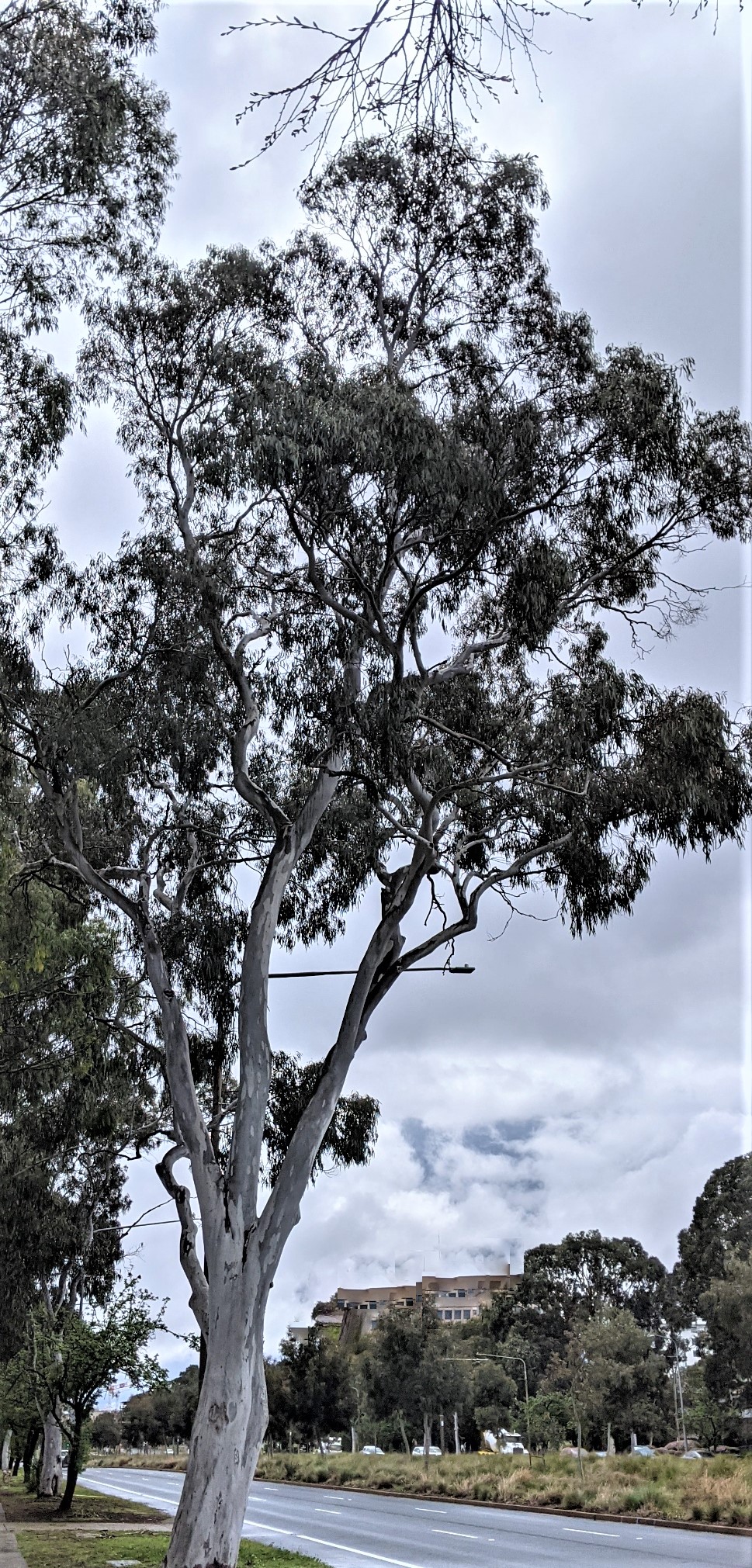
Day 48 lockdown walk – it rained overnight, but there was no evidence of the severe storm predicted.

Australian Covid 19 situation
At 1 October 2021 the total cases of Covid 19 in Australia are 105k, with 1,289 deaths.
Victoria has replaced New South Wales as the state recording the most new Covid cases. Today Victoria recorded 1,143 new cases and three deaths. This is the second highest tally since the pandemic began. The spike has been blamed on increased household visits during the AFL grand final weekend. It is possible that the road map out of lockdown may have to be adjusted. The state has reached 80% of the 16+ population having received at least one vaccine dose.
NSW recorded 864 cases and fifteen deaths in the 24 hours to 8.00pm on Thursday. Fifteen deaths were also recorded on Wednesday. Over 87% of people aged 16 + have received their first dose of a Covid 19 vaccine, and 64% are fully vaccinated.
Queensland has recorded two new cases. There will be no lockdown as there is no community transmission. Queensland’s vaccine roll out for those eligible is 65.72% first dose and those fully vaccinated , 46.77%.
South Australia had one new case. However, no new cases have been recorded today.
Western Australia has no new cases.
The Northern Territory has seven active cases. One new case has been recorded. Vaccinations are: 74% first dose; 59% both doses.
Tasmania has no new cases.
Day 49 Lockdown and lockdown walk
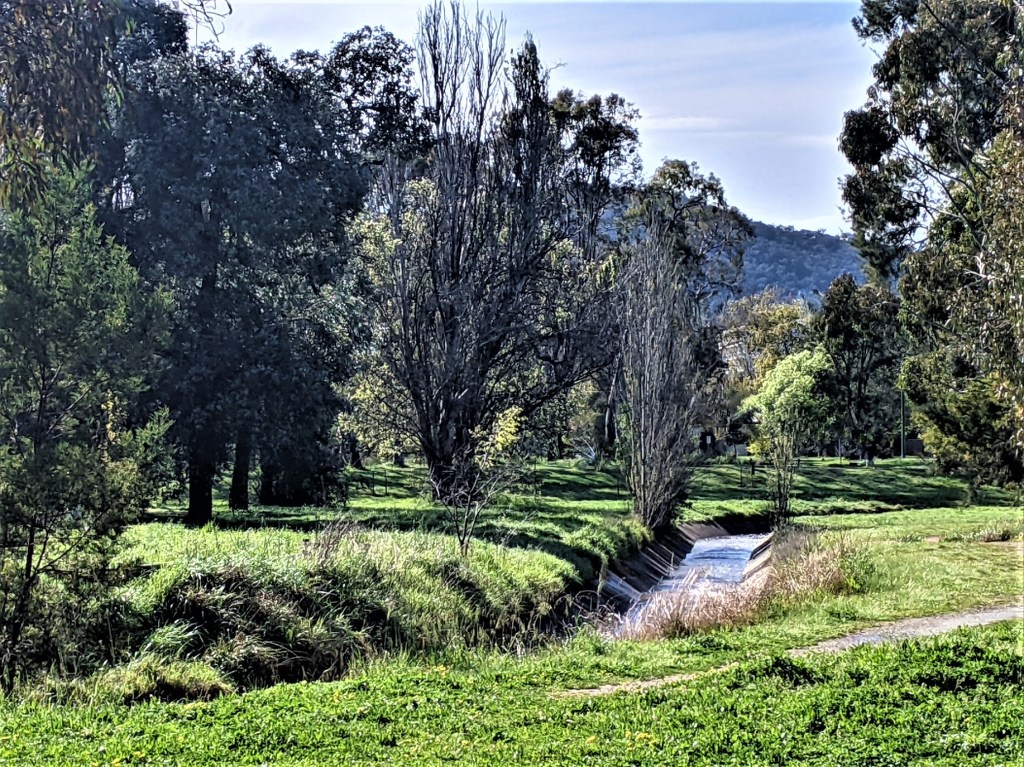
Today the ACT recorded fifty two more new cases. Of these forty are liked to previous cases or ongoing clusters. Seventeen were in quarantine during their infectious period, thirty one spent varying periods of time in the community during their infectious period, and four are under investigation. Two people died with Covid, but had been receiving ‘end of life’ care at the time. There are eleven patients in hospital and three in intensive care requiring ventilation.
Day 50 Lockdown
Again, fifty two new cases were recorded, equalling the territory’s record number since the pandemic began. Twenty nine of these cases were infectious in the community. There are thirteen cases in hospital, with three in intensive care requiring ventilation. There are now 92% of the population vaccinated with one dose, and 63 % of the population fully vaccinated.
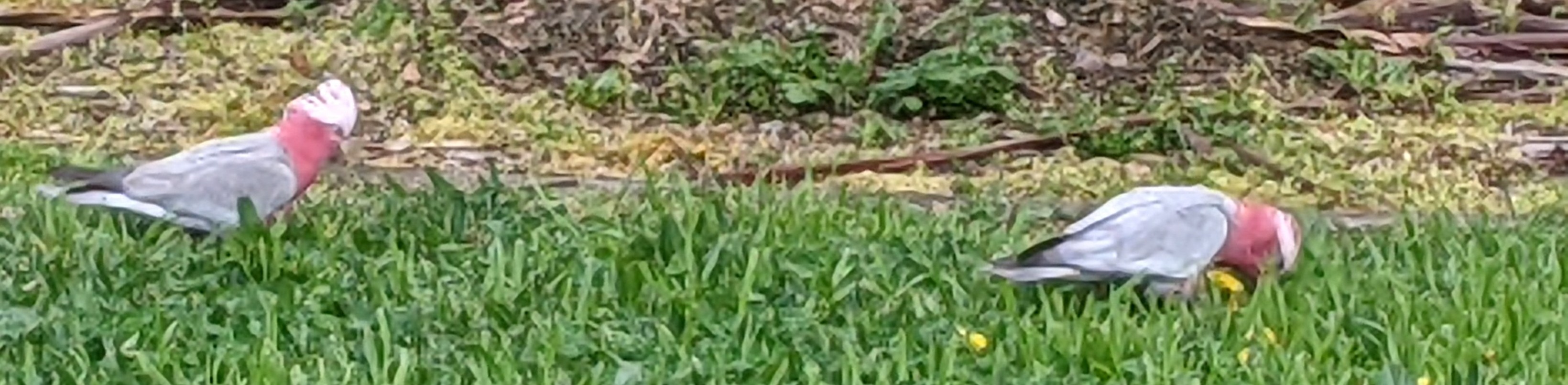
Day 50 lockdown walk


Day 51 Lockdown
There were thirty eight new cases recorded, twenty four of which are linked to known cases. Fourteen were in quarantine, sixteen spent varying amounts of time in the community while infectious, and eight remain under early investigation. Fourteen people are in hospital including five in intensive care and three requiring ventilation.
Day 51 Lockdown walk


Day 52 Lockdown
Twenty eight new cases were recorded, and two more deaths. 93% of ACT residents aged over 12 have received their first dose of a vaccine. There are currently sixteen people in hospital, five in intensive care, and one person requiring ventilation. Ten of the people in hospital are unvaccinated.
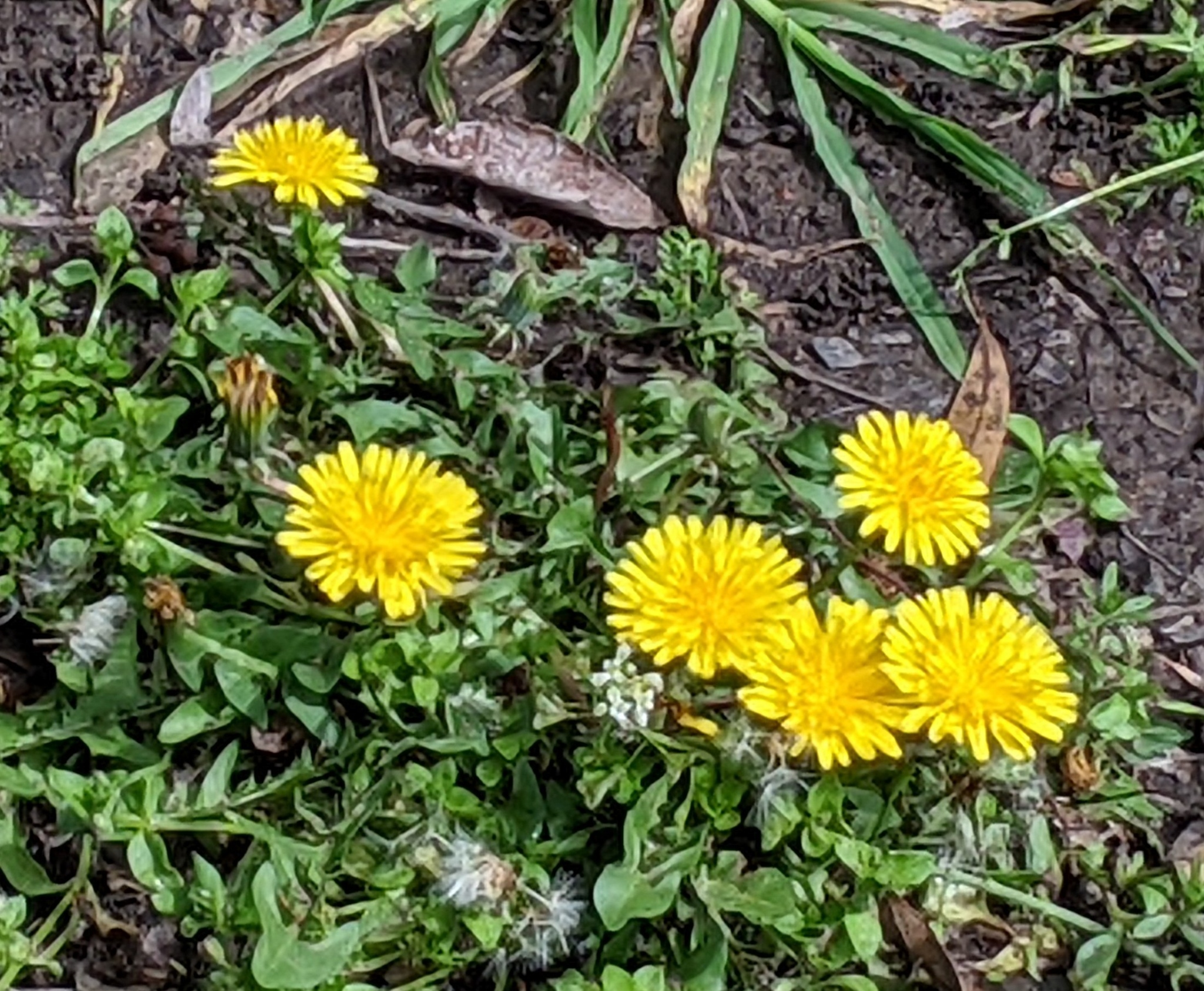
Day 52 Lockdown walk


Day 53 Lockdown
Thirty three new cases have been recorded, with at least fourteen infectious in the community. More people are transmitting the virus to close contacts, perhaps as a result of eased restrictions. The ACT Government is considering mandating vaccination of front line workers. there are fourteen people in hospital , with five in intensive care and three of those requiring ventilation. More than 94% of Canberrans over 12 have received one dose, and 65% over twelve have been fully vaccinated.
Day 53 lockdown walk


Day 54 Lockdown
Twenty eight new cases have been recorded. There are sixteen people in hospital, and one further death recorded. Second doses of the vaccine have been given to 66.1% of people in the ACT.
Day 54 lockdown walk


Historic moment as Daintree National Park returned to Eastern Kuku Yalanji people
ABC Far North / By Carli Willis, Dwayne Wyles, and Holly Richardson Posted Thu 30 Sep 2021 at 8:01amThursday 30 Sep 2021 at 8:01am, updated Yesterday at 9:39amFri 1 Oct 2021 at 9:39am
Help keep family & friends informed by sharing this article:
abc.net.au/news/daintree-handed-back-to-traditional- owners/100498982COPY LINKSHARE
The world’s oldest living rainforest has been returned to its custodians in a historic handback ceremony in Far North Queensland.
Key points:
- Native title had already been established over the land, but the traditional custodians wanted more involvement
- They will jointly manage the country with the Queensland government and say it will lead to cultural learning and employment opportunities
- About 20 per cent of the 160,213ha handed back comes in addition to the land already under native title
The Eastern Kuku Yalanji people have taken formal ownership of 160,213 hectares of country stretching from Mossman to Cooktown, including the UNESCO World Heritage-listed Daintree National Park.
“This is where we belong on country, on bubu — on land,” Yalanji traditional owner and Jabalbina Yalanji Aboriginal Corporation director Mary-Anne Port said.
“All our ancestors called us back to home.
“I broke down — to get it all back in a battle that we’ve lost so many, young and old, that fought for country and now it’s all back.”
Long fight
This is country of huge cultural, environmental and global significance, encompassing the Daintree, Ngalba-bulal, Kalkajaka and the Hope Islands National Parks.
The Daintree Rainforest, estimated to be 180 million years old, was added to the UNESCO World Heritage List in 1988.
More than 160,000ha across four national parks was handed back.(
Supplied: Queensland government)
Native title had already been established over much of the land, but the traditional custodians wanted more than recognition.
They wanted a say in the management of their land and their cultural heritage.
“We’d like to see all our young people step up now and [be] doing work on country, learning about cultural sites, where they come from,” Jalunji and Nyungkul elder Maree Shipton said.
“Were glad that we got all our national park back.”
Ms Shipton said she went to every Traditional Owner Negotiating Committee (TONC) meeting in the lead-up to the celebration.
TONC and five elders groups were formed to negotiate with the government on behalf of the three clan groups — Yalanji, Jalunji and Nyungkul.
Jabalbina Yalanji Aboriginal Corporation chair and Kuku Yalanji woman Lynette Johnson said she was looking forward to the jobs and upskilling opportunities for young people the historic change would provide.
“They don’t have to be rangers — we can have them working anywhere,” she said.
Joint management
Under the Indigenous Management Agreement, the Eastern Kuku Yalanji People will jointly manage the four national parks with the Queensland government.
“Today is not the end — it’s the beginning of the next step of the process,” Kuku Nyungkul traditional owner Desmond Tayley said.
“This was the second part of the native title claim [of 2007].”
Mr Tayley said the managers would work in partnership with governments and stakeholders to make sure they received the full benefit of what they signed and ensure that promised jobs and funding would come through.
State Environment Minister Meaghan Scanlon said the agreement was a “really important milestone in Queensland’s history” that “really rights the wrongs of the past”.
“There’s a number of agreements put in place … to make sure that we’ll continue to work in good faith with traditional owners to make sure we are working in genuine partnership,” she said.
“We know there’s more work to do and today is just a step forward in that path to reconciliation.”
Mr Tayley said the restoration was a crucial part of the healing process.
“It’s important that we get that back on country and we make sure that our spirit is kept very strong,” he said.
The Biggest Issue to be Decided in the 2022 Election

Bob McMullan
There are many conventional short to medium term issues which will be in contention between the major parties at the next election.
For example, there is likely to still be debate about taxation. Middle class people and rich and powerful people are always focused on taxation. Poorer people know that how a government spends its money is much more important to them.
There are, of course, also serious issues about the availability of child care and social housing which will be influenced by the choice voters make at the election. There will be an important contest about policy to deal with climate change. The election will also decide whether Australia gets a
serious Integrity Commission, or whether we get one at all.
This is the suite of issues arising from the “Uluru Statement from the Heart”, including the issue of an Indigenous Voice to Parliament.
Anthony Albanese has expressed his support for a bipartisan process to lead to a constitutional amendment to enshrine the voice of indigenous people in all the issues which affect them. Scott Morrison has not.
To be fair, I have no reason to doubt the genuine commitment of the Indigenous Affairs Minister, Ken Wyatt, but I doubt his capacity to deliver his coalition colleagues. Some, such as Andrew Bragg, have expressed support. However, it is hard to see the coalition overall giving up the opportunity to
exploit such a potentially divisive issue. This is particularly relevant in Queensland, where Pauline Hanson is threatening to eat into their vote on this and other issues.
I have seen reports that Barnaby Joyce now supports a voice to parliament. I cannot validate this claim. He has certainly walked back his more extreme opposition. If it is true that he would support a constitutional change to this effect that would be very significant.
In parallel to the question of a voice is the issue of a Makarrata Commission to conduct national level discussions about a treaty similar to the processes under way in Victoria, Queensland and the
Northern Territory.
The Commission may well prove to be the most important part of the Uluru Statement but it has not had the same attention as the voice proposal.
As envisaged, the Commission should be able to lead discussions on the rumours, allegations and established facts about massacres of indigenous people up to and including events of the twentieth century. It could also follow-up on the unimplemented recommendations of the Royal Commission
into Aboriginal Deaths in Custody and any other historical incidents of interest.
Anthony Albanese has committed to establish such a Commission. Scott Morrison has not.
The proposed Makarrata Commission has the advantage that it does not require a constitutional amendment. It could probably be established initially without even legislation, although this would be important going forward.
This suite of measures has the potential to be as fundamental to our future as a country as Gough Whitlam’s commitment to the Gurindji and to Land Rights more generally. It would be comparable in significance to the Paul Keating Redfern speech or Kevin Rudd’s apology. Taken together with the Native Title Act and the Indigenous Land and Sea Corporation it would begin the process of catching up with comparable countries such as New Zealand, Canada and the United States.
When I was Shadow Minister for Indigenous Affairs almost twenty years ago the evidence showed that the life expectancy gap between indigenous and non-indigenous Australians was wider than in those three comparable countries. The data also showed that the gap was narrowing in USA, New
Zealand and Canada but was continuing to widen in Australia. It appears the situation remains the same today.
Redress of historical wrongs and a Voice will not solve these challenges by themselves. But they are an essential part of a suite of measures Australia needs to take to reverse the trend of increasing disadvantage.
The next election will determine many things about our country going forward.
As Paul Keating said:
“When you change the government you change the country.”
No consequence of the next election will be more profound than the question of whether we take next steps to redress historical wrongs and recognise the legitimate claims of our indigenous citizens.
This article was first published in Pearls and Irritations.
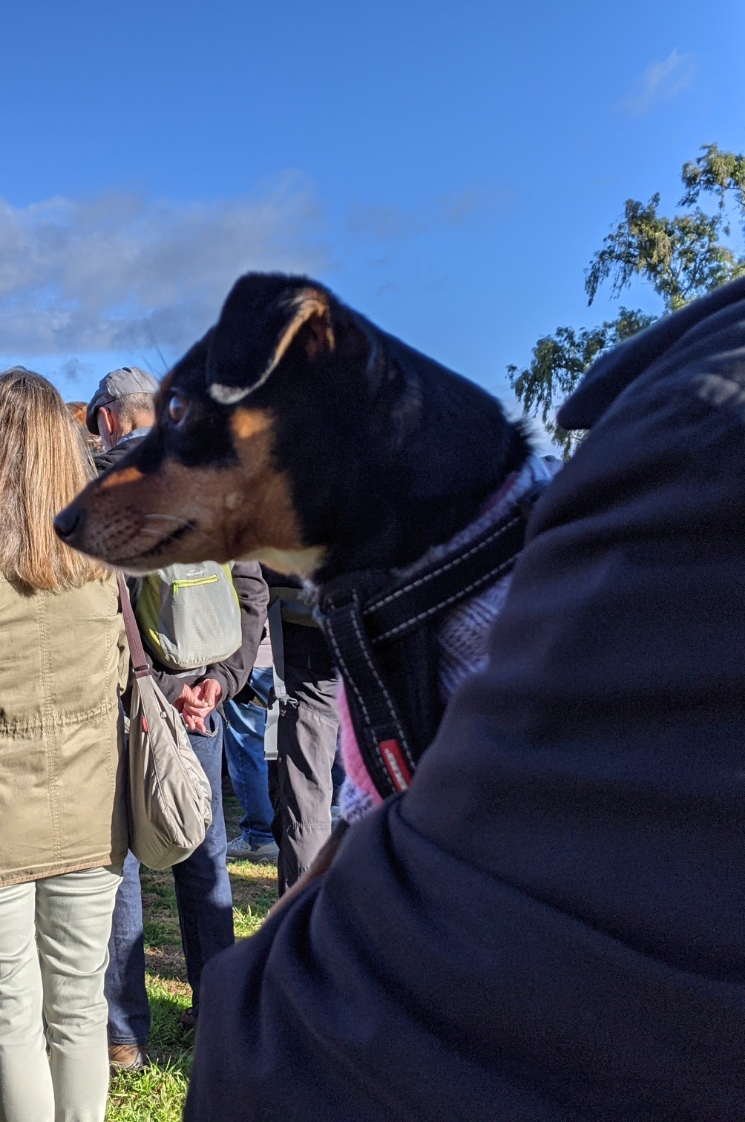
FOLLOW UP TO DEMONSTRATION HELD 17 JUNE 2021
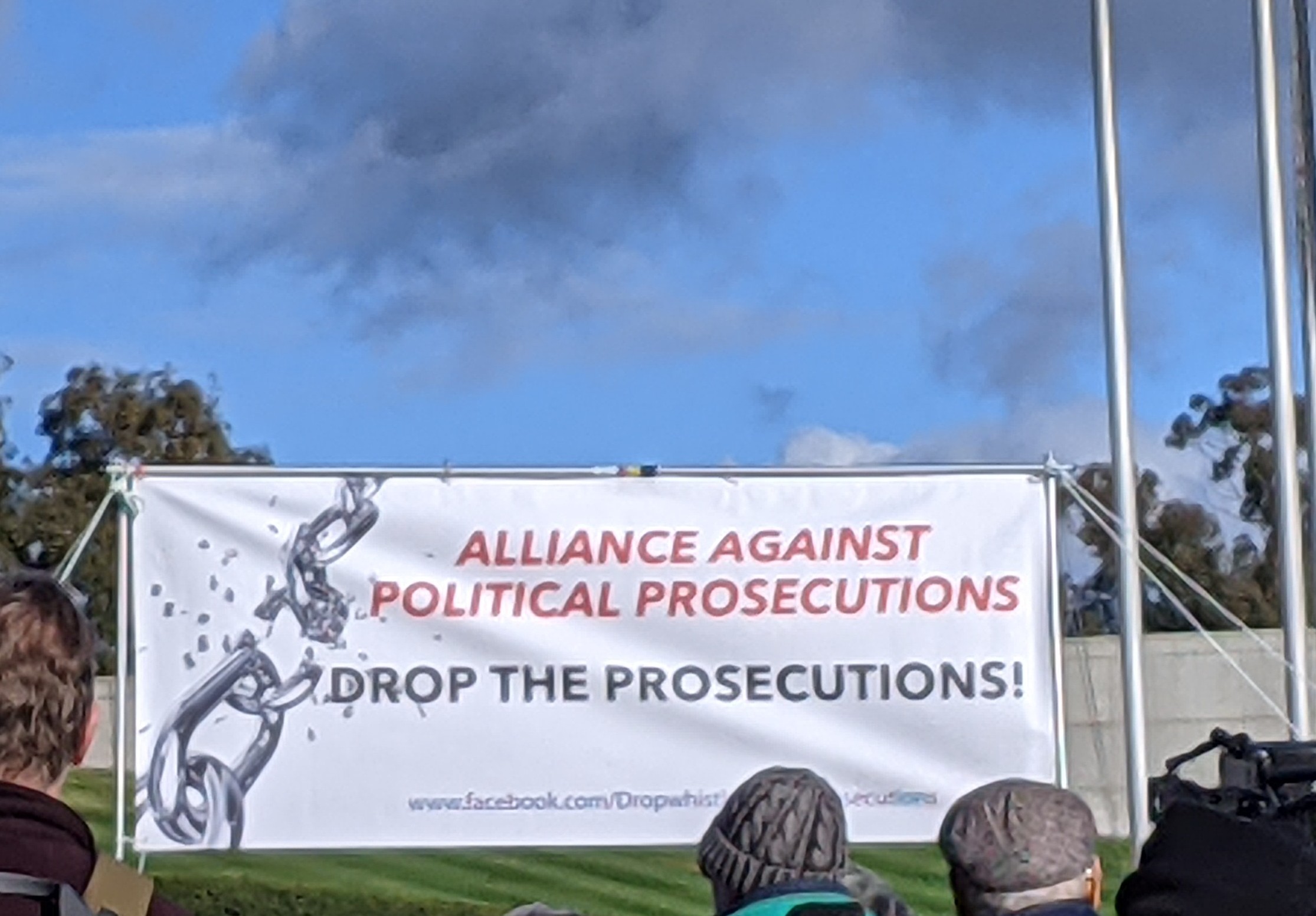
ABC Report on MSN 6/10/2021
Lawyer Bernard Collaery has won the latest round in his bid for an open trial as he fights charges alleging he revealed classified information.
Key points:
- Lawyer Bernard Collaery is fighting charges over the alleged release of classified information
- He also wants information that doesn’t risk national security to be made public
- Today the appeals court agreed a secret trial could risk public confidence in the courts
Mr Collaery is facing five charges of revealing national security information to ABC journalists, and of conspiring with his co-accused Witness K to reveal secret information to the East Timor government.
The secret information relates specifically to allegations that Australia bugged East Timor’s government building in 2004 to gain advantage in crucial oil and gas negotiations.
But Mr Collaery is fighting the charges and wants an open trial.
Last year Justice David Mossop rejected Mr Collaery’s call for some of the material to be used as evidence in the trial, finding that some of the information should remain classified.
Secrecy could damage public confidence in justice system, says Chief Justice
The ACT Court of Appeal said the release of the material had been narrowed down to six specific matters.
Today Mr Collaery won his appeal against those matters being kept secret, which would have seen his trial largely conducted behind closed doors.
The court said it accepted the disclosure of the material could involve a risk of prejudice to national security, but it doubted that would materialise.
In delivering the outcome the ACT’s Chief Justice Helen Murrell said that risk was outweighed by other concerns.
“There was a very real risk of damage to public confidence in the administration of justice if the evidence could not be publicly disclosed,” Chief Justice Murrell said.
“The court emphasised that the open hearing of criminal trials was important because it deterred political prosecutions, allowed the public to scrutinise the actions of prosecutors, and permitted the public to properly assess the conduct of the accused person.”
But there is still a risk of some material not being made public.
There is some evidence being referred to as “court-only matters”, deemed so secret they haven’t even been shared with Mr Collaery and his lawyers.
Today the court ordered the case be returned to Justice Mossop for him to assess whether this “judge-only evidence” is admissible.
Mr Collaery waited outside the court for the result today.
“I regret we have to go this far to achieve an appropriate balance between open justice, national security and the personal interests of those who become caught in that issue,” he said.
“National security is always a balance. But it has to be true national security, not issues of embarrassment or publicity — that’s the real issue.
“The case has been remitted back to the court on a single issue of whether there can be judge-only evidence.”
Each of the lawyers left the court with the full, un-redacted decision in a sealed bag, pending any issues to be raised with the court before it is formally published
.
 Robin's Room