
Susan, A Jane Austen Prequel by Alice McVeigh is the fiction book reviewed this week. Clive Aslet’s The Story of the Country House seemed an appropriate companion review. Both were provided to me by NetGalley.
Following the book reviews are articles/comments about Canberra and Covid; Cindy Lou Restaurant Review; Infrastructure Legislation; COP26; UK Health and Tory Government neglect.
Alice McVeigh Susan, A Jane Austen Prequel Warleigh Hall Press, 2021
Susan Smithson, with luxuriant black curls and acknowledged as the prettiest girl in the school, is expelled because she flirted with the music master and did not cry out when he kissed her hand. She must return to her aunt and uncle’s house in London, but under far more intrusive guard than in the past. Her reputation for beauty, flirtation, achieving her own desires, despite her poverty and low expectations of a grand marriage set the scene for this forerunner of Jane Austen’s Lady Susan. McVeigh establishes her own guidelines for the way in which her Susan will proceed, from her rejection of the fairness with which Lady Susan is endowed, to the liveliness and ingenuity rather than malice which abounds in the latter’s correspondence and behaviour in Austen’s character, and, unlike Lady Susan, her success in winning her own way by the end of the novel.
Clive Aslet The Story of the Country House Yale University Press, 2021 This is a fascinating amalgam of history, architecture, biography, and description of the way in which the British country house developed. My reading was seriously impeded by the nature of the uncorrected copy, where on each page I was confronted by words missing letters. However, I wanted to persevere, as the list of contents was so enticing. The periods covered by this densely written book are: Medieval; Tudor and Elizabethan; Early Stuart; Commonwealth to Queen Anne; Early Georgian; Mid-Georgian; Regency to William 1V; Early and High Victorian; Turn of the Century; Between the Wars; Post -War and Recovery country houses. There is an index and further reading.
For the complete reviews see: Books: Reviews
Canberra Covid Update Since Lockdown Ended

Cases, testing and vaccination
On the 4th November thirteen new cases were recorded. We continue to wear masks while inside, and check in when we enter shops or other enclosed buildings. The vaccination rate is now 94%, *with two doses for over twelve year olds. There are 144 active cases, and people remain reasonably keen to be tested, with 1,312 negative tests over the past 24 Hours. Six new cases were recorded on the 5th November and, a significant increase to eighteen on the 6th. Results were down again on the 7th November when thirteen new cases were recorded. The ACT is now 95% fully vaccinated – the first Australian state or territory to do so. One person is in hospital, and that person is on ventilation in intensive care. Thirteen cases were again recorded on the 7th. Again one person is in intensive care on a ventilator. There were eighteen new cases recorded on 9 November and ten new cases on 10 November.
ACT Pathway Brought Forward by two weeks

Now that over 95% of the eligible population (those over twelve years of age) has been fully vaccinated – one of the highest levels of vaccination in the world – the next stage of the ACT’s Pathway Forward has been brought forward to 11.59pm on Thursday 11 November 2021. This means that there will be no more limits on home visits or informal outdoor gatherings. Indoor and outdoor entertainment areas with fixed seating will be able to host events at 100% capacity. Restrictions on cinemas and swimming pools will be relaxed. There are further relaxations of rules, but the above provides the general picture for the ACT.
Facemasks will continue to be essential in high risk settings such as hospitals, aged care facilities, on public transport, and in schools and some business settings.
More than 370,000adult and teenage Canberrans have been fully vaccinated.
Schools
Nine schools are being actively supported to manage cases of Covid and to minimise transmission. All schools have health and safety measures in place to limit the spread of Covid.
*Vaccination rates are recorded for vaccines being administered at the ACT Covid-19 clinics. It does not include vaccinations administered by GP service providers , or to staff and residents in disability and aged care residential units which are being managed by the Australian Government.
Cindy Lou eats at Blackfire – and once again is impressed







Fortunately Black Fire had a table for two available when I booked on line. This was a simple process, offering several suitable times, and access to the menu. Although the restaurant filled up, even the large table of people celebrating a birthday did not increase the noise to an unpleasant level – the carpet may be one factor in this, and something that I appreciated. Tables were at a distance that met Covid 19 rules, and the wait people wore masks. When entering and leaving we did too, as did most patrons. The seating is comfortable, and tables a reasonable size. I liked the fabric napkins, the prompt seating, and arrival of water. The menu is quite delightful – with plenty of choice without being such a large range it becomes incoherent. A set menu with tapas, a meat main, and dessert was also available.
My meals were close to perfect. The prawns were generous in size and portion, with a delicious sauce. The fish, John Dory, was cooked with a lovely crisp skin, and an amazing salsa. A light mustard sauce was an excellent accompaniment. The dish was served with a choice of side, and I chose the winter vegetables – carrots, pumpkin and parsnip. A little more caramelisation would have enhanced this dish, but that aside, I enjoyed it. Dessert is always a pleasure at Blackfire, my choice of fig gelato is one I make each time. The Chef’s four tastes were also attractive – I tried the crema and mousse – excellent! As can be seen from the photos, these were partially demolished before I recalled the need for photos for this review. Also in the photos, the generosity of pasta lamb ragu is clear.
The Infrastructure Bill Passes and will be on President Joe Biden’s desk for signing.
Watching the numbers mount for the Bill, and that it can be called bi-partisan with ten Republicans joining the Democrats, was interesting.
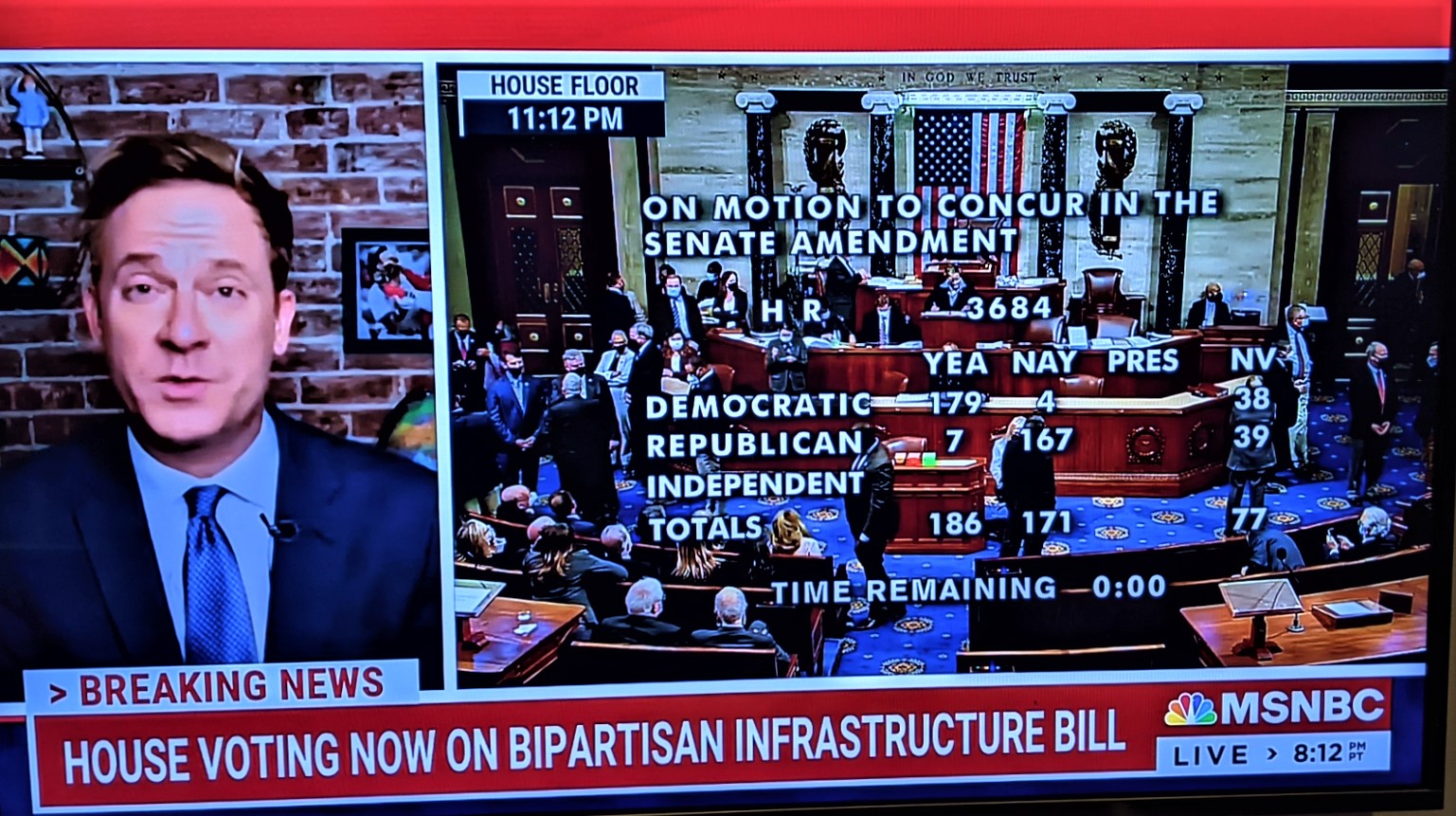
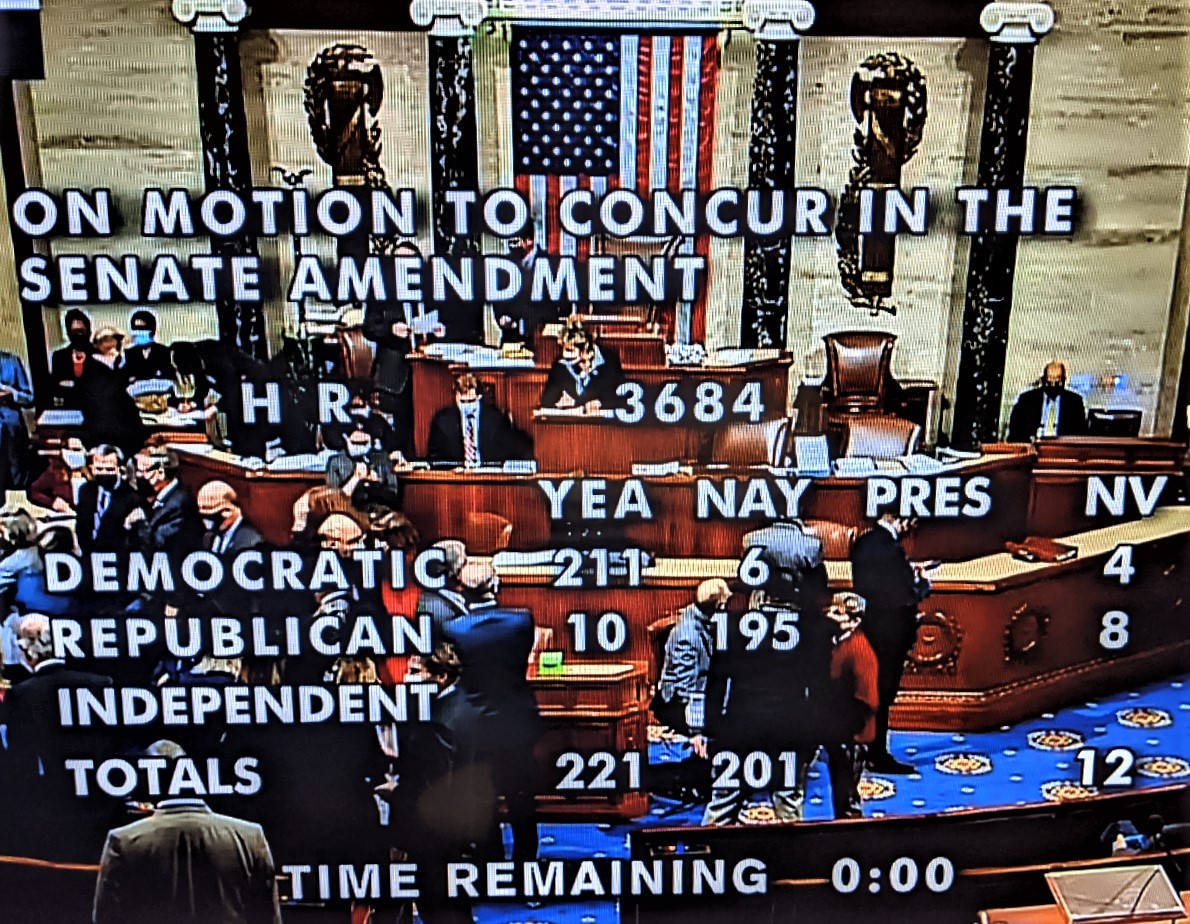
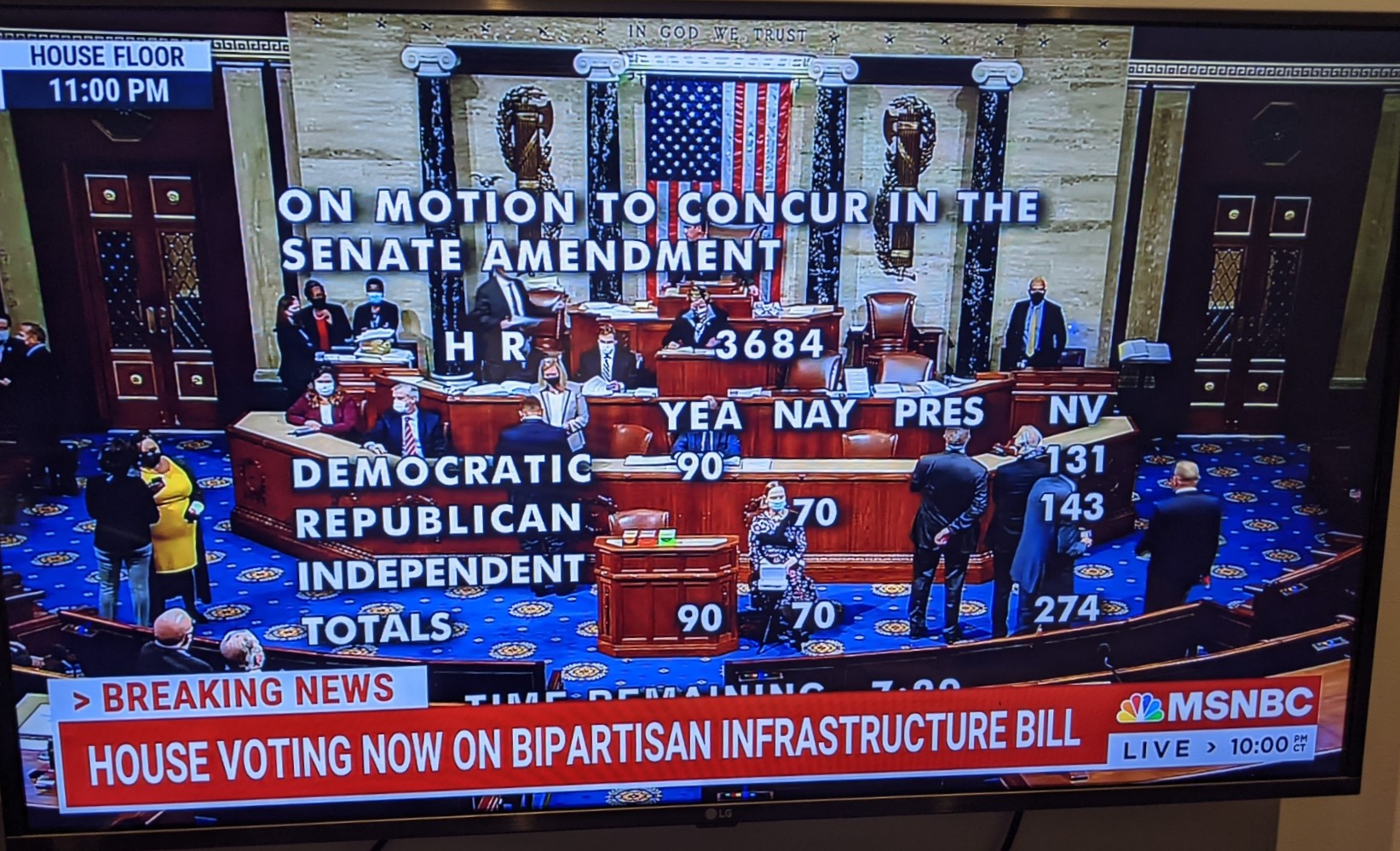

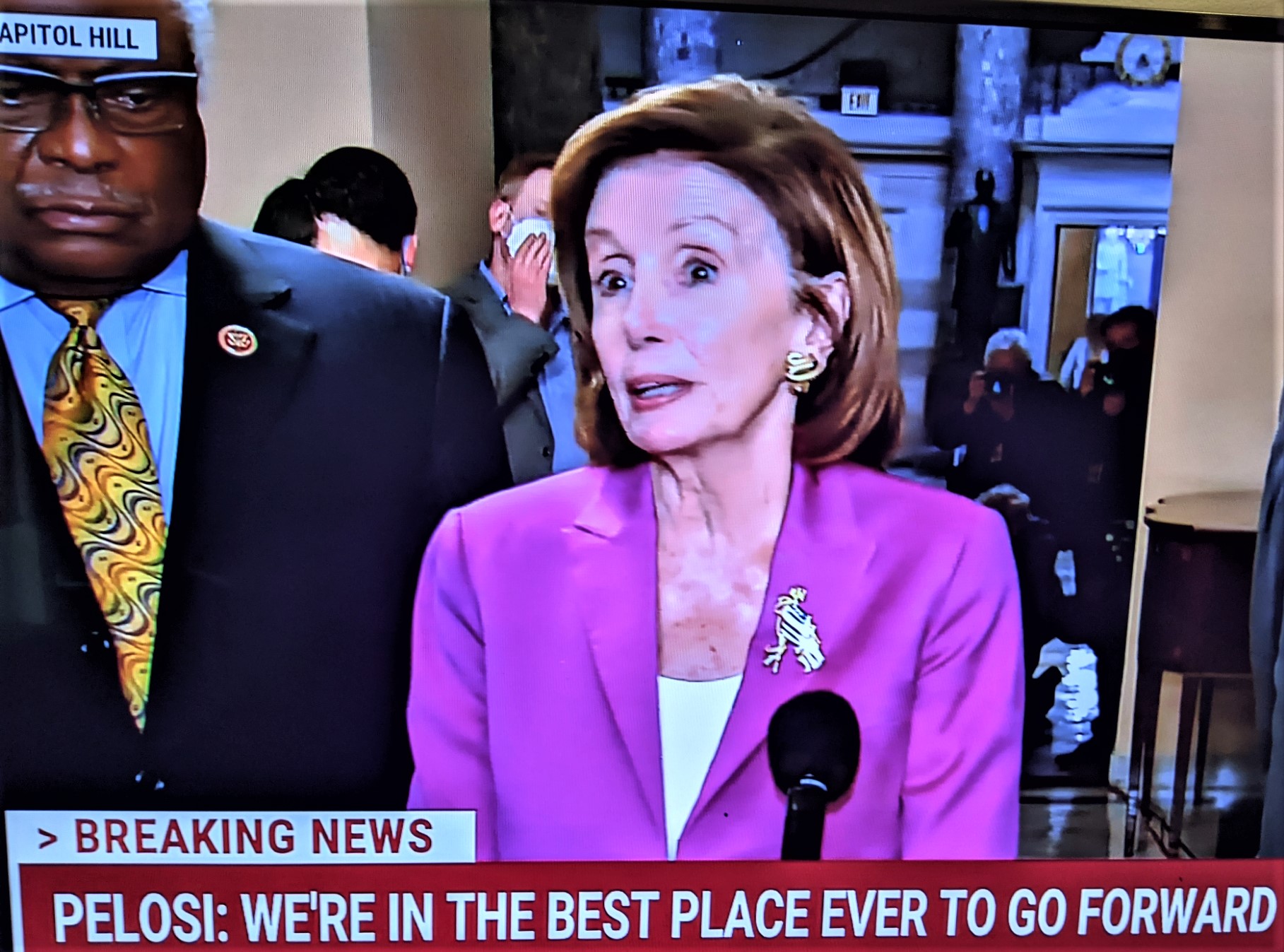
At around 2.00 am Australian time on the 7th November I was fortunate to be awake, and contemplated another episode of Spooks. Instead President Joe Biden and Vice President Kamala Harris were on television and provided much more than a fictional program could offer. Biden’s speech about the Infrastructure Act and the proposed Build Back Better Bill was sincere, informative, inclusive and well worth watching. He thanked everyone involved in the process and will sign the document when all contributors are available to witness the successful adoption of the legislation.
Australians travel to Glasgow to join Greta Thunberg and thousands at youth-led protests at COP26 climate conference By Europe correspondent Isabella Higgins in Glasgow.
It is entirely possible that one prominent Australian very much regrets being at the conference. Reports on The Prime Minister’s gaffes at the conference , and the problems with the climate change plan the Government has adopted are far from positive.
Labor has been criticised for having no public plan on climate change as yet. Sky News has been particularly prominent in this. Sky News’ partisanship without fail helps one save a lot of time, it is a news outlet that can be ignored as the stance they will take is obvious.
Labor is not the government. Some ideas are being discussed, see belo for one example.
Tougher climate change disclosure laws under Labor

By Shane Wright
November 3, 2021 — 5.58pm
Businesses would have to reveal more of the financial risks they face due to climate change under a policy move being considered by the federal Labor party aimed at providing more certainty to investors.
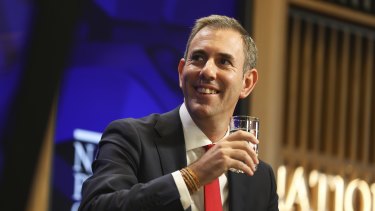
Shadow treasurer Jim Chalmers on Wednesday signalled Labor wanted much clearer guidance from companies – including those in the finance sector – about the problems climate change could pose to their business models.
Some nations have already moved to mandatory and comprehensive reporting systems for climate change issues, including New Zealand and Great Britain.
While Australian law requires companies to report material risks and issues, there has been ongoing concern some businesses have failed to report adequately the financial implications of climate change.
Ethical investor organisations have been pushing for a mandatory disclosure system that would start with the nation’s largest publicly-listed businesses.
Mr Chalmers, addressing the ACTU’s Virtual Super Trustees Forum, made clear there would be change to disclosure requirements around climate change.
“We know that there’s only so much that you can do in relation to climate risk disclosure when the existing reporting framework is insufficient, inconsistent and inadequate,” he said.
“We agree that regulators and government should provide clearer guidance on this and what companies should be reporting – and we’ll have more to say about it.
“Like the Reserve Bank, we’d like to see disclosures that are usable, credible and comparable, so that there is a baseline, all around the world, that we can measure against.”
Closing the Glasgow gap

With the national leaders departing, the climate talks are commencing in earnest. And the optimists see grounds for hope.
MICHAEL JACOBS GLASGOW 4 NOVEMBER 2021
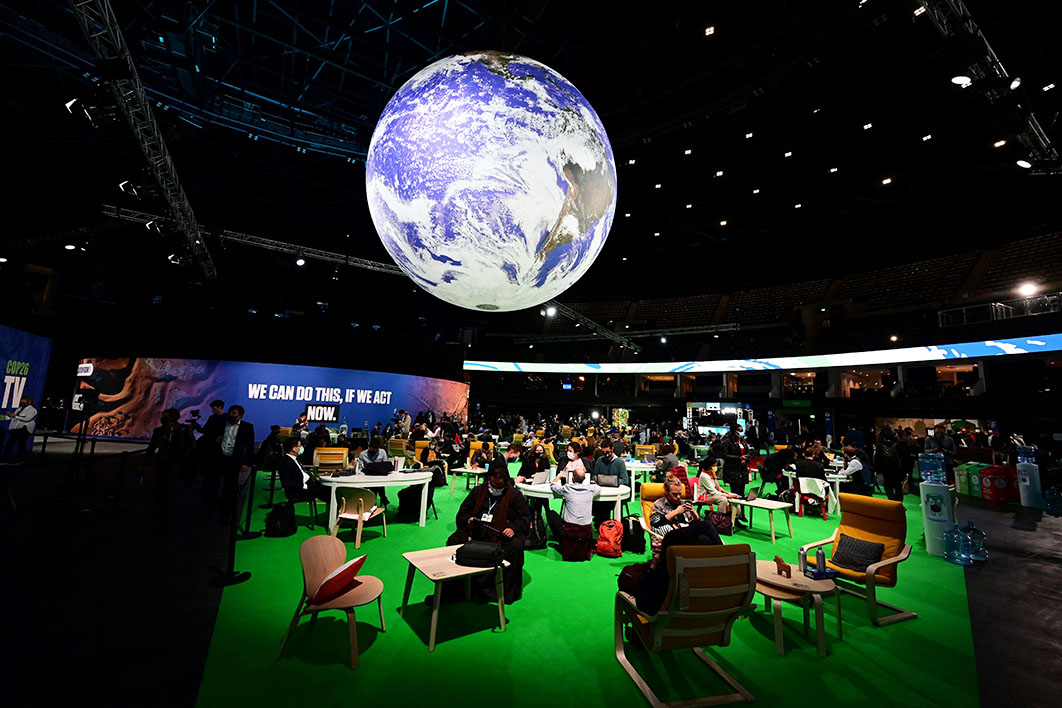
The world is watching: delegates inside the COP26 venue in Glasgow.
Paul Ellis/AFP via Getty Images
An optimist, someone once said, is a pessimist not in full possession of the facts. The estimated 25,000 people attending COP26 in Glasgow could be forgiven for wondering if it might not be the other way round.
The case for pessimism was made eloquently — if perhaps unintentionally — by Sir David Attenborough in a powerful address to the Leaders’ Summit that opened the conference on Monday. Tracing the precipitous rise in the concentration of carbon in the atmosphere over the past hundred years, the ninety-five-year-old naturalist reached a simple conclusion: “We are already in trouble.”
The prime minister of Barbados, Mia Mottley, was even more brutal in her speech in response. The developed world had failed to meet its promises to cut emissions and provide financial assistance to the poorest countries. The cost, she said, would be measured in lives, and in livelihoods. “It is immoral, and it is unjust.”
Both Attenborough and Mottley insisted humanity can still turn things around. But listening to the rhetoric of the 119 leaders whose speeches filled the next two days — all of them stressing how much their countries were doing, despite most of the facts showing otherwise — it was hard for the rational brain not to feel overwhelmed by pessimism.
The facts are pretty simple. To have a reasonable chance of limiting global heating to the UN goal of 1.5°C above pre-industrial times, global emissions need to be cut by 45 per cent by 2030. On current trends they will rise by 16 per cent.
And yet COP26 is strangely a place of extraordinary optimism. This is mainly a function of its structure. Most of the 25,000 attendees aren’t country negotiators here for the UN climate talks, who probably number around 2500. The rest are people who work professionally on climate change, for businesses, charities and activist groups, universities, city and regional governments, and myriad others. They are here not to negotiate but to sell their wares, meet their international colleagues and network tirelessly.
For a COP is never just — or even mainly — a UN negotiating meeting. It is the world’s annual global climate expo and conference. And almost everyone who comes has a positive story to tell about how they are tackling climate change in some way. For some reason the climate sceptics and the opponents of climate action don’t seem to regard themselves as welcome, and they don’t show up.
So walk among the country and business “pavilions” in the middle of the conference centre — a slightly grandiose name for a series of pop-up stalls and exhibits — and the good news is relentless. Every country is doing so much to tackle the problem, from renewable energy to flood defences, sustainable transport to overseas aid. Every business is committed to “net zero,” engaging its eager workforce in meeting the goal. Every technology company has a world-leading solution, from green hydrogen to drought-resistant crops.
And every hour of the day all the side rooms are full, hosting hundreds of fringe meetings on every possible aspect of climate change. And here too the mood is powerfully feel-good. Of course most of them start with speakers recounting how dire the climate situation is. But they quickly move on to what can be done to tackle it; indeed what their organisation is already doing, in partnership with local communities and local businesses, supported by benevolent financiers and researched by concerned academics. The poorest people in the world may be suffering from severe climate impacts, but a lot of people claim to be helping them.
Observing all this it is easy to be cynical. But it’s also hard not to be affected. It can only be a good thing that a global climate industry of this scale and variety exists. There will surely be no solutions without it. And it has contributed to the remarkably upbeat mood of the official COP proceedings in the first few days.
The negotiations themselves have barely started. An agenda was agreed on the first day — you might think that this would be routine, but plenty of seasoned negotiators saw it as something of a triumph — and the committees and working groups on key issues have held their opening sessions. But most of the attention has been taken up by a series of side agreements carefully choreographed by the British hosts. And the extent and ambition of these have taken many by surprise.
The first was on deforestation. A new pact was announced between more than a hundred governments, representing over 85 per cent of the world’s forests and including Brazil, Indonesia and the Democratic Republic of Congo, pledging to halt and then reverse deforestation and land degradation by 2030. Donor countries would give US$12 billion for forest protection and restoration; many of the countries, companies and financial institutions most involved in trading forest products, including timber, pulp and palm oil, would eliminate deforested areas from their supply chains.
After forests, methane. US president Joe Biden announced that ninety countries had agreed together to cut methane emissions by 30 per cent by the end of the decade. Methane, produced from agriculture, oil and gas, and landfill sites, is a much more potent greenhouse gas than carbon dioxide: if fully implemented, the pledge could limit global heating by about 0.2°C by 2050.
Green technologies were next in the spotlight. Forty countries, including the United States, China, India, the European Union, Britain and Australia, signed up to a “Breakthrough Agenda” to coordinate the global introduction of clean technologies, starting with zero-carbon electricity, electric vehicles, green steel, hydrogen and sustainable farming. The governments said they would align standards and coordinate investments to scale and speed up production. The aim is to bring forward the tipping point at which green technologies are more affordable and available than fossil-fuelled alternatives.
Then it was the turn of finance. Mark Carney, former governor of the Bank of England and Britain’s climate finance envoy, announced that financial institutions holding US$130 trillion of assets under management had committed to hitting net zero emissions targets by 2050. Including more than 450 banks, insurers and asset managers across forty-five countries, the Glasgow Financial Alliance for Net Zero said it could deliver as much as US$100 trillion of financing to help economies decarbonise over the next three decades.
Not everyone applauded all this. Observers noted that a very similar agreement on forests had been announced at the UN Climate Summit in 2014. Nothing much had happened since then; would this time really be any different? It was pointed out that China, one of the world’s largest sources of methane, had not joined the new agreement. Several other green technology initiatives over the last ten years, including a “Mission 2020” platform announced with great fanfare in Paris six years ago, had proved disappointing.
The finance announcements attracted the most criticism. Non-government organisations quickly pointed out that the financial institutions were not promising that all the financing would be focused on environmentally friendly companies. Many of the banks and pension funds would only be greening a small proportion of their portfolios while happily continuing to invest in fossil fuels. The “net zero” commitments of the firms whose shares they owned were in many cases pretty dubious, resting on “offsetting” mechanisms (such as buying trees in developing countries) that can’t be guaranteed to have any effect.
And yet these agreements can’t be wholly dismissed. Many involved a large number of countries that had not previously signed up to such pledges; and most came with a lot more money — both public and private — than previous attempts. A specific agreement between South Africa, the United States and several European countries to help South Africa move away from coal particularly impressed observers: it included both significant policy reform and serious financial support.
These side agreements have a slightly strange relationship to the main negotiations. Formally, they have nothing to do with them: they do not involve the universal participation of the 197 parties to the UNFCCC (the Framework Convention that governs the talks) but rather are “coalitions of the willing.” Most of them involve private sector partners that have no formal place in the UNFCCC.
Yet in another sense they are clearly part of the process of cutting global emissions and increasing climate-related finance, which are the two main goals of COP26. Indeed, they are rather more concrete manifestations of this than anything negotiated in the conference hall. So the British government is trying to find a way of bringing them into the final COP agreement. In particular it wants to show how these agreements will help close the emissions gap between the 1.5°C trajectory demanded by the science and the current total of country pledges. Initial analysis has been uncertain: it’s possible that these sector-specific emissions reductions will be the means by which the “nationally determined contributions” of the participating countries will be achieved. Or it could be that they will enable those contributions to be exceeded.
And the nationally determined contributions themselves have also received a welcome boost in the first few days. China and India were the only two major countries who came to the COP without having announced new commitments for 2030. When it did come, China’s statement added nothing to what it had already pledged. Coupled with president Xi Jinping’s non-appearance at the Leaders’ Summit, it has made many observers question China’s current stance: a country that once prided itself on being the champion of the developing world is appearing to absent itself from this crucial moment.
India, by contrast, announced a much more ambitious contribution than anticipated. Speaking in his leader’s slot, prime minister Narendra Modi declared that India would commit to net zero emissions by 2070, and half of its electricity production from renewables by 2030. The former — a later date than China (which has committed to net zero by 2060) and apparently too late to be compatible with the 1.5°C goal — seemed disappointing to some. But scientific observers noted that this was not necessarily the case: it was indeed too late if Modi meant net zero carbon dioxide, but not if he meant net zero from all greenhouse gases. And the renewables pledge was truly ambitious: with India’s proportion of renewable electricity currently under 20 per cent, a more than doubling in less than ten years is a startlingly radical goal.
And so the early feeling in Glasgow is considerably happier than many had feared. More side agreements are still to be announced, including on phasing out coal and electrifying cars. No one will admit to expecting that COP26 will be a raging success. But some are allowing themselves a small boost of optimism.
Michael Jacobs is Professor of Political Economy at the University of Sheffield and a former climate adviser to British prime minister Gordon Brown.
Australian PM’s contribution to the Cop26.
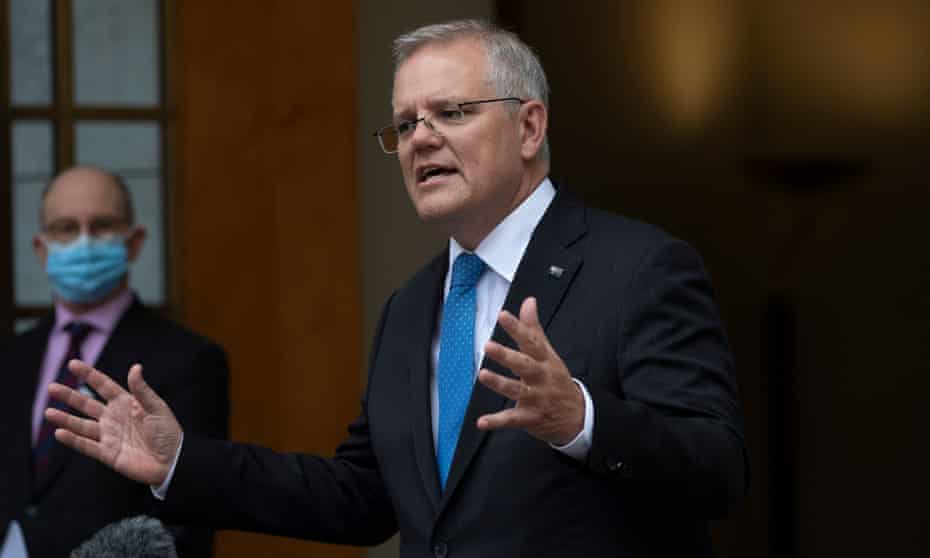
Scott Morrison’s nerves showed as he squibbed net zero target and staged a climate farce

The PM should be taking a higher 2030 emissions reduction target to Cop26. No ifs, buts or maybes. Yet he squibbed it
Sat 30 Oct 2021 06.00 AEDT
786 (click for full story)
Greater Sydney Local Land Services – a great story


Greater Sydney Local Land Services
Yesterday at 09:49 · We’re excited to share these images captured by our monitoring cameras of native critters making use of Western Sydney’s first ever wildlife crossing!We installed the crossing in Glenmore Park in partnership with Penrith City Council and Mulgoa Valley Landcare to give local wildlife safe access from Surveyors Creek into Mulgoa Nature Reserve. Our cameras recorded more than 1,360 animals using the structure in just four months! Such a great result
UK Health under Tories
Return of scurvy under Tory rule as cases of Victorian illness double in decade
Shadow Health Secretary Jonathan Ashworth said the huge rise in cases of Victorian illness scurvy, along with the tripling of hospital admissions for malnutrition since 2010, was ‘a shameful indictment on a decade of the Tories’.
By Geraldine McKelvie Investigations Editor17:07, 6 Nov 2021 UPDATED18:36, 6 Nov 2021
Cases of scurvy – a widespread illness in Victorian times – have more than doubled in a decade.
NHS Digital statistics also reveal hospital admissions for malnutrition have tripled since the Conservatives came to power in the 2010 election.
The increases coincide with soaring numbers of people relying on food banks in the wake of austerity policies.
In 2010-11, 61,000 people needed food handouts but a decade on this figure now stands at 2.5 million.
 Robin's Room