Book reviews this week include non-fiction – Christian Lamb’s Beyond the Sea A Wren at War ; John Marsden, Take Risks; and Elie Mystal Allow Me to Retort A Black Guy’s Guide to The Constitution and fiction – Kathleen McGurl’s The Girl from Bletchley Park. All of these books are uncorrected proofs provided to me by NetGalley in exchange for an honest review.
Christian Lamb Beyond the Sea A Wren at War Ad Lib Publishers Mardle Books, 2021

Christian Lamb has brought together three experiences in Beyond the Sea A Wren at War: her work as a Wren in a variety of capacities; her marriage with its beginning in wartime and its aftermath as a ‘sailor’s wife’; and experience as an interested, and later, expert gardener. I was pleased to read the material that went beyond Lamb being a Wren at war as some of this was familiar through my reading Peter Hore’s Secret Source Churchill’s Wrens and the Y Service in World War 11. For the complete review (and the earlier one of Peter Hore’s book) see Books: Reviews
John Marsden Take Risks Macmillan Australia 2021

My knowledge of John Marsden is coloured by my reading of one of the most devastating novels I have read, So Much To Tell You, Letters From The Inside. I read to keep my daughter company, rather than for my job as an English teacher; Marsden did not feature in my particular classes. My grief at the end of the novel was so complete that perhaps it was as well he did not. Reflecting some of the distress at the end of that novel is my reading of the beginning of Take Risks, when Marsden describes his schooling at The Kings School in the 1960s. His resilience is remarkable; amongst the terror, authoritarianism, and mediocrity, he dreamed of a different type of education, with teachers of considerably dissimilar qualities, in surrounds suited to educating young people. See complete review Books: Reviews
Elie Mystal Allow Me to Retort A Black Guy’s Guide to The ConstitutionThe New Press New York, 2022.

Elie Mystal’s title is apt for this book which combines uncomfortable and sometimes abrasive language with arguments (or retorts) that certainly encourage a rethink of the American Constitution and the Amendments. Some readers will not like the abrasive quality of the language; others will find it energising. Mystal certainly maintains the forceful presence he radiates in television debate when it is translated to the page. I found myself having to pick my way through some of the debate. Regardless of my reservations, I found this book a worthy contribution to discussion of the American Constitution; the role of wealthy white men in its writing, interpretation, decisions about the Amendments and interpretations in the courts; and the way in which black and coloured Americans and women can be neglected in the law. And, indeed, Elie Mystal has every right to question my reservations about his language. With such a story to tell, with its horrific unpeeling of the discrimination that remains, despite the Amendments, his language cannot be other than strong. So, cast aside reservations, and read this illuminating, but distressing ‘Retort’. See complete review Books: Reviews
Kathleen McGurl The Girl from Bletchley Park HQ Digital, 2021.

The Girl from Bletchley Park is written from the perspective of two strong women, Pam and Julia, whose choice of partners and careers form the basis of the narrative. Their stories are told alternately, from Pam’s perspective during the second world war, and Julia’s in the present day. Both narratives involve the complexities both women face in dealing with romance, marriage, and paid work. Pam’s story raises the serious ramifications of choosing a partner from the beginning of her relationships with two distinctly different men. Julia’s story begins after years of happy marriage which has produced two teenage sons. Books: Reviews
Articles that appear after the Covid report are: Cindy Lou’s reviews of Melbourne eating; Willie Geist Interview with Hillary Clinton; Harold and Maude at 50 years of age; Alan Kohler, AEC; The National Gallery of Victoria; Heather Cox Richardson and the BBB Infrastructure Bill; and the link for her discussion with Ken Burns.
Covid in Canberra since lockdown ended

The big news this week is that Canberra once again has a mask mandate. Only inside venues are affected, so shopping, eating out except while seated, eating or drinking – all indoor settings, apart from a place of residence, will require masks. Not a hard requirement to follow. Aged Care facilities will also be impacted by the Omicron variant’s ‘taking a hold’ over the border in New South Wales. These facilities will reduce the number of visitors to residents to five per day; no restrictions are in place for end-of-life visits.
Another new feature of dealing with Covid is the opening of bookings for five to eleven year olds for vaccinations.
New cases recorded on the 15th, 16th and 17th were seven, eleven and twenty. After the decrease in numbers in past weeks this increase on the 17th is disheartening. A slight decrease was recorded on the 18th when there were eighteen new cases. This number was repeated on the 19th, and on the 20th and 21st December there were thirteen and sixteen cases recorded. Today, the 22nd December, there were fifty eight cases recorded. There are three people in hospital, but none in intensive care or on a ventilator. There are now 174 active cases in the ACT; 98.4% of Canberrans over twelve have been fully vaccinated; and the total number of cases for this outbreak is 2,241.
Cindy Lou’s Reviews of more Melbourne restaurants and cafes
Grand Hyatt, Collins Street
Breakfast at the Grand Hyatt, Collins Street, is generous and absolutely delicious. We chose from the a la carte menu, but on another occasion would love to try the glorious buffet. The prices are really reasonable, the service impeccable, and the setting very pleasant indeed.




Le Petit Chateau
A light lunch at Le Petit Chateau was another culinary delight. Smiling service, a pleasant environment, and nicely presented flavoursome baguettes made a lovely lunch.








Rumi Brunswick
We had mixed experiences at Rumi. The restaurant was generous in allowing our small group to book outside the usual reservation time, and even more so when some of us were late. The menu is interesting, and the service was prompt. However, the restaurant is not suited to audible conversation, even in a group of six. The noise level was quite high – obviously people were enjoying themselves – and this encouraged us to have our savoury courses and leave to have huge gelatis a little further along the street. The food was pleasant, and clearly from the photos, we ate almost every scrap. But with no real stand out dishes, it was disappointing. Although the lamb was well received and the chicken succulent, some dishes were cold, and the anticipated cauliflower dish did not meet expectations.
Gelato – I did not look at the name, oh dear, I’ll have to return
We really loved our desserts. After a short walk from Rumi the gelato on display offered everything we wanted. We were encouraged by the friendliness of the staff, but I have to admit the variety of offerings in the gelato and cake cabinets was the real drawcard. It was immense. Of course, it was impossible to try only one flavour. My scoop of honey comb, and on top one of panna cotta, were delicious. To add to the decadence, they were served in a chocolate coated cone.



The Quarter, Degraves Street
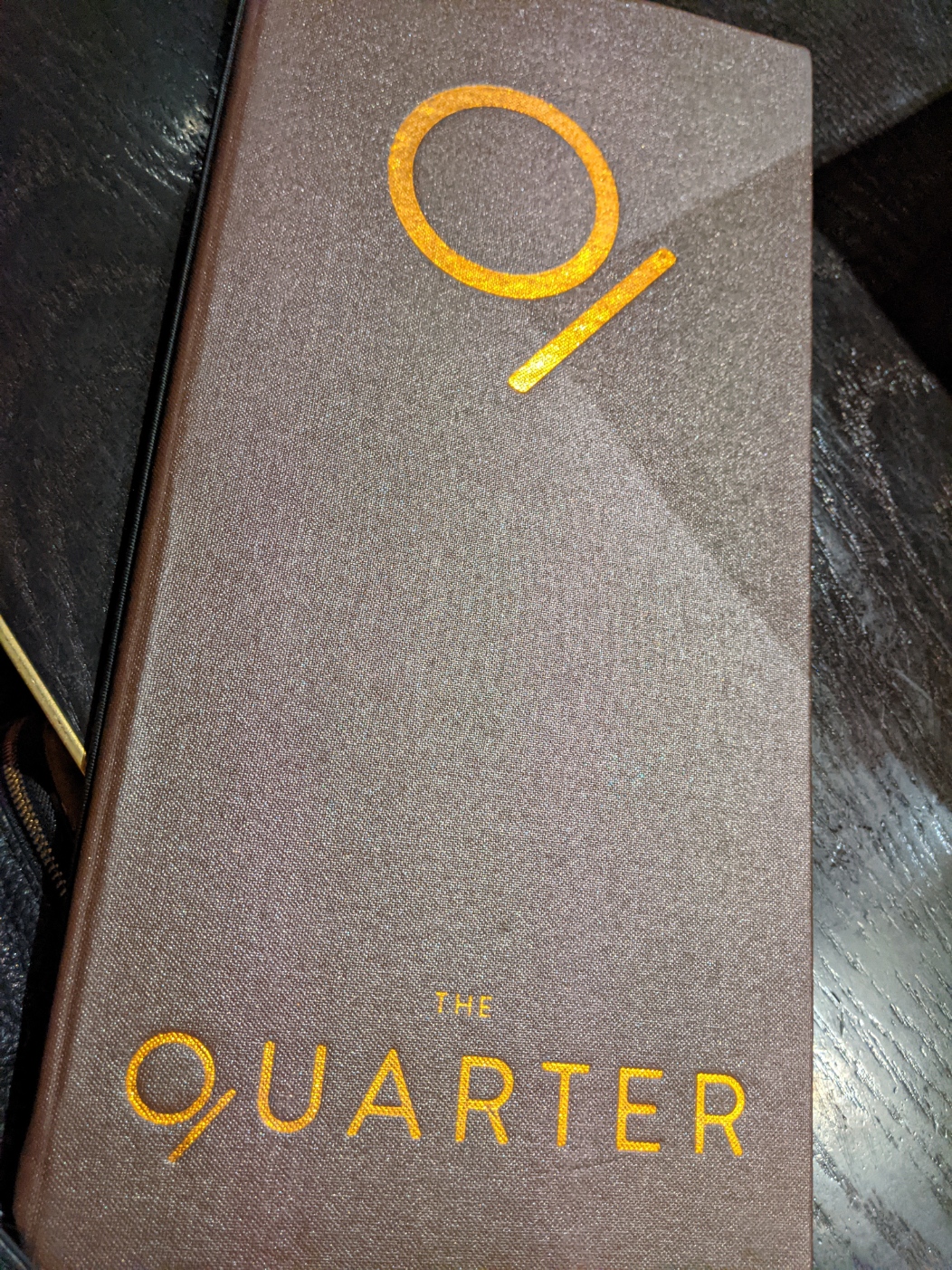
The best eating experience on this visit to Melbourne was The Quarter in Degraves Street. This lane is the home of many cafes, some of which remain closed because of Covid – the closures are a sad reminder of the impact of closures and closed borders because of the dilatory nature if the Federal roll out of the vaccine. The menu combines the simple with the somewhat adventuresome, all nicely presented, generous in size, and delicious. Service is friendly and efficient. The Bao variety was excellent, with chicken, tofu and lamb (easily changed to suit dietary requirements); the lamb salad succulent; and the special order of a simple tomato and cheese sandwich (not on the menu) came with a smile. I loved the venue, the food and the atmosphere. A terrific end to my Melbourne culinary experiences.


It was lovely to visit Hosier Lane on our way to The Quarter.



Willie Geist Interview with Hillary Clinton

Willie Geist Willie Geist – Part One of my #Sunday TODAY conversation with Secretary Hillary Clinton.

Hillary Clinton shares the life lessons she learned after the 2016 election
In part one of this week’s Sunday Sitdown, former Secretary of State and Democratic presidential nominee Hillary Clinton sits down with Sunday TODAY’s Willie Geist to share the life lessons she learned and setbacks she overcame after her loss in 2016. Clinton reveals her thoughts during Donald Trump’s inauguration speech and opens up about the effects of showing her emotions in the public eye.Dec. 13, 2021

‘Harold and Maude’ at 50: An Oral History of How a ‘Harrowing’ Flop Became a Beloved Cult Classic
By Pat Saperstein Plus Icon

Alan Kohler: Why Donald Trump should make us thankful for the Australian Electoral Commission

As we watch the slow, momentous collapse of American democracy, a Scott Morrison-ism comes to mind: How good is the Australian Electoral Commission?
In Australia, Donald Trump would always have to win fair and square, and if he lost there would be no polls a year later showing that 80 per cent of his party still think the election was stolen, as 80 per cent of US Republicans apparently do of last year’s US election.
The latest American outrage is a PowerPoint presentation written by Trump’s Chief of Staff, Mark Meadows, entitled: “Election Fraud, Foreign Interference & Options for 6 Jan”.
It was a plan for overturning the 2020 result and installing his boss as the winner, and started with: “VP Pence delays the decision in order to allow for a vetting and subsequent counting of all the legal paper ballots”.
They would then go on to declare a “National Security Emergency”, based on the proposition that Venezuela, which is itself barely alive, interfered
in the US election for some reason, and then declare electronic voting in all states invalid because of that foreign influence and only “count paper ballots or revert to a constitutional remedy delegated to Congress”.
Bear in mind, the author of this insane sedition was the President’s Chief of Staff.
Pence refused to do it, which led to a mob storming the Capitol Building on January 6 shouting, among other things, “Kill Pence”.
Republicans are now preparing for the 2024 presidential election by launching campaigns to install Trump allies as the electoral officials in a number of key states.
That project is running in parallel with a Republican push across the country to enact voter suppression laws based on Trump’s election lies.
And now Donald Trump is favourite to win in 2024.
Thank God for the AEC
As I read about all this, all I can think is: Thank God for Tom Rogers.
Rogers is the Australian Electoral Commissioner and he wouldn’t stand for any of the nonsense going on the United States – in fact his mere presence and the existence of the AEC stand against both the perception and reality of electoral fraud in this country.
I’m not suggesting the AEC is perfect, and I’ll get to its imperfections later, but it’s worth remembering that the only serious challenge to the integrity of Australia’s electoral system occurred in 1977 when Reg Withers, the then Minister for Administrative Affairs, tried to change the name of the Gold Coast electorate to McPherson over the head of the Australian Electorate Office, as it then was.
There was a Royal Commission. And Reg Withers lost his job.
Seven years later, the Hawke government rewrote the electoral laws and turned the office into an independent statutory commission with powerful laws to both run and regulate elections.
The minister behind that was Mick Young, Special Minister of State, but he was forced to step down when he failed to declare a Paddington Bear in his wife’s luggage at the airport – which, as an aside, was a wonderful, nostalgic, affirmation of Australian political integrity, and something that would definitely not happen today.
Anyway, his key adviser, the future Treasurer Wayne Swan and an architect of the new electoral laws with Michael Maley of the AEO, kept the project going with Swan’s new boss, Kim Beazley.
Watching what’s going in the US now, it’s pretty clear that while that legislation is not usually remembered among the Hawke/Keating government’s most significant reforms, it might well have been the most important of all.
Australia takes for granted a network of strong federal and state electoral commissions that operate the elections, as well as their funding, and that stand as a bulwark against creeping modern fascism.
Solution in search of a problem
Lately we’ve been having a silly, unnecessary argument about voter IDs: They’re not required when voting in Australia and some bright spark in the Coalition persuaded the Prime Minister to back the Electoral Legislation Amendment (Voter Integrity) Bill 2021 to require them, but it expired due to lack of interest.
The system works fine, which we can now see more clearly by comparison with a certain democracy where it’s not working fine at all, except …
The AEC should get more involved in enforcing truth in political advertising and the transparency of political donations, preferably with a cap on federal election expenditure by parties and individuals.
South Australia has had truth in advertising laws since 1985, Queensland has real-time political donation disclosure, and New South Wales has a cap on spending.
The AEC doesn’t enforce any of those things, but it should.
Clive Palmer can spend any amount of cash he likes and in the process he and Craig Kelly can distort the election with lies.
Perhaps a better idea might be to have two federal bodies: One to operate elections and the other to regulate the behaviour of those involved, a bit like the Reserve Bank and APRA operate in the financial system, with the RBA running it and APRA watching the banks.
Either way, it’s time for another look at the way the Australian electoral system works.
Not that it’s broken – far from it – but it could do with a service.
Alan Kohler writes twice a week for The New Daily. He is also editor in chief of Eureka Report and finance presenter on ABC news
First published in The New Daily , December 16, 2021.
The National Gallery of Victoria
We had a short visit to the National Gallery of Victoria, visiting the highlight of the Pink Pool, and joining the enthusiastic audience of a dance group that combined hip hop moves with those of the Indigenous dancer who introduced the performance. On the way to the Gallery, moving bird silhouettes are a fine feature.




Dance at the National Gallery of Victoria










Heather Cox Richardson – Build Back Better Infrastructure Bill: Joe Manchin and the Republicans

December 20, 2021 (Monday)
On Fox News Sunday yesterday, Senator Joe Manchin (D-WV) said he could not support the Build Back Better infrastructure bill, a measure that is central to President Joe Biden’s vision for America.
Negotiators have been working on the measure for months. At the end of March, Biden called for the American Jobs Plan, a $2.3 trillion bill designed to support well-paid American jobs by investing in a wide range of projects, both taking care of long-deferred maintenance on roads, bridges, pipes, and our electrical grid, for example, and also investing in education, elder care, and alternative energy to help address the climate crisis. Republicans refused to get behind such a sweeping package, so to get Republican buy-in to a measure that would spend federal money, rather than cutting taxes, negotiators broke Biden’s initial measure into two bills.
One was a $1.2 trillion package that focused on hard infrastructure like rebuilding roads and bridges, and bringing broadband to communities that still don’t have it. About $550 billion of that money comes from new appropriations, and the rest is regular spending that Congress moved into the measure. Some Republicans were willing to support this bill, but it was too small to win the full support of progressive Democrats, who wanted a much bigger package. This bill is now commonly known as the Bipartisan Infrastructure Bill (although its name is actually the Infrastructure Investment and Jobs Act).
The other measure is the Build Back Better bill, which focuses on human infrastructure like childcare, eldercare, lower drug prices, universal preschool, the Child Tax Credit, and measures to address the effects of climate change. This bill began at $3.5 trillion. Republicans said no across the board to this one. Conservative Democrats Manchin and Kyrsten Sinema (D-AZ) also said they could not support it without significant cuts, and so negotiators whittled it down to $1.75 trillion. To get both measures through required a delicate balance. On the one hand, progressive Democrats refused to agree to the bipartisan bill unless conservative Democrats agreed to pass the larger bill. On the other hand, Republicans refused to have anything at all to do with the larger bill but would not give enough votes to the bipartisan bill to pass it without the help of the progressive Democrats. So Democratic leadership made a deal that the two bills would move forward together, but then conservative Democrats wanted to move forward with the bipartisan bill and to wait for a score from the Congressional Budget Office (CBO) to see how much the larger bill would cost.
Finally, in November, the Democratic leaders got a firm promise from the conservative Democrats that they would pass a version of the larger bill. On that promise, the progressive Democrats agreed to pass the bipartisan infrastructure bill, which they did, and Biden signed it on November 15. So when Manchin announced on the Fox News Channel that he would no longer support the Build Back Better bill in any form, the wrath of the betrayed fell on him. Manchin cited concerns about the cost of the bill, but he used the CBO analysis of what the bill would cost if its provisions were all renewed for the next decade, an analysis requested by Senate Republicans, rather than what is actually in the current bill. While long-term concerns are not necessarily illegitimate, concerns about extensions not yet voted into law contrast strikingly with a lack of concern over the 2017 Republican corporate tax cut and 2018 budget, which were projected to cost $5.5 trillion if all aspects were extended for ten years, and which passed nonetheless.
Those who had relied on Manchin’s promise, including the White House, were furious. “If his comments on FOX and written statement indicate an end to that effort, they represent a sudden and inexplicable reversal in his position, and a breach of his commitments to the President and the Senator’s colleagues in the House and Senate,” White House Press Secretary Jen Psaki said.
The death of the Build Back Better bill would have huge repercussions. First of all, infrastructure spending is popular in general, both because of the projects it would accomplish and because of the jobs it would provide. Second, without the extension provided in the Build Back Better bill, the child tax credit that has lifted so many children out of poverty will expire, and the child tax credit is very popular (not least in West Virginia, where 181,000 families with 305,000 children benefited from the payments). The president of the West Virginia AFL-CIO, Josh Sword, asked Manchin to get back to the bargaining table, pointing out that the Build Back Better bill would not only lower the cost of health care and child care, but also shore up the Black Lung Disability Trust Fund, which provides benefits to thousands of coal miners. It also protects workers’ right to organize and bargain collectively, creates jobs for home care workers, expands care for seniors and those disabled, and invests $4 billion in coal communities “to attract manufacturing companies that will provide good-paying, union jobs.
The reason all this matters so much is that Biden and the Democrats are trying to restructure the nation around ordinary Americans rather than the wealthy. Since 1981, when Ronald Reagan took office after telling Americans, “[i]n this present crisis, government is not the solution to our problem, government is the problem,” the prevailing pressure on the American government has been to cut taxes and slash government regulations and investment in order to free up private capital to invest in a growing economy. But while those who pushed so-called supply-side economics promised it would create widespread prosperity, their system never delivered. Instead, the rate of economic growth did not increase dramatically, while, as the country cut taxes again and again, wealth moved upward. Meanwhile, as deficits and the national debt mounted, Congress cut social welfare programs and investment in infrastructure, and the country has fallen behind other nations.
Republicans insist that investing in the country is socialism that will destroy the economy, but in fact, Congress’s investment in the economic recovery through the American Rescue Plan, passed by the Democrats in March without a single Republican vote, has created the fastest rate of economic growth the country has seen in decades. Growth in the first two quarters of the year, before the Delta variant started to spread, was over 6%. That investment has created more than 6 million jobs since January, the highest rate in history, and new unemployment claims are the lowest they’ve been in more than 50 years. When Manchin said he would stop this investment by killing the Build Back Better bill, Goldman Sachs immediately predicted 1% less growth in the economy, saying that failure to pass the bill had “negative growth implications.” The bank cited the end of the child tax credit, along with the loss of other spending, as central to its analysis.
The Build Back Better bill, along with the other initiatives of the Biden administration, is not simply the pre-1981 government resurrected. It reworks the old New Deal government that focused on good jobs for men who headed households into a modern vision centered on children and families and the communities that support them. It is no wonder that the Republicans have refused to deal with the measure at all, and that the Democrats have had to—and likely will continue to have to—devote a lot of time and energy to pass it into law.–
Edited at 11:50 on Monday night to remove a paragraph about a tweet from Manchin I said was from tonight, but it was from October. I’m sorry about that.
See also, Heather Cox Richardson’s discussion with Ken Burns.
https://www.facebook.com/UNUMKenBurns/videos/896518701227411/?tn=F
 Robin's Room