
This week the Democratic Party has been dealing with the Freedom to Vote Act (see below) and the John Lewis Voting Rights Advancement Act (see below) in an attempt to prevent voting suppression legislation enacted in several states and to establish democracy in voting. With the debates that ensued regarding the filibuster and its impact on what could happen in the Senate in regard to these bills, and the mixed background of the Democratic Party on the substance of what makes a democracy it seemed pertinent to post a review of What It Took to Win A History of the Democratic Party by Michael Kazin, and to be published by Farrar, Straus and Giroux in March 2022. The uncorrected proof was provided to me by NetGalley for an honest review. The complete review appears at Books: Reviews
My review of John Lewis: The Last Interview and Other Conversations, Melville House, 2021 appeared in the blog on November 17, 2021.

I have added commentary on a book that I have not reviewed, but is relevant to the debate about the attack on the Capitol, democracy and voting rights, How Civil Wars Start: And How to Stop Them by Barbara F. Walter. Walter was interviewed recently on MSNBC, (and again on 18th January) where she gave an excellent account of her chilling perception of the way in which American democracy is being subverted. There are mixed reviews about the book. See reviews below.
Articles that appear after the Canberra Covid update are:
Summaries of the The Freedom to Vote Act S. 2747 and John R. Lewis Voting Rights Advancement Act of 2021; reviews and comment on How Civil Wars Start; Heather Cox Richardson 12th January 2022; Heather Cox Richardson 16th January 2022; something lighter – holiday on the South Coast; Australian politics – ALP improves in the polls; Bob McMullan – ACT Senate and independent candidates.
Canberra Covid update

On the 13th January 1,020 new cases were recorded. There are now 5,004 active cases, with twenty four people in hospital, including three in intensive care, two of whom are ventilated. Those over twelve who are fully vaccinated – 98.6%
New cases recorded on the 14th January – 1,125 (885 PCR and 240 RAT).
ACT residents aged 5-11 who have received one dose of the vaccine – 15.3%; those aged 18 and over who have received their booster – 28.1%.
New cases 15th January – 1320.
On January 16th it was reported that testing facilities are under pressure because of the lack of testing materials for PRC testing. RATs tests will be distributed to those in most need. There were 1,601 new cases, and one death was recorded. The total number of deaths from Covid in the ACT now stands at nineteen. On each occasion ACT Health has extended its condolences to the families.

Australia has reported the highest number of Covid deaths since the pandemic started – seventy seven.
On January 18th the number of new cases recorded was 1,860. Now 30.2 % of ACT children between 5 and 11 have received one dose of the vaccine. There has been one death, sixty three people are in hospital, and six are in ICUs. This nearly doubles the number of Covid-19 patients in Canberra hospitals over the past four days.
The Canberra Times reports that modelling suggests that the ACT may have reached the peak of the Omicron wave.
January 19th figure for new cases is: 1,467, with PCR tests finding 654 cases, and RAT, 813.
ACT residents between 5 and 11 who have received one dose of the vaccine : 34.3%. Patients in ACT hospitals: sixty, with five in intensive care, two of whom are ventilated.
Summaries of the voting acts under consideration by the American Senate
The Freedom to Vote Act S. 2747
This bill addresses voter registration and voting access, election integrity and security, redistricting, and campaign finance.
Specifically, the bill expands voter registration (e.g., automatic and same-day registration) and voting access (e.g., vote-by-mail and early voting). It also limits removing voters from voter rolls.
Next, the bill establishes Election Day as a federal holiday.
The bill declares that the right of a U.S. citizen to vote in any election for federal office shall not be denied or abridged because that individual has been convicted of a criminal offense unless, at the time of the election, such individual is serving a felony sentence.
The bill establishes certain federal criminal offenses related to voting. In particular, the bill establishes a new criminal offense for conduct (or attempted conduct) to corruptly hinder, interfere with, or prevent another person from registering to vote or helping someone register to vote.
Additionally, the bill sets forth provisions related to election security, including by requiring states to conduct post-election audits for federal elections. The bill outlines criteria for congressional redistricting and generally prohibits mid-decade redistricting.
The bill outlines criteria for congressional redistricting and generally prohibits mid-decade redistricting.
The bill addresses campaign finance, including by expanding the prohibition on campaign spending by foreign nationals, requiring additional disclosure of campaign-related fundraising and spending, requiring additional disclaimers regarding certain political advertising, and establishing an alternative campaign funding system for certain federal offices.
John R. Lewis Voting Rights Advancement Act of 2021 (passed House August 2021)
This bill establishes new criteria for determining which states and political subdivisions must obtain preclearance before changes to voting practices may take effect. Preclearance is the process of receiving preapproval from the Department of Justice (DOJ) or the U.S. District Court for the District of Columbia before making legal changes that would affect voting rights.
A state and all of its political subdivisions shall be subject to preclearance of voting practice changes for a 10-year period if
- 15 or more voting rights violations occurred in the state during the previous 25 years;
- 10 or more violations occurred during the previous 25 years, at least 1 of which was committed by the state itself; or
- 3 or more violations occurred during the previous 25 years and the state administers the elections.
A political subdivision as a separate unit shall also be subject to preclearance for a 10-year period if three or more voting rights violations occurred there during the previous 25 years.
States and political subdivisions that meet certain thresholds regarding minority groups must preclear covered practices before implementation, such as changes to methods of election and redistricting.
Further, states and political subdivisions must notify the public of changes to voting practices.
Next, the bill authorizes DOJ to require states or political subdivisions to provide certain documents or answers to questions for enforcing voting rights.
The bill also outlines factors courts must consider when hearing challenges to voting practices, such as the extent of any history of official voting discrimination in the state or political subdivision.
Heather Cox Richardson, January 12, 2022

The struggle between the Trump-backed forces of authoritarianism and those of us defending democracy is coming down to the fight over whether the Democrats can get the Freedom to Vote Act and the John Lewis Voting Rights Act through the Senate. It’s worth reading what’s actually in the bills because, to my mind, it is bananas that they are in any way controversial.
The Freedom to Vote Act is a trimmed version of the For the People Act the House passed at the beginning of this congressional session. It establishes a baseline for access to the ballot across all states. That baseline includes at least two weeks of early voting for any town of more than 3000 people, including on nights and weekends, for at least 10 hours a day. It permits people to vote by mail, or to drop their ballots into either a polling place or a drop box, and guarantees those votes will be counted so long as they are postmarked on or before Election Day and arrive at the polling place within a week. It makes Election Day a holiday. It provides uniform standards for voter IDs in states that require them.
The Freedom to Vote Act cracks down on voter suppression. It makes it a federal crime to lie to voters in order to deter them from voting (distributing official-looking flyers with the wrong dates for an election or locations of a polling place, for example), and it increases the penalties for voter intimidation. It restores federal voting rights for people who have served time in jail, creating a uniform system out of the current patchwork one. It requires states to guarantee that no one has to wait more than 30 minutes to vote.Using measures already in place in a number of states, the Freedom to Vote Act provides uniform voter registration rules. It establishes automatic voter registration at state Departments of Motor Vehicles, permits same-day voter registration, allows online voter registration, and protects voters from the purges that have plagued voting registrations for decades now, requiring that voters be notified if they are dropped from the rolls and given information on how to get back on them. The Freedom to Vote Act bans partisan gerrymandering.
The Freedom to Vote Act requires any entity that spends more than $10,000 in an election to disclose all its major donors, thus cleaning up dark money in politics. It requires all advertisements to identify who is paying for them. It makes it harder for political action committees (PACs) to coordinate with candidates, and it beefs up the power of the Federal Election Commission that ensures candidates run their campaigns legally. The Freedom to Vote Act also addresses the laws Republican-dominated states have passed in the last year to guarantee that Republicans win future elections. It protects local election officers from intimidation and firing for partisan purposes. It expands penalties for tampering with ballots after an election (as happened in Maricopa County, Arizona, where the Cyber Ninjas investigating the results did not use standard protection for them and have been unable to produce documents for a freedom of information lawsuit, leading to fines of $50,000 a day and the company’s dissolution). If someone does tamper with the results or refuses to certify them, voters can sue. The act also prevents attempts to overturn elections by requiring audits after elections, making sure those audits have clearly defined rules and procedures. And it prohibits voting machines that don’t leave a paper record.
The John Lewis Voting Rights Advancement Act (VRAA) takes on issues of discrimination in voting by updating and restoring the 1965 Voting Rights Act (VRA) that the Supreme Court gutted in 2013 and 2021. The VRA required that states with a history of discrimination in voting get the Department of Justice to approve any changes they wanted to make in their voting laws before they went into effect, and in the 2013 Shelby County v. Holder decision, the Supreme Court struck that requirement down, in part because the justices felt the formula in the law was outdated.
The VRAA provides a new, modern formula for determining which states need preapproval, based on how many voting rights violations they’ve had in the past 25 years. After ten years without violations, they will no longer need preclearance. It also establishes some practices that must always be cleared, such as getting rid of ballots printed in different languages (as required in the U.S. since 1975). The VRAA also restores the ability of voters to sue if their rights are violated, something the 2021 Brnovich v. Democratic National Committee decision makes difficult. The VRAA directly addresses the ability of Indigenous Americans, who face unique voting problems, to vote. It requires at least one polling place on tribal lands, for example, and requires states to accept tribal or federal IDs. That’s it. It is off-the-charts astonishing that no Republicans are willing to entertain these common-sense measures, especially since there are in the Senate a number of Republicans who voted in 2006 to reauthorize the 1965 Voting Rights Act the VRAA is designed to restore.
McConnell today revealed his discomfort with President Joe Biden’s speech yesterday at the Atlanta University Center Consortium, when Biden pointed out that “[h]istory has never been kind to those who have sided with voter suppression over voters’ rights. And it will be even less kind for those who side with election subversion.” Biden asked Republican senators to choose between our history’s advocates of voting rights and those who opposed such rights. He asked: “Do you want to be…on the side of Dr. King or George Wallace? Do you want to be on the side of John Lewis or Bull Connor? Do you want to be on the side of Abraham Lincoln or Jefferson Davis?
Today, McConnell, who never complained about the intemperate speeches of former president Donald Trump, said Biden’s speech revealed him to be “profoundly, profoundly unpresidential”.
Heather Cox Richardson, January 16, 2022 (Sunday)https://heathercoxrichardson.substack.com
Republicans say they oppose the Freedom to Vote: John R. Lewis Act because it is an attempt on the part of Democrats to win elections in the future by “nationalizing” them, taking away the right of states to arrange their laws as they wish. Voting rights legislation is a “partisan power grab,” Representative Jim Jordan (R-OH) insists.
In fact, there is no constitutional ground for opposing the idea of Congress weighing in on federal elections. The U.S. Constitution establishes that “[t]he Times, Places and Manner of holding Elections for Senators and Representatives, shall be prescribed in each State by the Legislature thereof; but the Congress may at any time by Law make or alter such Regulations.”
There is no historical reason to oppose the idea of voting rights legislation, either. Indeed, Congress weighed in on voting pretty dramatically in 1870, when it amended the Constitution itself for the fifteenth time to guarantee that “[t]he right of citizens of the United States to vote shall not be denied or abridged by the United States or by any State on account of race, color, or previous condition of servitude.” In that same amendment, it provided that “[t]he Congress shall have the power to enforce this article by appropriate legislation.”It did so, in 1965, with “an act to enforce the fifteenth amendment to the Constitution,” otherwise known as the Voting Rights Act of 1965, a law designed to protect the right of every American adult to have a say in their government, that is, to vote. The Supreme Court gutted that law in 2013; the Freedom to Vote: John R. Lewis Act is designed to bring it back to life.The Voting Rights Act of 1965 was a response to conditions in the American South, conditions caused by the region’s descent into a one-party state in which white Democrats acted as the law, regardless of what was written on the statute books.
After World War II, that one-party system looked a great deal like that of the race-based fascist system America had been fighting in Europe, and when Black and Brown veterans, who had just put their lives on the line to fight for democracy, returned to their homes in the South, they called those similarities out. Democratic president Franklin Delano Roosevelt of New York had been far too progressive on racial issues for most southern Democrats, and when Harry S. Truman took office after FDR’s death, they were thrilled that one of their own was taking over. Truman was a white Democrat from Missouri who had been a thorough racist as a younger man, quite in keeping with his era’s southern Democrats.
But by late 1946, Truman had come to embrace civil rights. In 1952, Truman told an audience in Harlem, New York, what had changed his mind. “Right after World War II, religious and racial intolerance began to show up just as it did in 1919,” he said. ”There were a good many incidents of violence and friction, but two of them in particular made a very deep impression on me. One was when a Negro veteran, still wearing this country’s uniform, was arrested, and beaten and blinded. Not long after that, two Negro veterans with their wives lost their lives at the hands of a mob.”
Truman was referring to decorated veteran Sergeant Isaac Woodard, who was on a bus on his way home from Georgia in February 1946, when he told a bus driver not to be rude to him because “I’m a man, just like you.” In South Carolina, the driver called the police, who pulled Woodard into an alley, beat him, then arrested him and threw him in jail, where that night the police chief plunged a nightstick into Woodard’s eyes, permanently blinding him. The next day, a local judge found Woodard guilty of disorderly conduct and fined him $50. The state declined to prosecute the police chief, and when the federal government did—it had jurisdiction because Woodard was in uniform—the people in the courtroom applauded when the jury acquitted him, even though he had admitted he had blinded the sergeant. Two months after the attack on Woodard, the Supreme Court decided that all-white primaries were unconstitutional, and Black people prepared to vote in Georgia’s July primaries. Days before the election, a mob of 15 to 20 white men killed two young Black couples: George and Mae Dorsey, and Roger and Dorothy Malcom. Malcom had been charged with stabbing a white man and was bailed out of jail by Loy Harrison, his white employer, who had with him in his car both Malcom’s wife, who was seven months pregnant, and the Dorseys, who also sharecropped on his property. On the way home, Harrison took a back road. A waiting mob stopped the car, took the men and then their wives out of it, tied them to a tree, and shot them. The murders have never been solved, in large part because no one—white or Black—was willing to talk to the FBI inspectors Truman dispatched to the region. FBI inspectors said the whites were “extremely clannish, not well educated and highly sensitive to ‘outside’ criticism,” while the Blacks were terrified that if they talked, they, too, would be lynched.
The FBI did uncover enough to make the officers think that one of the virulently racist candidates running in the July primary had riled up the assassins in the hopes of winning the election. With all the usual racial slurs, he accused one of his opponents of being soft on racial issues and assured the white men in the district that if they took action against one of the Black men, who had been accused of stabbing a white man, he would make sure they were pardoned. He did win the primary, and the murders took place eight days later.
Songwriters, radio announcers, and news media covered the cases, showing Americans what it meant to live in states in which law enforcement and lawmakers could do as they pleased. When an old friend wrote to Truman to beg him to stop pushing a federal law to protect Black rights, Truman responded: “I know you haven’t thought this thing through and that you do not know the facts. I am happy, however, that you wrote me because it gives me a chance to tell you what the facts are.”“When the mob gangs can take four people out and shoot them in the back, and everybody in the country is acquainted with who did the shooting and nothing is done about it, that country is in pretty bad fix from a law enforcement standpoint.”
“When a Mayor and City Marshal can take a…Sergeant off a bus in South Carolina, beat him up and put out…his eyes, and nothing is done about it by the State authorities, something is radically wrong with the system.”
In his speech in Harlem, Truman explained that “[i]t is the duty of the State and local government to prevent such tragedies.” But, as he said in 1947, the federal government must “show the way.” We need not only “protection of the people against the Government, but protection of the people by the Government.” Truman’s conversion came in the very early years of the Civil Rights Movement, which would soon become an intellectual, social, economic, and political movement conceived of and carried on by Black and Brown people and their allies in ways he could not have imagined in the 1940s. But Truman laid a foundation for what came later. He recognized that a one-party state is not a democracy, that it enables the worst of us to torture and kill while the rest live in fear, and that “[t]he Constitutional guarantees of individual liberties and of equal protection under the laws clearly place on the Federal Government the duty to act when state or local authorities abridge or fail to protect these Constitutional rights.”
That was true in 1946, and it is just as true today.

‘How Civil Wars Start,’ a Warning About the State of the Union
Published Jan. 3, 2022 Updated Jan. 6, 2022
Excerpt from The New York Times article:
When Barbara F. Walter began writing “How Civil Wars Start” in 2018, the few people who heard that it was “about a possible second civil war in America” thought it was “an exercise in fear-mongering,” she writes in her acknowledgments, “perhaps even irresponsible.” That “even” gives you a sense of Walter’s cautious inclinations. As a political scientist who has spent her career studying conflicts in other countries, she approaches her work methodically, patiently gathering her evidence before laying out her case. She spends the first half of the book explaining how civil wars have started in a number of places around the world, including the former Yugoslavia, the Philippines and Iraq.
Only a fanciful vignette about two-thirds of the way through — envisioning a morning of chaos in November 2028, with bombs going off across the country as California wildfires rage — made me think that Walter was “fear-mongering,” or at least pandering to our most literal-minded instincts. Then again, if things are as dire as she says, forcing us to see what a collapse might look like may arguably be the responsible thing to do.

This evening, Senate Majority Leader Senator Chuck Schumer (D-NY) announced that he would bring voting rights legislation to the Senate floor for debate—which Republicans have rejected—by avoiding a Republican filibuster through a complicated workaround. When the House and Senate disagree on a bill (which is almost always), they send it back and forth with revisions until they reach a final version. According to Democracy Docket, after it has gone back and forth three times, a motion to proceed on it cannot be filibustered. So, Democrats in the House are going to take a bill that has already hit the three-trip mark and substitute for that bill the Freedom to Vote Act and the John Lewis Voting Rights Advancement Act. They’ll pass the combined bill and send it to the Senate, where debate over it can’t be filibustered. And so, Republican senators will have to explain to the people why they oppose what appear to be common-sense voting rules.
“The voting rights measures appear to have the support of the Senate Democrats, but because of the Senate filibuster, which makes it possible for senators to block any measure unless a supermajority of 60 senators are willing to vote for it, voting rights cannot pass unless Democrats are willing to figure out a way to bypass the filibuster. Two Democratic senators—Krysten Sinema (D-AZ) and Joe Manchin (D-WV)—are currently unwilling to do that. Nine Democratic senators eager to pass this measure met with Sinema for two and a half hours last night and for another hour with Manchin this morning in an attempt to get them to a place where they are willing to change the rules of the Senate filibuster to protect our right to vote. They have not yet found a solution.
She suggests that we have gotten to this point because of a “failure of the imagination”; our realm of possibility has been hemmed in by the historical example of the American Civil War, with its muddy embankments and men on horseback. The range of her case studies implies that another damper on the American imagination has been an insistent exceptionalism — the belief that political collapse is something that happens elsewhere.
Contemporary civil wars are in some sense common (Walter says there have been “hundreds” in the last 75 years), and in another sense rare. In any given year, only 4 percent of the countries that “meet the conditions for war” actually descend into one. “Civil wars ignite and escalate in ways that are predictable; they follow a script,” Walter writes in her introduction, in what I thought was a bit of mechanistic hyperbole. It turns out that she and other scholars have identified certain risk factors, signs that things are starting to go awry.
Walter has a political scientist’s fondness for data sets and numerical scales. She says that the United States is firmly within the “danger zone” of a “five-point scale” measuring factionalism and a “21-point scale” measuring a country’s “polity index,” where a full autocracy gets a -10 and a full democracy gets +10. (We’ve slid from +10 to +5 in a few years, occupying what Walter and her colleagues call the not-quite-democratic and not-quite-autocratic zone of an “anocracy.”) The numbers serve a function, corralling troubling observations into a cold system of measurement that presents itself as beyond dispute, seemingly nonpartisan and scientific. The numbers also allow her to offer empirical grounding for her work while she makes her way toward some blunt conclusions: “Today, the Republican Party is behaving like a predatory faction.”
Of course, nothing is beyond dispute anymore — and the book has a chapter on that, too. Social media, for all its initial promises of interpersonal harmony, has become an efficient machine for stoking rage, tearing people apart when it isn’t bringing extremists together. An “ethnic entrepreneur” seeking to amass power by making bigoted appeals to a particular group doesn’t need an especially sophisticated disinformation campaign to get people to feel fearful and despairing, convincing them to turn against a democracy that includes people they hate. There’s comfort in assuming that autocracy has to arrive with a military coup: “Now it’s being ushered in by the voters themselves.”
America lucked out, Walter says, because “its first modern autocratic president was neither smart nor politically experienced.” She ticks off the risk factors that have already been met here — factionalism, democratic decay, lots of guns. There is also, crucially, a once-dominant group whose members are fearful that their status is slipping away. It isn’t the downtrodden masses that start a civil war, Walter says, but rather what she and her fellow scholars call “sons of the soil.” Their privileged position was once so unquestioned and pervasive that they simply assume it’s their due, and they will take to violence in order to cling to power.
Walter’s earnest advice about what to do comes across as well-meaning but insufficient — though I’m not sure how much of it is her fault, considering that the situation she has laid out looks too inflamed to be soothed by a few pointers in a book. “The U.S. government shouldn’t indulge extremists — the creation of a white ethno-state would be disastrous for the country.” Thank you, Professor Walter. She proposes that the government instead “renew its commitment to providing for its most vulnerable citizens, white, Black or brown.” This, too, seems unobjectionable — but she also makes clear that right-wing militias planning to kidnap and murder government officials are zero-sum thinkers; they experience any benefit that might be shared by people who don’t look like them as a grievous loss.
While the blithely unworried are hindered by too little imagination, the florid fantasies of QAnon show that some Americans are beset by too much of the same. Walter mostly sticks to citing the scholarship in her field, but at one point, discussing the sinister clowning of Alex Jones, she reaches for Voltaire: “Those who can make you believe absurdities can make you commit atrocities.” The absurdities are by definition preposterous, but Walter’s book suggests that it would be preposterous to assume they’re irrelevant; it’s only by thinking about what was once unfathomable that we can see the country as it really is.
Follow Jennifer Szalai on Twitter: @jenszalai.
How Civil Wars Start And How to Stop Them
By Barbara F. Walter 294 pages. Crown. $27.
A critical review appeared in The Economist, January 8 – 14, 2022, pp68-69. It begins, ‘It is hard to overstate the danger Donald Trump poses to America and the world, but Barbara Walter manages it’. The reviewer claims that she has written two books, accepting her ‘well – argued one about what caused past civil conflicts around the world’ but posing that the other is ‘a tendentious one’.
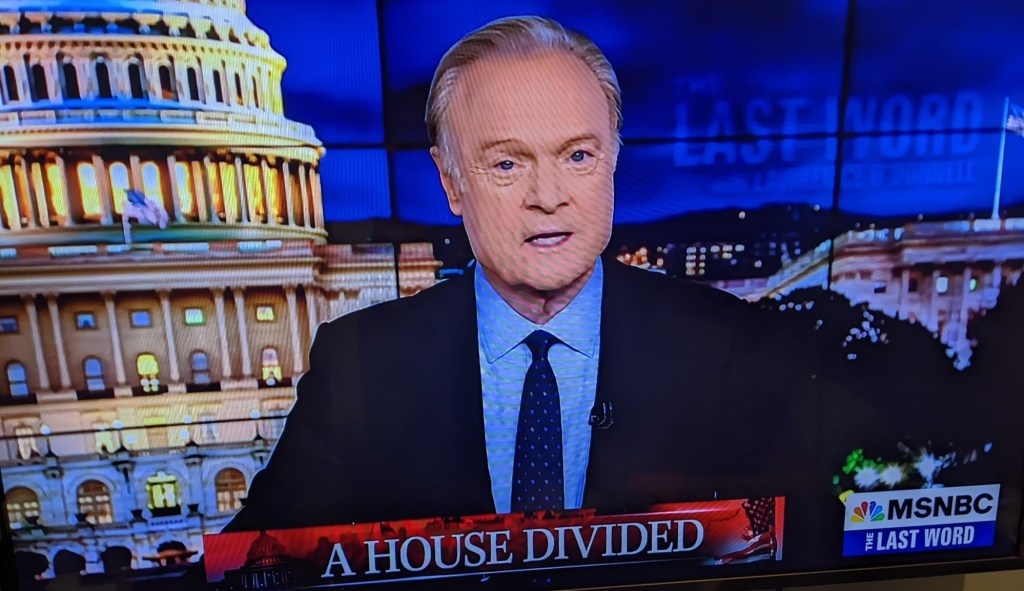
Lawrence O’Donnell, The Last Word, MSNBC, is conducting a debate on this issue on his program. A House Divided started on the 18th January, 2022. The first speakers were Barbara F. Walter and Kurt Andersen.
Below: comments from How Civil Wars Start.


.
Something lighter – holiday at the South Coast
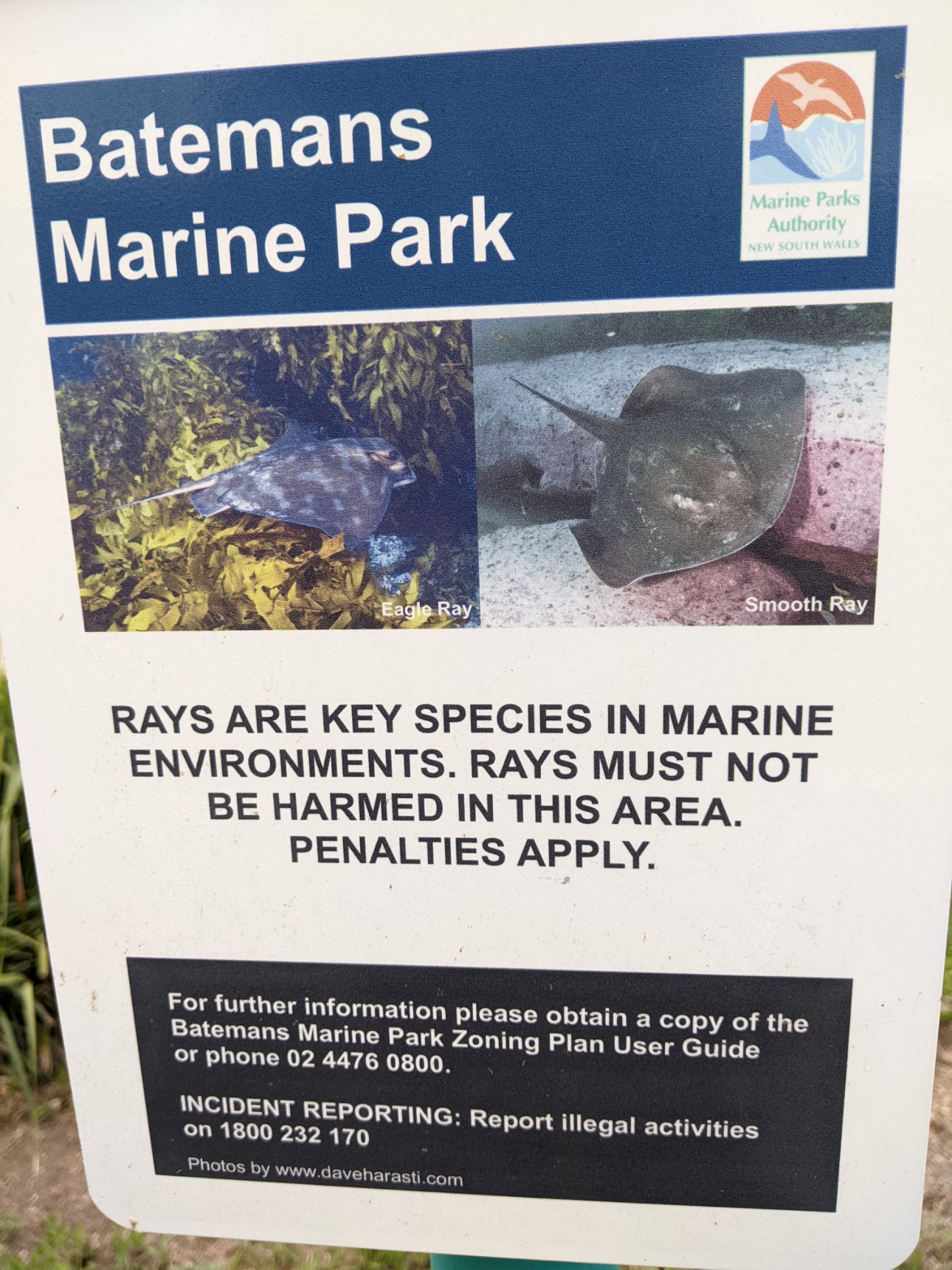










A mix of gloomy and sunny days, with a mix of great activities
Australian Politics
The SMH article below suggests a positive change in the ALP vote. It also refers to the increase in popularity of independent candidates. Bob McMullan’s article, that follows refers to the role of independent candidates vying for the second Senate position in the ACT.
Sydney Morning Herald, 18 January 2022, David Crowe 7 hrs ago(slightly edited)
Coalition primary vote drops below Labor’s for the first time: Resolve survey
Soaring virus infections have fuelled a backlash against Prime Minister Scott Morrison over his handling of the pandemic, slashing the Coalition’s primary vote from 39 to 34 per cent and vaulting Labor into a strong position ahead of this year’s federal election.

Labor has increased its primary vote from 32 to 35 per cent since November, generating a powerful boost for Opposition Leader Anthony Albanese ahead of the election due by May, while the Greens have held their support at 11 per cent.
While Mr Morrison has an edge over Labor leader Anthony Albanese as preferred prime minister, he leads by only 38 to 31 per cent and has lost the double-digit margin he held on this measure just two months ago.
The exclusive results in the Resolve Political Monitor, conducted for The Sydney Morning Herald and The Age by research company Resolve Strategic, show the swing has come at the same time voters marked the government down on its management of the pandemic.
While the Resolve Political Monitor does not calculate a two-party vote for the major parties, given the result is often within the margin of error, the swing against the Coalition in this new survey was large enough to give Labor a clear advantage ahead of the election.
“The contest has been quite close up until now, but Labor now holds a significant two-party preferred vote lead,” said Resolve director Jim Reed.
“The Coalition needs to be well in front of Labor on primary vote to win because they get a minority of preferences from minor parties and independents, and they’re just not there at the moment. In fact, this is the first time they have trailed Labor on primary vote in our tracking.”
The five-point swing against the Coalition came at a time of furious debate about the government decision to deport tennis champion Novak Djokovic, soaring infections from the Omicron strain of the coronavirus, pressure on hospitals, long queues at testing centres and a shortage of rapid antigen tests.
The grim mood in the community was confirmed in the Resolve Political Monitor national outlook index, which fell to 88 points in January from 102 points in November and 110 points in October. The index is based on questions to voters about whether they think the national outlook will get better or worse.
Asked about their personal outlook, however, respondents kept the index unchanged at 108 points.
Mr Morrison said on Monday he believed the way to withstand the pandemic was to “push through” the rising cases, noting that vaccination rates were high and the overwhelming majority of Omicron cases led to very mild illness.
Mr Albanese has campaigned in marginal seats with a promise to run a government that rewards aspirational workers, while accusing the government of being too slow to supply RAT kits in the same way it lagged in the purchase of vaccines last year.
Voters cut their rating on Mr Morrison when asked which leader and party were the best to manage the COVID-19 situation.
On this issue, respondents gave Mr Morrison and the Coalition a lead of four percentage points over Labor, but the margin shrank dramatically from 13 points in November and 25 points after the federal budget last May.
Asked about health and aged care, voters favoured Mr Albanese and Labor with a lead of six percentage points, up from three points in November. This reversed the government’s lead on the key issue in monthly surveys from April to September.
The question for voters on policy performance asked: “Please tell us which party and leader you think would perform best in each area.” Mr Morrison and the Coalition kept their lead over Labor on economic management, but it slipped to 13 percentage points in January compared to 16 points in November.
Asked about jobs and wages, voters favoured Mr Albanese and Labor by four percentage points, reversing the government’s lead of two points in November.
The responses showed Labor had gained ground with voters during the Christmas and New Year period on its ability to manage key election issues, while Mr Albanese also improved his personal standing.
While 41 per cent of respondents said Mr Morrison was doing a good job as Prime Minister, up from 40 per cent in the last survey, the number who said he was doing a poor job rose from 49 to 50 per cent. This meant his net performance rating remained negative.
Voters also gave Mr Albanese a negative rating in net terms, with 34 per cent saying he was doing a good job as Opposition Leader while 41 per cent said he was doing a poor job.
Mr Albanese improved his net performance, however, from minus 14 percentage points in November to minus seven in January, and his rating on this measure was better than Mr Morrison’s for the first time since the Resolve Political Monitor began last April.
The Resolve Political Monitor was conducted from January 11 to 15 and asked 1607 voters their views in online questions put in a random order to avoid a “donkey vote” with the results. The results were based on a representative sample of the wider population with a maximum margin of error of 2.5 per cent for the national figures.
Because the Resolve Political Monitor asks voters to nominate their primary votes in the same way they would write ‘1′ on the ballot papers for the lower house at an election, there is no undecided category in the results, a key difference with some other surveys.
Support for independent candidates rose from 9 to 11 per cent from November to January, at a time of heightened media interest in non-party candidates who are challenging Liberal MPs, while Pauline Hanson’s One Nation was unchanged at 3 per cent.
This meant 31 per cent of voters favoured a choice outside the Liberals, Nationals and Labor, a slight increase from previous surveys and a much larger result than seen at the last election, when the figure was 25 per cent. Support for independent candidates is difficult to gauge on a national scale when contests vary greatly in each electorate.
Many voters acknowledged their support could change, with 27 per cent describing themselves as uncommitted.
ACT Senate teases again Bob McMullan

There is speculation at almost every federal election about the Liberals losing their ACT
Senate seat.
But they never do.
Why might this year be different? There are a number of reasons to look at this possibility
again in 2022.
- The Liberals have a very weak candidate.
2. It should be a strong election for Labor in Canberra and they have a strong
candidate.
3. Some interesting Independent candidates are already in the field.
However, it is important to give some statistical background to illustrate the magnitude of the task.
Therefore, to win any Independent will have to take votes from the Liberals unless the Labor party vote, which was 39.35% last time increases significantly at the expense of the Liberals.
The result was not very different in 2016. The Liberals received 33.21% on that occasion, which left them only fractionally short of a quota. The Greens received 16.1% which left them under half a quota. These figures illustrate the magnitude of the task. But they also show that it is not impossible.
To look at the reasons for reconsidering the possibility in more detail, the Liberal candidate will be the same as last time, Zed Seselja. He may be seen as a weak candidate at any time but especially so at this election as he has demonstrated how far he is from majority community attitudes in Canberra with his approach to the euthanasia issue. He also seems out of step on the Integrity Commission question as well as key issues like climate change.
If he was stronger there would be no point in taking it further. However, his weakness opens up the possibility of change. The Labor Party always does well in Canberra when the party is in Opposition. The polling at
the national level looks strong and Katy Gallagher is a popular and effective Senator. This gives the Labor Party the potential to eat into the Liberal party vote and leave them shorter of a quota than in the past two elections.
Over the last twenty years the highest ALP first preference vote in the Senate in the ACT has been 42%. In these promising conditions for the Labor vote in the ACT it must be possible for Katy Gallagher to equal this vote, although it is hard to see it going any higher in the current circumstances. Should she achieve this result primarily by taking votes from the Liberals this would reduce the vote for Seselja to about 29.5% to 30%. This would still leave him in a strong position but nevertheless vulnerable to the right challenge.
What of the Independents and minor parties? The Greens always get from 16% to 20% and they are likely to do so again. But it is very difficult to imagine voters who previously voted for the Liberals shifting their votes to the Greens. The Greens usually campaign to win disaffected Labor voters rather than to win over Liberals. This is a strategy that will never succeed in winning a second senate seat in Canberra. Should there eventually be a third
senate seat in the ACT the Greens would have a strong chance of winning it. But at this election I assess that they have no chance of beating Zed Seselja.
There are two high-profile independents who seem likely to be able to get sufficient signatures to gain above-the line status for the purposes of this election.
The first to nominate was Kim Rubinstein. She would be a terrific senator and is much more in line with the majority ACT views than Zed. However, it is not obvious that she will eat into the Liberal vote. Perhaps she will because she has strong credentials and her campaign focus on the Integrity Commission issue may play well. My concern with her candidature is that she is likely to be in competition with the Greens and Labor rather than winning former
Liberal voters.
The other high-profile independent is David Pocock. While he has strong green credentials his sporting history and overall record may make him the most likely to eat into the Liberal vote and therefore have a realistic chance of winning. Given the nature of the challenge he seems the most likely candidate to be able to defeat Senator Seselja.
But it won’t be easy.
The “secret sauce” for a successful campaign is getting the Liberal vote below 30% and ensuring the combined vote of the Independents is sufficient that with ALP preferences the leading candidate can get above the Greens and, with a strong preference flow, beat Zed.
The arithmetic makes it clear that it will not be easy. But given the national political climate in which Independent candidates are challenging previously safe seats this is the strongest chance ever.
What the statistics make clear is that once again the most likely outcome is that the Liberals win the second seat. The next most likely outcome is that David Pocock will win the seat, although it is difficult at this stage to predict which of Pocock or Rubinstein has the better prospects.
What is also clear is that no one else has a chance.
First published in Pearls and Irritations.
 Robin's Room