Alexandra Ocasio-Cortez is the subject of one of the books, Take Up Space The Unprecedented AOC, I review this week. Nan Sloane’s historical account of women who are unknown or have been forgotten, Uncontrollable Women, seemed a good companion as so many more such women are given a voice – sometimes a loud one. NetGalley provided me with both books in exchange for honest reviews.
The Editors of New York Magazine Take Up Space The Unprecedented AOC

Avid Reader Press, Avid Reader Press / Simon & Schuster 2022.
Take Up Space is a tremendous read.
Alexandria Ocasio-Cortez is an engaging political figure who has managed to find her way through the criticism that anyone with such star qualities usually faces, some mistakes and poor decision-making, the need to develop passionate beliefs into workable policy initiatives and engaging with the various political initiatives and their supporters (sometimes with star quality of their own) that make up the Democratic Party. For anyone dealing with progressive politics and concerned with how to make them work for a largely moderate oriented constituency and with those who recommend them, this book is a valuable tool towards understanding how to achieve what seems insurmountable. See Books: Reviews for the complete review.
Nan Sloane Uncontrollable Women Radicals, Reformers and Revolutionaries Bloomsbury Academic, 2022.
This book is divided into four sections, Frantic ‘Midst the Democratic Storm; More Turbulent than the Men; Monsters in Female Form; and Women Without Masters. The historical context is laid out, beginning in Part One with The French Revolution; then moving to the British situation for parts two to four with the 1790s action in areas around Manchester and Leeds associated with the Industrial Revolution; the aftermath of the St Peter’s Field carnage, with particular attention to the treatment of women; and, lastly, women’s contribution to organising for parliamentary reform. The book ends with the success of the 1832 Great Reform Act. See Books: Reviews
A terrific review of Uncontrollable Women , which takes up some issues I do not raise, appears after the Covid update below, together with the following articles: KnowMyName Exhibition at the NGA; Brittany Higgins & Grace Tame’s Powerfully Damning Press Club Speeches In Full; The Darker Side of Jane Austen – rather a different perspective, and very intriguing; and Virginia Trioli on Grace Tame’s angry looks ( I think that they are fabulous).
Canberra Covid update

The Public health Emergency Declaration has been extended for ninety days as movement in the community increases when Canberrans return to work and school. By February 10 58.1% of Canberrans aged 16 and over had received their booster. Also, ACT residents aged five to eleven who have received one dose is now 74.9% New cases recorded were 500; 51 people were in hospital with Covid, of whom three were in intensive care, but none is ventilated.
New cases on February 11: 489; fifty patients are in hospital, including three in intensive cases with one ventilated.
New cases on February 12 : 428 with 2,618 active cases. Boosters are now at 58.9% and 75.1% Children five to eleven have received one dose. New cases 13 February – 458. New cases recorded on 14 February – 375. There have been no further deaths recorded, and patients in ACT hospitals now number fifty one . Four people are in intensive care. two of whom are ventilated. On the 15th February there were 455 cases recorded. Vaccinations for children five to eleven continue to increase with 76.2% having had their first dose. People in hospital – forty-nine; four in intensive care; two ventilated. There were 594 new cases on 16th February.
Uncontrollable Women by Nan Sloane – another review about history’s secret heroines
A compelling study celebrates the working class pioneers of female emancipation who have been overlooked.
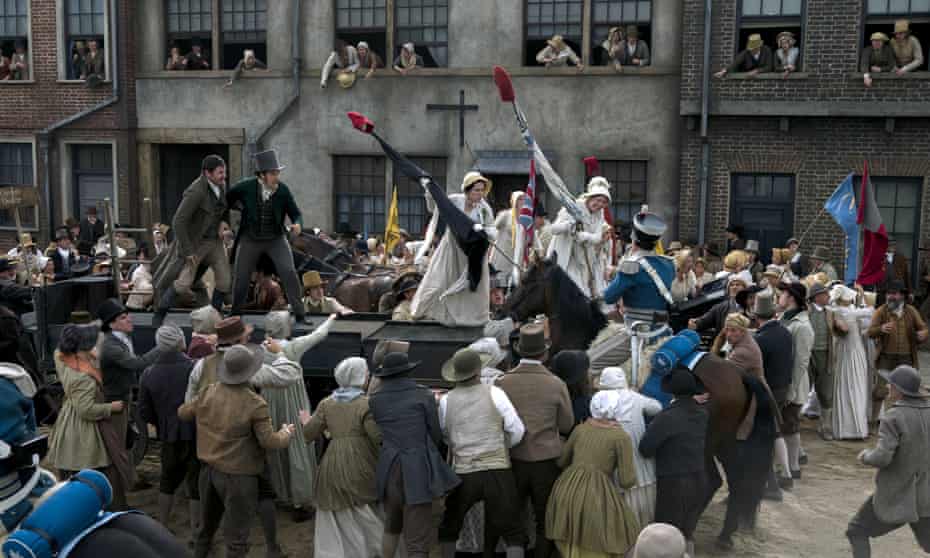
Fri 4 Feb 2022 18.30 AEDT
In 1822 Susannah Wright stood before the Lord Chief Justice accused of blasphemy. Despite her limited education, she was determined to conduct her own defence and duly began to read out a carefully prepared statement. Her “blasphemy” had nothing to do with being a potty mouth. Rather, Susannah was found guilty of selling a pamphlet that challenged the right of the Established Church to meddle in secular matters. Infuriated by the effrontery of this young lacemaker from Nottingham, the judge attempted to cut her off. Sharply, she told him to be quiet: “You, sir, are paid to hear me.”
https://www.theguardian.com/email/form/plaintone/inside-saturday
Sign up to our Inside Saturday newsletter for an exclusive behind-the-scenes look at the making of the magazine’s biggest features, as well as a curated list of our weekly highlights.
It is a thrilling moment. It is also, suggests Nan Sloane, one that deserves to be far better known. The same goes for the many other occasions on which working-class women dared to speak truth to power during the first third of the 19th century, a time of bitter unrest when it looked as though Great Britain might follow France and America into revolution. There is, for instance, Mary Fildes, president of the Manchester Female Reform Society, who stood on the hustings alongside Henry Hunt at Peterloo in 1819 and only narrowly escaped death in the state-sanctioned carnage that followed. Or Jane Carlile who, like Susannah Wright, was found guilty of blasphemy for selling her husband’s newspaper The Republican, and was sentenced to two years inside Dorchester prison with her newborn baby.
One of the reasons why these women have been “hidden from history” to use Sheila Rowbotham’s seminal phrase from nearly 50 years ago, is because working-class women generally left less of a paper trail than well-to-do activists. Mary Wollstonecraft and Anna Laetitia Barbauld, who both get a chapter, published polemics that set off political fireworks and attracted vicious personal attacks in the process (Horace Walpole famously dubbed Wollstonecraft “a hyena in a petticoat”). With the likes of Wright, Fildes and Carlile, by contrast, all we get are oblique glimpses of them in narratives written by and about the men with whom they shared their lives.
Real women living in historical time will not always think and act in ways that we find easy to understand
The problem with this fragmentation is how difficult it makes it to recover a reforming woman’s particular journey, and see her full complexity. For instance, in 1832 Yorkshire woman Mary Smith presented parliament with a petition (or, rather, Henry Hunt did on her behalf) calling for the forthcoming Reform Bill to deliver female suffrage. In the process Smith tried to bolster her cause by dropping broad hints that William Cobbett, the great reformer who was a staunch advocate for male suffrage only, had recently been caught in a clinch with another man. As repugnant as this homophobia seems today, it is a reminder that real women living in historical time will not always think and act in ways that we find easy to understand.
There is another reason, suggests Sloane, that this early generation of female radicals still gets overlooked. All too often feminist history gets written exclusively in terms of the slow march towards female voting rights, which was not finally achieved for another 100 years. But many of the women from this earlier period were more concerned with the immediate challenge of keeping their families fed and warm. One of the saddest things about Sloane’s narrative is its heavy load of infant mortality, against which background desperately poor women march for bread and smash machinery in protest at the consequences of unregulated capitalism. The vote, for them, is a luxury that will have to wait.
Uncontrollable Women: Radicals, Reformers and Revolutionaries by Nan Sloane is published by IB Tauris (£20). To support the Guardian and Observer, order your copy at guardianbookshop.com. Delivery charges may apply.
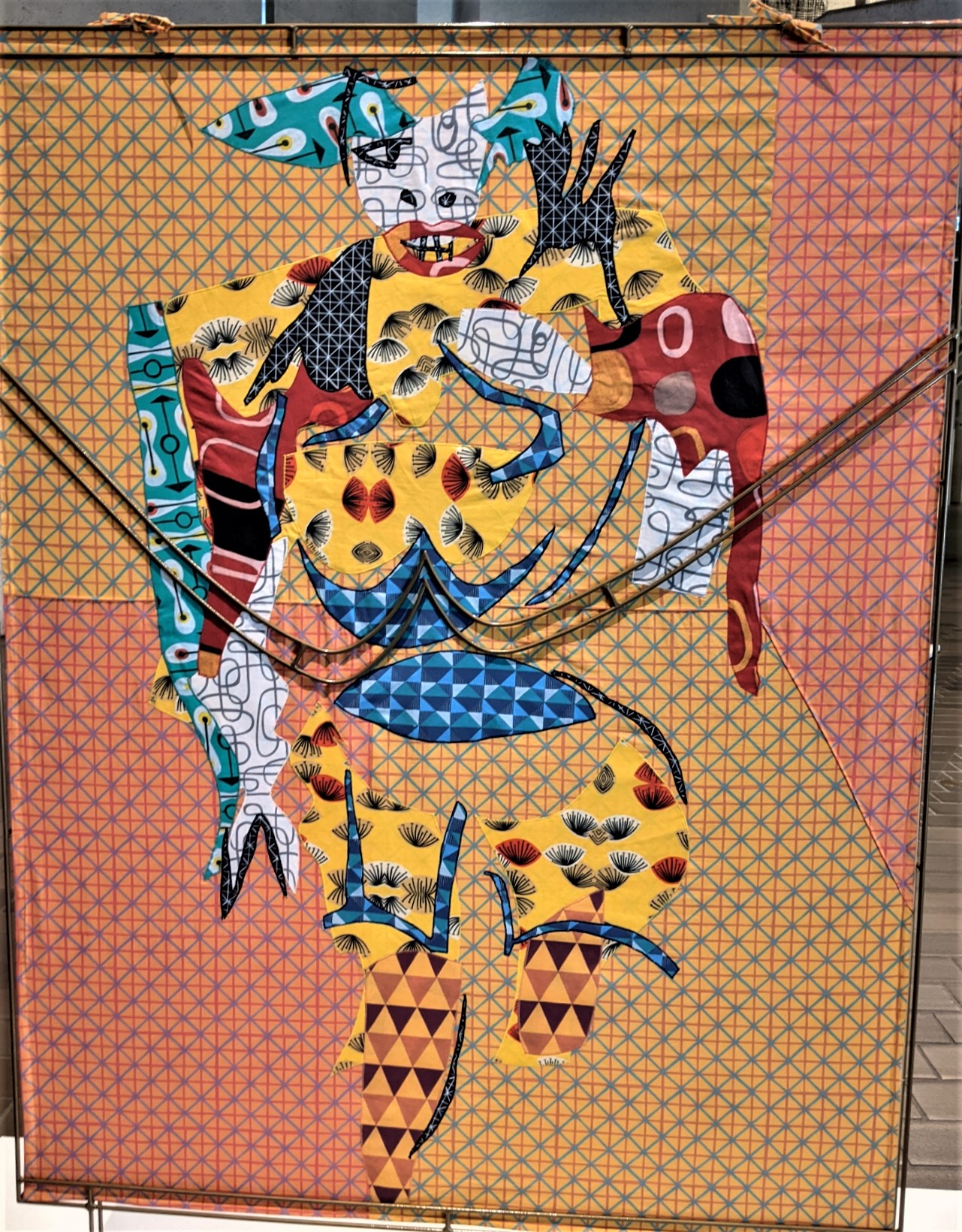
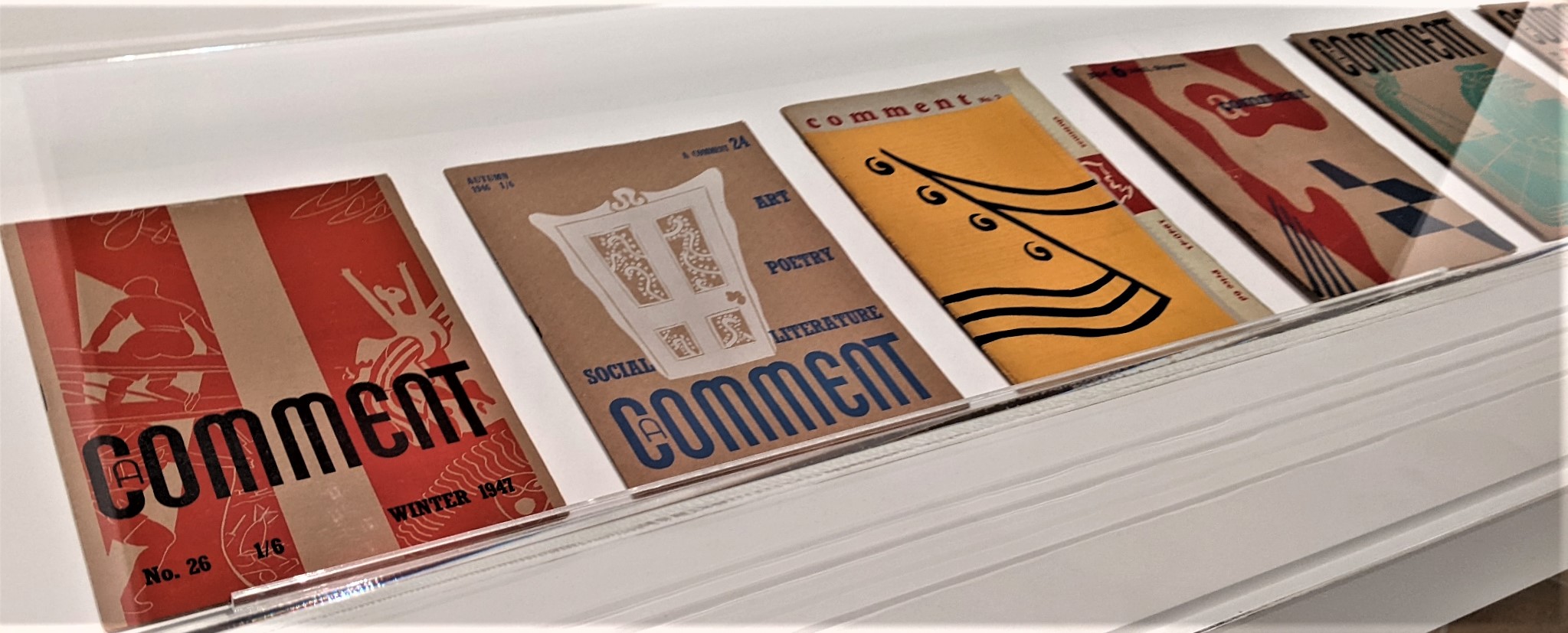
Visit to the NGA where the KnowMyName Exhibition continues





Brittany Higgins & Grace Tame’s Powerfully Damning Press Club Speeches In Full

Grace Tame is an outspoken advocate for survivors of sexual assault, particularly those who were abused in institutional settings. She was named the 2021 Australian of the Year.
From age 15, Grace was groomed and raped by her 58-year-old maths teacher, who was found guilty and jailed for his crimes. However, under Tasmania’s sexual-assault victim gag laws, Grace couldn’t legally speak out about her experience – despite the perpetrator and media being free to do so. Grace has used her voice to push for legal reform and raise public awareness about the impacts of sexual violence.
She is a regular guest speaker for high-profile events and television programs and uses her media profile to advocate for other vulnerable groups in the community. In December 2021, she launched the Grace Tame Foundation, with an aim of driving cultural and structural change, with the ultimate goal of a future free from the sexual abuse of children and others.
Brittany Higgins is a former political staffer, and now a Visiting Fellow at the Global Institute for Women’s Leadership at the Australian National University.
She has been credited with sparking debate on gender-based violence and safety within Australian politics – and the workplace in general – following her brave decision to publicly allege she was raped by a colleague inside Parliament House.
She has continued to publicly advocate for change, notably at the March4Justice rally in Canberra in March 2021.
On Wednesday, Brittany Higgins and 2021 Australian of the Year Grace Tame gave incredibly powerful speeches at the National Press Club.
They were responding to Prime Minister Scott Morrison‘s formal apology to victims of sexual harassment, assault and rape in Parliament, including Brittany Higgins, in Parliament on Tuesday afternoon.
Needless to say, Higgins and Tame didn’t buy it, and had a lot to say about Morrison’s inaction.
Here are the two speeches in full:
Brittany Higgins’ National Press Club Address:
I was raped on a couch in what I thought was the safest and most secure building in Australia. In a workplace that has a police and security presence 24 hours a day, 7 days a week. The parliament of Australia is safe — it is secure — except if you’re a woman.
If what happened to me can happen there, it can happen anywhere. And it does. It happens to women everywhere.
A little over a year ago, I sat down with my partner David, and I told him that I’d decided to speak publicly about my assault. Knowing that it would mean quitting my job and likely leaving Canberra, knowing it would mean subjecting myself to judgement, to vitriol, to political hit jobs and online hate.
I made my decision to speak out because the alternative was to be part of the culture of silence inside Parliament House. I spoke out because I wanted the next generation of staffers to work in a better place. To take up a dream job like I did. And for it to live up to their hopes and not betray them. And above all, I decided to speak out because I hoped it would make it easier for other women to speak out too.
It’s become my whole life mantra right through the past 12 months — to make it easier for other women to speak — so while I’m very grateful to take the chance to talk at the National Press Club, I want to stress that I don’t pretend to speak for all survivors. Not for a minute do I imagine that I could. Everyone’s trauma is personal. Everyone’s story of abuse and fear and betrayal and humiliation takes a different shape. I never wanted to be a spokesperson or a standard-bearer, but I do know that it’s easier to share your story if you recognise something of it in someone else’s. And above all, I believe it will be easier for women to share their stories if they see it makes a difference in the workplace, in our national life, and in our parliament.
That’s what keeps me speaking out — my determination to drive change.
Nearly a year after the March4Justice made its way to the threshold of federal parliament, too little has changed. If you go back and read articles from March 15, there was a sense of a national moment of reckoning. A feeling of unstoppable momentum. An irresistible force. A raging current that would not be turned aside by tired old platitudes from fathers of daughters.
But I stand here today fearful that this moment of transformative potential, the bravery of all those women who spoke up and stood up and said “Enough is enough” is in danger of being minimised to a flare-up, a blip on the radar, a month-long wonder in the national conversation.
Or, worse, just a political perception problem neutralised and turned into a net positive. Even beyond that, I’m worried what too many people beyond the government and the media took out of the events of last year was that we need to be better at talking about the problem.
In a lot of cases, that seems to have meant trading off offensive, tone-deaf statements for a convoluted mix of appeasing weasel-words. In the national conversation, we have this passive, anonymous language vaguely talking about “wrongs done” as if sexual violence falls out of the sky. As if it is perpetrated by no-one. As if it is inflicted on no-one.
For a start, recognising there’s a problem is 50 years short of what’s required.
And the women and girls of Australia deserve so much better than an improvement in the way that we publicly discuss the dangers that they face at home and in their daily lives. Put another way, last year wasn’t a march for acknowledgement. It wasn’t a march for coverage. It wasn’t a march for language. It was a march for justice.
And that justice demands real change in our laws, as well as in our language, in our national culture, as well as our national conversation.
That starts with the Prime Minister — yes, some of his language last year was shocking and, at times, admittedly, a bit offensive. But his words wouldn’t matter if his actions had measured up. Then, or since.
What bothered me most about the whole “imagine if it were our daughters” spiel wasn’t that he necessarily needed his wife’s advice to help contextualise my rape in a way that mattered to him personally. It’s all he could do — and that’s how he realised it was a bad thing.
I didn’t want his sympathy as a father. I wanted him to use his power as Prime Minister.
I wanted him to wield the weight of his office and drive change in the party and our parliament, and out into the country. And one year later, I don’t care if the government has improved the way that they talk about these issues.
I’m not interested in words anymore. I want to see action.
Late last year, we saw the final report from the Jenkins review, commissioned by Australia’s Sex Discrimination Commissioner, who very kindly is here today. It revealed what many of us in this room already know to be true. Sexual harassment and bullying is rife in the corridors of power, with over 51 per cent of participants reporting incidents of this nature.
I earnestly thank the Prime Minister and the Leader of the Opposition for their statements of acknowledgement and apologies offered yesterday to victims of abuse in our national parliament. In addition, I’d like to acknowledge Zali Steggall, who enabled a handful of us to actually attend in person.
It was encouraging, and an important sentiment, but I am cognisant that, at this point in time, they are still only words. Actions are what matter. And what will be the true test of whether the government is committed to creating systemic change.
Task forces are great. Codes of conduct are important. But only if it’s paired with institutional change.
There are 28 recommendations in the Jenkins review and, without their implementation, we will continue to see this toxic culture exist within our most powerful institution.
The cornerstone of which is the office of parliamentary staffing and culture, legislative reform to the MOP(S) Act, and an independent complaints mechanism for the entirety of Parliament House.
Without these changes, women will inadvertently continue to be discouraged from taking up rolls within parliament, or take a seat at the leadership table.
If we truly want a gender-inclusive society, we need more vocal women in rooms where key decisions are being made to ensure that there is a gender lens placed over national policy. This starts with the implementation of the Jenkins review.
The question is, if this moment doesn’t spark change in our parliament, what will?
I may have been naive but, up until 2021, I truly didn’t realise that gender was still a defining feature of my humanity. I thought of myself as a university student. A government employee. An Australian. But I have now been forced to come to terms with the fact that my gender is still a key feature of my personhood to some people.
That brings me to the National Action Plan. The release of the draft national plan to end violence against women and children has been hotly anticipated. More than a decade after it historic launch, rates of violence far too high. In fact, they’ve barely changed since the launch of the plan and, in some cases, they’ve actually increased.
This lack of action at the national level has seen the states go it alone. Victoria had the first royal commission into family violence, spurred on by the bravery of another former Australian of the Year, Rosie Batty.
For women over the age of 15, one in four have experienced intimate partner violence. One in two women have experienced sexual harassment in their lifetime. I bet you’ve heard those statistics rattled off at white-ribbon breakfasts and at the top of ministerial statements for a decade. I know I have. But recognising these horrific facts is no longer sufficient.
Women with disability across Australia experience significantly higher levels of all forms of violence. For example, nine out of 10 women with an intellectual disability report experiencing sexual assault. And Aboriginal and Torres Strait Islander women are 32 times more likely to be hospitalised, and 11 times more likely to die due to assault.
Any single one of these statistics should challenge us. They should confront us. They should spur us to do whatever it takes. But instead, they’ve become sort of this throat-clearing exercise that we all just kind of tolerate.
A mumbled performance before we get into some old talk about slow and difficult change is. To its credit, the national plan doesn’t aim low. Unfortunately, its aims are so lofty and vague that it’s impossible to disagree with and equally difficult to examine.
The plan talks about a future free from violence against women and their children, claiming that it will serve as a blueprint for change that sets out our collective ambitions, priorities and targets for how we will work to end violence against women and children over the next 10 years. It claims to integrate all we have learnt since 2010.
These aspirational statements are, indeed, ambitious, and equal to the scale of the challenge. But the question is — how will they be achieved? That is, unfortunately, where the draft plan has lost its way.
Instead, it is largely a collection of statistics describing the problem, filled with warm sentiments and platitudes attached to noble outcomes which lacks the promised learnings from the past decade towards a future free from violence against women and children, and clear targets to that end.
Without clearer action and firm targets, there can be no accountability. And without accountability, we are back to a world where we are describing the problem being seen as sufficient.
The draft plan does not even directly acknowledge the fact that we’ve failed on our first account. Out one single measure for success, a target to see a significant and sustained reduction in violence against women and their children during the next 12 years, we failed.
How can you speak on drawing on everything you have learned without confessing the failure of the one test we have set ourselves?
Instead, we have monitored acknowledgements that rates of domestic violence have remained stable and rates of sexual violence have increased.
In response, the planet laments wistfully that more needs to be done, but if it is more of the same compounded by a refusal to examine the past failures, let alone examine them, then this plan will not be worth the glossy paper it will eventually be printed on and Australian women and children will suffer through another decade of violence and abuse while politicians and policymakers bring their hands about the fact that we need to turn things around in 2040.
As I think you have gathered by now, my patient has run out.
I want to close by saying that for all the fear and anger and sadness that my time in politics has brought me, it did not take away my belief in Australia, my faith in democracy.
I know our country can do better for women and girls. I know our Parliament will be a better, stronger place if more women are ministers and members and senators and staffers. I know change is possible, and as long as there are people like Grace Tame and Rosie Batty and the amazing team at PAN you global Institute for women’s leadership, I know that change is coming.
It is up to us to keep those in power up to account. To take up the challenge, we each have a responsibility to one another and have a role to play in making things better for the next generation of women.
Grace Tame’s National Press Club Address:
Many of you know my story. I was targeted, stalked, isolated, groomed, and repeatedly raped as a minor by a known serial paedophile.
Child sexual abuse is the epitome of evil. It is also disturbingly common. Perpetrated not by monsters on the fringes of society, but by everyday citizens, hiding in plain sight. One in six boys and one in four girls is abused before their 18th birthday. We tend to think of child sexual abuse in terms of physical acts but in reality it is mostly invisible, characterised by calculated, insidious, systematic psychological manipulation that leaves its survivors with lasting internalised complex trauma.
Trauma that is not only reinforced by negative social attitudes, but also, ironically, by the very systems and institutions, the structures designed to protect us, to bring justice, like the courts, like the press. Such is the vicious cycle, or rather, tangled web of abuse culture, and thus we see the effects of abuse persist long after abuse itself stops, and wherever they can, abuses will turn its survivors and their supporters against each other.
One of the key objectives of perpetrators and their defenders is to maintain control of the narrative by denying, twisting or completely rewriting the truth. As a result, survivors remain trapped in a seemingly inescapable estate of repeated self-justification. By design, those who are already exhausted and traumatised to become exponentially so.
Taking more power in the process. Our pain is their strength. But by the same token, our strength is their pain. The higher we rise, the hideout they try to regain control. Why, just the other day, someone online called me a horrible, horrible person who aggressively pursued her teacher and then blamed everyone else.
I have lost count of how many times I have had to say this now, but the man who abused me was that my high school from 1992 until I reported him in 2011. His first successful target was in 1993, and the school knew this before I was born. I have spoken with three others he took advantage of it before my time, and countless other women and men who bore witness to his predatory behaviour during his 18 year tenure who, now wishing they hadn’t, turned a blind eye, who, now wishing they hadn’t, smiled through it, along with 28 multimedia files of child abuse material which included nine files of videos of adults penetrating children.
The police found a trophy file of students both in uniform and topless on his computer, all of whom either came from broken homes like me or lived in at the boardinghouse away from their families, and among the items that were assumed to be mine at that were given back to me after the investigation was an envelope full of my own hair.
But, sure, I was the predator. It was all my fault. If I can still be shamed into believing that today, it is no wonder that even amid this national reckoning, with all the empowerment it has generated for survivors, many still remain hesitant to publicly come forward with their stories. Sexual abuse and violence are all linked by this common thread of abuse with power, but each of these traumas is markedly different.
The benefit in relating them is that it connects us as a community, but the dangers in conflating them include a racing individual experiences and undermining the need for tailored solutions. One of the more complex challenges I have based in my work is walking the fine line between sexual assault and child abuse survivor advocacy. Sexual assault is a distinctly gendered issue, and while I happily lent my voice to it, I am not just an advocate for women.
I am an advocate for all survivors of child sexual abuse, many of whom are male. We must preserve that nuance. Every nuance in our discussions. We cannot forget our boys, and we cannot forget our men, not only as welcome, equal participants in this ongoing conversation, and without ignoring many negative patriarchal customs, we cannot forget our boys and men who are fellow survivors of abuse.
Yes, statistics say that perpetrators are more often than not men. Yes, statistics say that women are overrepresented in the survivor category, but statistics are not people. People are people – are not political footballs, not disposable news items – people. This year, I have seen how even the most seemingly common sense movements are lost in translation because others deliberately misrepresent them and then projected division onto them that isn’t even real.
For instance, certain members of the commentary have consistently labelled me as politically divisive, failing to mention that I spent most of last year having frank, productive meetings with politicians on all sides at both the state and federal level. So, after a year of being re-victimised, commodified, objectified, sensationalised, delegitimise, gas lit, thrown under the bus by the biased, mainstream media, despite my inclusive messaging.
I would like to take this opportunity to take a glass of water and remind you that I really have nothing to lose.
On the 17 August last year, not five months after being named Australian of the Year, I received a threatening fine call from a senior member of a government funded organisation, asking for my word that I would not say anything examining about the Prime Minister on the evening of the next Australian of the Year Awards.
“You are an influential person. He will have a fear,” they said. They fear? What kind of fear – I asked myself. I fear for our nation’s most vulnerable? A fear for the future of our plan? And then I heard the words,” with an election coming soon…”
And it crystallised a fear — eight fear for himself and no-one else, a fear that himself and no-one else, a fear he might lose his position or, more to the point, his power.
Sound familiar to anyone? Well, it does to me.
I remember standing in the shadow of a trusted authority figure, being threatened in just the same veiled way. I remember him saying, “I will lose my job if anyone hears about that, and you would not want that, would you? No.”
What I wanted in that moment he is at the same thing I want right now, and that is an end to the darkness, an end to sexual violence, safety, equity, respect, a better future for all of us — peace, a future driven by unity and truth, not one dictated authoritatively under the politics of division and spin.
The freedom of speech? I have not always had it. Many still don’t. So if those of us with a voice do not use it to fight for what is right, divide for those without a voice, then what hope is there? What is the point of life if not to connect and communicate honestly and openly with one another in the pursuit of progress aware that whatever means possible? What is the point of awarding someone who fought their work only to stifle them while they do it when it gets too real?
I am here because I made a conscious decision to stand up to evil, and I have been calling out injustice ever since. To retreat into silence now would be hypocritical. What’s more, we are still seeing it pervasively, subliminally weaponised as far as I am concerned. You either fight it, or you are a part of it.
Last time I was in this room, I was goaded into making a comment about Scott’s response to Brittany allegations, despite the MC’s stern warning that the topic was out of bounds. In the end, I said it should not take having children to have a conscience, and also having children does not guarantee a conscience.
Not long afterward, the Department of Prime Minister and Cabinet conducted a review into the National Australia Day Council — a selection process for the Australian of the Year Awards, a transparent intimidation tactic, designed to rattle the cage of an organisation whose funding it mostly comes from the Federal Government.
The Australian of the Year Awards program is an institution. So, too, is our Parliament. So, too, is a democracy. I respect that wholeheartedly. But politicians — like all individuals — are available. Human.
And although we, the people, collect them as per the institution of democracy to be our leaders, our examples, it is ultimately up to them what they choose to be examples of, whether they respect the privilege and purpose of this power or whether they abuse it at our expense. They may either be constructive or destructive.
But every single one of them is, inarguably, replaceable. Like me.
So, why put my reputation on the line? Because when we act with integrity, the tide rises with us. When we act with integrity, we set a more esteemed bar for those who take our place.
In any event, I would rather go down as a disappointment to an institution than sell out as a pandering political puppet to the corrupt forces that coercively control it.
Repeatedly this year, I have seen the patterns of deception and deceit performed by predators mimicked in our halls of power. And that’s just it.
The federal government’s approach to social issues seems to consist of nothing but empty announcements, placatory platitudes, superficial last-minute acknowledgements, and carefully staged photo ops. Facades and false hope. Reviews, reports, delays, and distractions — if not downright denials. All deliberate spin tactics designed to satiate the press and the general public.
And so, I conclude with something — hopefully — more constructive to take away. I conclude with three key asks to better our nation.
The first is for a government that takes the issue of abuse, in all its forms, seriously.
In regards to the sexual abuse of children and others, there can be no progress without accountability — as Brittany said. Unless our leaders take full responsibility for their own failings, abuse culture will continue to thrive inside parliament, setting a corrupt standard for the rest of the nation. It rots from the top. And by “full responsibility”, I mean proactive, preventative measures — not these
reactive, bandaid, electioneering stunts like acknowledging past harm at the last minute.
If you don’t take a strong stance to condemn abuse, you enable it.
Lest I mention the symbolism of promoting an alleged rapist, protecting him from an independent inquiry, and then allowing him to receive a million dollars worth of anonymous donations.
The second ask is for adequate funding to be actually implemented, not just announced or committed to, for prevention education to stop all of this before it actually starts.
The federal government is prepared to spend over $90 billion of taxpayers’ money on submarines that might be ready by 2040 to combat a potential offshore threat. $2.4 billion of that has already been wasted — gone.
Compare that to what they’re prepared to spend on the very real epidemic of violence against women and children affecting 1 in 4 today here at home. Just $1.1 billion in total. And if we just single out prevention education — which is where the real hope for change is — the numbers are even sadder.
In 2019, the federal government announced it would spend just $2.8 million over a three-year period, delivering a sexual and domestic violence prevention education program in schools called Respect Matters. But in reality, less than half of that amount was given, without explanation.
As my friend Shanna Bremner — founder of End Rape on Campus in Australia — pointed out, there’s around four million students enrolled in schools across the nation, according to the ABS.
So, from 2020 until 2022, if you divide the $1.36 million they actually gave by four million students, it works out that the federal government had planned to spend 11 cents per student per year on prevention education. 11 cents per student.
This is because we currently have a government that is primarily concerned with short-sighted, votes-based funding, not with long-term, needs-based funding. And what we need in order to create real change is meaningful investment in our children. In their education. Because they are the future of our nation.
And the third ask is for national, consistent, legislative change.
Still today, perpetrators of abuse find safety in outdated, inconsistent legislation which both protects them and perpetuates social ignorance.
For example, the man who abused me who I spoke about before was convicted of maintaining a sexual relationship with a person under the age of 17. In other jurisdictions, this exact same offence was called “the persistent sexual abuse of a child”.
The former charge implies consent, while the latter reflects the gravity and the truth of an unlawful criminal act committed against an innocent child victim.
Piece by piece, we must correct the narrative and take control away from abusers who have, for so long, sought solace in our systems and institutions that shield them from the full extent of what they’ve done.
These changes are achievable.
LetHerSpeak, created and run by Nina Furnell, led to Tasmania not only reforming its gag law, but also the wording of the offence to “persistent child sexual abuse”. And, as a direct result of the Grace Tame Foundation’s Harmony campaign to create greater consistency between the state and territories on sexual assault legislation, this week, the ACT’s Attorney-General, Shane Rattenbury, is introducing the Family Violence Legislation Amendment Bill to the Legislative Assembly.
One of the key amendments in the bill, which we called for on the 12th of November, is to change the name of the offence “sexual relationship with a child” to “persistent sexual abuse of a child”. And that’s because of our work.
Now, whilst I commend the ACT on overhauling these laws, we need to ensure that every state and territory adopts the best-practice model of not only the charge itself, but the complete wording of the legislation.
Tasmania, New South Wales, Victoria and Western Australia have all adopted the wording of “persistent sexual abuse”. But Victoria and Western Australia are the only two jurisdictions in which the word “relationship” does not appear anywhere in the body of the legislation. We still have so much work to do.
It’s all well and good to change heart and minds with our conversations. But without structural change, we will continue to be at the mercy of systems that override them.
Now, let me restate those three key asks. The first is for a government that takes the issue of abuse in all its forms seriously. The second is for the implementation of adequate funding for prevention education to stop these things before they even start. The third is for national, consistent, structural change.
We still have so much work to do.
But in saying all of this, before we end today, we mustn’t forget how far we’ve come.
In just 12 short months, we’ve collectively shifted the dial towards survivor voices. We have amplified lived experience to unprecedented levels and, in doing so, restored courage and hope back to a previously disempowered community.
We are on the path to achieving nationwide safety, equity, and respect. An advocate is only as powerful as their supporters.
You see me here standing tall, if a little bit broken. Standing on the shoulders of giants. Side by side with Brittany. Side by side with all of you. Together, making change. Making history. But above all else, making noise!

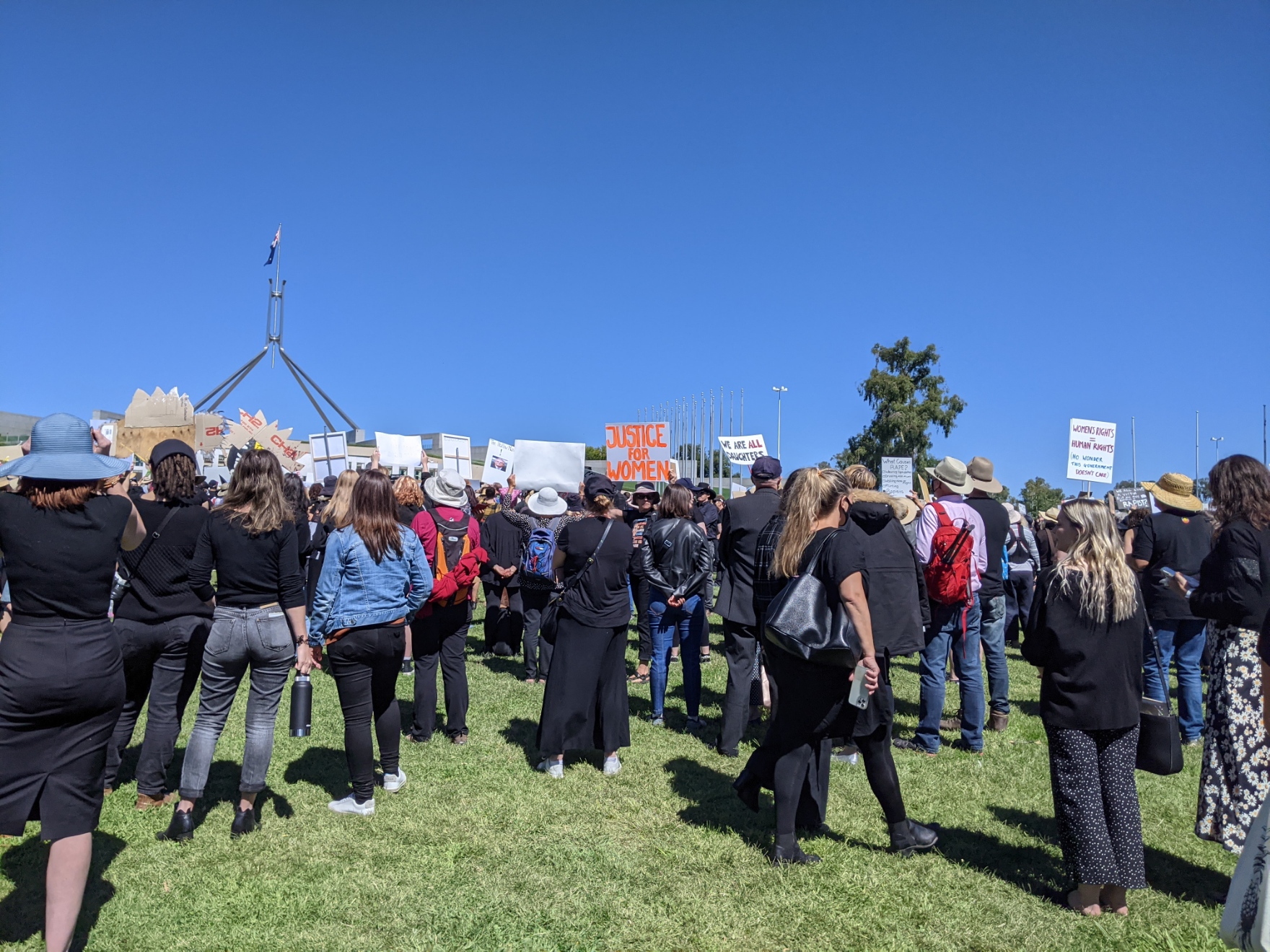


March4Justice rally in Canberra in March 2021.
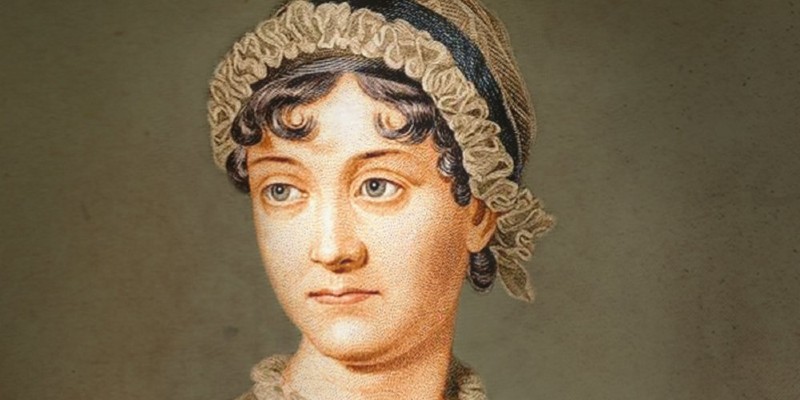
THE DARKER SIDE OF JANE AUSTEN
Kristen Bird on the dark underbelly of Austen’s world and all those happy endings.
FEBRUARY 9, 2022 BY KRISTEN BIRD VIA MIRA BOOKS
As a suspense writer, I’m often diving headfirst into the less-palatable parts of the human psyche. Give me a manipulative genius or a villainous heartthrob any day. A social climber with a slightly-malicious agenda? Yes, please. This is the kind of stuff my debut novel, The Night She Went Missing, is made of.
I don’t often have the opportunity to teach contemporary thrillers in my classroom, so instead, I teach my seniors the importance of tilting a text on its axis, of examining characters from numerous angles, of using critical lenses to parse out the layers of a text. Through this process of turning texts upside down, I’ve found darkness lurking in some of the most unexpected places.
Take Jane Austen. It is a truth universally acknowledged that an Austen story will be in possession of a happy ending, but despite her penchant for happy endings, Austen also doles out her fair share of despicable villains, terrifying marriages, and even a few thriller-esque motifs.
I took my first foray into the stories of Jane Austen as a teenager by watching Emma Thompson’s adaptation of Sense & Sensibility, but it wasn’t until college that I dove headlong into her novels. Because my roommates and I were huge nerds, instead of partying on Saturday nights like normal undergrads, we preferred to eat ice cream, curl up on our ratty couch, and re-watch Gwyneth Paltrow’s depiction of Emma again and again, exulting in Mr. Knightley’s romantic conquest. Perhaps it was this love of all things Austen that kept me from seeing the bleaker side of her prose.
It took a pandemic, turning forty, and my own numerous attempts at writing complex characters to begin to see the darker hues of Austen’s novels, but now I notice how these elements undergird the plots of each of her books, making her characters terribly human and their motives sometimes disturbing enough to make me question whether I can ever read her stories through rose-colored, romantic glasses again.
Jane Austen satirizes the Gothic novels of her time through the imagination of Catherine Morland in Northanger Abbey. The young protagonist often confuses the dastardly motives and underhanded deeds of the characters in the novel she’s reading—Ann Radcliffe’s The Mysteries of Udolpho—with the actual lives of the people with whom she’s staying. Allusions to “black veils” and “skeletons” are meant to poke fun at the spooky vibes of Gothic tales, but some of Jane Austen’s own stories are even more unsettling.
In Mansfield Park, when Fanny’s uncle returns home from an extended time away, the young people are in the midst of a quasi-scandalous undertaking, rehearsing a play about love and sex and immorality: “Lover’s Vows.” But this isn’t the sordid part of Austen’s plotline. That comes in the form of Sir Thomas’ business undertakings as he travels to and from Antigua, an island bearing a history that Austen loosely references when Fanny remarks that she loves hearing her “uncle talk of the West Indies.” In fact, Fanny comments matter-of-factly that “last night” she “asked him about the slave-trade.”
Patricia Rozema’s 1999 film adaptation of Mansfield Park depicts Fanny also finding a sketchbook filled with images of Sir Thomas’ brutality against slaves, an eye-opening moment in the film. Though this specific scene is not detailed in Austen’s book, it’s not hard to imagine how the director made this leap, since multiple references to Sir Thomas’ business in Antigua leave the reader with no doubt about where he’s been or why.
Both the film scene and the novel’s references to Antigua shine light on the troubling truth that underpins the entire novel and its marriage plot: Colonization and oppression are major parts of the shaky foundation of Mansfield Park. The Bertram family’s wealth has been built on the backs of black men, women, and children—despite the fact that the British Empire outlawed the slave trade a year before this book is set. Knowing this reality takes a bit of the romance out of Fanny’s marriage to Sir Thomas’ son Edmund in the end. The astute reader will realize that when Fanny’s new husband inherits “the Mansfield living,” she is now a direct beneficiary of the Bertram’s tainted fortune.
In addition to troubling settings, readers meet a variety of unsettling characters in Austen’s universe, one of which is George Wickham, the villain of Pride and Prejudice. Because he’s the bad guy, we naturally expect bad behavior from him, and with seduction, kidnapping, and (in today’s terms) statutory rape, Wickham certainly doesn’t disappoint.
Wickham, a military man in his mid-to-late twenties, flirts with the heroine Elizabeth Bennet, earning her respect and goodwill. It’s not until the end of the novel that we find out Mr. Wickham has a habit of stealing away young women in hopes that the men in their lives will pay him off. Otherwise, he threatens to ruin the girls and, by extension, their families. Both of his victims—Lydia Bennet and Georgiana Darcy—are fifteen years old when this scoundrel weasels his way into their lives.
Pursuing girls of this age could be excused as a convention of the Regency Era except for the fact that most women married in their early to mid-twenties, not their teens. In fact, anyone marrying under the age of twenty-one legally needed parental consent. Knowing this makes Wickham’s crimes more cringeworthy than the simple theft of a lady’s heart or a family’s pocketbook. Instead, we see this reality: George Wickham gets away with seducing underage girls, essentially kidnapping them and then blackmailing their families. Today (I hope) these actions would land him in jail.
In Austen’s novels, marriage—age appropriate or not—is the aim of every female under forty. If we scratch the surface of the time period in which Austen lived, we soon hit the sad reason for this fixation on matrimony: in most families daughters were financial burdens. It’s true that Elizabeth Bennet’s best friend Charlotte Lucas at twenty-seven cannot be picky about men, but when she announces to Lizzy that she’s agreed to marry the awful Mr. Collins, readers everywhere want to jump through the pages and hold her back. We—like Lizzy—are appalled that Charlotte has settled for a loveless marriage to a ridiculous man, but Charlotte only expresses relief at the fact that she has ensured herself a proper home without burdening her family.
Perhaps it’s necessary for Austen’s main characters to be so focused on marriage, since most of these women are destined to be a drain on their families if they remain single. Of course, Austen gives us the exception to the rule in Emma through the form of wealthy Emma Woodhouse, who tells her friend Harriet that she’d be content as an old maid, since “it is poverty only which makes celibacy contemptible” because a “single woman, of good fortune, is always respectable.”
All of Jane Austen’s heroines, despite their unique ways of navigating the world, share one thing in common: they are highly marriageable. Although Lizzy Bennet laughs at Mr. Darcy’s extensive definition of an “accomplished woman,” Austen paints her heroines as physically capable, witty, and attractive, each in her own way. At times, side characters may exhibit physical ailments or limitations—consider Mrs. Bennet’s ‘nerves’ in Pride and Prejudice or Mary Musgrove’s recurring illness in Persuasion—but none of Austen’s main-stage ladies suffers from such maladies.
Let us consider for a moment those side characters who are ill, handicapped, or—dare I say—merely different? Why does Anne Elliot in Persuasion assume her father will not consider Mrs. Clay as an amiable match because she has “freckles,” “a projecting tooth,” and “a clumsy wrist”? Why does Mr. Bennet in Pride & Prejudice make fun of his bookish daughter Mary, sarcastically describing her as a “lady of deep reflection”? Why must Lizzy Bennet describe Anne de Bourgh as “sickly” and “cross”? In Austen’s world, those who aren’t beautiful or witty or well are denied their happy ending. Perhaps that’s because Austen herself observed this type of treatment within her own family.
I started researching Jane Austen’s life and family fifteen years ago while working on my master’s degree, so I was shocked to only recently realize that her second brother George was sent away due to a disability. How did I miss this? It could be because George has literally been eliminated from some family descriptions by lessening the number of children by one, or it could be that I never expected such behavior from a beloved author.
Though some speculate that George Austen may have been non-verbal, others believe he had a low intellect or suffered from epilepsy. It could be all of the above. George seems to be rarely visited and rarely mentioned in family letters, though the Austens did provide financial upkeep for him until his death in his seventies.
Okay, so slavery, kidnapping, loveless marriages, ableism, and family neglect. Not exactly the light reading some may hope for when picking up one of Austen’s six finished novels. I adore Austen, and I’m grateful to her for including conventions of her time period, especially giving a nod to the more troubling aspects of her society. Such inclusions make her characters dynamic and her plots complex, though I do occasionally wish that her heroines would spark a rebellion or start a revolution.
I believe that the darker elements of Austen’s novels were likely her blind spots, areas of society considered normal for her time, but I often tell my students that texts throughout time are in conversation with one another. Just as Austen couldn’t help but write through her specific worldview, we can’t help but read her books within our modern context. It is this more progressive context that allows me to see the problematic moments in Austen’s stories and characters, and while I will continue to appreciate that all of her heroines do receive their happy ending, I know that if I look closely enough, I can find the startling underbelly of Regency society.


The reaction to Grace Tame leads to a question: Why are so many of us uncomfortable with the face of an angry woman?**
ABC Radio Melbourne / By Virginia Trioli
Posted Yesterday at 5:00amSat 12 Feb 2022 at 5:00am, updated Yesterday at 9:18amSat 12 Feb 2022 at 9:18am
There’s a face that we try not to make too often, a face we can’t really risk.
It’s an ugly face. It’s a frightening face — and it’s a face that glowered from every page this week as a woman with nothing to apologise for revealed her unvarnished fury.
It’s kind of shocking to realise how shocking it is: the clenched teeth, the thickly bitten bottom lip, the narrowed eyes, the contemptuous, gaping mouth.
We don’t mind it when a sportswoman in full flight shows us that face — aggression and competitiveness combining in a glorious glare — but the rest of us don’t like looking like that, and we sure as hell don’t want you seeing us like that either.
Grace Tame’s furious face, Brittany Higgins’ high-chinned disdain and unconcealed rage predictably upset all the usual members of the usual commentariat — nothing more confronting than the uncontrolled threat of an angry woman.
Change-making rage
But you know what was so subversive, so dangerous and so change-making about their rage, about that face? It was because it upset so many of us, so many other women — because we know what that face means and how much rage that face reveals, and its suppression goes to the heart of a deep, unexpressed fear: that once unleashed, we don’t know where or how that anger will end.
This week on Q&A the eternally brave Rosie Batty held that position for all of us. Before the show she told us of a dinner party of mostly 70-year old’s she attended after that incendiary Press Club event.
Grace’s anger had made her feel uncomfortable — and it turned out that it made all the women at that table terribly uncomfortable too.
What was it about women being uncomfortable with such anger, she wondered? All those years of social conditioning, never asking for too much, never banging a fist on the table in rage?
“I grew up on a farm,” she told us, “and it was made obvious to me that I would never inherit the farm — it would go to my younger brothers. You’ve got all that conditioning of how to behave as a woman and how you should be behaving as a man. It’s given me food for thought.”
On the program Rosie, who has earned through gut-wrenching trauma and sorrow the right to be more enraged than most of us, acknowledged that maybe she had been wrong to criticise Grace Tame for her open contempt of the Prime Minister at the Lodge on Australia Day and that maybe there were other ways to advocate, other ways to prosecute your cause rather than the path of the reasonable diplomat. Rosie seemed to be saying that unbridled fury also had its place.
The forgotten echo here is the reaction, now perhaps lost in the mists of recent times, to Rosie Batty’s own passionate, unapologetic advocacy, stirring up angry, attacking salvos from blokes like Mark Latham and unionist John Setka. So it might not matter how you parse or mask your fury — those who don’t want to hear it will always find a way to reject it.
Unasked-for anger, a by-product of trauma
I hear from so many angry women on my show: women caring unpaid for elderly parents of disabled children; women who are paid less than a male colleague in the same role, women who have had their child’s NDIS package slashed with no explanation. Their voices tremble and sometimes they cry. I often wonder if listeners assume these callers are sad or nervous: I don’t think they are. I think they are shedding those hot tears of rage.
After hundreds of years of being raised in the arts of making nice — for safety, for self-preservation, for comfort and for the comfort of others — a new generation of women is stepping into their power fuelled by the unasked-for anger that is the by-product of their trauma. And they want you to see it on their face. And they don’t care if it makes you or makes me squirm.
We are going to have to get comfortable with seeing a woman’s rage. And if this generation is offering to teach us all the dark arts of refusing to make nice — I want to join their coven. *
*Edited to maintain the relevant part of this article.
** Many of us do not identify with this statement, whatever our age.
 Robin's Room