I am catching up on some reviews written a while ago, and not posted to this blog. They have been posted on Good Reads, Twitter and Linked In as part of the process of reviewing for NetGalley.
Donna Leon Give unto Others Grove Atlantic Atlantic Monthly Press, 2022.

Reading a Donna Leon is always delightful. Once again, she has evoked the special features of the world of detection in Venice with location, Italian culture and languages, class differences and history providing a complex background to a crime that must be solved by Guido Brunetti and his ingenious colleagues, sometimes avoiding the rules and always aware of the possibility of being spied upon. Woven alongside the detective theme is that of the literary world in which Paola immerses herself in her academic employment and at home. She often provides an idea or even a simple story which illuminates or provides a context for Brunetti’s investigation and a clue to the sharp reader. For complete review see Books: Reviews

Sharon Wright Mother of the Brontës 200th Anniversary Edition Sword & Pen, 2021

Sharon Wright has brought to life the woman who gave birth to the famous writers; provided an image of a woman who also wrote (although not successfully or with the broad sweep we know of through the Brontë sisters); who cared for them alongside their nursemaids until her death when Maria was seven and the youngest, Charlotte, a few months old; who stood alongside her husband, Pat Brontë to give him the gravitas to succeed in initially unfriendly Haworth; and made their home there a pleasant environment in which to live. Maria Brontë also provided the children with a stalwart sister who, after her death, and Pat Brontë’s unsuccessful attempts to remarry, provided him with companionship, and them with another carer. More at – Books: Reviews
Articles and comments after Covid in Canberra update: Heather Cox Richardson on confirmation hearings for Ketanji Brown Jackson; photos and quotes related to and from the confirmation hearings; Van Gogh Alive Exhibition; Cindy Lou reviews two local cafes; follow up to previous review of Unleash the Girls; Ken Burns documentary – Benjamin Franklin.
Covid in Canberra since Lockdown ended

New cases for 24th march followed the trend, with 1,278 cases; forty two people in hospital and three ventilated. Vaccinations for over five, two doses are now at 97.0% and 79.8% of 5 – 11 year olds have received one dose.
On the 25th March ‘winter doses’ became available for eligible Canberrans. There were 1,122 new cases; forty two people in hospital; three in ICU; and one death.
New cases reported dropped on 26 March, to 947; there remain forty two people in hospital, three of whom are in ICU. The figure for new cases retained its improvement – 799. However, hospital numbers increased to forty five, with three in ICU. On the 28th there was another improvement in numbers, with 701 new cases. However, hospital numbers increased to forty six, four of whom are in ICU.
Another increase in new cases occurred on the 29th March, when 1,063 were recorded. Forty nine people are in hospital with four in ICU. This trend was reflected in the figures for the 30th when 1,139 new cases were recorded. There were forty eight people in hospital with five in ICU. Vaccination rates continue to increase with 80.1% of Canberrans over five having had one dose; 97.9% of Canberrans aged five to eleven having had two doses; and 72.9% of people over sixteen having had three doses.
Heather Cox Richardson:Confirmation Hearings for Judge Ketanji Brown Jackson’s confirmation to the Supreme Court

March 25, 2022 (Friday)
In confirmation hearings this week for her elevation to a Supreme Court seat, the highly qualified and well-respected Judge Ketanji Brown Jackson endured vicious attacks from Republicans on the Senate Judiciary Committee, who vow to reject her confirmation despite the fact that her record is stronger than those of recent Republican nominees and that 58% of Americans want her to be confirmed. (In contrast, only 42% of Americans wanted Justice Amy Coney Barrett confirmed.)
Senator Ben Sasse (R-NE) explained: “Judge Jackson has impeccable credentials and a deep knowledge of the law,” but she “refused to embrace” the judicial philosophy of originalism, which would unravel the 1973 Roe v. Wade decision protecting abortion rights, as well as most of the other civil rights protected since the 1950s.
Indeed, the hearings inspired Republicans to challenge many of the civil rights decisions that most Americans believe are settled law, that is, something so deeply woven into our legal system that it is no longer reasonably open to argument. The rights Republicans challenged this week included the right to use birth control, access abortion, marry across racial lines, and marry a same-sex partner.
These rights, which previous Supreme Courts said are guaranteed by our Constitution, are enormously popular. Seventy percent of Americans support same-sex marriage. Eighty-nine percent of Americans in 2012 thought birth control was morally acceptable, and the Centers for Disease Control and Prevention reported that as of 2008, 99% of sexually active American women use birth control in their lifetimes. Even the right to abortion remains popular. According to a 2021 Pew poll, 59% of Americans believe it should be legal in most or all cases.
So how do today’s Republicans square overturning these established rights with the fact that we live in a democracy, in which the majority should rule, so long as it does not crush a minority?
A 2019 speech by then–attorney general William Barr at the University of Notre Dame offers an explanation.
In that speech, Barr presented a profound rewriting of the meaning of American democracy. He argued that by “self-government,” the Framers did not mean the ability of people to vote for representatives of their choice. Rather, he said, they meant individual morality: the ability to govern oneself. And, since people are inherently wicked, that self-government requires the authority of a religion: Christianity.
Barr quoted the leading author of the Constitution, James Madison, to prove his argument. “In the words of Madison,” he said, “‘We have staked our future on the ability of each of us to govern ourselves…’.”
This has been a popular quotation on the political and religious right since the 1950s, and Barr used it to lament how the modern, secular world has removed moral restraints, making Americans unable to tell right from wrong and, in turn, creating “immense suffering, wreckage, and misery.” “Secularists, and their allies among the ‘progressives,’” he said, “have marshaled all the force of mass communications, popular culture, the entertainment industry, and academia in an unremitting assault on religion and traditional values.” The law, Barr said, “is being used as a battering ram to break down traditional moral values” through judicial interpretation, and he called for saving America by centering religion.
Madison never actually said the quotation on which Barr based his argument. It’s a fake version of what Madison did say in Federalist #39, in 1788, which was something entirely different. In Federalist #39, Madison explained how the new government, the one under which we still live, worked.
Answering the question of whether the new government the Framers had just proposed would enable people to vote for their representatives, he said yes. “No other form would be reconcilable with the genius of the people of America; with the fundamental principles of the Revolution; or with that honorable determination which animates every votary of freedom, to rest all our political experiments on the capacity of mankind for self-government.” Madison said nothing about personal morality when he talked about self-government, though. Instead, he focused on the mechanics of the new national government, explaining that such a government “derives all its powers directly or indirectly from the great body of the people, and is administered by persons holding their offices during pleasure, for a limited period, or during good behavior.”
He went on to say (and the capitalization is his, not mine): “It is ESSENTIAL to such a government that it be derived from the great body of the society, not from an [small] proportion [of people], or a favored class of it….”
In his 2019 speech, Barr also expressed concern that people in the United States misunderstood the First Amendment to the Constitution, which expressly forbids the government from establishing a national religion or stopping anyone from worshiping a deity—or not—however they choose. In Barr’s hands, the First Amendment “reflects the Framers’ belief that religion was indispensable to sustaining our free system of government.” To support that argument, he cites a few lines from Madison’s 1785 pamphlet objecting to religious assessments that talk about how Madison defined religion.
In reality, that pamphlet was Madison’s passionate stand against any sort of religious establishment by the government. He explained that what was at stake was not just religion, but also representative government itself. The establishment of religion attacked a fundamental human right—an unalienable right—of conscience. If lawmakers could destroy the right of freedom of conscience, they could destroy all other unalienable rights. Madison warned specifically that they could control the press, abolish trial by jury, take over the executive and judicial powers, take away the right to vote, and set themselves up in power forever.
Madison was on to something when he warned that there was a connection between establishing a religion and destroying American democracy. At the same time Republican lawmakers are now talking about rolling back popular civil rights in order to serve Christianity, they are also taking away the right to vote and appear to be looking to set a minority into power over the majority.
“This is a fight of good versus evil,” Trump’s chief of staff Mark Meadows wrote to Supreme Court Justice Clarence Thomas’s wife, Ginni, on November 24, 2020, in a text about overthrowing the will of the voters after Joe Biden had won the presidential election by more than 7 million votes and by 306 to 232 votes in the Electoral College. Referring to Jesus Christ, Meadows continued: “Evil always looks like the victor until the King of Kings triumphs. Do not grow weary in well doing. The fight continues….”
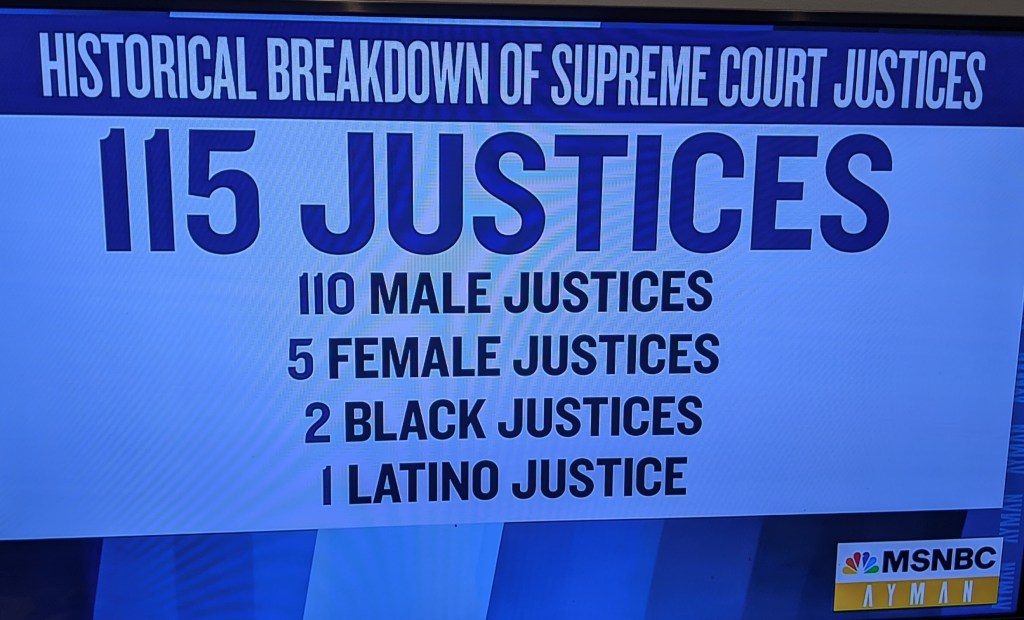
Ketanje Brown Jackson Confirmation
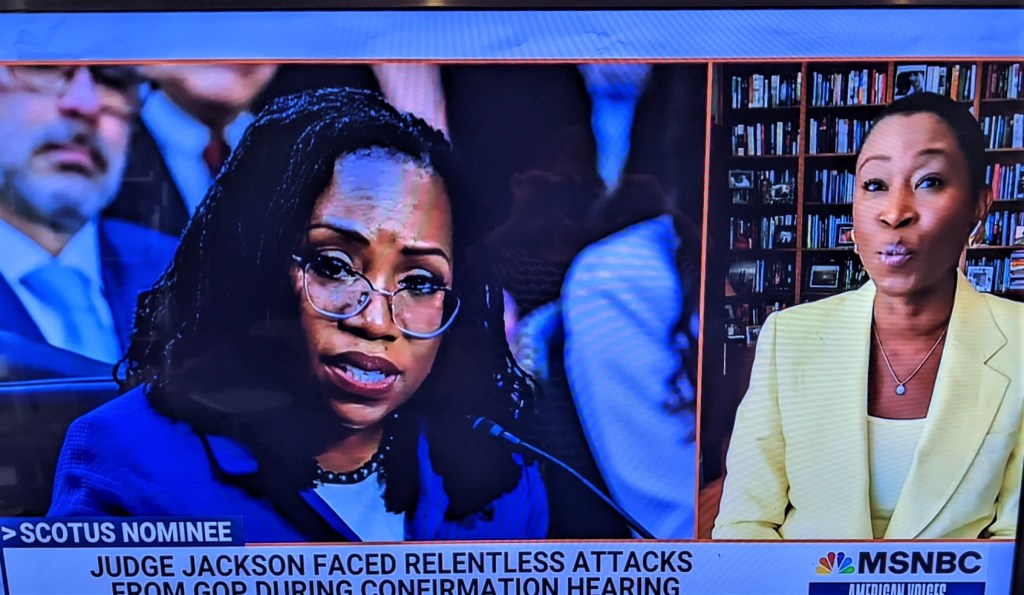

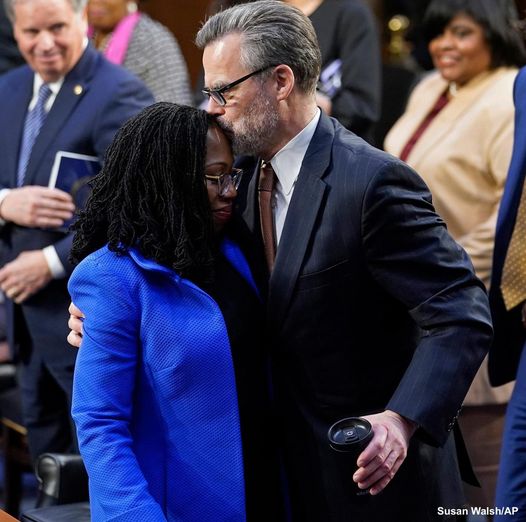


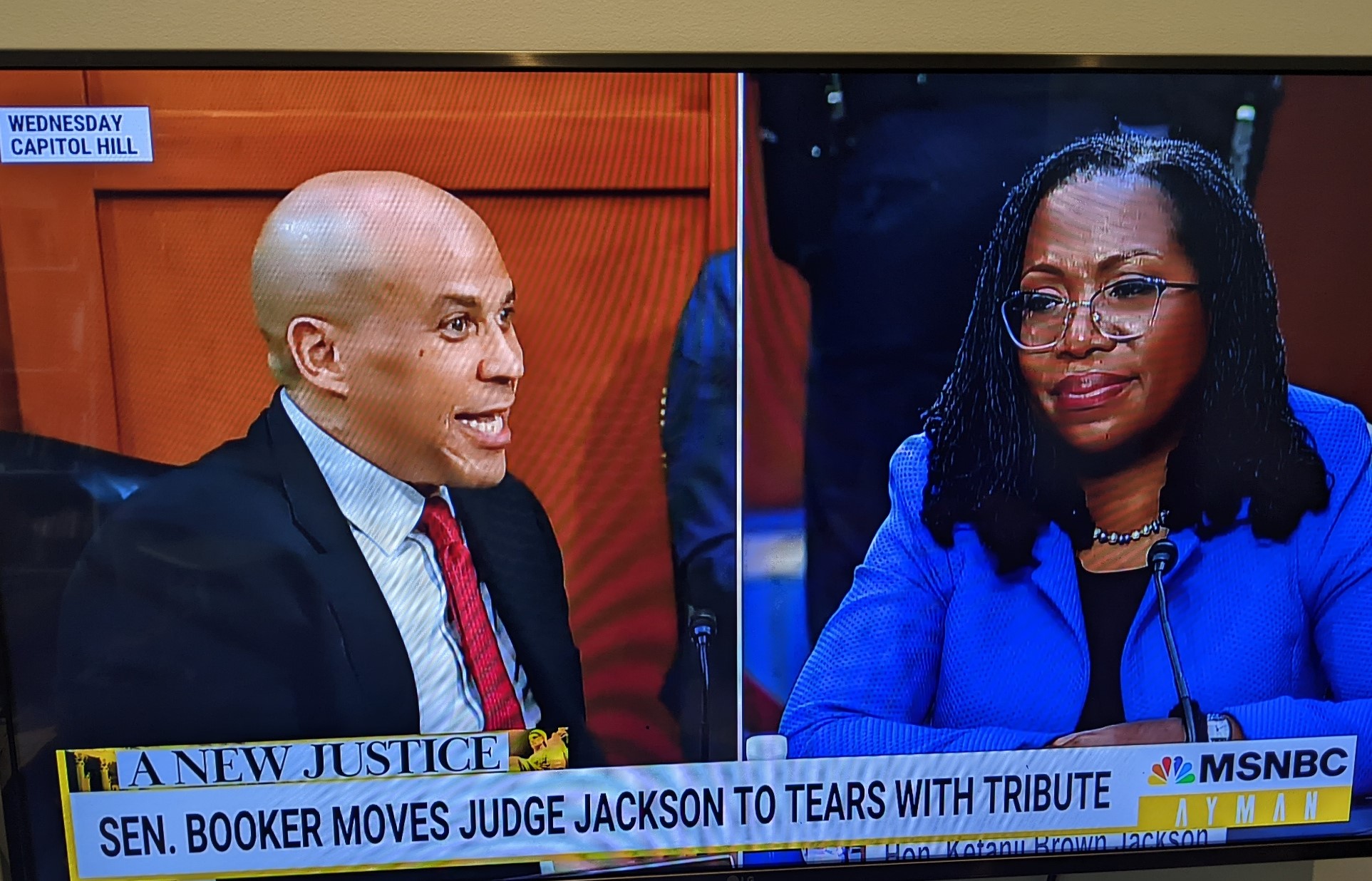
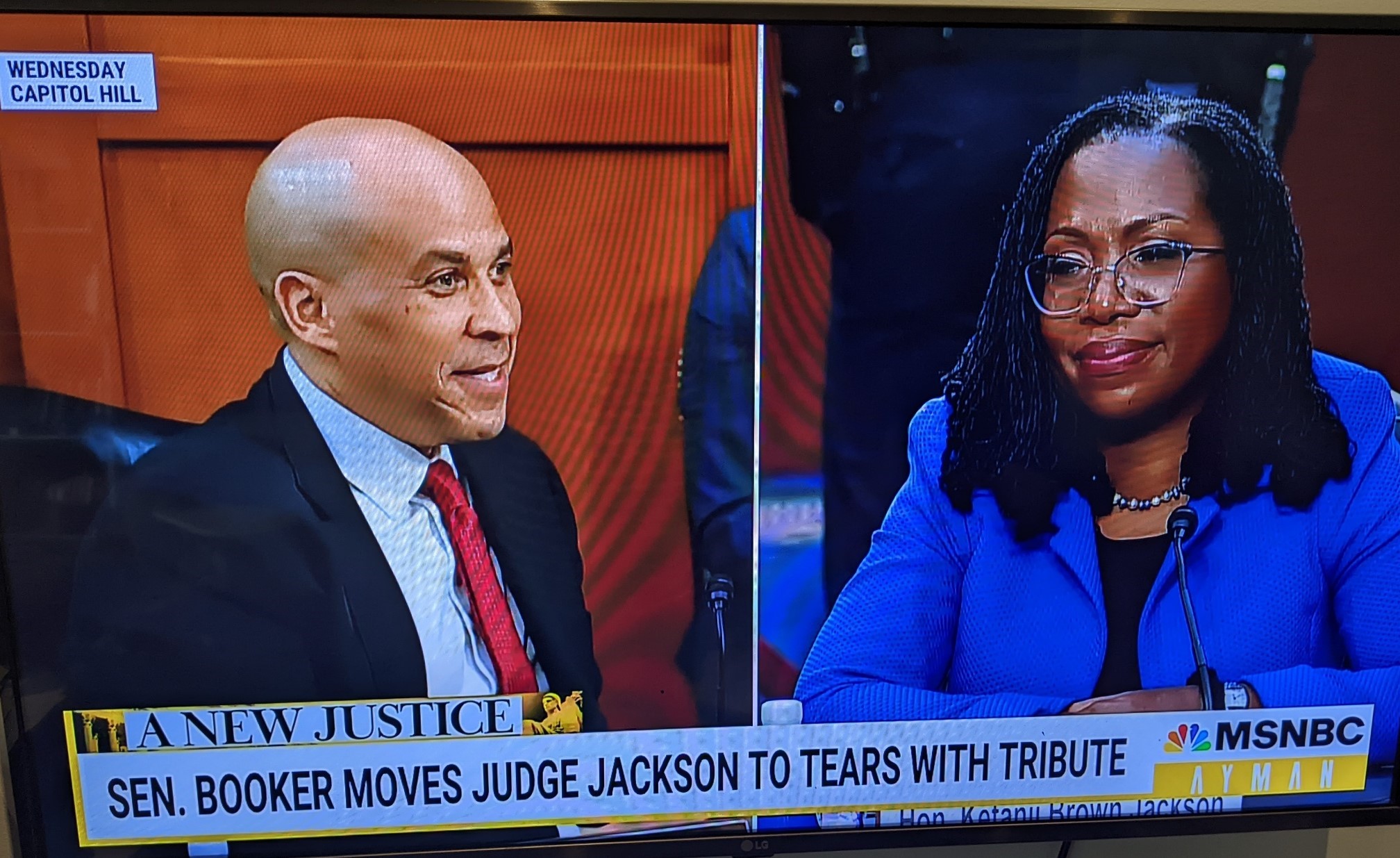
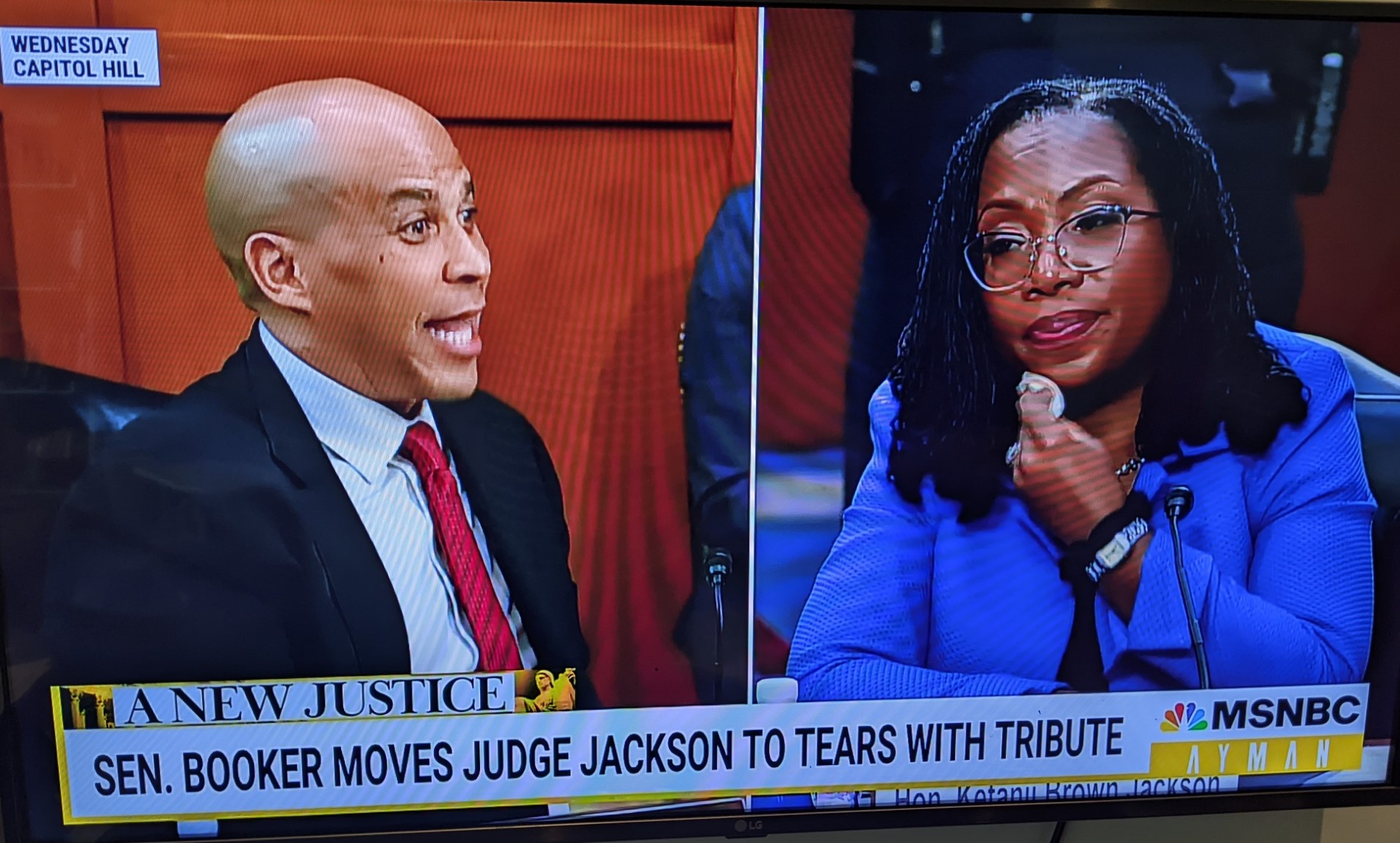

A great quote from Facebook: Yesterday was a perfect example of an overly qualified woman who had to remain calm in front of unqualified men!

Persevere: When walking through Harvard Yard, early in her years at Harvard, a passer by said to Ketanje Brown Jackson, persevere. She remembers this fondly, and has done so.
Van Gogh Alive



I visited this exhibition on Thursday, and found it interesting but not stunning. Paintings and quotes were projected onto screens, on the walls and in the centre of the exhibition space to a background of classical music. Although there was some seating, this was not generous. However, the length of the exhibition made it less important than it could have been . People of all ages sat on the carpeted floor, and appear to have had a satisfactory view from there. People observed social distancing, and many wore masks. The latter were encouraged. However, even after lengthy experience with glasses and a mask I have not mastered the art, so ensured that I observed social distancing, which was not difficult.
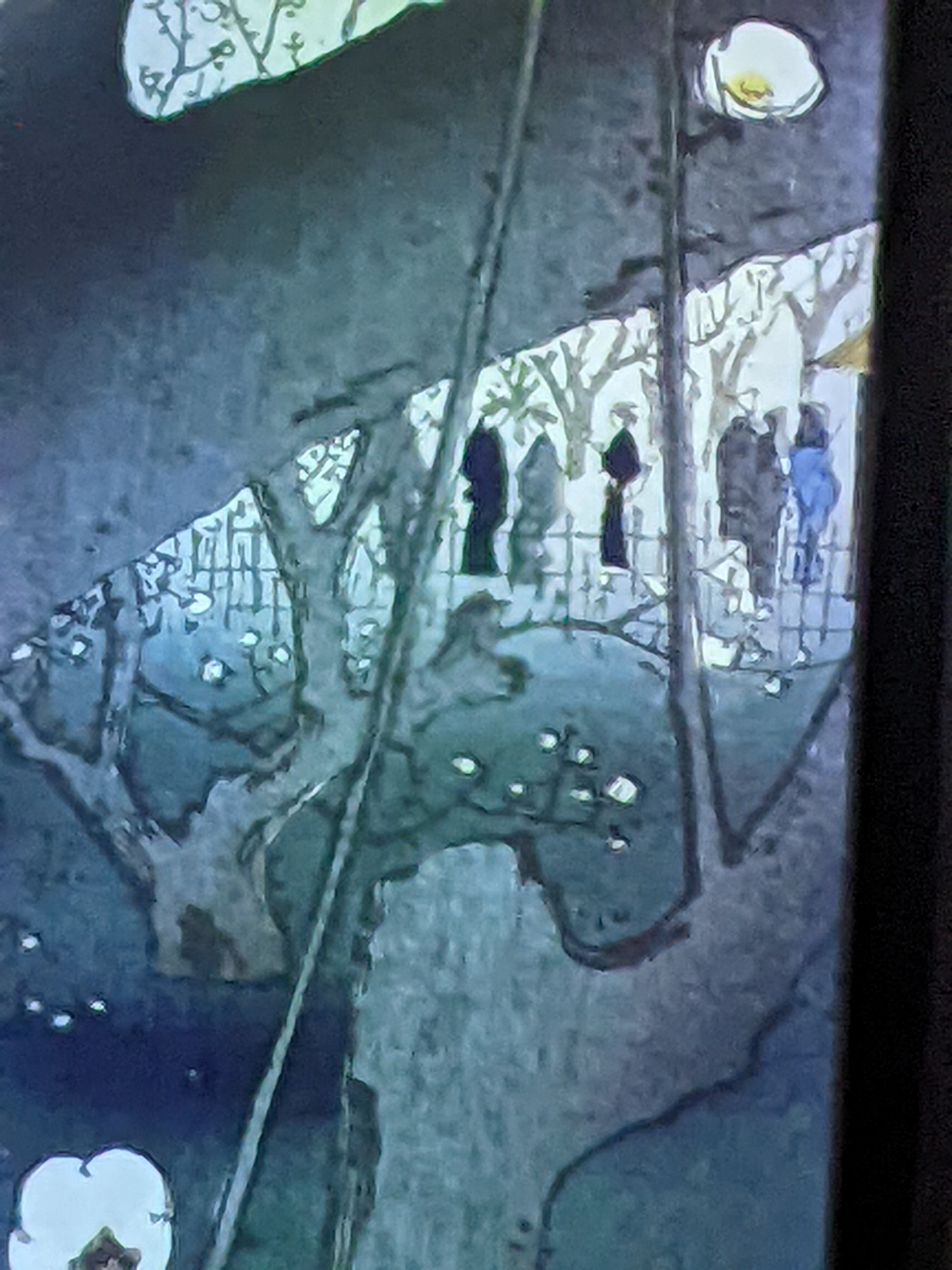



On the positive side, it is unlikely that such a range of Van Gogh’s paintings would be exhibited in the usual format. The active format of this exhibition has brought a huge example of this artist’s work to large audiences.




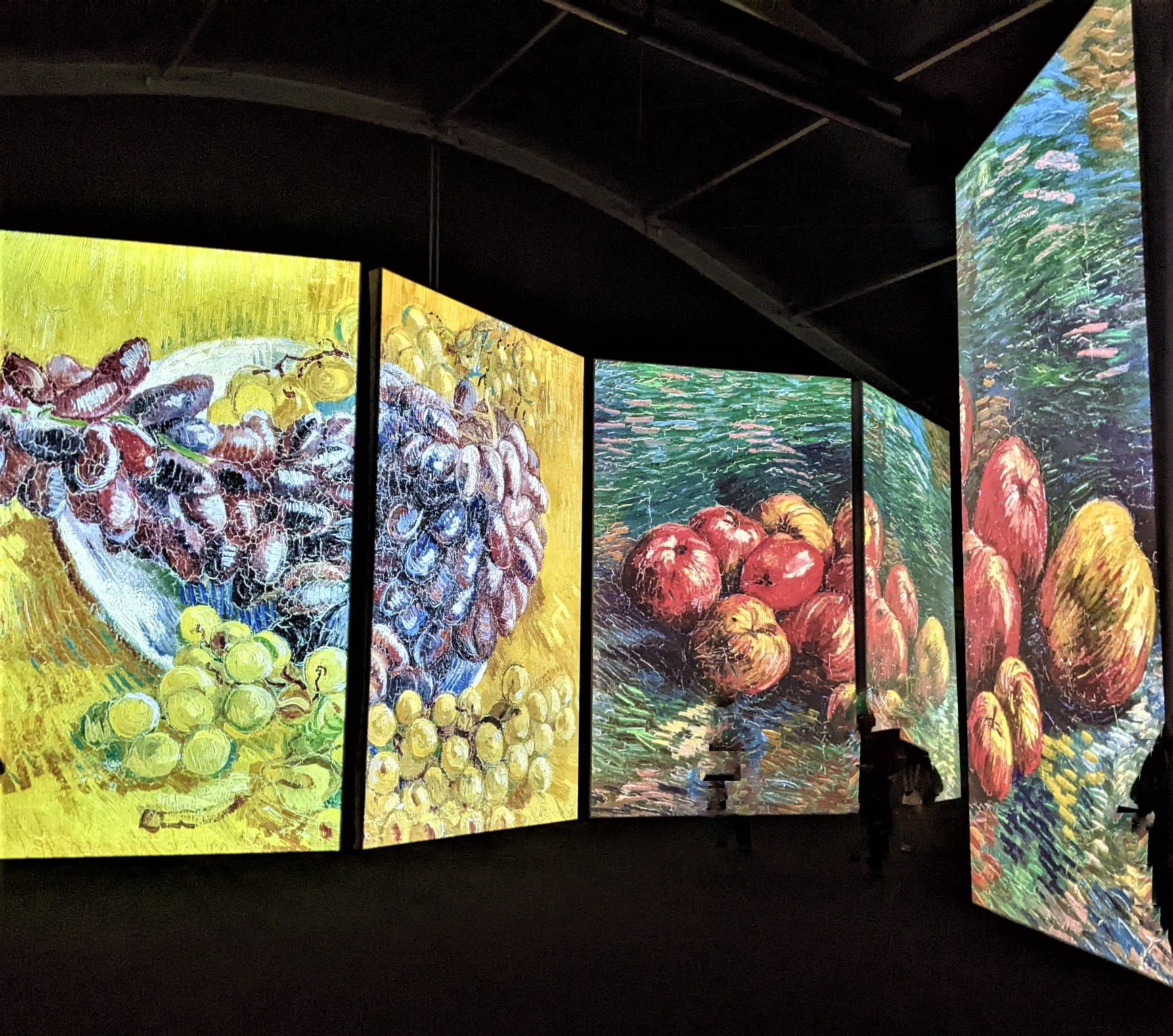
However, for people who like to sit and savour a painting and walk around an exhibit at their own pace, this style of exhibition, while a wonderful introduction to an artist’s work, it has its limitations.





On the other hand, it is fantastic to read the positive accounts of experiences and intentions to make repeat visits in Facebook discussion. Although the photos above are truncated because I wanted to omit visitors’ images, I have them in full in an album and shall get my pleasure from the static reminders of a pleasurable experience.
Cindy Lou visits a venue under new ownership and is impressed, an older one was not!
Brieze, Ainslie Shopping Centre
After a couple of negative experiences at Brieze, admittedly in contrast to the usual positive reviews it received from some customers, I was forced to try the café again recently. I was under the duress of greed – because, despite the resident chef on request for tea and toast having provided a succulent honey smothered piece with a lovely hot cup of tea at 4.00 in the morning, I was hungry by 11.00 am. My usual go to at Ainslie, Edgar’s, stops serving breakfast at 11.00 so hunger pangs uppermost, I decided to retry Brieze.

What a joy. The service was friendly and efficient, the food excellent, and the coffees hot and made to my capricious order. Breize has a delightful out door setting in a comfortably wide corner of the Ainslie shops, with attractive tables and chairs. There is a blackboard menu, and a staff member promptly brought us menus, glasses and fresh water. The menu has not changed much from the past, but I feel that the atmosphere is friendlier and I shall be pleased to patronise Breize as a pleasant alternative to Edgar’s in the future.

National Portrait Gallery Café
The meal today was rather disappointing, despite the pleasant venue and efficient service. Both the vegetarian roll and the caramelised onion quiche looked delightful – the salad was plentiful and fresh, the pastry crisp and the meals were well presented. However, all I could think was what a bland meal!

At the moment the ANG Café is closed. The weather was not suitable for the outdoor venue where I dined on a rather nice vegetarian pie and my companions relished their meat pies a few weeks ago.
The National Portrait Gallery Café is much closer than the Café at the National Library.
As the café is obviously popular, there were many reserved tables, perhaps I shall try it again. However, the walk to the National library looks rather pleasant too.
Follow up: The National Portrait Gallery Café Manager responded to my review, saying that the staff would be advised of my disappointment. What a great response – the Café certainly deserves another visit.

Unleash the Girls Lisa Z. Lindahl follows the story of the invention of the sports bra, development of Lisa Z. Lindahl’s business with her partner and its sale, together with Lisa Z. Lindahl’s personal journey. See Books: Reviews, March 9 2022. The following story from the The Economist March 19 – 25 2022 adds another facet to the impact of the sports bra business.
“It no longer suits you sir
Britain’s statistics office rejigged the basket of goods that make up its consumer price index. Out go men’s suits (because of remote working) single donuts (because people scoff them in packs, presumably becasue of remote working and probably why men cannot fit into suits) and coal (no one likes it), in come sports bras (covid’s effect on fashion) and antibacterial wipes (because of sticky fingers after those donuts).
Thank you, Bob McMullan for alerting me to this story.
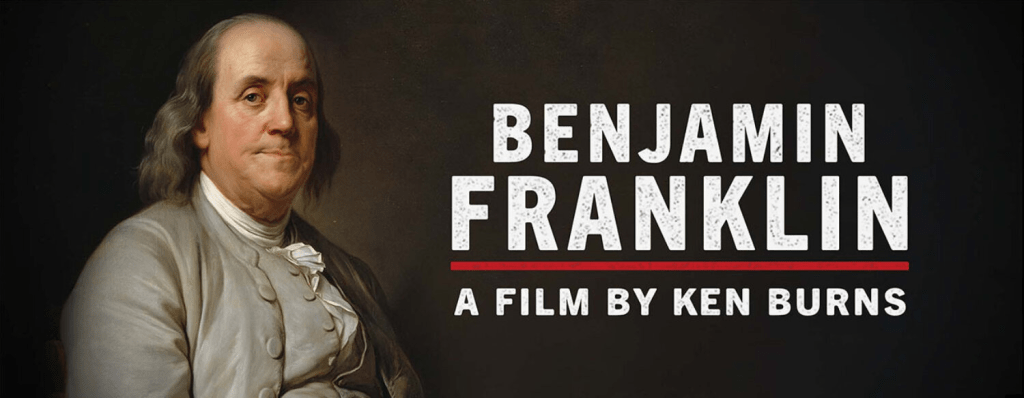
About the Film
Ken Burns’s two-part, four-hour documentary, Benjamin Franklin, explores the revolutionary life of one of the 18th century’s most consequential and compelling personalities, whose work and words unlocked the mystery of electricity and helped create the United States. Franklin’s 84 years (1706-1790) spanned an epoch of momentous change in science, technology, literature, politics, and government — fields he himself advanced through a lifelong commitment to societal and self-improvement.
On 29 March 2022 Emmy Award-winning documentary filmmaker Ken Burns joined Morning Joe to discuss his new two-part PBS film ‘Benjamin Franklin’. This sounds like another ‘must watch’ Ken Burns documentary.
 Robin's Room