This week is an indulgence of Indian Pacific travel, and little else. Although I have read while travelling, I’ve been too busy to review those books. Instead, I include one from my NetGalley list. This is Judy Haydock’s The Lives of Diamond Bessie published by Spark Press, 2022
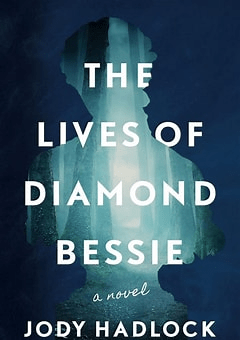
The Lives of Diamond Bessie is a fictional account, based on the life of a real woman. The book is divided into two parts, the first following Bessie’s life as a young pregnant woman who is forced into a convent where her baby is born and taken from her. Bessie must find a paid occupation and becomes a prostitute, albeit one with the status of belonging to a fine house and being attractive and popular there. The paucity of paid work available to young women who can supply no references, have little training or none, who are dependant on men as employers or husbands for any financial security is the theme that runs through the novel. The second part uses a clever device to continue Bessie’s story after her short-lived marriage. Here, again, women’s dependence on men is a major theme. To read the complete review: Books: Reviews.
I must add that I have begun reading an Australian novel, The Trivia Night by Ali Lowe. I read a blurb that suggested it is it is shocking – but so far it’s fun and so delightfully Australian. I’ll review it when I get home. At the moment I’m enjoying it, the grammar is a great asset after the English novel I read recently with a strange use of language, ‘she was sat’ instead of ‘she was sitting’ etc.
Articles after the brief Covid comments: Indian Pacific experiences on and off train; land girls in Australia.
Covid requirements on the Indian Pacific and Perth
Before travelling passengers had to have had their three vaccinations and a negative Covid test. Masks were worn on the train unless eating and drinking – a rather repetitive activity.
In Perth, masks are a requirement in closed spaces. The hotels and restaurants have a mask and vaccination certificate requirement, and hand sanitiser is available. The Perth requirements, except for special circumstances, finish tonight (Thursday).
Canberra Covid requirements have been relaxed so that household contacts of people who have Covid no longer have to quarantine. however, they are asked to test regularly, mask , and limit movement around the community.
By 27th April 75.1% of Canberrans aged 16 + have received their booster, while 80.5% children aged 5 – 11 years have received their first vaccine dose.
Indian Pacific
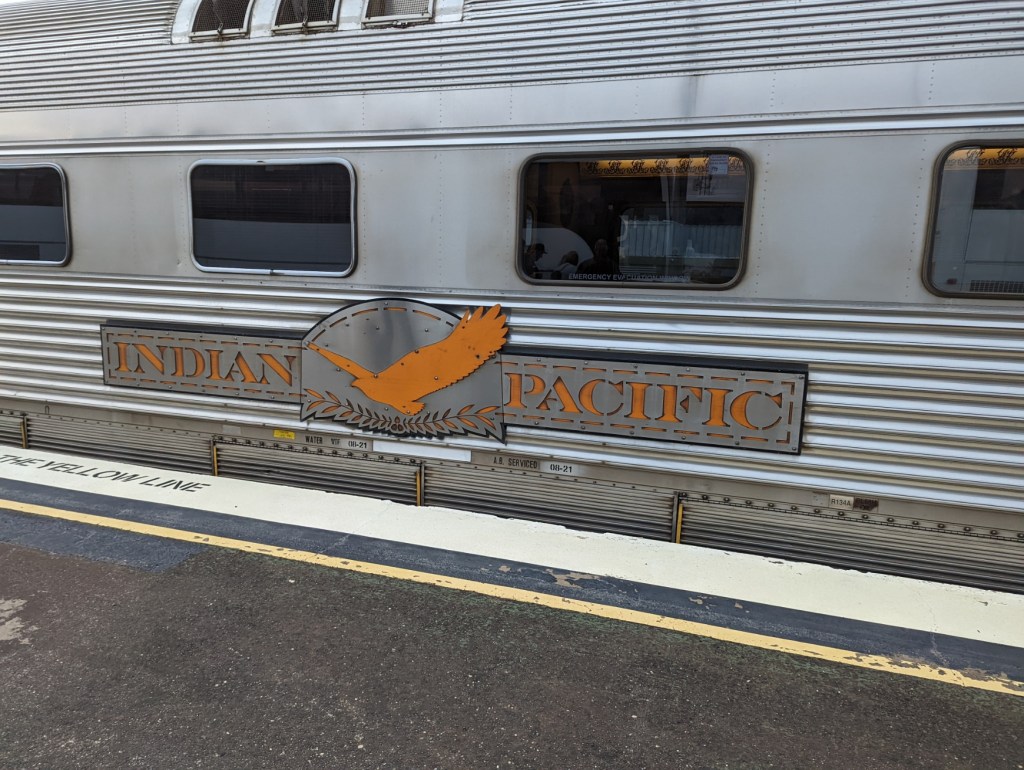
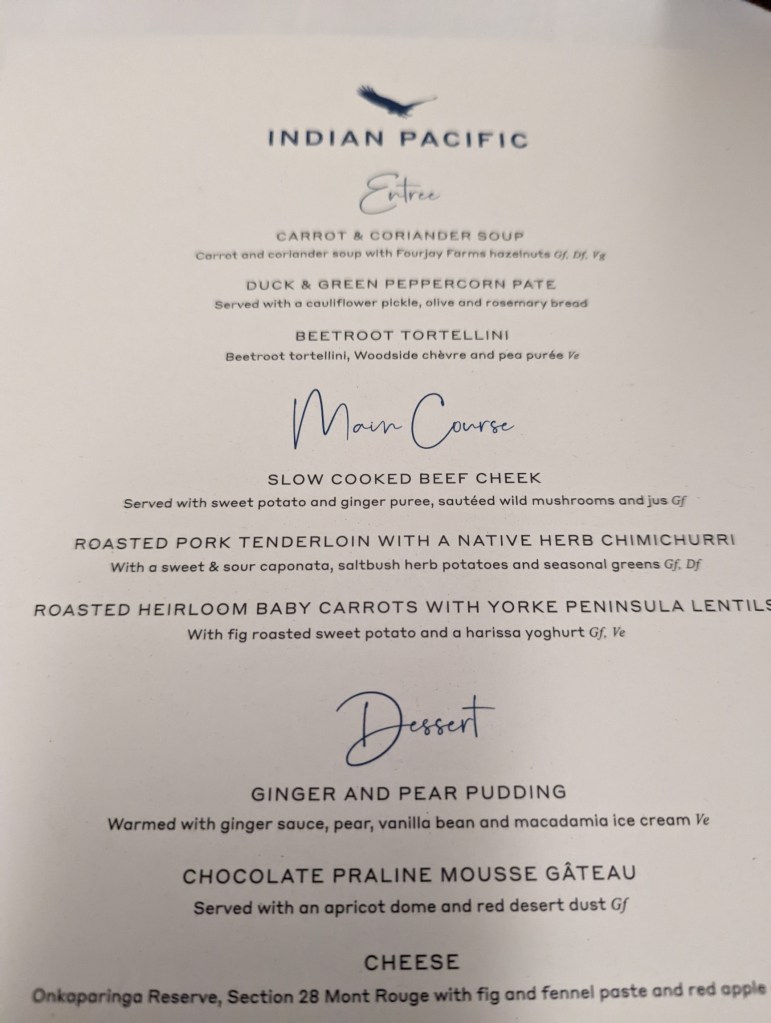
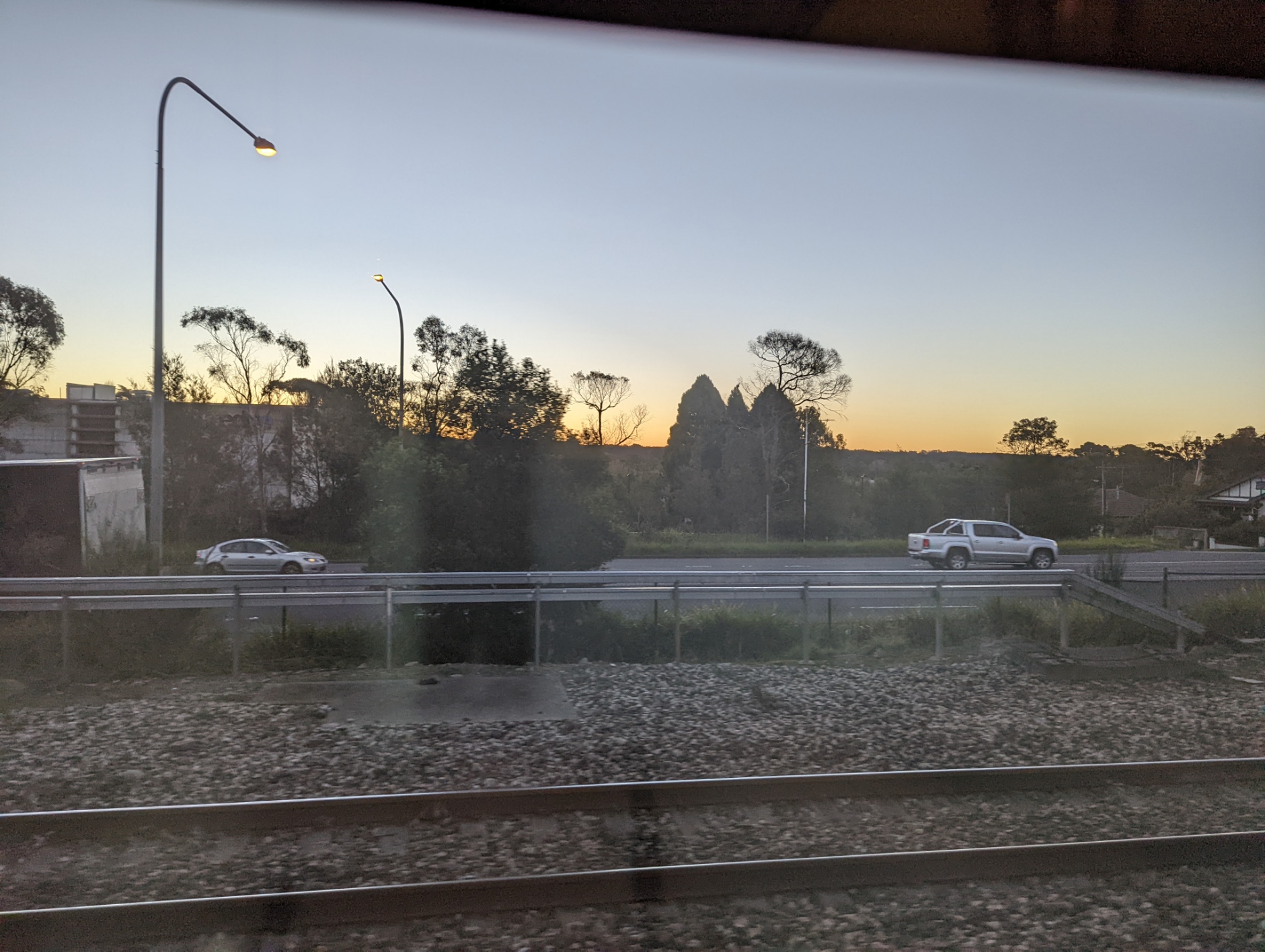
This trip did not measure up to the Ghan experience. Nevertheless, it was three nights and four days of indulgence with food, drink and new experiences on tap, some interesting off train excursions, and a rather different way of travelling to Perth from Sydney. There are two classes on the Indian Pacific, Gold and Platinum. At the moment, Gold is fine for us as we are capable of clambering into a top bunk. Ummm, I didn’t. Gold comes with a special lounge, and a pleasant dining car with white table clothes, good service, and a very nice varied menu. Some meals were taken off the train during excursions.
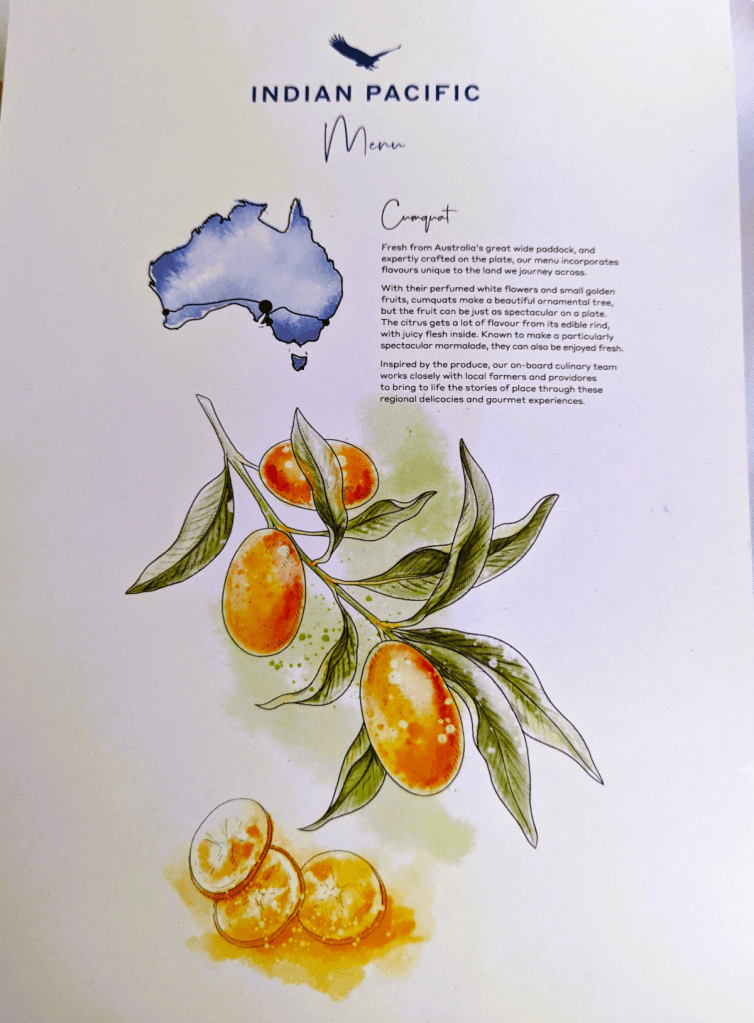

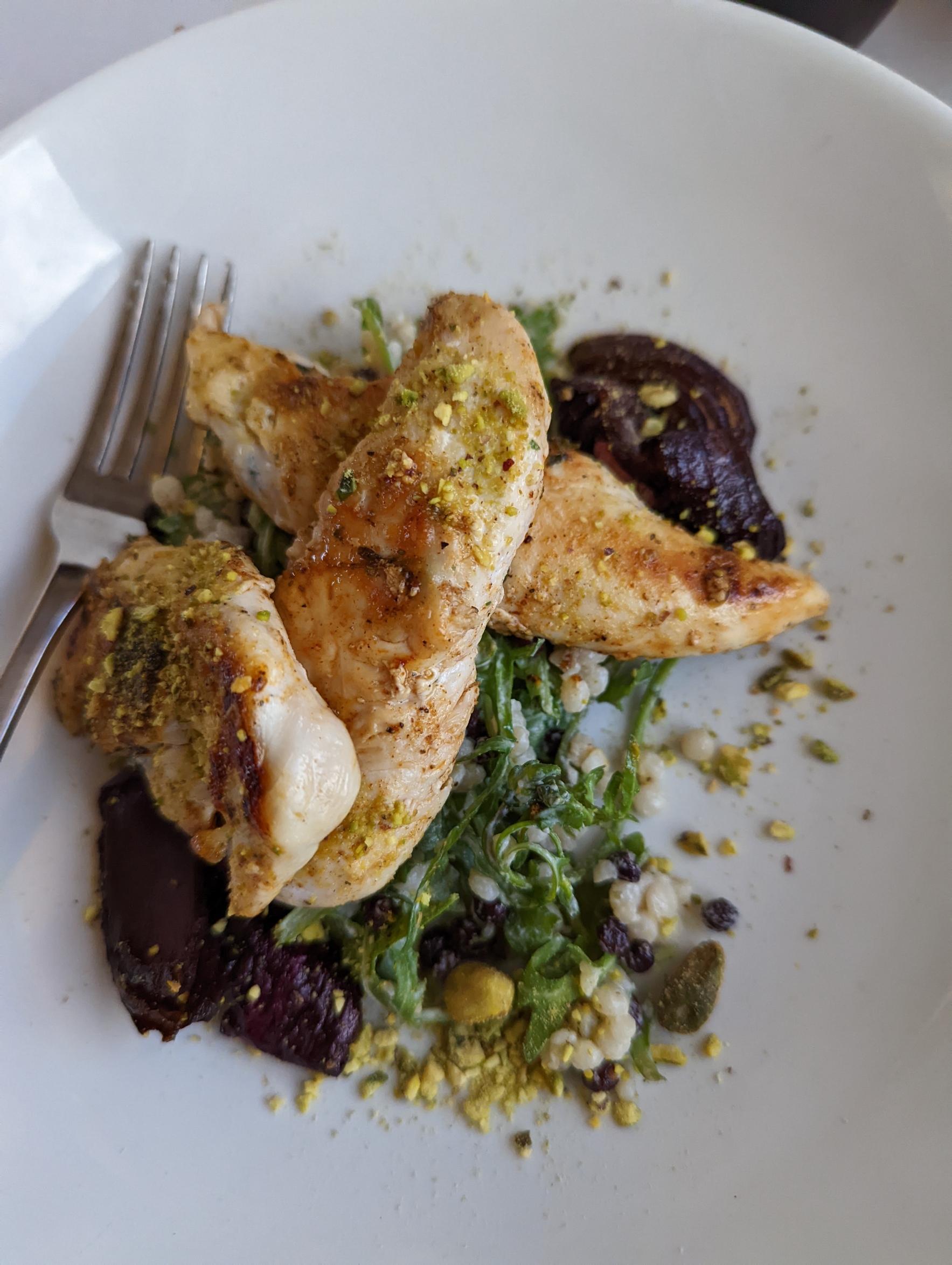
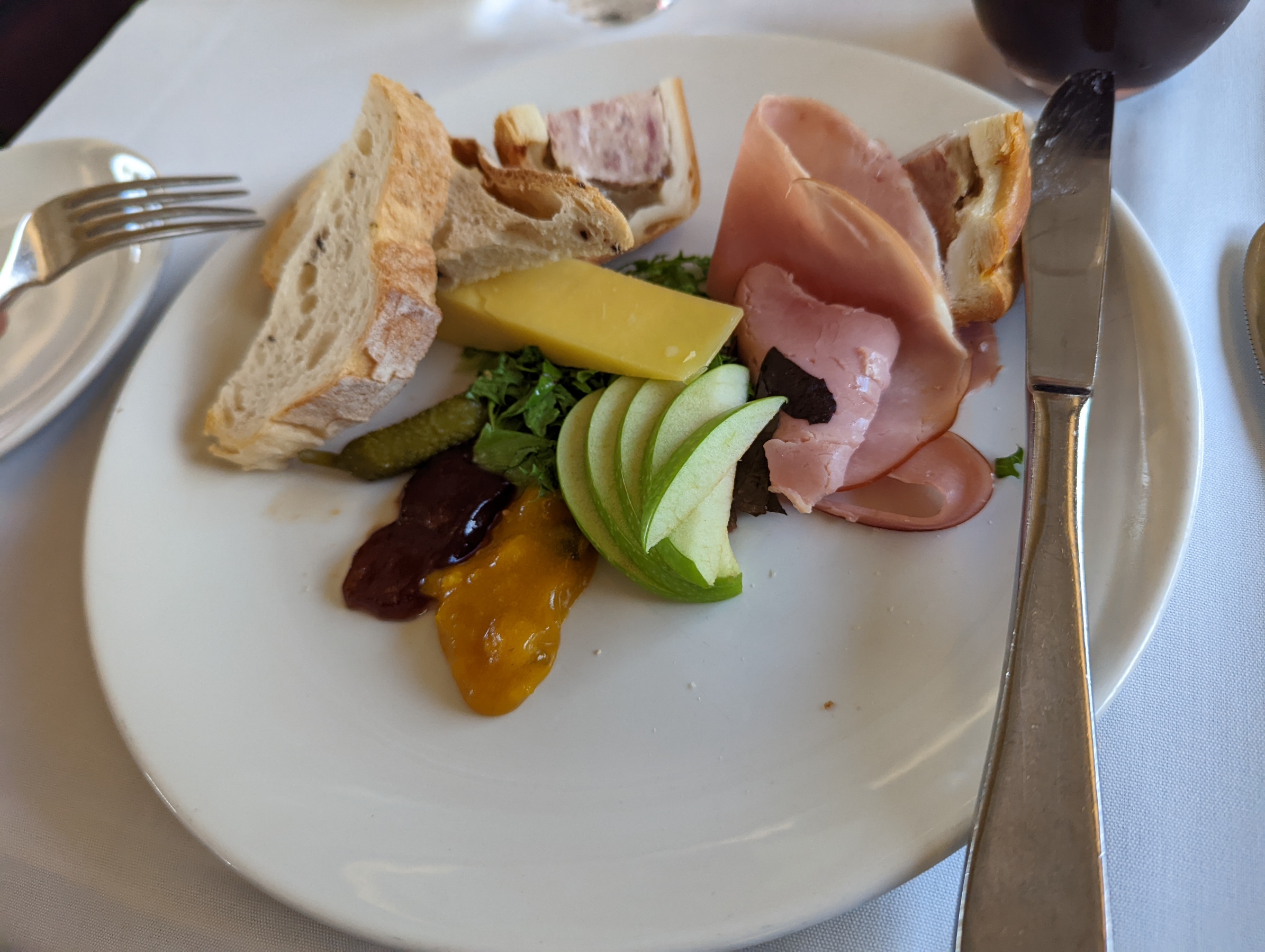


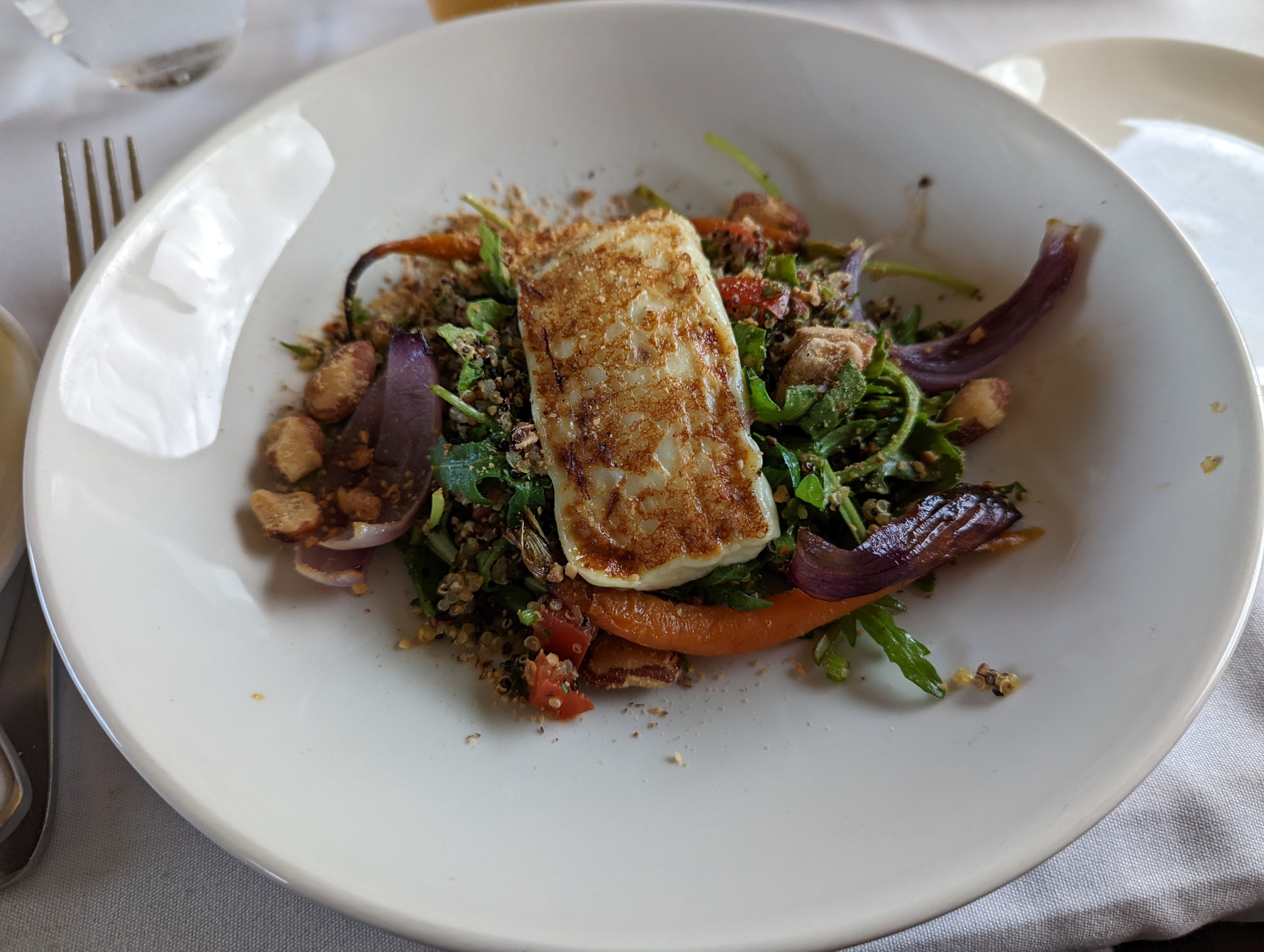
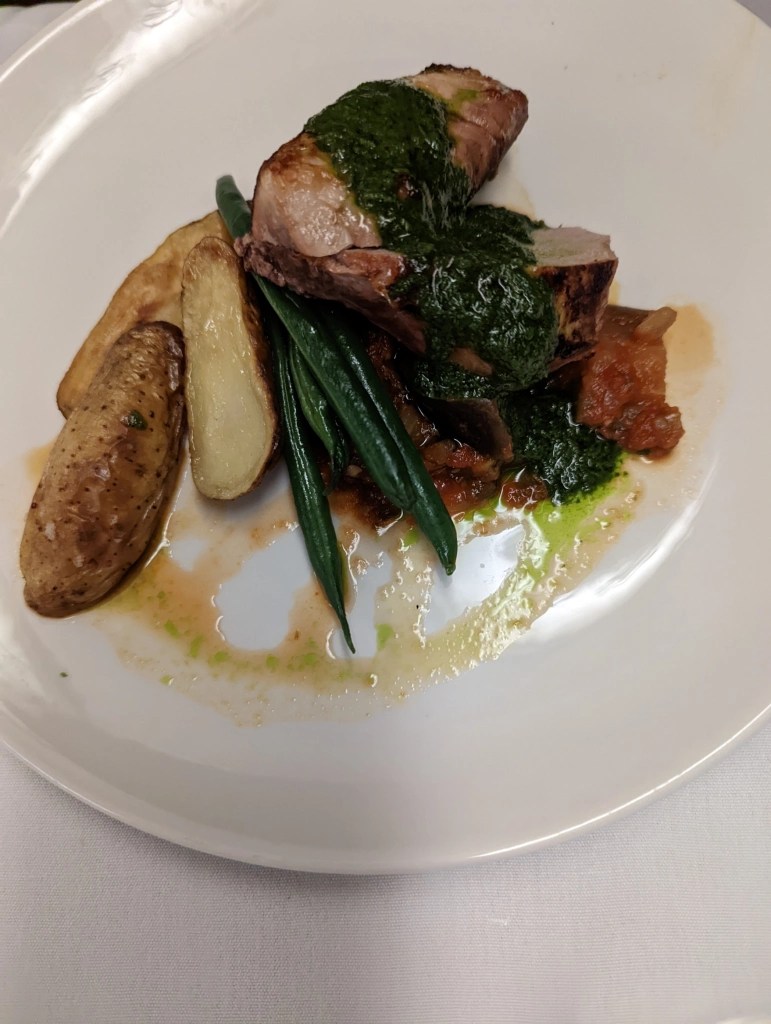
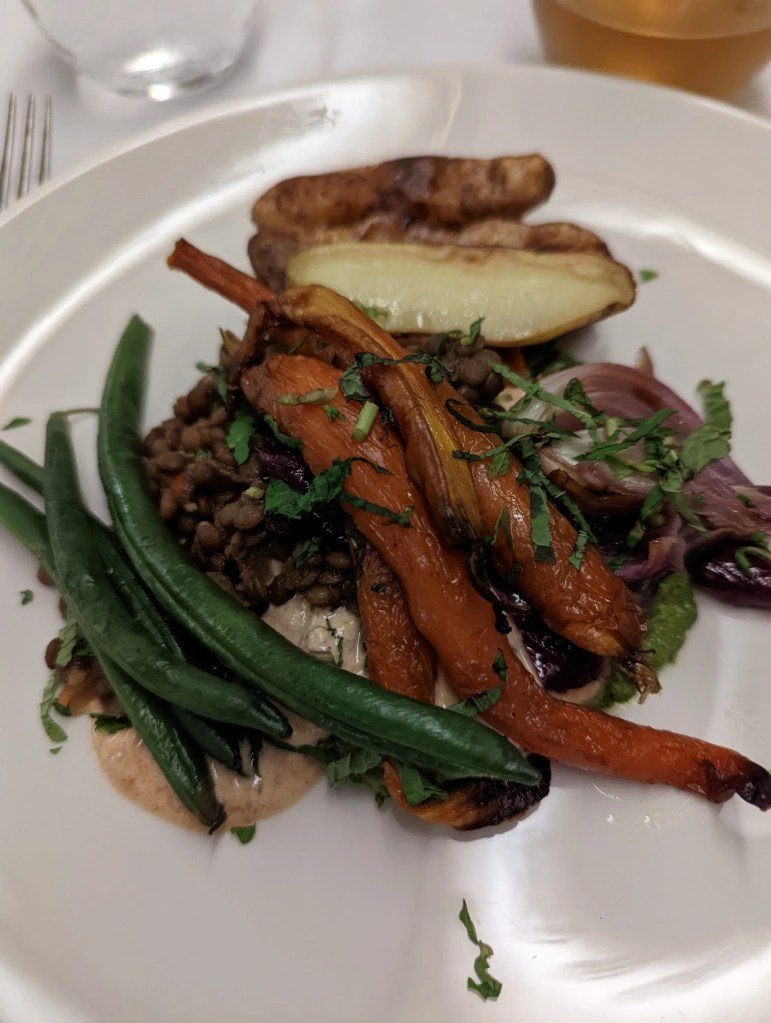
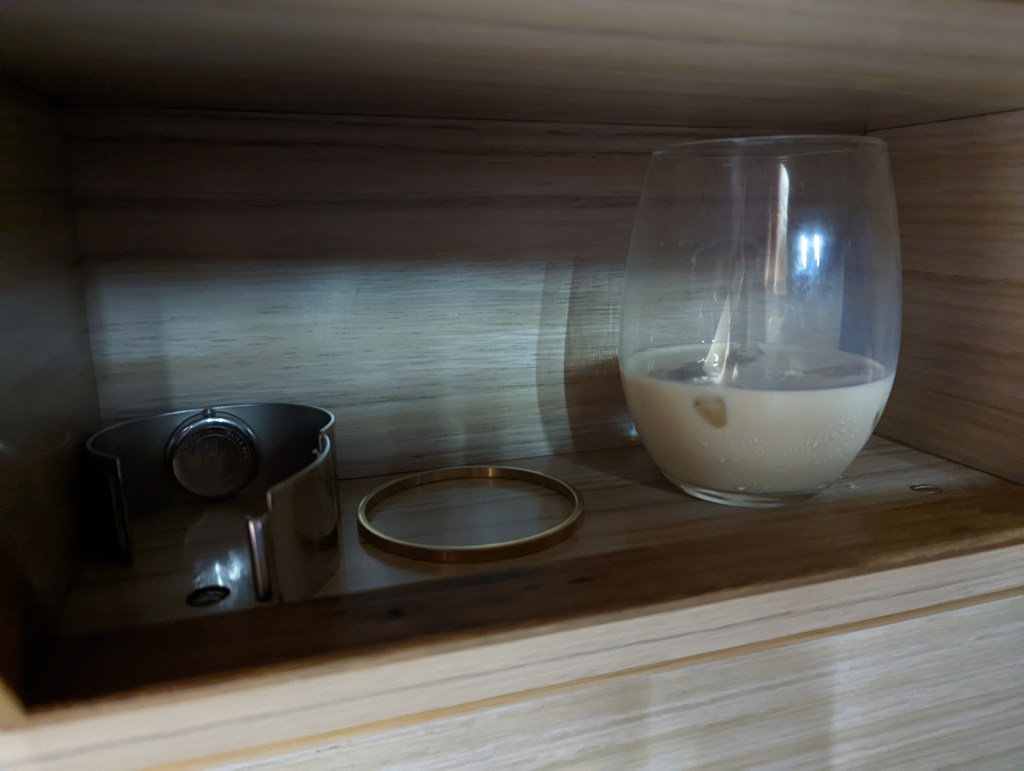
We socialised in the lounge before dinner, and afterwards, before I ordered my baileys for bedtime. There were several short stories in the making with the seventieth birthday celebrant ( I had read about this on the Discover Australia Facebook site, and was amused to see the celebration in person); the widower who came on the trip planned pre-Covid with his wife; the honeymoon couple who work on the Indian Pacific and presumably love bloomed while doing so; the wonderful woman being treated by her loving daughter; and the gorgeous young man who made this pair of feather dusters feel VIP!!
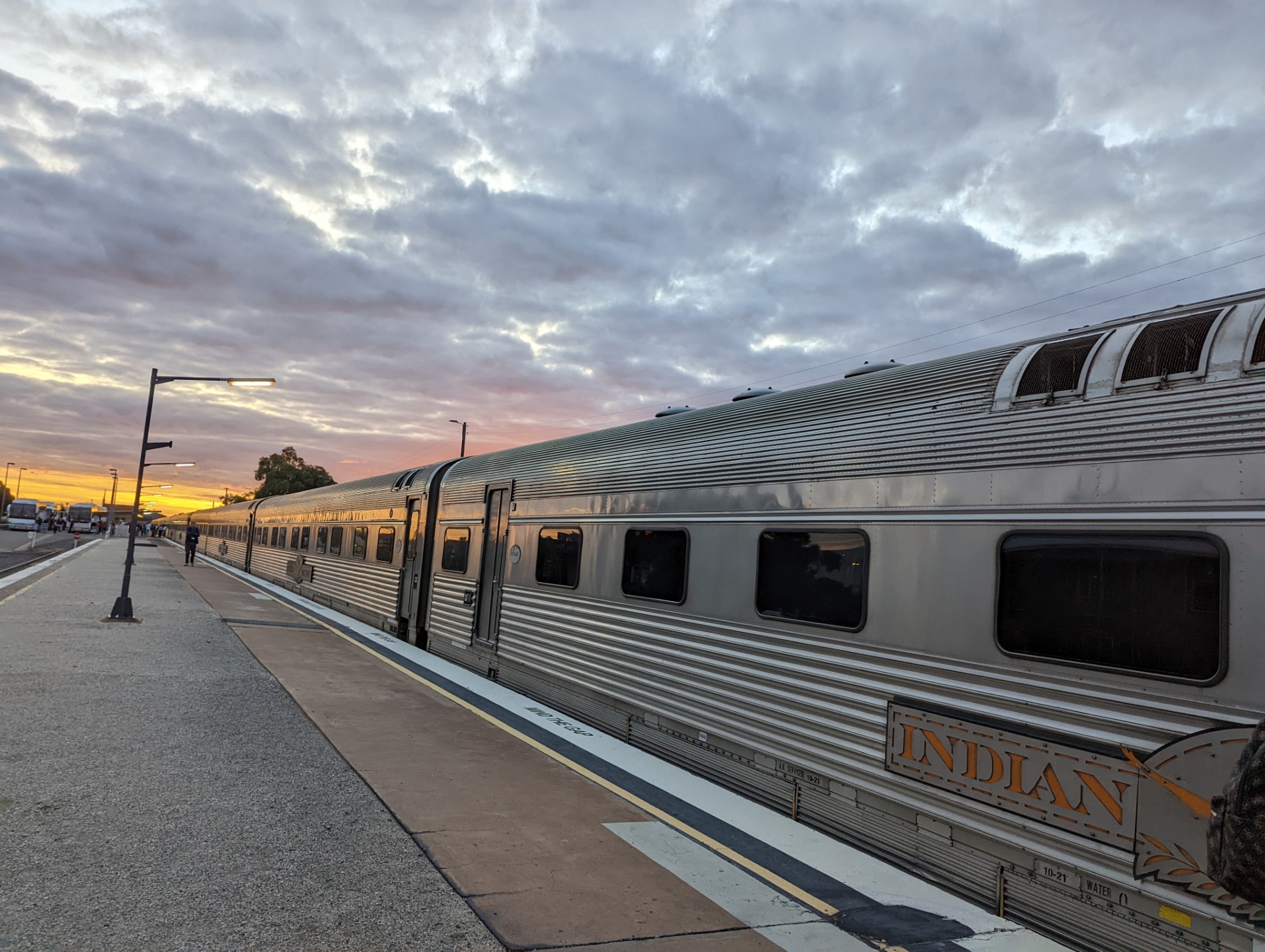

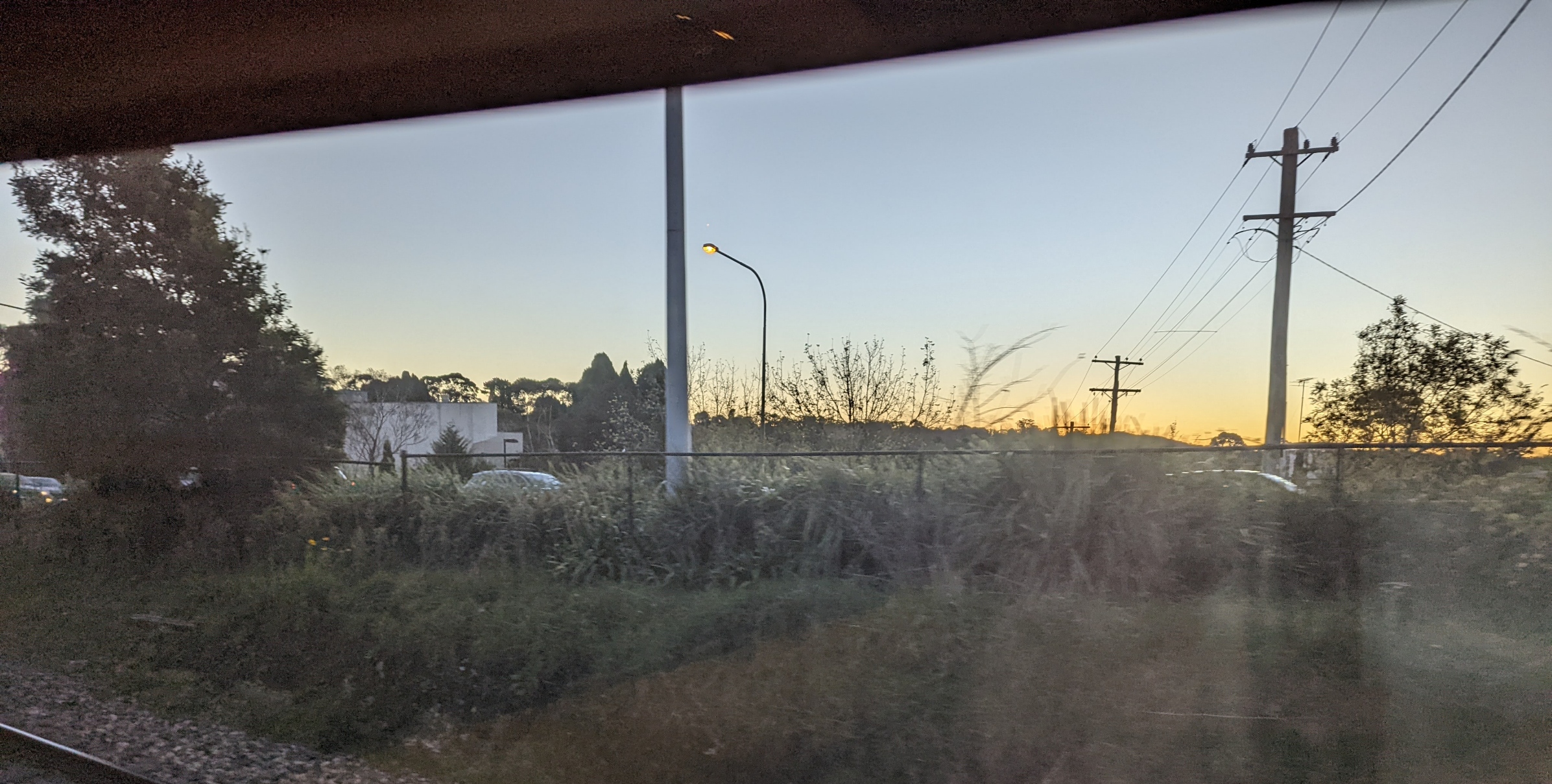

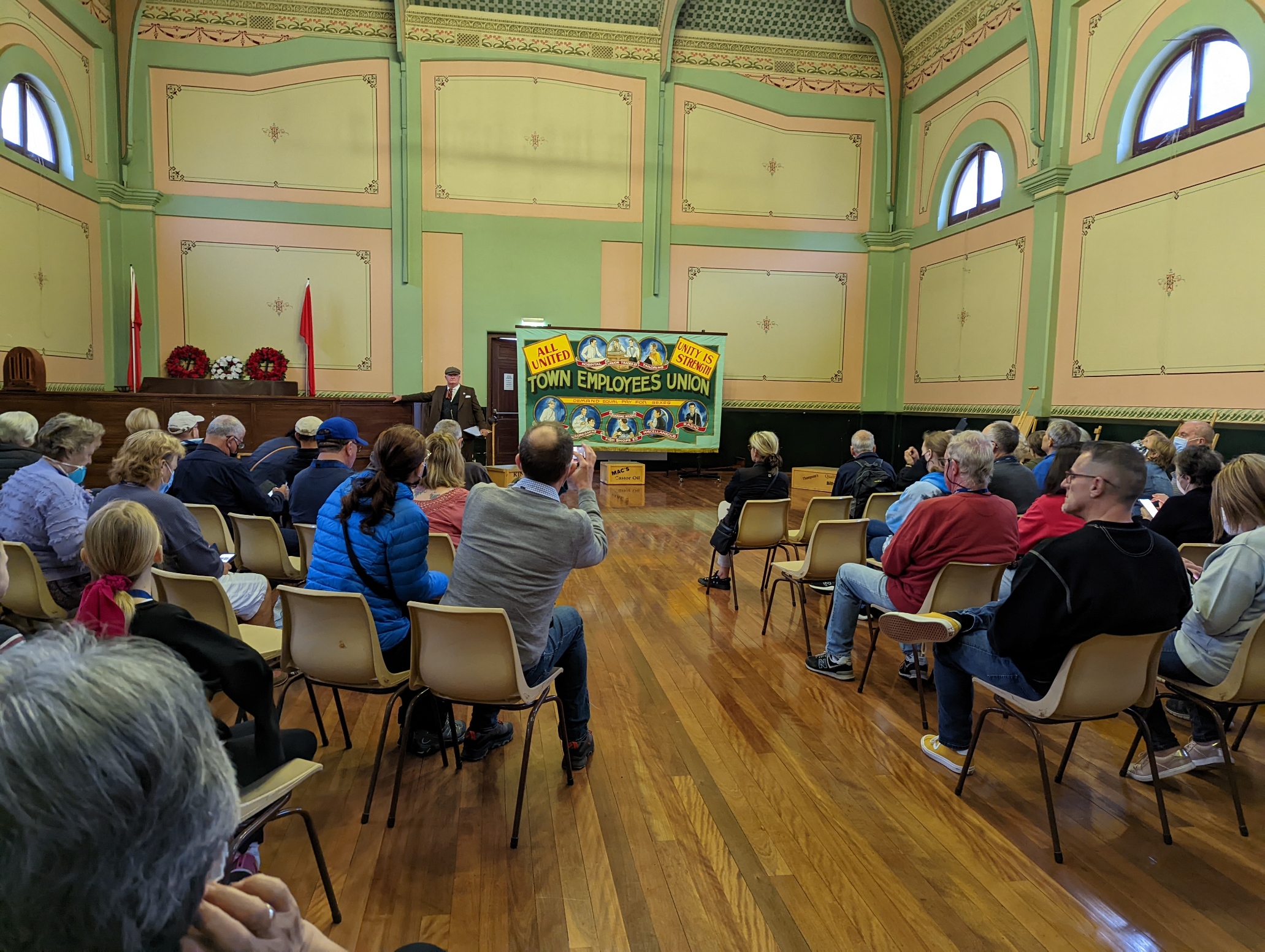
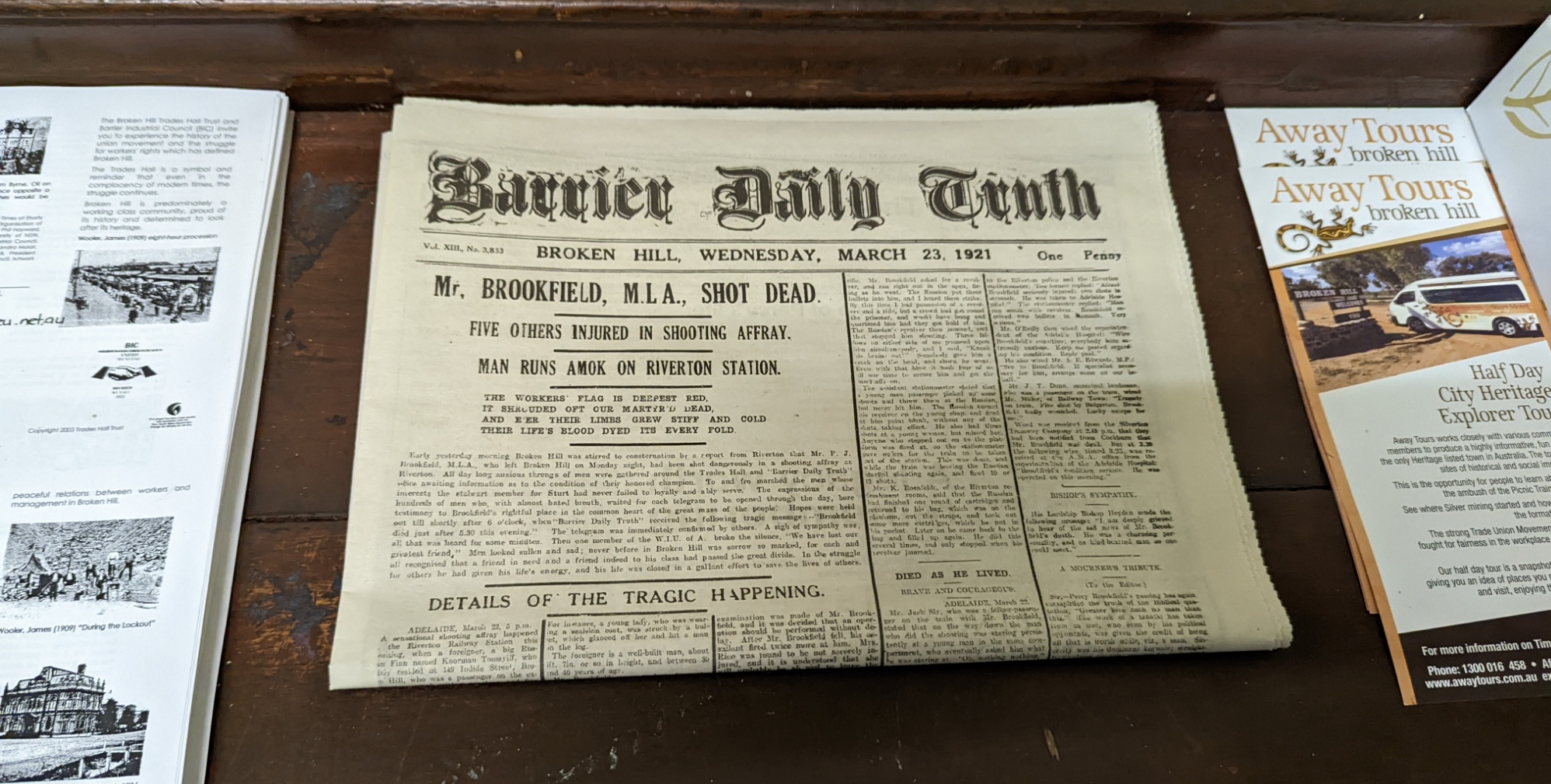
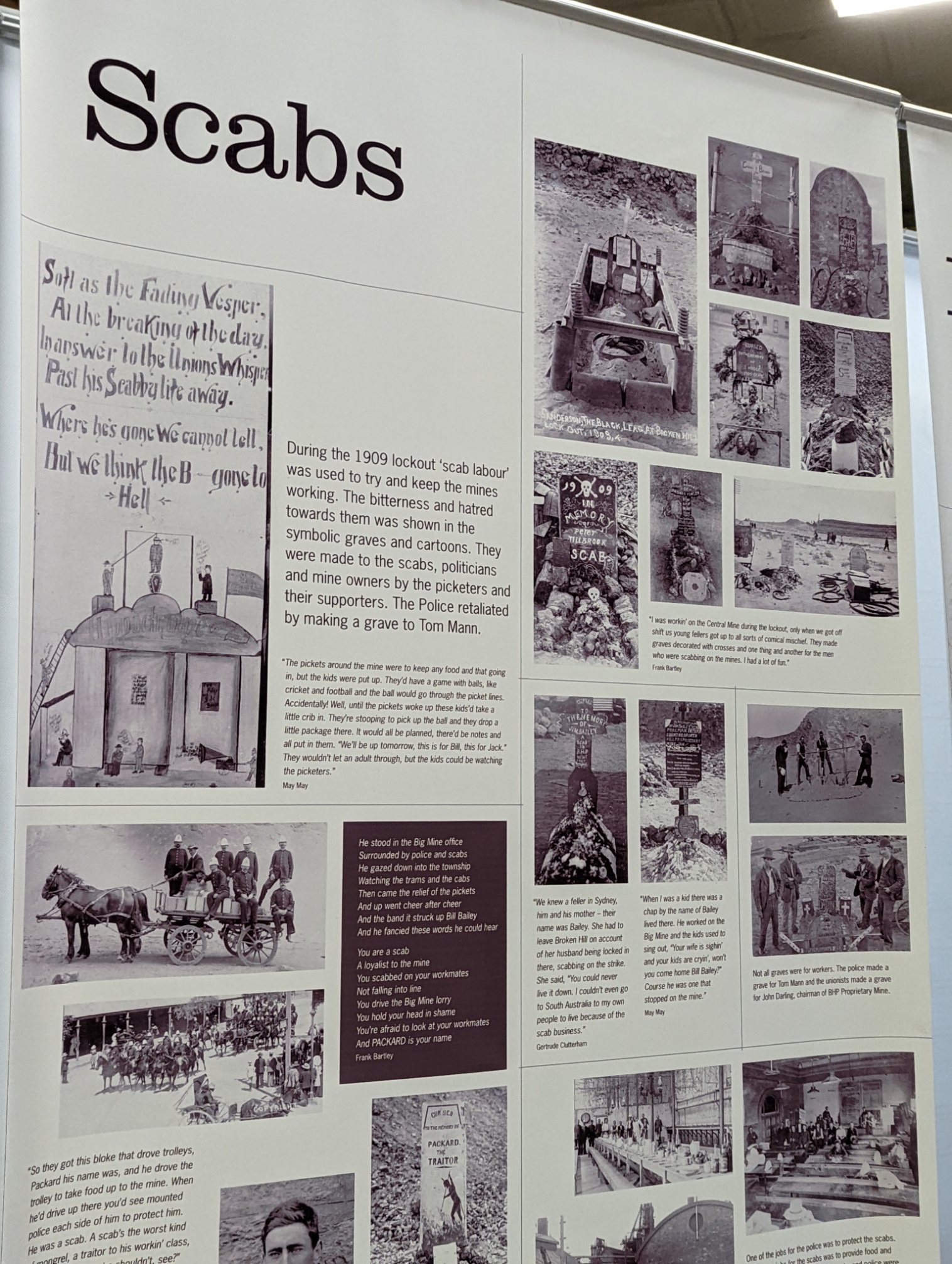
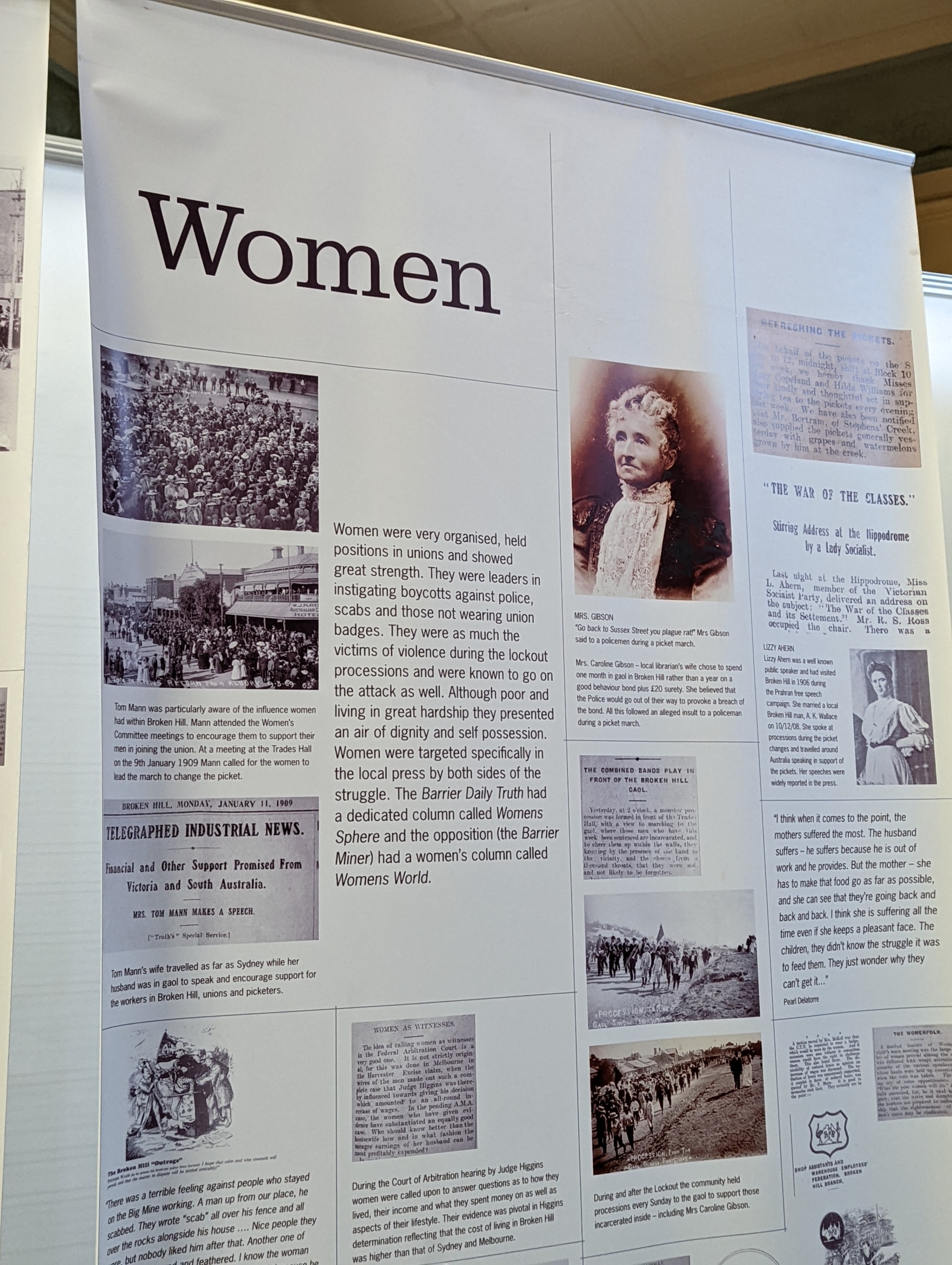
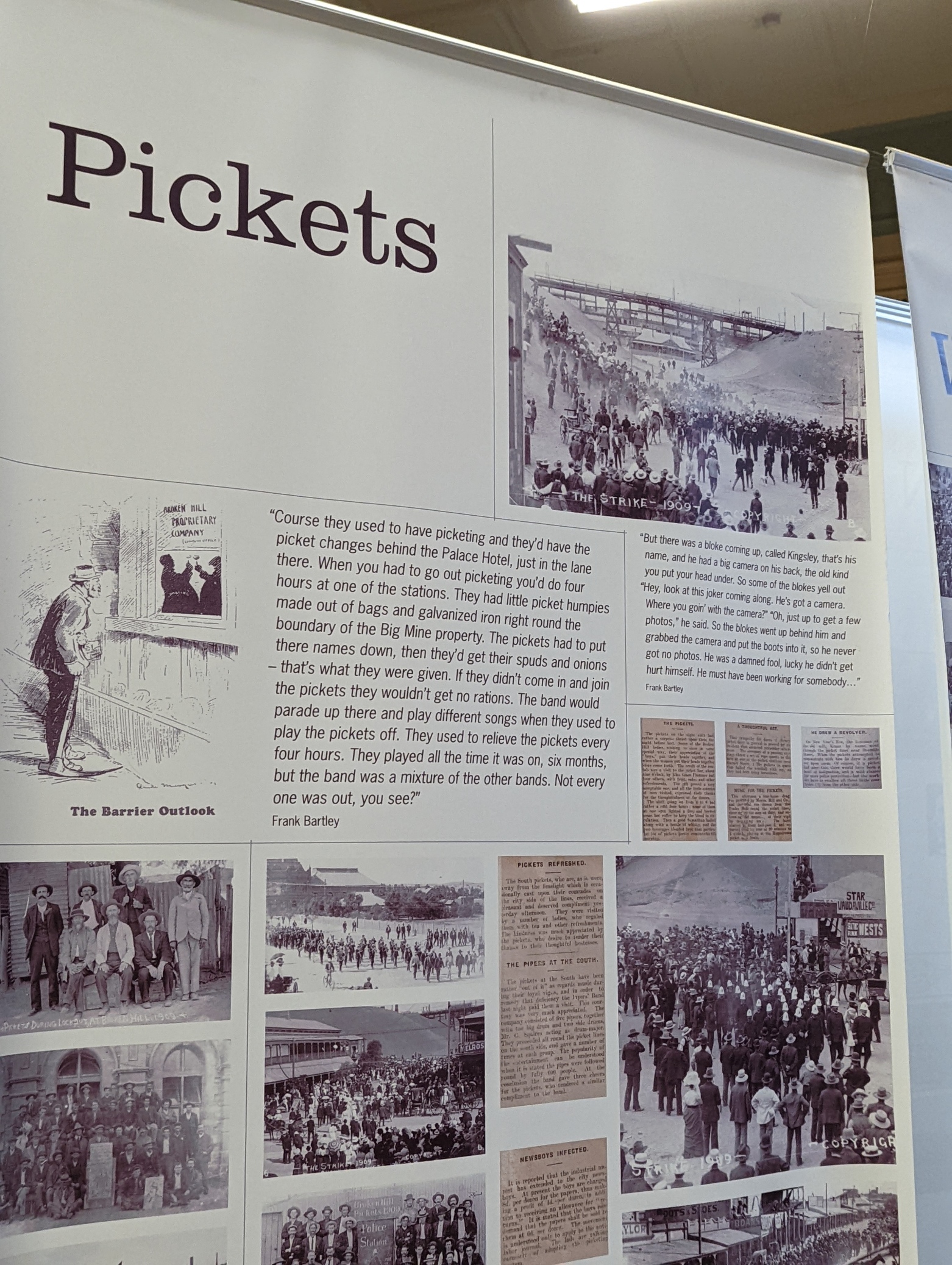
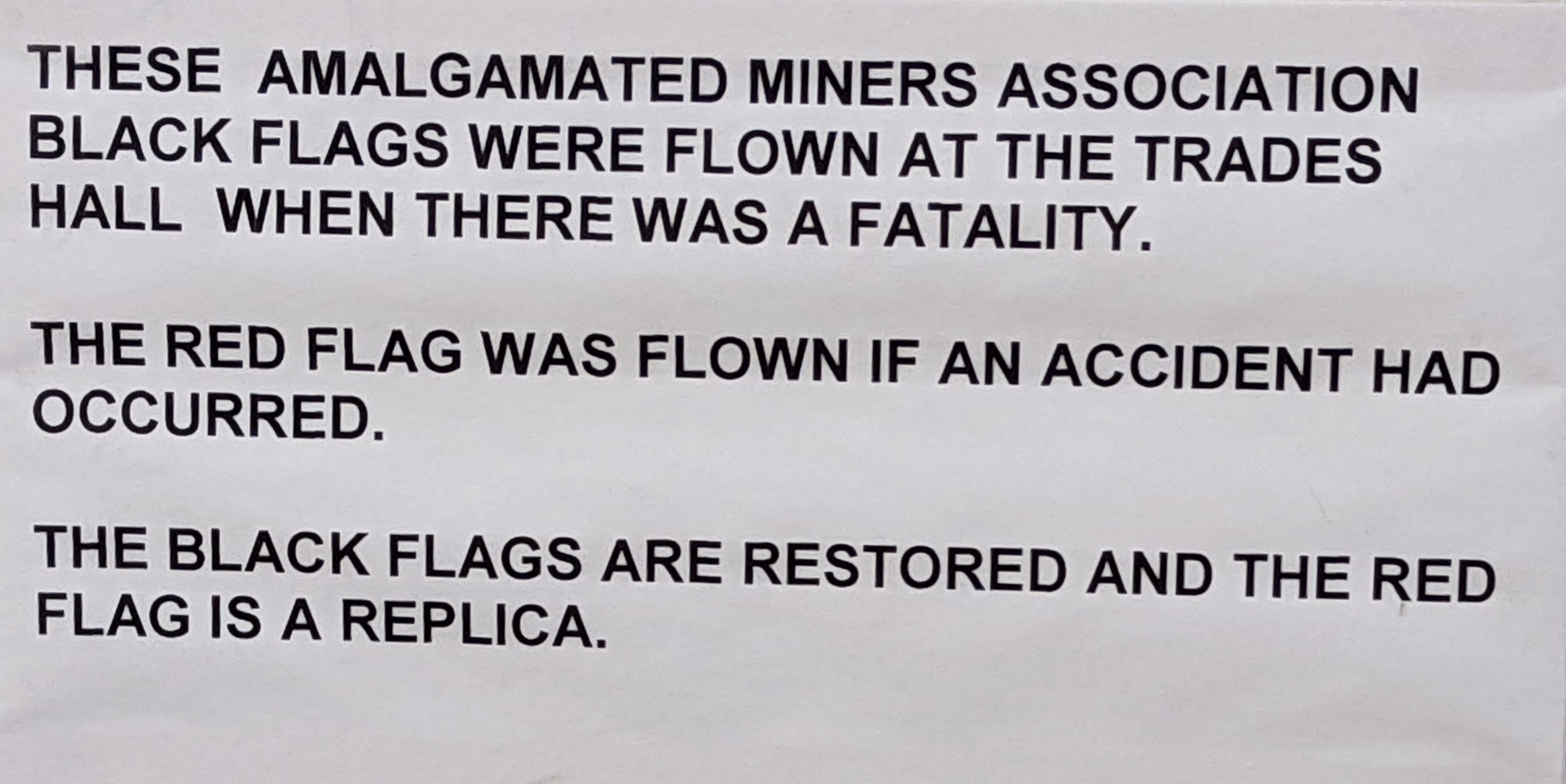
Our first off train excursion was at Broken Hill, where we chose to go to the Trades Hall Exhibition. This comprised a re-enactment of a union meeting making a decision about strike action. The audience supported them after the impassioned speeches on behalf of union demands. This was a comfort in the middle of an election. Let’s hope that they are in marginal seats. I was disappointed that the morning tea was shop bought pastries, rather than home baked scones, jam and cream. However, as that might perpetuate the myth that the women’s contribution to the labour movement was mainly doing so, I swallowed my disappointment along with the pastries. They were fine, but not worth a photo. A photo of the myth would have been far more attractive unfortunately.



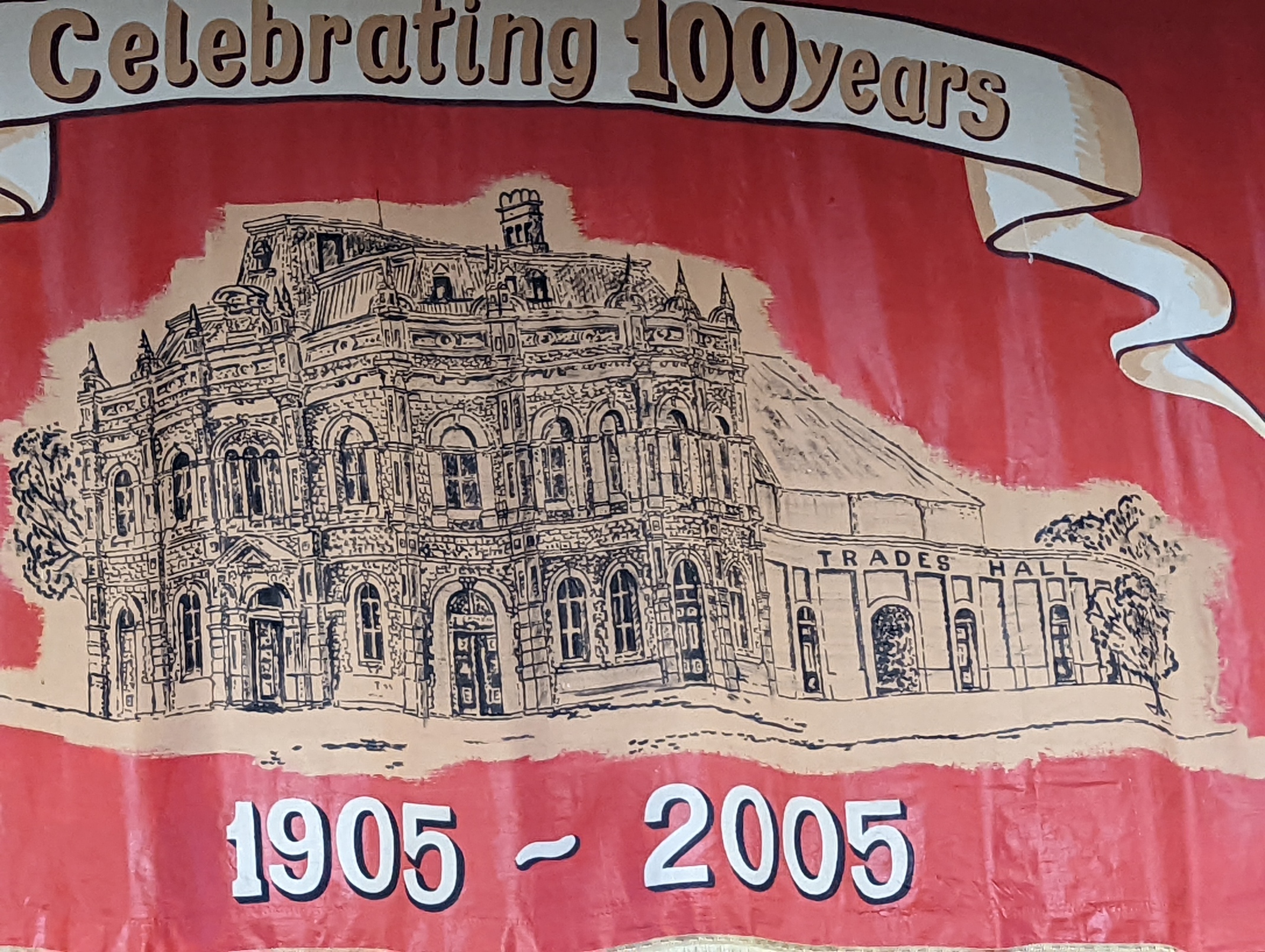
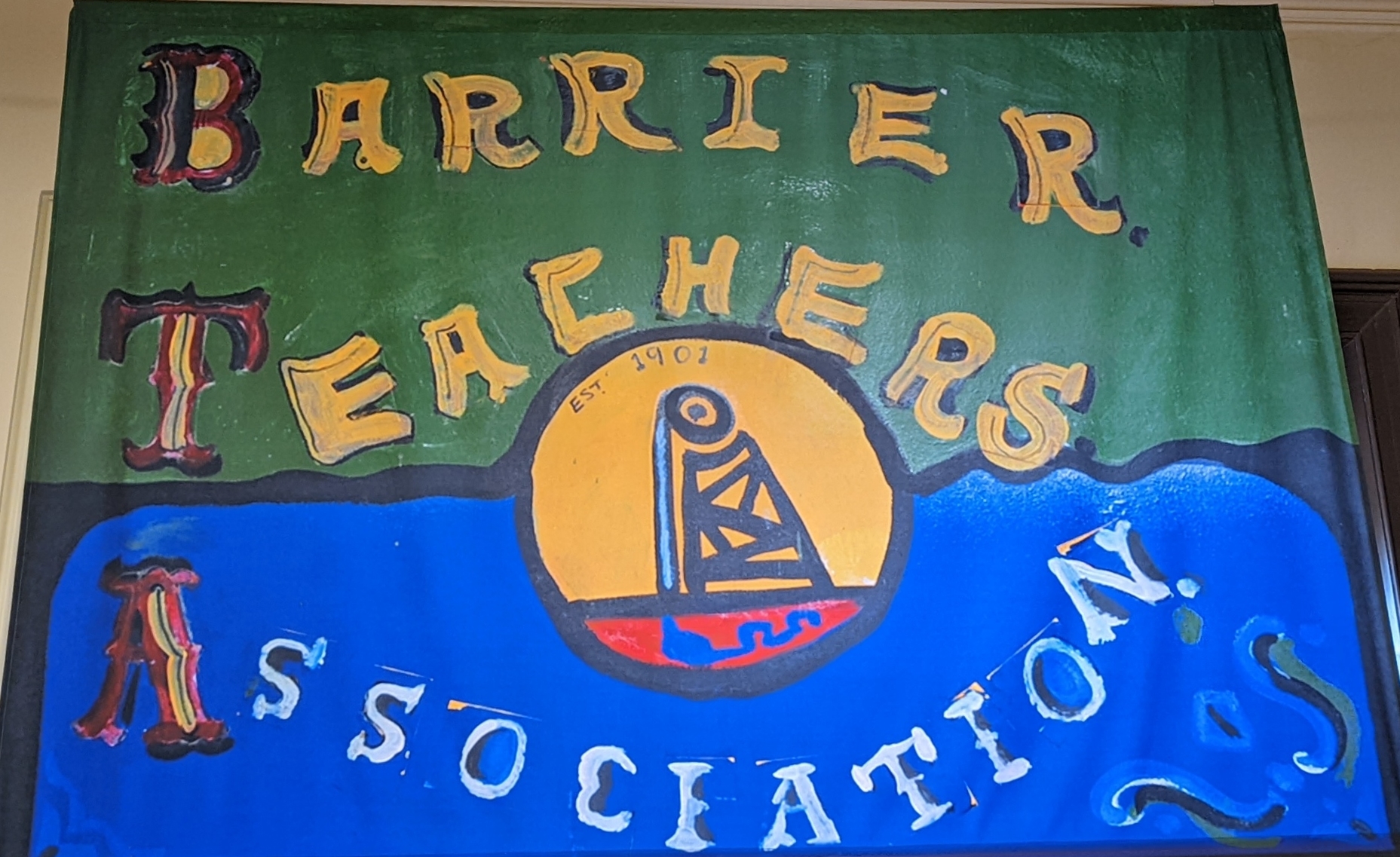
After the meeting we had a short time to walk around the Trades Hall. All very reminiscent of the Perth Trades Hall – we are staying close to the Court Hotel and Trades Hall in Perth at the moment. Great memories of all the action there, including the freezing of the Court for a short time over a sexist industrial issue. I am thinking of the wonderful late Senator Pat Giles who led the walk out. It is pleasing to see rainbows on the walls now.


Thank you to the ABC for the following article
They fed Australia when the men went to fight, but it took 40 years for the Land Girls to be allowed to march on Anzac Day
Posted Mon 25 Apr 2022 at 5:26amMonday 25 Apr 2022 at 5:26am, updated Mon 25 Apr 2022 at 5:43amMonday 25 Apr 2022 at 5:43am
It’s been 80 years since a group of trailblazing young women went to work on farms across Australia to fill the gaps left behind by men sent to fight in World War II.
As the war stretched on, by 1942 as many men as possible were needed on the front line.
But that left Australia’s agriculture sector grappling with a big problem: those same men were needed on farms at home to grow the food required to feed both a hungry nation and the allied forces.
It led to the formation of the Australian Women’s Land Army and, during the course of the war, more than 3,000 women would volunteer.
The women who soldiered on
Many were as young as sixteen, and most were from towns or cities.
“Two-thirds of the enlisted women in the Women’s Land Army were
women who had never jumped a barbed wire fence, they’d never milked a cow, they’d never picked strawberries and boxed them or driven a tractor,” said India Dixon, a librarian at the State Library of Queensland.
“They were young women who wanted to help out and to keep Australia running as the breadbasket of the allied force.”

One of those young women was a teenager from Bundaberg.
“My Mum’s name was Beryl Johnson,” said Lorraine Newton.
“She saw an ad in the Women’s Weekly and she thought, well, this will be a great opportunity.”
Beryl died in 2019 but fortunately, we can still hear her memories of that time.
More than 20 years earlier, her story was recorded as part of an Anzac Day program on a local radio station.
Lorraine Newton still has both the cassette tape and a working tape deck.
“I had just turned 17 when I joined. From there, I stayed on right through the wartime,” Beryl Johnson said on the recording.
Telling the story of her service, Beryl recalls knowing nobody when she was sent by train to Far North Queensland for her first billet.
Like all “Land Girls”, as they came to be known, Beryl quickly learnt to turn her hand to many different jobs.
“I loved working outside on the farms and did all sorts of things, cotton and picked up potatoes. Yes, I think it’s something we can all be proud of, the Australian Women’s Land Army.”
It wasn’t all work though, and the offer of a lift to a local dance when stationed north of Brisbane would change the course of Beryl’s life.
“This fella turned up on a motorbike and low and behold, that ended up being my father,” said Lorraine Newton.
Doug Price was a third-generation Redlands farmer who had been medically discharged from the army.
He and Beryl were married after the war ended and they remained living and working on the land while they raised their family.
“We had custard apples, carrots, tomatoes, cabbage, lettuce, capsicum, potato, pumpkin, rockmelon, watermelon,” said Lorraine Newton.
“Every small crop, we had it — as well as hundreds of chickens.”
“We had a lovely life growing up on the farm.”
Remembering the Land Girls
Today, the area on Brisbane’s bayside bears little resemblance to a farming district but there are still reminders of when the Land Girls came to town all those years ago.
Beryl’s Land Army uniform is now on display in the Redland Museum, which is built on the site where the Price family farm once stood.
“There were Land Army girls on quite a few of the farms in this area,” said Rick Thomason OAM, the curator of the exhibition at the Redland Museum.
“It was very important as a small crop-producing district. So important, it was known as a salad bowl of Queensland.”
At nearby Birkdale, the School of Arts hall was once a dormitory for the young land army volunteers.
“The Australian Women’s Land Army were apparently camped around the outside of this hall and at 5.30 am, they’d get woken up and then they had to be in here by 6.30 to have breakfast,” said Redland City Councillor Paul Bishop.
“Then they would go out into the fields.”
From dairying to driving tractors, the work required of the land girls was varied. But one thing was certain — it was quite unlike what was generally expected of women in the 1940s.
“They were some of the most extraordinary pioneers because they were doing things and transforming our understanding, particularly for women, of what women could do,” said Councillor Bishop.
Fighting for recognition
For many, that work was also the beginning of lifelong connections.
“Mum had those friendships all their lives,” said Lorraine Newton.
“My mother was a great letter writer. Mum would write two or three letters a week. She just loved that communication and loved hearing what everyone was doing.”
A key reason for keeping in touch after the war ended was to fight for recognition of the contribution of the AWLA.
“The Land Army committee used to meet in the city, and they fought for a long, long time to be recognised,” said Lorraine Newton.
“The day that they were allowed to march was a great day, and Mum was so thrilled, and there were just so many Land Army girls that day marching proudly in their green jackets on Anzac Day.”
“For a long time, those women just quietly served and then went home again,” said India Dixon, from the State Library of Queensland.
“That recognition of their service has been incredibly important both for them and for Australia because if we don’t recognise that service, and we aren’t aware that that service even occurred, how can we have a full understanding of the history of gender equality and gender dynamics within Australia?”
Watch this story on ABC TV’s Landline at 12:30pm on Sunday, or on ABC iview.
Posted 25 Apr 2022; 25 Apr 2022, updated 25 Apr 2022

 Robin's Room