
Ruth Ware The It Girl Simon & Schuster (Australia) 2022.
Thank you, NetGalley and Simon & Schuster for this uncorrected proof in exchange for an honest review.
Ruth Ware is a writer whose books I enjoy. They are smart, with characters who develop over the period of the plot, which, by the way is usually good and topical. The It Girl fulfills these criteria.
The settings are Oxford in the past, and present day in Edinburgh. Chapters ‘before’ and ‘after’ are related by Hannah, now living in Edinburgh. Before, is the heady academic year she lived with April, the ‘it girl’ of the title, in Oxford student accommodation. Hannah has admired and followed April from the time they meet in the two bedroom/ living area, space they have at the top of the stairs in a beautiful Oxford building. The introduction to the two young women is dramatic – Hannah recalls, or perhaps she dreams, the night she finds April dead in their rooms. Books: Reviews
Articles and information after Covid report: NAIDOC Week; Ketanje Brown Jackson sworn in to the US supreme Court; Jocelynne A. Scutt: Roe v Wade – Gone, But How Much Better Off are Women in England and Wales?; Visit to the NGA; The Atlantic Daily – Cassidy Hutchinson, a former aide for Donald Trump’s chief of staff, provided a key piece of evidence connecting Trump…; News from the British Labour Party re Brexit; PM Anthony Albanese in Ukraine.
Covid in Canberra after the end of lockdown

1 July – 1,169 new cases; 138 in hospital; 4 in ICU; 1 ventilated.
2 July – 1,392 new cases; 131 in hospital; 4 in ICU; 1 ventilated.
3 July – 1,031 new cases; 130 in hospital; 4 in ICU; 1 ventilated.
4 July – 1,134 new cases; 2 in ICU.
5 July – 1,199 new cases; 136 in hospital; 2 in ICU.
6 July – 1,477 new cases; 135 in hospital.
Two lives were lost over this period. The total number of lives lsot since March 2020 is eighty one.

NAIDOC Week (/ˈneɪdɒk/ NAY-dok) is an Australian observance lasting from the first Sunday in July until the following Sunday. The acronym NAIDOC stands for National Aborigines and Islanders Day Observance Committee.[1] It has its roots in the 1938 Day of Mourning, becoming a week-long event in 1975.
NAIDOC Week celebrates the history, culture and achievements of Aboriginal and Torres Strait Islander peoples. The week is celebrated not just in the Indigenous Australian communities but also in increasing numbers of government agencies, schools, local councils and workplaces.

NIVIT – Australia’s national Indigenous television and media organisation, part of the SBS network. 2 JUL 2022 – 10:27PM.
Ash Barty named NAIDOC Person of the Year
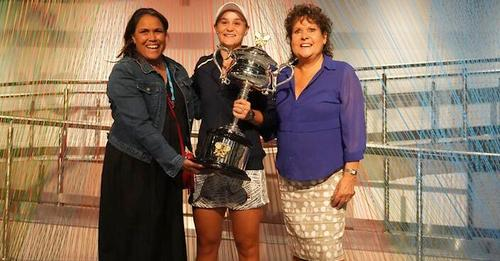
The Ngarigo woman recorded a video message after being told of her win, saying she can’t wait to continue her contribution to children’s education.
By Jodan Perry
Source: NITV 2 JUL 2022 – 10:27 PM PDATED 2 JUL 2022 – 10:27 PM
Former world no.1 tennis player Ash Barty has been named the 2022 NAIDOC Person of the Year at the annual awards ceremony.
The Ngarigo woman, who retired from the sport earlier this year after claiming her third grand slam title, recorded a video message congratulating all the winners and also saying she cannot wait to continue contributing to children’s education.
Barty has released a series of children’s books called ‘Little Ash’ which she says are inspired by her niece and nephew.
She is currently in the United States playing in the Icons Series golf tournament. Her family, including mother Josie, sister Sarah and father Robert were in attendance at the awards ceremony in Melbourne.
In the acceptance speech, Robert Barty spoke of how much the Wimbledon and Australian Open wins meant to Ash, and highlighted her relationship with mentor Evonne Goolagong-Cawley.
“It was a perfect storm, 10 years since Ash won junior Wimbledon, and it was NAIDOC Week, and she ended up winning Wimbledon,” he said
“Fast forward 6 months she gets to the Australian Open and we had an inkling that tennis was not guna be around for a long time for Ash and she wanted to go out as high as she possibly could.”
Mr Barty went on to articulate how special it was for his daughter to have her mentor on hand to present her the championship trophy in Melbourne and also the moment she got to share after, with both Evonne and Cathy Freeman.
“She thinks that is one of the best photos she has got in her album,” he said.

Little Ash: Barty’s new books inspired by niece and nephew.
A Positive for the US Supreme Court in a bleak few months
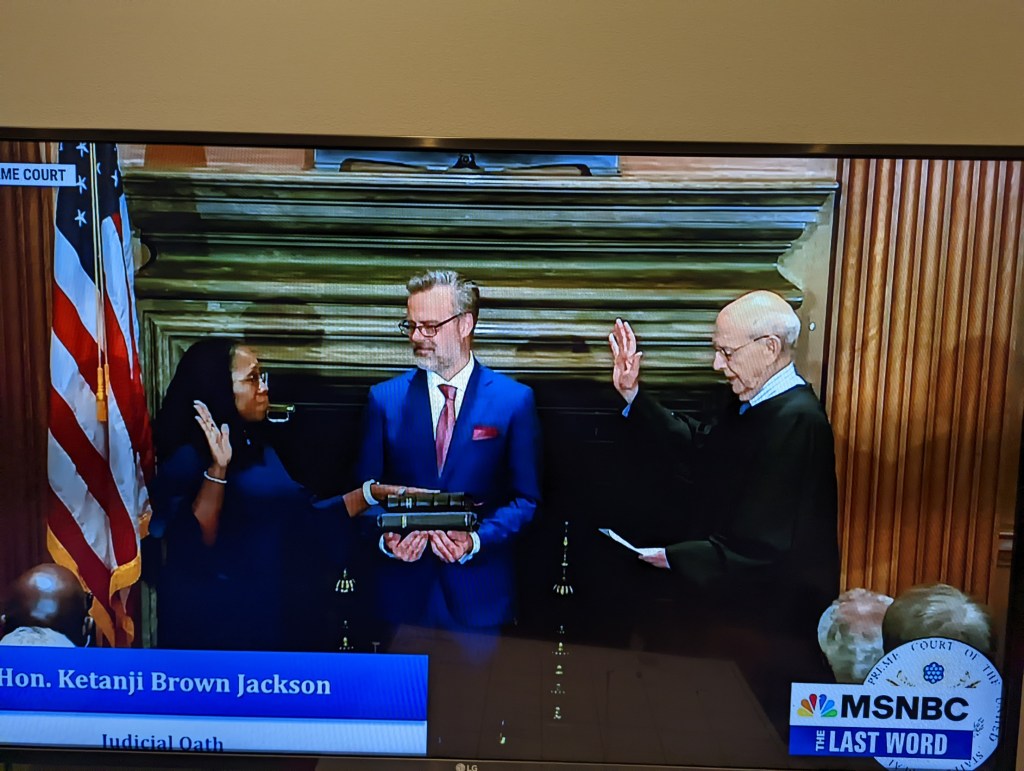
Judge Ketanje Brown Jackson is sworn in to the Supreme Court
Roe v Wade – Gone, But How Much Better Off are Women in England and Wales?
Dr Jocelynne A. Scutt

RBG ON ROE V WADE
The former US Supreme Court Justice Ruth Bader Ginsberg (appointed to the Court in 1993) once criticised Roe v Wade, saying the right to abortion should be founded firmly and unequivocally in the principle of equality and women’s rights to personhood, rather than in the more ambiguous privacy principle. Her criticism has been taken up with immense duplicity in the majority judgment overturning the almost fifty-year precedent set by that landmark decision.
Roe v Wade set out a ‘trimester’ system, dividing the nine-month pregnancy term into three stages, each stage regulated by the development of the foetus. For the first trimester (up to viability of the foetus) – the decision lay principally with the pregnant woman. During the second trimester, state
regulation was allowed as legitimate where introduced to preserve a woman’s well-being, to comply with medical standards, and to protect potential human life. For the third trimester, the state was entitled to legislate against abortion, making it illegal unless its purpose was to preserve a woman’s
health. Ruth Bader Ginsberg considered that this prescriptive legislative direction by the Supreme Court had generated and underpinned the orchestrated attacks on Roe v Wade from the outset.
ROE V WADE DOOMED
Yet whatever Justice Blackmun (who wrote the principal Roe v Wade judgment, with Stewart, Douglas and Burger concurring, White and Rehnquist dissenting) had said in that 1973 judgment, nothing would have saved women’s right to abortion under the current US Supreme Court line-up.
On 24 June 2022, in Dobbs v Jackson Women’s Health Organization Alito’s majority judgment (in which Thomas, Gorsuch, Kavanaugh and Barrett joined, with Thomas, Kavanagh and Roberts writing concurring judgments), overturned Roe v Wade, leaving the lawfulness or otherwise of abortion up
to the states. That is, each state can now decide its own standards for determining this operation lawful or unlawful, the woman undergoing it, the practitioner doing it, or the medical supplier of abortifacients law-abiding or criminal.
THE MINORITY – (NO) JUSTICE FOR WOMEN
Breyer, Sotomayor and Kagan began their strong dissent by acknowledging that for some fifty years Roe v Wade and Planned Parenthood v Casey ‘protected the liberty and equality of women’, Roe holding, Casey reaffirming, ‘that the Constitution safeguards a woman’s right to decide for herself
whether to bear a child’. Further: Roe held, and Casey reaffirmed, that in the first stages of pregnancy, the government could not make that choice for women. The government could not control a woman’s body or the
course of a woman’s life: It could not determine what the woman’s future would be …
Respecting a woman as an autonomous being, and granting her full equality, meant giving her substantial choice over this most personal and most consequential of all life decisions …
Balancing the state’s legitimate interests in health and life, and a woman’s rightful interest in her own destiny, meant that Roe and Casey addressed differing community views on abortion. In discarding that balance, they said, the majority in Dobbs v Jackson now assert that ‘from the very
moment of fertilization, a woman has no rights to speak of’. States can:
force a woman to bring a pregnancy to term, whatever the cost;
restrict pregnancy termination ‘wherever rational’.
ABORTION – BANNED … BANNING ‘RATIONAL’
That the majority deemed protecting foetal life is ‘rational’ leaves states free to limit abortion however they choose. In Dobbs, the Mississippi law in question bars abortion after the fifteenth week of pregnancy. The Dobbs decision means a state could ‘do so after ten weeks, or five or three
or one—or, again, from the moment of fertilization’. The minority judgment observed that states have ‘already passed such laws, in anticipation of today’s ruling’.
Thirteen states ban abortion from the time of fertilization – ‘trigger laws’ – Arkansas, Idaho, Kentucky, Louisiana, Mississippi, Missouri, North Dakota, Oklahoma, South Dakota, Tennessee, Texas, Utah, and Wyoming. Abortion is banned between six and 15 weeks of pregnancy in five of these states. There are no exceptions for rape or incest in 11 states and no exception for the
pregnant woman’s health exists in six states. Eight states are predicted to enact abortion bans promptly now the Supreme Court has ruled, meaning (Carrie N Baker of Ms Magazine reports) ‘much of the South and Midwest of the United States’ will be covered, and even where life or health
exceptions to bans exist, significant barriers to abortion access remain.
SUPREME COURT SUBMITS WOMEN TO 17th CENTURY RULE
The majority relied heavily upon historical sources, including a pages-long list of eighteenth and nineteenth century laws from every state outlawing pregnancy termination. They cited with approval England’s Chief Justice Hale’s Laws of the Crown – ready for publication 1680, first published in 1736, and Blackstone’s Commentaries, appearing (again England) over the years 1765- This is put forward to confirm that the US Constitution does not include the right to abortion, which Roe v Wade saw as inherent in the 14 th Amendment (added to the Constitution in 1868) as a
right to privacy and due process. Hale’s misogyny is ignored. Sitting on the last witch trial in England, he said witches were real because their conviction in his court proved it, and the Bible said so, anyway. He accused women and girls of being innate liars, meaning warnings should be given to
rape juries – concluding either rapists did not exist, or fearing rapists would be rightly convicted. ‘Rape shied statutes’ have been introduced in most common law jurisdictions, including the US, attempting to establish that lying is not a sex-linked characteristic. He said rape in marriage was no crime, a diktat accepted by law in the United Kingdom and Australia as true until the English House
of Lords came to their senses in R v R in 1991 and the Australian High Court in R v L the same year.
In Dobbs v Jackson the majority deplored ‘fabrication of the Constitution’. Roberts, the Chief Justice in a separate judgment justifies his concurrence by saying Roe v Wade does not ‘need to be overruled all the way down to the studs’. Discard the right of a woman to decide for herself, by ‘discarding the viability line’, but ‘leave for another day whether to reject any right to an abortion at all’. Yet this leaves the right up to the states – knowing that many have already proposed, drafted, or passed laws violating that right by elevating a fertilised egg above a woman’s personhood.
BRING ME YOUR POOR, YOUR HUDDLED MASSES?
Roe v Wade proponents are now turning to state legislatures or Congress. Yet winning every state House is realistically doubtful – untenable, and the prospect of a Republican revived majority banning abortion altogether may be more likely than a federal law supporting a woman’s right. Even
were Congress to act, the Supreme Court numbers remain. The prospect of the Senate removing the Equal Rights Amendment (ERA) time limitation and the ERA surviving the Supreme Court faces that same challenge.
So now African American and Latino women, poor women, and women otherwise disadvantaged are most likely to die or bear children despite their not being ready to do so, or having been raped at home, in a college dorm, a dark alley or on a date. And realistically, all women are at risk.
NO WOMAN SECURE, NO WOMAN SAFE
Yet is the right to women’s bodily autonomy safe or secure elsewhere? For England and Wales, abortion remains a crime despite, or rather because of, the 1967 Abortion Act. This Act, upon which women of the United Kingdom (apart from Northern Ireland) relied for some semblance of bodily
autonomy denies women’s equal rights: in no other operation is a patient legally obligated to have two doctors’ approval and risk criminal prosecution if she doesn’t. Few if any women realise, in England and Wales, that obtaining an abortion means that a lengthy report of it goes from their medical practitioner to the Chief Medical Officer of England or Wales. And how many know the irony that abortion is no longer illegal in Northern Ireland (just difficult to secure in the absence of abortion clinics or hospital facilities), though it remains subject to criminal provision in England and
Wales? In 2019 the United Kingdom Parliament repealed the Offences Against the Person Act 1861 provisions criminalising abortion, so they no longer apply anywhere in the country. Yet as the Abortion Act of 1967 has never applied to Northern Ireland, section 5 of this Act – that makes
abortion criminal in England and Wales unless carried out strictly according to the Abortion Act provisions – does not apply there.
The UK Prime Minister, Boris Johnson, is reported as deploring the US Supreme Court decision. ‘It’s a big step backwards,’ he says. So, will he stand up for women’s rights, introducing a Bill to decriminalise abortion for England and Wales – as has been done in jurisdictions elsewhere – making pregnancy termination an operation for a woman and her doctor, not for intrusion by the state?
Jas © June 2022
Exhibitions at the NGA
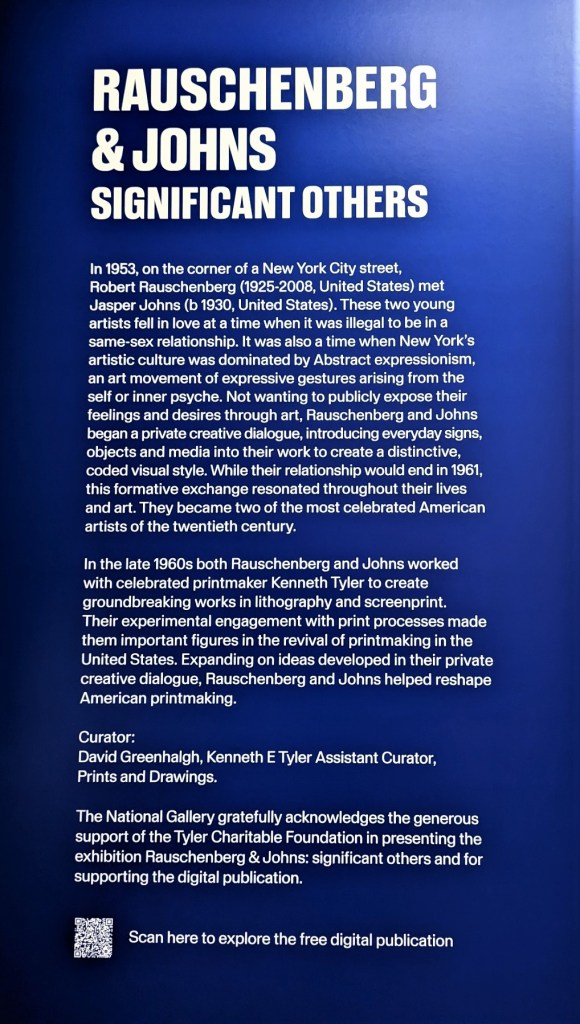
A visit to the NGA is always a great activity during school holidays. The view from the gallery is a joy, and the exhibitions always abounding with extraordinary new acquisitions. And familiar favourites.








| WEDNESDAY, JUNE 29, 2022 |
 |
| Tom Nichols CONTRIBUTING WRITER |
| Yesterday, Cassidy Hutchinson, a former aide for Donald Trump’s chief of staff, provided a key piece of evidence connecting Trump to an attempted coup after the 2020 election. We will learn more in the days to come, but we know the most important things now.First, here’s more from The Atlantic.A withering indictment of the entire GOPThis fall will be a vaccination reboot.The evidence for a possible criminal case against Donald Trump is piling up. |
The Last Pieces Cassidy Hutchinson, a top former aide to Trump White House Chief of Staff Mark Meadows, testifies. (Brandon Bell / Getty)View in browserSometimes, the sudden presentation of truth about a terrible thing—such as Cassidy Hutchinson’s testimony—provides a kind of tipping point, where revelations finally move people from denial to acceptance. Think back to the Cold War, when Americans argued over whether the Soviet Union was as bad as the American government portrayed it. There were a lot of unanswered questions: Did the Soviets or the Nazis kill thousands of Poles in the Katyn Forest in 1940? Were the Rosenbergs really guilty of stealing atomic secrets? Indeed, a notable 1990 book even suggested that we might never know who really started the Korean War; there was enough blame to go around, and so we shouldn’t even ask the question.When the Soviet Union fell, however, the Russians opened some of their classified archives, and we got answers to all these questions. (Stalin ordered the Polish killings; the Rosenbergs were guilty; the Soviets and the North Koreans started the Korean War.) The Yale historian John Gaddis summarized it all in the title of his 1997 book: We Now Know. These revelations made a lot of people embarrassed and angry—perhaps more so in the West than in Russia.Which brings us to the work of the January 6 committee and Hutchinson’s testimony. From practically the moment he descended the escalator at Trump Tower in 2015, Trump’s supporters have been in denial about Trump’s emotional instability, his malignant narcissism, his fascination with violent rhetoric, and his hostility to the American constitutional order. But without a peek behind the Oval Office curtains, suspicions were only conjecture. We didn’t know for certain if Trump, after he lost in 2020, was trying to subvert the vote or seeking only to exhaust all his legal remedies. We didn’t know if he truly understood that the mob on January 6 he’d summoned was armed and dangerous. We didn’t know if he actually agreed with the chants to hang Mike Pence.We now know.Let’s leave aside the stories of Trump’s emotional derangement, such as his throwing food like a bratty toddler. It isn’t an actual violation of the Constitution to be a whiny, immature jerk.Instead, Hutchinson’s testimony gives us the last pieces we needed to see the full picture of the most important story in modern presidential history. In six simple steps, here is what we now know so far from the January 6 committee, capped by Hutchinson’s testimony.Trump knew—or refused to hear—that he did not win in November 2020.Trump directed his loyalists to launch a barrage of schemes to invalidate the vote in multiple states.Trump tried to capture the Justice Department as part of his plan to overturn the election (and he nearly succeeded).Trump on January 6 aimed a violent crowd at his own vice president and the members of the Congress of the United States.Trump knew that this crowd was armed and dangerous.Trump wanted to personally lead the mob to stop the Congress from meeting and thus end the threat to his continued rule as president.We now know what we need to know about Trump. These revelations should also convince millions of people who were willing to give Trump a second chance to rule that he is too mentally unstable ever to be allowed again near the machinery of government.My Atlantic colleague Molly Jong-Fast is optimistic that the truth is getting through to the public. I am not so sure. Will Trump’s supporters and elected Republicans finally accept the truth? Have they finally heard enough? Or will they be like the last blinkered apologists for communism who went to their graves refusing to accept the magnitude of Stalin’s massacres or believing that the Soviet Union was framed for its crimes?Unfortunately, I think I know the answer to all of these questions.Further Reading:The dumbest coup attemptThe reason Liz Cheney is narrating the January 6 storyKevin McCarthy, have you no sense of decency? Cassidy Hutchinson, a top former aide to Trump White House Chief of Staff Mark Meadows, testifies. (Brandon Bell / Getty)View in browserSometimes, the sudden presentation of truth about a terrible thing—such as Cassidy Hutchinson’s testimony—provides a kind of tipping point, where revelations finally move people from denial to acceptance. Think back to the Cold War, when Americans argued over whether the Soviet Union was as bad as the American government portrayed it. There were a lot of unanswered questions: Did the Soviets or the Nazis kill thousands of Poles in the Katyn Forest in 1940? Were the Rosenbergs really guilty of stealing atomic secrets? Indeed, a notable 1990 book even suggested that we might never know who really started the Korean War; there was enough blame to go around, and so we shouldn’t even ask the question.When the Soviet Union fell, however, the Russians opened some of their classified archives, and we got answers to all these questions. (Stalin ordered the Polish killings; the Rosenbergs were guilty; the Soviets and the North Koreans started the Korean War.) The Yale historian John Gaddis summarized it all in the title of his 1997 book: We Now Know. These revelations made a lot of people embarrassed and angry—perhaps more so in the West than in Russia.Which brings us to the work of the January 6 committee and Hutchinson’s testimony. From practically the moment he descended the escalator at Trump Tower in 2015, Trump’s supporters have been in denial about Trump’s emotional instability, his malignant narcissism, his fascination with violent rhetoric, and his hostility to the American constitutional order. But without a peek behind the Oval Office curtains, suspicions were only conjecture. We didn’t know for certain if Trump, after he lost in 2020, was trying to subvert the vote or seeking only to exhaust all his legal remedies. We didn’t know if he truly understood that the mob on January 6 he’d summoned was armed and dangerous. We didn’t know if he actually agreed with the chants to hang Mike Pence.We now know.Let’s leave aside the stories of Trump’s emotional derangement, such as his throwing food like a bratty toddler. It isn’t an actual violation of the Constitution to be a whiny, immature jerk.Instead, Hutchinson’s testimony gives us the last pieces we needed to see the full picture of the most important story in modern presidential history. In six simple steps, here is what we now know so far from the January 6 committee, capped by Hutchinson’s testimony.Trump knew—or refused to hear—that he did not win in November 2020.Trump directed his loyalists to launch a barrage of schemes to invalidate the vote in multiple states.Trump tried to capture the Justice Department as part of his plan to overturn the election (and he nearly succeeded).Trump on January 6 aimed a violent crowd at his own vice president and the members of the Congress of the United States.Trump knew that this crowd was armed and dangerous.Trump wanted to personally lead the mob to stop the Congress from meeting and thus end the threat to his continued rule as president.We now know what we need to know about Trump. These revelations should also convince millions of people who were willing to give Trump a second chance to rule that he is too mentally unstable ever to be allowed again near the machinery of government.My Atlantic colleague Molly Jong-Fast is optimistic that the truth is getting through to the public. I am not so sure. Will Trump’s supporters and elected Republicans finally accept the truth? Have they finally heard enough? Or will they be like the last blinkered apologists for communism who went to their graves refusing to accept the magnitude of Stalin’s massacres or believing that the Soviet Union was framed for its crimes?Unfortunately, I think I know the answer to all of these questions.Further Reading:The dumbest coup attemptThe reason Liz Cheney is narrating the January 6 storyKevin McCarthy, have you no sense of decency? |
News from the British Labour Party on Brexit Signals a forthright approach to one Tory mess
Labour List, July 4, 2022.
Keir Starmer will today set out Labour’s plan to “make Brexit work”. In a speech to the Centre for European Reform think tank, the Labour leader is expected to say: “There are some who say ‘we don’t need to make Brexit work, we need to reverse it’.” Starmer will stress that he “couldn’t disagree more” with this viewpoint, arguing: “You cannot move forward or grow the country or deliver change or win back the trust of those who have lost faith in politics if you’re constantly focused on the arguments of the past.” He is expected to declare that a government under his leadership would not seek to rejoin the EU, the single market or the customs union or to reinstate freedom of movement. The Labour leader will tell attendees that his plan will instead “deliver on the opportunities Britain has, sort out the poor deal Boris Johnson signed and end the Brexit divisions once and for all”.
Labour List 5 July, 2022.
“It’s realistic.” That was Emily Thornberry’s assessment of Keir Starmer’s announcement yesterday that a Labour government would not seek to rejoin the single market. Speaking to Sky News this morning, the Shadow Attorney General described leaving the EU as a “one-way street”, stressing that the UK would be unable to rejoin on the same terms. She told viewers that she is a “pragmatic politician”, adding: “In 2019, we were defeated. We had to leave. And so now that we’ve left, we have to look after our country and make sure that the right decisions are being made.”
The Labour leader told attendees at the Centre for European Reform think tank event that his party would not seek to rejoin the EU, the single market or a customs union. He argued: “Nothing about revisiting those rows will help stimulate growth or bring down food prices or help British business thrive in the modern world.” Starmer also confirmed that Labour would not restore freedom of movement – despite having vowed during the Labour leadership contest that he would look to bring it back after Brexit. He instead set out five steps to “make Brexit work”, including a new veterinary agreement for trade in agri-products between the UK and EU, a scheme to allow low-risk goods to enter Northern Ireland without unnecessary checks and a new security pact with the EU.
Some have suggested that the statement was partly intended to quell pro-EU voices within the Labour party. But the primary focus must surely have been reaching out to Leave-voting seats, especially those in the ‘Red Wall’, assuring them that Brexit would not be reversed or watered down under a future Labour government.
It’s not a sudden U-turn for the Labour leader. In January 2021, following the hard Brexit deal struck by Lord Frost, Starmer said: “I don’t think that there’s scope for major renegotiation. We’ve just had four years of negotiation. We’ve arrived at a treaty, and now we’ve got to make that treaty work.” But it is also a far from uncontroversial move, with the SNP accusing Starmer of “embracing the Tories’ hard Brexit”.
Australian Prime Minister, Anthony Albanese, in Ukraine bing.com/news

Prime Minister Anthony Albanese has promised Australia will provide further military aid to Ukraine after visiting war-ravaged towns near Kyiv.
Mr Albanese visited the towns of Bucha and Irpin, as well as Hostomel airport — known sites of brutal mass killings committed by Russian forces that have been examined by war crimes investigators.
Accompanied by the Governor of Kyiv Oblast, Oleksiy Kuleba, Mr Albanese appeared disturbed by the destruction.
“Here we have what’s clearly a residential building,” he said.
“Another one just behind it, brutally assaulted.
“This is a war crime,” the Prime Minister said.
 Robin's Room