Thank you, NetGalley, for the uncorrected proofs for The Times They Were a-Changin’ 1964, the Year the Sixties Arrived and the Battle Lines of Today Were Drawn, and The Second Wife and in exchange for honest reviews.
Robert S McElvaine The Times They Were a-Changin’ 1964, the Year the Sixties Arrived and the Battle Lines of Today Were Drawn Skyhorse Publishing, Arcade 2022.

This is a timely book, providing as it does, an excellent background to current political and social behaviour and events in 2020s America. McElvaine has chosen a raft of cultural, social and political events to develop his theme, that the ‘long year’ of 1964 began changes that laid the foundation for change but have also raised such challenges to long accepted bigotry and racism that there has been an immense ‘push back’ culminating in the election of former President Donald Trump, and the continuing big lie about the 2020 election of President Joe Biden. For the complete review see Books: Reviews
Miranda Rijks The Second Wife Inkubator Books 2022.
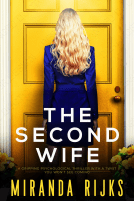
In my review of Miranda Rijks’ “What She Knew” I stated that it would not be the last of her novels that I would read. I cannot say the same of this one. It was a very disappointing read. Although it was well paced, with first person commentary from the two main characters, and a disturbing short piece from an initially unknown character, the plot floundered at times. Some incidents, although necessary to develop relationships, had no rational basis – there needed to be more attention given to how to achieve the former without undermining the reader’s credulity. The motivation for some of the perpetuator’s behaviour did not exist.
Articles after Covid in Canberra information: Voice to parliament – PM Anthony Albanese, Michelle Grattan, Insiders at Gama, Bridget Brennan, Patricia Karvelas; Remembering Pat Giles, AM; Archie Roach is mourned; Bernard Collaery – Labor action.
Covid in Canberra after Lockdown is lifted

28 July – 1,000 new cases recorded; 149 people in Hospital; 2 in ICU.
29 July – 1,007 new cases recorded; 147 people in hospital; 1 person in ICU.
30 July -719 new cases recorded; 152 people in hospital.
31 July – 556 new cases recorded; 163 people in hospital; 1 person in ICU.
1 August – 616 new cases recorded; 165 people in hospital; 2 people in ICU.
2 August – 754 new cases recorded; 158 people in hospital; 3 people in ICU.
3 August – 889 new cases recorded; 143 people in hospital; 2 people in ICU.
Nine lives have been lost in this period, bringing the total of lives lost to Covid in Canberra since march 2020 to 97.

From: The Conversation – Michelle Grattan
Republished under Creative Commons Licence
Albanese releases draft wording for Indigenous ‘Voice to parliament’ referendum
Published: July 29, 2022 10.31pm AEST
Anthony Albanese will propose draft wording to insert into the constitution an Indigenous “Voice” to parliament when he addresses the Garma Festival in Arnhem Land on Saturday.
The Prime Minister is also releasing a draft of the question that would be put to the people at the referendum for the change.
The new provision in the constitution would have three sentences:
There shall be a body, to be called the Aboriginal and Torres Strait Islander Voice
The Aboriginal and Torres Strait Islander Voice may make representations to Parliament and the Executive government on matters relating to Aboriginal and Torres Strait Islander Peoples
The Parliament shall, subject to this Constitution, have power to make laws with respect to the composition, functions, powers and procedures of the Aboriginal and Torres Strait Islander Voice.
In his speech, released ahead of delivery, Albanese says this might not be the final form of words but it is the next step in the discussion.
His draft referendum question would ask: “Do you support an alteration to the Constitution that establishes an Aboriginal and Torres Strait Islander Voice?”
To pass, a referendum needs to win both an overall majority of votes as well as majorities in a majority of states. There have been 44 proposals for constitutional change put in 19 referendums with only eight changes passing.
Although Albanese has been anxious for the referendum to be held next year, he talks in his speech only of having it in the current parliamentary term.
“I believe the country is ready for this reform,” he says. “I believe there is room in Australian hearts for the [Uluru] Statement from the Heart.”
“We are seeking a momentous change – but it is also a very simple one.”
“It is not a matter of special treatment, or preferential power. It’s about consulting Aboriginal and Torres Strait Islander peoples on the decisions that affect you. This is simple courtesy, it is common decency.”
Albanese says that putting a Voice into the constitution “means a willingness to listen won’t depend on who is in government or who is prime minister”. Such a Voice “cannot be silenced”.
“The Voice will exist and endure outside of the ups and downs of election cycles and the weakness of short-term politics.
“It will be an unflinching source of advice and accountability.”
It would not be a “third chamber” but “a body with the perspective and the power and the platform to tell the government and the parliament the truth about what is working and what is not”.
Albanese says the “best way to seize the momentum” is to settle on the proposed referendum question as soon as possible.
“I ask all Australians of goodwill to engage on this,” Albanese says.
“Respectfully, purposefully we are seeking to secure support for the question and the associated provisions in time for a successful referendum, in this term of parliament.
“This is a reform I believe every Australian can embrace, from all walks of life, in every part of the country, from every faith and background and tradition.
“Because it speaks to values we all share and honour – fairness, respect, decency.”
Albanese says while there may be fear campaigns to counter, perhaps the greatest threat to success is indifference – the notion this is symbolism without practical benefit, or that advocating for a Voice is at the expense of expanding economic opportunity or improving conditions.
“Let us all understand: Australia does not have to choose between improving peoples’ lives and amending the constitution. We can do both – and we have to.”
Issues of life expectancy, incarceration, disease and other problems would get worse if “governments simply continue to insist they know better”.
The ABC’s Insiders, with David Speers, also travelled to Garma, where the program was conducted under blue skies and amongst the gum trees. Bridget Brennan, Stan Grant and Lorena Allam were on the panel. The PM was interviewed by David Speers, and the interview is well worth watching on iView.
The Prime Minister insists he’s willing to take a risk on a referendum, to ‘uplift our whole nation’
By Indigenous Affairs editor Bridget Brennan, Indigenous Affairs reporter Jedda Costa, and political reporter Dana Morse at Gulkala – 6h ago
Prime Minister Anthony Albanese wants Australians to consider a draft question — released by the government this weekend — asking whether the constitution should be changed to create an Indigenous Voice to Parliament.
He told ABC’s Insiders program that a referendum could be as powerful as the national apology to the Stolen Generations and the Mabo decision.
“This is an opportunity for us to demonstrate our maturity as a nation, to uplift our whole nation. And I’m very hopeful that we can do so,” he said.
“I recognise that it’s a risk, but if you don’t try then you have already not succeeded.”
A Voice to Parliament, created via a referendum, was the key recommendation of hundreds of Aboriginal people at Uluṟu in 2017.
There is now a push from the Opposition and the Greens for more detail on what role and function the body would have.
The Voice has been described as an advisory body that would permanently give frank and fearless advice to the federal parliament.
But the Prime Minister has suggested there will be limitations to the power a Voice would have, stamping out the claims from the previous government that it would become a “third chamber” of parliament.
“We’re a democratic nation, and parliaments, in the end, they’re the accountable body,” he said.
‘Use your voice and be heard’
The Prime Minister made his pledge at Garma, a cultural festival hosted by the Yothu Yindi Foundation in north-east Arnhem Land.
This year, there’s been a reunion of sorts, as clans come together for the celebration, for the first time since the pandemic began.
It’s been 17 years since Gumatj and Rirratjingu woman Yirrmala Mununggurritj was last at the Garma Festival.
Ms Mununggurritj says honouring the legacy of her late elders and amplifying the voices of women was her main priority.
“Now that my grandmother’s not with me anymore I’m just here living her legacy, continuing her work which means so much to me … I feel so close to her here,” she said.
She has been busy encouraging young women at the festival to have their say in policy-heavy discussions about topics that affect them.
“Shame is a big thing for Indigenous women and girls in my community, but I’m trying to teach them that it’s a good thing to speak up, use your voice and be heard,” she said.
She has also returned in time for a significant step forward on the path to constitutional recognition for Indigenous people, the announcement of a question that could be asked at a referendum on a Voice to Parliament.
After hearing snippets of the Prime Minister’s speech on Thursday, Ms Mununggurritj said she would like to see the government make an effort to make the language used throughout the referendum campaign more accessible for young people.
“I’ve got a little bit of an understanding of it [the referendum] but I’m still learning about my other culture in the English world, just like many others,” she said.
“They should make it more interesting, so that we can be more excited about it and want to actually learn about it.
“I think I heard him [Mr Albanese] talk about racism which is pretty important … because me as a young kid I grew up being racially discriminated against … I’m just glad that he came here [to Garma] to put us [Indigenous people] and these things on the map.”
Voice legislation won’t come before a referendum, PM says
For some, the announcement of a draft question for a referendum has brought a sense of relief that after years of delays, action is finally being taken on the Uluru Statement from the Heart.
But for others, it’s what the government hasn’t announced that is causing doubts.
The Prime Minister wants the question and proposed changes to the constitution to be clear and simple — but that comes at the cost of leaving it to the parliament to determine the composition, powers and function of the Voice.
“The legislation of the structure of the Voice won’t happen before the referendum,” Mr Albanese said.
“What some people are arguing for is having a debate about the consequences of a constitutional change, before you have any idea of whether the constitutional change should happen,” he said.
Mr Albanese said he did not want the debate leading up to the vote to suffer the same pitfalls as failed referendums.
“We were looking for all of the detail and saying well if you disagree … with one out of the 50 [clauses], but 49 are okay — vote no,” he said.
“We’re not doing that. We’re learning. We’re learning from history.
“It’s about giving people who haven’t had that sense of power over their own lives and controlling their own destiny.”
Related video: ‘Will the public believe you, prime minister?’ ‘Yes’
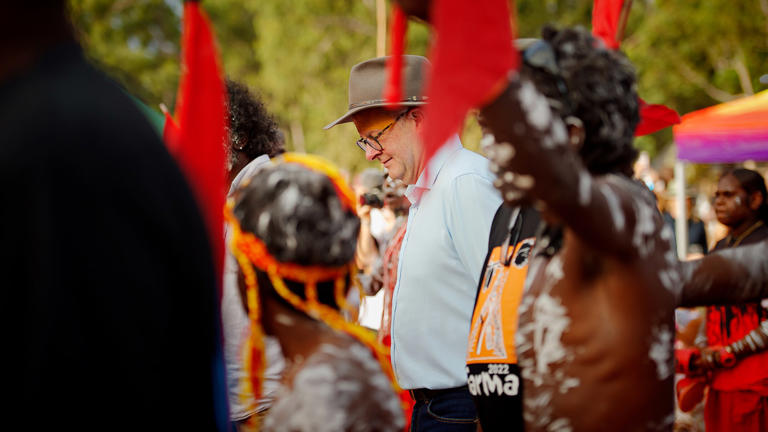
Analysis:After more than 200 years of waiting, Albanese puts forward a ‘simple’ proposition for an Indigenous Voice to Parliament
Posted Yesterday at 5:00am, updated Yesterday at 12:01pm
It is difficult to articulate the level of collective frustration and anxiety that has built up in Aboriginal and Torres Strait Islander Australia as government after government has kicked the can down the road — talking big but delivering little to empower First Australians in the Constitution.
Report after report, consultation after consultation, more talks, empty rhetoric, and policy paralysis has been the hallmark of Canberra. There’s been a cognitive dissonance — a lot of talk about the plight of the world’s oldest surviving culture but little, materially, to rectify it.
The last prime minister to come to the Garma Festival before Anthony Albanese’s arrival this weekend was Malcolm Turnbull, who broke hearts when he described a Voice to Parliament as a so-called “third chamber”. As a moderate Liberal prime minister, there was great hope that he would deliver.
Uluru Statement in focus at Garma Festival
There was also great hope that his successor, Scott Morrison, might have a change of heart — but that never came. He adopted rhetoric that sounded like something had changed; he wanted to do things “with” Indigenous people not “to” them. But he snubbed the most significant meeting of Black Australia, failing to show up to Garma and listen to Aboriginal voices on their existential angst about their culture, languages and law.
And it is existential. The Yolngu people worry about the maintenance of their culture, language and laws. Without a voice, they are worried that they will continue to go voiceless on their own country.
And so Indigenous leaders and communities have waited, enduring the pain of the pandemic and waiting — always waiting — to take their rightful place in the nation we call Australia. Their patience is unparalleled, their resilience remarkable.
A renewed hope
With Prime Minister Anthony Albanese’s attendance at Garma, a great sense of elation that maybe, perhaps, something might be about to change has taken hold.
Hope is a powerful feeling. Respect from the highest elected office in the land has been left wanting.
Albanese, in his speech on Saturday, talked of more than 200 years of broken promises and betrayals, failures and false starts.
We have heard over and over from those fresh to the Opposition benches that the referendum lacks “detail”. And so the Prime Minister came to Garma seeking to partly answer that criticism and build momentum for a cause generations in the making.
The starting point, he says, is a recommendation to add three sentences to the Constitution:
1. There shall be a body, to be called the Aboriginal and Torres Strait Islander Voice.
2. The Aboriginal and Torres Strait Islander Voice may make representations to Parliament and the Executive Government on matters relating to Aboriginal and Torres Strait Islander Peoples.
3. The Parliament shall, subject to this Constitution, have power to make laws with respect to the composition, functions, powers and procedures of the Aboriginal and Torres Strait Islander Voice.
Simple.
He argues we should consider asking our fellow Australians something as simple as in a referendum:
“Do you support an alteration to the Constitution that establishes an Aboriginal and Torres Strait Islander Voice?”
Patricia Giles AM Remembered
Today we remember Patricia Giles AM – a lifelong active and passionate advocate for community services, women’s rights, equality and justice.
Patricia Giles played an important role in founding the Perth branch of the Women’s Electoral Lobby in the early 70s. As a non-party political lobby group, they worked to create a society where women’s participation and potential are unrestricted, acknowledged and respected. She was also an executive member of the Health Education Council of Western Australia, the first woman to chair a committee on discrimination in employment and occupation, was on the first ACTU women’s committee, and argued before the WA Industrial Commission for maternity leave. Later as the President of the International Alliance of Women, Patricia Giles worked globally to advance women’s interests.
During her 12 years as an Australian Senator, she strongly supported the introduction of a refuge in her electorate, and therefore played a vital role in helping to get us up and running.
Throughout her life Patricia Giles always fought against inequality and discrimination in all its forms. We are proud to be named for her and always strive to reflect her commitment, her insight and her courage.
Women’s Electoral Lobby, Australia Just Cause Brand #equality#justice#respect

Archie Roach mourned

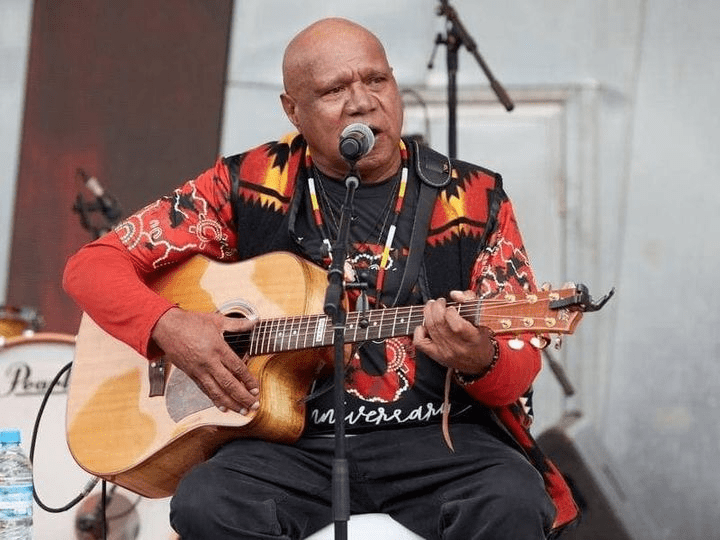
Archie Roach’s –
They Took The Children Away
We’ll give them what you can’t give
Teach them how to really live
Teach them how to live they said
Humiliated them instead
Taught them that and taught them this
And others taught them prejudice
The song won two ARIA awards and a Human Rights Achievement Award, and was later added to the National Film and Sound Archive of Australia.

Over the past couple of days I have been reading online, often through tears, the great outpouring of grief and gratitude from our communities as we learned of the death of Archie Roach. I cannot hope to meet the eloquence of people like Paul Grabowsky or Paul Donoughue in their written articles about him, but Archie and Ruby held a special place in my life, both as incisive but gentle storytellers of the horrific treatment of their people and themselves, and as colleagues.
In 1993 I was recording an album, and, with some trepidation, asked Archie and Ruby if they would sing backing vocals on my song “Sacred Ground”, a song of recognition of the war white culture waged (and still wages) against our Aboriginal and Torres Strait Islander peoples, but which expresses the hope that “together we can walk this sacred ground”. They said yes.
During the afternoon Ruby and Archie duly laid down their backing vocals, but what I remember most about that day is the stories they told me about their life experiences. Ruby told me how she had been playing in the street when the so inaptly called “welfare people” came to her home, and they had asked her if she wanted to see a circus and have some sweets. She said she thought that sounded good, and had willingly gone with them, only to become one of the thousands of Aboriginal children ripped from their families’ care, later to be known as the Stolen Generations. I asked her then if she would mind if I wrote a song based on her story, but not mentioning her name, and from a white person’s perspective, and she agreed. It took me another 10 years or so to write “Stolen Gems”, but I see her face every time I sing it.
Archie told me of his first morning at his foster parents’ home when he got out of bed, made its sheets with perfect hospital corners ready for inspection and stood at its end, waiting to be called to breakfast. He described the sadness on his foster mother’s face when she came to see why he hadn’t come to breakfast and told him that he didn’t have to make his bed to have it inspected before being called to breakfast at this house because it was his home. He never forgot that kindness and always spoke of his foster parents with great affection, later writing a song for each of them.
Archie was a gentle, powerful, unflinching advocate for his people who taught us all about where we have come from and who we are as a nation, often in songs that challenge us about our own part in this nation’s development. We have lost the man, and I am so sad about that, but we have not lost his spirit, nor his influence. I last saw him perform at the National Folk Festival in April, and came out of that concert feeling so privileged to have seen him for what felt then to have been the last time, so frail and yet so incredibly powerful and incisive in his message. He is worth every one of the tears now being shed for his loss, and his voice will stay with me all my days.
Bernard Collaery – Alliance Against Political Prosecutions success


Success after Labor won the 2022 federal election
ACT Supreme Court formally ends prosecution of Canberra lawyer Bernard Collaery
Posted Fri 8 Jul 2022 at 3:37pmFriday 8 Jul 2022 at 3:37pm, updated Fri 8 Jul 2022 at 3:38pmFriday 8 Jul 2022 at 3:38pm (edited here)
The prosecution of Canberra lawyer Bernard Collaery has now officially ended, with his legal team considering seeking costs for the case that has spanned four years.
- Justice David Mossop vacated the Supreme Court matters, including the trial
- Mr Collaery’s lawyers are considering whether to apply for costs
- Timor-Leste’s President says his government will “leave behind” what happened with Australia
The ACT Supreme Court formally ended the prosecution of Mr Collaery a day after federal Attorney-General Mark Dreyfus ordered the charges against him be dropped.
Mr Collaery was facing five charges, including that he conspired with an ex-spy and his former client, known as Witness K, to reveal details of an alleged spying operation in Timor-Leste during sensitive oil and gas treaty negotiations.
Witness K eventually pleaded guilty and was given a suspended sentence, but Mr Collaery has fought the case all the way and was to face trial in October.
Although the trial had never officially begun, the case racked up millions of dollars in legal costs, as the government sought to prevent Mr Collaery’s team from getting access to classified information he wanted for his defence.
But while the legal battle has been extremely complicated and shrouded in secrecy thanks to then-attorney-general Christian Porter invoking the National Security Act, the dispute was simply over whether Mr Collaery could have an open jury trial, or a prosecution held largely in secret.
His lawyers said the case had involved 10 separate hearings in the ACT Supreme Court, with 13 judgements.
That is now all over.
‘It closes a bitter chapter in our 20-year relationship’: Timor-Leste President
Throughout the case, Mr Collaery’s support has been significant, with Timor-Leste President José Ramos-Horta and former leader Xanana Gusmão set to be called as witnesses, along with former Labor foreign minister Gareth Evans.
Speaking to the ABC, Mr Ramos-Horta said the decision to drop the charges against Mr Collaery was “wise”.
“I’m very pleased, so are other leaders, with the decision by the Australian government,” he said.
Key points:
“What happened in the past, on the part of Australia, with the bugging of our offices, the spying on our government … we leave behind.”
Mr Ramos-Horta said there should be no more action against the authorities who initiated the bugging.
“Let bygones be bygones,” he said.
“We are determined to move forward, to expand the relationship with Australia – a very important neighbour and friend to Timor-Leste.”
“It closes a bitter chapter in our 20-year relationship since Timor-Leste became independent.

 Robin's Room