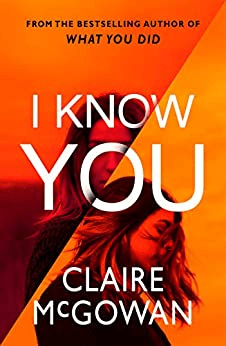
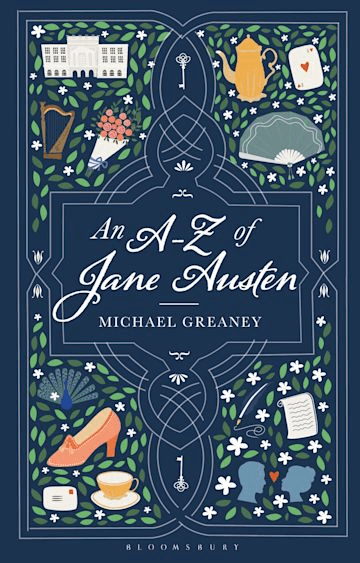
The reviews this week are Claire McGowan’s I Know You and the non-fiction, Michael Greaney’s An A-Z of Jane Austen.
Thank you, NetGalley for these uncorrected advance proofs for review.
Claire McGowan I Know You Thomas & Mercer, Seattle, 2021
I Know You has a large amount of wonderfully poignant material, a little bit of dross, some good plotting, characterisation and social commentary, and a story line that works reasonably well.
I found I Know You a good read, although I have some reservations. First to those reservations, which centre mainly around the main character. I found the almost constant reiteration of Casey’s plea that she was young, naïve, small, unable to cope somewhat tedious, even while I sympathised with her situation. Rachel’s misunderstanding the reason for Anna’s stress and demands was also difficult to believe and did not sit well with the way in which her character had been developed in the earlier part of her life. Books: Reviews
Michael Greaney An A-Z of Jane Austen Bloomsbury Academic, 2022.
What a delightful read!
An A-Z of Jane Austen is informative, fun and captivating, delivering an accessible and thoughtful approach to some of Jane Austen’s ideas. It provides a fine starting off point to debate about the meaning of so many of the features that appear time and again in Austen’s novels, shorter works in the Juvenilia, Love and Freindship, letters and unfinished work.
The book is arranged alphabetically, naming and developing one feature and referring to the works in which it appears. There is a brief analysis of the role, meaning and import of the feature. The wealth of examples raises questions, and sometimes answers, about the way in which Austen viewed seemingly simple aspects of her work. After all, what can a section on Horses tell us? And Risk? Kindness? Servant, Theatre, and Bath are familiar to Austen readers, along with Matchmaking and Visit. But X is for Xis? Z for ZigZag? Books: Reviews
Covid in Canberra weekly update
After two and a half years the ACT’s Public Health Emergency Declaration has been revoked.
The ACT has recorded 616 new cases, with 342 active cases. There are 55 patients with Covid in hospital, with one in ICU. One life has been lost this week.
Vaccination numbers are: 77.6% vaccinations, two doses, aged 5 to 15; 78.3% three doses aged 16+; 59.4% Winter doses – four doses aged 50+.

Wigmore Hall Concert
Sunday concerts at Wigmore Hall were a feature of our time in London. They were rather elegant affairs, with a glass of sherry afterwards in the ornate lobby.
The Monday concert we were able to attend was a less festive occasion, but also a lovely contribution to our holiday. The program was Christopher Pregardien tenor, originally with the pianist, Michael Gees. The latter had to be replaced at short notice and this involved some changes in a small part of the program. The program was Franz Schubert, Johannes Brahms, Gustave Mahler (slight changes to the songs here).
The written program provided as part of the ticket price was detailed and well worth keeping. The introduction by Michael Downes was informative, and interesting. The words to the pieces were provided in German and English. Wigmore Hall concerts are a wonderful way to enjoy an hour during the day and will remain a feature of our London trips. As well as lunch time concerts Wigmore Hall has a splendid New Year’s Eve concert, as well as programs on most evenings. Wigmore Hall is a short walk from the public transport in Oxford Street, or on this occasion for us a longer, but pleasant, walk from Paddington.


Cindy Lou eats out in London
Gail’s Regents Canal, Paddington
Gail’s is, like so many venues in London, a chain. However, despite the dreadful flat white served (only one place in London makes a decent flat white, and somehow cannot provide it in anything other than the small size) and indifferent latte, the food is very good indeed. Together with the lovely location on the canal, this makes Gail’s a pleasant place for breakfast, morning coffee or lunch.
There is seating inside and out, but on a chilly London morning we chose to be inside. There is a vast array of luscious looking cakes and pastries, including the rather magnificent chocolate bread. We chose savoury this time – baked eggs and rye toast, and avocado on rye with a side of smoked salmon. Booth meals were excellent – flavoursome, a reasonable portion, and served attractively.





Bonne Bouche, Praed Street Paddington
Bonne Bouche is another pastry filled venue – and a wonderful ‘standalone’ venue to have excellent coffee, and the choice of an abundance of delicious items, savoury and sweet. Next door is the bakery where all these morsels are baked and are sold for taking away.
I chose a lemon muffin, featured below, warmed and cut elegantly in the Bonne Bushe style.





British Labour Party Meeting Place

Labour meetings for Westminster were held here while we were living in London. They were interesting to attend, as was encouraging voters in this Tory constituency to vote Labour. The stalwarts who met there eventually won through and elected a Labour dominated Council.
Penny Wong – Senator for SA


Our Government is committed to embedding First Nations perspectives and experiences into our foreign policy.
We are at an early stage of this journey.
We will listen and learn.
It was inspiring to hear from friends from around the world, and discuss how we can build cooperation.
American Politics: House Passes Overhaul of Electoral Count, Moving to Avert Another Jan. 6 Crisis

By Carl Hulse
- Sept. 21, 2022
WASHINGTON — The House on Wednesday took the first major step to respond to the Jan. 6, 2021, assault on the Capitol, voting mostly along party lines to overhaul the 135-year-old Electoral Count Act, the law that former President Donald J. Trump tried to exploit that day to overturn his defeat.

Credit…Erin Schaff/The New York Times
The bill was the most significant legislative answer yet to the riot and the monthslong campaign by Mr. Trump and his allies to invalidate the 2020 presidential election, but it also underscored the lingering partisan divide over Jan. 6 and the former president’s continuing grip on his party.
It cleared a divided House, passing on a 229 to 203 vote. All but nine Republicans opposed the measure, wary of angering Mr. Trump and unwilling to back legislation co-written by Representative Liz Cheney, Republican of Wyoming and a leader of the House select committee investigating the events of Jan. 6 and what led to them.
The partisan division could complicate future negotiations with the Senate, which is moving ahead with its own bipartisan version of the legislation that differs from the House bill in some significant respects. Lawmakers now say they do not expect final approval before Congress returns for a lame-duck session after the Nov. 8 midterm elections.
The legislation is aimed at updating the law that governs Congress’s counting of the electoral votes cast by the states, the final step under the Constitution to confirm the results of a presidential election and historically a mostly ceremonial process. Democrats said that the aftermath of the 2020 election — in which Mr. Trump and his allies’ attempts to throw out legitimate electoral votes led to the violent disruption of the congressional count by his supporters on Jan. 6 — made clear that the statute needed to be changed.
“These are common-sense reforms that will preserve the rule of law for all elections moving forward,” said Representative Jim McGovern, Democrat of Massachusetts and chairman of the Rules Committee. “Time is running out before the next election.”
One key provision in the bill, which is also contained in the Senate proposal, would clarify that the role of the vice president, who by law presides over the counting of the ballots in his capacity as president of the Senate, is strictly ministerial. After the 2020 election, Mr. Trump and his advisers tried but failed to persuade Vice President Mike Pence to refuse to accept electoral votes from states where Trump was falsely claiming victory.
The measure also would raise the threshold substantially for Congress to consider an objection to a state’s electoral votes, requiring that at least one-third of the House and Senate sign on to such a challenge, up dramatically from the one member of each chamber that is now required. The Senate proposal has a lower threshold, requiring one-fifth of the House and Senate to agree.
Members of both parties have raised objections in recent elections, though none have been sustained by a majority of the House and Senate. The House bill would also more narrowly define the grounds for an objection to those with a defined constitutional basis.
“Ultimately, this bill is about protecting the will of the American voters, which is a principle that is beyond partisanship,” said Representative Zoe Lofgren, the California Democrat who leads the Administration Committee and introduced the measure with Ms. Cheney. “The bottom line is if you want to object to the vote, you’d better have your colleagues and the Constitution on your side.”
Passage of the bill comes as the Jan. 6 committee is wrapping up its work after a summer of high-profile hearings and preparing an extensive report, which is expected to include recommendations for how to confront the threats to democracy raised by the riot and Mr. Trump’s drive to overturn the election. Representative Bennie Thompson, Democrat of Mississippi and the chairman of the panel, said the next and likely final hearing would take place on Sept. 28.
“We have substantial footage of what occurred that we haven’t used; we’ve had significant witness testimony that we haven’t used,” Mr. Thompson said in an interview. “This is an opportunity to use some of that material.”
The legislation was also a direct response to Mr. Trump’s efforts to orchestrate the submission of fake slates of electors in states won by Joseph R. Biden Jr. It would require that states choose their electors under laws in place before the election, a provision intended to prevent states from reversing course if they do not like the result. And the bill would allow candidates to sue state officials if they failed to submit their electors or certified electors that did not match the election results.
It also would lay out the circumstances in which a federal judge could extend an election following a catastrophe and force election officials to count ballots or certify an election if they refused to do so.

Republicans said the legislation represented a renewed Democratic attempt to exert more federal control over elections that are usually the responsibility of state officials and courts.
Representative Tom Cole, Republican of Oklahoma, called it “another attempt to federalize elections at the expense of states.” Other Republicans accused Democrats of rushing the legislation to the floor without review by the appropriate committees or engaging Republicans.
They also accused Democrats of using the bill to take aim at Mr. Trump, portraying the legislation as an extension of the work of the special committee investigating Jan. 6, which most House Republicans denounce as a partisan exercise aimed at blaming Mr. Trump for the assault on the Capitol.
“This is nothing more than an attack on President Trump and the 2020 election, an attack on a man who has not been in office for nearly two years,” said Representative Guy Reschenthaler, Republican of Pennsylvania.
Lawmakers said the legislation’s close association with Ms. Cheney led House Republicans to abandon it in large numbers. Her aggressive criticism of Mr. Trump prompted Republicans to remove her from a party leadership position in May last year, and she lost her re-election primary last month.
But Ms. Cheney noted strong support for the measure from conservative jurists and analysts and called on Republicans to embrace it.
“If your aim is to prevent future efforts to steal elections, I would respectfully request that conservatives should support this bill,” she said on the House floor. “If instead your aim is to leave open the door for elections to be stolen in the future, you might decide not to support this or any other bill to address the Electoral Count Act.”
Leaders of the bipartisan group behind the Senate bill, which was made public in July, were surprised by the sudden House action on the legislation just days after it was introduced and after months with few details on how the House was proceeding. Backers of the Senate bill said the House approach could lead to more election lawsuits, a prospect that could increase Republican opposition. But they remained hopeful the bills could be reconciled.
“We can work together to try to bridge the considerable differences,” said Senator Susan Collins, Republican of Maine and one of the chief authors of the Senate bill. “But it would have been better if we had been consulted prior to the House sponsors deciding to drop their bill.”
The Senate Rules Committee is scheduled to consider that chamber’s version next week. Senator Amy Klobuchar, Democrat of Minnesota and the chairwoman of the panel, is preparing a new version that incorporates changes sought by election experts and other lawmakers in hopes of enhancing its chances of approval. The legislation so far has at least 10 Republican backers, meaning it could overcome a G.O.P. filibuster if all Democrats supported it.
Despite the differences, supporters of the legislation said it needed to become law.
“Failure is not an option,” said Representative Pete Aguilar of California, a member of the Democratic leadership and the Jan. 6 panel. “We’ve got to put a piece of reform on the president’s desk. We’ve got to protect democracy.”
Luke Broadwater contributed reporting.
Carl Hulse is chief Washington correspondent and a veteran of more than three decades of reporting in the capital. @hillhulse
Ken Burns The U.S. and the Holocaust,
| THURSDAY, SEPTEMBER 22, 2022 ∙ SUPPORTING SPONSOR: GENENTECH |
 |
| Russell BermanSTAFF WRITER |
P.S.
My wife and I are about halfway through Ken Burns’s new three-part documentary, The U.S. and the Holocaust, which concluded last night on PBS. We’re big fans of Burns, and although it feels icky to call any Holocaust film “enjoyable,” this one is very well done. (The familiar voice of Peter Coyote, a frequent narrator of Burns films, is as soothing a companion as always.)
The Holocaust is obviously not an overlooked historical event, and I have devoured countless books and films about it over the years. But Burns has still managed to unearth plenty of clips I’d never seen before, and his indictment of the U.S. response to the unfolding horror in Nazi Germany is quietly damning. As Dara Horn wrote in The Atlantic last week, Burns goes a little too easy on Franklin D. Roosevelt. His real aim, however, seems to be reminding viewers that America has always talked a bigger game about welcoming immigrants and refugees than it has actually played. That history clearly has relevance today, and it was never more apparent than during the 1930s and ’40s, when the desperate Jews of Europe looked to America and too often found its doors closed.
— Russell
Winchester Cathedral Jane Austen Memorial
Last week I wrote about our visit to Winchester Cathedral and this is the follow up about Jane Austen. I now have visited several of the sites associated with her. This one was particularly interesting, as because we constantly hear of Chawton and the Bath connections, Winchester hasn’t been one of the sites I have connected with Jane Austen.


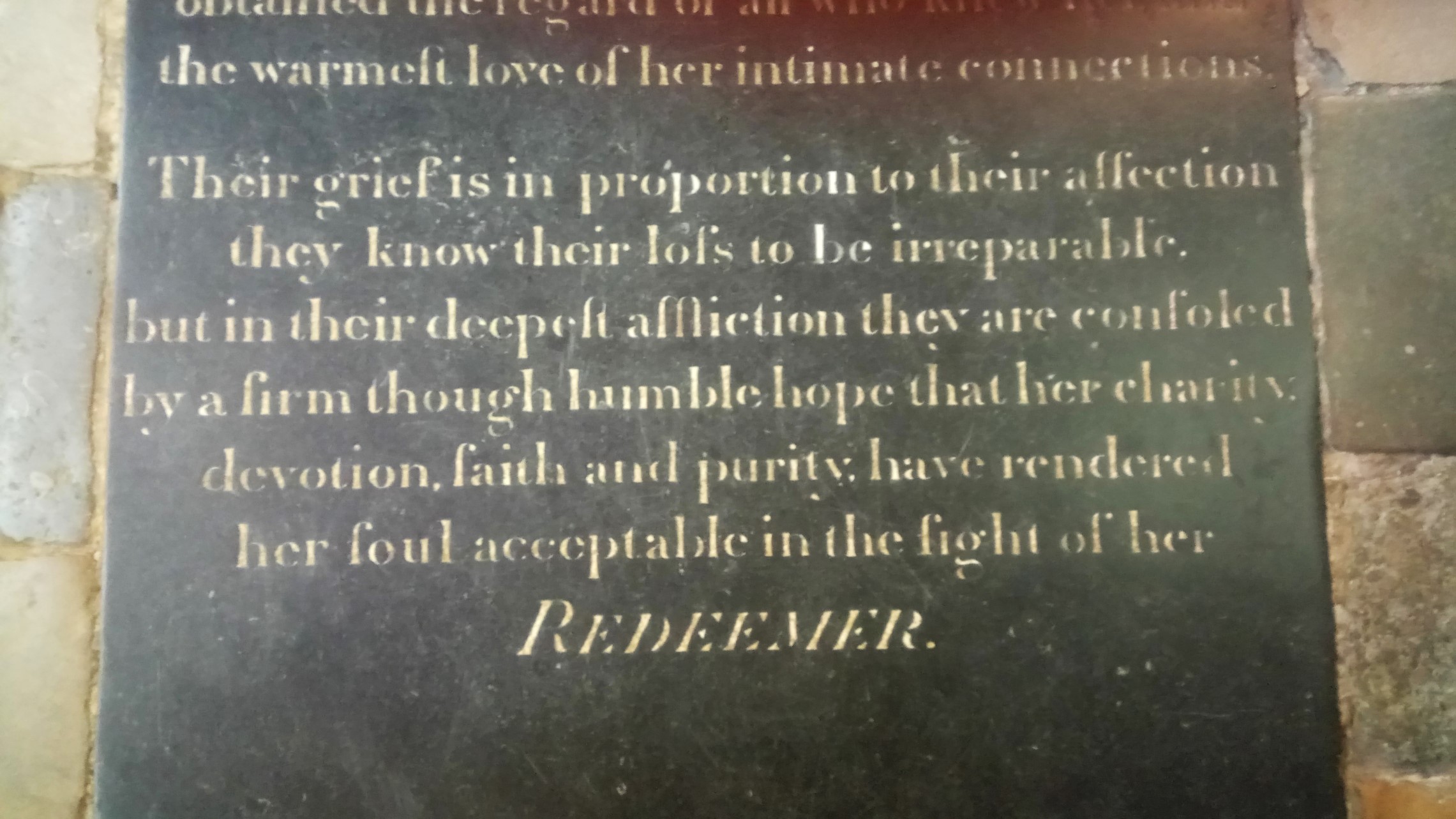
The Cathedral also featured a donation box for the Ukraine Humanitarian Appeal, and as mentioned last week, reference to a service for Queen Elizabeth 11.


Baz Luhrmann’s Elvis at Everyman Cinema Maida Vaile
This was such a find, after we were prevented from going to the Tate and Tate Modern because of the lengthy queues and tube turmoil associated with the viewing of Queen Elizabeth 11’s coffin, we had to find other activities well away from the centre of London. Maida Vaile is a very pleasant walk from Paddington. The Everyman Cinema was a bohemian reminder of the old Electric Shadows that gave us so much pleasure over so many years in Canberra.
Elvis was an excellent film. We were pleased to have been given the opportunity to do something different, particularly when the result was so fulfilling. There will be plenty of time to visit the Tate next time. The disgusting sundae pictured below was mine – caramel topping, honey comb and ice-cream – I couldn’t resist, and was pleased to have a long walk back to Paddington afterwards.




 Robin's Room