This week the books to be reviewed are Peter J. Leithart’s Jane Austen A Literary Celebrity and Marple: Twelve New Stories by Agatha Christie; Naomi Alderman; Leigh Bardugo; Alyssa Cole; Lucy Foley; Elly Griffiths; Natalie Haynes; Jean Kwok; Val McDermid; Karen M. McManus; Dreda Say Mitchell; Kate Mosse; Ruth Ware, HarperCollins Sep 2022. Both were provided to me by NetGalley as uncorrected proofs for review.
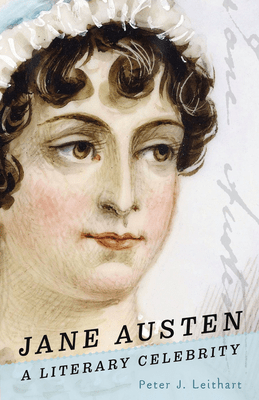
Peter J. Leithart Jane Austen A Literary Celebrity Nelson Books, Thomas Nelson Aug 2022.
Peter J. Leithart’s biography of Jane Austen is a charming story, replete with a feel for family and Jane’s place in it, as well as her ensuring that her contribution to the world is fully acknowledged. Leithart gives the public Jane Austen another persona when he refers to her as Jenny, the name by which she was known as a member of her close family. In most cases ‘Jenny’ is used well as it is tied to Jane Austen’s younger images. However, the motif works less well on occasions. Sometimes the link was not so well made, and the move between Jane and Jenny was frustrating. However, this is a small quibble with an otherwise comfortable and engrossing read. See Books: Reviews for complete review.

Marple: Twelve New Stories by Agatha Christie; Naomi Alderman; Leigh Bardugo; Alyssa Cole; Lucy Foley; Elly Griffiths; Natalie Haynes; Jean Kwok; Val McDermid; Karen M. McManus; Dreda Say Mitchell; Kate Mosse; Ruth Ware, HarperCollins Sep 2022.
Miss Marple has been dealt with extremely well by the writers in this collection. They have been helped by the selection of the Miss Marple story written by Agatha Christie with which the collection begins. The story presents a stronger Miss Marple, with less dithering and twittering than is apparent in the novels depicting this village detective. The writers have emulated this image, taking guidance from the short story, rather than reflecting upon the imagery in the novels. Together with this, some have given Miss Marple some strong views about antisemitic, classist and sexist behaviour. Here I feel that they are being kind to Agatha Christie whose writing sometimes includes all of these failures. However, the inclusion of more modern approach does not detract from the excellent characterisation of this appealing detective who uses her village analogies to great effect in unravelling mysteries. Books: Reviews
Covid in Canberra

From Friday 14th October 2022 people who have tested positive to Covid in the ACT are no longer required to isolate. ACT Health recommends that people with symptoms stay home, and people with symptoms are encouraged to minimise contact with others until the symptoms have disappeared.
On 14 October there were 657 new Covid cases, with 50 people in hospital with Covid and 2 in ICU.
Since March 2022 126 lives have been lost.
Articles which appear after the Canberra Covid Report: Trip to Perth with visits to Kings Park, UWA, Wireless Hill and Edicole; some Perth architecture; Cindy Lou eats out in Perth; Fran Kelly and Frankly – ageism; Carmen
Trip to Perth
Visiting Perth is always a delight, and this time the few days seemed to be packed with activities, including long, reasonably energetic walks. On my return to Canberra, and walking Leah, I realised that these were over for a while. Also, sitting in the warmth for a coffee will be put on the backburner. In the meantime, the Perth trip gave Leah a lot of running free on a farm, and me a lot of exercise to make up for the marvellous meals in various restaurants and sitting by the ocean eating fish and chips in Fremantle. I also have the opportunity to name drop, which is always a delight! I met Gordon D’Venables, author; Blake McMullan, YouTube chef; and lunched with a friend. Amongst her many attributes, she is the mother of Jody D’Arcy, photographer.
Kings Park Walk
This was a short walk, but nevertheless provided us with enough of the special flavour of Kings Park. The walk from the city up to the entrance was interesting – new buildings, old houses refurbished, and beautiful gardens. Our walk took us to the Memorial, several lookouts, and back past the amazing shop and new eating places. For an easier trip, use the CAT, the free bus service.
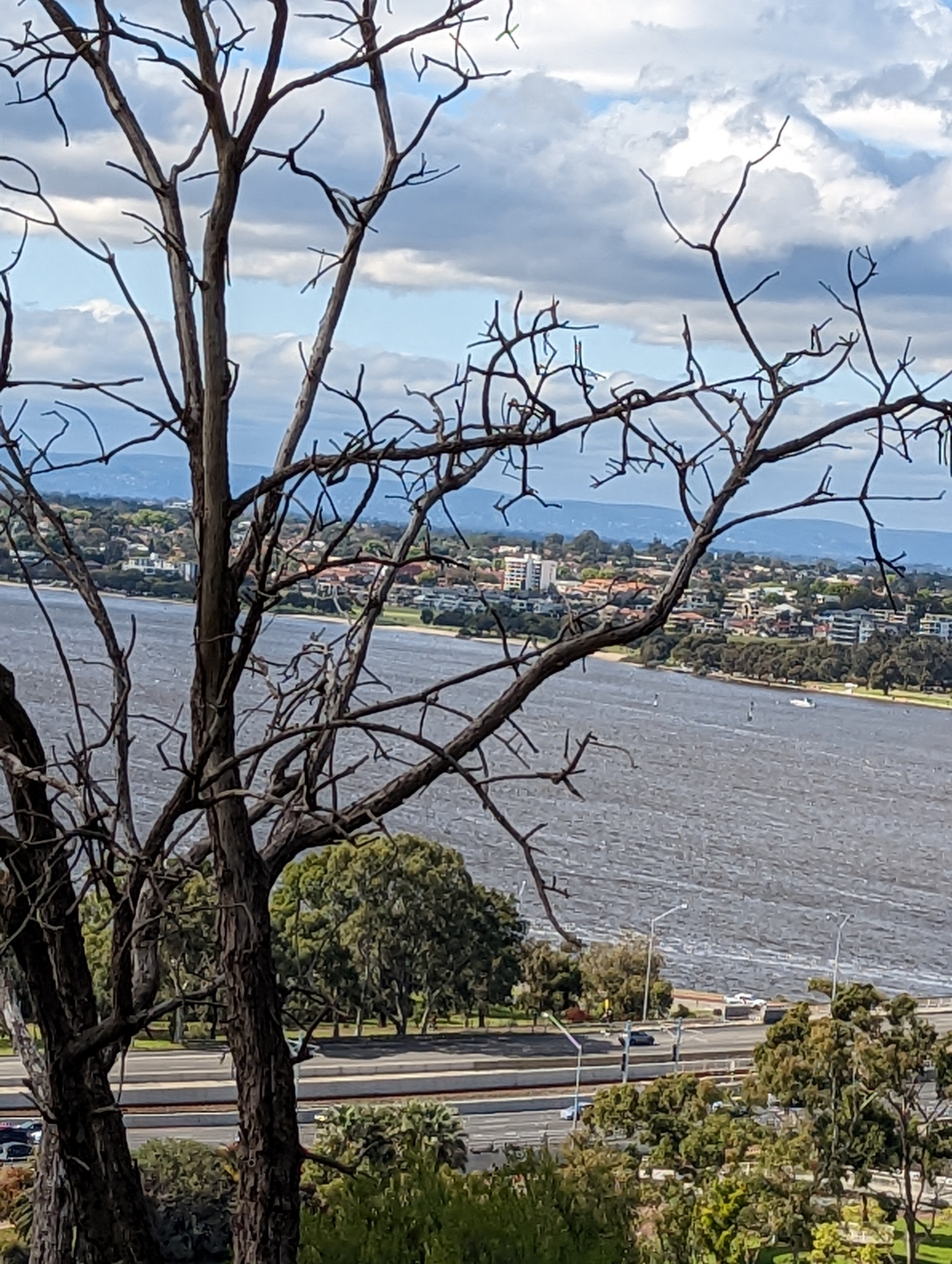

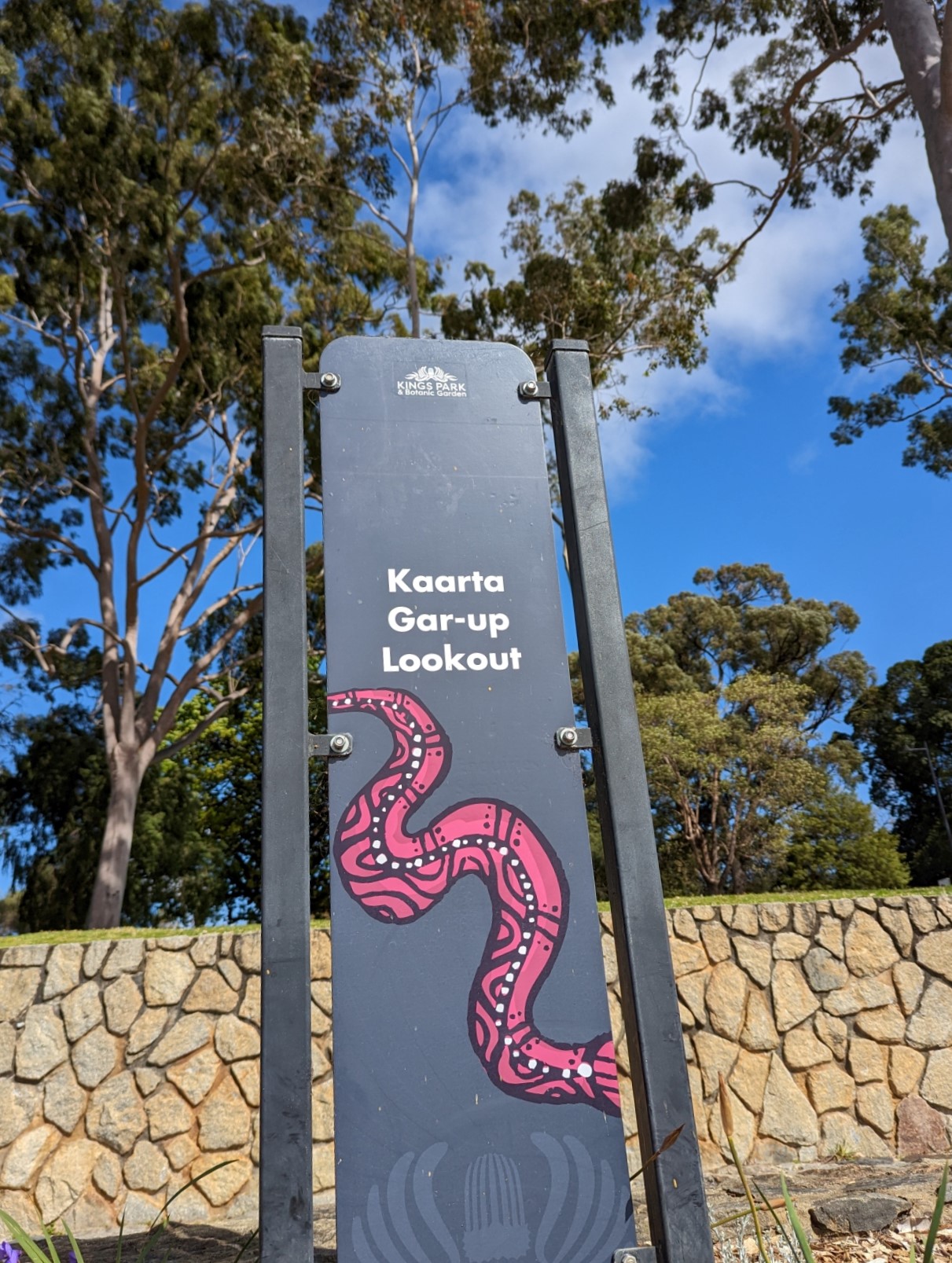
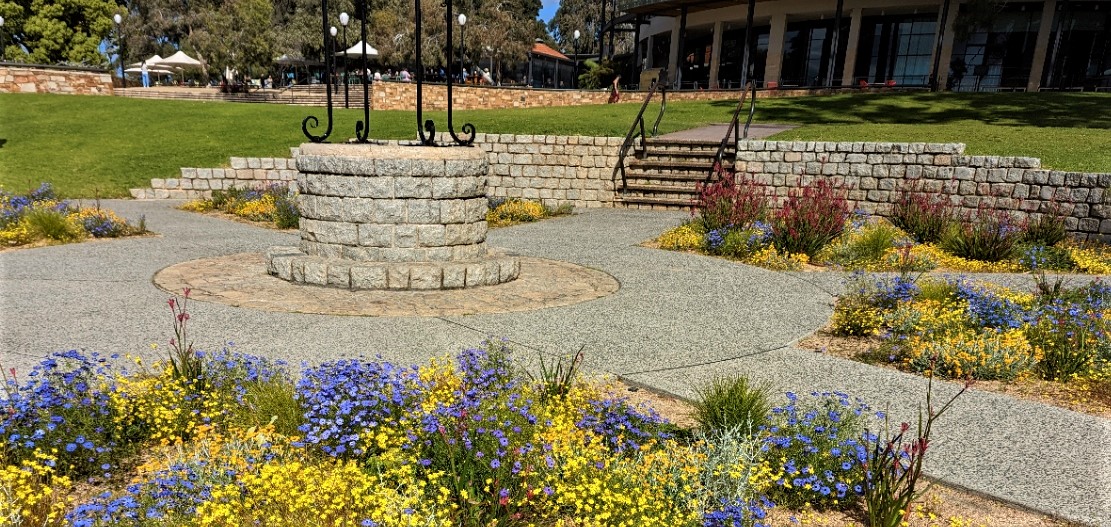
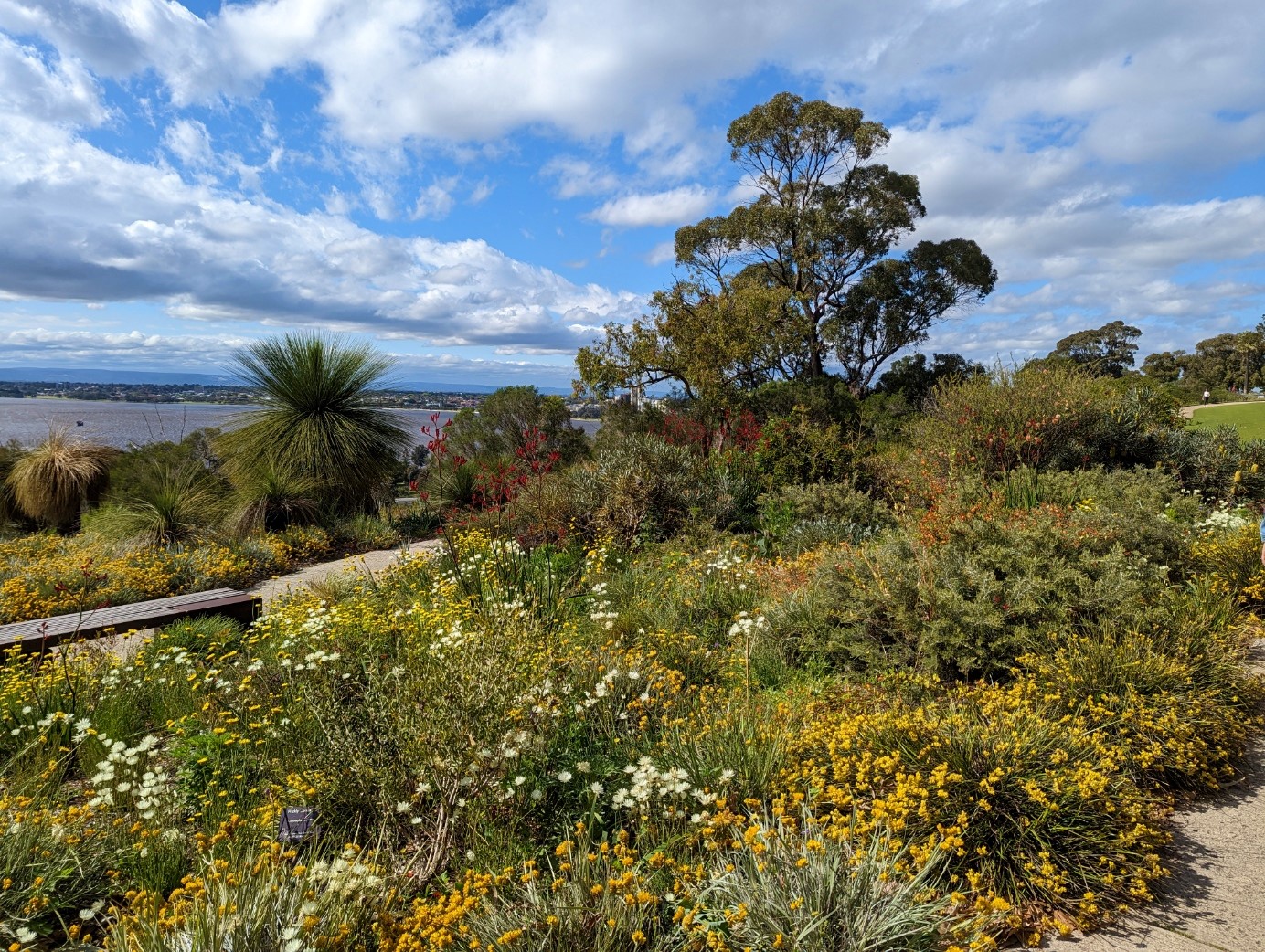
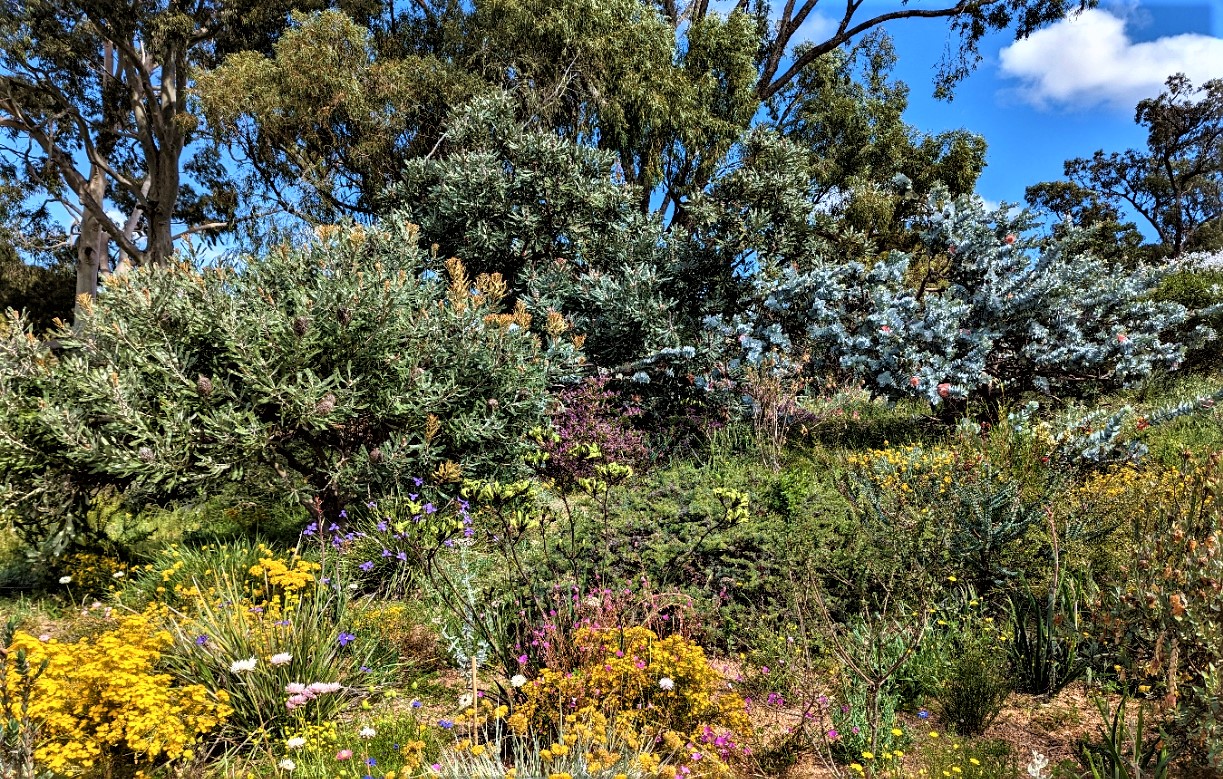
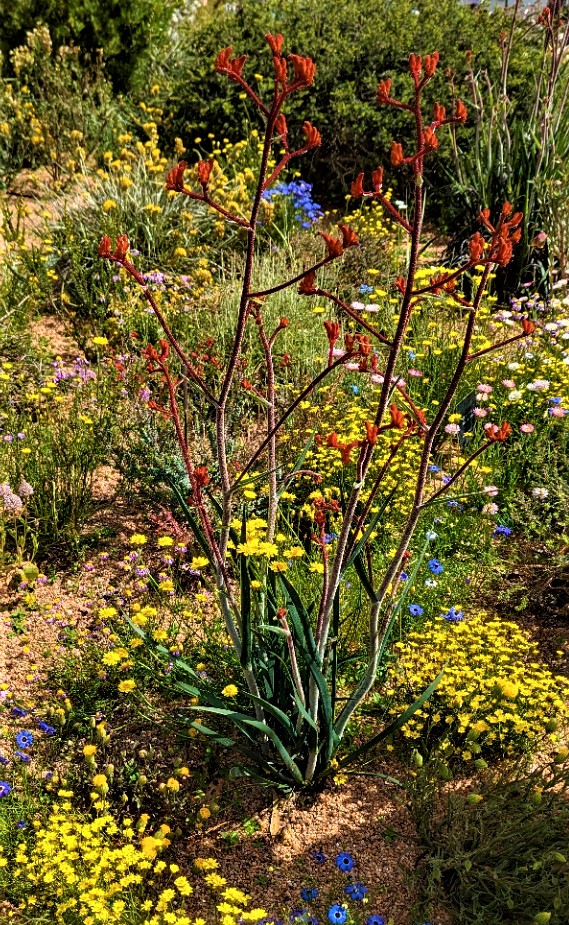
The gardens, even in the small section that we visited, are magnificent. We did not see the blue kangaroo paw, which I was told, flourishes in the park. However, there were the familiar red ones, and green, as well as the familiar leschenaultia, and less familiar abundance of varieties of bush foliage.

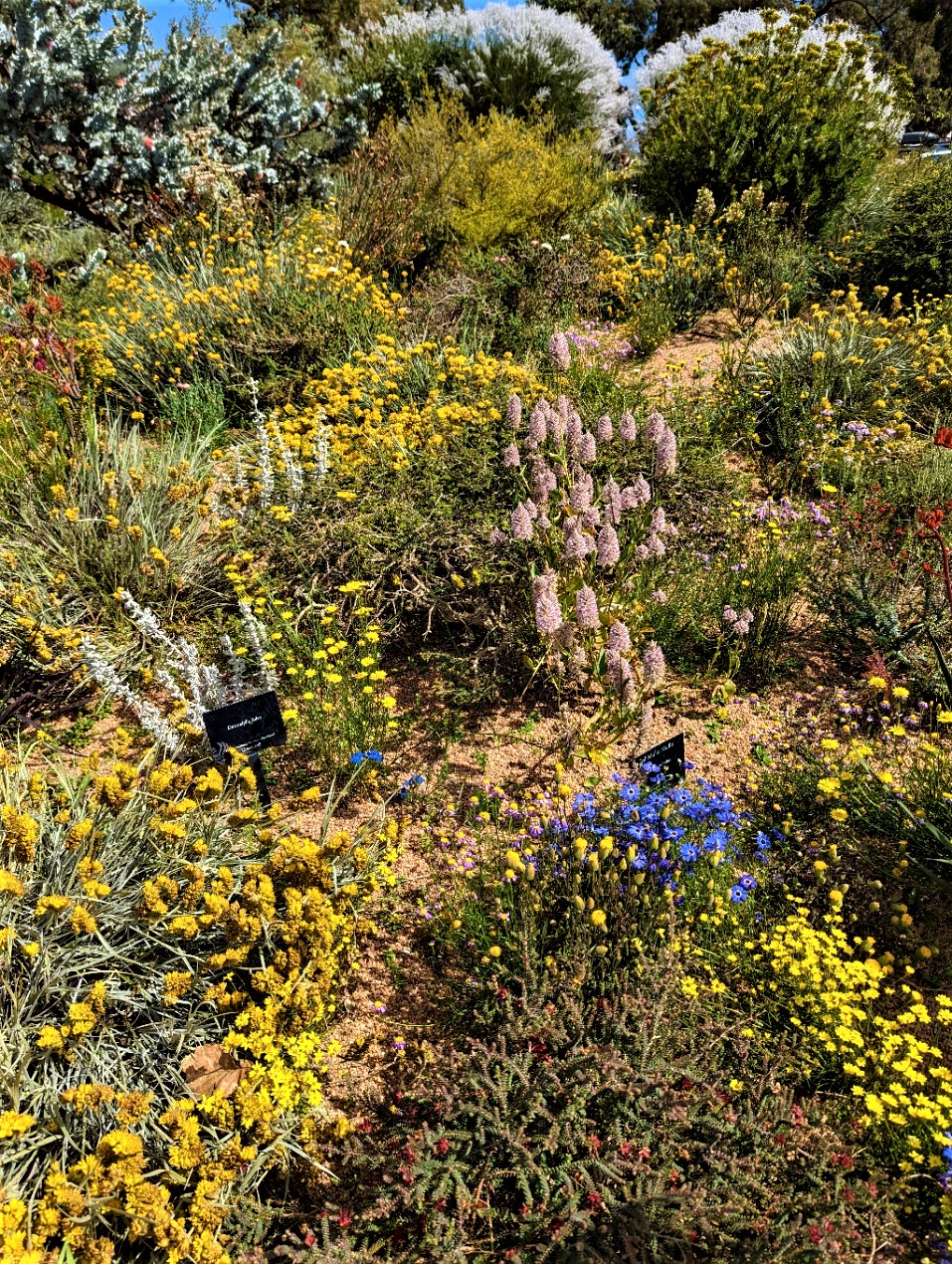
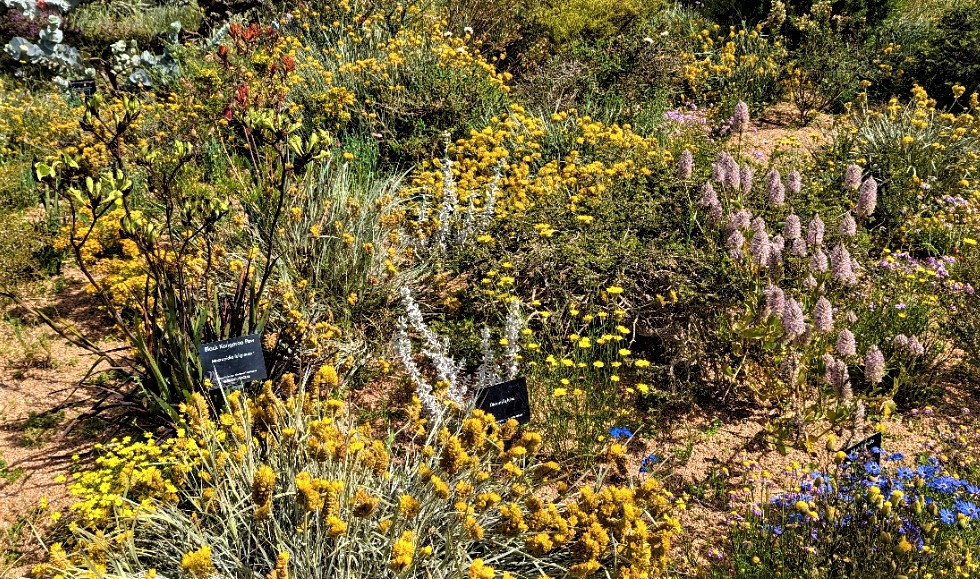



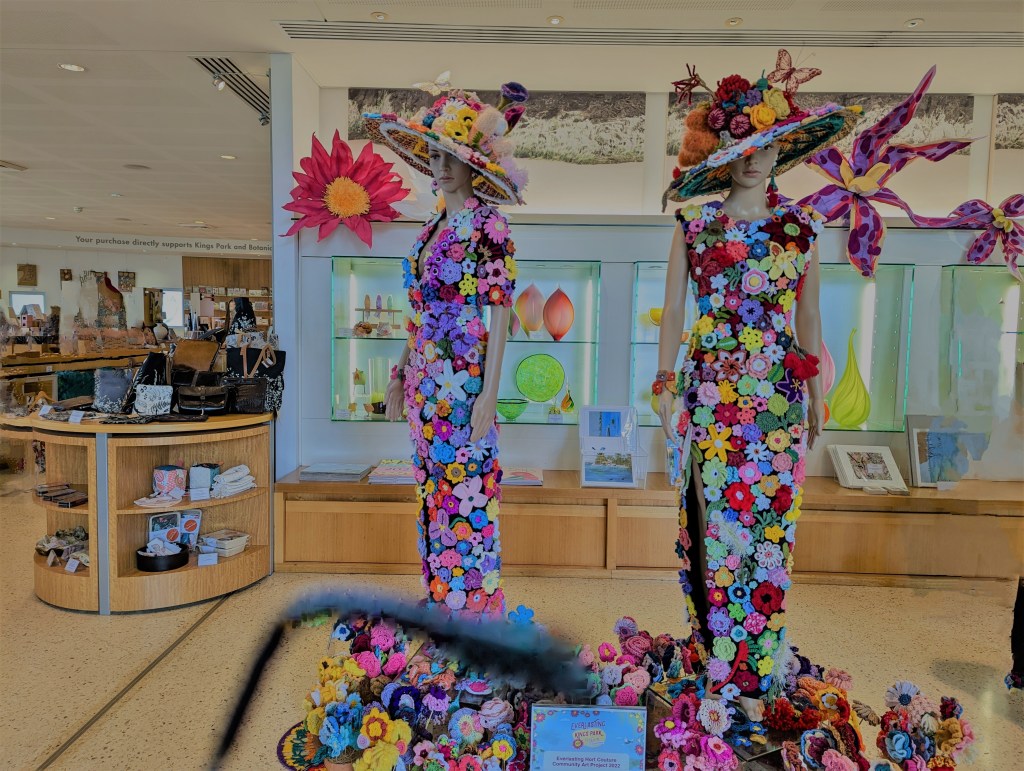
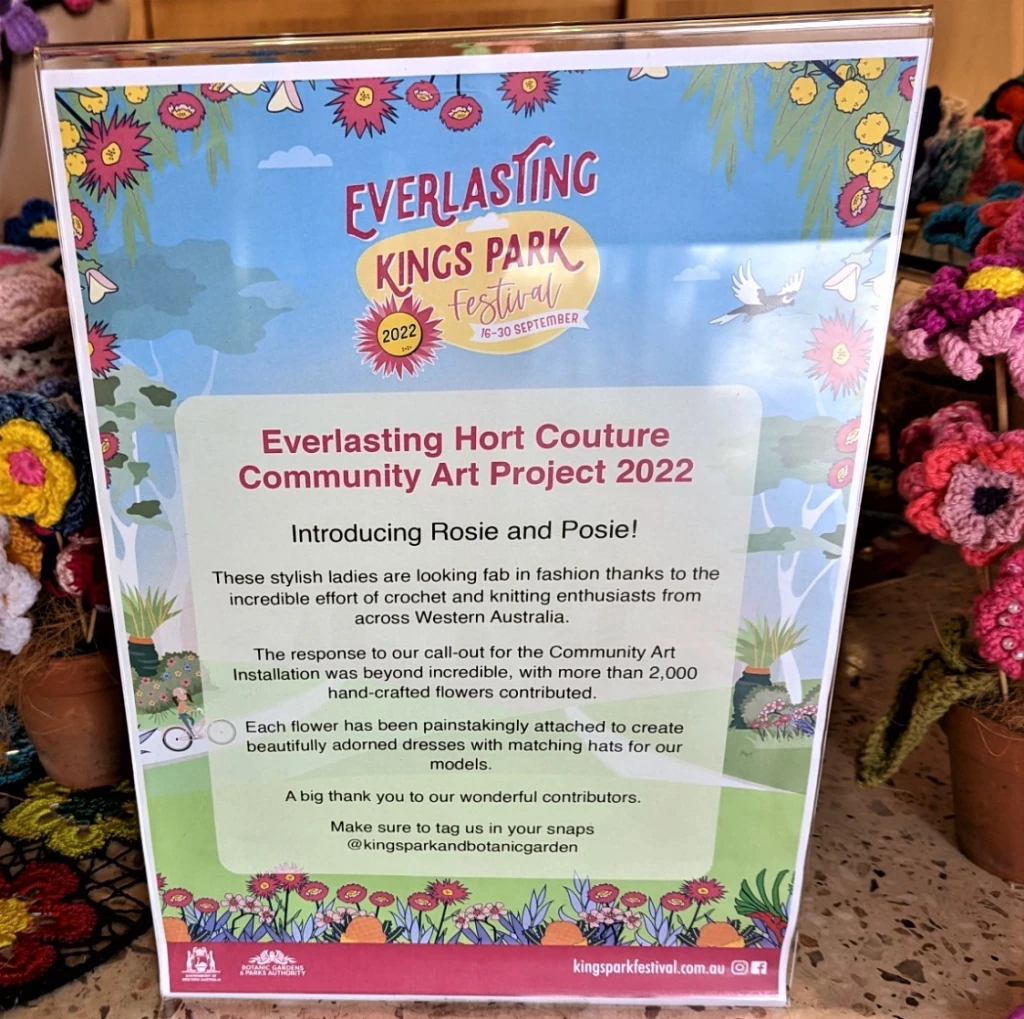
One of the most intriguing exhibitions at the shop was Rosie and Posie. There were also very tasteful glass and pottery items, as well as calendars and books.
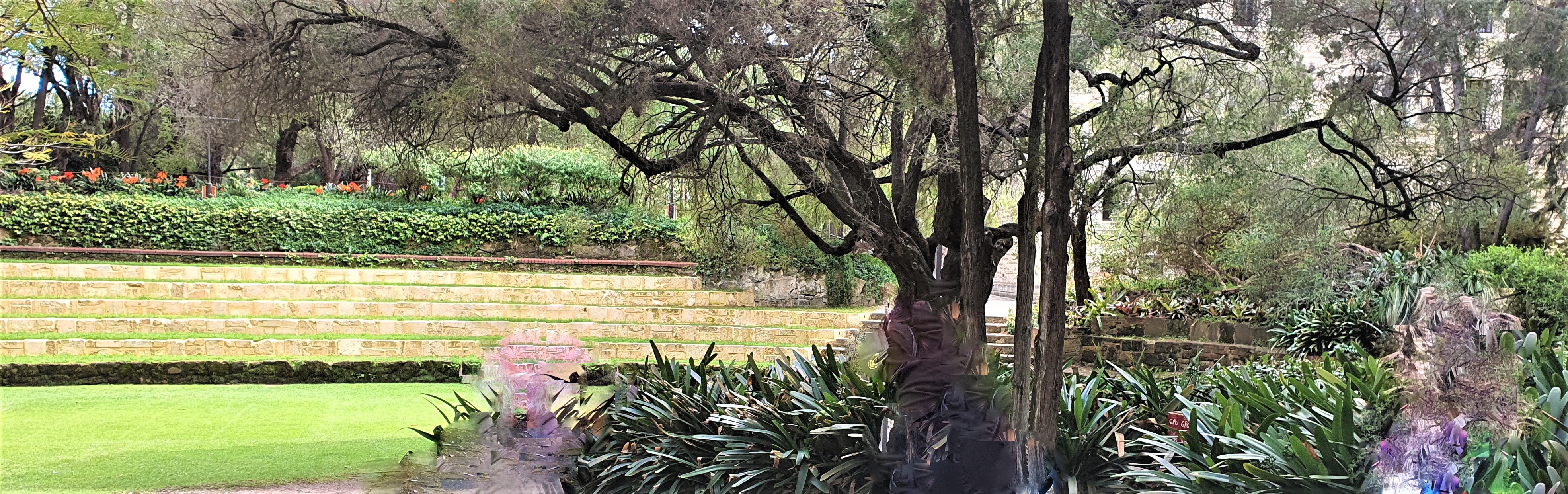
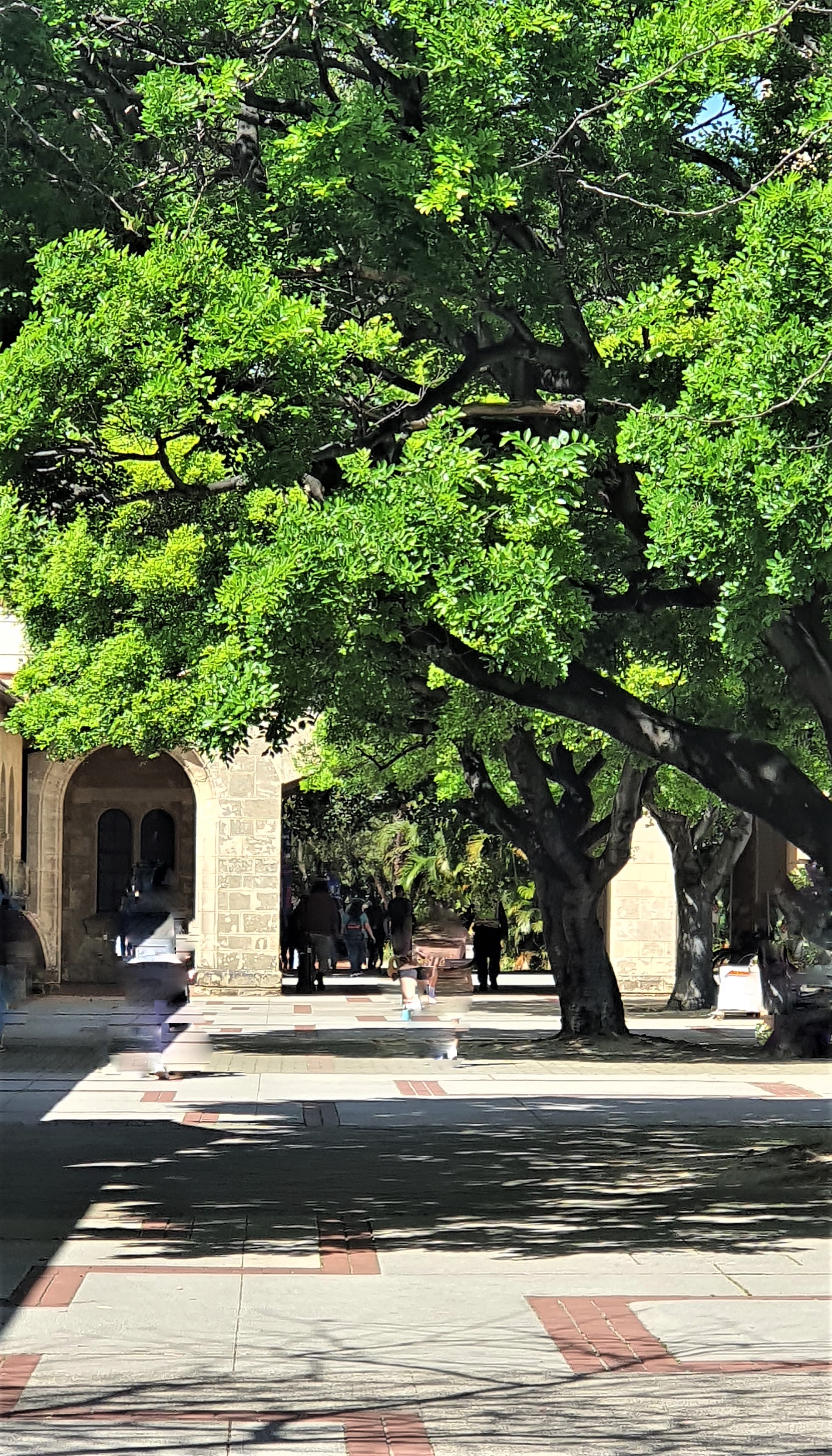
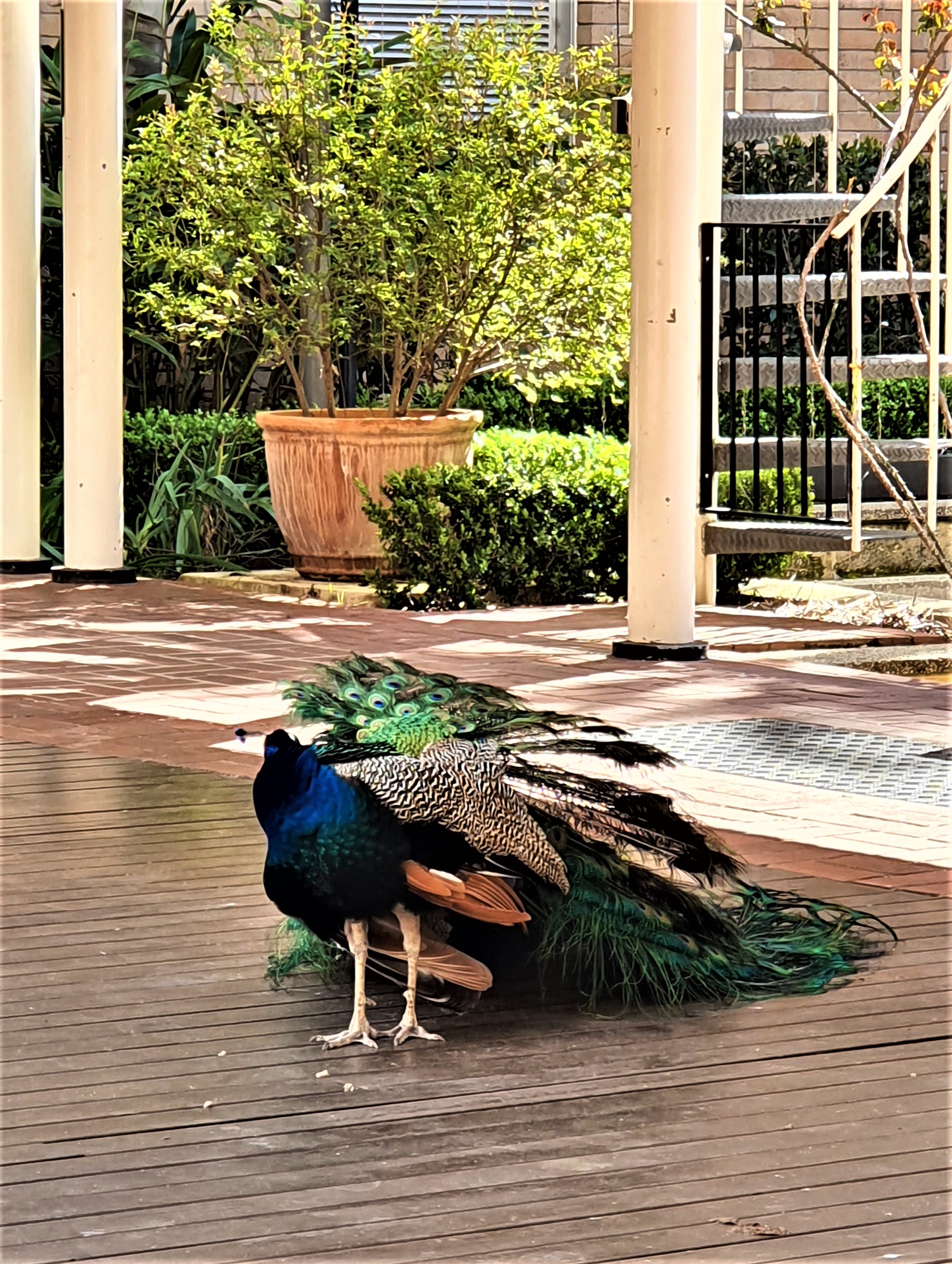
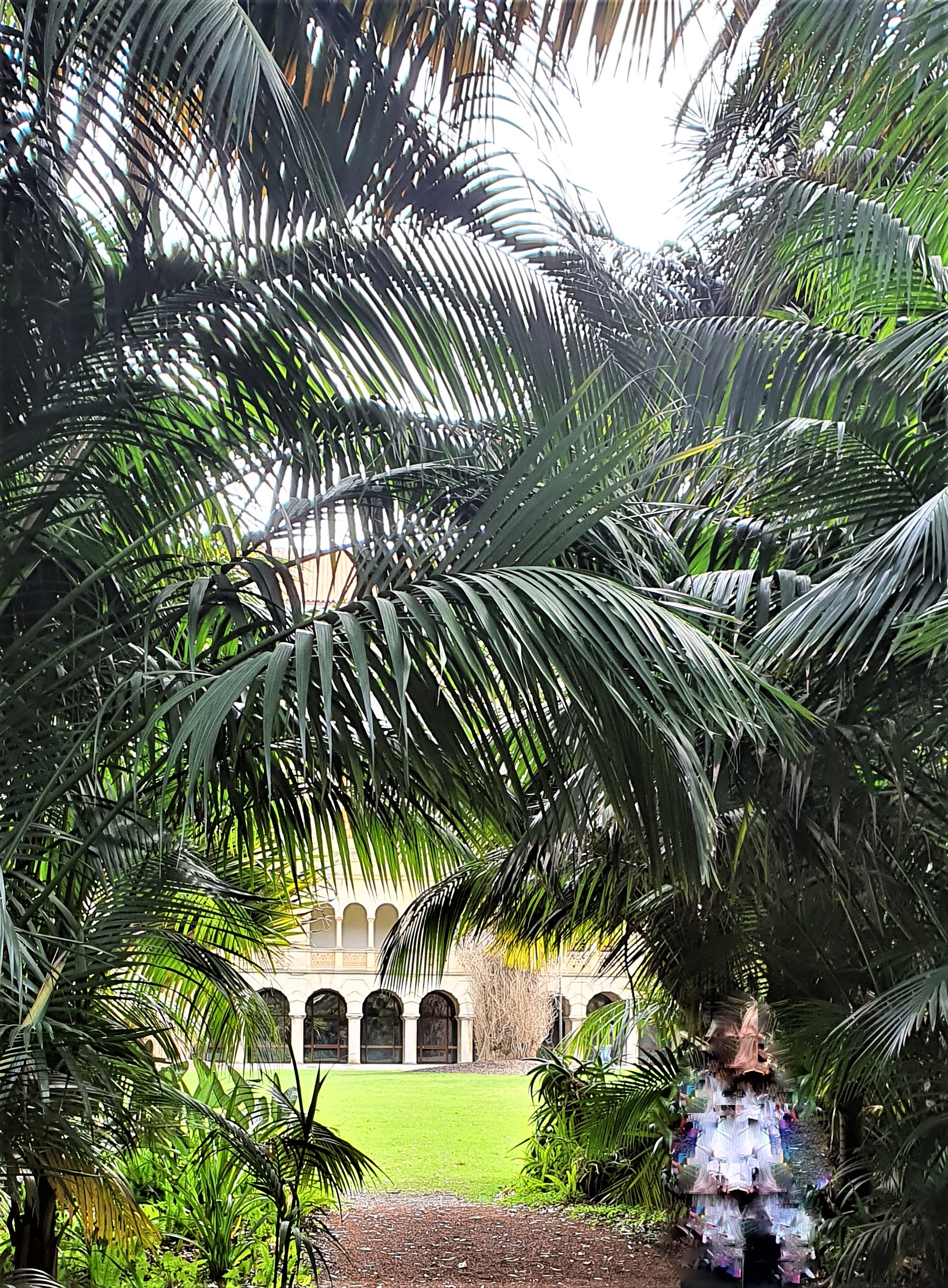
Short visit to UWA






A You Tube chef who cooked for our family gathering
Blake McMullan at: https://www.youtube.com/c/BlakeMcMullanCooking or https:www.youtube.com/watch?v=REVSdEPHe61
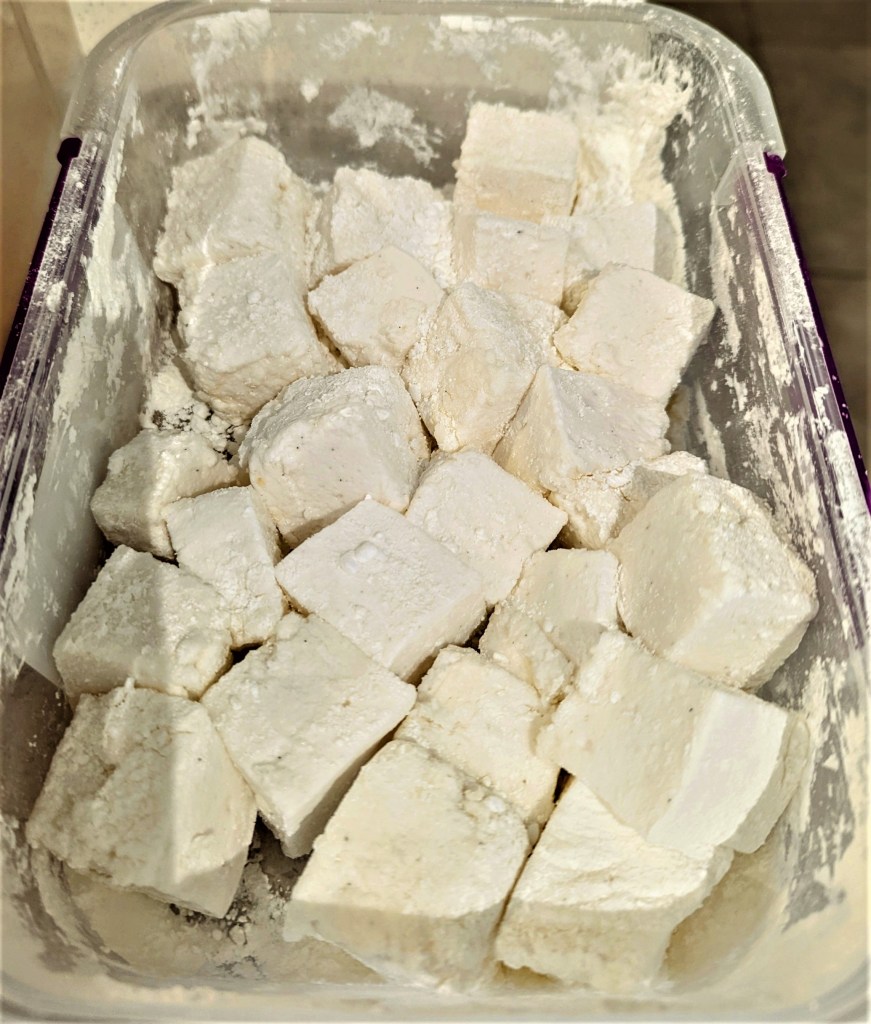
I was thrilled to be able to taste some of the recipes that I have followed on YouTube but have not got around to cooking. The marshmallows were particularly amazing. They are far fluffier, and less sweet, than the shop bought variety. Another positive feature – somehow two stick together (no more than two) meaning that one can have two when ostensibly diving into the dish for one.
The other offerings were savoury – a fried rice and even more attractive, a savoury Japanese Pancake. The pancake came out in elegant slices – no two for one with this recipe. However, it was so popular probably this was just as well.

Lunch with a friend with a great connection of both kinds-friendship and a link with a professional photographer
Jody D’Arcy – photographer whose work adorned my hotel room!
https://www.jodydarcy.com
A brush with celebrity was a day I spent with a friend from many years ago. Admiring the photographs on her walls, I found that her daughter, Jody D’arcy, is professional photographer – and that the Parmelia Hilton features her photographs. I was pleased to photograph the following that was on the wall of my room there and found more examples on Jody’s website. I shall have to stay in many different rooms so as to experience the real joy of the work.
Jody D’Arcy also has a site that describes her work. I regularly receive her beautifully designed magazine, Havenist.
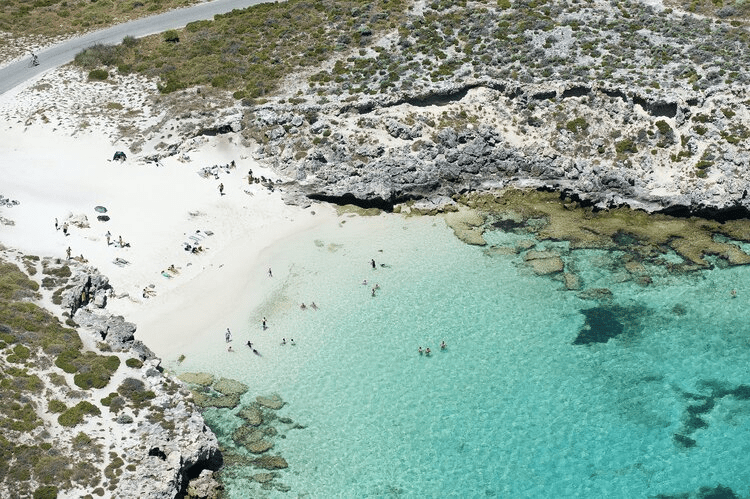

Cindy Lou eats out in Perth
Cicirello’s fish and chips – Fremantle
Public transport can get you to this hive of fish and chips outlets in Fremantle. The train from Perth to Fremantle is a picturesque run, as it passes the beaches at times, and a multitude of building – old and new. The Dingo Flour factory seems to have always been there on the Stirling Highway, and it is as prominent now as in the past. Alighting from the train, the Fremantle CAT is located nearby, and it loops through the Cappuccino strip, and down to the fish and chips area.
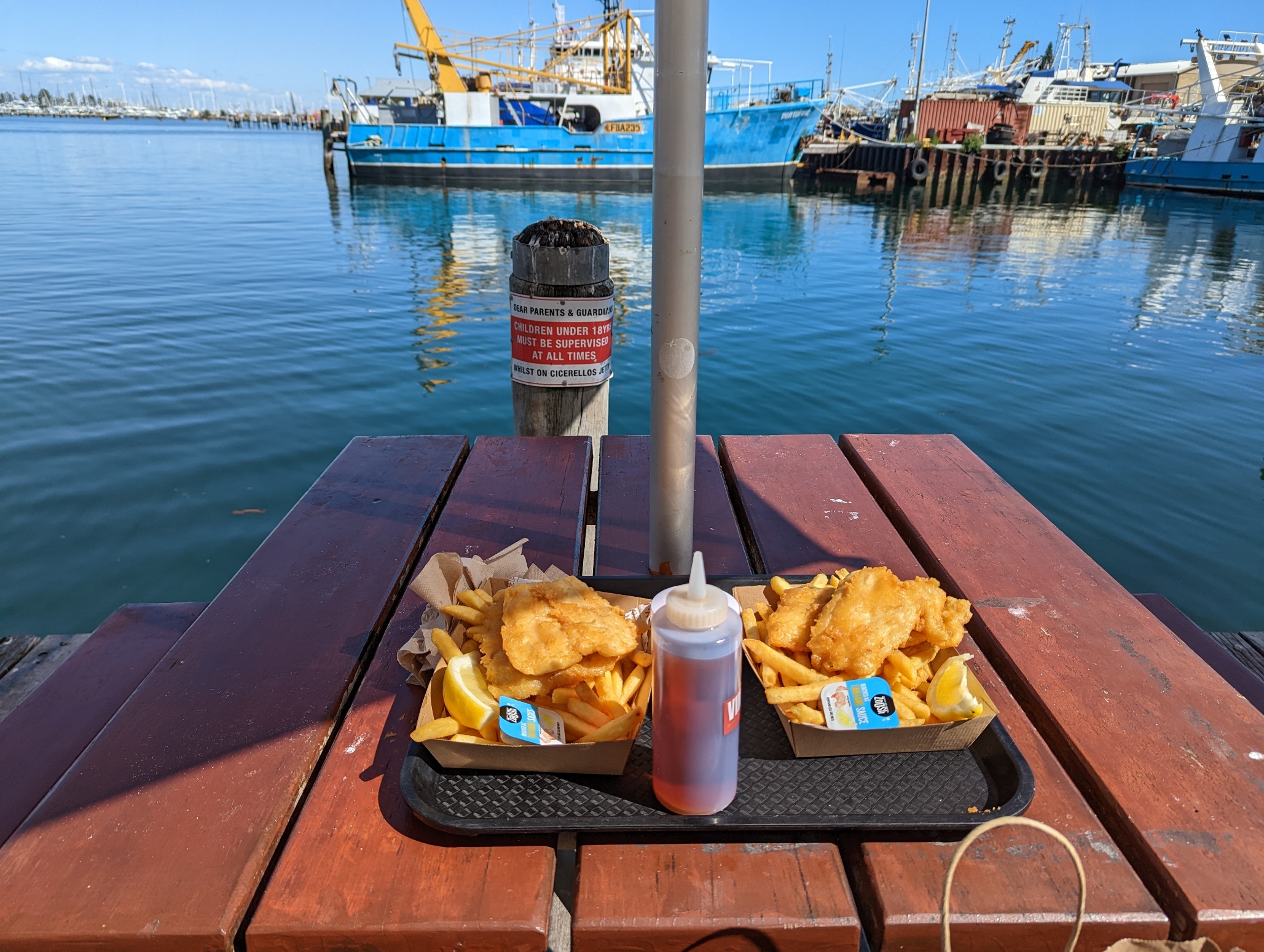


The portions are generous, and sauce, vinegar and salt are provided. Tap water is available also. The fish and chips were delicious – but the scenery was the real magnet.
8 Knots Tavern
Pizzas on the river at East Fremantle
This was a delightful place to eat – and we chose Monday when pizzas were only $18! They are succulent, with generous toppings, and served attractively – just covering the plate which lends itself to eating with fingers, although knives and forks are provided. We chose a vegetarian, one with prawns and a plainer pizza with extra toppings of olives and anchovies.


Mr Walker, South Perth
I have been to Mr Walker on previous trips to Perth and was pleased to be able to repeat the positive experience I have had on those occasions. With four people we were able to really indulge ourselves – particularly when it came to dessert.
The trip on the ferry is a delightful beginning.


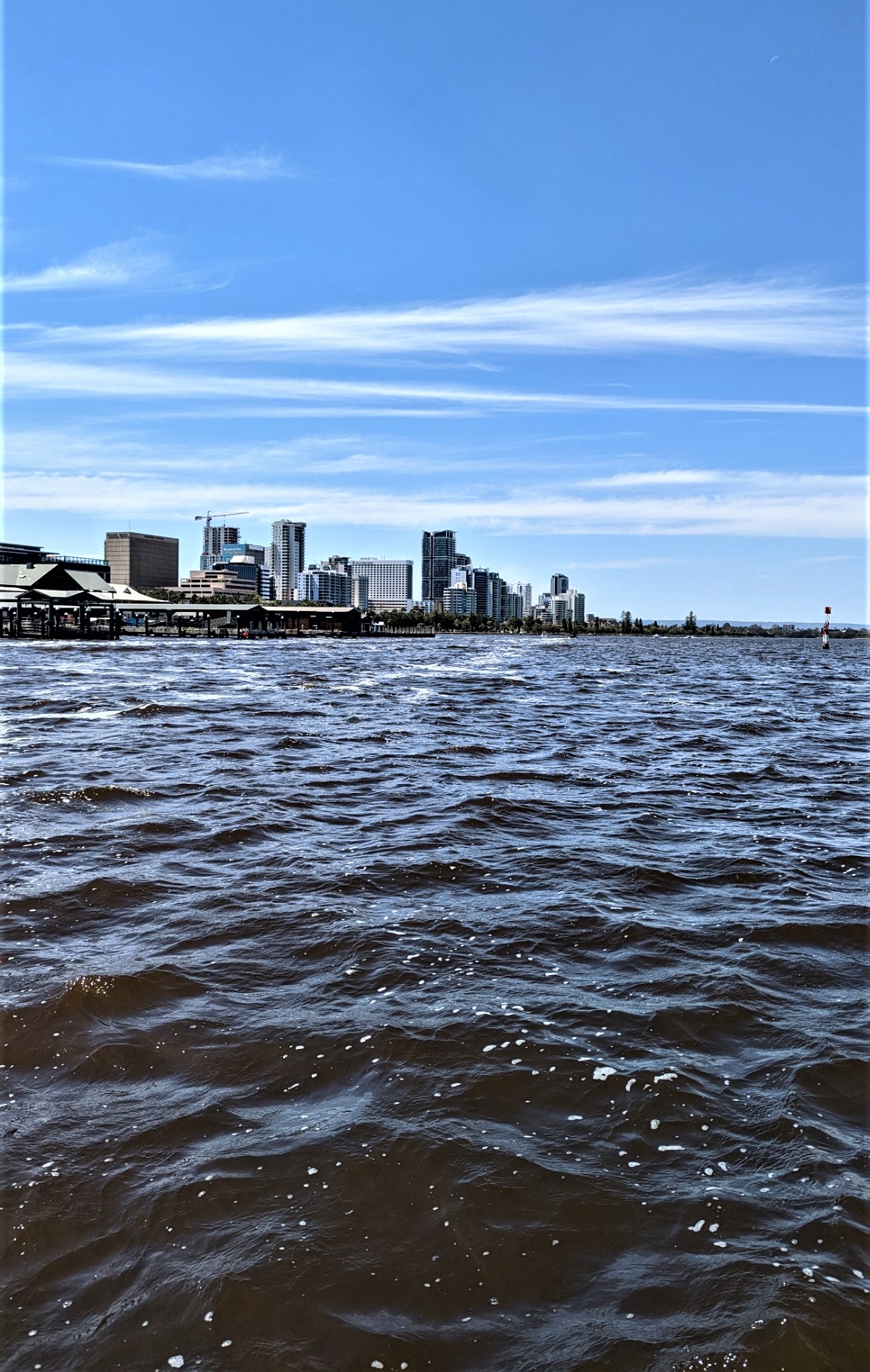
The food is not the only positive feature of Mr Walker. I had to change the booking, and this was done with the minimum of fuss, and a minor change of time to fit into the Saturday timetable. The service is friendly and well informed. As we were sharing plates this last was particularly useful, as we could rely on the waitperson to give us the information to choose just enough. He had nothing to do with the dessert but applauded our choice!
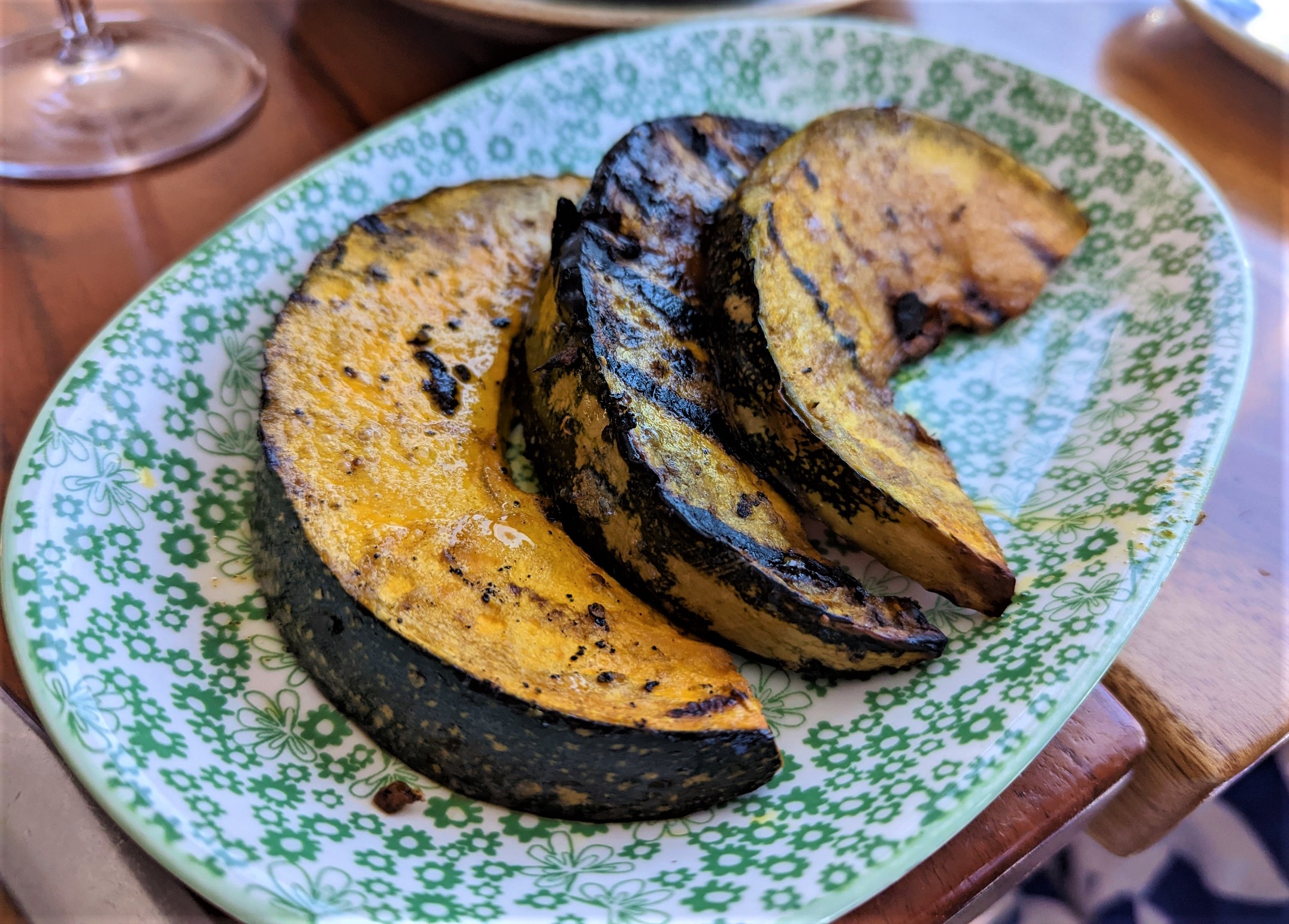
We chose garlic rolls, grilled prawns with lime and pepper, spiced grilled fish, pork scotch bites, smoked sirloin with red cabbage, honey glazed pumpkin, beans with garlic and chilli and …the Mr W Icecream Sundae for multiple guests. Everything else was so good that the spiced fish was a bit of a disappointment. The pumpkin was the standout for some of us. The prawns were large and succulent. Of the meat dishes, the smoked sirloin and cabbage was the star.


Samuels on Mill
Samuels is the restaurant in the Parmelia Hilton. We were fortunate to be staying there so could take advantage of having dinner in a lovely restaurant on the premises. Samuels really lived up to its reputation. The service is good, pleasant and efficient; the menu caters for many tastes; the meals are a suitable size, with generous entrees; and the wine list included a very nice sauvignon blanc, as well as a good champagne.
On the first occasion we dined with Gordon D’Venables whose new novel, Hunted, is soon to hit the bookshops. I discussed his first novel in a previous blog, and I certainly look forward to this one. Diane has been an avid proofreader as well as far more, in this enterprise, ensuring that the second novel will be a great success. We were pleased to celebrate with them.
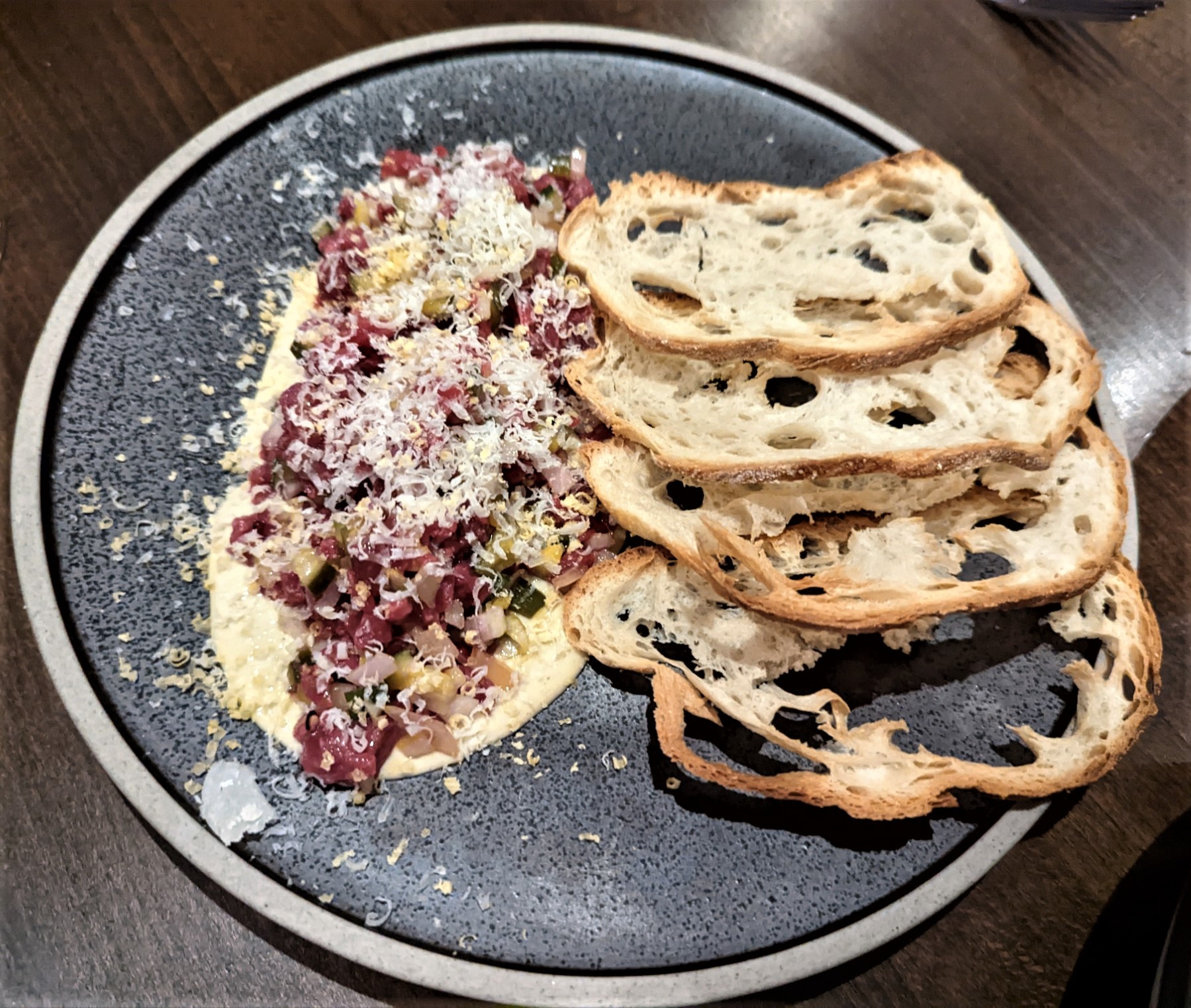
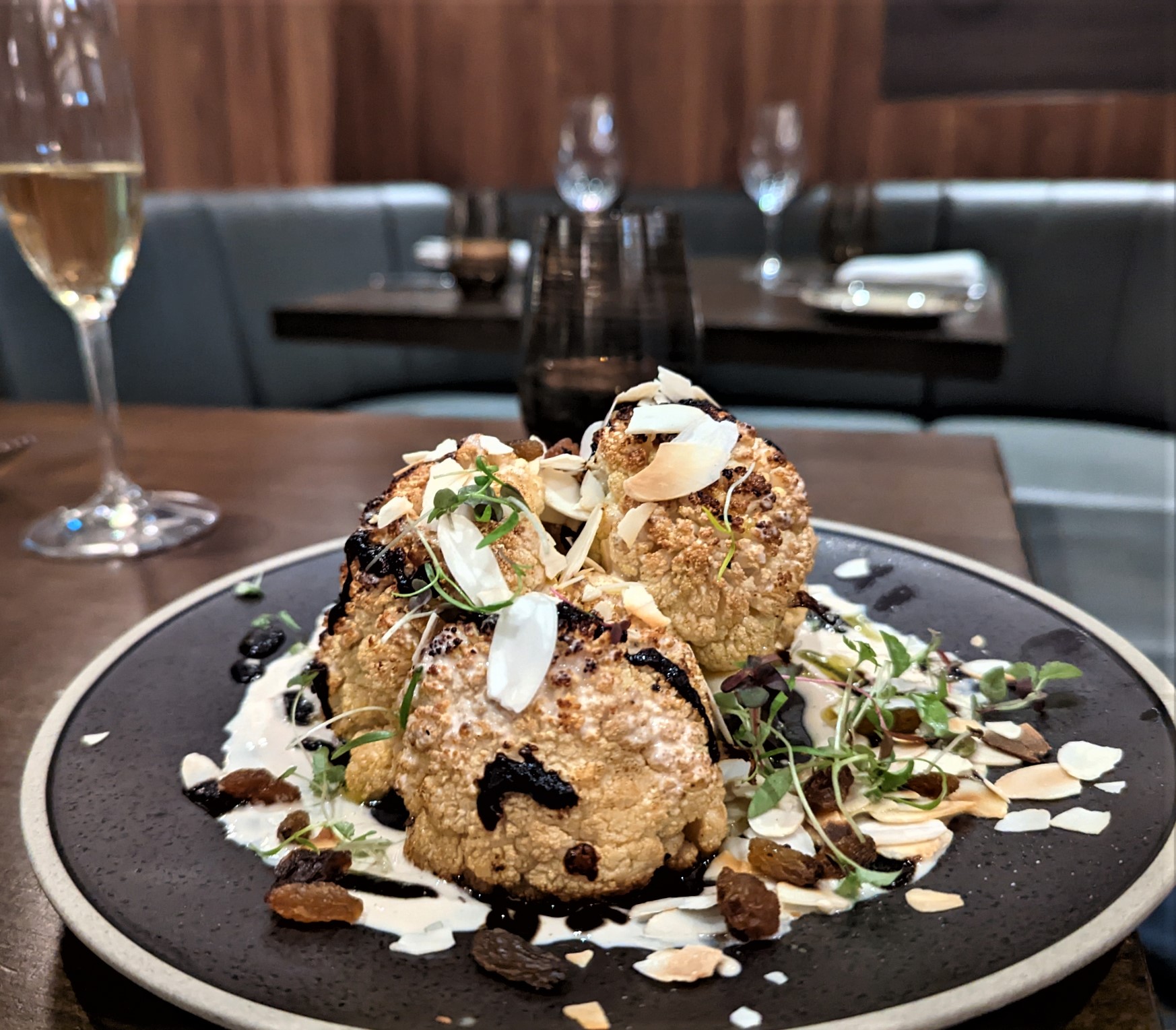
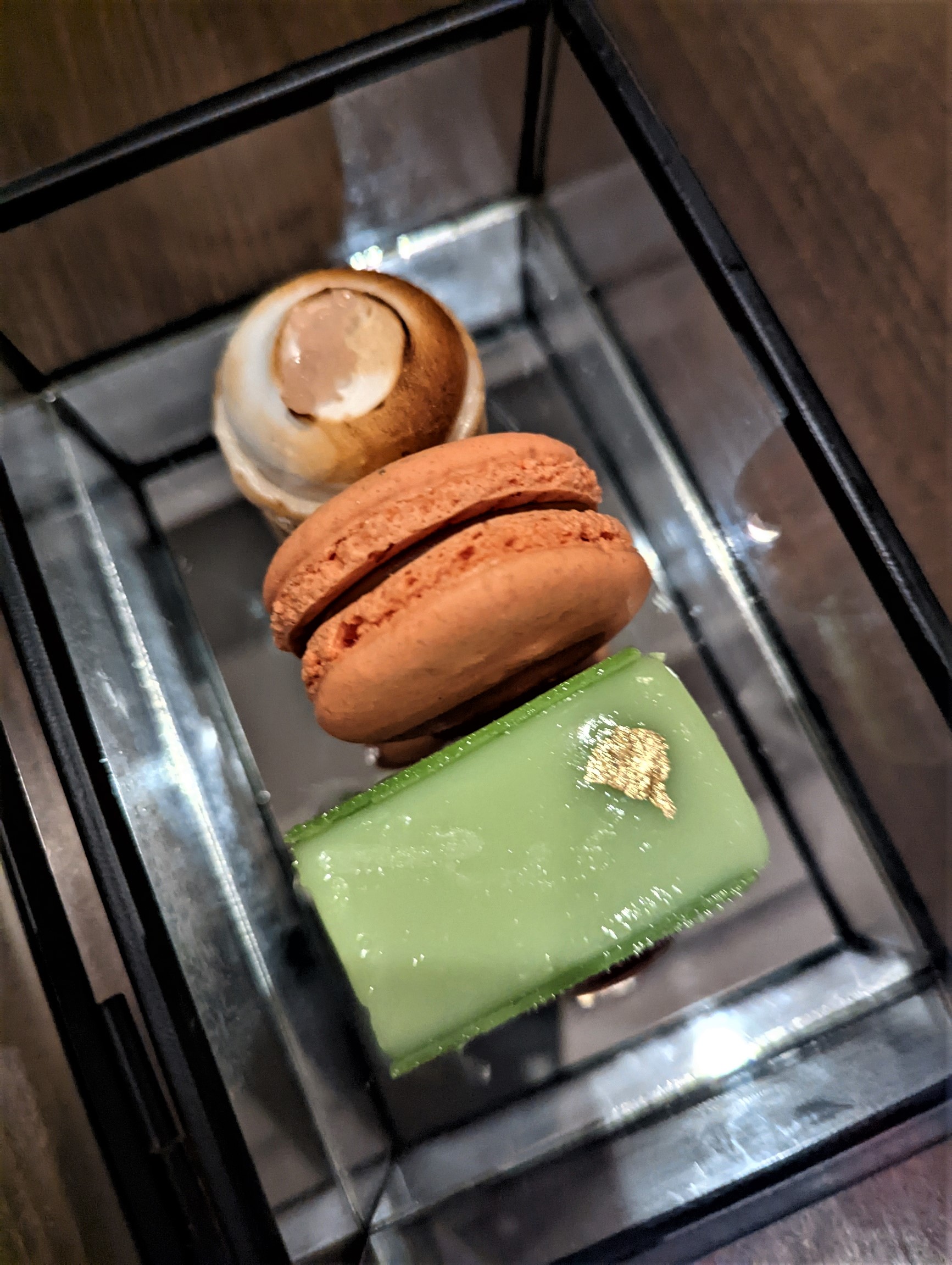
The food was, in general, very successful, although the roasted cauliflower needed a more generous serving of the delicious sauce. The salmon tataki was excellent. I enjoyed my chicken immensely, and everyone else was pleased with their choices. The dessert was a delight -two serves of petit fours for the four of us made a lovely end to the meal.
Entrees


Main courses


Dessert

Another night at Samuels on Mill
On another occasion four of us had a small meal of shared entrees and some of the mains from the bar menu. The Moutabel – spicy eggplant dip, olive oil, and rosemary bread was delicious. But the Fresh Mozzarella was the dish we wanted again. The marinated sundried tomatoes were amazing, served with a generous piece of mozzarella and olive and caramelised onion bread.
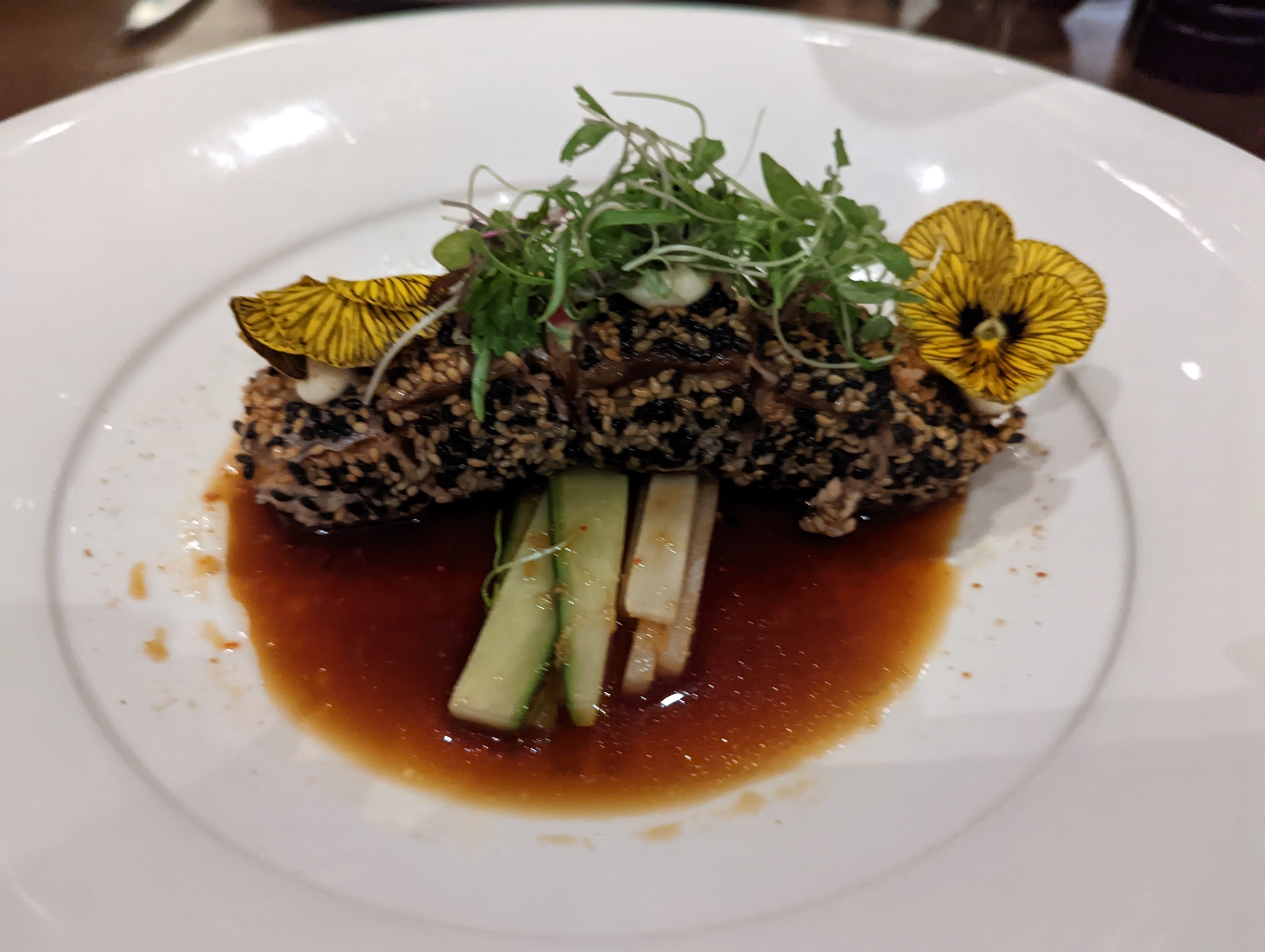


Some architecture observed on walking through Perth and suburbs

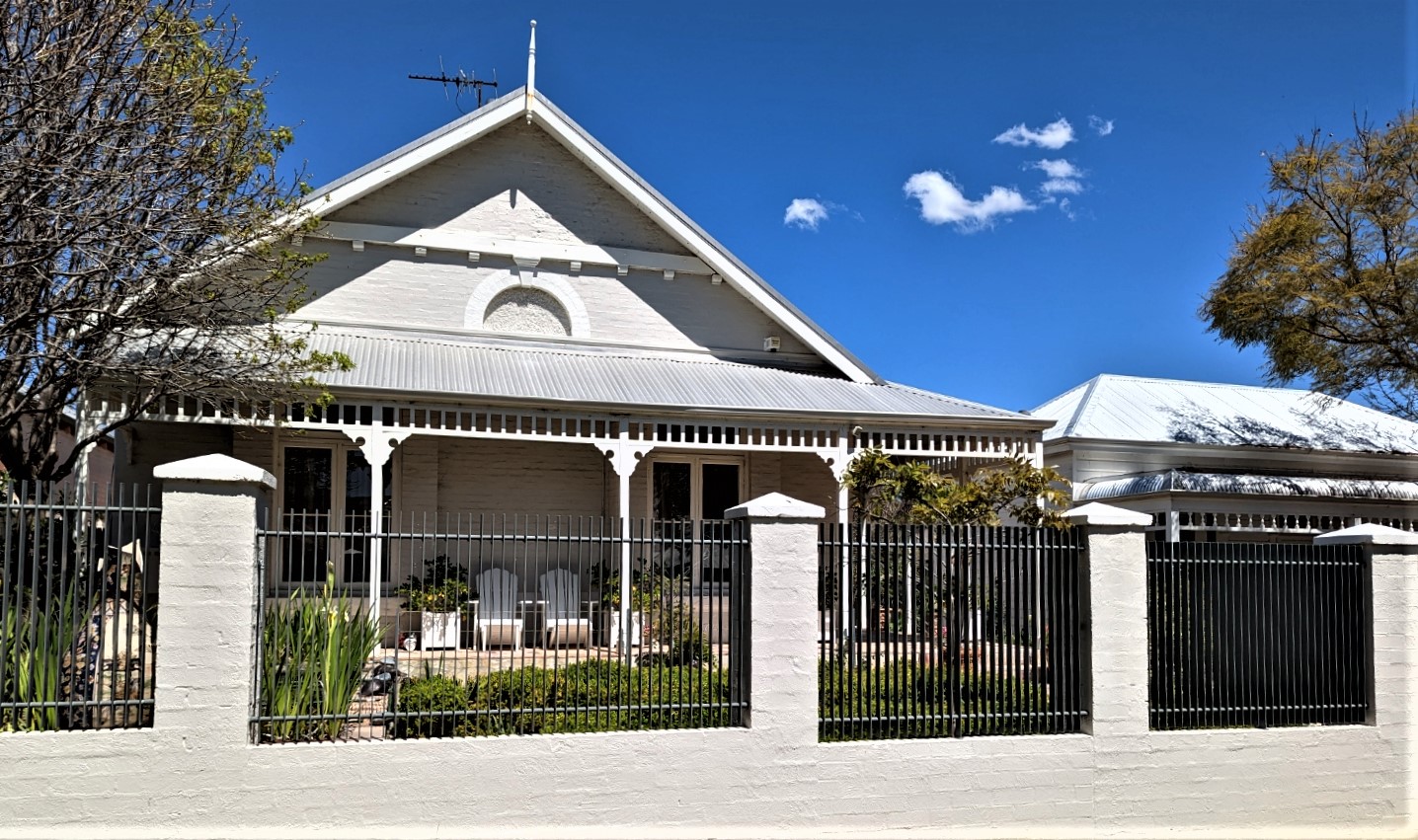


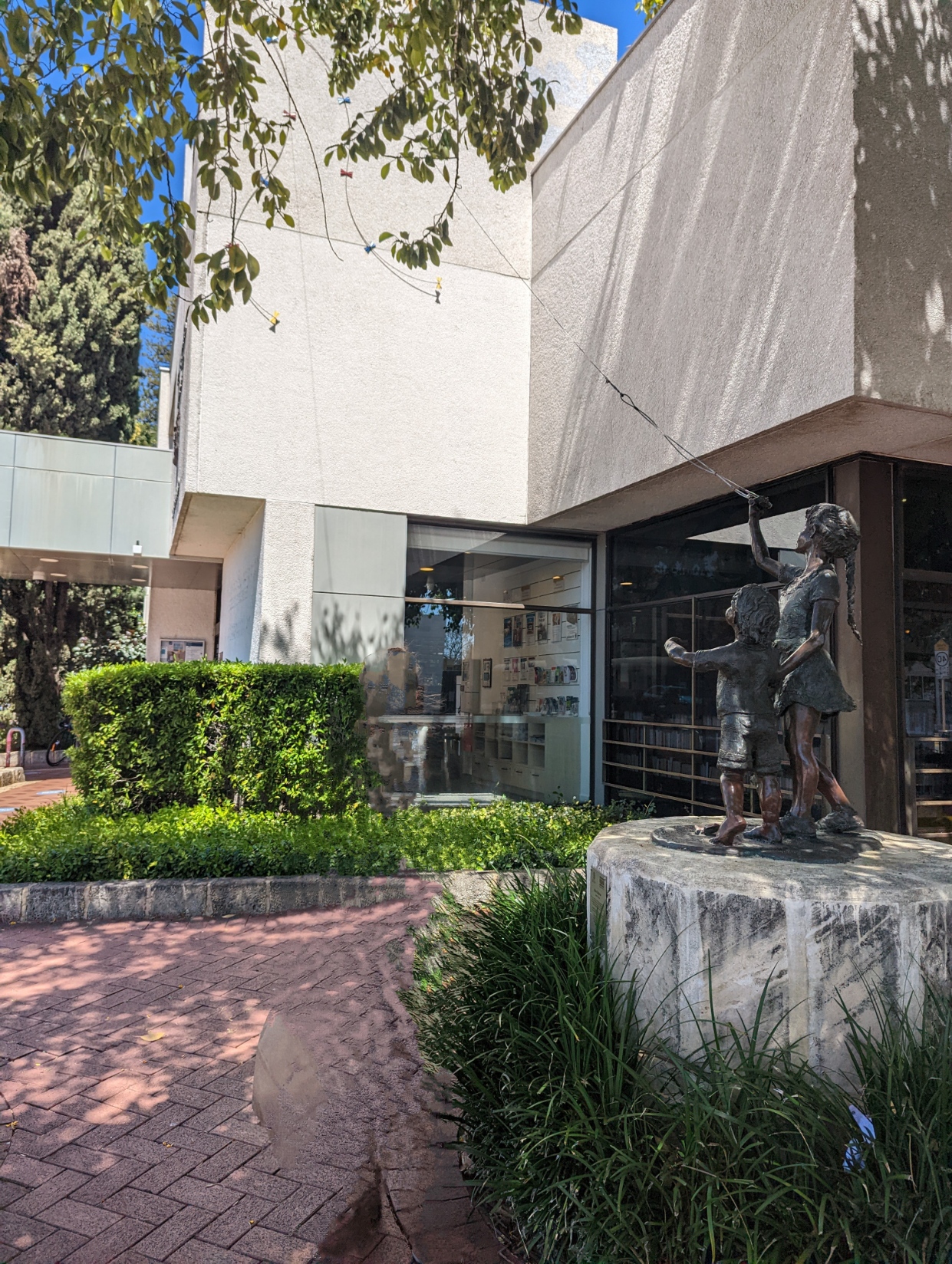
A visit to Wireless Hill
This would usually require a little walking. However, the day was bleak and cold so there was little exercise – despite the splendid lunch my friend had prepared. I did almost get to the top of the tower.

The Guide says:
‘Take in the view of Perth city and see wildflowers at Wireless Hill Park, just 15 kilometres from Perth. Delve into Aboriginal history and discover the communication station’s pivotal role in WW1 and WW2.
You can drive directly to the top of the hill, where a breathtaking panorama of the city and Swan River awaits or enjoy a leisurely walk on the many paths that crisscross the park.
There’s 38 hectares of Banksia and Eucalypt bushland to explore and, in spring, you’ll find vibrant blooms of native wildflowers throughout the park including many striking varieties of Orchids.
For thousands of years, this hill had was used by the local Nyoongar Aboriginal people as a lookout and smoke-signalling location. It later developed into one of Australia’s first radio technology centres in 1912.’

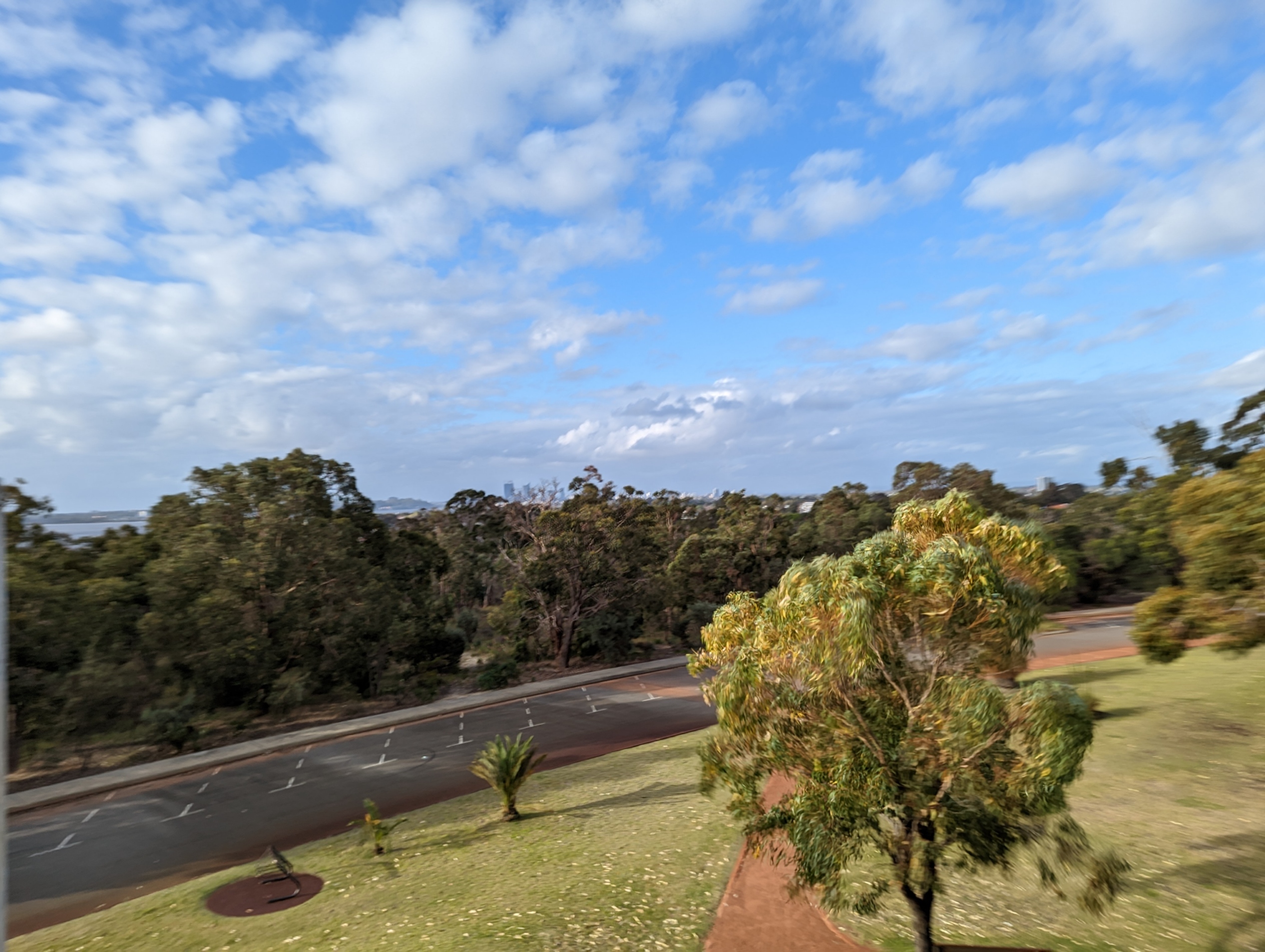

The photos of the city are from the second level of the tower.
Parks in Perth
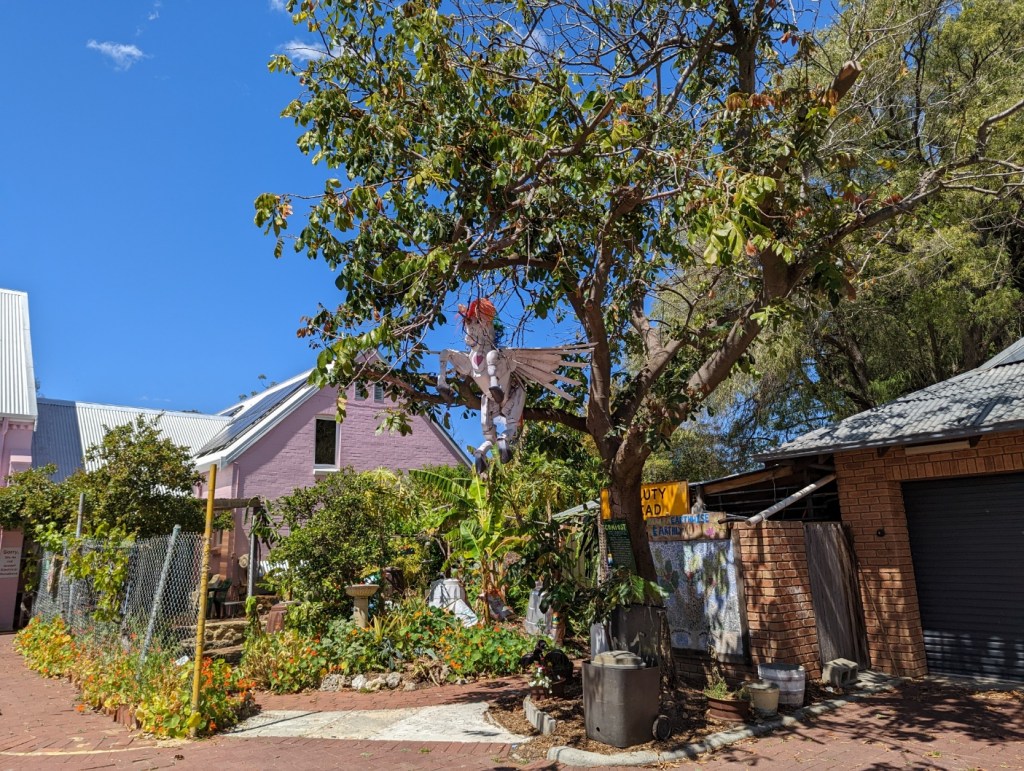
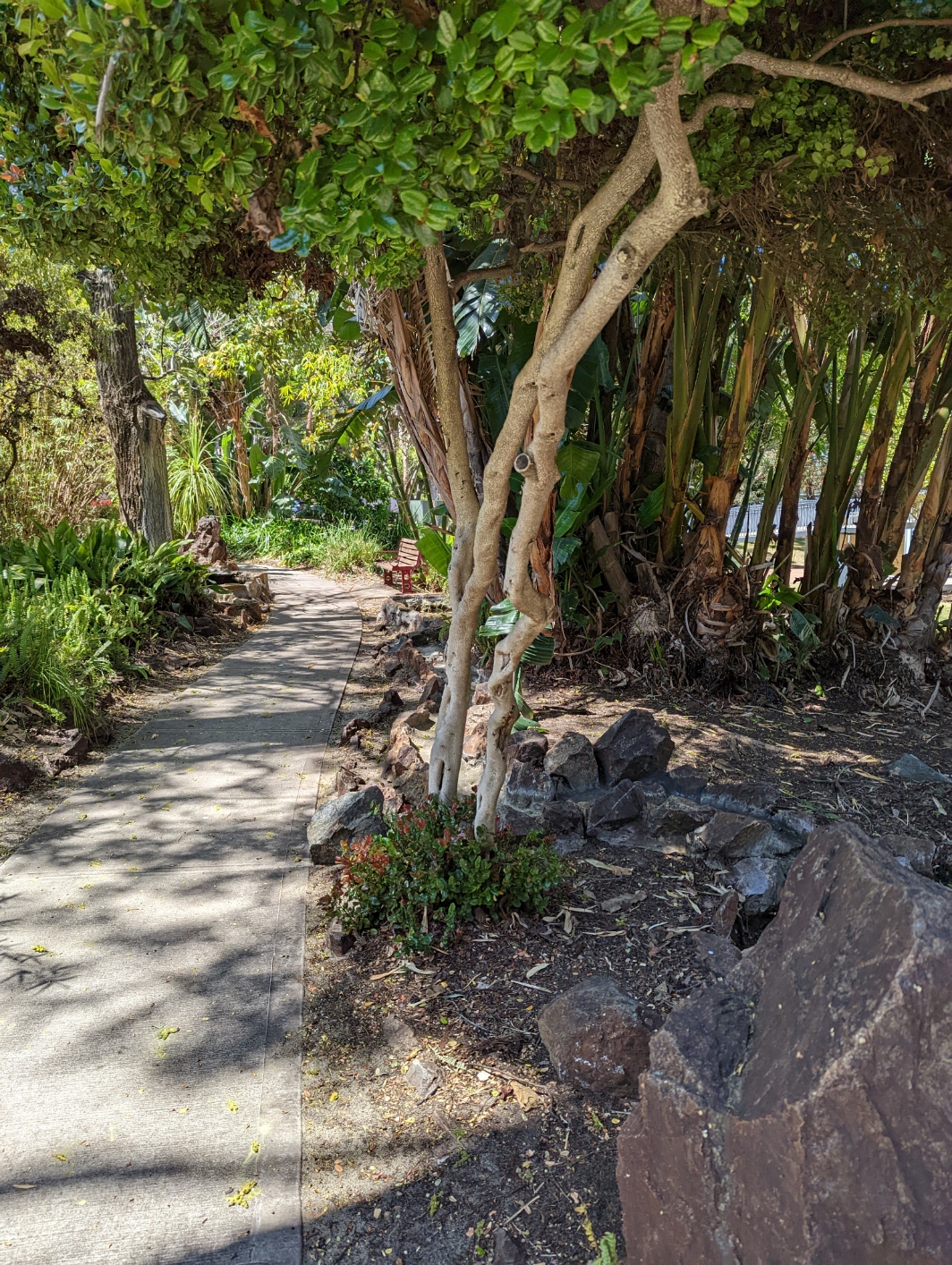
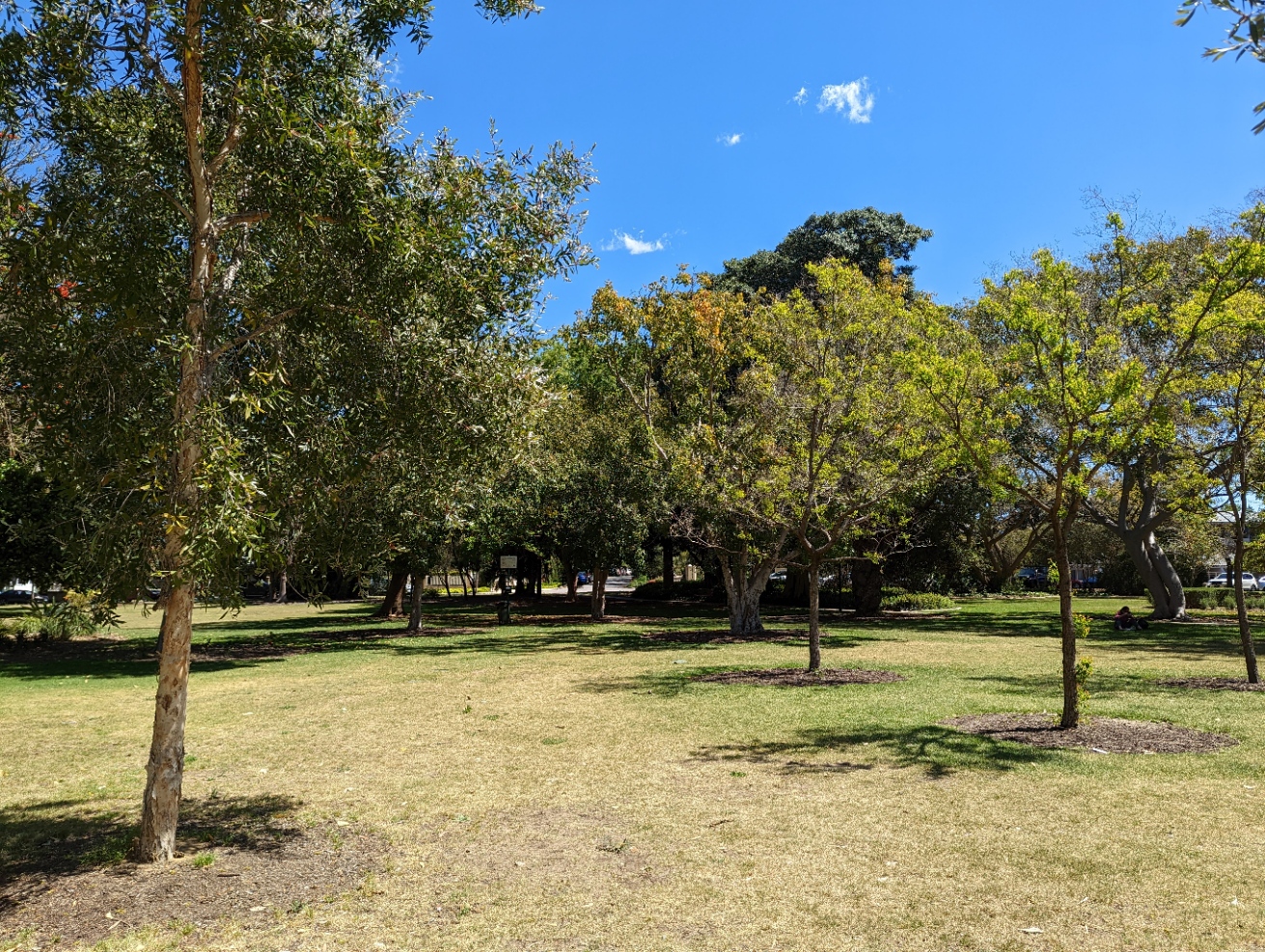
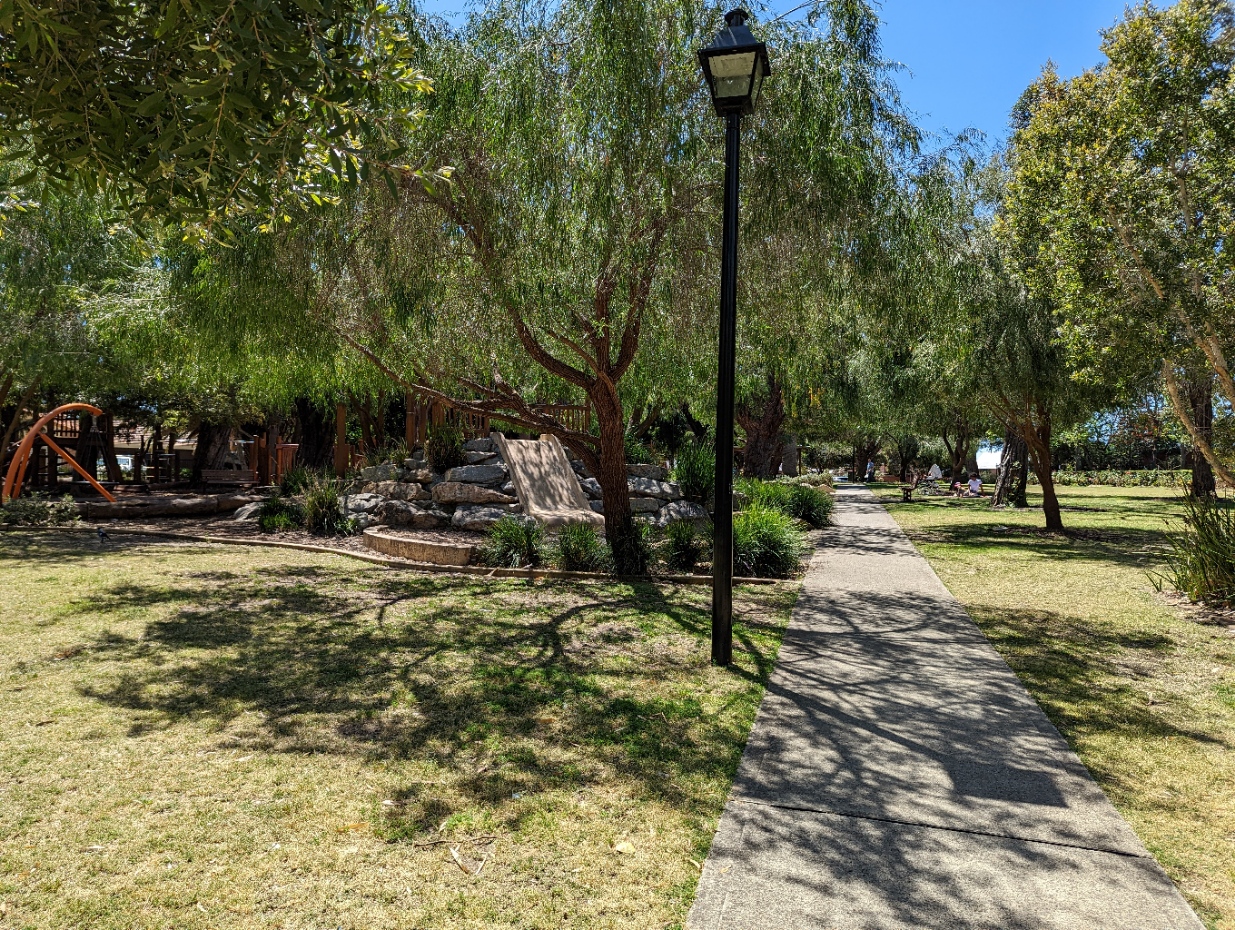
Perth and the surrounding suburbs are full of parks and trees along the roadsides. Kings Park stands out of course, but the smaller parks that can be found everywhere are lovely places to walk through, read in, play games or picnic. One in Subiaco adjoins a church which has been adapted to provide an op shop, recycled goods providing arches, magnificent mythical animals and receptacles for vegetation, and a garden.
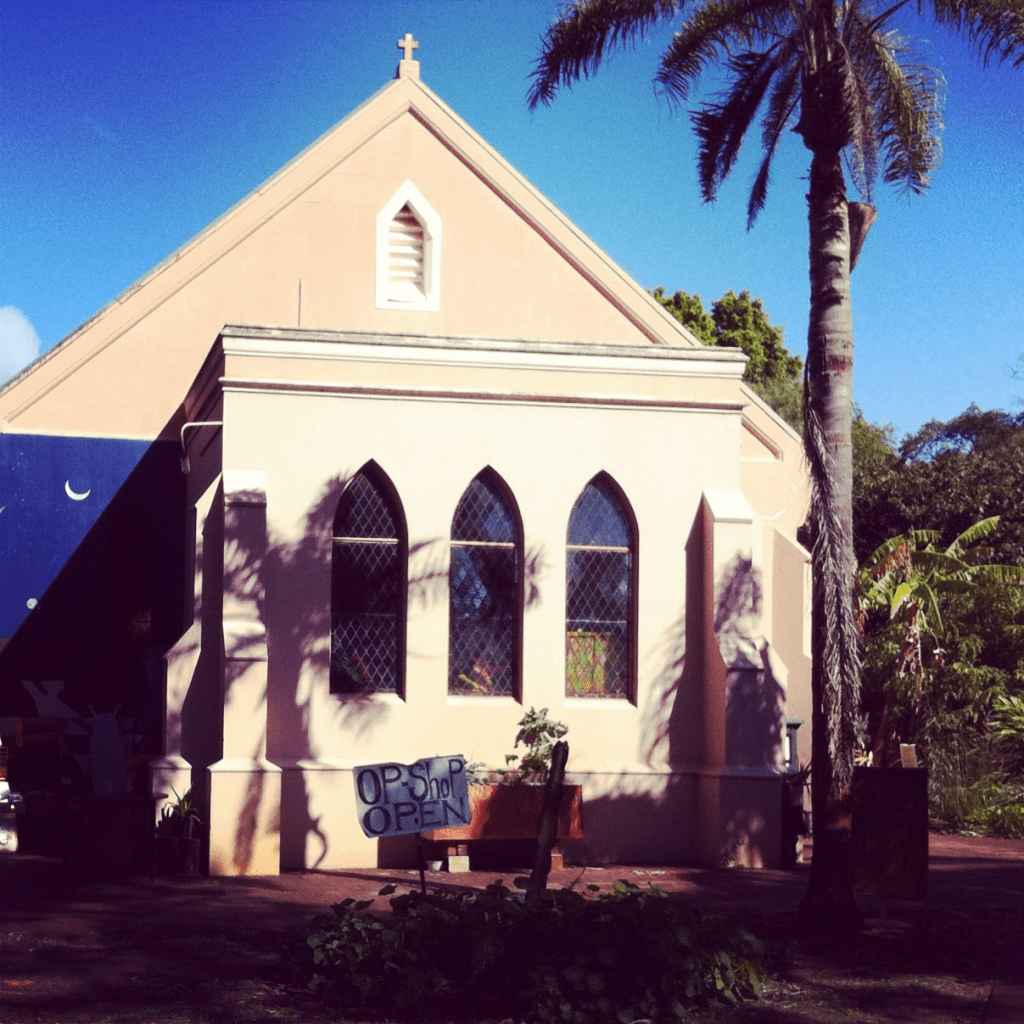
Church which has been adapted for use as an op shop.
Garden and unicorn in a tree beside the church.
The adjoining park – Between Hammersley and Bagot Roads, Subiaco

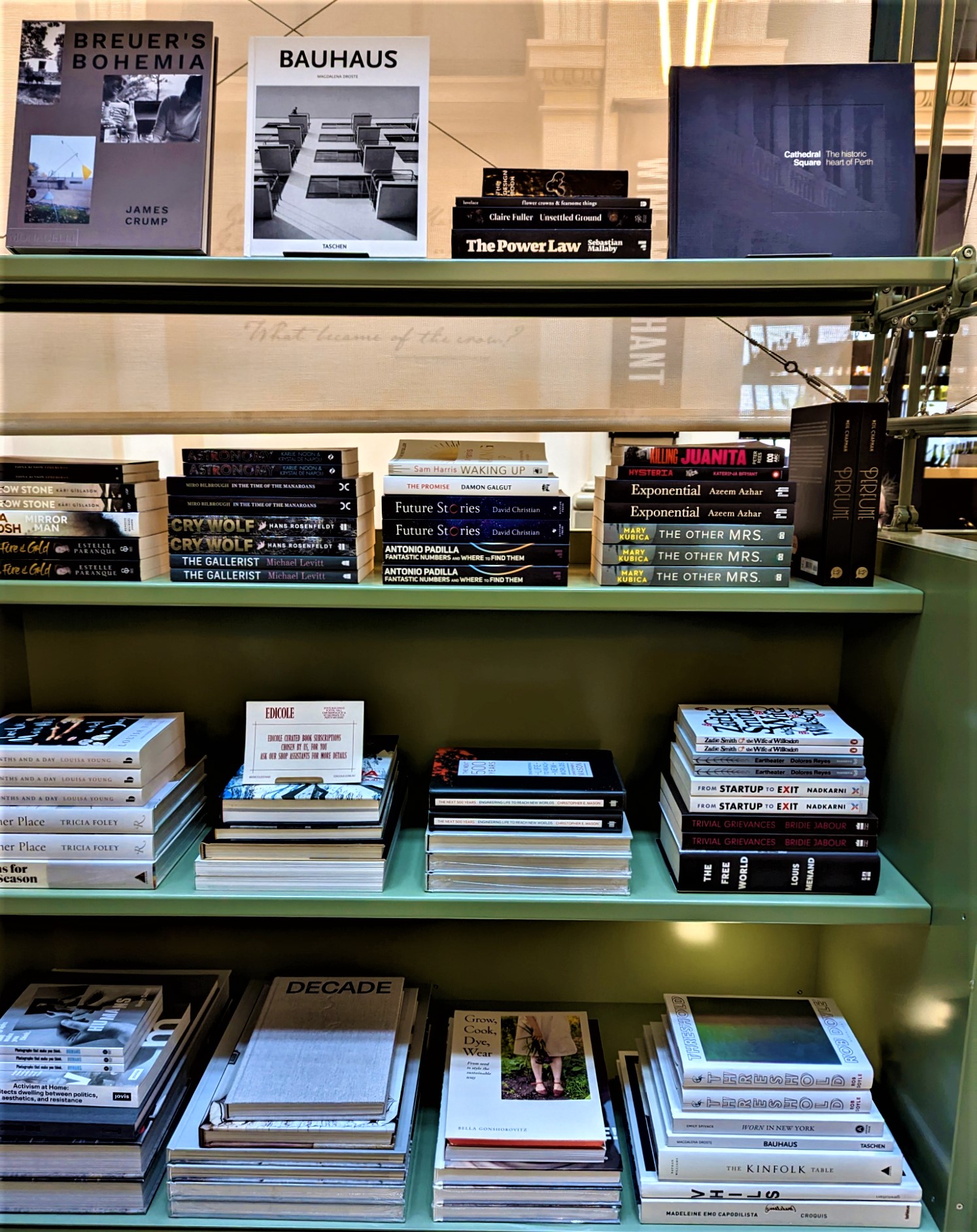
Edicole
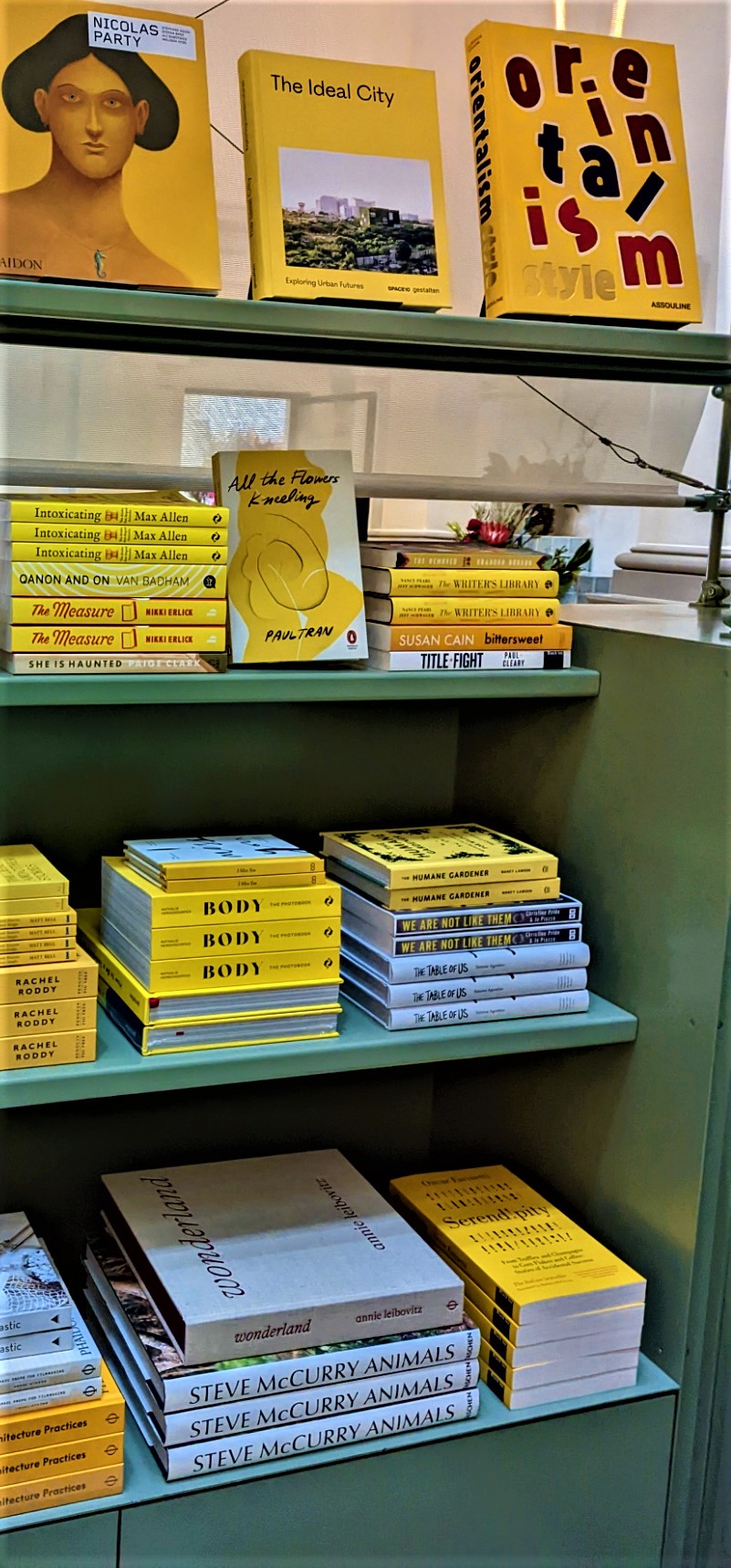
Edicole is a lovely bookshop in the old Treasury building in St Georges Terrace. A coffee shop is at its entrance, a flower shop is nearby, and the building boasts services as different as a barber and a fine restaurant. The bookshop exhibits the books based on colour, so a shelf can display a wide variety of topics, offering a unique and interesting way to browse.



Criticism of Fran Kelly’s new gig Frankly drips with ageism — a stubborn form of discrimination we need to call out
RN Breakfast / By Patricia Karvelas
There’s an old adage that if you can’t see it, you can’t be it.
Diversity matters not just because any thriving society will include all because it’s the right thing to do, but because it also delivers the best results — a range of perspectives, a plethora of lived experience and ideas.
But there appears to be a wink wink, nudge nudge acceptance of one particular form of discrimination in Australia that needs to be called out and strongly denounced: ageism.
There is a mainstream acceptance of the idea that when people reach a certain age they are past their use-by date and should be carted off — that their time is up, they should vacate the space. It is, of course, at odds with contemporary thinking on how modern workplaces should operate, and it is steeped in problematic stereotypes.
When my friend and colleague Fran Kelly was recently announced as the new host of the ABC talk show Frankly, there was a rush of commentary suggesting that older people shouldn’t be getting new gigs.
While the ABC’s programming decisions should absolutely be open to scrutiny, and people are entitled to barrack for their preferred style of host, their arguments should also be subjected to scrutiny. Those who criticised the ABC’s decision to appoint Kelly as presenter seemed to suggest she was past her use-by date and a “safe” choice.
Pitting the old against the young
A reporter at the Sydney Morning Herald, Thomas Mitchell, argued choosing Kelly as host was a missed opportunity for the ABC to reach a younger audience and promote emerging talent:
“Perhaps it would be a 20-something comedian like Aaron Chen or Nina Oyama? What about an up-and-coming YouTuber who might go on to greatness? Dare I say it? Maybe someone at ABC could log on to TikTok and unearth Australia’s next great TV talent. The possibilities are … oh wait, it’s Fran Kelly.”
Mitchell then noted Kelly’s age, used the word “boomer” and suddenly we were in a generational war prism pitting old and young people against each other — rather than looking at the more complex story of representation.
In a column for the Guardian, Luke Buckmaster wrote: “Fran Kelly’s new talk show reminds us that ABC TV programming is depressingly risk-averse, seemingly built on the assumption that people will eventually get old and tune in.”
The ABC should absolutely be platforming younger people in key roles, but that doesn’t mean older people should be carted out on the basis of age. It’s not a zero-sum game.

The other piece missing from this commentary is merit and experience. After 20 years at the top of her game as one of Australia’s leading interviewers, Kelly has a unique skill set honed through years on the radio, in one of the toughest gigs there is. Good organisations both develop talent and promote younger and more experienced workers.
How often do we see women in their 60s on prime time TV? Rarely.
What struck me about the many column inches devoted to all this was the complete absence of any gendered analysis. Older men are a mainstay of our TV screens but women over 50 become culturally invisible.
Carmen Callil, founder of renowned feminist publisher Virago, dies. She was 84
Amy Ripley

“I always wanted to change the world, I didn’t think the world was good enough,” the publisher and writer Carmen Callil once said. As the founder of renowned feminist publisher Virago Press, she did more than anyone else to bring the stories and history of women writers out of the darkness and into the light.
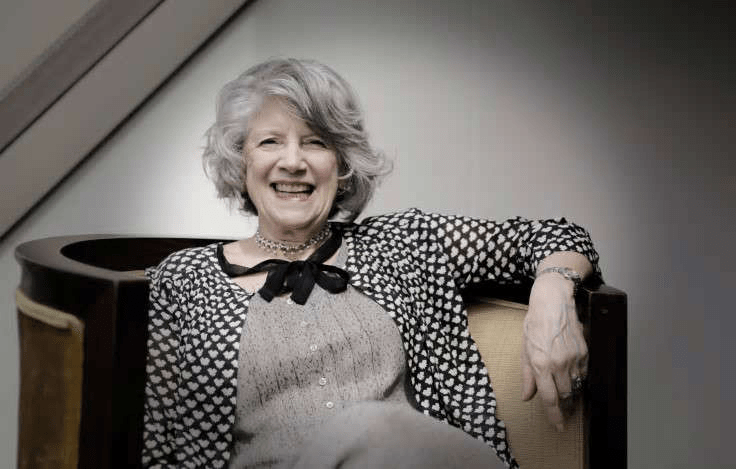
Born and raised in Melbourne, Callil was one of the legendary 1960s Australian exports to London, along with Robert Hughes, Clive James, Barry Humphreys and Germaine Greer (with whom she was at school and university). Like them, she prospered in England and never went home.
Callil set up Virago – translated as ‘female warrior’ in Latin – in 1973 with a bank overdraft, working from the dining room table of her cramped attic flat, off the King’s Road in Chelsea. After publishing their first book Fenwomen by Mary Chamberlain, Virago went on to publish luminaries including Margaret Atwood, Angela Carter, Maya Angelou (Angelou) and Shirley Hazzard.
In 1978, she established Virago Modern Classics to champion neglected books by women. Famed for their distinctive green book spines – an inevitable sight on the bookshelves of a certain kind of middle-class household – the Classics were another roaring success. Callil did not forget her Australian sisters with the Classics either, publishing Letty Fox and The People with the Dogs by Christina Stead and My Brilliant Career by Miles Franklin as part of the list.

Callil was also ahead of the game when it came to publishing women writers of colour – something which was barely a consideration forty years ago. She brought the much-loved I Know why the Caged Bird Sings by Maya Angelou to British readers in 1984, followed by Their Eyes Were Watching God by Zora Neale Hurston in Modern Classics in 1986.
A shrewd businesswoman who knew how to cut a good deal, her direct Australian manner caused a stir in the genteel world of English publishing – she frowned on lunch and staff were often to be found crying in the office loo. Her forthright views on everything from feminism to the monarchy to British imperialism frequently made headlines. In 2011, she resigned in protest from the International Booker Prize judging panel after her male co-judges insisted on awarding the prize to Philip Roth. Exasperated, Callil summed up Roth’s writing as: “He goes on and on and on about the same subject in almost every single book. It’s as though he’s sitting on your face and you can’t breathe”.
In retirement, she started writing – something she said she would never do. After co-authoring The Modern Library: The 200 best novels in English since 1950 with Colm Tóibín in 1999, she turned her hand to biography.
Her first book, Bad Faith, was published in 2006. A critically acclaimed biography of Louis Darquier de Pellepoix, the Vichy government’s commissioner for Jewish affairs, Callil had a distant but disturbing link to his daughter, Dr Anne Darquier. Anne was Callil’s therapist until she took her own life in 1970 and this connection haunts the book.
In 2020, she published Oh Happy Day: Those Times and These Times which traced the story of her impoverished 19th-century British ancestors, who, through a variety of ways – both independently, or as convicts – began new lives in Australia. Beginning with her great-great-grandmother, a Leicestershire stocking-frame worker, the book drew contemporary parallels with how the poor, asylum seekers and refugees are treated today.
Carmen Callil was born on July 15, 1938, in Melbourne. Named after the opera, her surname should have been Kahlil but the customs official who processed her Lebanese paternal grandfather’s arrival at the Port of Melbourne anglicised it to “Callil”.
Her father Frederik Callil taught Law at Melbourne University. Her mother Lorraine Allen was of Irish and English extraction. Callil grew up in a house full of books in a well-to-do suburb, with a sister and two brothers – Yvonne was born in 1935, Julian in 1937 and Adrian in 1942.
In 1947, Frederik died, after a slow, painful battle with Hodgkinson’s Disease. There was little money left after this so Callil became a boarder at school, attending the Star of the Sea Convent and Loreto Mandeville Hall. She hated them both, later writing: “It was the sort of Catholic convent that should have been in deepest Ireland but was, in fact, in one of the more elegant suburbs of Melbourne…Mass every morning at 6.20 am, a tomato for supper on Sunday nights and much Irish brown bread the rest of the time. Rules, censorship and silence, and above all a sense of disapproval.”
After school, she went to the University of Melbourne, which she compared to a ghetto; finding it narrow, boring and provincial. She read English, with Australian history as a minor. Learning about the history of her country was a profound experience and she used to sit in the library, sobbing in horror at the awful tales of transportation. She was less impressed with her English course, finding her lecturers in thrall to the stifling influence of F.R. Leavis.
On the day of her graduation in 1959, Callil headed to Europe where she taught English in Italy. A late developer, who had never met a Protestant before she left home, she made up for lost time and promptly lost her virginity. “I was young and alive and had a wonderful time,” she recalled.
In 1960, she arrived in London, living in flat shares with fellow Australians. “It was like something out of a Muriel Spark novel, The Girls of Slender Means… We lived in a house on Edith Grove, five girls all together, in a tiny flat up about 1000 flights of stairs, and we were always falling in and out of love and weeping in the bathroom.”
After a stint as a buyer for the department store Marks & Spencer, she started working in publishing as a “publicity girl” – one of the few roles open to women who did not want to be secretaries.
London in the 1960s was a heady, intoxicating place to be. The protests in Paris, the burgeoning anti-apartheid movement and the underground press of Oz, Frendz and the International Times all provided an exciting backdrop to life for wide-eyed antipodeans. Callil spent her time with her “Australian mafia” – libertarian anarchists who had actually sprung from the comfortable Australian bourgeoise. “Some of us were hippies, but most of us were writers, journalists, or in television. We lived well, worked and drank hard, and would not be seen dead in anything but the very best Ossie Clark,” she wrote.
It was this Australian mafia that led Callil to feminism. When several of her friends decided to launch Ink – an offshoot of Oz – Callil, now freelance, was asked to do the publicity.
“Whatever we women did for Ink – and there were many of us – in my memory the lovely men of the left and of hippiedom treated us like fluttering tinkerbells, good for making tea and providing sex. Ink then collapsed after the Oz trial for obscenity and went into liquidation in 1972. Another Australian, Marsha Rowe, was so furious at her experiences there that she established the feminist magazine Spare Rib as a riposte. She was joined by the journalist Rosie Boycott and they asked Callil to manage the publicity.
This gave Callil her lightbulb moment. Sitting in a pub in Goodge Street in London’s Fitzrovia one afternoon in 1972, she realised that if Spare Rib could publish essays and articles by women, she could do the same with books.
After Virago was founded, Callil appointed Rowe and Boycott as board members and was eventually joined by Harriet Spicer, Ursula Owen, Lennie Goodings and Alexandra Pringle – all of whom, like Callil, would become major figures in British publishing.
In 1982, Callil was head-hunted by Chatto & Windus and became managing director, bringing Virago in as a subsidiary. Now part of the larger Hachette Group, Virago remains just as successful today.
Callil continued to perch on the barricades throughout her life, lobbing the occasional grenade whenever the mood took her. An enthusiastic co-signatory of letters to the editor in the British press, she was vocal in her support of Extinction Rebellion, unafraid to criticise the state of Israel for its treatment of the Palestinians and defended JK Rowling energetically against claims she was transphobic.
She was also happy to prod the sacred cows of her own golden generation. Although she adored Robert Hughes and Barry Humphries (“not politically, of course. He’s to the right of Genghis Khan”) she could not bear Clive James. Speaking in 2020 she said: “I disliked him intensely and he disliked me. What’s the name for men who drape women over desks?”
In 2017, Callil was made a Dame for services to literature in the Queen’s birthday honours.
Callil never married or had children and was refreshingly unconcerned by this. “I wouldn’t have wanted to be married, I wouldn’t have been any good at it…I never worried about children. I don’t mind one way or the other.”
She never returned to Australia, saying: “I think I made a great mistake in coming here. But I don’t think I made a great mistake in not staying in Australia because my generation was meant to marry and have 700 children and be a good Catholic, and I didn’t want to do any of that.”
The Morning Edition newsletter is our guide to the day’s most important and interesting stories, analysis and insights. Sign up here.
 Robin's Room