This week I review two uncorrected proofs sent to me by NetGalley, one fiction (The Concierge) and the other non-fiction (Shirley Chisholm Champion of Black Feminist Power Politics).
Miranda Rijks The Concierge Inkubator Books Dec 2022

The pace of the story overcomes the implausibility of some of the earlier plotting which is quite absorbing. Ally, an aspiring actress, is killed in a car crash, leaving behind her grieving husband, four-year-old daughter and older sister, Simone. The sisters’ parents are dead, and Simone has taken much of the responsibility for Ally; she now feels that she must do the same for her niece. However, uppermost in her mind are questions about her sister’s death: why was she in her employer’s car? Why did the autopsy reveal that Ally had taken drugs? Are her employers, the film producer and director, Goldie and Braun Delucci, implicated in Ally’s death? Books: Reviews
Anastasia C. Curwood Shirley Chisholm Champion of Black Feminist Power Politics University of North Carolina Press Jan 2023
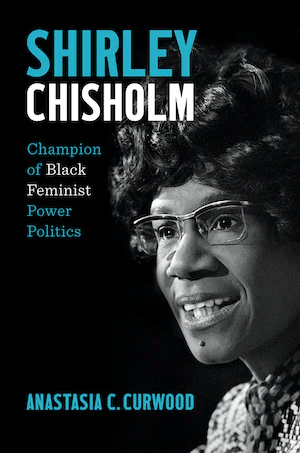
Anastasia C. Curwood’s biography of Shirley Chisholm is extremely dense. It is replete with immense background detail of the American context, the performance and intricacies of the Democratic Party, and gives similarly detailed attention to the way in which Black political movements impinged on Chisholm’s life, political and personal behaviour, and contribution to American, Democratic Party and Black movement politics. This comprehensive attention to the wider context has its positive features. However, it also presents a challenge to presenting a personable and accessible biography of a woman of such enormous significance in personal as well as political terms.
Is it worth the endeavour to find Shirley Chisholm? Or is the wealth of contextual material essential to understanding the woman, the times and the politics? I think that the answer to these are questions is probably different depending on the reader, and important to consider when approaching this biography. I found that I needed to intersperse reading this biography with other reading, but found this approach gave me the impetus to really come to grips with the way in which general detail seemed at times to overcome the Shirley Chisholm’s story. Books: Reviews

New Covid cases this week number 2,610. Firty eight people with Covid are in hospital and 3 are in ICU. Five lives were lost, bringing the total since March 2022 to 135. Some restaurant staff are still wearing masks, and some social distancing between tables remains. However, this is not the dominant feature in the hospitality industry. Also, as masks are no longer mandatory on public transport very few people are wearing them.
Alan Kohler: Why the Voice is an economic as well as moral issue. The New Daily.


Some of the most egregious inequality in the world exists within Australia, writes Alan Kohler.
OPINION Alan Kohler
The first attempt at an Indigenous voice to Parliament was in 1934 – the Australian Aborigines League unsuccessfully petitioned King George V, with 1814 signatures, for the ‘Representation of Aboriginal people in Federal Parliament’. No dice.
Four years earlier, in 1930, John Maynard Keynes published an essay in which he forecast that in 100 years from then we’d all be rich and working three days a week, wondering what to do with ourselves.
But in October, Australia’s 13.6 million employed people worked an average of 4.6 days a week, including part-timers.
What happened? How did Keynes get that forecast of plenty so wrong? After all, he was talking about 2 per cent average economic growth a year, and we’ve actually averaged 3.4 per cent.
The great economist didn’t account for distribution. The assumption that wealth and leisure would be evenly spread was wildly wrong.
As Thomas Piketty showed in Capital in the 21st Century, income inequality actually did decline for a while – mainly as a result of Keynes’ own ideas.

But after 1980, when his ideas were abandoned in favour of neoliberalism, inequality went back to where it had been pre-Keynes.
I think it is no coincidence that it took 50 years after the Great Depression for that to happen, because that’s how long it took for those who were adults and late teenagers in 1930 to die, and stop running the world.
The political elites of the 1980s had no direct memory of the Depression, or FDR’s New Deal for that matter, and did not have JM Keynes providing the dominant intellectual framework for economics, so when the voices of the rich insisted that taxes should be cut, they were.
Note that word – Voice.
Some of the most egregious inequality in the world exists within Australia, between the descendants of those who were here first and those who started arriving from England in 1788.
Now, 234 years later, the average income of Aboriginal households is $1200 per week and for everybody else it’s $2329 – almost twice as much.
The reasons for this disparity are complex and challenging, and it would be wrong to put it down simply to a difference in the loudness of voice.
But as the Uluru Statement from the Heart put it: “(The) dimensions of our crisis tell plainly the structural nature of our problem. This is the torment of our powerlessness.”
The torment of their powerlessness.
National Party leader David Littleproud says a constitutional voice to Parliament “won’t shift the dial in closing the gap”, but that’s both wrong and misses the point.
It’s no wonder Indigenous Australians are silent and powerless: They weren’t entitled to enrol to vote until 1962, weren’t counted until the referendum of 1967, weren’t subject to compulsory voting like the rest of us until 1983 and to cap it off, the idea of terra nullius – that Australia had been “nobody’s land” – persisted until Mabo in 1992.
It is not just the English invasion in 1788 that the First Nation’s Voice to Parliament is needed to balance, but the habit of not giving the original Australians whose land it was any kind of voice at all for the subsequent 200 years.
It is fundamentally a moral question and a symbol of recognition, but it is also economic and political.
The politics were nicely expressed by Noel Pearson in his first Boyer lecture this year: “A large part of the conflagration in these past 50 years since racism became unacceptable in the 1960s, is the fight between progressive and conservative Australians over race and Aboriginal people. Aboriginal people are the subjects of this fight, but they are not its prime protagonists.”
Australia’s Aboriginal problem, he said, is about white Australians in a cultural and political struggle with other white Australians. The National Party’s decision to oppose the Voice to Parliament is a manifestation of that.
The economics are a festering sore at Australia’s heart – unacceptable disadvantage and poverty in a rich country.
Mr Pearson’s point is that the lack of recognition was vital for the original takeover of the land and dispossession of its inhabitants, and that “the Australian colonial project needed this denial and was underpinned by its vehemence until well after the frontiers fell silent”.
And as discussed, the lack of recognition, the lack of a voice, didn’t end there – it became a careless habit that has manifested in grotesque economic inequality.
The Voice to Parliament just might raise the volume of the voices of the dispossessed sufficiently to start to counter the louder voices of those whose household income is twice theirs and whose long habit has been to disregard that fact, and them.
As Noel Pearson said: “We are a much unloved people. We are perhaps the ethnic group Australians feel least connected to. We are not popular and we are not personally known to many Australians.”
In the past decade or so that lack of connection has started to shift at ground level as a result of the Acknowledgement of Country becoming a new habit at the start of events, often along with a Welcome to Country from a local elder.
This has been a wonderful, spontaneous development that has begun to subvert the white-on-white culture war that Noel Pearson spoke about.
But there are still plenty of conservative extremists who won’t have a bar of that either. For example, Pauline Hanson stormed out of the Senate in July during the Acknowledgement of Country, saying words to the effect that Australia belongs as much to her as to the Indigenous community.
And that’s precisely the point.
Alan Kohler writes twice a week for The New Daily. He is also founder of Eureka Report and finance presenter on ABC news.
Cindy Lou visits two more old favourites – The Italian Place and Blackfire
The Italian Place

My friend brought me this beautiful rose from her garden. Although it was far more attractive – after all, this one had a perfume – it reminded me of my meal in London at another Italian restaurant. Another reminder was the mixture of positive and less positive features of both. The Italian Place has an excellent outside area, which we enjoyed on this occasion. The main waitperson was lovely – informative and friendly. Another found it hard to read the specials in a voice loud enough for us all to hear – possibly she was new.

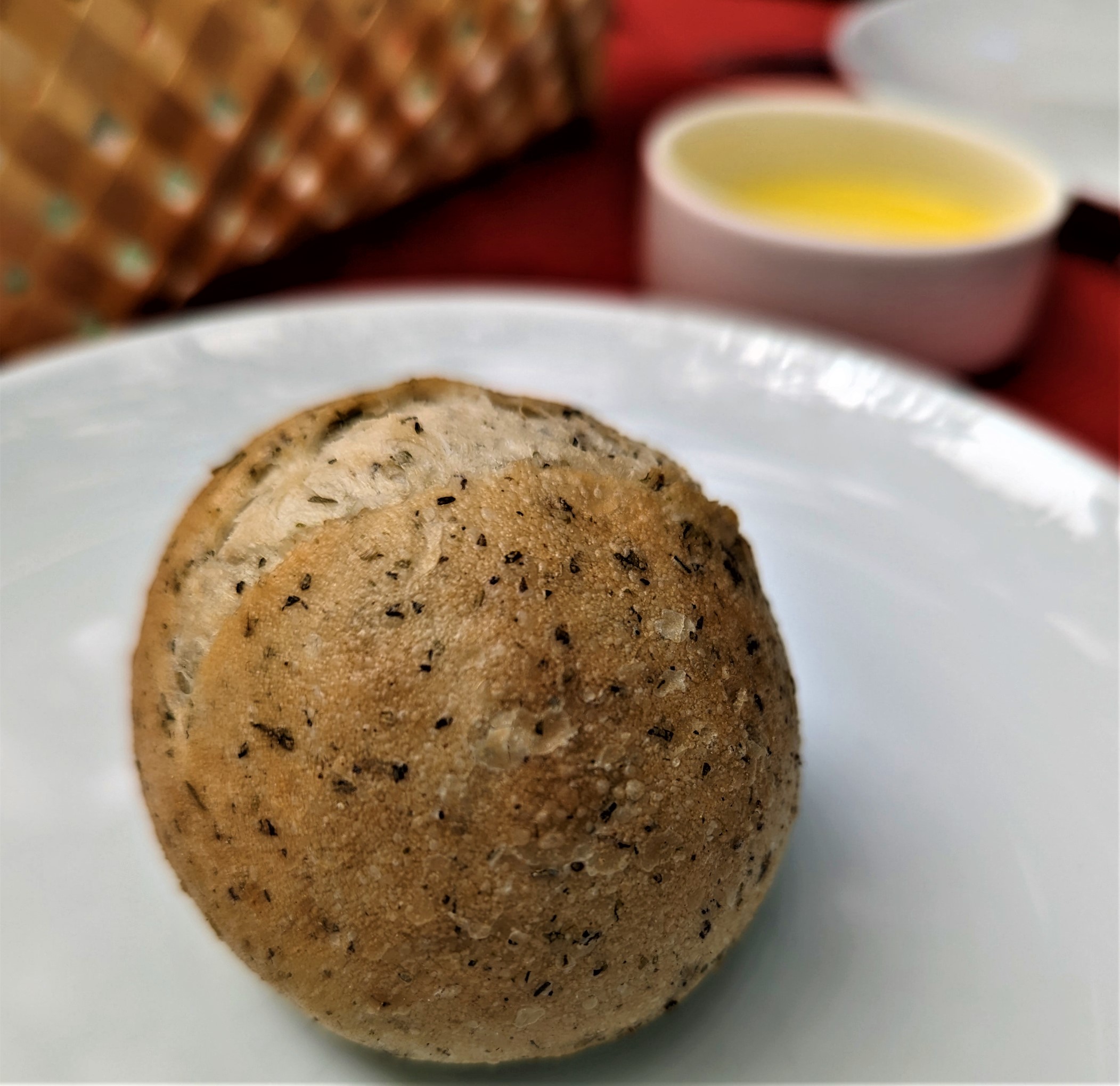
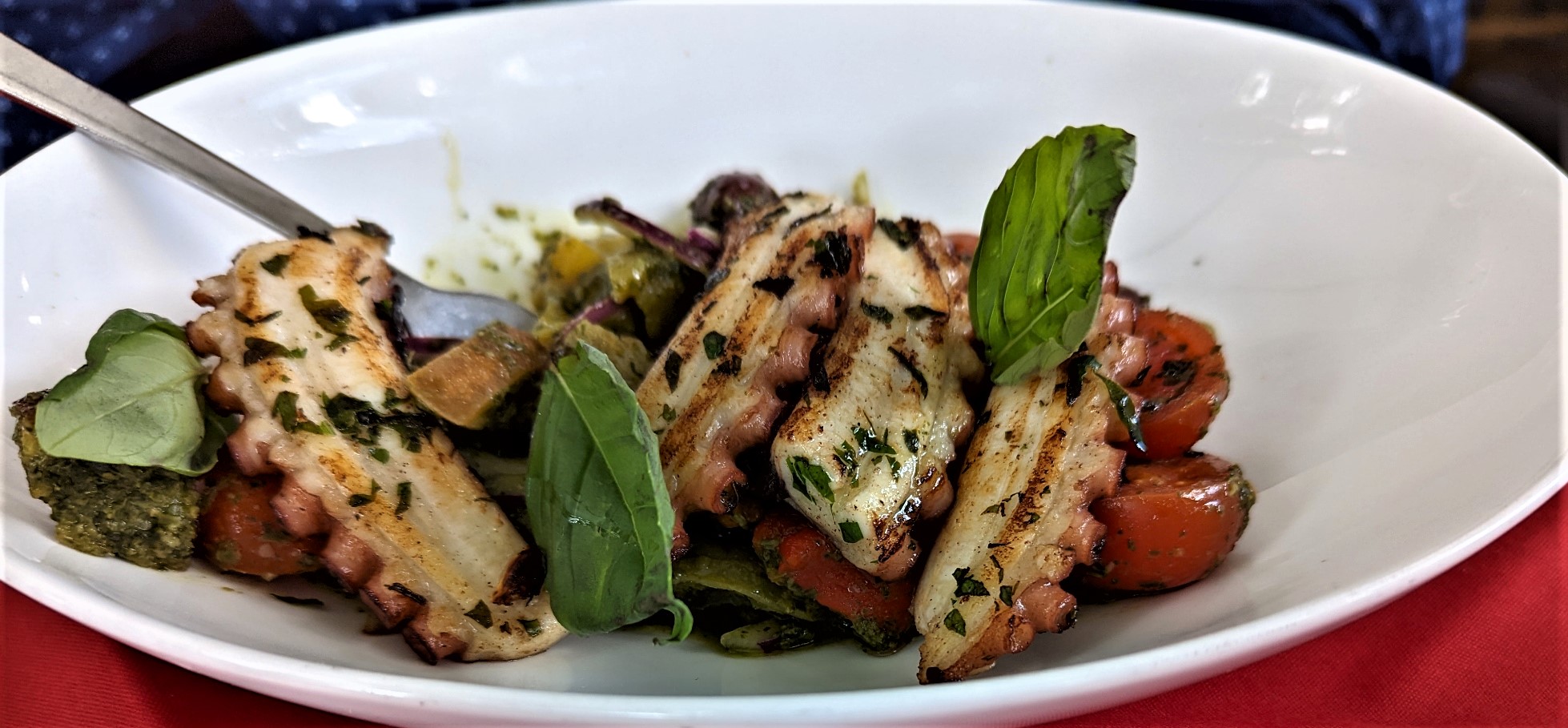
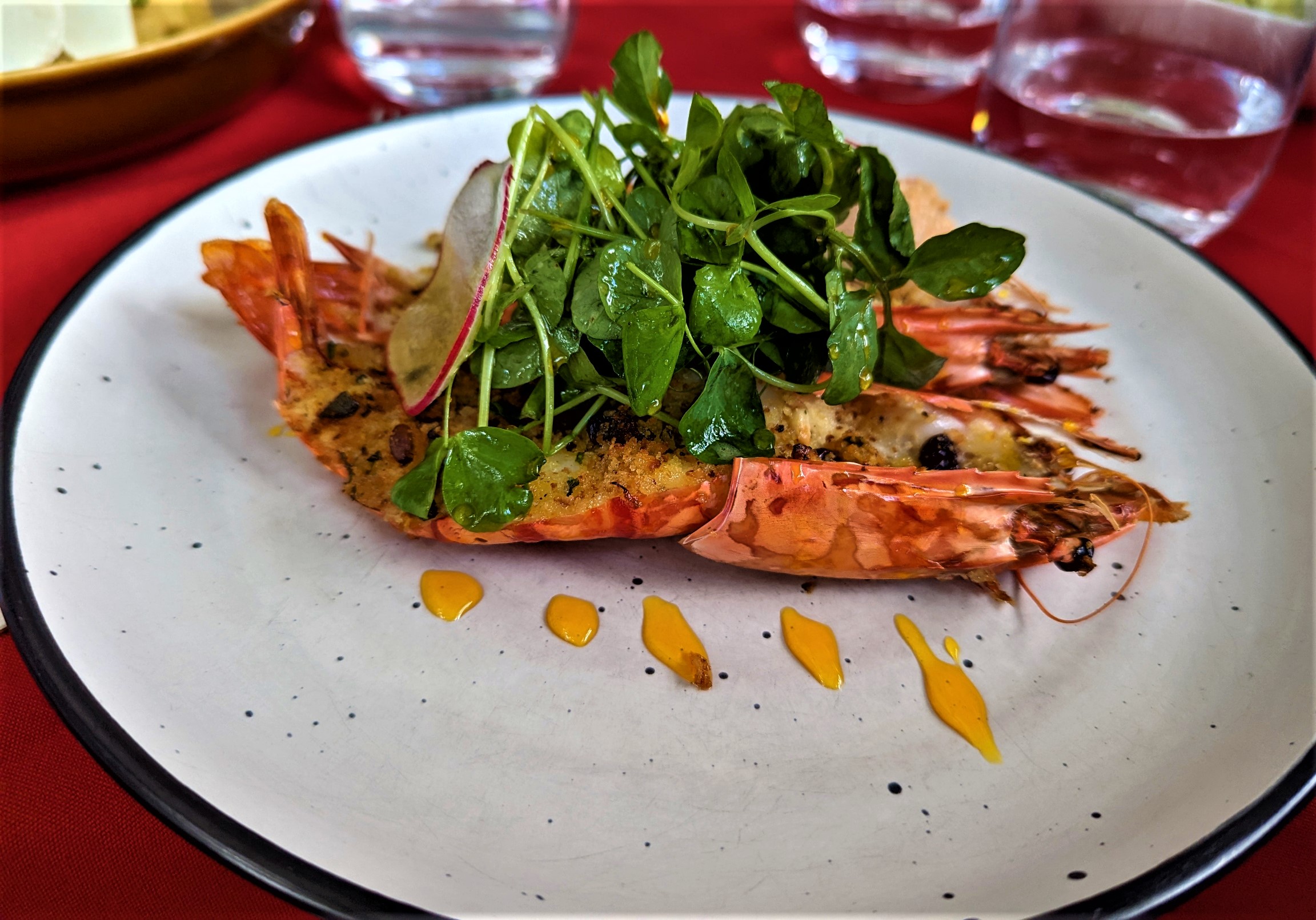
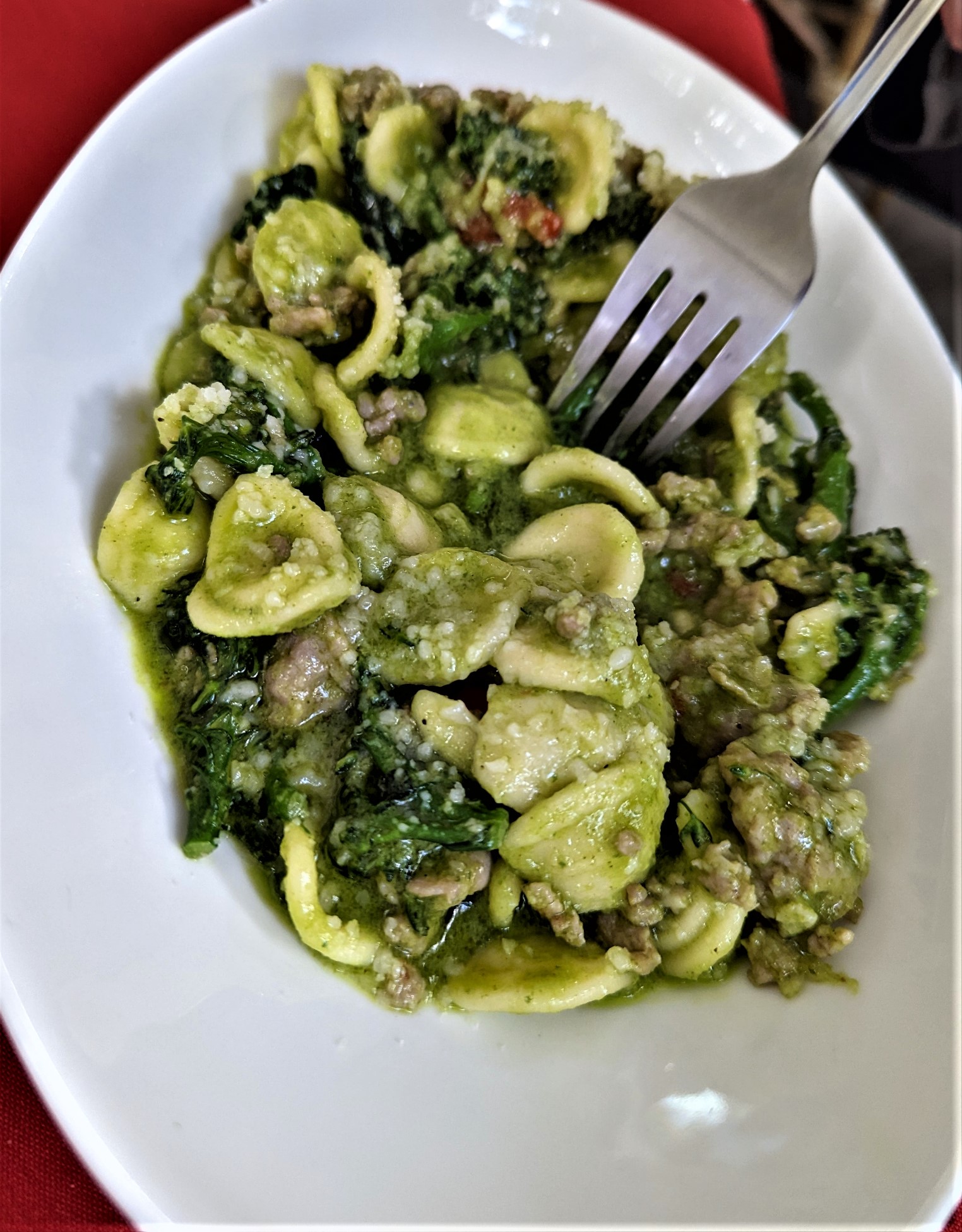
The food was a mixed pleasure. It is always nice to be served warm rolls and oil, and this is a pleasant feature of The Italian Place. I enjoyed my prawns, although I found them a little over cooked. One friend found the pasta dish with sausage was flavoursome, although the sausage was hard to find at first – it is generously smothered with a delicious sauce. The octopus was good, but the salad underneath disappointing for another friend. The stuffed zucchini flowers needed to be far better. The nectarine salad was excellent, although unfortunately I do not have a photo of it – perhaps we all leapt to demolish it before I remembered to take the photo! Coffee was very good indeed.
Black Fire
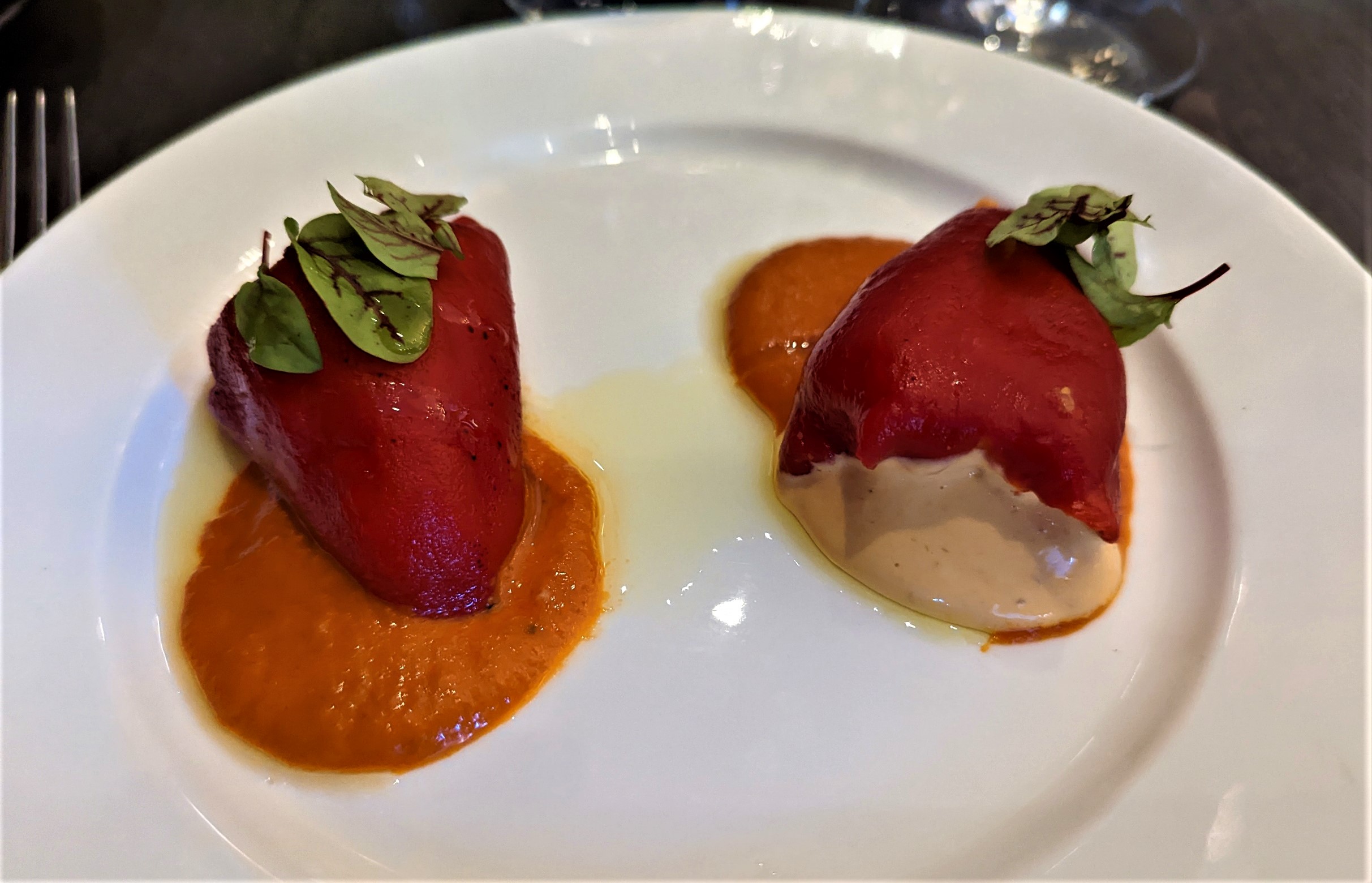
I went to Black Fire twice this week, for Sunday lunch, and then to an early dinner on Wednesday. Sunday lunch was excellent, although not worth my taking photos, two of us had our regular crab stuffed bell peppers and then the delicious prawn dish, and the another had a pasta dish familiar from my previous reviews. The marvelous seafood combination of prawns, mussels, fish and scallops in a generous sauce deserved to be photographed, and I shall do that next time if I can resist my regulars.
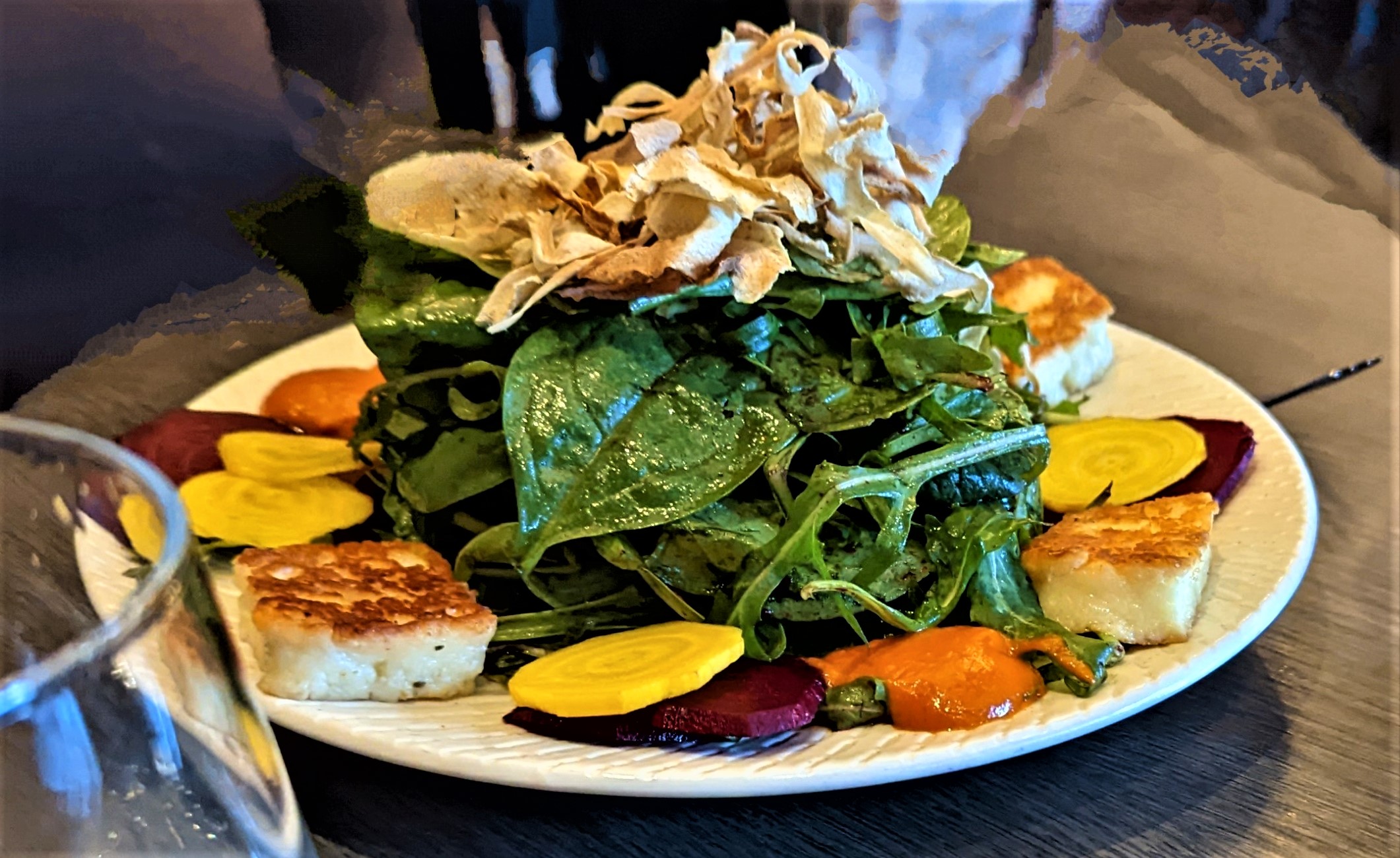
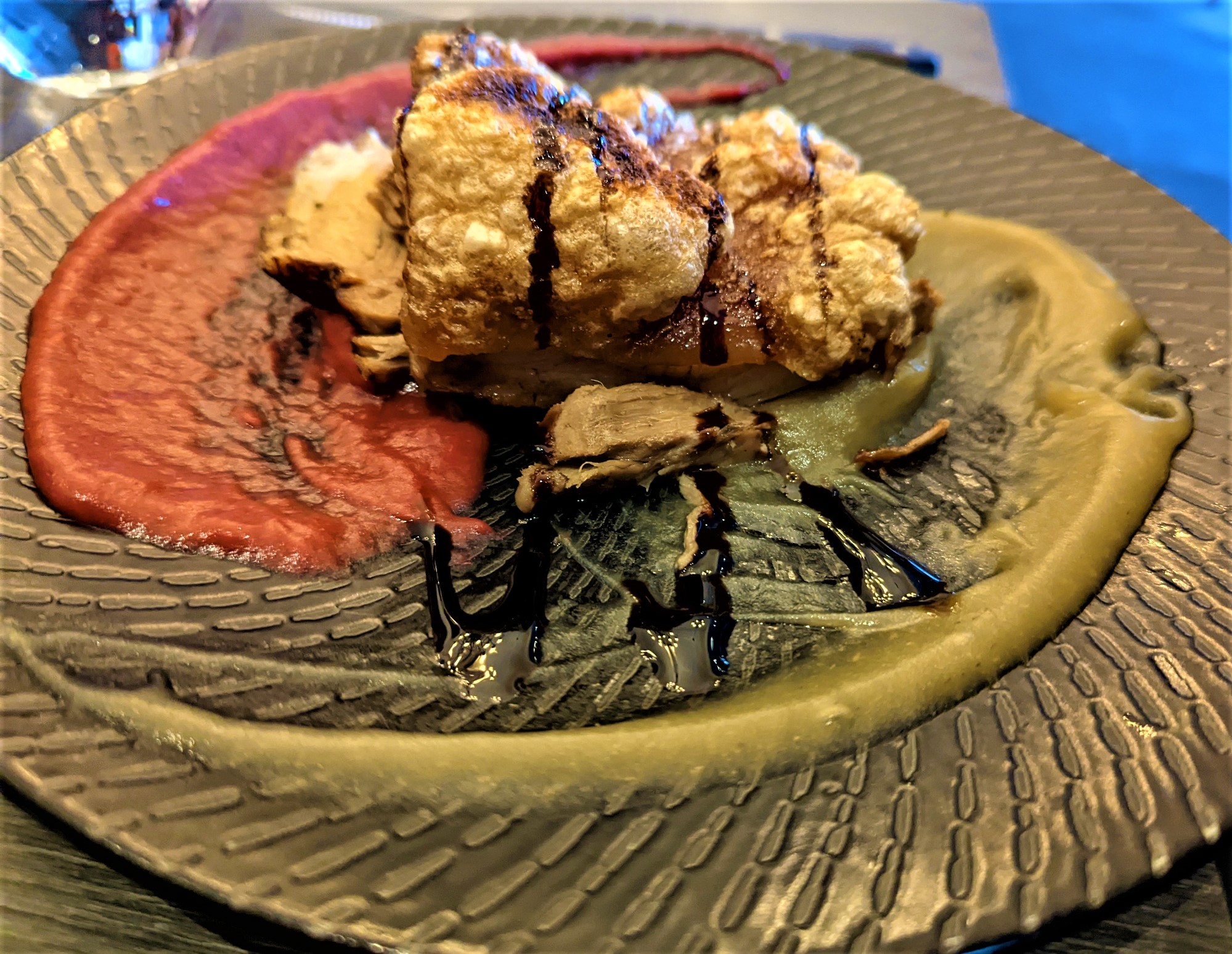
On the second occasion there was a little more variety. Everyone enjoyed their meals without reservation, and the complimentary sherries at the end were a lovely touch. The coffee was good, the mint tea served elegantly, and the chef’s taste of four desserts (we had one between two people) were a delicious and light end to an excellent meal. The halloumi salad, lamb croquettes and pork dishes were new to us and appear with the familiar stuffed peppers below. Another excellent tapas is the semolina rolls, not pictured this time.


Rye Cafe
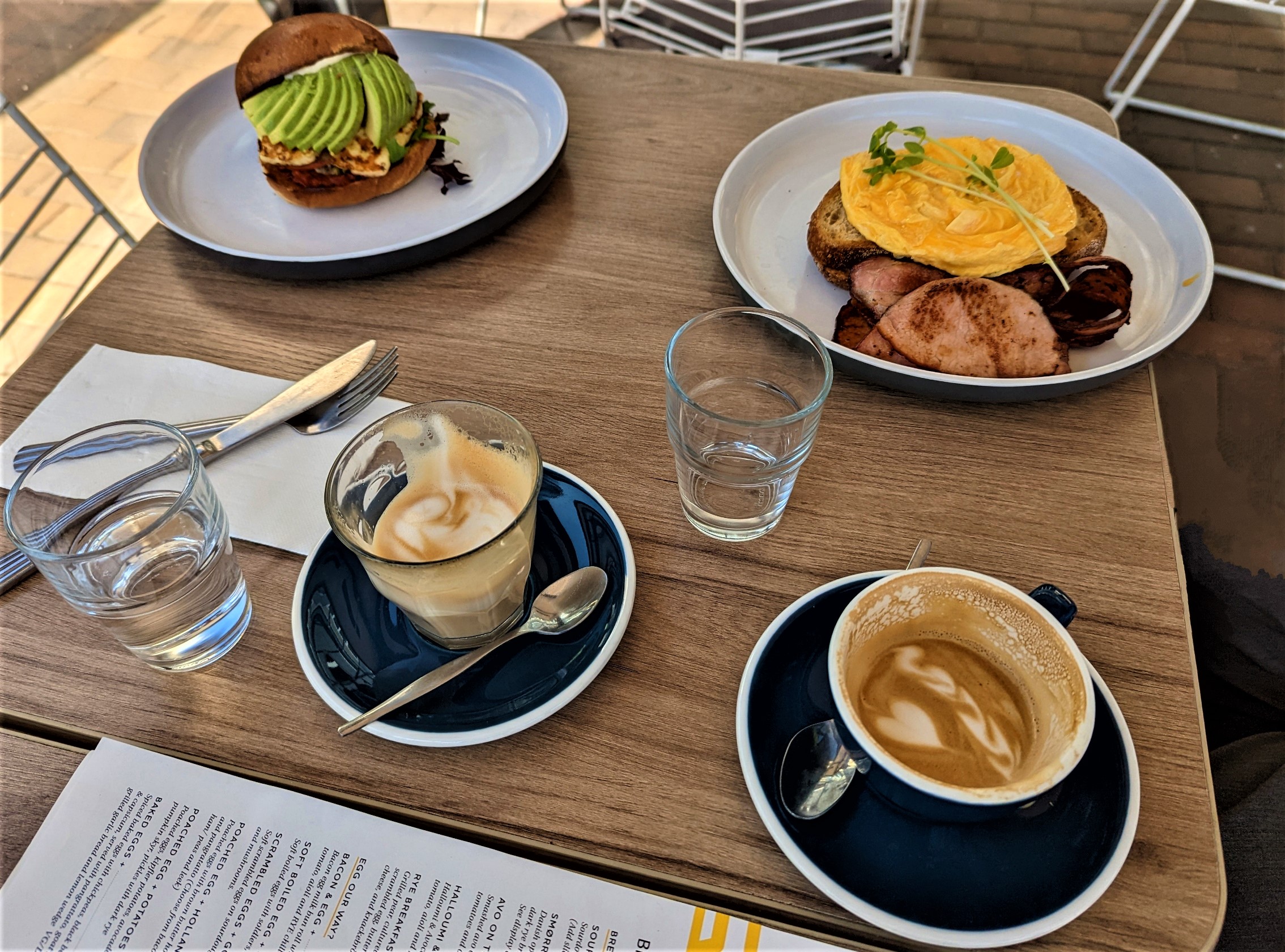
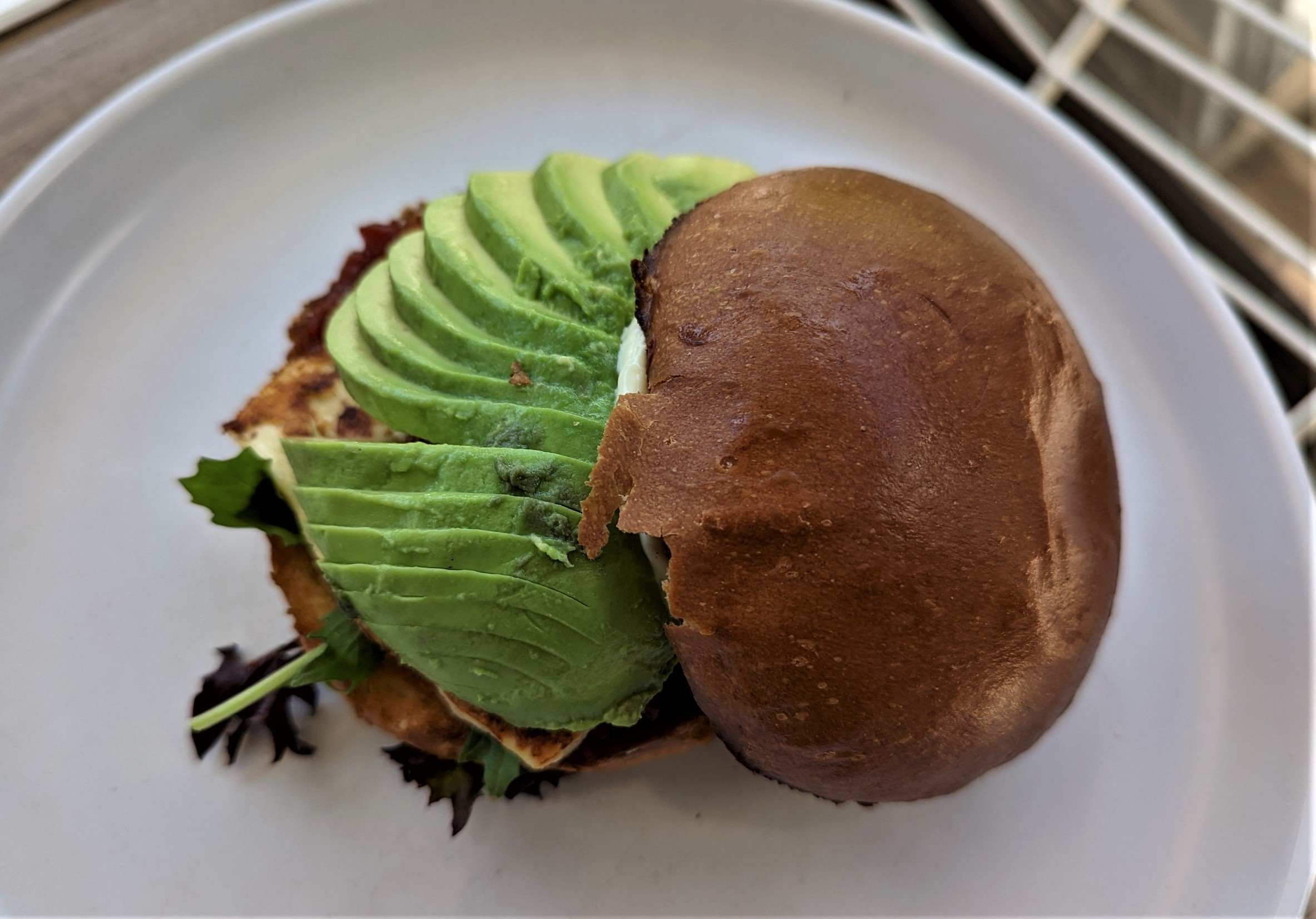
I also tried a new cafe, with very good results. The service was efficient and pleasant, the meals generous and delicious, and the coffee really good.
Duxton
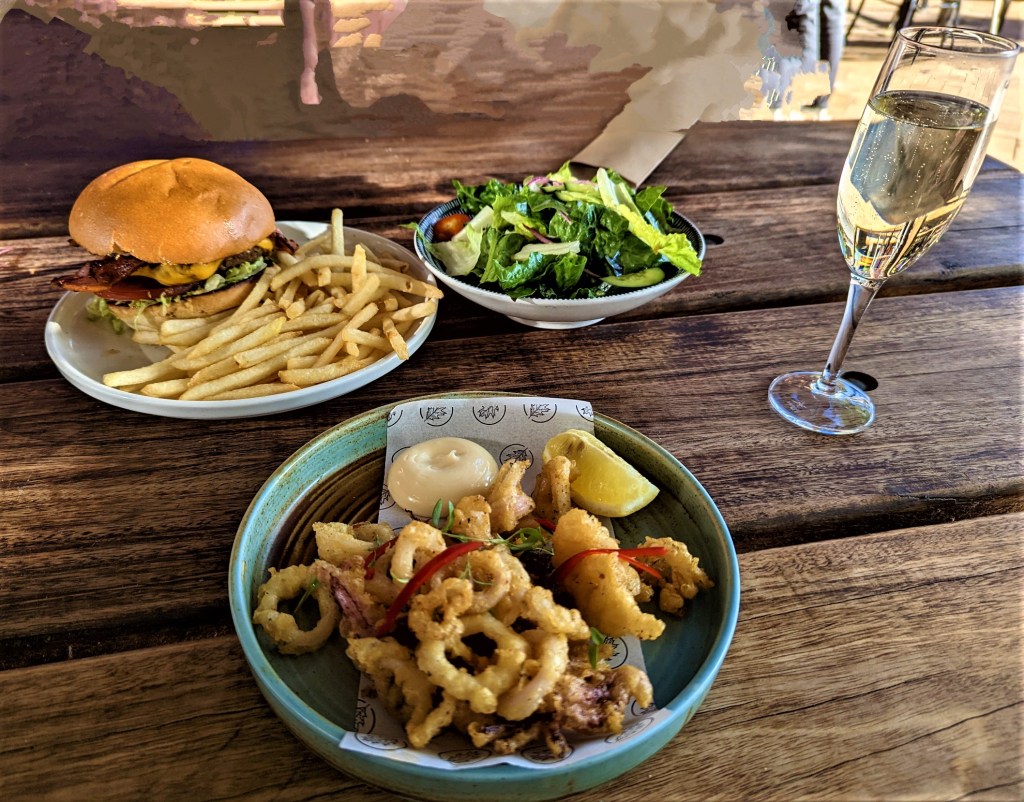
The Duxton serves a variety of meals, and I have found that I prefer the snacks to the main courses. The Calamari is succulent, lightly battered, and not a smidgin of old tyre about it! The dish is reasonably generous, served with a portion of lemon, and aioli. The green salad I ordered with it, is resplendent with crisp lettuce, cucumber, tomatoes and thinly sliced red opinion with a very light dressing. The cheeseburger enjoyed by my companion is served with chips and is generous with plenty of salad. There is also a large portion of bacon, some of which went under the table for the dog. With a Sav. Blanc for one, and prosecco for the other, this was an enjoyable light meal on a warm Saturday evening in Canberra.
An elegant finish to this meal was enjoyed at home with part of a birthday gift. The wine, another gift, will be opened on another occasion.


Bold and Brilliant!
Zoom Meeting Hosted by Dr Jocelynne Scutt
Each month Jocelynne Scutt hosts a meeting for participants who want to talk about feminist issues and listen to some engrossing talks by women.
On Sunday 11th December the speaker was Cynthia Umezulike, a lawyer and former fashion prize winner who established a fashion institute. She was a speaker at the Women’s Parliament held in Cambridge recently. She spoke eloquently about maneuvering the patriarchy. The discussion was lively with everyone contributing. Important in the enthusiasm to participate was the question that Cynthia is constantly asked – why the shallowness of fashion when she is a lawyer? Discussion arising from that talk ventured into the area of women wearing make-up and what it means, then on to the wearing of the burqa and hijab. What is the role of the patriarchy? Women refusing to be dictated to – so wear them – and don’t wear them, also on this basis.

Participants introduced themselves with reference to the work that they are doing. Kath Mazzella’s discussion on Gynecological Health and the importance of using the correct language is particularly important, and well worth listening to on the video.
I was able to refer to one of my favourite writers, Barbara Pym, who wore red lipstick at Oxford and was thrilled at the resulting horror of her tutors. She then wrote the wearing of a bright lipstick into a novel, Excellent Women, to convey the independence of Mildred Lathbury who bought Hawaiian Fire lipstick with thorough satisfaction!
A recording of the zoom meeting is available on Facebook.

 Robin's Room