Michelle McSweeney OK Bloomsbury Academic, January 2023.

Thank you, NetGalley, for providing me with this uncorrected proof for review.
Object Lessons is a fun series – and more. Items, and in this case a word, gain a different dimension under the writers who lead us into the history, the political ramifications, and social dimensions of seemingly simple topics. In this case, Michelle McSweeney delves into the history of a word that most of us uses everyday – OK. The linguist will really enjoy this book, but so too, will the person who knows what to say, but has gone no further into why or how language has evolved, and from where. See the complete review at Books: Reviews
After the Covid Report: Jacinda Ardern resigns; PM Anthony Albanese and Jacinda Ardern; The Wife of Bath: A Biography discussion of literature and feminism; review of The Good Wife of Bath as a follow up to the article in The Conversation (from a previous post).
Covid in Canberra after lockdown ended

New cases recorded number 806, with 32 active cases in hospital. Of these, one person is in ICU, but none is ventilated. No lives have been lost this week, maintaining the number of 148 lives lost since March 2020. Vaccinations are at 76.2% of people 5 to 15 with two doses; 78.7% of those over 16 with 3 doses; and 66% of people over 50 years of age having had four does (winter doses). Current restrictions require people who have tested positive on a RAT to report their result with an online registration form; stay at home until their symptoms are gone or they are feeling much better; wear a mask in public places or using public transport; must not enter a high-risk facility; must minimise movements in the community where possible; and work from home and check their workplace policies.
Jacinda Ardern announces resignation as New Zealand prime minister
Posted Thu 19 Jan 2023 at 11:12amThursday 19 Jan 2023 at 11:12am, updated Thu 19 Jan 2023 at 10:41pmThursday 19 Jan 2023 at 10:41pm
Jacinda Ardern has announced her shock resignation as New Zealand prime minister, while also calling an election on October 14.
Key points:
- Ms Ardern choked back tears saying she did not have the energy to seek re-election
- Her final day in office will be February 7
- She announced New Zealand’s general election will be held on October 14
Ms Ardern choked back tears on Thursday as she said she did not have the energy to seek re-election.
She said her final day in office would be February 7.
“I know what this job takes. And I know that I no longer have enough in the tank to do it justice,” she said.
Ms Ardern said she had the support of her family to continue, but they were also on board with her decision.
She said she would be there when her daughter Neve started school next year, and to her partner added: “To Clarke, let’s finally get married.”
Ms Ardern has been New Zealand’s prime minister since 2017.
“It’s one thing to lead your country through peacetime, it’s another to lead them through crisis. I had the privilege of being alongside NZ in a crisis and they placed their faith in me,” she said.
“I have never led on my own,” Ms Ardern said, stating she had always relied on her team.
With regards to the upcoming election in October, Ms Ardern said she still believed New Zealand Labour would win, but signalled that Deputy Prime Minister Grant Robertson would not put himself forward for a run at the party leadership.
Australian Prime Minister Anthony Albanese said Ms Ardern was a great friend and had “demonstrated that empathy and insight are powerful leadership qualities”.


Prime Minister of Australia, Anthony Albanese
Jacinda Ardern has shown the world how to lead with intellect and strength. She has demonstrated that empathy and insight are powerful leadership qualities. Jacinda has been a fierce advocate for New Zealand, an inspiration to so many and a great friend to me.
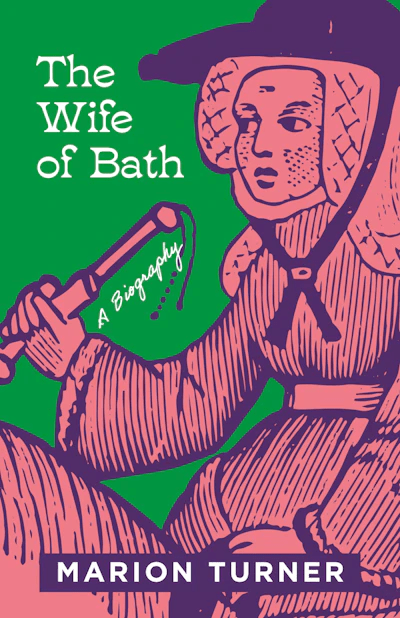
The Wife of Bath: A Biography featured in a Women and Literature newsletter, and again in this article in The Conversation. The article is reprinted here under the Creative Commons license offered so generously by The Conversation. I have reposted my review of the Australian writer’s novel based on The Wife of Bath, below. Karen Brooks’ The Good Wife of Bath is a novel that gives The Wife of Bath the liberation referred to in the review of Marion Turner’s biography of The Wife of Bath.

How Chaucer’s medieval Wife of Bath was tamed and then liberated in the 21st century
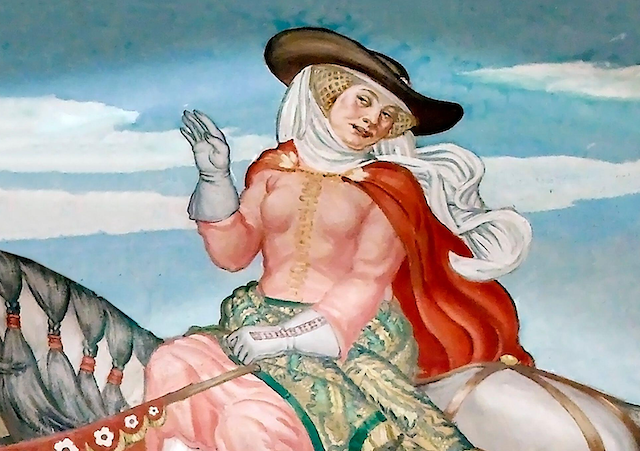
Published: January 12, 2023 4.54pm AEDT in The Conversation
Chaucer’s Wife of Bath is one of the most famous characters in English literature. Since appearing in the Canterbury tales in 1387, her tale has been rewritten and adapted by authors from the French philosopher Voltaire in the 18th century to the contemporary author Zadie Smith in 2021.
As I write in my book, there is something about this fictional, five-times-married, medieval woman that has taken hold of so many writers’ imaginations.
Before the Wife of Bath (whose name is Alison), women in literature were princesses, damsels-in distress, nuns and queens – or whores, witches and evil old crones. The principal source for the Wife of Bath is an old prostitute. Chaucer’s character is a middle-aged, mercantile, sexually active woman, who gives us her point of view. While she is an extraordinary figure (for her time), she is also an ordinary woman.
Across time, readers have been fascinated – and often threatened – by her. From scribes who argued against her in the margins of 15th-century manuscripts to censors who burnt ballads about her in the 17th century, there are many examples of her provoking anxiety in readers.
Many modern writers have also been drawn to her. But most of them have not been interested in her (still relevant) concern with discussing rape, domestic abuse, ageism, and the silencing of women (lines 692-696). Nor have they been interested in her humour or her self-awareness. Rather, these aspects of her have caused extreme discomfort and most authors have wanted to punish, ridicule, reduce or tame her in their own adaptations.
Sex, lies and videotapes
In 1972, the Italian filmmaker Pier Paolo Pasolini made a film of the Canterbury Tales. He focused on sex and the body, in a radically skewed interpretation of Chaucer that ignores the principle of variety that underpins the original text. For Pasolini, the Wife of Bath, as an older, sexually-active woman, is an abomination.
In his version, sex with her literally causes her fourth husband’s death. Her fifth husband is sexually uninterested in her. The episode ends with her biting his nose, a symbol of castration.
Out of all of the hundreds of responses to the Wife of Bath across time that I have come across, this one is perhaps the most disturbing, demonstrating extreme discomfort with the idea of a confident, middle-aged woman.
In the same decade, the British author Vera Chapman also created a new version of the Wife of Bath. This female-authored version is notably sympathetic. In Chapman’s novel, Alison is kind and considerate, even refusing advantageous marriage offers if she thinks the man might regret it.
But in order to make the Wife of Bath sympathetic, Chapman also makes her far more conventional. She becomes a damsel in distress, twice saved from rape by the intervention of chivalrous men. Chapman also turns her into a loving mother, giving her several children.
These adaptations show that the kind of woman Chaucer wrote was not seen as a viable heroine in the 1970s – she had to be tamed and made to fit into disturbingly narrow stereotypes.
From Molly Bloom to #Metoo
Somewhat similarly, the poet Ted Hughes celebrates and reduces the Wife of Bath. In his poem, Chaucer, Hughes writes that the poet Sylvia Plath recites the Wife of Bath’s Prologue out of pure enjoyment and love of Chaucer. He tells us that the Wife is Plath’s “favourite character in all literature”.
Both women embody certain positive characteristics – they are articulate, desirable, and confident. However, they also talk endlessly, listened to only by cows. Ultimately, Plath and Alison need to be rescued by a strong man (Hughes himself) as she too becomes a damsel in distress, unable to look after herself, and reliant on male strength and decisiveness.
This desire to reduce the Wife of Bath to something more generic is also evident earlier in the century.
James Joyce’s Molly Bloom in Ulysses is a reincarnation of Alison of Bath, as other critics have noted. However, Joyce’s focus on women as “the flesh that always affirms’” runs counter to the Wife of Bath’s interrogation of the misogynist idea that women are unintellectual. The Wife of Bath’s knowledge of the Bible and skill at argument are not paralleled in Joyce’s version, as he creates a simpler, more stereotyped and essentialised version of womanhood.
In the 21st century, many women writers, including Caroline Bergvall, Patience Agbabi and Jean “Binta” Breeze, have taken on the Wife of Bath and embraced her complexities.
Zadie Smith’s Wife of Willesden transports her to contemporary north-west London, where she becomes Alvita. Although the text is ostentatiously of the present moment, with its references to #MeToo, Jordan Peterson and Beyoncé, it closely follows Chaucer’s text.
Alvita, like Alison, is complex, neither monstrous nor blameless. Alison’s searing indictments of rape culture, of the power of hate-filled misogynist books, and of the structural silencing of women in her world are re-voiced as Smith emphasises their ongoing relevance in the 21st century.
The history of feminism is not straightforward – some things get worse over time, not better. It is only in very recent years that new adaptations are no longer less progressive than the original. Despite all the attempts to silence and humiliate her, nevertheless, the Wife of Bath persisted and her voice is now louder than ever before.

No Cindy Lou reviews this week. A kindle and licorice Allsorts have had to provide my entertainment.
Karen Brooks The Good Wife of Bath: A (Mostly) True Story, HQ Fiction, Australia, 2021.
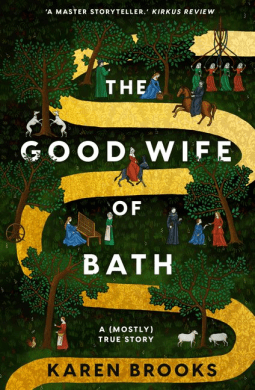
Thank you to NetGalley for this uncorrected proof copy for review.
Karen Brooks says that she found Chaucer’s Wife irresistible, and this shines through the novel she has written from the Wife of Bath’s perspective. Like Chaucer’s depiction of The Wife of Bath she has five husbands, travels on pilgrimages and is ‘feisty, vain, boastful, witty, middle aged’. Unlike the Chaucer version, Brooks lets The Wife, Eleanor/Alyson, tell her story. Perhaps ironically, but authentically, Chaucer is a secondary character, propelling Eleanor into her first marriage, and remaining a recurrent friend throughout her turbulent marriages and eventual profession.
Brooks’ notes on the story of a twelve-year-old forced into marriage to a much older man provide an explanation for the early storyline, her misgivings about this feature of the novel, and an explanation that I found satisfactory. Such attention to legitimate concerns provides a worthwhile discussion opening to the issues raised by this episode. A positive aspect of this early relationship is the enduring friendship between the two young women who meet through the first marriage – Eleanor and Alyson. Their story is the real love story, despite an early enmity, Eleanor’s four more marriages, disagreements, and different attitudes towards their continuing partnership.
The story is told with verve and humour. In particular, the letters The Wife of Bath dictates before she learns to write are a source of great comedy. She uses earthy language with joy, relishing the embarrassment she causes her scribe, and provides the reader with a host of descriptions and words that lend authenticity to the life unfurling in the narrative.
At the same time as The Wife’s personal life is laid out, the way in which all women were devalued because of their sex is illustrated through her experiences. Professions were tightly circumscribed, benefitting men and diminishing women’s creativity and ability. The Wife is an excellent businesswoman but upon marriage must suffer her husbands’ control over her future. As a single woman her creativity and business acumen demonstrated through weaving and the commercial enterprise she establishes are still dependent on men. Their rules and her ability to deal with the hand she is dealt leads her to her final profession.
Brooks’ explanation of her attitude toward the difficult issues raised, is part of a longer explanation about the narrative, there is a detailed account of material she has read as part of preparation for the writing, and a thorough glossary. I really enjoyed reading this version of Chaucer’s story. What a lively experience Brooks makes of one of the tales I churned though in high school many years ago. Together with Brooks’ depiction of Chaucer and the witty and beguiling narrative I almost feel compelled to give Chaucer’s Tales another read to fully enjoy the impetus for the storyline as well as Brooks’ version.

 Robin's Room