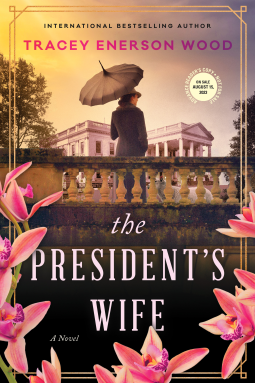
Tracey Enerson Wood The President’s Wife Sourcebooks Landmark, 2023.
Thank you, NetGalley, for providing me with this uncorrected copy for review.
The President’s Wife is an apt title, encompassing as it does the part of Edith Galt’s life where she becomes instead, Edith Wilson, First lady. Galt is her married name – that of her first husband, a jeweller whose business she retrieved from failure after his death. At the end of President Woodrow Wilson’s life Tracy Enerson Wood’s novel shows Edith redirecting his failing ability to command, perpetuating her role as an able person in her own right. Edith’s capability, despite being known as the jeweller’s and then, the President’s, wife makes an engaging story. Edith Bolling, Mrs Galt, the First Lady and the widow of the twenty-eighth American President are all given attention in the narrative. Tracy Enerson Wood weaves Edith’s background into the present, illustrating Edith’s capacity for the work that she was to undertake in maintaining Woodrow Wilson’s presidential responsibilities until they left the White House. However, these early years never intrude on the essential story, that of the First Lady to the Woodrow Wilson Presidency from their marriage in 1915 until the end of this presidency in 1921.
This is a political love story, replete with quotes from the romantic letters Woodrow Wilson write during their courtship and marriage. The introduction and last glimpse of Edith, features one of the symbols of their marriage, their play with names. This illustrates one of the important themes of the novel – the close nature of their marriage, despite their role as President and First Lady during a war time presidency which impacted on their time together and the nature of their interaction during that time. See Books: Reviews for the complete review.

Charlotte Booth The Movie Lover’s Guide to London, Pen & Sword, White Owl, 2023.
Thank you, NetGalley and Pen & Sword, for providing me with this uncorrected proof for review.
I imagine having this book starting in a backpack while wandering around London, and then diving for it so often that it has to stay in my hands. Or, beside me to read while I’m having a coffee before starting on the next interesting location that it encourages me to pursue. The Movie Lover’s Guide to London is also just a really good read for a person interested in films, locations, excerpts of plots and details of locations associated with this wonderful city. Going to the movies, as well as walking around London, will be doubly interesting with the wealth of information Charlotte Booth packs into this guide. Books: Reviews – see for complete review.
Articles after an explanation for there being no Covid report this week: from Tom Watson’s newsletter- London walks; Nicci French and the Hardy Tree; Covid Exhibition at Canberra Museum and Gallery.
Covid in Canberra after the end of lockdown

Covid numbers this week are not available as this post has had to be scheduled in advance of the figures being available.
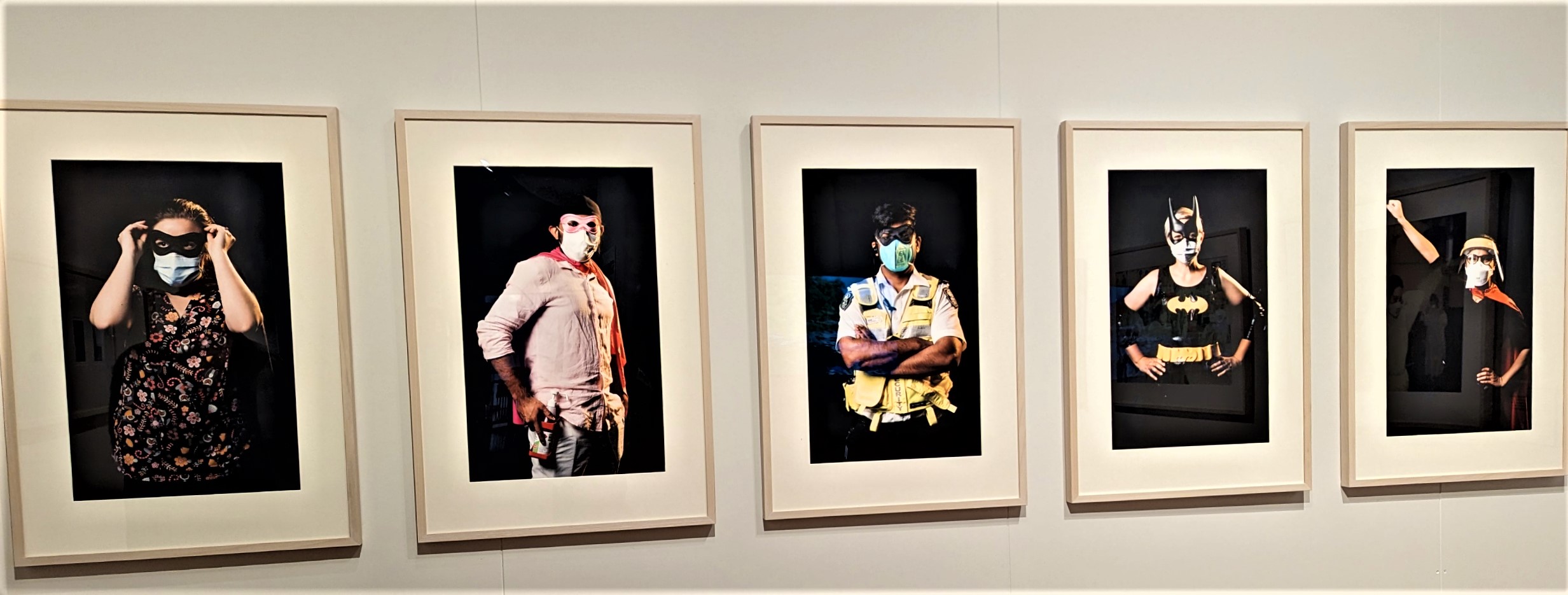
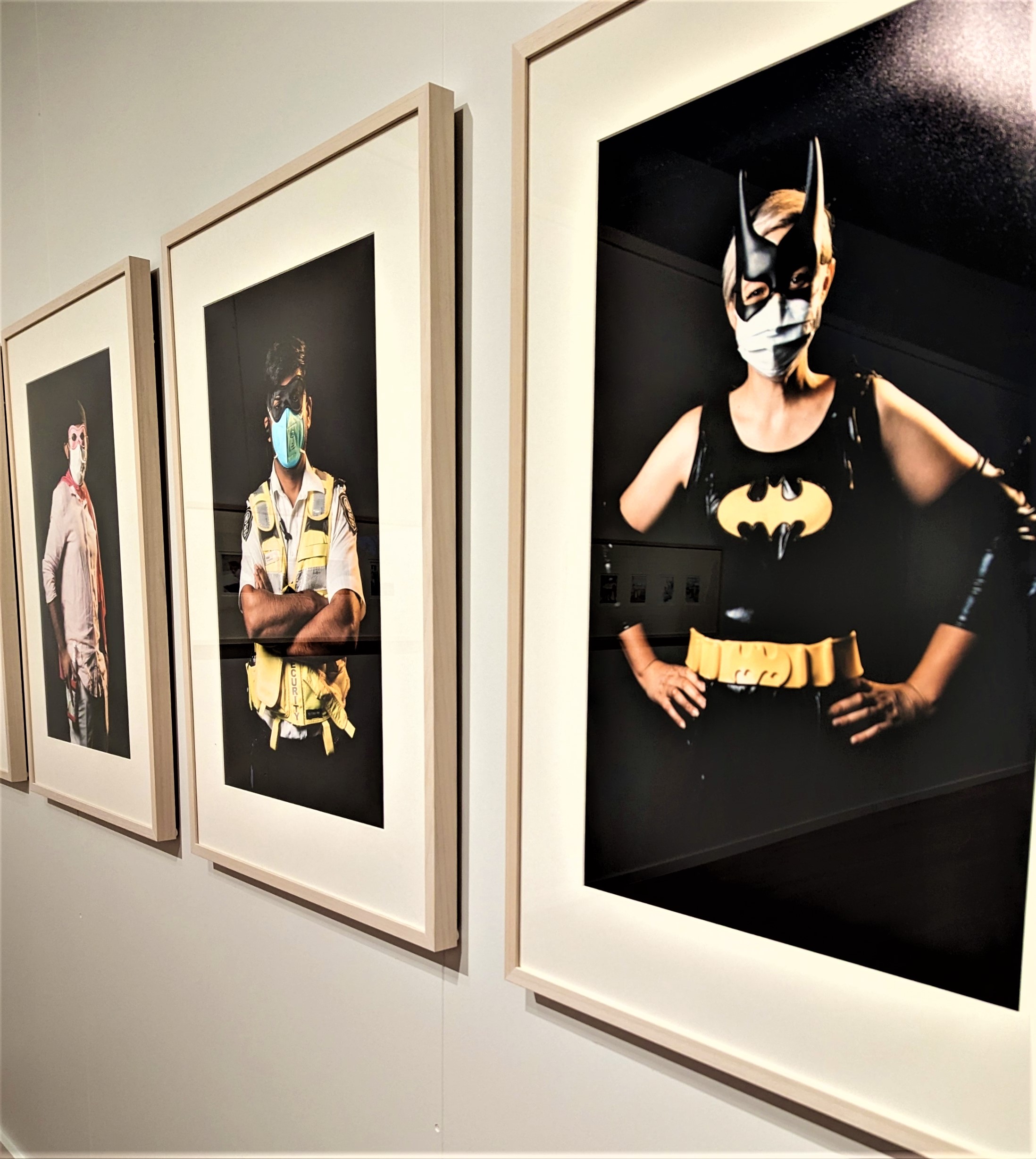
An exhibition related to the Covid pandemic and the way in which Canberrans responded is showing at CMAG. Photos from the exhibition appear below.
The epicentre of Gothic Horror
Or, how to walk 30,000 steps and not get bored. 24 hr ago
Tom Watson’s newsletter includes a piece that goes well with the Movie Lover’s Guide to London focusing as it does on walking around the city using another walking guide. This is London’s Hidden Walks by Stephen Millar.
Tom Watson
tomwatsonofficial@substack.com
I am pounding out the steps, buoyed by returning to an average of 10k in January and aiming for a new target of 11k for February.
On Wednesday, I recorded my first-ever 30,000 steps in the MyFitnessPal app. I’ve never done it before because I get bored walking after a while, but this week, I was helped by a lovely little guidebook called London’s Hidden Walks by Stephen Millar.
First 10k – To Kings Cross
I walked from South London, through covent garden and up to lunch in Granary Yard, Kings Cross.
Five reasons you should visit St Pancras Old Church
Nearby I visited St Pancras Old Church – and it was a find. It’s arguably the oldest church in London (314AD). In the 6th century AD, St Augustine may have used the altar. During the English civil war, it was occupied by Parliamentarian troops in 1642.
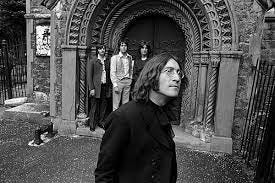
Firstly, the Beatles took their ‘mad day out’ while recording the White album in 1968 here.
Secondly, Mary Wollstonecraft (1759-1797) got married here. Mary is one of those historical figures you want at your fantasy dinner party. I love her so much that I campaigned to get her a statue (more on this victorious campaign here).
Thirdly, Mary Wollstonecraft is also buried here. Mary died giving birth to her daughter, Mary Godwin (1797-1851). While visiting her mother’s grave, a poet spotted Mary. The married Percy Shelley Byshe fell head over heels in love with her instantly.
After his wife’s death, Percy and Mary were ostracised by London Society and, in 1816, took refuge at the home of Lord Byron in Geneva. Whilst there, Byron held a competition for his house guests to write the best ghost story.
Despite Byron and Percy being literary giants, the winners were Mary, who wrote Frankenstein and Byron’s doctor, John William Polidori, who wrote Vampyre.
Polodidori is also buried in the graveyard. So you can say that this little church’s graveyard is at the epicentre of the Gothic Horror genre we know today.
Fourthly, Charles Dickens wrote about the graveyard in Great Expectations as a location for body snatching. Graveyard bodies are featured in the life of another great literary figure, Thomas Hardy.
In the mid-nineteenth century, the growing rail network cut through the graveyard leading to complaints that corpses were left strewn around the construction site.
A young Hardy was put in charge of tidying up the burial ground. He was left traumatised when he discovered a rotting corpse with two heads in one of the coffins. Until the winter storms there was the famous Hardy tree, whose roots were entwined around a mound of gravestones.

Fifthly and finally, to re-enforce its Gothic Horror heritage, the church, which celebrates its Anglo-Catholic traditions, was desecrated by Satanists in 1985.
The next 10k – glorious Camden
I’ve hazy memories of Camden from the eighties, nineties and naughties, mainly the pubs and the hi-jinx within them. Many of them have a fine music history.
The Good Mixer was Britpop Central in the early nineties, having to ban one of its more famous regulars, Liam Gallagher.
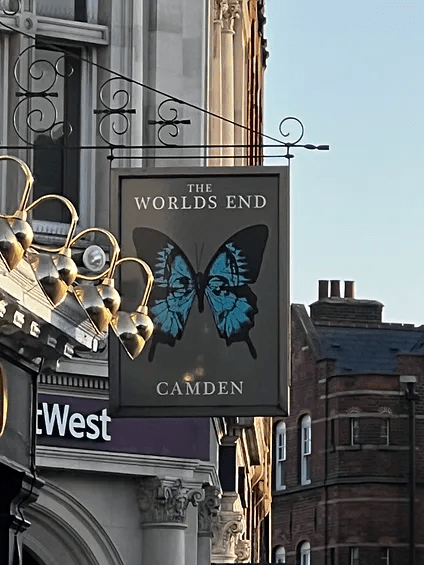
The World’s End pub became the scene of a momentous day of drinking when I first moved down to London in 1984. It’s also where years later, I serendipitously sat next to Amy Winehouse for an afternoon before she became internationally famous.
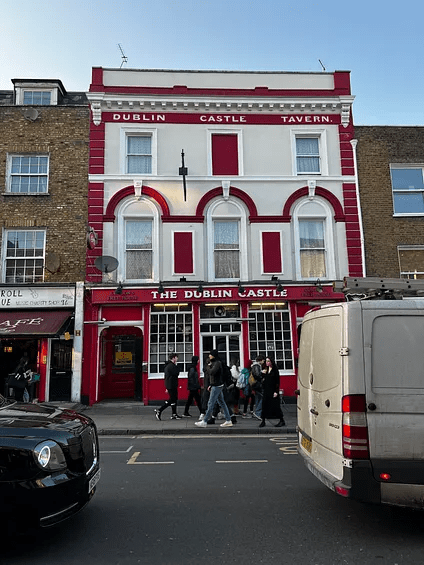
The Dublin Castle, with its Indie tradition, was the pub where the mighty Madness made a name for themselves.

Yet the cultural history of Camden is deeper and richer than this. When they walk down Arlington Road, most people will not know that Arlington House, which supports the homeless, accommodated George Orwell in the 1930s, who wrote about it in Down and Out in Paris and London.
Patrick Kavanagh stayed in the House and wrote of it in his autobiography, The Green Fool:
Many Irish boys made Rowton House, Camden Town, first stop from Mayo. The soft voices of Mayo and Galway sounding in that gaunt, impersonal place fell like warm rain on the arid patches of my imagination.
These boys were true peasants. They walked with an awkward gait and were shy. To me they looked up as to a learned man and asked me questions I couldn’t answer.

Madness wrote about it in One Better Day:
Arlington house, address: no fixed abode
An old man in a three-piece suit sits in the road
He stares across the water, he sees right through the lock
But on and up like outstretched hands
His mumbled words, his fumbled words, mock
Not far from the World’s End pub is a house where Charles Dickens used to live. I couldn’t find it, but it has a blue plaque. Down from the World’s end, I often fell into Camden palace and enjoyed its dilapidated glory. That won’t happen again as the building has transformed into Koko, a cultural venue connecting art and music. It’s magnificent.
The last 10k was a walk back to south London via Bradley’s Spanish Bar – my favourite pub of all time, after the much-missed Prince Albert in Kidderminster. tomwatsonofficial@substack.com
A video from YouTube has been omitted from this article.
The Hardy Tree
The Hardy tree, when still standing, appears in Nicci French’s series that features Frieda Klein. Sunday Morning Coming Down is the seventh in the series, and the tree is the site of a distressing discovery for Frieda, her family and friends. Klein walks the streets of London following the rivers that are now hidden under streets and buildings, many becoming only a trickle into the Thames, or having disappeared except for a marshy area that appears intermittently.
The lost rivers of London inspire numerous books, tours, and references – perhaps more inspiration for walking tours!





President Biden visits Kiev: MSNBC Report 20/2/2023




 Robin's Room