International Women’s Day
International Women’s Day
March 8 is an appropriate time to review How to Think Like a Woman Four Women Philosophers Who Taught Me How to Love the Life of the Mind, a book that recognises the way in which her own and her subjects’ domestic lives impacted on acceptance of their role as philosophers.

International Women’s Day (IWD) is a global day celebrating the social, economic, cultural and political achievements of women. The day also marks a call to action for accelerating gender parity. Significant activity is witnessed worldwide as groups come together to celebrate women’s achievements or rally for women’s equality.
Regan Penaluna How to Think Like a Woman Four Women Philosophers Who Taught Me How to Love the Life of the Mind Grove Atlantic, Grove Press 2023.

Thank you, NetGalley, for providing me with this uncorrected proof for review.
What a clever and engaging style Regan Penaluna has used to present her chosen women philosophers! She weaves her story as a woman philosopher into that of the four who are the focus of her work: Mary Astell, Damaris Masham, Mary Wollstonecraft and Catherine Cockburn. The reader is encouraged at every step to think like a woman, as, while the main narrative delivers the detailed stories of the four, Penaluna’s story gives them immediacy. Her story provides the understanding that is essential to thinking about women’s lives as a reference for past and present. Penaluna’s presentation gives us an insight into a present that links to the past. See Books: Reviews for the complete review.
After Covid update: Celebrate Women Artists; NGA Touring Exhibitions; National Gallery of Victoria Asian Exhibition; CMAG Exhibition, Blanche Tilden; Federal Labor Women; Unveiling of two women federal parliamentarians’ statues; American politics – Heather Cox Richardson; John Lewis review reminder; The 9th edition of the World Women’s Studies. Conference
Covid update

There are 491 new cases this week, with 8 people in hospital, none in ICU or ventilated. However, 4 Covid related lives were lost his week.
Articles after Covid update: Celebrate Women Artists; NGA Touring Program; National Gallery of Victoria Asian Collection; Blanche Tilden Exhibition at CMAG; Voting restrictions US – Heather Cox Richardson; World Women’s Studies Conference.
CELEBRATE WOMEN ARTISTS
CELEBRATE WOMEN ARTISTS
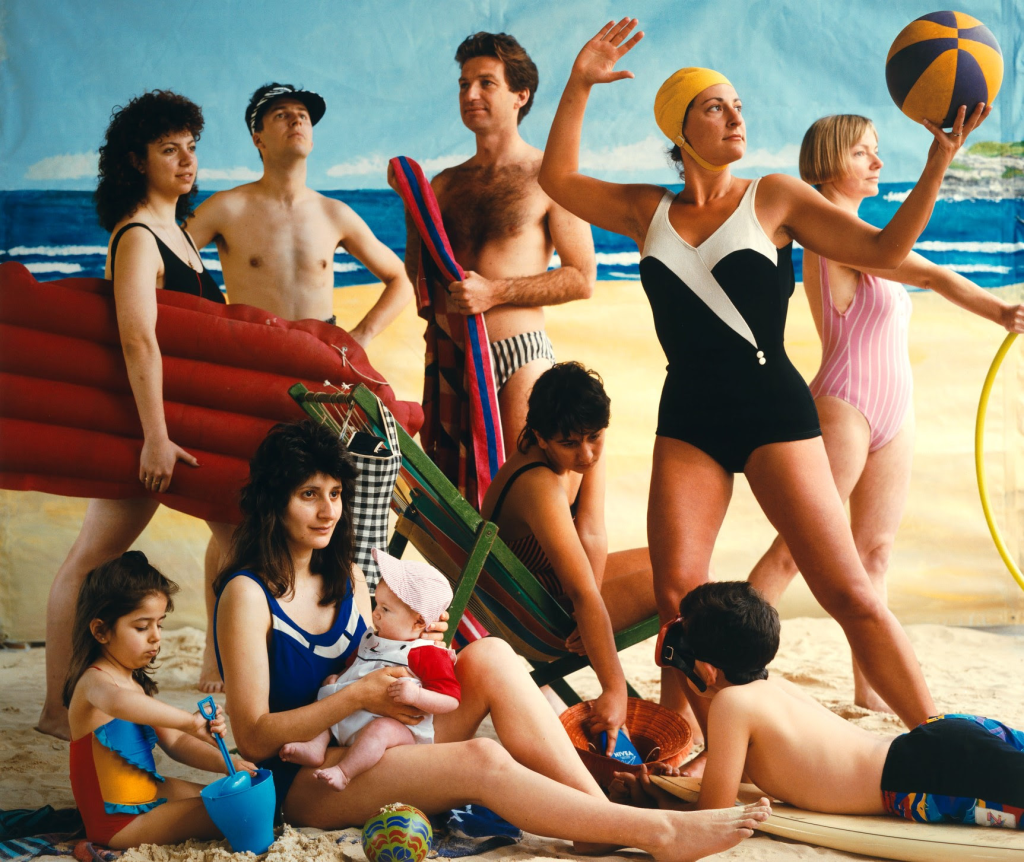
The National Gallery’s initiative, Know My Name is a national program of exhibitions, commissions, education programs, partnerships and creative collaborations that celebrates the diversity and creativity of Australian women artists throughout history and to the present day.
RATE WOMEN ARTISTS


2023 Touring Program
| From Alice Springs to Auckland, the National Gallery’s Touring Program will take the national collection to regional, suburban and overseas venues this year.The Gallery’s touring program is set to expand further over the coming years with the July launch of the sharing the national collection initiative. Funded under the Australian Government’s new National Cultural Policy ‘Revive’, this will see more highlights from the collection on long-term loan to galleries across Australia.The breadth and diversity of First Nations art will be seen in the regions and abroad with Ever Present: First Peoples Art of Australia continuing its international tour to Auckland Art Gallery Toi o Tāmaki, New Zealand this July. Locally, the 4th National Indigenous Art Triennial: Ceremony will continue its tour of the country through Victoria, Northern Territory and South Australia.The Gallery continues driving a national dialogue on gender equity within the visual arts through the national tour of Know My Name: Australian Women Artists and dedicated exhibitions Spowers & Syme, The Balnaves Contemporary Series exhibitions: Skywhales: Every heart sings, Jess Johnson and Simon Ward: Terminus and Judy Watson & Helen Johnson: the red thread of history, loose ends.Explore highlights from the National Gallery’s 2023 touring program below. |


4TH NATIONAL INDIGENOUS ART TRIENNIAL: CEREMONY
Araluen Arts Centre, NT
25 Mar – 12 Jun Samstag Museum of Art, SA
29 Sep – 8 Dec MORE
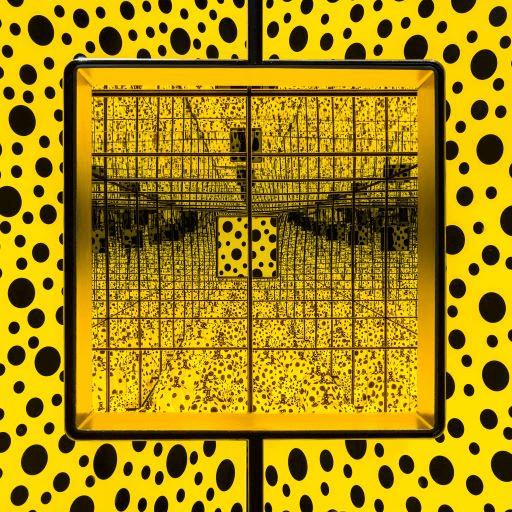
YAYOI KUSAMA: THE SPIRITS OF THE PUMPKINS DESCENDED INTO THE HEAVENS
Art Gallery of South Australia, SA
Until 2 Apr

SPOWERS & SYME Queensland University of Technology Art Museum, QLD
10 Mar – 4 Jun MORE
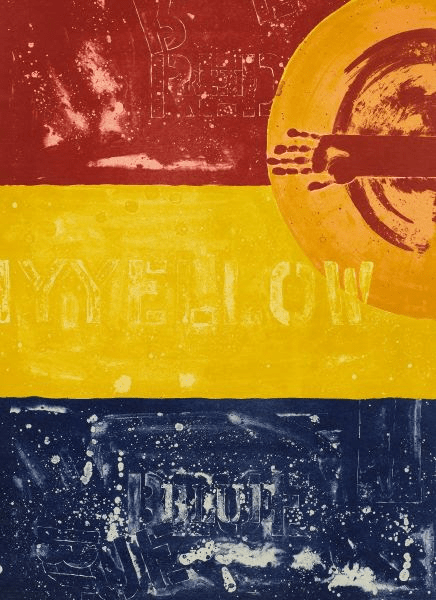
RAUSCHENBERG & JOHNS: SIGNIFICANT OTHERS
Araluen Arts Centre, NT
11 Mar – 14 May
Ipswich Art Gallery, QLD
3 Jun – 30 Jul Cairns Art Gallery, QLD
9 Sep – 19 Nov Museum of Art and Culture Lake Macquarie, NSW
9 Dec 23 – 4 Feb 24 MORE

PATRICIA PICCININI: SKYWHALES: EVERY HEART SINGS Tamworth Regional Gallery, NSW
6 May MORE
More national and international content to come.
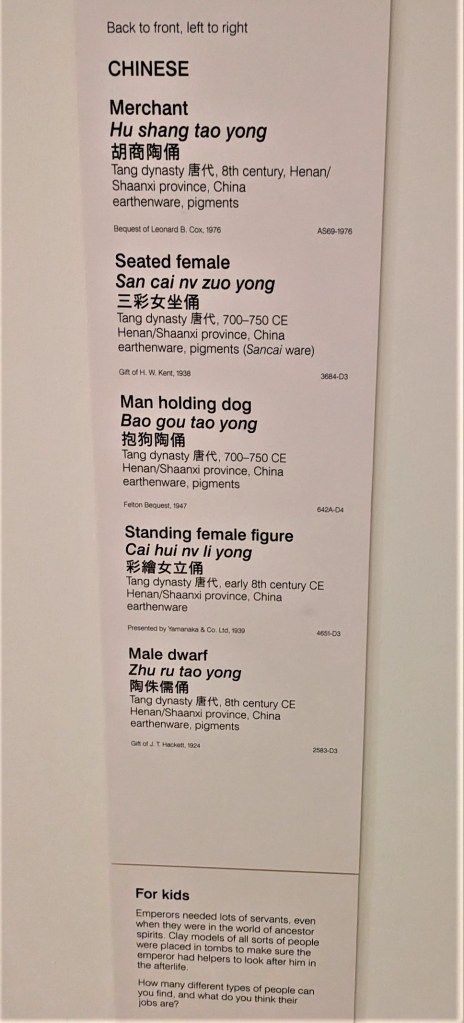
National Gallery of Victoria – A small selection from the Asian Collection

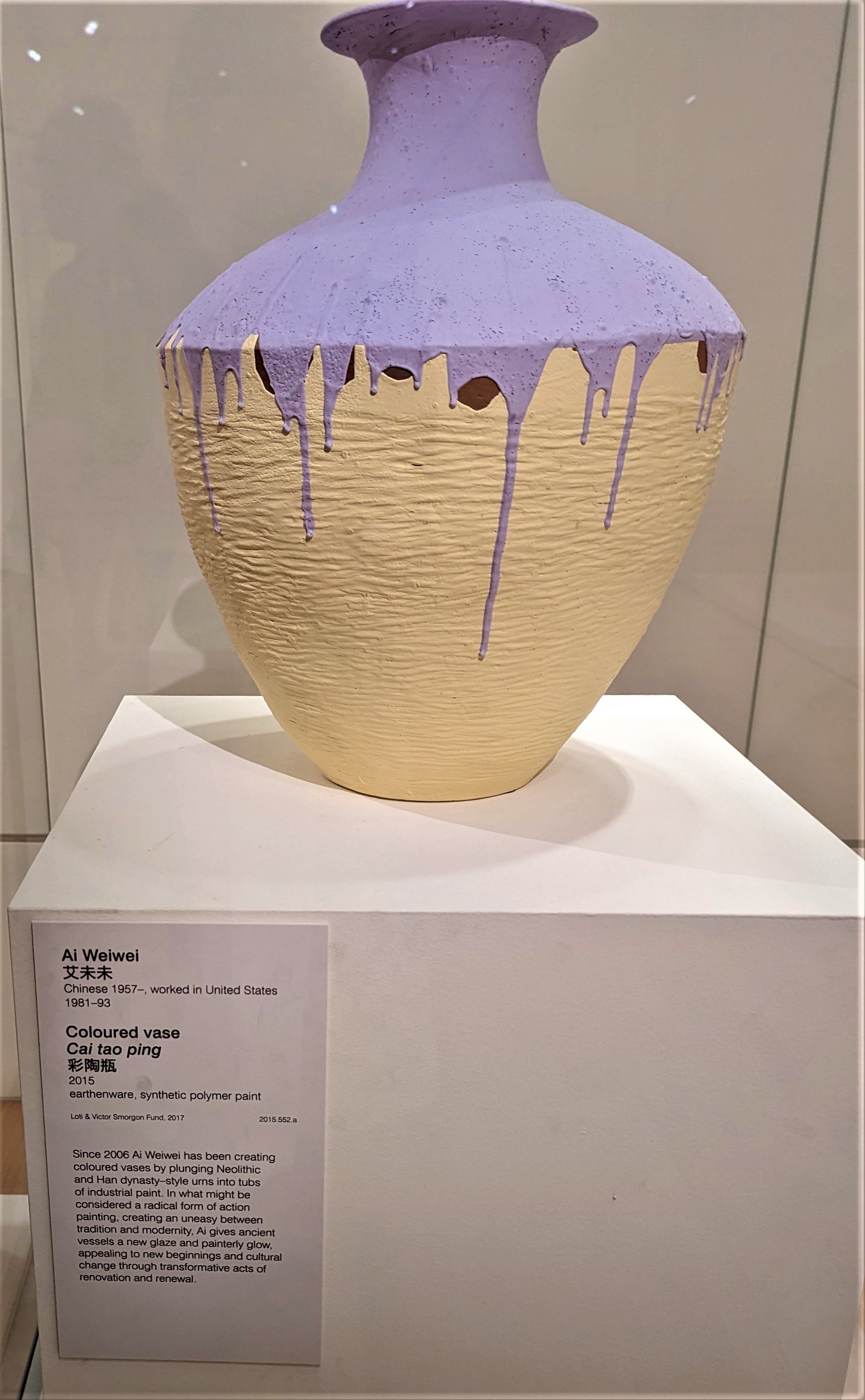
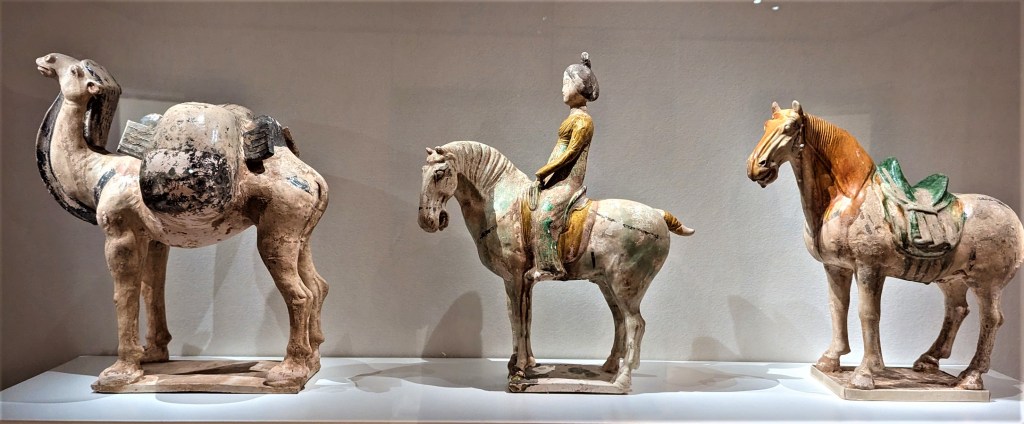
Note the reference below to the woman equestrian.


A delightful camel and an interesting animal image – unfortunately unnamed as the photograph of the signage seems to have disappeared.


Weary of flying a couple of geese from the south stay by each other , Ding Yangong
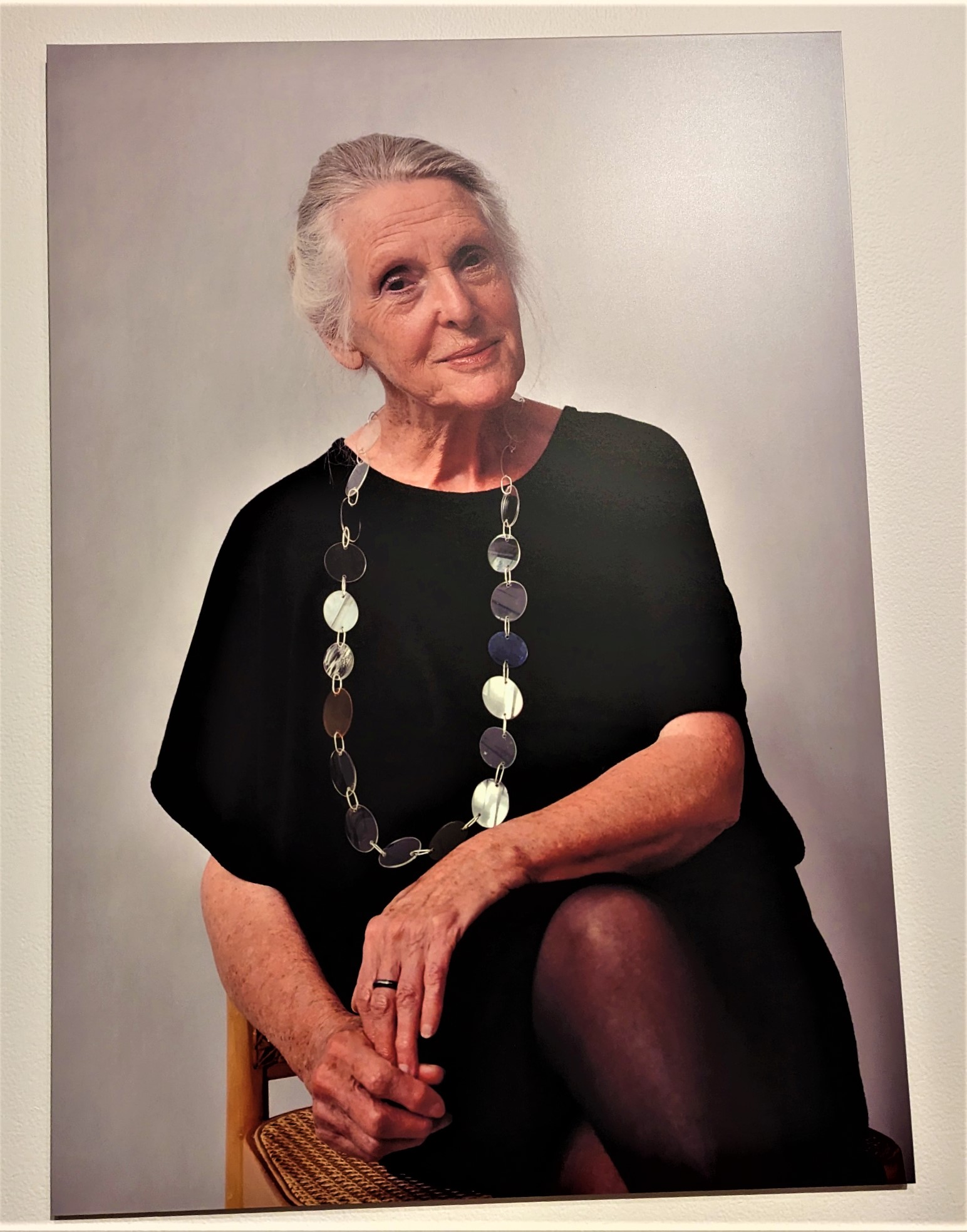
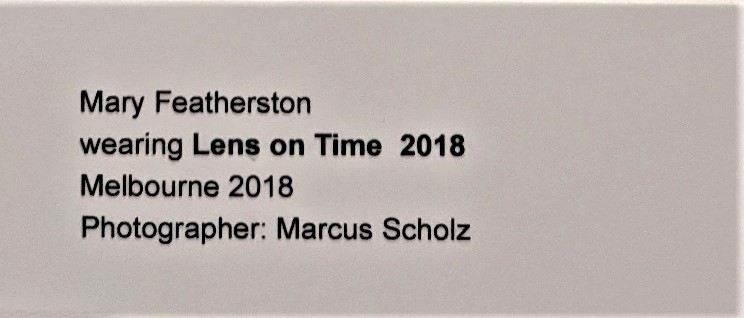
CMAG Exhibition
This exhibition was shown in the gallery adjacent to Tom Moore’s works featured in last week’s blog. The two exhibitions demonstrate the diversity that epitomises the work that can be seen in the Canberra Museum and Gallery. The exhibitions are very different, but each has its own charm.





The Albanese Labor Government is the first ever majority woman Australian Government, and we are proud of it.

The New Daily, March 8, 2023
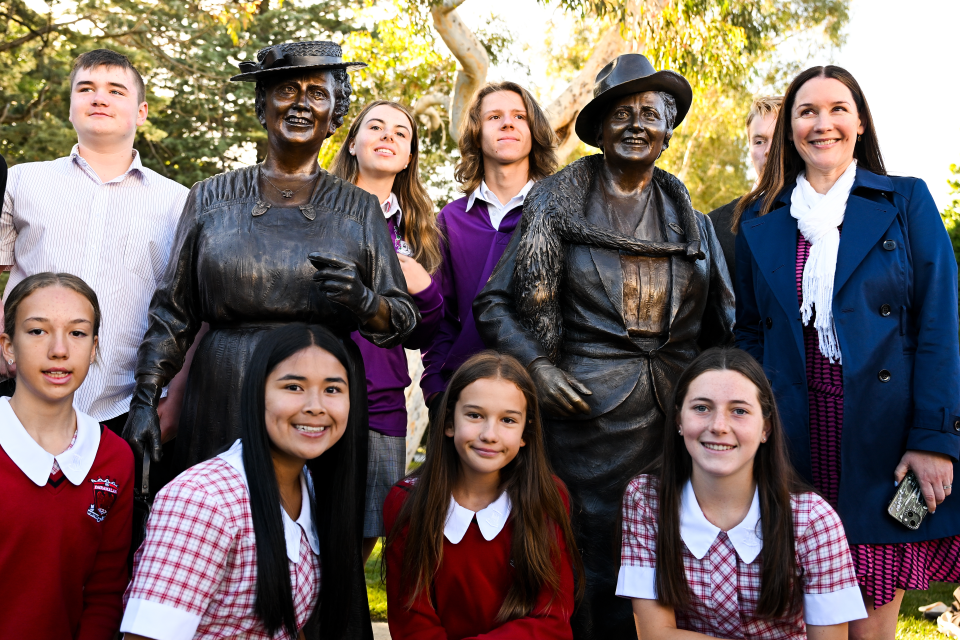
Statues of Australia’s two first federal female politicians were unveiled at Old Parliament House on Wednesday, marking a milestone for Canberra’s parliamentary zone.
The statues of Dame Dorothy Tangney and Dame Enid Lyons are the first of women to appear in the zone.
They are close to the Women’s Suffrage Commemorative Fountain in the adjacent rose gardens. Sculptor Lis Johnson said honoured the trailblazing women in a social media post on Wednesday.
“Dames are in! Yay! Big relief,” she wrote on Instagram.
In an earlier statement, she said the twin works “put the spotlight on the two dames as high-achieving women who did a lot of important work to improve education and public health”.
“I think it is befitting that the sculptures of Dame Dorothy Tangney and Dame Enid Lyons will be unveiled at a time when there are now many women making a mark in Parliament,” Johnson said.
Territories Minister Kristy McBain – the first woman to represent the NSW seat of Eden-Monaro – unveiled the twin statues early on International Women’s Day in a ceremony attended by people from both sides of politics.
“To be the person unveiling the statue of the first women who entered federal parliament and really paved the way for women after them to stand up for women’s issues at a national level, [and who were] also advocates of social justice, issues for education, and for peace, is going to be something really special for me,” she said.
“It’s going to be very special because that old saying, ‘You can’t be what you can’t see,’ is true. And these two women really laid down the pathway that many of us have followed.”
Dame Enid Lyons was the wife of PM Joseph “Honest Joe” Lyons, who died in office in 1939. She was elected to the Tasmanian seat of Darwin in 1943, becoming the first female member of the House of Representatives.
At the same election, Dame Dorothy Tangney was elected to the Senate.
Dame Enid went on to be sworn in as vice-president of the executive council in 1949, becoming the first female member of federal cabinet.
She later complained that it was “a toothless position”, doubting that the then PM Sir Robert Menzies wanted her in cabinet at all because “they only wanted me to pour the tea”.
Dame Enid resigned from cabinet in 1951 and did not contest the next election.https://instagram.com/p/Cpgls7PhTiD/embed/
Earlier on Wednesday, the Lyons’ granddaughter, Professor Rosemary Ainslie presented the Bible on which Australia’s most prominent political couple swore their oaths of office to Speaker Milton Dick.
Mr Dick said not only was it a family treasure, but it carried a “rich history during the first century of Australian democracy”.
Professor Ainslie said it had been hard to hand over the Bible after so many years in the family’s care.
She said she initially considered handing it over to the Australian embassy in Washington DC, which has a room dedicated to Ms Lyons.
“But upon reflection I thought no, it is Australia’s history, it should stay in Australia,” Professor Ainslie said.
“It is a tangible connection to both my grandparents.
“It is a symbol of two people who made a significant and selfless contribution to the country that they love.”
-with AAP
American politics

Heather Cox Richardson writes about President Biden’s visit and speech at in Selma, Alabama.
President Joe Biden spoke this afternoon in Selma, Alabama, to commemorate the 58th anniversary of Bloody Sunday, when law enforcement officers tried to beat into silence Black Americans marching for their right to have a say in the government under which they lived. Standing at the Edmund Pettus Bridge, which had been named for a Confederate brigadier general, Grand Dragon of the Alabama Ku Klux Klan, and U.S. senator who stood against Black rights, Biden said: “On this bridge, blood was given to help ‘redeem the soul of America.’”
The story of March 7, 1965, commemorated today in Selma, is the story of Americans determined to bring to life the principle articulated in the Declaration of Independence that a government’s claim to authority comes from the consent of the governed. It is also a story of how hard local authorities, entrenched in power and backed by angry white voters, worked to make the hurdles of that process insurmountable.
In the 1960s, despite the fact Black Americans outnumbered white Americans among the 29,500 people who lived in Selma, Alabama, the city’s voting rolls were 99% white. So, in 1963, local Black organizers launched a voter registration drive.
It was hard going. White Selma residents had no intention of permitting their Black neighbors to have a say in their government. Indeed, white southerners in general were taking a stand against the equal right of Black Americans to vote. During the 1964 Freedom Summer voter registration drive in neighboring Mississippi, Ku Klux Klan members worked with local law enforcement officers to murder three voting rights organizers and dispose of their bodies.
To try to hold back the white supremacists, Congress passed the 1964 Civil Rights Act, designed in part to make it possible for Black Americans to register to vote. In Selma, a judge stopped voter registration meetings by prohibiting public gatherings of more than two people.
To call attention to the crisis in her city, voting rights activist Amelia Boynton traveled to Birmingham to invite the Reverend Dr. Martin Luther King, Jr., to the city. King had become a household name after the 1963 March on Washington where he delivered the “I Have a Dream” speech, and his presence would bring national attention to Selma’s struggle.
King and other prominent Black leaders arrived in January 1965, and for seven weeks, Black residents made a new push to register to vote. County Sheriff James Clark arrested almost 2,000 of them on a variety of charges, including contempt of court and parading without a permit. A federal court ordered Clark not to interfere with orderly registration, so he forced Black applicants to stand in line for hours before taking a “literacy” test. Not a single person passed.
Then, on February 18, white police officers, including local police, sheriff’s deputies, and Alabama state troopers, beat and shot an unarmed man, 26-year-old Jimmie Lee Jackson, who was marching for voting rights at a demonstration in his hometown of Marion, Alabama, about 25 miles northwest of Selma. Jackson had run into a restaurant for shelter along with his mother when the police started rioting, but they chased him and shot him in the restaurant’s kitchen.
Jackson died eight days later, on February 26. Black leaders in Selma decided to defuse the community’s anger by planning a long march—54 miles—from Selma to the state capitol at Montgomery to draw attention to the murder and voter suppression.
On March 7, 1965, the marchers set out. As they crossed the Edmund Pettus Bridge, state troopers and other law enforcement officers met the unarmed marchers with billy clubs, bullwhips, and tear gas. They fractured the skull of young activist John Lewis and beat Amelia Boynton unconscious. A newspaper photograph of the 54-year-old Boynton, seemingly dead in the arms of another marcher, illustrated the depravity of those determined to stop Black voting.
Images of “Bloody Sunday” on the national news mesmerized the nation, and supporters began to converge on Selma. King, who had been in Atlanta when the marchers first set off, returned to the fray.
Two days later, the marchers set out again. Once again, the troopers and police met them at the end of the Edmund Pettus Bridge, but this time, King led the marchers in prayer and then took them back to Selma. That night, a white mob beat to death a Unitarian Universalist minister, James Reeb, who had come from Massachusetts to join the marchers.
On March 15, President Lyndon B. Johnson addressed a nationally televised joint session of Congress to ask for the passage of a national voting rights act. “Their cause must be our cause too,” he said. “[A]ll of us…must overcome the crippling legacy of bigotry and injustice. And we shall overcome.” Two days later, he submitted to Congress proposed voting rights legislation.
The marchers were determined to complete their trip to Montgomery, and when Alabama’s governor, George Wallace, refused to protect them, President Johnson stepped in. When the marchers set off for a third time on March 21, 1,900 members of the nationalized Alabama National Guard, FBI agents, and federal marshals protected them. Covering about ten miles a day, they camped in the yards of well-wishers until they arrived at the Alabama state capitol on March 25. Their ranks had grown as they walked until they numbered about 25,000 people.
On the steps of the capitol, speaking under a Confederate flag, Dr. King said: “The end we seek is a society at peace with itself, a society that can live with its conscience. And that will be a day not of the white man, not of the black man. That will be the day of man as man.”
That night, Viola Liuzzo, a 39-year-old mother of five who had arrived from Michigan to help after Bloody Sunday, was murdered by four Ku Klux Klan members who tailed her as she ferried demonstrators out of the city.
On August 6, Dr. King and Mrs. Boynton were guests of honor as President Johnson signed the Voting Rights Act of 1965. Johnson recalled “the outrage of Selma” when he said, “This right to vote is the basic right without which all others are meaningless. It gives people, people as individuals, control over their own destinies.”
The Voting Rights Act authorized federal supervision of voter registration in districts where African Americans were historically underrepresented. Johnson promised that the government would strike down “regulations, or laws, or tests to deny the right to vote.” He called the right to vote “the most powerful instrument ever devised by man for breaking down injustice and destroying the terrible walls which imprison men because they are different from other men,” and pledged that “we will not delay, or we will not hesitate, or we will not turn aside until Americans of every race and color and origin in this country have the same right as all others to share in the process of democracy.”
But less than 50 years later, in 2013, the Supreme Court gutted the Voting Rights Act. The Shelby County v. Holder decision opened the door, once again, for voter suppression. Since then, states have made it harder to vote. In the wake of the 2020 election, in which voters handed control of the government to Democrats, Republican-dominated legislatures in at least 19 states passed 34 laws restricting access to voting. In July 2021, in the Brnovich v. Democratic National Committee decision, the Supreme Court ruled that election laws that disproportionately affected minority voters were not unconstitutional so long as they were not intended to be racially discriminatory.
When the Democrats took power in 2021, they vowed to strengthen voting rights. They immediately introduced the For the People Act, which expanded voting rights, limited the influence of money in politics, banned partisan gerrymandering, and created new ethics rules for federal officeholders. Republicans in the Senate blocked the measure with a filibuster. Democrats then introduced the John R. Lewis Voting Rights Advancement Act, which would have restored portions of the Voting Rights Act, and the Freedom to Vote Act, a lighter version of the For the People Act. Republicans blocked both of those acts, too.
And so, in 2023, the right to vote is increasingly precarious.
As Biden told marchers today, “The right to vote—the right to vote and to have your vote counted is the threshold of democracy and liberty. With it, anything is possible. Without it—without that right, nothing is possible. And this fundamental right remains under assault.”


A book relevant to this article, by John Lewis featured in a previous blog. See: November 17, 2021 – John Lewis: The Last Interview and Other Conversations Melville House, 2021.
—
The 9th edition of the World Women’s Studies Conference is calling for papers on the theme: “Gender Justice and the Power of Feminisms: Dismantling Patriarchy, Building Equity”. The conference aims to deepen knowledge of global feminisms along with the theoretical, policy, and personal dimensions of Women’s Studies scholar-activism worldwide.
Submissions close 14 March 2023.
» Details

 Robin's Room