This week I review Before Mrs Beeton Elizabeth Raffald by Neil Buttery.
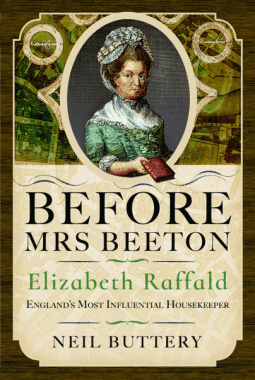
Neil Buttery, Before Mrs Beeton Elizabeth Raffald, England’s Most Influential Housekeeper, Pen & Sword, Pen & Sword History 2023.
Thank you, NetGalley and Pen & Sword for providing me with this uncorrected proof for review.
Before Mrs Beeton Elizabeth Raffald is another of Pen & Sword’s enticing stories about a fascinating time and character written in the familiar accessible style of the Pen & Sword author. Because the style is accessible do not feel that perhaps the information lacks verisimilitude. Easy to read the narrative may be, but there is such a host of information that we are fortunate that the style gives us the best opportunity to understand and relish the story that unfolds. See Books: Reviews for the complete review.
After the Covid update: Mrs Beeton; cookbooks; Why do we still buy cookbooks? Ottolenghi Food Tour; Anna Ben Yehuda Rahmanan quote; Blake McMullan’s YouTube cookery site; From the domestic to the public- a feminist fiction approach; information about a new find – Homework: The Secret History (and Future) of Home Economics by Danielle Dreilinger; Jess Ho says our food industry is Eurocentric; cookery as a fundraiser.
Covid update
This week has been prepared in advance as I am on holiday. So, I am using the ABC Covid update for Australia wide figures at 3 March 2023.

NSW: 7,163 new cases with 800 in hospital, 19 in intensive care and 29 deaths. Victoria: 3,016 new cases with 104 people in hospital and 4 in intensive care. There were 23 deaths this week. Northern Territory: 90 new cases with 3 in hospital. Queensland: 4,028 new cases with 278 in hospital and 6 in intensive care. There have been 23 new deaths. South Australia: 1,700 new cases, 35 in hospital with 1 in intensive care. Deaths recorded this week number 13. Western Australia: there are 2,390 new cases with 69 people in hospital and 8 new deaths this week. Tasmania: there are 622 new cases with 17 in hospital and 1 intensive care, and one new death reported. The ACT will be a repeat from a previous blog, but worth recording here in the Australia wide records. This week there were 491 new cases with 8 cases in hospital and 4 deaths.
Mrs Beeton

When talking about cookery Mrs Beeton cannot be entirely forgotten. A battered copy of her cookery book was a secondhand bookshop find. Unfortunately, it is undated. It was published in London and Melbourne by Ward, Lock & Co., Limited. Mrs. Beeton’s Handy Reference books – cake making, jam making, puddings and pies, cold sweets, sauces and soups, hors doevres and savouries, poultry and game, and fish cookery are advertised inside the front cover with the admonishment ‘Keep to the “Beeton” track’.
There is a newspaper advertisement inside the book for Rabbit Vegetable Hot Pot, signed off on by Betty King. But…Betty King, Home Economist, of World Brands Pty Ltd was one of the leading ladies of Australian cookery…the Margaret Fulton of her day. Unfortunately, she didn’t exist. Betty King, ‘leading home economist’, first appeared in Australian women’s magazines in 1950 promoting Mello Chocolate Dessert.
An advertisement for shredded beef suet to make cooking easy is a reminder of my grandmother’s suet pastry – cooking with suet was a topic on Facebook recently, which suggests old style unhealthy cookery touches a nostalgic nerve.

There are recipes for hares, but they do not have to be caught by this time – just skinned.


Cookbooks
The review led to my finding additional information about cookbooks, cooking programs and their appeal, and joining the discussion on Facebook about cookery books from the past. Mine were The Golden Wattle, a school cookbook that I still use on occasion, and the CWA Cookbook that was my mother’s. That includes some lovely comments from her to me, about following on from her preparations of a recipe and, more excitingly a correction from sexist language to gender neutral language. A recipe was called Poor Man’s Pie, and she renamed it Poor Person’s Pie! The 1950s was not entirely bereft of its feminist input in the kitchen. A Facebook discussion of well-thumbed and happily remembered cookbooks came up with these examples. The Golden Wattle (not olden, as in the photo) was a Western Australian cookbook for high school students studying, as it was called, Domestic Science. The CWA Cookery Book and Household hints was also a Western Australian stand by in the kitchen. What some of the faming housewives thought of a recipe called Devil’s Food Chocolate Cake I do not know, but that was a title of a delicious rich chocolate cake. The Commonsense Cookery Book was a New South Wales publication, used in schools.




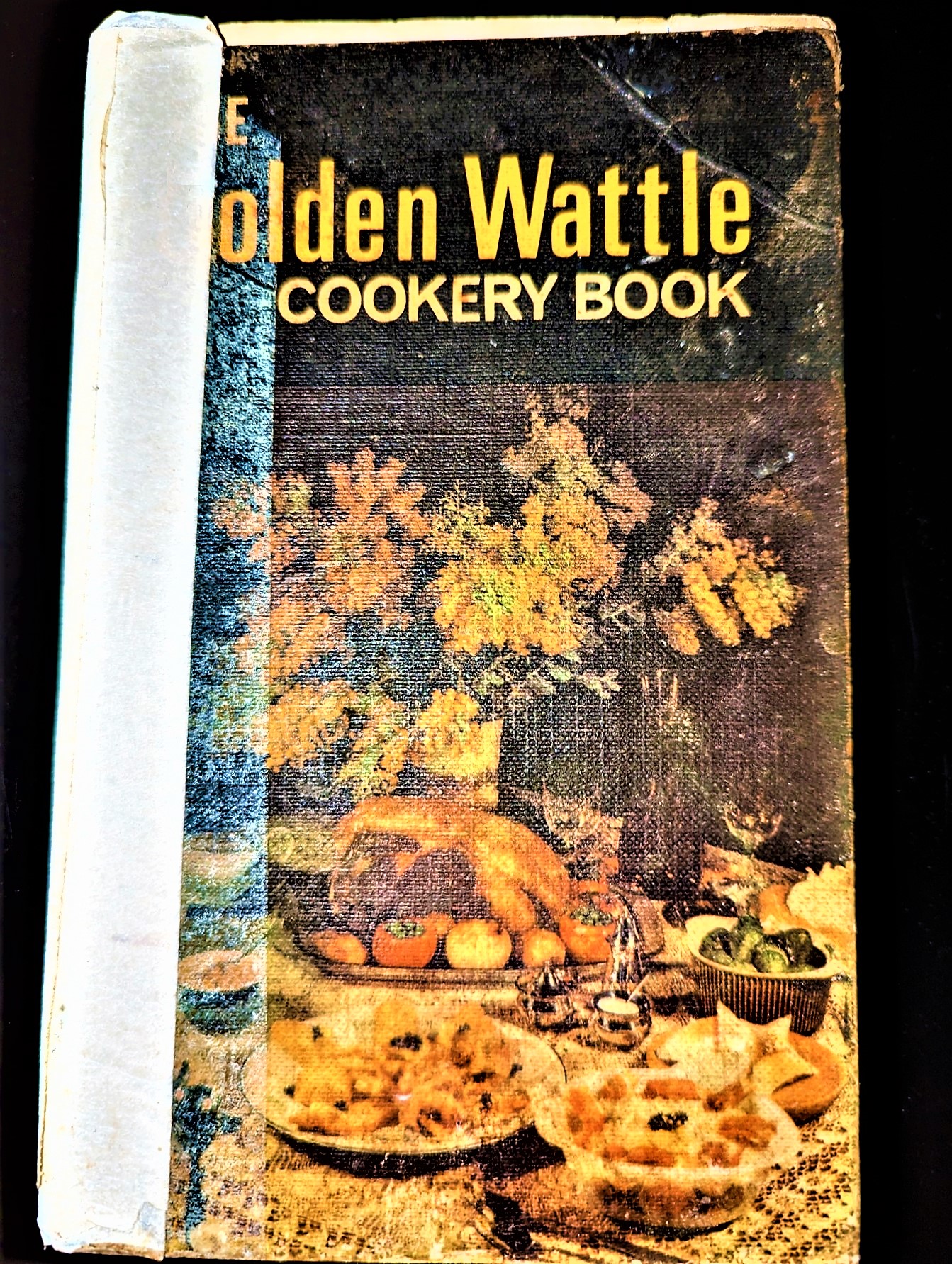
The Golden Wattle includes a short section on Food Values and the best Use of Food, with references to calories, vitamins and the characteristics of a good diet. As from recall we were more interested in making scones, small cakes and sponges I suspect this section was largely unread. The section on Kitchen Economics includes information on how to use sour milk and stale cakes and scones; how to freshen stale bread; and drying herbs. We are also told about measurements and given advice on the terms used for cookery. Do you know the difference between croutons and sippets? They were most important information in the 1950s. The Christmas cake recipe is excellent, but one needs to be more generous with the fruit and nuts.
Why do we still buy cookbooks?
Radio National Posted 22 Jul 2016 22 Jul 2016, updated 27 Oct 20 22 27 Oct 2022
When a recipe can be nabbed from a blog in seconds, why are Australians still so committed to buying up cookbooks each year? A publisher and a food blogger try to explain the enduring appeal of recipes on paper.
There are enough recipes on the internet to keep a person well-fed every day for several thousand lifetimes.
There’s this odd thing happening which is that the very high bestselling books as selling more than they ever have.
So why, in an age of instant and typically free online food blogs, do Australians still buy cookbooks? And we don’t just buy them occasionally: for more than a decade, cookbooks have dominated Australian non-fiction book sales.
In 2015, Nielsen BookScan reported that food and drink publications remained well above biography sales in the non-fiction category.
‘They are faring well,’ says Sue Hines, publishing director at Allen and Unwin. ‘There’s this odd thing happening which is that the very high bestselling books as selling more than they ever have.’
She says cookbooks are still seen as being more reliable than internet recipe sites.
‘There’s possibly more authority in a cookbook. ‘It’s solid and has a substantial presence in your home.’
Food blogger Allie Gaunt says there was a marked difference between posting recipes on her blog and collating them for a cookbook.
‘When it came to writing the book, there was definitely a lot more that went into it,’ she says. ‘There was quite a lot of work and recipe testing. It was very thorough.’
Where online recipe sites can maintain a dialogue with their readers and quickly make amendments where necessary, mistakes in cookbooks are a different beast.
‘It’s terrible,’ says Hines, on the subject of finding mistakes in published cookbooks. ‘People ring you up and abuse you and say nasty things online. It’s never good to have an error.’
She references a cookbook that listed ‘ground finger’ instead of ground ginger in the ingredients as among the worst mistakes she’s seen.
Even if Australians don’t readily turn to their cookbooks for their daily meals, the enduring, physical appeal of having them visible in the kitchen means they’re unlikely to go out of fashion anytime soon.
‘They’re durable, affordable and work as great gifts,’ says Hines. ‘People just like them as objects.’
“There is something rather nostalgic about cookbooks. Usually accompanied by an introduction filled with personal tales, they are totems of specific time periods in the chefs’ own lives, epilogues to days and nights spent crafting endless recipes. Wistful in a way that only the combination of food, words, and images can be, the collections become more than mere anthologies of recipes and instructions: they form the stories about the folks who write them and provide a glimpse of the time during which they were written.”
Chefs’ popularity does not rest with television programmes and cookbooks. Yotam Ottolengi has just had a successful tour in Australia.
Yotam Ottolenghi’s speaking tour in Australia is yet another public image of cookery, cooks, chefs and recipes.
I did not go to the presentation in Canberra but did have the fun of going to Yotam Ottolenghi’s restaurant in Islington in 2014. Another booking had to be cancelled a few years later as Covid intervened, and I could not travel. It is not hard to recall the enjoyment of the successful occasion, from the easy tube journey from Paddington to Islington, the pleasant walk from the station to the joyful atmosphere we encountered in the restaurant.
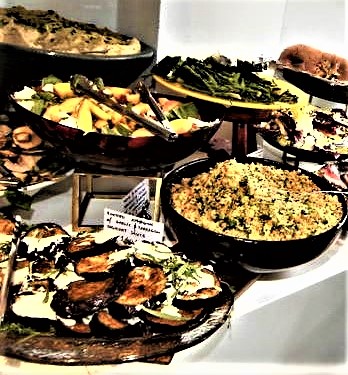
Although much of the seating is along narrow tables adding to the communal atmosphere, we had one of the tables for two people, which suited us. We chose from the kitchen and the display menus, both of which offer an abundance of delicious choices. I cannot recall our choices at the time, but salads from the counter which are on the current menu we might have chosen include the roasted aubergine with yoghurt, burnt aubergine pickle, flaked almonds and pomegranate; and the grilled radicchio with burrata, glazed figs and toasted almonds. The kitchen offers warm meals, and we would have avoided the meat and fish dishes (as delicious as they looked to one or other of us) and chosen vegetarian. Roasted celeriac with coconut and cashew cream and spicy cashew sounds good, as does the charred leeks, chili and hazelnut romescu and sultana. I cannot imagine forgoing dessert, but cannot recall anything in particular at the moment. Time for another visit!
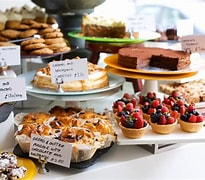
From recall this was not my favourite London restaurant. However, it was a fun experience and one that I would reprise.
Blake McMullan’s cookery YouTube site
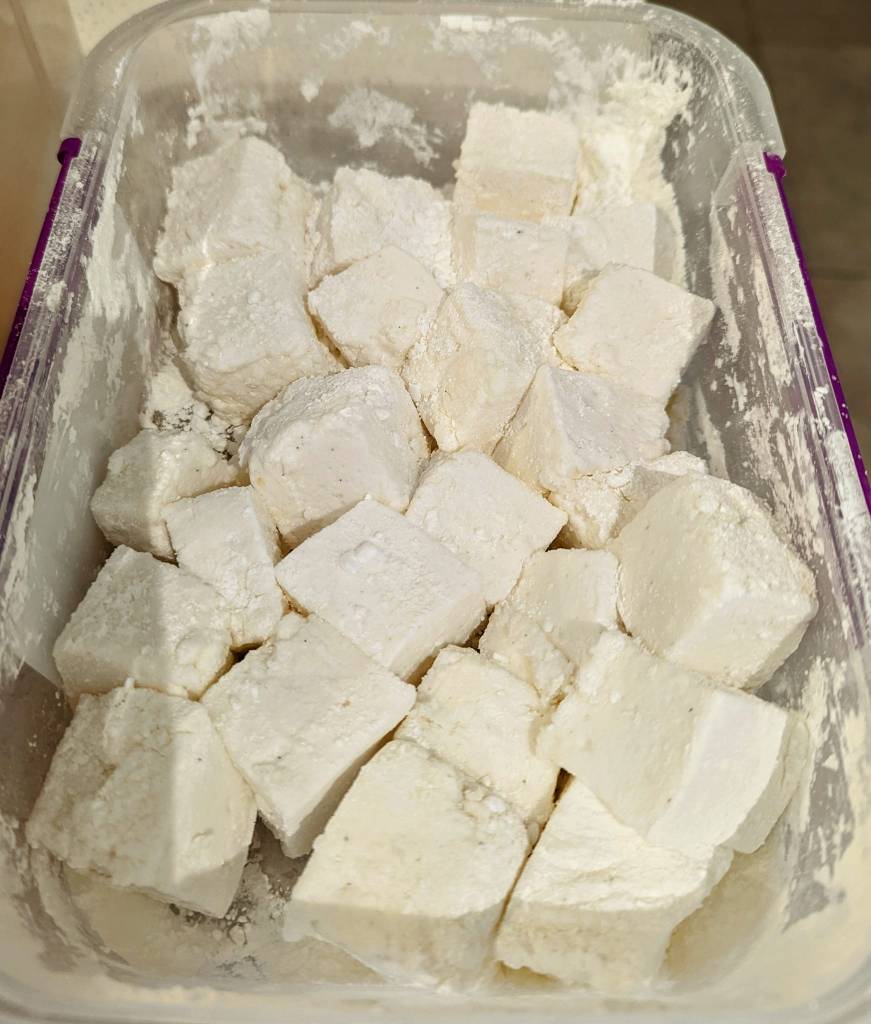
Marshmallows for a family function – yummmmmm!
Another way of learning to cook a particuar recipe is to go to You Tube cookery sites. Blake McMullan has a great site, with a huge range of cookery styles and recipes, from simple to complex. What I particularly enjoy is the calm way in which Blake tells the audience what is happening, and proceeds to show us. There is no ridiculous hype and long-winded discussion that I find really annoying on other sites dedicated to cooking – or perhaps they are only dedicated to the would-be chef? Blake is dedicated to bringing interesting recipes to his audience without any glib asides.

Asian delicacies for a family function – again, yummmm!
Below is an example of what you will hear. Go to Blake’s site for more: https://www.instagram.com/blake_mcmullan Twitter – https://twitter.com/blake_mcmullan

How to Make Three Easy Udon Recipes [ASMR Recipe]
Today we’re making curry udon with katsu chicken, shoyu udon with miso pork and yaki udon with beef.
Curry Udon [0:00] Ingredients (2 serves): – 2 serves of frozen udon (~500 grams) – 2 onions – 1 tbsp tomato paste – 1 tbsp garlic – 1 tbsp ginger – 1 tbsp honey – 1 1/2 tbsp curry powder – 1 shin dashi packet (~10 grams) – 2 cups water – 2 tbsp soy sauce – 1 tbsp corn starch – 1 chicken breast (~400 grams) – 1/2 cup flour – 1 egg – 1/2 cup panko bread crumbs
Method – Slice or dice onions (whichever you prefer) – Add to pan and caramelize, adding water whenever pan gets dry – Butterfly chicken and cut into 2 to 3 pieces – Flatten chicken until thin and even – Salt both sides of chicken – Prepare a 3 bowls, one with flour, one with egg, and with bread crumbs – Coat chicken in flour, then egg, then breadcrumbs – Add oil to pan (You can either shallow fry or deep fry, shallow frying is easier but can lead to uneven colour) – Once oil is up to temperature add in your chicken and cook until cooked through and browned on the outside – Once onions are caramelized add in tomato paste, garlic, ginger, honey, and curry powder – Saute for a minute – Mix dashi and water then add to pan – Add soy sauce to taste – Make corn starch slurry and add to curry to thicken – Slice chicken and serve.
Shoyu Udon Soup [7:43] Ingredients (2 serves): – 2 serves of frozen udon (~500 grams) – 1 tbsp garlic – 1 tbsp ginger – 2 spring onions whites – 500g pork – 2 tbsp miso – 1 tbsp mirin – 1L water – 1 shin dashi packet (~10 grams) – 2 tbsp soy sauce – 1 tbsp mirin – salt to taste Serving (optional): – nori sheet – soft boiled egg – spring onion greens – sweet corn – black fungi – narutomaki
Method: – Fill pot and bring to boil – Chop spring onions, keeping greens and whites separate – Once water has come to a boil, add your udon and cook until defrosted and chewy – Add garlic, ginger, and spring onion whites to a pan and cook until fragrant – Add pork and cook until done – Turn off heat, mix miso and mirin in bowl, then add to pan and stir through – Add water to pot and bring to boil – Add shin dashi, soy sauce and mirin – Salt to taste (If you wanted to make it a little fancier, steep aromatics like ginger and garlic in the soup) – Add udon and pork to a bowl, then add your soup, and your toppings of choice.
Yaki Udon [10:46] Ingredients (2 serves): – 2 serves of frozen udon (~500 grams) – 1 tbsp garlic – 1 tbsp ginger – 2 spring onions – 2 onions – 500g beef – 2 tbsp soy sauce – 2 tbsp oyster sauce – 1 tbsp mirin – 1 tsp rice wine vinegar – 1/4 cup brown sugar – salt to taste
Method: Prep [0:00] – Fill pot and bring to boil – Chop spring onions, keeping greens and whites separate – Once water has come to a boil, add your udon and cook until defrosted and chewy – Mix soy sauce, oyster sauce, mirin, rice wine vinegar, and brown sugar in a bowl – Add garlic, ginger, spring onion whites, and onion to a pan and cook until fragrant and softened – Add beef and cook until done – Add udon and sauce mix to pan and stir until sauce has thickened – Add salt to taste #japanesefood#udon#easyrecipe
From the domestic to the public – a feature of feminist fiction
Most recently I wrote about this feature of feminist literature in a work that included anthropologists and the qualities they adopt in pursuing their profession. One of these was observation. In Barbara Pym’s Less Than Angels (first published in 1955) professionals are linked with domestic observers. The women who observe are treated as equals, forging the image of women’s domestic interests and skills equating with paid work.
In Rona Jaffe’s novel, After the Reunion one of the protagonists uses her domestic baking skills as the impetus for her profession. Her domestic skills, together with her unrealised presentational and business abilities launch her into a career.
In the thesis, Women as Adventurers I noted:
…Emily’s career places her in the feminist four mode as she uses her domestic abilities to achieve… ‘She had invented the recipe, and the packaging…the slogan’ (Jaffe, 1985:159) …Her domestic ability is to provide her with public success in a direct turnaround of the Radcliffe dream in the which the public image the women were expected to portray was aimed at promoting their successful domestic life. I found a review I wrote for Goodreads and include it here:
Class Reunion and After the Reunion Rona Jaffe
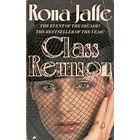
Rona Jaffe’s Class Reunion and After the Reunion, published in the 1980s, are a precursor to the more strongly realised feminist novels that have become an important part of the fiction landscape of the 1990s and, now, 2000s. They use a comfortable premise to draw the reader into thinking about the ways in which women in the 1950s were settled into a familiar lifestyle, in which it was demanded they flourish. Some did. Many did not. Betty Friedan wrote about the latter, the women who knew that something was missing in their lives, and, because of the women’s movement, eventually realised that their feelings were valid and reciprocated by many other women. Books: Reviews
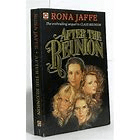
In stark contrast with feminist writers promoting women’s domestic skills as professional, career making and valuable in the public world, commentary on Mrs Beeton promoted her as a domestic icon. The Short Life & Long Times of Mrs Beeton by Kathryn Hughes is an excellent biography, recognising as it does the sexist way in which Mrs Beeton has been treated by her son and then publicists after her portrait appeared in the National Portrait Gallery.
I shall write a full review at a later date.
I have just found this reference to yet another aspect of cookery while researching the journalist who represented the Boston Globe at a Barbara Pym conference held in Cambridge, USA in 2011. It looks as though it will be a terrific read. I have signed up to Danielle Dreilinger’s blog, so hopefully I shall have more to report on the book.
Homework: The Secret History (and Future) of Home Economics
Danielle Dreilinger
This article has been copied from Danielle Dreilinger’s newsletter and edited to remove out of date information. However, the details of topics covered in bookstore presentations remains.
Home Work: My book is here!

at last at last at last
May 4, 2021
Just a brief note because … it’s May 4. Happy Teacher Appreciation Day! And happy pub date for The Secret History of Home Economics!
I am so thrilled by the amazing press it’s received so far, and so excited for you all to read the book at last. Such unexpectedly fortuitous timing to kick up a conversation about home etc…
We’ll cover such hot topics as why it’s fine that you let your early-pandemic sourdough starter die and the ever-boggling practice baby, plus whatever questions you submit. We’re also raffling off cross-stitch kits, designed by me and assembled by publicist Erin. Yes, while procrastinating on the book, I made several cheeky (and totally unproductive) home ec–themed cross-stitch patterns.
Some of you have asked about getting a signed copy. The fastest way is to order a book through one of these stores, or the stores hosting my events in June. Or if you can wait a while, I am happily fully vaccinated and will soon be opening my calendar for in-person fall speaking engagements.
Before I forget, I’d love it if you would recommend that your library buy a copy, either physical or digital.
Happy reading!

The Secret History of Home Economics
How Trailblazing Women Harnessed the Power of Home and Changed the Way We Live
by Danielle Dreilinger (Author)
The surprising, often fiercely feminist, always fascinating, yet barely known, history of home economics.
The term “home economics” may conjure traumatic memories of lopsided hand-sewn pillows or sunken muffins. But common conception obscures the story of the revolutionary science of better living. The field exploded opportunities for women in the twentieth century by reducing domestic work and providing jobs as professors, engineers, chemists, and …Read More
I found the following rather limited. After all, where would Australians begun to enjoy Chinese food without the Chop Suey of the late 1960s, which has morphed happily into a broader and more splendid array of authentic Chinese food? And do we really have to give up TexMex if that is what we enjoy? It certainly didn’t prevent me enjoying the Mexican food I wrote about last week. And fusion – a little more explanation of the criticism that it is colonialist would be appreciated. What about Mere in London where the Samoan and New Zealand cuisines (from the owner’s background) make an excellent menu? At the end of the article is a section in bold – this I could identify with, in itself and in its link to the value of food in providing a broad social function. Any comments?
Jess Ho says our food industry is Eurocentric, but engagement with diverse foods is getting better
By Anna Kelsey-Sugg and Joanna Crothers for Sunday Extra
Posted Yesterday at 6:00am
Jess Ho, food and wine writer and former chef, is sharp as a knife when it comes to expressing what they don’t like about the food and hospitality industry.
One example: the restaurateur of “false confidence” who pops over to Indonesia on a cheap flight and returns to Australia to offer an expensive “elevated take on Balinese food”.
“Fusion” food is another.
It comes from “a place of a lack of education and the ego of a particular person going, ‘if I do this with this cuisine, and fuse it with another cuisine, I will make it better’,” Ho tells ABC RN’s Sunday Extra.
“For me, I think fusion is quite lazy, and a very colonialist idea.”
Ho isn’t the only one to call out issues surrounding some of the ways food from diverse cultures is consumed and presented in Australia.
From the lazy to blatantly racist, to respectfully sharing culture, here’s how these experts say dining can get it right — and really wrong.
When food engagement is ‘superficial’
University of New South Wales food and media expert Sukhmani Khorana has a long-standing academic interest in the cultural politics of food.
She says there’s a risk, when dining, of superficially engaging with a culture other than your own.
“I’m not saying that engagements, [for example] with migrant communities, through food are wrong or misplaced,” Dr Khorana says.
Rather, she argues that in Australia people who consume cultural cuisines other than their own can do so “unthinkingly” or “superficially”.
They might assume, for example, “that they’re not racist because they go to Chinatown” to eat.
Or they might seek to “demonstrate solidarity with the local, multicultural community by going to a Lebanese kebab shop”.
Truly sharing with and connecting with cultures other than your own doesn’t come so easily, Dr Khorana says.
“I think it just needs to be a deeper engagement.”
‘There are people calling it out’
Dr Khorana describes the food establishment in Australia as “Eurocentric”.
For example, she recently saw a post in a popular online publication referring to a samosa as “a new party snack”.
Someone from a South Asian community in Australia immediately called it out online, with the correction that the food has existed in their culture for centuries.
“Discovering something from another cuisine and saying, this is something we can incorporate — it does remain a problem, but at least there are people calling it out,” she says.
At the other end of the spectrum, she says there are great examples of food experiences that are genuine in their presentation of food from different cultures.
One is the Melbourne social enterprise Tamil Feasts, where asylum seekers who are cooks from the Tamil community share their cuisine and some of their backstory with diners.
“It was only when they got really comfortable with the customers, and a whole range of customers, [that] they started sharing their stories, so it was very gradual … It was kind of an organic way of doing it,” Dr Khorana says.
She also points to Sydney’s Parliament On King, also a social enterprise run by asylum seekers, and Knafeh Bakery food truck, offering Jerusalem street food, which she considers “instance[s] of a deeper engagement” for food and culture.
All are wildly popular with diners and are signs of improvement in the diverse food landscape, she says.
“I think the days of just catering to the white consumers and not really trying to represent the wide variety that exists in a particular cultural cuisine [are not] completely gone.
“But I think it’s not as bad as it used to be.”
When restaurants get it right
Ho, who has written about their experience in hospitality in the memoir Raised By Wolves, also argues that European dining structures constrict our sense of what food should be.
French food and dining are still considered “the pinnacle”, they say.
Ho recalls studying to qualify as a chef and being taught about various knives required for the preparation of different foods.
“And I’m like, hang on a second. My father and my uncle are incredible Cantonese chefs, and they only use a cleaver for everything. You know, what’s to say that they’re doing it incorrectly?”
Ho says racism manifests in the industry, both as subtle microaggressions and more blatantly.
It might be “a simple fetishisation of food without understanding it”, or the wild popularity of a new restaurant that hasn’t involved anyone from the culture represented on the menu.
It’s here that Dr Khorana says the most successful restaurants distinguish themselves.
They emerge from a “dialogic process”, she says; that is, after thought and discussion about the “very conceptualisation of the restaurant”, the menu design, and who the chefs will be and their relationship to the cuisine.
The best restaurants ensure they aren’t “dumbing things down too much”, perhaps by giving a dish its traditional name on a menu, or by sharing information or history about the food on offer.
“I appreciate when a restaurant is putting you in a position where you have to learn more, even if it’s just about a certain dish,” she says.
Dr Khorana says we shouldn’t assume that only someone born into a particular culture can cook its food. It can “fix cultures or essentialise cultures” by suggesting a certain food has always and should always taste one particular way,” she says.
“You can be really good at a cuisine and spend decades doing that and be really consultative about it. So that’s really important. But I think you have to … acknowledge who it belongs to and not just profit from it.
“There are ways to do it delicately. There are ways to involve people from that culture. There are ways to acknowledge the origins of the cuisine that you’re cooking. But it has to be done really delicately and respectfully.”
And now look at how food from all cuisines can be used, not to make a point, but to provide a service:
Cookery as a fundraiser
I was interested in this article too, where cooking becomes a focus of fundraising. Of course, we are all accustomed to the school fetes and cake stalls as fundraisers. At Australian election time, sensibly voting takes place on a Saturday, and people have the time to support the cake stalls and sausage sizzles fundraisers which are a regular feature.
The domestic production of fundraising items is replicated in the fundraising work of the professionals in the story below. I shall make sure that I visit at least one of these bakeries when I go to London later this year. It will be too late for the fundraiser but will support the supporters.
BakeForUkraine: Ottolenghi, BAO and more to take part in charity bake sale
More than 15 bakeries will bring their sweet treats to the event this weekend.
By Jochan Embley David Ellis @dvh_ellis29 March 2022
A team of London’s top bakeries will unite this weekend to raise funds for the humanitarian effort in Ukraine.
Ottolenghi, Flor and BAO are among those getting involved in the charity bake sale, which is taking place as part of the wider #CookForUkraine and #BakeForUkraine efforts — a scheme that has so far generated almost £650,000 for Unicef UK, split between £350,000 in donations to the scheme’s Just Giving page and a further £300,000 raised from the #CookForUkraine fundraising events across the capital. Donations from London restaurants supporting the scheme are yet to be counted, but the charity drive is hopeful of reaching its £1million target. Some details of what restaurants are doing to help can be found here.
Hosted by Toklas Restaurant on Surrey Street, in collaboration with #CookForUkraine co-founder and influencer Clerkenwell Boy, the sale is set to run from 10am to 1pm on Saturday April 2. As well as the bakery goods, the restaurant will lay on soft drinks and beer, while Dima’s Vodka — the award-winning Ukrainian brand — will be on sale as well.
The full line-up was: Assembly Coffee; Bakers Against Racism; BAO; The Boy Who Bakes; BRAT; Flor Bakery; The Good Egg; Happy Endings; Lily Vanilli; Meringue Girls’; Ottolenghi; Pump Street Bakery; The QCH Shop; Santa Nata; Toklas Bakery; Violet Cakes; Yurii Kovryzhenko; Toklas.
UNICEF Australia
It has been a year of violence, trauma, loss, destruction and displacement for the children of Ukraine. It’s also been a year of children demonstrating incredible strength, courage, support and love.
Help spread that love and celebrate Ukrainian culture with #CookForUkraine, while raising funds to support children affected by the war.
Click the link to learn more.

 Robin's Room