Janet Malcolm Still Pictures On Photography and Memory Farrar, Straus and Giroux, 2023

I appreciate NetGalley having provided this uncorrected proof for me to read and review. I am so glad that they approved my request.
Years ago Barbara Pym said of her novels:
I might use Christopher Isherwood’s phrase ‘I am a camera’ to describe the process by which the novelist records his impression of life. But the novelist’s camera is a selective one, picking and choosing, recording some things clearly, rejecting others altogether. And it is obvious that the camera of one novelist may record quite different things from that of another.
Janet Malcolm acknowledges that the same process has influenced her autobiography, that of a nonfiction writer, combining photographs and text. In both cases the reader is left with an exciting journey – that of the information on the page, and that of interpretation. Malcolm’s work is introduced by Ian Frazier, a friend of twelve years, who spoke with her shortly before she died. Anne Malcolm, her daughter, wrote the afterword. Both make important contributions to the text, without undermining Janet Malcolm’s own interpretation of her life, in this book, through photographs. These are a mixture of beautifully rendered pieces; reproductions which while poor, still tell a story; depictions of facets of Malcolm’s life; and photographs of others’ lives through which their story and glimpses of Malcolm’s, are woven. A short note about the author provides one story of this captivating author; Malcolm’s own text and choice of photographs tells another; yet another can be glimpsed at times through interpreting the photos; and most importantly, Malcolm abandoned her attempt to write a formal autobiography which she found unrewarding, and has used photos of events and people, from which she emerges in glimpses as well as with a full story. The whole is an engrossing read in short pieces associated with a photograph. See Books: Reviews for the complete review.
After the Covid update: The Voice (2 articles); Cindy Lou; Food on the Nullabor; Publishing – women writers’ popularity.
Covid Report to April 7 2023

Cases on 7 April 2023, in total is 235,113 with 550 new cases in the week to 7 April. People in hospital number 49, with 3 in ICU and 1 ventilated.
The Saturday Paper
Editorial
Plastic spiders
Peter Dutton knew before he called his colleagues to Canberra that he would oppose the Voice. The party room meeting was a stunt, like almost everything else in his career. Dutton is the ugly person who makes true the old joke about politics and show business.
There is nothing honest in Dutton’s concerns about the Voice. His argument folds over on itself like a napkin: the Voice will be ineffectual and it will do too much. It doesn’t matter that these positions are contradictory. His objection is not about logic. It is born of the simple fact that it is easier to throw a referendum than win an election. His success is the country’s loss.
Dutton lives on the fringe. He talks about cities with scepticism and contempt. The real Australia is somewhere further inland. Presumably the men out there wear big hats and say what they think, if they speak at all. Dutton calls these “our seats”. There are too few of them to win office but just enough to spoil progress.
In describing the Voice, Dutton continually refers to “city-based academics”. He claims they would hijack decision-making. The dog whistle has peculiar harmonics: it suggests that education makes an Indigenous leader less Black and reprises the false division of “urban Aboriginals”. The line also ignores the representative structure of the Voice: two members from each state, territory and the Torres Strait Islands; five more from remote communities; an additional member to represent Torres Strait Islanders on the mainland.
Of course, Dutton knows this but doesn’t care. His cynicism is boundless. He pretends he is worried about dividing the country and finds that his only solution is to divide the country.
Dutton doesn’t have the numbers – not yet – and so he pretends the numbers he does have count more. Steve from down the pub is more right because nobody asked him yet. This is how Dutton sustains his politics: he invents a miserable constituency and then pretends he is their champion.
Dutton is not a serious person. He doesn’t have policies or eyebrows. His term in parliament has produced enough shame for six lifetimes, but this latest decision will grant him the balance for a seventh.
Noel Pearson describes him as an undertaker. He says he has betrayed the country. He says he will have to dig a very big hole to bury Uluru.
Hopefully Pearson is right. Hopefully the country is wise to Dutton’s ghoul politics, to the creaking doors and plastic spiders of his rhetoric on the Voice. Hopefully it is plain to everyone that his small, fumbling objections are about only one thing: his hold on power in the cemetery of a once mighty party.
This article was first published in the print edition of The Saturday Paper on April 8, 2023 as “Plastic spiders”.

Leader of Young Liberals will consider supporting Indigenous Voice to Parliament, despite party stance
By Paul Johnson
Posted Yesterday at 12:49am, updated Yesterday at 6:12am
Anne Pattel-Grey, the head of the School of Indigenous Studies at the University of Divinity, has told Q+A that the referendum on the Voice to Parliament is not political but rather a question that goes to the integrity of all Australians.
Key points:
- The leader of the Young Liberals said he was open to voting ‘yes’ on the Indigenous Voice to Parliament
- An Indigenous academic framed the Voice as a vote about the integrity of Australians
- The panel also discussed the charges Donald Trump faces, and whether they will only embolden the former US president
Professor Pattel-Grey was responding to a question from Q+A host Stan Grant about what the referendum may bring.
“What Australia needs to be conscious of is that this is not a political agenda, this is a moral and ethical agenda and this will determine the integrity of Australia, because individually every person has a role to play,” Professor Pattel-Gray said.
“Whether they vote yes or whether they vote no is going to be to the individual’s question of integrity.”
Professor Pattel-Grey then called on Australians to look within as she painted a bleak picture for Indigenous Australians if the yes vote did not win.
“The Statement from the Heart is a statement from the heart,” she said.
“Our people laid their soul bare to you and made themselves vulnerable in extending the hand to this nation and asking you to recognise us and to give us a voice.
“This country has criminalised our children, they are highly incarcerated, we are even locking up 10-year-olds.
“What a shame to this country.
“And yet what you decide is going to determine our future.
“We shared with you our pain, but we also shared our hope, and if we don’t have that hope recognised, you are then damning us to hell, and you are going to kill a nation of people.”
The comments drew a strong response from federal president of the Young Liberals Dimitry Chugg-Palmer.
Mr Chugg-Palmer said he would consider voting for the Voice, despite the official position of the Liberal Party being to oppose the federal government’s model for an Indigenous Voice to Parliament.
“I really want to support the Voice,” Mr Chugg-Palmer said, before adding that he wanted to see more details made public.
“I think it is so important that we do have a respectful debate on this topic and we do work through the very important details that we need to see.
“We still haven’t seen legislation for what exactly the Voice is going to be.
“Raising those questions and raising those doubts is not a way of trying to frustrate or stop it, it is about being honest and so that we know what it is we are voting for when we walk into the ballot box.
“I want to see us reconcile with First Australians.
“I think it is the right thing to give them a say on decisions that affect them, that is a fundamentally Liberal principle.
“That’s why there are plenty of Liberals out there that will be supporting the referendum.”
Additional Liberal Party responses to Leader Peter Dutton’s support for the No Case:
Julian Leeson, formerly shadow attorney general, has resigned from the Coalition front bench because of the Liberal Party policy to support the Indigenous Voice to Parliament. Simon Birmingham, a Liberal front bencher, says he will not campaign against the Indigenous Voice to Parliament. Former Indigenous Australians Minister Ken Wyatt has resigned from the Liberal Party because of its policy on the Voice.
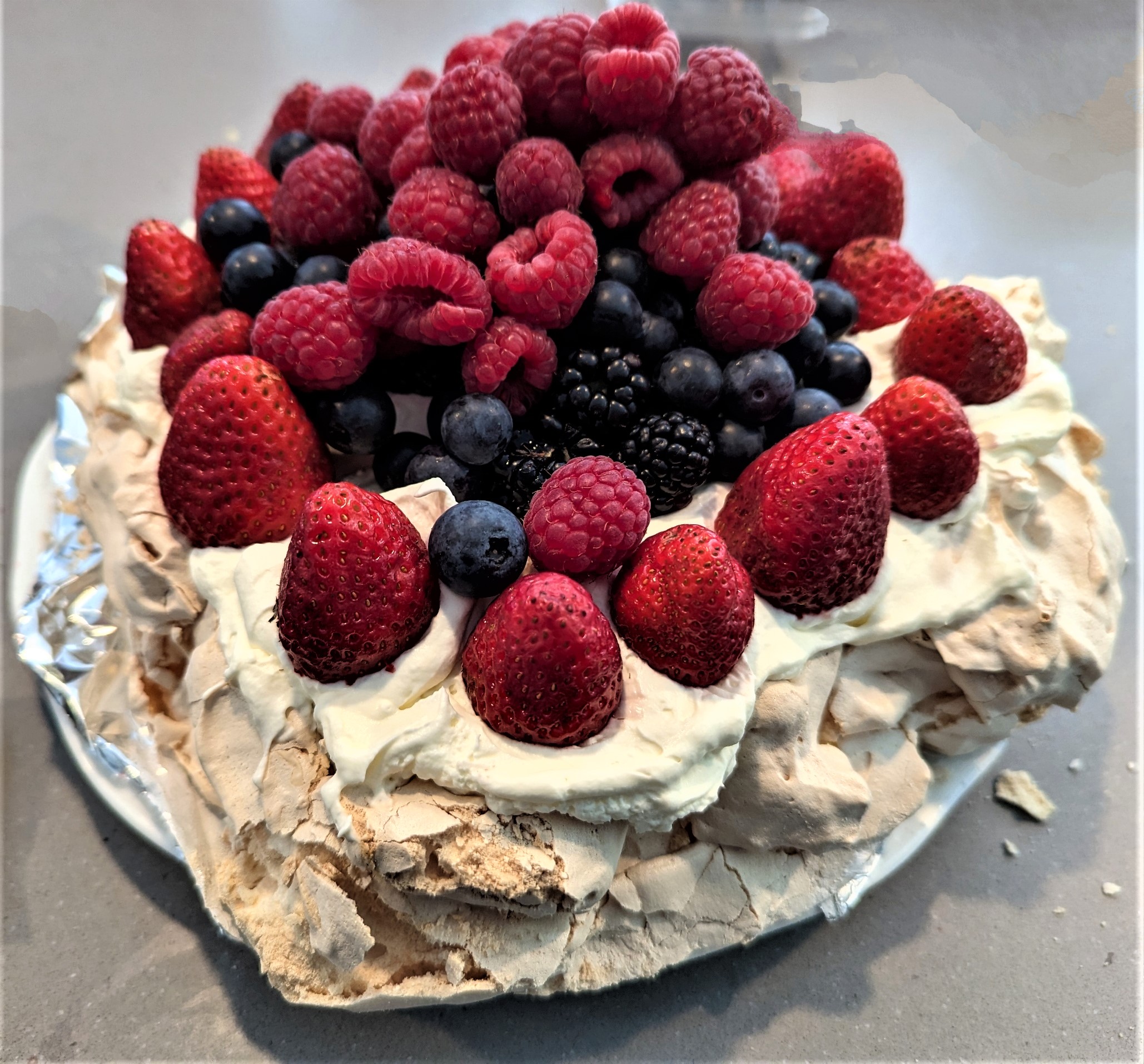
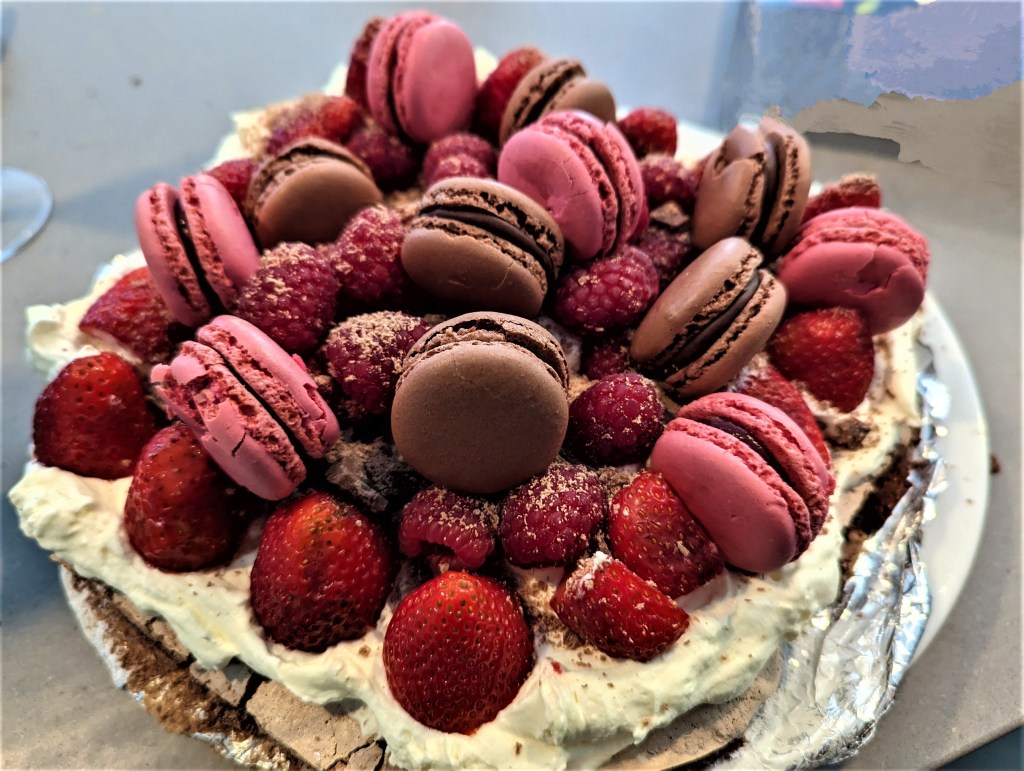
Cindy Lou enjoys a family lunch at Easter
The spread was amazing, but nothing beat these magnificent concoctions by my friend Carol. Usually, we enjoy our delicious meals at Black Fire. Their desserts are great fun, and delicious. Desserts at other restaurants Cindy Lou frequents also meet her exacting standard. But these? More please, Carol (and oh why did I eat so much of the brilliant spread provided in the first course?)




Food has changed on the Nullabor
Photos – special correspondent
I was impressed with the culinary changes that have taken place for people traversing the Nullabor. My own recent trip was on the Indian Pacific where three course meals were provided for lunch and dinner, after a substantial innovative breakfast menu. However, even the roadside cafes are now serving food such as chicken wraps and tacos for those who drive across from Perth to the East.


Breakfast at Kopiku
This is one of Cindy Lou’s favourite coffee haunts. The owners took over the cafe during Covid. They are a wonderful success story of a period that could have spelt disaster for them – perhaps their pleasant demeanour, efficient service, and all-round friendliness and willingness to please the customer have something to do with this. When this family took over the business all the former customers returned – commenting on how nice it was to see friendly faces behind the counter, whisking luscious meals to tables, and clearing up promptly when people left.
This morning, breakfast seemed a great idea. So, coffees and two egg meals – Smashed avocado with poached eggs, greens and toast and poached eggs on toast. The meals were generous, the toast well buttered and the eggs poached nicely. And, as usual, the coffees were just right.

There is indoor and outdoor seating. Associated with this venue is a pavement library where books can be donated or taken. I am gradually giving up some of my books – but this is a long drawn-out process, it is hard to see them go.
More on publishing
Women now dominate the book business. Why there and not other creative industries?

April 4, 20236:31 AM ET Greg Rosalsky
Mohamed Hassan/Pixabay

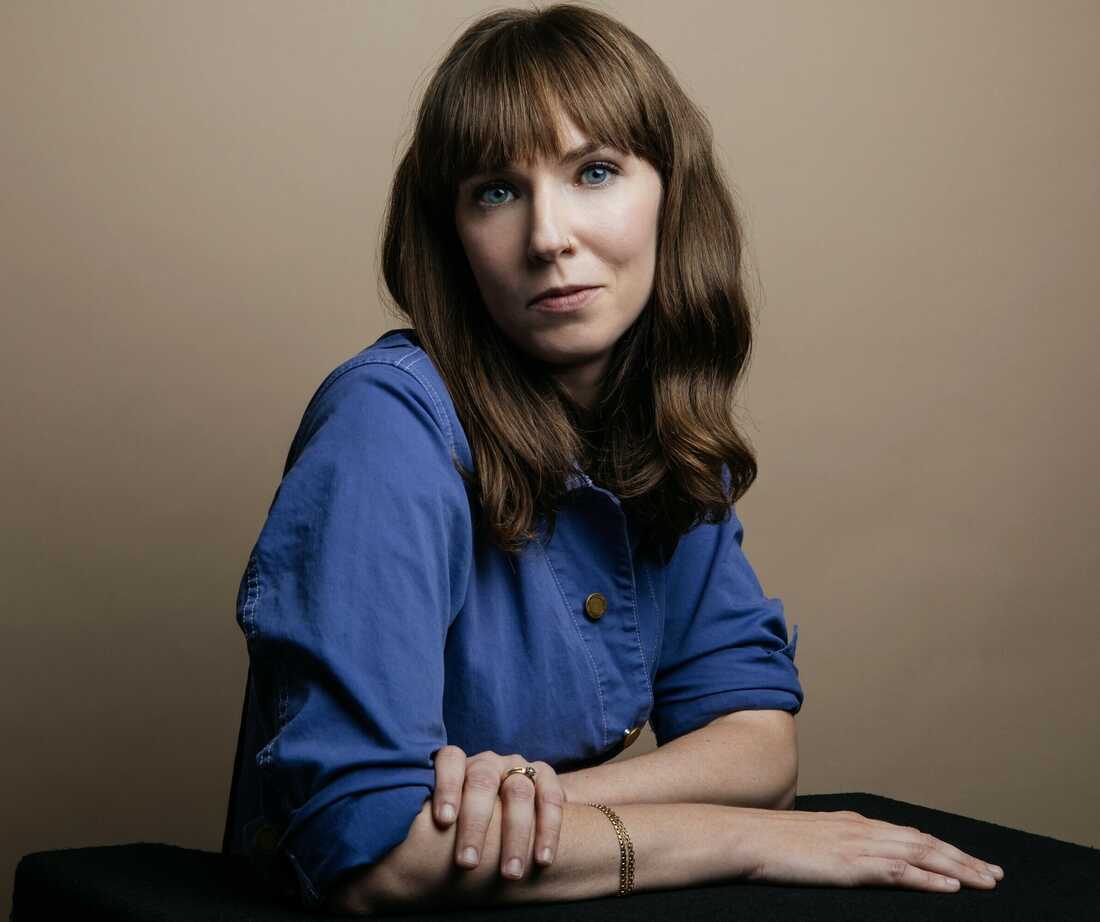
Ever since she was a little girl, Jessie Gaynor has had a passion for books. Whether classic literature or YA fiction, she spent her youth devouring novels. She wouldn’t just read them. She would reread them, sometimes the same book over and over again.
“My mom used to say that my rereading of books worried her because she thought I wasn’t expanding my horizons enough,” Gaynor says. “And, later, in retrospect, she decided that what I was doing was learning the language of the books.”
In the sixth grade, Gaynor read Angela’s Ashes. She loved the book so much, she actually looked up the author in the phone book and called him to talk about it. She got his answering machine and didn’t talk to him, but she self-mockingly tells the story as an early example of her literary enthusiasm.
Gaynor carried this enthusiasm for books into adulthood. She’s now a Senior Editor at Literary Hub, an online publication that focuses on literary fiction and nonfiction. And, just recently, she’s become an author herself.
This June, publishing powerhouse Penguin Random House is set to publish Gaynor’s first novel, The Glow. It’s a dark comedy that centers on a struggling publicist named Jane Dorner who, in a desperate effort to save her job, tries to land a lucrative client: an enchanting wellness guru. “Jane decides that she will try to aggressively monetize this woman’s shtick,” Gaynor says.
Gaynor is part of a sea change in book publishing that has seen women surge ahead of men in almost every part of the industry in recent years. Once upon a time, women authored less than 10 percent of the new books published in the US each year. They now publish more than 50 percent of them. Not only that, the average female author sells more books than the average male author. In all this, the book market is an outlier when compared to many other creative realms, which continue to be overwhelmingly dominated by men.
These findings and others come from a new study by Joel Waldfogel, an economist at the University of Minnesota’s Carlson School of Management. Waldfogel crunches the numbers on the book market’s female revolution. And, in a recent interview, the economist helps us think through potential reasons why women trail men in many creative industries, but have had spectacular success in achieving — in fact, surpassing — parity with men in the US publishing business.
Author Jessie Gaynor
Ebru Yildiz/Jessie Gaynor
Female Authors Leap Ahead
Waldfogel got interested in studying female representation in creative industries after spending part of last year at the U.S. Copyright Office as a visiting scholar. The federal agency, which is part of the Library of Congress, is tasked with keeping records on copyrighted materials.
One of the first projects the Copyright Office had Waldfogel work on was a data analysis of the evolution of women in copyright authorship. Looking at the numbers, Waldfogel’s eyes opened wide when he realized that women have seen incredible progress in book authorship but continue to lag in other creative realms.
For example, while they have made inroads in recent years, women still accounted for less than 20 percent of movie directors and less than 10 percent of cinematographers in the top 250 films made in 2022. Likewise, when looking at the data on patents for new inventions, women make up only between 10 to 15 percent of inventors in the US in a typical year.
For a long time, the book market saw a similar disparity between men and women. Sure, some rockstar female authors come to mind from back in the day: Jane Austen, Mary Shelley, Emily Dickinson, Agatha Christie, Zora Neale Hurston — to name just a few prominent ones. But, Waldfogel says, between roughly 1800 and 1900, the share of female authors hovered around only 10 percent each year.
In the 20th century, female authorship began to slowly pick up. By the late 1960s, the annual percentage of female authors had grown to almost 20 percent.
Then, around 1970, female authorship really began to explode. “There was a sea change after 1970,” Waldfogel says.
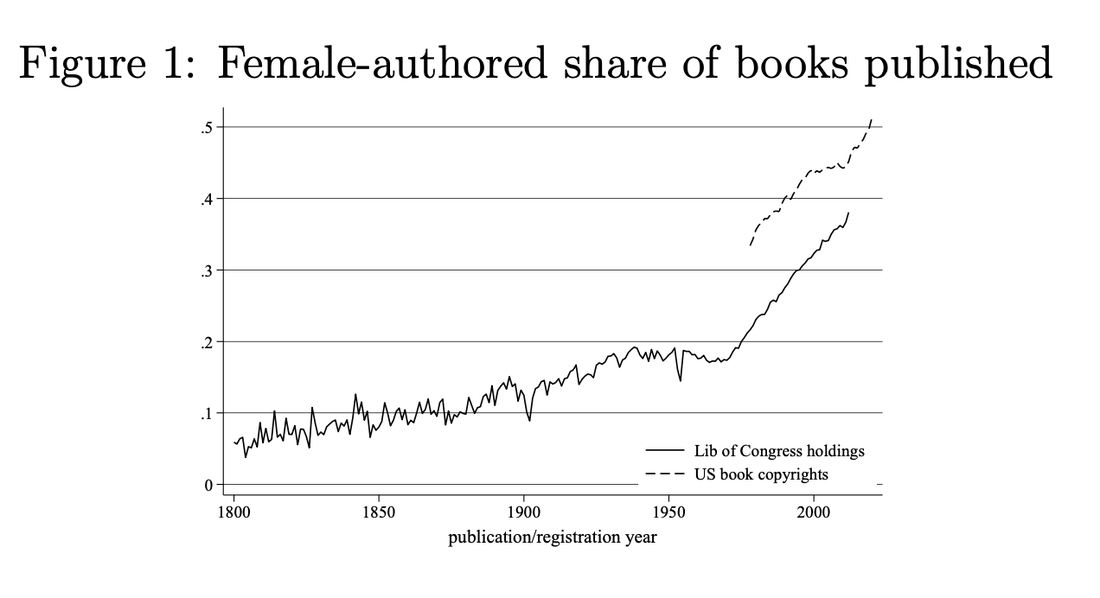
The boom in female authorship
Joel Waldfogel/NBER
By 2020, Waldfogel finds, women were writing the majority of all new books, fiction and nonfiction, each year in the United States. And women weren’t just becoming more prolific than men by this point: they were also becoming more successful. Waldfogel analyzes data from a whole range of sources to come to this conclusion, including the Library of Congress, the U.S. Copyright Office, Amazon, and Goodreads. Waldfogel finds that the average female-authored book now sees greater sales, readership, and other metrics of engagement than the average book penned by a male author.
Why 1970?
The progress women have made in the book market can be seen as one small part of the broader feminist movement. Picking a single year as a clear turning point for any social movement can get pretty arbitrary. Dramatic social changes often proceed incrementally, not in one fell swoop. That said, if you were to pick one single year as an inflection point, 1970 is a pretty good one for the women’s movement, not just in book publishing, but in a whole range of social and economic pursuits.
Female participation in the overall US labor market seems to have really picked up steam after 1970 (although, to our point, you can clearly see the antecedents for this progress beforehand). Economists have offered various theories and evidence for why, after centuries of playing second fiddle in the labor market, American women made significant advances. The lasting effects of women entering the labor force as men fought overseas during WW2, the feminist movement, cultural change, and declining discrimination surely played important roles.
So did the increasing diffusion of labor and time-saving technologies, like electricity, plumbing, dishwashers, washing machines, vacuum cleaners, and microwaves, which changed the economic calculus for many families. Before households adopted widespread use of these technologies, domestic work was much more burdensome than it is now, requiring hours and hours of labor per day. The bulk of that work was done by women. As new technologies decreased that workload, various economic studies suggest, women were increasingly freed to pursue careers — including careers in publishing.
The birth control pill, which exploded in use during the 1960s, and increased abortion access in the 1970s, also helped free women to enter domains traditionally dominated by men, by giving more women greater choice over if or when to have children, and how many.
Intimately related to the pursuit of writing books, women began investing more and more in education around 1970. “If you look at the share of women who are going to college, it looks very similar to book publishing,” Waldfogel says.
It’s probably no coincidence that, by 2020, women weren’t only the majority of book authors, they had also become the majority of college graduates in the United States. Women also now represent around 70 percent of high school valedictorians every year.
But why has the book market seen so much more progress than other industries?
Despite progress over the last half century, however, women continue to lag behind men in many parts of the labor market, including many creative industries. Why are books different?
The answer matters not just for women, but for society at large. With women continuing to represent less than 15 percent of inventors in the US, to give one glaring example, Waldfogel worries that there are likely a whole bunch of “Lost Marie Curies” out there who could be helping us find cures for diseases or creating innovative, new technologies. But something seems to be holding them back. The reason why the book market has seen so much more progress might help us figure out how to replicate the success there in other domains.
However, lacking hard evidence, Waldfogel’s new study offers no rigorous explanation for why the book market revolutionized while others saw limited progress.
Waldfogel says his best guess for why women have seen so much progress in book publishing in the US, as opposed to other creative domains, has to do with the reality that the process of book-writing is typically a solo endeavor, in which the author has more power to choose when and how to do the work.
Maybe the fact that book writing is done mostly alone means there is less discrimination and fewer female-disadvantaging biases and social dynamics in the industry. Industries like movie production and scientific and technological inventing are dominated by gigantic corporate bureaucracies, which are intensely hierarchical. They also are more capital intensive. Maybe that opens the door to more sexism and a resistance to investing in historically underrepresented creators like women.
But American publishing, while seeing huge growth in self-publishing in recent years, also continues to be dominated by large corporations, like NewsCorp and Amazon. There is a twist, however, which is that individual publishing houses in the US — unlike film, TV and other creative production organizations — are largely dominated by women. In 2015, the publisher Lee & Low Books surveyed the staff at 34 US-based publishers and 8 review journals. They found that, while the industry is disproportionately white, it’s also disproportionately female. About 78 percent of staffers at all levels and 59 percent of executives in the publishing industry identified as women in the survey.
In her process of writing The Glow and getting to know the book publishing industry through her work at Literary Hub, Gaynor says, she’s seen this herself. “In my work, I encounter a lot more women who work in publishing, and I think it makes sense that women editors and women publicists are very happy to read books by other women and buy them,” she says.
The demand for books in the US is also disproportionately driven by women. Surveys over at least the last couple decades have consistently found that American women are more likely to read books than American men, especially when it comes to fiction.
Gaynor says some of the most famous channels in which books gain popularity in the US are run by women. She points to Oprah’s Book Club and Reese’s Book Club (which is helmed by Reese Witherspoon). “Even TikTok, with the popular BookTok videos, my sense is it’s mostly women — and BookTok is driving sales hugely right now,” Gaynor says.
Beyond the demographics of book readers and publishers, the social dynamics of the book writing business could be more favorable for women than other creative industries. For example, it is a generally solitary affair that lacks the office politics, practices and hierarchies that can still all too often leave women at a disadvantage.
“We hear a lot about women being socialized to not take the lead, not make a fuss,” Gaynor says. Other creative pursuits — like movie directing, for example — may reward self-confidence and assertiveness, traits that research suggests is more associated with men, on average. “I have a personality that is — I don’t know if I can blame this on my gender socialization — but I don’t like to feel like I’m bothering people. One of the great things about publishing a book is that you get an agent who bothers people on your behalf. Also, the solo part of writing a book is also very appealing because you just get to write the book and then put it in someone else’s hands. You have to advocate for yourself to a certain extent, but the work is not about being loud, which I know for some women, at least like me, that can be an uncomfortable thing.”
A growing body of research in economics points to something more than personality traits and interests that separate men and women in the labor market. The Harvard economist Claudia Goldin has published influential research that suggests one central culprit behind gender inequality in the labor market: the reality that women continue to bear the overwhelming burden of caregiving responsibilities in many couples. As a result, Goldin finds, women, on average, show greater demand for “temporal flexibility.” That is, they put a greater premium on jobs that offer flexibility in their work schedule. These jobs tend to offer smaller paychecks, but they also allow more time and flexibility to spend on unpaid domestic work at home.
Gaynor is quick to point out that, for most authors — and for fiction authors, in particular — writing a book is a “really low-paying field.” That may dissuade more men, on average, from aspiring to pursue a writing career. “I know women are driven by a number of market forces, but I do feel like it seems possible that more women would be more willing to work in a low-paying field at first.”
At the same time, book writing, for the most part, offers the ultimate in temporal flexibility, to use Claudia Goldin’s terminology. You can write a book whenever — morning, afternoon, or night. That may be particularly attractive to some women, who are more likely to be saddled with domestic work. And it might put men and women on a more equal footing in the industry. Unlike being a corporate lawyer or executive or inventor, writing doesn’t place a large premium on being available to work at all hours, which entails a greater sacrifice of your family life.
Gaynor says she mostly wrote her book before having her kids, waking up early to write before starting work at her day job. After having her first child, she says, she did have to spend a significant amount of time addressing edits from her editor and finalizing her book. But, she says, her editing process “was facilitated by my husband doing more of the childcare in the mornings.”
Whatever the reasons for the boom in female authorship, Waldfogel says that readers of all kinds, not just women, are clearly benefiting from it. And so are we, with new books like The Glow, which will be on bookshelves on June 20.

 Robin's Room