This week the second of the books in Kerry Wilkinson’s Whitecliff Bay series is reviewed. NetGalley provided me with the uncorrected proof.
Kerry Wilkinson The One Who Was Taken (A Whitecliff Bay Mystery Book 2) Bookouture 2023.

The One Who Was Taken continues this series in which more information about the appealing main character, Millie, is divulged. At the same time a mystery is solved, and the relationships with her journalist friend, and her former husband and their son, move forward. Ingrid, from The One Who Fell, reappears, maintaining Wilkinson’s commitment to strengthening the image of older people. While long term personal relationships are developed, Millie’s school days are revisited with a mystery and a community concern about housing to be resolved. Nothing happens at a fast pace. However, for me, this is part of the charm of this series. See Books: Reviews for the complete review.
After the Covid Update: Cindy Lou eats out in Melbourne; Grace A., guest reviewer, talks about eating at Sunda; Neryssa Asland reports on racist social media related to Q+A; Reconciliation Week; Heather Cox Richardson’s American Letter.
Covid update for Canberra

Total cases since March 2020 number 240,574, with the total number of lives lost over that time, 237. There were 996 new cases this week (26 May 2023), with 32 people with Covid hospitalised. Two are in ICU, with 1 ventilated. No lives have been lost this week.
Cindy Lou continues eating out in Melbourne
Alytanya
Melbourne friends suggested that this was a restaurant not to be missed if we wanted authentic Turkish food. I have to agree about the baba ghanoush in particular – it was the smokiest I have tasted since being in Turkey. The bread with the five dips with which we began was hot, crisp on the crust and chewy (in the best possible way) on the inside. A truly delightful beginning to a very good meal. The dishes were generous in size and flavorsome. My chicken skewers, not pictured, were beautifully moist and tender. The salad and rice, with a lovely pepper were excellent accompaniments.


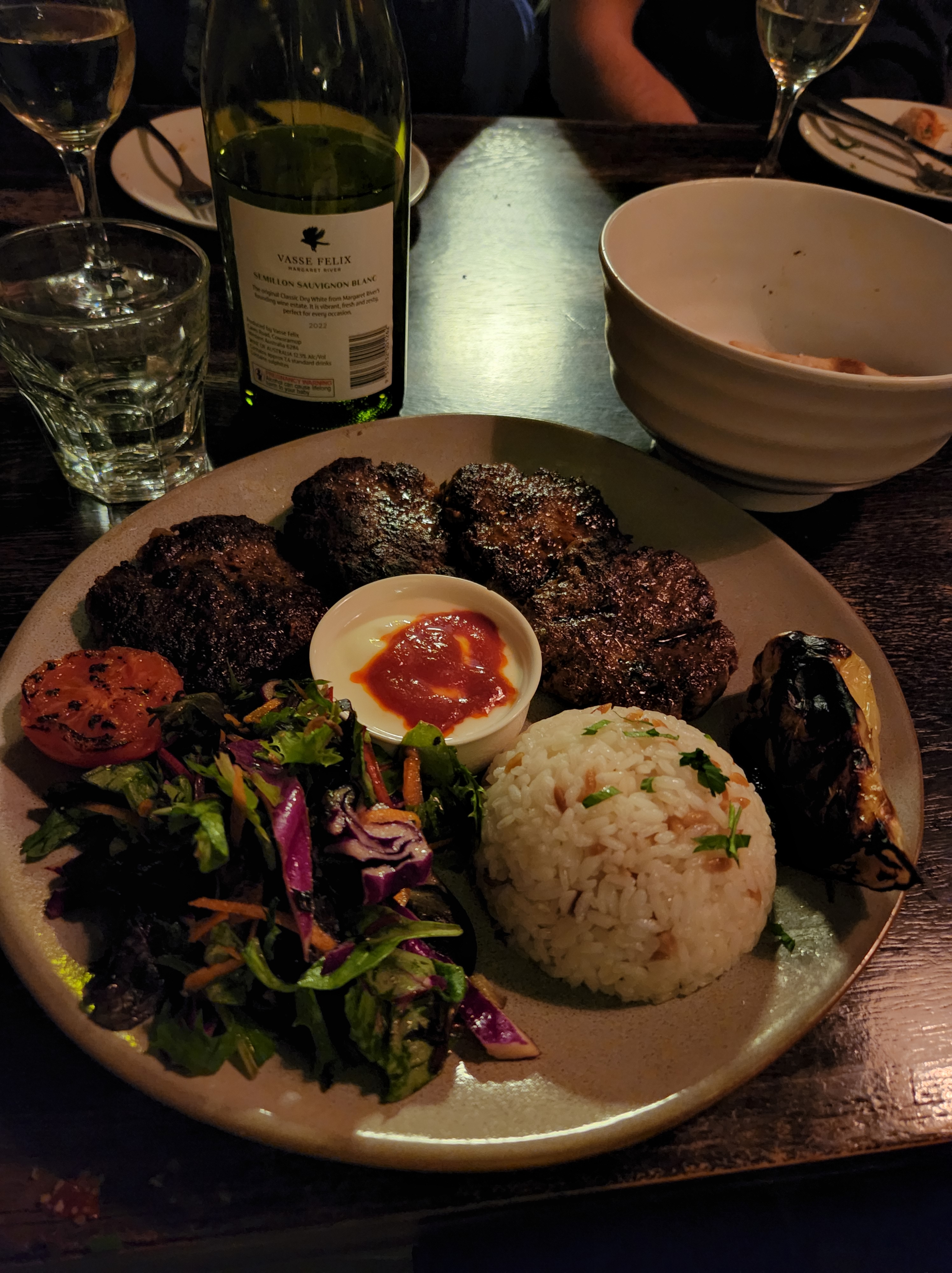
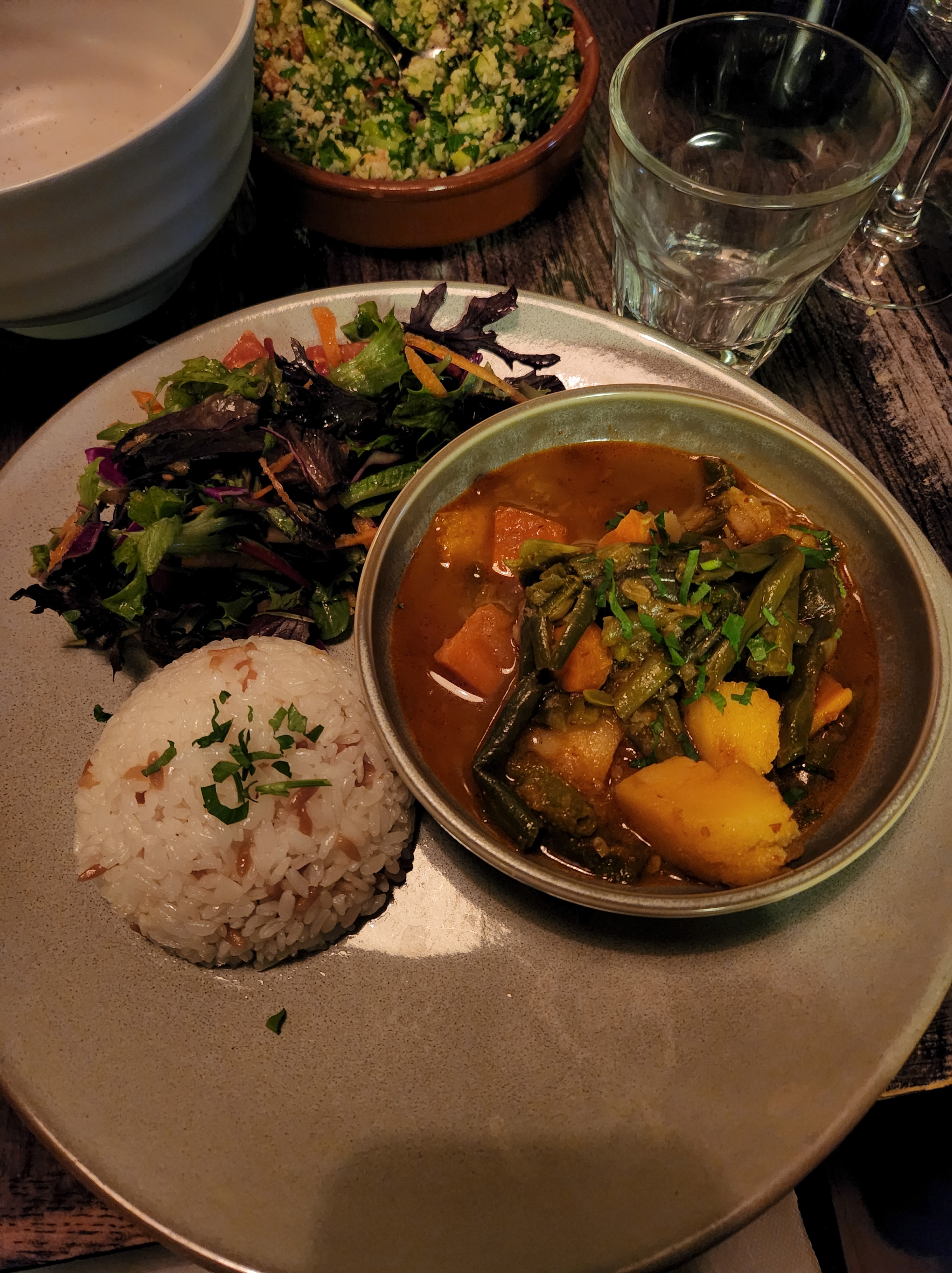
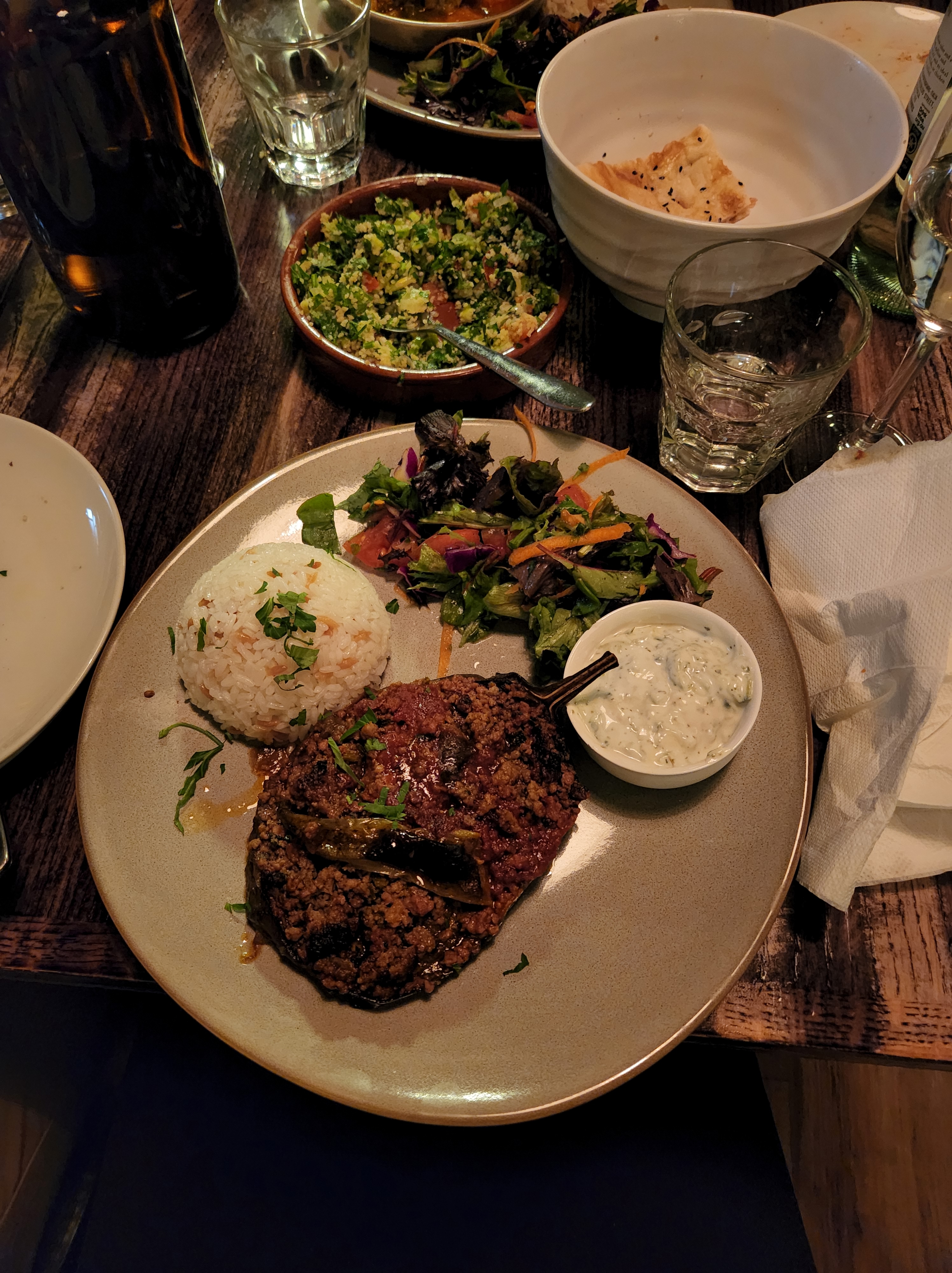


The atmosphere was lively – and even more so when a charming belly dancer appeared. She made a delightful addition to what was already a very pleasant evening. She was sensitive to the crowd, encouraging some brave people to join her, and leaving the not so brave to quietly enjoy. One of our companions was amongst the former and was magnificent in her smilingly enthusiastic approach to the dancing. She was excellent, and we certainly did not tell her to keep her day job!
Unfortunately, the meals were so generous we were unable to have dessert. Next time we might see if it’s possible to share some of the main meals and be able to indulge in some baklava or Turkish delight.
Our first culinary experience was in the Pentridge Complex, where the Boot Factory was an excellent beginning to our six-person group eating in Melbourne. It is part of the Pentridge Complex, which includes the Adina Apartments, and a small shopping mall with two other coffee venues (one serving breakfasts and pastries, the other beautifully elegant pastries and cakes). The mall includes an art gallery (more on this next week) and a frieze telling the story of Pentridge Goal use to which the site has now been put. Sydney Road and the tram are close by, and the Coburg Station is a reasonable walk.
The Boot Factory
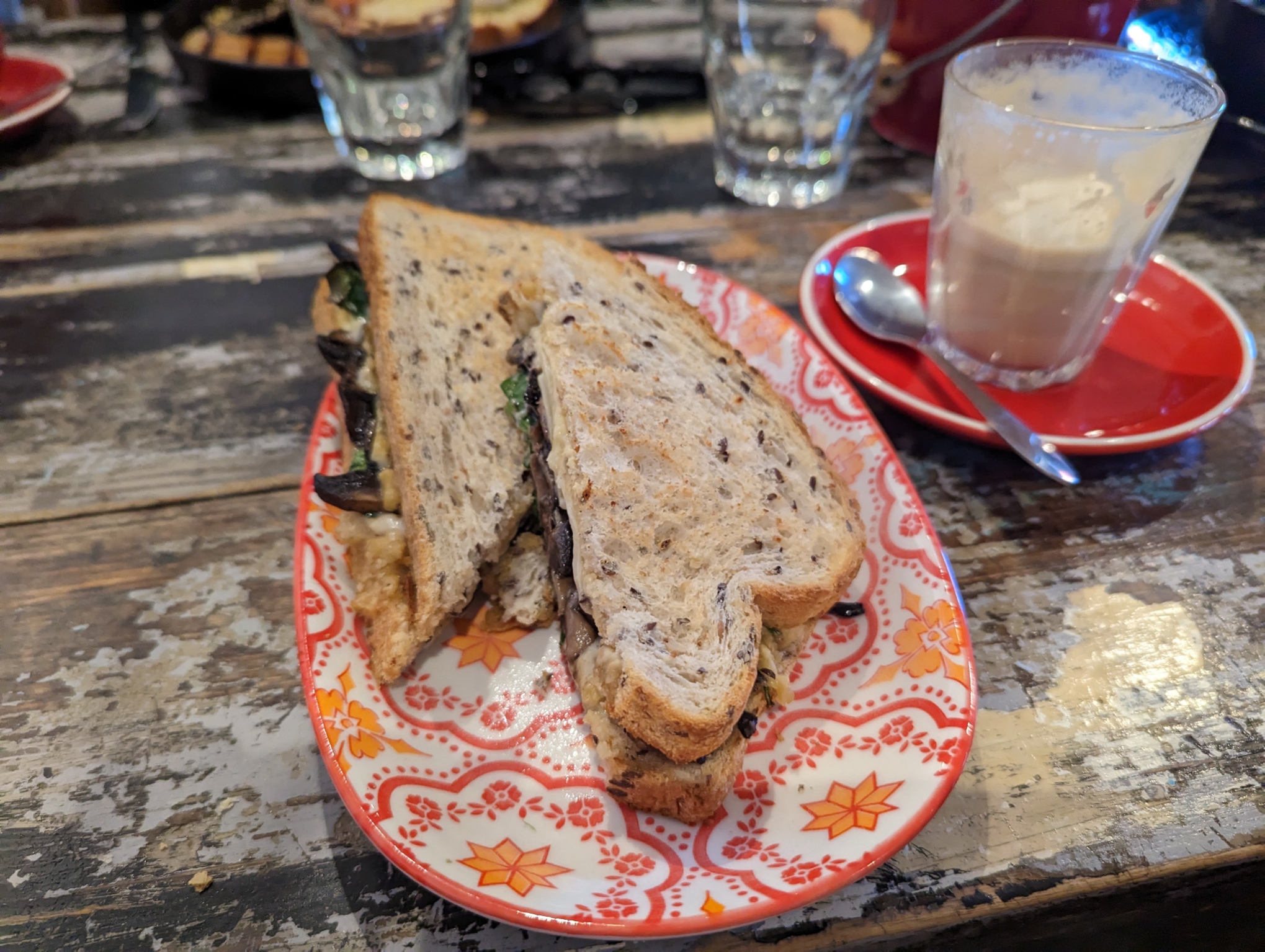
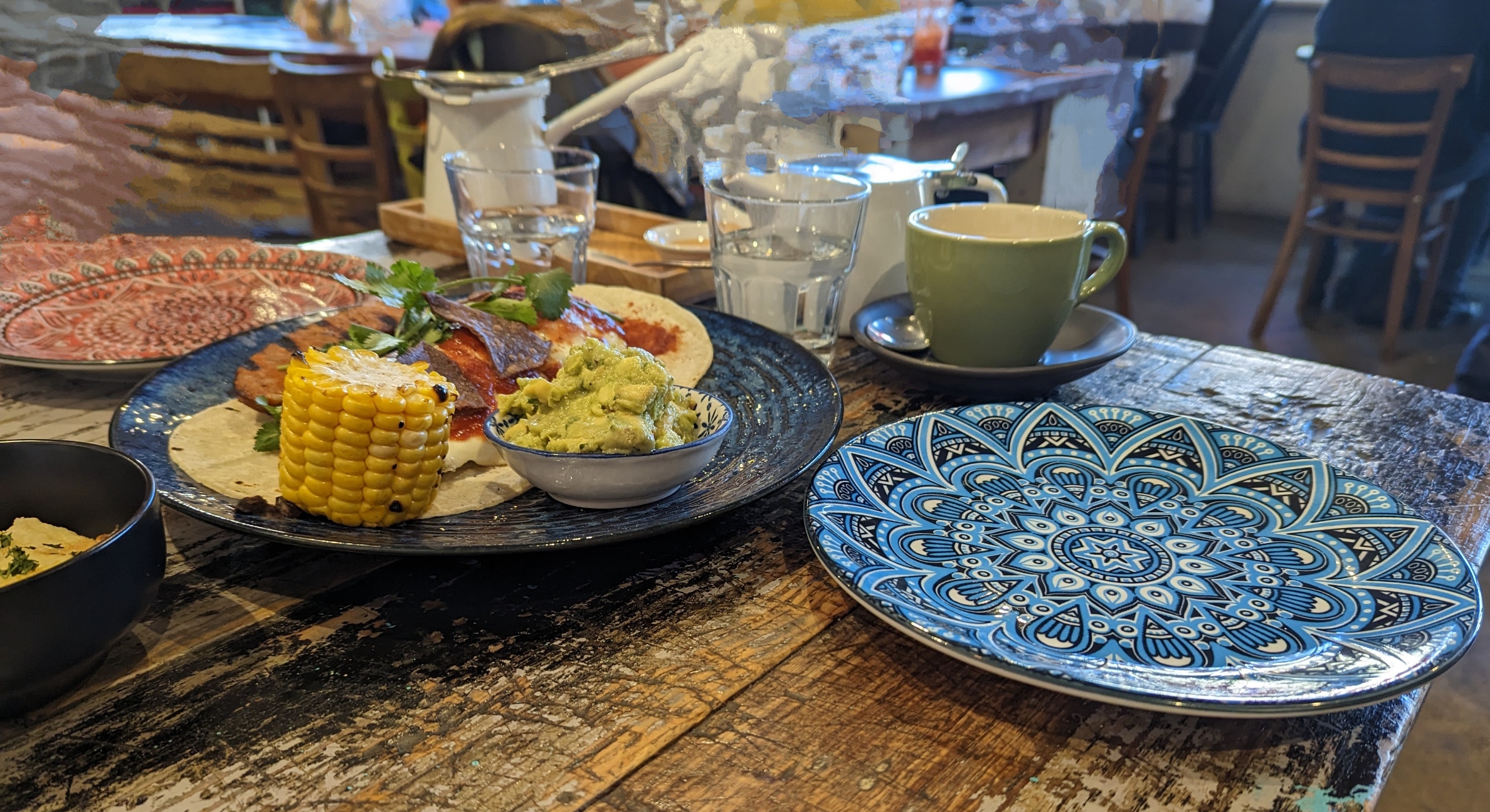
This is a lively eating place with a large and interesting menu. The coffee is good, the meals substantial, and the service competent and pleasant. The large breakfast and the Mexican inspired meals were the most interesting. However, the kale addition to poached eggs was a nice innovation, and my mushroom toastie resplendent with mushrooms.



Cobrick Cafe
This cafe has a cosy section entered through the mall, and a light and lovely section with huge glass windows which can be entered from outside. We enjoyed the later, with its sunny spots interspersed with a few raindrops. And why should we have expected anything different in Melbourne?
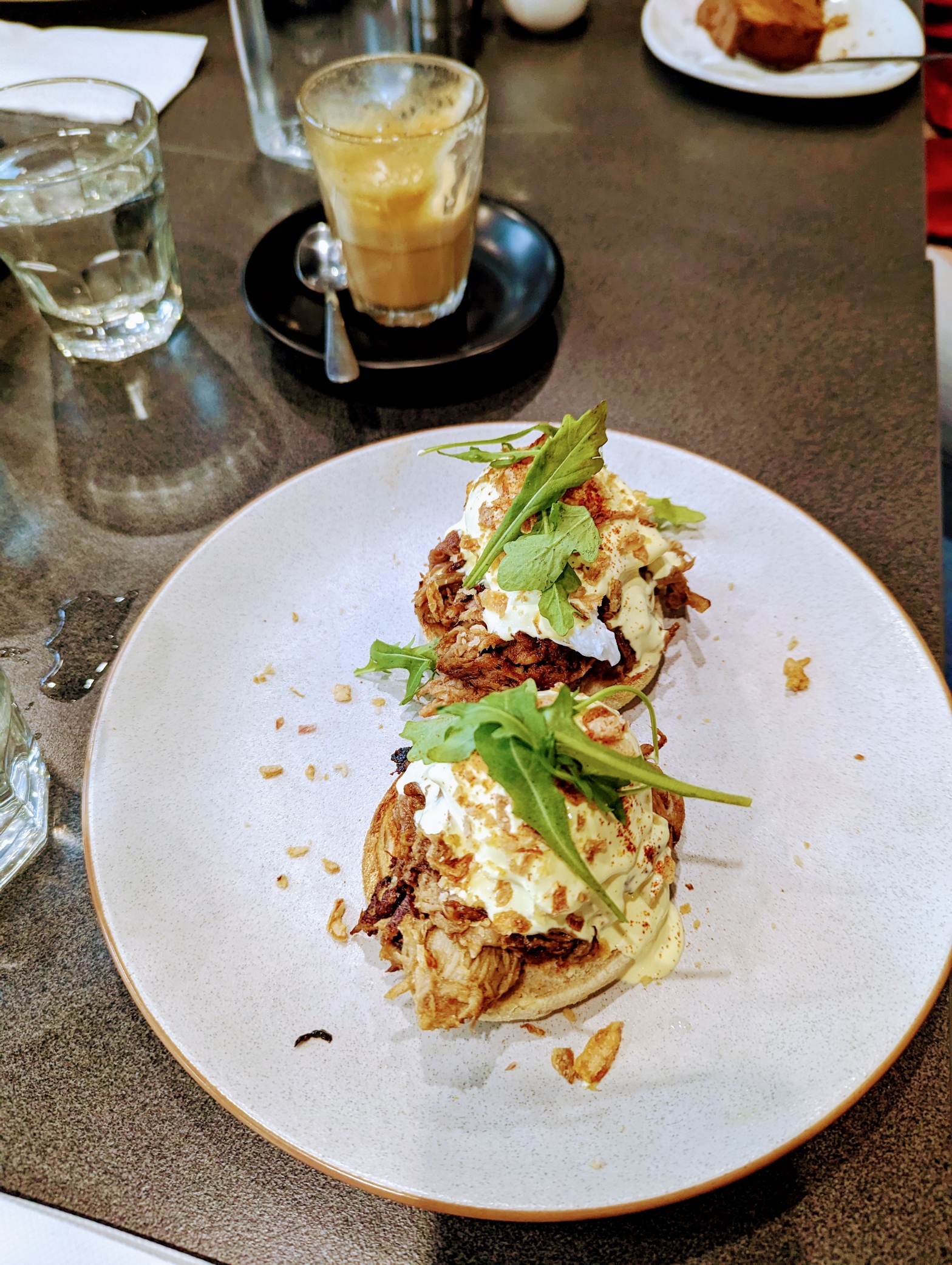
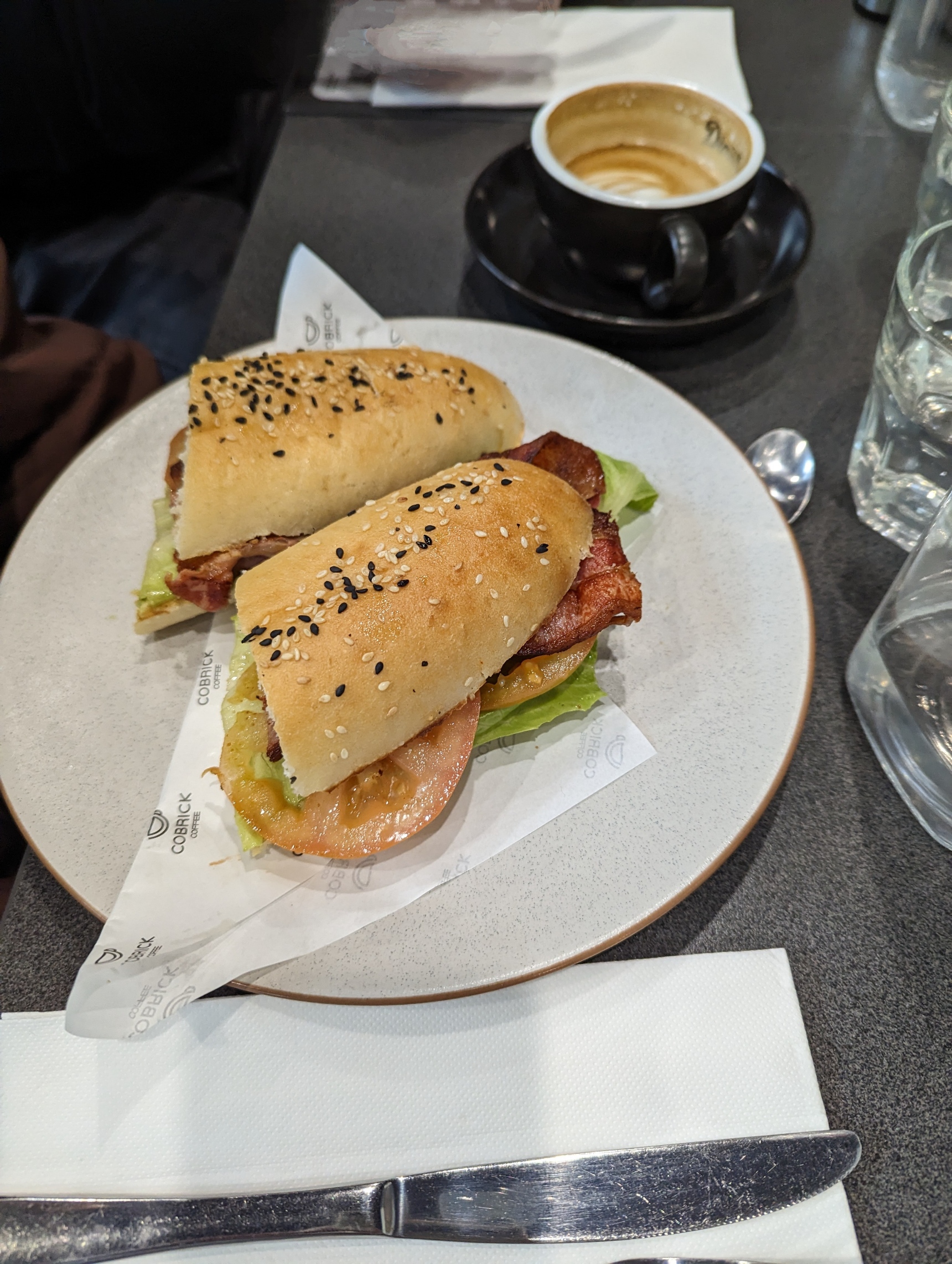
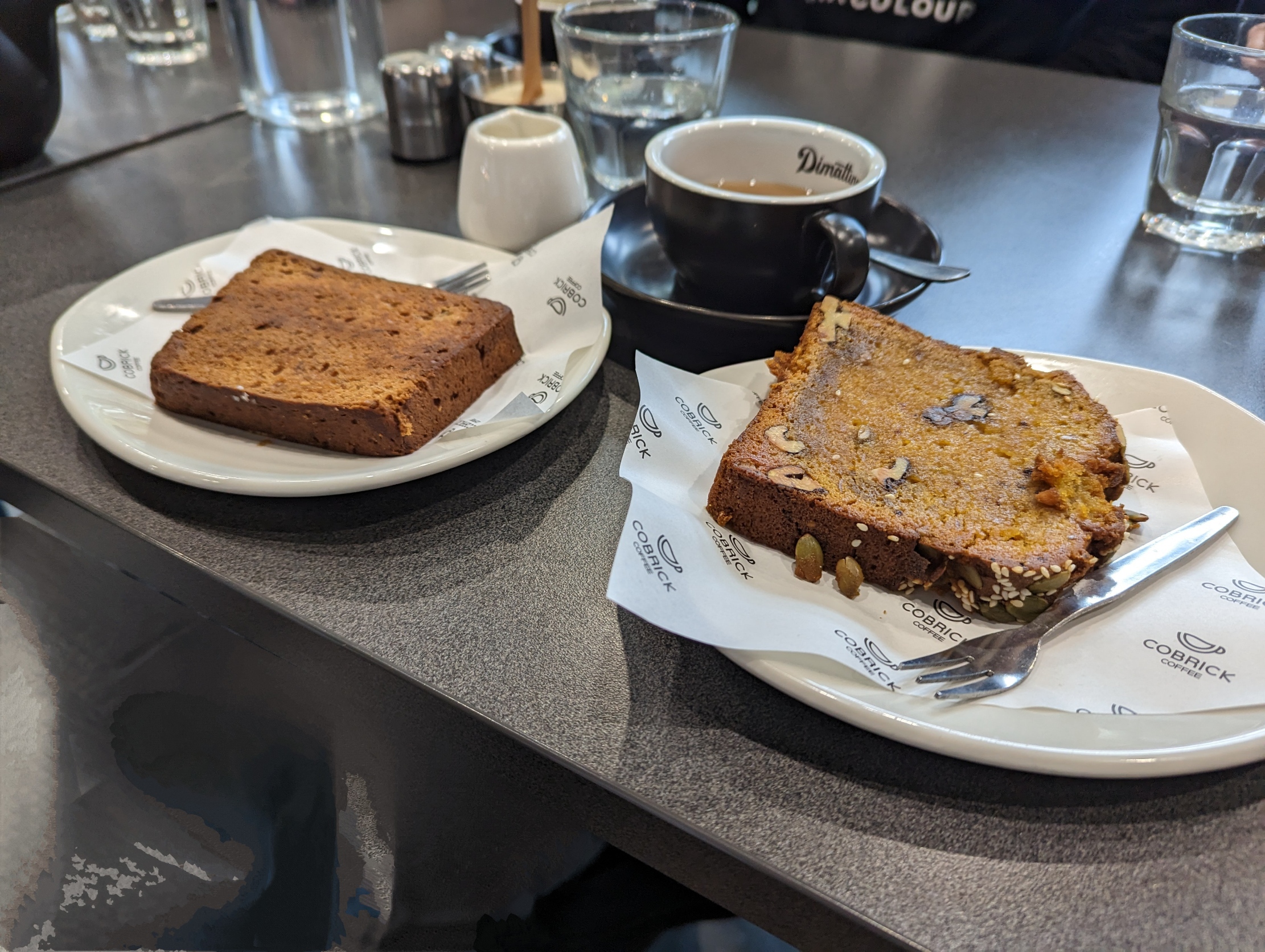
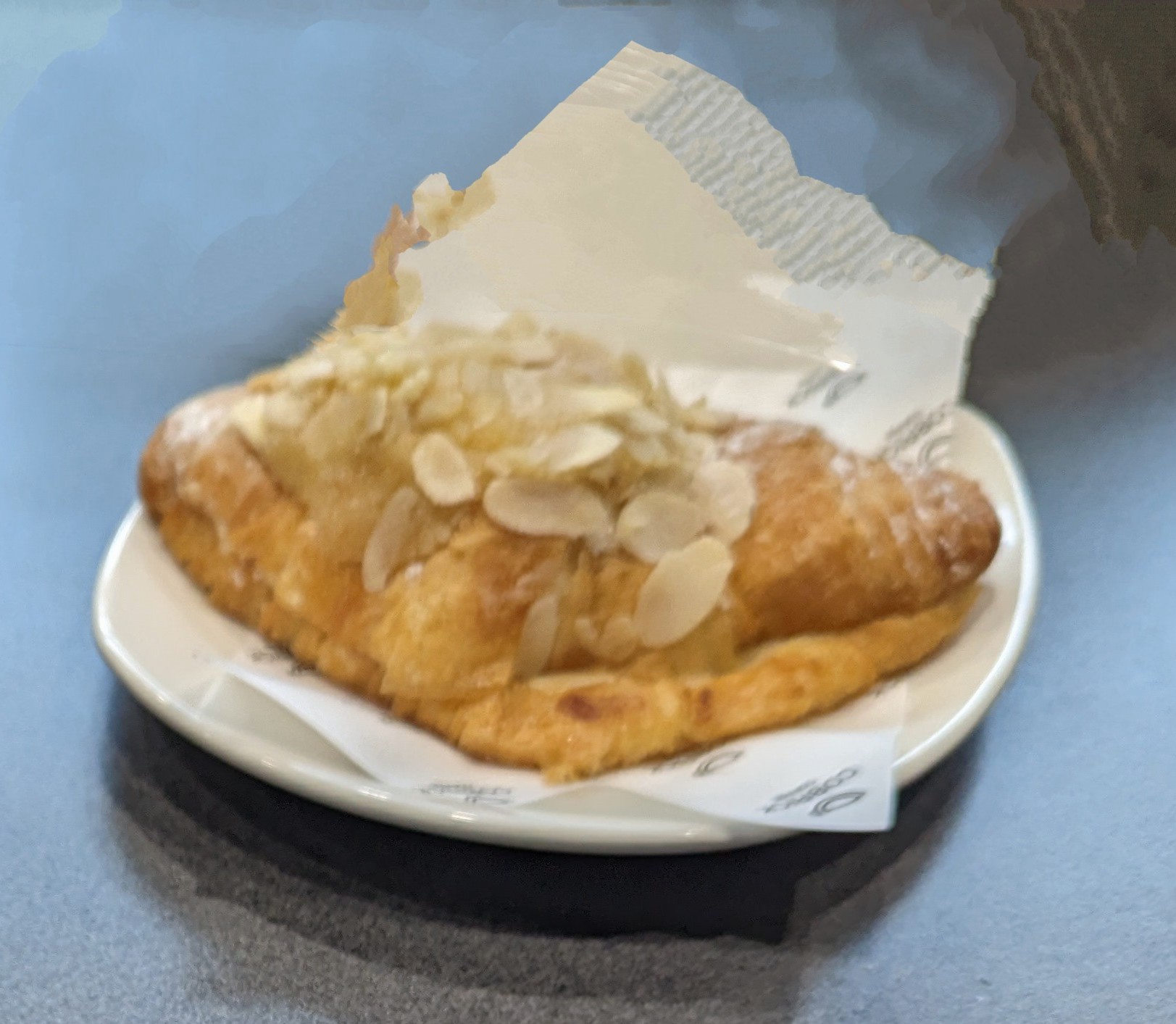
The food was substantial, and the service efficient. Although the range of pastries was limited to the usual almond croissants, banana bread, and pumpkin and walnut bread, they were very good indeed. The breakfast meals were nicely cooked and presented. They were beyond the usual cafe fare, with a tremendous breakfast bagel, and a lovely eggs benedict amongst the offerings.

Guest Reviewer at Sunda
Although I left Melbourne on Sunday some of our group remained. I was so pleased to have received the following about an excellent Melbourne restaurant, Sunda.

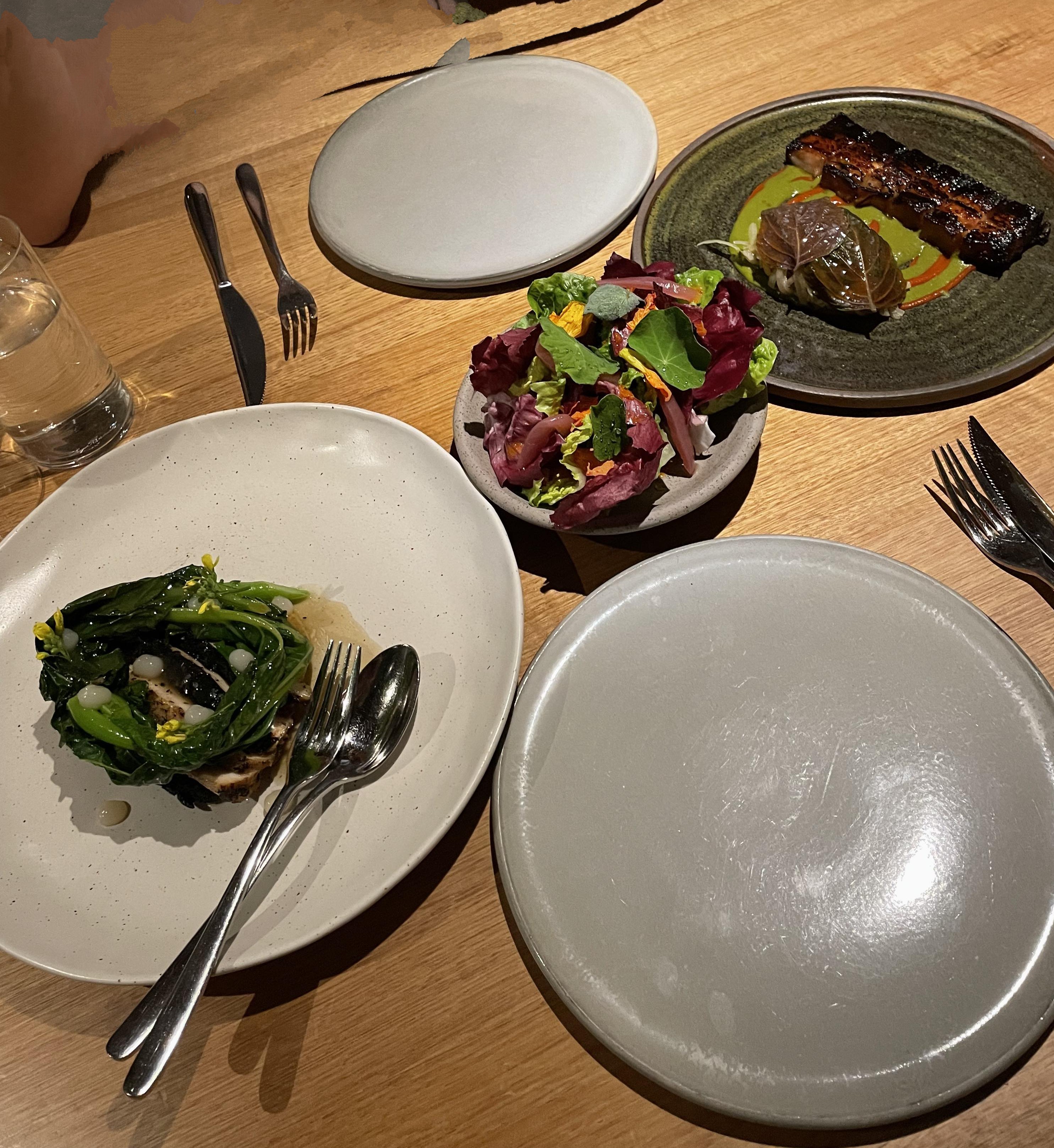
Grace A. says, ‘My friend and I agreed without any reservations that it is the best meal we’ve had together. We even had his vegemite dish!
It’s a curious surprising and delightful experience. Asian and native Australian ingredients aren’t a combination you would expect to work, but Sunda marries them together in a harmonious but equally fun way.
The venue was clearly brought together by ambition and passion for food – pared back in its industrial design, letting the food and service shine through.
The experience was all tied together by the knowledgeable and friendly staff. I cannot recommend Sunda enough!

I work on Q+A’s social media and I see racist abuse every day. You might be shocked by who’s writing it
For the past few years, I’ve worked as the social media producer for a high-profile show, one that has made headlines the past couple of weeks after our beloved presenter had to take a break.
During my time at Q+A, I can tell you one thing: If you’re surprised by the conversations about racism, then you might be part of the problem.
My role involves creating content and moderating the Q+A social media pages, and sometimes even ABC News.
Stan isn’t on social media, so his critics often come to our page to express their rage.
Q+A encourages open debates and conversations, but the vile things I see on a regular basis are astounding.
On Monday I’ll present Q+A, then walk away
Politicians and public figures call out Twitter and call it a cesspool, but for the hundreds of vile comments that appear on Twitter, there are thousands more on Facebook and YouTube and other platforms.
You have the faceless trolls, but you also see profiles that use photos of their dogs or children making racist remarks on the colour of Stan’s skin; or accounts who post about “spreading kindness” and the like also spitting out bigoted takes when we have someone Indigenous or queer on the panel.
If you knew what some of your relatives and close friends are saying behind the comfort of their screens, you would be horrified.
What does it mean to be anti-racist?
“Racism can have the kindest face,” writes Stan Grant in his book, The Queen is Dead, at one of the sections where he speaks about his experience as a Wiradjuri man growing up.
It is a lesson I already know, but it’s a constant reminder whenever I’m moderating these comments.
You could blame it on the anonymity that social media brings that allows people to express views that they would never be brave enough to utter in real life.
Or maybe the algorithms that keep people in their bubble, especially ones like Facebook where there’s hardly any accountability since it’s not so public-facing.
The truth is few people call out those they know, because it is easier to hold strangers or organisations accountable.
A true ally of is someone who speaks up against injustice, even when the person they’re making uncomfortable is someone they know.
Sometimes the people who commit acts of racism are people you love — and isn’t it a true testimony of how much you care for a person when you support them to become better people instead of enabling or ignoring bad behaviour?
‘Casual racism’ is still racism
Some people have this idea that racism is a thing of the past because they don’t see the aggressive kinds of racism or segregation happening at the same scale.
But everyday racism (or “casual racism”) is the kind that isn’t overt. It can be hidden behind smiles and jokes, but it is still racism.
For me, personally, it comes in the form of the people speaking to me slowly, and then becoming surprised that I know English or that I’m articulate and outspoken despite the scarf around my head.
It’s the friends whose partners make and laugh at jokes about non-white people, or claim that their parents don’t like their partners because “our cultures are just too different” (when you know that they wouldn’t be as critical if their partners were “white”).
It is the editors and supervisors who reduce us to our identities and relegate us to writing about our communities, while whispering in the background that “it’s not going to rate well”.
It’s having journos my age, mainly women of colour, sharing stories of their anguish because their own supervisors don’t take their ideas seriously and hide behind kind smiles and condescending words, or speak to them differently when there’s no one around.
This form of racism is just as insidious, in fact maybe even more so
People get defensive when their “harmless” words and actions are called out and hide behind good intentions and words like “political correctness”, “woke-ism” and “people can’t take a joke”.
If you’ve reacted this way before, ask yourself why that was your response.
Bigotry is more than just hurt feelings or name-calling. As a person with privilege, you might have your feelings hurt, but you’re still living in a power structure built with you in mind.
White privilege doesn’t mean that you never go through challenges. But even in those spaces of hardships, whether it’s in terms of socio-economics, gender, sexuality, disability, white people still hold power and have the loudest voices.
Is the media to blame?
In his last address on Q+A before he took a break, Stan Grant says that he’s part of the problem and that “too often, we [the media] are the poison in the bloodstream of our society”.
“We in the media must ask if we are truly honouring a world worth living in.”
It’s interesting to see how media organisations have responded following Stan’s break. They’ve ranged from promises and apologies, to rival media organisations blaming each other.
ABC boss says broadcaster will work with other media companies to end racist abuse of staff
It’s annoying to see journalists and media organisations cheapen Stan’s story by using it as an excuse to get clicks instead of taking this moment to reflect on themselves.
Part of reporting with impartiality is looking into the biases within ourselves and the spaces we operate in.
As members of the media, it is our duty to do that for the people we write for.
We can’t just shift the blame to social media platforms and their owners. It’s our responsibility too, whether we’re a public broadcaster or privately owned.
It is not enough to hire diverse faces when our voices are either silenced, or are only seen as valid when they echo the status quo.
Too often diverse journalists and talents are reduced to quotas to reach and show companies are progressing.
The conversation needs to be about not just accountability but also the current structures within the spaces we operate in.
The reality is that newsrooms still become less diverse the higher up you go. Editors and other decision makers are still mainly straight, male and white.
Don’t lie, you do see colour
Whether you’re someone who claims to be anti-racist and “not see colour”, or an editor or someone in a position of power in media, we are all complicit.
We all come with our own biases, ones that are sometimes unconscious. That’s mirrored in the systems and institutions we operate in.
When we’re confronted with the experiences of First Nations’ people or non-white people in Australia, the conversation can turn ugly, partly because it’s riddled with guilt.
Guilt isn’t a pleasant feeling, but that doesn’t mean it can’t be constructive.
Talking about race doesn’t have to be divisive – in fact, it could be what brings us together to healing and justice.
And we can never achieve that if our fingers are pointed at everyone else but ourselves.
And the horrible irony…

NATIONAL RECONCILIATION WEEK 2023
27 MAY TO 3 JUNE

Keep up the momentum for change: the theme for National Reconciliation Week 2023 is Be a Voice for Generations.
The theme encourages all Australians to be a voice for reconciliation in tangible ways in our everyday lives – where we live, work and socialise.
For the work of generations past, and the benefit of generations future, act today for a more just, equitable and reconciled country for all.
National Reconciliation Week – 27 May to 3 June – is a time for all Australians to learn about our shared histories, cultures, and achievements, and to explore how each of us can contribute to achieving reconciliation in Australia.
Heather Cox Richardson American Letter May 29, 2023

Beginning in 1943, the War Department published a series of pamphlets for U.S. Army personnel in the European theater of World War II. Titled Army Talks, the series was designed “to help [the personnel] become better-informed men and women and therefore better soldiers.”
On March 24, 1945, the topic for the week was “FASCISM!”
“You are away from home, separated from your families, no longer at a civilian job or at school and many of you are risking your very lives,” the pamphlet explained, “because of a thing called fascism.” But, the publication asked, what is fascism? “Fascism is not the easiest thing to identify and analyze,” it said, “nor, once in power, is it easy to destroy. It is important for our future and that of the world that as many of us as possible understand the causes and practices of fascism, in order to combat it.”
Fascism, the U.S. government document explained, “is government by the few and for the few. The objective is seizure and control of the economic, political, social, and cultural life of the state.” “The people run democratic governments, but fascist governments run the people.”
“The basic principles of democracy stand in the way of their desires; hence—democracy must go! Anyone who is not a member of their inner gang has to do what he’s told. They permit no civil liberties, no equality before the law.” “Fascism treats women as mere breeders. ‘Children, kitchen, and the church,’ was the Nazi slogan for women,” the pamphlet said.
Fascists “make their own rules and change them when they choose…. They maintain themselves in power by use of force combined with propaganda based on primitive ideas of ‘blood’ and ‘race,’ by skillful manipulation of fear and hate, and by false promise of security. The propaganda glorifies war and insists it is smart and ‘realistic’ to be pitiless and violent.”
Fascists understood that “the fundamental principle of democracy—faith in the common sense of the common people—was the direct opposite of the fascist principle of rule by the elite few,” it explained, “[s]o they fought democracy…. They played political, religious, social, and economic groups against each other and seized power while these groups struggled.”
Americans should not be fooled into thinking that fascism could not come to America, the pamphlet warned; after all, “[w]e once laughed Hitler off as a harmless little clown with a funny mustache.” And indeed, the U.S. had experienced “sorry instances of mob sadism, lynchings, vigilantism, terror, and suppression of civil liberties. We have had our hooded gangs, Black Legions, Silver Shirts, and racial and religious bigots. All of them, in the name of Americanism, have used undemocratic methods and doctrines which…can be properly identified as ‘fascist.’”
The War Department thought it was important for Americans to understand the tactics fascists would use to take power in the United States. They would try to gain power “under the guise of ‘super-patriotism’ and ‘super-Americanism.’” And they would use three techniques:
First, they would pit religious, racial, and economic groups against one another to break down national unity. Part of that effort to divide and conquer would be a “well-planned ‘hate campaign’ against minority races, religions, and other groups.”
Second, they would deny any need for international cooperation, because that would fly in the face of their insistence that their supporters were better than everyone else. “In place of international cooperation, the fascists seek to substitute a perverted sort of ultra-nationalism which tells their people that they are the only people in the world who count. With this goes hatred and suspicion toward the people of all other nations.”
Third, fascists would insist that “the world has but two choices—either fascism or communism, and they label as ‘communists’ everyone who refuses to support them.”
It is “vitally important” to learn to spot native fascists, the government said, “even though they adopt names and slogans with popular appeal, drape themselves with the American flag, and attempt to carry out their program in the name of the democracy they are trying to destroy.”
The only way to stop the rise of fascism in the United States, the document said, “is by making our democracy work and by actively cooperating to preserve world peace and security.” In the midst of the insecurity of the modern world, the hatred at the root of fascism “fulfills a triple mission.” By dividing people, it weakens democracy. “By getting men to hate rather than to think,” it prevents them “from seeking the real cause and a democratic solution to the problem.” By falsely promising prosperity, it lures people to embrace its security.
“Fascism thrives on indifference and ignorance,” it warned. Freedom requires “being alert and on guard against the infringement not only of our own freedom but the freedom of every American. If we permit discrimination, prejudice, or hate to rob anyone of his democratic rights, our own freedom and all democracy is threatened.” And if “we want to make certain that fascism does not come to America, we must make certain that it does not thrive anywhere in the world.”
Seventy-eight years after the publication of “FASCISM!” with its program for recognizing that political system and stopping it from taking over the United States, President Joe Biden today at Arlington National Cemetery in Arlington, Virginia, honored those who gave their lives fighting to preserve democracy. “On this day, we come together again to reflect, to remember, but above all, to recommit to the future our fallen heroes fought for, …a future grounded in freedom, democracy, equality, tolerance, opportunity, and…justice.”
“[T]he truest memorial to their lives,” the president said, is to act “every day to ensure that our democracy endures, our Constitution endures, and the soul of our nation and our decency endures.”
—
Notes:
https://onlinebooks.library.upenn.edu/webbin/serial?id=armytalks
War Department, “Army Talk 64: FASCISM!” March 24, 1945, at https://archive.org/details/ArmyTalkOrientationFactSheet64-Fascism/mode/2up
“[T]he truest memorial to their lives,” the president said, is to act “every day to ensure that our democracy endures, our Constitution endures, and the soul of our nation and our decency endures.”

 Robin's Room