The book review this week is The Bedroom Window by K.L. Slater. However, I am also referring to the work I reviewed last week as that post had a very short time online as it was posted so late. Besides, I really love the cover of Plague Searchers and it deserves another airing .

K.L. Slater The Bedroom Window Bookouture, 2023.
Thank you, NetGalley, for this uncorrected proof for review.
Although I have given this novel 3* as I did for the previous K.L. Slater I reviewed (The Narrator) this is an instance of where a half * would have helped provide a true star assessment. I found The Bedroom Window disappointing in comparison with The Narrator and would have liked to give it less than the 3*, but it does not deserve only 2* .
My disappointment is partly based on the unappealing nature of the characters. Lottie, Neil and their son Alby move to Whitsend where Neil is to begin working as the manager of a beautiful estate. This is a new start for the three of them: Neil has recovered from a devastating accident; Lottie is no longer responsible for his care and can begin thinking of returning to work; and Albie has a new start away from a school in which he was bullied. The location is beautiful, the cottage in which they will live picturesque, Neil’s employers friendly and the job everything he wishes. What could go wrong? See Books: Reviews for the complete review.
.

Rob Wills Plague Searchers Volumes 1 and 2 Arcadia 2022.
The description ‘immense’ has been at the forefront of my feelings about Rob Wills’ Plague Searchers, Volume 1, Red Wands and Volume 2, Flee Quick, Go Far. It is possible that such a description usually applies to novels that reach far into the past and future, that it implies that large characters will perform amazing deeds and that huge events will thunder across the pages and geographical expanses. Instead, Plague Searchers begins in London on Wednesday, 7 June 1665 with the last chapter set in London on Sunday, 29 October 1665. See Books: Reviews
After the Covid Report: Fremantle Arts Centre Exhibition; The Voice to Parliament; Glenda Jackson; Barbara Kingsolver and Demon Copperhead – prize; LWNC Breakout Sessions.
Covid Update Around Australia – ABC Report 16 June 2023
New South Wales
The state has recorded 6,906 new COVID-19 cases, down significantly from last week’s total of 11,719.
There are 1,412 cases in hospital with the virus, 35 of those in intensive care.
There were 53 new deaths announced today.
Victoria
There have been 3,956 new COVID-19 cases in Victoria this week, down significantly from last week’s total of 6,135 cases.
The state has 313 people in hospital with COVID-19, and 17 in intensive care.
There were 113 new deaths recorded.
Northern Territory
There have been 80 new COVID-19 cases recorded in the Northern Territory, down from 136 last week.
The Northern Territory currently has six patients in hospital.
South Australia
There have been 1,592 new COVID-19 cases recorded in South Australia, down from 2,593 cases last week.
There are currently 118 people in hospital, with five in ICU.
South Australia has reported 12 new deaths.
Queensland
Queensland’s new COVID-19 reporting process now works on a seven-day rolling average system, which differs from the other states and territories.
The state recorded 541 average daily cases as of June 19, down from an average of 782 the previous week.
There is a seven-day rolling average of two deaths as of May 29, with 322 patients in hospital with the virus, and eight in intensive care.
Australian Capital Territory
There were 478 new COVID-19 cases recorded in ACT, down from 811 cases last week.
There are currently 22 people in hospital with the virus, with one in intensive care and one ventilated.
The state recorded three new deaths.
Tasmania
There have been 624 new COVID-19 cases recorded in Tasmania, down from 964 cases last week.
There were 14 people admitted to hospital with the virus this week, with one in intensive care.
Tasmania has recorded 296 deaths since 2020.
Western Australia
WA Health has 2,344 recorded new COVID-19 cases, down from 3,014 cases last week.
As of 4pm Thursday, 191 people are in hospital with the virus, with three in intensive care.
This week’s report includes seven deaths.

Fremantle Arts Centre
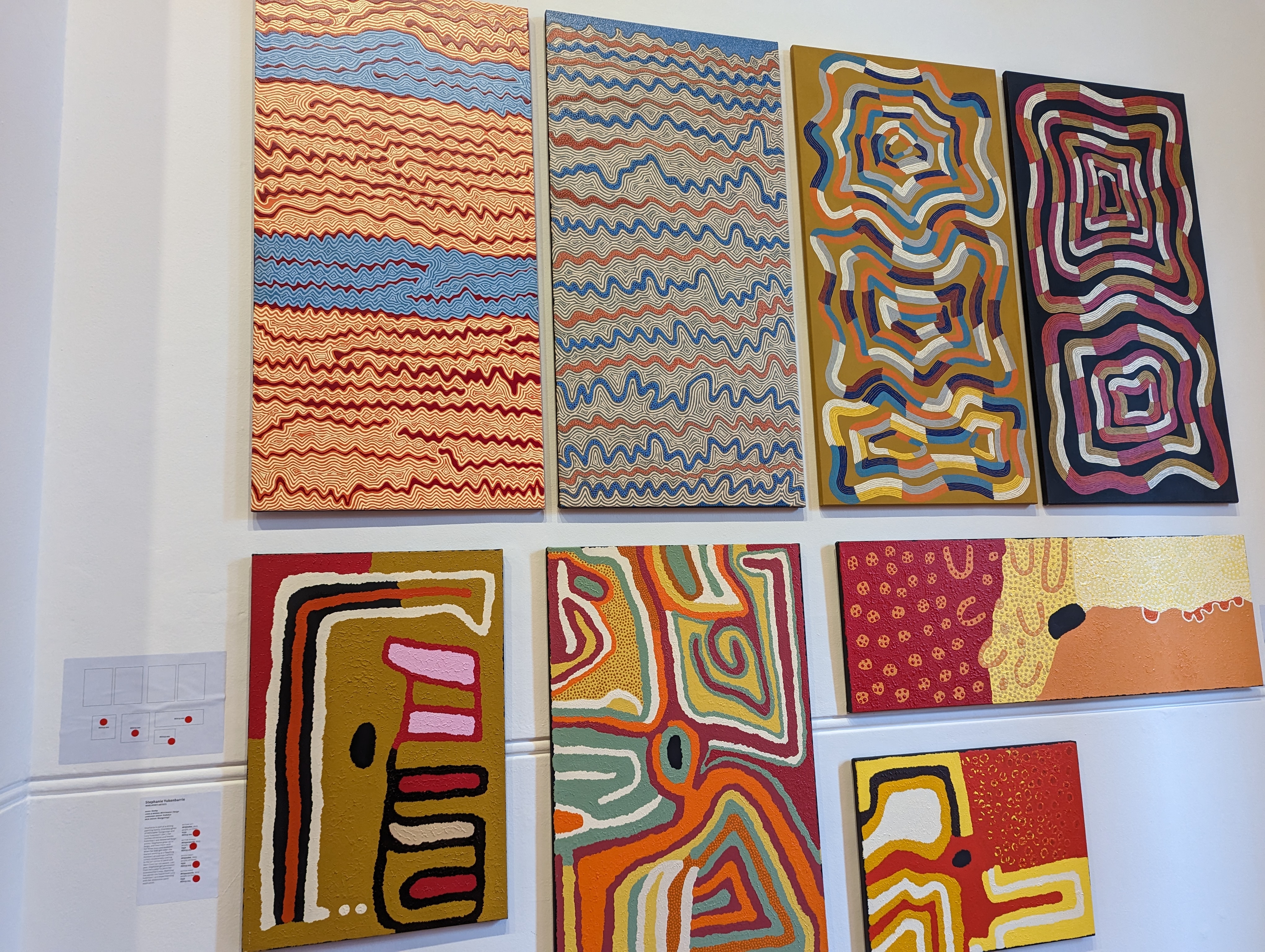
I visited the Fremantle Arts Centre with a friend with whom I worked at the Western Australian Correspondence School in the early 1970s. There we illustrated the books that were used by high school level students in remote areas in Western Australia. Teachers who had retired from the classroom wrote the material. We were in a large room with windows across the wall against which our desks were placed. Plenty of light for our endeavours, and plenty of space for us to chat without disturbing the two teachers with whom we shared. Our work was in pen and ink with plenty of cross hatching from recall. None of the glorious colour we observed in our wandering around the Fremantle Arts Centre exhibition.
We were suitably impressed with the exciting exhibition at the Fremantle Arts Centre, and not all surprised about the large number of red spots beside these amazing works.







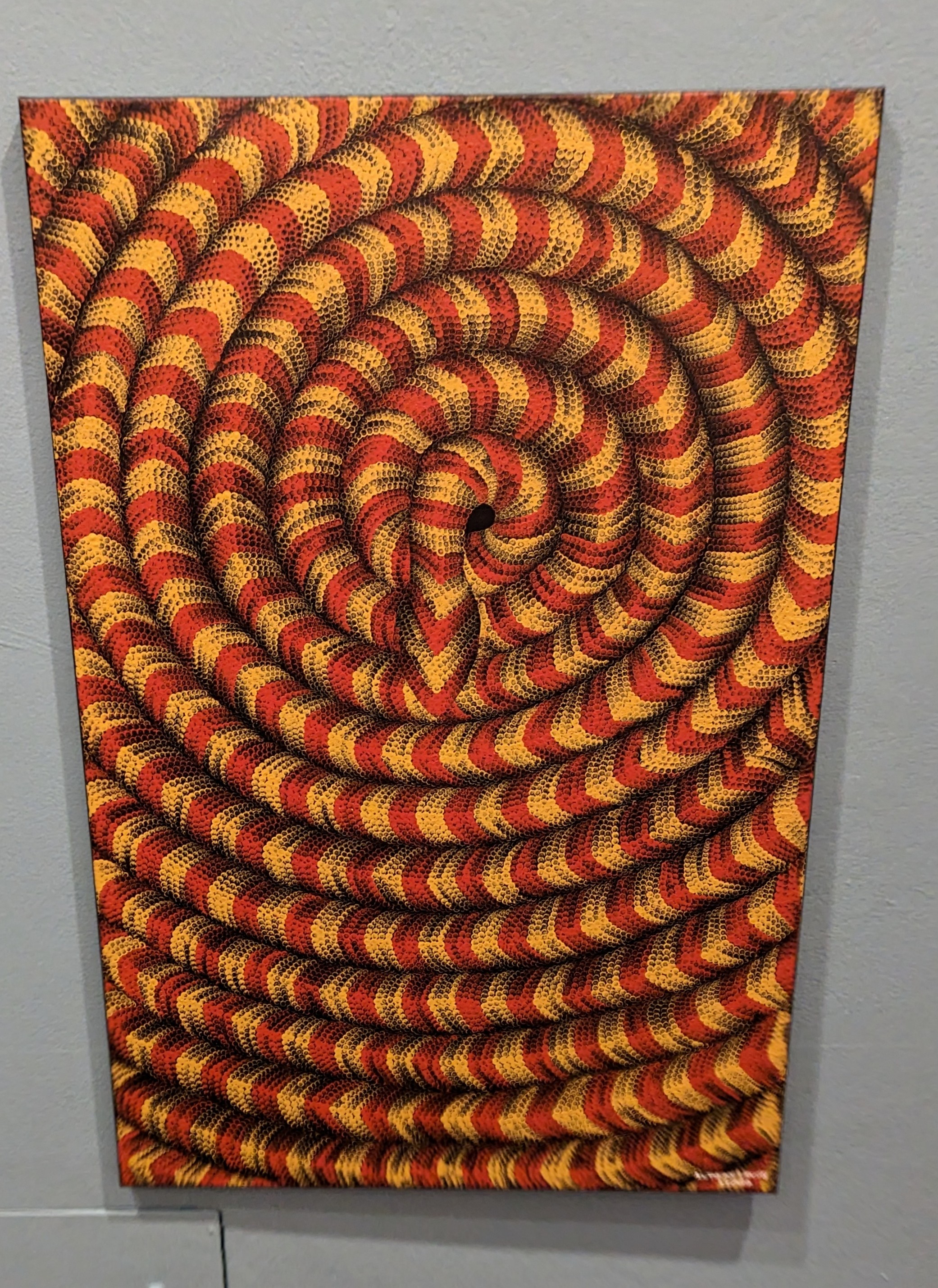

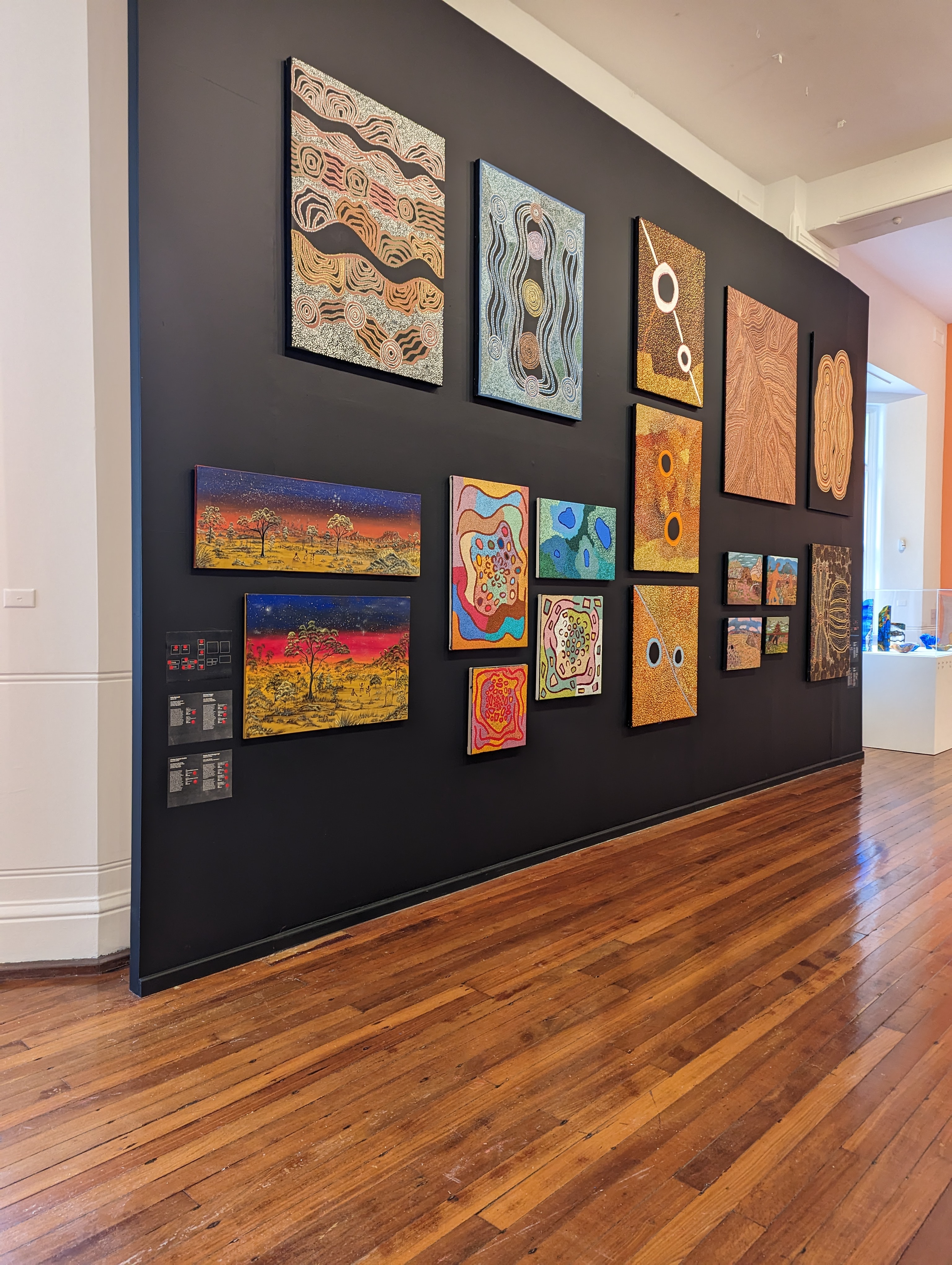



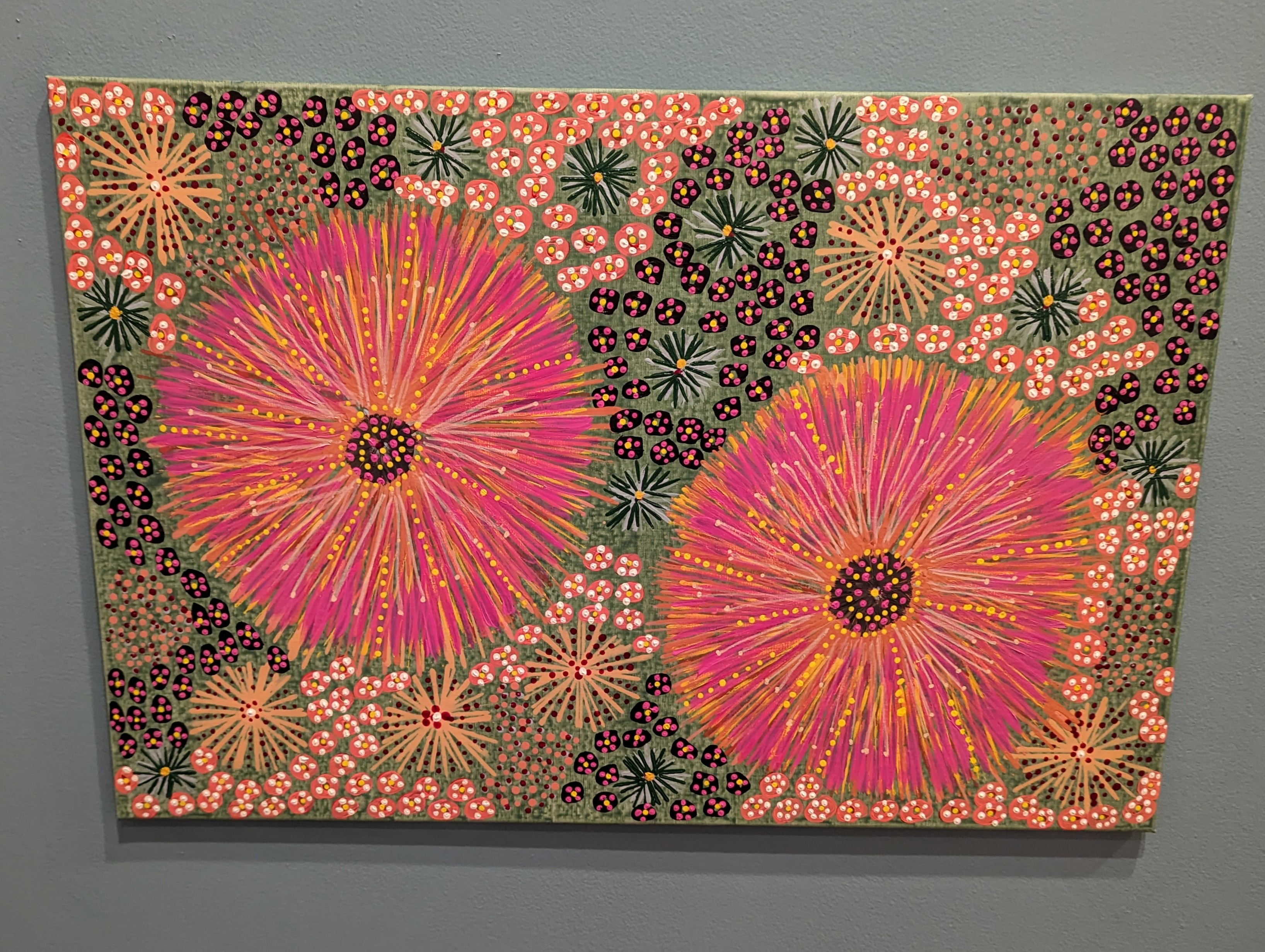

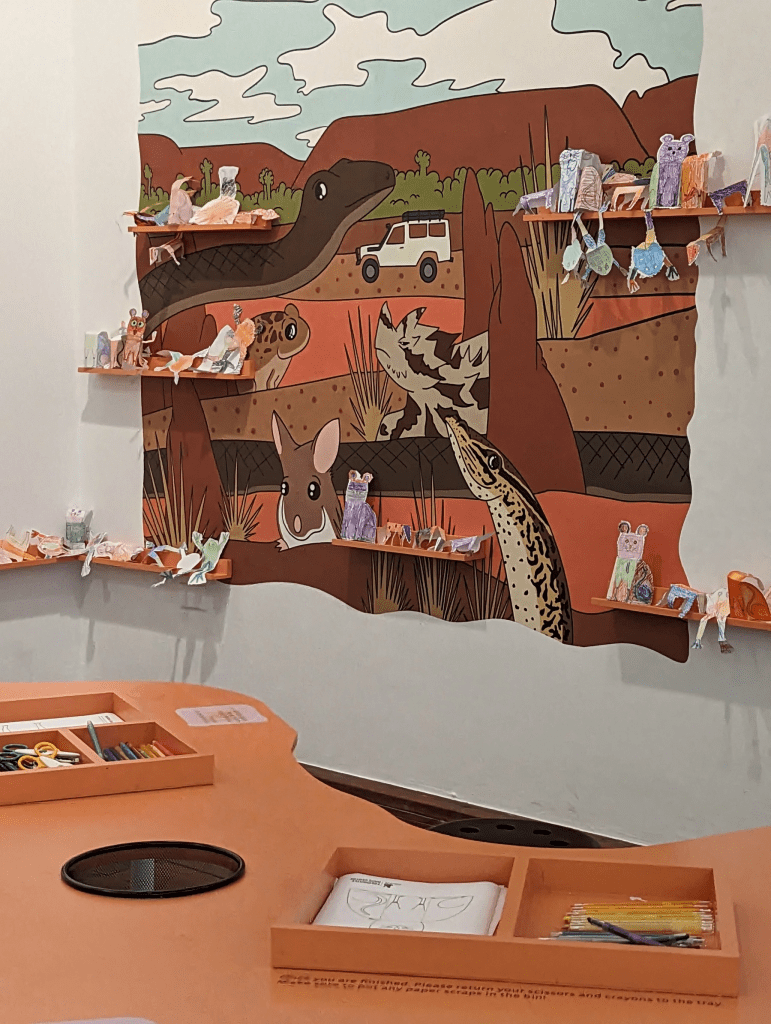
Similarly to the children’s space at the Western Australian Art Gallery in Perth, this smaller gallery had an attractive children’s section.



The Voice to Parliament

Anthony Albanese
Now the Australian people will have a chance to say yes.
Together, we can make history by enshrining recognition of Aboriginal and Torres Strait Islander people in our constitution.
The Constitution Alteration has passed the Senate!
Let’s deliver constitutional recognition through a Voice, together.
Inside Story – Losing ground?
Support for the Voice may not have dropped as much as the latest Newspoll suggests
MURRAY GOOT 9 JUNE 2023
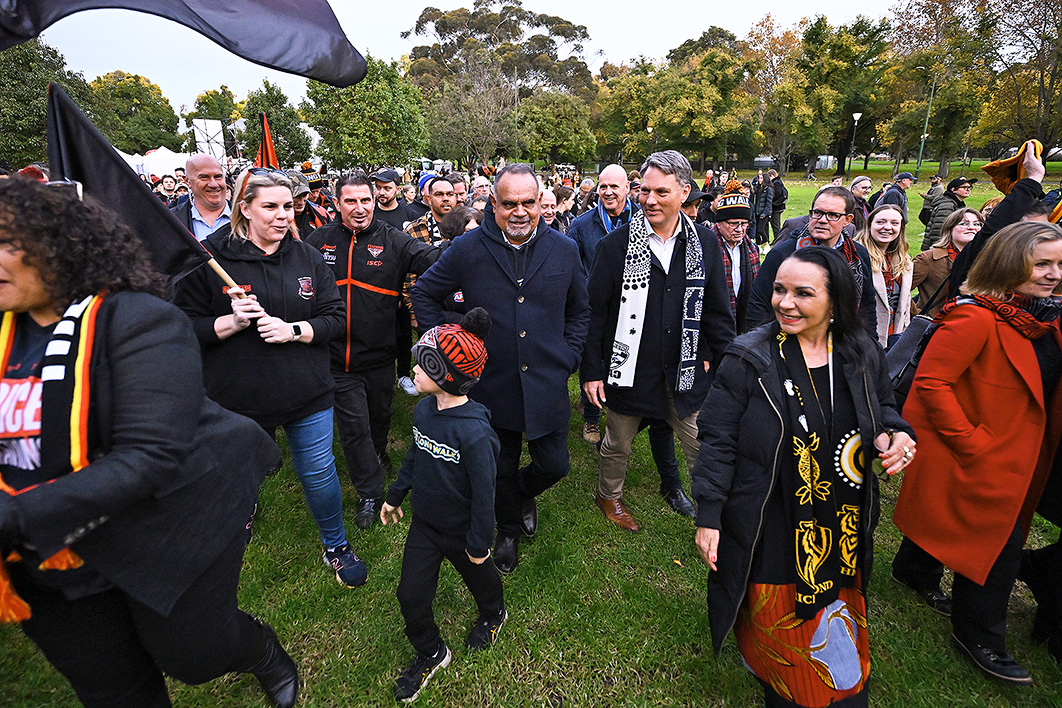
A number game: AFL player Michael Long (centre) during his Long Walk to the MCG last month promoting the Voice. Joel Carrett/AAP Image
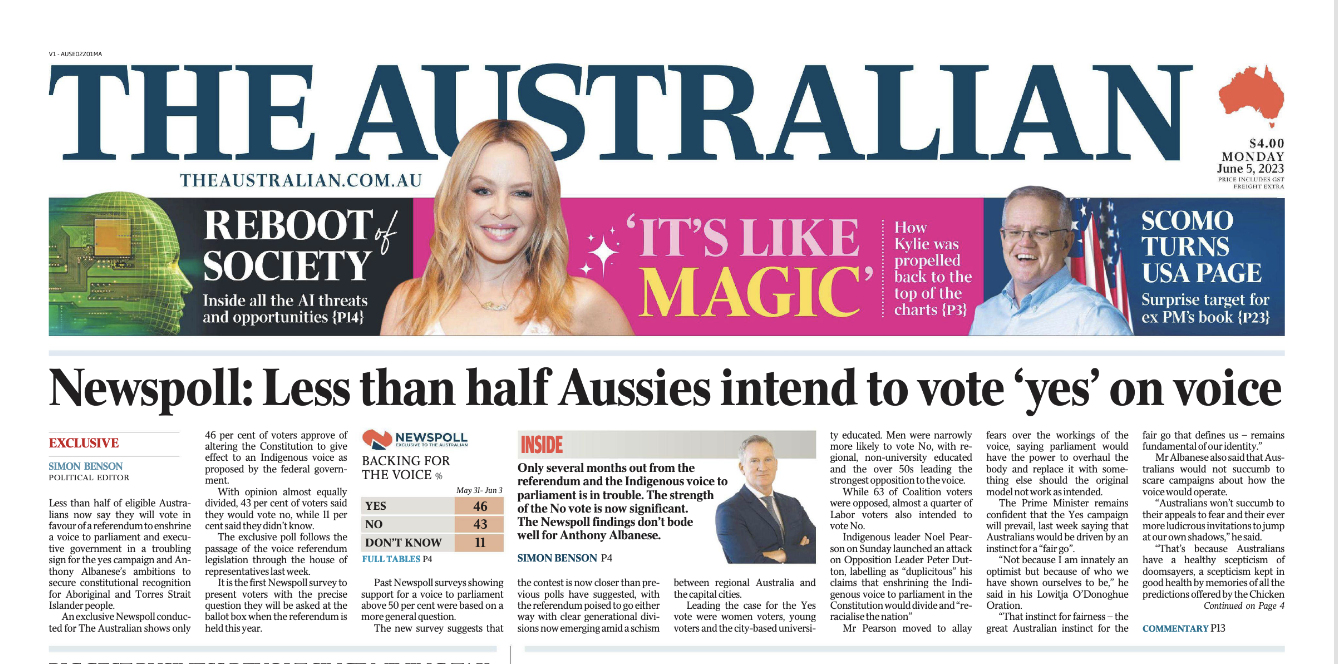
The latest Newspoll — headlined “Less Than Half Aussies Intend to Vote ‘Yes’ on Voice” on the Australian’s front page — has created something of a stir.
At the beginning of April, when Newspoll last reported on support for putting a Voice into the Constitution, it estimated the level of approval at 53 per cent and opposition at 39 per cent; 8 per cent said “Don’t know.” Two months later, the corresponding figures are rather different: 46–43–11.
On the face of it, this looks like support has declined by seven points, the opposition has risen by four points, and the “Don’t knows” have gone up by three. And it looks like that’s the result of a couple of months in which the No side has campaigned hard and the Yes side has been on the back foot, with some of its erstwhile supporters either switching to No or putting off a firm decision and “parking” their vote, as Newspoll’s former boss Sol Lebovic used to say, under “Don’t know.”
Thus, Dennis Shanahan, in a comment for the Australian: “The latest Newspoll figures… suggest there is an across-the-board movement against the voice and a surge in uncertainty.”
Not so fast. There are two reasons for caution when comparing the June results with the April results: a change in Newspoll’s question and a change in what we might call, borrowing a phrase from Richard Thaler and Cass Sunstein’s Nudge, its “choice architecture.”
The question: The Australian notes that the question asked in its latest poll is not the same as the question asked in its previous polls. The obvious implication is that its figures need to be interpreted with care.
In April, Newspoll explained that “There is a proposal to alter the Australian constitution to establish an Aboriginal and Torres Strait Islander Voice to Parliament.” It then asked: “Are you personally in favour or against this proposal?”
In its latest poll, Newspoll used a slightly different preamble: “Later this year, Australians will decide at a referendum whether to alter the Australian Constitution to recognise the First Peoples of Australia by establishing an Aboriginal and Torres Strait Islander Voice”(with those italicised words underlined in the questionnaire). It then asked: “Do you approve this proposed alteration?” This made it “the first Newspoll survey to present voters with the precise question they will be asked at the ballot box when the referendum is held later this year.”
If the differences in the wording of the two questions explains, at least in part, the differences in the two sets of responses, it is not clear how it does. Did the reference to “recognition” deflate support? That seems unlikely: since “recognition” has wide public support, its inclusion is more likely to have boosted support than deflated it. Did the prospect of having to vote at a referendum boost opposition? Again, that seems unlikely, though at a time when voters may have more pressing things to worry about, it’s probably the better bet. Perhaps the heavy black underlining of the proposal caused concern.
According to a quote in the Daily Telegraph, another News Corp masthead, polling analyst Kevin Bonham believes Newspoll is “likely more accurate” than many other polls because it has been the first to use the exact wording of the referendum proposal. However commendable that might have been, we cannot assume that the wording necessarily makes a difference to respondents.
A polling purist might baulk at Newspoll’s switch from: (a) asking respondents whether they are “in favour or against” (balanced alternatives) a proposal to alter the Constitution to establish a Voice; to (b) asking respondents whether they “approve” this proposed alteration, with no balancing alternative (“disapprove”). It might also have been better practice to ask respondents how they intended to act (that is, vote) rather than how they felt (“in favour or against”; “approve”).
The choice architecture: What the Australian overlooks — and what Newspoll itself fails to note — may be something more important than the change in the question: the change in the poll’s choice architecture. In April, Newspoll not just posed a different question; it also offered a different array of response options: “Strongly in favour,” “Partly in favour,” “Partly against,” “Strongly against,” “Don’t know.” In its most recent poll, by contrast, the options offered to respondents were simply: “Yes,” “No,” “Don’t know” — a set of responses, it should be acknowledged, better suited to a referendum than the set Newspoll previously offered.
How might this change have affected the results? With a wider number of response options, the proportion that chose “Don’t know” was relatively small; in April’s Newspoll, it was 8 per cent, with the numbers in February (7 per cent) and in March (9 per cent) having been almost the same. Polls by other companies in February, March or April that offered the same sort of choices as Newspoll offered in its latest poll reported higher figures for “Don’t know,” just as Newspoll now does.
The assumption that we can compare polls that use different architectures (Yes/No/Don’t know as against Strongly in favour/Partly in favour/Partly against/Strongly against/Don’t know) simply by collapsing categories (Yes = Strongly in favour + Partly in favour) is mistaken.
It is difficult to say how much the change in the Yes and No responses can be explained as an effect of the change in the choice architecture. But this doesn’t leave us without any bearings. As we would expect, the “Don’t know” number in June (11 per cent) is higher than it was in April (8 per cent); the “surge in uncertainty” is therefore almost certainly an illusion — an effect of changes in the response categories.
If the “Don’t know” number is higher, then the Yes and/or No vote has to be lower. In this Newspoll, the Yes vote is lower but it is also lower than we might have expected on the basis of a switch in choice options alone. And the No vote, far from being lower, is higher.
Allowing for changes in the choice architecture, this suggests that, over the two months since Newspoll’s last survey, the Yes side has lost support and the No side has gained support.
This is hardly news: a tightening of the contest is what almost all the polling has shown for some time. The intriguing question is how much of a tightening would Newspoll have shown — with or without its new question — had it not changed its response options.
Nor is it news that fewer than half of those polled intend to vote Yes. Since March, none of the polls that use the standard architecture (Yes/No/Don’t know) — Freshwater, Morgan, Resolve — have reported Yes majorities. The only way of conjuring Yes majorities from these polls has been by assuming either that the “Don’t knows” won’t vote or that enough of them will vote — and vote Yes — to get the proposal over the line.
According to Simon Benson, who wrote the Australian’s main story, the Newspoll results “suggest the debate is now shaping up as one being led by elites on one side and everybody else on the other.” What this means is unclear. There are “elites” in both camps. But even if the “elites” were only on the Yes side, the polls don’t show “everybody else” on the other. Benson has reprised a dichotomy, pushed by some on the No side, without thinking it through. The poll results, he says, “stand as a warning sign for advocate business leaders that their customer base and employees may not necessarily be signed up to the inevitability of the referendum’s assumed success.”
Is the Australian’s clearest contribution to the debate its headline? In February, the website run by Fair Australia, the name under which senator Jacinta Nampijinpa Price’s Advance is campaigning against the Voice, advertised its plans to “build an army of Aussies” to “defend our nation.” Now, told by the Australian that most “Aussies” don’t intend to vote Yes, the undecided may draw some reassurance that it’s okay to vote No. •
MURRAY GOOT Murray Goot is an Emeritus Professor of Politics at Macquarie University.
| Glenda Jackson obituary Many leading British actors have mixed art and politics, but no great actor ever made such a decisive break from one to the other as Glenda Jackson, who has died aged 87, when she was elected Labour MP for Hampstead and Highgate in 1992. For the previous 30 years, she had been an outstanding, ferocious presence in theatre and on screen, a leading light of the Royal Shakespeare Company in its most radical phase, and as memorable in film comedies with George Segal and Walter Matthau as she was in more tempestuous movies by Ken Russell. She never had to prove a point about her politics: she was known for having concerns rather than ideas, and these were rooted in her background of Lancastrian working-class poverty, and her belief that the arts had both a higher purpose and a responsibility to educate and inform. Michael Coveney and Julia Langdon, The Guardian. |

Barbara Kingsolver. Photograph: Jessica Tezak/The Guardian
Barbara Kingsolver wins the Women’s prize for fiction for second time * **
Winning for Demon Copperhead, a ‘deeply powerful’, US-set Dickens update, the American novelist becomes the first writer to win the contest for a second time.
Barbara Kingsolver has won the 2023 Women’s prize for fiction, making her the first person to win the award twice in its 28-year history.
Kingsolver was chosen as the winner for her Pulitzer prize-winning novel Demon Copperhead, which is set in the Appalachian mountains in Virginia in the US, and is a reimagining of Charles Dickens’ David Copperfield. It follows the title character as he navigates foster care, labour exploitation, addiction and more in a culture that neglects rural communities.
The writer previously won the prize in 2010 for The Lacuna. She was also shortlisted in 2013 for Flight Behaviour. The Women’s prize, worth £30,000, is awarded for the best full-length novel of the year written by a woman and published in the UK.
This year’s judging panel was chaired by broadcaster and writer Louise Minchin, who was joined by novelist Rachel Joyce, journalist, podcaster and writer Bella Mackie, novelist and short story writer Irenosen Okojie and Labour MP Tulip Siddiq.
Minchin called Demon Copperhead a “towering, deeply powerful and significant book” and an “exposé of modern America, its opioid crisis and the detrimental treatment of deprived and maligned communities”.
The judges unanimously decided on Kingsolver’s novel as the winner, with Minchin saying the panel was “deeply moved by Demon, his gentle optimism, resilience and determination despite everything being set against him”.
Demon Copperhead, said Minchin, “packs a triumphant emotional punch, and it is a novel that will withstand the test of time”.
Reviewing the book in the Guardian, Elizabeth Lowry said Demon Copperhead “feels in many ways like the book” Kingsolver was “born to write”.
* edited article from The Guardian
** I reviewed Demon Copperhead in the post for December 7, 2022. I was not nearly as positive about the novel as the accolades suggest I should have been. I’ll give some thought to re-reading the novel…but maybe I should stay with my positive responses to so many of Barbara Kingsolver’s other novels and hope that for me the next one meets my expectations.
Breakout Sessions at the National Labor Women’s Conference 2023

Lenda Oshalem – an impressive speaker in this session
The Voice to Parliament – How to Engage Communities and Campaign for a Yes Vote.
This session began with Lenda Oshalem engaging the delegates by asking for their contributions – questions they would like to explore, and comments, before giving her own talk. What a tremendous beginning.

Several breakout sessions were held, where delegates were able to contribute, usually through questions rather than commentary. In most cases panels or individual presenters opened the discussion. On Saturday these were: Muklticultural and First Nations Women in the Machine; The Power of Social Media in Politics, Affirmative Action in 2023; Organising Women in Feminised Industries; Working for Wins for Women with Caring Responsibilities; Enough is Enough – Findings and Ways Forward for Women in the Mining Industry; Bringing to Light to the Depth of Work in Allied Health; A Seat at the Table for Regional Women in Labor; Providing a Safe Place for Women – Implementing Our New National code of Conduct; Labor in CALD Communities; Women in mining; and Spotlight on Mental Health Policy – Government Responses to Eating Disorders; Working Mums – Striving for Work/Life Balance; Women Working in Male dominated Industries; Beyond the boring Meeting – Creating a Child-Friendly Branch; and Respect @ Work Report – Recommendations and Reforms to Make Australian Workplaces Safe for Women. Six such sessions were held on Sunday, before the Motion Session: ‘Jobs for the Girls’: How Labor Governments are supporting women and girls to access quality training and vocational education; Women’s Reproductive Health Reform – What We’re Doing and Where We Need to Go; Women of the Machine – Being a Party Official; Recruiting Women to Our Party – Towards 50; Gender Based Wage Claims in Feminised Industries; and The Voice to Parliament – How to Engage Communities and Campaign for a Yes Vote.
 Robin's Room