Barbara Pym, her novels and her relationship with her sister, Hilary, are at the forefront of my mind this week. I have just attended the Barbara Pym Conference on the theme of sisterhood, so Some Tame Gazelle (first published 1950, Virago Modern Classics 2009) is an appropriate place to begin.

Barbara Pym’s first published novel was Some Tame Gazelle, which she began in 1935 and redrafted until its first publication in 1950. This was a fictional account of herself and her sister as contented spinsters, enjoying a life of happily unrequited love, and a comic proposal in Barbara/Belinda’s case, and for Hilary/ Harriet of flirtations, a constant admirer, and an ill-judged proposal. Barbara Pym’s friends from Oxford also feature, in varying comic and unappealing guises. The Bede sisters were to appear briefly in a future novel, An Unsuitable Attachment, still happy spinsters, but now seeing the world with the assistance of one of Harriet’s devoted curates following in their wake.
However, while I was at the conference the novel that most frequently came to mind was Excellent Women (first published 1952, Virago Modern Classics 2008).
Excellent Women, written between 1949 and 1951, and published the next year, the second novel to be published, features Mildred Lathbury, a spinster who to all appearances, has the features typical of her unmarried state. She is contrasted with Helena Napier, a vivacious anthropologist who, with her husband Rocky, complete with the glamour of his navy days flirting with Wrens, moves into the flat above Mildred. That they must share a bathroom is a lingering concern for Mildred, whereas Helena is serenely unaware of the niceties, dedicated as she is to her work. Rocky provides Mildred with some romantic moments that wilt like the mimosa she buys, but Everard Bone, Helena’s co-anthropologist is more likely to provide a future, even if that, as Mildred ruminates, is making an index or washing dishes.
Excerpt from The Reality behind Barbara Pym’s Excellent Women: The Troublesome Woman Revealed, Robin R. Joyce, Cambridge Scholars Publishing, 2023.

An Excellent Woman of Delicious Intent
Excellent Women, Pym’s second published novel, is a more sophisticated
work [than Some Tame Gazelle]. While Pym continues to use comedy and irony, the significance of Mildred Lathbury’s control of the narrative must not be underestimated.
Throughout the novel Mildred’s dual voice undercuts her public utterances; assumptions about spinsterhood; and convention. Pym’s use of the dual voice for Mildred’s observations works against the typical understanding of a spinster: she is expected to be ‘involved and interested in other people’s business’ (EW, 5) ‘mousy and rather plain [… dressed in a] shapeless overall and old fawn skirt’ (EW, 7) or ‘fussy and spinsterish’ (EW, 12). However, throughout the novel Mildred’s observations and internal voice, juxtaposed with her conventional behaviour and utterances, give her authority. Doan’s explanation of Pym’s double narrative helps to describe this feature of Pym’s writing when she says ‘On the surface, the reader is presented with a narrative voice fully compliant with normal social expectations […]. Yet underneath this veneer of mild-mannered conformity, another voice speaks to challenge, even to ridicule, a social order that calls for the repression of unkind retorts. […].
Contrary to the view that spinsterhood is synonymous with sadness, the
spinsters in Excellent Women exhibit a range of feelings and personalities.
Only one is a figure of sadness and hers is an affected sorrow. Pym describes
Winifred Malory as of a ‘romantic, melancholy nature, apt to imagine
herself in situations […who] kept by her bed a volume of Christina
Rossetti’s poems bound in limp green suede’ (EW, 40-41). Mildred affects
no sorrow. Although she also has a volume of Rossetti, she is more inclined
to read a book of Chinese cookery (EW, 21). Mildred is open to the new
experiences the Napiers bring into her life. At the same time, she continues
to enjoy her annual meals with William Caldicote, uninhibited by any
possibility of romance; outings with Dora Caldicote; her relationship with
the Malorys; her church activities and part-time work on behalf of
impoverished gentlewomen. See Books: Reviews for the remainder of this excerpt.
After Covid comment: Barbara Pym Annual Conference in Oxford; Heather Cox Richardson; Cindy Lou; Heather Cox Richardson.
Covid in London, Oxford and Cambridge
Here, some people are wearing masks, and the hand sanitation stations remain. Mask wearing is not significant on the tube, although some commuters are taking precautions.
Barbara Pym 28th Annual Conference September 1 – 3 2023, St Hilda’s College Oxford
This week I went to the Annual Barbara Pym Conference held in Oxford in September. The North American Barbara Pym Conference is held in Cambridge USA in March. I have attended both in the past, and they are a joy in both venues.
However, the modernisation of St Hilda’s where Barbara Pym attended Oxford University in the 1930s is rather disconcerting. The accommodation is far easier to navigate than the Hall with its stairs and old-fashioned bathrooms (or even shared bathrooms – reminiscent they may be of Mildred Lathbury’s concerns in Excellent Women, but reminiscing can only go so far!) On the other hand, I miss the hot Vernon Harcourt Room where the presentations used to take place, and the SCR where one could imagine Barbara at work or play (we did end up being in this room, where the team I was on came second in the trivia quiz). The old buildings remain, and registration took place in one of these. Again, Excellent Women takes up a theme that applies: Helena Napier cuts through the ideals associated with old buildings in preference for new when she imagines Mildred’s former home as ‘a large. inconvenient country rectory with stone passages, oil lamps and far too many rooms…One has a nostalgia for that kind of things sometimes. But how I’d hate to live in it’. Yes, the Vernon Harcourt Room often saw participants giving into jet lag with the heat, and the stairs were an uncomfortable climb!
Tomorrow the presentations will be as excellent as ever, and perhaps the shiny new buildings will eventually become as much part of the Barbara Pym history as the ones more closely associated with her. In the meantime, reading a Barbara Pym novel must suffice. Here, I return to Mildred from Excellent Women with some comments on this most splendid of Pym’ novels with its juxtaposition of Mildred the spinster and Helena the married woman, its anthropologists and the siblings from the vicarage. The hallmarks of a Barbara Pym novel woven in a style that allows for the ‘warm bedsocks’ nature of Pym’s work to be appreciated at the same time as my feminist approach to Pym’s work gets a hearing.
St Hilda’s






Dinner was held in the modern Pavilion. Another disappointment- oh for the grand old dining room! But even this dismay turned to joy when the large soulless windows gave diners the chance to see a magnificent sunset.

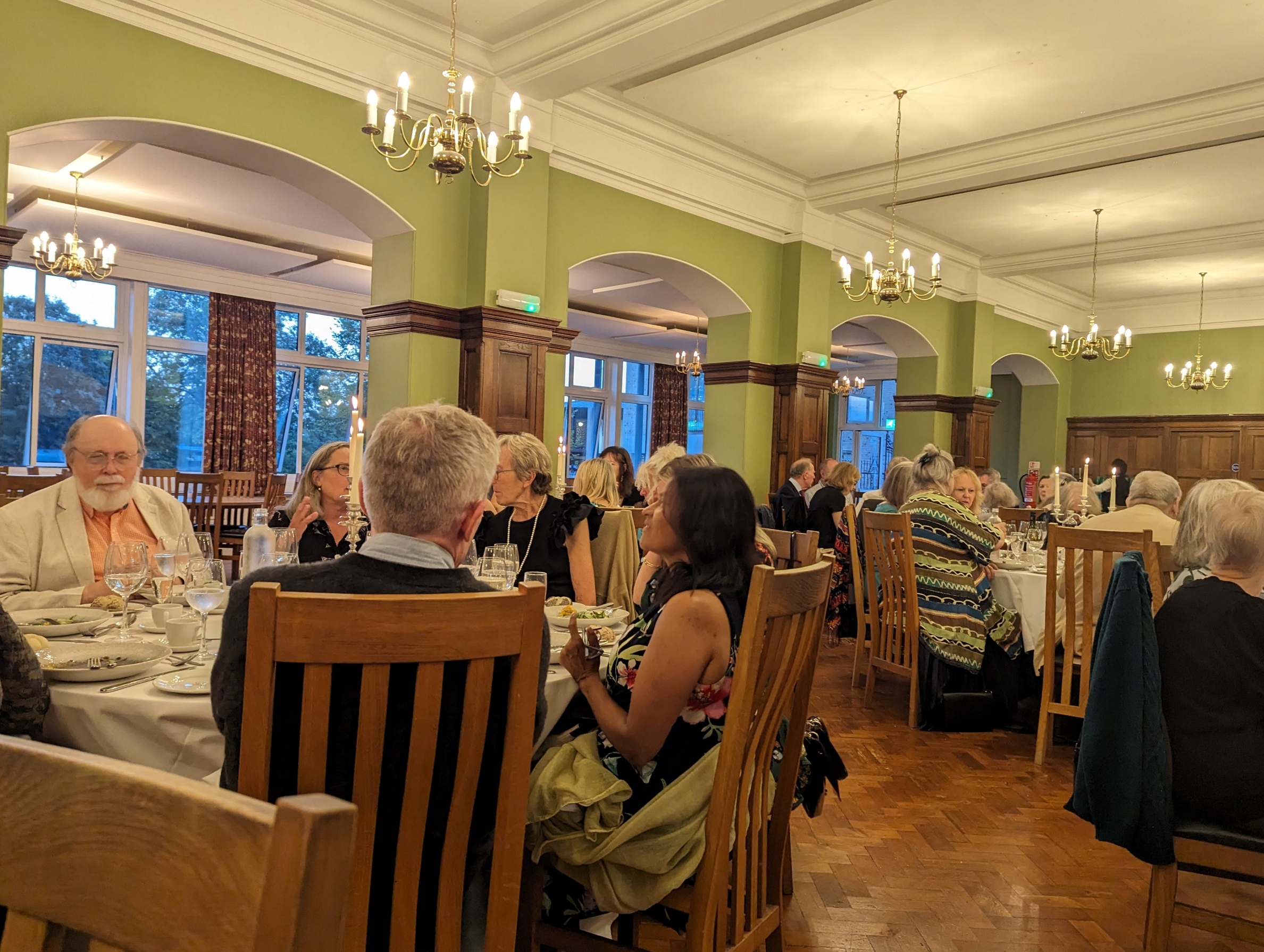
The AGM heralded a new committee and Chairperson, as well as some changes to the constitution. Both appeared to have been well considered by the outgoing committee and members and were accepted without much debate. The Conference Dinner was held in the familiar older part of the St Hilda’s complex – a welcome return to chandeliers and white tablecloths .


Conference Speakers
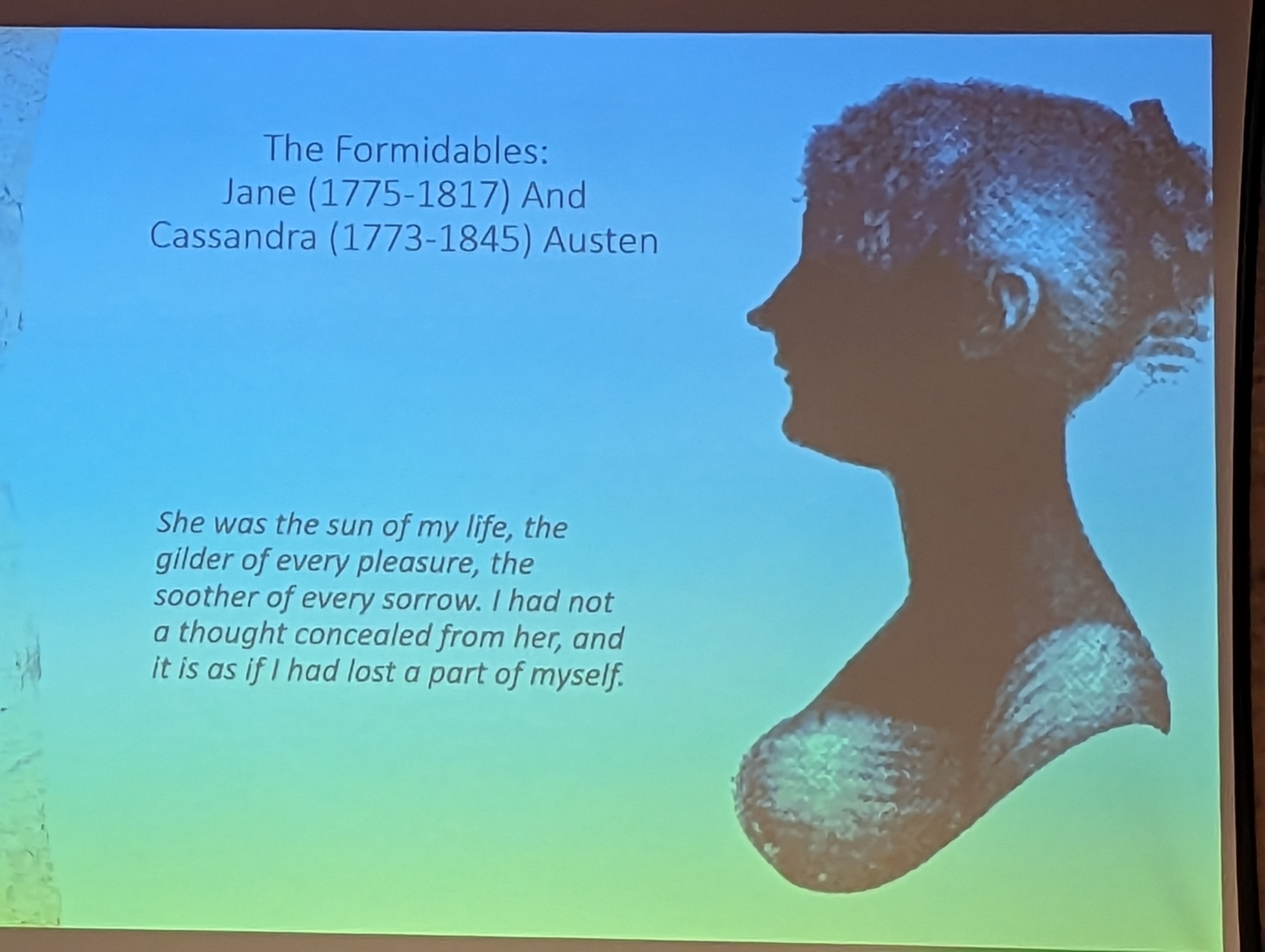
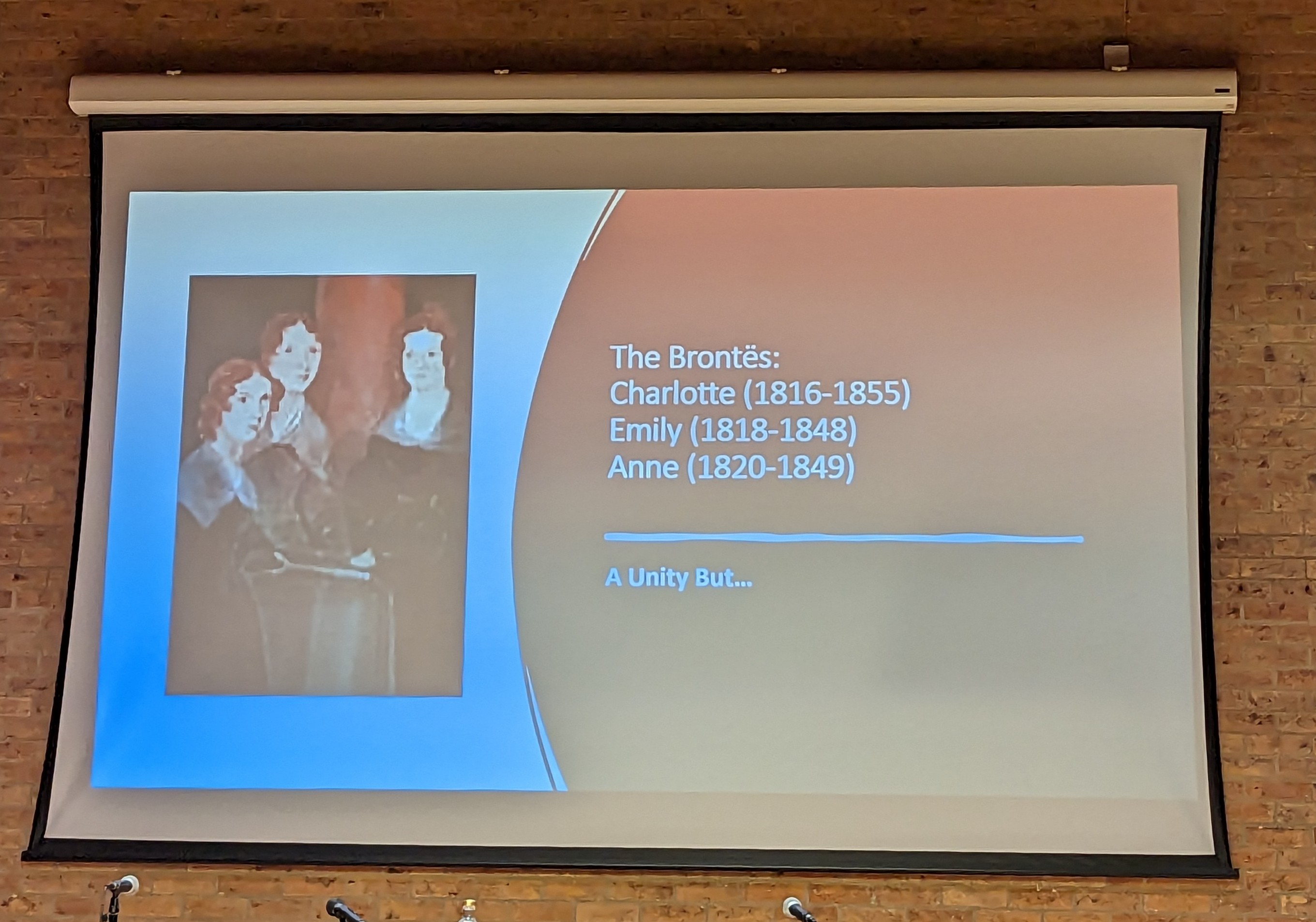
And then on to the first speakers of the conference. The papers were markedly different, demonstrating the ability of the organisers to ensure the appeal of the conference to a range of audience members. The first speaker, Jutta Schmidt, with the topic of sisterhood in literary families, gave an excellent run down of some of the writing sisters we know – and, so appealingly, some we did not. It is always pleasant to have confirmation of ideas and knowledge, and in some cases, this is what this presentation achieved. A reminder that the relationships between the Bronte sisters were not amicable, compared with the high esteem that Jane and Cassandra Austen held for each other, was noted. This relationship could not compete with the sometimes vitriolic ‘sisterhood’ between A.S. Byatt and Margaret Drabble. Vanessa Bell and Virginia Woolfe were linked to the title of a Barbara Pym novel, An Unsuitable Attachment, an example of sisterhood and friendship rather than the antagonism between other couples. Less well-known literary sisters were a particular joy to hear about. The Porter sisters, Jane and Anna Marie provided a different story, perhaps one that resonates with Barbara Pym’s experience in the 1960s, with their sinking into oblivion. Before this occurred, they were famous amongst British novelists in the nineteenth century, paving the way for the sisters Bronte and Jane Austen. They published twenty-six books. Devony Looser has written Sister Novelists: The Trailblazing Porter Sisters, Who Paved the Way for Austen and the Brontes to celebrate their work, and hopefully upgrade our history of women writers.


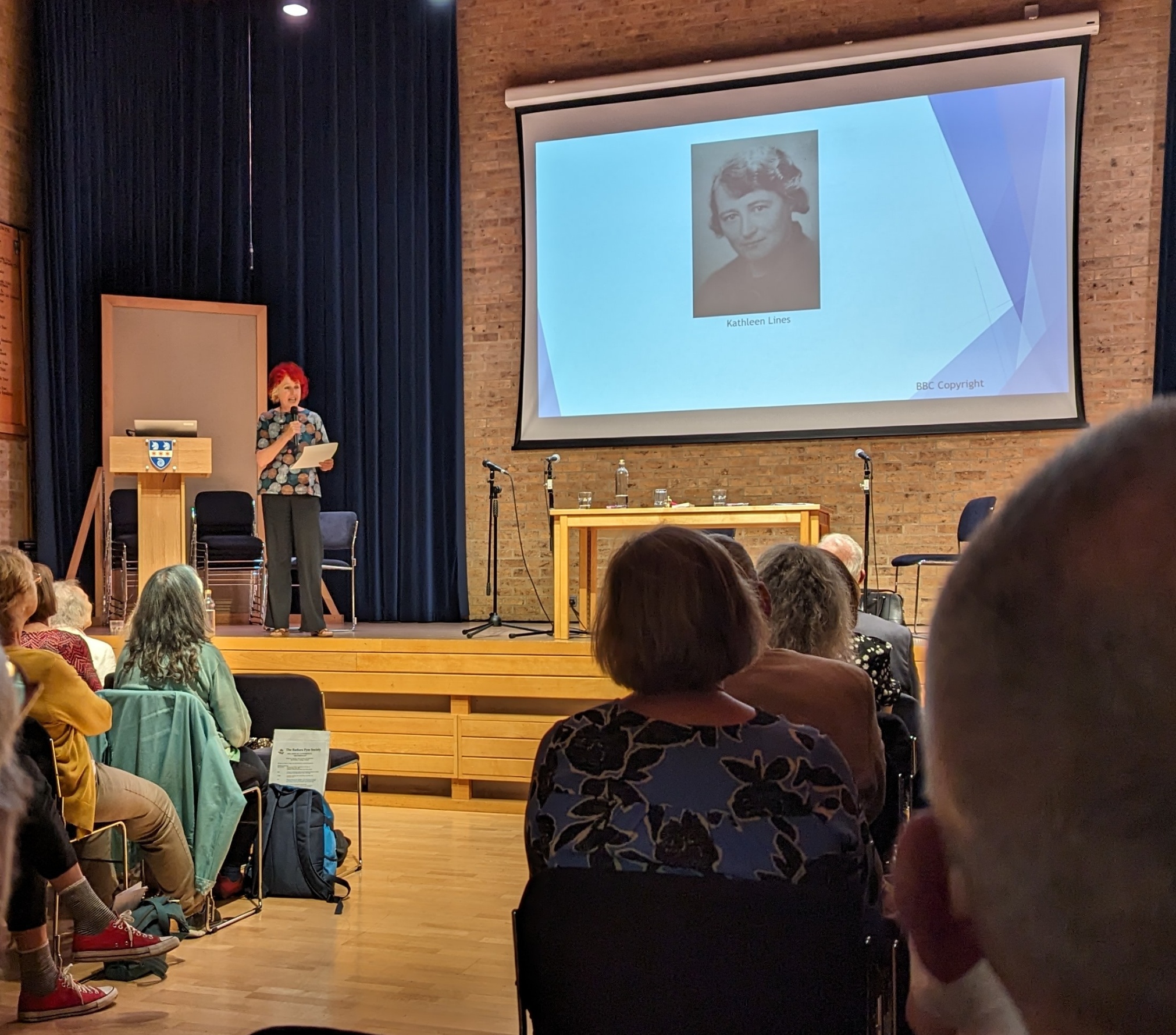
Kate Murphy, a historian and author of was the next speaker. Before she began researching for this paper her knowledge of Pym was scant. However, her work on the women in the BBC (Behind the Wireless: A History of Early Women at the BBC) made her eminently suitable for talking about Barbara’s sister, Hilary who worked for many years at the BBC. Kate cleverly wove together her formidable knowledge of that institution, and her new appraisal of Hilary Pym into an excellent presentation. By the end I felt that I knew so much more about Hilary and her working experience, alongside the familiar story of Barbara Pym and her writing and work at the African Institute.

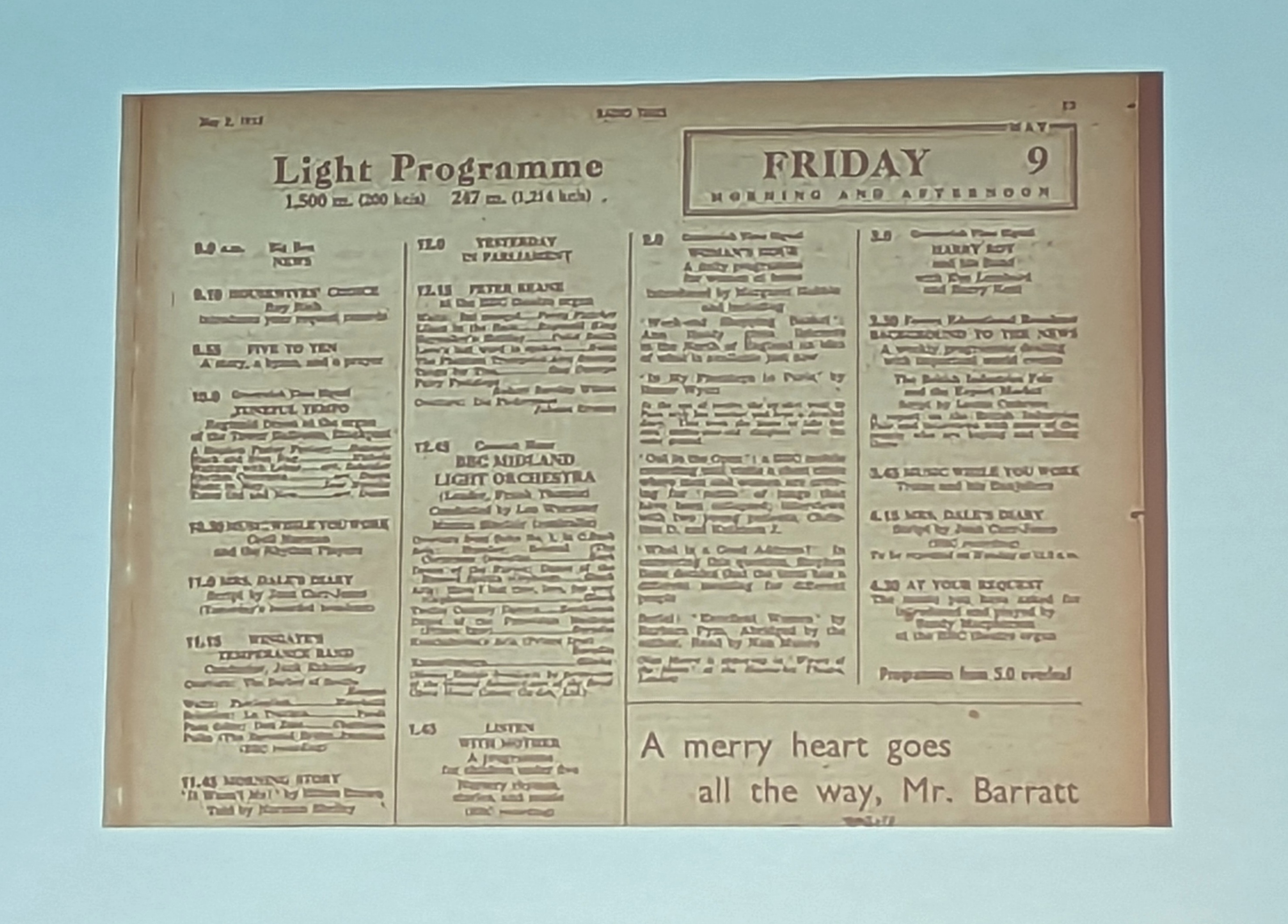
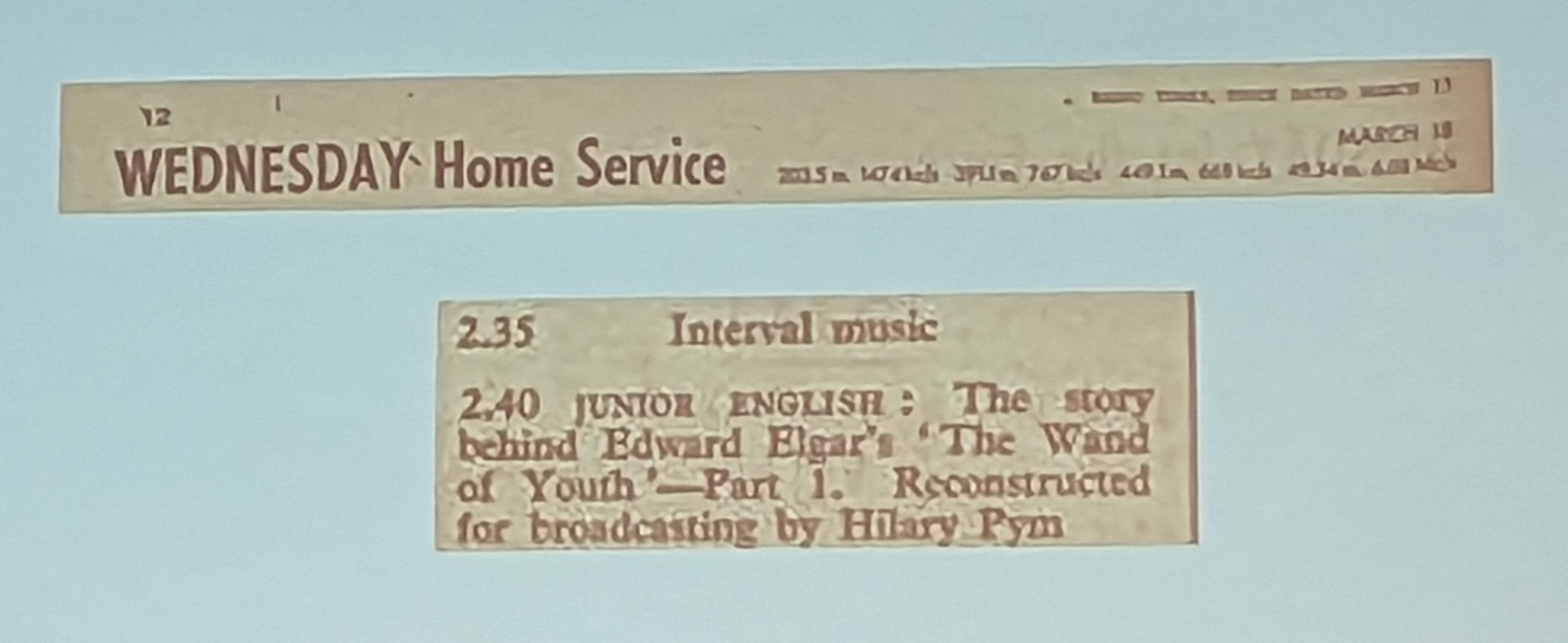

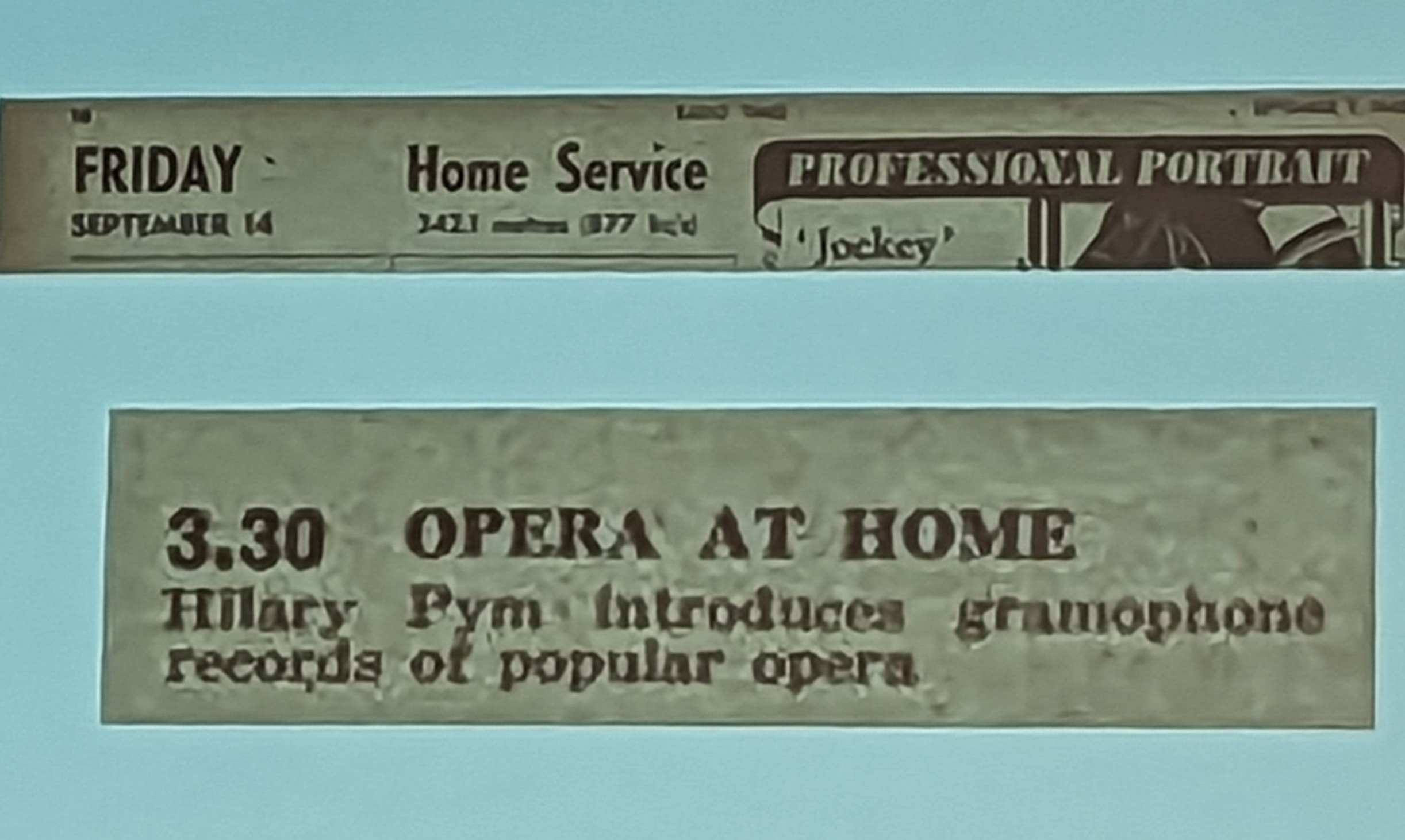

Kathy Ackley later gave a presentation on her personal relationship with Hilary Pym, using letters, meals with Hilary and discussions over several years of Kathy’s Pym authorship (The Novels of Barbara Pym) and involvement with the Barbara Pym Society. Having the two perspectives of Barbara’s sister was a marvellous contribution to the conference.
Amongst the other papers was a spirited talk on bringing Pym to film; Some Tame Gazelle and its presentation of Harriet/Hilary (and Belinda/Barbara) at the BBC; and Barbara Everett’s accessible and academic talk about the Pym sisters and Barbara’s work.

The conference, as always ended with a read dramatisation of one of Barbara Pym’s work. This time Some Tame Gazelle was the inspiration for a humorous end to the conference. The very contented spinster sisters, having rejected a proposal of marriage each was indeed a suitable finale for this conference about literary sisterhood.


Yvonne Cocking, now in a wheelchair (see Photo above), wrote the play keeping faithfully to Barbara Pym’s words, and deftly moving between scenes in her inimitable way (Yvonne has produced numerous Pym short stories and novels for these dramatisations). Yvonne is a star of the Barbara Pym Conferences, and it was thrilling to see her in her familiar role.
Punting on the Cherwell – there were enough breaks in the program to enjoy walks around the gardens and to admire punters on the Cherwell.


The participants were a diverse group, with long term members and newer members who enjoy Pym’s work and want to know more about this wonderful writer. Young and older mingled happily during presentations, coffee breaks, meals, and wandering around the gardens. Barbara Pym’s work, the conference organisers and participants make the newest Pym reader welcome, along with those to whom her work and conferences are so familiar. It was splendid, as Barbara would say, to return to St Hilda’s, old and new friends, and an abundance of insights into the joy of being a Pym reader – and, of course, a listener at a very splendid conference.
On my return to London there was yet another reminder of a Pym novel at Paddington Station –

After all, who can forget Sophia’s mother’s concern that she lived in North Kensington, rather too close to the Harrow Road? See Barbara Pym’s An Unsuitable Attachment for this gem. On the sign is the address of one of the flats I lived in while I was in London – oh dear! far too close to the Harrow Road.
Heather Cox Richardson Letter from an American
Yesterday, Vice President Kamala Harris arrived in Jakarta, Indonesia, to attend the U.S.–Association of Southeast Asian Nations (ASEAN) Summit and the East Asia Summit. ASEAN is a political and economic union of 10 member states in Southeast Asia whose combined population is more than 600 million (almost twice the size of the U.S.); the East Asia Summit expands ASEAN with several more nations. At meetings today, she emphasized the U.S. commitment to Southeast Asia and the Indo-Pacific. “We are a proud Pacific power, and the American people have a profound stake in the future of the Indo-Pacific,” she said.
Harris noted that Americans “share historic bonds and common values with many of the people and nations here” and that the region shares the same interests in security and prosperity. Commerce between Southeast Asia and the United States supports more than 600,000 American jobs, and ongoing economic cooperation offers enormous potential for growth. “It is therefore in our vital interest to promote a region that is open, interconnected, prosperous, secure, and resilient.” She announced the establishment of a U.S.-ASEAN Center in Washington, D.C., to deepen the economic and cultural engagement between members of the two entities.
She emphasized that the United States is committed to the Indo-Pacific and that it is “committed to ASEAN centrality.”
As the press was leaving a photo opportunity between Harris and Indonesian president Joko Widodo, the White House pool reporter called out two questions, one to each leader. The White House pool reporter is the one designated by all the other outlets to represent the press for the day. This reporter, Patsy Widakuswara, is an Indonesian American and the White House bureau chief for the Voice of America, the government-owned but independent U.S. broadcaster around the world. Indonesian officials physically blocked Widakuswara, told her to leave, and banned her from any other events.
“It was tense, but I didn’t feel anxious or panicked or anything like that, because I knew that I was just doing my job,” Widakuswara told Liam Scott of VOA. ”And I also knew that the VP’s office would stand by me.”
And stand she did. Harris refused to enter the summit room until the entire press pool, including Widakuswara, was inside. Indonesian officials later expressed their regret, said her shouts raised security concerns, and reiterated support for press freedom (although Reporters Without Borders ranks Indonesia 108th out of 180 countries for press freedom).
A spokesperson for the U.S. State Department told VOA: “A free and independent press is a core institution of healthy democracies and is vital for ensuring electorates can make informed decisions and hold government officials accountable.”
Harris’s defense of freedom of the press, a key pillar of democracy, stands out today as judges enforced the rule of law—the central pillar of democracy—in important ways.
This morning, U.S. District Judge Lewis Kaplan ruled that Trump’s liability for defaming writer E. Jean Carroll had already been established by the jury in May and that the jury in the January trial will only have to decide how much money to award her. Kaplan also refused to cap the damages. The jury in May awarded Carroll $5 million.
In Austin, U.S. District Judge David Ezra ruled that Texas must remove the barrier buoys and razor wire it has installed in the Rio Grande by September 15, and he prohibited Texas governor Greg Abbott from installing any others without proper approval. Ezra, who was appointed by Republican president Ronald Reagan, found that the United States was likely to win a lawsuit against Texas on the grounds that the state violated a federal law by affecting the navigation of the river and that the state cannot usurp the power of the federal government to enforce immigration laws.
About 80% of the barrier was initially in Mexican waters in violation of international treaties, and the Mexican government has formally protested it three times. Texas Republicans are calling for Congress to defund the Department of Homeland Security until they are satisfied with its border policies. The court found “that Texas’s conduct irreparably harms the public safety, navigation, and the operations of federal agency officials in and around the Rio Grande.”
Texas has already appealed today’s decision.
In Florida, Yuscil Taveras, the IT worker at Mar-a-Lago who alleged that Trump and his aide Walt Nauta and property manager Carlos de Oliveira tried to delete incriminating videos concerning the handling of classified national security documents from surveillance cameras, has reached a cooperation agreement with special counsel Jack Smith’s office. In exchange for not being prosecuted for his own part in the activity, Taveras will testify against the others.
Los Angeles Times senior legal affairs columnist Harry Litman wrote, “This was coming but important that it’s here…. Now [the] question is: how can Nauta and DeOlivera not do the same?”
In that same case, Katherine Faulders and Mike Levine of ABC News reported today that voice memos made at the time by Trump lawyer Evan Corcoran show that he warned Trump in May 2022, just after the Department of Justice issued a grand jury subpoena for all the classified documents he had at Mar-a-Lago, that he had to comply and, if he didn’t, that the FBI might very well search Mar-a-Lago. Trump had asked “what happens if we just don’t respond at all or don’t play ball with them?” Despite Corcoran’s warning, Trump continued to suggest lying about the documents: “Wouldn’t it be better if we just told them we don’t have anything here?”
Another lawyer warned Corcoran that Trump would “go ballistic” if Corcoran pushed him to comply with the subpoena. When the FBI did, in fact, search the property the following August, Trump called it “a “shocking BREAK-IN,” with “no way to justify” it. The FBI found more than 100 classified documents still in Trump’s possession.
Today, six Republican and unaffiliated Colorado voters, including former state, federal, and local officials, sued the Colorado secretary of state and former president Trump to keep him off the 2024 ballot. Represented by Citizens for Responsibility and Ethics in Washington (CREW), they argue that Trump is “disqualified from public office under Section 3 of the Fourteenth Amendment” and therefore “does not ‘meet all qualifications for the office [of the President] prescribed by law.’” They believe the secretary of state must exclude him from the ballot because he is “constitutionally ineligible” to hold the office.
Like freedom of the press, the rule of law is central to our democracy. Its slow gathering of information and argument, weighing of evidence, and eventual verdicts is not foolproof, but it creates space to approximate the idea that we are all equal before the law. Today in Indonesia, the vice president defended freedom of the press. In contrast, faced with the inexorable march of legal processes that finally appear to be catching up to MAGA Republicans who appear to have considered themselves above the law, those same MAGA Republicans are trying to destroy the rule of law itself.
Today on Trinity Broadcasting Network, which senior NBC News reporter Ben Collins says bills itself as the largest Christian television network in the world, former Arkansas governor Mike Huckabee opened his most recent episode by saying that if former president Trump loses the 2024 election because of the many indictments grand juries have handed down concerning his behavior, “it is going to be the last American election that will be decided by ballots rather than bullets.”
—Notes:
https://www.whitehouse.gov/briefing-room/speeches-remarks/2023/09/06/remarks-by-vice-president-harris-at-the-11th-u-s-asean-summit/; https://www.voanews.com/a/indonesian-officials-harass-white-house-pool-reporter-after-harris-widodo-meeting/7257121.html; https://www.dallasnews.com/news/2023/09/06/judge-orders-texas-to-remove-border-buoys-from-rio-grande-rejects-abbott-invasion-claim/ https://www.dallasnews.com/news/politics/2023/08/10/texas-says-shallow-river-makes-buoys-legal-amid-gop-calls-to-defund-homeland-security/ https://storage.courtlistener.com/recap/gov.uscourts.txwd.1172749163/gov.uscourts.txwd.1172749163.50.0.pdf https://www.cnn.com/2023/09/06/politics/mar-a-lago-it-worker/index.html https://www.citizensforethics.org/wp-content/uploads/2023/09/2023-09-06-08-43-07-Anderson-v-Griswold-Verified-Petition-2023.09.06.pdf https://www.citizensforethics.org/news/press-releases/lawsuit-filed-to-remove-trump-from-ballot-in-co-under-14th-amendment/ https://www.cnn.com/2023/09/06/politics/e-jean-carroll-trump-defamation-lawsuit/index.html https://storage.courtlistener.com/recap/gov.uscourts.nysd.543790/gov.uscourts.nysd.543790.214.0.pdf https://abcnews.go.com/US/trump-warned-fbi-raid-mar-lago-team-feared/story?id=102932105 Twitter (X): neunderscore__/status/1699479199407342034 harrylitman/status/1699502422299926871
Cindy Lou eats in Lincoln
Lincoln Hotel
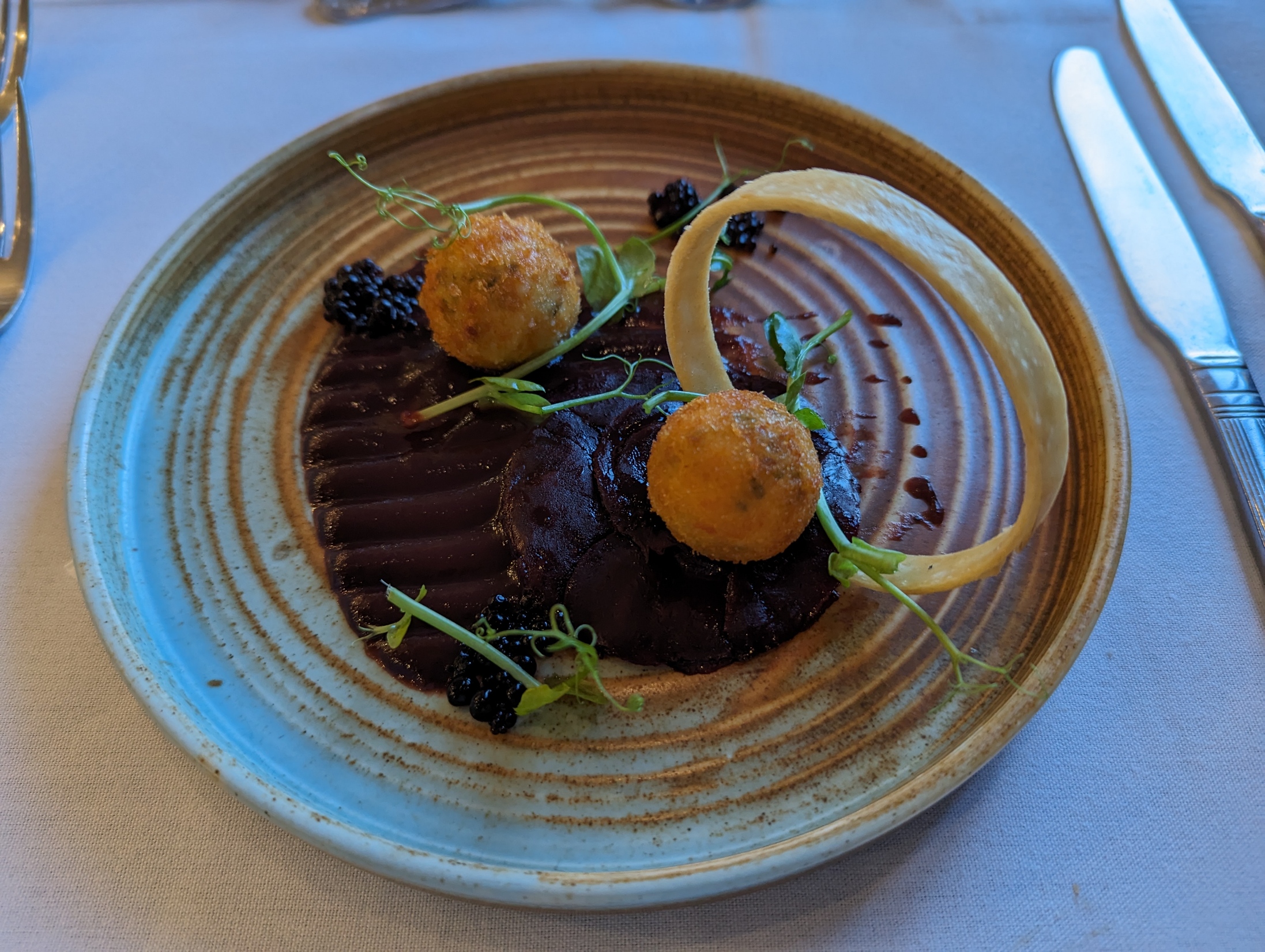
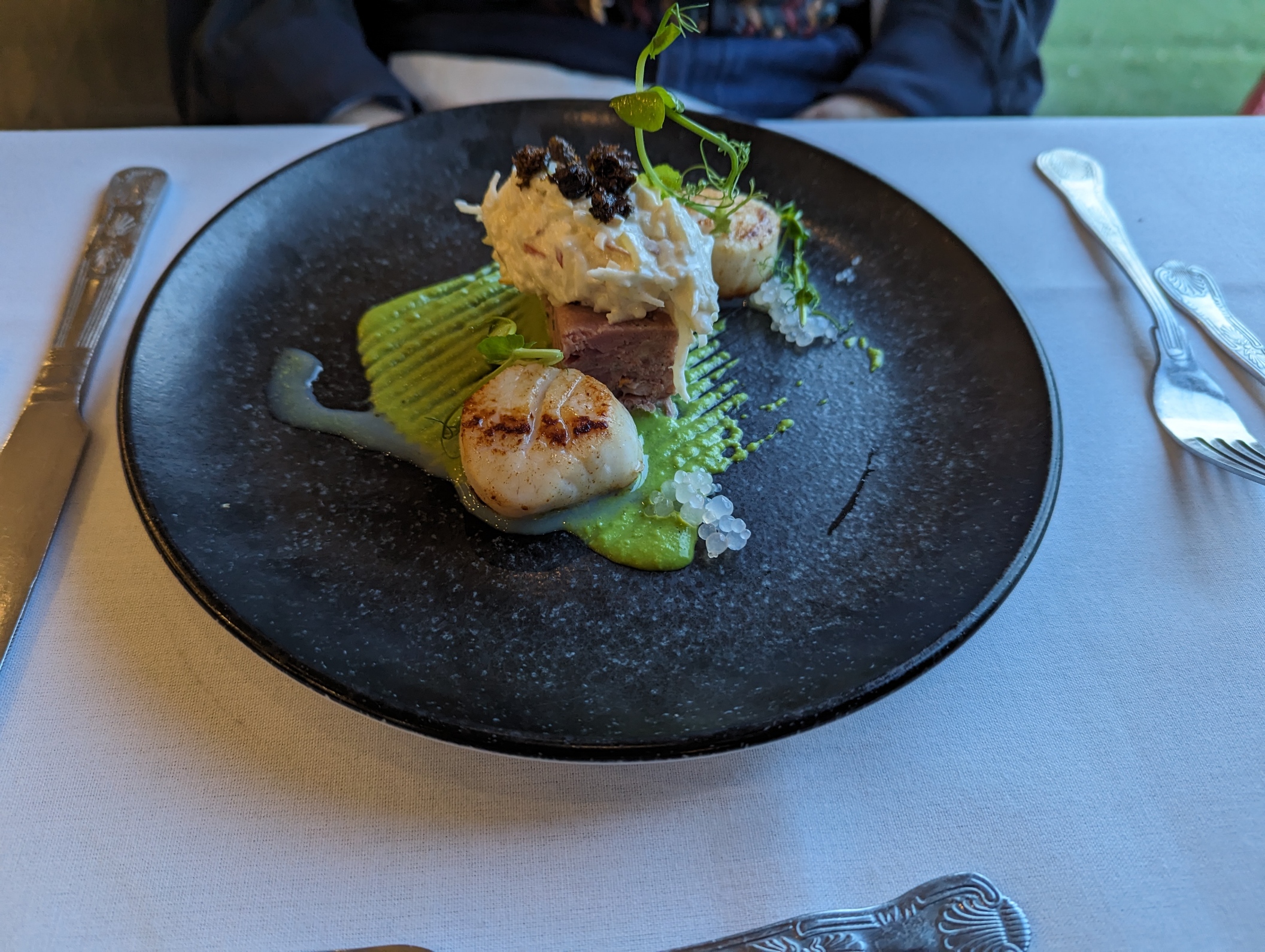
I enjoyed the dinner with its excellent menu choice, evidence of a good chef, service with a smile, and some amusing asides. For example, my joy at seeing samphire was to be served with the fish became disappointment when broccolini replaced it. The explanation was that the samphire was not up to standard – but one could buy it locally! The entree of brie on beetroot with a crisp toile was delicious, and the fish meal was good – but would have been excellent with the samphire.
Breakfast was a pleasant enough buffet, but the coffee left much to be desired. The view, however, had the promise of magnificence.




I just received this Letter from an American and felt it worthwhile posting before publishing this week’s blog.
Heather Cox Richardson
Today, at the initiative of the George W. Bush Institute, U.S. presidential foundations and centers for thirteen presidents since Herbert Hoover released a statement expressing concern about the health of American democracy. The statement notes that while the diverse population of the United States means we have a range of backgrounds and beliefs, “democracy holds us together. We are a country rooted in the rule of law, where the protection of the rights of all people is paramount.”
“Americans have a strong interest in supporting democratic movements and respect for human rights around the world because free societies elsewhere contribute to our own security and prosperity here at home,” the statement reads. “But that interest is undermined when others see our own house in disarray.” Without mentioning names, it called on elected officials to restore trust in public service by governing effectively “in ways that deliver for the American people.” “The rest of us must engage in civil dialogue,” it said, “respect democratic institutions and rights; uphold safe, secure, and accessible elections; and contribute to local, state, or national improvement.”
Traditionally, ex-presidents do not comment on politics, and this extraordinary effort is the first time presidential centers have commented on them. Because this step is unprecedented the Eisenhower Foundation chose not to sign, although it commended the defense of democracy. But the centers for Hoover, Franklin D. Roosevelt, Harry S. Truman, John F. Kennedy, Lyndon Baines Johnson, Richard Nixon, Gerald Ford, Jimmy Carter, Ronald Reagan, George H. W. Bush, Bill Clinton, George W. Bush, and Barack Obama all did.
That the executive director of the George W. Bush Institute felt obliged to take a step that is a veiled critique of today’s Republican Party—Bush’s party—is a sign of how deep concern over our democracy runs. David Kramer, the Bush Institute’s executive director, said the statement was intended to remind Americans that democracy cannot be taken for granted and to send “a positive message reminding us of who we are and also reminding us that when we are in disarray, when we’re at loggerheads, people overseas are also looking at us and wondering what’s going on.”
While concerns about the weakening of American democracy have been growing since the beginning of the century, the 2024 election presents new challenges. The campaign season is heating up just as state and federal prosecutors are beginning to hold senior figures accountable for their attempt to overturn the results of the 2020 presidential election.
This timing means that on top of the usual partisanship of this era is layered a political fight over holding leaders accountable for crimes. On the one hand, we are seeing the release of increasing amounts of damaging information about right-wing figures. On the other hand, we are faced with the determination of right-wing leaders to stop the prosecutions. Since the best way to do that is to make sure a MAGA Republican wins the White House, we are in the midst of a storm of disinformation designed to undermine the key institutions of our democracy, particularly the rule of law.
In disbarment proceedings yesterday in California, Trump lawyer John Eastman refused to answer a question about whether he and others seeking to overturn the results of the 2020 presidential election discussed getting Senator Chuck Grassley (R-IA), the most senior member of the Senate, to preside over the counting of electoral votes on January 6 in place of Vice President Mike Pence, who had made it clear he would not go along with the president’s scheme to refuse to count votes for Biden in states Trump falsely maintained that he won. Eastman declined on the grounds of attorney-client privilege. When asked, he said his client was Trump.
Los Angeles Times legal analyst Harry Litman said: “That’s going to have to come out, and it’s a whole new nugget” about what was going on in Trump’s orbit to overturn the election results.
Today a Washington, D.C., jury found Trump’s former trade advisor Peter Navarro guilty on two counts of contempt of Congress for defying a subpoena from the House Select Committee to Investigate the January 6th Attack on the U.S. Capitol. A jury found another Trump ally, Steve Bannon, guilty of contempt of Congress in July 2022, but he is appealing the conviction. Navarro took to social media to say that he was “doing my duty to God, country, the Constitution, and my commander-in-chief.” He, too, is appealing his conviction.
Navarro’s attempt to cast himself as a patriotic victim—although it was a jury of his peers who convicted him—is part of a larger attempt to portray the rule of law as persecuting patriots. Proud Boys leader Enrique Tarrio, who yesterday was sentenced to 22 years in prison for his part in the conspiracy, abandoned the humble pleading he engaged in before the sentencing and turned to positioning himself as a political prisoner who is imprisoned for “speaking the truth.” (He also asked for donations to help his family.)
As they try to portray the rule of law as political persecution, Republicans are attacking the Department of Justice. Representative Jim Jordan (R-OH), chair of the Judiciary Committee, today made more accusations about the department’s handling of the case against Trump for stealing national security documents.
Also today, Fulton County, Georgia, district attorney Fani Willis responded to Jordan’s earlier demand to see communications between her office and Department of Justice officials investigating Trump’s attempt to overturn the results of the 2020 presidential election. Jordan has suggested that normal communication was improper.
Willis told Jordan that his attempt to interfere with and obstruct her office’s prosecution of state criminal cases is illegal and unconstitutional, and urged him to deal with the reality that two separate grand juries made up of ordinary citizens reviewed the evidence and decided that Trump had committed crimes. She called out his attempt to spin the case for political gain and suggested that instead he address “the racist threats that have come to my staff and me because of this investigation,” attaching ten examples of those threats.
Other countries are pushing the disinformation that splits Americans. A report published last week by the European Commission, the body that governs the European Union, says that when X, the company formerly known as Twitter, got rid of its safety standards, Russian disinformation on the site took off. Lies about Russia’s war against Ukraine spread to at least 165 million people in the E.U. and allied countries like the U.S., and garnered at least 16 billion views. The study found that Instagram, Telegram, and Facebook, all owned by Meta, also spread pro-Kremlin propaganda that uses hate speech and boosts extremists.
The report concluded that “the Kremlin’s ongoing disinformation campaign not only forms an integral part of Russia’s military agenda, but also causes risks to public security, fundamental rights and electoral processes” in the E.U. The report’s conclusions also apply to the U.S., where the far right is working to undermine U.S. support for Ukraine by claiming—falsely—that U.S. aid to Ukraine means the Biden administration is neglecting emergencies at home, like the fires last month in Maui.
Russian operatives famously flooded social media with disinformation to influence the 2016 U.S. election, and by 2022 the Federal Bureau of Investigation (FBI) warned that China had gotten into the act. Today, analyst Clint Watts of Microsoft reported that in the last year, China has honed its ability to generate artificial images that appear to be U.S. voters, using them to stoke “controversy along racial, economic, and ideological lines.” It uses social media accounts to post divisive, AI-created images that attack political figures and iconic U.S. symbols.
Today, President Joe Biden extended the national emergency former president Trump declared on September 18, 2018, before that year’s midterm elections, “to deal with the unusual and extraordinary threat to the national security and foreign policy of the United States constituted by the threat of foreign interference in or undermining public confidence in United States elections.” Biden noted that the internet has “created significant vulnerabilities and magnified the scope and intensity of the threat of foreign interference,” and thus the national emergency must be extended for another year. The original executive order provided for sanctions against foreign people or companies who try to influence U.S. elections.
In the impeachment trial of Texas attorney general Ken Paxton, we are getting a ringside view of a justice system in which equality before the law is replaced by MAGA Republican ideology. On Tuesday, Vianna Davila and Jessica Priest of the Texas Tribune and ProPublica reported that while Paxton’s office engaged in nearly 50 lawsuits against the Biden administration, it has refused to represent state agencies in court at least 75 times, forcing those agencies to turn to private lawyers and then to bill their expenses to Texas taxpayers.
Paxton appears to have used the powers of his office not to help the people who elected him, but to advance an ideological agenda along with his own interests.
—Notes:
https://www.bushcenter.org/publications/reaffirming-americans-commitment-to-a-more-perfect-union; https://apnews.com/article/united-states-democracy-presidents-threats-joint-statement-5530a89df2c41d58a22961f63fb0e6ff; https://www.ajc.com/politics/willis-blasts-congressmans-interference-in-fulton-trump-probe/IU5USCA3H5A3RJKTMT2WFCL3VU/;https://op.europa.eu/en/publication-detail/-/publication/c1d645d0-42f5-11ee-a8b8-01aa75ed71a1/language-dehttps://www.washingtonpost.com/technology/2023/09/01/musk-twitter-x-russia-propaganda/; https://www.cnn.com/2022/10/03/politics/2022-election-security-fbi/index.html;https://www.cnn.com/2023/07/24/politics/china-influence-washington-protests/index.html;https://www.cnn.com/2023/09/07/politics/chinese-operatives-ai-images-social-media/index.html;https://www.whitehouse.gov/briefing-room/presidential-actions/2023/09/07/press-release-notice-on-the-continuation-of-the-national-emergency-with-respect-to-foreign-interference-in-or-undermining-public-confidence-in-united-states-elections/;https://www.federalregister.gov/documents/2018/09/14/2018-20203/imposing-certain-sanctions-in-the-event-of-foreign-interference-in-a-united-states-election;https://www.politico.com/news/2023/09/07/john-eastman-disbarment-chuck-grassley-00114416;https://www.washingtonpost.com/politics/2023/09/07/what-we-know-about-grassley-pence-jan-6/;https://www.reuters.com/legal/government/prosecutors-set-urge-conviction-trump-ex-adviser-bannon-2022-07-22/;https://www.reuters.com/world/us/former-trump-adviser-navarro-convicted-contempt-congress-2023-09-07/;https://www.nbcnews.com/politics/congress/jim-jordan-investigate-doj-trump-classified-documents-case-rcna103910;https://www.texastribune.org/2023/09/05/ken-paxton-state-agencies/;
Twitter (X): RonFilipkowski/status/1699913232683831694; harrylitman/status/1699797988904984989;kathleen_belew/status/1699836405583868231
 Robin's Room
I so enjoyed both Excellent Women and Some Tame Gazelle! Nice to read this and be reminded of them.
LikeLike