With my return to London, to a hotel in the east end, * I thought it appropriate to review (The) Queens of London (the proof title includes ‘The’) by Heather Webb, set in the past in the city streets of London. In a few weeks I shall be looking at another book also set in London, Quartet in Autumn by Barbara Pym, as it also resonated with some of the features of the area in which the hotel was located- very different ones, though! Returning to (The) Queens of London, the uncorrected proof was sent to me by NetGalley for review.

Heather Webb (The) Queens of London Sourcebooks Landmark 2024.
Heather Webb’s (The) Queens of London is a fictional account of the woman gang known as The Forty Elephants whose heyday was in the 1920s. Her research shows that all the gangs she refers to in the novel were in existence, that Alice Diamond, leader of The Forty Elephants (also known as The Forty Thieves) was a real person with an empire covering London, Brighton and Bristol and she had a real romance with another gang leader, Bert McDonald. Webb provides Alice with another romance, based on a mention of ‘Simon’ in her research which may or may not be fictionalised. However, true, too , is the depiction Lilian Wyles, one of the first female police officers in the Criminal Investigations Department, and one of the first woman chief inspectors. Her role in the capture of Alice is fictional, but an important adjunct to the story of women making their way, although rather differently, in the hierarchies of law and crime in 1920s England. The Queens of London makes a tremendous read, with its commitment to women’s cause, recognition of their failures and reasons for these, and sensitive approach to racism in the period – again with women at the centre of the story.
Two other woman characters are fictional – Hira and Dorothy McBride. Hira lives in splendour with her uncle, her governess and servants; Dorothy is a salesperson at Marshall & Snelgrove – the store that Alice and her gang have just divested of silk lingerie, jewellery and furs amongst the many luxury items stuffed into the gang’s clothing and reticules as Dorothy has served Alice, a seemingly legitimate customer. Hira and Alice are to meet as Hira leaves home upon learning she is to be set to boarding school. Hira becomes a waif on the streets and is taken into the gang. Hira and Dorothy also meet under unhappy circumstances also, as Hira becomes embroiled in the gang’s activities. Complexity is added to their stories as Dorothy is pursued by the store’s owner and dreams of marriage and Hera’s parentage becomes apparent. She is the child of an officer in India and his Indian wife. See Books: Reviews for the complete review.
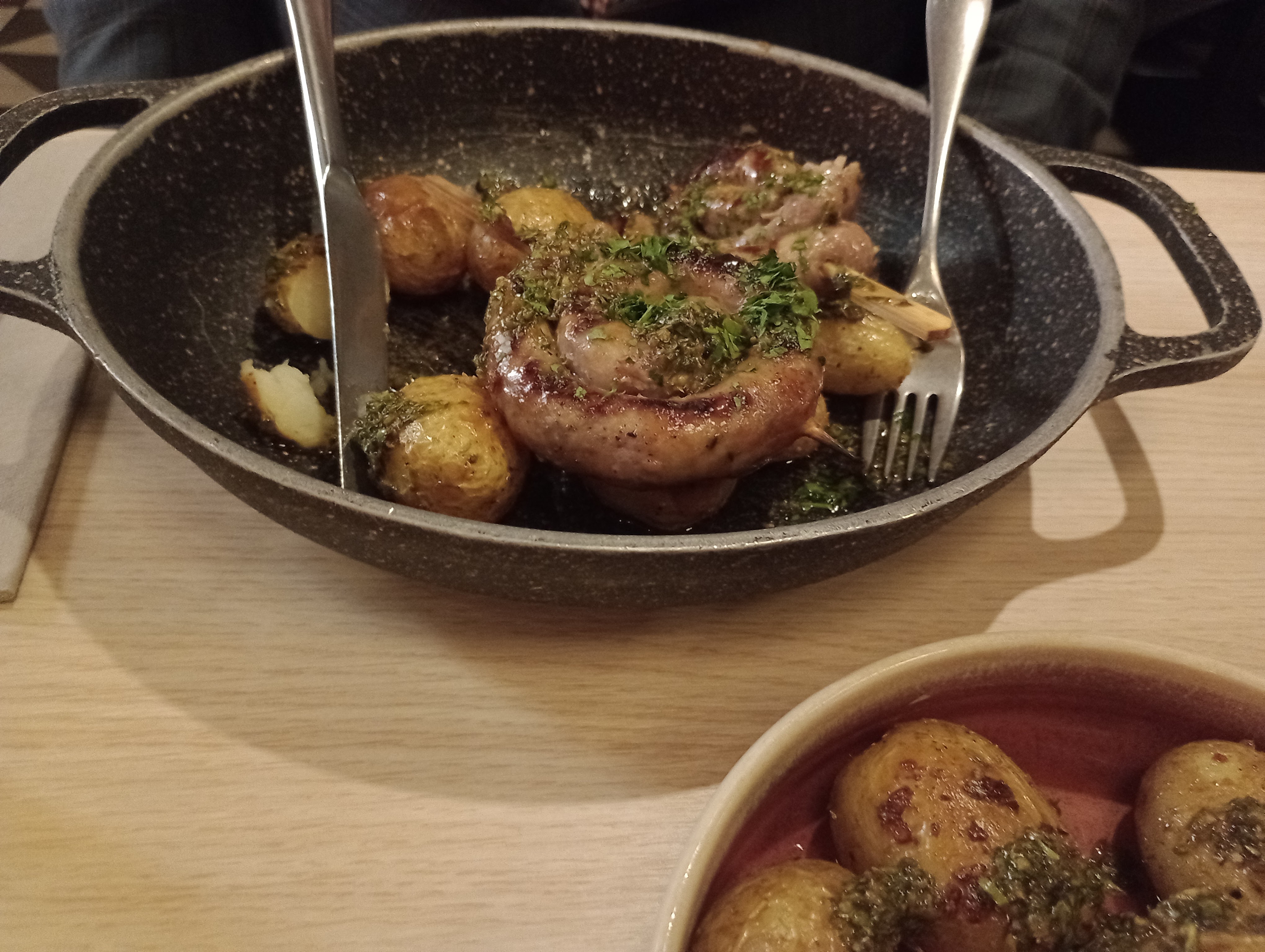
*The Hyatt Place, Whitechapel was a very pleasant place to stay. Its proximity to the tube and the Whitechapel Station and thus the Elizabeth line to Heathrow made it extremely practical. On the food side, as seems to be a constant theme in my blog, the hotel is a short walk to Brick Lane, the home to so many best/winning/top rated/better than anyone else curry restaurants; is in the midst of excellent coffee and pastry cafes (one with lamingtons!); and close to a Turkish restaurant. It also has its own Sicilian Restaurant which serves very good food and has wonderful staff.





After Covid update: Exeter; Bristol; Hamnet; Wigmore Hall; Barbara Pym; Zoe Fairbairns.
Canberra Covid update
On October 27 there were 370 new cases with 1 person hospitalised in the ICU. There was 1 death from Covid.
Exeter
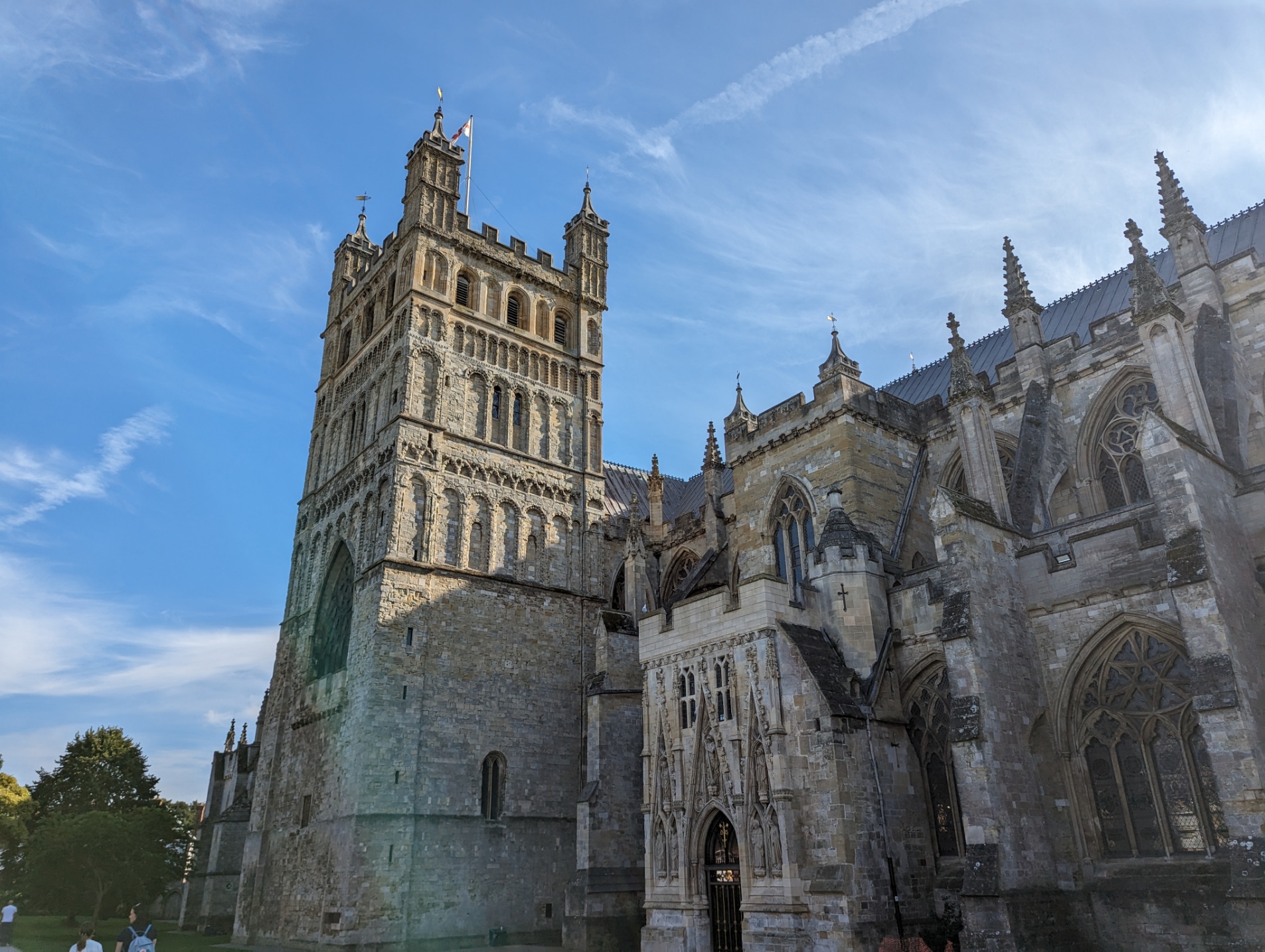
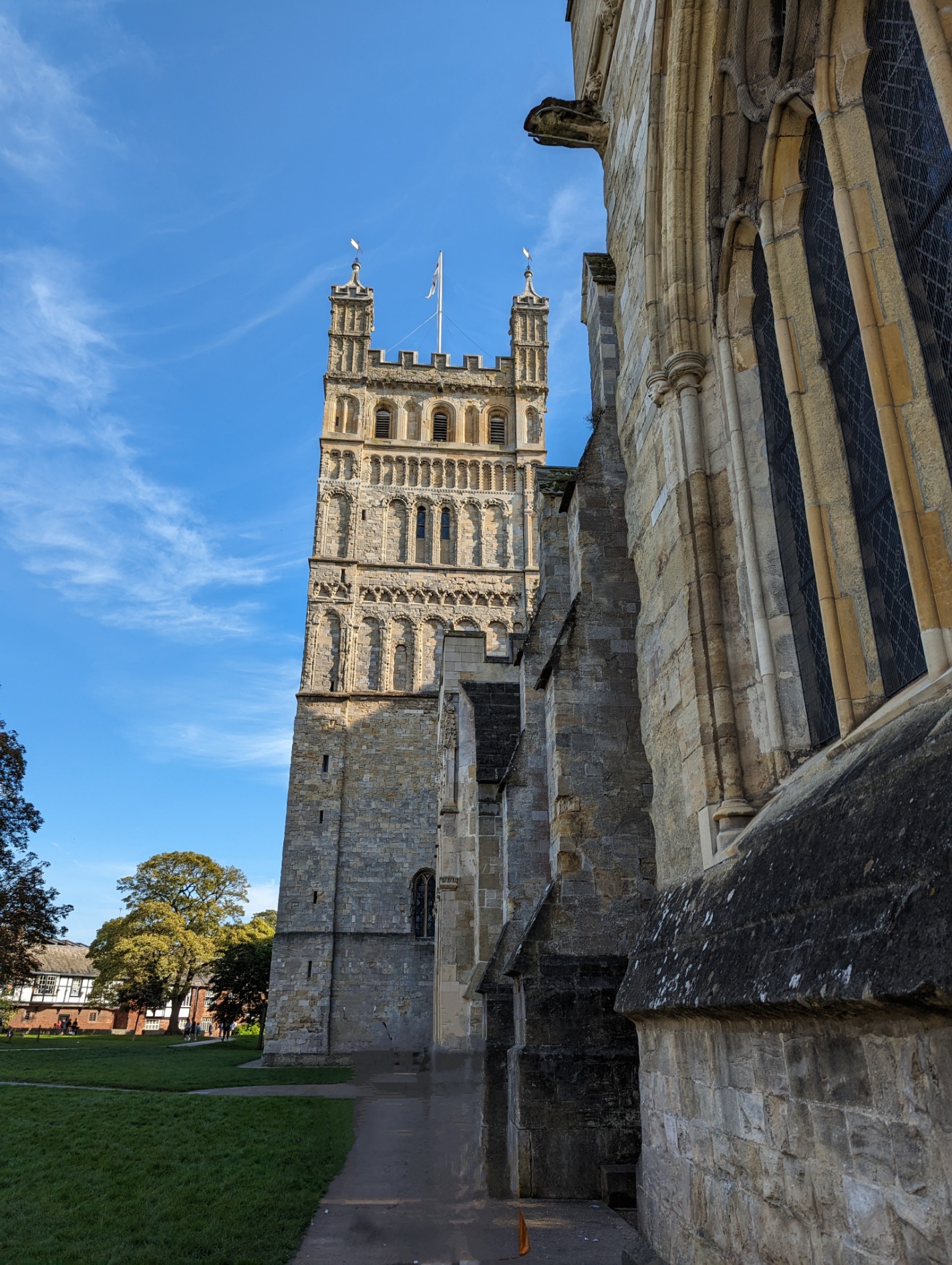
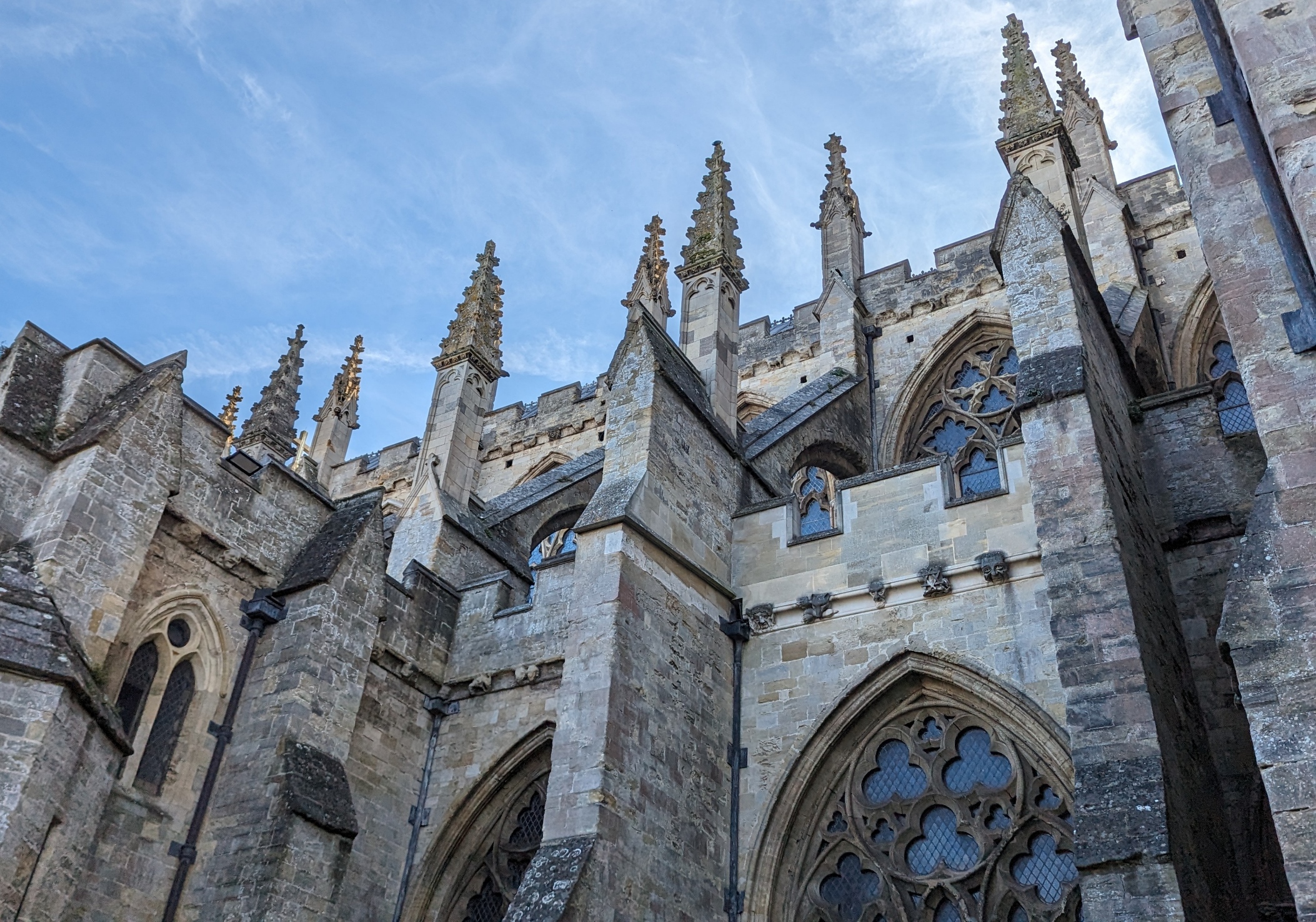
The Red Coat Guided tour from the cathedral to the quay was an excellent way to spend a couple of hours. Although we were unable to enter the cathedral on the tour, the exterior was well worth seeing in detail.
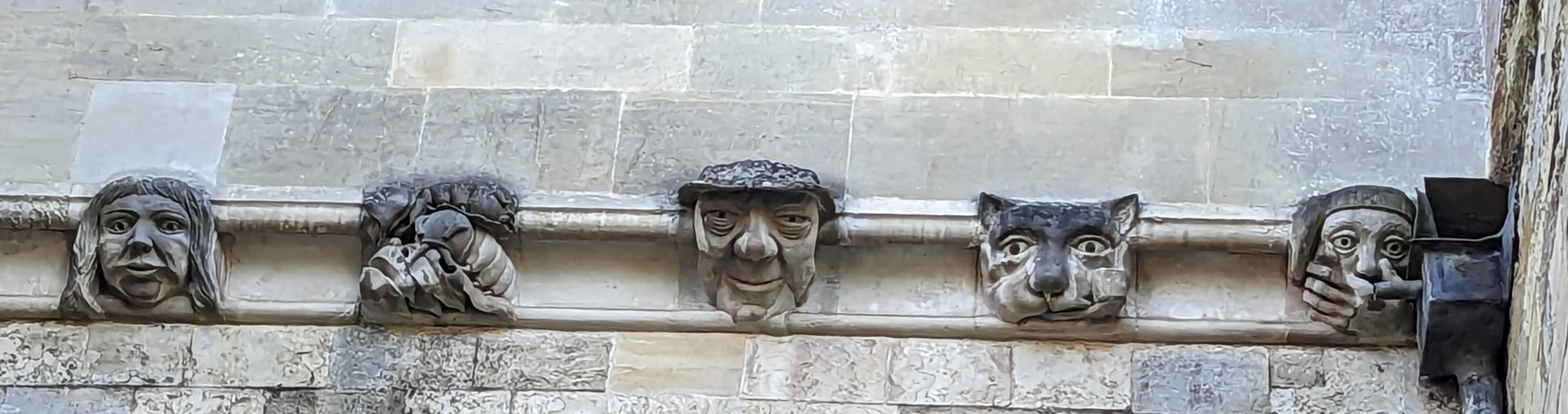
The figure with hands over the mouth at the end of the photo below is said to be that of a garrulous woman. Perhaps she just wanted to make a contribution but the stone mason saw fit to silence her?




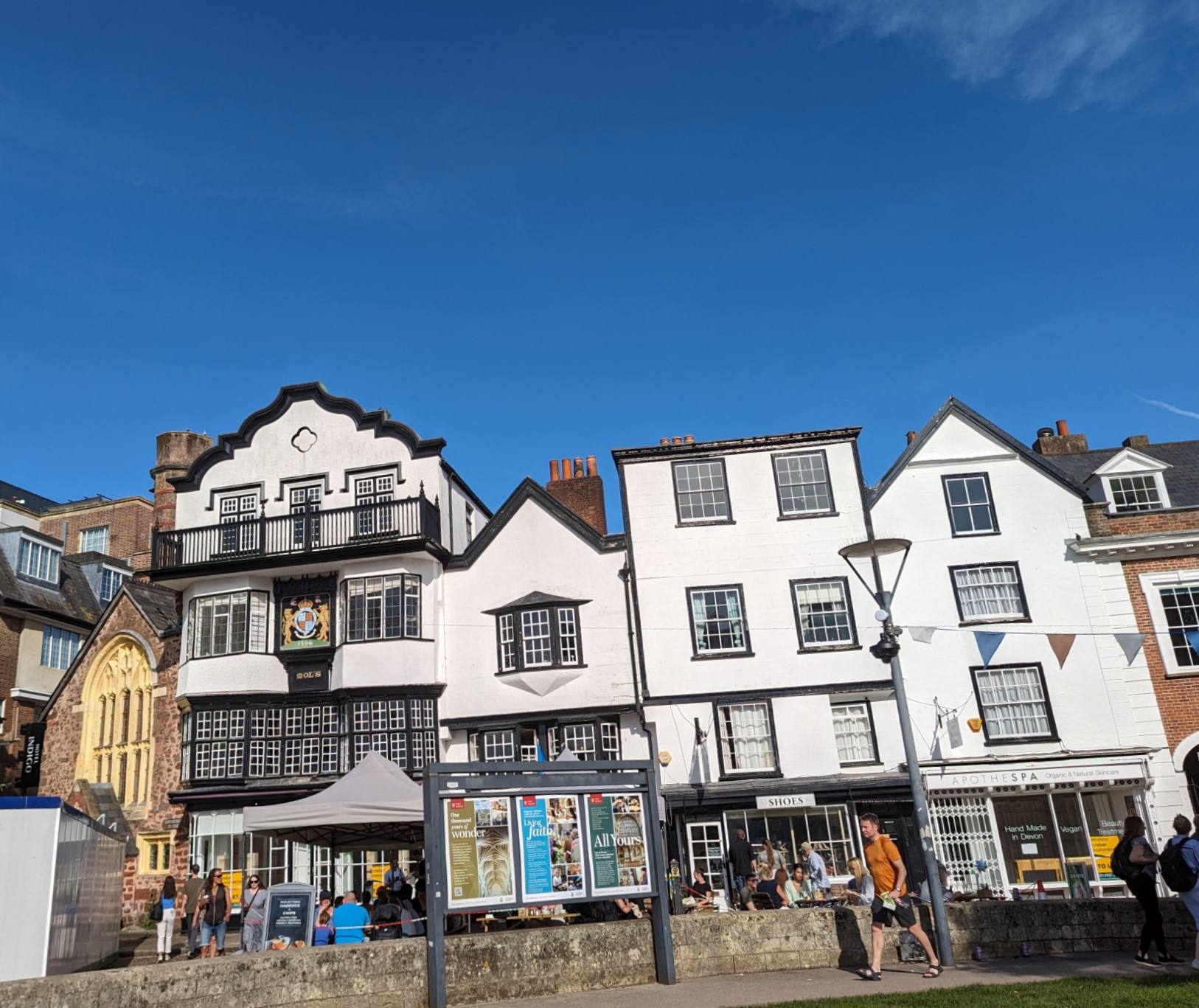
Walk from the Cathedral to the Quay
The white surrounds to the doors pictured below are the invention of Eleanor Coade. She created it around 1770 when she ran Coade’s Artificial Stone Manufactory, Coade and Sealy, and Coade in Lambeth, London, from 1769 until her death in 1821.



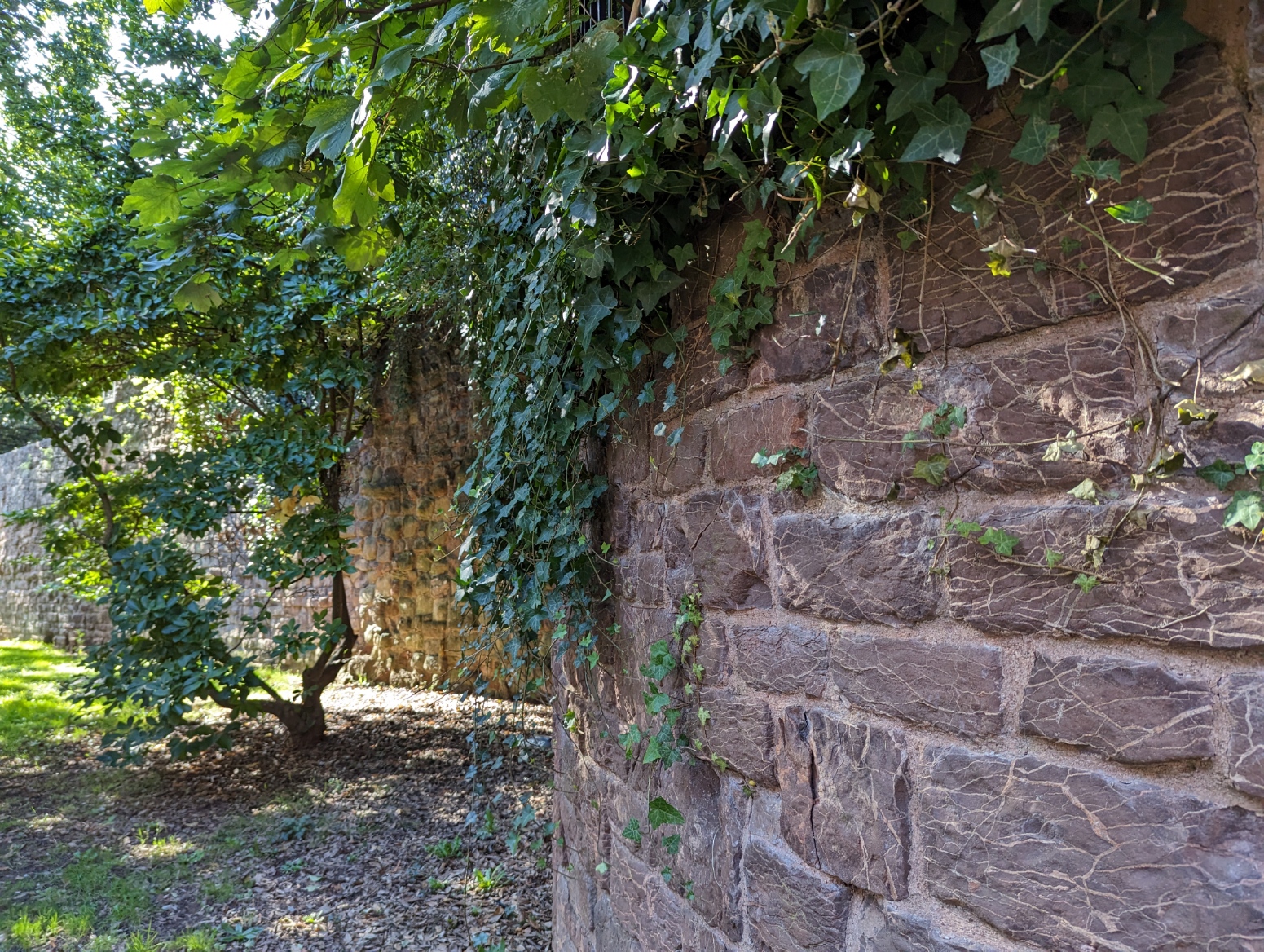
Exeter Wall
The wall has been changed over time to suit new building and needs, so that in some places houses have been attached to the walls. It has been repaired with any available material as parts have been destroyed.


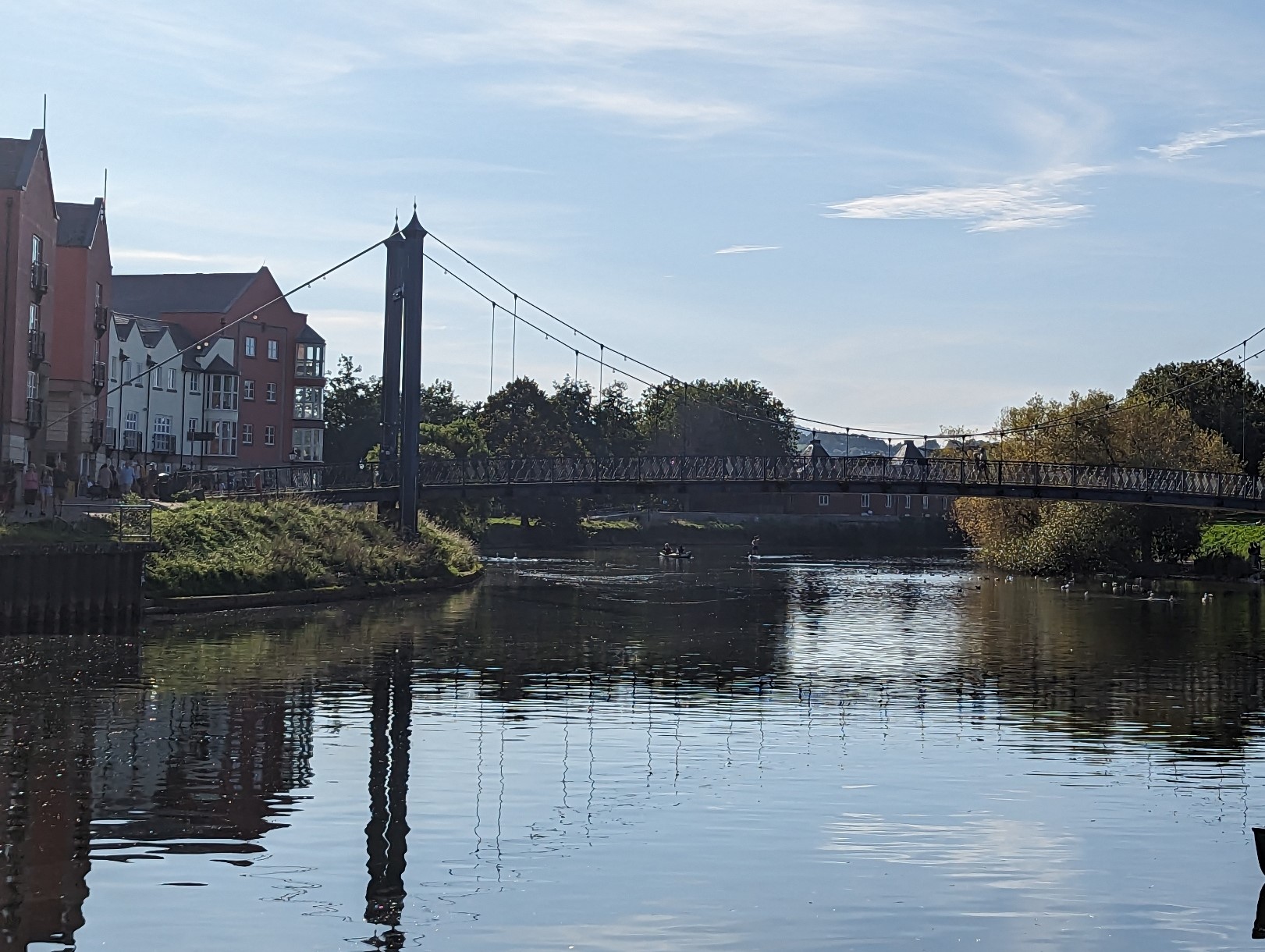
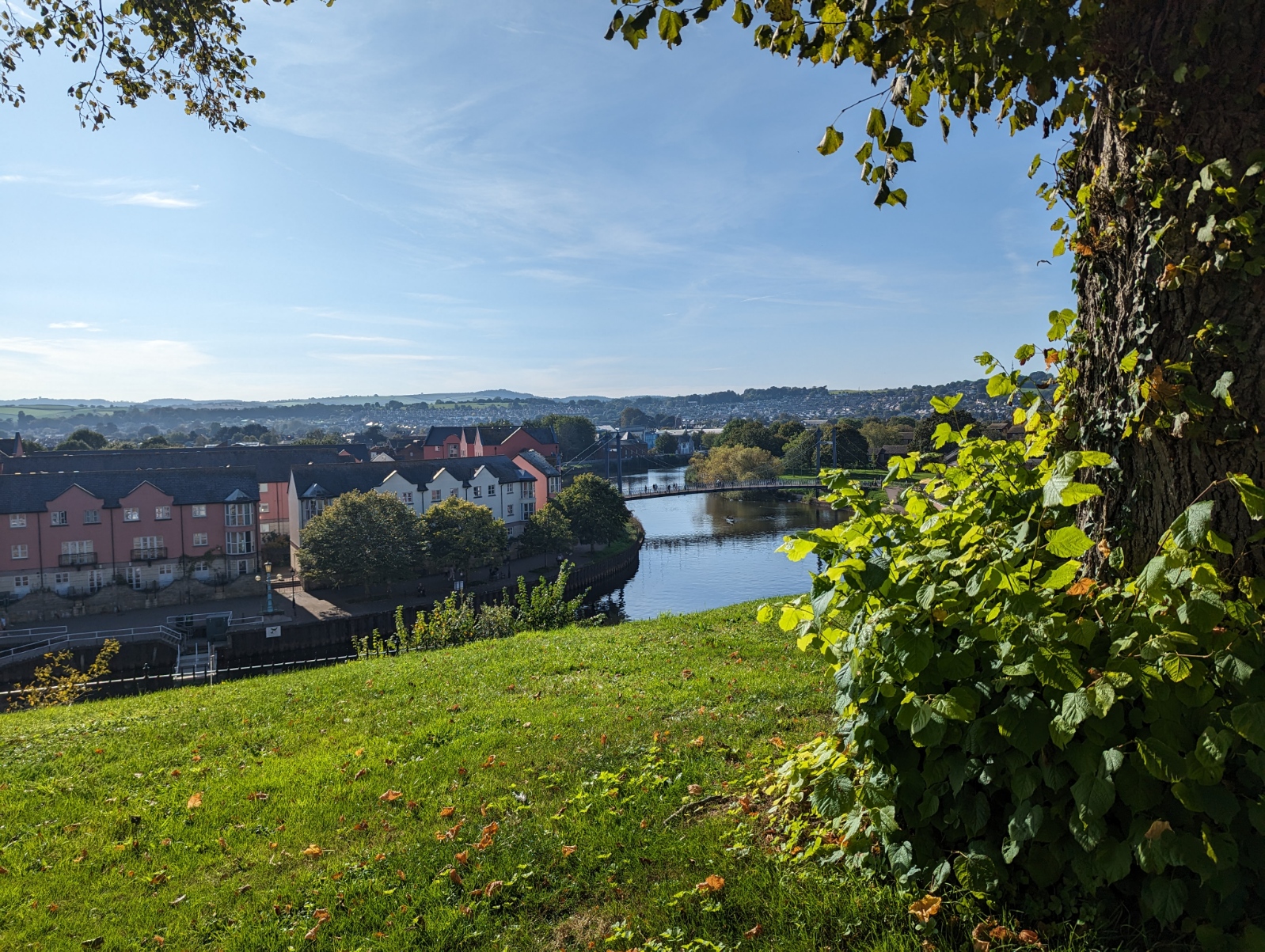
Walking over the bridge and down the hill to the River Exe

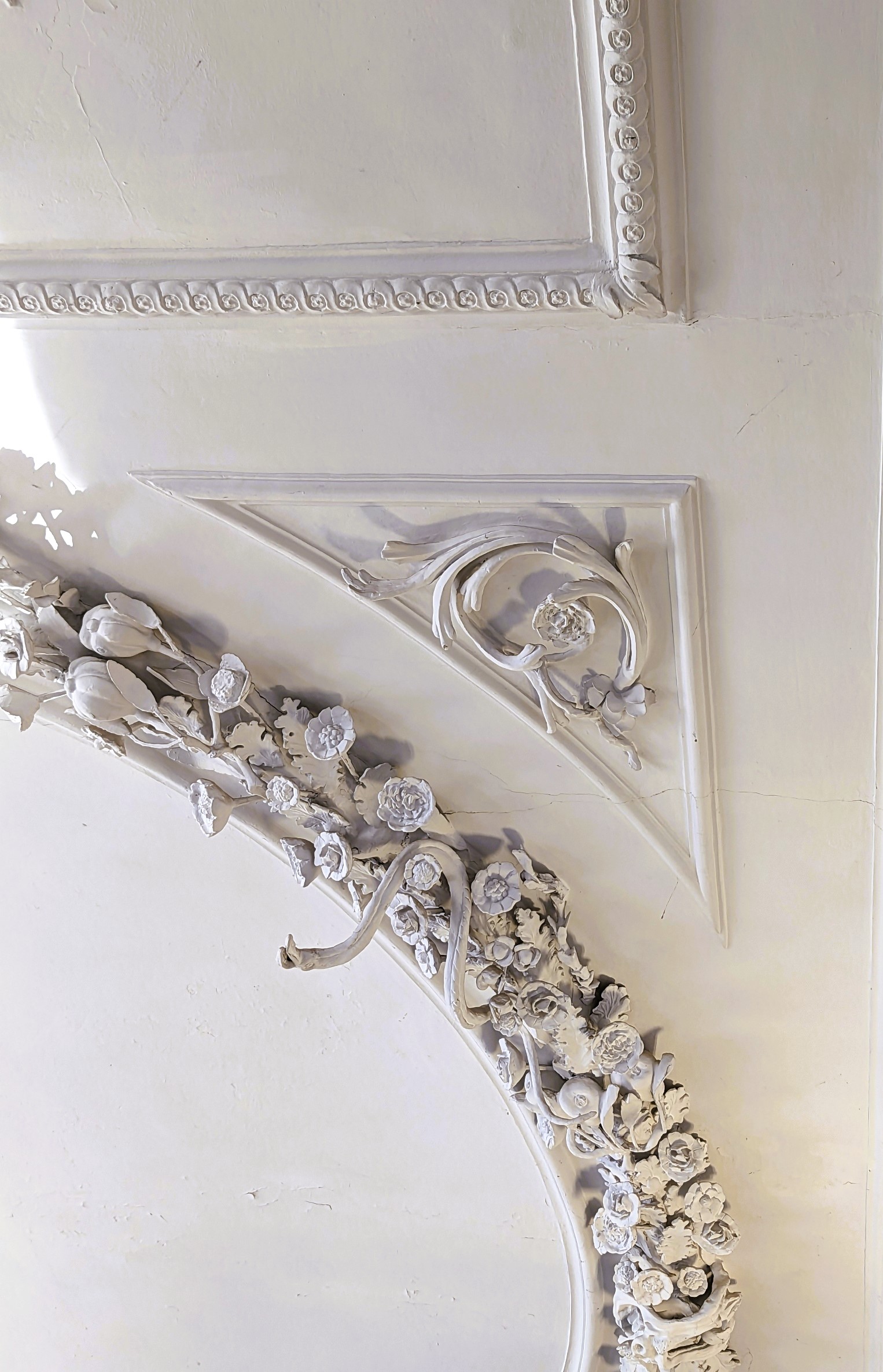
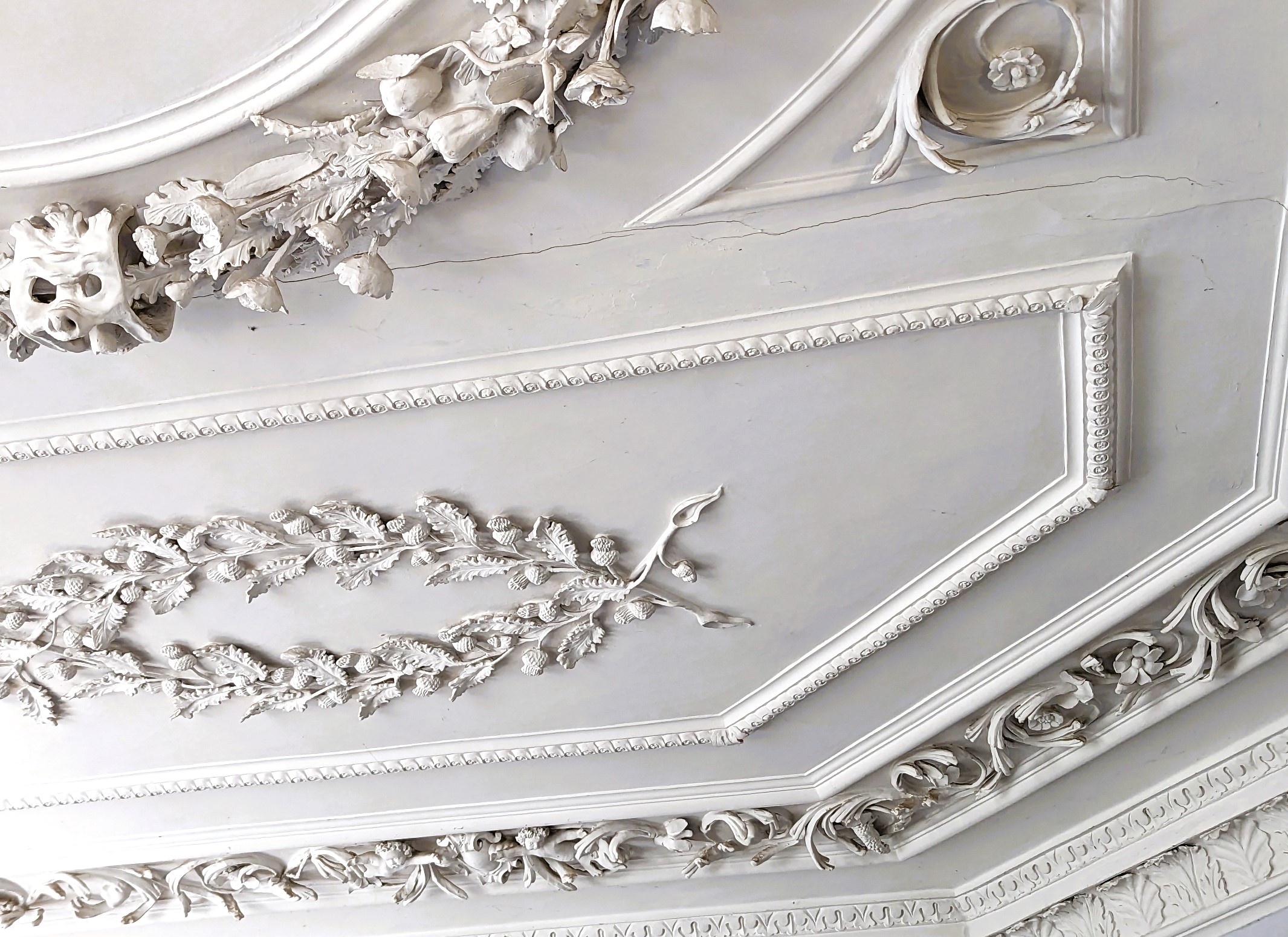
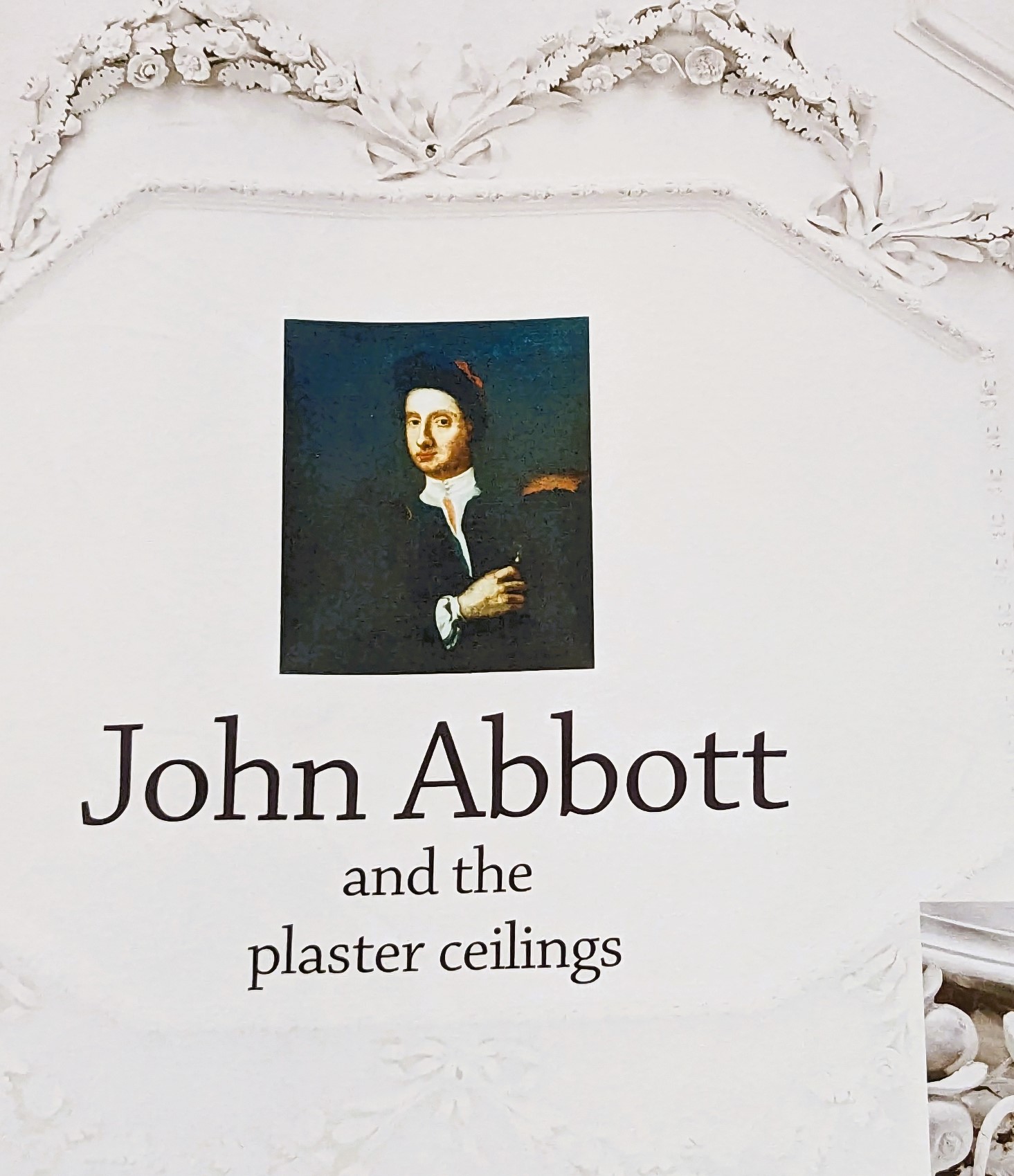
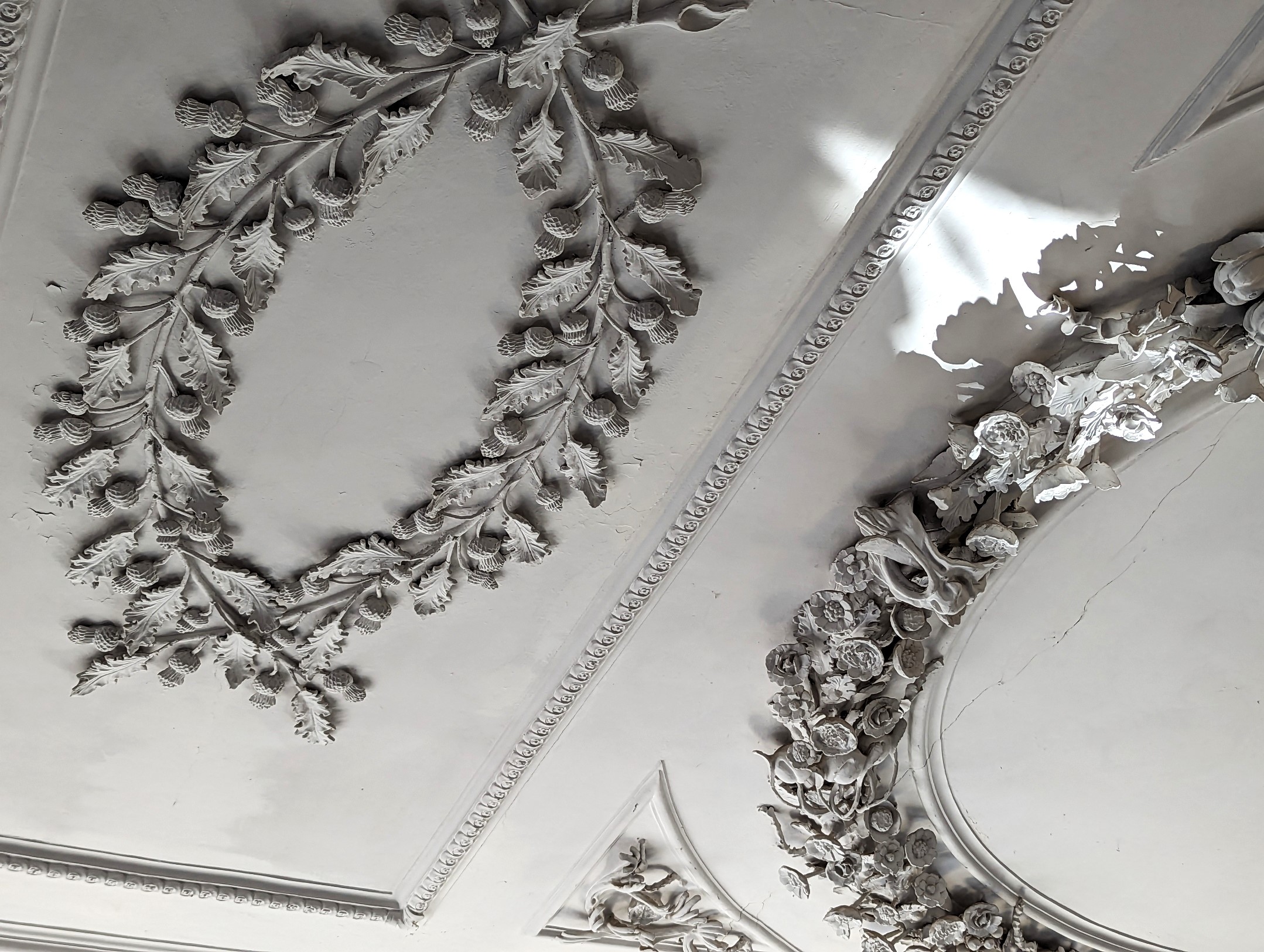
The Customs House was the end of the tour. The building interior is renowned for the decorative ceilings under which clerks worked.
Bristol
We visited Bristol for three nights, not a good choice. The city seems quite disorganised and it was difficult to plan our stay. On my previous visit it was marvelous to see some of the features, such as the mausoleum, that Barbara Pym included in her novel, A Few Green Leaves, and the Clifton suspension bridge. Barbara Pym worked in censorship, which was located in Bristol, during WW2, making this a city of interest to me.
Wandering around the city – referred to the old town in some written material but meaning little to long term inhabitants of Bristol! Anyway …
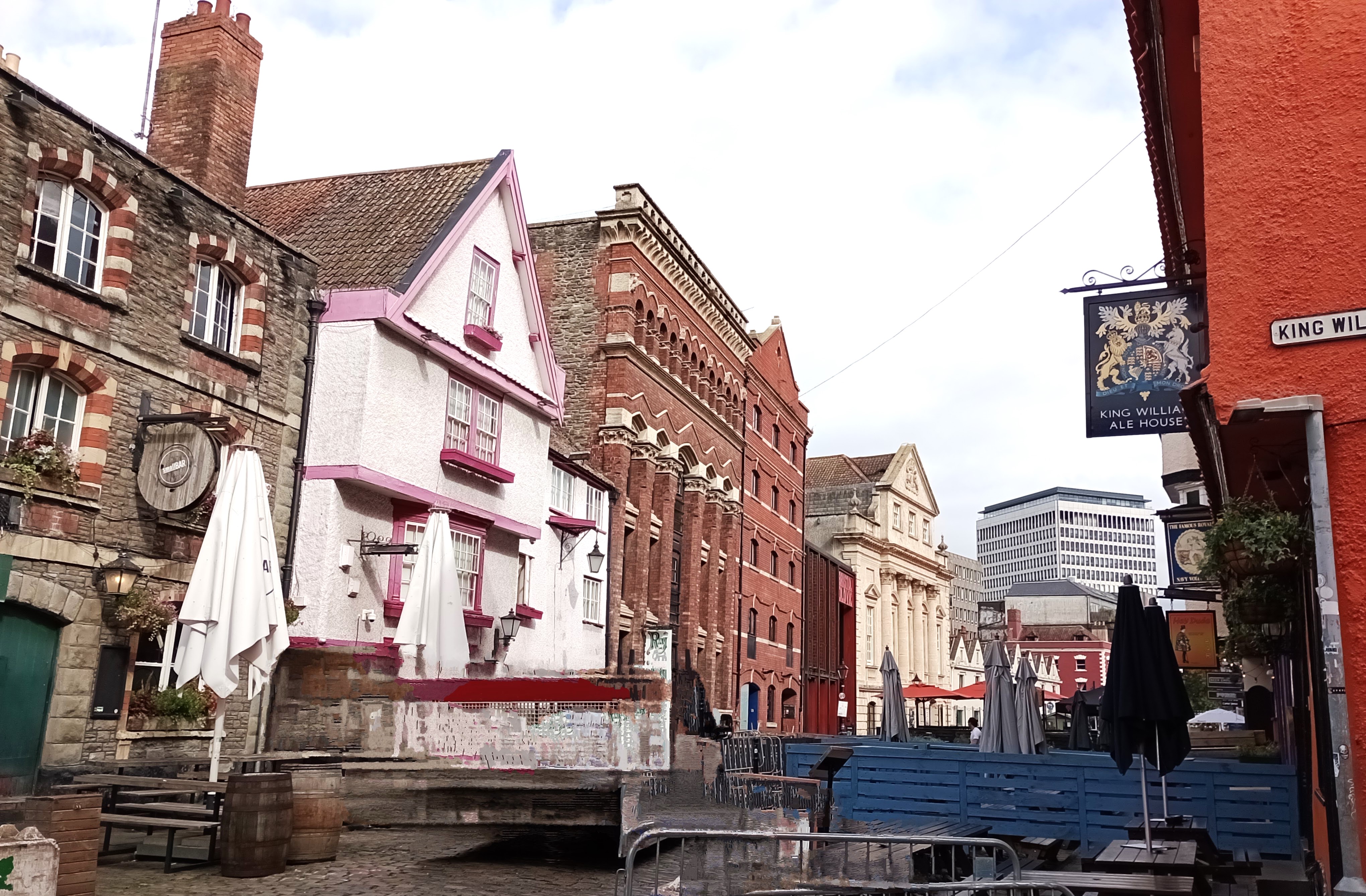
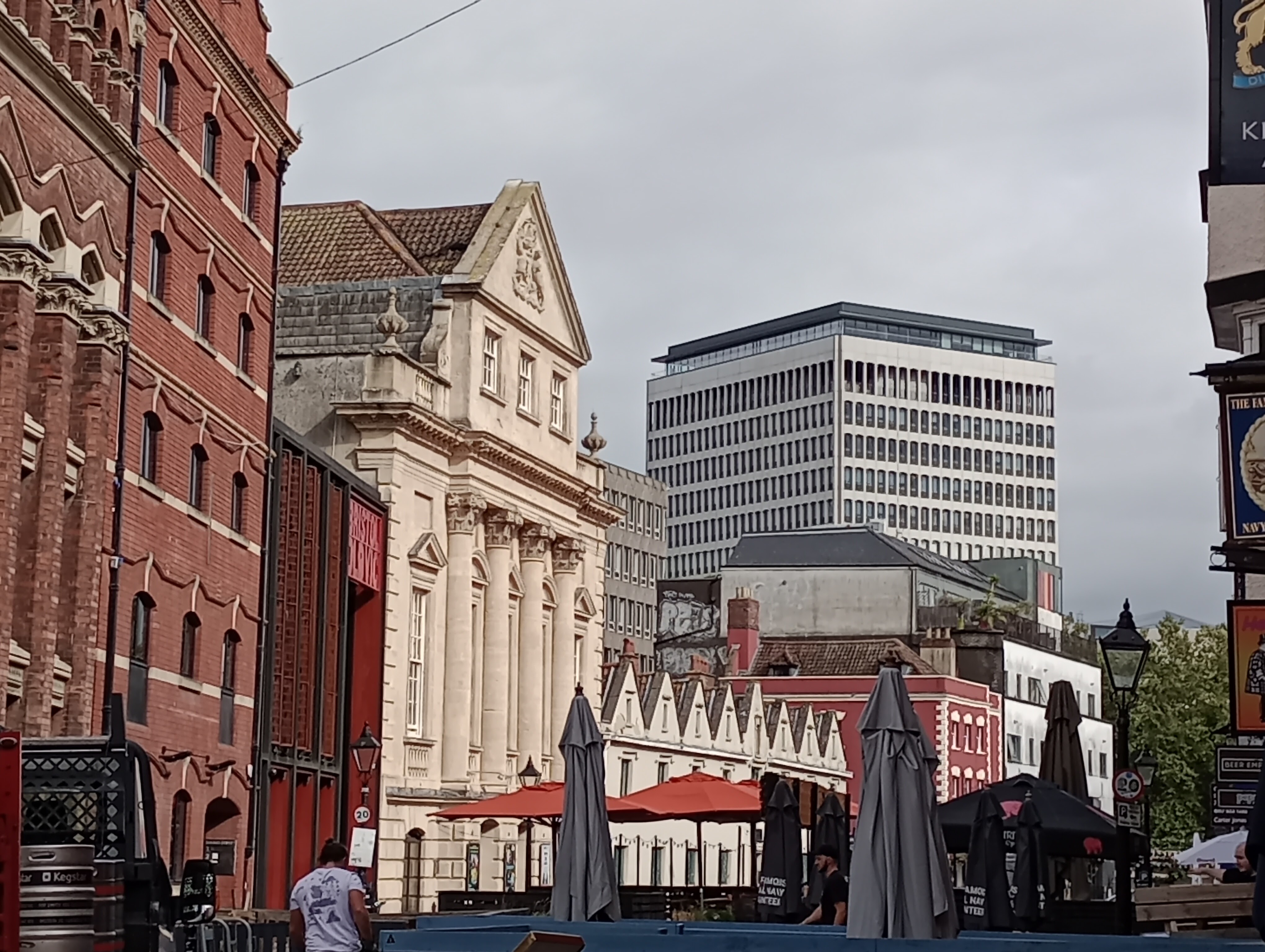
St Mary’s Church was a magnificent sight on our walk from the hotel into the city.

We also found a lovely bohemian coffee shop nearby – evidently to those who know in a very insalubrious street, but it was a very attractive site during our morning walk.
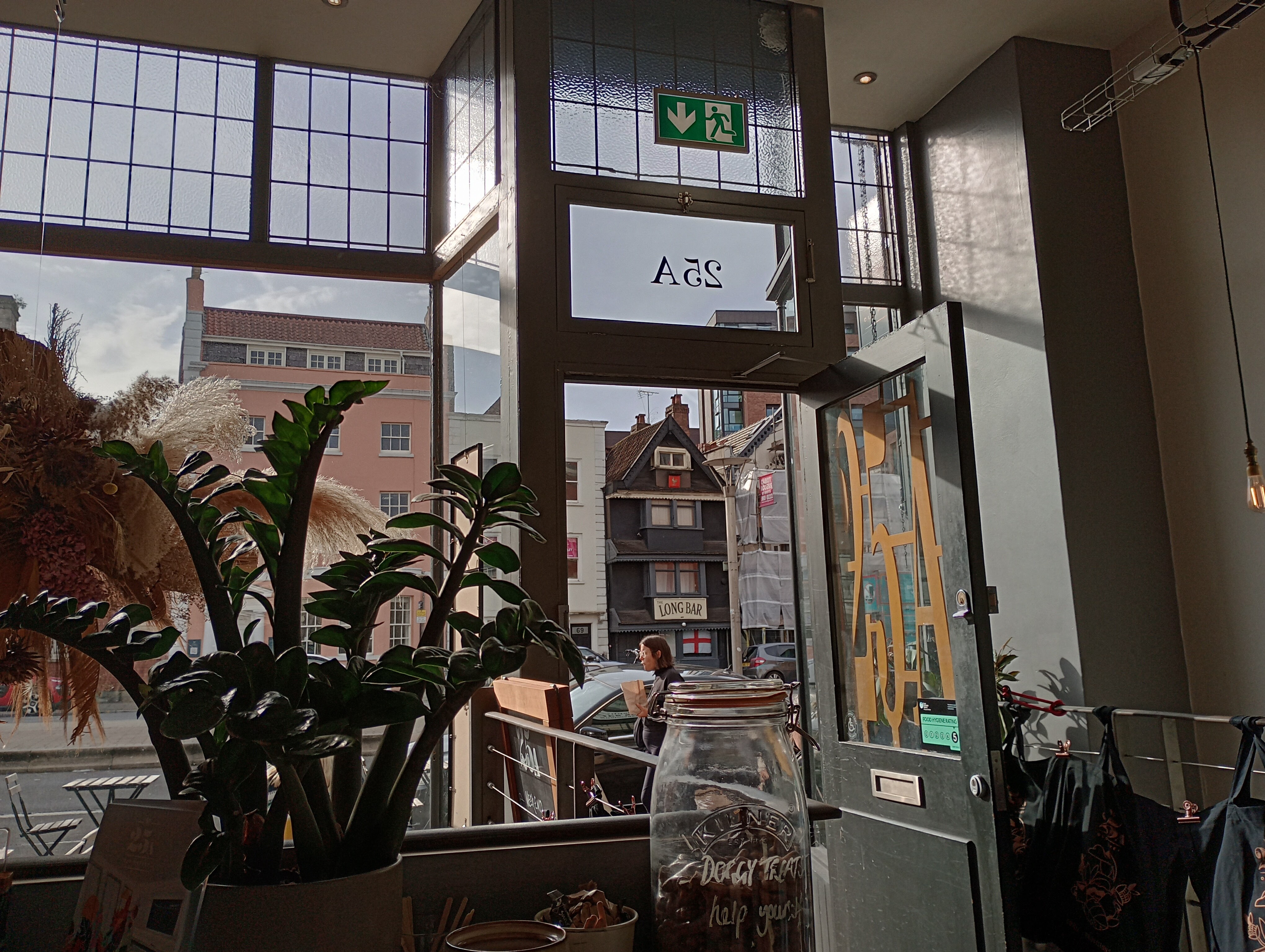

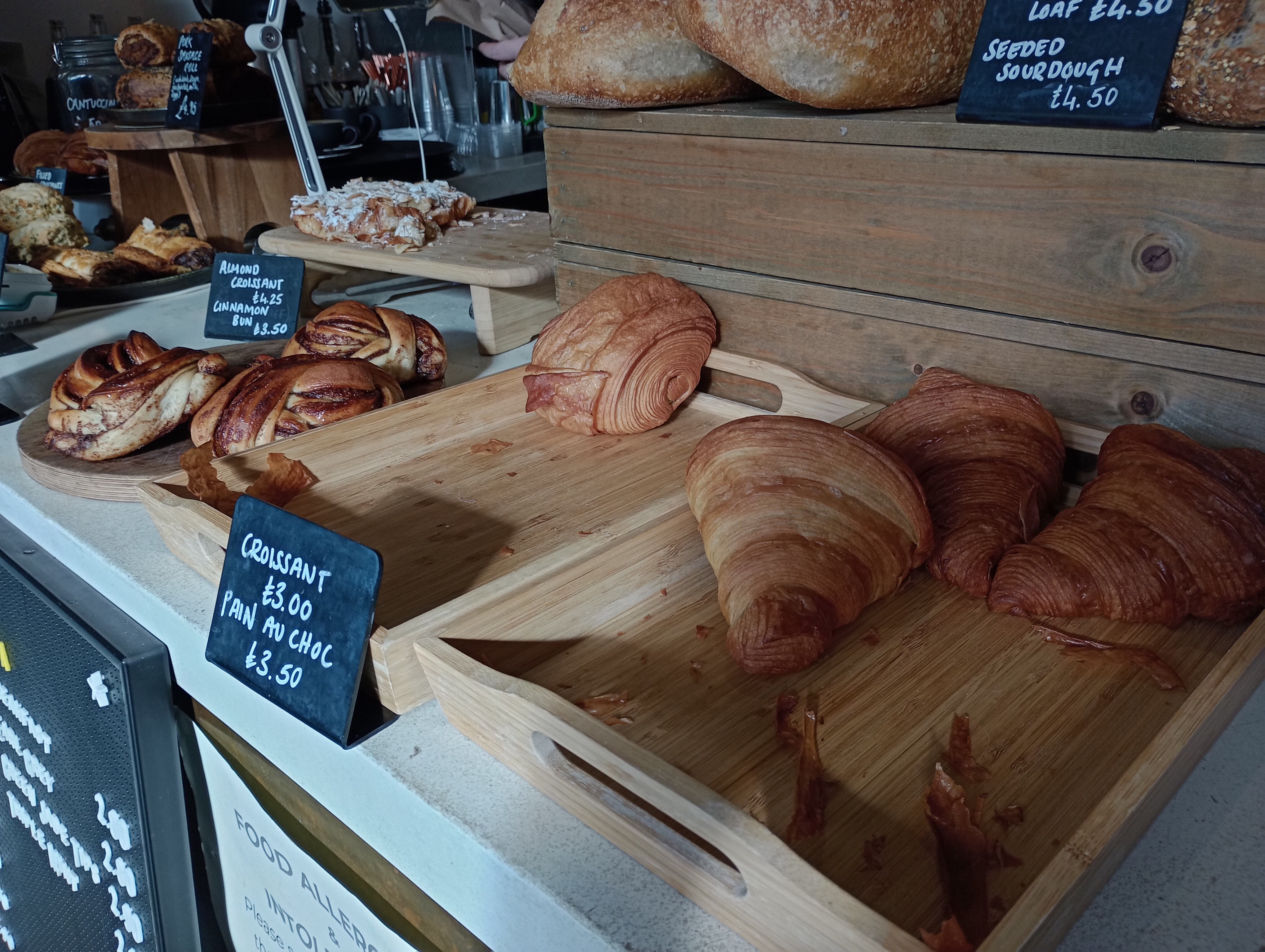
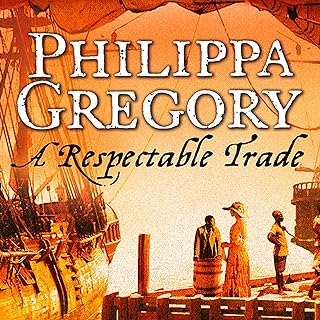
However, even thoughts of Treasure Island and the Hispaniola with Jim Hawkins and Long John Silver leaving Bristol for the island are not enough to encourage me to visit again. And of course, Philippa Gregory’s A Respectable Trade with its horrendous story of slavery depicts another aspect of Bristol.
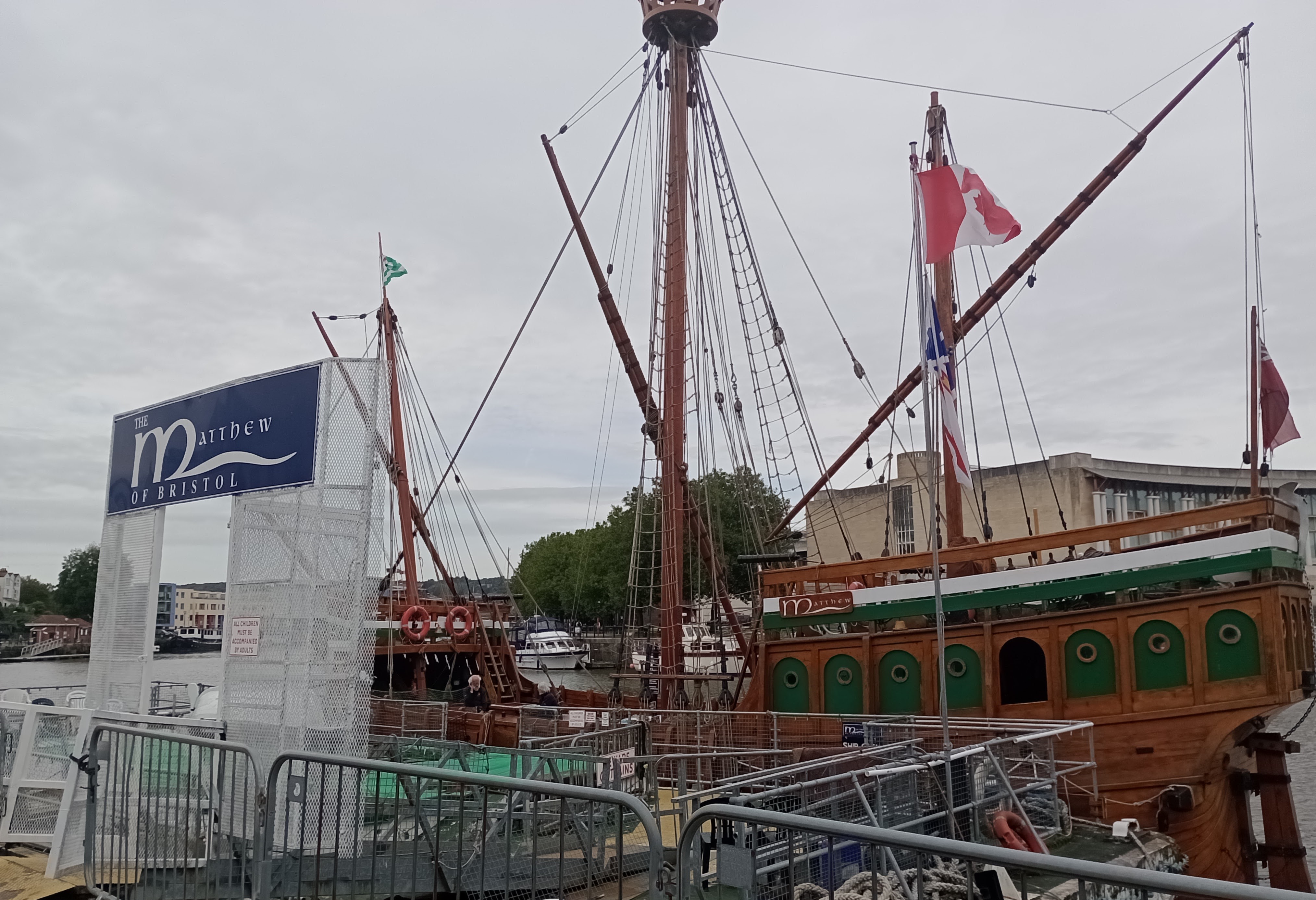
The positive part of our visit was meeting up with a Barbara Pym friend and discussing the BP conference I attended at the start of my UK visit. We met at the arts centre, enjoying its good bookshop and a coffee before a walk along the quay. Here we saw a statue of John Cabot who sailed with eighteen men from Bristol in 1497 to America in the Matthew – also pictured below.

London

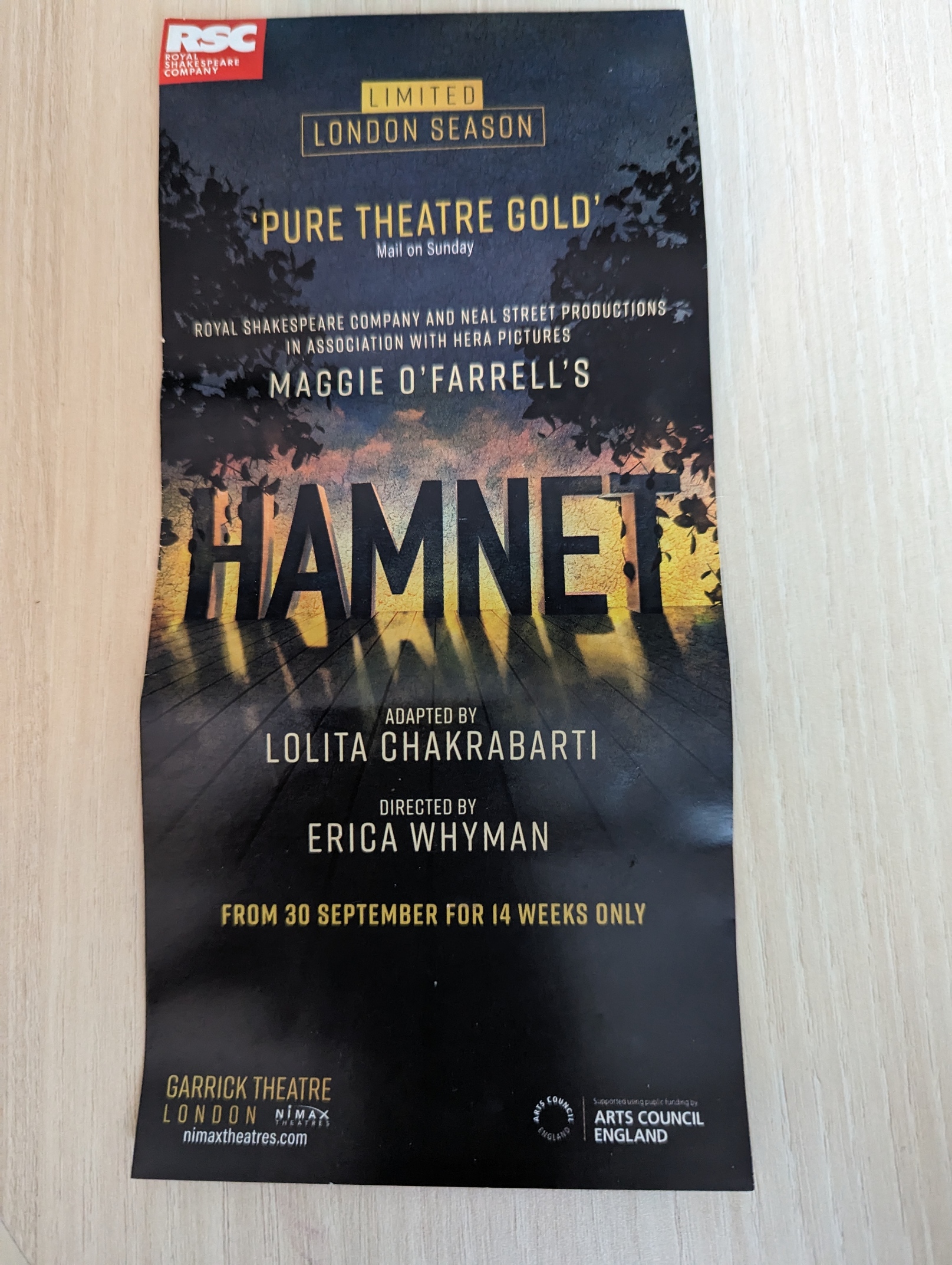
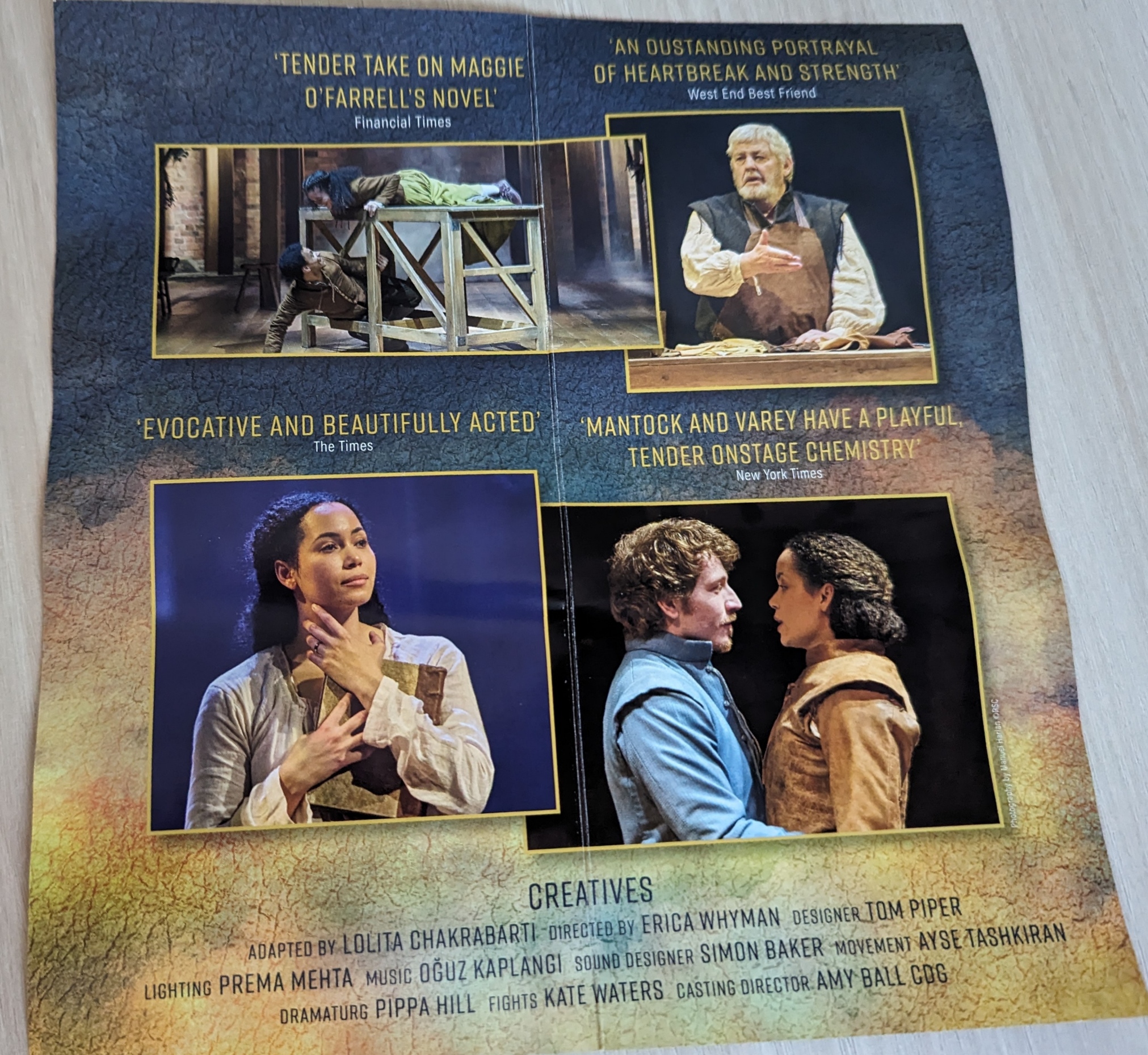
We were pleased to be able to see Hamnet, a play based on Maggie O’Farrell’s book of the same name. This was a splendid rendition of the book and its themes. O’Farrell has looked at the way in which the Shakespeare parents dealt with Hamnet’s death, their strengths and weaknesses, apparent throughout Act 1, highlighted with the death of their beloved son. The role of creativity and the strength needed in both childbirth and writing are featured, each partner’s inability to see the value and importance of the other’s creation until they are forced to do so. The end of Act 2 brings together this realisation as Anne (Agnes) watches Shakespeare’s Hamlet.

As usual, we went to a Sunday Recital at Wigmore Hall. Wigmore Hall is a short walk from Paddington where we were staying in between forays into Cambridge and then our trip around the south. The Sunday Recital is an hour, followed by sherry. And for us, a walk into Oxford Street or nearby for lunch.
I was also pleased to have lunch with an author I have long admired, Zoe Fairbairns. Her novels, Benefits, Stand We at Last, Daddy’s Girls, Here Today, Closing and Other Names are excellent reads from a feminist writer. I met Zoe when I interviewed her for my work on Barbara Pym. We meet every time I visit London, enjoying our lunch at Sicily, an Italian restaurant near Victoria Station. The first time I met Zoe was to interview her, for my book, The Reality behind Barbara Pym’s Excellent Women: The Troublesome Woman Revealed, published in February this year. My lunch discussion was not as intense but ranged over feminist issues as well as some comfortable domestic chat.
Excerpt from The Reality behind Barbara Pym’s Excellent Women: The Troublesome Woman Revealed

My interview with the feminist writer Zoë Fairbairns led into a discussion of the use of the term troublesome woman. Her concerns are that with a structure such as patriarchy, which is deliberately designed to disadvantage women, men’s capacity to take advantage of women is troublesome to women. She says ‘there is a limit to the extent to which I want to [place] men as the mainstream and women fighting against it. Sometimes it’s just about women wanting reasonable human rights and men, quite rightly, seeing that as a threat.[i]
Fairbairns’ statement illuminates the difficulties in addressing women’s refusal to conform and negative interpretations of their behaviour. Fairbairns correctly suggests that patriarchy disadvantages women and their reaction to the conventions it upholds is understandable. It is also difficult to deny that patriarchy relies on the understanding that men and the conventions that support them are the mainstream. Their cause is valid but women’s challenge to convention draws them necessarily into a fight against the mainstream as dictated by patriarchy. Women’s refusal to accept patriarchal constraints on their freedom in their efforts to develop their world to their liking is not a particularly dramatic or violent demand. Pym’s women’s behaviour is also neither dramatic nor violent. Nevertheless, they are troublesome women who raise difficult questions about sexual inequality and its consequences. They are troublesome in a patriarchal society in which inequality is not only acceptable but also reinforced by institutions that are considered a bulwark. Men’s status relies on women accepting a subservient role in institutions such as marriage, professions, and the church – the institutions that Pym’s central women characters question. Feminist writers, in giving a voice to women’s rebellion, validate their demands and concerns. Pym’s treatment of spinsters is particularly important in assessing the feminist nature of her writing. She creates spinsters and women in conventional occupations and roles, writing them into the mainstream while questioning its values. Rather than a reality, it is the perceived threat experienced by men, and women who believe that patriarchy serves them well, that creates an impression of women’s rebellion as troublesome.
The trouble that arises when women’s traditional roles are questioned provides a valuable framework for examining Pym’s work because, wherever women move outside the boundaries considered appropriate in the historical context in which they operate, they are seen as troublesome. One of the boundaries challenged by Pym’s women characters is marriage, which like trouble, is a constant in women’s lives. Whether they are seeking it, avoiding it, involved in it or deprived of it, marriage is used as a way to define women’s status. [i] Zoë Fairbairns, Interview, Joyce, London, 2001.

Edited reference in Goodreads: Stand We at Last Zoë Fairbairns. Follows the fortunes and quests for independence from Victorian England to 1960s America and England, of five generations of women, beginning with the courageous struggles of sisters Helena and Sarah. Genres: Historical Fiction, Fiction, Feminism. First published January 1, 1983.

 Robin's Room