Sophie Hannah Hercule Poirot’s Silent Night The New Hercule Poirot Mystery Harper Collins UK, Harper Fiction 26 October 2023.

Thank you, NetGalley, for providing me with this uncorrected proof for review.
This is the second of Sophie Hannah’s Hercule Poirot mysteries that I have read, and I came to it hoping that I would not be disappointed. I have read Sophie Hannah’s other novels with enthusiasm, and some dread, at times. Despite their often bizarre and unpleasant themes they are immensely readable, almost addictive, and some of my favourite in their genre. I cannot say the same of The Monogram Murders, the first of Hannah’s Hercule Poirot mysteries I tried. Hercule Poirot’s Silent Night is a distinct improvement.
In this novel Hannah replicates Agatha Christie’s lack of interest in making Hastings a permanent character in her Hercule Poirot novels. Poirot’s companion, Edward Catchpool is a former police inspector, the son of one of the other characters, and, while advancing the narrative with the potential and then actual crime at its focus, also develops as a distinct character. Although he follows Hastings in being unaware of the clues that Poirot so brilliantly perceives, maintaining the familiar relationship between the two, he has his own character which adds to the novel. Unlike Hastings who had to be married off in Christie’s second Poirot novel, Murder on the Links, to avoid including him in every work featuring Poirot, Catchpool’s character has some interesting elements. His relationship with his mother, a clearly negative character, and his police background gives him professional possibilities. He is not reminiscent of any of Christie’s police characters (Japp, Slack, for example) and makes a positive contribution to the solution, although as Poirot suggests, not a brilliant as his own. This is a clever use of some of Christie’s tactics while providing a plausible alternative to the known Christie characters.Books: Reviews

After the Covid update: Holland Park and the Japanese Garden; Tbilisi Bakery; Whitechapel Gallery; Agatha Christie interpretations; Heather Cox Richardson.
Covid update for Canberra
On 3 November it was reported that there were 428 new cases of Covid in Canberra, with 15 people in hospital, one of whom is in ICU. One life was lost this week, bringing the total to 282 lives lost to Covid since March 2020. Cases of influenza and RSV are now being reported. Masks are no longer required at my general practice, although they are available at the reception area. Some staff wear masks, others do not. They are no longer encouraged on public transport, although some commuters do wear them.
.
Holland Park and the Japanese Garden
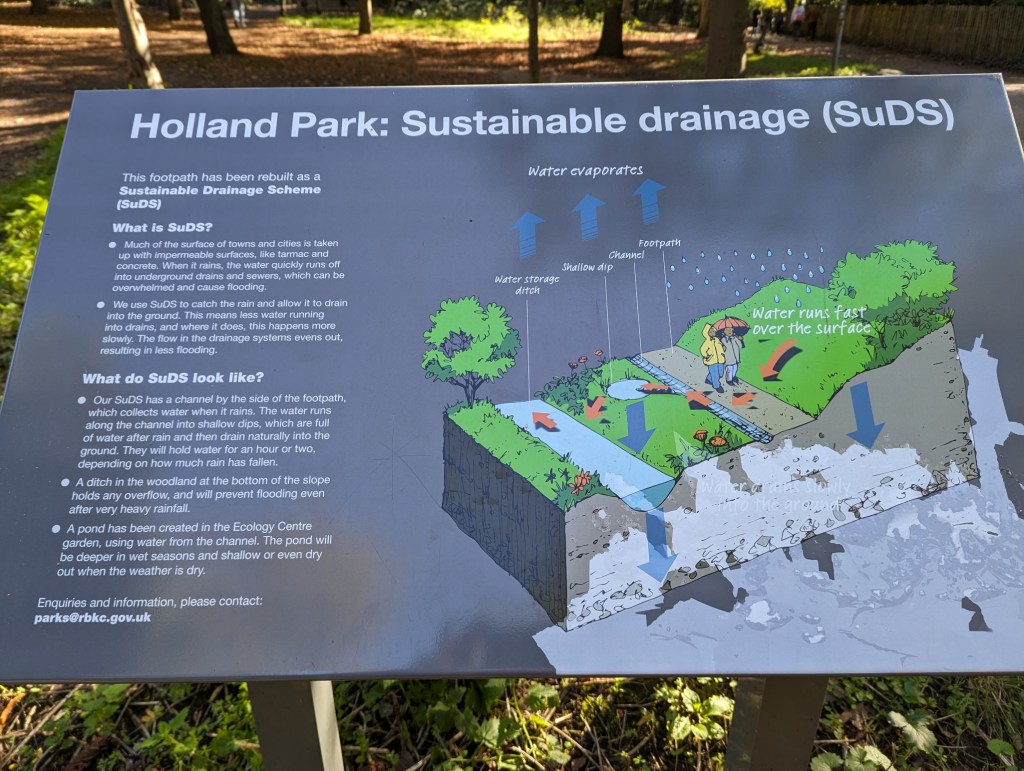
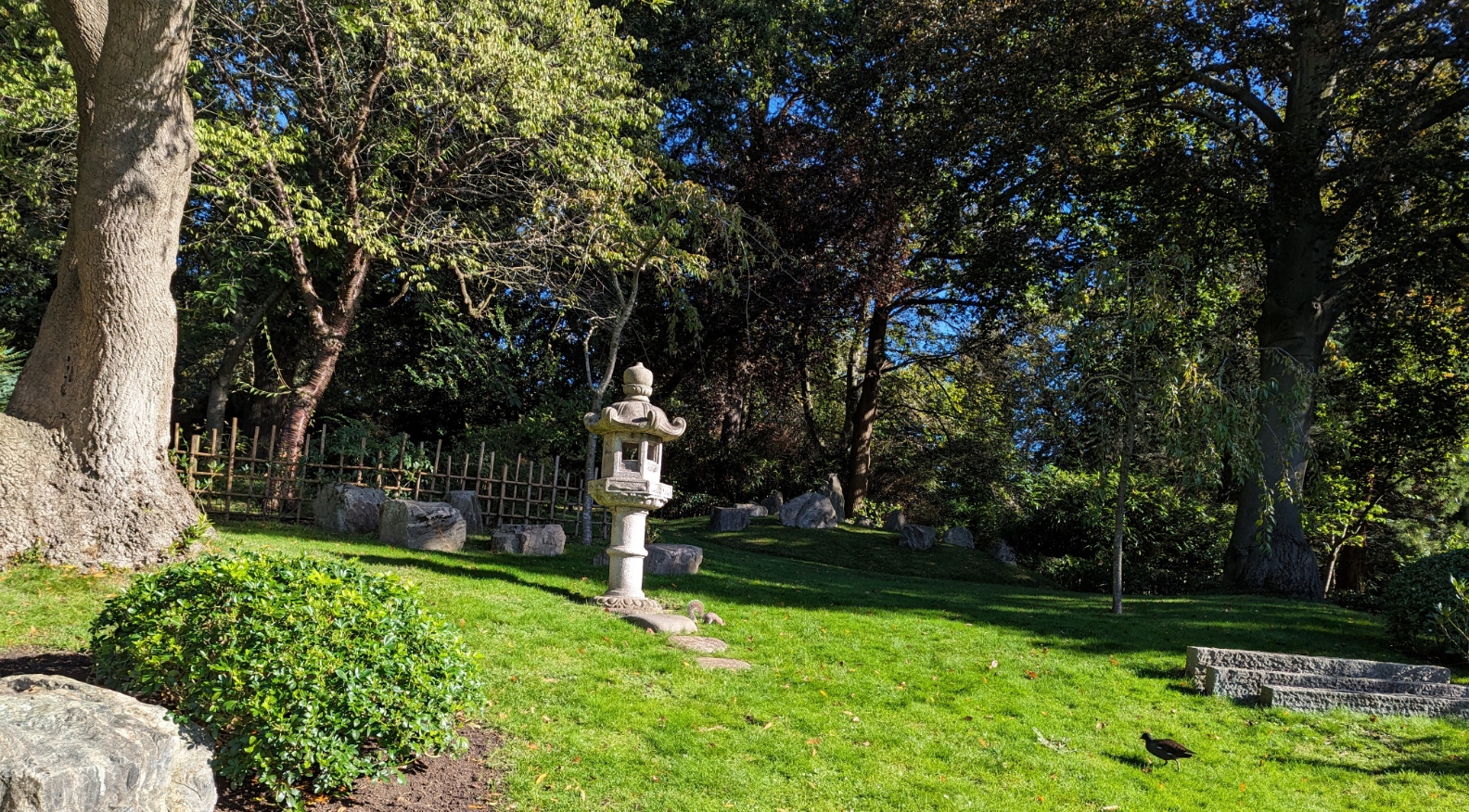
Secret London is a valuable source of information about London sites that are not necessarily well known. One of these is the Japanese Garden in Holland Park. Also, of interest is the Sustainable drainage scheme. Of course, Holland Park is a beautiful spot, the Japanese Garden just adding another element to an afternoon spent there.




Tbilisi Bakery
When we saw the Tbilisi Bakery after our walk around Holland Park we could not resist going in to see what was being served. Tbilisi was the last country we visited before returning to Australia after living in London for nearly five years. The cafe did not disappoint.







Whitechapel Gallery
One of the benefits of our London hotel was its proximity to the Whitechapel Gallery. It always has exciting exhibitions and is really worth a visit. It is close to the East Aldgate tube station, and on several bus routes. We only had to walk a short distance to enjoy the exhibitions on this occasion.
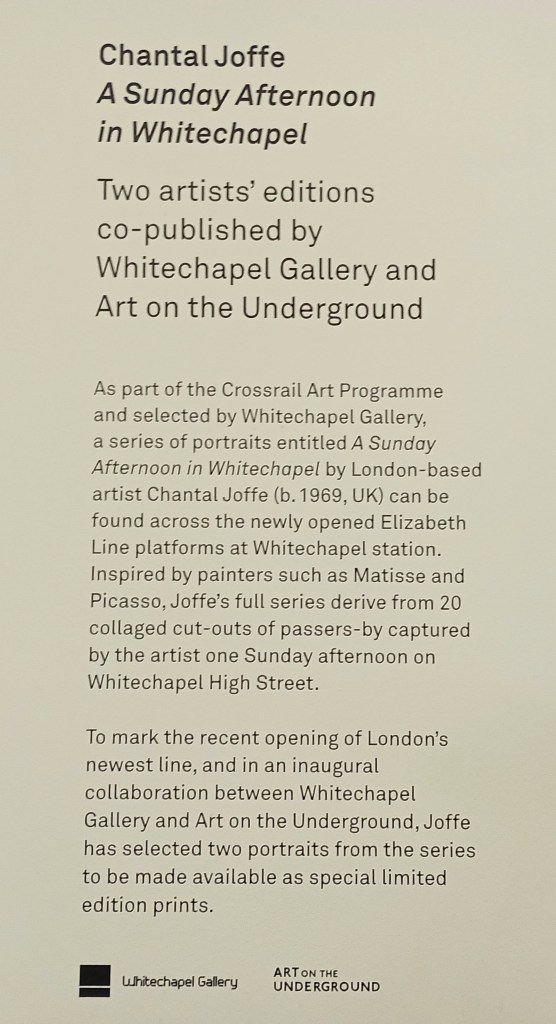
Whitechapel Gallery connects with contemporary issues. Crossrail, now the Elizabeth line, was being built while we lived in Paddington. This is a great outcome of the noise, lights and activity during the night.

Joffe portraits
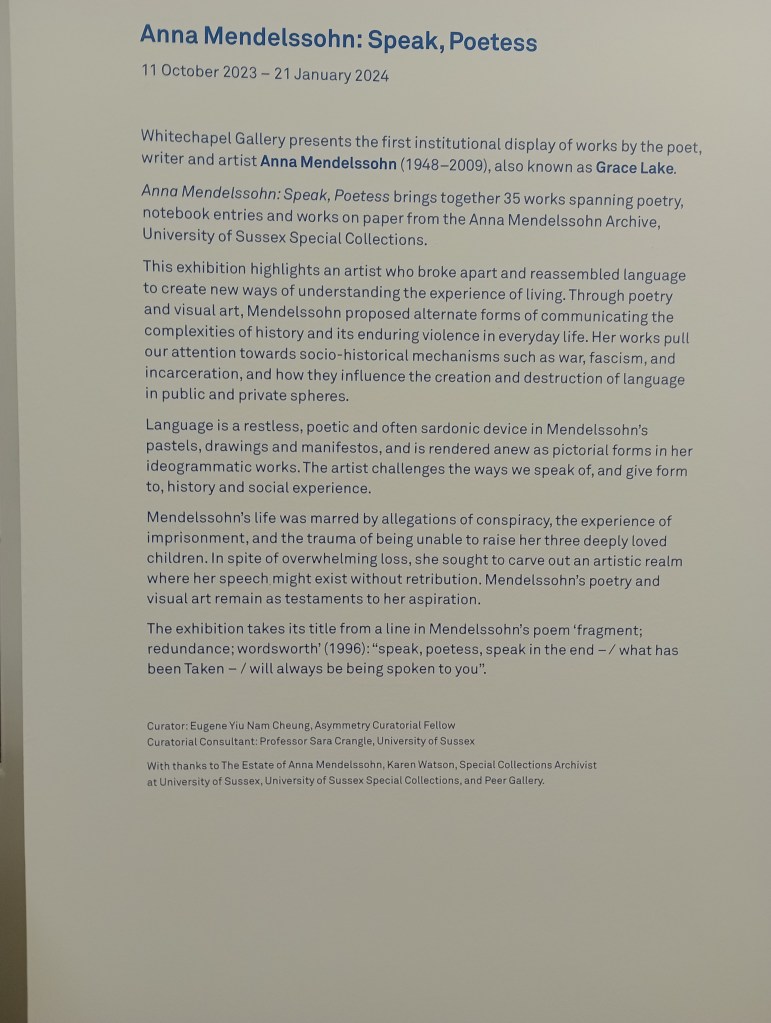


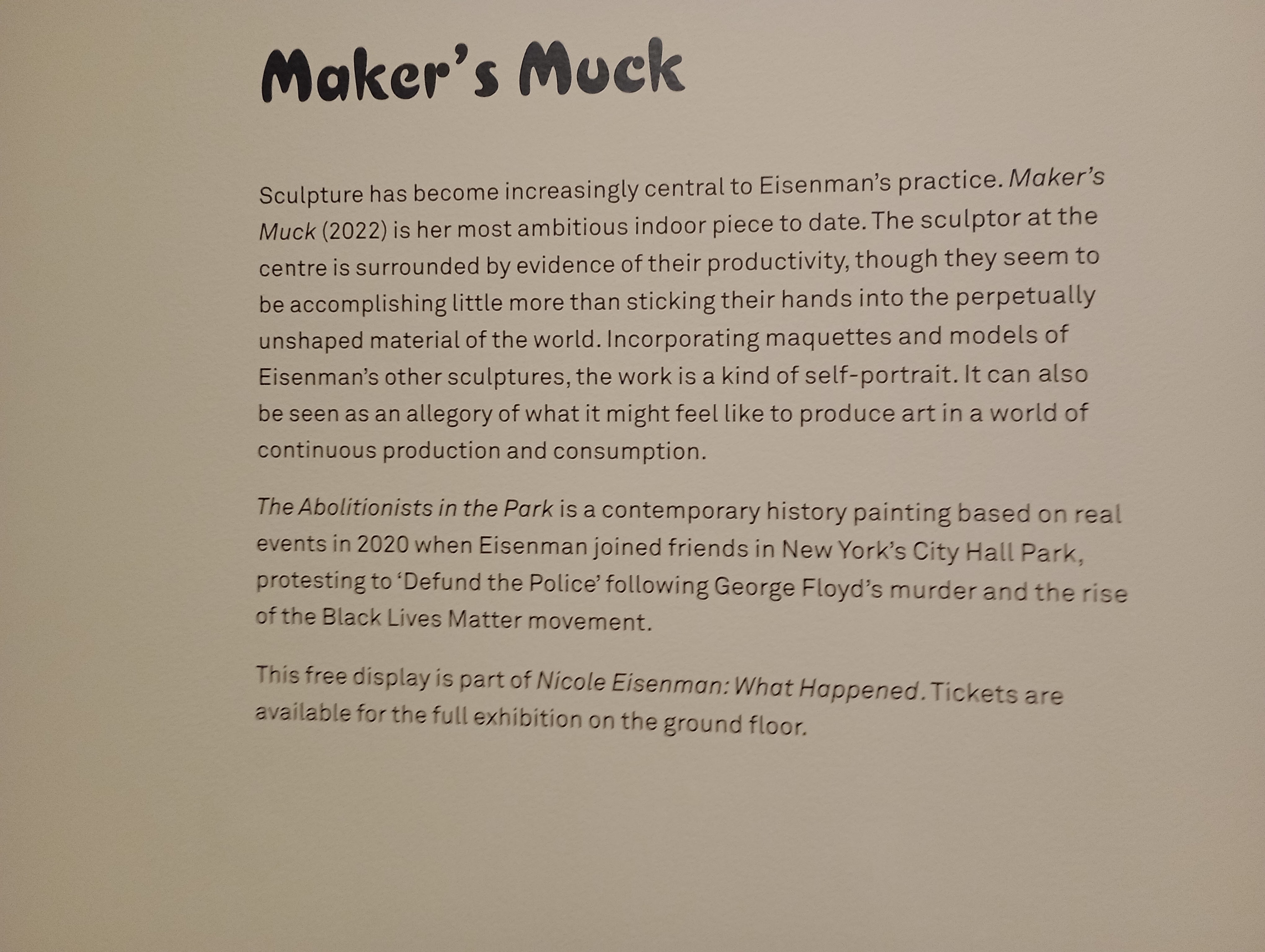


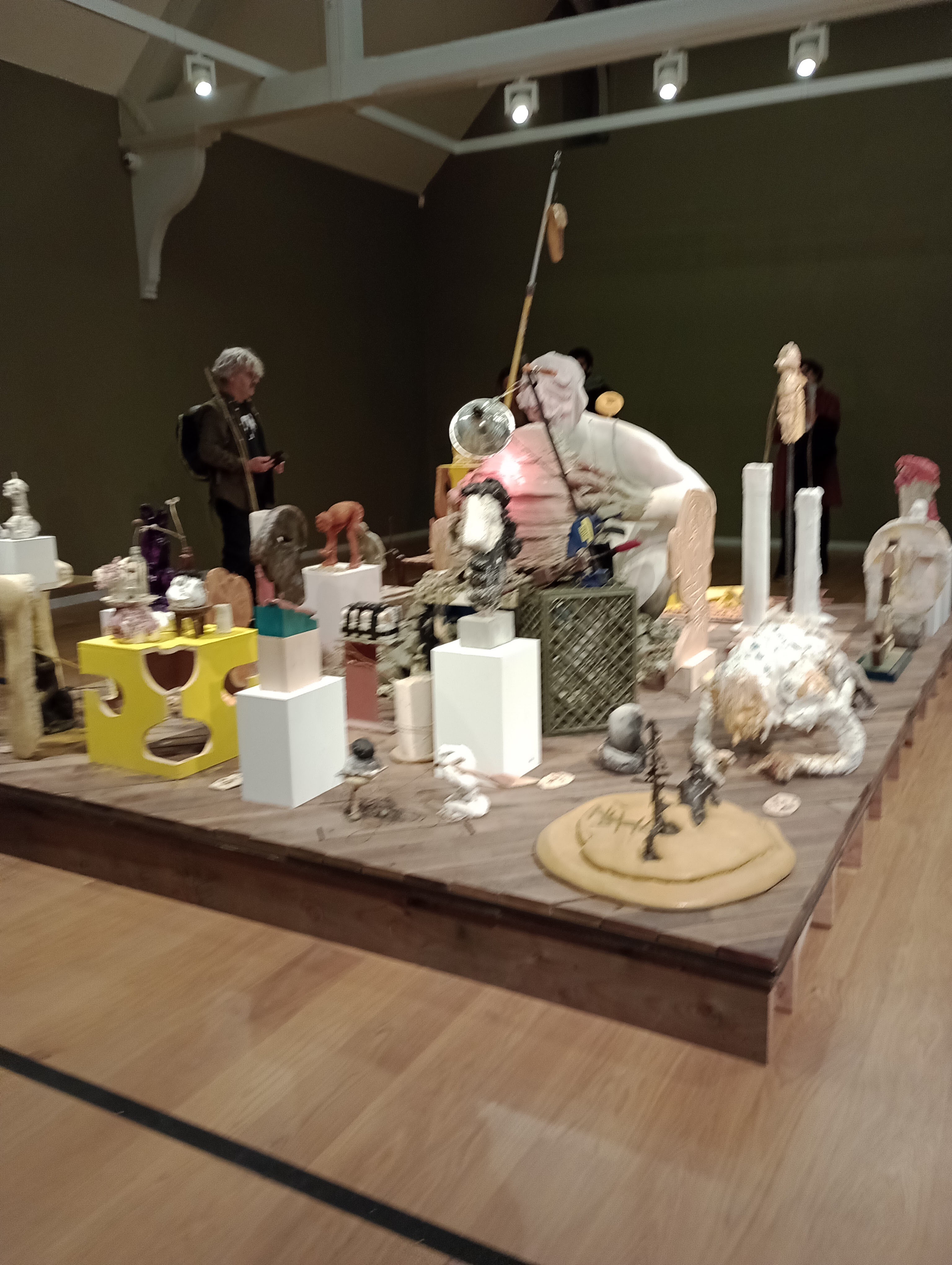

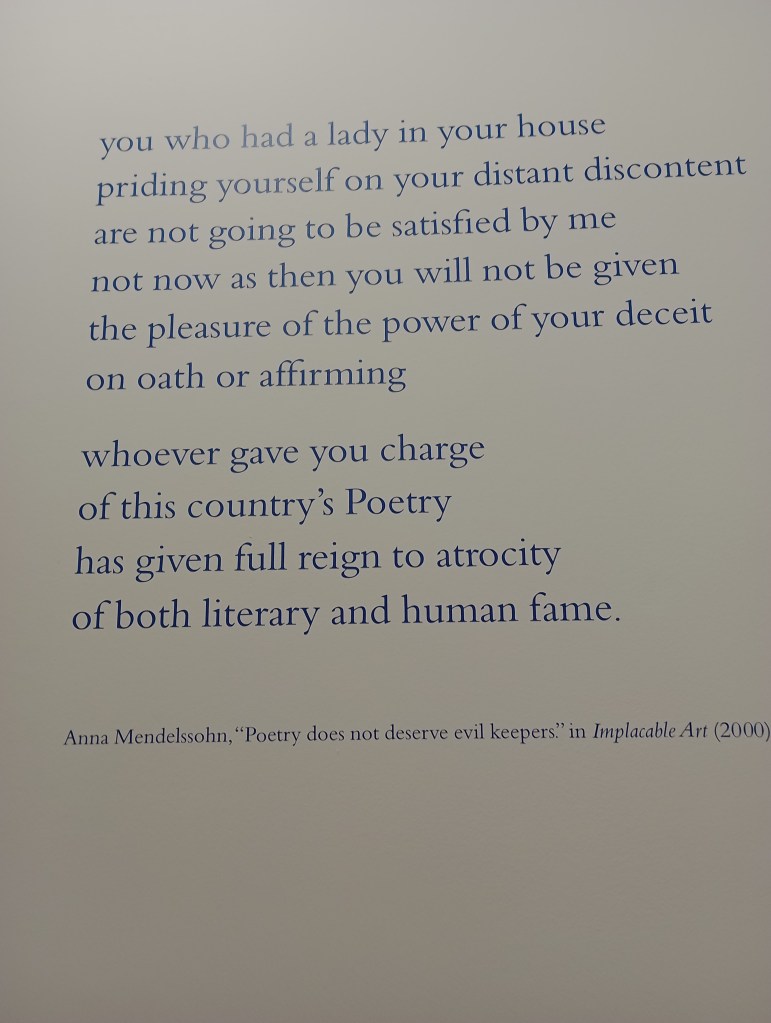

Anna Mendelssohn’s exhibited art included:

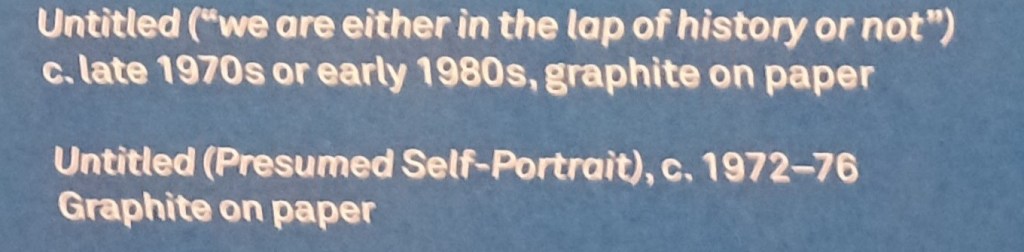


Anna Mendelssohn (b. 1948—d. 2009) authored poetry, fiction, drama, and life writing; she was also a visual artist, musician and translator. From 1971 to 1977 she served time at Holloway Prison in London due to her involvement in extreme leftist activism. From the early 1980s, Mendelssohn composed fifteen poetry collections and published in journals receptive to her experimental, charged lyrics, among them, Parataxis, Critical Quarterly, and Jacket. Her work appeared in seminal anthologies including Denise Riley’s Poets on Writing (1992), Iain Sinclair’s Conductors of Chaos (1996), and Rod Mengham and John Kinsella’s Vanishing Points: New Modernist Poems (2004). Often situated within the British Poetry Revival, Mendelssohn retained a marginal, if constant, presence in the poetry community in Cambridge, England, where she lived from 1983 until her death. In 2010, her vast archive of writings and drawings was generously donated by her three children to Special Collections at the University of Sussex.
Agatha Christie – interpretations
Following up Agatha Christie’s Poirot and plotting as perceived by Sophie Hannah, and last week’s criticism of the filming of Halloween Murder as A Haunting in Venice I am interested in how Murder is Easy will be interpreted in the two episode program coming to BBC One, iPlayer and BritBox.
The Agatha Christie Newsletter <generalenquiries@agathachristie.com is an excellent source of information about Agatha Christie, her novels and new works associated with those.

David Jonsson as Fitzwilliam in Murder is Easy
First Look
We’re excited to reveal these first look images of Murder is Easy, a new two-part thriller based on Agatha Christie’s 1938 novel. The show, from producers Mammoth Screen and Agatha Christie Limited, will be coming soon to BBC One and iPlayer and on BritBox International’s streaming services. Filmed in Scotland over the summer of 2023, it is directed by Meenu Gaur with the screenplay by Siân Ejiwunmi-Le Berre.
These brand new pictures feature David Jonsson (Industry, Rye Lane) as Fitzwilliam, alongside Morfydd Clark (Lord of the Rings, Saint Maud) as Bridget; Penelope Wilton (Downton Abbey, After Life) as Miss Pinkerton, Tom Riley (The Nevers, Ill Behaviour) as Lord Whitfield, Douglas Henshall (Shetland, In Plain Sight) as Major Horton, Mathew Baynton (Ghosts, Wonka) as Dr Thomas and Mark Bonnar (World on Fire, Guilt) as Reverend Humbleby.
Murder is Easy will also star Sinead Matthews (Hullraisers, The Crown) as Miss Waynflete, Nimra Bucha (Polite Society, Ms Marvel) as Mrs Humbleby, Tamzin Outhwaite (The Tower, Ridley Road) as Mrs Pierce, Kathryn Howden (River City, Six Four) as Mrs Carter, Jon Pointing (Big Boys, Plebs) as Rivers, Demmy Ladipo (Dreaming Whilst Black, The Last Tree) as Jimmy Amaike, Gloria Obianyo (Good Omens, Mission Impossible) as Ngozi Ude, and Phoebe Licorish making her screen debut as Rose.
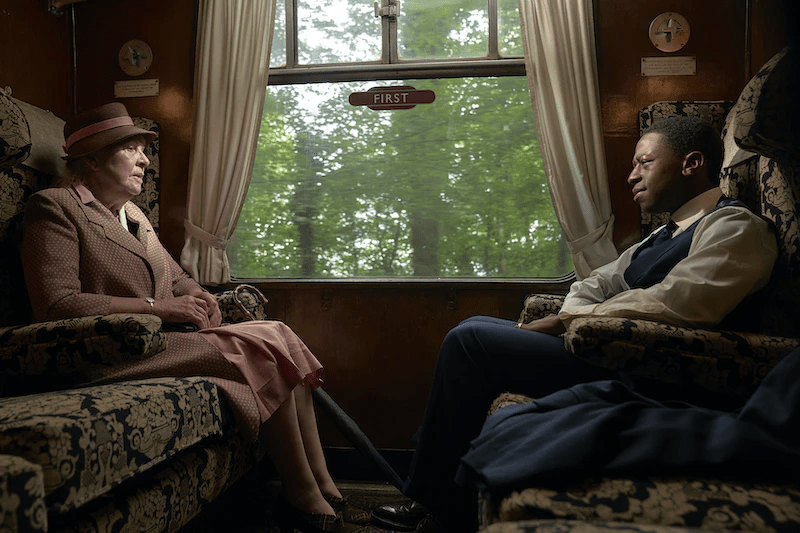
Penelope Wilton as Miss Pinkerton and David Jonsson as Fitzwilliam in Murder is Easy
About the Plot
England, 1954. On a train to London, Fitzwilliam (David Jonsson) meets Miss Pinkerton (Penelope Wilton), who tells him that a killer is on the loose in the sleepy English village of Wychwood under Ashe.
The villagers believe the deaths are mere accidents, but Miss Pinkerton knows otherwise – and when she’s later found dead on her way to Scotland Yard, Fitzwilliam feels he must find the killer before they can strike again. Because for a certain kind of person, murder is easy…

Douglas Henshall as Major Horton in Murder is Easy

Morfydd Clark as Bridget and Tom Riley as Lord Whitfield in Murder is Easy
In a quiet English village, a killer is about to strike. Again and again.
Officer Luke Fitzwilliam is on a train to London when he meets a strange woman. She claims there is a serial killer in the quiet village of Wychwood. He has already taken the lives of three people and is about claim his fourth victim.
Fitzwilliam dismisses this as the ramblings of an old woman. But within hours she is found dead. Crushed by a passing car.
And then the fourth victim is found.
Each death looks like an accident. But in Wychwood nothing is as it appears….

Heather Cox Richardson – Letter from America, November 3, 2023

Palestinian resettlement in America; new House Speaker; Mark Meadows’ book; lawyers in Trump’s future plans for the Presidency; Trump education plans; voter suppression.
Today, Representative Ryan Zinke (R-MT), who was former president Trump’s Interior Secretary until he left under accusations of misconduct, introduced a bill to ban Palestinians from the United States and to revoke any visas issued to Palestinians since October 1 of this year. Although the U.S. has resettled only about 2,000 Palestinians in the last 20 years, ten other far-right members of the House signed onto Zinke’s bill, which draws no distinction between Hamas and Palestinian civilians.
This blanket attack on a vulnerable population echoes Trump’s travel ban of January 27, 2017, just a week after he took office. Executive Order 13769 stopped travel from primarily Muslim countries—Iran, Iraq, Libya, Somalia, Sudan, Syria, and Yemen—for ninety days. The list of countries appeared random—Saudi Arabia, Pakistan, and Afghanistan, countries from which terrorists have sometimes come directly to the U.S., weren’t on the list—and appeared to fulfill a campaign promise and assert a new view of executive power.
Insisting that immigrants endanger the country is a key tactic of authoritarians. Excluding them is a central principle of those eager to tear down democracy: they insist that immigration destroys a nation’s traditions and undermines native-born Americans. With tensions in the nation mounting over the crisis in the Middle East, this measure, introduced now with inflammatory language, seems designed to whip up violence.
Representative Greg Landsman (D-OH) called out his Republican colleagues on social media. “Un-American and definitely NOT in the Bible, [Speaker Johnson],” he wrote. “You going to tell them to pull this bill?”
But, far from trying to work across the aisle, Johnson has been throwing red meat to his base. In the last two days, for example, the House has voted to slash 39% of the budget of the Environmental Protection Agency (EPA) and 13% of the budget of the National Park Service. It voted to require the Biden administration to advance oil drilling off the Alaska coast. It has voted on reducing the salary of the EPA administrator, the director of the Bureau of Land Management, and the Secretary of the Interior to $1 each.
Yesterday, Johnson told reporters he considers extremists Marjorie Taylor Greene (R-GA) and Thomas Massie (R-KY) close friends and said “I don’t disagree with them on many issues and principles.”
To direct his communications team, Johnson has tapped Raj Shah, a former executive from the Fox News Corporation, who was a key player in promoting the lie that Trump won the 2020 presidential election. As the head of the “Brand Protection Unit,” Shah demanded that the Fox News Channel continue to lie to viewers who would leave the station if it told the truth. Johnson has hired Shah to be his deputy chief of staff for communications and, according to Alex Isenstadt of Politico, “help run messaging for House Republicans.”
The extremists are doubling down on Trump and his election lies even as his allies are admitting in court that they are, indeed, lies. Trump’s former chief of staff Mark Meadows is in trouble with the publisher of his memoir after admitting that under oath that the election had been fair. The publisher is suing him for millions in damages for basing his book on the idea that the election had been stolen and representing that “all statements contained in the Work are true.”
The publisher says it has pulled the book off the market.
House extremists continue to back Trump even as he is openly calling for an authoritarian second term. In September, former chair of the Joint Chiefs of Staff Mark Milley had to take “appropriate measures” for his own security after Trump accused him of disloyalty to him, personally, and suggested that in the past, such “treason” would have been punished with death.
On Wednesday, Jonathan Swan, Charlie Savage, and Maggie Haberman of the New York Times reported that Trump was frustrated in his first term by lawyers who refused to go along with his wishes, trying to stay within the law, so Trump’s allies are making lists of lawyers they believe would be “more aggressive” on issues of immigration, taking over the Department of Justice, and overturning elections.
They are looking, they say, for “a different type of lawyer” than those supported by the right-wing Federalist Society, one “willing to endure the personal and professional risks of association with Mr. Trump” and “to use theories that more establishment lawyers would reject to advance his cause.”
John Mitnick, who served in Trump’s first term, told the reporters that “no qualified attorneys with integrity will have any desire to serve as political appointees” in a second Trump term. Instead, the lawyers in a second term would be “opportunists who will rubber-stamp whatever Trump and his senior White House staff want to do.”
Trump has also made it clear he and his allies want to gut the nonpartisan civil service and fill tens of thousands of government positions with his own loyalists. Led by Russell Vought, who served as Trump’s director of the Office of Management and Budget, Trump’s allies believe that agencies like the Federal Communications Commission, the Federal Trade Commission, and the Securities and Exchange Commission should not be independent but should push the president’s agenda.
This week, Trump vowed to take over higher education too. In a campaign video, he promised to tax private universities with large endowments to fund a new institution called “American Academy.” The school, which would be online only, would award free degrees and funnel students into jobs with the U.S. government and federal contractors.
“We spend more money on higher education than any other country, and yet they’re turning our students into communists and terrorists and sympathizers of many, many different dimensions,” Trump said. “We can’t let this happen.” In his university, “wokeness or jihadism” would not be allowed, he said.
In admirable understatement, Politico’s Meridith McGraw and Michael Stratford noted: “Using the federal government to create an entirely new educational institution aimed at competing with the thousands of existing schools would drastically reshape American higher education.”
Trump has made no secret of his future plans for the United States of America.
Meanwhile, Republicans appear determined to push their agenda over the wishes of voters. In Ohio, where voters on Tuesday will decide whether to amend the state constitution to make it a constitutional right to “make and carry out one’s own reproductive decisions,” Republicans first tried to make it harder to amend the state constitution, and then, when voters rejected that attempt, the Republican-dominated state senate began to use an official government website to spread narratives about the constitutional amendment that legal and medical experts called false or misleading.
Adding reproductive health protections to the state constitution is popular, but In an unusual move, the Republican secretary of state, Frank LaRose, quietly purged more than 26,000 voters from the rolls in late September. LaRose is a staunch opponent of the constitutional amendment and is himself running for a seat in the U.S. Senate.
In Virginia, where Republicans are hoping to take control of the state legislature to pass new abortion restrictions as well as the rest of Republican governor Glenn Youngkin’s agenda, a study by the Democratic Party of Virginia shows that officials are flagging the mail-in ballots of non-white voters for rejection much more frequently than those of white voters. As of today, 4.82% of ballots cast by Black voters have gotten flagged, while only 2.79% of the ballots of white voters have been flagged.
In Richmond, The Guardian’s Sam Levine reported, city officials flagged more than 11% of ballots returned by Black voters but only about 5.5% of ballots cast by white voters. After the ballots are fixed, or cured, the rate of rejection for Black voters remains more than twice as high as that of white voters.
Virginia officials also reported last week that they had accidentally removed more than 3,400 eligible voters from the rolls.

 Robin's Room