
Ines Almeida, Georgina Ferry, Bridget Greenwood, 50 Women in Technology Pioneers and Trailblazers in STEM, Aurora Metro Supernova Books, November 2023.
Thank you, NetGalley, for providing me with this uncorrected proof for review.
As I have a kindle download, I am unable to comment on the full colour nature of the book. However, I am pleased to be able to comment on text of this most useful work. In particular, the combination of the stories of early women in technology, and those of today; discussion of unequal pay in the sciences; the excellent section on depiction of scientists in school studies and popular culture; and the writers’ experience which gives the information accessibility as well as heft.
More well-known names such as Ada Lovelace, Marie Curie, Hedy Lamarr are represented. However, they are joined by women who, although known in scientific circles have not entered popular culture about women in technology. Bridget Greenwood’s foreword sets out the purpose of this book – to enhance public knowledge of the women pioneers in technology. She suggests that the change that has been effected, is only a start, that more needs to be done to encourage women into technology and to keep them there. Quotations from uncorrected proofs cannot be included in reviews, so it is impossible to replicate some of the pithy and inspirational propositions included throughout the book – both from its editors and the women they to whom they give a voice. Suffice to say, they make an effective voice for these women. See Books: Reviews for the complete review.
Articles after Covid update: More reading for the beach; reading that you won’t want interrupted; ‘We’ll Be at Each Other’s Throats’: Fiona Hill on What Happens If Putin Wins; Cindy Lou eats out in Canberra; ‘The Crown’: history or entertainment?; Grenfell should have been a wake-up call – but the UK still doesn’t take fire safety seriously because of who is most at risk.
Covid update for Canberra

On 15 December the new cases of Covid numbered 423, with 17 people in hospital with Covid, one of whom is in ICU. Two lives were lost in this period.
More reading for the beach

Penny Batchelor’s My Perfect Sister (2023) considers the impact of a missing child on the family and friends left behind, with particular attention given to her younger sister. Gemma disappeared when Annie was five, and she has lived as she believes, as the unwanted sister since. Her bitterness extends to her mother whom she recalls as always being ill, in bed, unloving and committed to Gemma beyond all else. Annie returns home after a breakup, and at her mother’s request. The relationship between them is rocky, despite her mother’s cancer and treatment. The novel explores human relationships as well as dealing adeptly with the mystery of Gemma’s disappearance. The story is mainly told from Annie’s perspective. However, a few chapters are told from her mother’s point of view, providing some explanation for her behaviour, as well as her attitude towards both her daughters. This is a compelling read in many ways, even though Annie is an uncomfortable protagonist with whom to sympathise.
Always a good read is Valerie Keogh with her novels such as The Housewife (2019) The Lawyer (2020), The Librarian, (Apruil, 2023) The Lodger (2022) The Nurse (July, 2023) and The Couple in the Photograph (2021). They are not all of the same standard, and I recall being unimpressed with The Lodger giving it only three stars. However, as a beach read, perhaps that is not the worst that can be said. Keogh’s Dublin Murder Mysteries (2023 eBook version) are worth reading. For example, the first in the series features a missing husband, his wife who finds a gruesome murder in the graveyard adjacent to their home, and questions about identity and motivation. This is a well thought out murder mystery, with some engaging characters, including one seems as though she will remain particular to this novel and the detectives who are continuing characters. However, the criminals are suitably obnoxious with a variety of associated crimes. The second and third books in the series are also very satisfying, with their combination of crime, thwarted romance, character development and creation of intricate relationships which can at times be comic.
More beach reading which you will not want interrupted.
A book that really impressed me this year was Canberra writer’s Untethered (2023) reviewed on May 10th this year. Ayesha Inoon’s novel is excellent, perhaps one of my favourite reads this year. I also found Rob Wills’ two volumes of Plague Searchers (2023) a truly satisfying read. This was reviewed on June 14th. On July 15th I reviewed Alice McDermott’s Absolution (2023), another valuable read. Louise Doughty’s Bird in Winter (2023) is a heartrending novel. Perhaps this is not one for the beach, rather a cosy curl up in a warm space! Reviewed on July 26. I also really liked the two Claire Chambers novels I read this year- Small Pleasures (2021) and Back Trouble (2022).
‘We’ll Be at Each Other’s Throats’: Fiona Hill on What Happens If Putin Wins
By MAURA REYNOLDS 12/12/2023 11:43 AM EST
Maura Reynolds is POLITICO Magazine’s deputy editor for ideas.
The veteran Russia watcher is deeply alarmed as Washington reaches an inflection point on the war in Ukraine.

Fiona Hill is a keen observer not just of Russia and its leader, but also of American politics, having served in the White House as a top adviser to both Democrats and Republicans. | Chris Ratcliffe/Bloomberg via Getty Images
It was nearly two years ago that Russia launched its full-scale invasion of Ukraine, and in recent months, the fighting appears to have ground to a stalemate. Aid from the United States has helped Ukraine get this far — but now Americans are asking, how long should they continue to support Ukraine in its war against Russia? At this point, just what are the stakes for the United States?
Since the war began, I’ve turned to Fiona Hill periodically for insight into what’s driving Russian President Vladimir Putin, and where America’s interests lie. She’s a keen observer not just of Russia and its leader, but also of American politics, having served in the White House as a top adviser to both Democrats and Republicans, including President Donald Trump. Since she left the Trump administration (and after a star turn testifying in his first impeachment), she’s become a highly sought-out voice on global affairs as well as the domestic roots of authoritarianism in countries around the world.
When we spoke this week, she made clear that the decision of whether Ukraine wins or loses is now on us — almost entirely. As Congress debates how much more money to authorize for Ukraine’s assistance amid growing Republican opposition, she says that what we are really debating is our own future. Do we want to live in the kind of world that will result if Ukraine loses?
Hill is clear about her answer. A world in which Putin chalks up a win in Ukraine is one where the U.S.’s standing in the world is diminished, where Iran and North Korea are emboldened, where China dominates the Indo-Pacific, where the Middle East becomes more unstable and where nuclear proliferation takes off, among allies as well as enemies.
“Ukraine has become a battlefield now for America and America’s own future — whether we see it or not — for our own defensive posture and preparedness, for our reputation and our leadership,” she told me. “For Putin, Ukraine is a proxy war against the United States, to remove the United States from the world stage.”
Hill sees U.S. domestic politics as the main obstacle to Ukraine’s ability to win. She has long warned, including in a book published after she left the White House, that high levels of partisanship in the United States promote authoritarianism both at home and around the world. She’s been talking to some lawmakers about Ukraine, and she’s worried that their partisanship has blinded them to the dangers the country faces if Putin gets his way.
“The problem is that many members of Congress don’t want to see President Biden win on any front,” she said. “People are incapable now of separating off ‘giving Biden a win’ from actually allowing Ukraine to win. They are thinking less about U.S. national security, European security, international security and foreign policy, and much more about how they can humiliate Biden.”
“In that regard,” she continued, “whether they like it or not, members of Congress are doing exactly the same thing as Vladimir Putin. They hate that. They want to refute that. But Vladimir Putin wants Biden to lose, and they want Biden to be seen to lose as well.”
This transcript has been edited for length and clarity. *
Ukraine is fighting the Russian invasion on several fronts: military, financial, political. In each of those areas, is Ukraine winning, or is Russia?
We have to think about where we would have been in February of 2022. Russia’s intent was to decapitate the Ukrainian government so it could take over the country. That’s what we all anticipated. We anticipated that [Ukrainian President Volodymyr] Zelenskyy would have gone into exile, the Ukrainians would have capitulated, then there would be a very messy insurgency against the Russian forces. So if we start from that point, militarily, and we look at what’s happened over the last two years, we can actually say that Ukraine has won in terms of securing its independence, and has won by fighting Russia to a standstill.
But then we get into the details. Because, of course, the standstill is the main issue at hand. The Ukrainians were initially able to take back quite a lot of the territory that the Russians seized in the early phases of the invasion, but then the Russians dug in. We had all the hype around a counteroffensive this past summer, a lot of expectations built up inside and outside of Ukraine, especially here in the United States. If we look at other wars, major wars, often these much-anticipated individual battles don’t turn out the way that the planners or the fighters actually anticipate. Now we are in a scenario where having not succeeded in reaching the stated goals of the counteroffensive, we’re basically positing that Ukraine has somehow lost the entire war.
Ukraine has succeeded so far because of massive military support from European allies and other partners. So in that regard, we’ve now reached a tipping point between whether Ukraine continues to win in terms of having sufficient fighting power to stave Russia off, or whether it actually starts to lose because it doesn’t have the equipment, the heavy weaponry, the ammunition. That external support is going to be determinative.
So it’s maybe too soon to answer the question of has Ukraine won or lost militarily.
How about in the financial and diplomatic arenas?
It’s a question of whether Ukraine has enough resources, financial resources, not just to keep going on the battlefield, but also to keep the country together at home. And up until now you’re still seeing a lot of European countries stepping up. Not just you know, the United States, but definitely the EU, Japan, South Korea and others. Japan recently made an offer of additional major financial support. The Germans have said that they’ll make sure that the Ukrainian economy will continue to not just survive, but thrive, and over the longer term, they’ll help rebuild. This is still somewhat positive.
On the political side, however, we’ve got the problems of the policy battlefields on the domestic front. Ukraine has now become a domestic political issue in a whole range of countries, not just here in the United States, but in countries like Poland, Slovakia, Hungary, Germany and many more. And that’s an issue where it’s going to be very hard for Ukraine to win. Because when you get into the transactional issues of domestic politics, and you’re no longer thinking about national security, or these larger imperatives, then Ukraine dies a thousand deaths from all of the transactional efforts that domestic politicians engage in. Most political constituents, no matter the country, can’t really see beyond their own narrow interests.
So Ukraine isn’t losing yet. But depending on the domestic situation in the United States, and with its European allies, it could? It could start losing very soon?
That’s right, we’re at a pivotal point. There’s a lot of detail, but the bottom line is that we are at an inflection point, a juncture where it could very rapidly tip, in fact this month — December and January — into a losing proposition for Ukraine.
What do you think Putin sees when he’s watching the debate taking place in the United States right now?
He does see the entire battlefield of the military, financial and political arenas tipping to his benefit. Putin really thinks that he is on the winning side. We’ve just seen in the last few weeks, something that looks rather suspiciously like a preparatory victory tour [by Putin] around the Middle East, visiting the UAE and Saudi Arabia, stepping out again in “polite company,” preparing to go to other major meetings. And then the coverage in the Russian press — their commentators are crowing with glee at the predicament of the Ukrainians, clapping their hands, literally and figuratively, about the peril for Ukraine in the U.S. Congress.
“We’re at a pivotal point.”
Fiona Hill
One thing that we need to bear in mind here is that Putin turned for assistance to two countries that should give Americans and members of Congress pause — Iran and North Korea. Russia has had significant shortfalls of ammunition and sophisticated technology because of sanctions and other constraints. Ammunition has come from North Korea, which continues to provide Russia with all kinds of rounds for shells, and Iran has stepped up with the production of drones. Iran and North Korea both see this as a kind of international opening for them. If Russia prevails on the battlefield, you can be sure that Iran and North Korea will get benefits from this. We already see Russia shifting its position on the Iranian nuclear front, and we also see Russia making a major shift in its relationship with Israel. Putin has gone from being a major supporter of Israel, to now an opponent, and has switched from what was always very careful public rhetoric about Israel to pretty antisemitic statements. Putin never denigrated Jews in the past. On the contrary, he presented himself as a supporter of the Jewish population. This is a dramatic shift and clearly because of Iran. Now, whether Iran asked Putin to do this, I honestly can’t say, but we can all see this deepening relationship between Russia and Iran. That is a real problem for the administration and for others who are now looking at the Middle East and trying to figure out how to stop a broader war with Lebanon, with the Houthis in Yemen, and all of the Iranian proxies, because Iran and Russia have become fused together now in two conflicts.
China is not neutral in this either. So not only do we have North Korea, but we also have one of North Korea’s major patrons, which is China. Although we have not seen China supporting Russia in the war in Ukraine in the way that North Korea and Iran have, China continues to give Putin a lot of economic, political and moral support. China sees this as an opportunity to put pressure on the United States. China’s also learning an awful lot of lessons from this war, about how the United States and Europe and other countries are likely to react in other contexts. If we step back and allow Ukraine to lose, well, are we going to do the same in the case of Taiwan?
And this also brings in another couple of places, South Korea and Japan. We tend to fixate on what the United States is doing, and all the machinations in Europe, but the South Koreans have found ways of getting supplies of armaments to the Ukrainians through back channels via other countries that are purchasing the weapons. Japan has just given Ukraine a significant tranche of money, because they know only too well that a military failure for Ukraine is going to shift the entire balance in the Indo-Pacific.
You said a loss for Ukraine would shift the entire balance in the Indo-Pacific region — you mean shift it toward China?
Yes, it’s highly likely that that would be the case. And that’s why Japan and South Korea are desperately trying to help out Ukraine because they see the larger geopolitical implications of this.
But it’s not just China and Russia who are learning from this war. So are we. We’ve seen the impact of drone warfare and we’re thinking about how we deal with this ourselves. We’ve been kind of shocked to see how much wars like this take up ammunition stocks — this is not the type of war that we’ve fought for a very long time. When we’re thinking about our own defense, our own national security, we need to be looking very carefully at this conflict. The way that Putin has played with the idea of using tactical nuclear weapons, the use of drones on the battlefield, the use of mines, the use of ships and blockades in the Black Sea, the difficulty of pushing forward in a counteroffensive against these deep entrenchments, how various military systems including defensive equipment actually perform in real time and conditions. We can see how effective our ATACMS were, for example, our Patriot batteries. This is, in a way, a proving ground for our own equipment.
Other countries elsewhere in the world have been watching, seeing Russia adapt and learn lessons, do more with less. The Russians have ramped up their military production. They are on a war footing. They now have a war economy. And although Russia has been dependent on North Korea and on Iran for some weapons, they’re starting to produce their own. So what you’re seeing here is a Russian military buildup on the back of this war that will become a menace to its neighbors and those don’t have to be just the neighbors in Europe, but can be further afield. Remember, Japan still has a territorial dispute with Russia.
Putin initially thought he would just go and take Kyiv, and obviously, that didn’t happen. How do you think Putin now would define a win for himself and for Russia?
Well, there’ll be multiple ways he will define it, one of which is defeating the United States, politically, psychologically and symbolically. If the United States doesn’t pass the supplemental [bill to approve aid to Ukraine], and we get this chorus of members of Congress calling for the United States to pull away from Ukraine, Putin will be able to switch this around and say, “There you go. The United States is an unreliable ally. The United States is not a world leader.” And there will be a chilling effect for all our other allies. In the past, Putin has actually, for example, approached the Japanese and said, “Look, we can be your interlocutor with China. The United States is not going to be there to assist you in a crunch.” And that’s certainly what this is going to look like. The Japanese, the South Koreans, the Vietnamese, others that we have bilateral treaties with, are going to wonder, “OK, the United States made such a push here to support Ukraine, along with other European members of NATO, and now they’ve just walked away from it.” And you put that on top of Afghanistan and the withdrawal, also the withdrawal from Iraq, withdrawal from Syria, and the whole fraught history of United States interventions in the last two decades, and Putin will be able to present a pretty potent narrative about the United States’ inability to maintain its commitments and forfeiting its role as an international leader. So that that becomes a major political win.
And that’s aside from the obvious win of being able to turn the tide on Ukraine, because Putin will now see an opportunity to partition Ukraine. The partition will be along the existing ceasefire lines, he’ll start to push, and others will be pushing, for a negotiation. We’ve already heard former President Trump saying he would solve the conflict in 24 hours, and many other senators and people who would be supporting Trump in an election, basically saying we need to get this over with, pushing Ukraine towards the table. That’s not the position of this administration, to be very clear. And that’s not the position of many in Congress and Senate. But we’ve definitely got those voices.
So for Putin, he will see this is a very propitious moment, to re-up the idea of a negotiation for a ceasefire on his terms. And, of course, we’ve got all of the drama around the issue of a ceasefire in the Middle East. There may also be a push from many other countries to say, let’s stop, we need to focus on the disasters in Gaza, let’s just get Russia and Ukraine to put their war to one side. Putin’s already playing into this, trying to get other countries to say, “Look, we’re always dealing with Europe’s problems. We need to be dealing with the Middle East here. This is more consequential for everyone.” Putin is likely hoping that there’ll be pressure put on Ukraine that way as well, to come to the negotiating table because of the international imperative to focus on the Middle East crisis. There’s been the revival of an idea that was a peace agreement on the table back in the spring of 2022, and a lot of talk around this issue along with a lot of propaganda and a lot of misinformation and disinformation about the prospects for a negotiated solution.
For Putin it would be a win to have a partition of Ukraine on his terms. We know from Russian public opinion, that there is a mounting desire for the war to end. That’s even reflected in some of the polling that is done close to the Kremlin. We’re seeing a majority of Russians who are polled saying that they would like the war to end. But they’re not saying that they want to give up the Ukrainian territories that Russia has taken or that they want to pay reparations to Ukraine. So Putin knows that there is a desire to end the war, and if he gets a partition through a ceasefire with limited cost to Russia it will boost his popularity ahead of the Russian election, which is coming up. And he’s just declared himself, surprise surprise, as the candidate — the only real candidate — for yet another six-year presidential term.
Russia’s presidential election is scheduled for March. How does the war in Ukraine play into Putin’s reelection bid?
It’s pretty critical. But it’s critical in that he has to have a win. A win, as I’ve just said, would be a distinct end to the war with a ceasefire and the partition of Ukraine. Any Ukrainians who are in the occupied and partitioned territories of Ukraine will be forced to become Russians, we’re already seeing that. It’s not just the deportation, and kidnapping, abduction of Ukrainian children from the conflict zones who are then being turned into Russians, literally, and in many cases, through adoptions. But it’s the fact that Ukrainians living in the occupied territories are being forced to take Russian passports and Russian citizenship to be able to get basic payments for their jobs, pensions, et cetera. Putin has already made it clear that he no longer thinks that there is a separate Ukrainian identity or language or heritage, and that Ukrainians are nothing but Russians.
A partition of Ukraine would not create a north and south Ukraine or an East and West Ukraine, along the lines of a partitioned Ireland or partitioned Korean peninsula or partitioned Germany after World War Two. This would be a rump Ukraine and an annexed territory that Russia will say is Russia, just like they have with Crimea. Putin will see that as a major win, because that will give him a platform for push back and later attempts to try for more, and because he will also have discredited the United States politically, and created a whole wave of knock-on effects internationally.
This would greatly complicate rump Ukraine’s ability to move forward and rebuild. Putin will basically say to Ukraine, you could have done all of this, handed over these territories to us without hundreds of thousands of people dying. And then there will be a constant flow of Russian propaganda and influence operations against Ukraine in which Russians will accuse the Ukrainians of violating the ceasefire, or manipulating negotiations, and will stir up political strife. This will not end. It will go on forever.
It will be a great win for Putin because he will be able to move on to the next part of the game while everyone else is stuck in place. He thinks in terms of bouts and tournaments. Like the judo professional he was before, in his youth. If he doesn’t win the first bout outright, he might win the second and still move on to victory.
What happens to the West if Putin wins?
We’ll be at each others’ throats. There’ll be no way in which this is going to turn out well. There’ll be a lot of frustration on the part of people who thought that this was the easier option when we reel from crisis to crisis. There’ll also be the shame, frankly, and the disgrace of having let the Ukrainians down. I think it would create a firestorm of recrimination. And it will also embolden so many other actors to take their own steps.
One key challenge is going to be the nuclear front. There’s several different ways in which we can look at the nuclear front. There’s the moral imperative. We pushed Ukraine to give up the nuclear weapons that it had inherited from the Soviet Union in the early 1990s. And we gave assurances along with the United Kingdom, that Ukraine would not end up in the situation that it is in now. We guaranteed its territorial integrity and sovereignty and independence and also assured Ukraine that we would step up to help. This opens up a whole can of worms related first to the moral jeopardy of this, that we obviously don’t stick to our word.
But also in terms of nuclear weapons, we could face proliferation issues with Japan, South Korea, other countries — even NATO countries who currently see themselves covered under the U.S. nuclear umbrella. They will start to worry about how much we would actually support them when they needed it, and how vulnerable they are to pressure or attack by another nuclear power. Think about the dynamics between India and Pakistan, for example, or China and India, or China and South Korea and Japan; and the predicament of leaders in other countries who will be thinking right now that, “I’m going to be extremely vulnerable — so perhaps I should be getting my own nuclear weapon.” You’re hearing talk about this in Germany, for example. You hear it all the time in places like Turkey, and Saudi Arabia, we know that they have nuclear aspirations. So this opens up a whole set of different discussions.
So you’re concerned that if Putin wins and Ukraine is partitioned, that will set off a nuclear proliferation race.
There is a very good chance that it will, because it will open up the question — you had a country that gave up nuclear weapons, didn’t keep any at all, was given guarantees of its security, and then it got invaded and partitioned.
You’ve written about the failure of the United States and the UK to provide adequate opportunity to all of its citizens. You’ve talked about the United States as being in need of a bigger “infrastructure of opportunity.” What do you say to Americans and members of Congress who feel like the money that we’re using to help Ukraine would be better spent right now at home?
That it’s actually being spent at home! That’s the irony. Because every time you send a weapon to the Ukrainians, it’s an American weapon. You’re not buying somebody else’s weapons to go to Ukraine. It’s also a fraction of our defense budget.
It’s really a circular process here. We are providing weapons to Ukraine, we’re buying them from major manufacturers of defense systems here in the United States, which are obviously providing jobs for the people who are making them. And then we’re going back and we’re ordering more because we’re replenishing and upgrading our own weapons stocks. This is all part of our own system. These defense manufacturers account for huge numbers of jobs across the whole of the United States, so arming Ukraine means significant job creation and retention across the United States and also in Europe and elsewhere.
People in Congress know that, it’s just that they’re playing a different game. They want to play up this issue of “it should be spent at home” because of the transactional nature of congressional supplemental bills.
Let’s just put it frankly — this is all about the upcoming presidential election. It’s less about Ukraine and it’s more about the fact that we have an election coming up next year. The problem is that many members of Congress don’t want to see President Biden win on any front. People are incapable now of separating off “giving Biden a win” from actually allowing Ukraine to win. They are thinking less about U.S. national security, European security, international security and foreign policy, and much more about how they can humiliate Biden.
In that regard, whether they like it or not, members of Congress are doing exactly the same thing as Vladimir Putin. They hate that. They want to refute that. But Vladimir Putin wants Biden to lose, and they want Biden to be seen to lose as well.
“The problem is that many members of Congress don’t want to see President Biden win on any front.”
Fiona Hill
For Vladimir Putin now Ukraine has become a proxy war. It’s not a proxy war by the United States against Russia. We’re trying to get Russia out of Ukraine, period. But for Putin, Ukraine is a proxy war against the United States, to remove the United States from the world stage. He’s trying to use Gaza, and Israel like that now, as well. He’s trying to whip up anti-United States sentiment wherever he can. I’ve just come back from Europe and from a whole host of conferences where there’s just so much rage and grievance about the United States and Putin is fanning the flames.
Putin sees Biden as a major opponent. He is an obstacle for Putin to be able to win on the battlefield of Ukraine. So Putin wants Biden to fail. Putin would be thrilled if Trump would come back to power because he also anticipates that Trump will pull the United States out of NATO, that Trump will rupture the U.S. alliance system, and that Trump will hand over Ukraine. So right at this particular moment, Putin sees an awful lot that he can get out of undermining Biden’s position.
Now, the problem, of course, is that currently many members of Congress and others are thinking about whether they want to run to be vice president for Trump, and what they should perhaps do now to support Trump and pave the way for his presidency. So the idea of giving Biden anything that could positively affect the election is just a bridge too far.
We have a situation now where perhaps Biden is the only person who can actually break the legislative logjam. Members of Congress and senators, many of whom I know from my own discussions with them absolutely support assisting Ukraine and get the importance of this moment, still can’t get past the domestic politics. Biden is going to have to somehow persuade them that if they rise to the occasion, helping Ukraine is not going to give him some kind of political boost and a consequential win.
This is the best possible position that Vladimir Putin could possibly have. He’s got no problems for his own election in March of 2024. Is there seriously going to be any kind of opposition to him? He doesn’t have the equivalent of the New York Times and Washington Post writing articles about how old he is or how he might have tripped walking downstairs or, in the case of Vladimir Putin, how much Botox did he use this morning? There’s no one trying to put his family on trial. There’s no one digging into every little part of his personal and political history. Putin is just home free.
We’re not doing anything to put Putin in political jeopardy. We’re just fighting with ourselves all the time. And we can’t see past that. Biden’s got to try to help Ukraine, but can he get enough people to see past the election and also see the jeopardy we are in? We are in peril. We don’t see it. There’s such an anti-American wave that’s out there in the world. People want to see America fail and pulled down to size.
Ukraine has become a battlefield now, for America and America’s own future — whether we see it or not — for our own defensive posture and preparedness, for our reputation and our leadership.
American leadership is still very important. But other countries are starting to make plans for a world without us at this particular point. And you can be sure that Vladimir Putin, and President Xi and many others will be pretty ecstatic if we give up on Ukraine. And that could happen just as soon as December or January, because if Congress goes home for the holidays without passing the supplemental, and everyone’s back in their constituencies, there’s a lot of stuff that can happen in their absence, in that vacuum, that void that we have created. Everybody else in the rest of the world would be wondering, not just, “Where is America?” but, “What on earth has happened to America?” And if President Trump thinks that he’s going to be the leader of the free world when he comes back into office — well, think again. There won’t be a free world to be leading at all. And that’s not an overstatement. That’s just a fact.
National security ought to begin at the border of the United States. We shouldn’t be fighting about it all the time. We’ve got ourselves dangerously polarized along partisan lines, even though most Americans are not that polarized on this particular issue. I think the majority of Americans can see the importance of Ukraine. The majority of members of Congress and the Senate, irrespective of party, can see this as well. But the dynamic in our domestic politics has gotten to a point of such friction that our own position in the world is imperiled.
If the supplemental passes, and the U.S. does not step back from its support for Ukraine, where do we go from here? What’s the best-case scenario for going forward?
It’s still going to be difficult. Is there a win in here for Ukraine? Again, a win for Ukraine is having fought off Russia. A loss for Ukraine is everybody else stepping back — “You’ve made it this far, but we’re not going to help you anymore. Now, we’re going to leave you to your own devices.” Ukraine is the largest country in Europe, after Russia. Just think about the significance and symbolism of a partitioned Ukraine, one that seems very unlikely to be able to be joined together again.
So the best case scenario is, of course, one in which Ukraine continues to be able to hold its own and if we helped build it up militarily, where it can make another push or another series of pushes. If we think about World War Two and other wars, there were multiple offensive efforts, counteroffensives, and you just kept on trying until you succeeded. It will be very difficult to have an absolute victory over Russia. But what you want to have is Ukraine in a position to have a negotiation, a diplomatic solution, on its terms, not on Russia’s terms. A solution in which Ukraine is recognized as the party in the right, as the aggrieved party by the whole of the international community, and where Ukraine is, if not completely in territory, but materially and in every other way possible, made whole.
Another aspect of having this war resolved on Ukraine’s terms is that Russia is going to have to pay for or contribute to the reconstruction of Ukraine in some fashion. That is another major reason why Putin would see the U.S. and its allies stepping back as a major win, because then there’d be no leverage whatsoever or pressure put on Russia for rebuilding Ukraine. Russia could just step back, wash its hands of all of this and let everybody else fix what it broke.
So the best possible outcome here, beyond Ukraine being able to prevail on the battlefield, is a negotiated settlement that is in Ukraine’s favor, that leads to commitments to its security and reconstruction, and leads to some soul searching in Russia. That’s not going to happen under these current circumstances. The only way that that happens is when Russia believes that everybody else has the fortitude and staying power for this conflict. And right now, that’s not what we’re displaying at all. Actually, we’re looking pretty pathetic, I can’t think of any other way to describe it. And for Putin, this is just such a gift. This is such a gift.
What happens to Putin if he loses?
It’s problematic for Putin if he loses, or if he’s seen to lose and is diminished. He thinks he’s got clear sailing to be president in Russia from here to eternity, at least his eternity. He’s got two more six-year terms that can take him up to 2036 when he’ll be in his 80s. He will have been in power longer than any other Russian ruler in history. That’s his legacy. And if he loses the war in Ukraine, he no longer looks like the person who should be at the helm of Russia; and you’ll get a lot more machinations behind the scenes and questions about his ability to manage things.
Putin doesn’t seem to have many internal threats at this particular juncture. But that could change very quickly if he’s seen to lose in a definitive way, if he’s not accepted in polite company around the world, if the UAE and the Saudis don’t want to see him. If Putin looks like a loser and not a winner, people won’t be eager to host him. It’s while he still looks like a winner or somebody who could be a winner that people want to see him.
The problem, however, is an awful lot of countries don’t want to see Putin lose either, because they want Putin and Russia as a counterweight. Some countries, ironically, want to see Russia as a counterweight against China. That’s where Japan and India and others in the Indo-Pacific come in. Others want to see Russia as a counterweight against the United States. And so there will always be a push, just like the Chinese are doing, to try to prop Putin up. But if he looks like a loser who is significantly reducing Russian power on the world stage and damaging others’ interests in the process, then there may be more international pressure for the Russians to get their act together, resolve this war and move on.
How will China respond to a Putin loss?
They’re very assiduously trying to make sure that he doesn’t lose but probably also trying to make sure that he doesn’t win outright. The Chinese don’t necessarily want to see Ukraine completely lose and be partitioned. They make a case all the time about sovereignty and territorial integrity. That’s the base of their claim on Taiwan, for example. So it could be awkward for them. But, then again, I’m sure they’ll find some narrative to finesse it as they certainly don’t want to have Putin lose. This would be very negative for China, it would have all kinds of reverberations for China’s own claims against Taiwan. And for Xi personally, he has a lot invested in his relationship with Putin. This would raise questions about his judgment and about the costs to China of propping up Russia at the expense of other relationships.
What we need to do here is look for the best possible diplomatic solution, one in which Ukraine becomes an asset rather than a liability, where we use the war in Ukraine to try to stabilize the international system. The situation in Ukraine has so much riding on it at this point, and the longer this war goes on, of course, the more complicated it is.
“This is a moment for him to get rid of not just Pax Americana, but America as a major global player.”
Fiona Hill
But by giving up now, we’re basically giving up on ourselves, and giving up on European security and our own international position. This will have knock-on effects, very negative knock-on effects, including on our own domestic affairs.
So the big question is, again, is Putin winning right now?
He’s about to, and it’s on us. We’re at the point where it’s on us. If we leave the field, then he will win. His calculation is that our domestic politics and our own interests override everything, and that we no longer have a sense of national security, or of our role in international affairs. This is a moment for him to get rid of not just Pax Americana, but America as a major global player.
But the decision’s ours?
The decision is ours, this decision is entirely ours. We’re just falling all over ourselves to engage in self-harm at the moment. Ukraine shouldn’t be a partisan issue. I just hope that people are going to be able to dig deep, and realize the moment that they’re in.
- This comment refers to the author’s edits. In addition, I have removed photos to shorten the story.
Fiona Hill is the author of There Is Nothing For You Here Finding Opportunity In The 21st Century (2021) reviewed December 8, 2021.

Cindy Lou eats out in Canberra
Prague Cafe, Dickson

Prague Cafe at the Dickson shops serves breakfast and lunch specials. There is also a comprehensive all-day breakfast menu and lunch menu. On this occasion we had the delicious smoothies. The seating outside is comfortable and the trees provide pleasant shade and an attractive environment. Staff are friendly and efficient.
Courgette
Courgette sent us a $25 voucher for lunch, and it was great to be back again. Lunch is a new experience as we usually enjoy the four-course menu in the evening. Lunch was a three-course menu, with delectable choices.
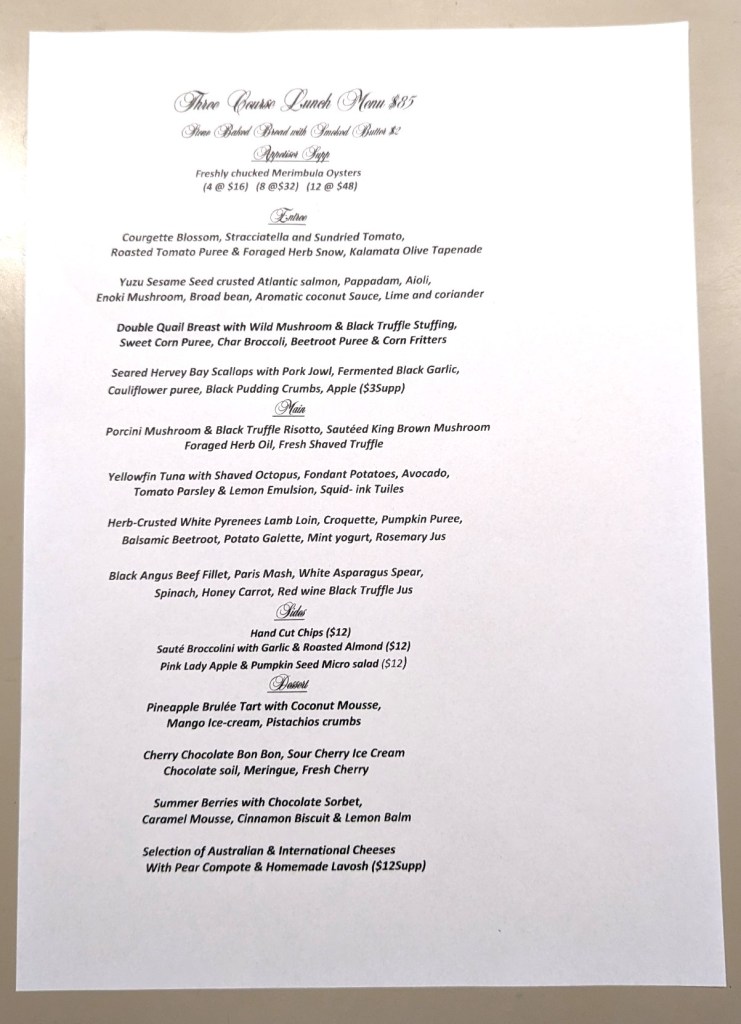
The ash butter and hot rolls made a familiar beginning, together with water which was constantly refilled, and a Sauvignon Blanc and a mocktail of lime, ginger and mint. This meal could not have been better. The courgette flowers were accompanied by a delicious olive tapenade and the stuffing was wonderful. The tuna dish was excellent, as was, I understand, the beef. The desserts just have to be seen to know that they were special. The staff, space between the tables, table linen, and comfortable seating make Courgette a special place for special occasions.


Our table was by the window, the greenery outside making a very pleasant accompaniment to the excellent conditions inside.





The desserts deserve a picture to themselves.


History or Entertainment ?
I thought that the following article could be of interest after having read last week’s post which included an article from The Conversation about Napoleon, the film which covers some of the same ground. It is a fascinating topic (fiction/reality/ role of documentary/role of entertainment) but, while I enjoyed Tierney’s support for the excellence of the program, this article doesn’t take us very far in the debate about documentary/fiction based on documentary qualities etc. The Crown is a great source of Facebook discussion, some resting on the ‘well, you know its fiction’ argument for criticism, others looking a bit more deeply into what has been a phenomenally successful source of …entertainment?
‘The Crown’: history or entertainment? by RICHARD TIERNEY
First published in The Article 16 December 2023

(Shutterstock)
In 1983 I was sitting in the restaurant of a French chateau. I was dining alone. Among the diverse nationalities present there was little interaction.
Then an urgent conversation began to spread across the other diners. Mobile phones were non-existent. Finally, the German couple on the next table leaned over and, in impeccable English, asked: “Have you heard?”
Korean Airlines flight 007 had been shot down by Russian military aircraft.
We all finished our meal and moved to the bar where the French evening news was helpfully translated into all the languages present. Much discussion, with little in the way of facts.
There are only a few times when I clearly remember “where I was when I heard the news that…” This was one. It brought back memories when the event featured in the excellent TV drama For All Mankind. The show is an “alternate history” of man’s exploration of the moon, and real events – like Korean 007 – are interwoven through the narrative. The programme included a conversation which took place on the flight. Obviously, this was invention, as no one survived the crash.
The latest – and last – tranche of The Crown has just dropped on Netflix, with the usual carping about real or perceived inaccuracies in the storyline. Just like the imagined conversation on the doomed Korean flight 007, there is no way to tell what was actually said behind closed doors. Peter Morgan and the Left Bank Pictures team have invented a version which fits the known events, but it is still an invention.
Every season the complaints grow. I believe this is for two reasons. First, because the later series are closer to living memory — viewers are comparing what they see to their (unreliable) memories and royal watchers’ speculation. Second, we feel able to comment on things closer to our own experience. Very few people have a good knowledge of rocket science – but everyone has an experience of a dysfunctional family member.
In 2000 Mel Gibson was doing the rounds promoting his film about the American Revolutionary War, The Patriot. On one breakfast TV couch he seemed to me to be a little hung over. He was confronted by an angry historian who told him of the many inaccuracies in the film. Gibson tried to defend the film, but was defeated at every turn. The film, said the historian, was a particularly egregious example of Hollywood rewriting history. The host tried to wind up the interview and Mel Gibson finally exploded, saying: “Well, we’re not in the History business, we’re in the Entertainment business.” And then left, thinking he’d won the argument. He had not.
I am enjoying The Crown enormously. It is – in my opinion – a well-produced, well-written piece made by people who are at the top of their craft. It’s enjoyable, but it’s not a documentary. Any more than For All Mankind tells us what actually happened on the moon.
Enjoy your entertainment, but don’t mistake it for history.
(As for The Patriot, I didn’t even find it entertaining.)
Member ratings: Well argued: 56% Interesting points: 55% Agree with arguments: 62% 9 ratings – view all
Housing fires in the UK
In one of my previous blogs, I made this point (see article below about class and house fires) with photographs from an expensive apartment block in Canberra where the type of cladding that was instrumental in the blaze engulfing Grenfell was being removed. The owners of these apartments were able to pay around $30,000 for their share of removing the danger. Grenfell residents, and those referred to in the article below, did not. The wealthy property owners in the area did have the capacity but did nothing – Councils need their share of that wealth to ensure that government buildings are safe. Property owners need to pay their share to ensure that the buildings they own are safe.
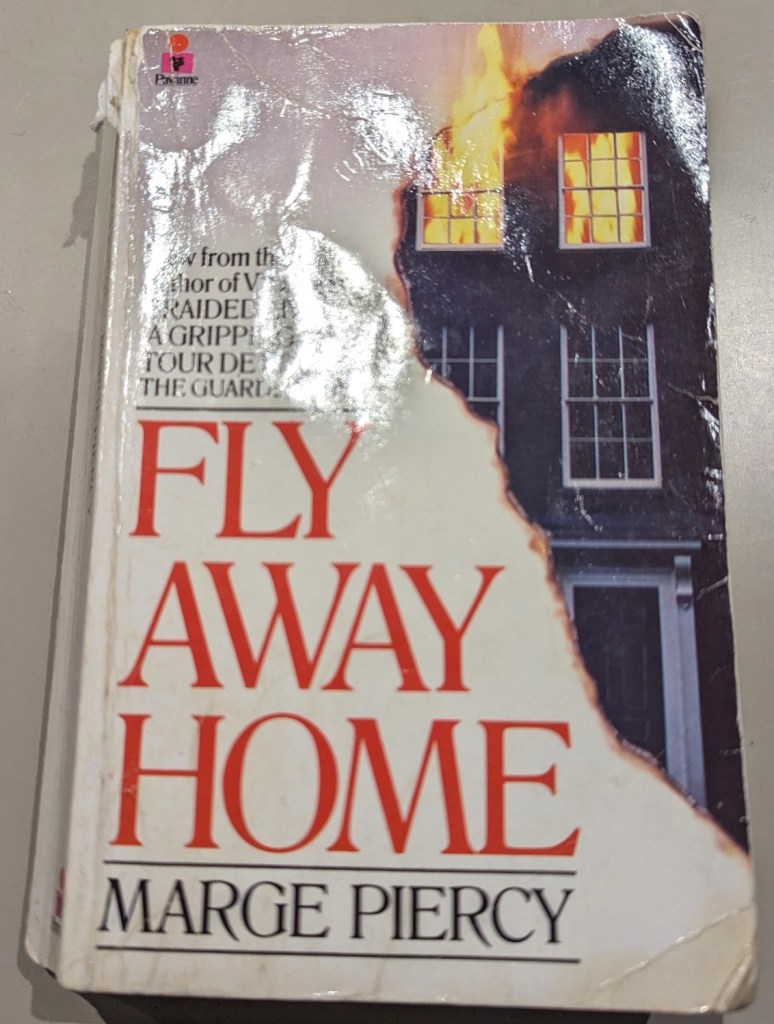
A novel that addresses the issue of landlords’ disregard for their tenants and, in this fictional case, their use of fire to remove tenants, is Marge Piercy’s Fly Away Home (1984).
The Conversation
Article by Professor Shane Ewan published under Creative Commons Licence.

Disclosure statement
Professor of History, Leeds Beckett University
Shane Ewen received funding from an Arts and Humanities Research Council Standard Open Grant: Forged by Fire: Burns Injury and Identity in Britain, c.1800-2000. He would like to thank Anthony Iles (Tarling West TRA), Deborah Garvie (Shelter), Paul Hampton (Fire Brigades Union) and Rachel Rich (Leeds Beckett University) for their assistance with this article.
Grenfell should have been a wake-up call – but the UK still doesn’t take fire safety seriously because of who is most at risk
Published: December 19, 2023 5.13pm AEDT
In March 2023, a fire in Tower Hamlets, east London, claimed the life of Mizanur Rahman, a 41-year-old father-of-two from Bangladesh. Five fire engines and 35 firefighters attended the call to the two-bedroom flat in Maddocks House, on the Tarling West housing estate, in the early hours of the morning.
Rahman, who had only recently arrived in the UK, was rescued and taken to the Royal London Hospital suffering from smoke inhalation, where he died from his injuries. On the night of the fire, estate residents claimed that 18 men had been sleeping in the flat’s three rooms including a converted lounge – despite the premises only being licensed to accommodate a maximum of three people.
While the fire itself was caused by a faulty lithium e-bike battery, an inspection by the London Fire Brigade prior to the fire had raised serious safety concerns, finding that the flat “was not in a good condition with multiple people living in it”.
Seven months after the fire, Tower Hamlets Council took the flat’s landlords to court for breaches of the 2004 Housing Act. They have subsequently pleaded guilty to nine charges including multiple failures to comply with licence conditions, carry out inspections and have a valid gas safety certificate, as well as allowing the premises to be overcrowded. The landlords await sentencing.
However, following the inquest into Rahman’s death, the assistant coroner did not comment on overcrowding in the property in his prevention of future deaths report. He did, though, recommend that the government introduces standards regulating the sale of lithium batteries for e-bikes.
Ahead of the court case, Grenfell United, a group of survivors and bereaved families founded days after the Grenfell Tower fire on June 14 2017, pledged its support to all those affected by the Maddocks House fire, stating:
Seven months since the Tarling West estate fire in which an innocent man lost his life … We stand with the family, residents, friends and all those campaigning for justice.
The Grenfell disaster – the UK’s worst post-war residential fire – claimed the lives of 72 people in London’s richest borough, Kensington & Chelsea. The inquiry into the disaster is expected to make a host of recommendations about the need to strengthen residential fire safety when it is finally published, after yet more delays, in 2024. But this is too late for Mizanur Rahman.
Indeed, more than six years after the Grenfell fire, community groups and homelessness charities have taken matters into their own hands to support renters and tenants who continue to be endangered by unsafe housing conditions in London and throughout the UK. But despite their best efforts, the risks facing residents of multiple-occupancy housing appear largely undiminished. Worryingly, policymakers – especially those who have responsibility for English housing and safety legislation – have seemingly forgotten the lessons from the UK’s past experiences of mass-fatality fire.

Another Grenfell-style fire?
The Maddocks House fire added to widespread concerns that, despite Grenfell having been an eminently avoidable disaster, another major fire involving a large loss of life could happen in a bedsit, converted flat or other house in multiple occupation. In part, this is the result of safety being neglected by rogue landlords who “knowingly flout their obligations by renting out unsafe and substandard accommodation to tenants, many of whom may be vulnerable”.
Another recently completed case saw a landlord and property management company fined £480,000 plus costs for leasing an unlicensed 22-bedroom property with multiple fire safety and damp-related risks in the same borough, Kensington & Chelsea, in which Grenfell Tower is located. Throughout the UK, local authorities face multiple challenges – including lack of resources, limits to their legal powers, and cultural barriers – when reactively trying to regulate the standard of privately rented accommodation in houses in multiple occupation (known as HMOs).

This article is part of Conversation Insights
The Insights team generates long-form journalism derived from interdisciplinary research. The team is working with academics from different backgrounds who have been engaged in projects aimed at tackling societal and scientific challenges.
Housing and fire safety campaigners have repeatedly warned of complacency over enforcing safety in the UK’s private rented sector, among others. In recent years, the government’s own safety experts have expressed concern about ministers’ failures to tackle “potentially catastrophic life safety implications” in buildings ranging from tower blocks and HMOs to schools and hospitals.
Since 2022, the cost of living crisis has left record numbers of disadvantaged people living in overcrowded, unfit and unsafe accommodation – including families with young children, frail older people, those with long-term health conditions, university students and migrants. They have little hope of accessing affordable and safe housing. And people living in the private rented sector are twice as likely to feel unsafe in their home as owner-occupiers, because of their fear that a fire might break out.
A generation of rogue landlords
While the campaign for improved standards of safety in HMOs originated in the 1960s, it intensified during the early 1980s following several mass-fatality fires – as I chart in my new book, Before Grenfell: Fire, Safety and Deregulation in Twentieth-Century Britain.
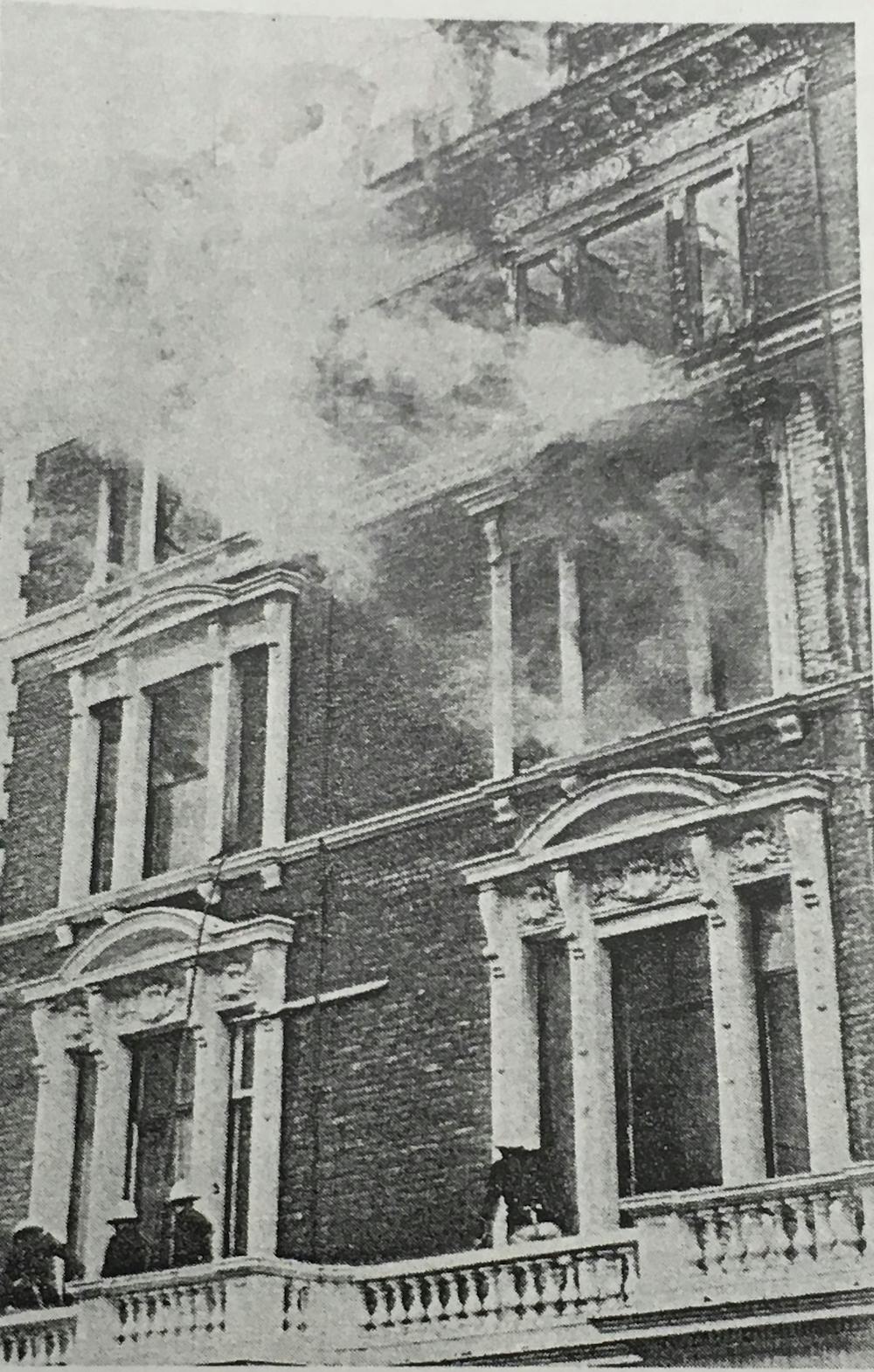
Shortly before Christmas 1981, fire gutted a residential property in Notting Hill Gate, west London, killing eight residents and injuring many more. The property comprised 56 bedsits across three converted terraced houses on Clanricarde Gardens, a once-fashionable cul-de-sac which, with its low-quality bed-and-breakfast-style accommodation, by then aimed at the cheaper end of London’s rental market. Although estimates vary, almost 100 people are thought to have been sleeping in the property on the night of the fire, which started around four o’clock in the morning. Local newspapers quoted a resident being woken by “a tremendous shouting and screaming”:
At first I thought it was a Christmas party – but then I knew from the sound that this was no party.
Fire investigators would later find numerous defects in the property, including combustible partition walls, unprotected staircases, a maze of corridors without fire-stopping doors, and a dangerously high electrical loading.
Six of the eight people who died were adult migrants who had come to Britain from Latin America and eastern Europe to study and work; the other two were elderly British men. Many of the residents were employed in the low-paid hospitality sector.
The survivors, having lost their possessions, were clothed and put up in hotels – then interviewed by officials from the Royal Borough of Kensington & Chelsea (RBKC) to determine their eligibility for rehousing. Due to a shortage of available housing, many were rejected. Some had no option but to move into the property next door to the burnt-out shell of their former home.
The Clanricarde Gardens fire inquest exposed a generation of rogue London landlords who had placed profits before safety in their unregulated “Victorian hostels”. Major shortcomings were also revealed in the level of oversight from RBKC, which was identified as having some of the worst housing conditions in the capital, with unregistered HMOs comprising between a quarter and a third of its housing stock. Early warnings about the dangerous condition of the Notting Hill property had not been acted upon by officers at the time of the fire, and the council was subsequently found guilty of maladministration.
The jury at the inquest returned a verdict of death by misadventure, but found no evidence of negligence by the landlord. The coroner angered campaigners and survivors by declining to add recommendations for the government to improve safety. He claimed that the need to reconcile cheap accommodation for homeless people with “expensive” fire precautions was “insoluble”.

In the aftermath, the Campaign for Bedsit Rights (CBR) – led by tenacious housing activist Nick Beacock – published a guide to fire safety for tenants, issued a semi-regular newsletter, and collaborated with sympathetic members of parliament who advocated for statutory licensing and regulation of these “Dickensian” lodgings. The urgency of the situation was marked by the scale of homelessness across the capital at that time, with rough sleeping on the rise due to cuts in housing benefit.
Yet, in February 1983, a private members’ bill to introduce licensing was defeated by the government despite enjoying strong cross-party support. Ministers defended the decision on the grounds of public spending restrictions and, in a quote attributed to housing minister George Young, a reluctance to “add unnecessarily” to landlords’ costs in a way that might “discourage them from making accommodation available”. Throughout the 1980s, landlords’ interests were largely prioritised ahead of tenants’, in a decade that saw the deregulation of the private rental market.
Four decades on, even after the public outcry following the Grenfell disaster, cases continue to highlight that, around the UK, local authorities vary widely in their interpretation and enforcement of their obligations over licensing rental properties. In many cases, they simply lack the resources to track landlords.
In July 2023, the Social Housing (Regulation) Act was given royal assent, introducing a more proactive system whereby complaints about the standard of social housing can be investigated by the regulator. It has taken almost six years of campaigning by Grenfell United, Shelter and other organisations to get to this stage. However, the act does not cover the private rented sector, and much work is still needed to protect these residents.A film by Grenfell United.
Years of inaction
Over the decades since the 1983 defeat of the licensing bill, it is hard not to conclude that several deadly fires might have been prevented had the UK government introduced mandatory licensing, backed up by strong powers of enforcement.
One notable incident, in November 1984, involved the death of a 27-year-old Bangladeshi woman, Mrs Abdul Karim, and her two young children, aged three and five, in a five-storey HMO in Westminster, central London. Despite being a priority for rehousing, the family had lived in a single room at the top of an unenclosed staircase for the previous nine months. In all, more than 50 people lived in the property, including 18 families who had been accommodated there by Camden Borough Council.
Firefighters found as many as seven people sleeping in a single room, and rescued a baby sleeping in a cot in a bathroom. “It was a miracle more people were not killed,” a survivor told a local newspaper. A local homelessness charity representative described the fire as highlighting “all the things we have been saying about the conditions homeless families are forced to live in”. Eventually, following a two-week occupation of Camden town hall by furious families, councillors rehoused the survivors in improved accommodation within the borough.
This fire exposed historic racial inequalities within London’s housing market, with many non-white families left to the whims of exploitative landlords. While the national media showed little interest, author Salmon Rushdie wrote an excoriating piece for the Guardian which was cited in a House of Commons debate:
When it started, no alarm rang. It had been switched off. The fire extinguishers were empty. The fire exits were blocked. It was night time but the stairs were in darkness because there were no bulbs in the lighting sockets. And in the single, cramped top-floor room where the cooker was next to the bed, Mrs Abdul Karim, a Bangladeshi woman, and her five-year-old son and three-year-old daughter died of suffocation.
Rushdie pointed the finger of blame squarely at the racist landlords and councillors who persistently ignored the complaints of black and Asian families. He wrote: “Those of us who do not live in slum housing get used with remarkable ease to the fact that others do” – not least because black and Asian families “are far more likely than white ones to be placed in such ‘temporary’ places”.
After a Camden councillor was quoted by journalists as complaining that the town hall occupation had been “manipulated” by Bengali families” to jump the housing queue”, Rushdie sarcastically added that “presumably not enough people have been burned to death yet” to improve the situation.
Following compelling evidence of systematic neglect of the property by its landlord, the inquest jury returned an open verdict on the deaths. Campaigners again called for powers to license hostels: Mel Cairns, an experienced environmental health officer, told a local paper: “People who look after dogs and cats need licences, and the same should apply to landlords who have human beings in their charge.”
The coroner concurred, demanding of ministers that “action be taken to prevent the occurrence of similar fatalities”. Chris Holmes, director of the Campaign for the Homeless and Rootless (and a future government adviser on reducing street homelessness), concluded:
The fire at Gloucester Place tragically shows the need for there to be a legal duty on local authorities to inspect this kind of property. If an HMO Act had existed, that family need not have died.
Yet, despite compiling its own evidence on the extent of the risk, successive consultations by Conservative governments during the 1980s and 1990s rejected mandatory licensing on grounds of proportionality and cost. Four in every five HMOs were identified as having inadequate means of escape in a fire, while the risk of death or injury due to fire was ten times greater for people living in an HMO than in a single-occupancy family house, according to Home Office figures from the early 1990s.
In 1994, a fire in a Scarborough hostel in which a 33-year-old woman and her two-year-old child died finally led the prime minister, John Major, to pledge his government to investigate “the feasibility of introducing a licensing system to control such establishments”. However, the following year, the Department of the Environment concluded that licensing “would lead to excessive cost and bureaucracy by forcing every local authority to follow a standard licensing approach”.
After further government obfuscation and more avoidable deaths, licensing of HMOs was finally introduced in the early 2000s. Although the ruling Labour party had promised to introduce licensing in the lead-up to both the 1997 and 2001 general elections, it took further campaigning to secure the legislation through the 2004 Housing Act. The legislation also introduced other measures to improve fire safety, including the housing health & safety rating system, which required local authorities to take legal action against landlords letting homes with serious hazards.
In 2006, statutory regulations were introduced to guarantee minimum standards within both the licensing and management of multiple occupancy-style rental accommodation. Though far from the end point in the fight for safe housing for all, it signalled a major victory for campaigners such as Beacock. In recent years, however, owing to the growing housing crisis in London and other large UK cities, the problem of rogue landlords who are prepared to “game” the licensing regime has re-emerged.
Across the UK’s private rented sector, we see examples of landlords operating even after being refused a licence. Some fail to sign tenancy agreements, evict tenants without legal grounds, and allow unauthorised people to live in licensed properties. Such has been the scale of the problem that in 2019, the government issued advisory guidance to local authorities to “clamp down on these rogue landlords and force them to improve the condition of their properties, or leave the sector completely”.
‘A price tag on our lives’
London has a history of housing managed by a small number of unscrupulous private landlords prepared to use illegal and immoral practices to profit from the poor. Perhaps most famously, Peter Rachman operated in Notting Hill during the 1950s and ’60s, exploiting and intimidating his tenants so much that the phrase “Rachmanism” entered popular vocabulary. In 2019, his “inhumane activities” were still being highlighted in a Lord’s debate on social housing.
But nor are local authority landlords exempt from criticism, as the Grenfell disaster exposed. At the time of the fire, the tower block was owned by the Royal Borough of Kensington & Chelsea, with management services provided by its tenant management organisation (TMO). Many of its residents were tenants of the local authority or a local housing association, while a small number owned the leasehold to their flats or were private renters.

During testimony to the Grenfell Tower inquiry, witnesses criticised both the borough and its TMO for ignoring safety concerns raised during the tower block’s refurbishment in 2015-16. Residents reported being made to “feel like second-class citizens – a nuisance, troublemakers, who should take what they were given and be grateful”. As one survivor, Emma O’Connor, said in her testimony:
I don’t think it’s fair … that all these corporate companies were allowed to be given the choice to choose what the price tag on our lives should be.
Some local authorities are beginning to tackle the problem through criminal proceedings. In Camden, a property management company was fined more than £49,000 in 2023 for fire safety breaches at an HMO and added to the Mayor of London’s “rogue landlord database”. In 2020, Coventry City Council obtained a banning order against a landlord who had a “flagrant disregard for housing legislation”, including fire safety measures.
Research commissioned by the UK government into local authority enforcement of housing standards revealed that non-compliance with the law is rife across the private rented sector. Under half of local authorities in England reported that over 90% of notices served for the most serious category-1 hazards had been complied with in 2019-20, while nearly a quarter (23%) reported that fewer than 50% of hazard notices had been complied with.
Much work remains to be done around enforcement by local authorities, to ensure that all landlords meet minimum safety requirements. In the meantime, some appear unconcerned about the risks – and potential consequences – of playing with fire.
Another avoidable death
In March 2023, Rahman’s death in the Maddocks House fire exposed once more the problems facing many people who live in a permanent state of precarity, often at the mercy of an exploitative housing market. The flat was licensed for occupancy by three people across two families, yet 18 men reportedly occupied the flat on the night of the blaze.
The landlords had converted three rooms into dormitory-like sleeping spaces to pack in as many tenants as possible, allegedly earning over £100,000 a year in rent. One survivor described how some of the residents, mostly Bangladeshi citizens, were “sleeping in the kitchen, some sharing beds, some sleeping on the floor” – a significant breach of the licence. There was a single shared toilet and bathroom, and the kitchen was out of bounds for cooking. For this, each tenant paid rent of up to £100 a week.

The survivors, who lost everything including their phones and passports, were housed in emergency accommodation by Tower Hamlets council, which owns the freehold to the property. The council passed an urgent motion declaring the fire “an abuse of the most socially and economically vulnerable residents and workers by a greedy, vulturous and predatory class of landlord”.
The landlords, Sofina Begum and her husband Aminur Rahman (no relation to the victim), recently pleaded guilty to a total of nine criminal charges at Thames magistrates court in east London, and are due to be sentenced in January 2024.
Anthony Iles, chair of the tenants and residents association, commented that the case provided “some small trickle of justice” and “serves as a warning to other landlords in the borough”. Conditions in Maddocks House were described by one resident as “worse than slums in Bangladesh”.
Yet the men living there, many of whom worked as delivery drivers, restaurant and warehouse workers (some while also studying at university), had been afraid to complain to the council about the conditions because of their fear of being made homeless.
Tower Hamlets council has rehoused those residents “who are entitled to recourse to public funds”. It recently resumed responsibility for managing its housing stock, and approved plans to renew an additional licensing scheme for HMOs under its jurisdiction.
However, some of the Maddocks House residents have international student visas, which means they are not entitled to homelessness assistance or housing benefit. They have been forced back into the informal housing sector, the ongoing victims of an affordable housing crisis in which the average private rent in Tower Hamlets has risen 33% since 2021 to £2,560 a month – far in excess of the earnings of these Maddocks House survivors.
Given the shortage of affordable housing in London and other UK cities, HMO-style accommodation remains the most, perhaps the only, practicable option for many people and families. In 2019, nearly 500,000 properties were officially registered as HMOs in England – although recent reports indicate the market is now retracting, due to the introduction of tighter licensing rules in 2018 that extended provisions to cover two-storey HMOs.
But HMOs vary widely in terms of their size, occupancy, building type and amenities, which makes them immensely challenging for local authorities to regulate. These same local authorities suffered major reductions to their funding from central government in the ten years prior to the COVID pandemic, and council leaders are warning they are likely to face “a new wave of austerity” during the next parliament, whoever is in power.The Tower Next Door: Living in the Shadow of Grenfell – a documentary by the Guardian.
Fire does discriminate
Contrary to the popular mantra that fire doesn’t discriminate, the poor and disadvantaged in UK and other societies are disproportionately affected by fire because they are forced to live in unsafe or overcrowded housing.
Over a span of more than 40 years, the fires at Clanricarde Gardens, Gloucester Place, Grenfell Tower and Maddocks House – and many others besides – show us that residents who raise safety concerns with their landlords are too often ignored or dismissed as troublemakers.
The survivors, bereaved and local communities affected by fires have repeatedly called on the government to act more decisively and comprehensively in the interests of residents rather than landlords. In the wake of the Grenfell disaster, they have again spoken out bravely, holding senior ministers to account for their pledge that “no stone will be left unturned” in the quest to learn lessons from Grenfell. While their representative bodies continue to fight for justice and safer housing, their legal counsel at the Grenfell inquiry warned that, if we allow the lessons from Grenfell to be forgotten, we risk facing “another inquiry, following another disaster … where all the same points are being made”.
The UK government claims its response to Grenfell, via the Building Safety Act (2022), has been to introduce “groundbreaking reforms to give residents and homeowners more rights, powers and protections – so homes across the country are safer”. But this does not extend to large numbers of disadvantaged people and homeless families with children, all struggling to cope in the cost of living crisis.
Some landlords are adept at identifying loopholes in the legislation that enable them to evade their obligations towards tenants. Central government has been slow to close these or equip local authorities with the powers to force greater levels of compliance. There is little in the government’s “landmark” legislation (and related safety funding plans) that indicates any more willingness than its predecessors to tackle the problem of rogue landlords within the private rented sector.
As long ago as the 1980s, pioneering campaign organisations like the Campaign for Bedsit Rights (which became part of Shelter in 1997) recognised that fire safety is a social equality issue. Forty years and many fires later, it is long overdue that everyone in a position of power recognises this principle – and acts upon it to reduce fire inequality. It is too late for Mizanur Rahman, who died inside Maddocks House, and for the 72 people who lost their lives in Grenfell Tower in 2017. How many more lives must be lost?

 Robin's Room