Jane Austen Jane Austen’s The History of England Writings from Her Youth Dover Publications, Oct 2023.

Thank you, NetGalley, for providing me with this uncorrected proof for review.
The history and letters in this short volume provide a wealth of information about Jane Austen which makes an ideal background to reading her more well-known novels. The latter have largely been seen as romances, although fortunately some rereading of the works has provided them with a wider and more analytical understanding of their genre, value and contribution to English literature. Reading Austen’s history, seeing her sister’s illustrations, and then reading the three letters in the book contribute to this broader understanding of Austen’s work. At the same time, it is such fun to read this history, with its wonderful wry commentary on ideas held dear to academic historians.
Allyson D’Antonio’s editorial commentary illuminates Austen’s assertions and speculations in an Editor’s Note and a series of endnotes that explain her ideas, suggests alternative perspectives, and clarify where required. Although she refers to Austen’s impact on the romance genre she gives Aysten credit for her addressing important themes in the period. That her canvas was a small one, D’Antonio references Austen’s work with admission that her concerns were with social class, gender inequality, education and religion, the ideas that impacted her own life.
This is such a short easy read – or is it? Yes, it takes only a small amount of time to read to the end. However, the ideas that are unearthed in this history and the letters are worth thinking about for far longer. They also enhance understanding of Austen’s adult work, adding to the enjoyment of the novels she wrote. This book is a small but elegant pleasure indeed.

Katia Lief Invisible Woman Grove Atlantic, Atlantic Monthly Press Jan 2024.
Thank you, NetGalley, for providing me with this uncorrected proof for review.
Reading the first chapters of Invisible Woman was an absolute thrill. I was so impressed with the way in which Leif combined a sympathetic character in Joni Ackerman, her back and forth feelings about her husband, Paul, and her situation as a domestic partner, housewife, mother and former winner of accolades for her films. She demonstrates all the challenges women of former public status face when they become the extra in their successful husband’s life. Joni is the woman who drifts around their huge party, recognised by few of the guests as anything other than their hostess, missing her daughters, harbouring a secret, and determined to act.
Joni reads several Patricia Highsmith’s novels as she ruminates on her marriage, and her past. This holds a secret that is not hers to tell but the aims of the MeToo movement becomes personal, as a rapist known to her is successfully accused by some of his victims. Joni attempts to persuade her friend to divulge her past that also involves this man and a mystery man. Val’s reluctance to make any accusations appears to be faltering when she agrees to meet Joni after several unsuccessful attempts to renew their friendship. She is almost killed.
I appreciated the clever introduction of Patricia Highsmith’s novels in which the perpetrator of a crime often escapes legal punishment. They also often find that such escape is an empty victory. Joni’s speculation about murder, her imaginary conversations, and her reflections on her situation are echoes of Highsmith’s work. Another positive is the realistic depiction of a woman whose past success has been silently, softly, but so firmly, closed down by her partner.
Where I lost my earlier satisfaction with reading this book was as what began as excellent social commentary, with sympathetic understanding and depiction of the challenges to Joni and Val’s validity as women who deserved to be visible, became lost in the resolution. I felt that the novel moved into different territory in some ways, and therefore did not meet my early expectations. However, despite this disappointment, I am keen to read more of Leif’s work. I suspect that she will always have an original approach to her characters, their actions, and their role in intricate plots. Probably this approach does lend itself to disappointment at times. On the other hand, it also suggests that a Katia Leif novel will not be boring – and to me this is an excellent reason to read another.

There are no Covid records available for Canberra for this period.
Some observations on Austen’s work from The Reality behind Barbara Pym’s Excellent Woman The Troublesome Woman Revealed, Robin R. Joyce, 2023.
These excerpts are edited, and the endnotes omitted to meet space requirements. The connections made between the two writers in this book are designed to demonstrate that both were subversive writers rather than determined to promote conventional ideas about women and their role. I do not see the writers as being particularly similar in the novels they then create. Pym seems unique to me, and efforts to find another Pym, or ‘writing in the Pym style’ are, in my opinion, designed to fail. Of course, many of us have tried this in writing for the Barbara Pym short story competition held annually by the Barbara Pym Society. My effort appears at Further Commentary and Articles about Authors and Books – it was unsuccessful, but I enjoyed writing it. Readers who particularly like Jessie Morrow, one of Pym’s most wonderful spinsters, might enjoy reading it. Jane Austen’s history and letters in her History of England reviewed above are a strong indication of her intentions, modified only in her published works (as I argue is the case for Barbara Pym) because of her desire to be published.
“Speculation that Pym’s response to marriage was a product of her unhappy spinsterhood raises the question: why did it matter? P.D. James’ assessment of the speculation about Pym’s spinsterhood connects Austen and Pym:
For a woman born in 1913, marriage was regarded as a natural state for a woman, and a girl who, like Barbara, was clever, attractive, sociable and kind, would attract comment if she had not achieved matrimony by the age of 30. There is evidence that Barbara would have liked to have been married, but I wonder if at some unconscious level she realised that marriage would be inimical to her art. In this, too, I feel she resembles Jane Austen […] Perhaps, too, men were a little frightened of that all-seeing eye…
Claudia Johnson’s work on the way in which Austen promoted feminist ideas in an inhospitable landscape also links the two in their similar methods of writing subversive fiction. Both women use irony and mockery; draw upon expectations of male and female behaviour and transpose them to confound expectations; or use a conforming woman to contrast with a troublesome woman.
Barbara Bowman describes how Pym adopted Austen’s template to produce her own subversive works. She links the authors through their common use of the first-person narrative to make subversive commentary and Pym’s use of ‘some of the assumptions behind Austen’s irony, where what poses as a maxim becomes an obvious “untruth.”’ Pym’s irony, like Austen’s, touches all aspects of the lives she depicts: romance, the church, professional and domestic life, academic and cultural understandings as well as the relationship between women and men. Johnson’s suggestion that as a woman writer Austen entered the western canon on sufferance is as true for Pym whose work has been described negatively as women’s fiction and cosy. Pym referred to such accusations but did not enlarge upon this matter…
Pym’s attention to Austen’s work was comprehensive. Her library included Austen’s novels and her diaries refer to her reaction to them and their author. Pym makes a more direct reference to Austen’s influence in a draft of An Unsuitable Attachment which includes the idea that she should give Ianthe’s aunt a Jane Austen environment. Expressing an alternative view, Pym also asked ‘what novelist of today would dare to claim that she was influenced by such masters [Trollope and Austen] of our craft?’ She denied that her work was ‘Jane Austenish themes in a modern setting’ but acknowledged that she used Austen’s work for inspiration on how to ‘manage[s] all the loose ends’. Contrary to her assessment, commentators have made abundant connections between Austen and Pym’s novels and their execution.
Marriage is a constant in debate about their work. A.L. Rowse, biographer of both Austen and Pym, sees similarities in their attitudes to marriage, Anglicanism, and their similar scrutiny of society. In his view neither was a prude, nor had illusions about life. Rowse contends that while Austen dwells on marriage, Pym’s focus is on love…
Commentators have made direct comparisons between Austen and Pym’s work. Isobel Stanley notes that Pym includes ‘clerical types […] descended from Jane Austen, the Brontës and Anthony Trollope.’ David Kubal reflects on the way in which both writers connect women characters, such as Austen’s Emma and Wilmet from A Glass of Blessings. Jan Fergus also links the two novels, concluding that Mary Beamish in A Glass of Blessings is a modern Jane Fairfax ‘whose excellence makes the heroine feel uneasy and spiteful, whose good qualities she acknowledges only reluctantly.’ Peter W. Graham in ‘Emma’s Three Sisters’ also compares Austen and Pym’s novels in his discussion of Some Tame Gazelle.
Other commentators refer to similarities between Austen and Pym in their development of form, or motivation. Wyatt-Brown’s psychoanalytic assessment of Pym’s work mirrors Gilbert and Gubar’s suggestion that Austen used her characters’ dilemmas to explore her own problems. Both interpretations use the writers’ spinsterhood to identify their fiction as a particular type. As noted by James, fixation on marital status sits uneasily with feminist investigation. Marilyn Butler in the London Review of Books ‘notes parallels between Austen and Pym themes and characters.’ Fergus claims that ‘Most of Pym’s novels after Some Tame Gazelle and Excellent Women allude overtly to Austen’s works.’ She elaborates, ‘Covert allusions to plot, characterization and social comedy in Emma do not exhaust Pym’s interest in obtaining effects typical of that novel. Like Austen for instance, she creates ironies of character and structure.’ Glyn-Ellen Fisichelli notes similarities in Pym’s short stories and Austen’s Juvenilia. She also links Pym, Eliot, and Austen in their similar use of ‘domestic settings and provincial circles as a backdrop for their examinations of women’s place in society.’”
Eating at the coast
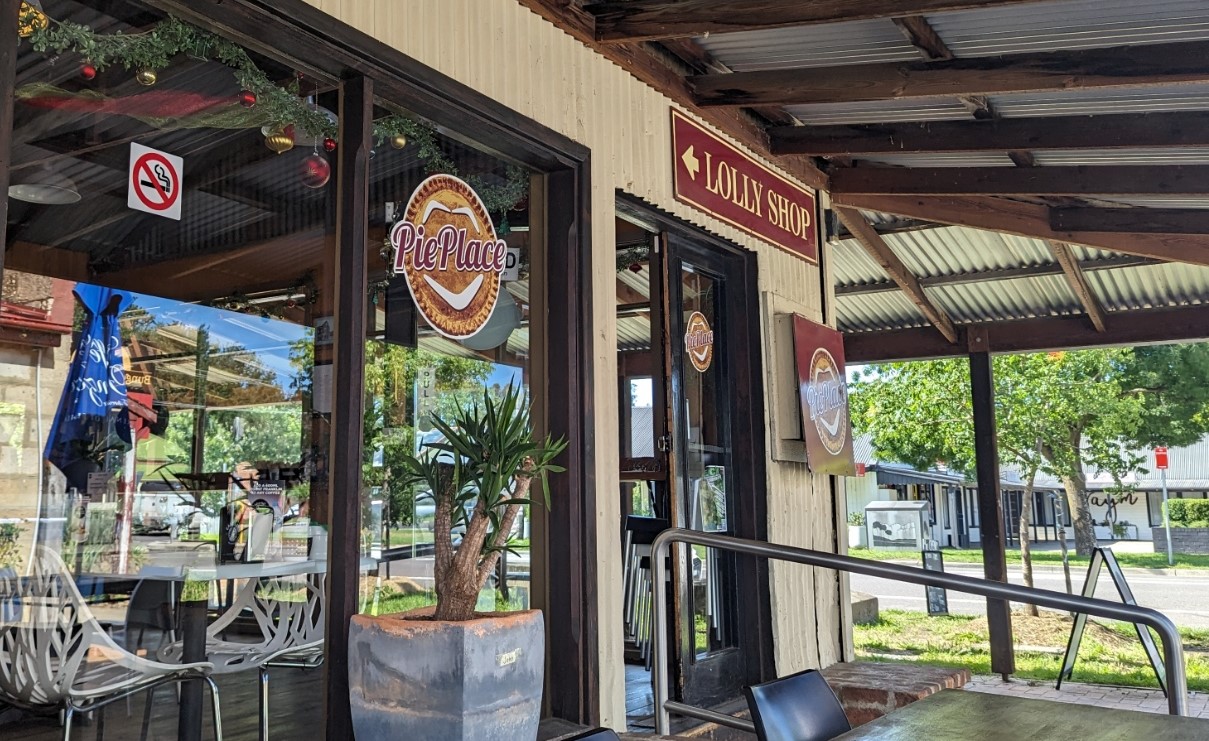
The best meals were served at home. However, the Pie Shop in Bungendore serves good coffee, terrific rock cakes and other sweet pastries, as well as pies and sausage rolls. This cafe was exemplary in following the Covid requirements when they were in place, so I eat there in preference to other places on the way to the coast. Bernie’s was a must for fish and chips again, although they were not as good as the last time I ate there. The queues were so long it is no wonder the standard declined slightly. A morning coffee at the Three66 cafe was a return to a welcome habit from past visits.


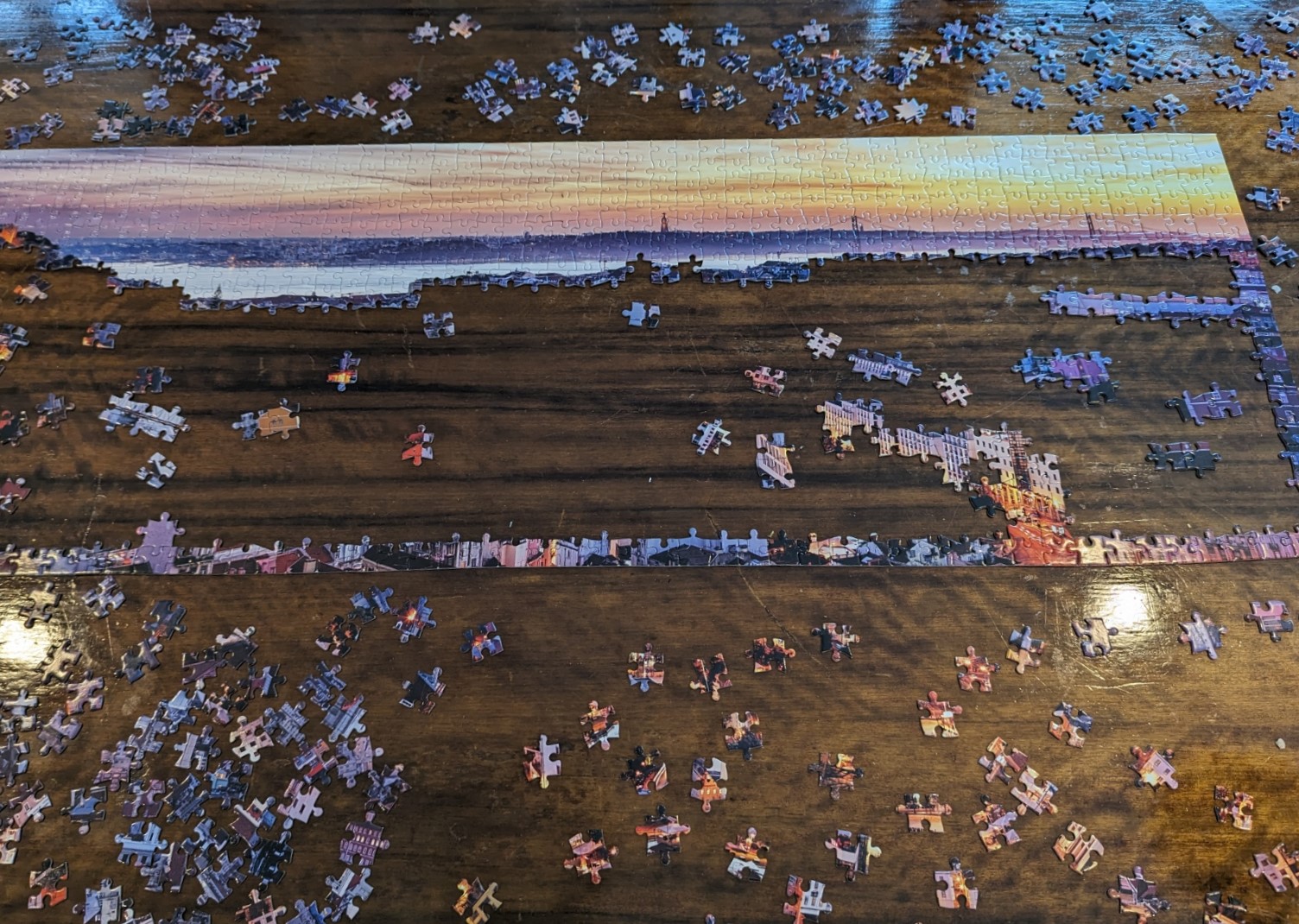
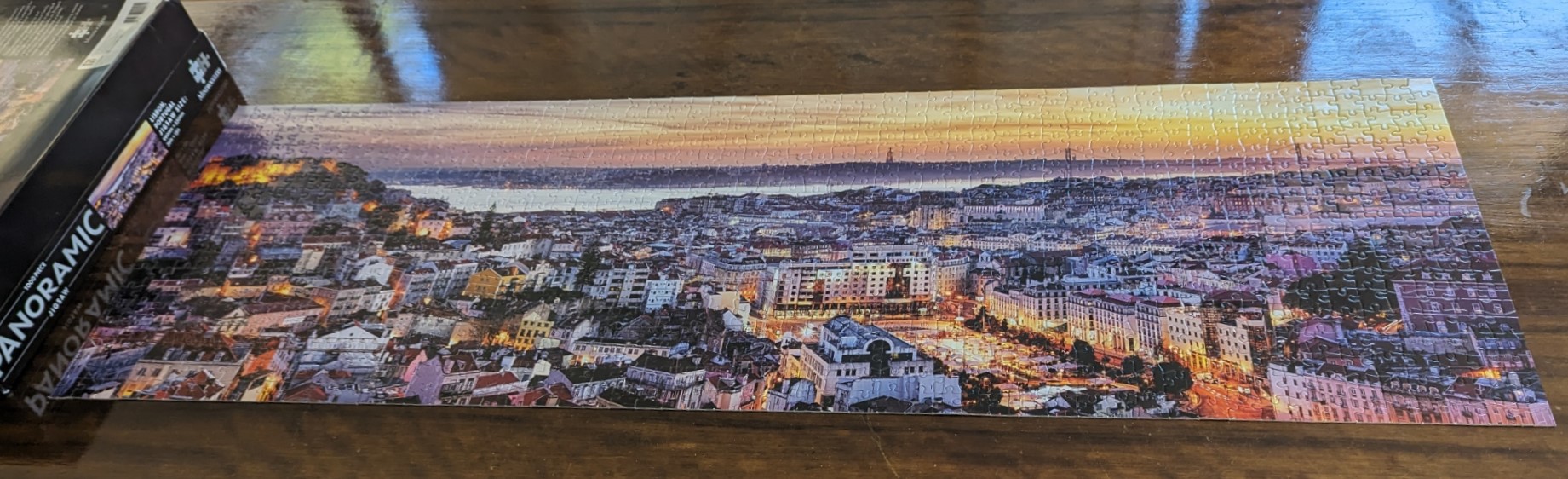
Changeable days at the coast, walks and swims and then jigsaws inside, and mist on Clyde Mountain on the return to Canberra.


Publishing
I really love this story of a writer who has adopted a different approach to publishing. I first became aware of the benefits and challenges of publishing with Amazon when I attended a workshop run by The Guardian in the UK. The two-day workshop featured presentations from trade publishers, independent publishers and a woman who had found her success with Amazon. Joanna Penn’s story of a garage filled with unsold copies of her work, her decision to publish in eBook form (which does not preclude publishing in print) and success in doing so. Melanie Price notes that she will enjoy seeing someone reading her book on Manly Beach – perhaps all those kindles are her readers, alas hidden from the onlooker. I hope that they are.
Why this Australian author is going solo, despite working in London publishing
Story by Latika Bourke • 1h
London: Melanie Price was 15 when she first thought she might write a novel.
Like many teenage students at the all-girls Wenona School in North Sydney, she was hooked on romances and so tried her hands at that genre.
But daunted by the task of penning tens of thousands of words and with more imagination than life experience she put her pen down.

Australian-British author Melanie Price pictured at her writing desk with her debut novel ‘The Mother-in-law’s Secret’ which she will self-publish on Boxing Day.© Latika Bourke
“When I got to 18 I felt like I didn’t have enough ideas yet,” the 29-year-old said in an interview in south London where she lives and works as digital marketing director at a major digital publisher.
“Why I went into publishing wasn’t really because I wanted to write books, it was because I just loved books,” she said.
A tragedy on Christmas Eve in 2015 triggered her literary journey. Her father was gardening on the cliff edge outside their Clontarf, Sydney, home when he slipped and fell. The blow to his head killed him instantly.
“I was in my room at the time doing my university assignment and I heard the big [sound]… and I was the first person on the scene, but he had already gone,” she said, with emotion behind her eyes.
Six years later, strolling along Dover Heights, Price was struck by how easy it would be for someone to fall to their death from the cliffs just like her father had. The beginnings of a plot were underway.
“We all know it was an accident but imagine if it had been sinister,” she said.
“I was really lucky, my family was really supportive and we all came together but what if you don’t have a really supportive family and what if, in fact, you’ve got quite a tricky relationship with your family?”
Price returned to London with two book plots in mind, both psychological thrillers, a genre that she studied at university and that happens to be Amazon’s best-read in e-books.
Over two years – on weekends and at nights after work – she wrote two novels, My Perfect Family, set in Sydney and told through a young Australian female protagonist and The Mother-in-Law’s Secret, set in London and told through another Australian woman but also through a second character – her British mother-in-law.
“The classic, write what you know,” she said.
On Boxing Day she will debut with The-Mother-in-Law’s Secret with her second, My Perfect Family due out around Australia Day, but despite her extensive contacts within London’s publishing industry, she will be joining the more than one million writers who self-publish on Amazon.
“Why I decided to do it myself is because I thought I would be able to do a good job at it, but also because as we all know it’s very, very competitive to get a book contract and a publishing deal,” she said.
“Even if you do get a deal, unless you’re going to be in the top one or two per cent of a traditional publishing deal you’re not going to get a particularly huge advance.”
An industry standard old-fashioned print contract for a debut author could involve a maximum £10,000 ($18,600) advance, a 15-20 per cent royalty rate for e-books and around 12 per cent for print and audio. A digital-only contract doesn’t bring in an advance but offers a much bigger royalty rate of between 45-55 per cent.
While that could have been an option for Price, she ultimately decided to go it alone.
“There are so many incredible publishers out there that I know would have done a really good job, but knowing I have the skills to self-publish, I wanted to challenge myself and see if I could do it all myself.
“Plus, being Australian and British, I wanted to be able to launch this book simultaneously across the globe with the same cover, title and so on.
“And if it works I will get a 70 per cent royalty rate for ebooks, 60 per cent on the print book and 40 per cent on [audiobook platform] Audible.
“It’s been a lot of work playing every part of the publishing process, so we’ll see how it goes.”
Amazon has fostered a boom in self-publishing since its launch to democratise the industry in 2007.
It mimics the shift happening across all media including news, film and music. A deeper embrace of the internet allows individuals to bypass the traditional businesses of mass publication and circulation.
Today, around a third of all ebooks on Amazon are self-published. The company’s most recent data on self-publishing was issued last year and is somewhat opaque. It says that “thousands of authors” have already earned more than $US50,000 ($73,000) each in royalties and more than 2000 have surpassed the $US100,000 mark.
“I think it’s amazing, whatever anyone thinks about the pros and cons about Amazon. What they’ve done in terms of giving accessibility to people to successfully publish their own work across all formats is amazing, it’s phenomenal,” she said.
However, just opening the gate to all doesn’t guarantee an author’s success. Part of the costs of a traditional book deal involve the publisher doing the marketing to promote a new author and their work. These are skills Price already has.
Asked if budding authors could succeed in directly publishing without her extensive industry marketing skills, Price was adamant any good writer can.
“You really, really can, I think you just have to take the time to do the research and there are loads of amazing courses already by other successful self-published authors that give you lots of advice and tips,” she said.
But Price says there is a lot of stigma in traditional publishing against self-publishers, including the omission of ebooks from prominent bestseller lists.
“There’s a huge bias against Kindle readers even though the Kindle readers are probably the people in the world who read the most books,” she said.
Price is hopeful readers in both Australia and the UK will enjoy her “page-turners” but said she’ll know she will have achieved success if she sees her book being read by someone on the beach.
“On Little Manly beach, specifically,” she said.


 Robin's Room