Scott Martelle 1932 FDR, Hoover and the Dawn of a New America Kensington Books, Citadel, Nov 2023.
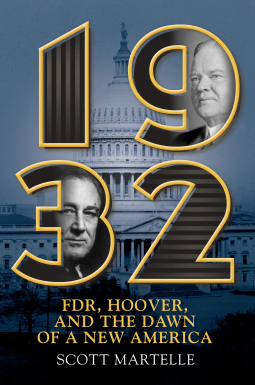
Thank you, NetGalley, for providing me with this uncorrected proof for review.
Scott Martelle has chosen a format which quickly draws the reader into the year in which Americans chose their President, the Democratic Party’s Franklin Delano Roosevelt, over Herbert Hoover the Republican Party candidate. The complexity of the events of 1932, public and party, are fully explored so that a remarkable history is unfolded. An American history, a Democratic Party history, and a history of the Republican Party. To maintain a reader’s interest in these events, while writing such a thorough and dense account is a large ask. Martelle has accomplished this, perhaps because of the format, but also because his account of events is so deftly honed that their serious and complex nature becomes almost a story. This is the story of a year in America that introduced a new vision for an America reeling from the Depression. The courage of the political figures who wage their battles within their parties and in the public race for the presidency live alongside that of the groups who sought to determine the outcome, and the voters who chose a different economic plan for America. See Books: Reviews for the complete review.

After the Covid update: Beautiful beginnings: the first books that made their mark in 2024; Reading fiction may have more benefits than you realise, particularly in the workplace; Elections survey 2023; Heather Cox Richardson talks about American heroes.
Covid Canberra Update: 5 – 11 January (latest available figures)

There were 119 new cases (PCR [no RATs available]), with 19 in hospital, and 1 in ICU. One life was lost in this period., bringing the total number of live lost to Covid since March 2020 293.
Beautiful beginnings: the first books that made their marks in 2023*
Sydney Morning Herald Entertainment
Each of the ones featured here is, however, unique – whether it is the strength of the authorial voice, the main protagonist’s “otherness” in contemporary Australian society or the sheer joy of smart, entertaining writing.
International debuts are a mix of dark – If I Survive You – and lighter: The Three of Us. What all 10 debuts have in common is that they are great summer reads.
Australian debuts Prima Facie, by Australian playwright-turned-author Suzie Miller, is the novel version of her internationally acclaimed, Olivier-winning play that showed in London’s West End and in Broadway New York, starring Jodie Comer and attracting huge acclaim. The book is just as good.
Tessa, who has left behind her working-class background to become a highly successful defence barrister, finds herself on the other side of the bar table when she brings sexual assault charges against Julian, a senior barrister in her chambers. Miller draws on her experience as a human-rights lawyer to present a blistering exposé of the criminal justice system and how it treats female victims of sexual assault. An insightful analysis of power, gender and class relations – and a great read.
Zeynab Gamieldien’s The Scope of Permissibility is a campus and coming-of-age novel about a group of university students who meet through the Muslim Students’ Association. Golden boy Naeem is a Bangladeshi medical student whose parents are devout Muslims who want him to marry an equally devout Bangladeshi girl. Those plans go astray when he falls in love with fair-skinned, South African Sara and they embark in secret on a passionate relationship.
Although she is Muslim, her family is not religious, and Naeem is forced to choose between love and his parents’ expectations. Naeem and Sara’s romance unfolds against a background of casual and overt racism on campus (at an unnamed Sydney university that sounds a lot like Sydney Uni) and off. A powerful exploration of the conflict between desire and religious beliefs and love and familial duty, as well as an insider’s account of life as a member of a minority group in today’s Australia.
In writer and art critic Madeleine Gray’s Green Dot, smart 24-year-old Hera has just secured her first job, as an online community moderator, enabling her finally to earn an income and start living an adult life, having spent many years as a student. Almost immediately she starts flirting online with older, married journalist Arthur, who sits across the desk from her. Soon they are in the throes of a full-blown affair that Hera is unable to end, despite her friends’ warnings and her own moral qualms about her situation. More than just another “Millennial novel”, this is a wise, funny story about obsessive love, self-deception and growing up.
Like Green Dot, One Day We’re All Going to Die, by Elise Esther Hearst, another playwright-turned-writer, features a first-person female Millennial narrator, Naomi, who, after a series of disastrous dates, embarks on an affair with her married boss, Josh.
The additional element here is that Naomi is Jewish, and this means a lot to her – she works in a Jewish museum and is very close to her family – her grandmother Cookie, a Holocaust survivor, and her parents. She is thus weighed down by family expectations that she will marry a Jewish man. A tender story about family, love, intergenerational grief, living up to family expectations, and making your own way.
Jessica Zhan Mei Yu’s But the Girl is about Girl (unnamed), the Australian-born daughter of Malaysian immigrant parents. Girl is in Scotland on a scholarship to do a one-month artist’s residency and planning to start a post-colonial novel on Sylvia Plath, with whom she is obsessed.
But instead of writing, she thinks about the hard lives her parents and grandmother have led and their expectations of her and reflects on her own identity in a white-dominated world. Yu writes with an assured, deeply engaging voice, and this is an original, thought-provoking read on the experience of being a second-generation immigrant, race, power, family love and making peace with the past.
Former lawyer Eleanor Elliott Thomas’ The Opposite of Success is a laugh-out-loud account of a (challenging) day in the life of super-smart, straight-talking mother, wife, daughter and council employee Lorrie, as she struggles to keep all those balls in the air while grappling with her own insecurities.
Meanwhile, her glamorous best friend, Alex, becomes entangled in the marriage of Ruben, Lorrie’s ex from high school. Thomas writes with compassion, humour and understanding about coming to terms with middle age, the highs (and lows) of parenting small children, office politics, ambition – and learning to appreciate what you have rather than constantly striving for more.
International debutsIf I Survive You, by prize-winning short fiction writer Jonathan Escoffery, raised in Miami, rocketed onto the 2023 Booker Prize shortlist, a rare (but not unheard of) achievement for a debut novel. In eight sections, which can be read either as a novel or interconnected short stories, it follows the struggle of Trelawney, born in Miami to Jamaican migrant parents, to find a place for himself in a country obsessed with labelling him as either black or white. He must also live with his father’s favouritism towards his older brother, Delaney.
Unable to find work, Trelawney is reduced to sleeping in his car and accepting increasingly degrading work (being paid to watch a couple have sex). Written in the second person, and peppered with Jamaican patois, it is an explosive exposé of racism and capitalism in modern America, laced with (at times heart-wrenching) dark humour.
Nigerian-born and English-educated Stephen Buoro’s The Five Sorrowful Mysteries of Andy Africa, set in modern Nigeria, opens with 15-year-old Andy confessing he loves blonde, white girls. In fact, Andy is obsessed with whiteness generally. He also loves maths and superheroes, is preoccupied by “the Curse of Africa” and has a complicated relationship with his mother Gloria, who won’t tell him who his father is.
The plot unfolds against a background of religious violence (Andy is a member of the Christian minority) and corruption. A heartbreaking portrayal of the challenges facing modern Africa, an unforgettable main character and a devastating ending. A strikingly original new voice.
The New Life by English writer Tom Crewe, set in Victorian England and based on a true story, is about the collaboration of John Addington and Henry Ellis on the publication of Sexual Inversion, the first English textbook on homosexuality.
Both men have unconventional marriages – Addington, married for many years to long-suffering Catherine, has a sexual relationship with Frank, a younger working-class man; Ellis is married to Edith, a lesbian, whom he shares with her female lover, Angelica.
When the publishers of their book are prosecuted (homosexuality being then illegal) each man must decide how far he will go to defend his ideals. A thoughtful, beautifully written exploration of an age-old dilemma. Fine historical fiction that has attracted great critical acclaim.
Imagine if your best friend and your husband hated each other. That is the scenario in British-Nigerian writer and editor Ore Agbaje-Williams’ The Three of Us, told over the course of one alcohol-fuelled day from the shifting perspective of the wife, the husband and Temi, her acid-tongued best friend.
While husband and wife appear content with their privileged lives, Temi senses unease between them, and exploits it mercilessly. As she and the husband compete for the wife’s affections, their mind games eventually escalate out of control, with catastrophic consequences. A wickedly entertaining exploration of intimacy, trust and betrayal.
The Booklist is a weekly newsletter for book lovers from books editor Jason Steger. Get it delivered every Friday.

*I would have loved to see Ayesha Inoon’s Untethered featured here; it is worthy of the accolades that have accompanied these 2023 publications. However, see my May 2023 blog and Books: Reviews where I reviewed the book and hope that people buy it, read it and appreciate it as much as I did.
ABC News: Reading fiction may have more benefits than you realise, particularly in the workplace *
Story by By Sophie Kesteven, Zoe Ferguson and Lisa Leong for This Working Life
Christine Seifert recalls a time in her life when she felt guilty for reading fiction.
Dr Seifert, a professor of communication at Westminster College, felt she should have been learning about real people and events, and reading non- fiction like biographies instead.
But that began to change when she discovered that fiction wasn’t just a form of self-indulgence.
She learnt that reading was, in fact, doing something beneficial to her brain that non-fiction didn’t.
And when harnessed, she says that can be a huge asset, particularly in the workplace.
Curious minds
Dr Seifert says there are several studies that demonstrate the perks of reading fiction and using our imagination, rather than digesting hard facts all the time.
Flexing your empathy muscle is one example.
“Fiction is asking us as readers to put ourselves in the shoes of another person, and I think one could argue that there is no non-fiction that does that,” Dr Seifert tells ABC RN’s This Working Life.
She says reading fiction, in particular literary fiction, can also help to hone critical thinking skills.
“Literary fiction tends to work your brain out the best … and that’s because literary fiction is asking you to think in ways that tend to be more complicated than genre fiction,” she says.
“Literary fiction asks us to think about things in ways that are far more difficult and perhaps more outside of our day-to-day understanding.”
How reading helps at work
Dr Seifert says there are benefits to reading any kind of fiction, and doing so can help us improve our focus in the workplace.
“What fiction does is ask us to keep an open mind for the course of an entire book, which is actually a really long time when you think about it,” she says.
“So it requires you to not have cognitive closure [wanting a clear, firm answer]. And I would argue that is something that we can bring into the workplace with us.”
Avid readers are also more likely to have higher levels of curiosity, says Meg Elkins, a senior lecturer in behavioural economics at the School of Economics at RMIT University.
- Fantastic article – read, read, read.
Elections survey 2023
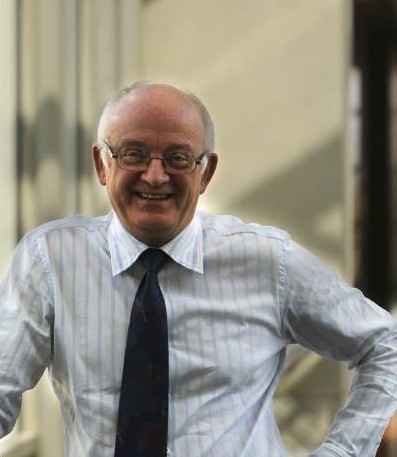
Bob McMullan
It is always difficult to predict future election results.
It is sometimes equally difficult to properly analyse past election results.
2023 was a case in point. There were some obvious and dramatic successes for the right.
The success of Geert Wilders party in the Netherlands sent shock waves through the mainstream European political parties. The success of the ultra-populist Milei in the Argentinian presidential election was certainly startling.
There are explanations for at least some of these. In Argentina, the excesses of the previous regime in allowing huge inflation to run unchecked while evidence of official corruption grew. An alternative offering “more of the same” was easy for even Milei to defeat.
The explanation for Wilders’ victory clearly lies in dissatisfaction with the status quo, including issues around immigration. I don’t expect Wilders to be able to form a sufficient coalition to be able to govern, but the surprising strength of his support should be a lesson to the other parties. In 2023 Wilders’ party increased their vote from 10% to more than 23%
and increased their representation from 17 seats to 37. Whether the other parties are capable of responding to this challenge to the status quo will determine whether the Wilders surge is a one-off or a lasting trend.
There were other less controversial victories for parties of the right around the world. In New Zealand the Labour government was defeated by a right-wing coalition, in Greece the right-wing government was re-elected with an increased majority. The right or centre-right also did well in Paraguay, Bulgaria, Cyprus and Finland.
However, there were some major electoral setbacks for the right as well. Notably in Poland where Donald Tusk’s coalition ousted the ultra right-wing PiS government despite the influence of the stacked right-wing government media. The left or centre-left also prevailed in Slovakia, Spain, Ecuador and Guatemala. In Thailand the election saw the biggest vote go to a progressive party, but they were prevented from forming a government by the military
dominated senate. An alternative opposition party formed government and it will take time to see its true character. However, it is noteworthy that the right-wing governing party lost 76 seats. In Timor L’Este Xanana Gusmao was returned as Prime Minster replacing the Fretilin led government and in French Polynesia the pro-Independence party led by Oscar Temaru ousted the more conservative government. In Guatemala the Centre-Left presidential candidate defeated the right-wing candidate in an election which could be significant if the new President can really crack down on corruption.
There were some other notable elections which are difficult to assess in left/right terms. In the Americas, Ecuador featured a contest between the Centre-Left and the Left which was won by the Centre-Left candidate In the small Caribbean state of Antigua and Barbuda the ruling Labour Party was returned with a reduced majority.
In Europe, the Spanish election produced a curious result. The right-wing party PP won the most seats but was unable to win a majority to form the government. The Centre-Left PSOE then did an unexpected deal with the Catalan secessionists which won their support for a minority government for another term. It was notable that the ultra right-wing party, Vox
went backwards at the election.
This cut across what was otherwise a disturbing trend of extreme right-wing parties making gains. Not only did Wenders’ party do well in the Netherlands but the extreme right entered the Greek parliament and he right-wing Finns party managed to do well enough to form part of the government in Finland.
Although there were many other elections held in 2023 there were many which were compromised or distinctly unfair. However, there were some noteworthy improvements in electoral management and responses.
In Liberia, for many decades a basket-case democratically, the incumbent was narrowly defeated and subsequently enabled a peaceful transfer of power.
In the Maldives, for the fourth consecutive election the incumbent president failed to be re-elected. There was a history of serious democratic deficit in the Maldives prior to this series of what have been assessed as free and fair elections.
Overall, there was no sweeping global narrative. Nor would I expect there to be.
The most significant trends were:
1)A disturbing rise in support for extreme right-wing parties across several European countries
2)Some improvements in democratic performance in countries where it has been desperately needed and
3)Some lessons in the peaceful transfer of power which should be an embarrassment to the USA and Brazil where previous serious attempts to thwart the peaceful transfer of power have been evident.
2024 is being seen as a major election year with elections due in many very large and significant countries. It will be interesting to see whether the parties in the established democracies respond effectively to the rise of the ultra-right and whether more countries can rise to the challenge of a peaceful transfer of power.
First published in Pearls and Irritations.
Heather Cox Richardson

Heather Cox Richardson from Letters from an American <heathercoxrichardson@substack.com>
You hear sometimes, now that we know the sordid details of the lives of some of our leading figures, that America has no heroes left.
When I was writing a book about the Wounded Knee Massacre, where heroism was pretty thin on the ground, I gave that a lot of thought. And I came to believe that heroism is neither being perfect, nor doing something spectacular. In fact, it’s just the opposite: it’s regular, flawed human beings choosing to put others before themselves, even at great cost, even if no one will ever know, even as they realize the walls might be closing in around them.
It means sitting down the night before D-Day and writing a letter praising the troops and taking all the blame for the next day’s failure upon yourself, in case things went wrong, as General Dwight D. Eisenhower did.
It means writing in your diary that you “still believe that people are really good at heart,” even while you are hiding in an attic from the men who are soon going to kill you, as Anne Frank did.
It means signing your name to the bottom of the Declaration of Independence in bold print, even though you know you are signing your own death warrant should the British capture you, as John Hancock did.
It means defending your people’s right to practice a religion you don’t share, even though you know you are becoming a dangerously visible target, as Sitting Bull did.
Sometimes it just means sitting down, even when you are told to stand up, as Rosa Parks did.
None of those people woke up one morning and said to themselves that they were about to do something heroic. It’s just that, when they had to, they did what was right.
On April 3, 1968, the night before the Reverend Doctor Martin Luther King Jr. was assassinated by a white supremacist, he gave a speech in support of sanitation workers in Memphis, Tennessee. Since 1966, King had tried to broaden the Civil Rights Movement for racial equality into a larger movement for economic justice. He joined the sanitation workers in Memphis, who were on strike after years of bad pay and such dangerous conditions that two men had been crushed to death in garbage compactors.
After his friend Ralph Abernathy introduced him to the crowd, King had something to say about heroes: “As I listened to Ralph Abernathy and his eloquent and generous introduction and then thought about myself, I wondered who he was talking about.”
Dr. King told the audience that, if God had let him choose any era in which to live, he would have chosen the one in which he had landed. “Now, that’s a strange statement to make,” King went on, “because the world is all messed up. The nation is sick. Trouble is in the land; confusion all around…. But I know, somehow, that only when it is dark enough, can you see the stars.” Dr. King said that he felt blessed to live in an era when people had finally woken up and were working together for freedom and economic justice.
He knew he was in danger as he worked for a racially and economically just America. “I don’t know what will happen now. We’ve got some difficult days ahead. But it doesn’t matter…because I’ve been to the mountaintop…. Like anybody, I would like to live a long life…. But I’m not concerned about that now. I just want to do God’s will. And He’s allowed me to go up to the mountain. And I’ve looked over. And I’ve seen the promised land. I may not get there with you. But I want you to know tonight, that we, as a people, will get to the promised land!”
People are wrong to say that we have no heroes left.
Just as they have always been, they are all around us, choosing to do the right thing, no matter what.
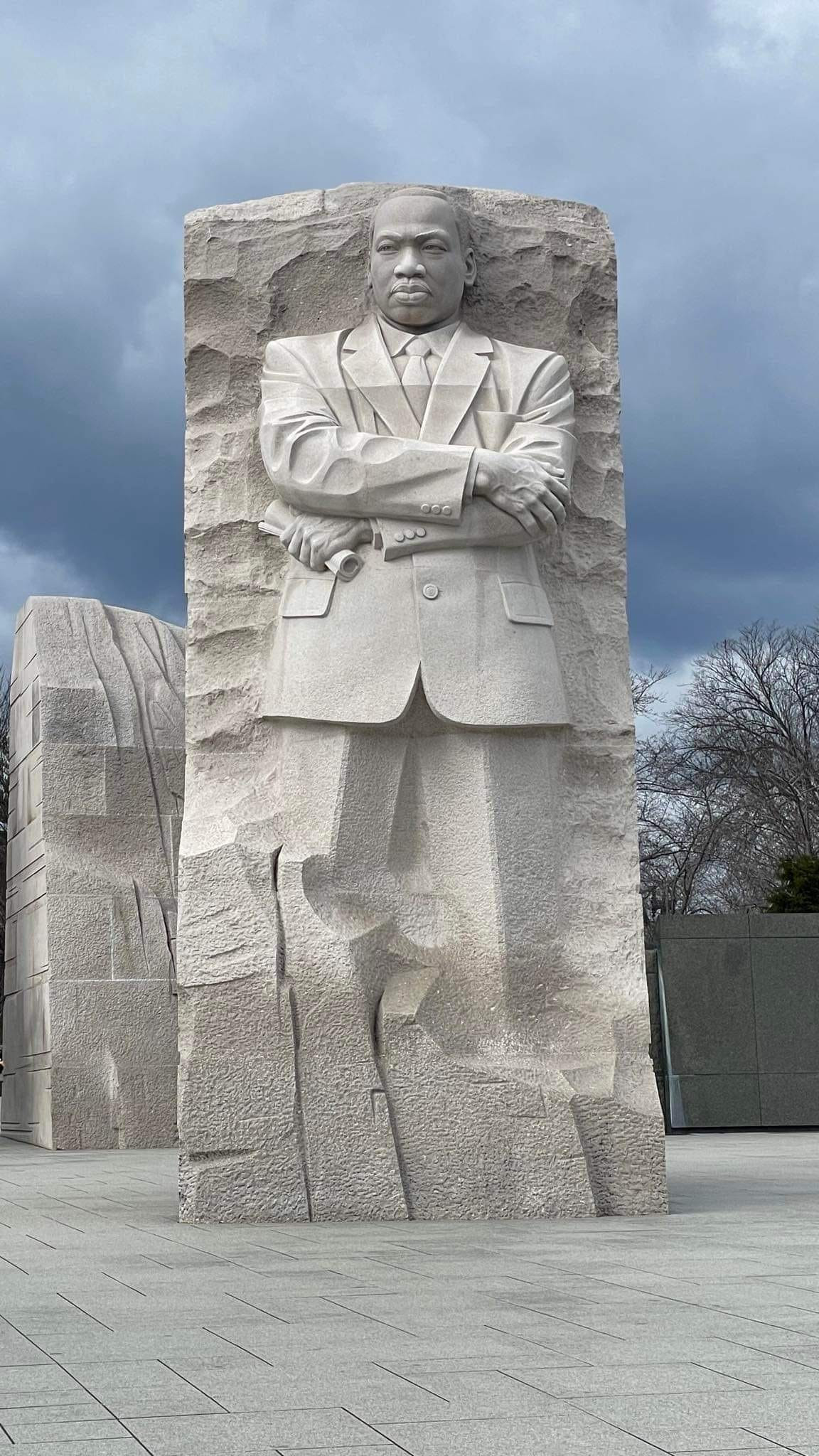
Wishing you all a day of peace for Martin Luther King Jr. Day 2024.
[Image of the Martin Luther King Jr. Memorial in Washington, D.C., by Buddy Poland.]
Notes:
Dr. King’s final speech:

 Robin's Room