Dervla McTiernan What Happened to Nina? HarperCollins Publishers Australia, February 2024.
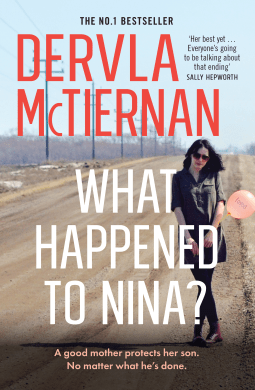
Thank you, NetGalley, for providing me with this uncorrected proof for review.
Dervla McTiernan’s What Happened to Nina? is thoroughly engrossing. So often ‘page turner’ becomes an accolade for mysteries such as this. However, here it would be remiss to turn a page too quickly. McTiernan ensures that every page is one to be devoured: ideas, information, understanding of human nature and moral dilemmas abound and demand attention. The ending is satisfying too, the novel’s moral dilemmas unanswered but tantalisingly ready to be left in abeyance, or are they? What Happened to Nina? might almost become what has happened to the reader to be so tempted to accept surely questionable behaviour?
Nina Fraser, Simon Jordan and their floundering relationship is introduced in a hiking and climbing break from home in Simon’s parents’ investment property in Vermont. Simon’s home is that of the wealthy and powerful businessperson, Rory and the smaller, secret businessperson, Jamie. Nina’s home is vastly different. It is Leane’s business, a B&B in which Nina often works while also trying to study for her university courses. Her stepfather, Andy also has a business, a small building enterprise. Their daughter, Grace is at school. See Books: Reviews for the complete review.
After Covid comment: Dervla McTiernan – edited email, including dates and registration details for Australian events; Bob McMullan – UK elections; Cindy Lou at Courgette.; Elizabeth Lyons questions the impact of the Goodreads app.
Covid in Canberra

There are no up to date statistics for covid this week. See last week’s article about the current Australian covid response.

Edited email from Dervla McTiernan:
| Things are really building for me now with promotion for Nina, and plans for the Australian book tour have firmed up. I did three interviews this week already, and have a photo shoot on Thursday, so I think it’s safe to say that I’m well into it. Early reviews of the book have been really, really good and there’s some other exciting stuff going on that I’m not allowed to talk about just yet (!) but suffice it to say that it’s all madly distracting, and progress on my current writing project has slowed a bit. |
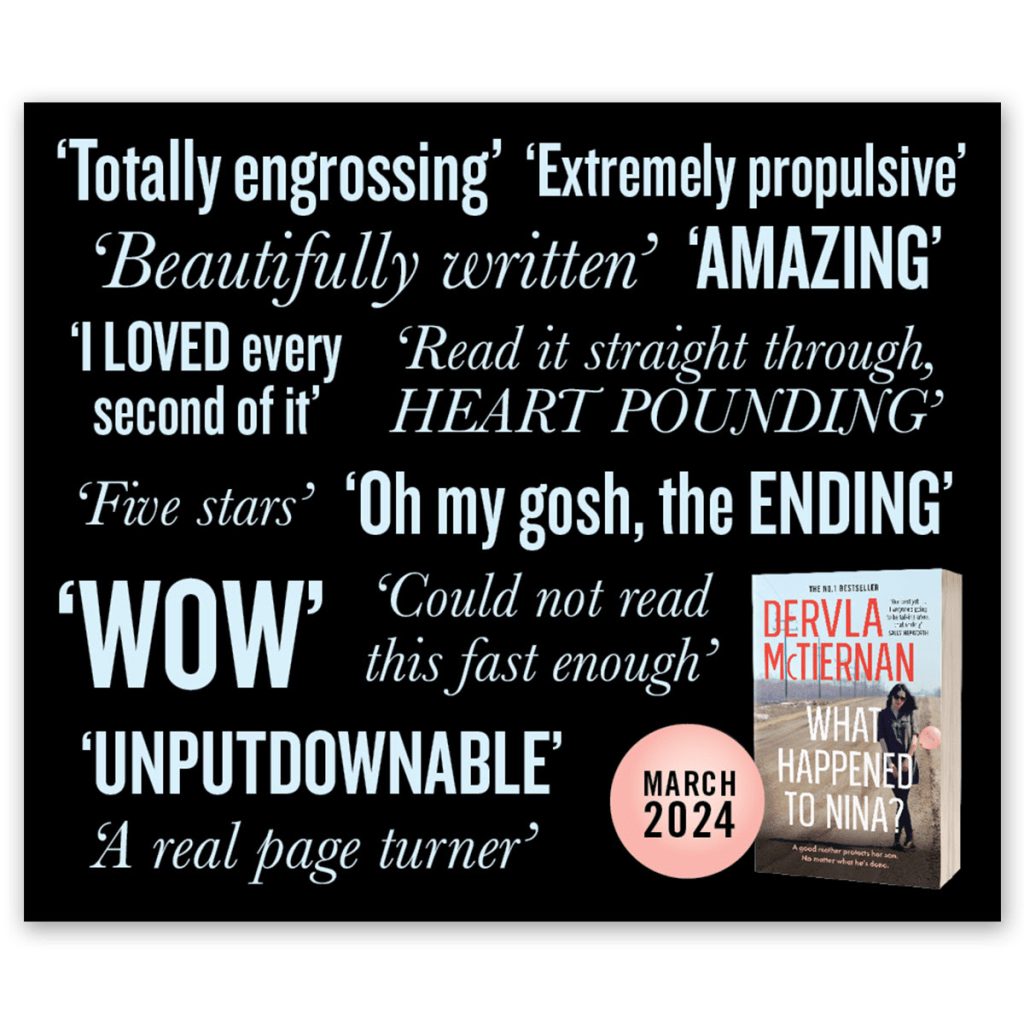
| I always feel a bit antsy and uncomfortable when I’m not writing well. When I’m writing well I’m focused and my life tends to be fairly well balanced. I’m not sure what comes first — the balance and then the good writing, or the other way around — but I do know that book promotion and good writing aren’t the most comfortable bedfellows. It’s very exciting, when you get a call or an email with good news about a book you’ve worked on for two years. It’s hard to put that phone down and go straight back into a completely different story, but then … hard is good sometimes too. I’m so aware that I have less than three weeks left before I head off on tour (how did the time go by so fast!?) so I’m going to keep my head down and focused until the last minute, and then I can head away happily, knowing the work is done, and really enjoy myself on the road. This is all a really long preamble of excuses to explain why I’m late sending out the Carrie chapters. *hangs head in shame* They’re coming, I promise! Just a little bit longer. |
| EVENTS: |
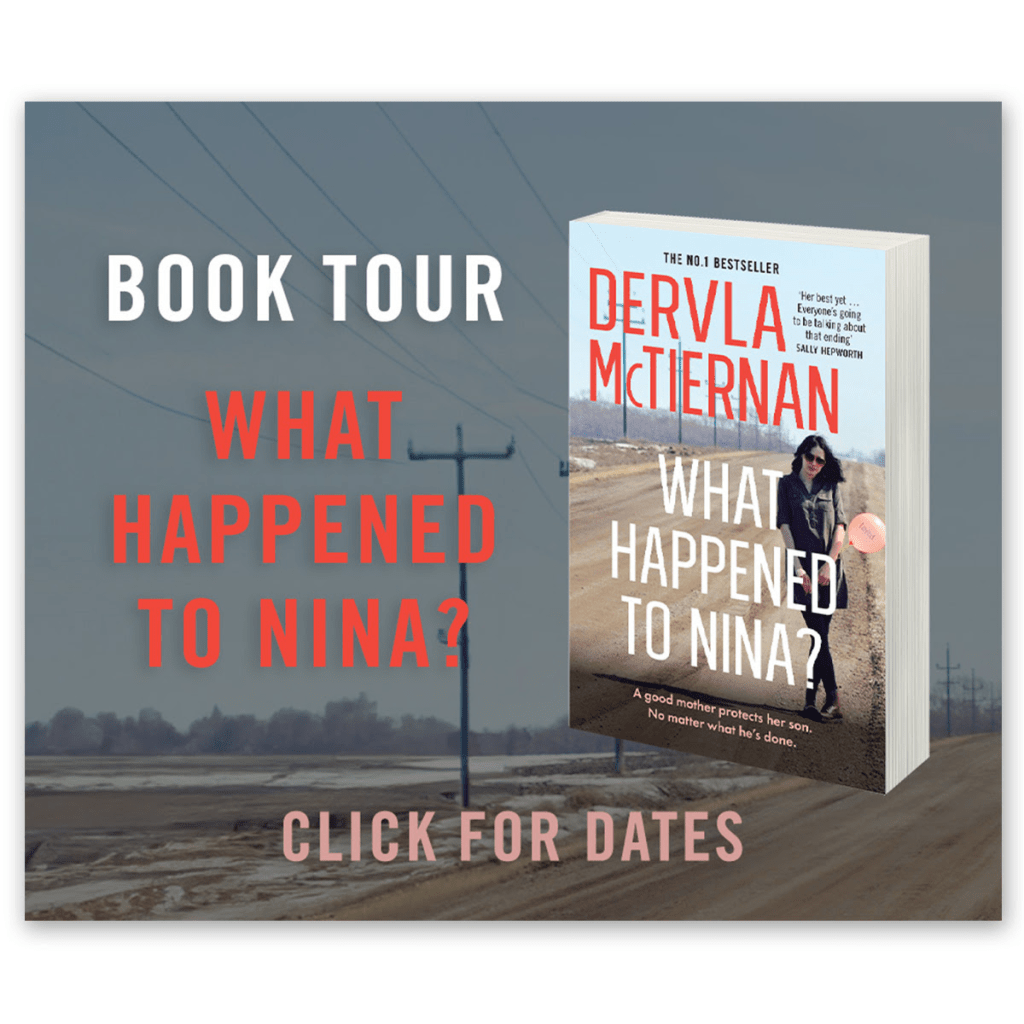
| If you live in Perth, Sydney, Melbourne or Canberra, I’d love to see you at one of our events for What Happened to Nina? You can book an event through the events page on my website or you can click this link, which will bring you to a site hosted by my publisher, which also has all of the booking links. |
| My publisher is also running a competition for pre-orders for the book, so if you’ve already pre-ordered the book, or you pre-order now, you can upload your receipt to this site and you’ll be in the running to have me attend your book club! Through Zoom, of course, because I fear the cost of the flights would be prohibitive for in-person attendance (haha). If you’d like to order the book now, you can do so here. That’s all the news for now! Thanks so much for all your lovely emails and messages, and for all your support. I appreciate it so much. |
Bob McMullan – UK Election
UK election prospects 2024

There will be an election in the UK in 2024. It will probably be held around October but it could be as soon as May to coincide with local government elections.
All indications are that the Labour Party will not only win but will have a victory of historic proportions.
Life doesn’t come with guarantees. Therefore, no victory can be taken for granted. But it will take an unprecedented reversal of public opinion for the Labour Party to fail to win a majority.
The indications are more than just the polls, but the polling is extraordinarily strong. Over the last twelve months the data has been very consistent. The Labour Party’s lead over the Conservatives has always been more than 15% and has averaged about 18%.
This is obviously very strong but how does it compare to previous elections which oppositions went on to win? A recent analysis suggests that at this stage in advance of the previous five elections which have led to a change of government the average opposition lead has been about 13% and falling. The current opposition lead is 18% and appears stable.
This analysis makes it unsurprising that Electoral Calculus, which bases its forecasts mainly on rolling polling data predicts a landslide Labour victory. Their February 2024 numbers suggest an overall Labour majority of 256 with Labour winning 459 seats, Conservative 126, SNP 18 and Liberal Democrats 31. As well as the overall national results this also reflects a major decline in support for the Scottish National Party given their internal issues and problems with their governance in Scotland.
In summary, the objective analysis suggests a very high probability of a landslide victory for Labour whenever the election is held.
However, election forecasting and analysis is not a science. There are always subjective factors which need to be weighed with the data.
In this case the overwhelming number of these subjective factors point in the direction of a Labour victory also.
But first, a necessary caveat.
One of the advantages of incumbency is the capacity to act rather than just talk about issues. This gives the Conservatives some room for manouevre. There will be a budget in which they appear to be suggesting there will be further tax cuts. While it is hard to see this turning the tide overall, it may help shore up the traditional Conservative seats in the South-East which appear to be in danger at the moment.
The only other issue which, at this stage appears to have the potential to move the needle in a major way is immigration. The “stop the boats” mantra which is all too familiar to Australians does not seem to be biting yet, but it can tap into some deep-seated fears if promoted with sufficient cynicism.
However, the underlying issues should also be a source of concern for the Conservatives.
Firstly, there are the leadership changes from 2019. Boris Johnson, whatever his other flaws, was a vote winner. Jeremy Corbyn, whatever his other virtues, was a vote loser. These trends were especially evident in the traditional Labour seats in the North of England, the so-called “red wall”. Almost all of these seats were lost by Labour in 2019. Almost all of them appear to be on course to be regained in 2024.
The second worrying trend for the Conservatives is the regular appearance of scandals and resignations from the House of Commons. Many of these have led to by-elections, all of which the Conservatives have lost. Most of these have been lost to the Labour Party but others have been lost to the Liberal Democrats. Even seats which were previously held by 10000 votes or more have been lost. And there are several more by-elections scheduled as the scandals and resignations continue.
The Economist describes the third damaging aspect of the current Conservative party’s political situation as” …the party is defined primarily by its divisions. It has broken into an alphabet soup of factions.” All organisations, particularly political parties are prone to develop factions as part of the legitimate contest of ideas and approaches. But when the divisions proliferate and turn on each other it tends to be a terminal sign for governments. The factions seem to be divided between those who seek to change the direction (and the leadership) now and those which are positioning themselves for after the election.
The fourth aspect, which is typical of the problems faced by struggling government parties, is the secondary contest with parties other than Labour which will at the least eat into the Conservative Party vote in a manner which can be devastating in a first-past -the- post system. In this case the challenges come from Reform UK on the right and the Liberal democrats on the centre-right. The Liberal Democrats have shown that they can win seats in the South-East from the Conservatives when the Tories are at a low ebb. It is hard to see Reform UK winning any seats but as their vote has increased over the last twelve months it has come at the expense of the Conservative Party. As Reform are now polling 10% nationally, they have the capacity to undermine the Conservative vote in a number of competitive seats.
These factors combine to create a very threatening scenario for the Conservative Government.
It is important to remember the opportunities open to the government to take initiatives which could either be popular in themselves or “wedge” the Labour party in ways which could be damaging.
It is also true that parties of the left and centre-left have a long history of snatching defeat from the jaws of victory.
However, it is almost impossible to devise a scenario in which the Labour Party does not win the UK election in 2024. The biggest remaining question may well be whether the victory is sufficiently large to almost guarantee a second term and possibly splinter the Conservative side of UK politics for a decade or more.
Cindy Lou finds new menu items at Courgette
Again, I was pleased to use the $25 voucher per person (up to six people) to lunch at Courgette. The menu had changed, which makes the voucher for lunch option until May even more appealing.
The zucchini flowers were still on the menu and as delicious as ever. Alas the tuna dish has disappeared, but the entree of duck breast and quail was an excellent replacement.


Mains included an excellent fish dish, John Dory with a crisp skin and succulent inside, and the beef was cooked as ordered.


The desserts were terrific as pictured below:



Coffees, peppermint tea and English Breakfast tea completed a lovely lunch experience.

Should I have been at Italian Brothers where I understand Anthony and Jodie dined recently? No, Courgette is far better.

Anthony Albanese and Jodie Haydon at the Lodge, after announcing their engagement this week. (ABC News: Matt Roberts)© Provided by ABC News (AU)
I found the following article interesting for several reasons. I have a Goodreads goal but realised that all the books I read are not recorded there, so ignore it. I admit I rush to see if any of my reviews have garnered likes, or even the greater joy, of a comment. Does setting goals enhance of decrease a person’s pleasure in reading? Elizabeth Lyon discusses this and, for those dedicated to the Goodreads app, comes to a decision that is worth considering.
How Goodreads affects my degree: The reality behind reading goals
Alongside the growing popularity of the app ‘Goodreads’, we explore the effects that reading goals and endless tracking within the app really have on reading.
We’re one month into 2024 and I am already behind on my Goodreads goal. The four books I should have read this month sit untouched on my bookshelf and unless I read frantically this February, my chances of getting back on track are slight.
But should I feel guilty for not reading ‘enough’ when reading, ultimately, should be an enjoyable pass-time? With deadlines, exams, lectures and reading for the new semester, it is no surprise that casual reading has taken a back step in my priority list this month.
Rather than encourage sustainable reading habits, I’ve found that Goodreads can become something to fixate on. With the thought of reading goals always in the background, sometimes I’ll find myself skim-reading pages to finish the book quicker just so I can click the ‘I’ve finished this book!’ button, and add another one to the read-list. I begin to associate reading with the dopamine hit I get through the app, rather than the real accomplishment of turning the final page of a good book.
Even when I read, I am still in this sense wired and online. Books become objects to be completed and digitally tracked, rather than actual stories to be enjoyed. Reading for escapism and relaxation therefore becomes harder, as I can never fully separate it from Goodreads, as my phone often lies by my side as I read, my reading status always ready to be updated.
This incessant tracking means that even when university is done for the day, I still feel I have ‘work’ to do. This in turn devalues the reading that I do as part of my degree.
Poems, book chapters, articles etc., all go untracked and the time I have dedicated to reading these texts subsequently becomes meaningless when not quantifiably recorded on Goodreads. When I look at my account, all I see is that I am behind on my reading goal and I subsequently forget the reading I have done as part of my studying. The knowledge I have gained through reading un-trackable texts as part of my degree is, after all, more valuable than reading three mediocre books for Goodread’s sake.
It begs the question of why I feel the need to track everything I read. As with apps for studying like Forest or as with running apps like Strava, we all seem to want digital evidence of real events and it seems that reading is not immune to this digital culture. Why should it matter that some of my reading goes un-tracked? Who am I trying to impress by using Goodreads: myself or others?
The competitive nature of Goodreads (particularly for someone who loves to read) means that the app will never lead to complete satisfaction. There will always be a new book, genre and author to discover, but that does not mean that I must read them all.
Are my books varied enough, ‘classic’ enough or are they too ‘easy’? Book trends on Goodreads and social media, whilst exposing us to and encouraging us to read new books, can become distractions from what really matters in reading: the positive effects of enjoyment, relaxation and escapism. In comparison to others online and in real life, it can be easy to forget that spare time at university does not need to be conquered or spent being ‘productive’ like the perception of others around you.
Whilst it is nice to have an online bookshelf and bookmark on Goodreads, it is not the be-all and end-all if reading goals are not met, or not all your reading is displayed in this singular app. Goodreads shouldn’t be used to affirm and validate that you have in fact read.
I have decided to relax my reading goal this year and remind myself that just because my studying, learning and reading as part of my degree cannot always be measured and tracked like a book on Goodreads, it does not mean it is not legitimate. Reading should first and foremost be enjoyable and as students, it is important to enjoy the spare time we have!

 Robin's Room