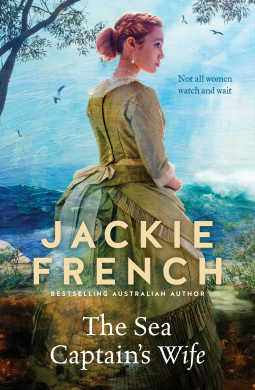
Jackie French The Sea Captain’s Wife Harlequin Australia. HQ (Fiction, Non-Fiction, YA) & Mira, March 2024.
Thank you, NetGalley, for providing me with this uncorrected proof for review.
The Sea Captain’s Wife is an engaging amalgam of Jackie French’s knowledge of the intriguing historical hunt for marriageable shipwrecked sailors; meticulous attention to depicting an authentic social environment, and characters who realistically portray social mores of the period. Starting life on a remote island, where the community’s rules encourage social cohesion, to her sojourn in Australia, where the prevailing ideals are diametrically opposed to those of the island, Mair Rodrigues Lestrange McCrae is a strong, thoughtful and captivating character. At twenty-one, she is wedded to the idea of finding a beachie – a man thrown up by the sea and available for marriage – and she does so. Her courting takes place in her family’s cottage as Michael Dawson recovers from his near drowning after having been pushed off the ship he had captained on its journey between Australia and England. See Books: Reviews for the complete review.
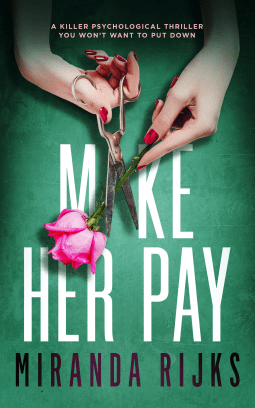
Miranda Rijks Make Her Pay Inkubator Books, December 2023.
Thank you, NetGalley, for providing me with this uncorrected proof for review.
Miranda Rijks’ novels have been on my reading list since I reviewed What She Knew in July 2022. Since then, I have read several of her novels, including the very disappointing The Lodge in June 2023. What a delight to see that she has moved into far more successful territory with Make Her Pay. This is a clever novel, with an intriguing prologue, a good plot that is plausible enough, characters who have a motivation for their behaviour, and a satisfying resolution. See Books: Reviews for the complete review.
After the Covid Canberra Update: Heather Cox Richardson, Letters from an American; Brilliant & Bold, Jocelynne Scutt; Gloria Steinem; Your reading list for Women’s History Month.
Covid Canberra Update

For the reporting period 15 to 21 March 2024 there were 65 new cases (PCR results only), with 10 people in hospital with Covid.
Heather Cox Richardson from Letters from an American <heathercoxrichardson@substack.com>
In the past few weeks, Josh Kovensky of Talking Points Memo has deepened our understanding of the right-wing attempt to impose Christian nationalism on the United States through support for Trump and the MAGA movement. On March 9, Kovensky explored the secret, men-only, right-wing society called the Society for American Civic Renewal (SACR), whose well-positioned, wealthy, white leaders call for instituting white male domination and their version of Christianity in the U.S. after a “regime” change.
On March 19, Kovensky explained how that power was reaching into lawmaking when he reported on a September 2023 speech by Russ Vought, a key architect of the plans for Trump’s second term, including Project 2025. In the speech, which took place in the Dirksen Senate Office Building, Vought explained the right wing’s extreme border policies by explicitly marrying Christian nationalism and an aversion to the pluralism that is a hallmark of American democracy. Vought argued that the U.S. should model immigration on the Bible’s Old Testament, welcoming migrants only “so long as they accepted Israel’s God, laws, and understanding of history.”
These religious appeals against the equality of women and minorities seem an odd juxtaposition to a statement by United Auto Workers (UAW) union president Shawn Fain in response to the claim of the Trump campaign that Trump’s “bloodbath” statement of last Saturday was about the auto industry. Fain is also a self-described Christian, but he rejects the right-wing movement.
“Donald Trump can’t run from the facts,” Fain said in a statement to CBS News. “He can do all the name-calling he wants, but the truth is he is a con man who has been directly part of the problem we have seen over the past 40 years—where working class people have gone backward and billionaires like Donald Trump reap all the benefits….
“Trump has been a player in the class war against the working class for decades, whether screwing workers and small businesses in his dealings, exploiting workers at his Mar a Lago estate and properties, blaming workers for the Great Recession, or giving tax breaks to the rich. The bottom line is Trump only represents the billionaire class and he doesn’t give a damn about the plight of working class people, union or not.”
In the 1850s the United States saw a similar juxtaposition, with elite southern enslavers heightening their insistence that enslavement was sanctioned by God and their warnings that the freedom of Black Americans posed an existential threat to the United States just as white workers were beginning to turn against the system that had concentrated great wealth among a very few men. While white southern leaders were upset by the extraordinary popularity of Harriet Beecher Stowe’s Uncle Tom’s Cabin, the 1852 novel that urged middle-class women to stand up against slavery, it was Hinton Rowan Helper’s 1857 The Impending Crisis of the South: How to Meet It that made them apoplectic.
Hinton Helper was a white southerner himself and showed no abolitionist sympathies in his deeply racist book. What that book did was to show, using the statistics that had recently been made available from the 1850 census, that the American South was falling rapidly behind the North economically.
Helper blamed the system of slavery for that economic backwardness, and he urged ordinary white men to overthrow the system of enslavement that served only a few wealthy white men. The cotton boom of the 1850s had created enormous fortunes for a few lucky planters, as well as a market for Helper’s book among poorer white men who had been forced off their land.
White southern elites considered Helper’s book so incendiary that state legislatures made it illegal to possess a copy, people were imprisoned and three allegedly hanged for being found with the book, and a fight over it consumed Congress for two months from December 1859 through January 1860. The determination of southern elites to preserve their power made them redouble their efforts to appeal to voters through religion and racism.
In today’s America, the right wing seems to be echoing its antebellum predecessors. It is attacking women’s rights; diversity, equity, and inclusion programs; immigration; LGBTQ+ rights and so on. At the same time, it continues to push an economic system that has moved as much as $50 trillion from the bottom 90% to the top 10% since 1981 while exploding the annual budget deficit and the national debt.
Yesterday the far-right Republican Study Committee (RSC), which includes about two thirds of all House Republicans, released a 2025 budget plan to stand against Biden’s 2025 budget wish list. The RSC plan calls for dramatic cuts to business regulation, Social Security, Medicaid, and so on, and dismisses Biden’s plan for higher taxes on the wealthy, calling instead for more than $5 trillion in tax cuts. It calls the provision of the Inflation Reduction Act that permits the government to negotiate with pharmaceutical companies over prices “socialist price controls.”
Biden responded to the RSC budget, saying: “My budget represents a different future. One where the days of trickle-down economics are over and the wealthy and biggest corporations no longer get all the breaks. A future where we restore the right to choose and protect other freedoms, not take them away. A future where we restore the right to choose and protect other freedoms, not take them away. A future where the middle class finally has a fair shot, and we protect Social Security so the working people who built this country can retire with dignity. I see a future for all Americans and I will never stop fighting for that future.”
Biden’s version of America has built a strong economy in the last two years, with extremely low unemployment, extraordinary growth, and real wage increases for all but the top 20%. Inequality has decreased. Today the White House announced the cancellation of nearly $6 billion in federal student loan debt for thousands of teachers, firefighters, and nurses. Simply by enforcing laws already on the books that allow debt forgiveness for borrowers who go into public service, the administration has erased nearly $144 billion of debt for about 4 million borrowers.
At the same time, the administration has reined in corporations. Today the Department of Justice, along with 15 states and the District of Columbia, sued Apple, Inc., for violating the 1890 Sherman Antitrust Act. They charge that the company, which in 2023 had net revenues of $383 billion and a net income of $97 billion, has illegally established a monopoly over the smartphone market to extract as much revenue as possible from consumers. The company’s behavior also hurts developers, the Department of Justice says, because they cannot compete under the rules that Apple has set.
At the end of February, the Federal Trade Commission (FTC) sued to block the merger of Kroger and Albertsons, a $24.6 billion takeover affecting 5,000 supermarkets and 700,000 workers across 48 states. The merger would raise grocery prices, narrow consumer choice, and hurt workers’ bargaining power, the FTC said. The attorneys general of Arizona, California, the District of Columbia, Illinois, Maryland, Nevada, New Mexico, Oregon and Wyoming joined the FTC’s lawsuit.
The benefits of the administration’s reworking of the government for ordinary Americans have not gotten traction in the past few years, as right-wing media have continued to insist that Biden’s policies will destroy the economy. But as Shawn Fain’s position suggests, ordinary white men, who fueled the Reagan Revolution in 1980 when they turned against the Democrats and who have made up a key part of the Republican base, might be paying attention.
In June 2023 the AFL-CIO, a union with more than 12.5 million members, endorsed Biden for president in 2024 in its earliest endorsement ever. In January the UAW also endorsed Biden. Yesterday the United Steelworkers Union, which represents 850,000 workers in metals, mining, rubber, and other industries, added their endorsement.
Just as it was in the 1850s, the right-wing emphasis on religion and opposition to a modern multicultural America today is deeply entwined with preserving an economic power structure that has benefited a small minority. That emphasis is growing stronger in the face of the administration’s effort to restore a level economic playing field. In the 1850s, those who opposed the domination of elite enslavers could only promise voters a better future. But in 2024, the success of Biden’s policies may be changing the game.
—
Notes:
https://talkingpointsmemo.com/news/russ-vought
https://docsouth.unc.edu/nc/helper/helper.html
https://rsc-hern.house.gov/about/membership

BRILLIANT & BOLD – BOLD & BRILLIANT
CONVERSATIONS WITH ‘ORDINARY’ & ‘EXTRAORDINARY’ WOMEN
Brilliant and Bold is a series hosted by Dr Jocelynne Scutt each month. It appears on Facebook so that if you are unable to attend the zoom meeting yit can be watched later. This month the meeting was held on 24 March, a departure from its usual time at 11.00 am UK time on the 2nd Sunday of each month. At the moment, because of day light saving, that means joining at 10.00 pm Australian time. Several of us do so, and some even manage to contribute to the discussion! The information below provides an example of the topics in the series.
Women Standing Up for Women’s Rights – Local, National, International – For The World
A series on women’s rights, challenges, perspectives, hopes and empowerment
‘UP FROM UNDER – REACHING THE MOUNTAIN TOP – AND CLAIMING THE SKIES!’
Brilliantly Bold Women! Invite all Bold and Brilliant Women to December’s WWAFE on Zoom – Women Worldwide Advancing Freedom & Equality … formerly the House of Lords/House of Commons, now a panel in global conversation, along with a global audience primed for engaging in discussion, debate, questions, answers, reflections and resounding demands for change in a world where women’s role in it requires not only attention and reformation, but rebellion and revolution. This Sunday Brilliant & Bold – Bold & Brilliant – brings together women globally, determined that women’s voices resound in the firmament – women ask what of the world now? How are our voices to be heard in it? From Climate Change to Violence Against Women – we say, we do not consent … to the destruction of the World, the Earth, the Universe and we will take whatever steps we can to stop it whilst demanding others do likewise, and we do not consent to the violence wrought upon women in the world, globally, universally – and we demand an end to it and its condonation. Wherever we are, our demands are clear, as we make our marks, changing the world!
Each month, Brilliant & Bold – Bold & Brilliant hears from ‘ordinary’ and ‘extraordinary’ women – on the panel and participating … all of us – ‘ordinary’ and ‘extraordinary’! This Sunday, we ask the ever-present question … whether it is for women to advance boldly or to face the future with weary, wary eyes? Women’s lives count – must matter – as they matter to us, yet that we even must state this is indicative of a world somehow gone wrong. We work, we strive, we speak out, we speak up – and are our voices heard? Domestically, women work in local and national groups, aiming to ensure that women’s perspectives are in the foreground, or at least recorded in the minutes so that their essence and meaning is not lost. Internationally, women engage in discussions across borders – adhering to the philosophy stated by Virginia Woolf – as a woman I have no country, as a woman I want no country, as a woman my country is the whole word. Whether it is UN conferences, women’s international organisations, casual or organised discussions via Zoom or Teams or WhatsApp or Facebook or Twitter/X women enter into the arena voicing women’s concerns about women’s and girls’ rights and the wrongs done – and how to change the wrongs to rights. Everywhere, women work toward the creation of a fair and free world.
Welcoming all Brilliant & Bold! Bold & Brilliant! Women … to Sunday’s ‘conversation’. Women not only want action, women demand action. Without women’s demands, the world will not change, women will not take our place on the globe as equal, whatever our class/status, race/ethnicity, nationality/citizenship, whatever our country. As Virginia Woolf said, reflecting upon the world and women’s role in it: ‘As a woman I have no country, as a woman I want no country, as a woman my country is the whole world’. Every one of us now, as Brilliant & Bold! Women … of today, of now, of the future … come join the conversation …
xxxxxxxxxxxxxxxxxxxxxxxxxxxxxxxxxxxxxxxxxxxxxxxxxxxxxxxxxxxxxxxxxxxxxxxxx
SPEAKERS – Sarah Johnson, Khatija Barday Wood – Biognotes overleaf
Thirty-seventh in a series on women’s rights, challenges, perspectives, hopes and empowerment.
Women Standing Up for Women’s Rights – Local, National, International – For The World
SPEAKERS
SARAH JOHNSON
The philosophy by which Antonio Gramsci lives:
The challenge of modernity is to live without illusions and without becoming disillusioned. I’m a pessimist because of intelligence, but an optimist because of will― Antonio Gramsci appeals to Sarah Johnson, too. An education consultant in further and continuing adult education, she is a Labour Party constituency Women’s Officer, being sufficiently resourceful and courageous to straddle two East of England CLPs (Constituency Labour Party) in possibly the most articulate, vociferous, argumentative and ambitious areas of that part of the country. A materialist socialist, Sarah campaigns with Woman’s Place UK and Labour Women’s Declaration to promote debate and critical thinking on the left of politics.
KHATIJA BARDAY WOOD
Khatija Barday Wood’s formative years, education and nurturing within a multi-cultural society in South Africa have shaped her. She regards herself as a by-product of Apartheid, not a victim, and is known to have broken boundaries at every step in her life including shattering the ceiling at UK CSW Alliance. Her parents, great grandfather and grandfather were her inspiration. After dedicating most of her life to working voluntarily as an ambassador advocating Women’s Rights and Justice Khatija is now converging all her skills and experience of +/- 50 years contributing at all levels of Society, Nationally and Internationally, taking a new path where she is dedicating a huge junk of her time to researching 330 Qur’anic verses on Women’s Rights to encapsulate with her passion for photography to create a published legacy inspiring laypeople on what are a Woman’s Rights. Alongside this, she is on a mission to be the catalyst for change in the world of photography where Equity is badly needed. Khatija sits on Equality Diversity and Inclusion (EDI) Committee of the Royal Photography Society and is utilising her varied and broad experiences of working alongside grassroots to decision makers, pivotal to inclusiveness.
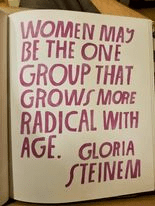
What Does 90 Look Like?Just Ask Gloria Steinem
“We are living out the unlived lives of our mothers, because they were not able to become the unique people they were born to be.”
BY LORI SOKOL ● COMMENTARY ● MARCH 24, 2024 Women’s E News
This essay originally appeared in Ms. Magazine.

“I’m 90?!” my mother horrifyingly exclaimed the day I told her she reached this extraordinary birthday milestone. “Ooooh, don’t tell anybody!” she warned, cautioning me to keep quiet about what seemed, to her, to be a fate worse than death. Although her memory was already fading to where she could no longer remember what day, month or year it was, she remained steadfast enough to ensure that no one ever knew her real age.
And that brings me to a famous quote by the feminist icon, author and activist, Gloria Steinem who, upon turning the age of 40—50 years ago today—wittily responded to a reporter’s flattering comment of, “Oh, you don’t look 40,” with: “This is what 40 looks like. … We’ve been lying for so long, who would know?!”
This is not the first time Gloria’s words served as antidotes to my mother’s way of thinking—or to so many of the ways women of her generation were taught to think.
So today, as Gloria Steinem herself turns 90, I will not flatter her with compliments about how she still doesn’t look her age or how considerate, clever and courageous she remains. What I’d like to do, instead, is celebrate her and the feminist movement she continues to devote her long life to, enabling me, and countless others of my generation to, as she once put it, “Live out the unlived lives of our mothers, because they were not able to become the unique people they were born to be.”

But now I face a conundrum. When I recently told Gloria I wanted to write a book about her, she responded, in her usual modest and magnanimous way, that too much had already been written about her, encouraging me to write about other feminists instead. So, then, how do I write a birthday tribute to Gloria without it being all about her? Again, I found the antidote in another of her memorable quotes:
“Most writers write to say something about other people—and it doesn’t last. Good writers write to find out about themselves—and it lasts forever.”
Fortunately, my personal journey of self-knowledge has long included Gloria’s tenets—so I get to do both.
The first time I felt the freedom to connect with my true self was in 1973, a year after Ms. debuted, when I was 13—an age beset by turmoil, chaos and confusion, a bridge between a young girl’s innocence and ensuing teenage angst. For girls who believed, behaved and dreamed differently from their similarly-age peers, that angst can readily turn into agony—as it did for me.
The traditional values of the ’60s and early ’70s placed girls in positions of complacency, whereby the preferred sport was Hopscotch (“don’t move more than one of your two feet, or you’ll lose”), the popular card game was Old Maid (“be careful not to be left with the Old Maid card, or you’ll end up unmarried and alone forever”), and the preferred attire was a knee-length dress (preferably adorned with patent leather Mary Janes that should, just like your legs, never show a scratch).
I failed miserably at all of these, preferring to catch footballs from far afield (which required the use of both my feet), collect baseball cards (which I secretly swiped from my older brother’s collection), and wear muddied baseball cleats (which I proudly donned both on and off the field). But no one—not one relative, classmate or neighbor—understood me.
“If we are alone for long, we come to feel uncertain or wrong,” Gloria once said. And it was that one word, “wrong,” that my parents cast upon me daily, just as one would a favorite family nickname.
Yes, words have power, but just as they can be used to harm, they can also be used to heal.
In fact, it was through that inaugural issue of Ms., and in Gloria’s first article published within, that I first learned how to use writing to “find out about myself,” just as she did.
In “Sisterhood,” Gloria recounted how joining a circle of strong women in the feminist movement, enabled her to feel like she had experienced “a revelation … as if I had left a small dark room and walked into the sun.” Finding it both “contagious and irresistible,” she discovered that it is only through a sisterhood, whereby “women get together with other women that we’ll ever find out who we are,” and that, finally, she no longer “[feels] like I don’t exist … I am continually moved to discover I have sisters.” She then closed the article with, “I am beginning, just beginning, to find out who I am.”
So now, a half century later, as reporters have switched from primarily commenting about Gloria’s youthful appearance to asking the venerable activist, “Who will you be passing your torch to?”
Gloria continues to respond in a way that will help educate and empower others: “I’m not giving up my torch, but using it to light the torches of others, because if we each have a torch, there’s a lot more light.”
And this is what 90 looks like, in the most enlightened way.
About the Author: Lori Sokol, PhD, is the Executive Director of Women’s eNews, and is currently writing her memoir.

Lori Sokol, PhD. is Executive Director and Editor–in-Chief of Women’s eNews, an award-winning, non-profit digital news service that provides coverage of the most crucial issues impacting women and girls around the world. An award-winning journalist, her articles have been published in Newsweek, The Baltimore Sun, Slate.com, Ms. Magazine and in The Huffington Post. She has also been interviewed on a variety of news outlets including MSNBC, CNBC, Forbes and the Wall Street Journal. Her most recent book, She Is Me: How Women Will Save The World, was the recipient of the IBPA’s Ben Franklin Award, and a finalist in the International Book Awards. She is currently writing her memoir.
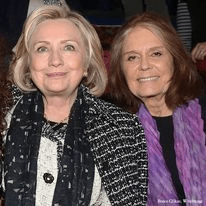
Happy 90th to my friend, the one and only Gloria Steinem.
She has pushed open doors for so many women who have come after her, including me.
She became a leader in the women’s rights movement, a strong leader for the right to choose, and spoke out about having an abortion herself at age 22. She helped found Ms. Magazine, a revelation for young feminists. She fought for the Equal Rights Amendment. She’s been on the frontlines ever since.
She’s an extraordinary person with a gift for summing up what so many are feeling, but may not have the words to say. And one of my favorite Gloria-isms is “The truth will set you free, but first it will piss you off.”
Here’s to facing the truth, and fighting for what’s right—and here’s to you, Gloria!

The Cougar Chronicle, California State University San Marcos
Your reading list for Women’s History Month Nahomi Garcia Alarcon, Arts & Entertainment Editor
March 26, 2024
March is a time to honor the achievements, struggles, and resilience of the women in our lives, from our mothers and grandmothers to our sisters, friends, and mentors. And what better way to commemorate this occasion than by delving into the rich literary landscape that celebrates womanhood in all its complexity.
In the pages of these books, we encounter women from all walks of life—bold adventurers, brilliant thinkers, fierce leaders, and everyday heroines whose stories show the depth of the female experience.
So here’s to embracing our stories, our voices, and our collective strength, because, truly, I just love being a woman. Together, let’s celebrate the past, present, and future of womanhood, and continue to write our own stories of resilience, empowerment, and sisterhood.
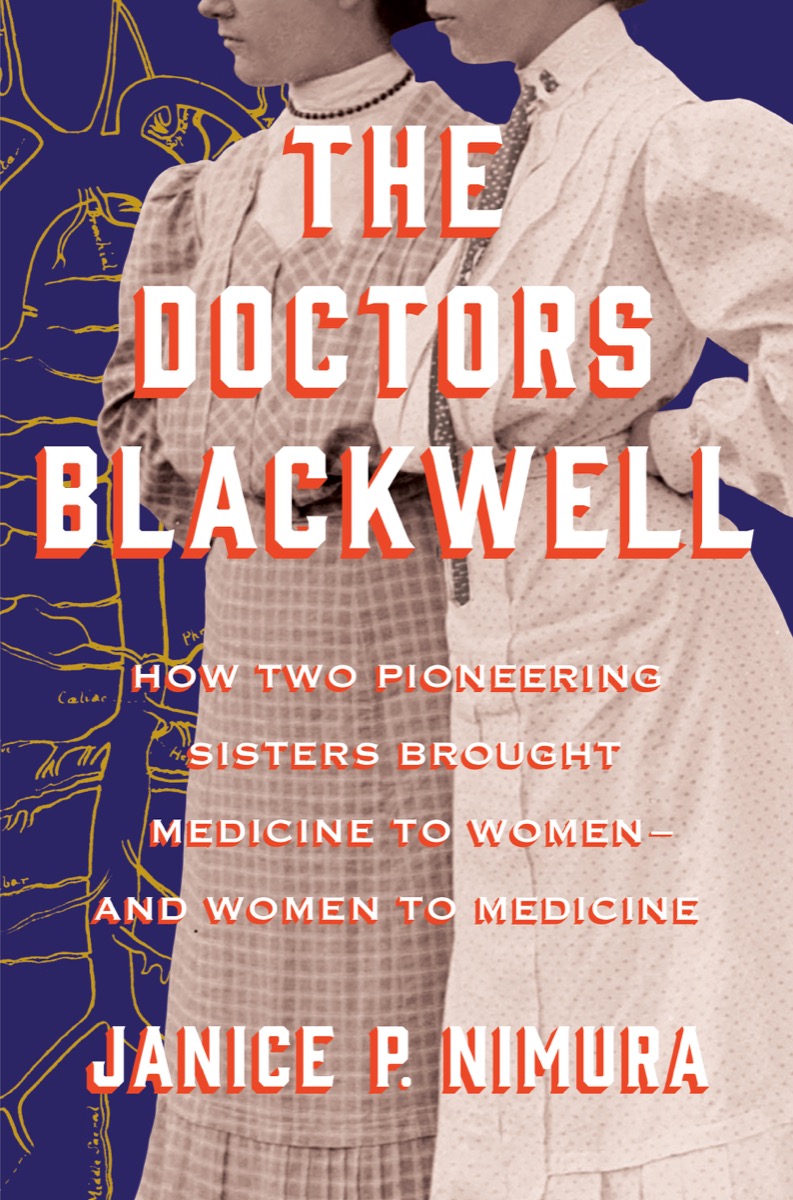
“The Doctors Blackwell” by Janice P. Nimura
A biography about Elizabeth and Emily Blackwell shattered societal norms by becoming pioneering physicians in a male-dominated field. Despite facing initial resistance, Elizabeth became the first woman in America to earn an M.D., with Emily following suit shortly after. Their journey, marked by challenges and triumphs, led to the founding of the New York Infirmary for Indigent Women and Children. Although their convictions sometimes clashed, their legacy paved the way for future generations of women in medicine.
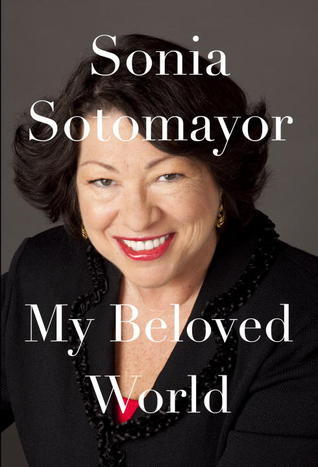
“My Beloved World” by Sonia Sotomayor
A biography of the first Hispanic and third woman in the U.S. Supreme Court shares her inspiring journey from a Bronx housing project to the pinnacle of the legal profession. Despite a tumultuous childhood and a diabetes diagnosis, she persevered, teaching herself to administer insulin and pursuing her dream of becoming a lawyer. With determination and the support of mentors, she excelled academically and professionally, ultimately achieving her goal of serving on the federal bench. Her story, marked by resilience and self-discovery, reaffirms the power of believing in oneself and embracing life’s infinite possibilities.

“Hidden Figures” by Margot Lee Shetterly
This biography unveils the untold story of African American female mathematicians who were instrumental in NASA’s space program during the civil rights era. Segregated from their white counterparts, these talented women, known as ‘Human Computers’, calculated the crucial flight paths for historic space missions using only pencil and paper. Spanning from World War II to the civil rights movement, the book intertwines the history of space exploration with the personal narratives of five courageous women whose contributions reshaped.
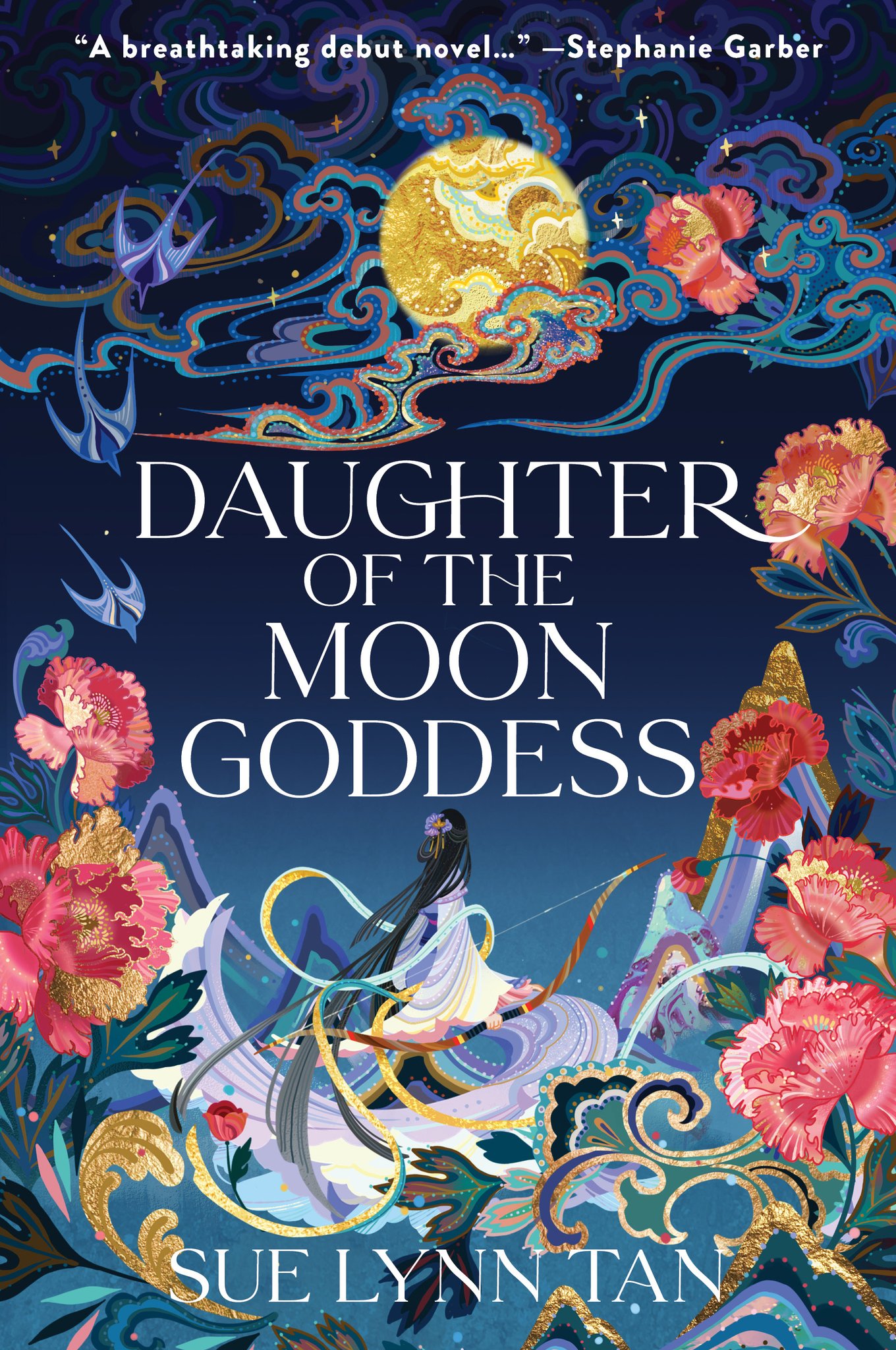
“Daughter of the Moon Goddess” by Sue Lynn Tan
In this fantasy novel Xingyin, raised in solitude on the moon, discovers her hidden magical abilities and flees to the Celestial Kingdom to save her exiled mother. Disguised, she learns alongside the emperor’s son, even as their passion grows. To rescue her mother, she embarks on a dangerous quest, facing legendary creatures and enemies. However, when forbidden magic threatens the kingdom, she must confront the ruthless Celestial Emperor, risking all she loves. “Daughter of the Moon Goddess” is a captivating fantasy debut inspired by Chinese mythology, blending adventure, romance, and immortal power struggles.

“The Poppy War” by R. F. Kuang
In a gripping historical military fantasy set in a world inspired by China’s turbulent 20th century, Rin defies all odds by acing the Empire-wide test, earning a place at the prestigious Sinegard military school. But her triumph comes with challenges; as a dark-skinned peasant girl, she faces discrimination and hostility from her peers. Yet, Rin discovers a formidable power within herself—shamanism. As tensions rise between the Nikara Empire and the Federation of Mugen, Rin realizes her abilities may hold the key to saving her people. However, delving deeper into her powers comes with a price, and Rin grapples with the fear of losing her humanity. This is a thrilling tale of resilience, power, and sacrifice, where Rin’s journey to harness her abilities may determine the fate of nations.
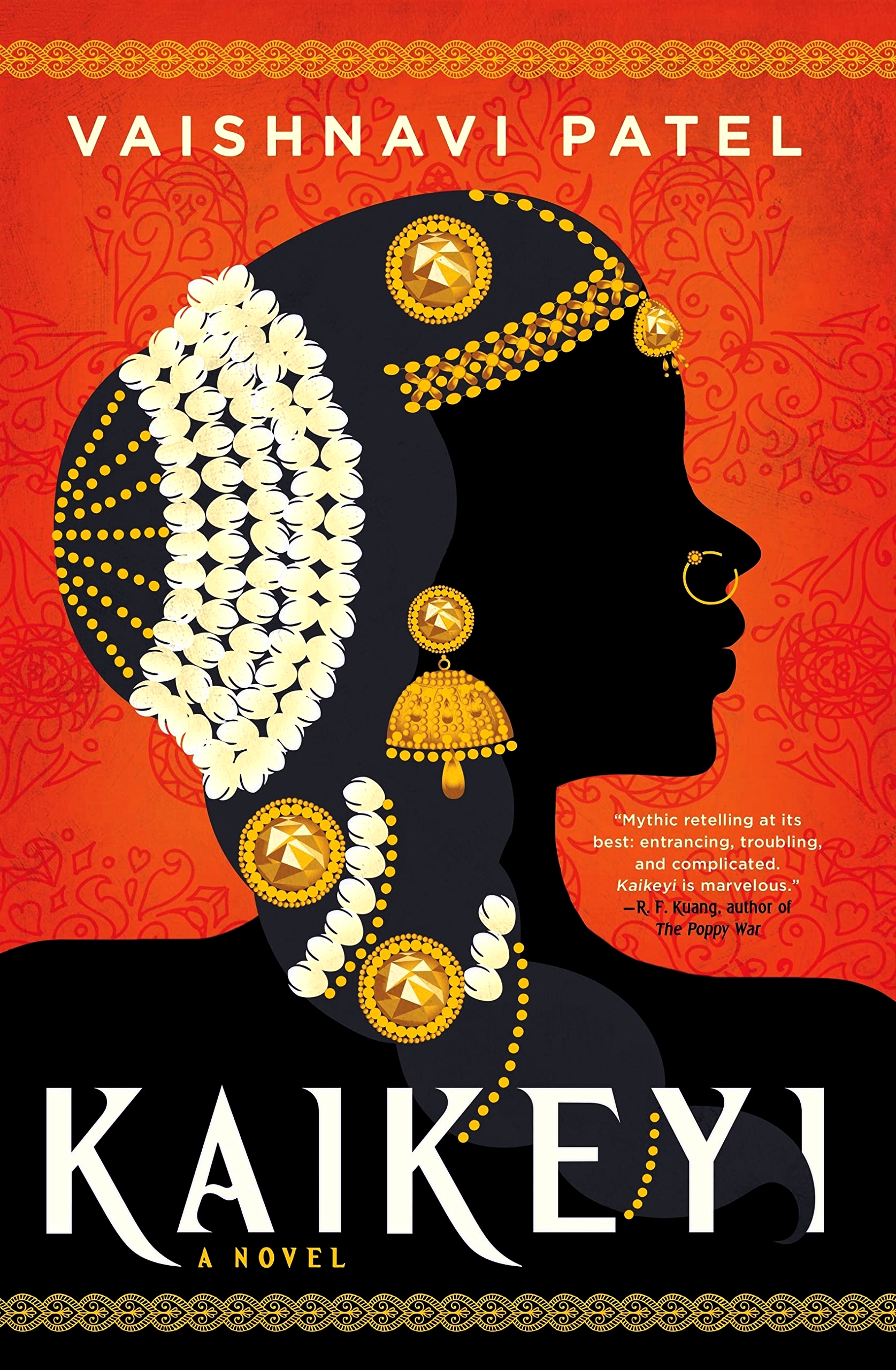
“Kaikeyi” by Vaishnavi Patel
Kaikeyi, born under a full moon in the kingdom of Kekaya, faces the harsh reality of her worth being tied to marriage alliances. Desperate for independence, she discovers her own magic and transforms from an overlooked princess into a powerful queen. As evil threatens the cosmic order, Kaikeyi must choose between her forged path and the destiny the gods have chosen for her family. It’s an unforgettable tale of a woman defying expectations in a world dictated by gods and men, offering a fresh perspective on the vilified queen from the Ramayana.

“This Bridge Called My Back” by Cherrie L Moraga, Gloria E. Anzaldua and Toni Bambara
This collection stands as a testament to women of color feminism in the late twentieth century. Through essays, poetry, and visual art, the anthology delves into the intersections of race, class, gender, and sexuality. Its fourth edition, featuring new introductions and contributions, continues to shape feminist discourse and activism. Praised by scholars and activists alike, it remains a vital resource for understanding the challenges and triumphs of women of color worldwide.

“The Radium Girls” by Kate Moore
a gripping account of the courageous women who fought against America’s Undark danger. In the early 20th century, the Curies’ discovery of radium captivates the nation, promising beauty and medical wonders. Yet, behind the gleaming headlines, hundreds of factory workers—dubbed “shining girls”—fall mysteriously ill from radium exposure. Ignored by their employers, these women embark on a groundbreaking battle for workers’ rights. With sparkling prose and relentless pace, this book shines a light on their inspiring resilience and pivotal fight for justice, leaving a lasting legacy in history.
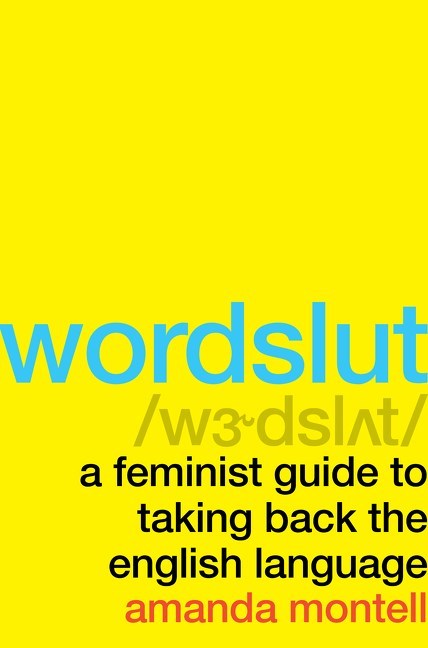
“Wordslut” by Amanda Montell
A fascinating exploration of language and its role in perpetuating gender biases. From the evolution of words like “bitch” and “slut” to the policing of women’s speech patterns, Montell delves into how language has been used to suppress women throughout history. With wit and insight, she uncovers the linguistic tactics that have hindered women’s progress and offers a compelling examination of how language shapes our perceptions of gender. Accessible and entertaining, “Wordslut” is a must-read for anyone interested in feminist linguistics and the power of words.
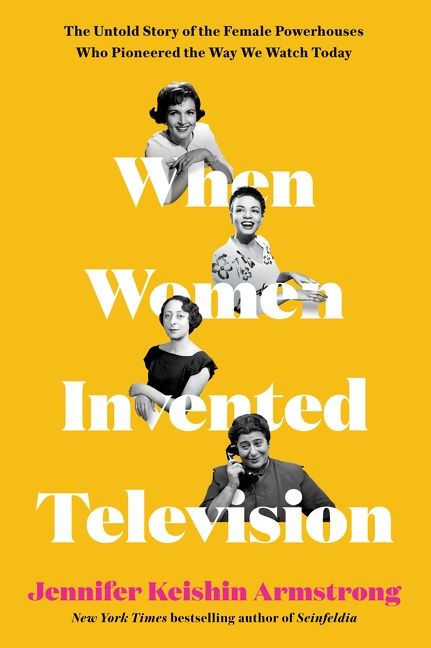
“When Women Invented Television” by Jennifer Kishin Armstrong
A captivating account of four remarkable women who shaped the early days of television. From turning real-life tragedies into daytime serials to breaking barriers as the first African American to host a national variety program, these visionary women defied the odds to revolutionize the way we watch TV today. Despite facing challenges like sexism and political turmoil, their enduring legacies deserve recognition. Illustrated with captivating photos, this book sheds light on a forgotten chapter in television history.
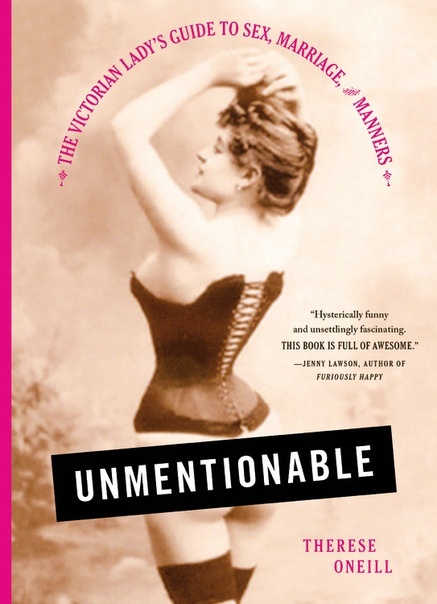
“Unmentionable: The Victorian Lady’s Guide to Sex, Marriage, and Manners” by Therese Oneill
A delightful journey into the secrets of Victorian womanhood. With humor and charm, this illustrated guide reveals the hidden truths behind the romanticized era, covering everything from fashion to personal hygiene. You’ll gain a newfound appreciation for the challenges faced by women of the past while laughing out loud at their quirks and customs. Perfect for fans of historical fiction and those curious about life in the 19th century, “Unmentionable” offers a refreshing perspective on the not-so-glamorous aspects of Victorian life.
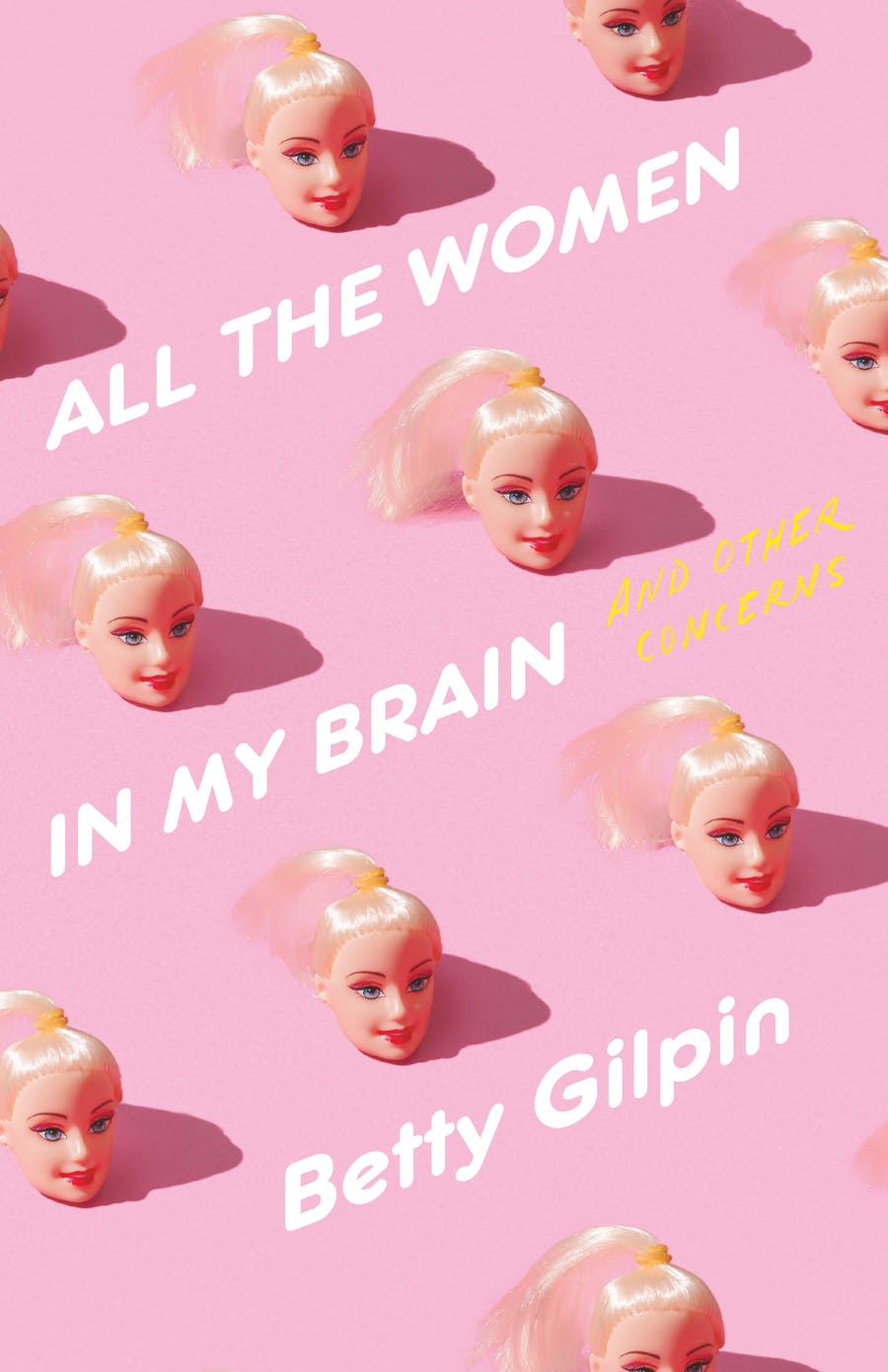
“All the Women in My Brain” by Betty Gilpin
a hilarious and intimate collection of essays that navigates the complexities of modern womanhood. From candid reflections on depression to wild adventures in Hollywood, Gilpin’s witty storytelling will have you laughing out loud while also pondering life’s deeper questions. Perfect for fans of Jenny Lawson and Caitlin Moran, this book is a must-read for anyone who has ever felt like they were more, or at least weirder than society expected.

“Pandora’s Jar” by Natalie Haynes
a captivating retelling of Greek myths that puts the spotlight on the often-overlooked female characters. From Hera to Medea, Haynes brings the stories of powerful women like Helen, Clytemnestra, and Antigone to life, offering a fresh and empowering perspective on these ancient tales. Perfect for lovers of Greek mythology and anyone interested in exploring women’s roles in classical literature, it’s a must-read for the modern era.
“Good Talk” by Mira Jacob

a touching and humorous graphic memoir that explores the complexities of race, love, and family in America. Inspired by conversations with her mixed-race son and her own experiences as a first-generation immigrant, Jacob navigates difficult topics with honesty and wit. From discussions about the new president to reflections on her upbringing, it offers an insight into one woman’s journey through life. With heartfelt storytelling and engaging artwork, this memoir is a must-read for anyone seeking to understand the immigrant experience and the challenges of raising a family in today’s world.
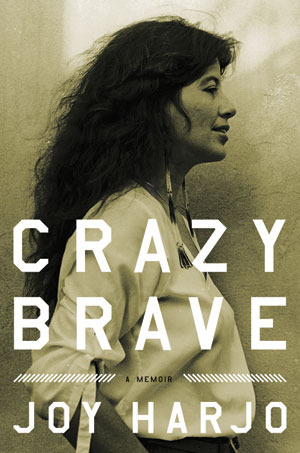
“Crazy Brave” by Joy Harjo
A transcendent memoir that explores the journey of one of America’s leading Native American voices. From her upbringing in Oklahoma, marked by adversity and abuse, to her emergence as an award-winning poet and musician, Harjo’s story is a testament to resilience and the power of finding one’s voice. Through lyrical prose, she navigates themes of family, love, and self-discovery, offering readers a haunting and visionary narrative that honors tribal myth and ancestry. A unique and inspiring tale of transformation.
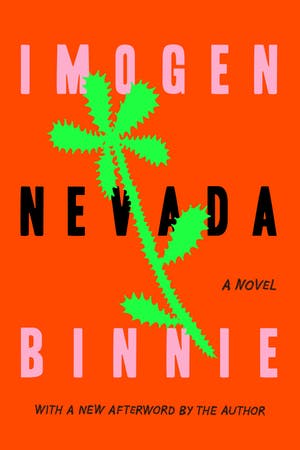
“Nevada” by Imogen Binnie
A cult classic and finalist for the Lambda Literary Award for Transgender Fiction, now back in print. Follow Maria Griffiths, a disaffected trans woman, as she embarks on a cross-country road trip after a breakup sends her into a tailspin. Set against the backdrop of punk culture and marginalized life under capitalism, “Nevada” is a blistering and heartfelt coming-of-age story that challenges traditional narratives. With a new afterword by the author, this novel offers a fresh perspective on the great American road novel for a new generation.

“Hood Feminism” by Mikki Kendall
Thought-provoking exploration of the blind spots in today’s feminist movement. Kendall argues that mainstream feminism often overlooks basic needs such as food security, education, and healthcare, which are critical feminist issues. She challenges the movement to prioritize these issues and confront the intersections of race, class, and gender. A compelling call to action for solidarity and inclusivity within feminism.

“Invisible Women” by Caroline Criado Perez
A groundbreaking exploration of gender bias in data. Perez reveals how our reliance on data that fails to account for gender perpetuates inequality, impacting women’s lives in profound ways. Drawing on extensive research from around the world, Perez offers a compelling exposé that will revolutionize your understanding of gender inequality.

“We Set the Night on Fire,” by Martha Shelley
A captivating memoir, from her upbringing as the daughter of refugees to her pivotal role in the gay and women’s movements of the 1960s and ’70s, Shelley shares her journey as a political activist. Her story sheds light on the struggles of coming out as a lesbian during a time when it was considered criminal, and her contributions to the fight for equality are both inspiring and essential to our understanding of history.

 Robin's Room