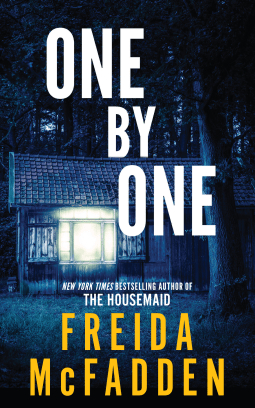
Freida McFadden One by One Poisoned Pen Press, April 2024.
Thank you, NetGalley, for providing me with this uncorrected proof for review.
One by One is a competent psychological thriller. The plot is an edgy combination of ill-assorted friends on a holiday jaunt that goes wrong with attempts to find the holiday hotel in which the group has booked thwarted by a compass that does not work, a map that is difficult to read and difficult terrain to traverse. Add to this large claw marks in trees and mobile phones with no signal, murders and blood-spattered disappearances and rising tension as disagreements erupt over leaving the first body in the forest while the group seeks help, and it is inevitable that suspicion of friends and partners mounts. For Claire, the narrator, the absence of her children becomes an even more immediate concern.
Interspersed with this present-day narration is that of Anonymous. There is no clue to the identity of this person, even clues to their gender are cleverly obfuscated. However, their introductory account leaves the reader in no doubt: this person aims to be the only one alive at the end of the weeklong holiday. See Books: Reviews for the complete review.
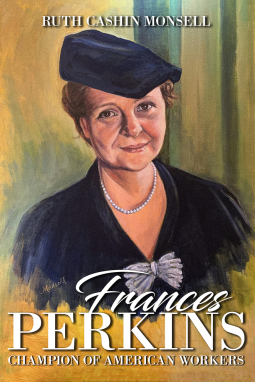
Ruth Cashin Monsell, Frances Perkins Champion of American Workers, Independent Publishers Group, April 2024.
Thank you, NetGalley, for providing me with this uncorrected proof for review.
There is a wealth of information in this biography written especially for Young Adult Readers. However, I am concerned that, although written for young people in a style that might have been engaging for past readers, this book will not resonate with the more sophisticated young reader. Some of the writing is overdone, with capitalised words or phrases, and the numerous exclamation marks have little role in an academic text, albeit for younger readers. Where characters engage in discussion, some of this, too, seems too simplistic. See Books: Reviews for the complete review.
Brilliant & Bold Sunday 19 May
11 am UK time
BRILLIANT & BOLD – BOLD & BRILLIANT
CONVERSATIONS WITH ‘ORDINARY’ & ‘EXTRAORDINARY’ WOMEN
‘Women’s Voices in a Time of Conservatism’
A series on women’s rights, challenges, perspectives, hopes and empowerment.
Brilliantly Bold Women! Invites all Bold and Brilliant Women to a monthly Zoom meeting – Women Worldwide Advancing Freedom & Equality … formerly the House of Lords/House of Commons, now a panel in global conversation, along with a global audience of engaging in discussion, debate, questions, answers, reflections and resounding demands for change.
As Mary Wollstonecraft said:
REFORM THE POSITION OF WOMEN, AND YOU REFORM THE WORLD
TBC: Jessica Williams is to speak about women in prisons
This zoom meeting is held at 11 am UK time. It is streamed to Facebook live but can also be watched after the meeting.
Mother’s Day
Letters from an American 11 May 2024
Heather Cox Richardson
Heather Cox Richardson from Letters from an American <heathercoxrichardson@substack.com>
If you google the history of Mother’s Day, the internet will tell you that Mother’s Day began in 1908 when Anna Jarvis decided to honor her mother. But “Mothers’ Day”—with the apostrophe not in the singular spot, but in the plural—actually started in the 1870s, when the sheer enormity of the death caused by the Civil War and the Franco-Prussian War convinced writer and reformer Julia Ward Howe that women must take control of politics from the men who had permitted such carnage. Mothers’ Day was not designed to encourage people to be nice to their mothers. It was part of women’s effort to gain power to change society.
The Civil War years taught naïve Americans what mass death meant in the modern era. Soldiers who had marched off to war with fantasies of heroism discovered that newly invented long-range weapons turned death into tortured anonymity. Men were trampled into blood-soaked mud, piled like cordwood in ditches, or withered into emaciated corpses after dysentery drained their lives away.
The women who had watched their hale and healthy men march off to war were haunted by its results. They lost fathers, husbands, sons, and brothers. The men who did come home were scarred in both body and mind.
Modern war, it seemed, was not a game.
But out of the war also came a new sense of empowerment. Women had bought bonds, paid taxes, raised money for the war effort, managed farms, harvested fields, worked in war industries, reared children, and nursed soldiers. When the war ended, they had every expectation that they would continue to be considered valuable participants in national affairs, and had every intention of continuing to take part in them.
But the Fourteenth Amendment, which established that Black men were citizens, did not explicitly include women in that right. Worse, it introduced the word “male” into the Constitution when it warned states against preventing “male inhabitants” from voting. In 1869, the year after the Fourteenth Amendment was added to the Constitution, women organized two organizations—the National Woman Suffrage Association and the American Woman Suffrage Association—to promote women’s right to have a say in American government.
From her home in Boston, Julia Ward Howe was a key figure in the American Woman Suffrage Association. She was an enormously talented writer who in the early years of the Civil War had penned “The Battle Hymn of the Republic,” a hymn whose lyrics made it a point to note that Christ was “born of woman.”
Howe was drawn to women’s rights because the laws of her time meant that her children belonged to her abusive husband. If she broke free of him, she would lose any right to see her children, a fact he threw at her whenever she threatened to leave him. She was not at first a radical in the mold of reformer Elizabeth Cady Stanton, who believed that women had a human right to equality with men. Rather, she believed strongly that women, as mothers, had a special role to perform in the world.
For Howe, the Civil War had been traumatic, but that it led to emancipation might justify its terrible bloodshed. The outbreak of the Franco-Prussian War in 1870 was another story. She remembered:
“I was visited by a sudden feeling of the cruel and unnecessary character of the contest. It seemed to me a return to barbarism, the issue having been one which might easily have been settled without bloodshed. The question forced itself upon me, ‘Why do not the mothers of mankind interfere in these matters, to prevent the waste of that human life of which they alone know and bear the cost?’”
Howe had a new vision, she said, of “the august dignity of motherhood and its terrible responsibilities.” She sat down immediately and wrote an “Appeal to Womanhood Throughout the World.” Men always had and always would decide questions by resorting to “mutual murder,” she wrote, but women did not have to accept “proceedings which fill the globe with grief and horror.” Mothers could command their sons, “who owe their life to her suffering,” to stop the madness.
“Arise, women!” Howe commanded. “Say firmly: ‘We will not have great questions decided by irrelevant agencies. Our husbands shall not come to us, reeking with carnage, for caresses and applause. Our sons shall not be taken from us to unlearn all that we have been able to teach them of charity, mercy and patience. We, women of one country, will be too tender of those of another country, to allow our sons to be trained to injure theirs.’”
Howe had her document translated into French, Spanish, Italian, German, and Swedish and distributed it as widely as her extensive contacts made possible. She believed that her Women’s Peace Movement would be the next great development in human history, ending war just as the antislavery movement had ended human bondage. She called for a “festival which should be observed as mothers’ day, and which should be devoted to the advocacy of peace doctrines” to be held around the world on June 2 of every year, a date that would permit open-air meetings.
Howe organized international peace conferences, and American states developed their own Mothers’ Day festivals. But Howe quickly realized that there was much to be done before women could come together on a global scale. She turned her attention to women’s clubs “to constitute a working and united womanhood.”
As Howe worked to unite women, she came to realize that a woman did not have to center her life around a man, but rather should be “a free agent, fully sharing with man every human right and every human responsibility.” “This discovery was like the addition of a new continent to the map of the world,” she later recalled, “or of a new testament to the old ordinances.” She threw herself into the struggle for women’s suffrage, understanding that in order to create a more just and peaceful society, women must take up their rightful place as equal participants in American politics.
While we celebrate the modern version of Mother’s Day on May 12, in this momentous year of 2024 it’s worth remembering the original Mothers’ Day and Julia Ward Howe’s conviction that women must have the same rights as men, and that they must make their voices heard.
Notes:
Julia Ward Howe Reminiscences, 1819-1899 (Boston: 1900).

The Saturday Read: #60

Good morning. Welcome to the Saturday Read, the New Statesman’s weekly guide to politics, culture, books, and ideas. This is Harry, along with Jason, Pippa, George and Finn McRedmond, a regular contributor of ours who has joined the NS.
I went to Cambridge with George this week to visit its nascent protest movement. I found a microcosm of the neurotic internet brought to life on a small patch of grass. More below. First, Jason reports from DC, where he has been hanging out with Britain’s next foreign secretary. After that: this week’s picks. Also: summer is here.
I observed the continuing Tory pantomime – expertly analysed by my colleague Rachel Cunliffe in our magazine cover story – from afar this week as I have been in Washington DC, with David Lammy, Labour’s shadow foreign secretary. Britain’s politics, as we know, are juvenile: just reflect on the absurd antics in the House of Commons over recent days. But so is the way we treat our politicians.
Lammy arrived in Washington DC alone, having taken an early-morning connecting flight from Newark (parliamentary pressures meant he missed his planned flight to Dulles Airport). In DC he was met by Ben Judah, his adviser and ideas guru, who had travelled down from New York. Lammy had flown economy class and had no entourage, no diary secretary or personal assistant. No driver was waiting for him. His schedule in the Beltway was unrelenting but he used his time well – to network, to listen and to learn. He travelled around town in various Ubers.
A passionate liberal Remainer during the protracted Brexit wars – he was a prolific and belligerent tweeter – Lammy is also a self-described communitarian. As Britain’s chief-diplomat-in-waiting he wants to build bipartisan alliances in the national interest. And, as the first black Briton to attend Harvard Law School, Lammy has long-established family, personal and professional relationships in the United States. When he arrives in the capital senior politicians want to meet him, both Democrat and Republican.
Keir Starmer knows this, and it was one reason he wanted Lammy to lead for Labour on foreign affairs. Lammy was less sure when first approached. “I needed time to think about it. I have young children and there would be a lot of travelling,” he told me. But he was persuaded that it would be the right role for him at the right time: he is an Atlanticist and internationalist but accepts that the so-called liberal order has fragmented in what he calls “a newly dangerous world”.
On Wednesday morning Lammy gave a short speech at the Hudson Institute. He shared a platform with Jim Risch, a hard-line Republican right-wing senator and Beltway fixer. Before his right-leaning audience, Lammy described himself as a “good Christian boy” and a “conservative” Labour politician. He embraces ambiguity and paradox. In his recent Foreign Affairs essay he wrote that “progressive realism” would inform his approach to foreign policy. The phrase has resonated in Washington. “I like the realism,” Senator Risch quipped, “but not the progressive part.” The concept of progressive realism is inchoate. Is it a form of liberal universalism? Or an aspiration to have a foreign policy based on the social and economic rights of the British people? We shall find out before too long.
In his Hudson Institute speech, Lammy said: “I’m a man made of the Atlantic. My parents were from the Caribbean, their siblings spread out from New York to London. And I share something deep with millions of Americans. Because if I have the privilege to be foreign secretary, I will be the first to be able to trace his lineage back through the Atlantic slave trade.” The next afternoon, at a private meeting, Lammy was celebrated as a role model and inspiration by Hakeem Jeffries, who succeeded Nancy Pelosi as the minority party leader in the House of Representatives in 2023.
Lammy is an unusually interesting politician. He has what Paul Gilroy calls a kind of “double consciousness”: he knows who he is and where he is from and what he represents. And he is a realist: he wants to pursue liberal enlightened goals in a world that doesn’t follow liberal enlightened rules. “The world is what it is,” he said to me as we travelled in an Uber taxi to the White House. And then he repeated the statement: “The world is what it is.”
Cindy Lou has Mothers’ Day Lunch at PJs
Fortunately for me, and the other mothers who joined us at PJs, Heather Cox Richard’s story above has been replaced with honouring mothers. Of course, many of the women at PJs are feminists so the day for us was a combination of the recognition of women’s attributes apart from motherhood, and women as mothers.
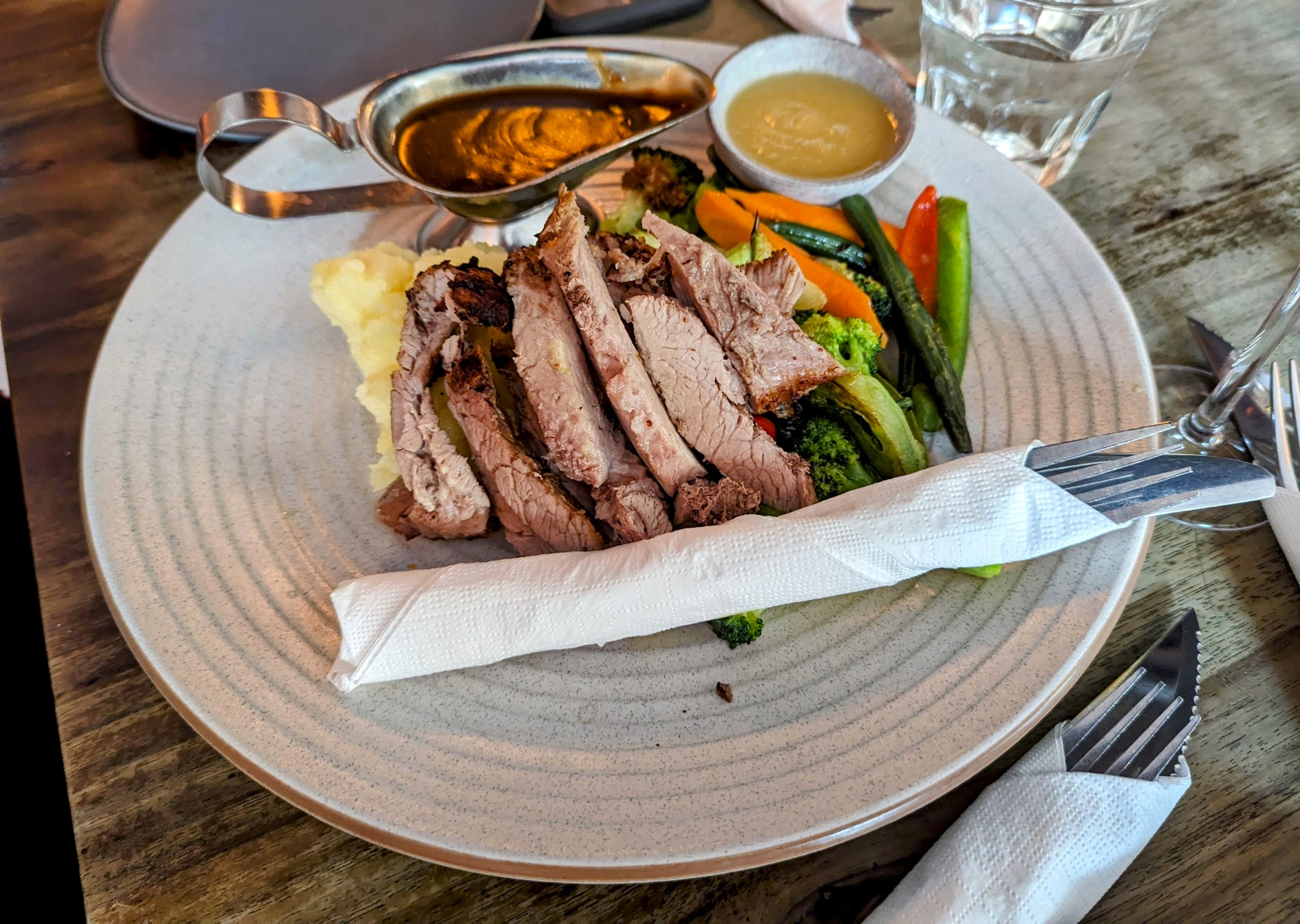
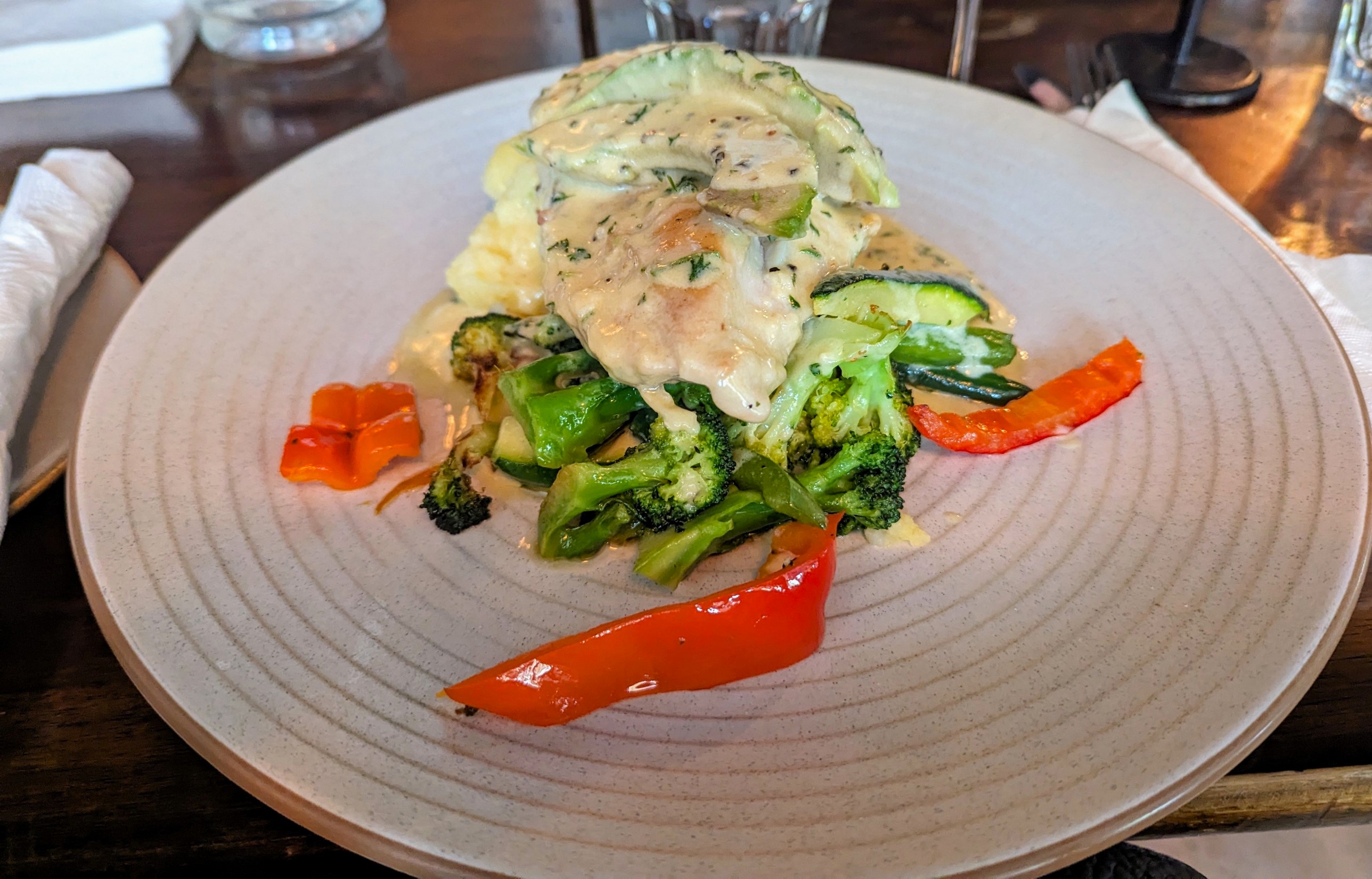
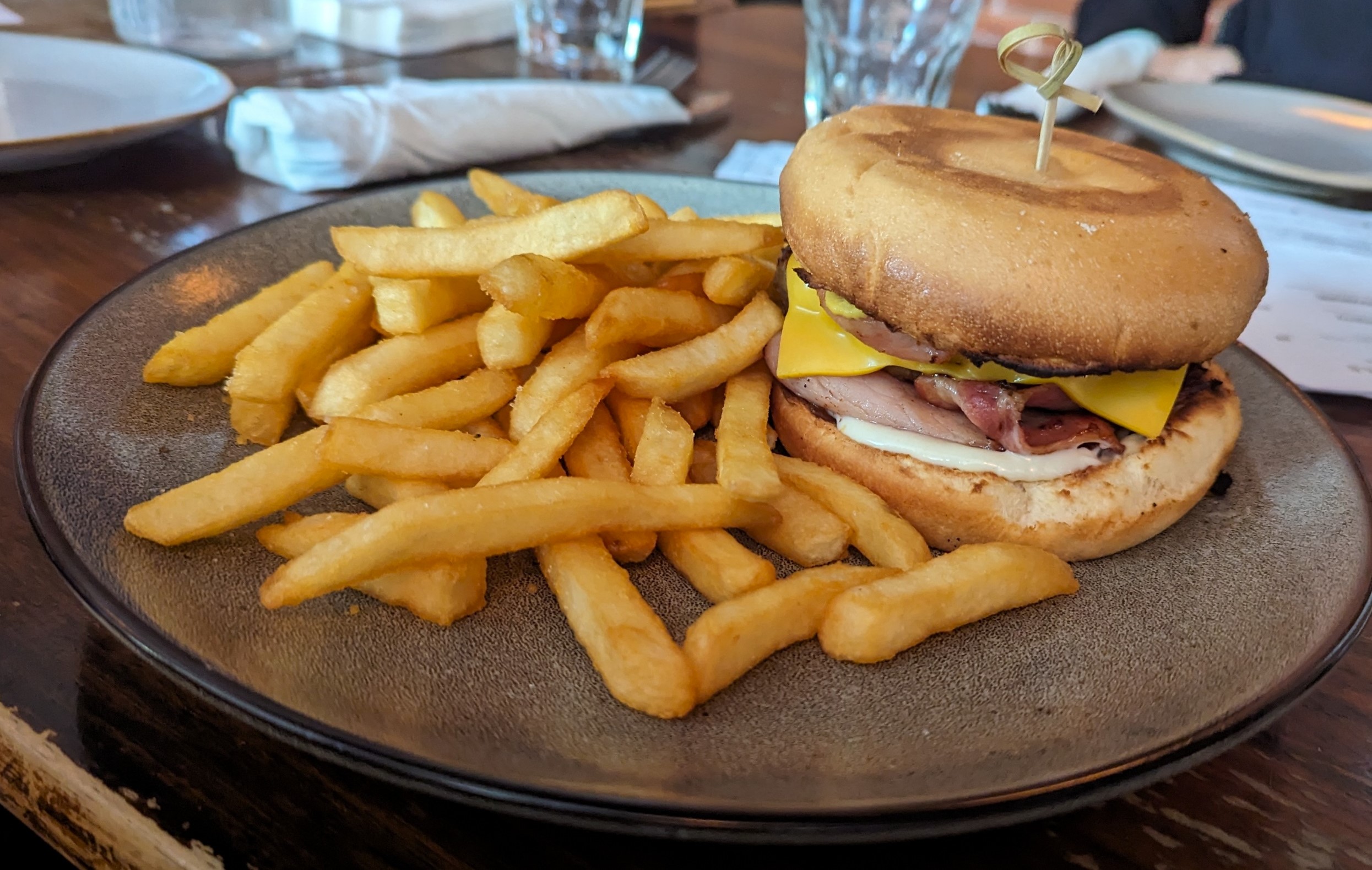
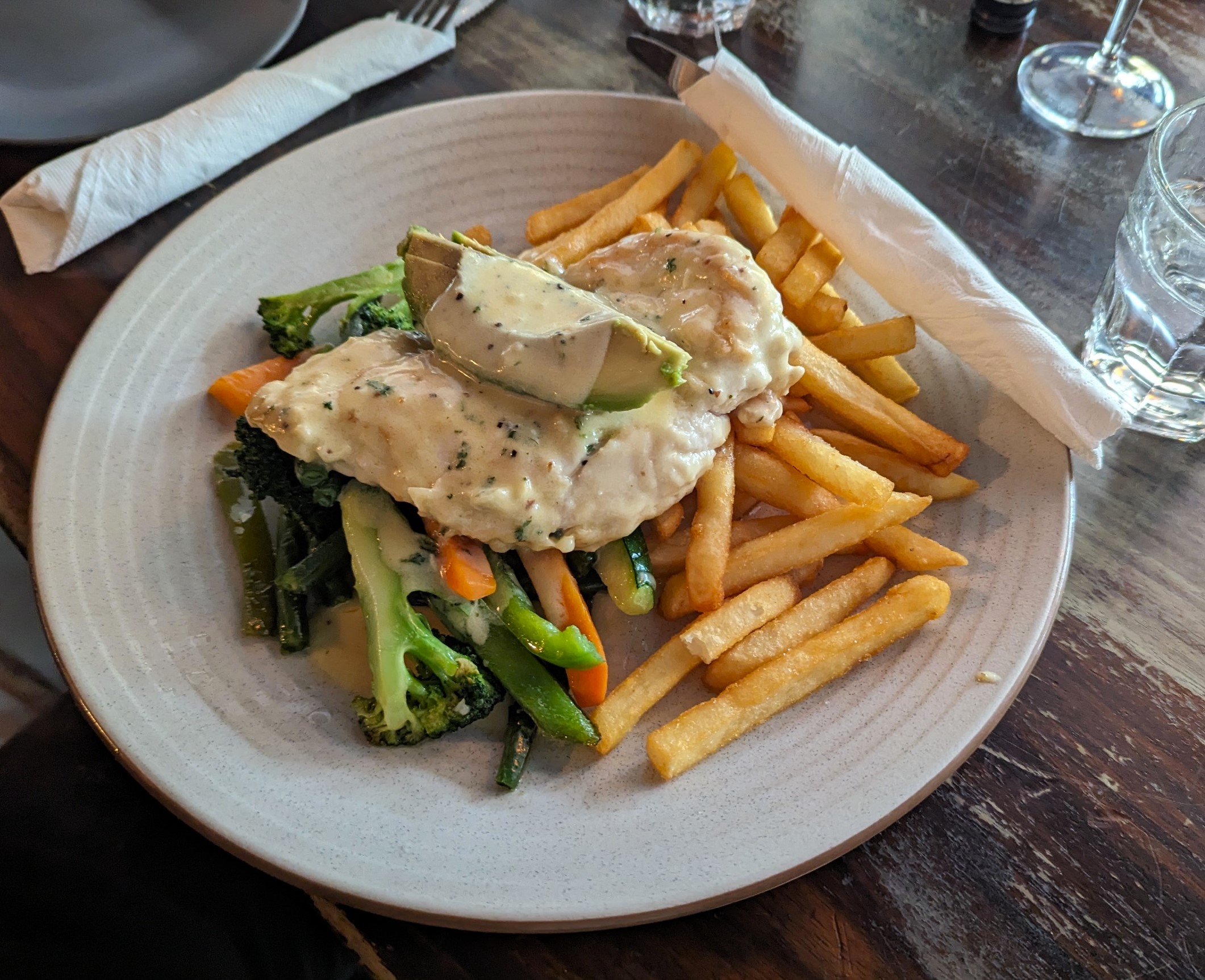
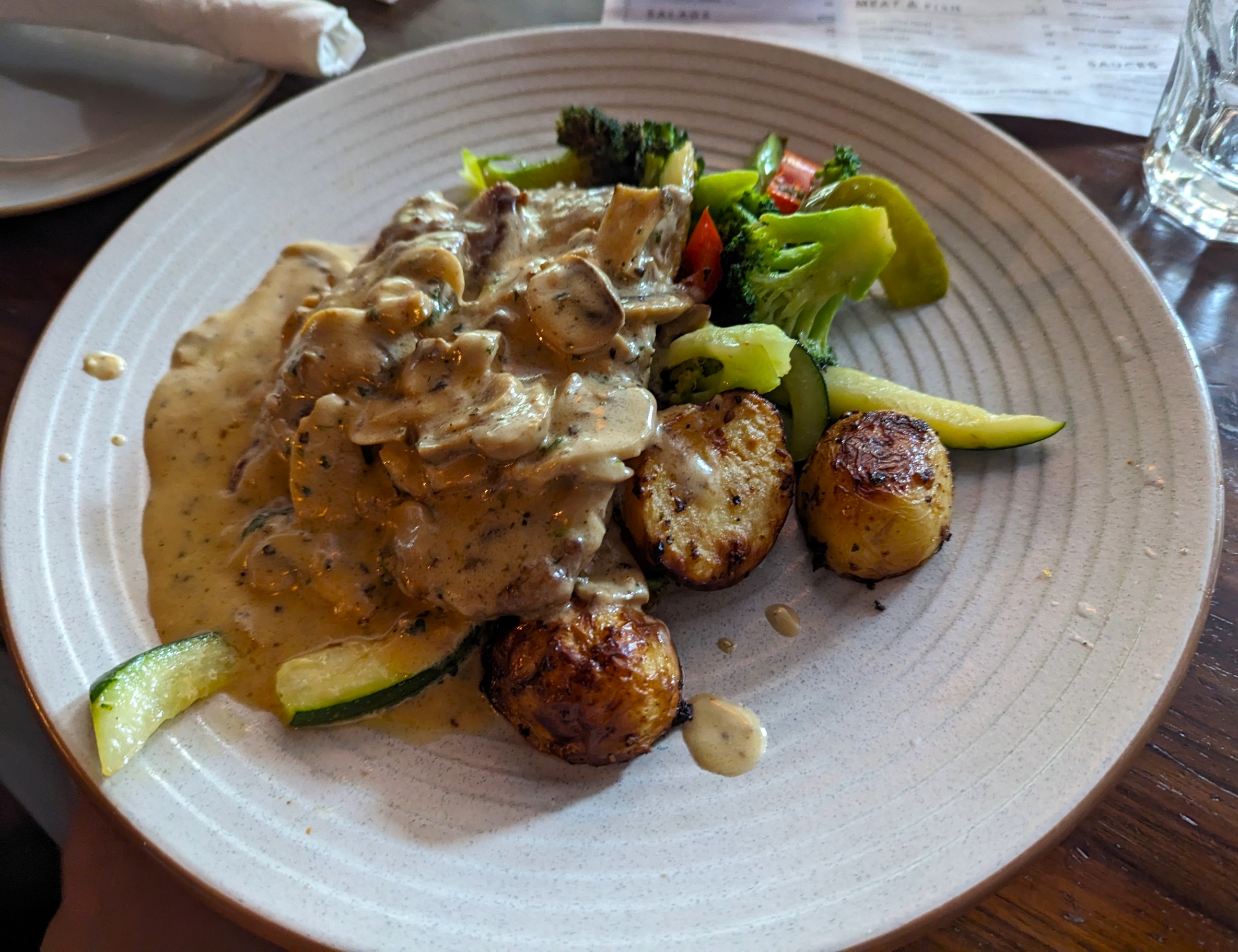
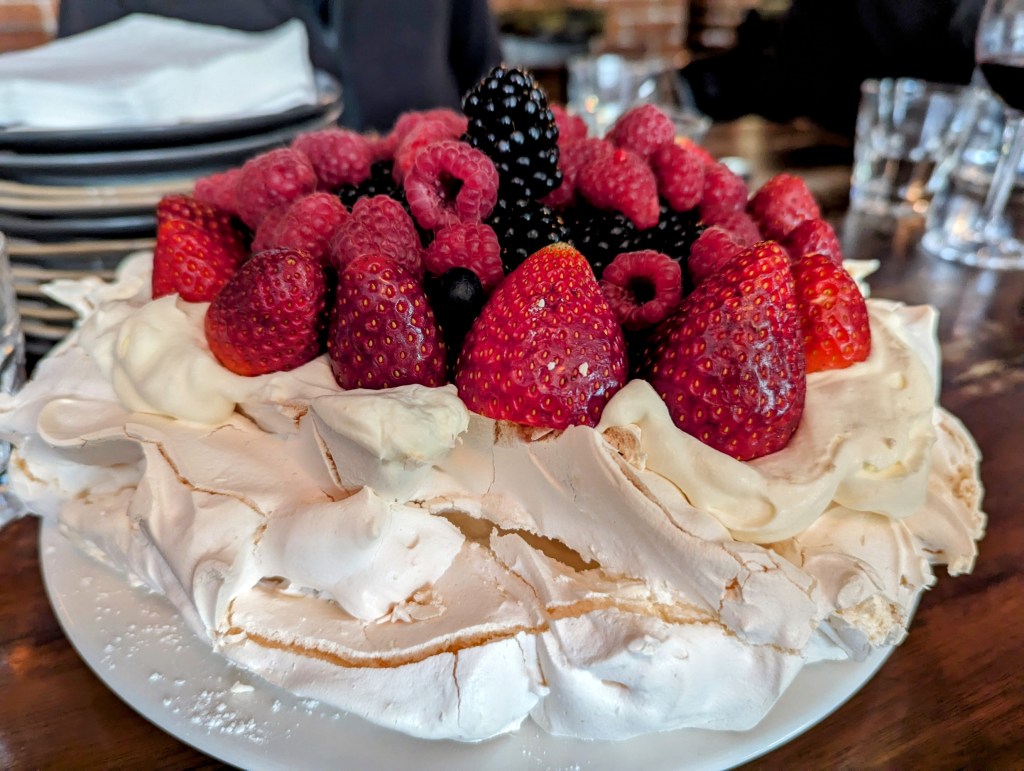
The special occasion was marked by PJs with a Mimosa for each mother on her arrival, an excellent roast pork meal, and the choice of the usual long and varied menu. Our lunch was followed by a wonderful mother’s pavlova (following in her mother’s footsteps). The pavlova was a delightful finish to a pub lunch that was reminiscent of those served in the British pub – something I am always glad to return to when there.


The Independent
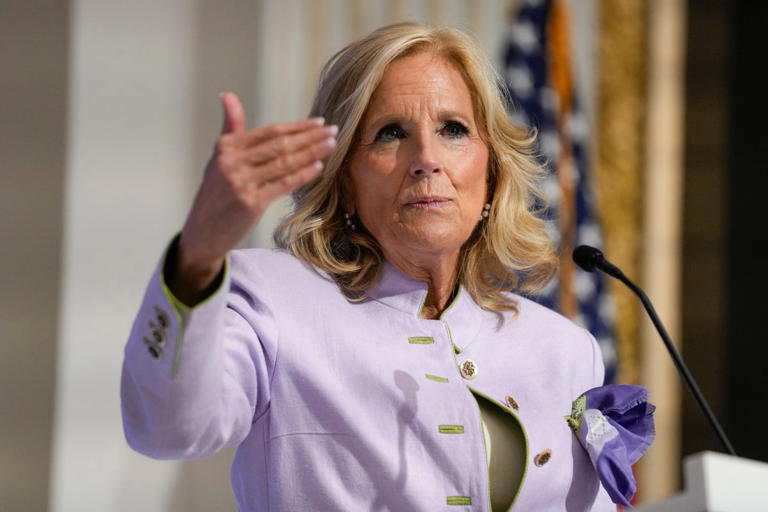
Jill Biden tells Arizona college graduates to tune out people who tell them what they ‘can’t’ do
Story by Darlene Superville
Jill Biden Commencement© Copyright 2024 The Associated Press. All rights reserved.
Jill Biden on Saturday told Arizona community college graduates to tune out the people who like to tell them what they can’t do.
Then she got three more, including two master’s degrees and, at age 55, a doctorate in educational leadership. She went to school at night while raising three children and working full-time.
The first lady has been a teacher for more than 30 years, and since 2009 has taught English and writing at Northern Virginia Community College.
She encouraged the graduates to “drown out” the voices that say “can’t” and to remember the challenges they overcame to get to wear a cap and gown on Saturday.
“You’ve met life’s challenges before. And you know that on the other side of ‘can’t’ lies the beauty and joy and surprise of life, the adventure that changes us for the better,” she said, according to excerpts of her prepared remarks shared with The Associated Press. “And you are ready for it.”
Biden said the graduates should remember that they are strong and resilient, and shouldn’t be afraid to face the unknown.
“Expect anything and everything. Take the risks that scare you. Don’t hesitate when you see the chance for joy. Share your stories, too. Be kinder. Love harder. Dream bigger. Find your adventure and keep your courage to say ‘yes.,'” she said.
To the Class of 2024, she said, “Let the world feel your thunder!” The college mascot is the thunderbird and” feel the thunder” is the school slogan.
“And the next time that someone tells you that you ‘can’t,’ you’re going to say, ‘Oh yeah?…Watch me,’” Biden said.
Independent readers are independently-minded global citizens. They are not defined by traditional demographics or profiles, but by their attitudes. In today’s increasingly fragmented world, communities value real facts and frank opinions delivered first-hand from a non-biased news brand that they can trust. Armed with information and inspiration, Independent readers are empowered and equipped to take a stand for the things they believe in.
Milli Hill

MAY 08, 2024
Announcing my new book: Ultra Processed Women – It will be published in February 2025.
Hi everyone, as you know, I’ve been desperate to tell you my book news over the past few weeks and NOW I FINALLY CAN!!
I’m really proud to announce that ULTRA PROCESSED WOMEN will be published by HQ (Harper Collins) in February 2025.

It will be a deep dive into the impact of ultra-processed food (UPF) on women’s health.
UPF is a hot topic right now but once again I’m noticing the impact on women being left off the table. This book will change that!
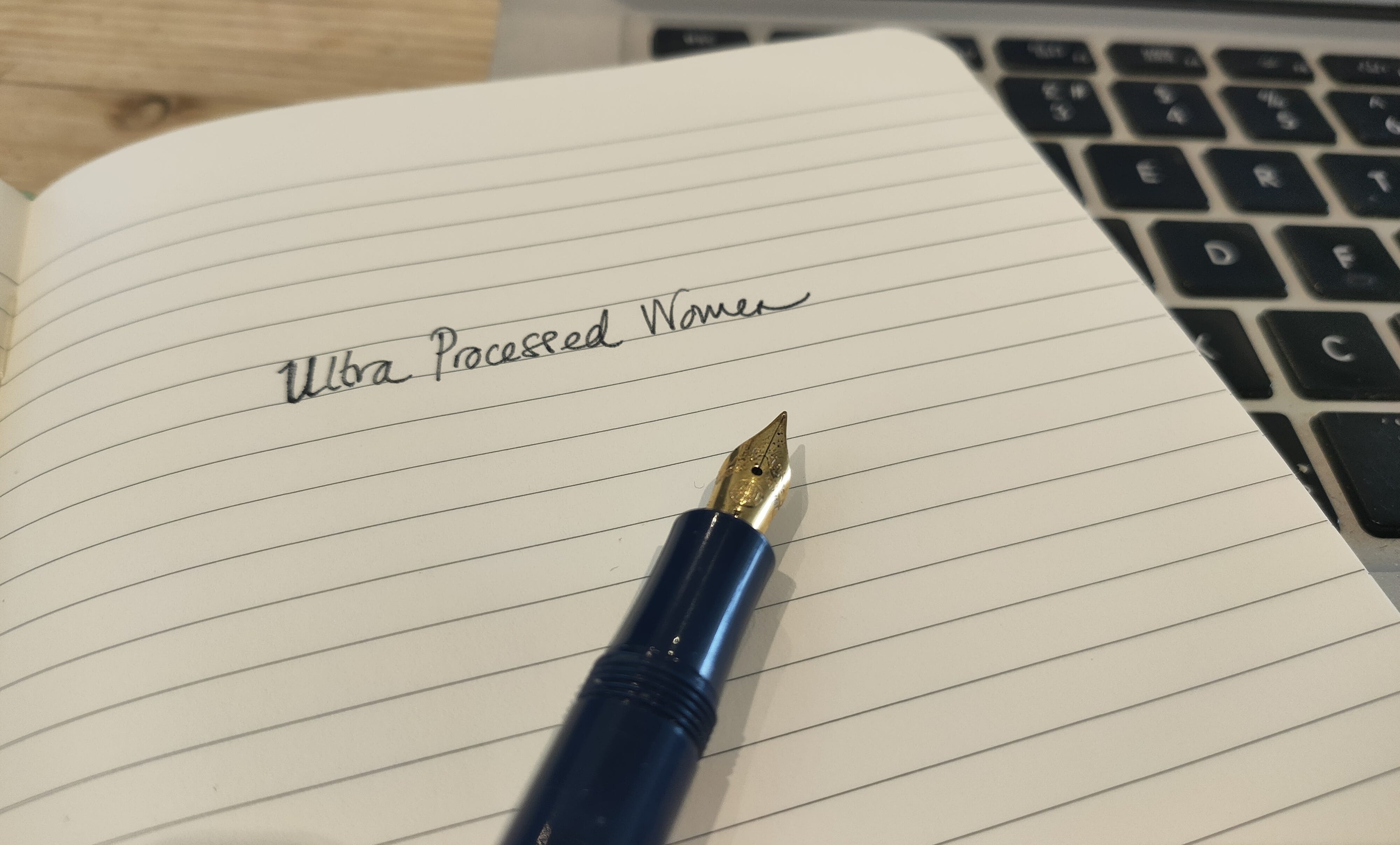
I have started a new section of my substack today where I will be keeping you all updated on progress of the book and some exclusive thoughts and ideas as I go.
As I’ve mentioned previously to some of you, I am looking for women to experiment with the impact of diet in small facebook groups. I would like to hear from you if you have either endometriosis or are struggling with menopause symptoms (with or without HRT), and would like to be involved. Please email me for more info. You can reply to this substack or message millihillwriter@gmail.com.
If you wish to you can preorder the book from today via Amazon!
Preorder Ultra Processed Women
I am beyond excited about this book and extremely grateful for the opportunity to write it. Yet another area where sex matters! Looking forward to sharing news with you over the coming months. Milli x
From the Gender Institue Newsletter 13 May 2024
Mentored to Perfection The Masculine Terms of Success in Academia
SIMONE DENNIS AND ALISON BEHIE
Mentored to Perfection: The Masculine Terms of Success in Academia examines how mentoring programs between women tend to replicate the hierarchical relations of patriarchy that they are meant to dismantle. Simone Dennis and Alison Behie argue that, while paradigmatic mentoring programs look like networking support services for neophytes, these mentorships nevertheless replicate the very institutional structures they seek to uproot. The generosity that senior women show to junior women as they share their tips and offer their support ironically obscures participants’ involvement in debt relations and the biases of replicating a particular type of success. This book considers the possibilities for disrupting our tendency to reproduce ourselves in the masculine terms of success.
A challenging and persuasive provocation. The current “neoliberal” university is a patriarchal institution in which success is measured according to an “economy of knowledge” that favours men. What is called for, Simone Dennis and Alison Behie argue, in a lucid analysis closely tied to Australian ethnography, is mentorship as a form of what Roslyn Diprose calls “corporeal generosity,” whereby the mentee does not emulate or imitate the mentor but both open themselves to the radical alterity intrinsic to the embodied identity and capability of each. Through such sharing, the order of the same might be transcended and caring institutional forms introduced in which otherness—of women, of the precariat, of individuality itself—is recognised and respected.
— Nigel Rapport, University of St Andrews; author of Cosmopolitan Love and Individuality: Ethical Engagement beyond Culture
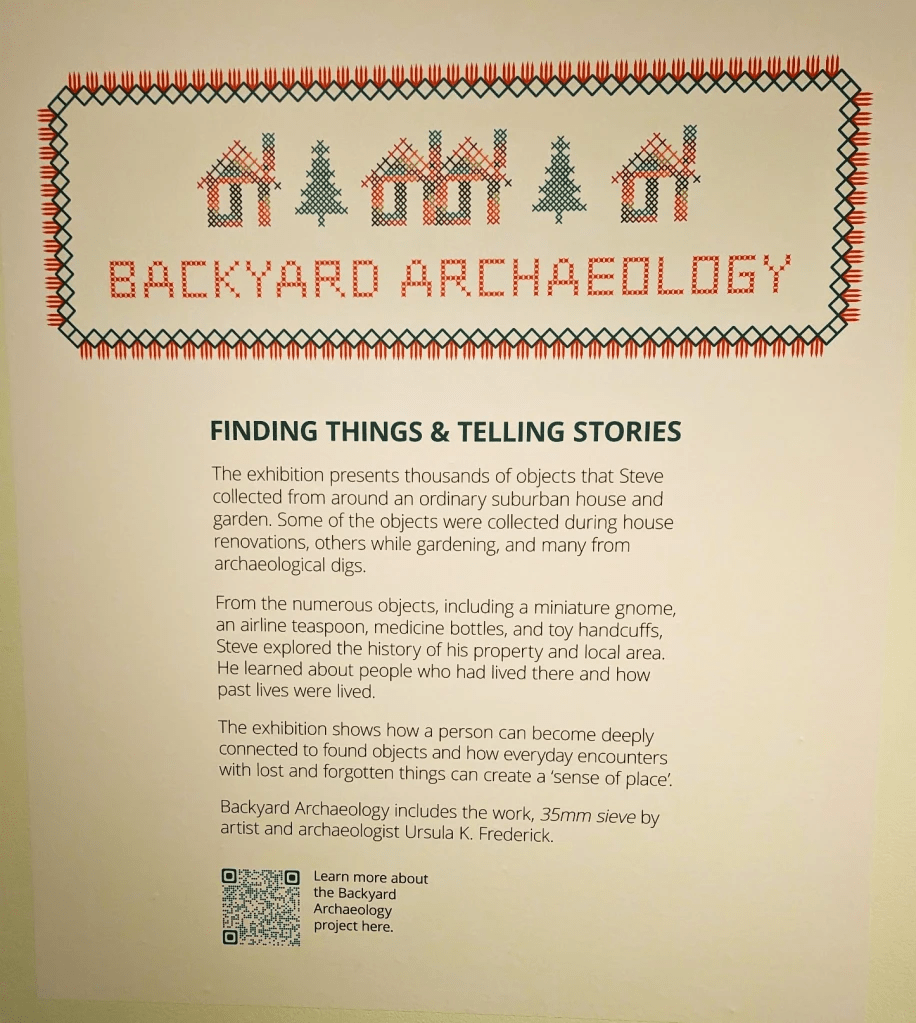
Last week I went to the Canberra Museum and Gallery exhibition of Backyard Archeology. This week I see that the Museum is hosting a Symposium on the topic. It will be held on 25 May 2024 12.30 – 3.30 pm. The venue is 176 London Circuit, Canberra ACT.
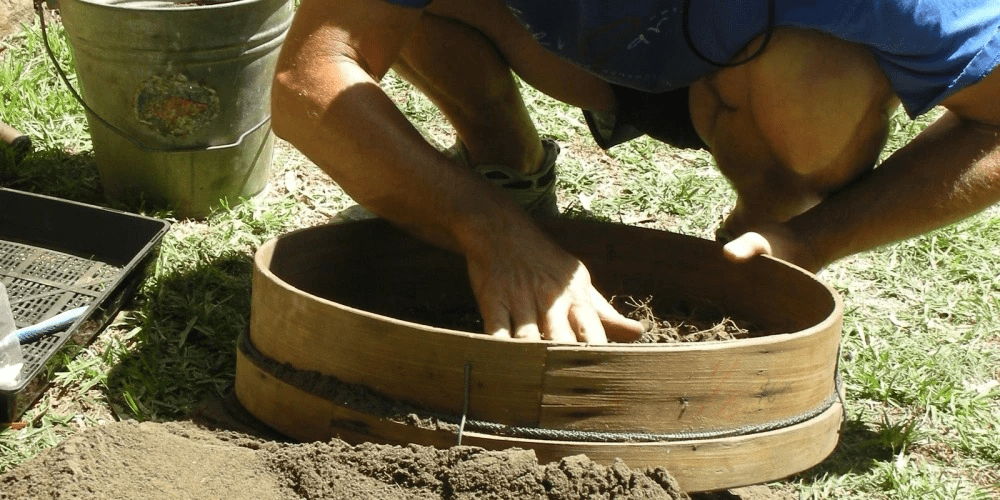
Event by Canberra Museum and Gallery
Tickets events.humanitix.com/backyard-archaeology-symposium-knrklqc6
Public: Anyone on or off Facebook. 10 free places for full time students.
From backyard dunnies and bunkers to the backyard of Blundells Cottage. Hear how backyard studies can reveal and inspire stories of everyday life through found and excavated objects and nurtured gardens.
The presenters are Steve Brown (Backyard Archaeology), Martin Rowney (Backyard Blundells), Nicola Hayes (Backyard Bunker), Doug Williams (Backyard Dunny), and Anne Claoue-Long (Backyard Garden).
The Symposium will appeal to people interested in family history research and creating place history narratives. The presentations aim to raise awareness of archaeology, history, and horticulture in local contexts and of personal importance (as opposed to the grand and the best).
The Symposium is supported by the Canberra Museum + Gallery, University of Canberra ‘Everyday Heritage Project’ and Australian Archaeological Association.
Part of National Archaeology Week.
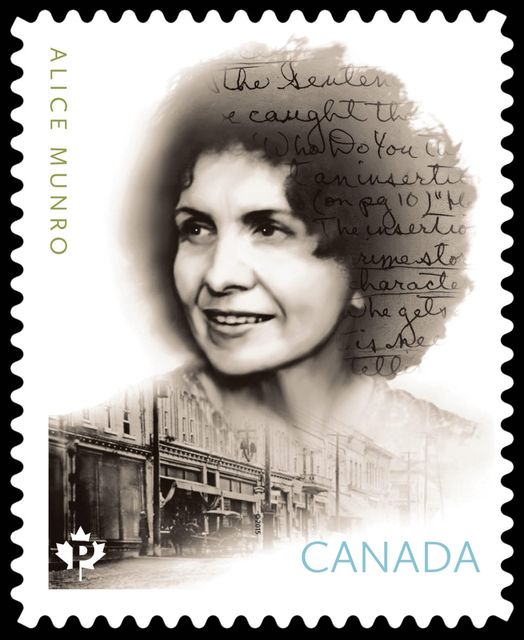
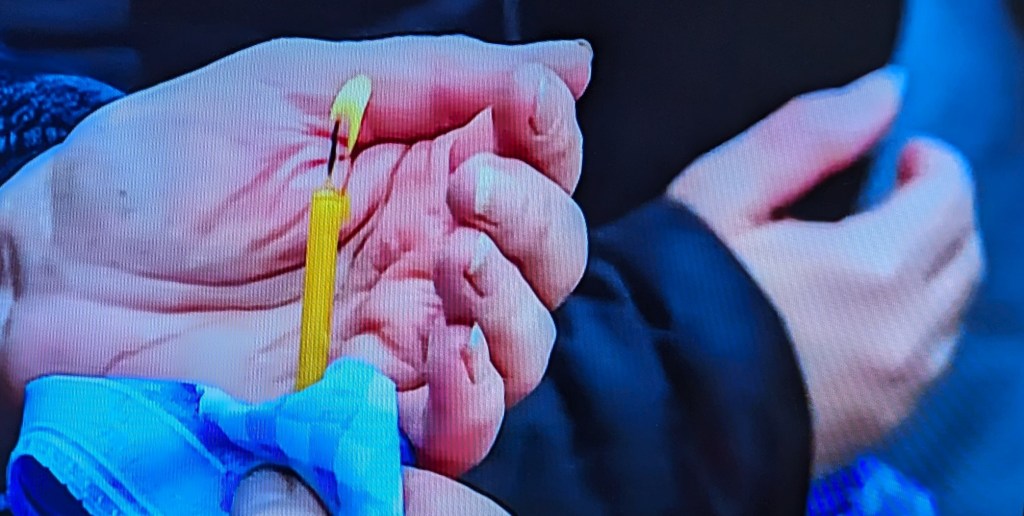
Alice Ann Munro (nee Laidlaw) 10 July 1931, Wingham, Ontario – 13 May 2024, Port Hope, Ontario
 Robin's Room