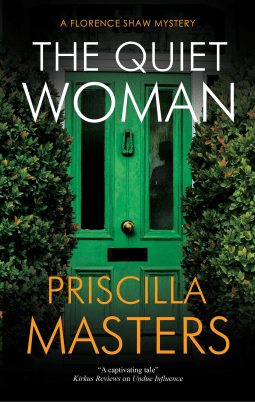
Priscilla Masters The Quiet Woman Book 2 of A Florence Shaw Mystery, Severn House, July 2024.
Thank you, Net Galley, for providing me with this uncorrected proof for review.
The Quiet Woman is an intriguing murder mystery in so many aspects –characterisation, plotting, pace and writing style. Nurse Florence Shaw is a quiet woman, herself, although the title refers to the woman who attends her surgery, the occasions accumulating with no answers, her husband’s irritation and coldness readily apparent, and Florence Shaw’s concerns tumbling throughout her mind as she goes about her other activities.
Dates and times are appended to most chapters so that Florence Shaw’s days hour by hour are accounted for. She wakes, dresses, has breakfast and leaves for work. There she interacts with the receptionists, sees her patients and exchanges warm conversation with Jalissa who brings her lunchtime sandwich. Later she investigates her former husband’s activities with his new partner on the net, or meets friends, one of whom she interacts with increasing frequency. Will and Florence share both an interest in detection and the possibilities of a romance as they spend time getting to know each other better. See Books: Reviews.

Mimi Zieman, MD Tap Dancing on Everest A Young Doctor’s Unlikely Adventure Globe Pequot Falcon Guides, April 2024.
Thank you, NetGalley, for providing me with this uncorrected proof for review.
Mimi Zieman makes an enduring tribute to her family, those who are living, and that of her father who was the only member of his family to survive the holocaust. Her zest for living, packing several significant activities into a short time, her capacity for friendship and love is the underlying theme that resonates through her coming to grips with her faults (as she sees them), her femaleness and propensity to underplay her abilities and the demands, physical and mental she imposes on herself.
Throughout this book an endearing person emerges, in the large figure she sees as herself in the earlier years, to the woman who climbs Mt Everest as a team doctor during her medical studies. Mimi Zieman is strong, thoughtful and not without faults – an ideal figure to follow from her childhood to her married life as a doctor, wife and mother. Paramount is the Mt Everest excursion, but tapdancing has an engaging role too, and her romances round out a character who has the ability to capture the heart of her readers. See Books: Reviews.
CMAG SYMPOSIUM: Backyard Archaeology
This symposium was held on the 25th of May and demonstrates the work undertaken by CMAG. As I had been to the exhibition, featured in last week’s blog, I would have liked to have been able to attend. However, I was away and can only imagine how interesting it must have been. It was aimed at a general audience, and included case studies from the ACT region and a panel discussion on the idea of ‘backyard archaeology – everyone can do it!’
The presentations were aimed at raising awareness of archaeology, history, and horticulture in local contexts and of personal importance (as opposed to the grand and the best). They showed how backyard studies can reveal and inspire stories of everyday life through found and excavated objects and nurtured gardens.
It was suggested that the Symposium would appeal to people interested in family history research and creating place history narratives.
The presenters were Steve Brown (Backyard Archaeology), Martin Rowney (Backyard: Bricks), Nicola Hayes (Backyard Bunker), Doug Williams (Backyard Dunny), and Anne Claoue-Long (Backyard Garden).
The Symposium was supported by the Canberra Museum + Gallery, University of Canberra ‘Everyday Heritage Project’, and Australian Archaeological Association. It was a National Archaeology Week event.

Cindy Lou eats out in Melbourne
Green Refectory, Brunswick
Green Refectory warranted two visits in the short time I was in Melbourne. The coffee is good, the variety of sweet and savoury, large and small, hot and cold delicacies is amazing, and the ones I chose were delicious.



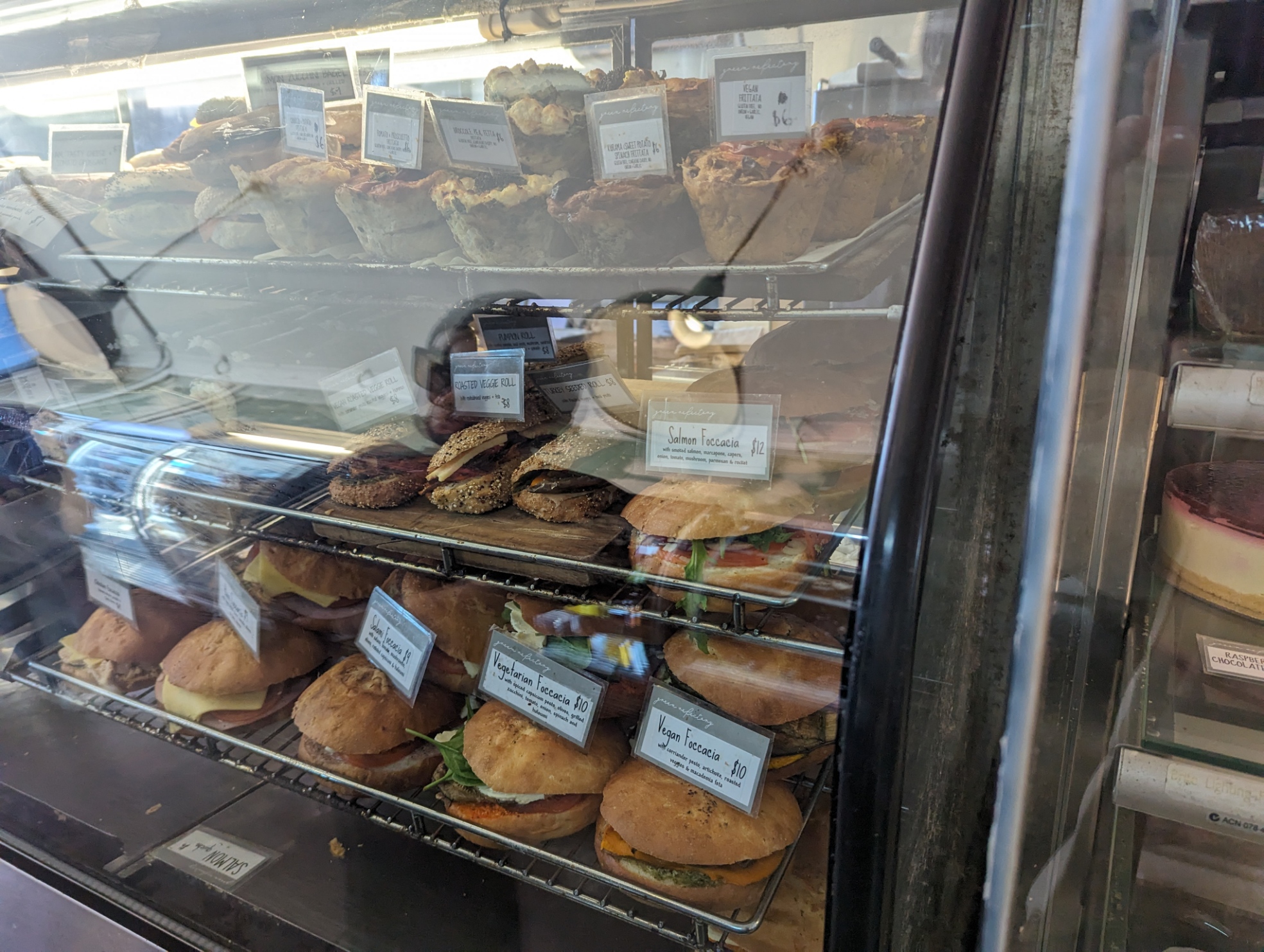
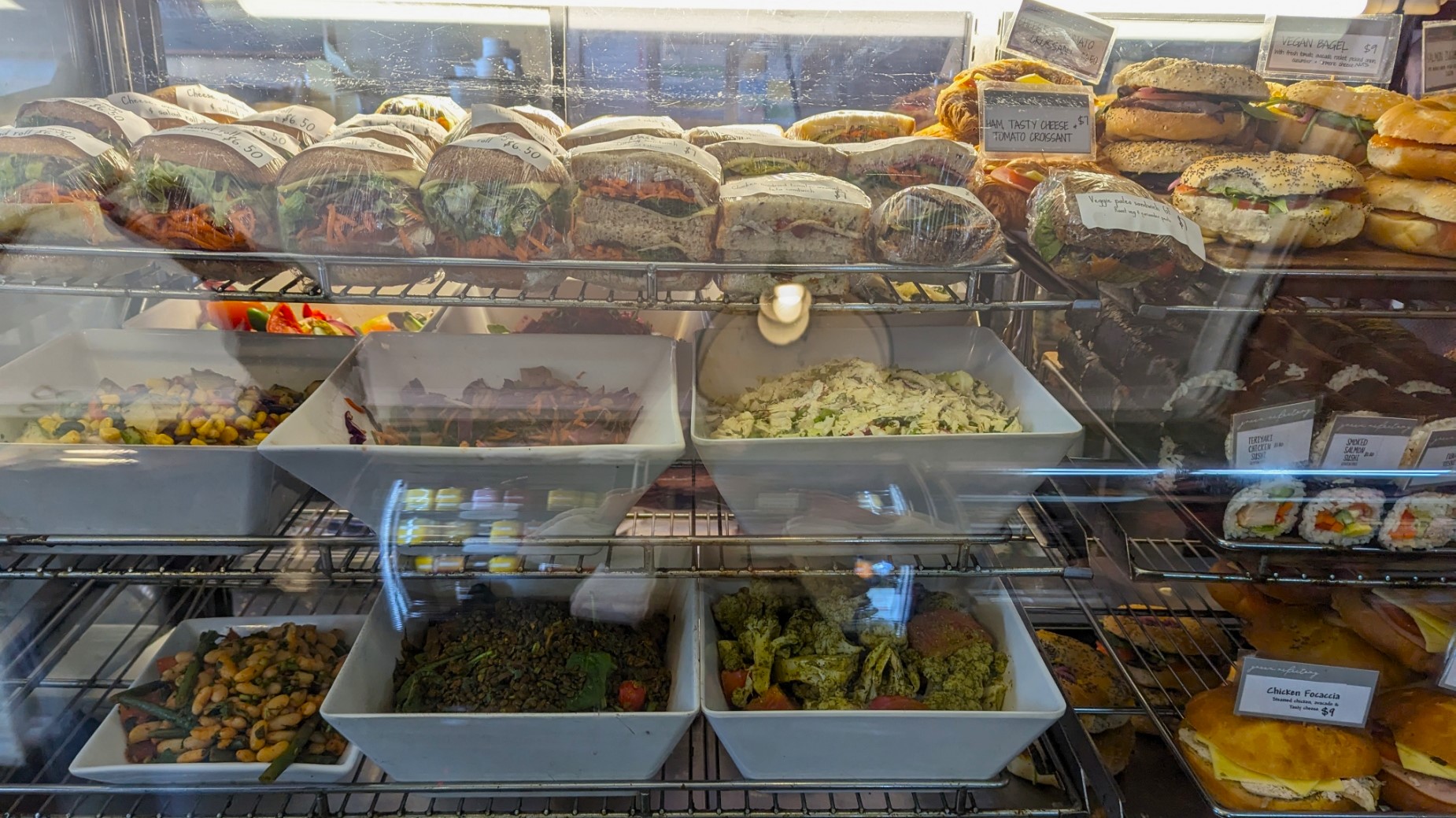
Green Refectory has an excellent system to inform the waitpeople where you are in the process of ordering, waiting and being served. Service is prompt and friendly, the seating is comfortable enough, and although crowded it is possible to hold a conversation.


Joy, Coburg
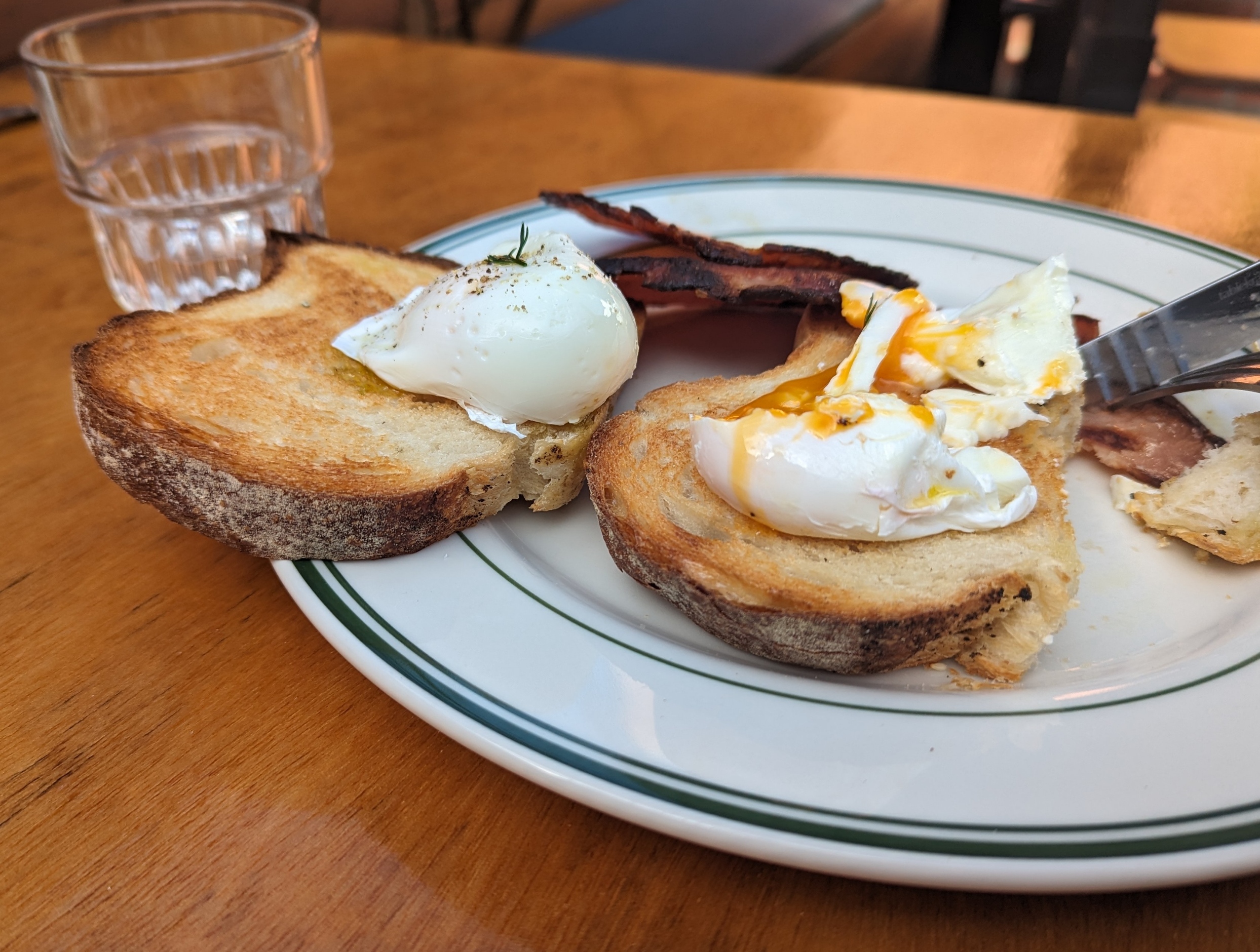
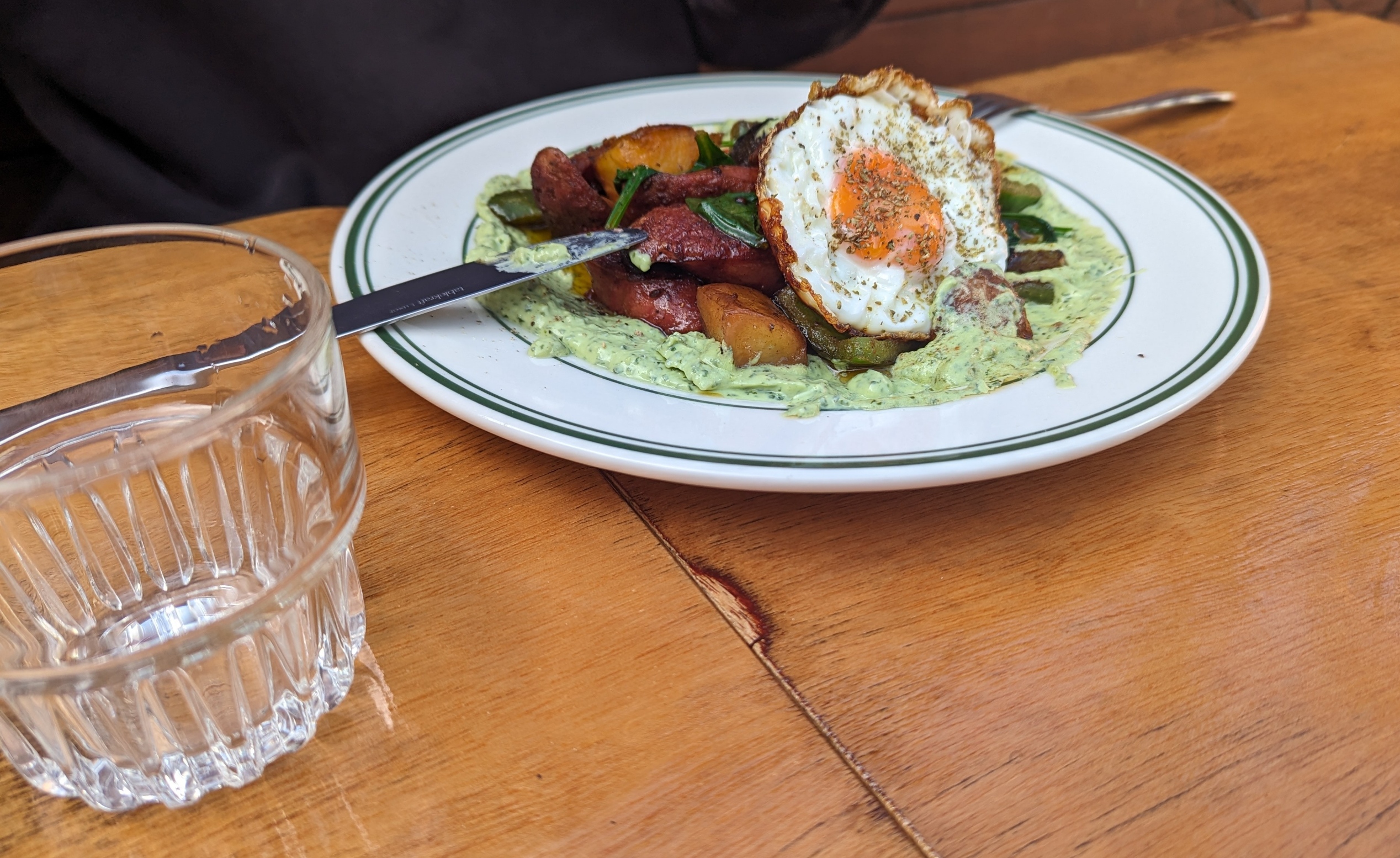
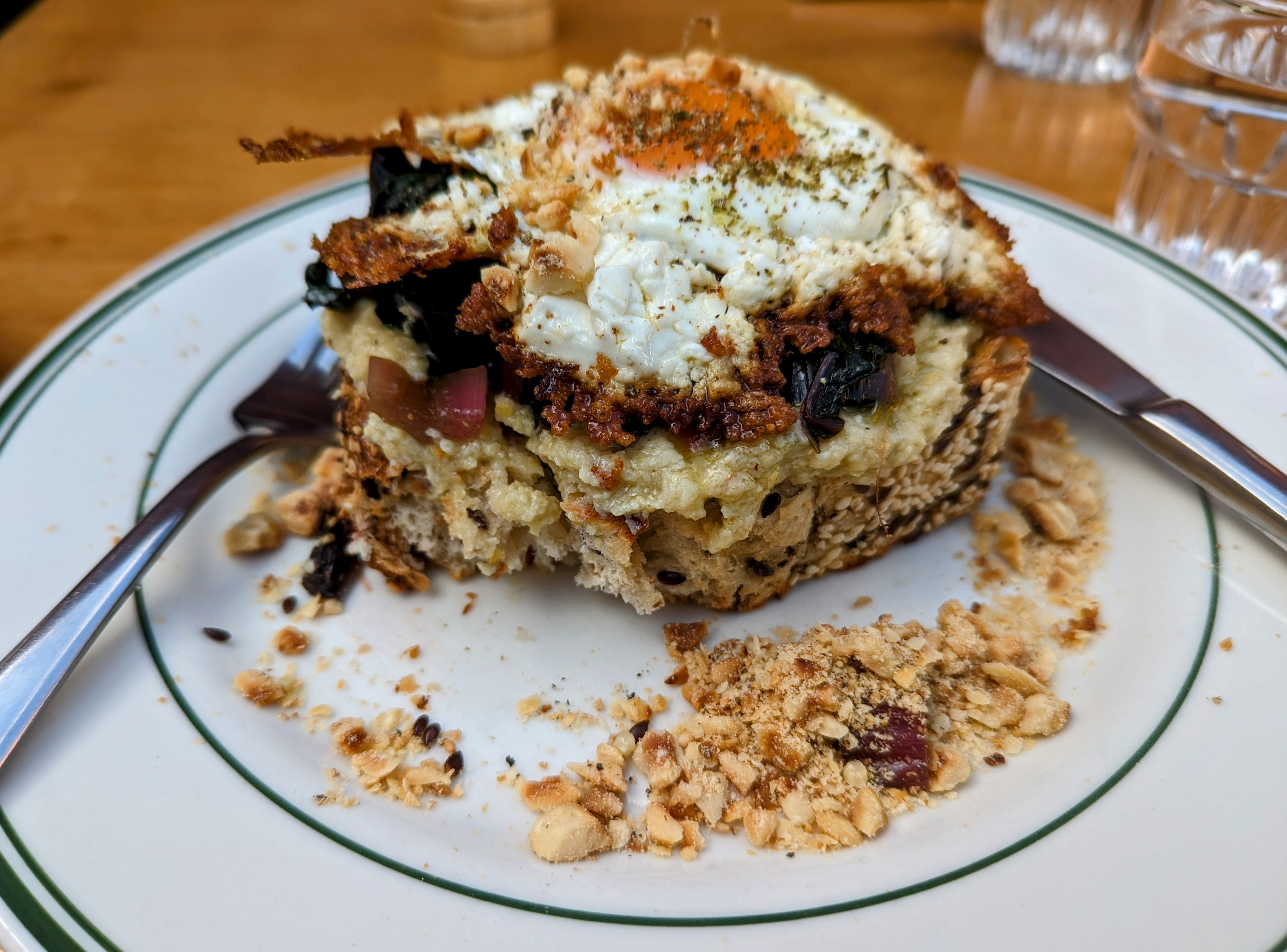
Another marvellous find for breakfast! We had cooked meals on this occasion, and they were, one and all, delicious, generous and exciting. As can be seen below, we began eating before I could take photos of the food before its elegant presentation was spoilt. The coffees were excellent. There is a lovely atmosphere, with indoor and outdoor seating.


Ciao Mama, Brunswick
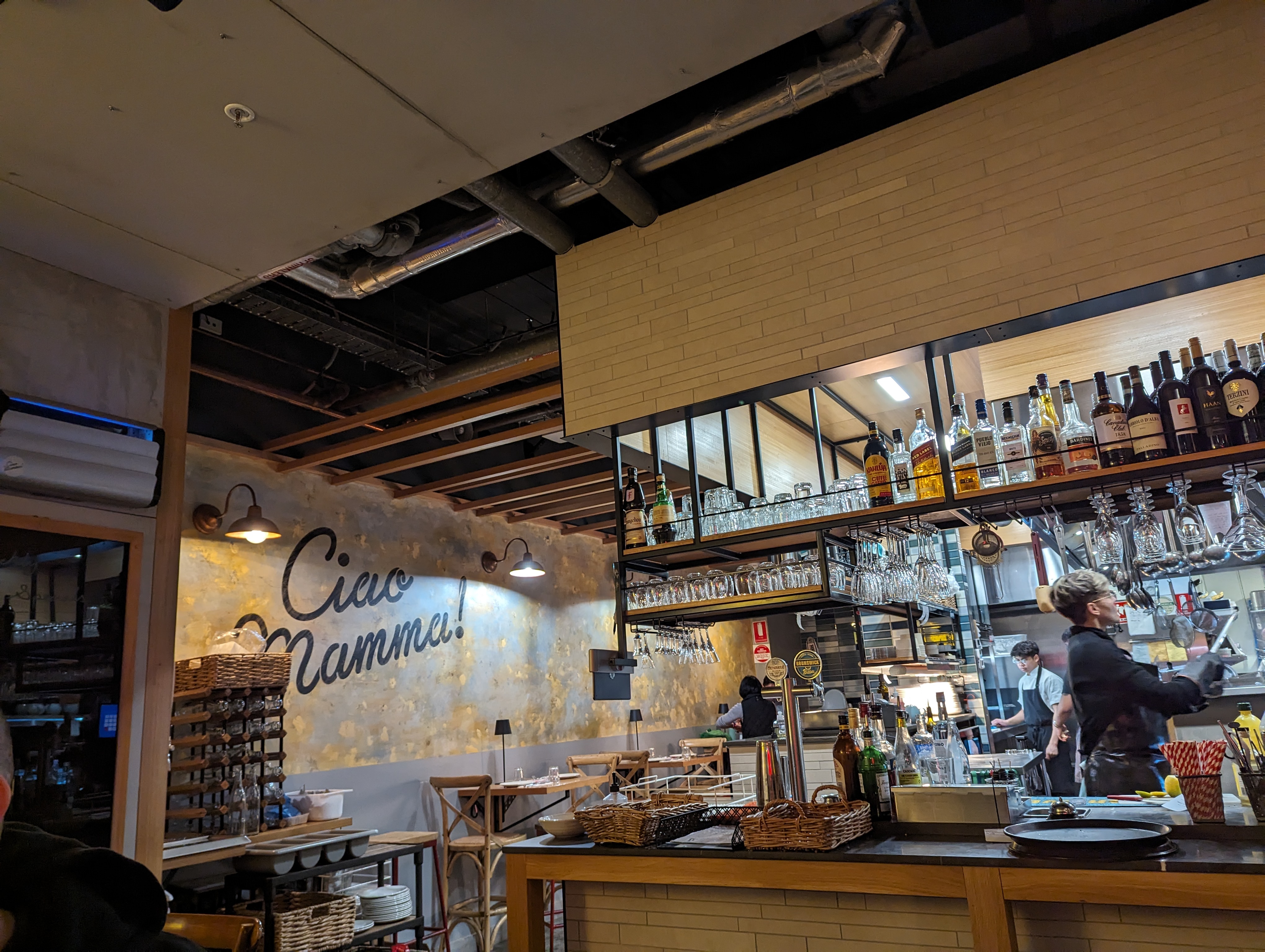
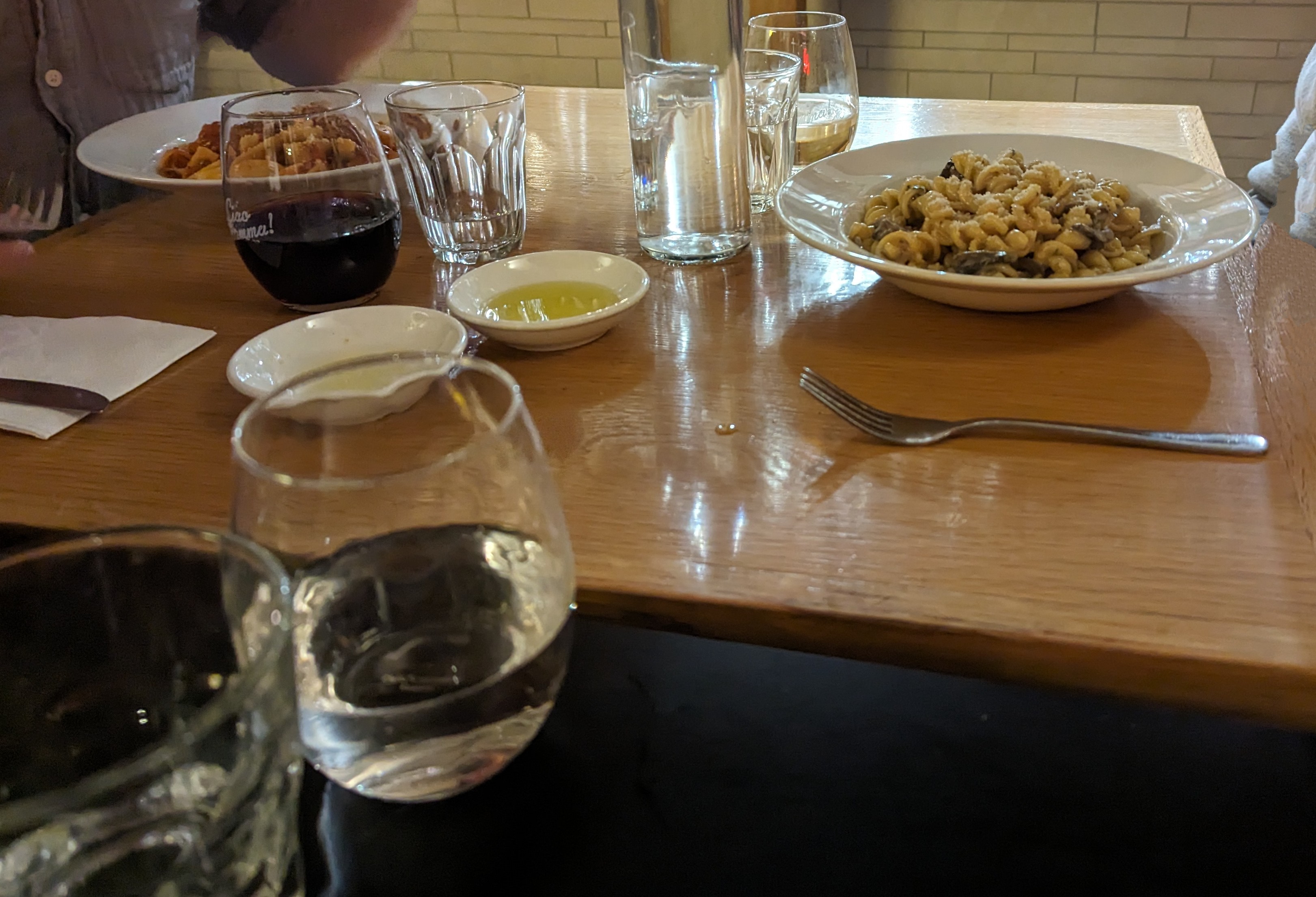
This is a pleasant enough pasta place, although its popularity makes it rather noisy. There is a choice of al dente pasta, types of pasta, and a variety of sauces. There is a good range of entrees. We enjoyed the huge green olives and warm bread with olive oil to start, and several different pastas. Unfortunately, the cannoli were not available for dessert, so we had to make do with ice-cream from the nearby ice-cream parlour.




Starbuck’s savoury pastries
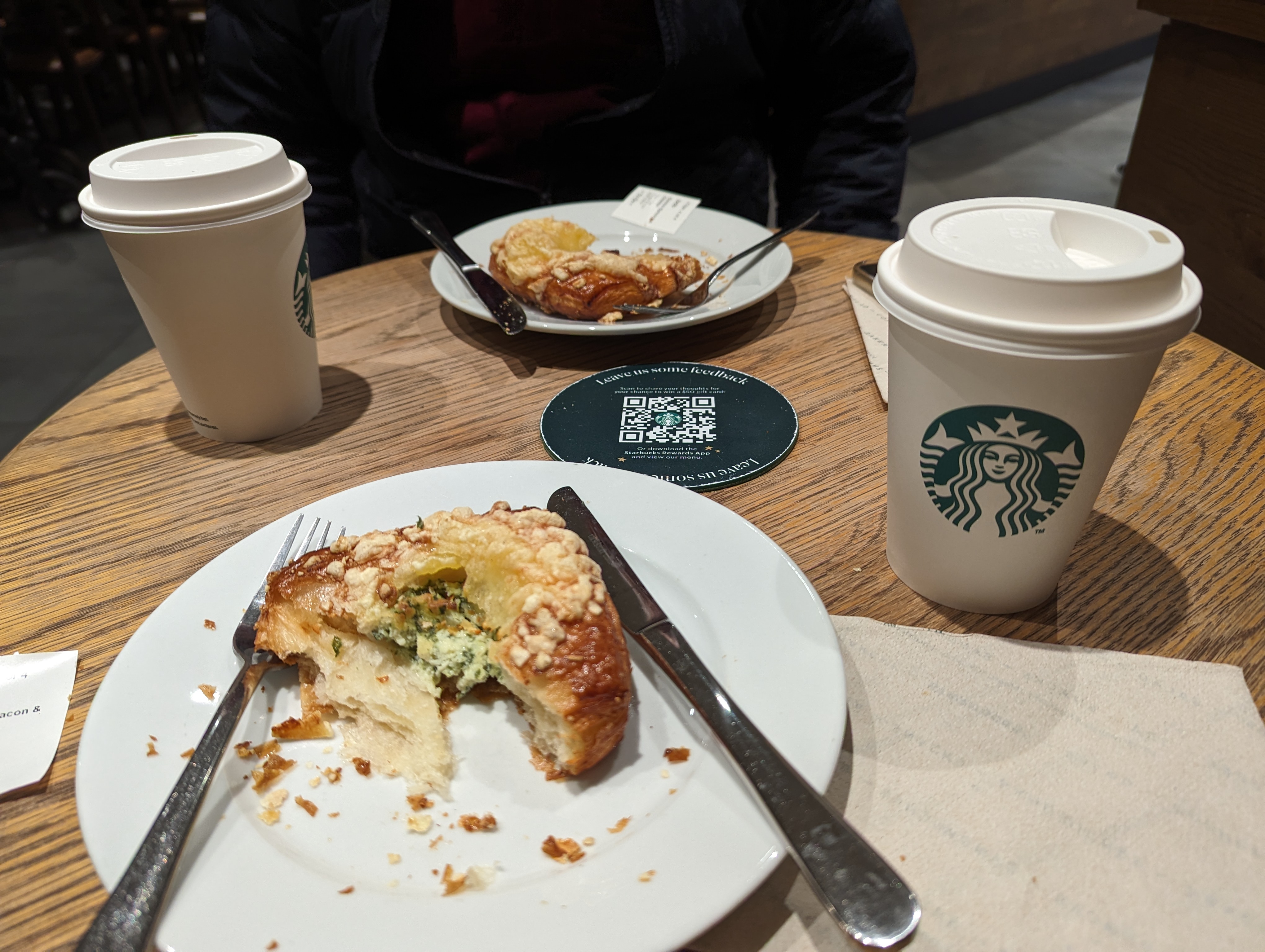
A simple but pleasant start to a morning shop in Melbourne was a coffee and pastry at Starbucks. The savoury pastries – ricotta and spinach and bacon and cheese – were warmed and served promptly. I was able to ask the staff about the availability of a large flat white – something that Starbucks (and most other coffee shops in London) appear unable to accomplish. Australian baristas cam manage to make a very good one.


Bar Idda, Lygon Street
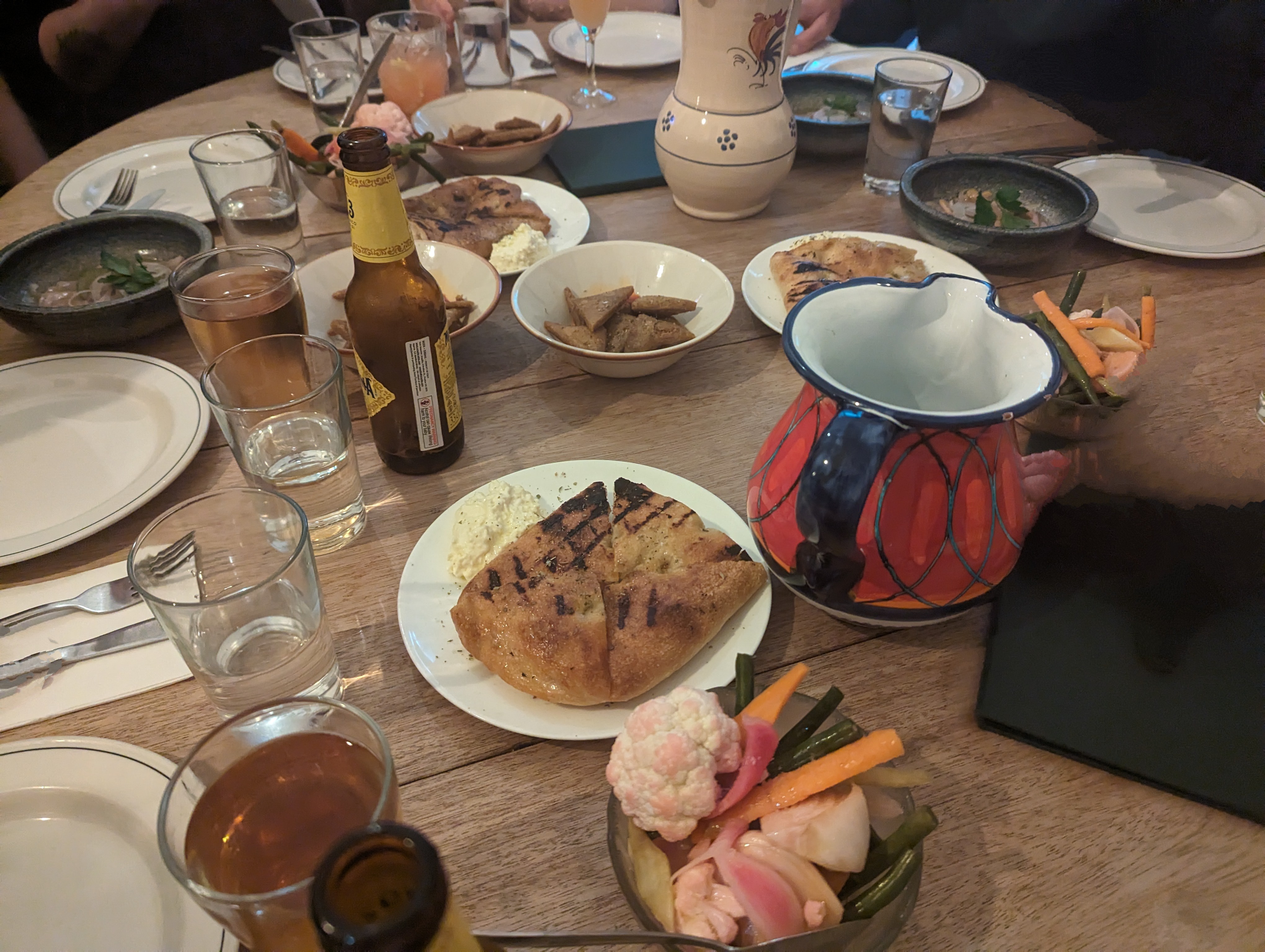
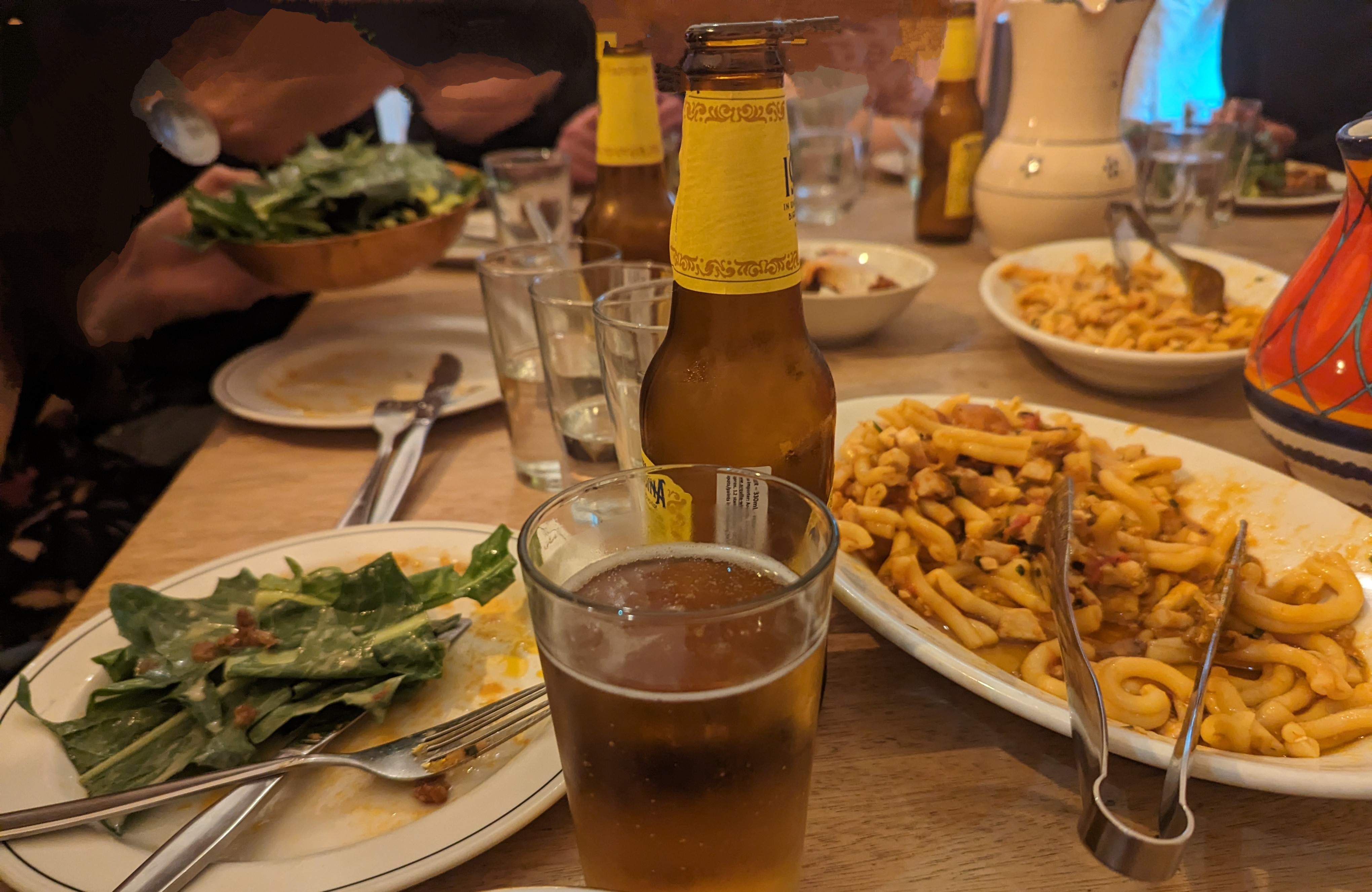
What a wonderful experience – food, staff, ambience and the company were a joy. As there was a large number of us, we had to have the set menu. However, we were able to make changes, and I did so. My request by email was answered promptly and a very satisfactory alternative was offered. When I had to increase the numbers, we were warned that the table was for 8 but if we were happy to squeeze in 10 could be accommodated. When we arrived the table and seating was excellent – I think that the staff had extended the table, even though that made it a little less easy for them to work around us. This friendliness and efficiency was the hallmark of an excellent night. The food was generous, varied and suited to fish eaters and non-fish eaters, meat eaters and non- meat eaters and vegetarians. Bar Idda is on my list of restaurants I must visit again.






Lui Boss, Korean, Brunswick
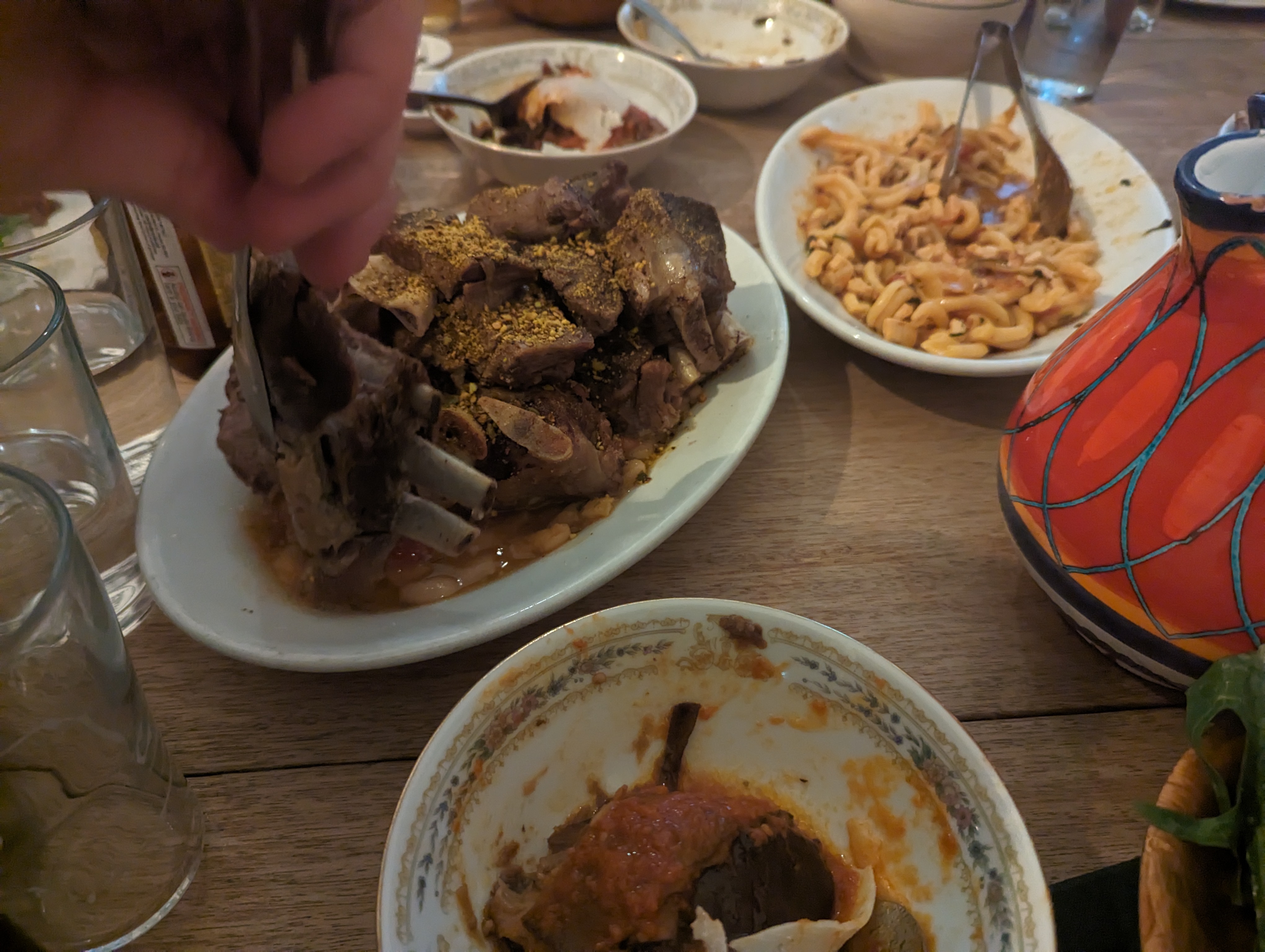
This is a cheerful restaurant, with a fairly extensive menu. To avoid the chili, I had the fried chicken – alas, the coleslaw accompaniment was smothered in sauce, which was such a pity, as unadorned it would have been fresh and crisp. The Hot Bap and Bolgogi Bap meals were a satisfying combination of meat, vegetables, noodles and a fried egg.


Australian TV drama ‘on the ropes’, ground-breaking study finds

Louise Talbot
May 28, 2024, updated May 28, 2024
Once upon a time in Australia, suburban lounge rooms were sacred ground for watching locally made dramas on free-to-air TV.
They featured our favourite stars delivering compelling and authentic Aussie storylines – a long-running home-grown TV drama or mini-series based on events in our nation’s history.
But an extensive study by Queensland University of Technology has found that Australian TV drama has nosedived in the past two decades. In fact, it’s “on the ropes”.
The four-year study found Australian television drama hours have plunged 55 per cent since their early 2000s peak – and the drama that is made is letting down the community thanks to “inadequate government policies”.

The days of families watching Australian TV drama at home has nosedived since the early 2000s. Photo: Getty
More investment, fewer returns
The study, titled Australian Television Drama’s Uncertain Future: How Cultural Policy is Failing Australians, found that although there has been an increase in federal government investment in TV drama, Australians are getting less back in return.
QUT researcher Professor Anna Potter said the failure of governments in dealing with the impact of digital technologies has led to a situation “in which corporate interests have been prioritised” over Australian culture and identity.
“Australians once enjoyed freely available, long-running series like Blue Heelers (Seven Network, 1994-2006), Water Rats (Nine Network, 1996-2001), and Offspring (Network Ten, 2010-17), as well as mini-series such as All the Rivers Run (Seven, 1983), The Dismissal (Ten, 1983), and Howzat! Kerry Packer’s War (Nine, 2012),” Potter said.
The reports says this is no longer the case and the Australian dramas we now see instead are increasingly not stories specific to our continent. See Television,Film and Popular Culture: Comments for the full article.
UK Election
Financial Review
This is one perspective on UK elections. Omitted are several features of UK elections that I observed while canvassing, standing outside polling booths, voting and celebrating Labour wins in Cambridge at Council and national level. In the introductory paragraph the writer mentions Labor and liberal staffers who have benefitted from experience in the British parties.
Although How to Vote cards are not part of the British electoral scene, the presence of party workers certainly is. This reflects one of the most important differences between the British and Australian systems. Compulsory voting means that the parties do not have to follow voters from canvassing them, deciding on who might be a voter for your party, ‘knocking up’ potential voters on election day, and providing the ‘scrum’ at the polling booths, checking whether potential voters have voted, keeping a record and arranging for those who have not voted to be followed up. Candidates visit polling booths in the same way that Australian candidates do. Political party representatives greet ‘their’ voters, exchange banter, and very happily take sustenance from party workers who bring around chocolates etc. The latter are necessary as it becomes darker and colder, and last-minute voters arrive. No, its certainly not the same as the Australian sausage sizzles, but voting day in the UK has a momentum of its own.
Proxy voting is a strange feature in some ways, but it is unlikely that a proxy voter would vote differently from the person for whom they proxy. In my experience, the Labour Party made the arrangements and trusted people would be proxy voters.
Canvassing every weekend, and sometimes during the week, snowing or not, is a distinct feature of the British electoral system. Voters are given the opportunity to talk to Party representatives, have their views heard and recorded, and hopefully (as far as the Party canvasser is concerned) give enough information about their preference. Many are keen to express their opinions and canvassing can be a delightful experience. I found it far easier to canvass in the UK than door knock in Australia! *
Five things about the UK election that would baffle Aussies
Politics in Australia and Britain look and feel similar. The big ideological cleavage between the major parties of right and left is comparable, and the two parliamentary systems are cut from the same cloth. There are plenty of Labor and Liberal staffers who have honed their craft inside the machine of their UK sister party.
This can lull Australian observers into assuming that everything in British politics works like it does at home. But similar does not mean identical.
There are a surprising number of ways in which a UK election differs markedly from an Australian one, requiring a distinct set of priorities, tactics and strategies. Here are the top five, in ascending order of importance (stay with us, the serious ones are at the bottom).
1. Voting is on a Thursday – and you don’t get the day off
What, no sausage sizzle? Can you even imagine that? No wonder turnout is so low (see no.4, below).
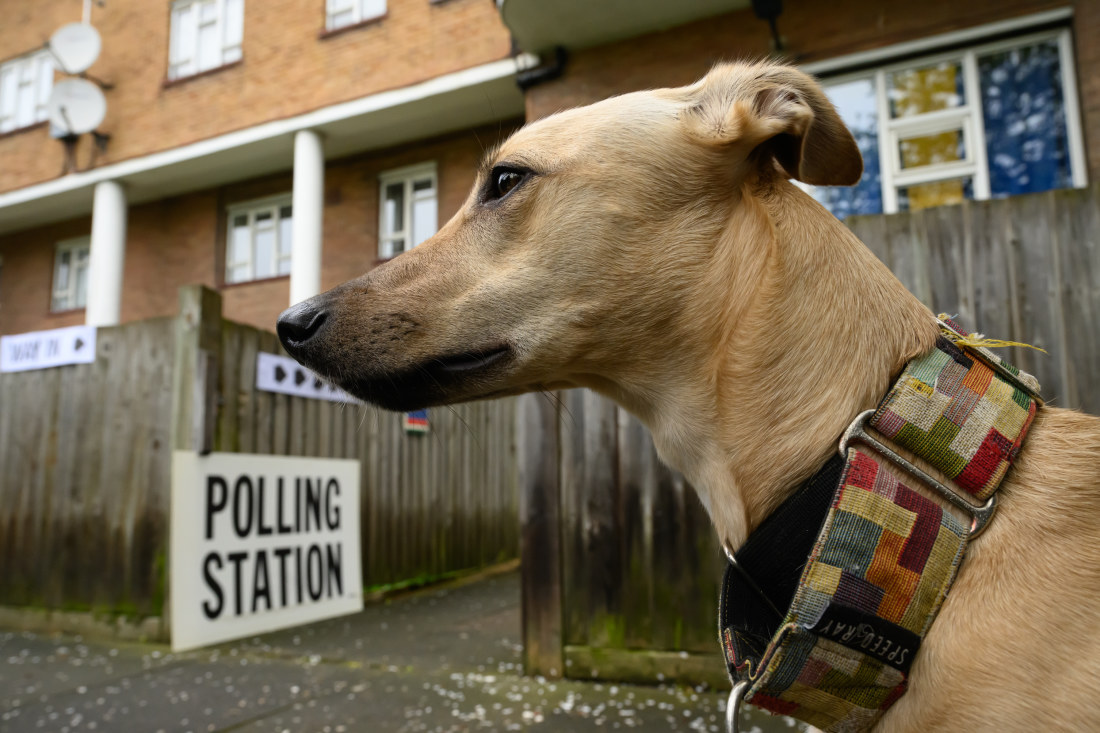
Actually, that’s not the only way British polling stations are less lively than their Aussie cousins. In a first-past-the-post voting system, the parties don’t need to dish out how-to-vote cards, so there isn’t that familiar merry scrum between gate and door. Although you may run into a novelty candidate, like the eccentric Count Binface, who stood in the London mayoral election wearing a bin on his head.
Because it’s a working day in Britain – except for the parents who have to stay home and look after the kids, because many schools are shut so they can be used as polling stations – voting goes on until 10pm.
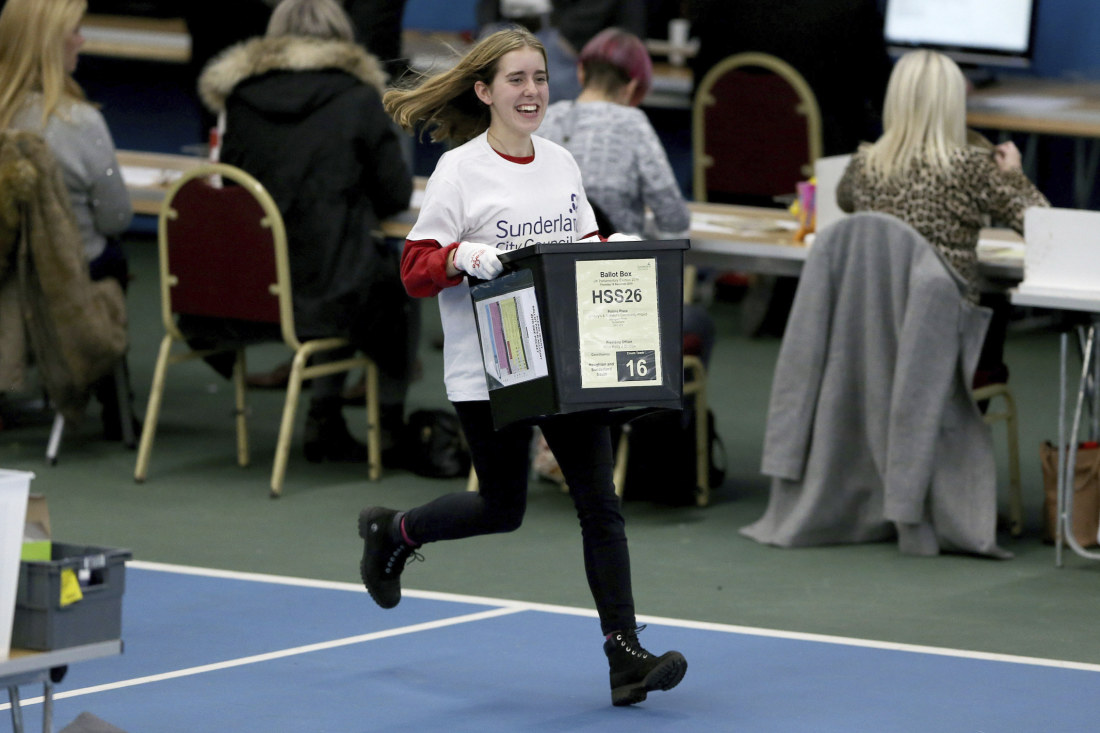
The 10pm finish means the vote count doesn’t start until much later than in Australia. The process is speedier than in Australia because there aren’t any preferences to distribute. But in most seats, the tally goes on until the very wee hours, sometimes even past dawn.
The exception is a clutch of safe seats in the north-eastern English towns of Sunderland and Newcastle, which literally race to be the first to declare, and usually get there before midnight. Sunderland usually wins, but in 2019 Newcastle got its first result out in one hour and 27 minutes. It’s like a footballing rivalry, but so much more nerdy.
The bulk of results start coming in after 3am. Staying up on election night is a genuinely exhausting experience, requiring a lot of alcohol and snacks early on, and later coffee. With more snacks.
Pity the poor incoming prime minister, who has no time to catch up on sleep: on Friday he or she has to see the King, name a cabinet, and get on with it. They, and the political junkies who stay up with them, manage the whole thing on pure adrenaline. What a way to run a country.
2. Aussies can vote, and your neighbour can vote on your behalf
If Britain wasn’t such a venerable democracy, some of the rules would make you wonder if you’d stumbled into a banana republic.
A voter can be registered to vote at more than one address. So in theory someone could vote in one electorate, travel to another and vote there as well. This is not legal, but the prohibition is not particularly enforceable.
Another weird rule is that you can get someone else to cast your vote for you at the polling station. You apply for a proxy vote, then tell your proxy how you want him or her to fill in your ballot paper. You can’t really know if they voted as you directed them to.
What’s more, in the past, someone could proxy for a whole batch of voters, which does feel like a gateway to stuffing the ballot boxes.
Now, though, a proxy can cast only two additional ballots, or four if two of the voters live overseas.
The British election is not, technically, a secret ballot. When you go to the polling station, as the clerk ticks you off the register, he or she writes your ballot paper number next to your name.
The ballot paper number also appears on the ballot paper itself. So it’s theoretically possible to determine how someone voted. There are rules designed to keep that register secret from anyone but a court. Still, when you’re in the polling station it does just feel a bit … disconcerting.
Britain also has quite liberal eligibility rules: a citizen of any Commonwealth country, including Australia, can vote. It is barely facetious to say that if you were to fly to Heathrow tomorrow, you’d still have time to register at a UK address and vote on July 4.
3. Yogic flying: what happens when parties can’t run TV ads
The parties have been banned from using television ads since the 1950s, to try and neuter the effect of money in the process and supposedly to improve the quality of debate.
This is the difference that, in times gone by, would most blow the minds of Australian political apparatchiks visiting Britain. How on earth could you fight an election campaign without TV ads?
In the past, the British got around this in quite eccentric ways. Each party was formally allocated a certain number of “official broadcasts”, which often aired just before the news. The broadcasts were often pretty boring.
Most viewers probably went off to make a cup of tea – unless it was the broadcast of the Natural Law Party, which memorably included demonstrations of yogic flying.
Another tactic was to drive a car around with a megaphone on top, shouting slogans through it. But the most important thing, in the absence of TV, was to try and get favourable newspaper coverage – hence Rupert Murdoch’s super-sized importance in British politics.
But social media has changed all that. And because of the TV restriction, British political parties have been at the global vanguard of digital campaign techniques and tactics. This will be one to watch in the 2024 election, especially as the permitted cap on digital ad spending has been significantly raised.
The shift to digital may also have thrown up a new loophole: TV channels are allowed to air party-political ads on their streaming services, and many might choose to do so.
4. Come out, come out wherever you are: voting isn’t compulsory
Turnout at the last British election in 2019 was 67 per cent. It has been as low as 59 per cent in 2001, and as high as 84 per cent in 1950.
This has an effect on political parties’ campaigning. Unlike Australia, they can’t just stand at the booth on election day and wait for people to turn up: they have to get their voters to the polling stations. So they have to know who their regular voters are.
The job of “getting out the vote”, which doesn’t even exist in Australian elections, is one of the parties’ most important campaign tasks. When party workers and candidates go door-knocking, their top objective isn’t to persuade people to vote for them (although that’s a bonus).
They are trying to work out, or reconfirm, where their prospective voters live – and then come knocking again on election day, to urge them to the polling station.
Non-compulsory voting has another effect on British elections. Old people are more likely to vote (and they are more likely to vote Conservative).
This skews the whole policy process towards the grey vote, which is one big reason why Britain’s pension system is more generous than the rest of its welfare system.
5. Voting with a blindfold on: the vagaries of first-past-the-post
First-past-the-post voting has the virtue of simplicity, but it makes election results more volatile and unpredictable. In Australia, for example, a Green candidate getting 10 per cent of the vote in an otherwise Labor seat would not change the result – the preferences would largely flow back to Labor.
But in Britain, a Green candidate taking 10 points off Labour could hand the seat to a Conservative, even if the Tory only scored 40 per cent of the vote or less. Voters get this, and it affects their behaviour. They are less likely to vote for a minor party.
One reason they might do so is that they’re really pissed off with their usual major party – which is what’s driving Conservative voters towards the Reform Party, even though this could cost the Tories seats.
The Conservatives have already released a digital ad to their supporters which reads “Starmer wants you to vote Reform”. The other option for the disgruntled, of course, is to stay home instead of voting at all.
People might also vote for a minor party if they think that party can win in their electorate. This is how the Liberal Democrats, a small centrist party, gain seats. They win spots on the local council first, then tell voters they can win the overlapping Commons seat. Their leaflets in target seats always include a graph, based on an opinion poll that sometimes feels a bit sketchy, showing that they are on for a top-two finish.
The system also leads to a phenomenon the Brits call “tactical voting”. Voters who want to oust, say, a Conservative, will try to gauge whether the Labour or the Lib Dem candidate is mostly likely to do it. Then they will vote for that party’s candidate, even if it’s not the one they’d normally most prefer. It’s like preferential voting, but you skip your no.1 candidate.
This is referred to as “lending your vote”. The trouble is, at individual seat level you can’t always be completely sure you’re getting that call right. And it has often made opinion polling more difficult, too. But it will be a big factor in this election, pretty much determining the size of the likely Tory defeat.
*I shall be in Cambridge on election day – this has positive and negative aspects. Unfortunately, Rishi has upstaged my proposed presentation on The Reality behind Barbara Pym’s Excellent Women The Troublesome Woman Revealed which was to take place on Thursday May 4 in Cambridge. On the other hand, it will be wonderful to be back in the throes of an election, an experience I revelled in while living in London and Cambridge for several years.

Tom Watson Newsletter
Starmer and Sunak: Two Generals fighting different battles
Thoughts from 50 years of election campaigning
Half a century of an obsession
It is now more than 50 years since I worked in a general election for Harold Wilson in February 1974. I remember every general election with clarity; weird I know. This general election is one of the strangest.
It’s not the gaffes, though I’ve never seen so many of them, it’s the fact that the two main parties seem to be skirmishing on different fronts. Yet we’re in a two party system. It’s a binary choice election. What on earth is going on?
Labour
Labour is reaching out the former supporters it lost in 2019, 2017, 2015 and 2010. It’s focusing on reassurance within its change message.
For what it’s worth, the first three doors I knocked in this general election were in Spen Valley for Kim Leadbeater. Door one was a first time Tory voter in 2019, now back to labour. Door two was a lifelong Tory, now come to labour. Door Three was a Lifelong Tory voter, now a don’t know and weighing up Labour and the Reform Party. These three door knocks are in no way scientific but if you extrapolate them over the entire United Kingdom it shows the Tories are in deep trouble.
Conservative
If Keir wants this to be a change election, Rishi needs it to be a choice election.
Sunak used his remaining agency to call a surprise election. It was the right thing to do because for the last 18 months, every decision has felt more like referendum on 14 years of, well, let’s face it, chaos. At least with an election, Sunak has a chance to put his case and ask voters to contrast it to Keir’s.
Yet here is Rishi Sunak’s problem: The Conservatives are only speaking to their elemental core of support which is fractured and considering shifting to the Reform Party, staying at home, or moving to the Lib Dems and Labour.
National Service
Tory spin doctors maintained three days of discussion on Sunak’s national service announcement, despite it being ridiculed by nearly every retired general in the UK. It’s led to 16 year olds joining Labour and knocking on doors to stop it (yup, I saw the evidence of this with my own eyes, yesterday).
Why is he doing it? National Service appeals to an older generation with memories of loved ones sharing nostalgic stories of a bygone age, when the country displayed imperial prowess and people knew their place. In other words: the Conservative Core Vote.
Sunak is rallying the heartlands, trying to hold the Tory family together. It’s perfectly logical given the poor standing in the polls but it’s not without cost.
Focussing on wavering older-voting shire residents in the heartlands has left Labour free to appeal to the Red Wall, the Blue Wall and Scotland with little challenge.
So, two leaders, two parties, two campaigns and thus far, very little direct engagement.
What do voters think?
They say you campaign in poetry and govern in prose. Not this year, I’m afraid. Labour is campaigning in prose and rightly so. They’re negotiating a difficult contract with millions of potential new supporters who want to read the small print of the offer.
For voters, this is a cost of living election. They’re not interested in how soggy Sunak gets or the fact that he can’t play football.
The swing voters in the general election are economically squeezed and worried about the future. The party that will win is the one that doesn’t bullshit them about how hard it will be to get the country back on its feet but reassures them they have a workable plan.
Reading
Speeches that changed the world.
These times are so grim, I keep thinking of Franklin D. Roosevelt. In the fractured world of 1933, where nations were embracing communism and fascism, FDR sought to unite his country with his inaguaral speech. In biblical language he described the ‘essential democracy’ that would put America back on its feet. I’d vote for a party leader that can speak like this:
“I am certain that my fellow Americans expect that on my induction into the Presidency I will address them with a candor and a decision which the present situation of our Nation impels. This is preeminently the time to speak the truth, the whole truth, frankly and boldly. Nor need we shrink from honestly facing conditions in our country today. This great Nation will endure as it has endured, will revive and will prosper. So, first of all, let me assert my firm belief that the only thing we have to fear is fear itself–nameless, unreasoning, unjustified terror which paralyzes needed efforts to convert retreat into advance. In every dark hour of our national life a leadership of frankness and vigor has met with that understanding and support of the people themselves which is essential to victory. I am convinced that you will again give that support to leadership in these critical days.
In such a spirit on my part and on yours we face our common difficulties. They concern, thank God, only material things. Values have shrunken to fantastic levels; taxes have risen; our ability to pay has fallen; government of all kinds is faced by serious curtailment of income; the means of exchange are frozen in the currents of trade; the withered leaves of industrial enterprise lie on every side; farmers find no markets for their produce; the savings of many years in thousands of families are gone.
More important, a host of unemployed citizens face the grim problem of existence, and an equally great number toil with little return. Only a foolish optimist can deny the dark realities of the moment.
Yet our distress comes from no failure of substance. We are stricken by no plague of locusts. Compared with the perils which our forefathers conquered because they believed and were not afraid, we have still much to be thankful for. Nature still offers her bounty and human efforts have multiplied it. Plenty is at our doorstep, but a generous use of it languishes in the very sight of the supply. Primarily this is because the rulers of the exchange of mankind’s goods have failed, through their own stubbornness and their own incompetence, have admitted their failure, and abdicated. Practices of the unscrupulous money changers stand indicted in the court of public opinion, rejected by the hearts and minds of men.
True they have tried, but their efforts have been cast in the pattern of an outworn tradition. Faced by failure of credit they have proposed only the lending of more money. Stripped of the lure of profit by which to induce our people to follow their false leadership, they have resorted to exhortations, pleading tearfully for restored confidence. They know only the rules of a generation of self-seekers. They have no vision, and when there is no vision the people perish.
The money changers have fled from their high seats in the temple of our civilization. We may now restore that temple to the ancient truths. The measure of the restoration lies in the extent to which we apply social values more noble than mere monetary profit.
Happiness lies not in the mere possession of money; it lies in the joy of achievement, in the thrill of creative effort. The joy and moral stimulation of work no longer must be forgotten in the mad chase of evanescent profits. These dark days will be worth all they cost us if they teach us that our true destiny is not to be ministered unto but to minister to ourselves and to our fellow men.
Recognition of the falsity of material wealth as the standard of success goes hand in hand with the abandonment of the false belief that public office and high political position are to be valued only by the standards of pride of place and personal profit; and there must be an end to a conduct in banking and in business which too often has given to a sacred trust the likeness of callous and selfish wrongdoing. Small wonder that confidence languishes, for it thrives only on honesty, on honor, on the sacredness of obligations, on faithful protection, on unselfish performance; without them it cannot live.
Restoration calls, however, not for changes in ethics alone. This Nation asks for action, and action now.”

 Robin's Room