Kate Galley Old Girls Behaving Badly Boldwood Books, May 2024.
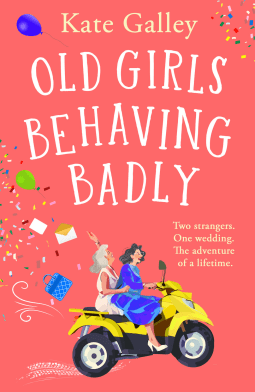
Thank you, NetGalley, for providing me with this uncorrected proof for review.
I was attracted to this book because, after reading criticisms that older women do not feature in many novels, Old Girls Behaving Badly suggested that in this case this is not justified. In addition, the title is reminiscent of the quote ‘Well behaved women rarely make history’, a favourite of mine.
Gina, who answers an advertisement for a person to be the companion for an elderly woman, is seventy-one. Dorothy, the elderly woman whose daughter-in-law is concerned about her ability to care for herself, is in her eighties. Gina is markedly mentally agile, her education as an art historian and working as an art curator an important theme in the novel. Dorothy is less mentally alert in some contexts, but a vital thinking person. Gina is physically able, and Dorothy only marginally less so. For example, Gina while drives the quad bike during an activity as Dorothy’s carer, the latter is a willing participant and needs little assistance when mounting and alighting.
Gina and Dorothy embark on a week together as companion and employer, attending the run up to a family wedding. They are also working together to right a wrong that has, Dorothy believes, resulted in her widowhood. At the same time, Gina is experiencing the loss of her husband. However, in contrast with the loss of Dorothy’s beloved Philip, Gina has been left by her husband of forty years as he seeks ‘to find himself’ and divest himself of a wife he finds dull and unpalatable.
Kate Galley has indeed written older women into positive roles in a novel that combines comic with serious themes, some well-developed characters and a storyline that works to a satisfactory conclusion for both Gina and Dorothy.

Toby Manning Mixing Pop and Politics, A Marxist History of Popular Music Repeater, May 2024.
Thank you, NetGalley, for providing me with this uncorrected proof for review.
Toby Manning’s history of popular music, with its introductory references to a range of philosophers, is initially daunting to the non-philosopher. However, this is a treasure for the reader with a broad knowledge of philosophical understandings and philosophy. For other readers this somewhat dense early narrative can be easier to navigate through the later chapters’ attention to popular music from the early 1950s to now. It is in concentrating on this aspect in the chapters following the introduction that I became engrossed in the discussion and analysis of the music; the period in which it was written, produced and received; the political agendas to which it responded and its impact on the political environment. See Books: Reviews for the complete review.
After book reviews: The Conversation article about older women in fiction; reviews of Whenever You’re Ready – Trish Bolton and All The Words We Know by Bruce Nash; travel – Fishing village Berwick Upon Tweed; Jill Watson sculpture, Widows and Bairns; Kelso Abbey community project; St Andrews visit; trip to Pitlochry; from Pitlochry to St Andrews; Cindy Lou eats out at Fonab Castle, The Grange Inn, cafe.
Older characters have exercised the minds of writers and commentators, and examples are provided in this pertinent article by Carol Leferve, republished here under The Conversation’s generous Creative Commons policy.
‘I hope publishers will be brave’: older women are often erased in fiction – but in 2 new Australian novels they take centre stage

Carol Leferve
Visiting Research Fellow, Department of English and Creative Writing, University of Adelaide
Disclosure statement
Carol Lefevre does not work for, consult, own shares in or receive funding from any company or organisation that would benefit from this article, and has disclosed no relevant affiliations beyond their academic appointment.
Partners
University of Adelaide provides funding as a member of The Conversation AU.
Published: April 1, 2024 7.40am AEDT
If older women move through the world with a sense of being unseen, in the world of books, and especially in contemporary fiction, they have all but been erased. So pervasive is their absence, it is nearly possible to draw up a list of novels featuring older women as the main characters and plan to read them all.
Of those older women who do make it to the page, most will have been reduced to stereotypes: the demented, the eccentric, the quarrelsome, the devoted yet sidelined grandmother, the meddling mother-in-law, the faded beauty, the disappointed spinster.
Now at last, two novels by Australian authors feature older women as main characters.
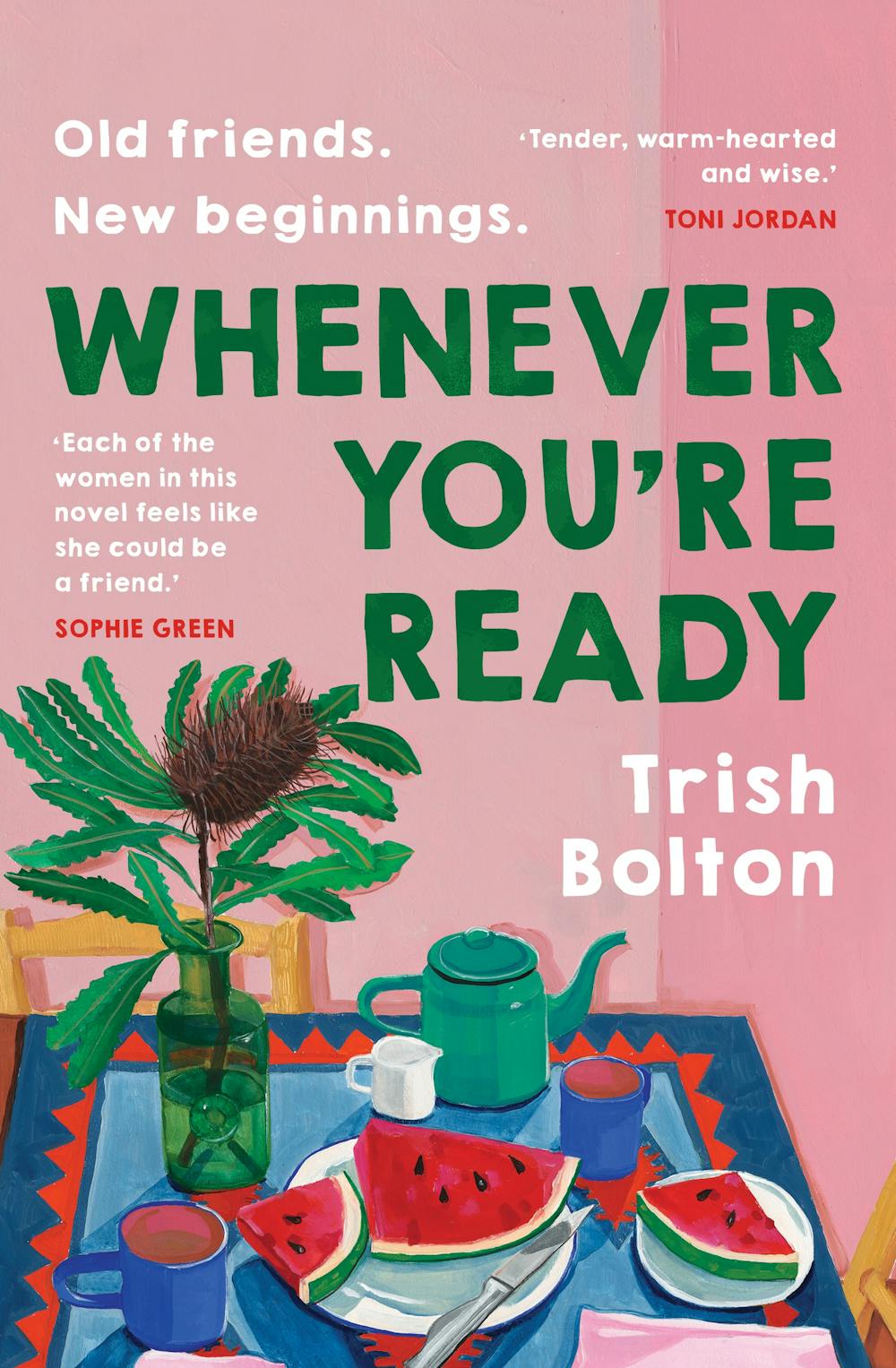
Trish Bolton’s debut Whenever You’re Ready, offered up as a love letter to the lives of older women, is a novel with its heart in the right place. Bruce Nash’s All The Words We Know promises “wickedly funny” on its back cover, which – given its aged-care setting – is not impossible, but at first glance seems like a big ask.
Review: Whenever You’re Ready – Trish Bolton (Allen and Unwin), All The Words We Know – Bruce Nash (Allen and Unwin)
In her acknowledgements, Trish Bolton questions why so few books feature women in their 60s, 70s and beyond. If there is a single answer, it would seem to spring from a place of misogyny, combined with Western society’s deeply embedded ageism.
As far back as 1972, Susan Sontag identified the oppressive belief that men are enhanced by age, while women are progressively destroyed by it. “Competing for a job,” writes Sontag, “her chances often partly depend on being the ‘right age’, and if hers isn’t right, she will lie if she thinks she can get away with it.”

Bolton’s character Alice Miller knows all about competing for jobs and lying about her age. As a 70-something ex-journalist, ex-model, ex-weather-girl on television, Alice, whose financial position is precarious, is living proof that the value placed on feminine beauty often crushes older women. Worse still, it can nudge them towards homelessness.
Alice is managing her downward slide with ingenuity and grace, when an unexpected death throws both her and her oldest friend Lizzie into a state of uncomprehending grief. In the aftermath of this loss, Lizzie, who has been nursing her own life-changing grief since the death of her young son Tom 30 years earlier, uncovers a decades-old secret that demolishes everything she believed she knew about her friendships, her family, and her marriage.
Lives of older women
Through the lives of the older women at the heart of this book, Bolton highlights the range of difficulties – social, financial, and political – that impact the lives of women as they age. Not the least of these is their own internalised ageism, as demonstrated by age-denying Alice.
Baby boomers, she thought with contempt They were so … well, old. Present company excepted. She was much more millennial in her outlook. And she could pass for a Gen Xer. Everyone said so.
A survivor of breast cancer, and of domestic violence, when Alice raises with her doctor the possibility of her breast implants causing cancer, he answers dismissively. “Given your age, there doesn’t seem much point in replacing them.”
Claire had been the friend who visited Alice almost every day following her double mastectomy. Perhaps a little unfairly, Alice remembers Lizzie had made an effort, but “she hadn’t long lost Tom, his death becoming a lifelong excuse for self-pity”.
With the death of her youngest child, a philandering husband, and her daughter Margot’s youthful addictions, Lizzie has not had the smoothest of lives. But at a boarding school her parents could never have afforded without her scholarship, she had been befriended by the “worldy and carefree” Claire, and they’d remained close, along with Alice, through the ups and downs of their lives. Now, their mutual trust and friendship is tested with the revelation of a long-held secret.
The grief in Whenever You’re Ready is all too believable – the loss of a child, the death of a friend, the end of a marriage, misunderstandings distancing a mother and daughter – yet at times it feels a little overwrought, as if characters can only express emotion through extravagant physical gestures:
Lizzie let Fred in, collapsing beside him on the rug. How long she lay there, she wasn’t sure.
By contrast, some of the most affecting scenes in the book are between Lizzie and her 95-year-old mother Joyce, who is in a nursing home following a stroke. Lizzie’s sadness at the conditions that prevail in the home is beautifully understated in quiet, sobering passages:
It always felt strange that life outside went on, thought Lizzie, after saying goodbye to her mother. There was so much sorrow within those four walls she wondered how it could possibly be contained, that it must surely seep out under doors, escape through an open window, any chink or gap, the sadness affecting passers-by, causing them to stop for a moment and think of those hidden from view.
Joyce’s roommate, Grace, has never had a visitor, Joyce tells Lizzie. “Not a one.” Like others before her, Grace will simply disappear in the night. “Here when I went to sleep, gone when I opened my eyes,” as Joyce says of Aggie, an earlier roommate.
When Joyce’s condition deteriorates, Lizzie insists on being the one to bathe her, to change her gown and see to her hair. “In her final hours, she wanted her mother to feel only the gentle touch of loving hands.”
Following on from writers like Liz Byrski, in The Woman Next Door (2016), and more recently Charlotte Wood, in The Weekend (2021), both of whom have risked casting older women in lead roles in their fiction, Trish Bolton has given older readers a rare opportunity to recognise aspects of their lived experience within the pages of a contemporary novel.
Whenever You’re Ready is a much-needed documenting of the very real difficulties experienced by older women. It never diminishes the characters by treating them as stereotypes, and not even 95-year-old Joyce is sacrificed to dementia.
Lizzie, Claire, and Alice are very much the women they have always been, only older. This novel makes them visible; it asserts their right, and the right of older women everywhere, to be respected, and to be seen as people still living lives that matter.
Plunged into dementia
Bruce Nash’s All The Words We Know plunges the reader headlong into the consciousness of dementia-affected Rose as she roams the corridors of an aged-care home with her walker.
The nursing home is a place where nothing is certain, and the lack of certainty generates a sense of threat. When Rose sees her friend lying on her back in the car park after having apparently fallen from a window to her death, she concludes the friend has been murdered, and that she herself is to be next.
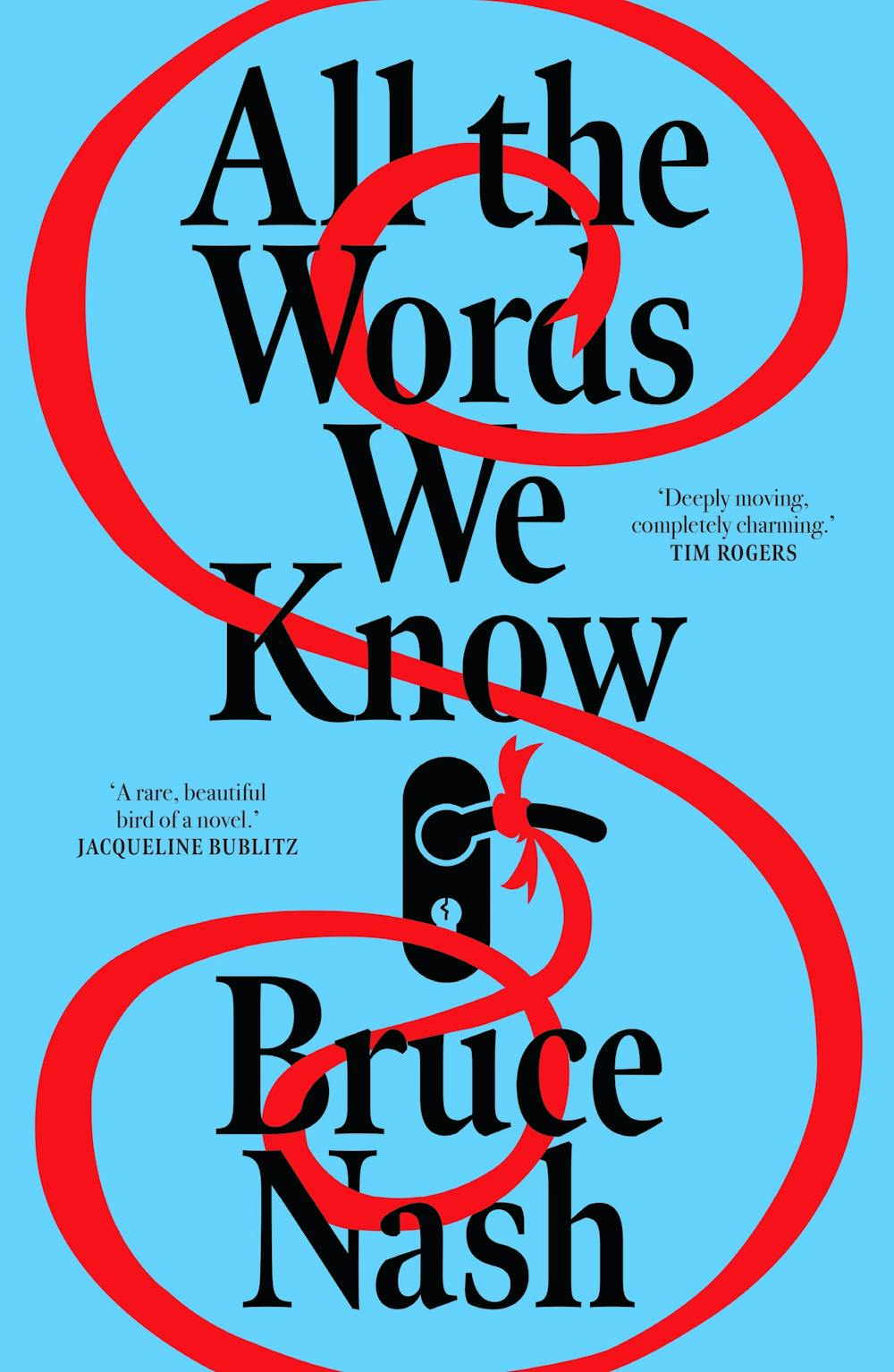
The care home is peopled by The Angry Nurse, The Scare Manager, the nice boy who mops floors, the fellow who doesn’t live here. It is a world where even Rose herself is a woman “in her eighties”, rather than someone precisely placed in time.
The restrictive first-person narrative, and its relentless present tense, demands patience from the reader. It also cuts off almost all routes to other times and places in which we might have learned where and how Rose once lived.
Having been shown how life once was, we might have mourned its loss; as it is, there is a narrow pathway into the past through Rose’s flickering memory, but it is unreliable. Once again, it is peopled by indeterminate characters, such as “the older fellow”, and the man with no head, who we eventually learn was Rose’s first husband.
Writers like Fiona McFarlane (The Night Guest, 2013) and Thea Astley (Coda, 2012) have guided readers safely, even elegantly, through the challenging territory of dementia in fiction.
But they wisely chose the more fluid and forgiving third-person narrative viewpoint. In skilled hands, a close third-person viewpoint works like a first-person account: it’s a view that provides respite for the reader from the cyclical thought processes of the dementia-affected character and enables narrative shifts through time and space.
Word play and empathy
Nash’s novel is reminiscent of Astley’s Coda in, among other things, the pleasure their main characters take in word play. Coincidentally, both novels are described on their back covers as “wickedly funny”. Neither Nash’s Rose, nor Astley’s Kathleen, are in situations that are even remotely funny, so the wicked humour occupies the space between assumptions about what the women know, or remember, and what they actually do know and remember.
Like Kathleen, Rose loves words. Sometimes she genuinely gets them wrong, and sometimes it’s on purpose. Unfortunately, she has a habit of interpreting her mistakes, a task that would have been much better left to the reader. For example:
“Are you happy here?” asks the Angry Nurse, as if she’s wondering whether I’m using my incongruence pads. Incontinence pads.
A small group is gathered around her. All in their unicorns. Uniforms.
My walker and I ride in the thing, the revelator. Elevator.
Veteran British writer Penelope Lively has written (in her 2013 memoir Ammonites and Leaping Fish) that “fiction is perhaps mainly responsible for the standard perception of the old”, and “memorable and effective writing about old age is rare”.
All The Words We Know strives to generate empathy towards those doing it tough with dementia, and to change our perception of their situation. It certainly succeeds in tapping into the horror of lives lived behind locked doors, lives stripped of agency.
Some of the book’s most memorable moments take place in the cracks between Rose’s repetitive thought processes and the unfolding of the plot. Here is Rose in the dark:
All through the dark night I lie in my bed, facing up to things.
And contemplating time:
Time, in this place, is most unusual. That’s not true. In this place there is so much time, there’s nothing unusual about it whatsoever. There is no shortage of time here at all. At night, in this place, you live forever. Well, the night goes on forever, and being, to the best of my knowledge, alive, I go on with it.
On the monotony of daily life:
Nothing happens, and it keeps not happening, then doesn’t happen some more. It continues, and I continue with it.
Rose’s son is lying to her; he’s stealing her money. Her daughter, apparently lost for anything meaningful to say, fills her visits by moving Rose’s pot plants into the bath to be watered, and moving them back again. As characters, both son and daughter lack nuance by virtue of being pinned in Rose’s first-person narrative beam. Both seem unhappy, but the main thing about her son is that he has “the Power of Eternal”.
There are small, devastating moments that stab at one’s heart, as when Rose is in the dining room with the “fellow who doesn’t live here”, even though he actually does:
“I’m just visiting,” he says.
“Of course you are,” I say, and wait.
He looks around at everyone in their places at the dining tables, at the walkers and wheelchairs lined up against the wall. At the smiling sharks.
“I have a beautiful home,” he says. “With a white fence and a double lock-up garage.”
Real-life dilemmas
Both Trish Bolton and Bruce Nash have opened up an important space for older people as main characters in contemporary Australian fiction. I hope publishers will be brave and other novels by other writers will soon follow.
Whenever You’re Ready brings the real-life dilemmas of older women to the page, and from there, one hopes, the situations and social issues thrown up will trickle out through our culture, into the places where meaningful policy-making takes place.
While All The Words We Know might not be read by those suffering dementia, it will certainly have many readers who’ve suffered through the decline of ageing parents.
Its subtext is any one of us could become Rose, could suffer her sense of loneliness and be forced to self-soothe by conjuring a life out of the view from a particular window, or by indulging in word games.
Most of all, it shows that the ways we look after our old people are not sufficient to their needs, and that this – as the 2018 Royal Commission into Aged Care Quality and Safety concluded – is a cause for national shame.
Further travels around Berwick Upon Tweed included the villages around this area. Then we took the train from Reston to Leuchars to visit a friend living in St Andres. There is no train into St Andrews, so Leuchars is the station for that town.
Fishing village Berwick Upon Tweed
Eyemouth










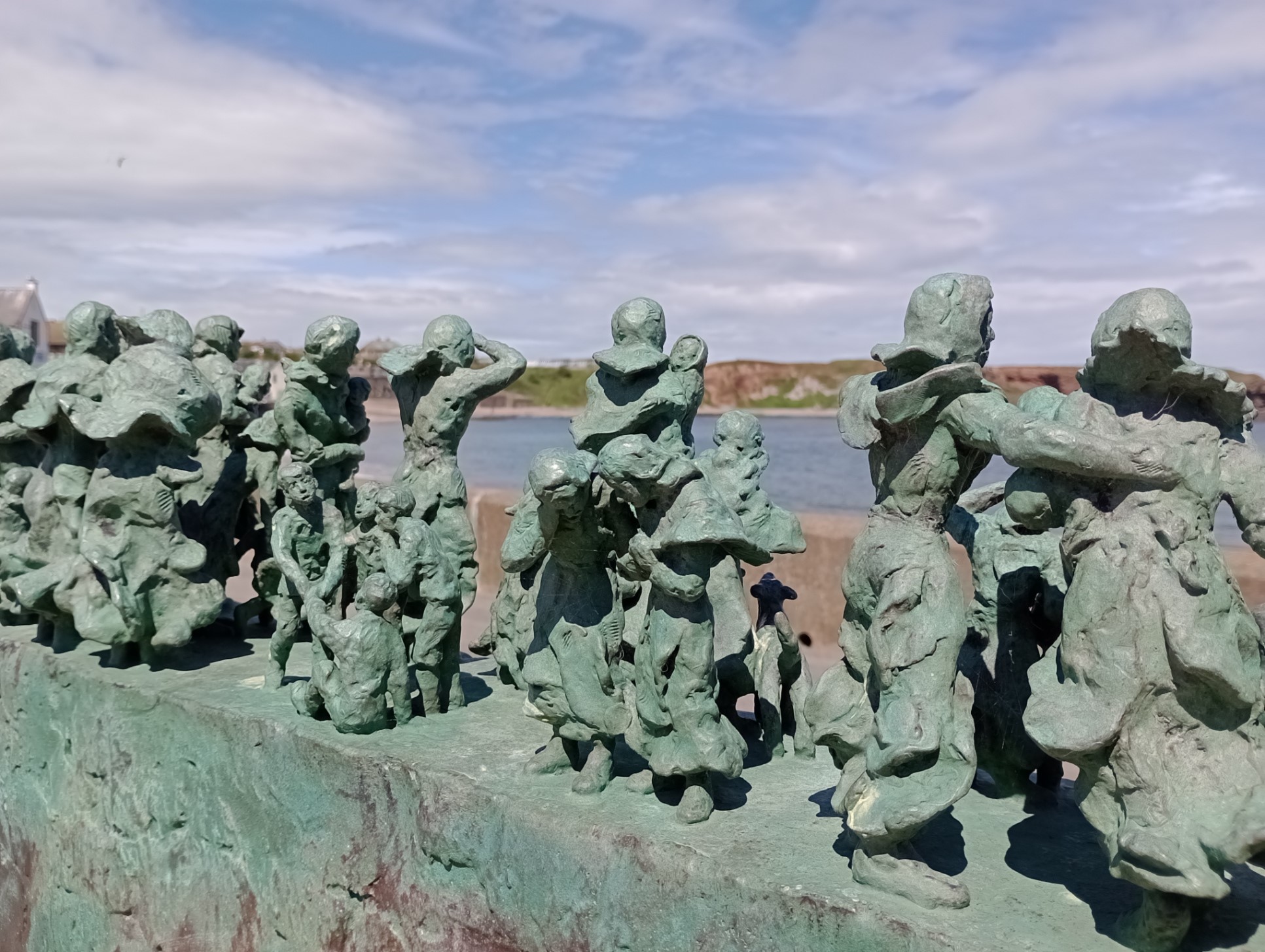
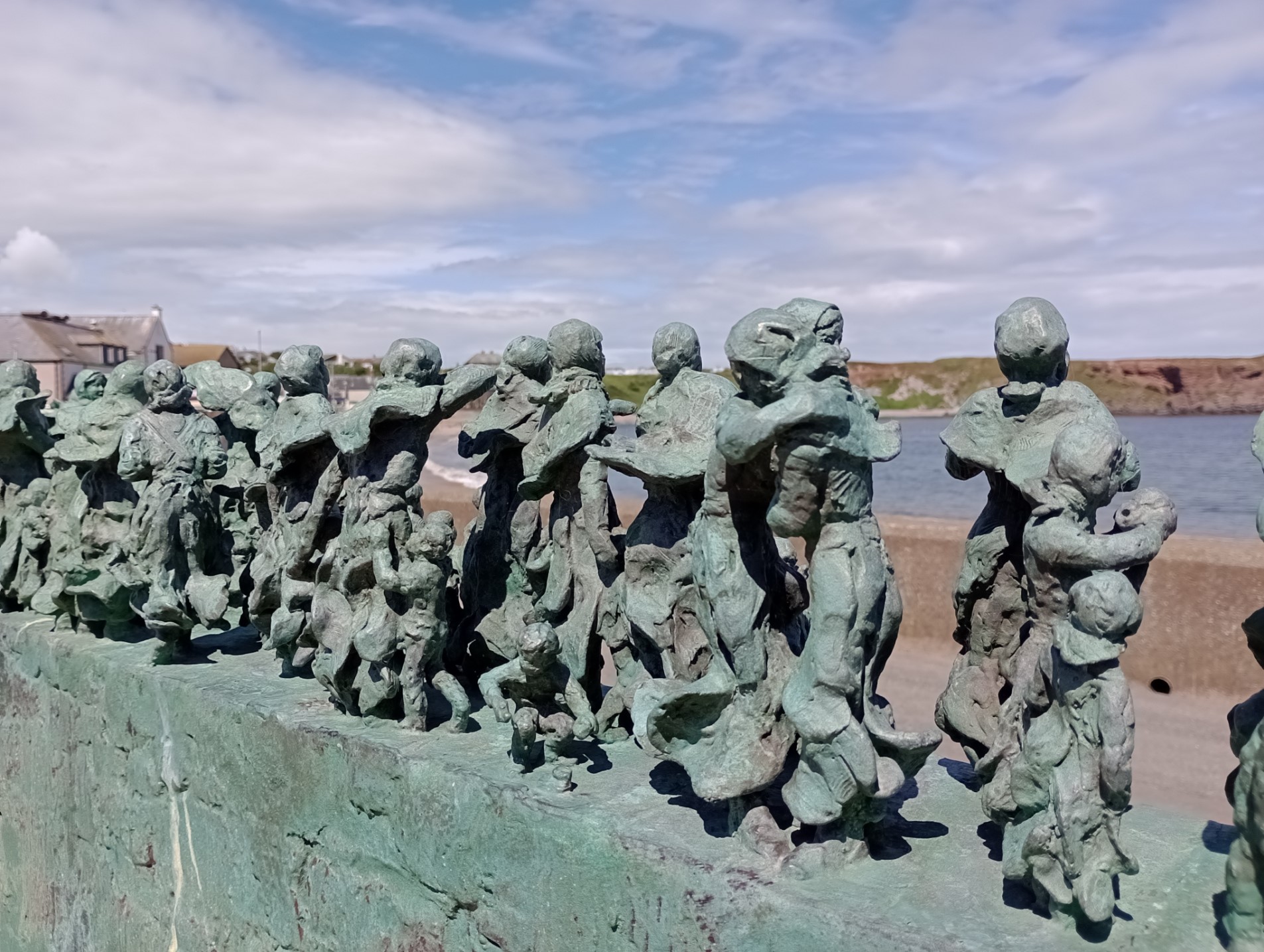
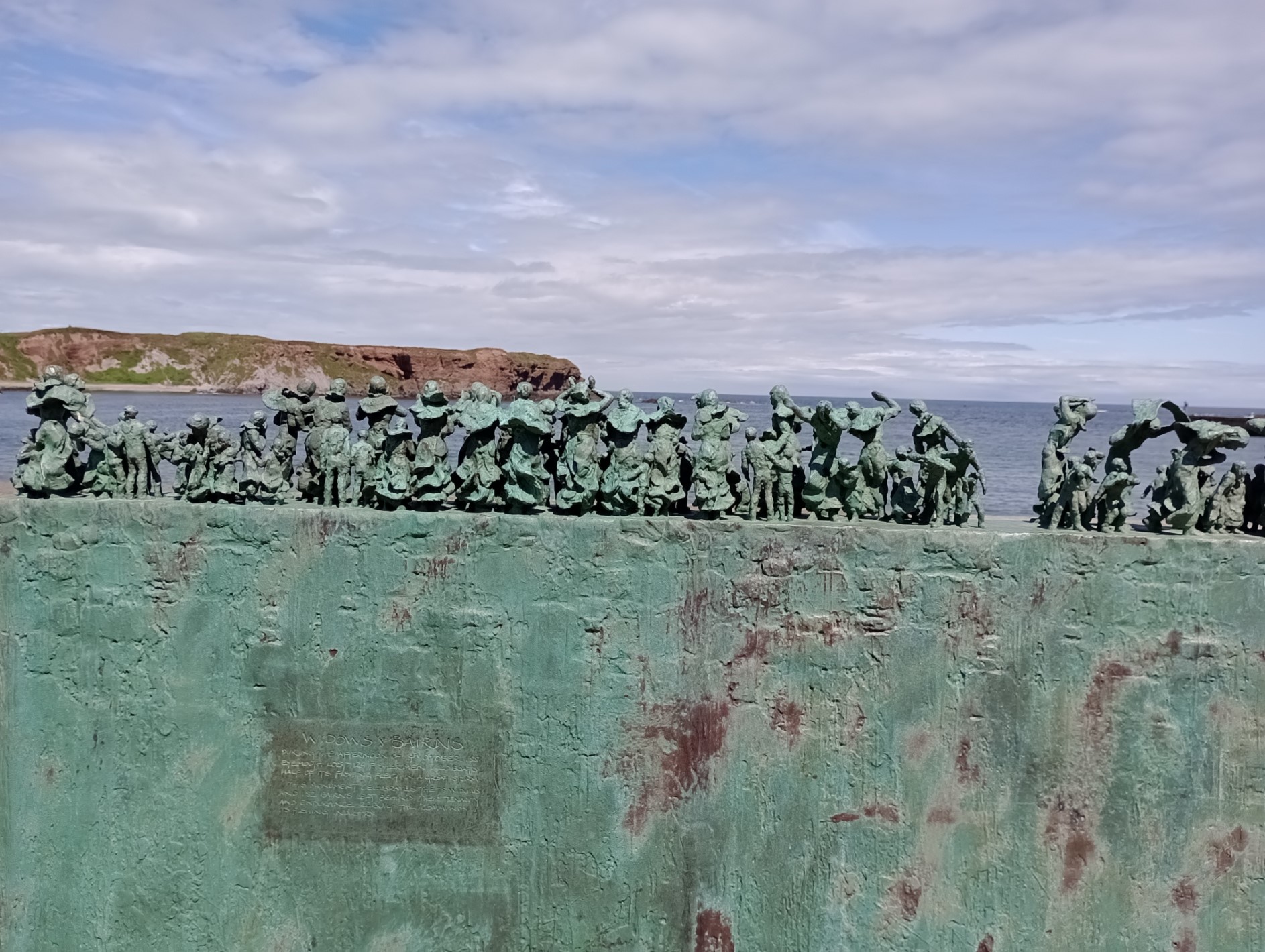
Widows and Bairns Memorial Eyemouth
Created by Jill Watson and commissioned by The 125 Memorial Association, this latest sculpture commemorates the Eyemouth Widows and Bairns left behind by the great storm of October 14th 1881. Scotland suffered her worst fishing disaster, and the Berwickshire ports lost a total of 189 men, many within sight of their loved ones. The Euroclydon left 107 widows and 351 fatherless children in our coastal villages. 73 of these widows and 351 fatherless children were from Eyemouth. Research has uncovered that there were actually many more children, but they were not recorded with the Church of Scotland at the time.
Some of the children were offered places in a Quarrier’s Children’s Home but the local mothers refused, saying “We shall keep our bairns for our future of our ports”. It is because of this tenacity and determination of the womenfolk of the town, that Eyemouth continues to be a thriving community and proud of its heritage.
The severity of the tragedy was such that it gave an additional catalyst for the formation of the Royal National Mission to Deep Sea Fishermen and Queen Victoria was one of the first to place money into a Disaster Memorial Fund, to provide help for the stricken families.


Jill Watson Sculpture


Camouflaged egg
Found at Eyemouth. None was to be seen on the Farne Islands, the birds were far too wary of intruders and had then carefully hidden in burrows or nests.


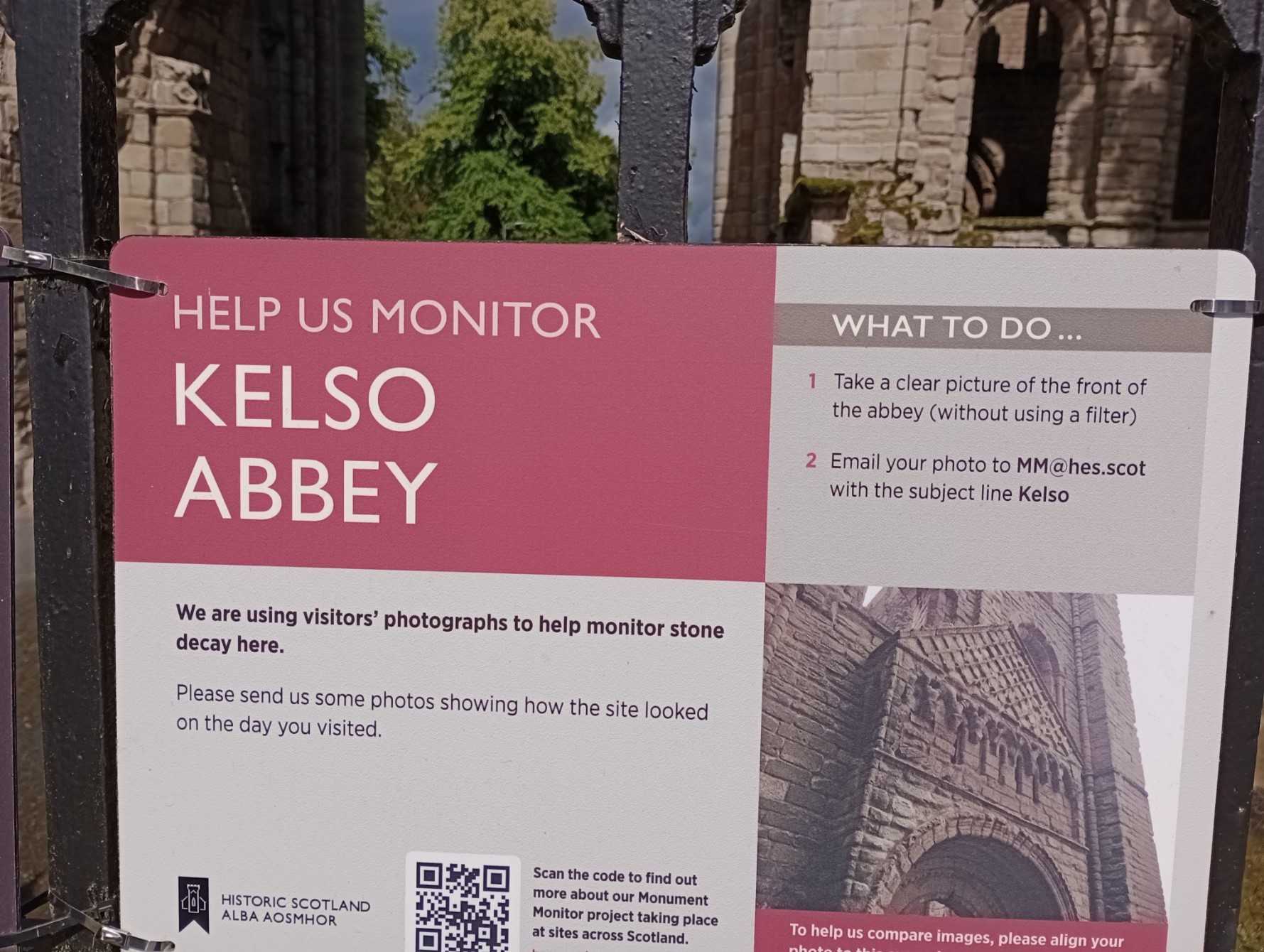
Kelso Abbey Community Project




St Andrews
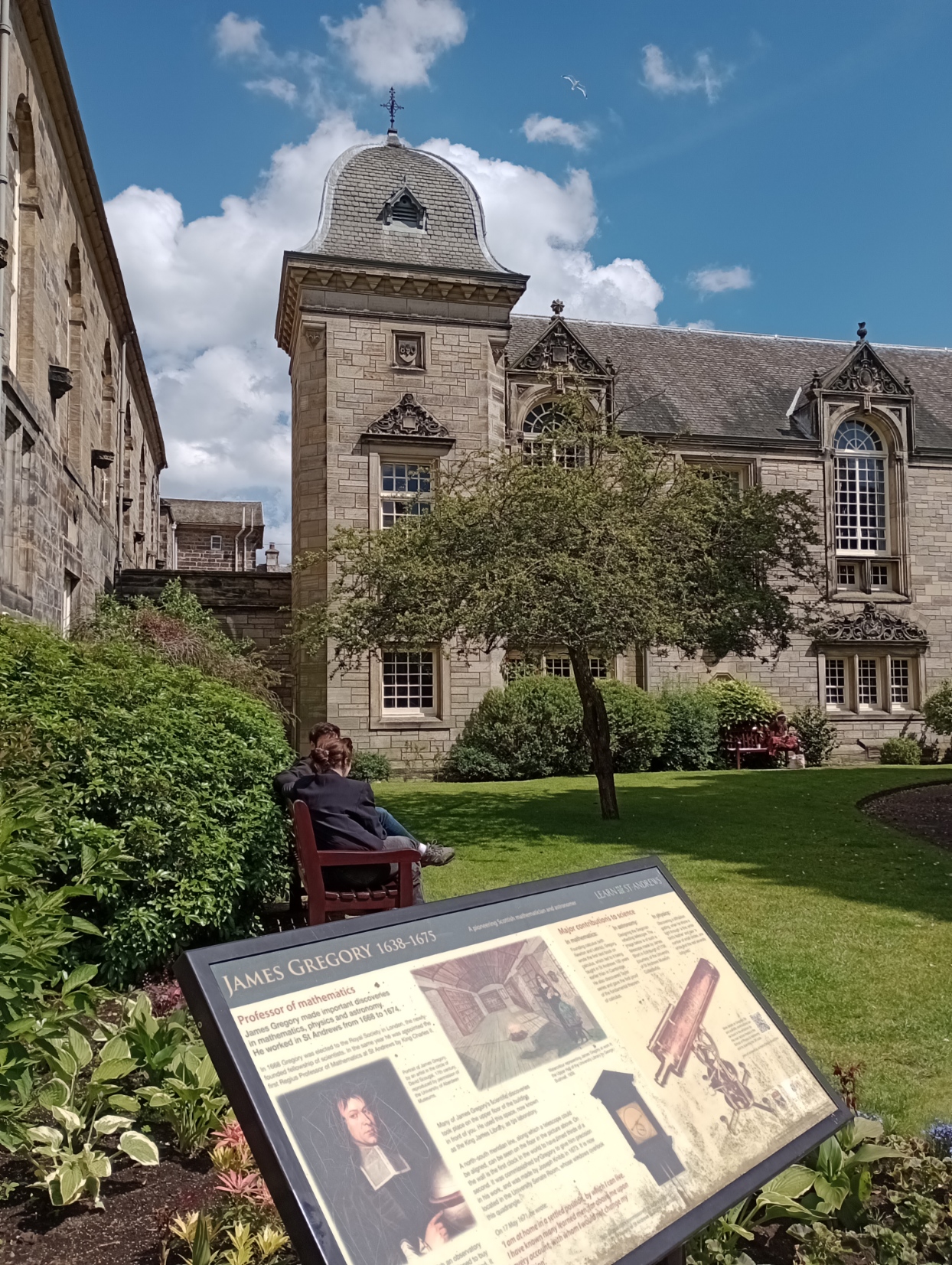
St Andrews as a university town interested me more than its reputation as a golfing city, so the photos are of the university, and, later as usual, dining out.
Various University of St Andrews buildings





Streetscape, gossip and castle


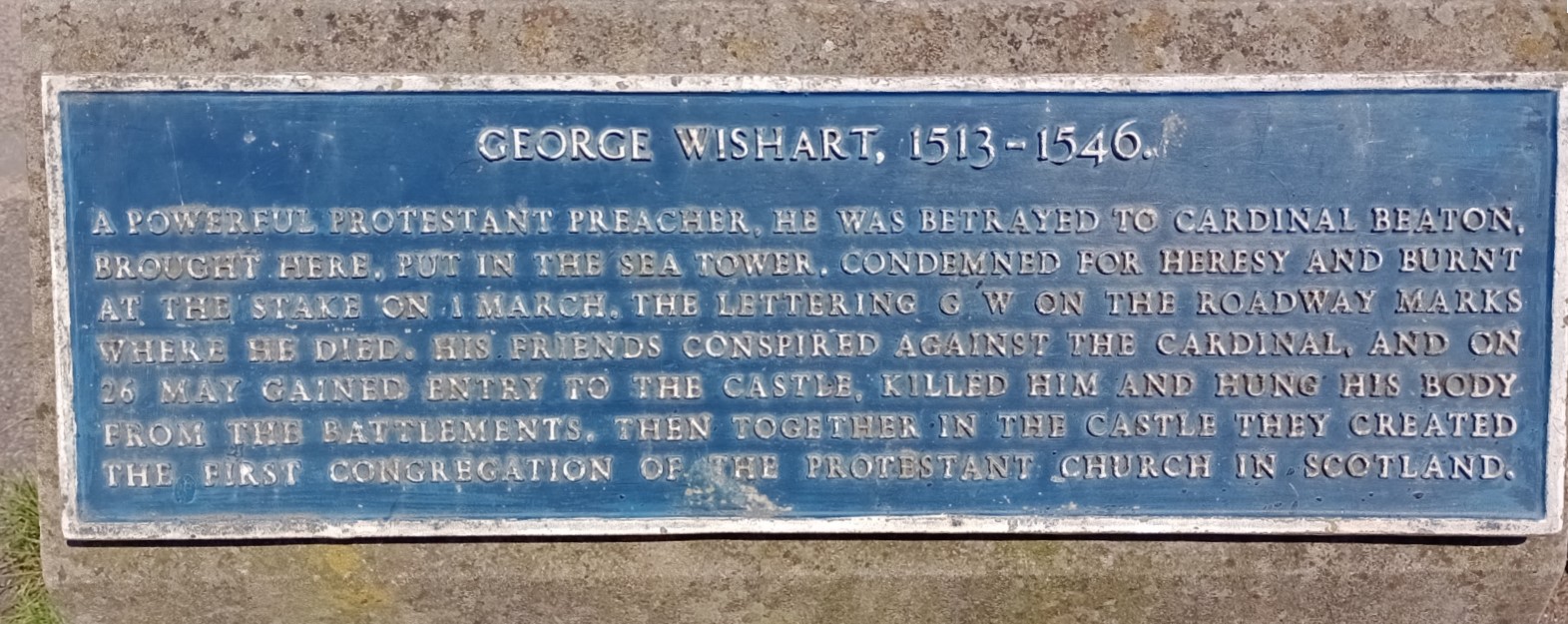



Trip to Pitlochry
Village and coffee on the way – Blairgowie


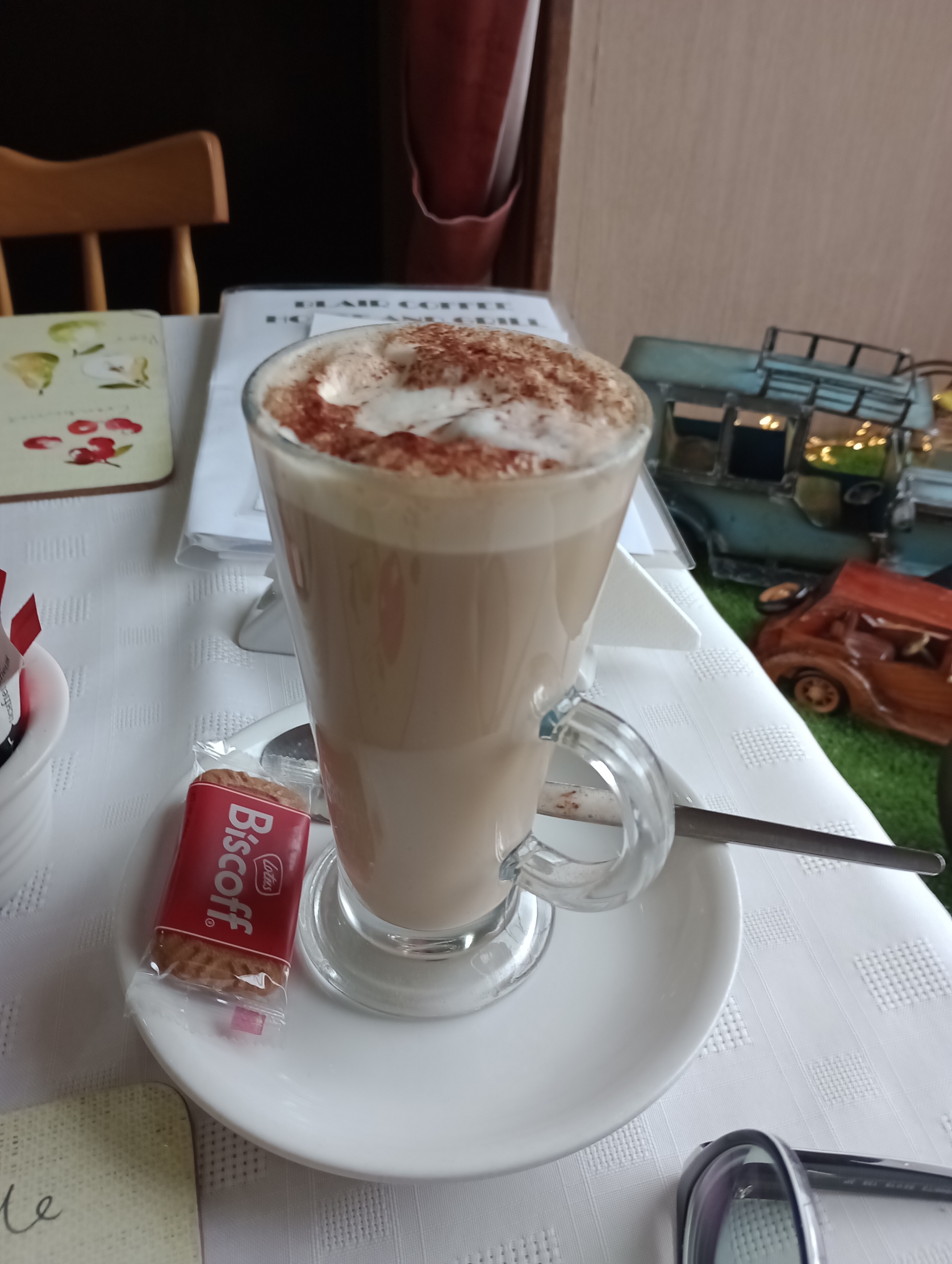
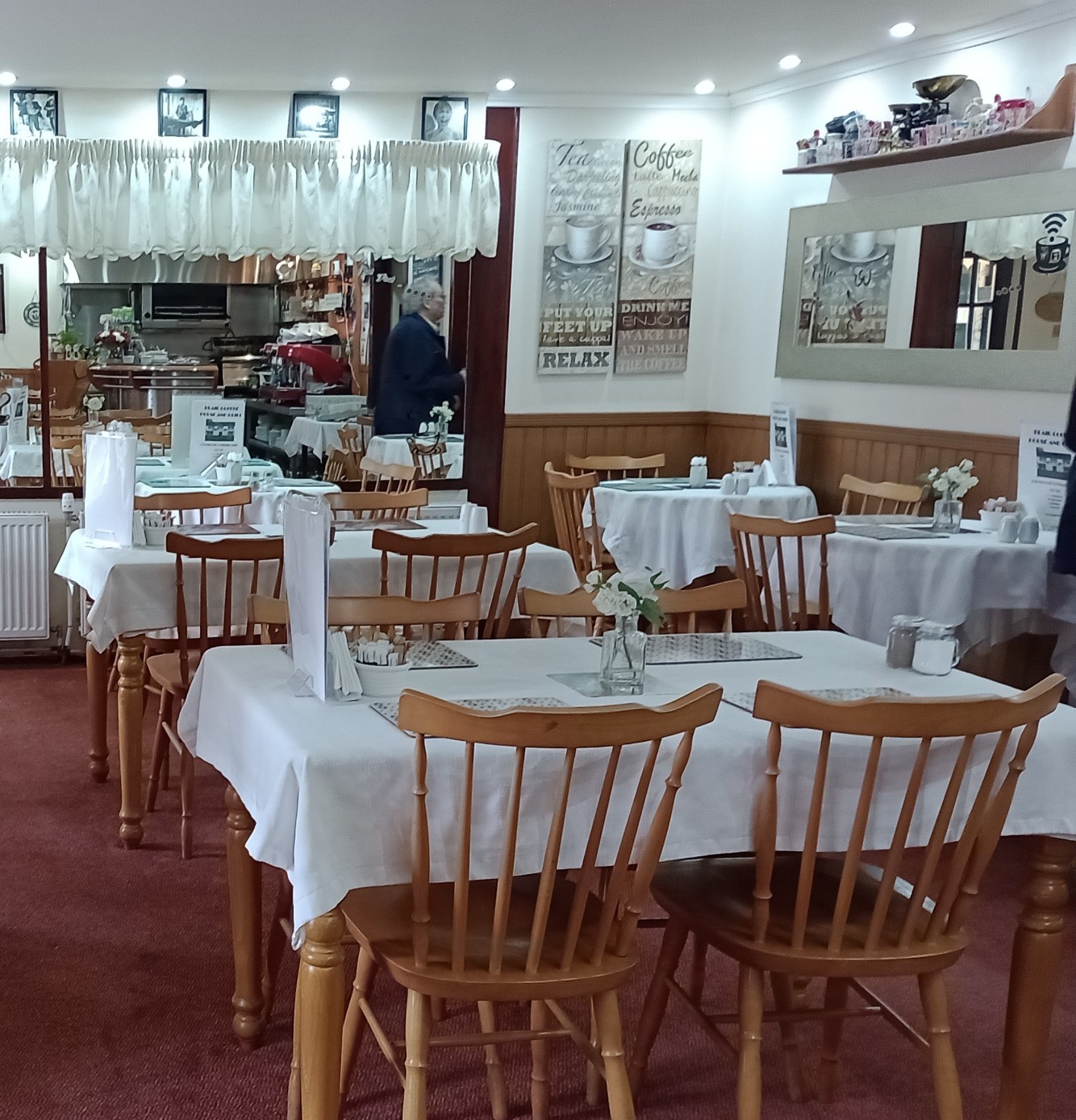
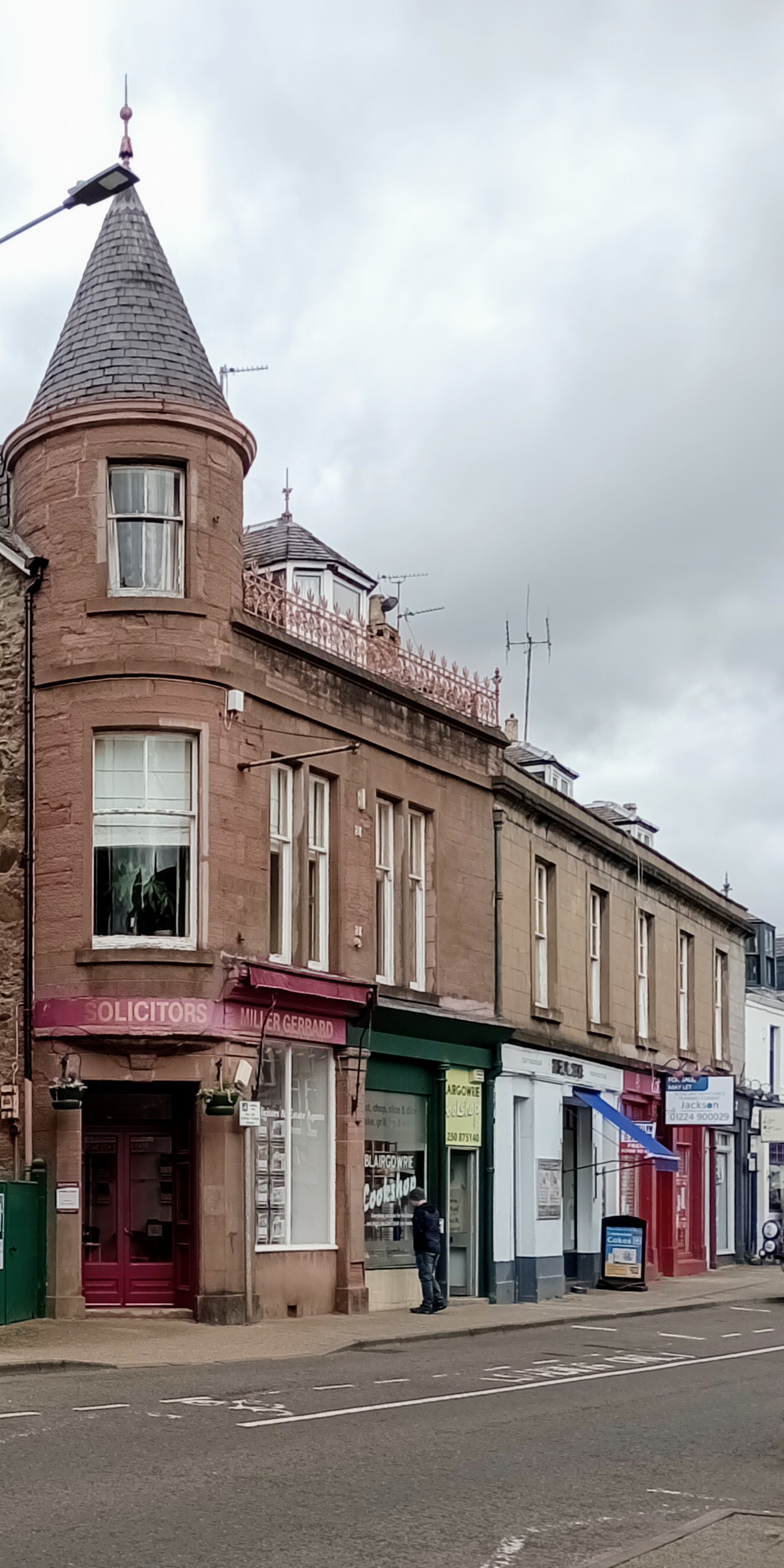


Fonab Castle stay in Pitlochry
Accommodation is in the castle or lodges – all spacious, well equipped and comfortable. The walks around the castle are wonderful, and there are views from most of the eating and entertainment areas. There are also several outdoor dining pods.
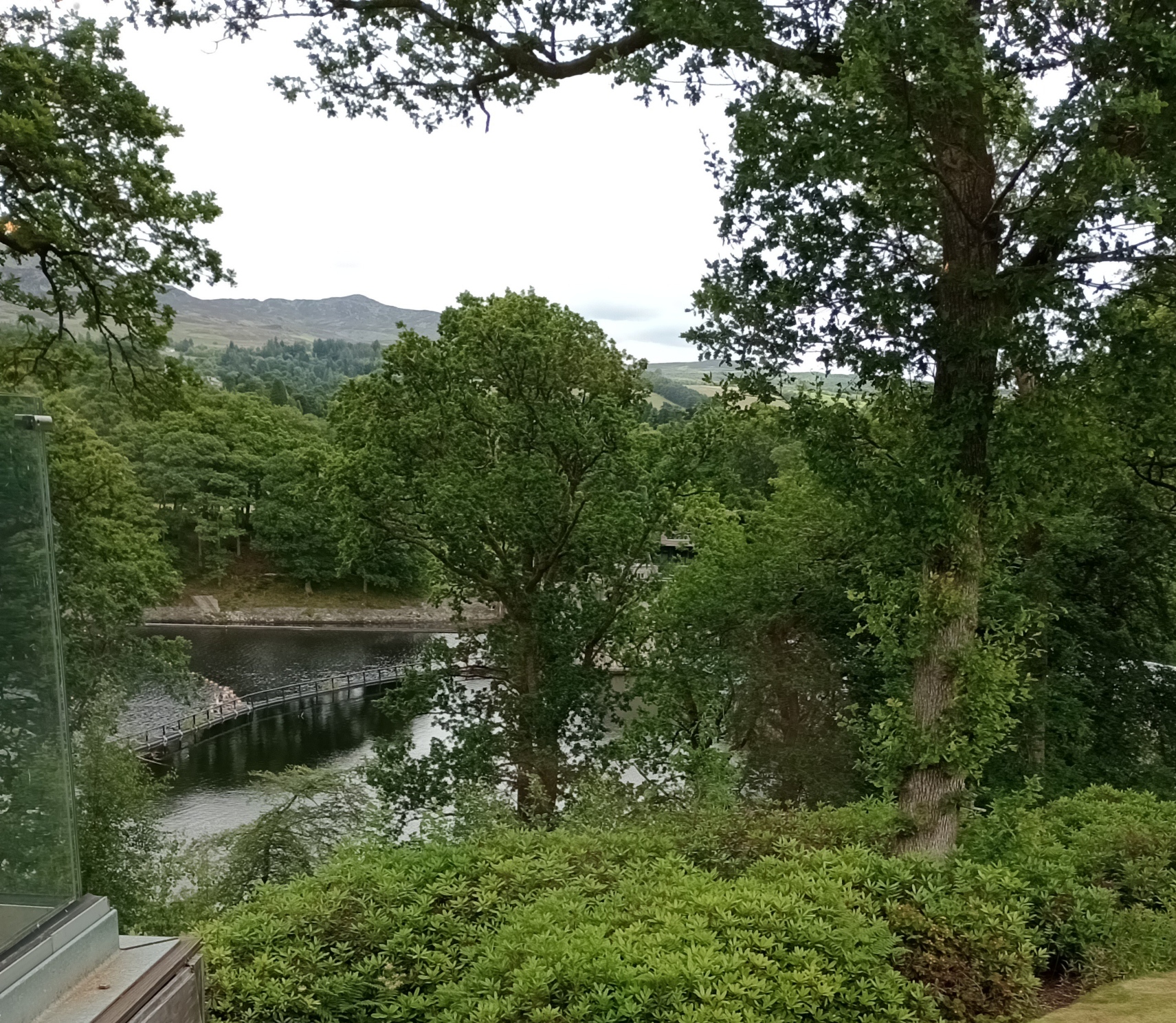













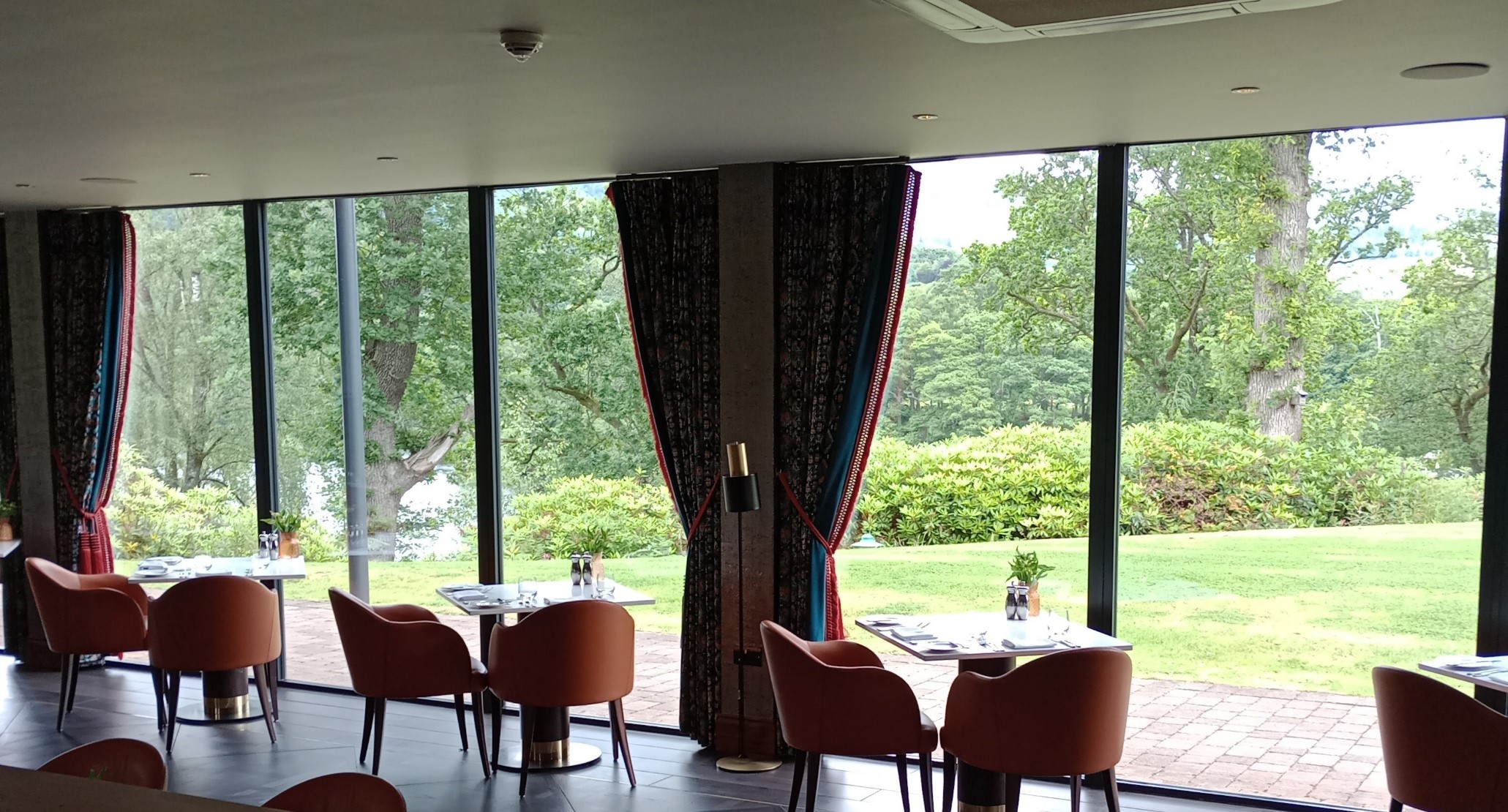
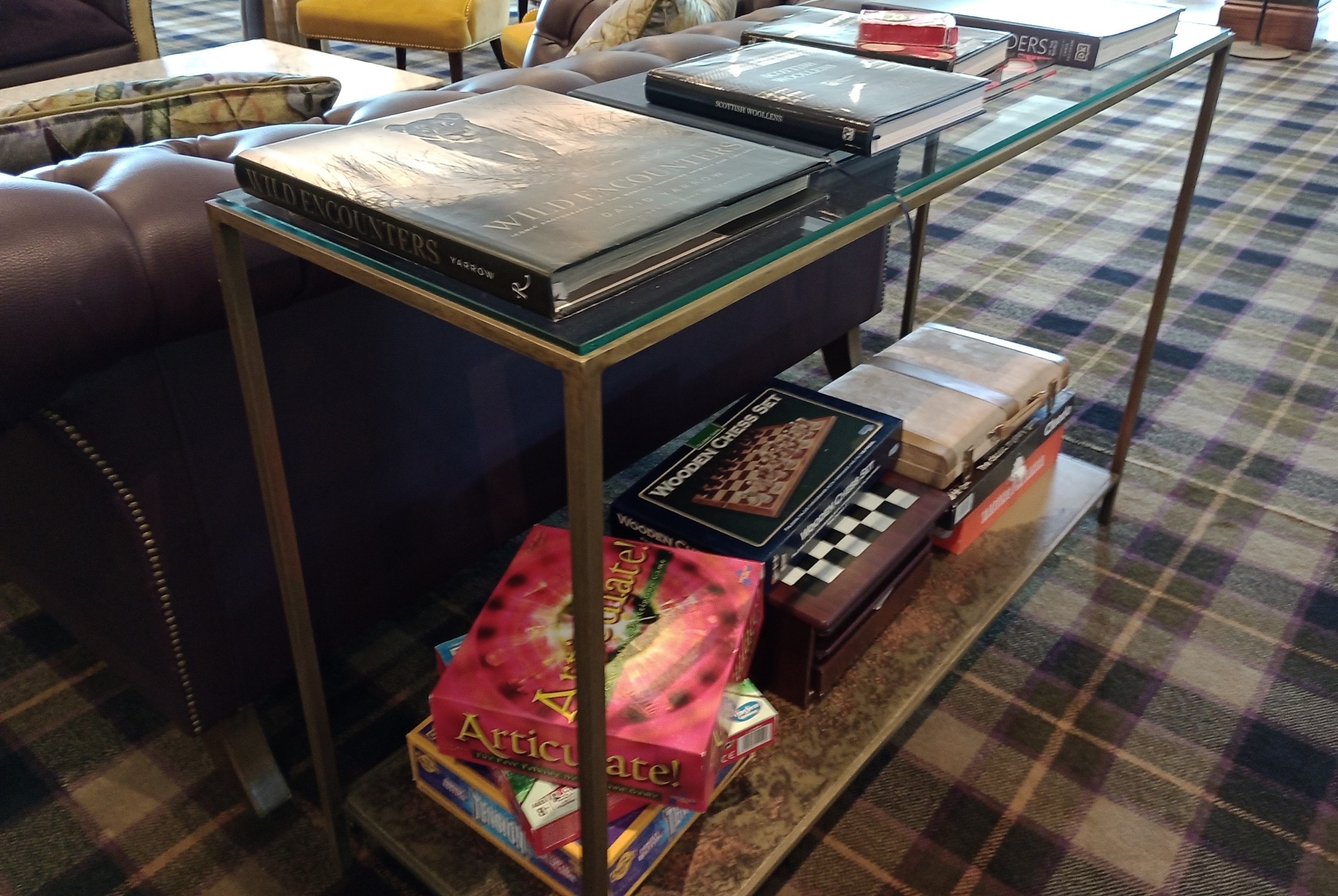



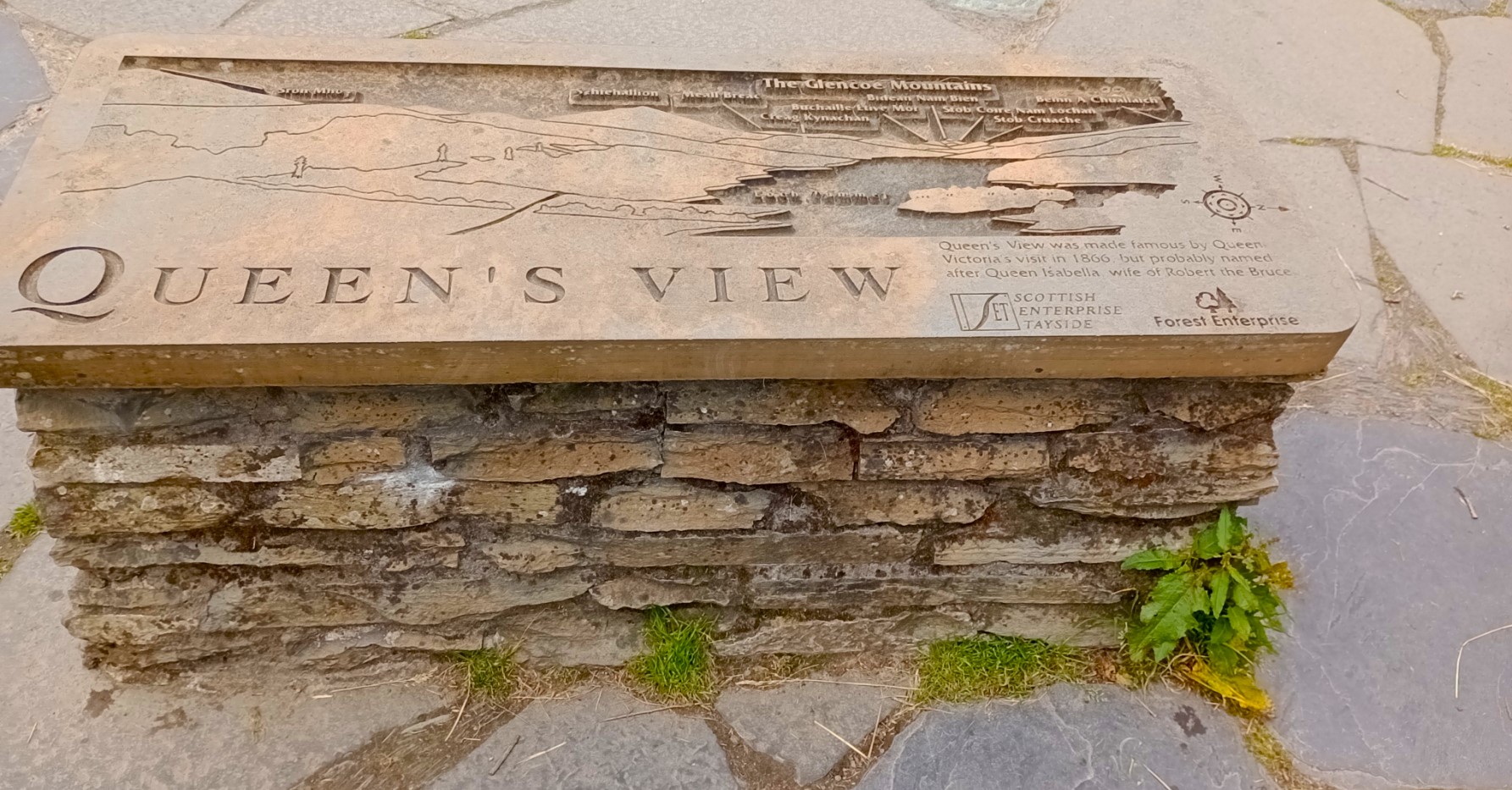
Villages and views from Pitlochry to St Andrews-Tay Forest Park, Aberfeldy, Kenmore and Kinross.





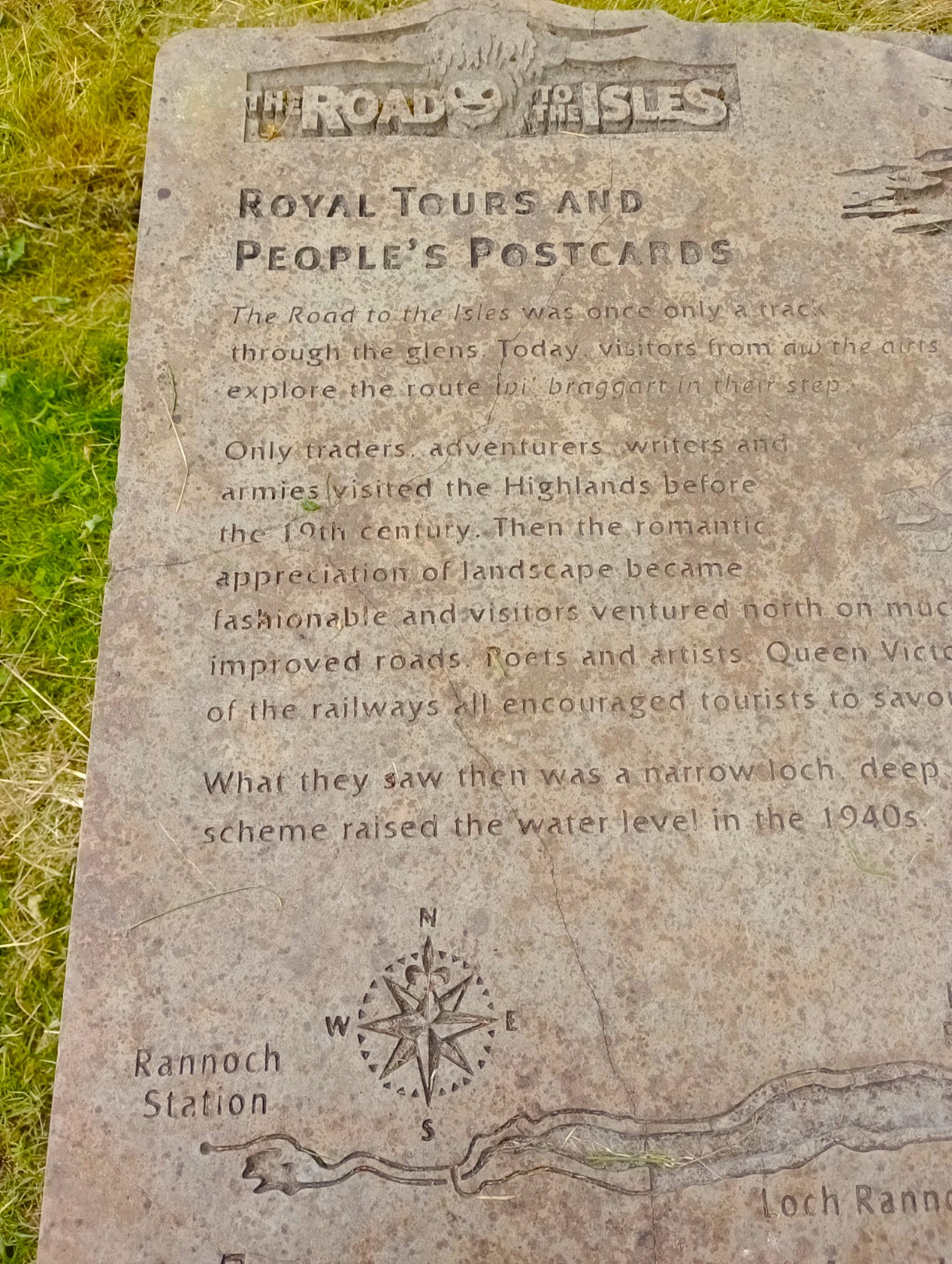





Cindy Lou eats at Fonab Castle followed by a very casual cafe pie and coffee on the way from Fonab Castle to St Andrews.
Light lunch at Fonab Castle
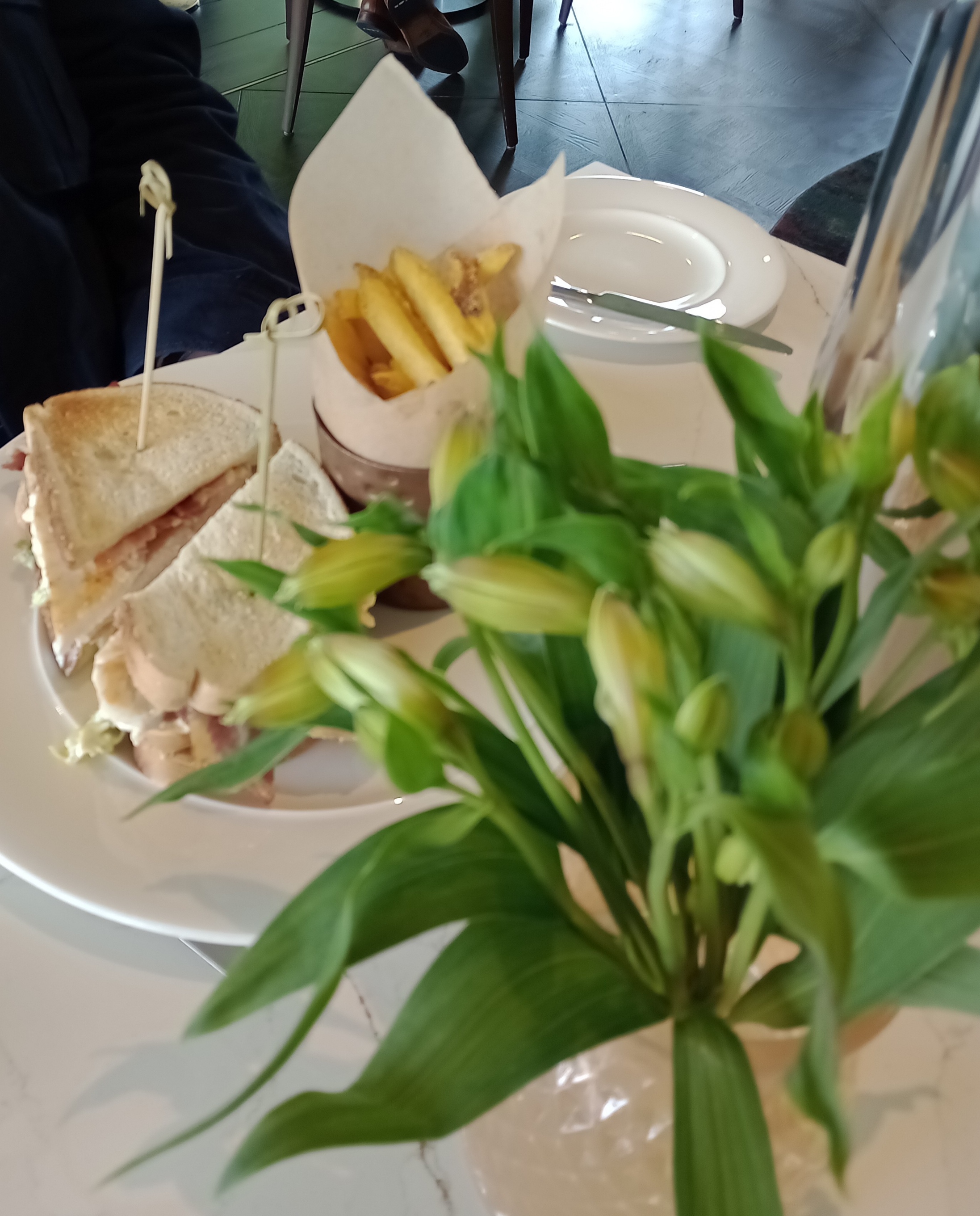


Three course dinner at Fonab Castle










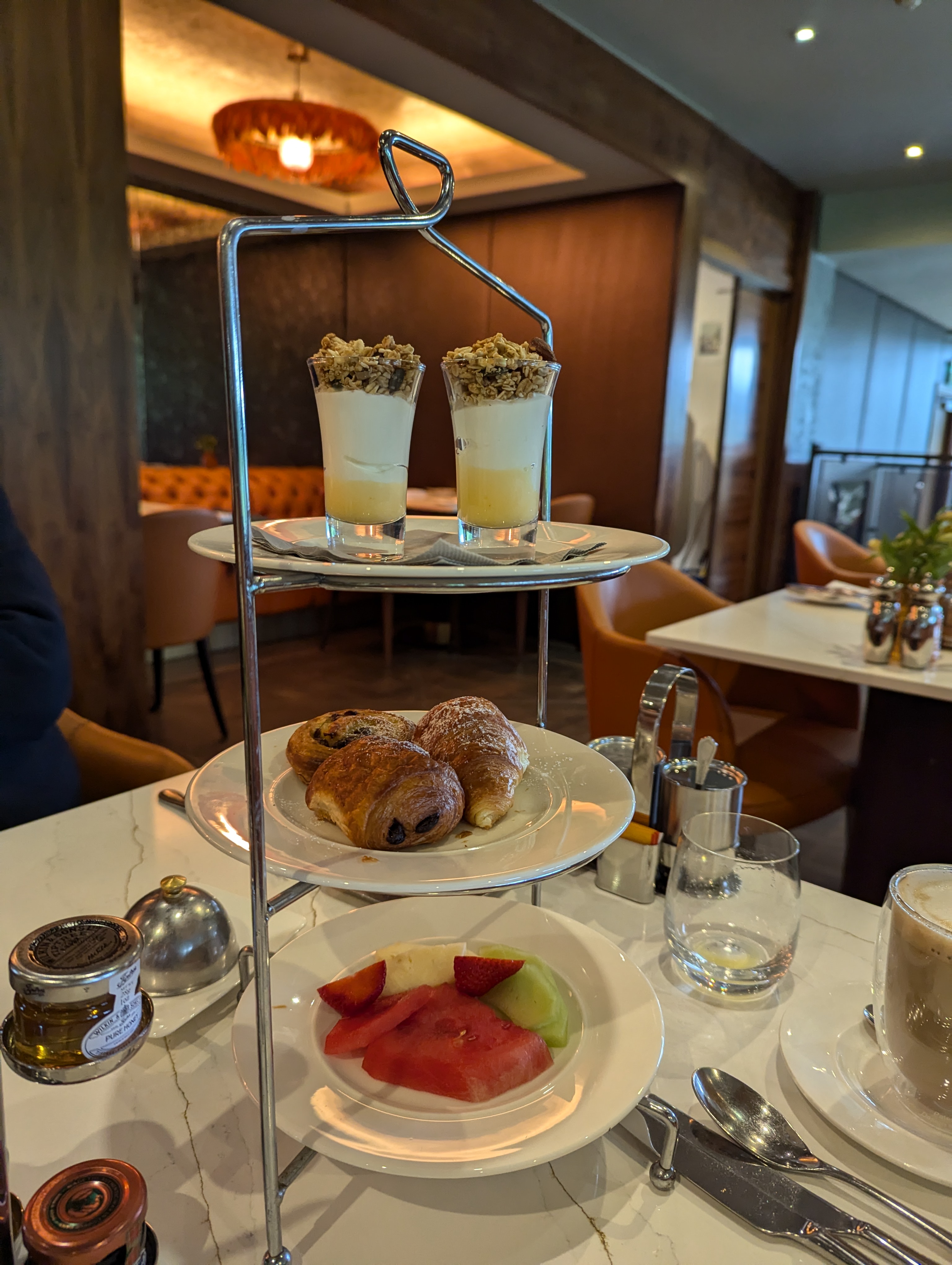
Breakfast at Fonab Castle





This cafe had a large range of delicious looking items, sweet and savoury. However, paper bags and a napkin sufficed at the tables that were provided. The pies were excellent!
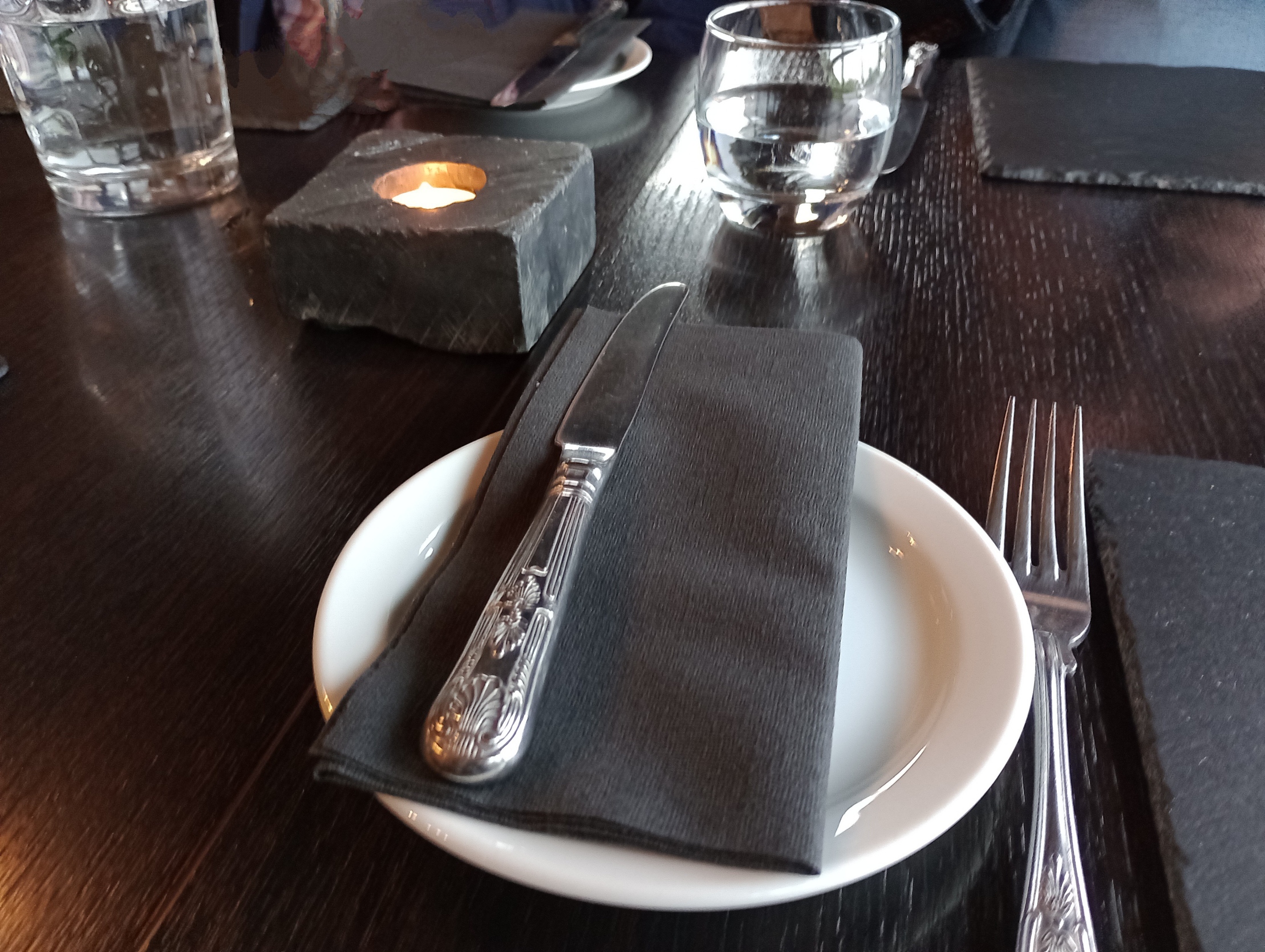
St Andrews again, and more eating out, this time at The Grange Inn which has been there since our friend was studying at St Andrews. It’s a worthwhile institution, serving some of the best meals we have encountered here.








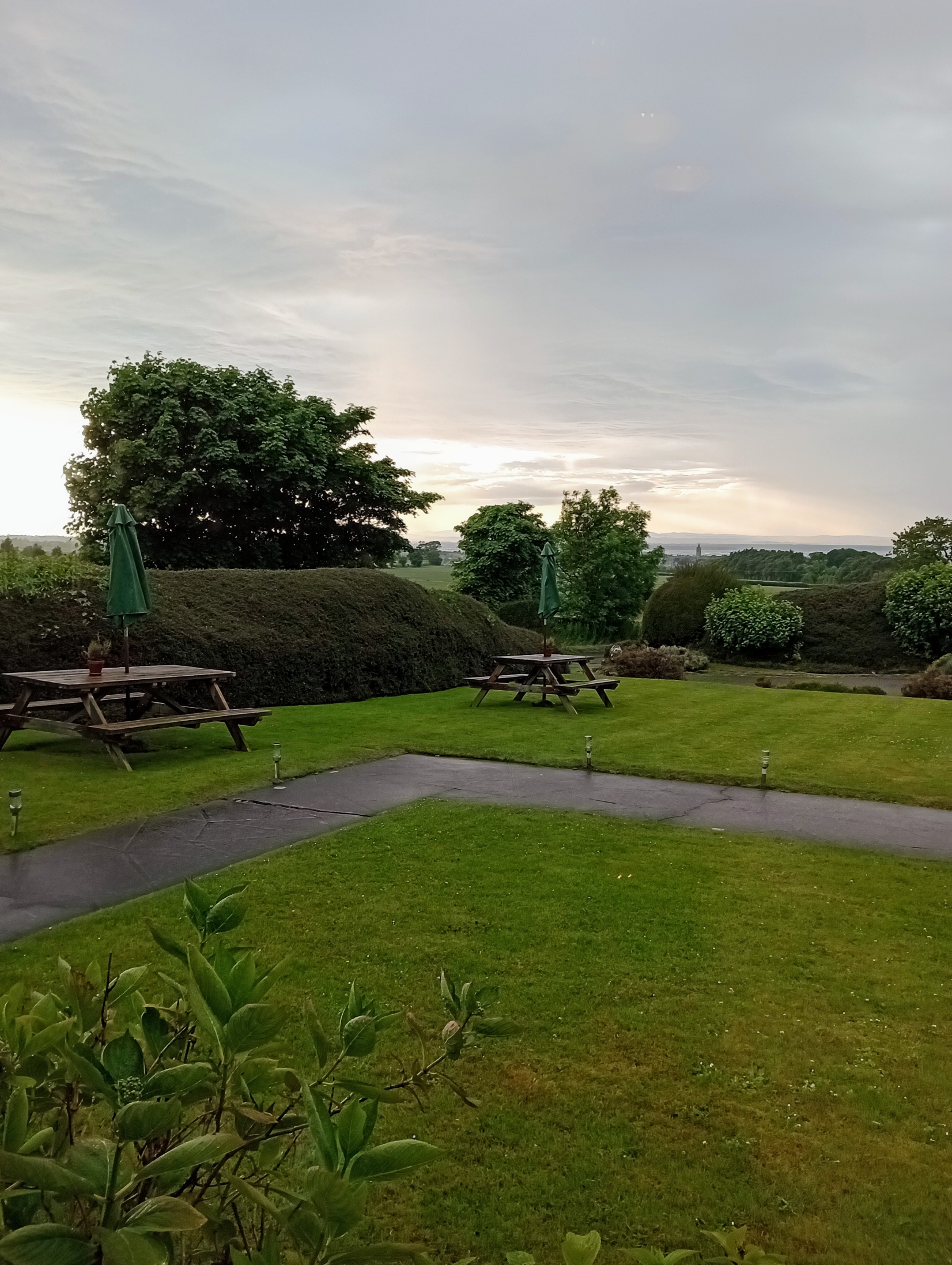








On the way to Glasgow



 Robin's Room