Laura Thompson Agatha Christie An English Mystery Headline Publishing Group, Hatchette, 2013. (First published 2007; Headline Paperback 2008; Hardcover published March 2018, Pegasus Books).
Laura Thompson’s Agatha Christie is an excellent accompaniment to reading John Curran’s The Secret Notebooks. I read them in close succession and found their perspective and perceptive commentary on Agatha Christie and her novels markedly enhanced my current re-reading of her work. While Curran’s work concentrates on Christie’s development of the novels and short stories, in Christie An English Mystery Thompson goes to the heart of her work: Christie’s life and character.
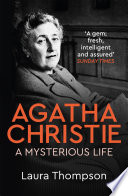
I particularly liked the way Thompson dealt with the 11 day’s disappearance. She used her imagination, based on her knowledge of Christie to develop the story. At the same time, we are taken carefully through the material and information that is available. This certainly puts to rest the idea that Christie’s disappearance was a public act. It was possibly an act that took no account of the media, police ineptitude, the haste to believe assertions which undermined a public figure (which Christie clearly thought did not apply to her) and that, as a well-known writer her life was not her own. As Thompson says, the idea that the media has only recently begun to attack public figures, taking their lives as if they are owned by the public is fallacious. Christie’s story
which is one of immense hurt and private agony – became a hook on which to pillory a woman of some fame. That she manages to deal with this as well as the loss of her beloved husband, Archie Christie, is a mark of her fortitude. Of course, she suffered the consequences all her life, ensuring that her second marriage remained intact. See Further Commentary and Articles arising from Books* and continued longer articles as noted in the blog for the remainder of this review and further material re Agatha Christie.

Jared Cade Agatha Christie and the Eleven Missing Days Scarab eBooks 2011.
Jared Cade’s interpretation of Agatha Christie’s eleven days’ disappearance is touted as the most likely description of the events leading up to the disappearance, its causes, and aftermath. He returns to Christie’s childhood as a part of the explanation, and this part of the book (which I received as a sample) is an intriguing read. However, the reviews are mixed, including some that are quite scathing, so I did not proceed with buying the complete text. It now appears to be unavailable on kindle.
Fictionalised accounts of the eleven days disappearance
I have two novels in which Agatha Christie features, and one in particular conjures wonderful images related to The Old Swan Hotel. A Talent for Murder by was written by Andrew Wilson while Christie was alive. When she asked him to defer publication for forty years he did so. It is still a good read, explaining Agatha Christie’s eleven-day disappearance as part of a murder plot – with her committing the murder! It is clever in that it weaves true events – most humorous Christie dancing in the hotel to “No We have No Bananas”, and a death that did occur at the time, and in circumstances that fit with plot.
Facebook comments on The Old Swan Hotel and Agatha Christie
When I saw this post from RR on Facebook a few months ago, I decided that it would be added to my coverage of my stay at The Old Swan Hotel (formerly the Harrogate Spa) in Harrogate. I was attracted to the dinner and posh afternoon tea package but was reminded of far more important connections when I read this post. Below are some of the details from that Facebook post:
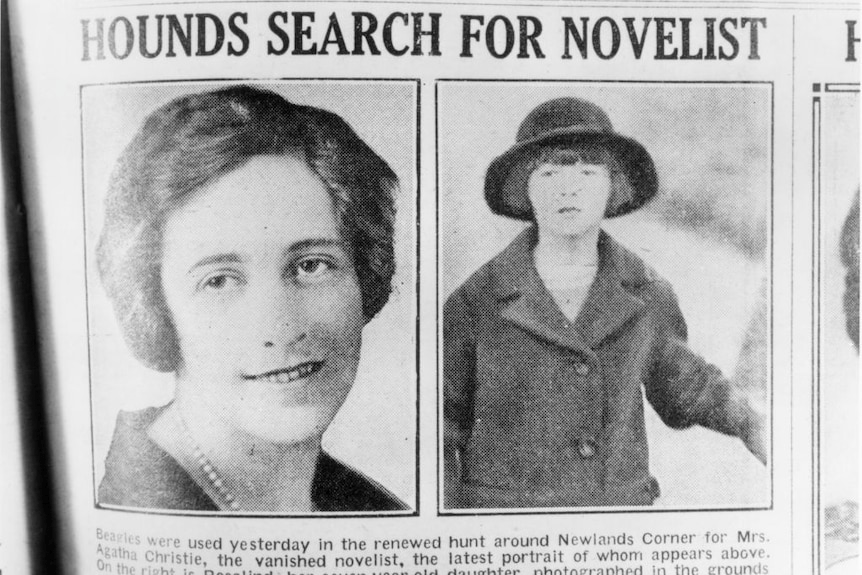
In December 1926 the author Agatha Christie suddenly disappeared from her home. She was missing for a total of eleven days, during which the police conducted a major manhunt, and there was speculation that she had committed suicide. The disappearance even drew other crime writers Sir Arthur Conan Doyle and Dorothy L Sayers into the search, Conan Doyle’s interest in the occult prompting to take one of Christie’s gloves to a medium. After a period of about ten days (having checked into the Swan Hydropathic Hotel under the assumed name Mrs. Teresa Neele) she was recognised by one of the banjo players at the hotel. From Wikipedia, ‘Old Swan Hotel’ entry, which also has more information on the hotel itself. Daniel Stashower’s biography of Conan Doyle, ‘Teller of Tales’, has a chapter on his involvement in the search for Agatha Christie.
When I stayed at the hotel in 2004 we were told that Agatha Christie was found playing billiards in the room where the conference I was attending was held.
And a further post:
…this is a nice hotel. I stayed there in 2004 when I attended a Tourism and Literature conference run by Sheffield Hallam University. It was the nicest conference I have ever been part of.
The Old Swan Hotel, Harrogate
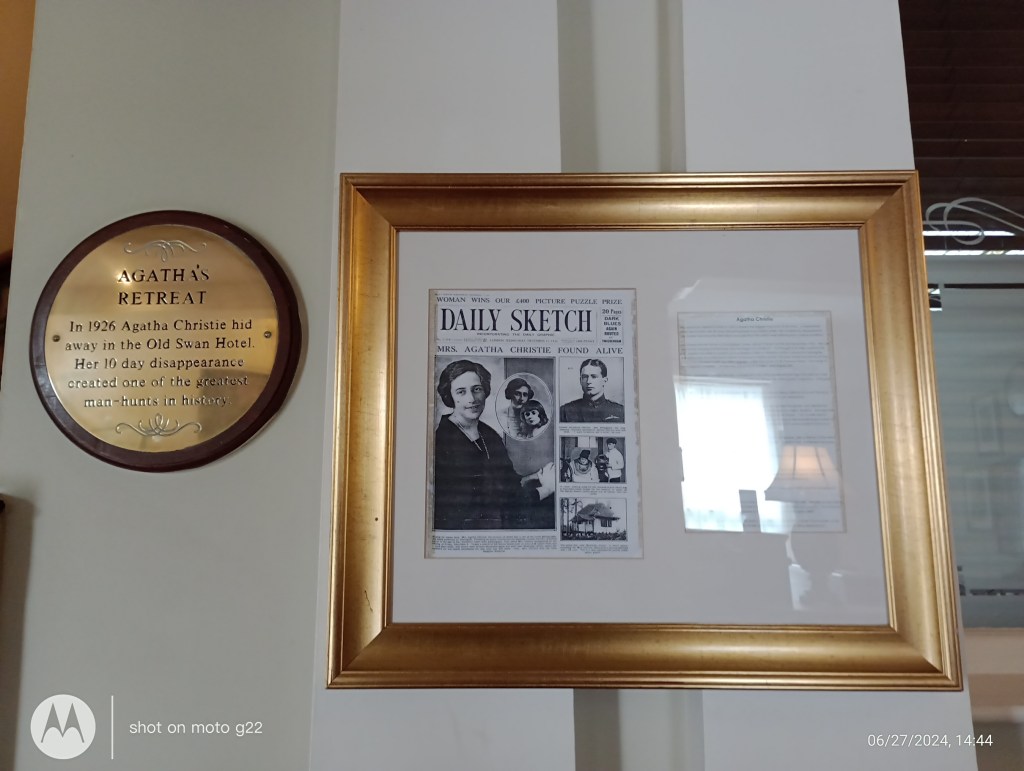
At the entrance the original of the photo below is displayed. The Old Swan Hotel is indeed old, but not tired, with its painted bedrooms of a reasonable size and pleasant bathroom. The bed is comfortable. I doubt that there is much remaining from Agatha Christie’s stay, apart from the building with its large dining area, areas with comfortable seating and gardens.


In Cambridge I booked to attend the following exhibition:
A Celebration of 20th Century British Crime Fiction at Cambridge University Library
About The Exhibition
Cambridge University Library shines a spotlight on the UK’s most read, bought and borrowed genre: crime fiction. But of course, we didn’t need to tell Agatha Christie fans that… This free-to-visit exhibition celebrates some of the best books, classic and contemporary, that have captivated readers throughout the UK and beyond. Seize your chance to marvel at the Library’s remarkable collection of first editions, see rare manuscripts and curios from March 23rd to August 24th.
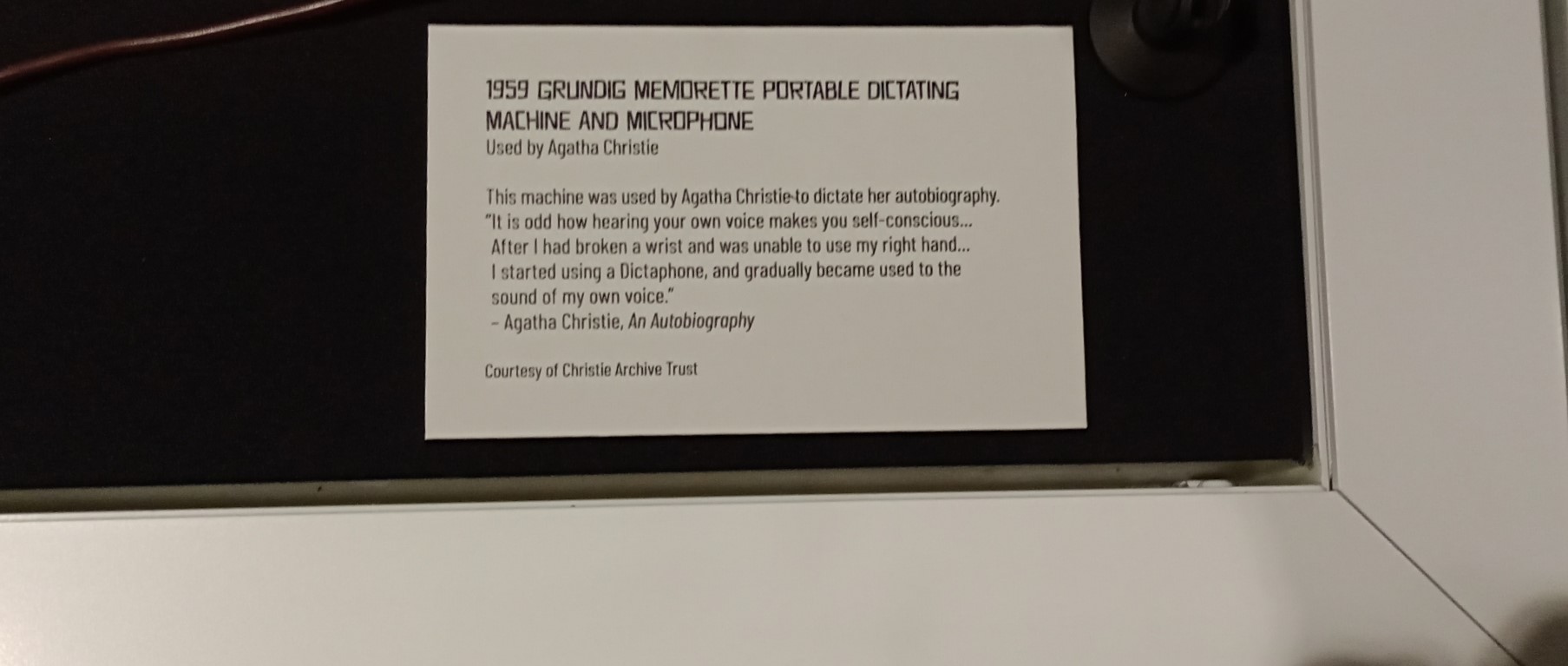
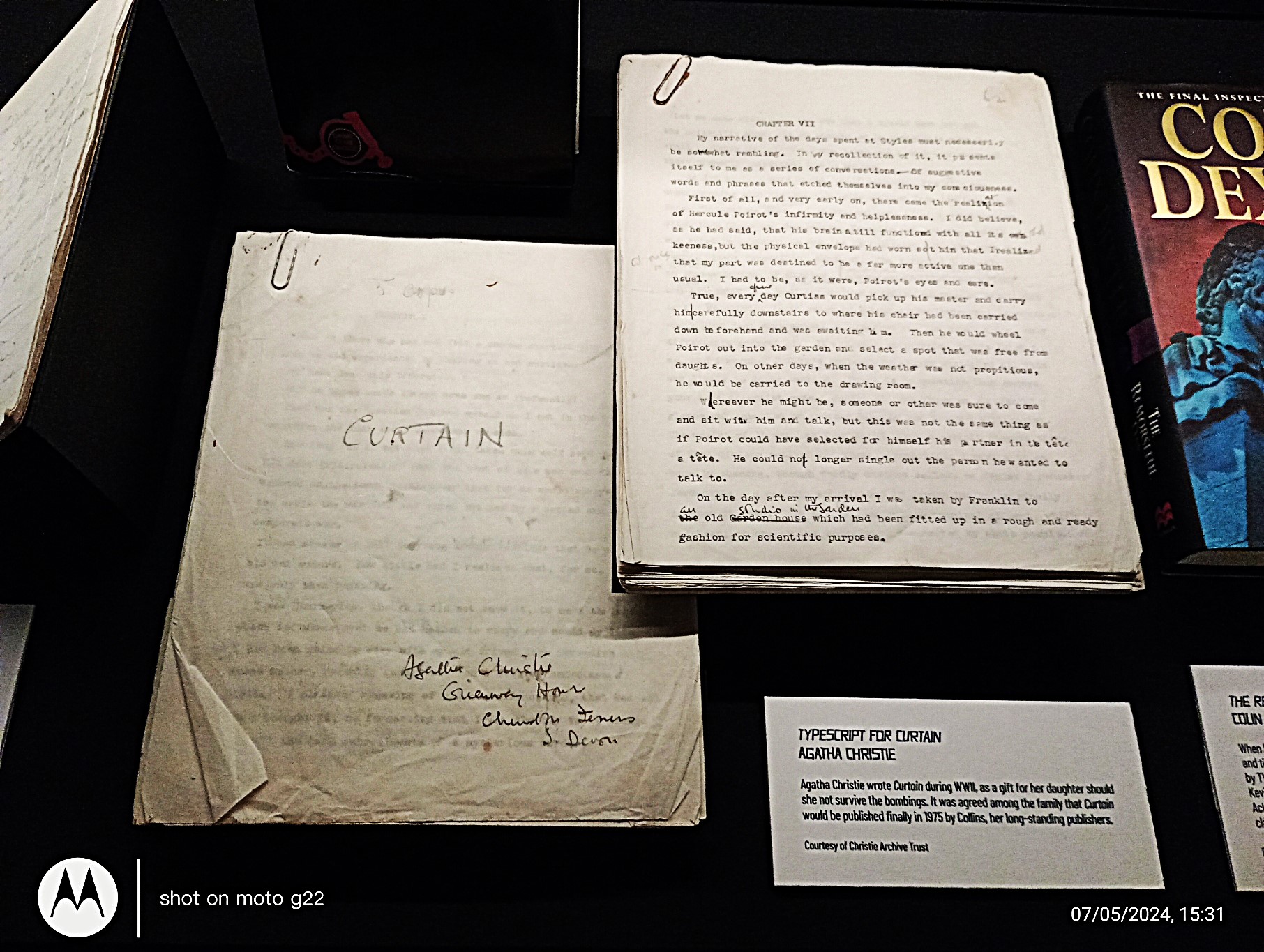
From Wilkie Collins to Charles Dickens, Arthur Conan Doyle to Agatha Christie, Ian Rankin to Val McDermid, award-winning crime writer Nicola Upson has curated a criminally good treat for visitors. Agatha Christie fans will get the chance to marvel at one of the author’s own typewriters, an original typescript for her final Poirot novel, Curtain, as well as notebooks and a Dictaphone which she used to plot her stories. Plus, there are almost 100 first edition crime classics in their original dust jackets from the library’s own collection, so you can rest assured that you’ll be coming away with a few new (or new to you) titles to add to your reading list.
I enjoyed being at the exhibition with friends and the information and photos appear below.
Crime Fiction at Cambridge University Library

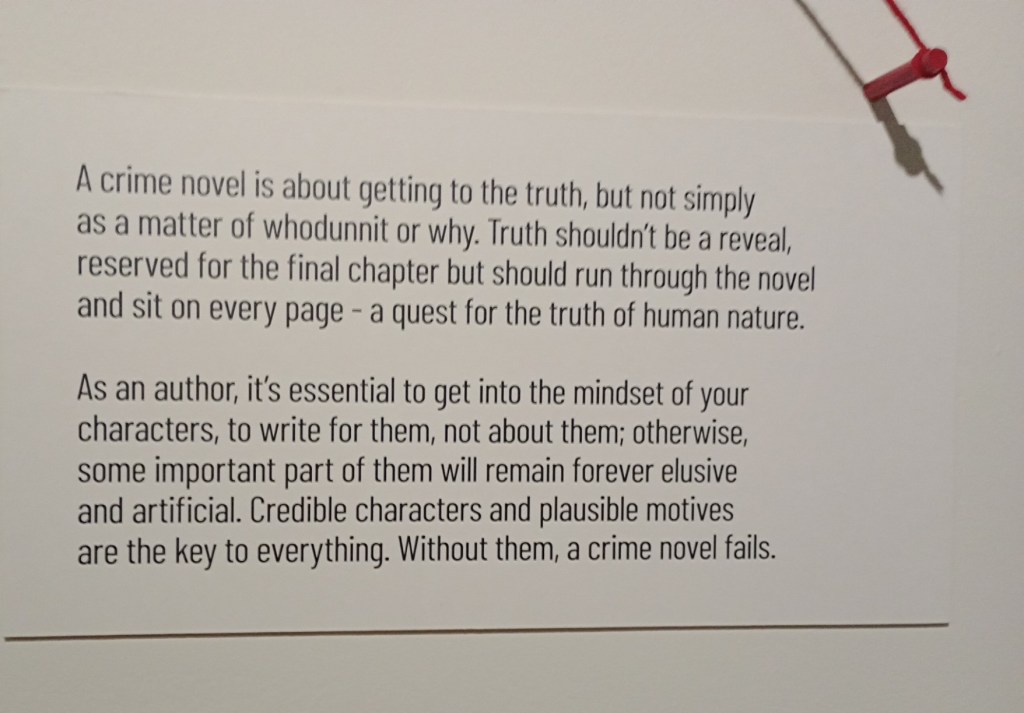
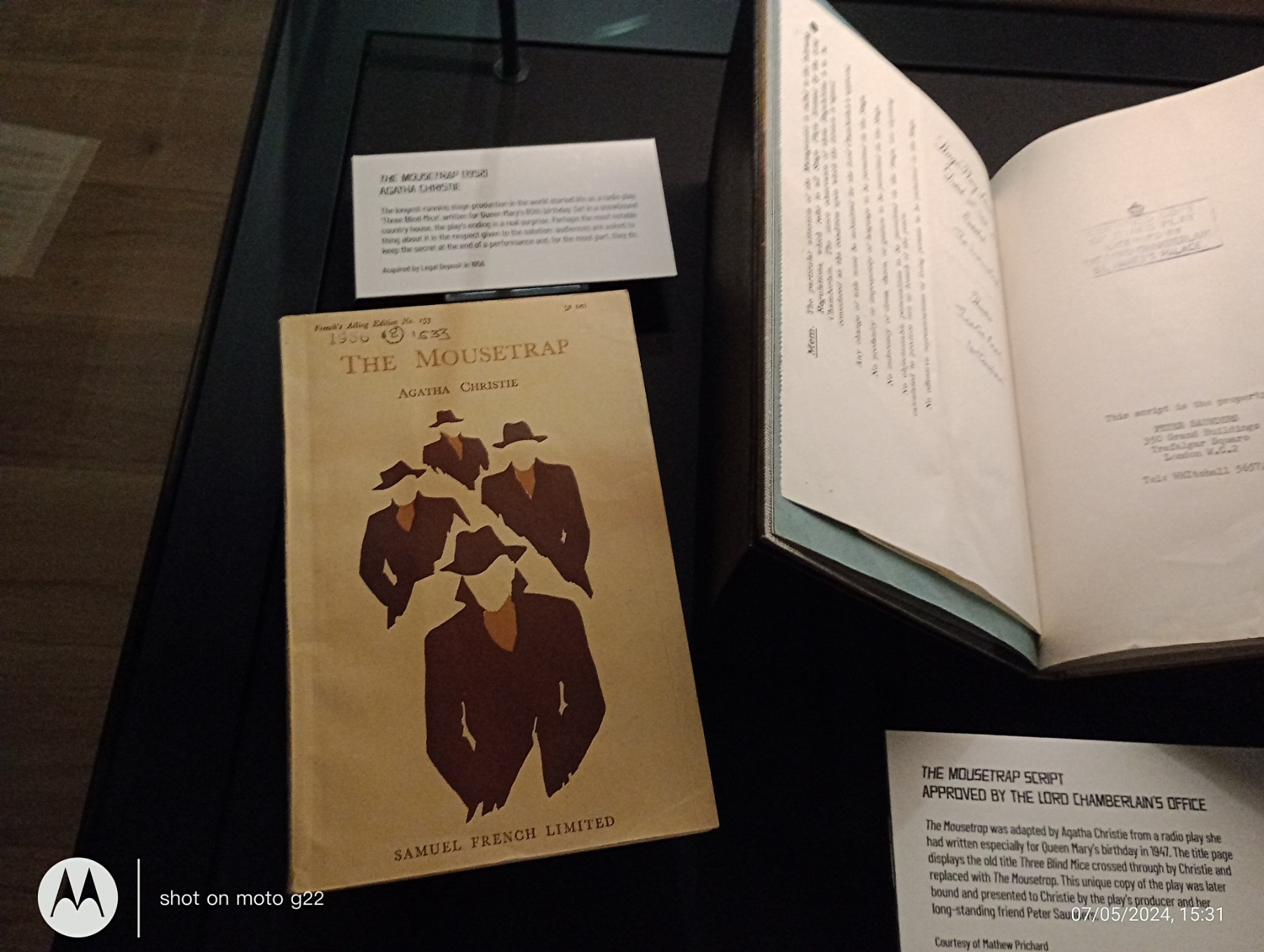
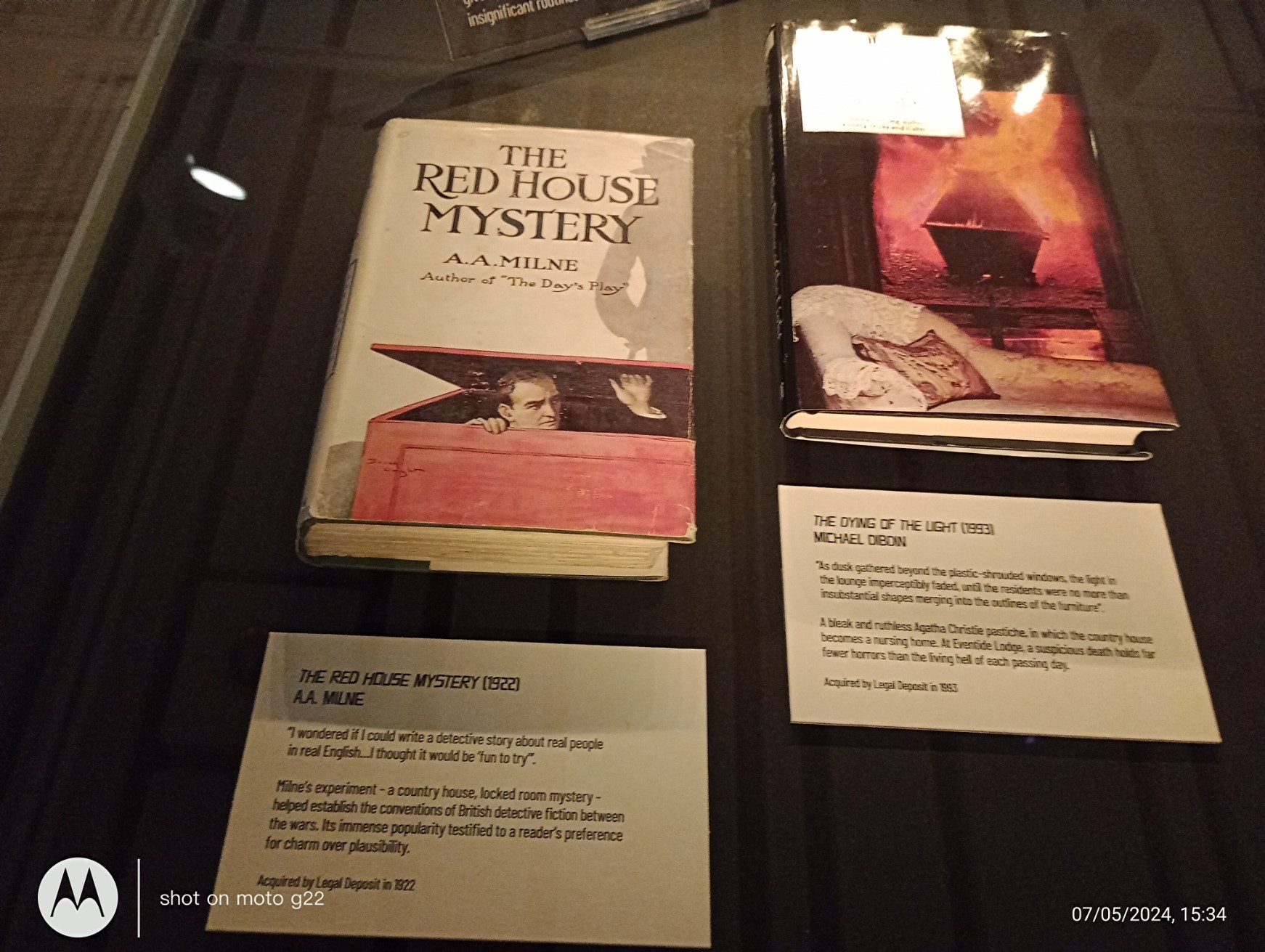
For a donation of 5 or ten pounds the exhibition is a pleasant way of sourcing information about the crime books written in the UK. The exhibition largely comprises novels, and some items used by writers, an informative map of the of where writers lived and some the locations for their fiction.




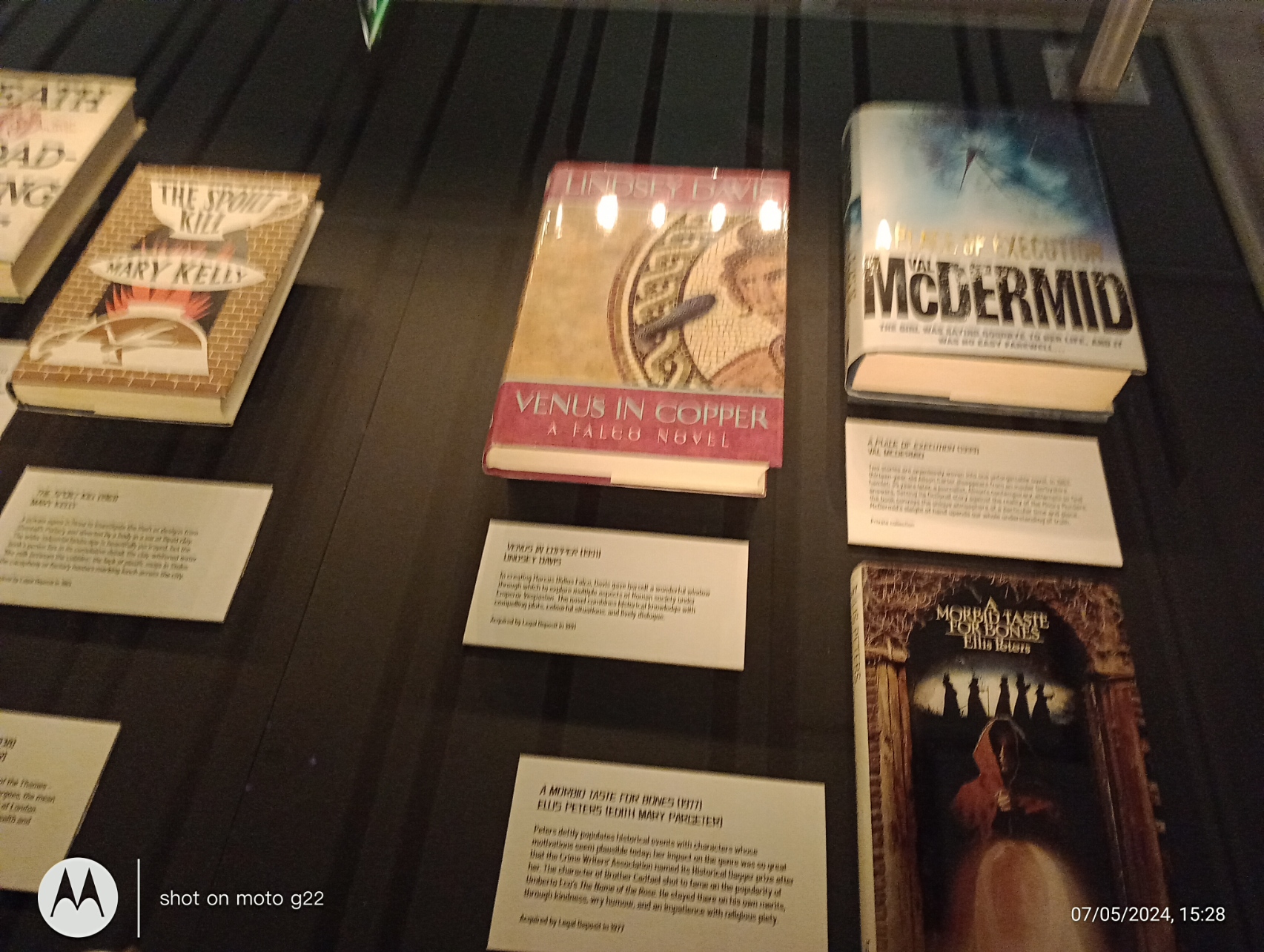


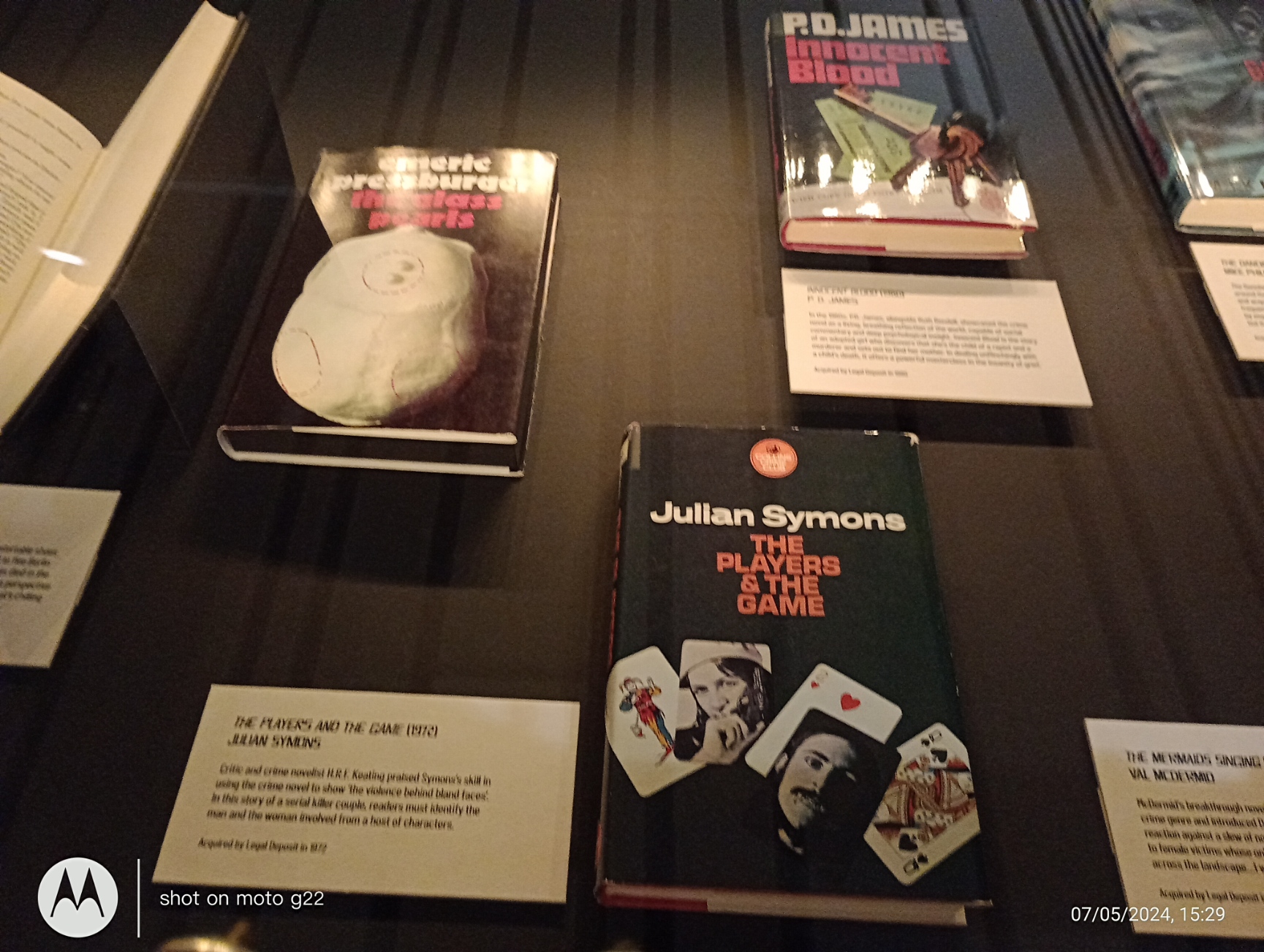


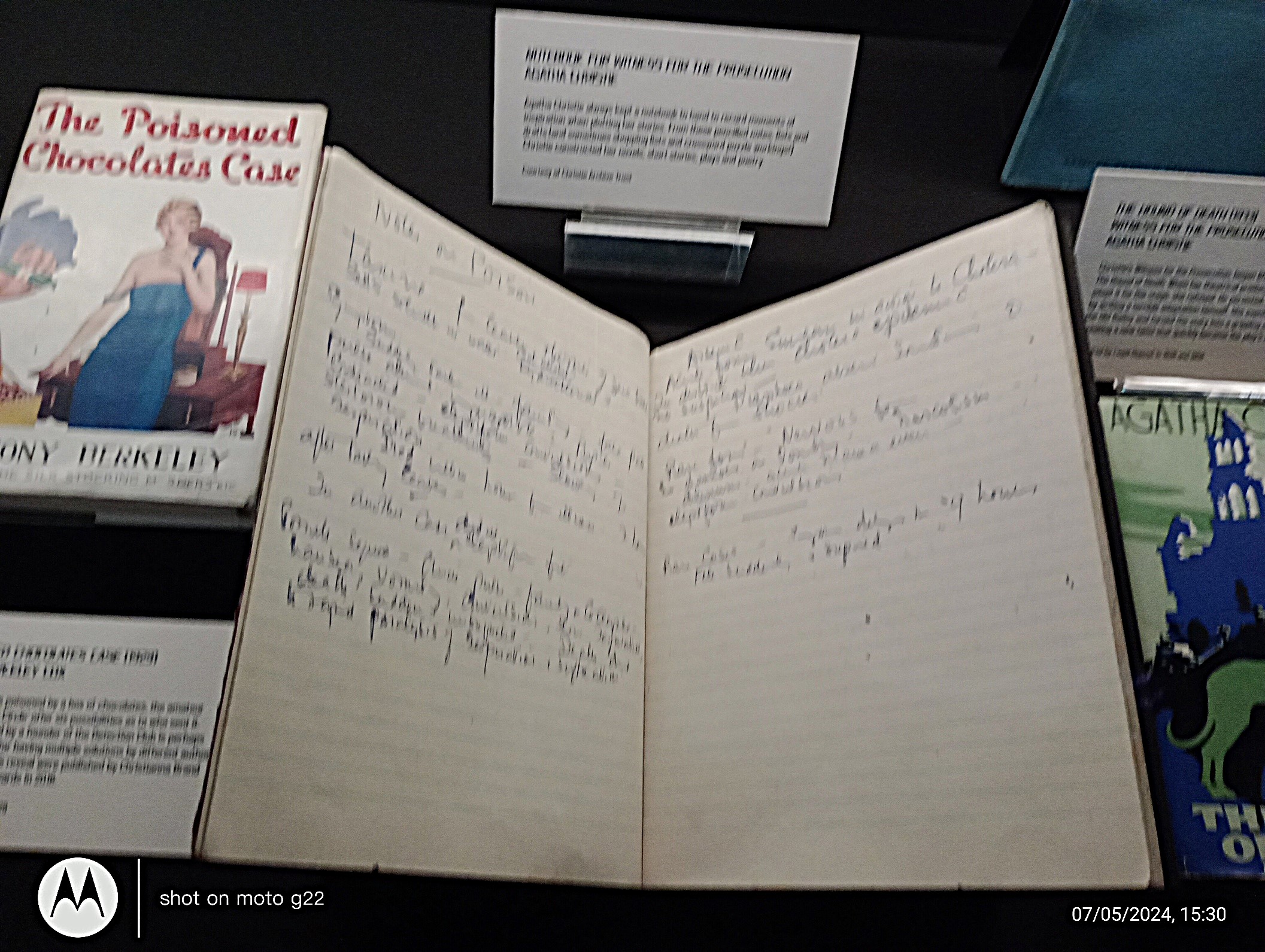
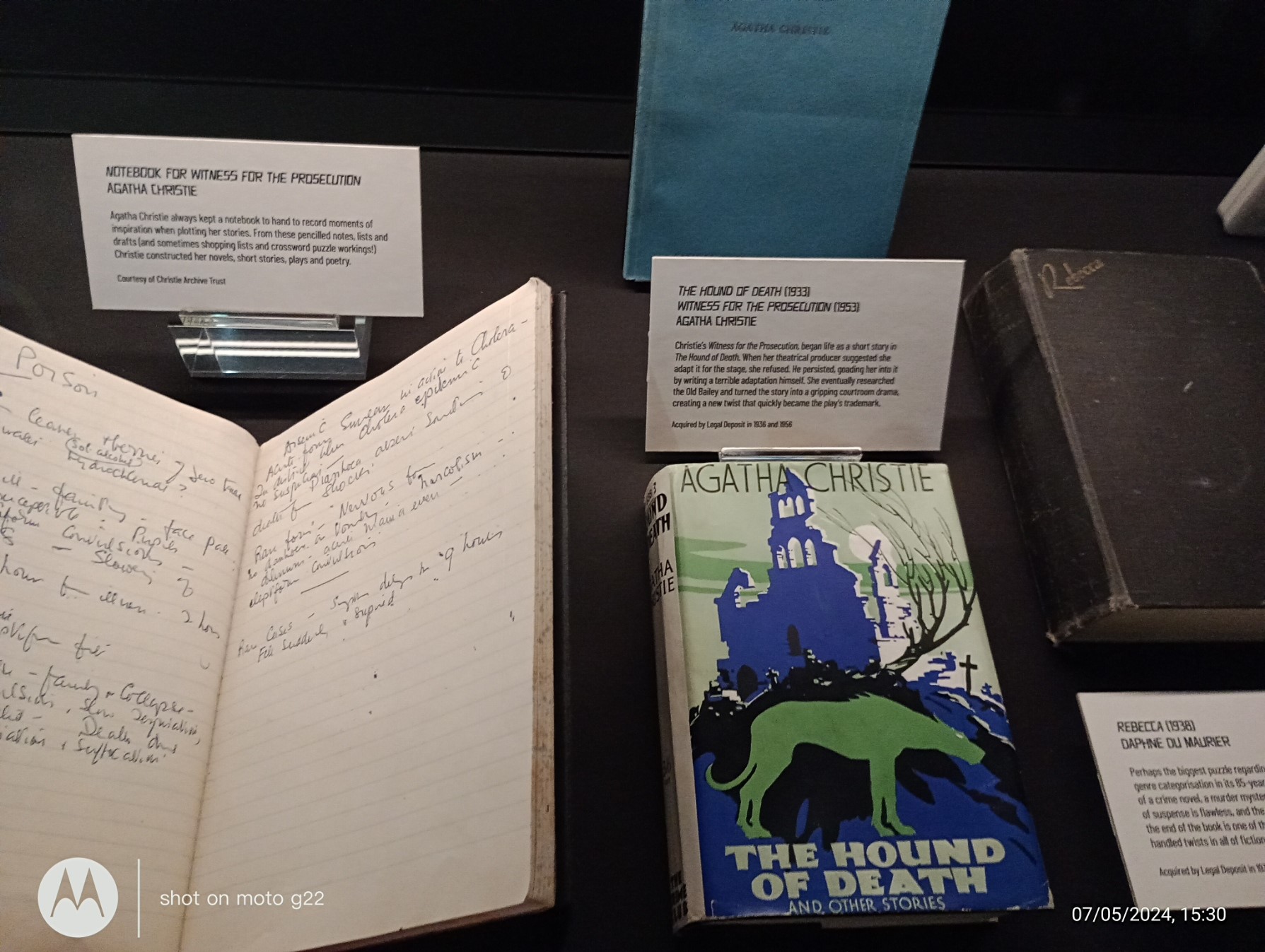

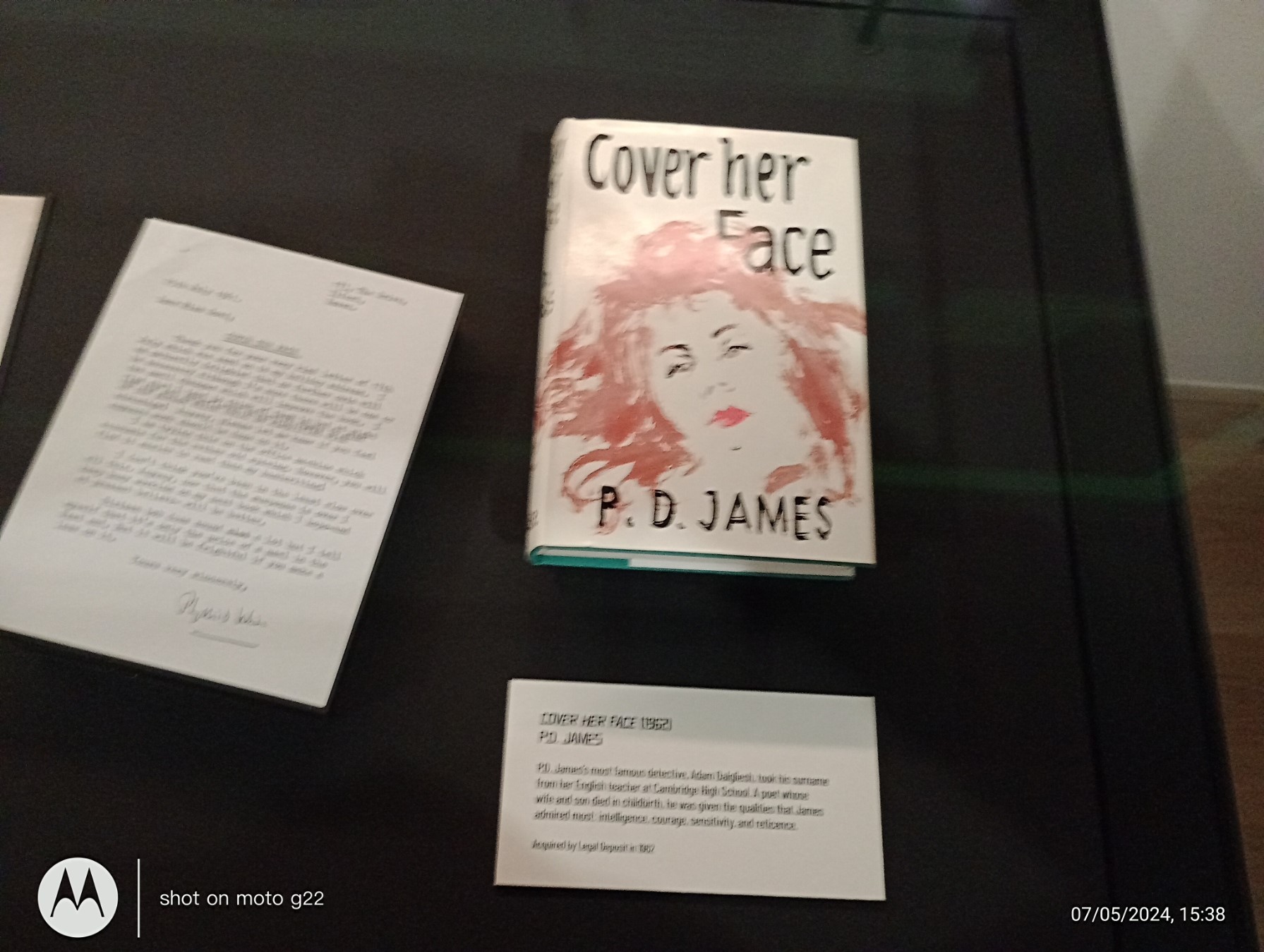
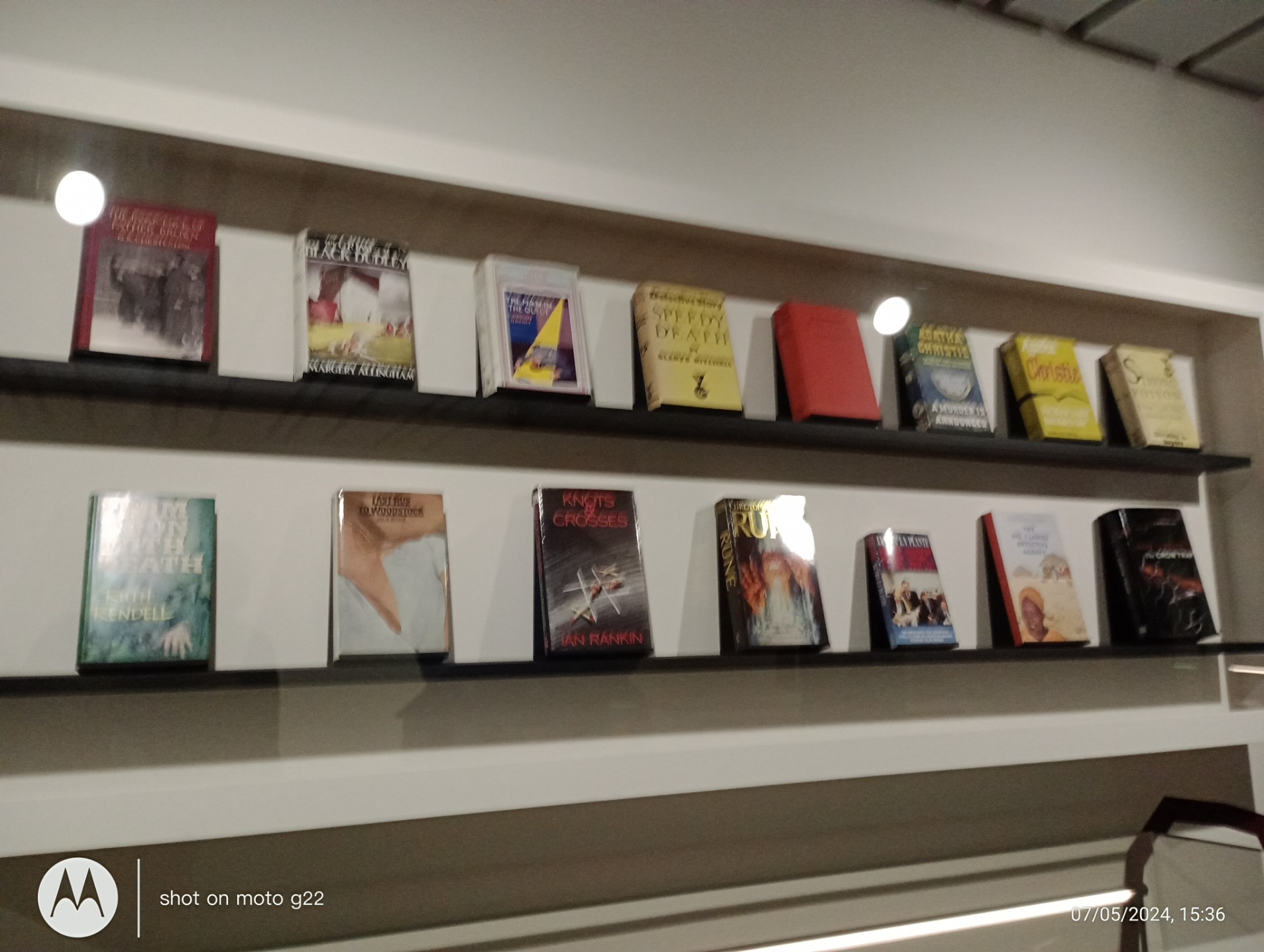
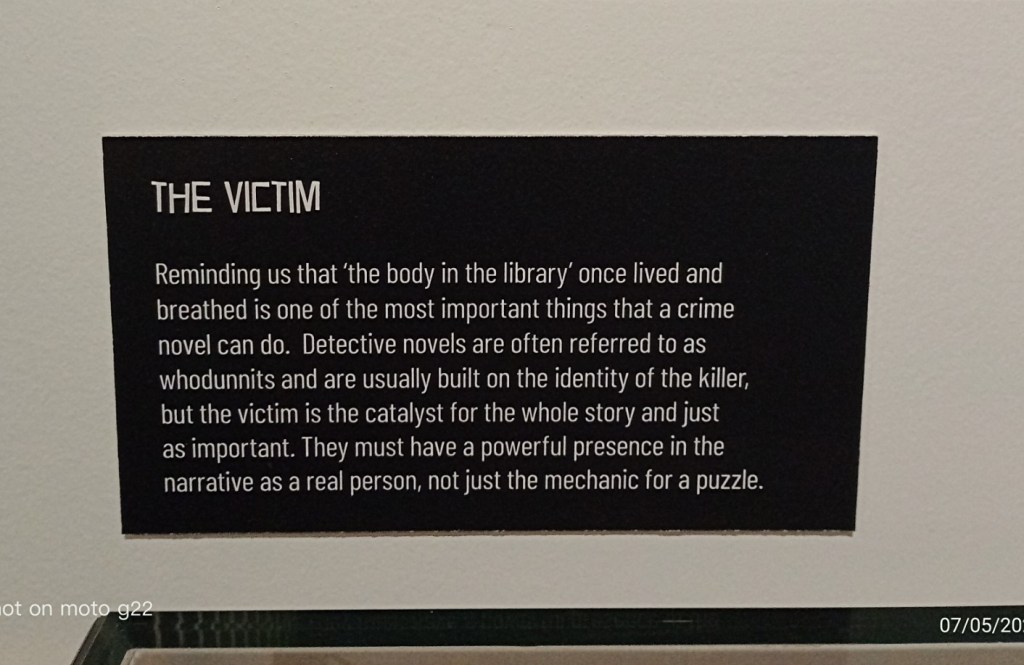


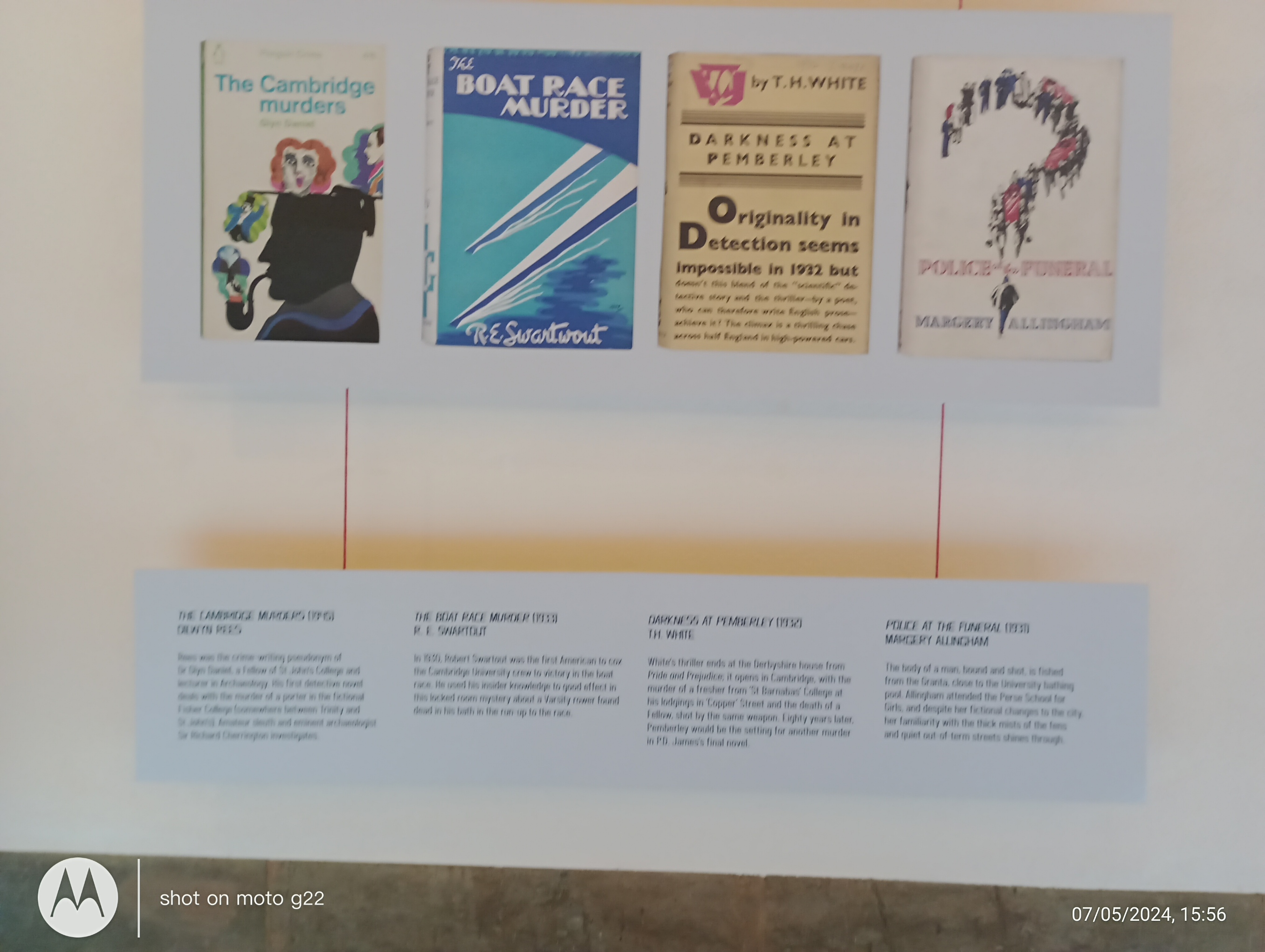

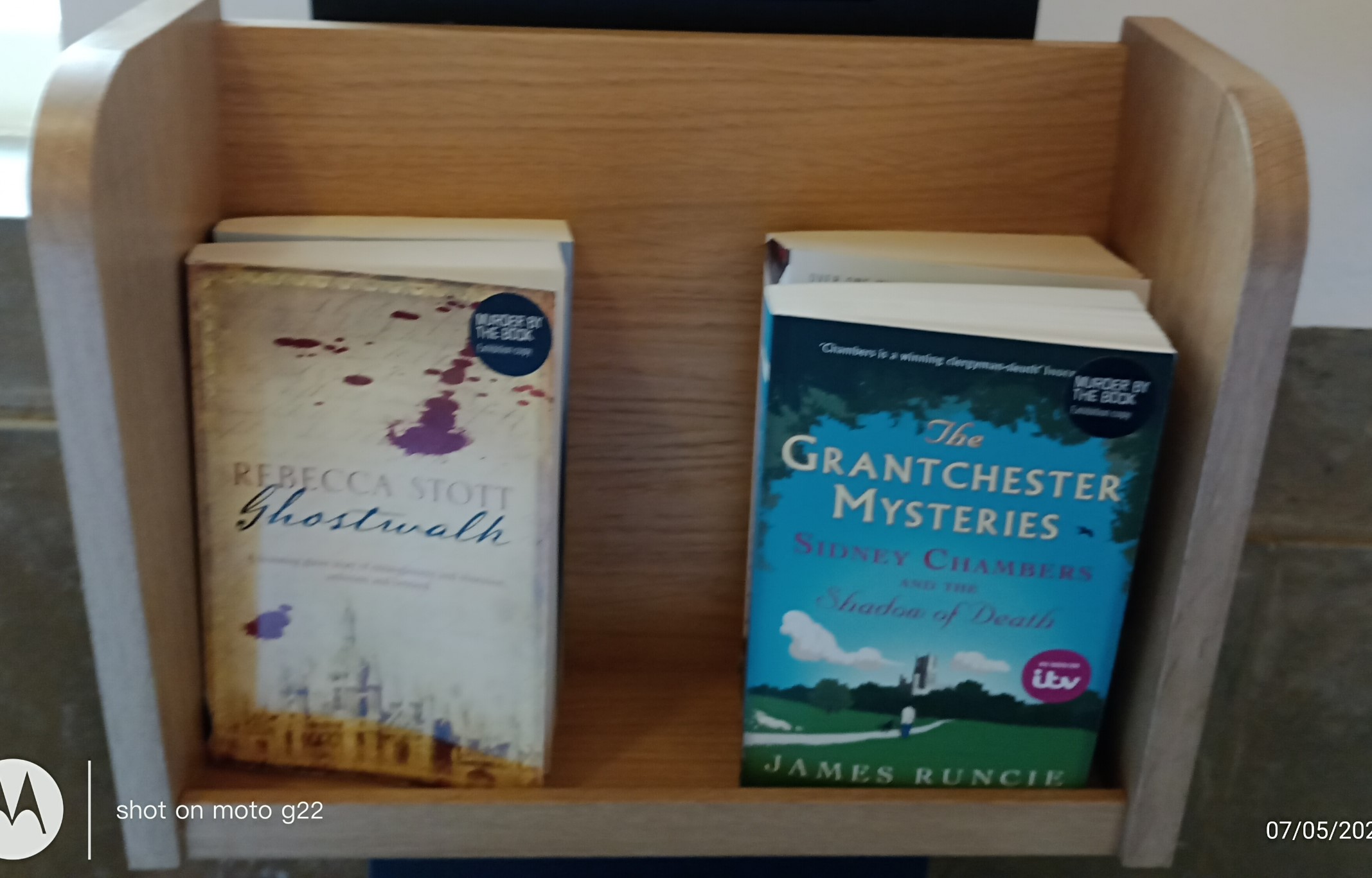

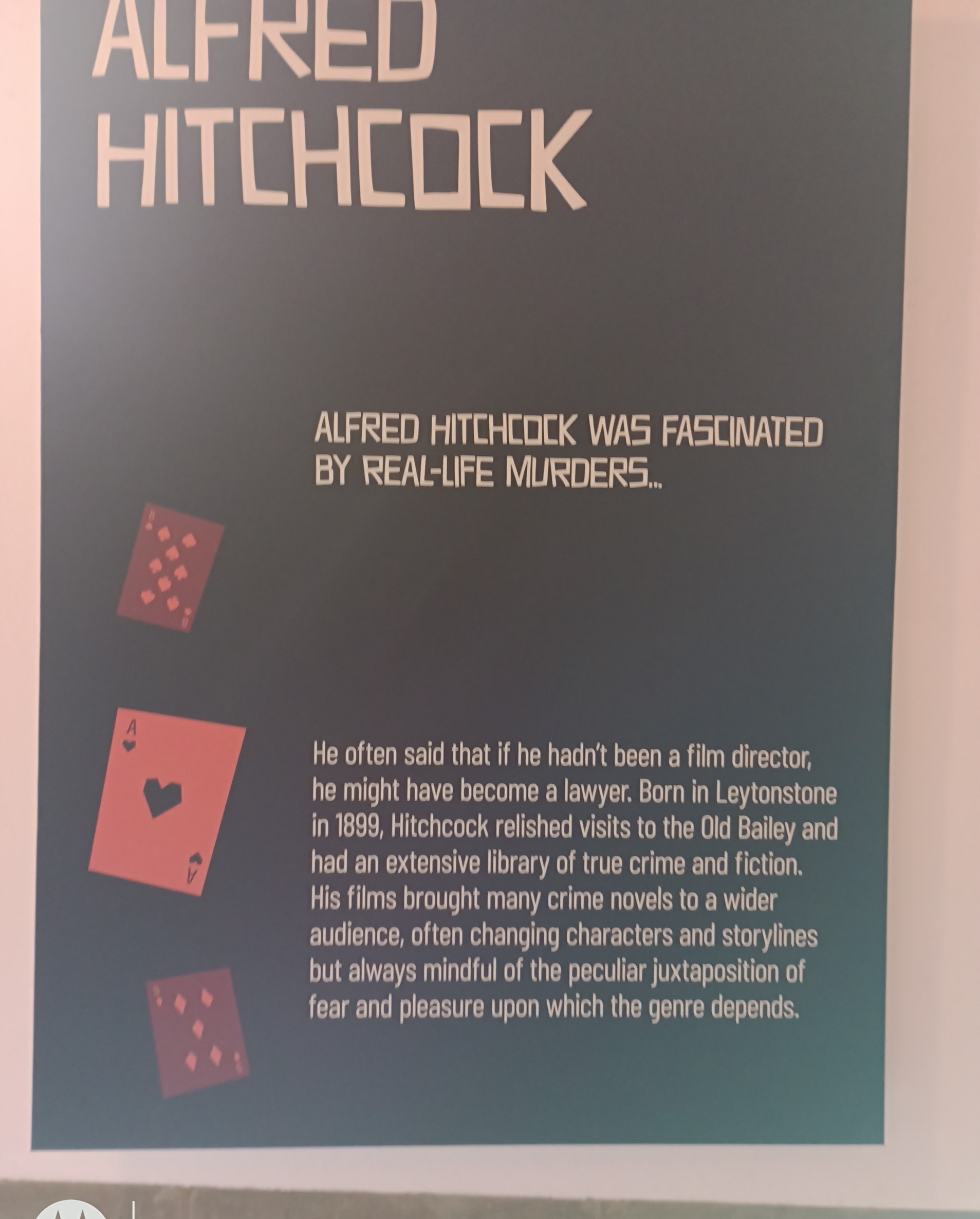
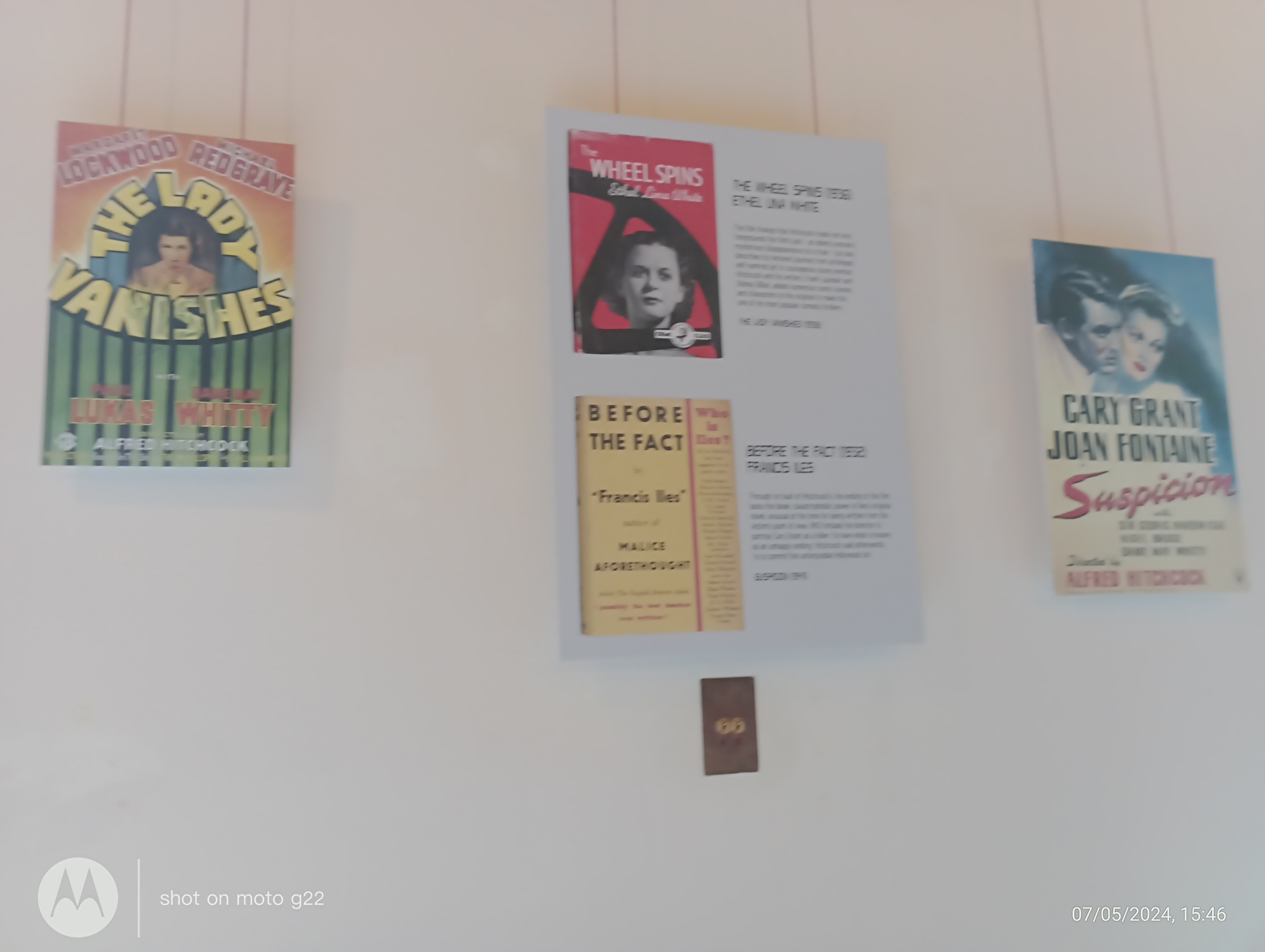

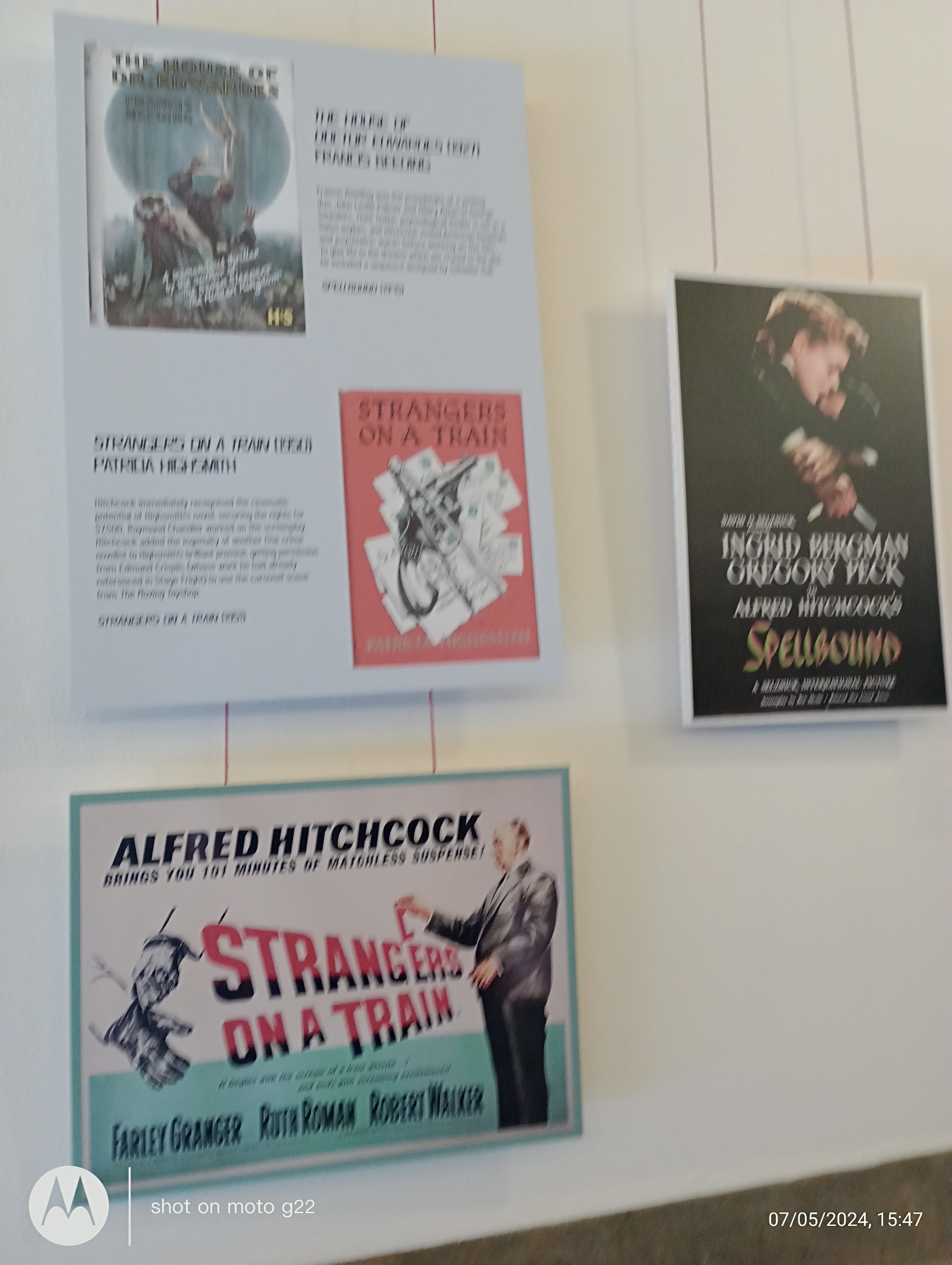

From: The Spectator 9 June 2024, 5:30am
Agatha Christie and the truth about detective fiction’s Golden Age

A hundred years ago, the Golden Age of detective fiction was taking off. In the years that followed, Agatha Christie, Dorothy L. Sayers, and their contemporaries wrote classics that still delight readers today. But the great crime books of the inter-war years – and the politics of the people who wrote them – have long been misunderstood.
There was no shortage of left-wing authors of Golden Age detective fiction
Critics routinely dismissed the stories as cosy, conservative, and conventional. Lavish TV and film adaptations reinforced the stereotype. The reality is that many fascinating writers of classic crime fiction were left-wing or even – like Bruce Hamilton (the godson of Sir Arthur Conan Doyle) and his better-known brother Patrick – Marxist. Their books reflected their politics in a variety of ways.
Even the twentieth century’s leading historian of the genre, Julian Symons, fell into the trap of thinking otherwise. In his influential Bloody Murder, he argued that ‘Almost all the British writers of the twenties and thirties…were unquestionably right-wing.’ When he came up with that generalisation, Symons was a recovering Trotskyist. Perhaps that influenced his attitude. The truth is that he’s wrong. It’s certainly the case that Christie, Sayers, Anthony Berkeley (who founded the elitist Detection Club in 1930) and the excellent Henry Wade – in real life a baronet, Sir Henry Aubrey-Fletcher – were instinctive conservatives. Nevertheless, Symons airbrushed out of his version of a history a wide range of intriguing novelists with a left-wing political agenda.
Even the term ‘the Golden Age’ was coined, in 1939, by John Strachey during his Marxist phase prior to becoming a minister in Attlee’s Labour government. Strachey heaped praise on young detective writers such as Nicholas Blake (the poet Cecil Day-Lewis), who had recently published a superb mystery, The Beast Must Die. Day-Lewis was a Communist Party member, but that didn’t debar him from being elected to membership of the elitist Detection Club, founded by Anthony Berkeley in 1930, in which Christie and Sayers were leading lights. Their concern was literary merit, not politics or prejudice.
When he attended Detection Club dinners in Soho, Day-Lewis found plenty of companions from the political left. The Club’s founder members included the economist G.D.H. Cole and his wife Margaret, stalwarts of the Fabian Society who wrote over twenty detective novels together, and Lord Gorell, who served in David Lloyd George’s government before switching to Labour. Elected two years before Day-Lewis, Ralph Woodthorpe was a Daily Herald journalist who excoriated Fascism in two of his detective novels as well as in newspaper columns.
Two prominent women in the Labour party made use of their political know-how when they turned to mystery writing after losing their seats in the Conservative landslide of 1931. Mary Agnes Hamilton wrote Murder in the House of Commons, while Ellen Wilkinson – ‘Red Ellen’, of Jarrow March fame – published a locked room mystery before returning to the political fray and serving as Attlee’s Minister of Education. The Division Bell Mystery is a pleasing debut but the book vanished from the shelves before resurfacing eighty years later in the British Library’s Crime Classics series – with a prefatory note by Rachel Reeves.
Ivy Low, wife of the Communist revolutionary Maxim Litvinov, spent the ‘Golden Age’ living in Stalin’s Russia. Moscow in the twenties supplied her with an evocative background for His Master’s Voice, published by Victor Gollancz, a radical who published scores of detective novels as well as founding the Left Book Club.
Like Hamilton and Wilkinson, Ivy only wrote one mystery novel. Christopher St John Sprigg, the Marxist poet better known under his less posh writing name Christopher Caudwell, managed to dash off eight whodunits before being killed in Spain while fighting against Franco.
After the First World War, detective novelists and their readers were intent on having fun after the horrors of the trenches and the nightmarish ‘Spanish flu’ pandemic. Authors concocted puzzles that challenged readers to try to solve the mystery before the great detective, but before the end of the twenties, astute writers like Sayers and Berkeley realised that the future lay in puzzles of character.
As the world economy slumped and dictators flexed their muscles, detective novelists grappled with the burning question of the times: what should we do when we can’t trust the legal system to deliver justice? This theme underpins two Christie masterpieces, Murder on the Orient Express and And Then There Were None, and it also preoccupied her left-leaning colleagues in the Detection Club. Milward Kennedy, a senior figure in the International Labour Organisation, devoted a whole novel, Sic Transit Gloria, to exploring ‘justified murder’.
Helen Simpson – whose attempt to become a Liberal MP was derailed by cancer – wrote Vantage Striker!, in which a populist politician turns out to be a closet Fascist who is dealt with ruthlessly by extra-legal means. Margaret Cole’s brother Raymond Postgate included an epigraph by Marx in his scathing jury trial novel, Verdict of Twelve.
Bruce Hamilton even wrote a novel about a homicidal dentist, Middle Class Murder, expressly designed to show the rottenness of the bourgeoisie. He followed this up with Traitor’s Way and The Brighton Murder Trial: Rex v. Rhodes, two anti-Fascist novels which failed spectacularly to anticipate Stalin’s pact of non-aggression with Hitler. Perhaps that sapped his morale, since he only managed one more crime novel over the next thirty years, while Postgate concentrated on democratising gourmet dining by founding The Good Food Guide.
So despite Symons’ claim, there was no shortage of left-wing authors of Golden Age detective fiction. But they lacked the staying power of Christie, Sayers, and their fellow conservatives. And, most important of all, their stories weren’t as enjoyable.
WRITTEN BY Martin Edwards
Martin Edwards is a crime writer. His latest book The Life of Crime: Detecting the History of Mysteries and their Creators is out now.
Liverpool
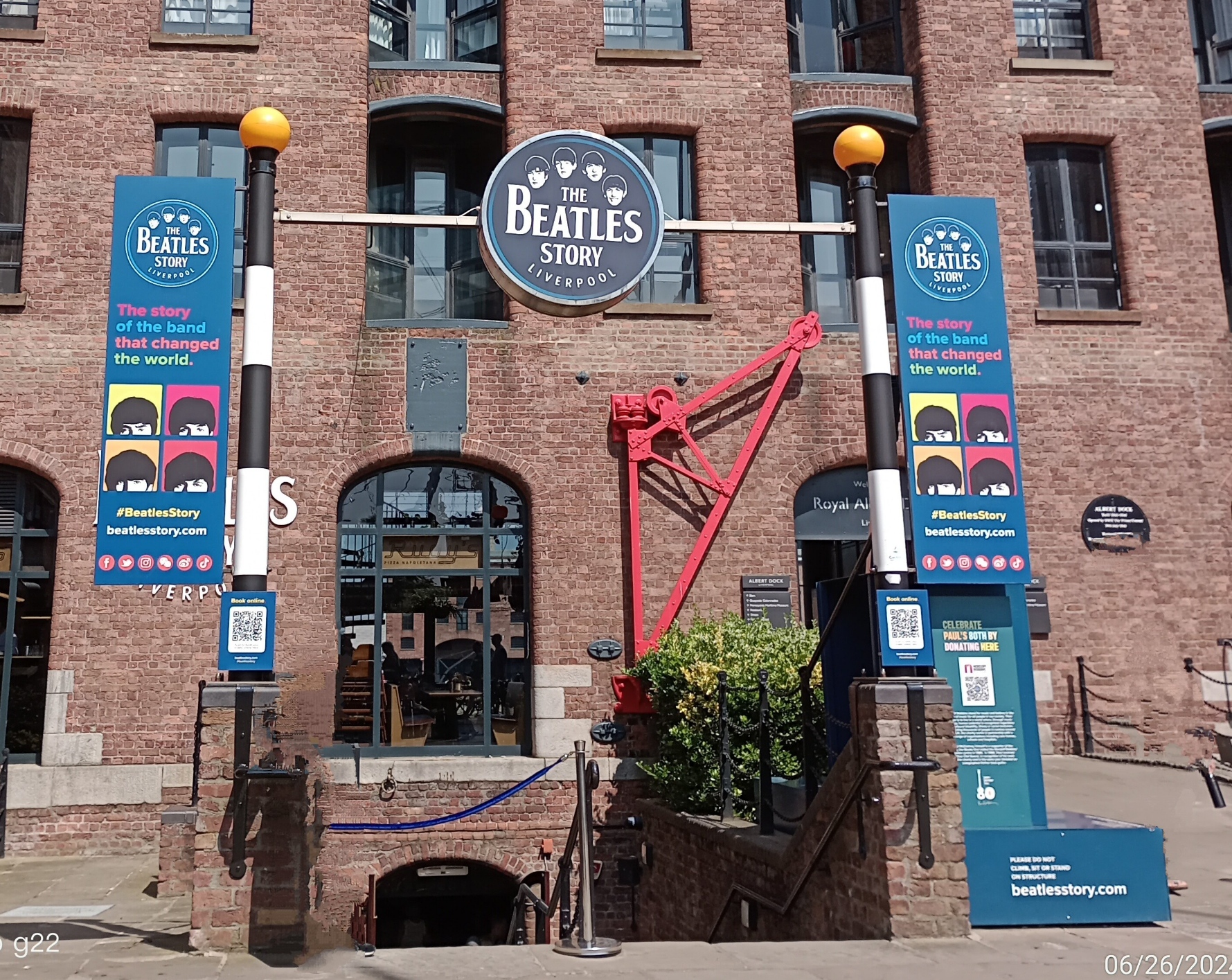
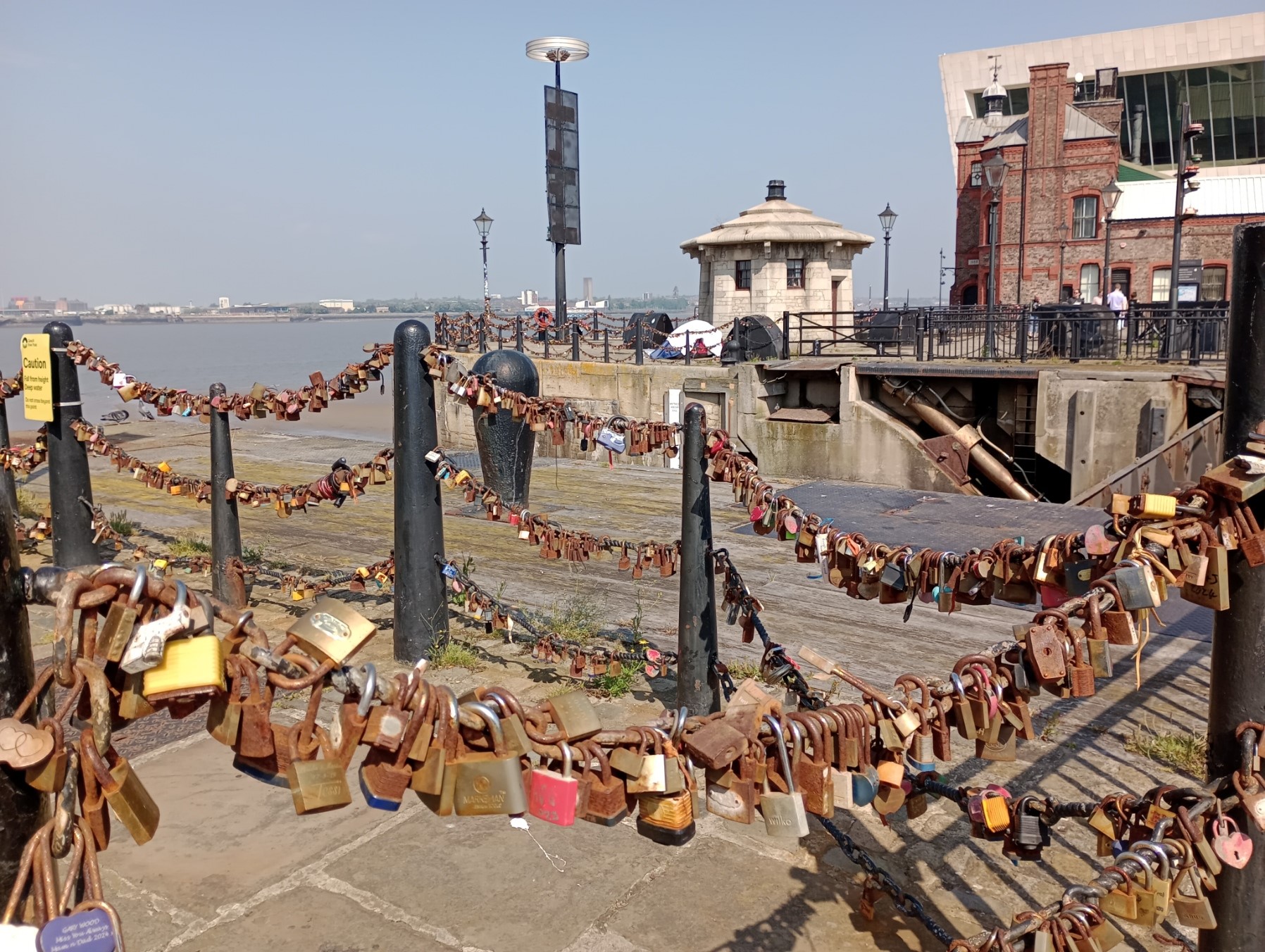
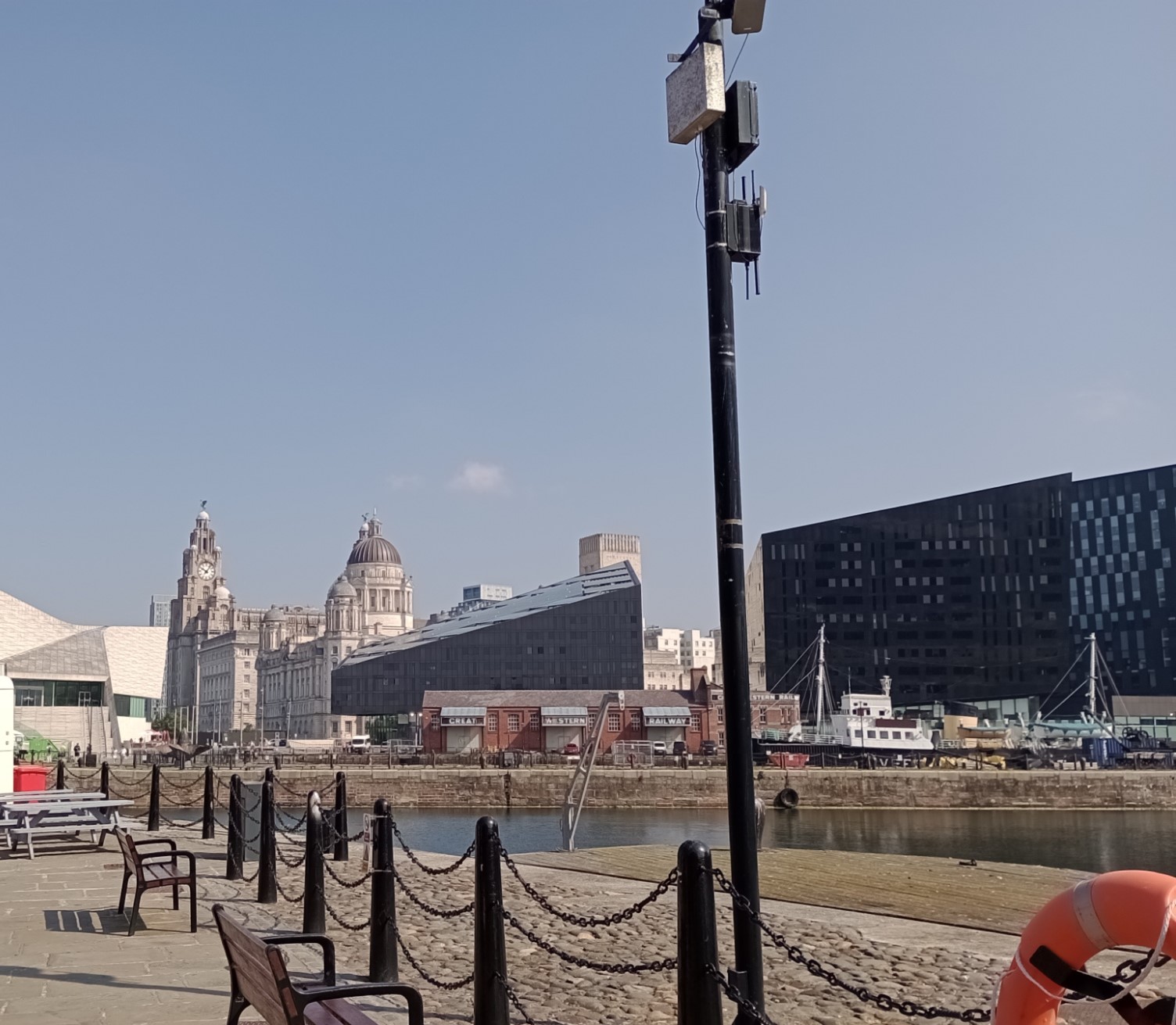
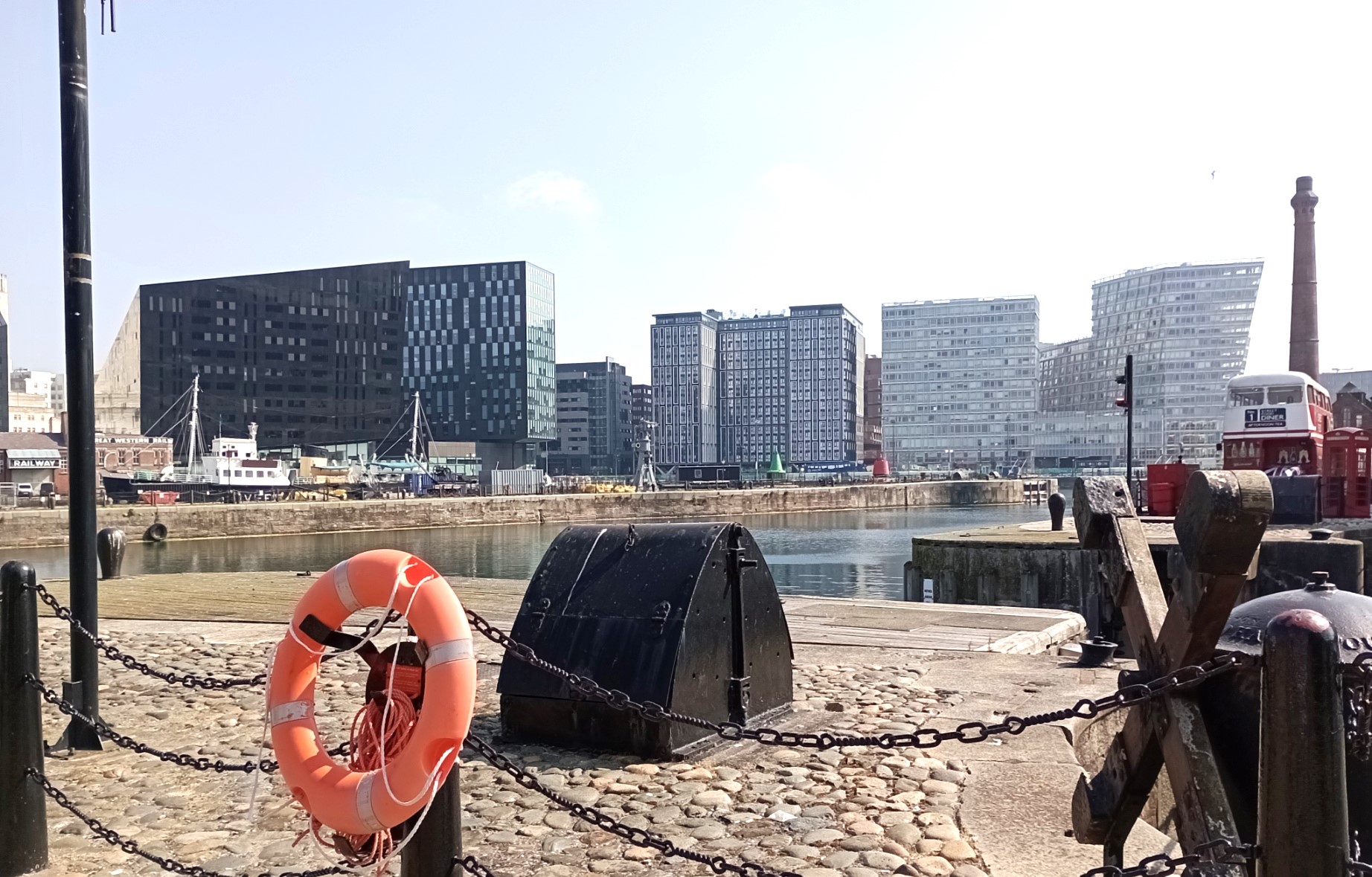
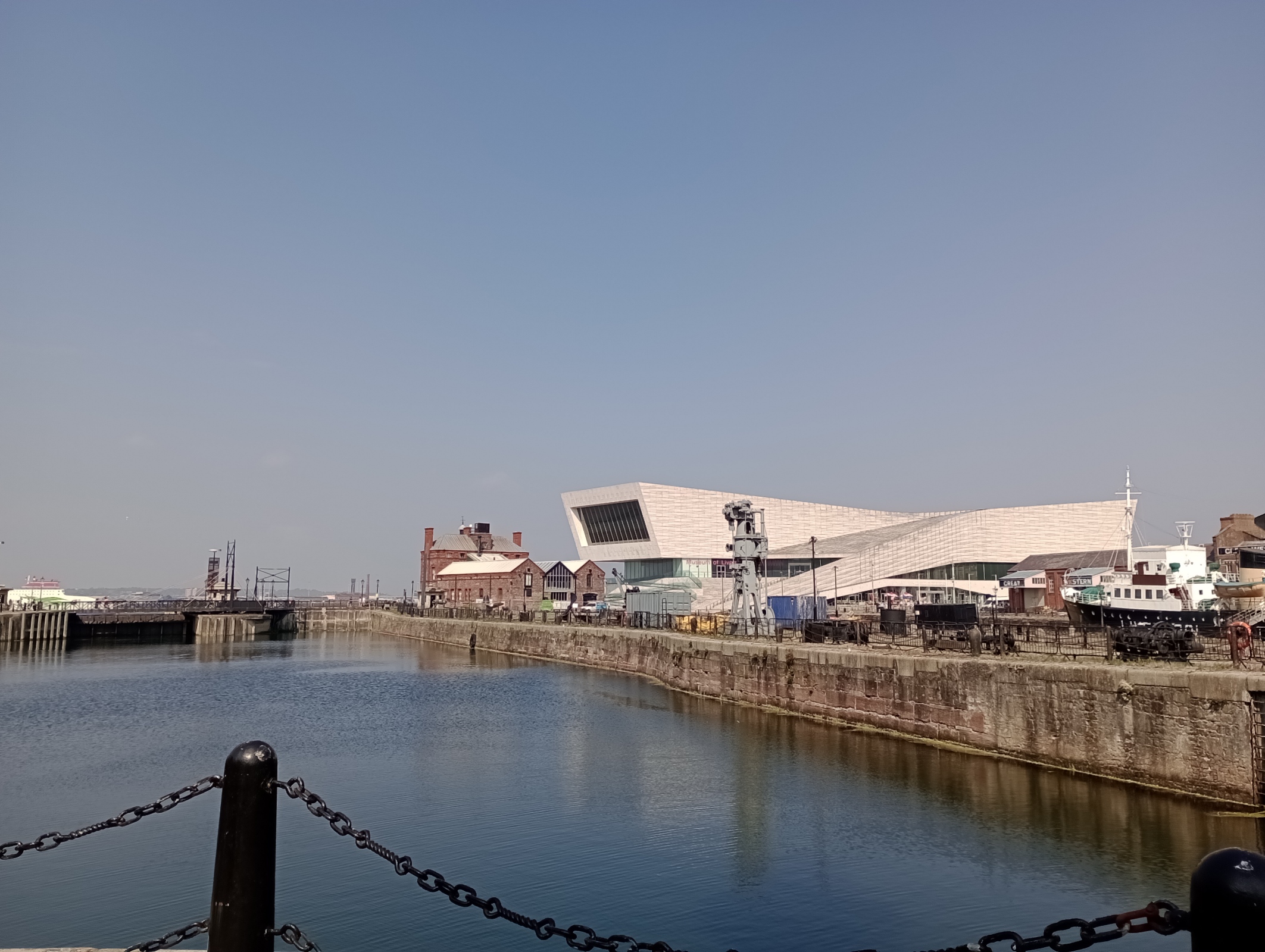
Liverpool is an interesting place to visit, even though following the Beatles is no longer a priority. We stayed opposite the Beatles Museum, and as we walked past were happy to hear “I Want to Hold Your Hand” without being tempted inside. There were plenty of memorials outside, a “Liverpool Eye,” and interesting sights while walking around the docks.
John Lennon





The wheel is not for me, but the coffee ‘not offer’ sounds great









Tate Modern
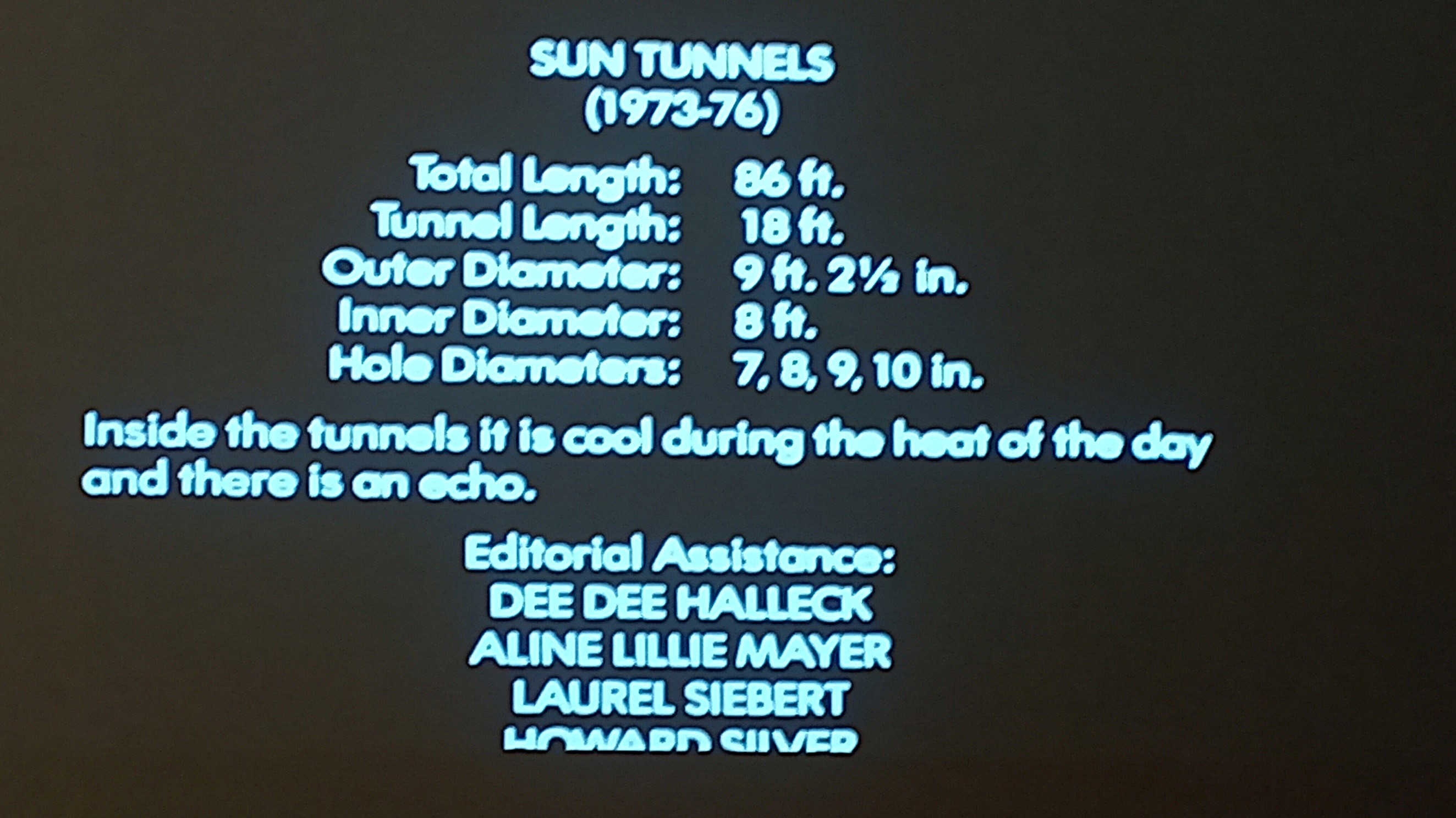
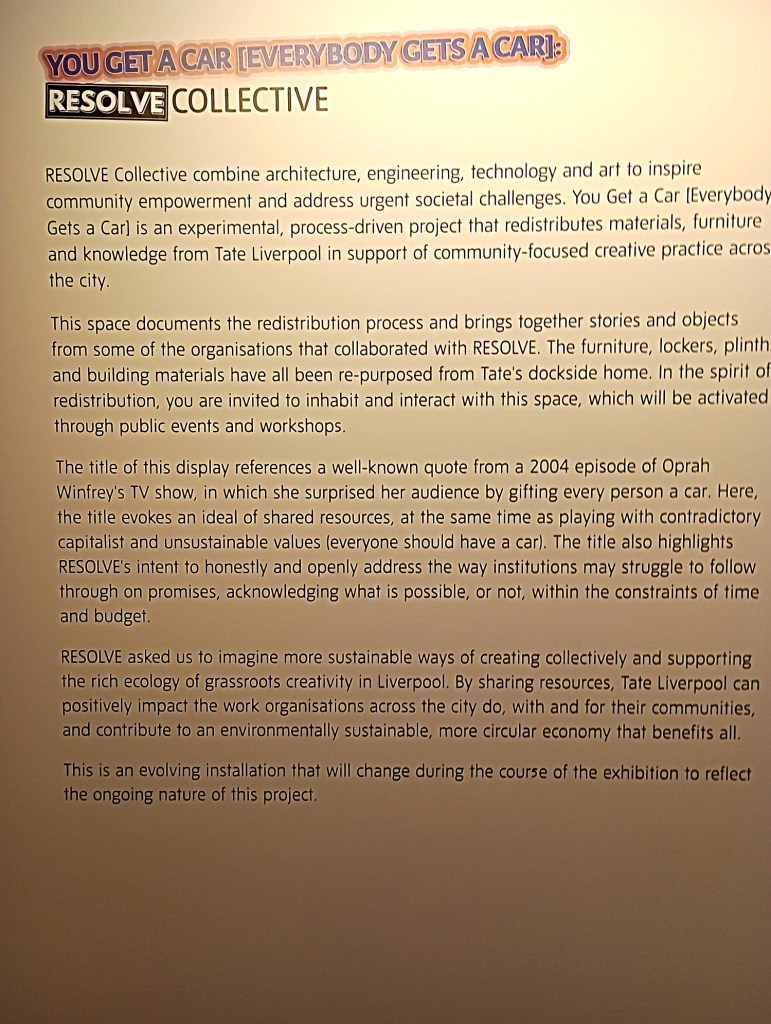
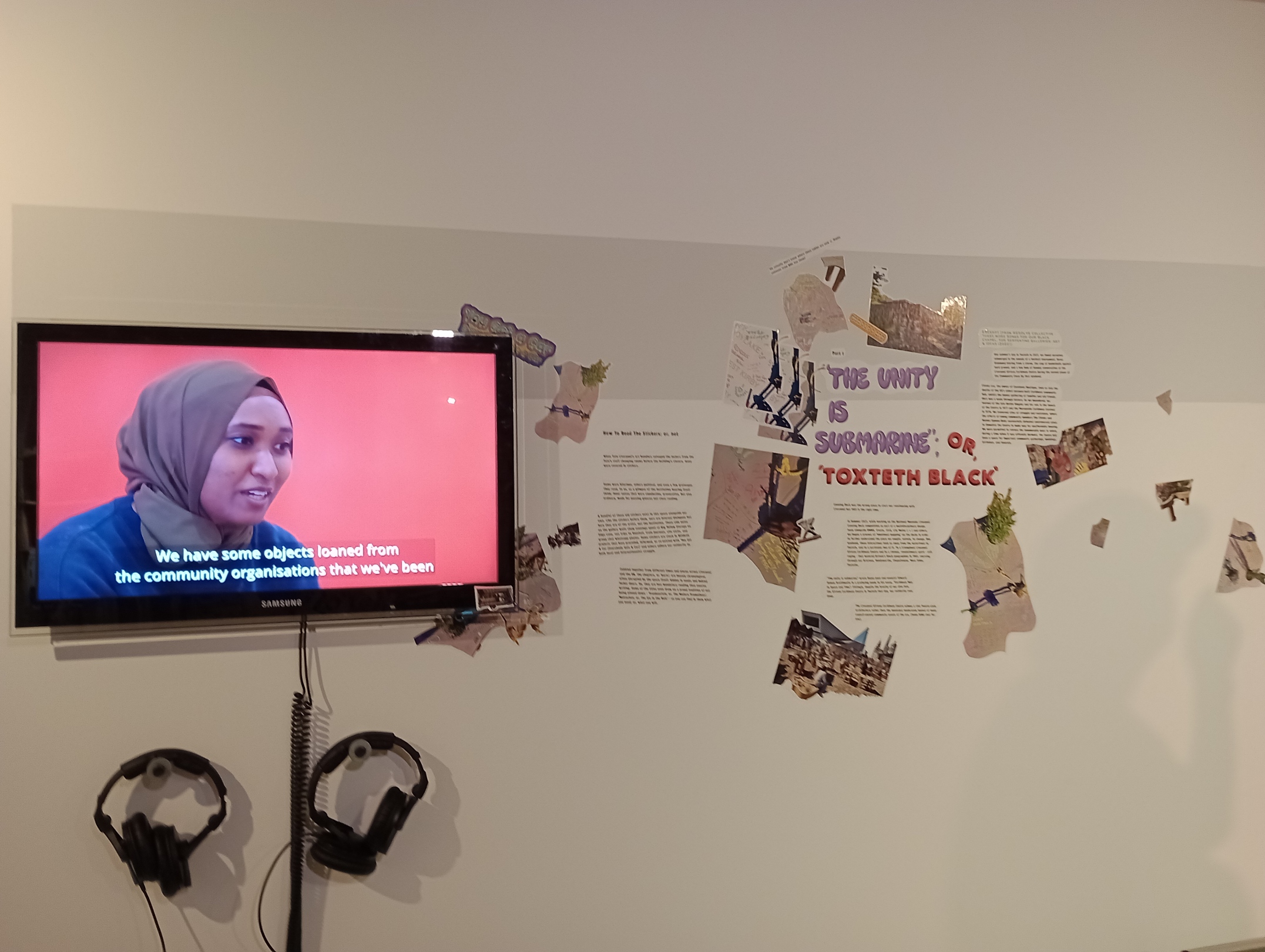
This time we went to Tate Modern – unfortunately under refurbishment. There was a limited display, but fun to see. I was impressed that even with the diminished space Tate Modern was able to mount a children’s area where they can become acclimatised to the gallery and art. The National Gallery of Australia needs to also give children some attention.

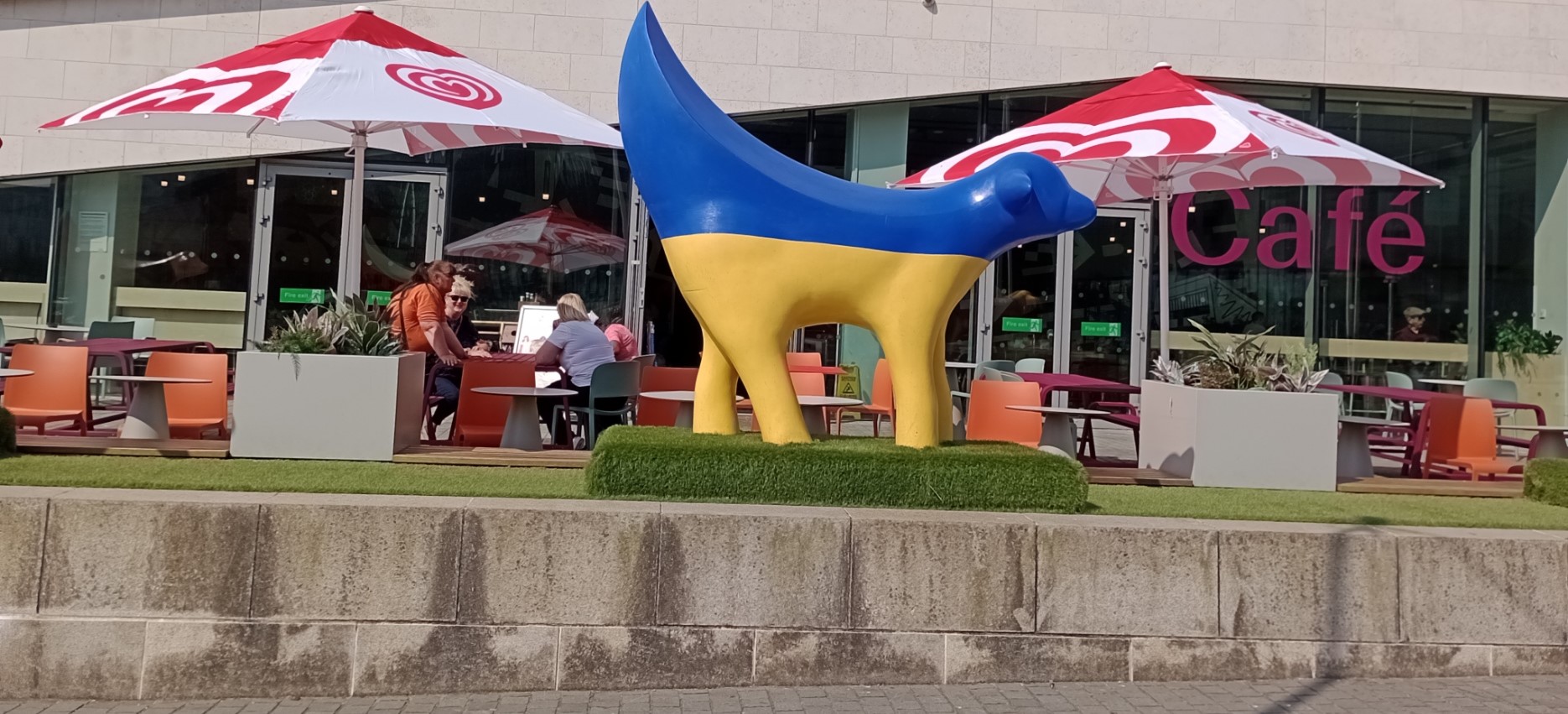
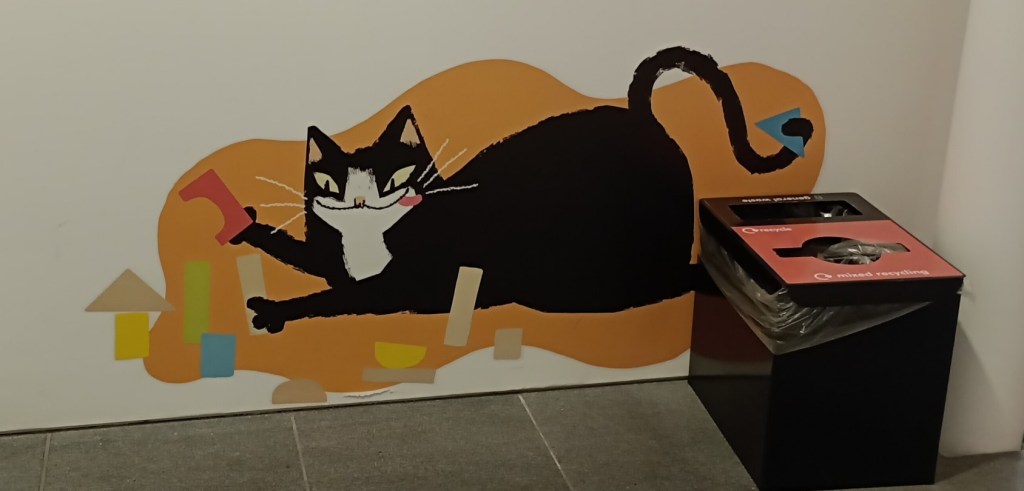
The Tate Modern London black cat was immortalised in Liverpool. She had lived at Tate Modern in London from a small stray to an old, revered inhabitant of the gallery.












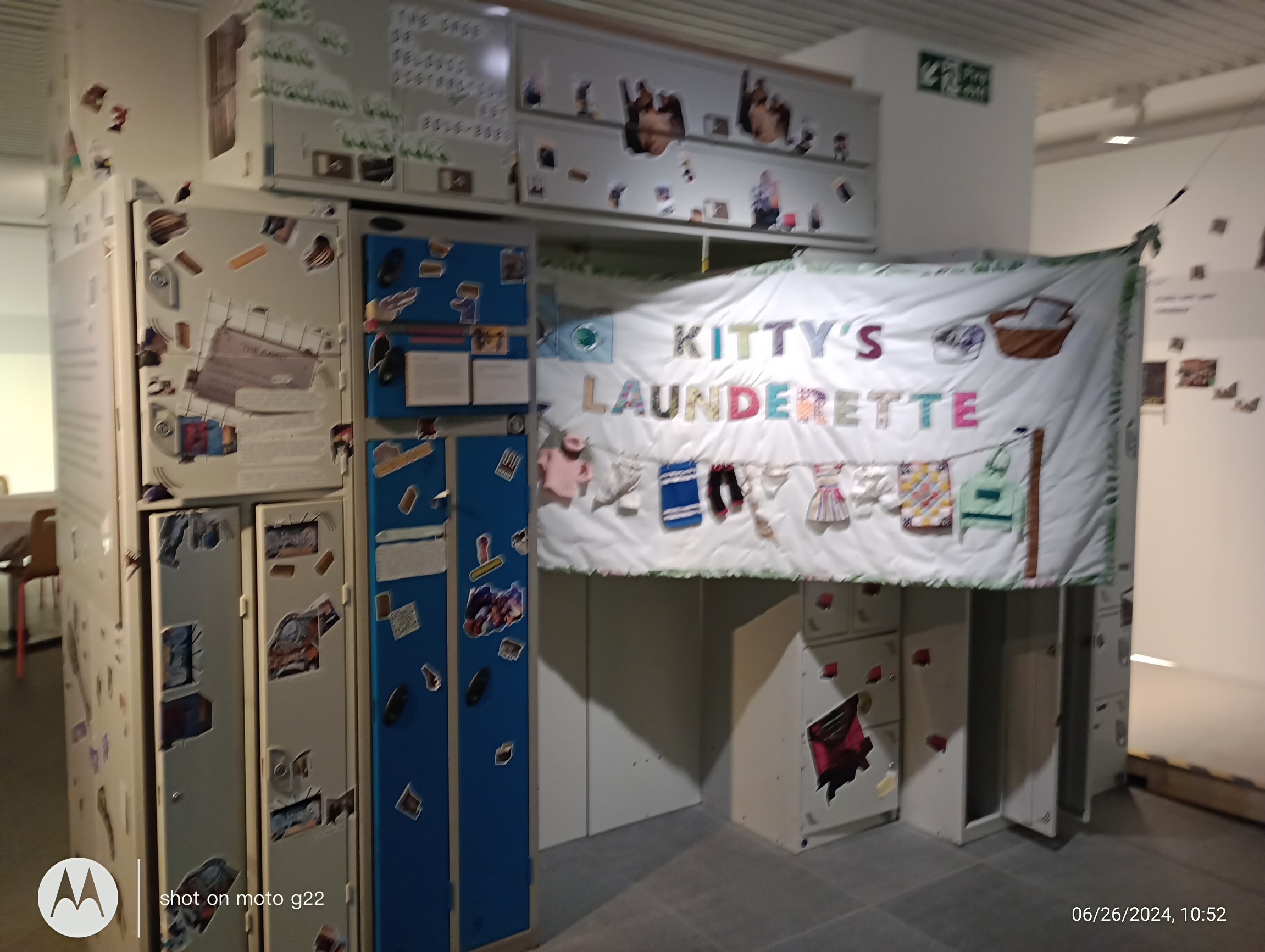

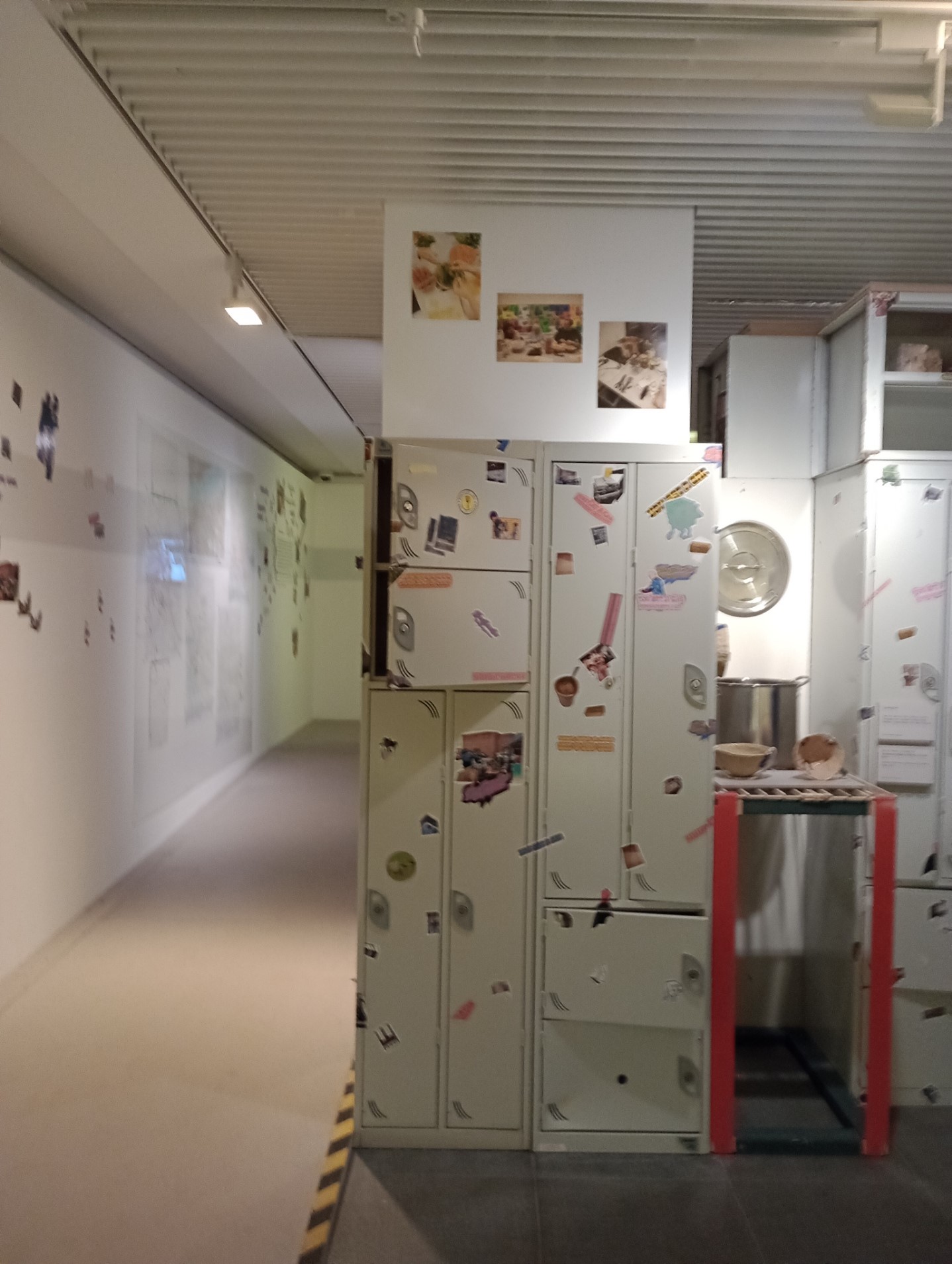
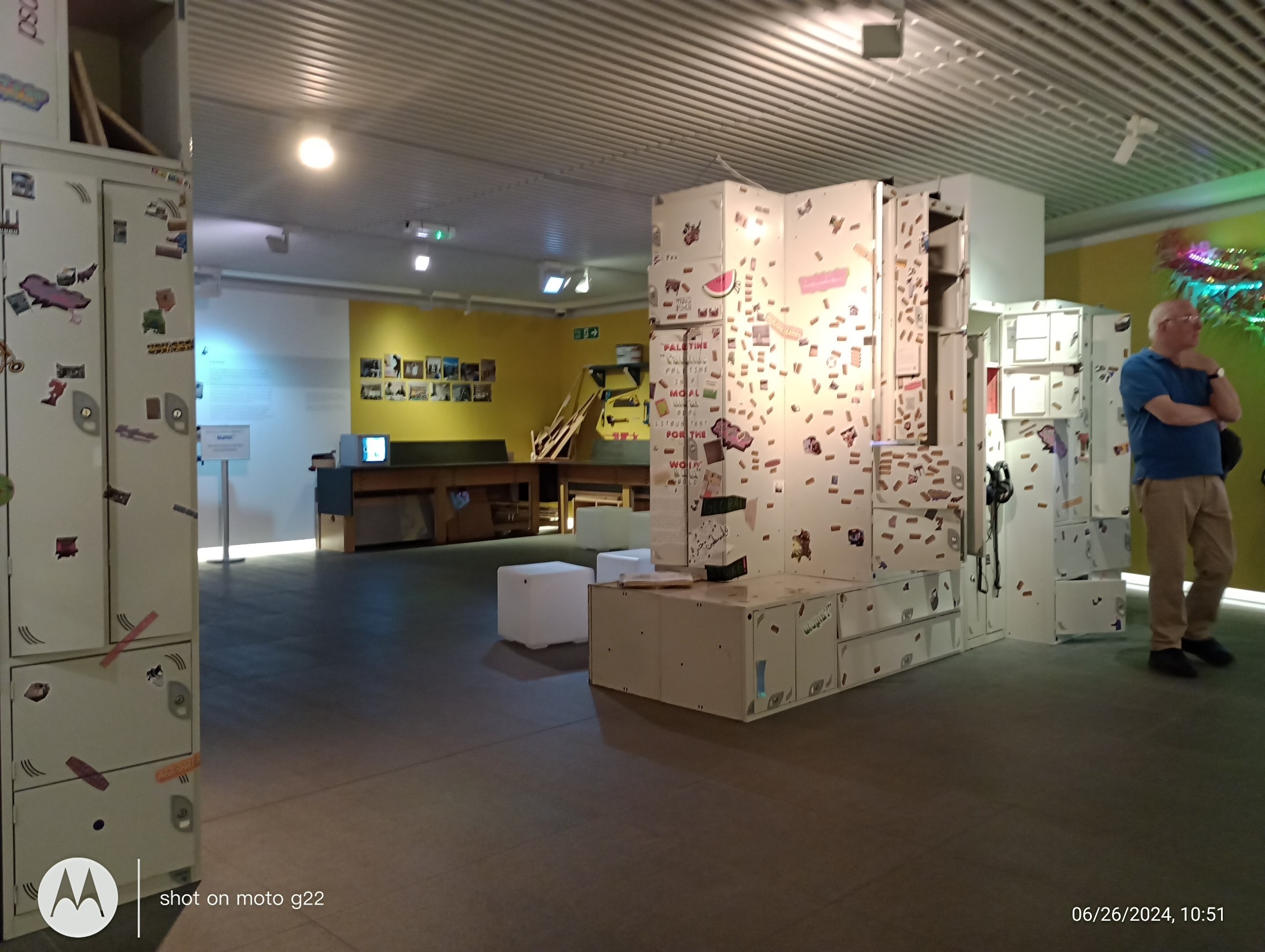
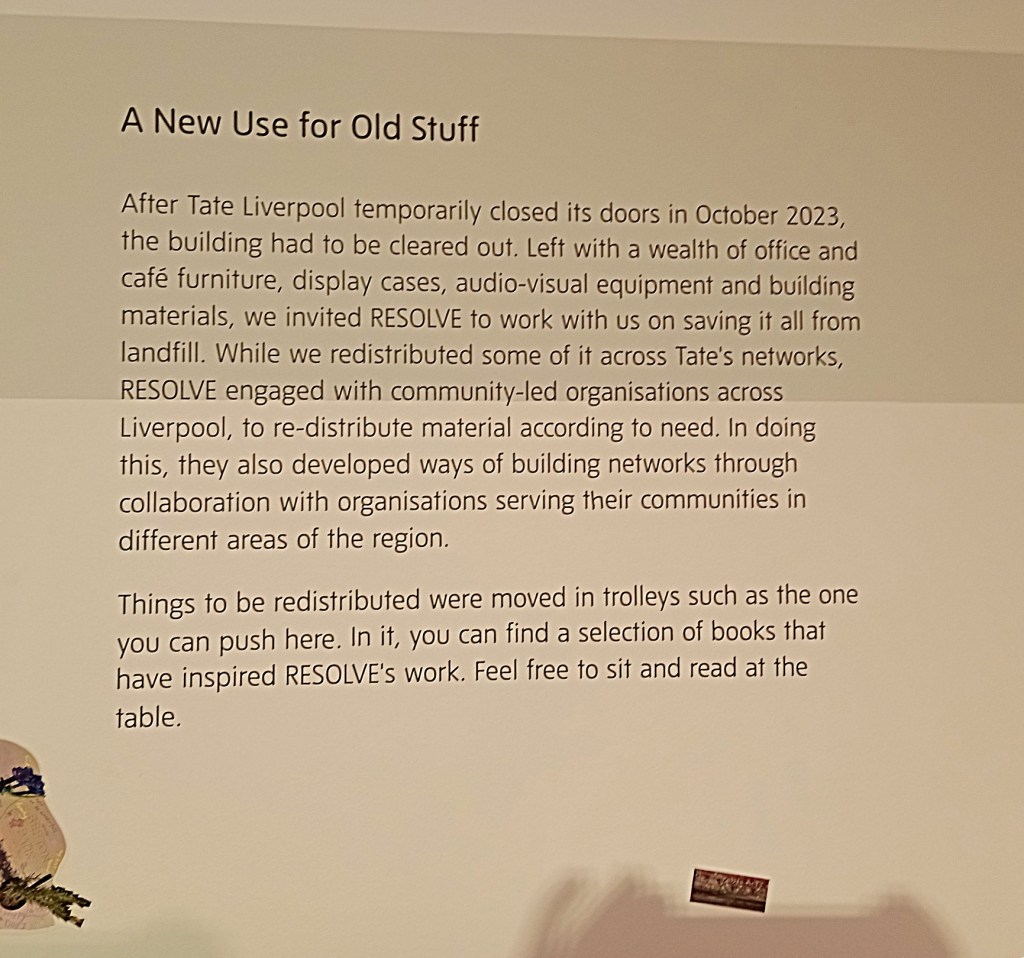

Cambridge votes
The UK election was called so that the evening I was to give a talk about Barbara Pym, the venue, the Milton Road Library in Cambridge was being used for a far more important purpose. The library was being used as a polling booth and we accompanied a friend who was voting. It wasn’t particularly busy, and certainly had none of the vibrancy of an Australian polling place. Not a democracy sausage to be smelt, dogs to avoid or pat depending on your inclination, no sales to boost the school coffers…and no handing out of How to Vote cards. The person seen in the photo is a representative of a political party (all of whom are at the busier polling places) and is there to record who has voted.
The simple campaign headquarters was staffed by one person as Cambridge was rightly deemed as safe, and the usual campaigners went to Peterborough to win there. Labour won UK wide. A resounding success, and well deserved.
But I did miss the Australian election day buzz!




Community Art Project in Cambridge


Cindy Lou eats in Liverpool
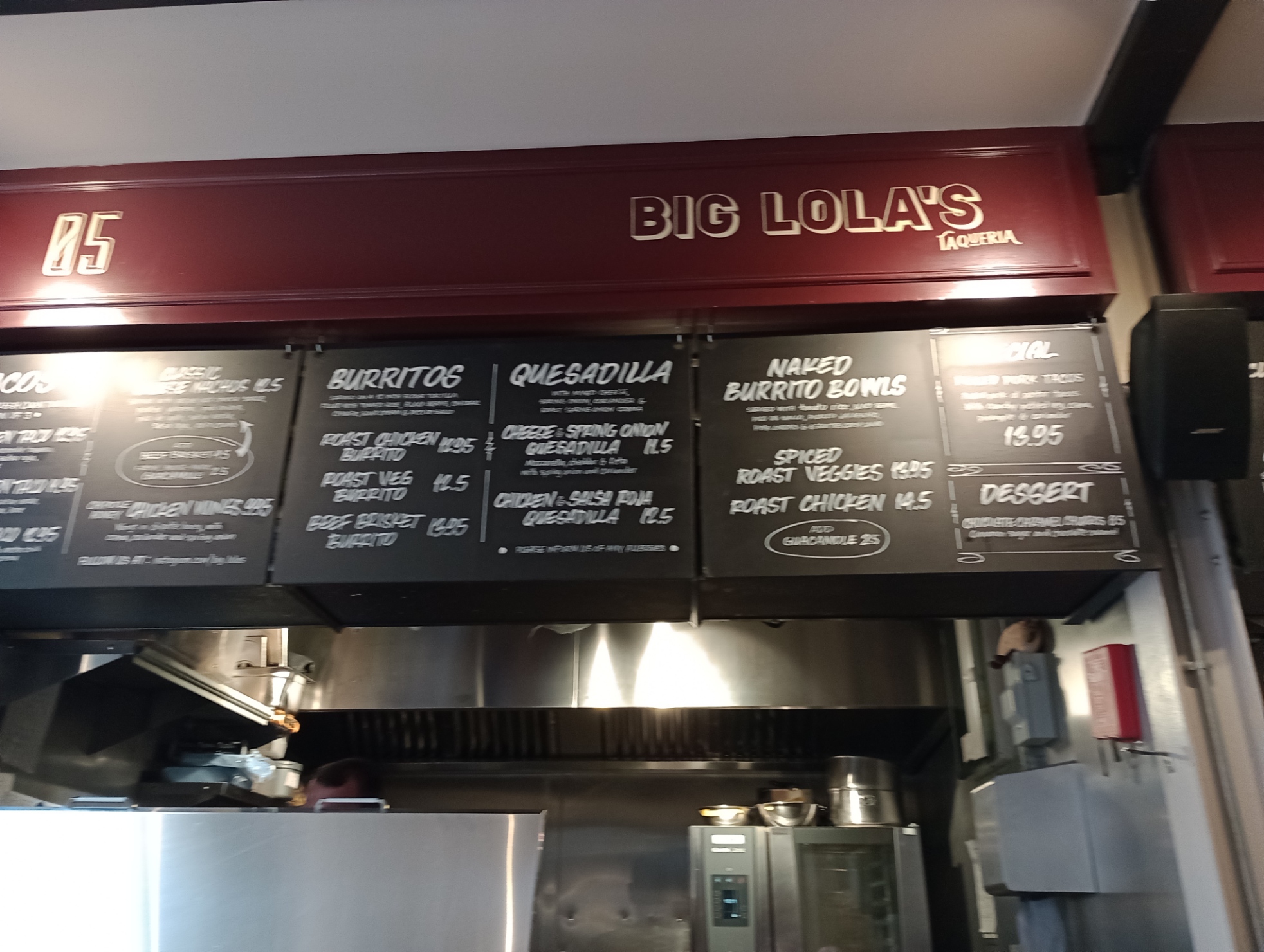
A long search for a Chinese restaurant found it – closed, and it looked as though this had been the case for a long time. However, Google’s mistake led us to a casual dining place that was full, offered a variety of choices and was fun.
Duke Street Dining







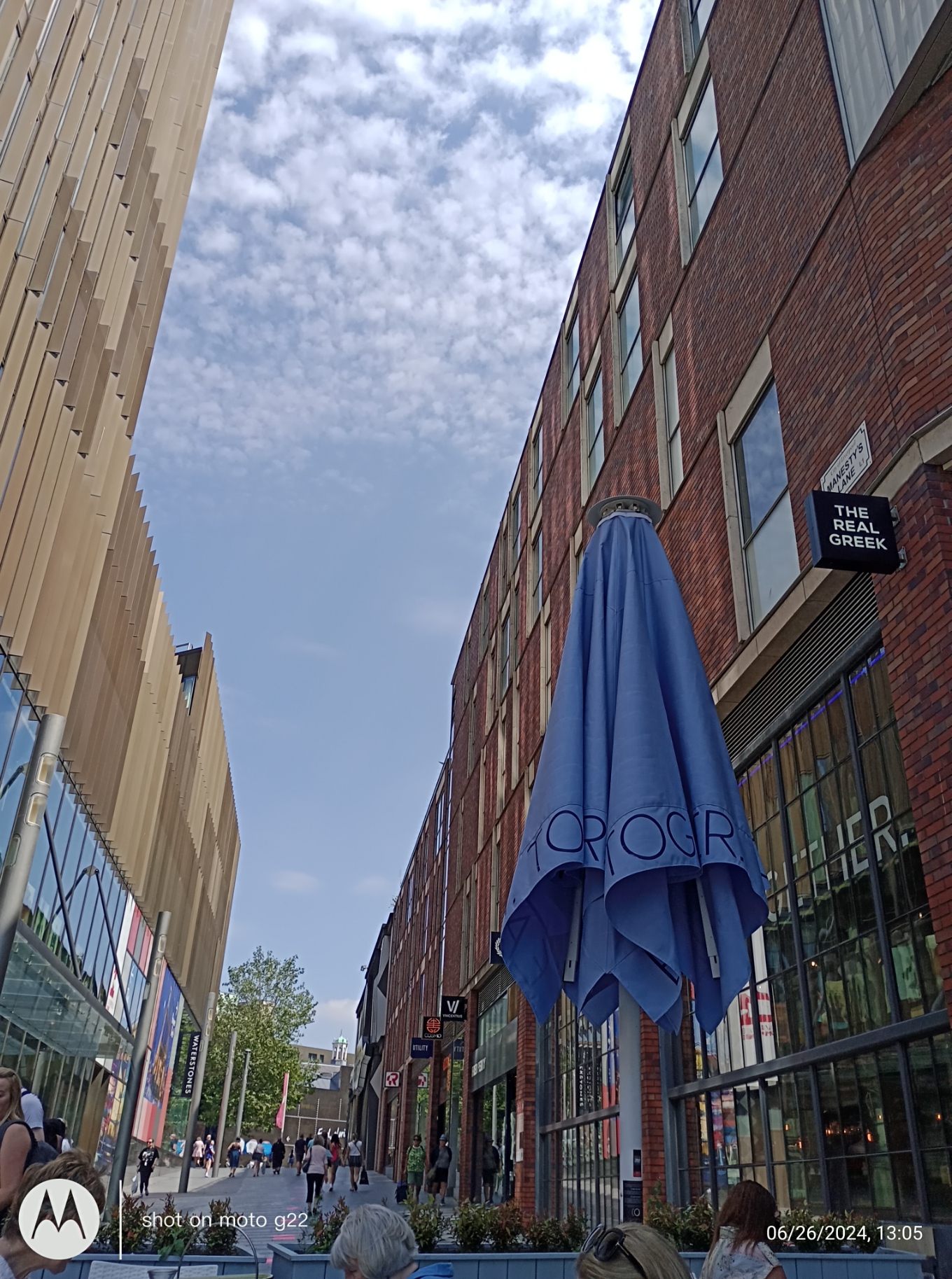
The Real Greek
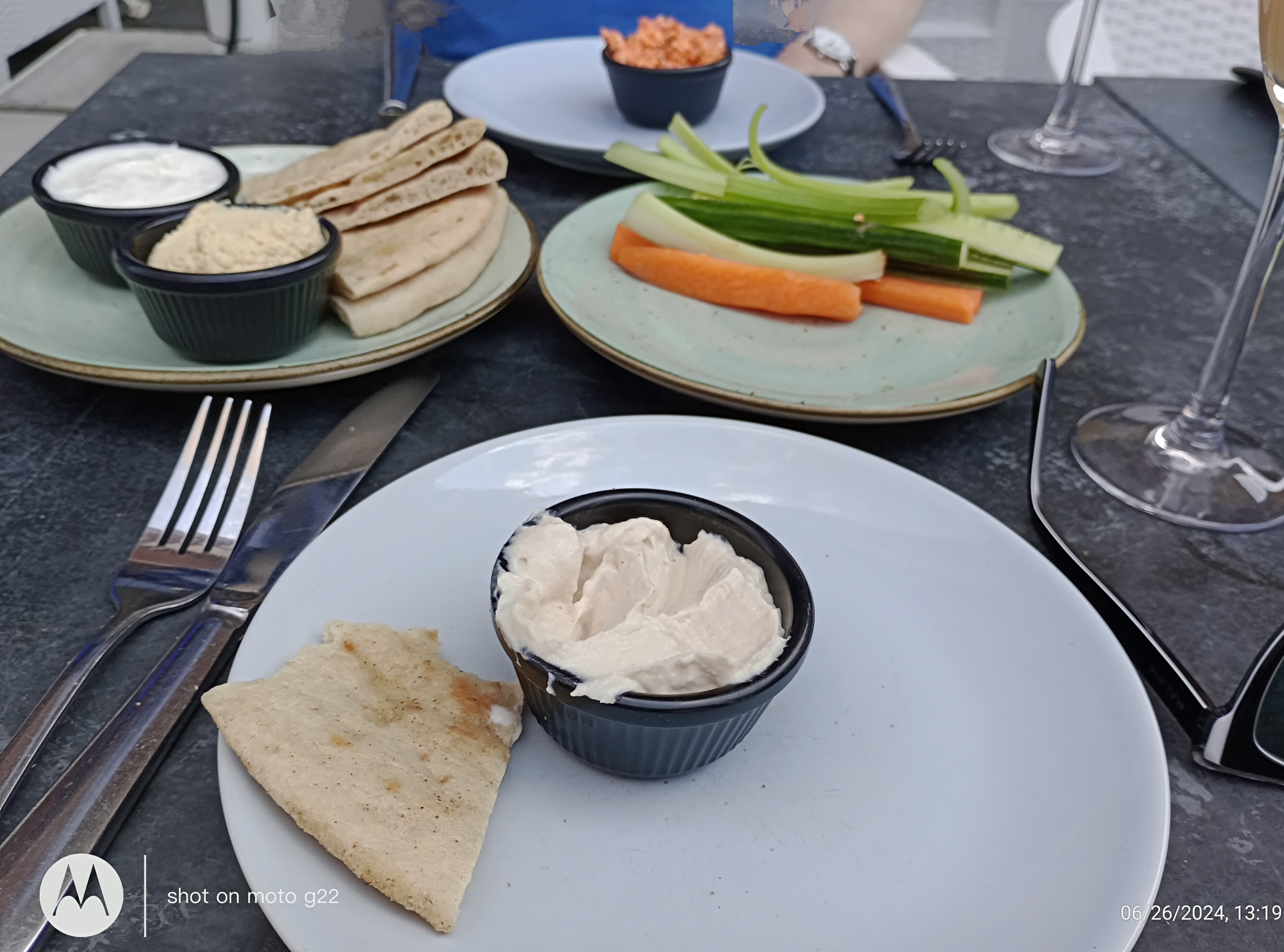
This chain has always been successful for us, and the one in Liverpool was no different. The menu is varied, the staff pleasant and efficient, and the food delicious.




 Robin's Room