
Laura Katz Olsen Wrinkled Rebels Vine Leaves Press, July 23, 2024.
Thank you, NetGalley, for providing me with this uncorrected proof for review.
I loved reading this absorbing account of the young women and men who developed their political ideas and responses while at university. Now in their eighties they are to meet again, and the youthful narratives provide the background to that meeting. Each character’s activities are a detailed account of the ideas, movements, agreements and disagreements, challenges faced, and successes won by individuals and groups. These detailed accounts provide a thorough history of the period in a narrative I found engrossing because of the detail and thoroughness with which the period was covered.
However, I have reservations about the success with which the narrative provides an engaging story about their activities. Rather than introducing her material using fictional strategies that draw the reader into the narrative, Katz Olson ‘s account uses fictional characters in an account that seems to rely more heavily on non-fictional devices. The information becomes more important than the characters’ feelings and stories about their activities. They are interesting enough, but the real strength is the information that is imparted. See Books: Reviews

James Chappel Golden Years How Americans Invented and Reinvented Old Age Basic Books, November 2024.
Thank you, NetGalley, for providing me with this uncorrected proof for review.
James Chappel’s Golden Years How Americans Invented and Reinvented Old Age is a detailed account of the way in which old age has been perceived in America, the varied approaches that have been taken by organisations and governments, and the ideology underpinning such approaches. He illuminates the way in which race, and class have impacted programs aimed at caring for elderly people, leading to the neglect of some, and divisions between groups of elderly people depending on their race and class. Chappel also points to the various ways in which aged people have been described, and the changes in the years of age that belong to such descriptions. Some groups have constantly been neglected, and Chapel gives such neglect important attention.
This is a book replete with detail, commentary and suggestions for improvement in the way that old age might be considered and dealt with through government programs. The attention he gives to the organisations that have grown up around old age is not only informative, but an important part of social commentary on the way in which Americans have formed their ideas and response to old age. With an aging population, and a smaller group of taxpayers as is the case in many developed countries, the way in which old age is considered has increasing importance for government expenditure. A history of programs, attitudes and responses is pertinent. See Books: Reviews
After the Covid update: The Stats Guy – elderly in Australia; Bob McMullan – American election; Betty Churcher Oration; Cindy Lou back in Canberra restaurants; Senator Susan Ryan statue.
Covid update for Canberra
Covid updates for Canberra will continue to be made every so often. On this occasion it is lovely to be able to include a photo of my first wattle sighting this winter.

For the reporting period 26 July to 1 August 2024 there were 65 new cases (PCR only), with 12 people with covid in hospital.
The Stats Guy: Who will look after the elderly in Australia?

Simon Kuestenmacher
May 10, 2024, updated May 10, 2024SHARE

Australia faces big challenges with its ageing population, writes Simon Kuestenmacher. Photo: TND/Getty
Last week we discussed just how big the demand for aged care will be in the coming decades. More than half of all people aged 85+ will need some sort of care. This care can be provided by family members or professional aged carers.

Since we are doubling the 85+ population in the next 14 years from 586,000 to 1,189,000, we can be sure that the need for aged care workers will grow at roughly the same rate.
That’s a problem, considering the sector is already dramatically understaffed.
But it gets worse. Last year I introduced the concept of the retirement cliff. It’s a simple measure that shows what share of the workforce is already of retirement age and what share is aged between 55 and 64, meaning they will fall off the retirement cliff in about a decade.
Some jobs face steeper retirement cliffs than others.
As the chart below shows, the jobs a typical aged care home relies on face very steep retirement cliffs.

We established that we already have a current shortage of registered aged care nurses, residential care officers, and aged carers; we realised that the future demand for such workers is increasing rapidly; and now we learned that a disproportionately big share of workers will retire in the coming decade. Ouch.
Sadly, we are not done yet.
Things get worse when we look at arguably the most important job in the aged care system, aged carers.
The chart below shows the age profile of the roughly 225,000 aged care workers who were employed in Australia during the 2021 Census.
We see a relatively strong cohort of young care workers in their late teens and early 20s. At first glance this looks promising – have we found the formula to attract sufficient young talent into aged care?
We shall revisit that question a bit later. In the 20s, 30s, and 40s workers are leaving the industry before returning at scale in the 50s and 60s. Once folks hit retirement age, the physical nature of the job ensures that most aged care workers retire very quickly.

Can’t we just migrate our way out of this shortage? Isn’t that what we’ve done in the past few years? A much higher proportion of aged carers (41 per cent) were born overseas than in the nation overall (33 per cent). Migrants are even the majority of aged carers in their 30s (54 per cent).

Let’s understand the foreign-born aged carers a bit better. Migrants work in aged care during their 20s and 30s and leave the profession during their 40s. Retirement starts at scale at age 60 and speeds up rapidly post 65. There is reason to believe that we will lose huge numbers of foreign-born aged care workers to other industries soon. Let me explain.

Among younger migrant aged care workers (aged 26 to 38) just over 50 per cent hold at least a bachelor’s degree. Since education is still the best indicator for your future income, it is unlikely that these highly skilled migrants will remain in the low-paying care sector throughout their whole career.
Likely visa conditions and the prospect of citizenship keeps them temporarily in a low-paying industry. Sooner or later, we will lose these aged care workers to better paying jobs, especially since the skills shortage extends to other sectors and it should be relatively easy for them to secure a better paying job.
The high costs of living make such a career shift even more likely.
In 14 years when we will have doubled the 85+ cohort, a large share of migrant aged care workers will fall off the retirement cliff and will need to be replaced. Australia has limited spots available on the skilled migration list and can’t possibly assign enough to the aged care sector to fill all the job vacancies.

That leaves us with our Australian-born aged care workforce. How many of these workers will we need to replace in the coming decade and how can we attract more workers?
To be frank, the age profile of Australian-born care workers is very frightening. We see a huge spike of young workers, a massive decline during the 20s and 30s, and a massive block of workers in their mid-40s to early-60s.

Australian born aged care workers tend to have qualifications in line with their profession. Over-qualification isn’t an issue to the degree it is with foreign-born aged carers.
We can be certain that the spike of young Aussie carers will leave the industry. We constantly need to recruit, train, and farewell new young Australian carers.
Retaining them throughout their 20s and 30s is a hard challenge. It takes a special workplace to pull this off.
A scarily huge share of Australian-born aged carers are aged 51 and over which makes them of retirement age just in time for the doubling of the 85+ cohort in 14 years.

To sum up, we need many more aged care workers by 2038 but will lose crazy high numbers of aged care workers in the lead-up. It’s a problem of catastrophic proportions. How might we try to tackle this shortage?
Local and international recruitment at record pace is the easiest part of the answer. Under-utilised segments of the workforce will be encouraged to take up careers in aged care.
This means more efforts must be made in training and up-skilling of new recruits. These efforts can only do so much considering how big the need for more workers really is.
New models of aged care will emerge. Localised ambulant care services will offer individualised care in the home. This could well be a platform-based service (think Uber-care).
Step aside carpooling, it’s time for care-pooling services. A handful of households in a neighbourhood pay for a shared full-time carer or two.
In relatively small numbers pensioners will simply move to low-cost facilities overseas. YouTube is full of retirees telling us how to live out your golden years in Cambodia or Vietnam where young workers are plentiful and care services can be purchased at low costs.
We will adjust our homes to prolong the independent living phase of the lifecycle. Buy stocks of companies adding lifts to houses and expect high demand for home renovations to remove steps, widen doors, and add monitoring systems.
Technology will be used much more to ensure independence in old age. Wearable technology, like an Apple Watch, will feed data into a centralised healthcare system that alerts ambulant care services of falls, pending health complications, and heart attacks.
Aged care in 14 years will look very different to what it does now!
Demographer Simon Kuestenmacher is a co-founder of The Demographics Group. His columns, media commentary and public speaking focus on current socio-demographic trends and how these impact Australia. His latest book aims to awaken the love of maps and data in young readers. Follow Simon on Twitter (X), Facebook, LinkedIn for daily data insights in short format.
Bob McMullan – US election review as at 3rd August
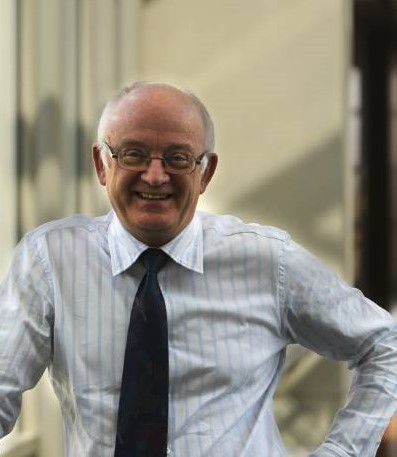
The US presidential election is beginning to look interesting.
Until recently it was just depressing as a Trump victory appeared more and more likely. However, Kamala Harris as a candidate has thrown the Trump election strategy into turmoil and enthused the
Democratic base.
The evidence is a long way from saying Harris will win. But it now suggests she has a real chance of doing so.
Respected analyst, Simon Rosenberg, quotes 538 polling averages to say that “In her first week Vice President Harris drew even with Donald Trump in public polling. This week she opened a modest lead.”
Rosenberg is definitely a partisan Democrat, but he is right about the 538 averages. As at 3rd August 38 averages have Harris on 45.0% compared to Trump on 43.5%.
Given the pro-Republican skew in the Electoral College, this may not be enough, but it certainly suggests a close contest at the very least.
I am not convinced that 538 has got it absolutely right.
Real Clear Politics averages, which helped me get it right in 2020, at 30 th July had Trump just ahead nationally and in most of the battleground states.
Whichever is correct, given margins of error in polling, and some maverick pro-Trump polls, the least one can say is it is currently very close and improving rapidly for Kamala Harris.
If she can maintain the momentum she will win.
The key question is: can she maintain the momentum?
There is no doubt Kamala Harris has generated considerable enthusiasm. In non-compulsory elections such as those in the USA this is very important. It was anti-Trump turnout that defeated Trump in 2020. He got a record 74million votes. He lost because anti-Trump sentiment generated 81
million votes for Biden.
It is hard for an outside observer to understand how American voters can have forgotten the chaos of 2016-2020.
But it seems a lot of them have. Mobilising and maintaining the pro-Harris enthusiasm is vital. But it is not enough.

As veteran democratic strategist James Carville warned recently, “This kind of giddy enthusiasm is not gonna be very helpful much longer.”
In my experience something goes wrong in every campaign. It will for Harris too. The question is how she recovers.
The enthusiasm and its potential to generate large turnout has to be sufficient to overcome the very strong and impervious core support for Trump.
The election is currently a toss-up. There is a clear path to victory for Kamala Harris.
What remains to be seen is whether she can navigate that narrow path.

2024 Betty Churcher AO Memorial Oration: Dame Quentin Bryce AD, CVO

At the Gallery
Thu 5 Sep 2024
6.30–7.30pm
James Fairfax Theatre
Wheelchair Accessible Auslan Interpretation Open Captioning
Duration: 60 minutes including Q&A
Free, booking essential
Join Dame Quentin Bryce AD, CVO, Australia’s 25th Governor-General, for the 2024 Betty Churcher AO Memorial Oration.
This lecture will focus on the value of creativity and the recognition of women’s voices in the arts, and how this has shaped Dame Quentin Bryce’s leadership across several decades of public service.
Quentin Bryce graduated in Arts and Law at University of Queensland and was admitted to the Queensland Bar in 1965. In 1968 she became the first women appointment at the T. C. Beirne School of Law at the University of Queensland where she lectured in law and social work from 1968 to 1983.
In 2008 Dame Quentin was appointed the first female Governor-General of Australia, a position which she held until 2014. As Governor-General, Dame Quentin devoted attention to social justice and human rights issues, placing special emphasis on promoting and protecting the rights of the country’s First Nations peoples. She delivered the 2013 Boyer Lecture series speaking to the importance of human rights in building neighbourhood, community and citizenship.
Dame Quentin was a Member and Convenor of the National Women’s Advisory Council from 1982–1984; Director of the Queensland Women’s Information Service 1978–1984; Queensland Director of the Human Rights and Equal Opportunity Commission; Federal Sex Discrimination Commissioner; CEO of the National Childcare Accreditation Council; Principal and CEO of the Women’s College at the University of Sydney; and Governor of Queensland.
Betty Churcher AO (1931–2015) was a leading Australian arts educator and administrator. During her esteemed career, Betty Churcher was the first woman to lead an Australian tertiary education centre as Dean of the School of Art and Design at Phillip Institute of Technology in Melbourne (1982–1987), first woman to lead a state gallery as Director of the Art Gallery of Western Australia (1987–1990) and first and only woman Director of the National Gallery (1990–1997).
Established in 2022 as part of the National Gallery’s Gender Equity Action Plan, the Betty Churcher AO Memorial Oration is a major annual event featuring leading women in the arts who inspire creativity, inclusivity, engagement and learning.
Tickets
Book onsite ticket The main doors will open at 5.30pm and there will be pop up bar where you can purchase a drink before the event. Book online ticket
Cindy Lou eats in Canberra again
It’s wonderful to return to Canberran restaurants and cafes. Coffee mornings at Kopiku make an excellent walk, as well as being the source of some of the best coffee I can find. The poached eggs on toast are also excellent, well presented, crisp toast with plenty of butter and oozing egg yolks. Clay is worth the expense (the coffees are more on a par with those in the UK) when it is sunny. Its outdoor seating is very good in the winter months. However, the best experience was my return to Courgette for dinner. The waiter asked about my grandson, who clearly made a positive impact on his visit for lunch several months ago.
Courgette
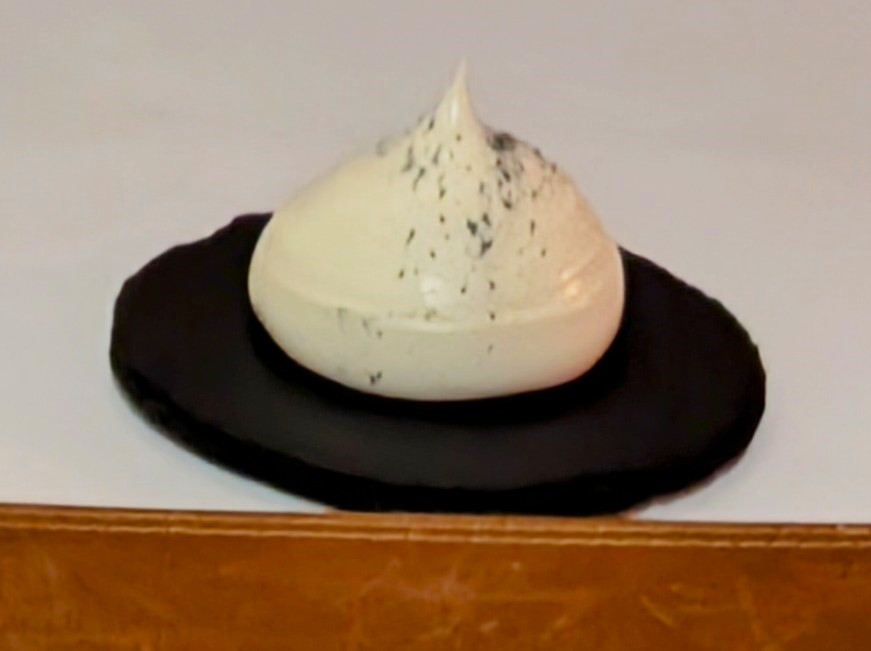
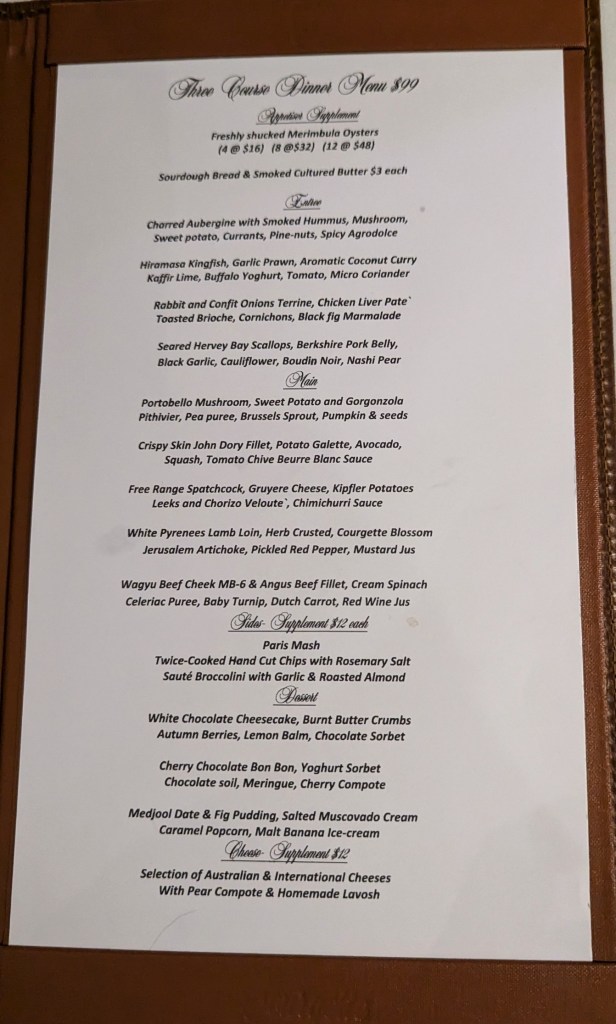
What could be a better start then seeing ash butter awaiting the warm rolls that were served promptly. The menu was also available quickly, as was the water. It’s always nice to have white tablecloths and napkins, and plenty of space between the tables. Even when the venue was full later in the evening it was easy to talk and be heard. The new menu is great, but I miss the courgette flowers and the duck and quail entree. The marvellous John Dory is still there, and the aubergine entree was an excellent replacement for my favourites.







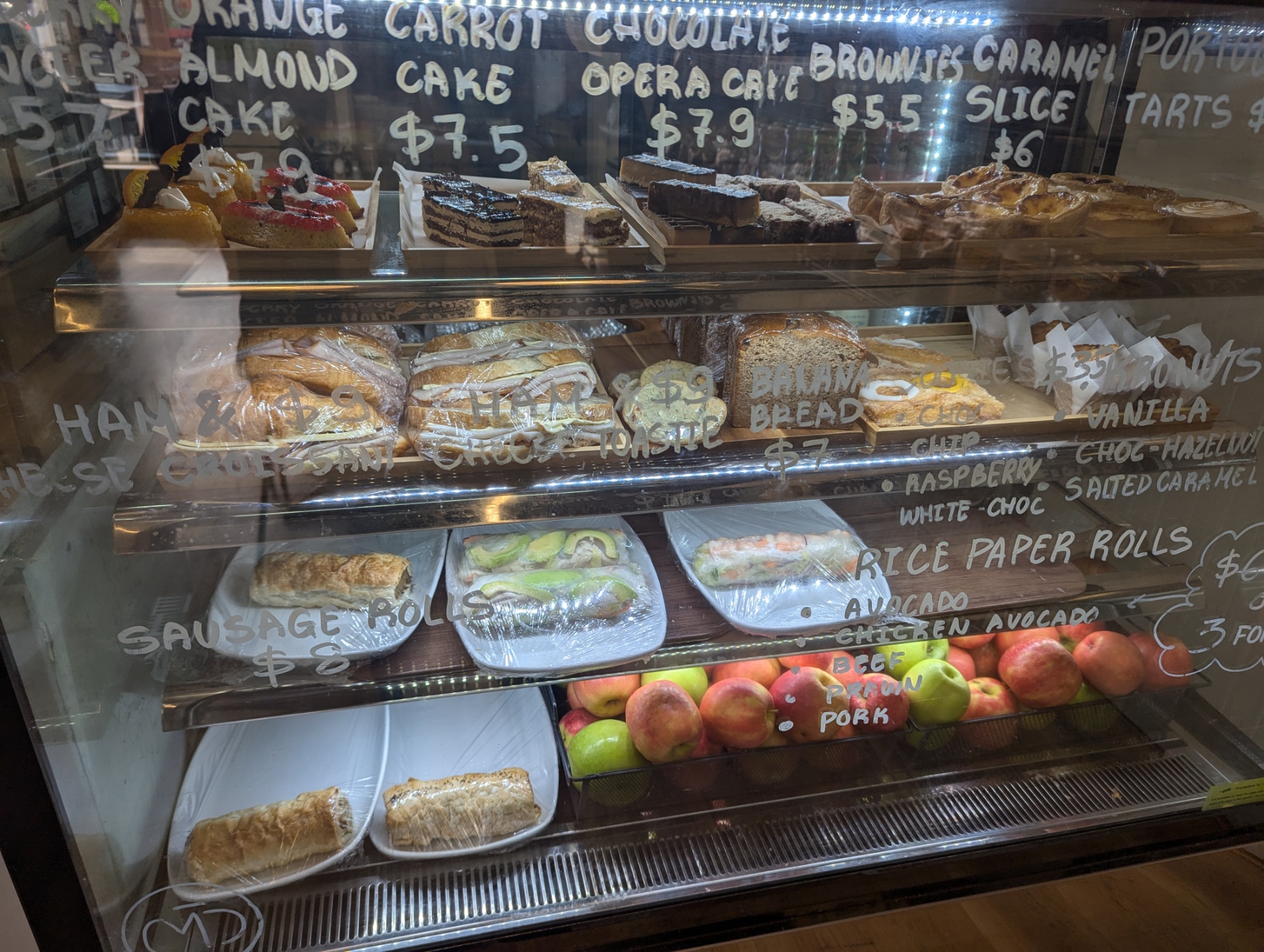
Chimida has replaced the wonderful Chinese restaurant Mee Sing. Although the latter is missed, Chimida serves casual Vietnamese meals and excellent coffee and pastries. This morning, while outside was bleak and cold, inside was ‘toasty’. The rice paper rolls looked delicious, but I opted for the Banh mi a warm crispy bun with a Vietnamese chicken filling on this occasion. It was very pleasant, and I shall be happy to try more items on the menu. The haloumi salad was also a good choice.








‘Courage, kindness and sisterhood’: Statue of trailblazer Susan Ryan unveiled at OPH Senate Rose Garden
2 August 2024 | Ian Bushnell

For sculptor Lis Johnson, her bronze depiction of trailblazing Labor politician Susan Ryan captures her determination on one hand and openness on the other.
Describing it as one of the most fulfilling commissions of her 30-year career, Ms Johnson said Susan was a person she grew to like and admire the more she learned about her and instilled that knowledge in her work.
“She was very true to her values and very determined to do the work and get the best results, but not in a bullying, hardheaded way, in a very open conciliatory sort of way,” she said after Thursday’s unveiling of the work at the entrance to the Senate Rose Garden at Old Parliament House on the 40th anniversary of the Sex Discrimination Act.
Ms Johnson said the work was a pleasure from start to finish, particularly in depicting a woman.
“I’ve sculpted a lot of men, so it’s nice to try to redress the balance,” she said.
Titled Senator Ryan Addresses the Rally, the sculpture is inspired by a photo of Susan addressing a women’s work rally in 1977.
It has been positioned in the gardens so people can gather in front of the work or interact with it and sit on the garden bed beside it.
Daughter Justine Butler said the location was perfect, next to her place of work but where her mother and children spent many enjoyable times.
“I really hope that the rose gardens will be filled again with children who will walk past this and ask, ‘Who was that woman? What did she achieve? And what was her life like as a pretty young woman in Parliament?
“I really hope that this statue will provoke many questions about Susan Ryan and, more generally, about the place of women in Australian politics.”
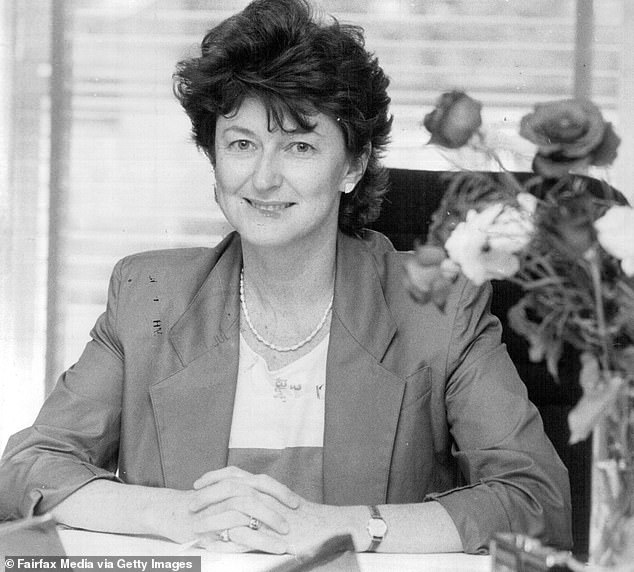
Susan Ryan (with former prime minister Bob Hawke) was a pivotal figure for women’s rights and in Australian politics. Photo: Museum of Australian Democracy.
The sculpture was funded by the ACT Government as part of the Recognising Significant Women Through Public Art program, initiated to begin to address the imbalance in gender representation in the ACT Public Art Collection.
Arts Minister Tara Cheyne said Ms Ryan was an inspirational woman and politician who believed that “legislative power was the most direct tool for change”.
“This place is fitting not just as the site of so many firsts for the feminist movement and for women’s rights, but for so many moments in her pivotal career and her decision-making, and being right near her office window,” she said.
Ms Cheyne paid tribute to her determined work on the landmark Sex Discrimination Act, quoting from page 17 of the Canberra Times to illustrate just how far Australian society had come and the importance of that legislation:
People at work can now hit back at crude comments, bottom slapping and other forms of sexual harassment, which can undermine their ability and make their life a misery following the introduction today of the new Sex Discrimination Act.
“I wish that was satire, but that’s a direct quote,” Ms Cheyne said. “I think this one sentence shows how monumental securing such basic rights was.”
Former governor-general Dame Quentin Bryce told the unveiling ceremony that Susan would have loved this occasion.
“How much it would mean to her, this place, our Parliament, the heart of our democracy, this much-loved rose garden where she played with her little ones, where she came to reflect, for moments of respite, for quietness, for going inside herself,” she said.
Dame Quentin said the sculpture captured the essence of her old friend.
“I can feel the vitality, the energy, the spirit, those qualities – that temperament, impatient, passionate, pragmatic – that made her our heroine,” she said.
“I want to congratulate all involved in this brilliant creative remembrance that will ensure that Susan’s legacy endures, a legacy that signifies the finest human values of courage and kindness and the solidarity of sisterhood.”
Susan Ryan AO (1942-2020) was a Senator from 1975 until 1988.
In 1975 she became the first female Senator for the ACT, in 1977 she was the first woman in Labor’s shadow cabinet, and in 1983 was the first woman in a federal Labor Cabinet.
One of her many achievements was the introduction and passage of world-leading legislation to prevent discrimination based on sex, marital status, or pregnancy, to guard against harassment and to dismantle barriers in the workplace.

 Robin's Room