Marjorie Garber, Shakespeare in Bloomsbury, Yale University Press 2023.
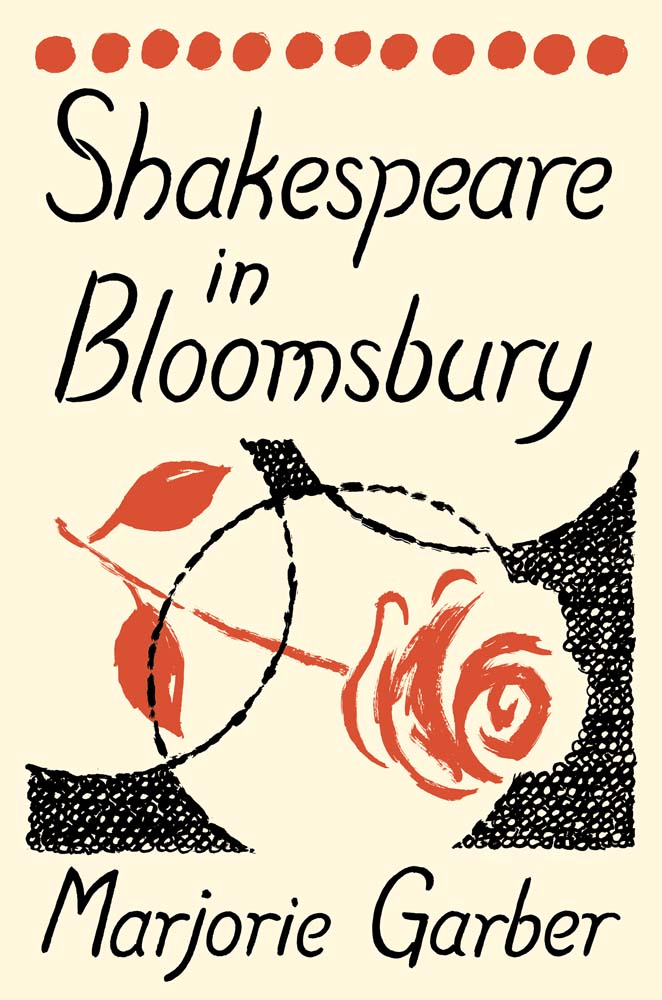
Majorie Garber Shakespeare in Bloomsbury Yale University Press, 2024.
Thank you, NetGalley, for providing me with this uncorrected proof for review.
‘How Shakespeare Would Have Loved Us’ introduces Shakespeare in Bloomsbury with a wealth of information about the focus of the book. It suggests that the book will be accessible, fascinating and a provide a new approach to some of the interests of the Bloomsbury Group. This assessment is fulfilled in the succeeding chapters: Shakespeare in Victorian Bloomsbury, Shakespeare as a (Victorian) Man, The Shakespeares of Virginia Woolf, Shakespeare Among the apostles, Mr Eliot’s Shakespeare, Shakespeare at Charleston and Ham Spray, and Coda: Bloomsbury’s Shakespeare. Prominence is given to the Bloomsbury Group and their reflections on Shakespeare, despite Marjorie Garber’s background and a chapter purportedly about Shakespeare. However, enough new ideas about aspects of his work are woven throughout the material about the Group’s conversation, written material, photography and plays so that by the end of the book Garber provides the reader with an experience of both. See Books: Reviews for the full review.
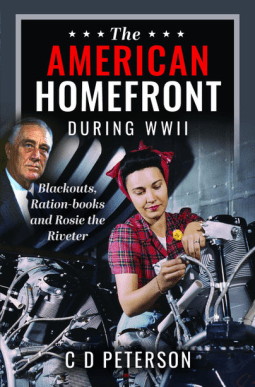
C D Peterson The American Homefront During WWII Blackouts, Ration-books and Rosie the Riveter Pen & Sword Pen & Sword History, July 2024.
Thank you, NetGalley, for providing me with this uncorrected proof for review.
This is an uncorrected proof, so my review concentrates on the content and style of the book.
The title of this book provides a flavour of what is to come. However, the immense amount of information C D Peterson has assembled is truly impressive. Although the style is less accessible than the usual Pen & Sword publication, which I usually applaud for its accessibility while remaining factual and well researched, private stories relieve the detailed accounts of government committees and policy making which make up much of the first part of the book. At the same time, Peterson is to be applauded for the attention to this part of the American Homefront. It provides a well-rounded approach to the livelier accounts of people’s responses to the more familiar themes of rationing, the black outs, incarceration of enemy aliens, spies and all the domestic detail of lives away from the front, while dealing with wartime measures and tragedies. See Books: Reviews for the full review.
Following articles: American Politics – Bob McMullan; American Politics – Presidential Debate; Cindy Lou Eats in Gungahlin; Booker Short List.
American Politics – Bob McMullan
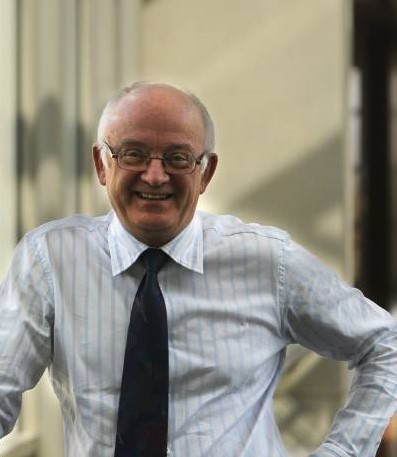
US election review as at 16th September
Sometimes in politics one can metaphorically, and almost literally, hear the political situation “snap” and things change decisively as a consequence.
The first presidential debate which was between Trump and Biden was one such event.
The key question for this past week is: was the second debate which was between Trump and Harris such a dramatic event?
It is too early to say. It was obvious that Harris won the debate. CNN’s survey of debate watchers had her winning 63-37. There is no doubt that the respective debate performances inflicted some damage on Trump’s reputation. But, how much? Trump’s standing with the public seems fixed with only a very small number of voters open to change. However, even a very small number of voters in the key states can prove decisive in a very close election.
Nate Silver has a five-phase analytical framework for assessing the impact of significant political events which he describes as follows:
Phase 0: 1-2 days after the event. No relevant polls.
Phase 1: 2-3 days. Quick national polls.
Phase 2: 4-7days. Substantial number of national polls and the polling averages by day7 reflect the changed outcome.
Phase 3: 8-13 days. A useful number of state-based polls begin to emerge.
Phase 4: 14 days. The impact of an event such as the debate are measurable.
We are currently in mid-phase2 and the pattern of events is consistent with the Silver framework. We are now seeing a representative cluster of national polling, but so far, few state polls taken after the debate.
The polling averages show some slight improvement for Harris, but nothing decisive or dramatic.
538 polling average now includes four different polling reports taken since the debate. The average lead for Harris from the likely voters results in the surveys is just over 4%. This is not yet fully reflected in the overall polling average which continue to reflect the residual impact of previous polls. 538 considers that the national situation is a lead of 2.6% for Kamala Harris. This may be barely sufficient to overcome the Republican bias in the Electoral College. The 538 average in the states still has the Harris/Walz team leading in sufficient states to win: Michigan, Pennsylvania, Wisconsin and Nevada. Most of the battleground states have had no surveys or only one since the debate. These are just beginning to emerge.
Similarly, RCP has published results for six polls taken since the debate which average a 3% lead for Harris. At 16th September, RCP has Harris leading in the same four states.
Winning those four states would guarantee the Vice president at least 276 Electoral College votes, enough to win but only just.
It is also important to note that the state in which Harris looks strongest, Wisconsin, is the state in which the poll results have been widest of the mark in 2016 and 2020.
There are some interesting developments in other states which have been considered solid Republican victories. In Iowa (6 EC votes) the only recent poll had Trump ahead by only 4%. In Alaska (3 votes), which is very hard to poll, the only poll I have seen had Trump ahead by only 5%. The most interesting of these is Florida (30 votes) where 538 has Trump ahead by only 4.3%. I will include reference to these as new polls emerge although I don’t expect the Democrats to win any of them, and should they do so it is likely to be “icing on the cake” rather than decisive. It is however, an interesting development.
The late breaking news this week is the second assassination attempt on Trump. Nobody knows the impact of such events. My initial guess is that it won’t change any votes, but it may increase the propensity of Trump supporters to vote.
In summary, I would rather be in VP Harris’ position than Trump’s but it remains a very close contest.

American Politics – Presidential Debate
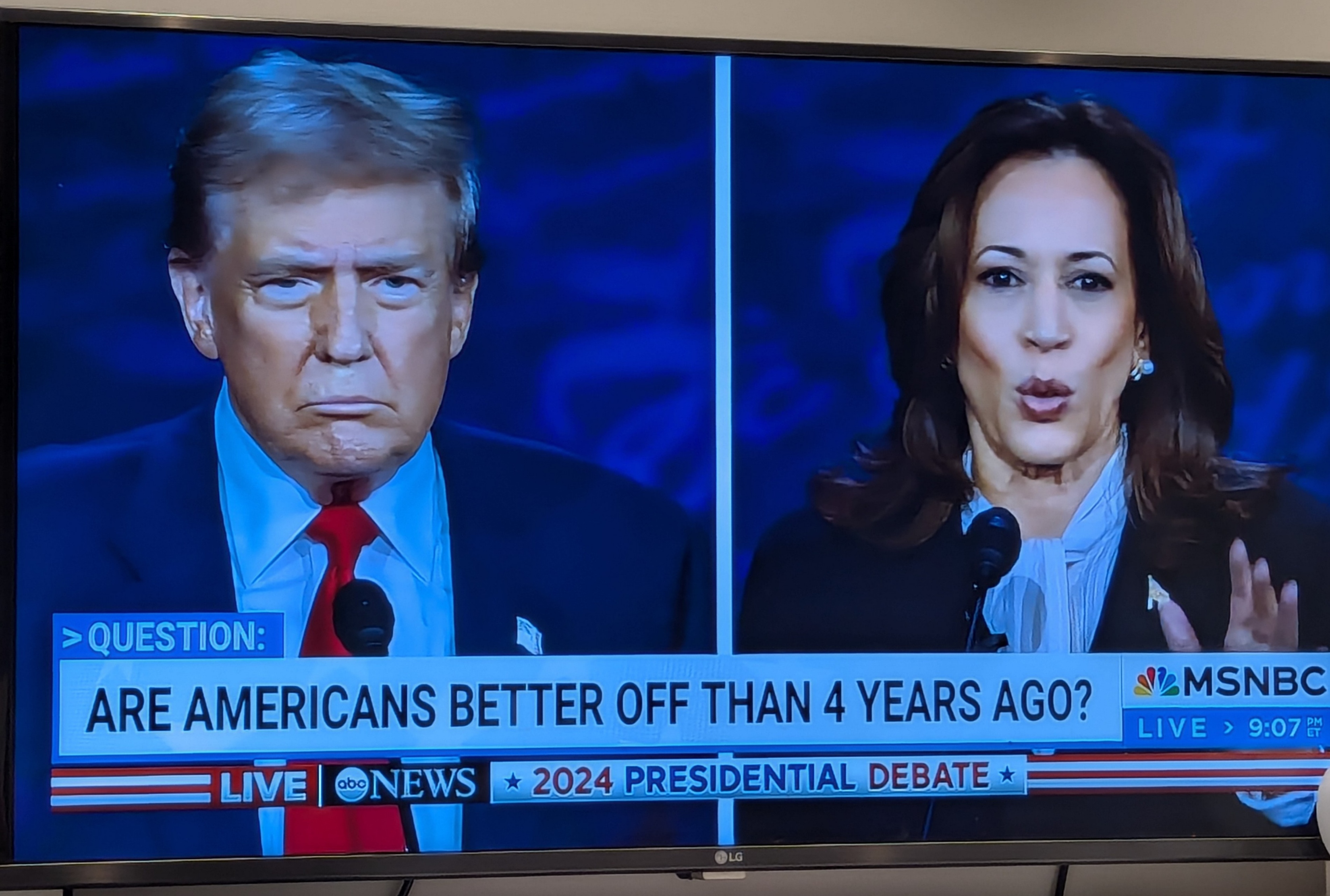
Below are images from the debate, beginning with the hosts – both of whom have been roundly chastised by former President Trump and his supporters for fact checking some of his most obvious lies. None did as former President Clinton suggested – count the times Trump says I, concentrating on his woes and concerns rather than those of the people he seeks to represent. Kamala Harris did so, showing how her concerns are not with herself, but others.
She also set the scene for her success in the debate with her initiating a handshake and introduction of herself as Trump cowered behind his podium. This was a far cry from the way in which he moved around the stage as Hillary Clinton made her salient points against his, even in 2016, invective rather than policy ideas. The CNN poll, taken immediately after the debate, shows the early figures for the debaters.




Cindy Lou eats in Gungahlin
The Ginger & Spice is rather different from the up-market Pearl Yiang in Sheldon Square, London, where I have enjoyed so many delicious Chinese meals. The Ginger & Spice has no white table clothes or extensive exotic menu, the waitpeople are young and enthusiastic rather than quietly deferential, but it has its own charm. I am pleased to have found it. At the tram stop at the end of the line from Civic to Gungalin, this modest Chinese restaurant has a good menu, including the familiar sweet and sour dishes, as well as more innovative choices.
The lunch menu offers a meat, fish or vegetarian dish with boiled rice for a very reasonable price. Water is served, and the drinks menu includes a New Zealand Sauvignon Blanc as well as other acholic beverages, mocktails and soft drinks. I was pleased to find that the sweet and sour chicken was exactly as I expected – familiar, a generous sauce, lightly battered and fried chicken, some pineapple. The restaurant does not hark back to the chop suey (chicken, or if one was very adventurous, combination!) of my first Chinese meal in the early 1960s but it is nice to have found something of the past in my traditional choice for lunch in 2024.



Women dominate 2024 Booker Prize shortlist
2 days ago Yasmin Rufo BBC News
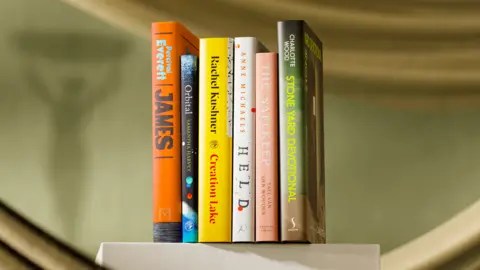
The 2024 Booker Prize shortlist has been announced, with the largest number of women represented in its 55-year history.
Five of the six-strong shortlist are women, with authors from five countries represented, including the Netherlands for the first time.
The list includes former Women’s Prize winner Anne Michaels, American writer Percival Everett and British author Samantha Harvey
Each short-listed author receives £2,500 and the winner, announced on 12 November, will win £50,000.
The prestigious prize is open to works of fiction written in English by authors anywhere in the world and published in the UK or Ireland.
The shortlist in full:
- James – Percival Everett (US)
- Orbital – Samantha Harvey (UK)
- Creation Lake – Rachel Kushner (US)
- Held – Anne Michaels (Canada)
- The Safekeep – Yael van der Wouden (Netherlands)
- Stone Yard Devotion – Charlotte Wood (Australia)
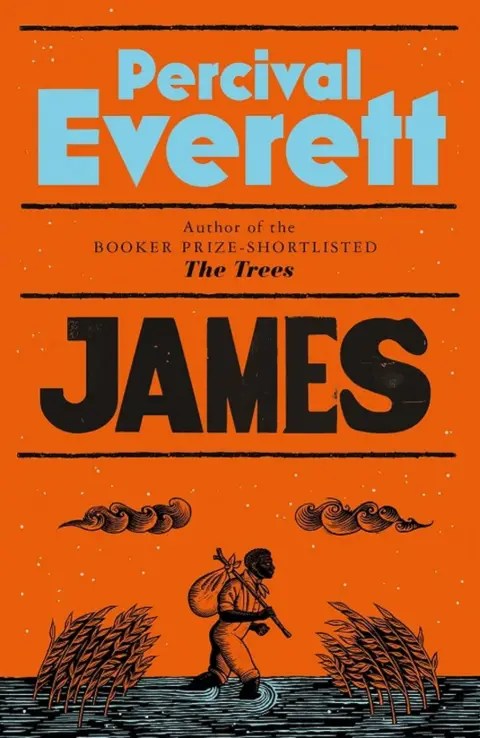
Two of the novelists, Percival Everett and Rachel Kushner, have previously been short-listed for the award.
Everett’s James is a retelling of Mark Twain’s The Adventures of Huckleberry Finn, written from the perspective of the runaway slave, Jim.
Kushner’s Creation Lake is a spy thriller which sees an American woman infiltrate a radical anarchist collective in rural France.
Edmund de Waal, chair of the judges, praised the six novels shortlisted and said: “My copies of these novels are dog-eared, scribbled in. They have been carried everywhere – surely the necessary measure of a seriously good novel.”
He added that they are all “books that made us want to keep on reading, to ring up friends and tell them about them, novels that inspired us to write, to score music.
“Here is storytelling in which people confront the world in all its instability and complexity.”
Orbital, by Samantha Harvey, contemplates the world from a different viewpoint as her novel follows a team of astronauts in the International Space Station.
The shortlist of books features one debut novel – The Safekeep by Yael van der Wouden.
The queer love story is set in post Nazi-era Netherlands and sees a lonely young woman’s life upended when she has a guest to stay at her country home.
Also exploring female friendships is Stone Yard Devotion.
Charlotte Woods’ novel is about a middle-aged woman who retreats from the world to a convent in New South Wales.
Woods said the story “grew from elements of my own life and childhood merging with an entirely invented story about an enclosed religious community”.
It’s the first time in 10 years that an Australian novelist has made the short list.
Held, which is Anna Michaels’ third novel, is a family saga which explores the memories of four generations.
The judges praised its large themes “of the instability of the past and memory”.
One of the judges, novelist Sara Collins, spoke about the fact that five women had been recognised.
“It was a genuine surprise to us. We came up with the shortlist, we sat back and looked at the pile and someone said: ‘Ha, there are five women there’.”
She added: “These books rose to the top on merit – they are tremendous books but… it was such a gratifying, surprising, thrilling moment to realise.
“My experience as a writer is that publishing is… dominated at certain levels by women but the literary recognition… has still seemed to be reserved for men.”
They chose the final six from 13 long-listed titles – known as the Booker dozen – which were selected from 156 published between October 2023 and September 2024.
The judging panel is also made up of The Guardian’s fiction editor Justine Jordan, writer Yiyun Li and musician Nitin Sawhney.
Last year the Booker Prize was awarded to Ireland’s Paul Lynch for Prophet Song, a dystopian vision of Ireland in the grips of totalitarianism.

 Robin's Room