Emily Bleeker When We Chased the Light Lake Union Publishing, November 2024.
Thank you, NetGalley, for providing me with this uncorrected proof for review.
I thoroughly enjoyed the first part of Vivian Snow’s account of her life that appeared in When We Were Enemies. In this, Vivian is so closely aligned with her real name, Viviana Santini, that her Italian heritage is a subtle but underlying strong theme in the novel. Her role as an interpreter, friendship with Padre Antonio Trombello, the beginnings of her career and ill-fated marriage are beautifully drawn throughout the story that also features her granddaughter, Elise. In When We Chased the Light, Vivian Snow comes to the fore, as she strives to accommodate her child, her sister, mother and father, love and her career. Her Italian heritage is the theme that underlies the postcards from Padre Antonio Trombello, contrasting with her Hollywood advances, problems, marriage, and death. With great sensitivity to her readers and linked with the role Viviana played in her first career, Emily Bleeker interprets the Italian phrases.
Bleeker is such a clever writer, at the same time as she clarifies the words used between Trombello and Snow by providing the English interpretation, she leaves a mystery about their relationship. This is a mystery that is not resolved and should not be. It is the dream to which only Viviana and Antonio need the answer. Like her great granddaughter, who purchases the postcards, it is enough to know that Vivian Snow’s life was not only that played out in the public eye. See Books: Reviews for the complete review.

Alison James Just the Nicest Family Bookouture, June 2024.
Thank you, NetGalley, for providing me with this uncorrected proof for review.
Alison James has written a very readable psychological thriller, complete with a good twist. For me, a twist must be a logical outcome of the narrative, with signposts along the way. These must be subtle and ensure that the reader has had the opportunity to read the signs that lead to the twist – then ideally has not been able to do so. James achieves this in Just the Nicest Family, and for this I give her accolades. However, I was less impressed with the way in which one of her main characters dealt with an assertion that they knew would change their life but did little to investigate its validity.
Louise and Tim, parents of Harry and Elodie are the perfect family. Most apparent is the love between Louise and Tim, exhibited in all their interactions, private and public. Tim is a vet, Louise the deputy head at a girls’ high school. The family is invited to share a villa in France by the CEO of a Swiss company, Renee Weber, as a precursor to her buying Tim’s independent veterinary practice. He is keen to accept, and eventually he and the children join the villa residents while Louise completes her responsibility at the school. She has already been thrown by Tim’s invitation to acquaintances, Shona and Kevin, before Louise could intervene to invite friends more to her taste. The villa visit becomes even more awkward when Shona decides that Renee’s partner would suit her better than her husband. See Books: Reviews for complete review.

The Conversation
Article republished under Creative Commons licence.
Britain is finally abolishing hereditary peers from the House of Lords – a constitutional expert on the historical reforms that built up to this moment
Published: September 23, 2024 9.46pm AEST Updated: September 24, 2024 9.39pm AEST
Author

Meg Russell Professor of British and Comparative Politics and Director of the Constitution Unit, UCL
Meg Russell has in the past received funding from the ESRC for her research on the House of Lords.
Having made a pre-election pledge to do so, the government is moving forward with the House of Lords (hereditary peers) bill, a piece of legislation that will remove the remaining hereditary peers from the House of Lords.
The bill is almost certain to pass through parliament, ending a centuries-old tradition of hereditary membership in the House of Lords. But who are these hereditary peers, and how did they come to sit in parliament in the first place? Some of the answers may be surprising.
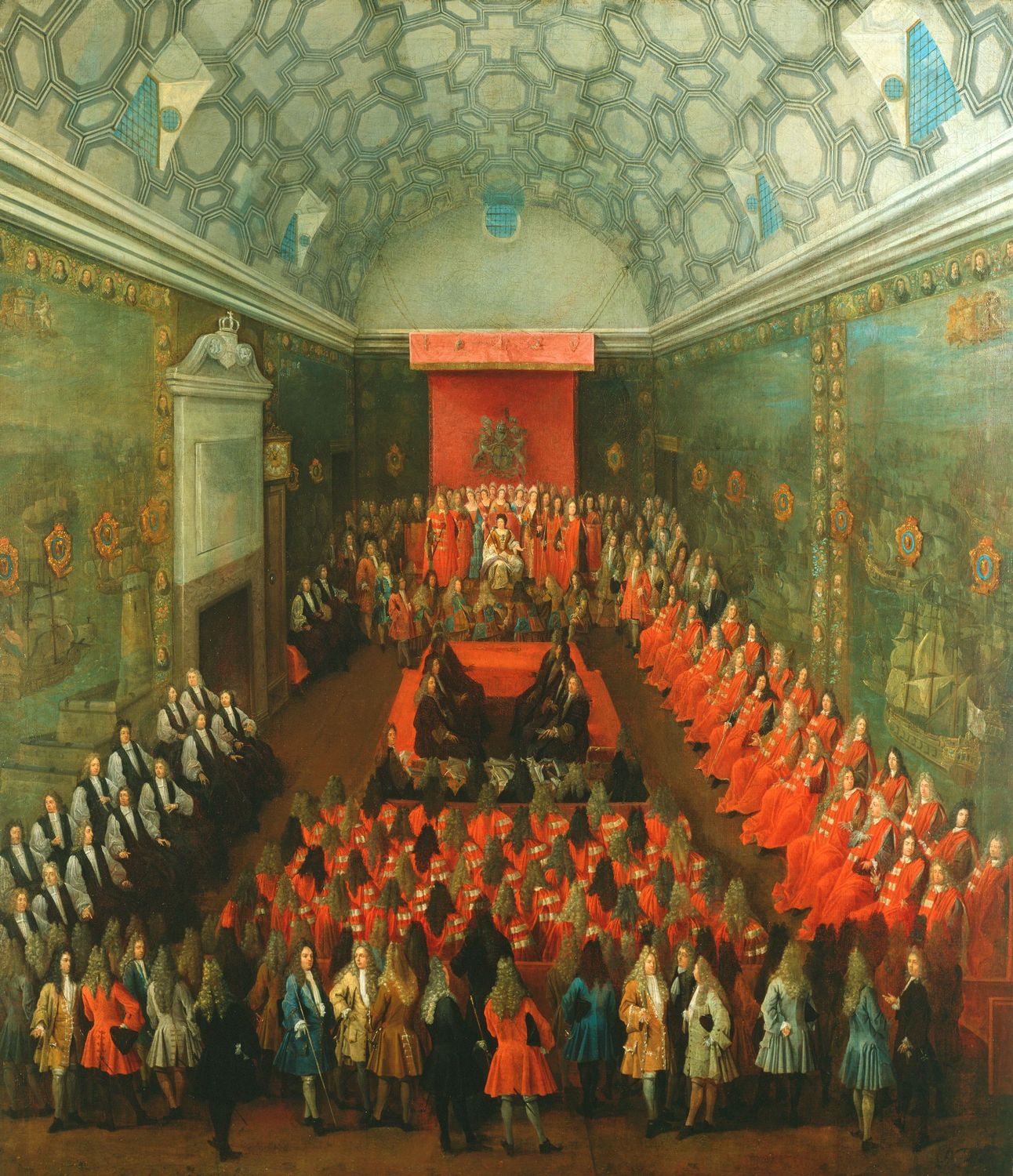
The House of Lords has ancient roots – though it has changed very fundamentally over the years. The original precursor of the English (and subsequently UK) parliament was a single-chamber body, bringing together the powerful in the land to advise the monarch. It is difficult to put a date on when this began but it included representatives of the nobility and the church.
Initially, there was no presumption that those invited to participate in one session of parliament would be invited to the next, but gradually arrangements became more fixed. The “temporal” (as opposed to “spiritual”) members of parliament became the holders of hereditary titles, which would be passed down through their family line. Over time, the members of what became the House of Commons split off, with the two chambers regularly sitting separately from the 14th century.

Some modern preoccupations about the House of Lords can be traced back centuries. By the time of Charles I, there were already concerns that too many new peerages were being created and that the chamber was growing too large. There was even talk of money changing hands in some cases. As early as 1719, a bill was proposed to cap the size of the House of Lords, and allow new peerage creations only when existing lines died out. That bill was, however, unsuccessful.
By the late 18th century, the monarch was following prime ministerial advice in creating peerages. William Pitt the Younger became a prolific distributor of titles, increasing the number of Lords temporal from 212 to 314. In the mid-19th century, the House of Lords stood at around 450 members, and by the early 20th century, it exceeded 600 members. Immediately before it was reformed by Tony Blair’s government in 1999, its size was double that.
The reforms begin
In the late 19th century, under prime ministers William Gladstone and Lord Salisbury, there were deliberate moves to broaden the peerage and move it away from landed interests. Titles were awarded to industrialists, former diplomats, military personnel and civil servants. Notable appointees in this period included the artist Frederic Leighton, the surgeon Joseph Lister, and the former House of Commons clerk Thomas Erskine May. This helped to boost the “crossbenches” in the Lords, and build the chamber’s reputation for expertise.
Nonetheless, in another pattern familiar today, around two-thirds of those appointed were former MPs. Prominent among them were those who had held high office – routinely including former prime ministers and speakers of the House of Commons.

The hereditary nature of titles created an obvious difficulty with size – that a seat created for a person did not die with them, but was passed to their (exclusively male) successors. Every peerage awarded (with a small exception for those with legal expertise under the Appellate Jurisdictions Act 1876) was a hereditary peerage, and large numbers continued to be created.
While some lines died out due to lack of male successors, pressure grew for the creation of life peerages rather than allowing members to pass their seat in the Lords on. The first bill to allow such appointments was introduced in 1849, but it was not until the Life Peerages Act 1958 that change finally occurred.
By 1957, the year before the act, half of members (who by now exceeded 800) owed their hereditary peerages to 20th-century creations. Among them were the descendants of Asquith, Lloyd George, Stanley Baldwin and Field Marshal Montgomery. Even Labour’s Clement Attlee (who, upon assuming office in 1945, faced a House of Lords containing just 16 Labour members) was given a hereditary peerage in 1955. His grandson still serves in the House of Lords.
After 1958, the creation of new hereditary peerages became much rarer. It was, notably, only at this point that women entered the chamber for the first time – and only in 1963 that women inheriting the few hereditary titles not travelling purely down the male line were allowed to take seats in the chamber. An interesting anomaly was Margaret Thatcher’s bestowal of a hereditary peerage on her former home secretary and de facto deputy prime minister, Willie Whitelaw, in 1983 – the first such awarded for 18 years. Having only daughters, Whitelaw did not pass his peerage on.
The reform implemented by the Blair government in 1999 was originally intended to sweep away all of the hereditary peers. But while over 650 departed, a deal between the parties allowed 92 to remain – with replacements when these peers died or retired largely filled by a bizarre system of byelections, where the only eligible candidates were hereditary peers.
These byelections were recently halted in expectation of the bill, leaving 88 hereditary peers currently serving in the chamber. All of them are men, 45 are Conservative (and only four Labour), while 43 (49%) hold peerages created only in the 20th century.
This group is anomalous, and long overdue reform. It is also less historic in certain respects than many might assume.
This article has been updated to correct the language around how many peers William Pitt the Younger added to the chamber.

The Ultimate TV Event: How Happy Valley Defies Ageism and Sexism in the Television Industry By ljademinor on 27/09/2024 by Lucy Brown
This blog first appeared on Reflections: A Television Digest on 10 May 2024.

Sarah Lancashire as Sergeant Catherine Cawood. Image: BBC
“Chilling,” “a dark delight,” “magnificent,” “triumphant,” and “explosive” are all words that have been used to describe the British police crime thriller Happy Valley.1 First screened in 2014, it reached an audience of over 8 million and became a hit with critics and the audience alike. The second series followed in 2016, growing its audience to over nine million, marking a record-high audience share with a third of viewers tuning in.2
After a seven-year hiatus, the series returned with a bang on New Year’s Day 2023 and has been watched by over eleven million people. To grow an audience against a backdrop of broadcast channel ratings declining is a remarkable feat, but perhaps not surprising given it has been hailed by critics as one of the greatest television dramas of the twenty-first century,3 Yorkshire’s version of The Wire4 and “the ultimate event TV.”5
Happy Valley follows the story of police Sergeant Catherine Cawood as she navigates through personal and professional challenges and struggles to protect her community and grandson Ryan from her nemesis, Tommy Lee Royce, Ryan’s father and a violent rapist, murderer and psychopath, who is responsible for her daughter’s suicide. The series expertly weaves together intricate plotlines, compelling characters, and outstanding performances, earning five BAFTA awards and sustaining viewer investment and engagement over the course of eighteen episodes spanning nine years. Two middle-aged women are of prime importance to its success; on-screen, Sarah Lancashire plays the lead, Sergeant Cawood and behind-the-camera, creator, writer, director, and executive producer Sally Wainwright. It should be irrelevant that these two brilliant women are in their fifties, yet TV drama is the domain of men. Television’s lack of diversity is well known.6 See Television,Film and Popular Culture: Comments for the complete article.
American Politics – Bob McMullan

US election review at 30th September
It has been a week of apparent attrition in the US presidential election with very few break-out moments at the national level.
Hurricanes, crazy Republican gubernatorial candidates, failed Republican attempts to change the allocation of votes in Nebraska and corruption charges against the mayor of New York have been newsworthy, but there is little sign that anything has dramatically changed the support for either candidate.
The response to recent events reinforce the view that opinions about Trump are fixed and he has a locked-in level of support at about 45-47% of the likely voters, which is a high floor but a low ceiling.
Harris has attempted to challenge Trump in his areas of strength, the economy and immigration. While it is too early to say what the final impact of these initiatives will be, it does seem that she has made further slight progress in national and relevant state polling.
While the election is not won by aggregate support it is interesting to see that the Harris/Walz ticket now has a lead of as much as 3.2%. Nate Silver’s data suggests that Harris has made slight increases in support in Pennsylvania, Wisconsin and Nevada and maintained her lead in Michigan. Trump appears to have made slight gains in the other battleground states.
To resume my state-by state analysis, the remaining four battleground states are ones in which Kamala Harris has been leading consistently over recent weeks. Should she win all of them the Harris/Walz ticket would win the Electoral College 276 to 262.
Michigan (15 votes)
This has consistently been the best of the battleground states for Harris. Most recently she has been leading by between 2.0 and 2,9% in the various polling averages. Perhaps more importantly, the Vice President has led in the last nine published polls included in the 538 analysis.
Pennsylvania (19 votes)
Pennsylvania is the most important state in this election. While it is not indispensable, it is hard to see Harris winning without winning this state. All the polling averages have Harris/ Walz with a narrow lead of between 0.9% and 1.7%. Nate Silver’s analysis shows a slight improvement for Harris in Pennsylvania over the last week. Should this pattern continue she will be the favorite to win the Electoral College, but an enormous amount of money and effort will be expended by both sides over the next 5 weeks.
Wisconsin (10 votes)
This is the third of the “Blue Wall” seats which are the basic building blocks of the Harris majority. Unless Harris wins one of the sunbelt seats she needs all three of these to make a majority of the electoral college. To date the Harris/ Walz ticket has been consistently in front in Wisconsin by between 1 and 3%. Harris has led in 5 of the last 7 polls with one of them tied. This all combines to make her the favorite to win Wisconsin. But both Hillary Clinton and Joe Biden had big leads in Wisconsin at this stage which were either illusory or fell away towards the end.
Nevada (6 votes)
This is not as essential to a Harris victory as the previous three but there are certainly scenarios in which these six votes could be vital. The result is always close in Nevada, but Harris has maintained a small but consistent lead in at least 7 of the last 10 polls. One to watch on the night.
Another interesting development is reaction to the Republican attempt to make a last minute change to the electoral rules in Nebraska. The initiative failed but it seems to have had interesting consequences. In the presidential contest subsequent polling has shown a large improvement in support for Harris. I am confident that she will win this vote. An apparent by-product of this failed attempt is a significant change in the prospects of the Democrats flipping the House seat. The incumbent member supported the Trump attempt to change the rules and has subsequently fallen behind his Democrat opponent in the polls. This was a move which in Australian parlance you would describe as “too smart by half” and as is often the case it not only failed, it may have backfired.
American Politics – Axios Article
Young men and women are moving in opposite directions

Erica Pandey
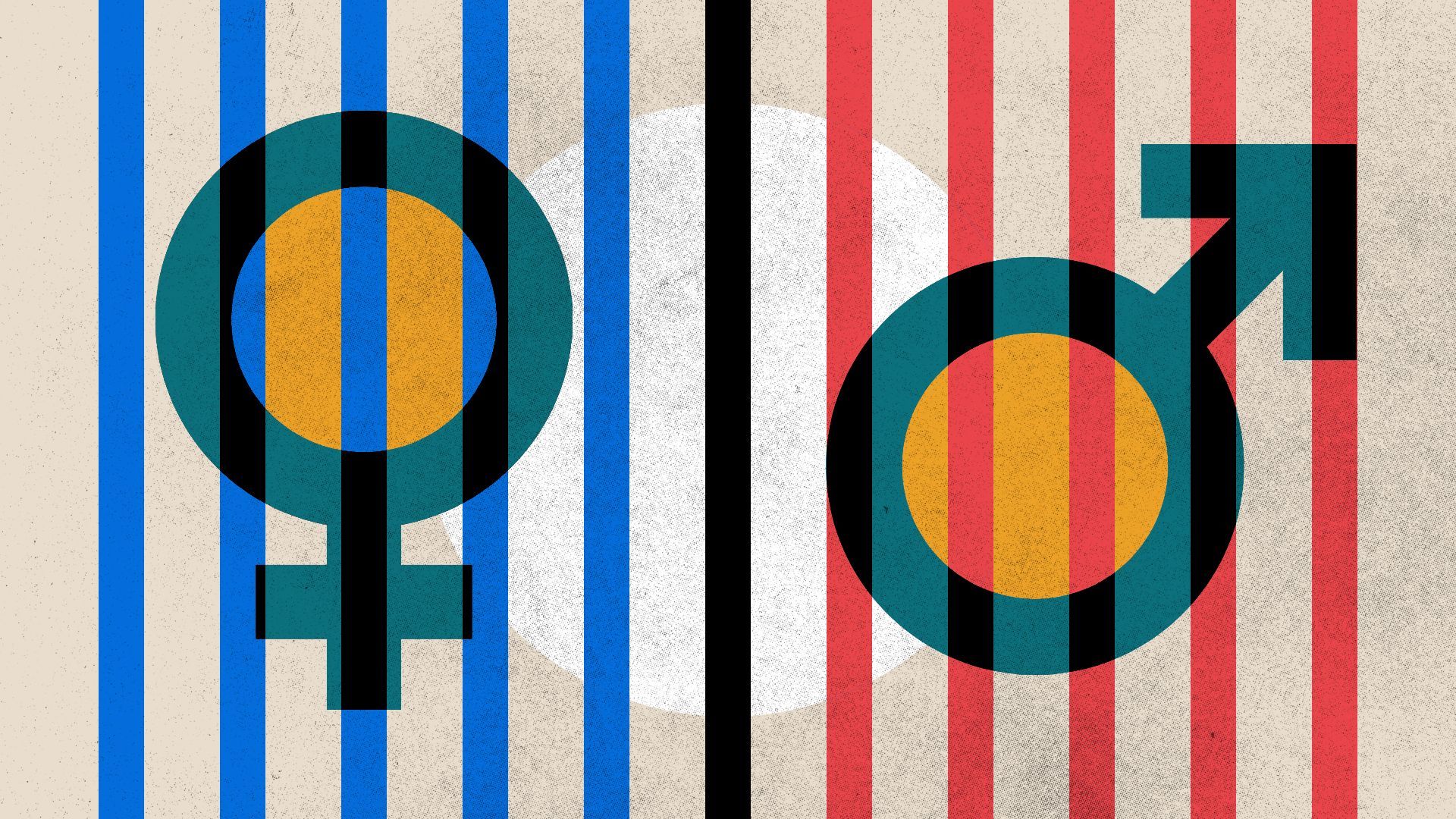
Data of all kinds reveals a little-discussed, future-defining trend: Men and women are going separate ways.
Why it matters: The split is clear in politics, religion, education and the labor market. For the next generation, gender is becoming the biggest predictor of how you think, act and vote.
“There’s a much broader story here,” says Daniel Cox, director of the Survey Center on American Life. “Even after all the votes are tallied and we’ve moved on from the 2024 election, we’re not going to have resolved any of the cultural and relational tension between young men and young women.”
- You see it in politics: Women are turning left, and men are turning right.
- You see it in religion: For the first time ever recorded in the U.S., young men are more religious than young women.
- You see it in education: There are 2.4 million more women on U.S. college campuses than men, the American Institute for Boys and Men (AIBM) notes. And those degrees are often resulting in higher-wage jobs for women in big cities, a Pew Research Center analysis of census data found.
- You see it in the labor market: Wages and labor force participation have increased since the 1980s for college-educated men and women, and for working-class women. But they have stagnated for working-class men, who are also now significantly less likely to be employed compared to four decades ago, according to AIBM’s analysis.
- You see it in visions for the future: Men are more likely than women to want marriage and kids, according to Pew. The percentage of 18- to 34-year-old women wanting kids has fallen to 45% versus 57% for men.
What we’re watching: The polarization is even stronger among adults under 25, Cox notes. Social media content and algorithms may be one key reason.
- Men are constantly fed social media content that’s negative toward women, and vice versa. Videos breaking down bad dates from the perspective of either the man or the woman are a viral example of that trend.
- Gen Zers are 15 points more likely than other generations to say social media has negatively impacted their outlook on men, and 10 points more likely to say so for women, Morning Consult finds.
The bottom line: “We live in a very individualistic culture, and, for a lot of people, the primary relationship they have is with a partner or a spouse,” says Cox.
- For heterosexual couples, this polarization is making finding a partner trickier.
- “This has tremendous implications for how men and women relate to one another in the dating space,” Cox says.
Voting in the ACT Election
We voted today as we shall be away when early voting opens, and there was not enough time for the electoral commission to send us our postal votes before we leave. How amazing – every effort made to accommodate our vote and travel arrangements, safe electoral officials inside the building, no nasty crowds outside trying to stop us voting, no-one with any ill intent, and our votes are safe, will be counted and there will be a fair result which will be accepted by both winners and losers. We should not live in a world where we think this is lucky.

2024 ACT Election
19 October 2024
Early voting opens
8 October 2024
2024 ACT Election
Dame Maggie Smith obituary: A formidable star on stage and screen – from the BBC online site
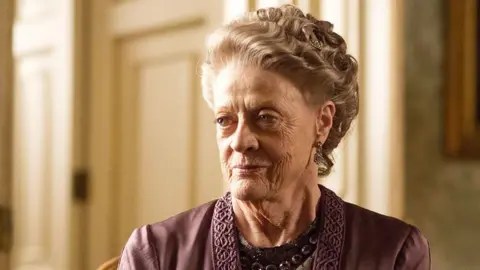
Dame Maggie Smith, who has died at the age of 89, brought an incredible range of expression to her roles, winning high praise from directors and fellow actors alike.
It was said of her that she never took a role lightly and would often be pacing around at rehearsals going over her lines while the rest of the cast was on a break.
In a profession notorious for its uncertainties her career was notable for its longevity.
She made her acting debut in 1952 and was still working six decades later having moved from aspiring star to national treasure. See the complete obituary at Television,Film and Popular Culture: Comments.

 Robin's Room