
Charlotte Booth and Brian Billington The Crime Movie and TV Lover’s Guide to London Pen & Sword | White Owl, November 2024.
Thank you NetGalley and Pen & Sword for providing me with this uncorrected proof for review.
The Crime Movie and TV Lover’s Guide to London provides yet another source for understanding and exploring London through a popular and, at times, familiar, gateway. Previous books published by Pen & Sword have used other entry points, all of which were instructive, interesting, and worth following. This guide follows in their footsteps as a well thought out way of viewing London. The information can be used in two ways – as a wonderful instruction manual about the films and television series that have been made in London, and the localities and as a way of understanding the way in which films and television series may impact the environment in which they are made. See Books: Reviews for complete review.
Some interesting post American election observations
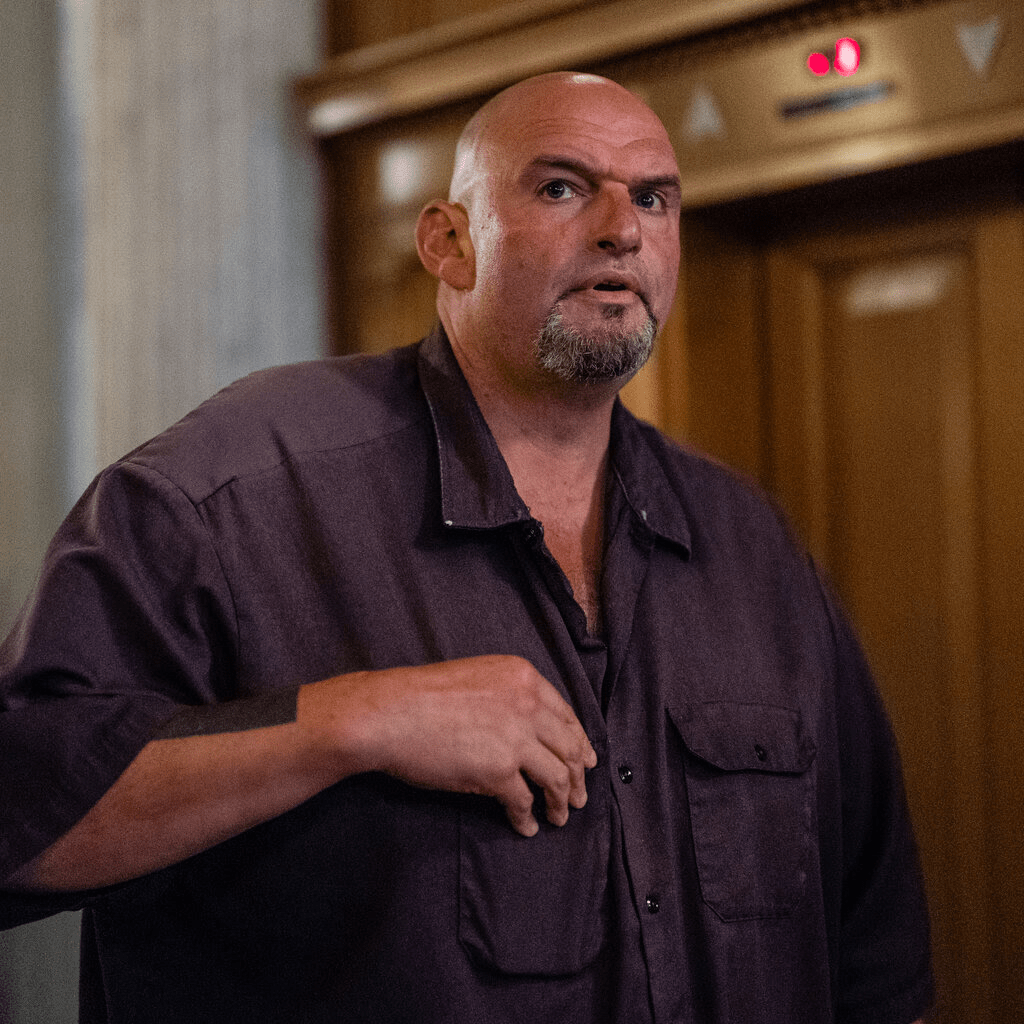
Senator John Fetterman, Democrat of Pennsylvania, in Washington this year. Eric Lee/The New York Times
Fetterman to Democrats: You need to calm down
Jess Bidgood
Senator John Fetterman wasn’t in Washington for the first Trump administration. But he has a few ideas about how Democrats should handle the second.
He wants his party to accept its losses. He wants his party to chill out a little. And he wants his party to please stop with all the hot takes about what went wrong in November, since Democrats have four long years to figure it out.
Fetterman has some experience taking on President-elect Donald Trump’s G.O.P. He won his seat in 2022 after overcoming a near-fatal stroke and beating the Trump-endorsed Dr. Mehmet Oz, who has since become the president-elect’s pick to run Medicare. As the Democratic Party reckons with its losses in places like Pennsylvania — where Trump beat Vice President Kamala Harris by 1.7 percentage points and Bob Casey, a third-term Democratic senator, lost his seat — I called Fetterman.
Our conversation was the first in a series of interviews I’ll do in this newsletter about the path forward for the Democratic Party. Drop me a line and tell me about others you want to hear from.
This interview was edited for length and clarity.
Incumbent parties struggled or lost elections around the world this year, particularly in Western democracies. Do you think the Democrats’ losses in November were inevitable?
That’s a question worth asking. I had a lot of concern — there was a couple of one-offs. One of them was the assassination in Pennsylvania. I think some people seem to forget that, or how incredibly dangerous that was for a nation, God forbid, if he would have been mortally wounded. But the kind of imagery and the kinds of energy that emerged from that, absolutely, I witnessed that on the ground in Pennsylvania. I thought, well, that might be ballgame.
Then, Musk was involved. He was described as moving to Pennsylvania. And sometimes that doesn’t really mean much, but he was an active surrogate — and I mean, his checkbook was helpful. That wasn’t really the defining facet for me. I was concerned that he’s going to have a lot of sway with a part of the demographic that the Democrats have to win, and we’ve struggled with.
You’re talking about the tech billionaire Elon Musk, but what’s the demographic in question?
Whether it’s the “bros,” that negative term that perhaps even your publication uses, as a negative — it’s the bros, or, you know, males, blue-collar guys, just people. It’s very rare, in my opinion, that surrogates have “fanboys.” Making fun of him or make light of it, you do that at your peril, because it is going to matter.
How do you think Democrats should be talking to bros, and should be talking to men, and should be talking to working-class voters?
Have a conversation. Have a conversation with anyone that’s willing to have an honest conversation. That’s always been the rule, and that’s what I’m going to continue. I’ve had conversations on Fox News, and they’ve played me straight. I’ve shown up on Newsmax, and they’ve played it straight. And Rogan. Rogan was great. He was cordial and open and warm.
Why was it important to you to go on Joe Rogan?
I’m a fan. I’m a huge fan of Bill Maher, a huge fan of Colbert.
Why do you think Democrats have struggled with men?
It’s already migrated. In 2016, I was doing an event with the steel workers, across the street where I live, and I was noticing different kind of energy with this, with Trump. It was clear at that time that people were voting for Trump. And the Democrats’ response was, “Aren’t they smart enough to realize they’re voting against their interests?” And that’s insulting, and that’s, I mean, that’s, that’s just not helpful. It’s condescending. And if anything, that reinforces that kind of stereotype.
Telling them that “I know better than you do,” that’s not helpful.
In 2022, you won your Senate race by almost five points. It wasn’t particularly close. Why do you think you did so much better in 2022 than Democrats in Pennsylvania did in statewide races in 2024?
A lot of different kinds of things converged in this cycle. So, in some sense, it’s not perfectly analogous to compare ’22 to ’24. Trump absolutely is a much more compelling top of the ticket than Dr. Oz, or, you know, the ultimate Democratic candidate dream of Doug Mastriano.
Is there something that you think you understand, though, about the recipe for success in Pennsylvania or the voters you need to talk to, that other Democrats don’t?
I don’t have “You should, you should, you should.” This is “I do, I do, I do.”
The opinions and the hot takes from the safety of, like, a deep blue seat or state, that doesn’t really count for much.
The things that they say, and those kinds of positions, are filling the clips that the Republicans unload on us in states like Pennsylvania.
How do you think the Democratic Party needs to change right now?
I don’t give advice except on fashion. Again, I want to thank your publication for putting me on the best-dressed list, so you understand why I am a fashion plate.
Do Democrats need to do an analysis of what went wrong? And, if so, who should do it?
We’re not even at Thanksgiving, and Democrats just can’t stop losing our minds every fifteen minutes. We really need to pace ourselves, or, you know, for FFS, just grab a grip. Realize that this is how elections go. At least for the next two years, they’re going to have the opportunity to write the narrative and to drive the narrative.
Trump is assembling a cabinet of people many Democrats find deeply objectionable. How do you think Democrats should respond?
I’m just saying, buckle up and pack a lunch, because it’s going to be four years of this. And if you have a choice to freak out, you know, on the hour, then that’s your right. But I will not. I’m not that dude, and I’m not that Democrat. I’m going to pick my fights. If you freak out on everything, you lose any kind of relevance.
Do you think Democrats have done too much freaking out when it comes to Trump?
It’s symbiotic. One feeds off the other. The Democrats can’t resist a freakout, and that must be the wind under the wings for Trump.
I saw a quote from you where you referred to, the Matt Gaetz pick, as “God-tier-level trolling.”
Obviously! The response or the opinions on the Democratic side aren’t interesting. They’re not. They’re not surprising. The real interesting ones are going to come from my colleagues on the Republican side.
It sounds like you want Democrats to be quiet and let Republicans have their own fight.
All I’m saying is, the freakout and all the anxiety and all that should have been before Nov. 5.
Does clutching the pearls so hard — does that change anything? Did it work? Did it change the election? Was it productive? And, like, I can’t believe the outrage. That has to be candy for Trump.
You said Democrats needed to pick their battles. What’s one you’d choose?
I’m not going to pick one before Thanksgiving.
One analysis of the election that we’ve heard from your colleague Senator Bernie Sanders is that Democrats failed to recognize how bad people were feeling about the economy, about the country generally, and failed to name a villain. Do you agree with that analysis?
I do not.
Why?
I think there was a lot of other issues. I would even describe them as cultural. Walk around in Scranton, tell me what an oligarch is. I think it’s like, “Whose argument is the closest match to the kinds of things that are important to me?” And I think some of them are rooted in gender and worldviews, and even backlash of things like cancel culture.
I witness people, now there’s specific kinds of clothing. They call it Blue Collar Patriots. I’m willing to bet you know who they’re voting for.
And why is that? I don’t think it’s because we haven’t talked enough about oligarchs, and how it’s rigged.
What do you think Democrats need to do to bring about the kind of cultural shift you’re talking about?
For a party that’s had way too many bad takes, we should take our time.

Dismissed
| Joyce Vance Nov 26 |
I had plans to write about a number of things tonight, most importantly, the not-unexpected but still deeply disturbing dismissal of the federal criminal cases against Donald Trump. Instead, I’m going to just share a few quick thoughts with you, and then I’m going to turn in. Thanksgiving preparation is not for the weak, and I’m exhausted from it! It’s only Monday, and today, I went to three stores looking for the broccolini a recipe I’m making calls for, only to be shut out at the first two places and disappointed by the quality at a third. I need some sleep before I try to process what happened today in a serious way.

But I did want to leave you with a quick and hot-ish take on the dismissals. The most important thing is this: Donald Trump is not innocent.
Often, when prosecutors dismiss criminal cases that have been indicted, it’s because they’ve learned a defendant is actually innocent or at least discovered they do not have sufficient evidence to prove guilt. That is not the case here. Special Counsel Jack Smith wrote that his view of the merits of his case—in other words, his ability to obtain and sustain convictions against Donald Trump, has not changed.
Trump outran the justice system by winning the election. It is DOJ policy, not a lack of evidence, that compelled Smith to move to dismiss the cases. That is no small thing. Trump won’t face juries in these cases. But that does not mean Trump can claim he has been exonerated. He has not been. Full stop.
Smith will write a report and it’s extremely likely it will be public. How fulsome it will be and what it reveals remains to be seen. The question is whether it will make a difference in some meaningful way in the future.
I continue to think it will. We have lived through one of the most difficult months our democracy has endured. But our democracy has endured. We don’t get to quit just because it isn’t easy. Sometimes, you give it your all and it still doesn’t go your way. But if you believe the Constitution and the rule of law mean something, mean a better way of life for us and our children—and I do—then you can’t just give up and walk away. You have to keep going.
So even as I’m getting ready to spend the rest of the week with friends and family, I’m thinking about what we are going to do, how we are going to be prepared to do the big things and the small things necessary to prevent Donald Trump from controlling our futures. We will have work to do.
Trump has threatened to fire and prosecute investigators and prosecutors who followed the law, took their evidence to a grand jury, obtained indictments, and proceeded against him, while providing him with every measure of due process. His Attorney General nominee Pam Bondi said in August of 2023 that when Trump returned to office, “the prosecutors will be prosecuted — the bad ones — the investigators will be investigated.” That’s unconscionable for a person who aspires to be the country’s top law enforcement officer. Bondi, unless she changes her tune, and that seems unlikely since she Donald Trump’s pick, is precommitted to using the Justice Department as a political tool to please a president.
But that’s easier said than done. Former FBI acting Director Andrew McCabe won his lawsuit against the Trump Administration after he was wrongfully fired. And it’s easy to see how efforts like this could backfire. If Trump’s DOJ goes after Smith’s team, claiming their prosecutions were political, the ensuing litigation would almost certainly reveal the full scope of the Special Counsel’s office investigation and the evidence that was compiled against Donald Trump and others. Defending themselves against claims their prosecution wasn’t legitimate would necessarily call for a full account of the investigation and the basis for prosecutors’ decision to indict. Trump should remember that old adage: Be careful what you ask for.
There is much more to come. I’m not giving up and I hope you won’t either.
We’re in this together,
Joyce
Heather Cox Richardson – letters from an American
Since the night of the November 5, election, Trump and his allies have insisted that he won what Trump called “an unprecedented and powerful mandate.” But as the numbers have continued to come in, it’s clear that such a declaration is both an attempt to encourage donations— fundraising emails refer to Trump’s “LANDSLIDE VICTORY”—and an attempt to create the illusion of power to push his agenda.
The reality is that Trump’s margin over Democratic nominee Vice President Kamala Harris will likely end up around 1.5 points. According to James M. Lindsay, writing for the Council of Foreign Relations, it is the fifth smallest since 1900, which covers 32 presidential races. Exit polls showed that Trump’s favorability rating was just 48% and that more voters chose someone other than Trump. And, as Lindsay points out, Trump fell 4 million votes short of President Joe Biden in 2020.
Political science professor Lynn Vavreck of the University of California, Los Angeles, told Peter Baker of the New York Times: “If the definition of landslide is you win both the popular vote and Electoral College vote, that’s a new definition” On the other hand, she added, “Nobody gains any kind of influence by going out and saying, ‘I barely won, and now I want to do these big things.’”
Trump’s allies are indeed setting out to do big things, and they are big things that are unpopular.
Trump ran away from Project 2025 during the campaign because it was so unpopular. He denied he knew anything about it, calling it “ridiculous and abysmal,” and on September 16 the leader of Trump’s transition team, Howard Lutnick, said there were “Absolutely zero. No connection. Zero” ties between the team and Project 2025. Now, though, Trump has done an about-face and has said he will nominate at least five people associated with Project 2025 to his administration.
Those nominees include Russell Vought, one of the project’s key authors, who calls for dramatically increasing the powers of the president; Tom Homan, who as acting director of Immigration and Customs Enforcement (ICE) oversaw the separation of children from their parents; John Ratcliffe, whom the Senate refused in 2019 to confirm as Director of National Intelligence because he had no experience in intelligence; Brendan Carr, whom Trump wants to put at the head of the Federal Communications Commission and who is already trying to silence critics by warning he will punish broadcasters who Trump feels have been unfair to him; and Stephen Miller, the fervently anti-immigrant ideologue.
Project 2025 calls for the creation of an extraordinarily strong president who will gut the civil service and replace its nonpartisan officials with those who are loyal to the president. It calls for filling the military and the Department of Justice with those loyal to the president. And then, the project plans that with his new power, the president will impose Christian nationalism on the United States of America, ending immigration, and curtailing rights for LGBTQ+ individuals as well as women and racial and ethnic minorities.
Project 2025 was unpopular when people learned about it.
And then there is the threat of dramatic cuts to the U.S. government, suggested by the so-called “Department of Government Efficiency,” or DOGE, headed by billionaires Elon Musk and Vivek Ramaswamy. They are calling for cuts of $2 trillion to the items in the national budget that provide a safety net for ordinary Americans at the same time that Trump is promising additional tax cuts for the wealthy and corporations. Musk, meanwhile, is posturing as if he is the actual president, threatening on Saturday, for example: “Those who break the law will be arrested and that includes mayors.”
On Meet the Press today, current representative and senator-elect Adam Schiff (D-CA) reacted to the “dictator talk,” with which Trump is threatening his political opponents, pointing out that “[t]he American people…voted on the basis of the economy—they wanted change to the economy—they weren’t voting for dictatorship. So I think he is going to misread his mandate if that’s what he thinks voters chose him for.”
That Trump and his team are trying desperately to portray a marginal victory as a landslide in order to put an extremist unpopular agenda into place suggests another dynamic at work.
For all Trump’s claims of power, he is a 78-year-old man who is declining mentally and who neither commands a majority of voters nor has shown signs of being able to transfer his voters to a leader in waiting.
Trump’s team deployed Vice President–elect J.D. Vance to the Senate to drum up votes for the confirmation of Florida representative Matt Gaetz to become the United States attorney general. But Vance has only been in the Senate since 2022 and is not noticeably popular. He—and therefore Trump—was unable to find the votes the wildly unqualified Gaetz needed for confirmation, forcing him to withdraw his name from consideration.
The next day, Gaetz began to advertise on Cameo, an app that allows patrons to commission a personalized video for fans, asking a minimum of $550.00 for a recording. Gaetz went from United States representative to Trump’s nominee for U.S. attorney general to making videos for Cameo in a little over a week.
It is a truism in studying politics that it’s far more important to follow power than it is to follow people. Right now, there is a lot of power sloshing around in Washington, D.C.
Trump is trying to convince the country that he has scooped up all that power. But in fact, he has won reelection by less than 50% of the vote, and his vice president is not popular. The policies Trump is embracing are so unpopular that he himself ran away from them when he was campaigning. And now he has proposed filling his administration with a number of highly unqualified figures who, knowing the only reason they have been elevated is that they are loyal to Trump, will go along with his worst instincts. With that baggage, it is not clear he will be able to cement enough power to bring his plans to life.
If power remains loose, it could get scooped up by cabinet officials, as it was during a similarly chaotic period in the 1920s. In that era, voters elected to the presidency former newspaperman and Republican backbencher Warren G. Harding of Ohio, who promised to return the country to “normalcy” after eight years of the presidency of Democrat Woodrow Wilson and the nation’s engagement in World War I. That election really was a landslide, with Harding and his running mate, Calvin Coolidge, winning more than 60% of the popular vote in 1920.
But Harding was badly out of his depth in the presidency and spent his time with cronies playing bridge and drinking upstairs at the White House—despite Prohibition—while corrupt members of his administration grabbed all they could.
With such a void in the executive branch, power could have flowed to Congress. But after twenty years of opposing first Theodore Roosevelt, and then William Howard Taft, and then Woodrow Wilson, Congress had become adept at opposing presidents but had split into factions that made it unable to transition to using power, rather than opposing its use.
And so power in that era flowed to members of Harding’s Cabinet, primarily to Treasury Secretary Andrew Mellon and Secretary of Commerce Herbert Hoover, who put into place a fervently pro-business government that continued after Harding’s untimely death into the presidency of Calvin Coolidge, who made little effort to recover the power Harding had abandoned. After Hoover became president and their system fell to ruin in the Great Depression, Franklin Delano Roosevelt took their lost power and used it to create a new type of government.
In this moment, Trump’s people are working hard to convince Americans that they have gathered up all the power in Washington, D.C., but that power is actually still sloshing around. Trump is trying to force through the Senate a number of unqualified and dangerous nominees for high-level positions, threatening Republican senators that if they don’t bow to him, Elon Musk will fund primary challengers, or suggesting he will push them into recess so he can appoint his nominees without their constitutionally-mandated advice and consent.
But Trump and his people do not, in fact, have a mandate. Trump is old and weak, and power is up for grabs. It is possible that MAGA Republicans will, in the end, force Republican senators into their camp, permitting Trump and his cronies to do whatever they wish.
It is also possible that Republican senators will themselves take back for Congress the power that has lately concentrated in presidents, check the most dangerous and unpopular of Trump’s plans, and begin the process of restoring the balance of the three branches of government.
—
Notes:
https://www.cfr.org/blog/transition-2025-did-trump-win-unprecedented-and-powerful-mandate
https://www.politifact.com/article/2024/nov/14/in-context-tom-homans-comments-that-fam/
https://www.nbcnews.com/politics/politics-news/matt-gaetz-on-cameo-platform-rcna181565
https://www.thedailybeast.com/vances-failed-first-test-fuels-doubts-about-white-house-power/
https://www.theguardian.com/us-news/2024/nov/21/matt-gaetz-withdraws-ag-nomination
https://www.washingtonpost.com/politics/2024/11/20/trump-project-2025-second-administration/
X:
elonmusk/status/1860425033450975678
Bluesky:
atrupar.com/post/3lbpdhkn5722f
bernybelvedere.bsky.social/post/3lbq5fdhzls2m
Amalfi Coast
Drive to Sorrento





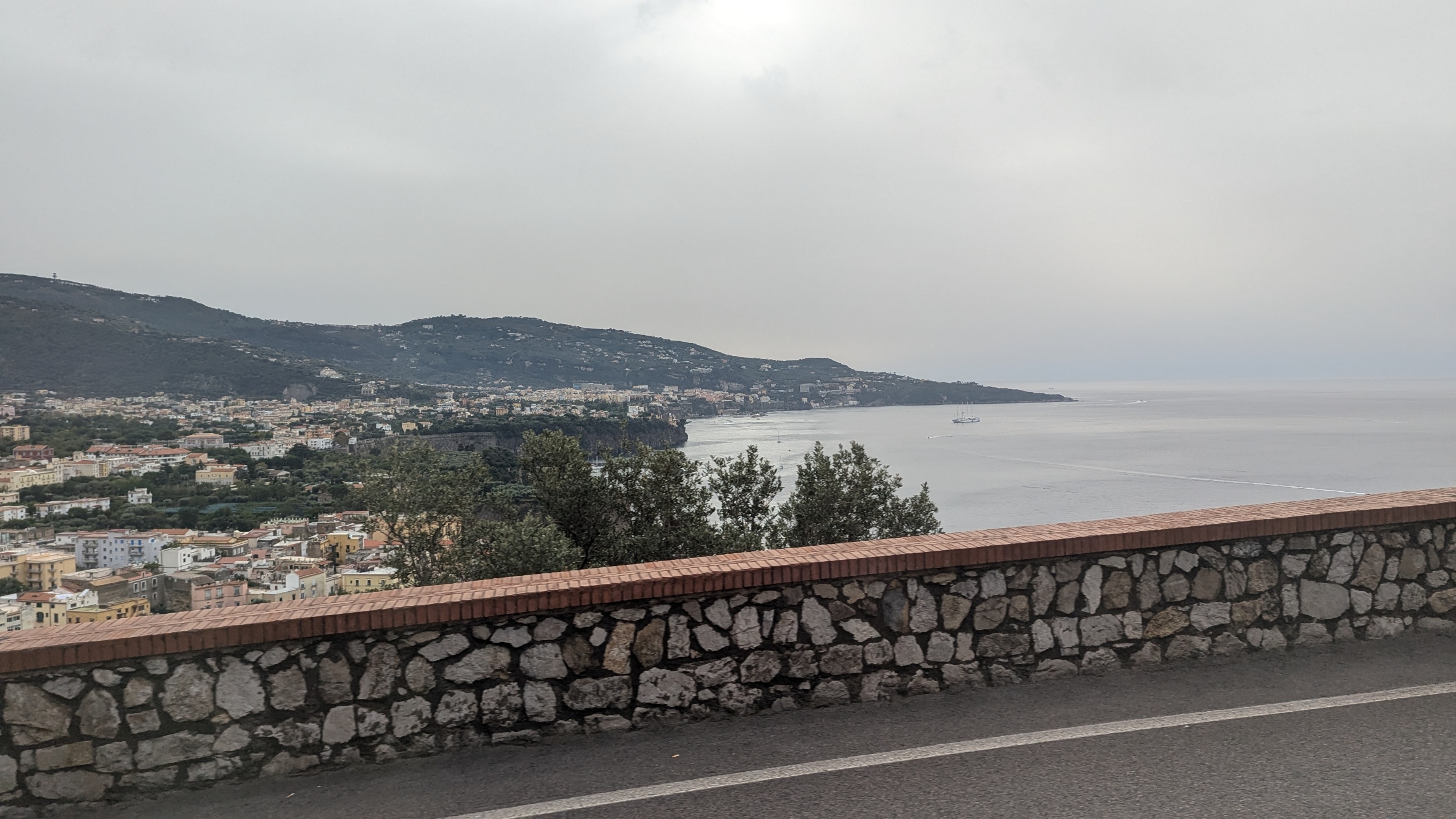



Positano
Positano is undeniably touristy – but thoroughly delightful in my opinion. The walks through the town are attractive, with domestic attributes as well as churches, glimpses of the ocean from the heights, and beach walks, ocean side eateries and picturesque ceramics amongst the stonework. The care for cats, although not as wholehearted as on Capri, is a lovely feature.





















Eating in Positano
Morning tea on the square was lovely – coffees came with a jug of milk and the pastries were delicious. Lunch was close to the beach, but not right on the beach – after all the claim that Nureyev had a connection to the cafe was incentive enough. The meals were fresh, plentiful and served with pleasant smiles.









Trip back up the mountain in traffic jam – narrow road, parked cars and us looking down to wither cars that risked being scraped or a steep incline.
Eventually the bus started moving at a brisker pace!








Capri will be covered in the next post, together with Naples – the end of our Amalfi Coast experience.
 Robin's Room