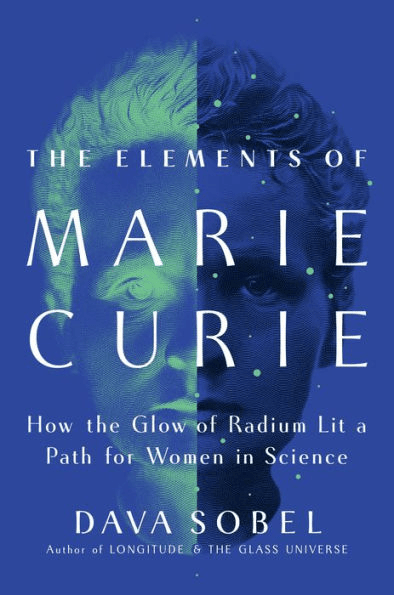
Dava Sobel The Elements of Marie Curie How the Glow of Radium Lit a Path for Women in Science Grove Atlantic | Atlantic Monthly Press, October 2024.
Thank you, NetGalley, for providing me with this uncorrected proof for review.
The Marie Curie who emerges from this book would appreciate the way in which it is organised to give other women status in the unique scientific world she created. She would also be pleased with the position given her husband. That her scientific mind and ambitions were intertwined so convincingly with affection for her family and delight in partnership is a theme which gives this work a warmth and depth that is striking. Continuing the pattern in which scientific women are given status is the connection made with the elements which provide the headings for each chapter.
The preface, Formula for an Icon: Marie Curie 1867-1934, combines the outline of Marie Curie’s story as is to be expected. However, early on Sobel demonstrates her commitment to illuminating the vagaries of the sexist world in which this icon of a sphere seen as masculine excelled. The Nobel Prize medals, of which she won two is described in its emphasis on the perceived difference between the feminine and masculine spheres. Cleverly she moves on to the impact of the first prize on the Curie’s lives – no dwelling on her assertion, just a fine depiction of the world in which Cuire moved, and then the practicalities that embraced her, one of the few, equally. See Books: Reviews for the complete review.
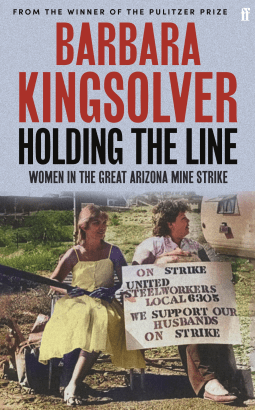
Barbara Kingsolver, Holding the Line Women in the Great Arizona Mine Strike, Faber and Faber Ltd, October 2024.
Thank you, NetGalley, for providing me with this uncorrected proof for review.
Barbara Kingsolver has written a non-fiction book that echoes the skill she demonstrates in her fiction. The preface is a wonderful insight into the author as well as her subject. Kingsolver’s future as a writer of impactful fiction is one of the joys to realise through this, one of her early works as a journalist. Here, we see the woman who has written so masterfully about issues while drawing the reader into a fictional world from which it is difficult to emerge unchallenged. Now, to the content of this non-fiction example of her work. The women portrayed in Holding the Line are engaging and confronting, at the same time as demanding awareness and empathy. They provide a valuable history of women’s contribution to this particular strike, while presenting a thoughtful understanding of the way in which so many women, their contributions unrecorded, may have contributed to industrial action.
Kingsolver sees the women’s stories as promoting hope, that they recognised that the goal should be seeking justice rather than revenge and their contribution to demonstrating that people who see themselves as ordinary can scale impregnable heights. She also has a word of warning – no-one is necessarily exempt from what happened during these women’s fight for justice. See Books: Reviews for the complete review.

George Orwell and The Founding Fathers

Dec 03, 2024
You may want to prepare yourself for the coming Trump administration by rereading George Orwell’s “1984” if it’s been a while. I know many of you, like me, read it at the beginning of Trump’s first term in office. For me, it was right after Kellyanne Conway coined the term “alternative facts” in response to Trump’s lies about the size of his inauguration day crowd. Trump’s first press secretary Sean Spicer (who only lasted six months in the job), quickly backed up Trump’s obvious lie.

The parallel to Orwell’s book, which is about the manipulation of truth and facts as an aid to government control in a totalitarian society, was unavoidable. In “1984,” the dictator, Big Brother, rules through his cult of personality, perpetuated by the “Thought Police.” Independent thinking is no longer allowed. 2+2=5. Trump’s crowd size, we were told, was enormous—and his followers accepted it despite the proof before their own eyes that he was lying. The satire hit presciently close to the mark.
“For, after all, how do we know that two and two make four? Or that the force of gravity works? Or that the past is unchangeable? If both the past and the external world exist only in the mind, and if the mind itself is controllable – what then?”
What happens when people give up the right to think for themselves? 1984. It’s a warning, not just an instruction manual for would-be dictators.
“Every record has been destroyed or falsified, every book rewritten, every picture has been repainted, every statue and street building has been renamed, every date has been altered. And the process is continuing day by day and minute by minute. History has stopped. Nothing exists except an endless present in which the Party is always right.”
In July of this year, Kevin Roberts, president of the Heritage Foundation, a conservative think tank, and one of the chief architects of Project 2025, proudly announced on Steve Bannon’s podcast, “We are in the process of the second American Revolution, which will remain bloodless if the left allows it to be.” What happened after that stunning pronouncement? Trump disclaimed all knowledge of Project 2025. Within 24 hours, if even that, the news cycle moved on. Four months later, Americans returned Donald Trump to office.
“One does not establish a dictatorship in order to safeguard a revolution; one makes the revolution in order to establish the dictatorship.”
That is how it begins. Of course, as in 2016, saying this out loud provokes dismissive laughter and claims that anyone concerned about dictatorship is being dramatic. “It’s about the price of gas and groceries,” people—even those who didn’t vote for Trump—say. Now that the final vote tallies are in and we know how slim Trump’s margins were, it’s become popular to point out that he doesn’t have a mandate—as though that matters to Trump.
“And if all others accepted the lie which the Party imposed—if all records told the same tale—then the lie passed into history and became truth. ‘Who controls the past’ ran the Party slogan, ‘controls the future: who controls the present controls the past.’”
“In a way, the world−view of the Party imposed itself most successfully on people incapable of understanding it. They could be made to accept the most flagrant violations of reality, because they never fully grasped the enormity of what was demanded of them, and were not sufficiently interested in public events to notice what was happening. By lack of understanding they remained sane. They simply swallowed everything, and what they swallowed did them no harm, because it left no residue behind, just as a grain of corn will pass undigested through the body of a bird.”
How did people like Orwell and Margaret Atwood, who wrote “The Handmaid’s Tale,” get it so right from a distance of years? Atwood has even said she stopped writing “The Handmaids Tale” repeatedly because it seemed “too far-fetched.” But the Founding Fathers saw this possibility too, and they tried to create a system of government that would resist a slide into monarchy or dictatorship.
To encourage the adoption of the new Constitution, Alexander Hamilton, James Madison, and John Jay wrote The Federalist Papers, 85 essays, from 1787 to 1788. They defended their vision of government against claims made by anti-federalists that the country was too big, that a president would become a dictator, and that a national army would crush any possibility of dissent.
To protect against those prospects, Madison argued in Federalist No. 10 that the system of government under consideration contained checks and balances to protect individual liberties. The legislative branch and the judicial branch would act as checks on the executive, and there would be a balance of power shared between states and the federal government.
Those are the checks that Trump wants to undo, whether it is through the substantive plans contained in Project 2025 that consolidate and centralize the powers of government in the presidency, or nominees for key positions in the cabinet whose loyalty is to Trump, not the Constitution.
Monday afternoon, Senators Blumenthal and Warren wrote to President Biden, urging him to take action designed to prevent, or at least call attention to, potential efforts by Donald Trump to quell domestic protest using the military, precisely the type of thing the Founding Fathers were concerned about.

“We write to urge you to issue a policy directive that prohibits the mobilization of active duty military or federalizing National Guard personnel to be deployed against their fellow Americans unless specifically authorized. The Posse Comitatus Act ‘outlaws the willful use of any part of the Armed Forces to execute the law unless expressly authorized by the Constitution or an act of Congress.’”
The senators point to the narrow exception to the prohibition against using the military for domestic law enforcement under the Insurrection Act, which, they explain, “allows the President to deploy military personnel within U.S. borders under narrow circumstances of insurrection, rebellion, or extreme civil unrest,” but even then, use of the military is “strictly” limited “to emergency needs” and the purpose behind its use must be reestablishing civilian control as soon as possible. The senators asked President Biden to issue guidance that would clarify the Insurrection Act can only be used when state or local authorities are overwhelmed and that even then, the President “must consult with Congress to the maximum extent practicable before exercising this authority, as well as transmit to the Federal Register the legal authorities.”
Why are Senators Warren and Blumenthal writing this letter, and why are they writing it now? They explain that it’s because “President-elect Trump’s comments have indicated he could invoke the Insurrection Act ‘on his first day in office.’ He has called his political opponents ‘the enemy from within’ and said they ‘should be very easily handled by — if necessary, by National Guard, or if really necessary, by the military.’’ They point out that Vice President-elect J.D. Vance said that Trump would use force against Americans when asked about it and refer back to Trump’s efforts to use the military against protestors during his first term in office. They are concerned that members of the military need guidance to understand that despite the Supreme Court’s presidential immunity decision, there are still limits on presidential power because, “unaddressed, any ambiguity on the lawful use of military force, coupled with President-elect Trump’s demonstrated intent to utilize the military in such dangerous and unprecedented ways, may prove to be devastating.”
It is shocking, but not surprising, that an effort to educate the public and members of the military about the limits on a president’s use of the Insurrection Act is necessary as we approach Trump 2.0. But even without in-depth understanding of the law, we all know that in this country, the military cannot be turned loose on citizens who have assembled to exercise their First Amendment rights. If Trump does that, it may well be too late. The Senators are correct that every possible step must be taken to prevent it from happening in advance.
Back to “1984”: “In the end the Party would announce that two and two made five, and you would have to believe it. It was inevitable that they should make that claim sooner or later: the logic of their position demanded it. Not merely the validity of experience, but the very existence of external reality, was tacitly denied by their philosophy. The heresy of heresies was common sense. And what was terrifying was not that they would kill you for thinking otherwise, but that they might be right. For, after all, how do we know that two and two make four? Or that the force of gravity works? Or that the past is unchangeable? If both the past and the external world exist only in the mind, and if the mind itself is controllable—what then?”
In other words, stay informed. That is our most fundamental duty as Americans right now. Don’t look away. Don’t hope it won’t happen. Educate yourself, and prepare for the days ahead. “Do not obey in advance,” Yale Professor Tim Snyder’s advice, has become something of a mantra these days. It rests on the premise that dictators demand obedience. If it is not given voluntarily, if there are protests, even completely peaceful and lawful ones—the right of assembly granted to us by the Constitution—the dictator will come at us with his military. As Atwood wrote, “Nothing changes instantaneously: in a gradually heating bathtub you’d be boiled to death before you knew it.” Let’s not be the ones who get boiled because they can’t be bothered to pay attention.
We’re in this together,
Joyce

The Week Ahead
December 1, 2024
Dec 02, 2024
This week, two important legal developments:
- First, there was the Sunday night announcement of President Biden’s decision to pardon his son Hunter. The cases against him are over.
- Second, the Supreme Court will hear oral argument this week in U.S. v. Skremetti, a case involving the right of transgender minors to receive gender affirming medical care. *
Hunter Biden
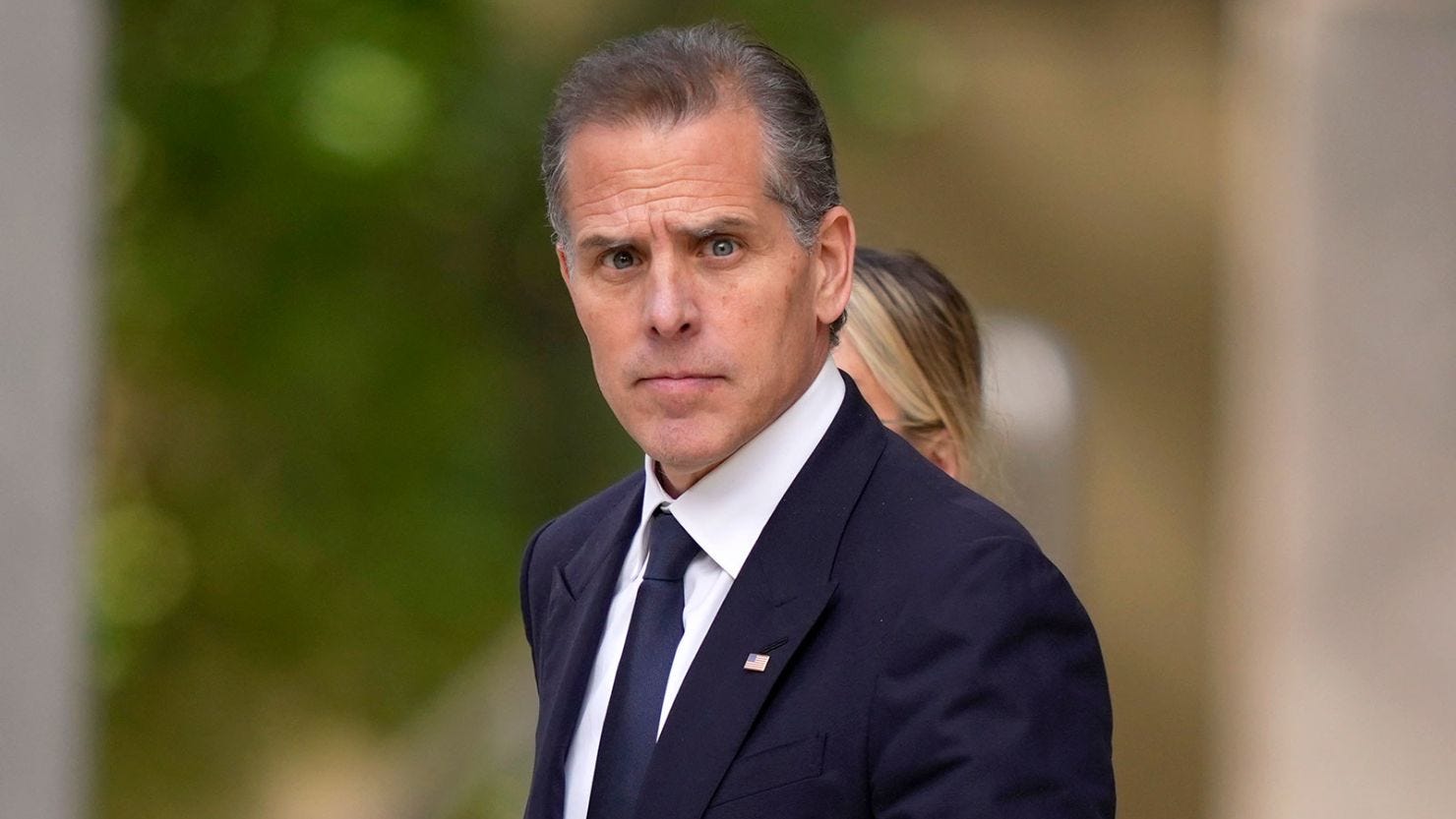
Instead of two sentencing hearings scheduled for later this month, Hunter Biden got a pardon. People have reacted strongly. On the one hand, people are concerned about a president issuing a pardon for his child, especially because Hunter Biden pled guilty to the tax case against him. On the other hand, people have expressed the belief the Joe Biden did the right thing and that the family has endured enough.
I come down closer to the latter side of that equation. The pardon process is supposed to be used to do justice. And this is justice. Hunter Biden would likely not have been charged on these facts if he was anyone else.
The gun charge is possession of a firearm by someone who is a user of or addicted to illegal drugs. Absent aggravating facts, like evidence the person is a danger to the community, this type of charge is not usually brought. It’s easy to understand why. Almost 10% of Americans struggle with drug addiction, and many more use drugs. Prosecuting every one of them would force the Justice Department to abandon far more serious cases. Hunter Biden possessed a gun briefly and never used it in connection with violent crime. He’s been in recovery for more than five years. It’s not the kind of case that gets charged if your name is John Smith.
The tax case involves amounts Hunter Biden acknowledged he owed but said he didn’t pay while he was in the grips of addiction. He pled guilty to the charges. While people who fail to pay taxes are frequently charged under the same provision used for Hunter Biden, the argument here is that given the extenuating circumstance of his addiction and his repayment of amounts owed plus interest and penalties, the prosecution was unwarranted. Hunter Biden’s lawyers argued persuasively that similarly situated cases were handled with administrative or civil penalties, not criminal prosecution. Again, the Justice Department doesn’t have unlimited resources, and they are reserved for the most serious cases—tax cheats who execute complicated schemes, cheat the public, and refuse to pay the amounts they owe. John Smith probably wouldn’t have been charged like Hunter Biden was.
No one loves the optics of a president pardoning his child, especially after he said he wouldn’t. But President Biden was in between the proverbial rock and a hard place, with sentencings in both the gun and the tax cases coming up later this month and the prospect of his son being at the mercy of Trump’s Justice Department after he had already been targeted. The Constitution gives the president a largely unrestricted pardon power. Article II, Section 2, Clause 1 provides that:
The President shall be Commander in Chief of the Army and Navy of the United States, and of the Militia of the several States, when called into the actual Service of the United States; he may require the Opinion, in writing, of the principal Officer in each of the executive Departments, upon any Subject relating to the Duties of their respective Offices, and he shall have Power to grant Reprieves and Pardons for Offences against the United States, except in Cases of Impeachment.
Joe Biden exercised that power; he did not abuse it. He did not accept a bribe in exchange for a pardon. He has not tried to pardon himself. He issued a pardon he was entitled to give. But it is a departure for this president, who has been so careful to avoid even the appearance of impropriety and who had said he would not pardon his son, to reverse course. That is reason to pause and reflect on this pardon, but Biden seems to have taken the least bad option, given the situation.
Virtually every president issues pardons that are questioned. Bill Clinton pardoned his brother, Roger, after he completed a sentence for trafficking cocaine. Donald Trump famously pardoned or granted clemency to a number of people, including his son-in-law’s father and future ambassador to France, Charles Kushner, Roger Stone, who was accused of interfering in an investigation that involved Trump himself, Paul Manfort, Trump’s former campaign manager, and former General Michael Flynn. Like the younger Biden, Flynn pled guilty to the charges before he received a pardon.
But it’s not a particularly productive exercise to compare the Hunter Biden pardon to those that have and will be issued by Donald Trump. Joe Biden operates within the law. Donald Trump has explicitly said he will use the criminal justice system for revenge. That has to have weighed heavily on President Biden’s mind, knowing that his son would be in the control of a man who has used him to try and score political points for years. Trump could have ordered more charges against Hunter Biden absent the pardon, or even made his life in federal prison extremely difficult—he would have been imprisoned during a Trump Administration in facilities under Trump’s control. President Biden’s decision is justifiable in those circumstances.
In his statement accompanying the pardon, President Biden wrote, “I have watched my son being selectively, and unfairly, prosecuted. Without aggravating factors like use in a crime, multiple purchases, or buying a weapon as a straw purchaser, people are almost never brought to trial on felony charges solely for how they filled out a gun form. Those who were late paying their taxes because of serious addictions, but paid them back subsequently with interest and penalties, are typically given non-criminal resolutions. It is clear that Hunter was treated differently.” All of that is spot on.
He also writes, “No reasonable person who looks at the facts of Hunter’s cases can reach any other conclusion than Hunter was singled out only because he is my son – and that is wrong. There has been an effort to break Hunter – who has been five and a half years sober, even in the face of unrelenting attacks and selective prosecution. In trying to break Hunter, they’ve tried to break me – and there’s no reason to believe it will stop here. Enough is enough.”
With his typical candor, Biden writes that he believes in telling the American people the truth because he believes they are fair-minded. He writes, “Here’s the truth: I believe in the justice system, but as I have wrestled with this, I also believe raw politics has infected this process and it led to a miscarriage of justice…I hope Americans will understand why a father and a President would come to this decision.” I do understand, particularly since, in my judgment, these cases would not have been indicted absent a political motivation to attack a political rival’s son. Look at how quickly MAGA dropped its focus on Hunter Biden once Joe Biden left the ticket.
Just because the trial judges didn’t find selective/vindictive prosecution to the high legal standard required before they can dismiss a case when Hunter Biden’s attorney asked them to do so doesn’t mean the prosecutions weren’t actually tainted by political animus. My office would not have brought these charges, and other former federal prosecutors feel the same way. Former Attorney General Eric Holder tweeted, “Here’s the reality. No US Atty would have charged this case given the underlying facts.” Barb McQuade posted on BlueSky, “Pardon of Hunter Biden is in the best interests of justice. Based on the facts, most federal prosecutors would have declined to charge him.” Former Delaware U.S. Attorney Charlie Oberley, who joined us for “Five Questions” in September 2023 when Hunter Biden’s plea deal fell apart in court said he would not have indicted the case.
There is certain to be political fallout. Trump will use the pardon to justify anything he does down the road. But the reality is, whatever he is going to do—blanket pardons for January 6 defendants and perhaps every single person in federal prison anywhere who is a supporter of his—he would have done anyhow. Charges of politics and corruption will fly for the next few days. But the reality is that Biden lawfully exercised the powers given to him by the Constitution and whether people approve or not, he was within his rights to do so.
*I have not included the second part of this article.
Amalfi Coast Trip
Bus trip to catch the ferry to Capri – an early start




Boat trip to Capri




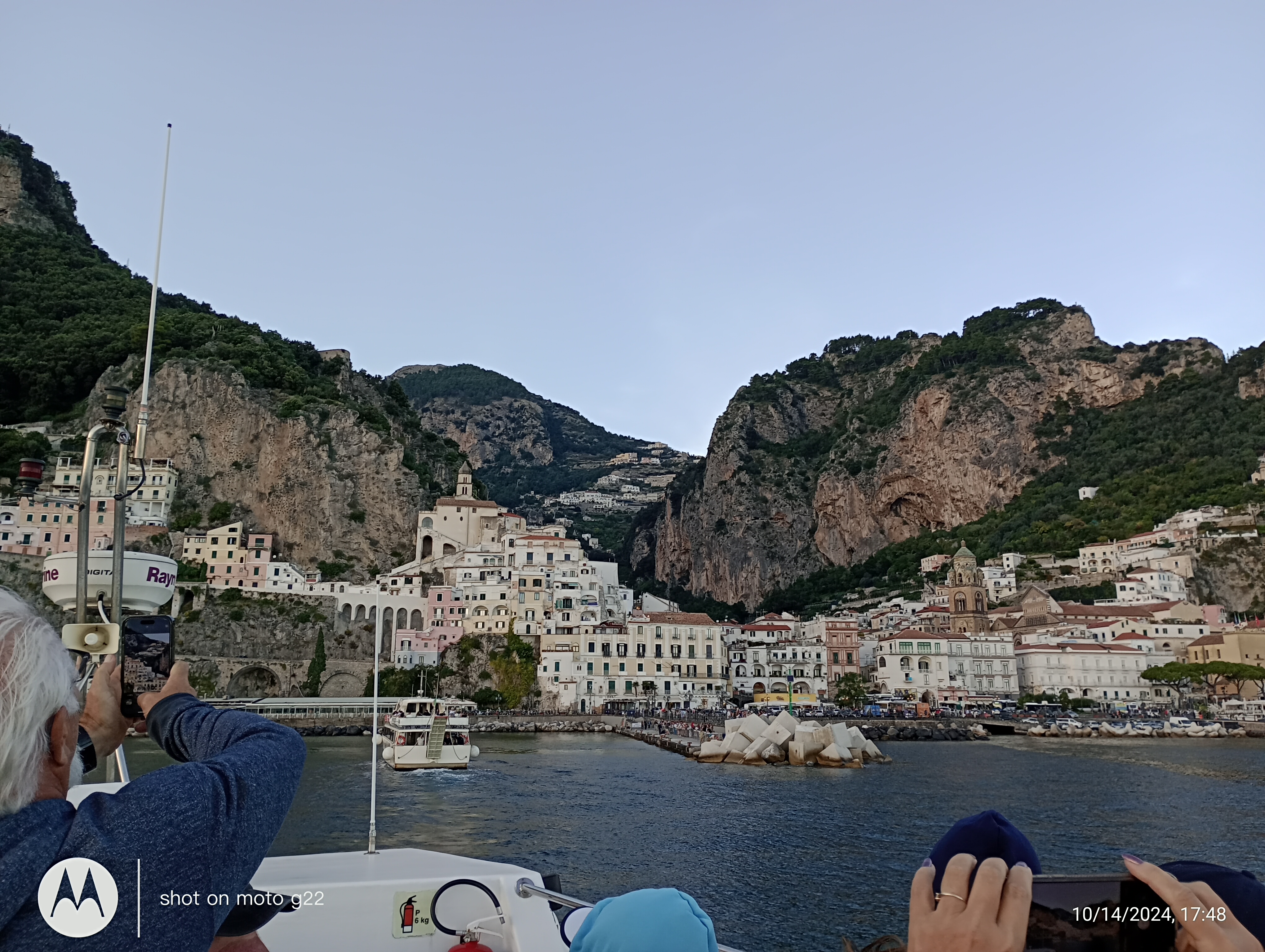


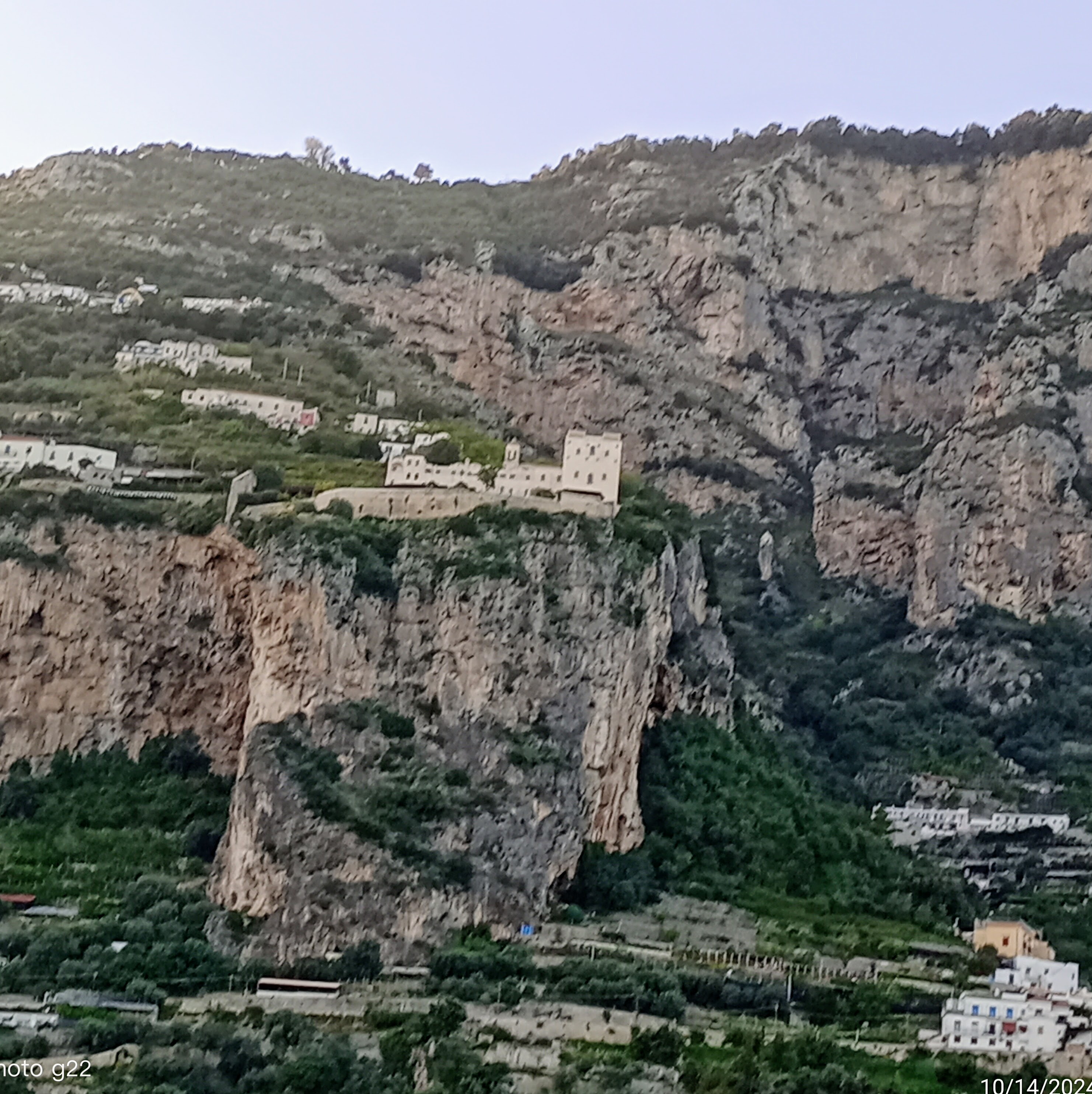
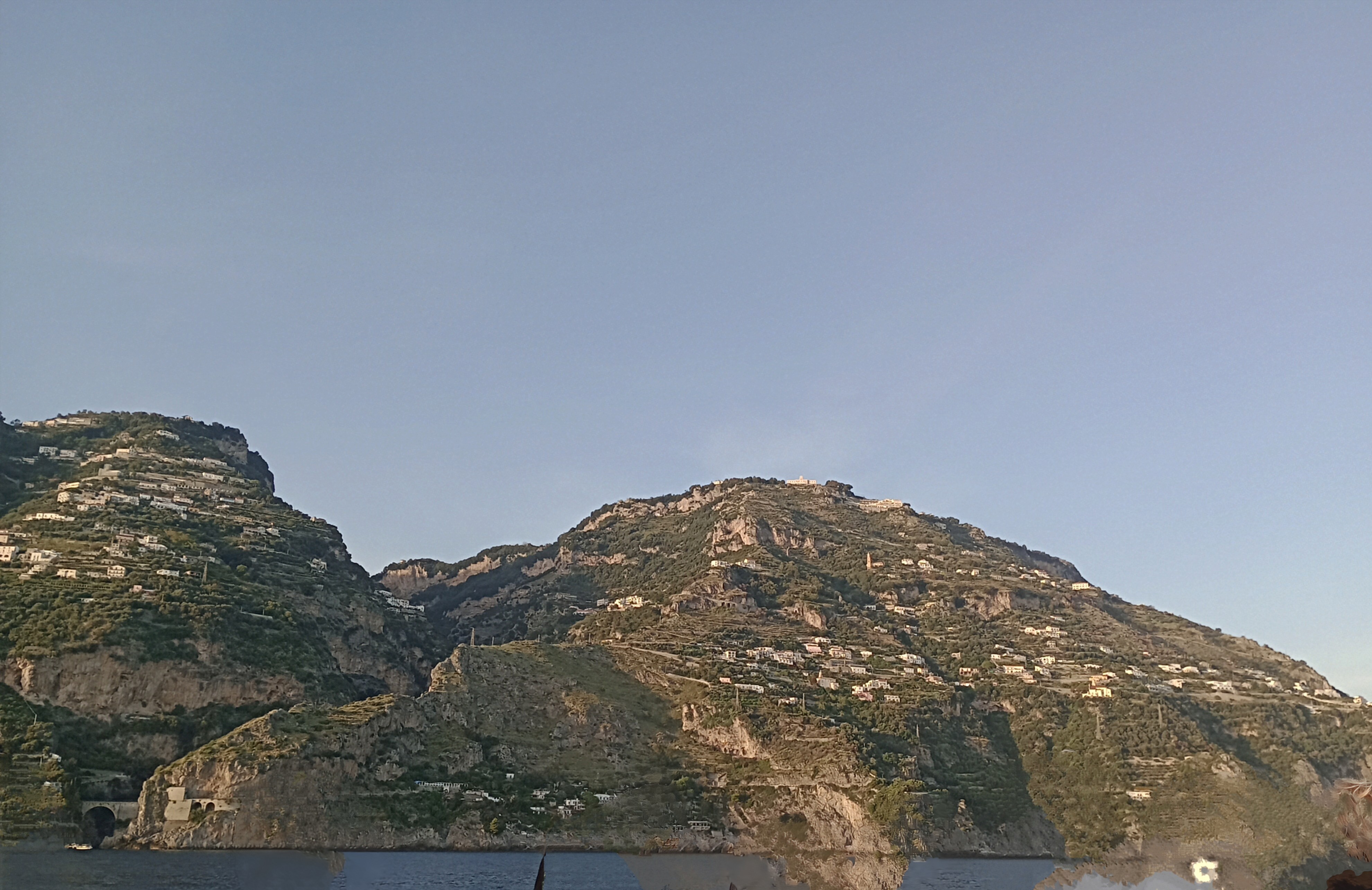
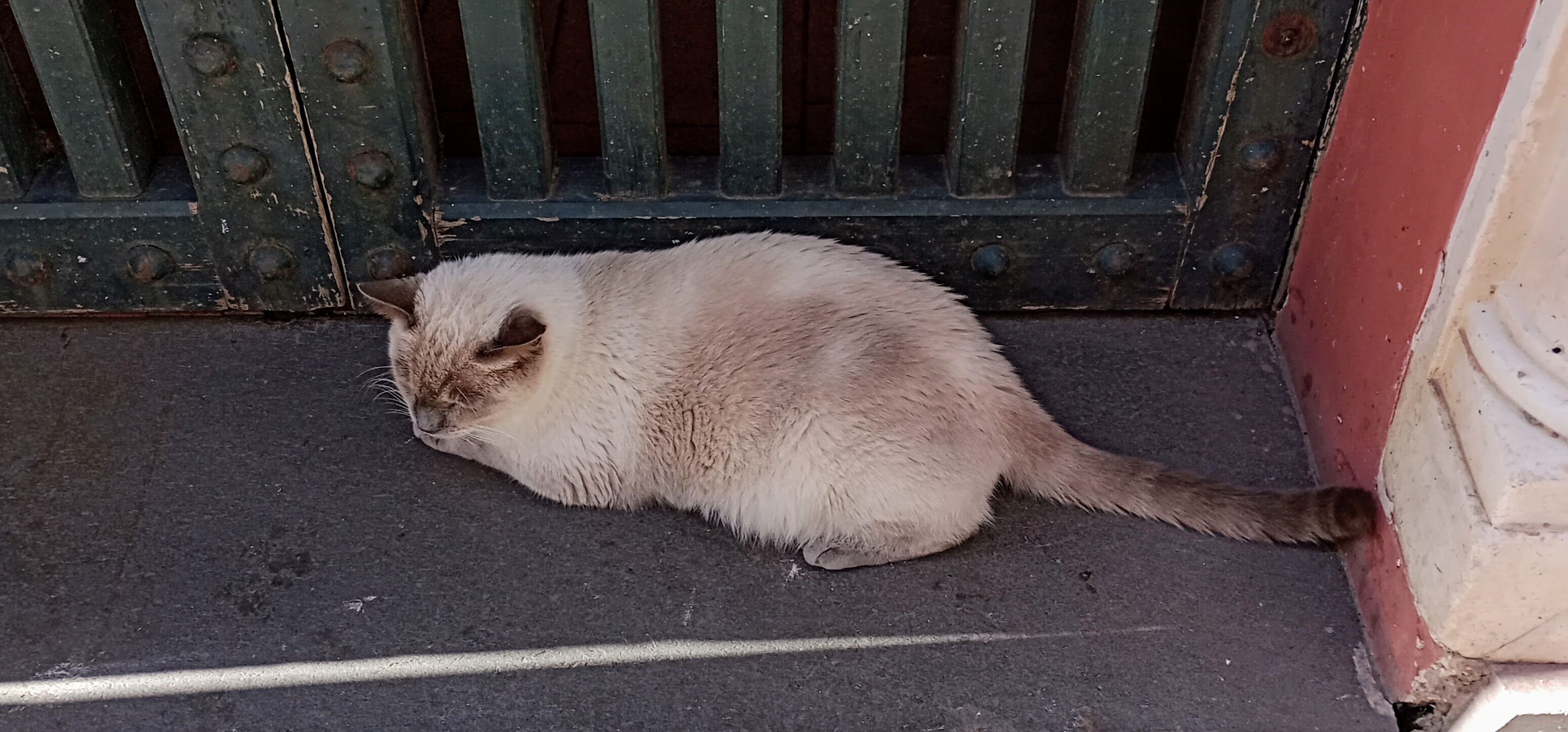
Capri and care for cats

Walking around Capri
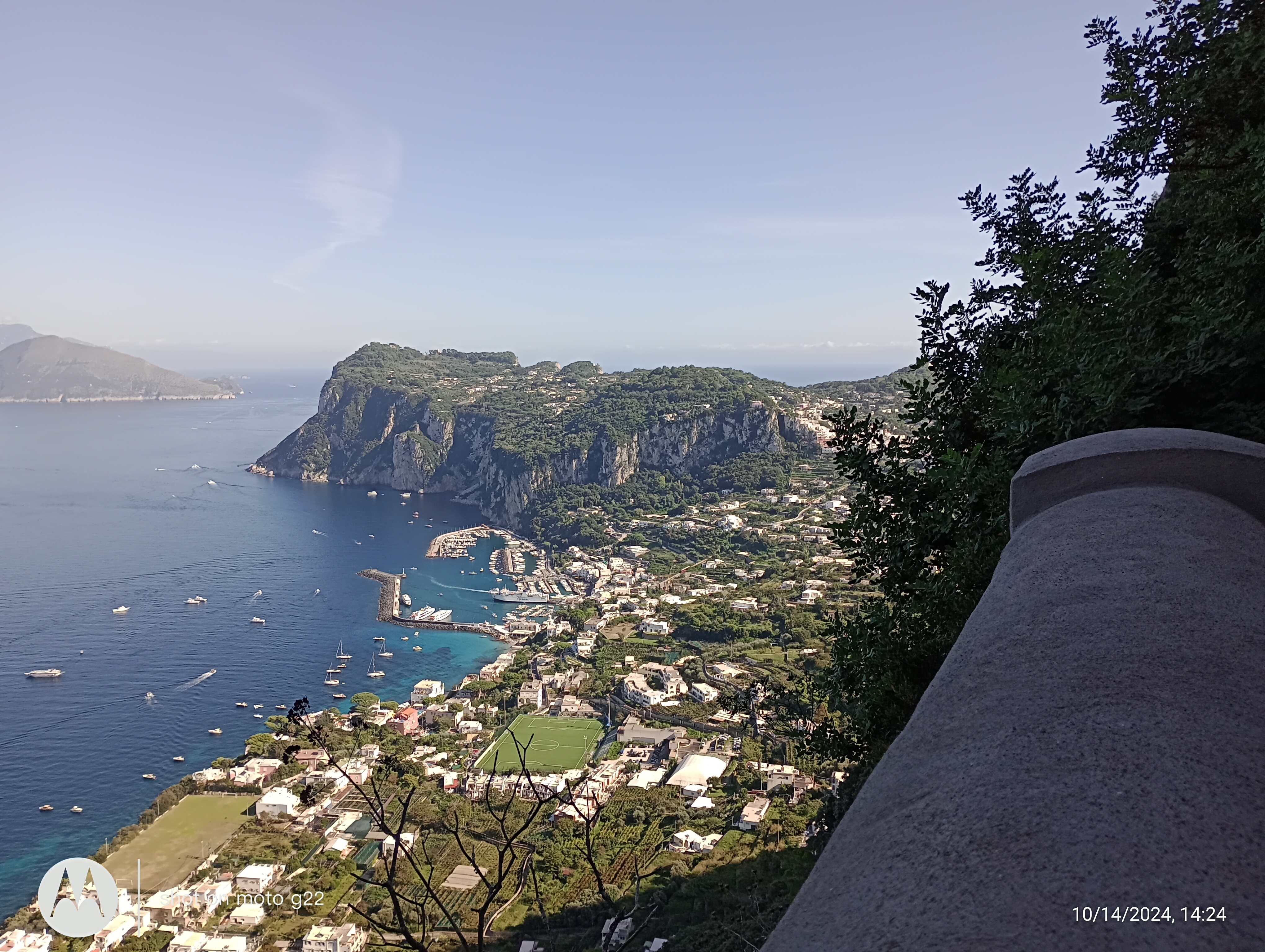
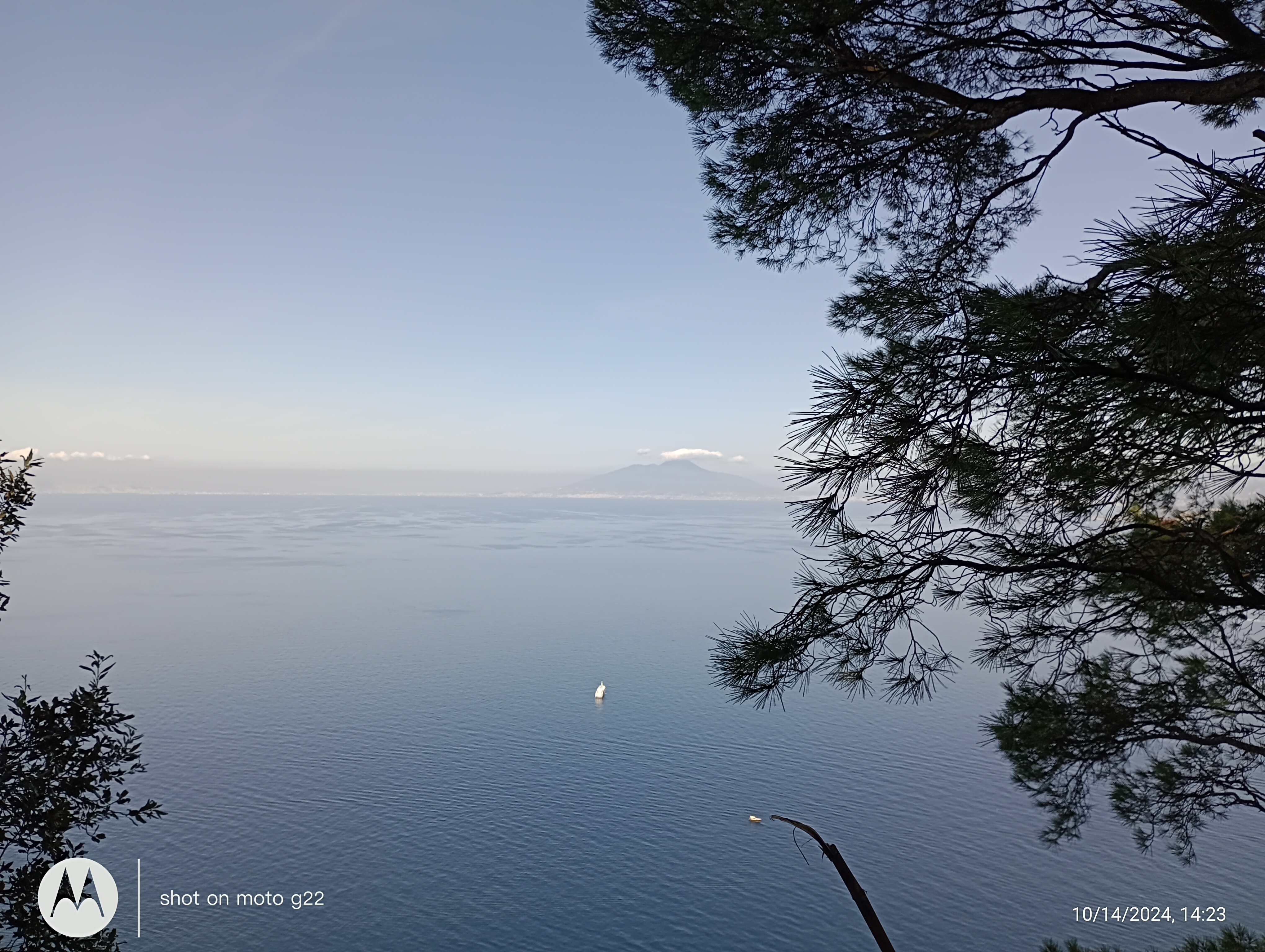
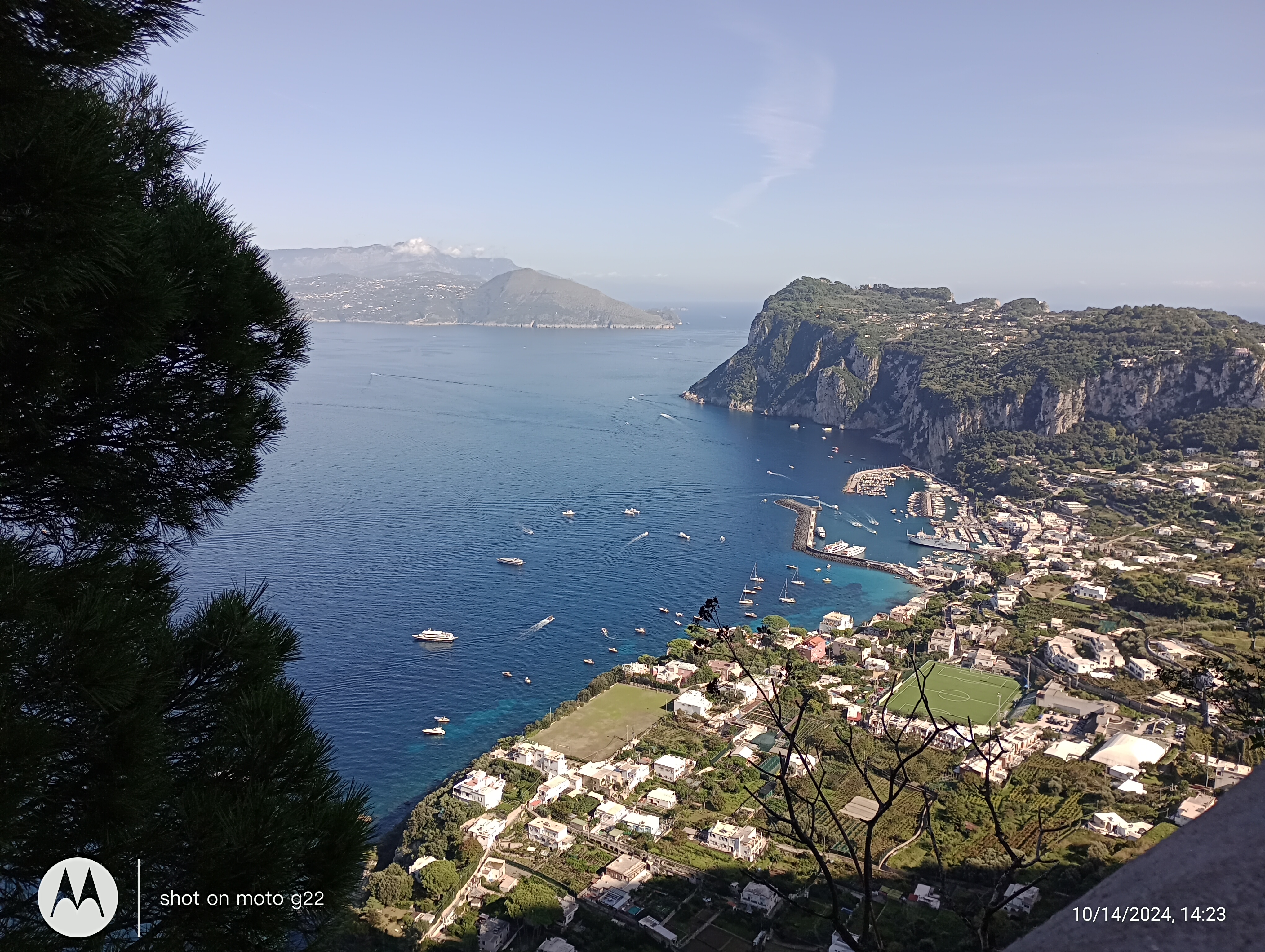
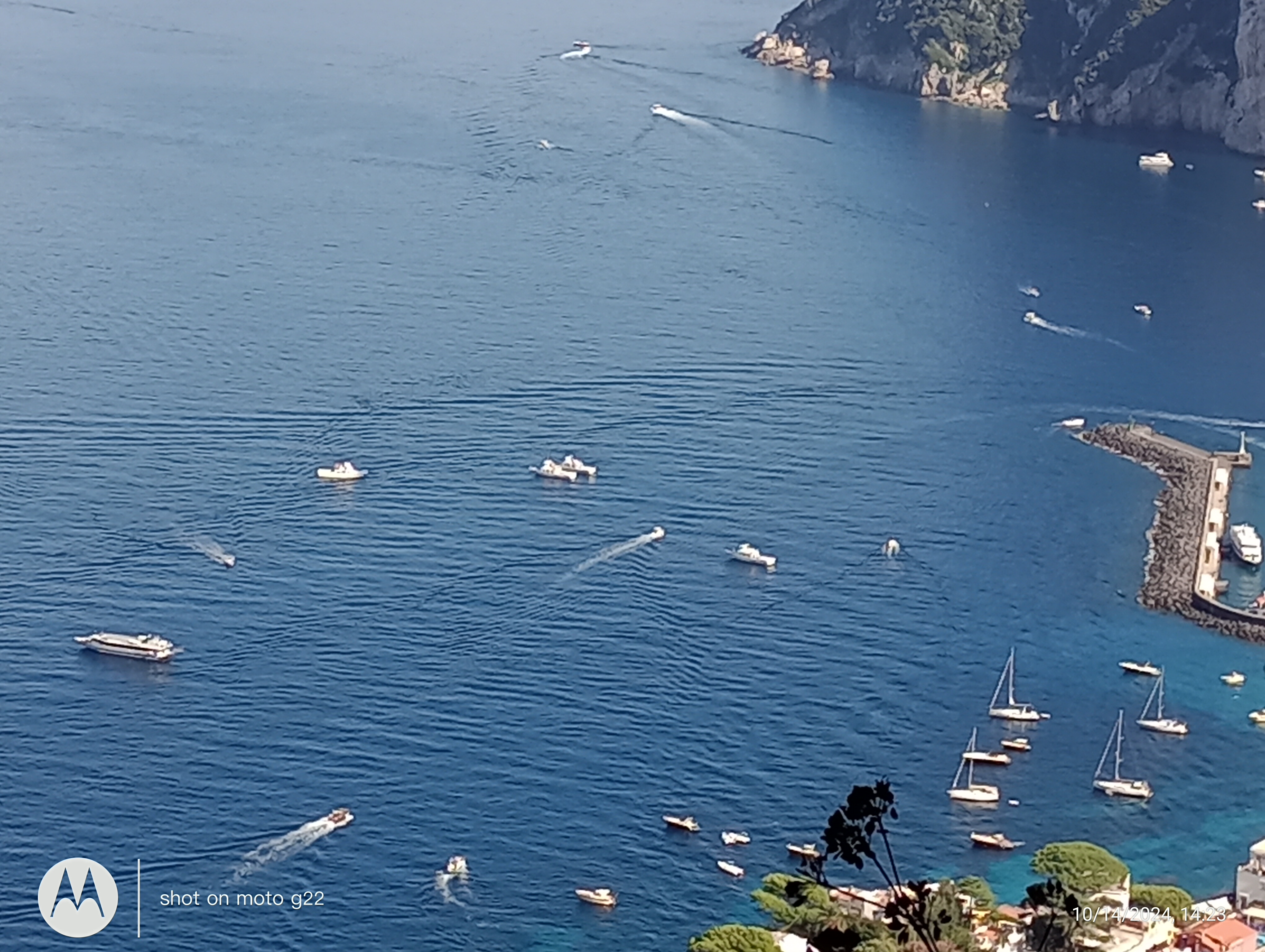


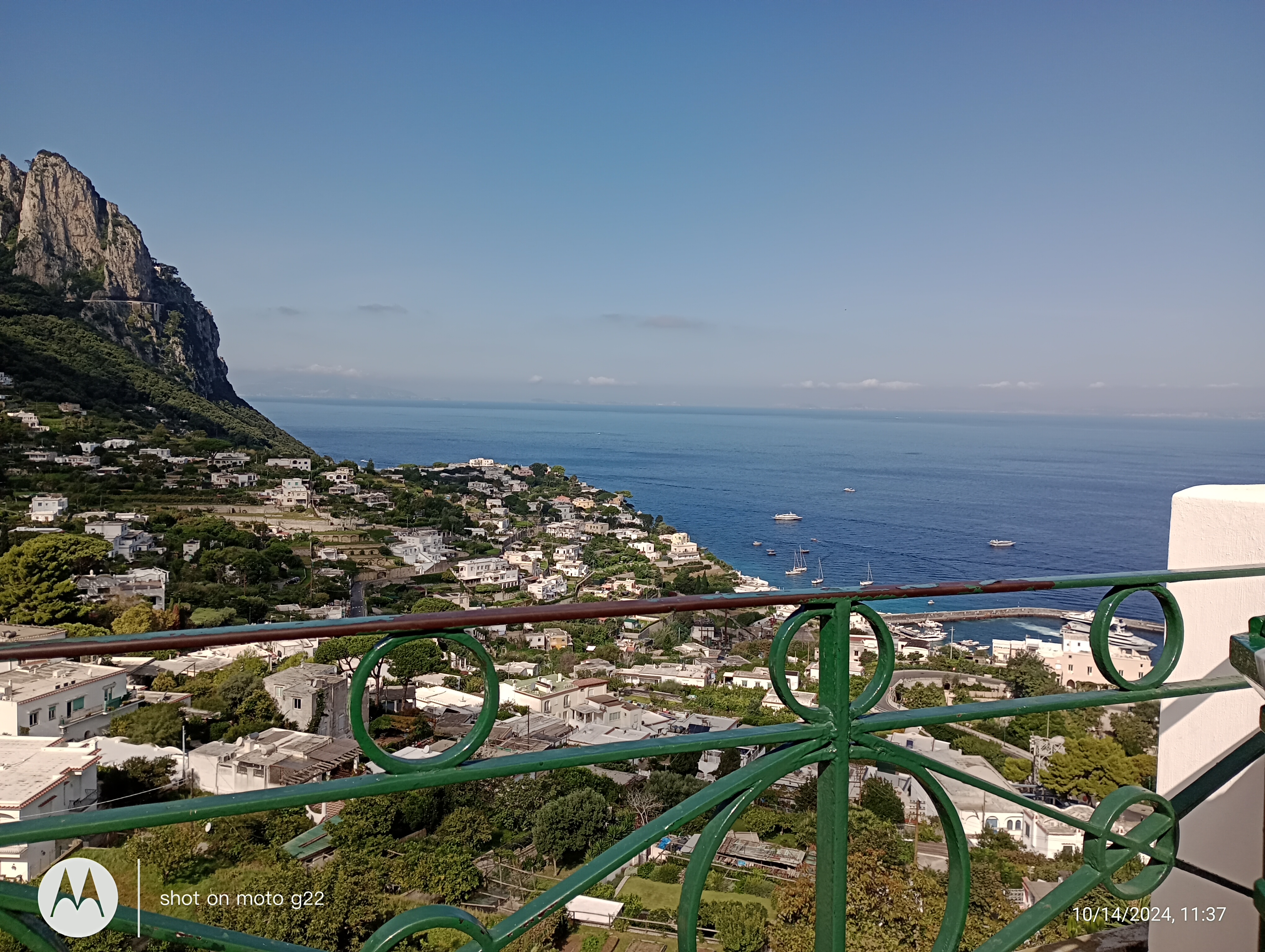

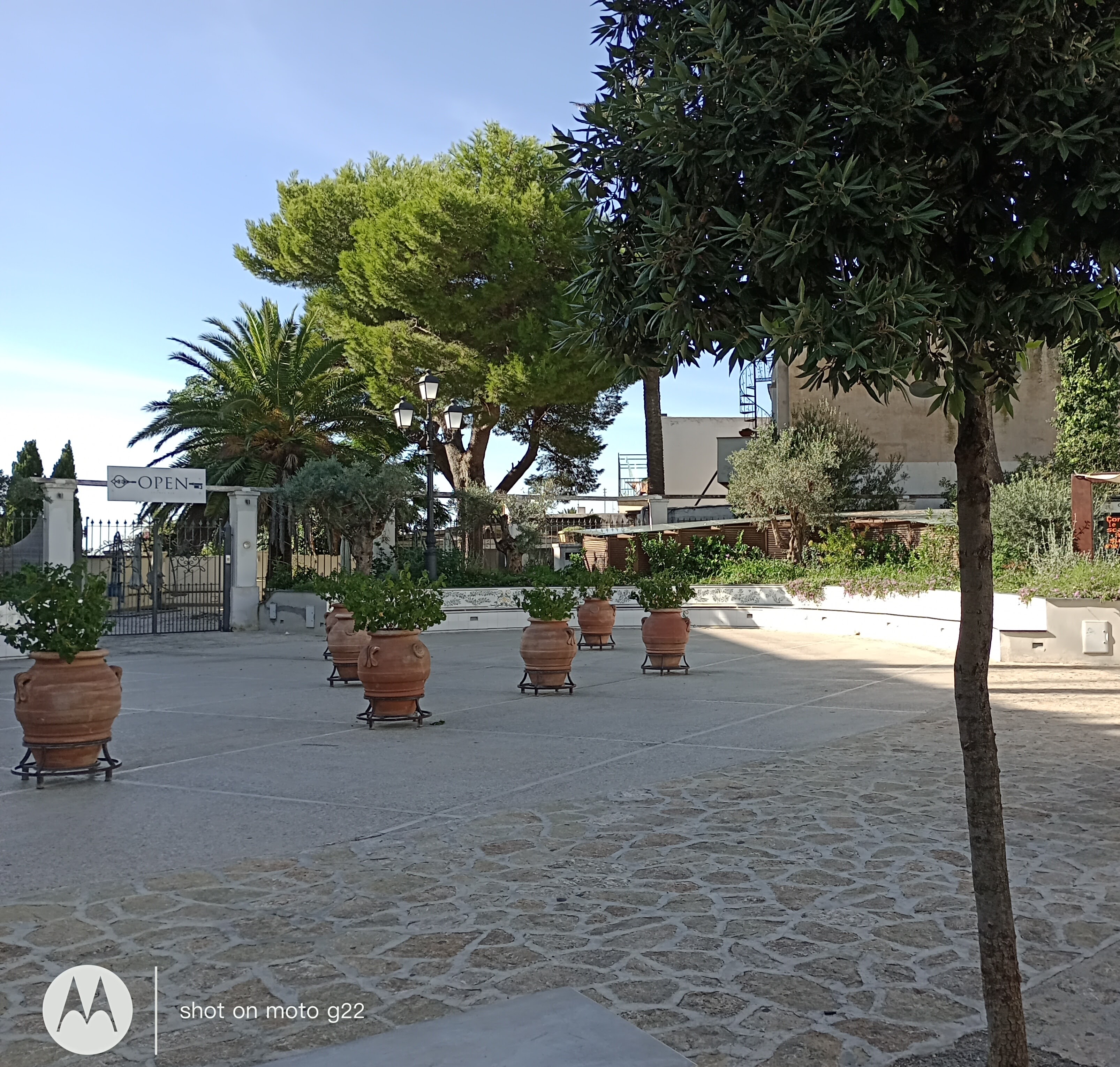

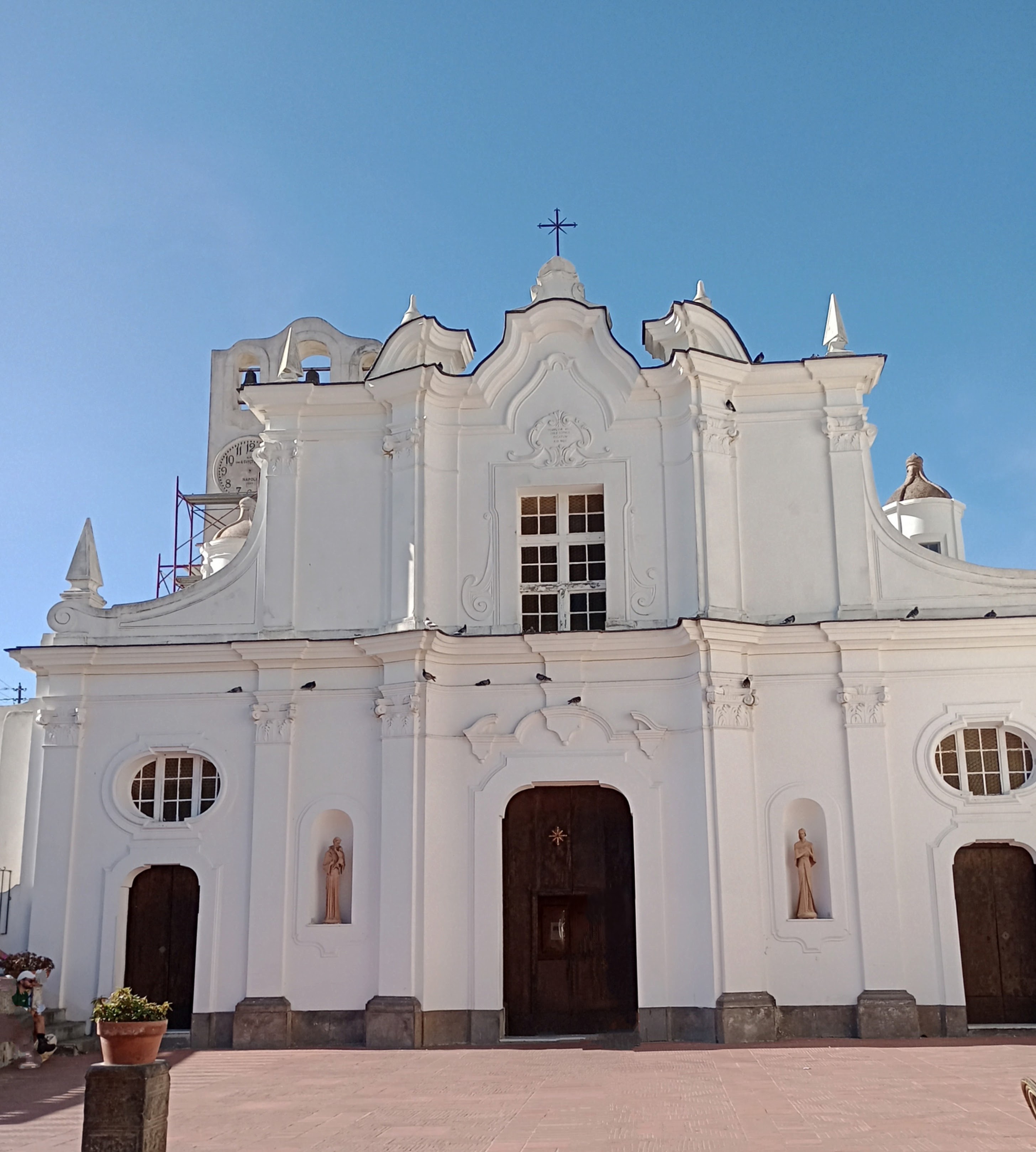
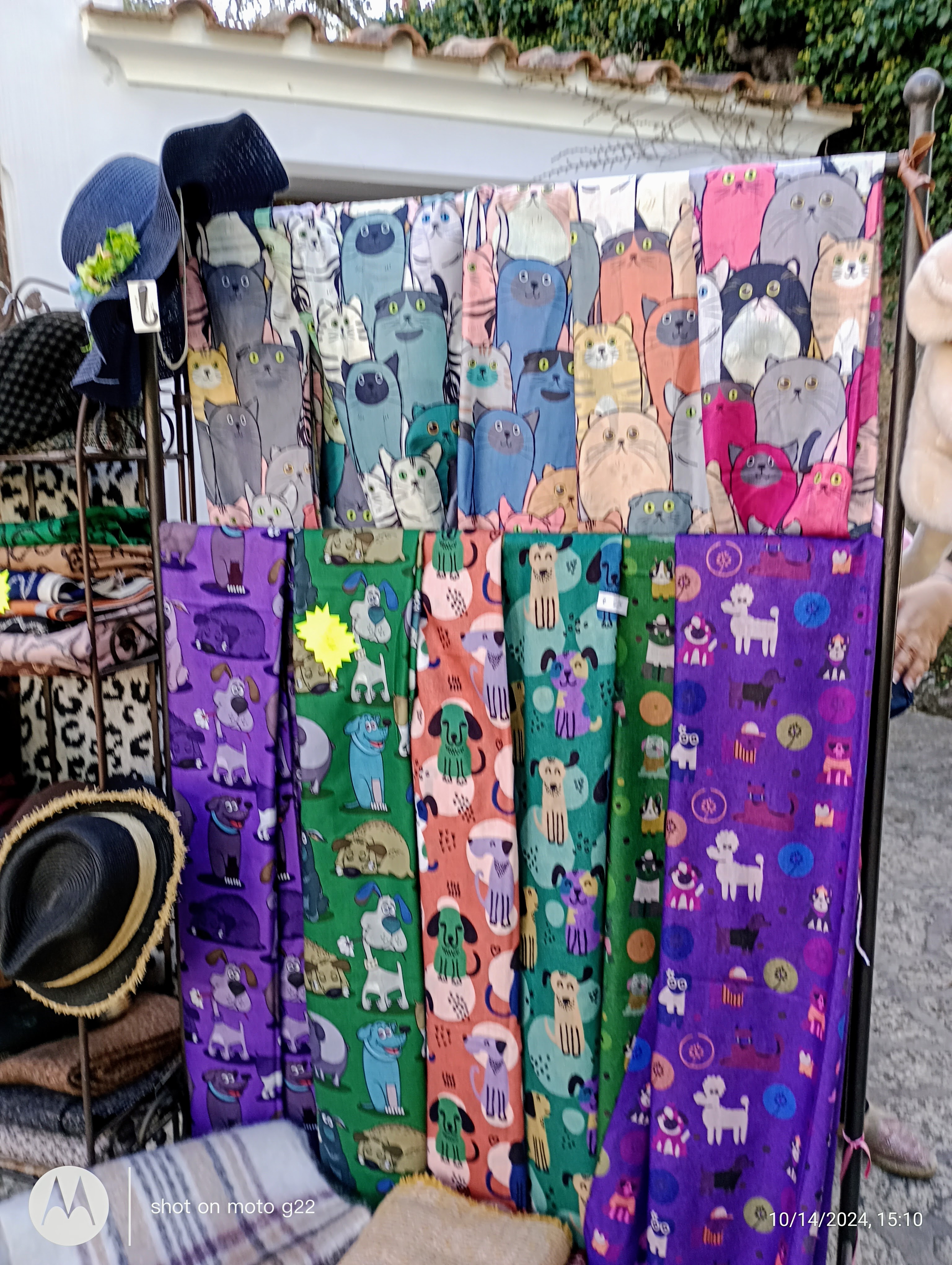

Bus trip returning to the village, Bomerano



Havenist is a Western Australian publication which I thoroughly enjoy receiving online. Following is a feature about a Western Australian artist. It is exciting to see this work. However, the regular articles and photographs of Western Australian architecture and houses gives the magazine its particular edge.
STORY FEATURED IN HAVENIST ISSUE #6 <hello@havenist.com.au>Havenist
Visual Geometry
Artist Miik Green describes his work as both reflexive and reactive, mirroring his family background in mathematics.
In partnership with LINTON & KAY GALLERIES • Interview ELIZABETH CLARKE • Imagery JODY D’ARCY


“I view each painting as an experiment rather than anything calculated, and that’s the way I prefer it.” —Miik Green, WA Artist
Describe your childhood. I moved from Albany, Western Australia, to Canada when my father decided to study to be a reverend. My three sisters and I travelled the world twice – we each got to pick a country to visit. When we arrived back in Australia, I was awarded a scholarship to Kalamunda Senior High School for the gifted and talented program. It was called ‘Special Art’, and is one reason I still think I’m special.
How would you describe your work being seen for the first time? It’s work you need to see in person. Screen and print don’t do justice to the depth and reflective (and reflexive) qualities of the glossy surfaces. When you stand in front of these works, your image and the image of those around you wax and wane; you’re part of it. Often the paintings appear like landscapes viewed from above, alternate seascapes, or contain a gradient of sunrises or sunsets.
How have your life experiences influenced your aesthetic style? Completing a PhD had the biggest impact on my work. I completed my written work in 2014, following years of integrating my own practice, researching the field and also rationalising the ideas behind my sculptural works and paintings. During this time, I not only had to consider my work (studio and academic) from various perspectives but also the philosophy that underpinned my making and processes. If I could go back and do it all again, I would.
What materials do you use to create your art? I use a mix of resins, chemicals and pigments. These combinations often dictate what happens in the surface, whether a blending of opposing colours or highlights containing pigments that delineate. I’m also always looking for new materials and substances that allow the reactions I’m searching for.
What is the process of creating your art? I pour sections of colour onto large panels of aluminium and inject them back into the artwork. This process sets up a material reaction, and the outcome of the process forms the work. Once the resin sets, the forms in the painting are sealed in motion. I open the studio doors 48 hours later to view the results. It’s always surprising that a pinpoint injection can become a tennis-ball sized bloom.
How have you built trust in your process? I trust that I’ll always be surprised with the results. I view each painting as an experiment rather than anything calculated, and that’s the way I prefer it. There are certainly elements of the process that require planning and design, but the outcome of that more deliberate stage changes each time.
Which stage of creating artwork do you spend the most time on? I spend a lot of time planning, specifically for in-situ sculptures. A few years ago, for example, when the Ritz-Carlton [hotel] was still in the project phase, I was commissioned to create a series of wall-based works for their restaurant on level 1. Most of the time spent on that project was figuring out how my pieces would present in the environment and react within that space. I love workshopping ideas, discussing new possibilities of traditional materials with fabricators and experimenting with new methods and ways of making.
Your work feels intuitive, not forced. Yes, I’m interested in the organic nature of the work. I start the process and the work emerges of its own accord. I rarely enter the studio with a pre-planned approach; it’s about the journey, not the destination! My role as the artist is to allow and enable the process, not control it if I can help it. In a way, this manner of making frees me up to enjoy the result as a bystander.

“I learn that I’m never truly in control of the result, and that each work is a step in a different direction.” —Miik Green, WA Artist

What did you have to develop, try or learn to create your unique style of artwork? I’ve carried out a lot of testing over the years and the goal was to create things that always looked fresh, evolving. There’s a great Frank Stella quote along the lines of ‘trying to create something that looks as good as it does in the can’. I read this as Stella trying to recreate the experience of, say, popping a fresh tin of paint and catching that first glimpse of glossy pigment. Resin traps the movement and evolution of the colours in my works, and testing various surfaces and epoxies over the years has led to the current series of works.
You are inspired by the microscopic aspects of nature and cross-disciplinary artistic collaborations that integrate science, mathematics, chemistry, biology and physics. Where does this interest stem from? Having a parent who was a maths teacher ruined mathematics for me early on (thanks, mum), yet I persisted in later life and embraced at least the visual side of mathematics. The recurring forms in the microscopic of fractals, diatoms and pollens have always been a source of inspiration for my work. The further you delve into these forms, the more you realise there is a boundless visual geometry. My role became about bringing these forms to life, not by recreating them but by finding ways to allow their emergence. I agree with art historian James Elkins, who likens art and science to a drunken conversation between the two.
Do you learn anything once you have completed a piece? I learn that I’m never truly in control of the result, and that each work is a step in a different direction. Some paintings feel like they mimic the cosmos, others are like something you might view through a microscope. I also learn more about the works when they’re exhibited together. As a collection they tell a specific story – one I’m not often privy to while working on the pieces individually.
What colours do you like to use? As many as I can get my hands on. I’m interested in the interaction of colour and material, and I use a wide range of pigments to explore this. I also love playing around with the finishes on my works. For example, the majority of the three-dimensional works have a matte finish, so they strike up a visual relationship with the 2D pieces. I also experimented with the powdercoating process for these sculptures, with some having a two-toned, metallic pearl sheen, some I feel I got carried away completing.
What sort of reaction does your art get? People are always surprised at the depth of the works, and the way the reflective property of the work allows them to become immersed in it. You can view my work in print or online, but the experience of standing in front of the piece, of becoming a part of it, is what viewers respond to.
Tell me about our cover art, a piece from your latest show, Convergence. My work is about the resistance and opposition in materials, and this painting is a good example of this process. There is a contagious vibrancy in the work; when I had it hanging in my studio, I’d walk in and smile at its exuberance.
How do you know when a work is finished? My work is designed to be engaged with, so I think of it as being finished (or fully realised) when it is in situ, reflecting its surrounds and the various elements of the new space.
What are you working on at this time? I’m working on a new set of large paintings that will be shown at Holly Hunt [design studios] in Miami and New York in late November. I’m also planning on a trip to Chicago to meet the Holly Hunt design team and talk possibilities and projects!
Follow Miik’s art @miikgreen
Cindy Lou back at 86
It is quite a while since I ate at 86, not because I did not want to, after all it is one of my favourite places, but travelling and its aftermath has kept me away. I was particularly pleased to have with me (as well as my usual companion) a young, sporting couple whose work involves physical labour. All these features made choosing five dishes, as well as dessert a welcome change from the difficulty of choosing limited dishes from the exciting menu.
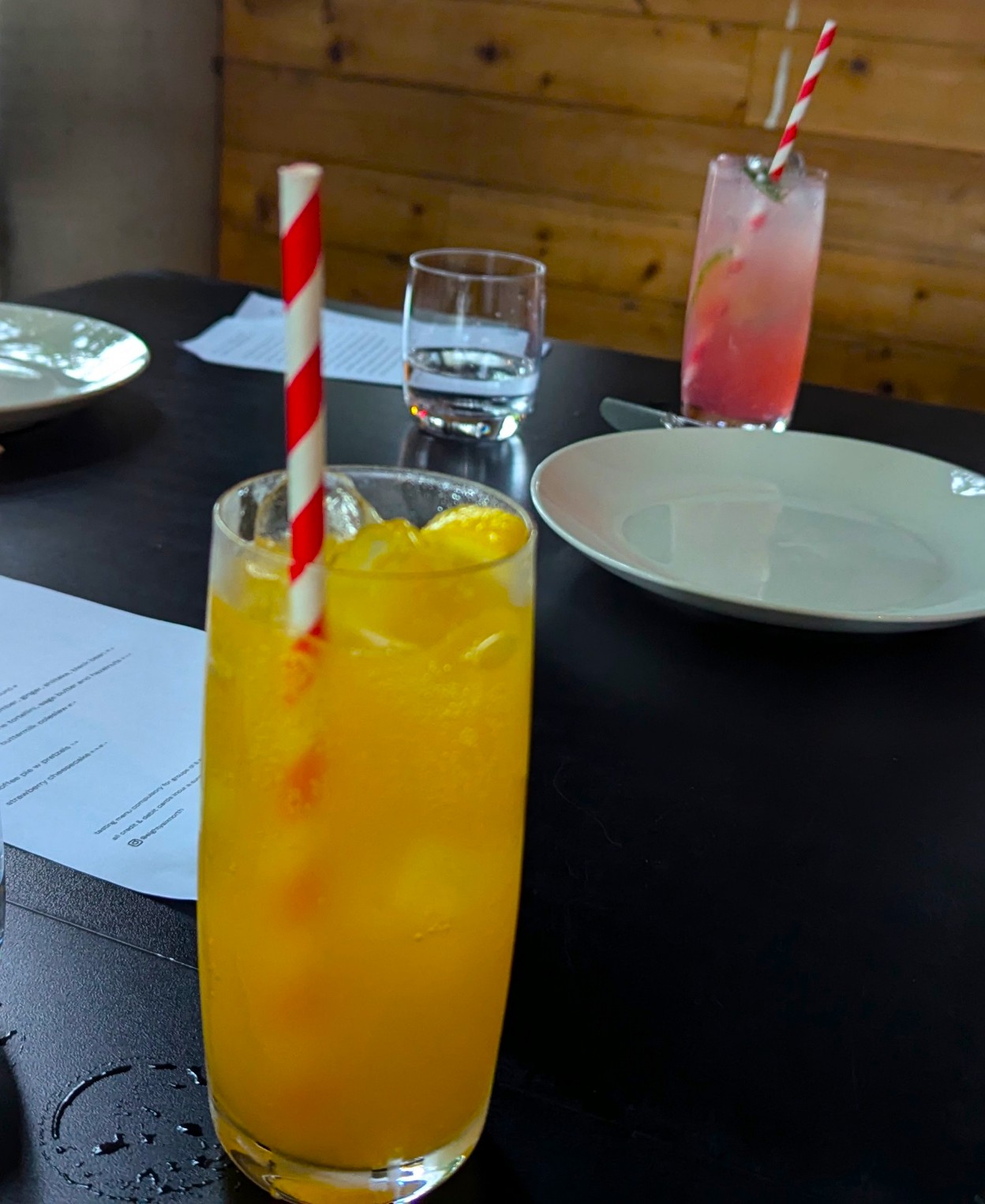
There are two mocktails and a lengthy alcoholic beverage list. The ones we chose were Elderflower soda and Rhubarb soda – both were delicious, and the alcoholic Sicilian Hit – also deemed delicious by our guests.
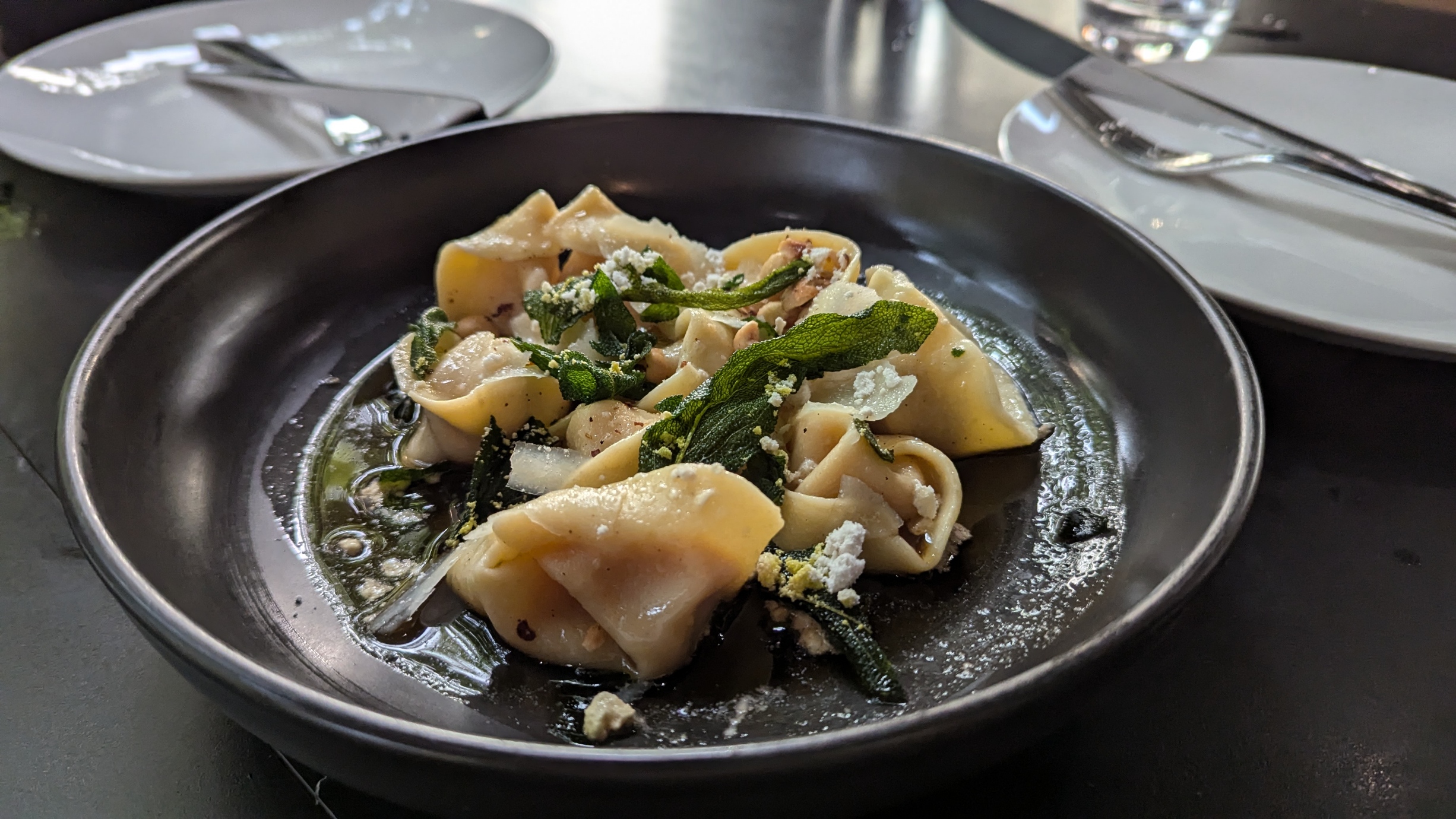
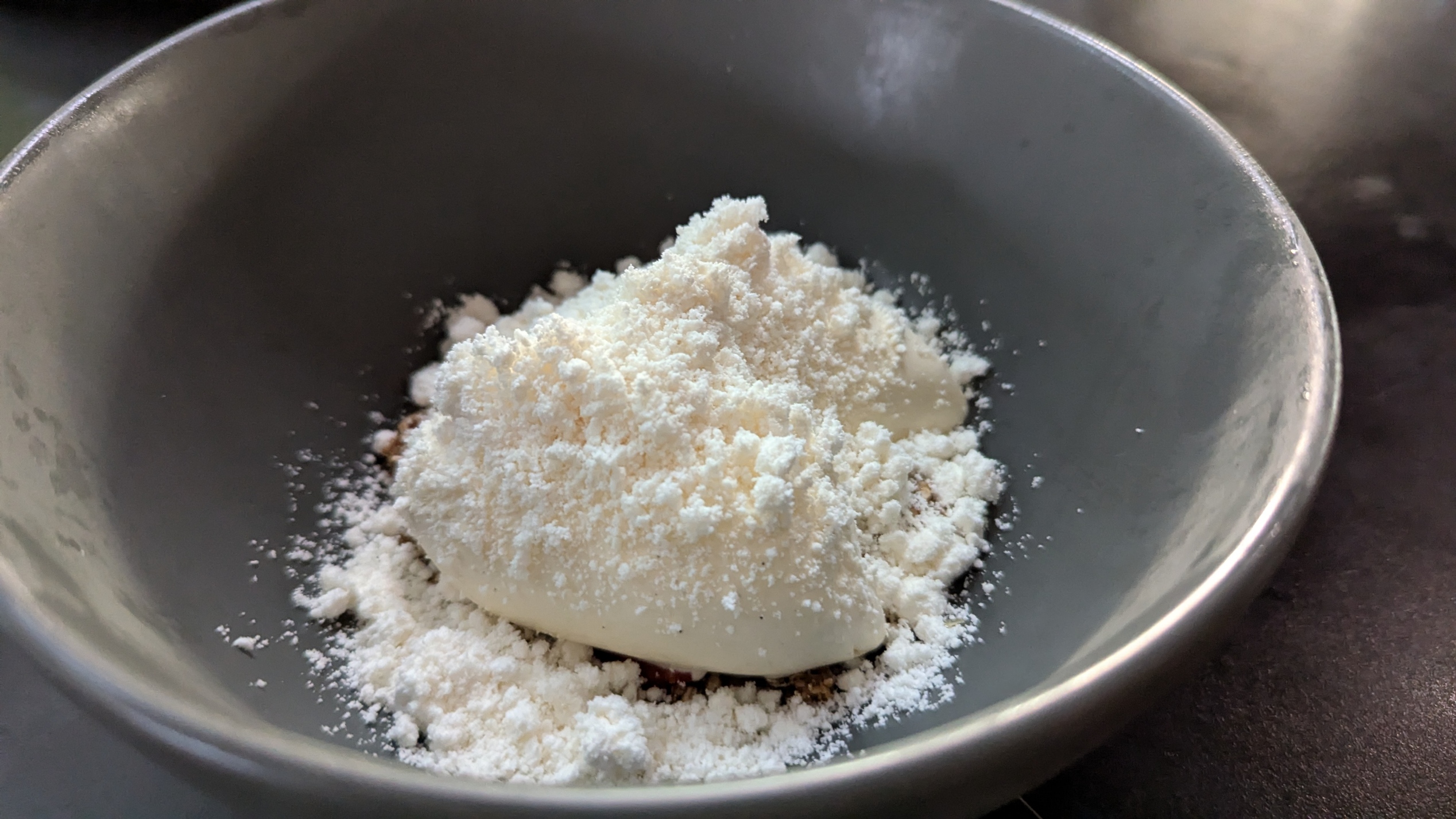
The favourite eggplant dish was not on the menu on this occasion. However, another – Pumpkin and mascarpone tortellini with a sage burnt butter sauce was. Also, the charred corn was there, and the duck buns also made a pleasant start. Our other main courses were the fried chicken with two accompaniments; nectarine salad with prosciutto, basil and mozzarella; spiced cauliflower with goat curd and dates; and cone bay barramundi with shitake, salted cucumber and yoghurt. Both couples shared their desserts – banoffee pie and strawberry cheesecake.




 Robin's Room