Oh dear – two disappointing reads this week!

S.E. Lynes The Perfect Boyfriend Bookouture, January 2025.
Thank you, NetGalley, for providing me with this uncorrected proof for review.
I found this book a disappointing read, with none of the page turning enthusiasm other reviewers have expressed. However, there were some twists, undermining stereotypes and raising questions about friendship, motivation, and the influence of nurture. For example, Lynes asks whether a difficult family life necessarily promotes the type of evil portrayed in Hughie Reynolds. Importantly, Kirsty’s observations about the way in which both aging and pregnancy influence the respect given to people in these categories is a thoughtful reflection on the way in which people are valued.
Kirsty Shaw is pregnant, partner to Dougie who was a student at the school they both attended. Dougie was not in the same friendship group when Kirsty and her friends met Hughie. Seeing him as a person who needed support they took him into their group, Kirsty’s family also welcomed him to their home and everyday activities. Kirsty and Hughie become boyfriend and girlfriend, until the day he departs, leaving only a harsh note. This impacts on Kirsty’s life to the extent that she has kept it and remains humiliated at Hughie’s treatment of her. When she sees Hughie again, and he refuses to acknowledge her or that he is Hughie, Kirsty determines to find out why. See Books: Reviews for the complete review.

Wendy Clarke Make Yourself at Home Bookouture, March 2025.
Thank you, NetGalley, for providing me with this uncorrected proof for review.
Wendy Clarke’s twists and turns in both the storyline and the main protagonist’s assessment of her own and her colleagues’ and friends’ actions are well developed examples of the genre, keeping the reader guessing until the end. Each character is typical of the genre – the husband whose character has changed, the good friend of husband and wife ready to lend a sympathetic shoulder to either when needed and the attractive interloper.
Catherine, a high school teacher with ambition and a past, is the main character. It is through her eyes that we see her behaviour and that of those surrounding her. Her past controls her present – the loss of her beloved but flawed brother in a school fire, her breakdown and resort to alcohol, and her gratitude, love and dependence on Gary and her compatibility with Ross, a fellow teacher and Gary’s friend. She has admirably surmounted the lure of alcohol but is confronted by memories of her brother. Into this amalgam of ambition, a marriage with flaws, a school of challenging students and admiring colleagues, Catherine welcomes Lisa, her husband’s hitherto unknown stepsister. See Books: Reviews for the complete review.
Following: Cindy Lou eats at Courgette and Kopiku; American Politics – fighting back; Secret London; NGA – Ethel Carrick.
Cindy Lou dines at Courgette – again!


Courgette has changed its menu, and although I miss some of my favourites, there are many more options to ensure my return over the next few months.
Five of us went this time so, although there were some duplicated choices, there were plenty of different ones, and we had a grand array on the table – including, of course, the hot bread rolls and ash butter, and a delicious serving of chips – both a wonderful standby. Entrees were excellent – Seared Hervey Bay Scallops, Berkshire Pork Belly, Black Garlic, Cauliflower, Boudin Noir, Nashi Pear; a goats cheese ‘cloud’ with accompaniments; salmon tartare with prawn balls, lettuce cooked with something delicious, cucumber and sauces. Another entree, a medley of duck breast, chicken and made an excellent main course as well – so as to leave room for dessert. The main courses were lamb chops – succulent; fish with a huge prawn – magnificent; and courgette blossoms stuffed with pumpkin – different and delicious. The favourite dessert featured chocolate, the Cherry Chocolate Bon Bon, Yoghurt Sorbet, Chocolate soil, Meringue and Cherry Compote; and the others were white chocolate cheesecake with autumn berries, lemon balm, chocolate sorbet and burnt butter crumbs; and a mango filled mango souffle – two photos as it looked so appealing inside and out.











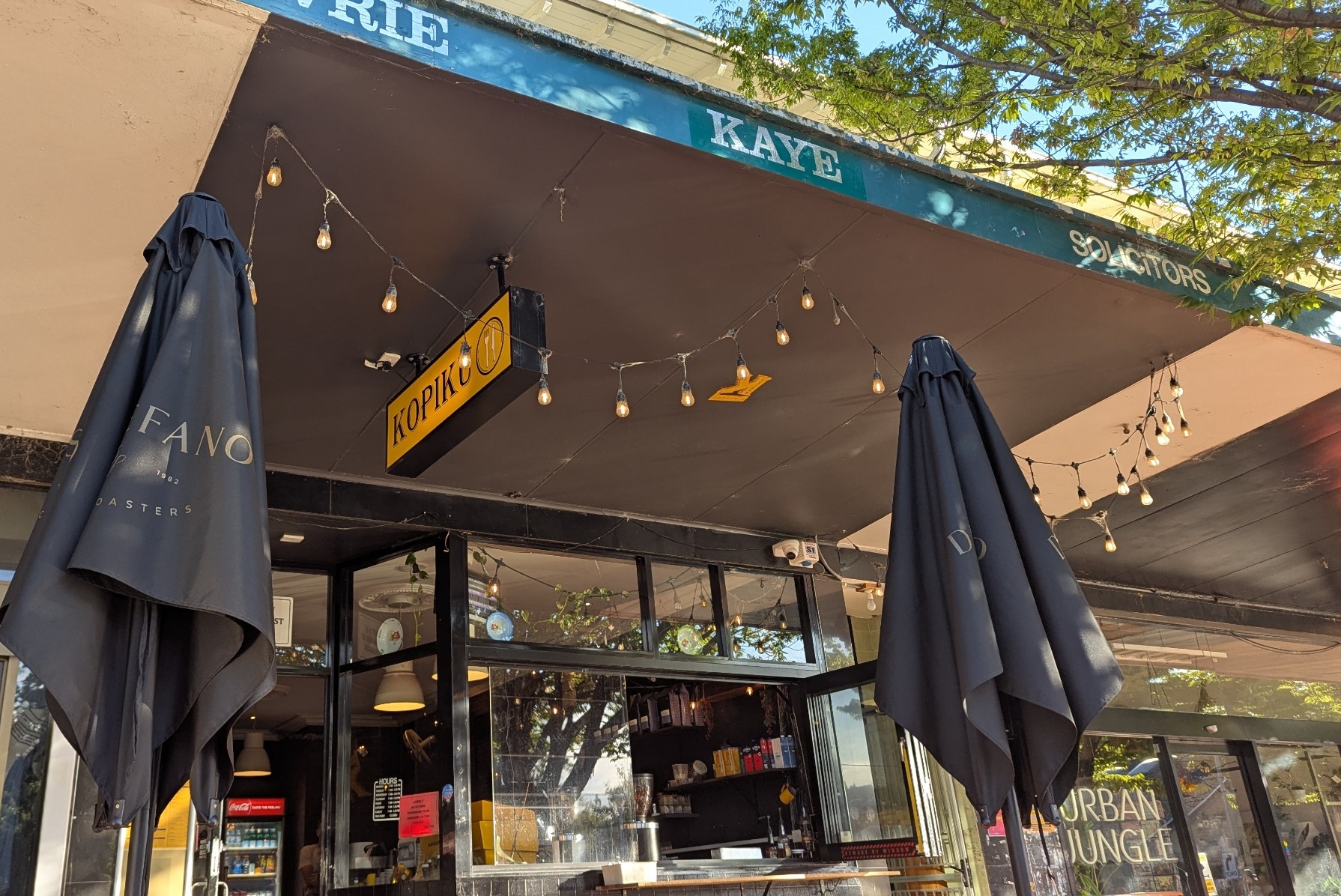
Cindy Lou breakfasts at Kopiku – again!
Kopiku is a favourite breakfast or just coffee stop, a lovely walk, summer or winter. Dogs are welcomed with a bowl of water, or in Leah’s case, a coffee made with huge amounts of froth so she can indulge. This is perfect for me, as I don’t want a huge coffee. I miss Leah’s contribution to the diet when she is not with me – what to do with all that froth? The eggs and toast are delicious – well cooked, buttered toast, and interesting embellishments. On this occasion it was a basil sauce and ginger onion slices.


American Politics – fighting back

Hakeem Jeffries Goes Off On The House Floor And Rips The Mask Off Republicans
House Democratic Leader Hakeem Jeffries (D-NY) called out Republicans for pulling a bait and switch on the American people, and called out the GOP’s real agenda.
Jason Easley Feb 10 *
House Democratic Leader Rep. Hakeem Jeffries (D-NY) has been pushing back against the Trump/GOP agenda since day one, but on Monday, Jeffries went to a new level.
Rep. Jeffries said on the House floor: Last year, all we heard from my Republican colleagues was the need to do something about the high cost of living while at the same time they ran away from Project 2025 as if it didn’t exist. This year, Republicans have spent all of their time implementing the most extreme parts of Project 2025 and have done nothing to lower the high cost of living, not a single thing, not a single bill, not a single idea, not a single proposal from my House Republican colleagues to do anything about the high cost of living in the United States of America.
It’s a Republican bait-and-switch. Part two of the Republican bait and switch is that their true objective is to enact massive tax cuts for billionaires and wealthy corporations, just like they did in 2017, when the GOP tax scam was passed, where they set in motion legislation where 83 percent of the benefits would go to the wealthiest 1%.
And now my House Republicans are, colleagues are back at it. There they go again. Same plan. Nothing to drive down the high cost of living. Everything is about massive tax cuts for billionaires and wealthy corporations. Who in many cases aren’t even asking for it. And they certainly don’t need the relief that everyday Americans need.
That working-class Americans need. That middle-class Americans need. That all those people who aspire to be part of the middle-class need. It’s a Republican bait-and-switch.
What’s the final element of the Republican bait and switch?Enact these massive tax cuts for billionaires and wealthy corporations and stick working class Americans with the bill.
The nerve of this group of people who spent all last year lecturing the country about how they were going to do something to drive down the high cost of living, do nothing about it, House Republicans are planning to enact massive tax cuts for their billionaire buddies, and then, as the final element of the Republican bait and switch, stick working-class Americans with the bill.
House Republicans have no plan to love and cherish Medicaid. Let’s be very clear about that. No plan to love and cherish Medicaid. Their plan is to destroy Social Security, destroy Medicare, and destroy Medicaid as we know it. And now with Republicans controlling the House, the Senate, and the Presidency, it’s their intention to try and do it.
Just watch what happens at the Republican budget hearing that is upcoming. In terms of what’s proposed, the cuts to Medicaid, that will be devastating. Hospitals will close, including in rural America and urban America and in the heartland of America. Nursing homes will be shut down and everyday Americans, children, seniors.
Those who are suffering with disabilities will be hurt as part of the Republican effort to target, earn benefits like Social Security and Medicare and to destroy Medicaid as we know it. It’s the Republican bait and switch. We will continue to expose it to the American people. House Democrats want nothing to do with it.
And we’re going to do everything in our power to stop it.
Democrats need to pound this message day after day.
Some of the American people were conned. Republicans aren’t going to do anything about costs and inflation. Instead, they are going to take healthcare away from millions of people or make healthcare much more expensive.
House Democrats are fighting back, and they are going to make Republicans own their bait and switch.
*Jason Eastly at PoliticusUSA is always a good read. Sometimes too optimistic – but sometimes we need that, and this time making sure that Hakeem Jeffries is heard.

D.E.I. goals – some businesses are refusing to comply with the discriminatory demand that they dispense with D.E.I. policies.
How companies are navigating the D.E.I. backlash By Emma Goldberg
New York Times nytimes.com February 10, 2025.
For nearly every American company right now, navigating the approach to diversity, equity and inclusion is a little like this: They’re perched on chairs, and the floor is lava, and the lava is the froth of lawsuits, investigations and social media backlash that could arise with any next step.
And they are not all responding the same way.
There’s a multilayered pressure campaign facing private sector D.E.I. programs. First, President Trump issued an executive order instructing the federal government to investigate “illegal D.E.I.,” although it is not entirely clear what that term means. (The best guess lawyers have is that it means all programs, whether internships or mentoring workshops, that exclude people on the basis of race.) The Justice Department, in a memo last week, suggested that it would be involved in enforcing the D.E.I. executive order.
Then, there are changes Trump has made at the Equal Employment Opportunity Commission, the independent agency that enforces anti-discrimination laws. This agency used to focus heavily on complaints of discrimination against people from minority groups and women. In an about-face, it is now likely to focus on investigating claims of discrimination against white workers and majority groups, in the form of D.E.I.
“Employers should be proactive and intentional about evaluating the way that they are carrying out these initiatives,” said Jocelyn Samuels, a Democrat whom Trump removed from the commission. “But at the end of the day, I think they are critical.”
The war on D.E.I. has left executives scratching their heads about what posture to adopt — and what they choose depends on a whole smattering of factors, including the politics of their consumer base and their appetite for a fight. Today, I’ll lay out the three main responses emerging in corporate America: retreating, quietly sticking with it and standing up for it.
Retreat
For companies like Target, the retreat from D.E.I. goals and strategies has been sweeping. The suite of diversity goals, mentorship programs and racial justice initiatives announced with fanfare in 2020 has been tossed away as companies scramble to avoid legal scrutiny or a social media backlash.
This retreat began before Trump took office. Anti-D.E.I. writing was already on the wall: The Supreme Court ruled against affirmative action in college admissions in 2023, and social media provocateurs like Robby Starbuck had begun targeting specific companies over their D.E.I. programs. Walmart, in November, said it would stop using the term D.E.I. in corporate communications and wouldn’t renew its Center for Racial Equity, a philanthropic initiative begun in 2020. Starbuck claimed this as a victory, saying he had reached out to the company to say he was planning a story on “wokeness” there.
In the days surrounding Trump’s inauguration, the D.E.I. retreat camp ballooned. Meta, just before Trump took office, eliminated its chief diversity role and ended diversity hiring goals. Google abandoned its employee diversity targets, explaining that as a federal contractor it has to comply with the Trump administration’s D.E.I. orders. Target said it would conclude its D.E.I. goals, rattling some of the small-business owners who have been helped by its supplier diversity program.
Target finds itself being pulled from both directions. The company is facing calls for a boycott from some consumers who support D.E.I. and are angry about the rollback. At the same time, it has been hit with a lawsuit from shareholders who say Target didn’t disclose all the risks it was assuming in having its D.E.I. efforts in the first place.
Holding steady
Some companies say they’re not making major changes to their D.E.I. strategies, not necessarily because they’re loud and proud about supporting D.E.I., but because they feel the programs they have in place are legal and good for business.
JPMorgan Chase and Goldman Sachs have said they do not intend to retreat on their diversity efforts. For JPMorgan, that means trying to recruit and serve people of all backgrounds, as the bank has always done.
“There is nothing wrong with acknowledging and trying to bridge social and economic gaps, whether they be around wealth or health,” Jamie Dimon, the chief executive of JPMorgan, wrote to shareholders in 2024.
D.E.I. stalwarts
The constellation of companies dropping D.E.I. has its exceptions, notably including Costco. Before Costco’s annual meeting in January, a conservative think tank brought forward a proposal requiring the company to report the potential risks of keeping a D.E.I. program. The board responded by delivering a defense of its diversity programs, which it said “enhance our capacity to attract and retain employees who will help our business succeed.”
Apple faced a similar anti-D.E.I. proposal, which the company’s board called “unnecessary,” and described as an attempt at micromanagement.
But being a company that is proudly keeping up its D.E.I. programming can feel lonely right now. Kyle Monson, partner in a small advertising agency called Codeword, said the agency had no plans to change its D.E.I. programming, which includes working with recruiters to identify diverse job candidates, offering unconscious bias training for staff and also holding events and parties during Black History Month.
Monson said the agency was committed to the social value of D.E.I. — but it’s about his company’s bottom line, too. He has spent years following research suggesting that increasing diversity in the work force is good for business, he said.
And on top of all that, he’s ready for a fight: “We’re willing to eat the risk,” he said, “in a way that a lot of other companies might not be.”


London’s Oldest Street Used To Be Over 200 Miles Long But Is Now Less Than 200 Metres
Tucked away in the City of London is a stretch of road that sports a rather fascinating history. But it used to be a whole lot longer.
Katie Forge – Staff Writer • 31 January, 2025

Conversations around the topic of which spots in London are the oldest are always going to be a little bit hazy. Fundamentally because none of us were actually there when the very first pubs, parks, stations, and streets were being built. So, whilst there’s no definitive answer to the question of which street in London is the oldest, we do know that there’s a whole lot of history beneath our feet. And just like plenty of other things that I have next to no factual knowledge about; I’m still going to put my two cents in on the matter. You’re most welcome.
London is bursting at the seams with history. Being one of the oldest cities in the country, many of the capital’s streets do exactly what they say on the tin. Old Street, for example, is an incredibly old street. Old Kent Road is an old road that heads in the direction of Kent. But there’s another ancient street in London that’s also in the running for the title of the oldest – its name just isn’t quite so obvious about it.
Watling Street can be found in the City of London, connecting Queen Victoria Street to St Paul’s Cathedral (and offering a pretty gorgeous view in doing so). But there is, in fact, a whole lot more history to Watling Street than first meets the eye, because it is one of the only remaining sections of a cross-country road that – in its entirety – used to span from the English Channel in Dover to a Roman Fort near Wales.

The history of Watling Street
The original Watling Street stretched for 276 miles, and parts of it are over 2000 years old. It roughly followed the route of the modern day A2, that runs from Dover to London via Old Kent Road, and the A5 that connects London to Shropshire. The only London section of this long, ancient track that has kept its original name is the Watling Street we know today, which now covers a distance of less than 200 metres.
City archeologists are fairly sure that the part of Watling Street that we can still walk down in London to this day was built upon the original Roman road. Other sections of the original Watling Street can supposedly be seen around New Change, Newgate Street, and Old Kent Road. A well-preserved section of the 2000 year-old original Watling Street was recently discovered below Old Kent Road, marking the first piece of physical proof that sections of the road still exist below the current streets of London…
Britain’s Prettiest Town Has Been Revealed – And It’s Less Than 90 Minutes From London
The prettiest towns in the country have just been revealed, and the town taking first prize in the beauty contest is not too far from London.
Katie Forge – Staff Writer • 5 February, 2025

Admittedly, the list of things in which Britain truly excels isn’t particularly extensive. But (credit where credit is due), alongside making decent cups of tea and exceptionally orderly queues, our country has also produced some pretty gorgeous towns in its time.
From quaint towns and quiet towns to market towns and medieval towns; Britain boasts a rather impressive 1250 towns in total. And the travel-aficionados over at The Telegraph decided to put them all under a microscope to uncover which of them is the prettiest town of all. And which of them is the ugliest. But we’ll lead with the good news first. And the good news is that the prettiest town in the entire country is just 90 minutes from the capital city. So you can go and check it out for yourself if you so wish.
The Telegraph’s travel experts ranked each of Britain’s towns based on factors including shopfronts, historic architecture, amount of traffic and litter, number of viewpoints, and the amount of greenery. Each town was then given a score out of 50 to decipher which are as pretty as a picture, and which are, well… not quite so picture-perfect.
The prettiest town in Britain

Taking home first prize in this beauty pageant is Lewes in East Sussex. The historic and picturesque market town has been named the prettiest in the country, scoring a mighty 46 out of 50. Lewes was praised for its medieval streets and alleyways, its plethora of pubs, the gorgeous independent shops and eateries lining its streets, and its easy access to the South Downs. Lewes boasts a rich history, dating all the way back to the Saxon times, an
These Are The Narrowest Streets In London – And (Spoiler Alert) One Of Them Is Just 5cm Wide
Katie Forge – Staff Writer • 25 July, 2024

Listen up, Londoners: we’re about to let you in on some of the city’s biggest (and… well – smallest) secrets. Tucked away in our loveable labyrinth of commuters, cabs, and coffee shops are some streets so slim, that you couldn’t even swing a cat in them if you wanted to (which hopefully you don’t).
Now, look – I know that some of these are alleyways and therefore not technically streets, but just humour me a moment, okay?
There are many contenders in the battle to be named the narrowest street of all, and it’s a debate that still hasn’t been firmly settled. So, if anybody fancies grabbing their tape measure and making their way through this list; we’d be very grateful.
1. Brydges Place, West End

This heart-racingly narrow alleyway connects two of London’s busiest streets, and certainly isn’t for the faint-hearted. With a width of just 15 inches at its narrowest point, Brydges Places is considered by many to be the narrowest alleyway in the city – but there’s some other history-packed passageways on this list that may well give it a run for its money.
2. Crawford Passage, Clerkenwell
Crawford Passage is just round the corner from Farringdon station, and it pretty notorious for these – quite frankly – laughable yellow lines. The distance between the two lines at this particular part of the road is just 5cm. I think we might have a winner, folks. A street with a level of thinness that is only rivalled by my patience, to be honest.
3. Lazenby Court, Covent Garden

Next up on our list of the narrowest streets in London is Lazenby Court; a passageway that you’ll certainly need to squeeze yourself down in single file. Standing at just 36 inches at its slimmest point, it’s not one for the claustrophobic – that’s for sure.
4. Emerald Court, Holborn

Another mildly panic-inducing passageway on the list; Emerald Court is Brydges Place’s biggest rival for the narrow street crown. This Holborn haunt is barely wide enough to fit a bike down, so cyclists – beware. Emerald Court was once called Green Street but was renamed in the 18th century to avoid any muddle up with other surrounding green-named streets. There’s a little fun fact for ya.
5. Artillery Passage, Spitalfields

This hustly bustly passageway is packed with restaurants, bars, tourists and locals. A charming pocket of history in the heart of our city, Artillery Passage doesn’t quite rival the likes of some earlier-on-the-list streets in size, but it’s still pretty flippin’ narrow.
6. Bengal Court, City of London

One of a few in a maze of narrow alleyways in the city, Bengal Court is a dimly-lit, atmospheric passageway, named after a historic nearby pub, Bengal Arms Tavern. Although I don’t know the exact measurements of this one (hence the need for a tape measuring volunteer), I think it’s surefire contender in the narrowest street in London competition.
7. Cardinal Cap Alley, Bankside

Last (but by no means leanest) on our list of the narrowest streets in London is Cardinal Cap Alley. Sandwiched between an industrial building and a terraced house, this alleyway used to be accessible to the public but is unfortunately now gated. However, if you’re in the area, it’s still worth having a little peek down!
So, there you have it – the narrowest streets (and alleyways) in London. Are there any others that you think are worth adding to the list?
National Gallery of Australia
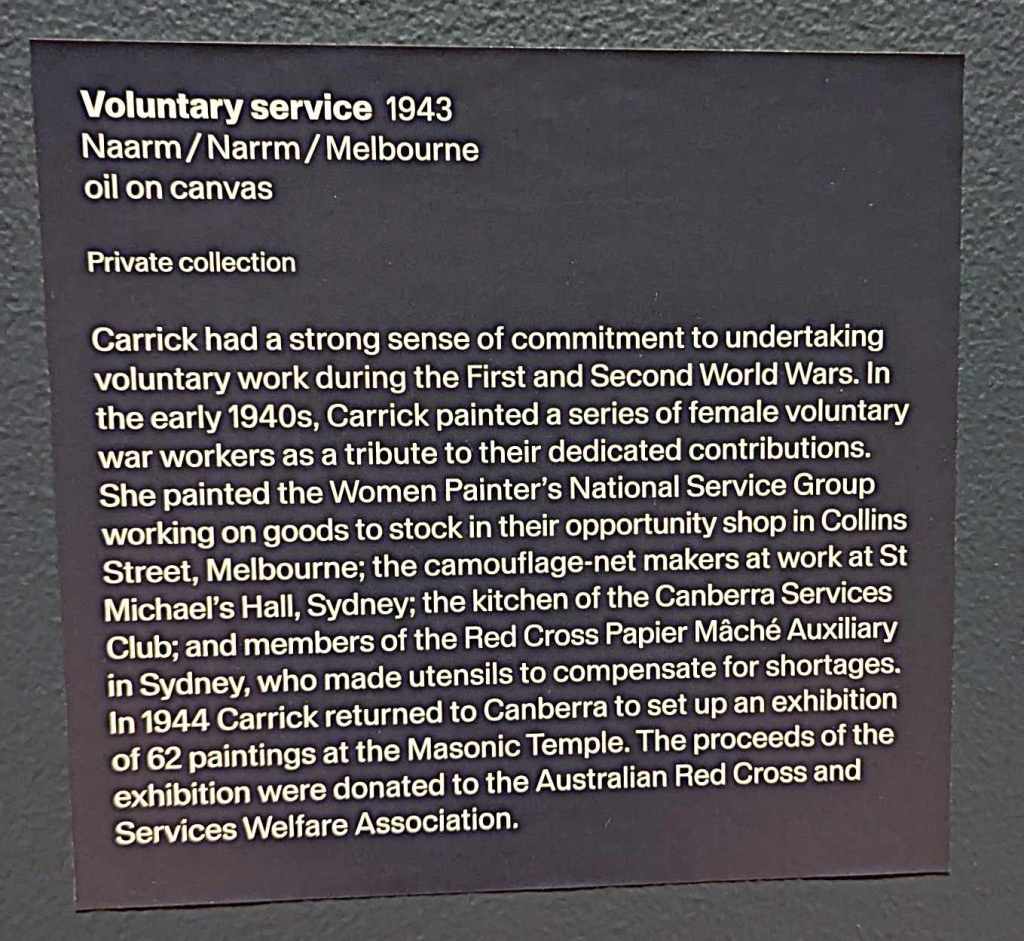
More from Ethel Carrick’s paintings – the Australian examples were a delight to see amongst the European paintings.








Hopefully I shall be able to visit the gallery again before next week, and provide some photos of Anne Dangar’s work, also in this exhibition.

 Robin's Room