
Rebecca Wilson Georgian Feminists Ten 18th Century Women Ahead of their Time Pen & Sword | Pen & Sword History, February 2025.
Thank you, NetGalley and Pen & Sword, for providing me with this uncorrected proof for review.
The introduction to Georgian Feminists is an impressive weaving together of the underlying philosophy and social context which impacted the individual lives of the ten women who feature in this book. Rebecca Wilson has adopted an accessible style without neglecting a scholarly approach to ensuring that the women’s stories are seen as the outcome of the ideological foundations impacting the period. Wilson frames the women’s lives and their rebellion in the society that depicted them as inferior, worthy of little respect or economic independence and the chattels on whom men might rely, but unworthy of credit or even acknowledgement. She returns to this approach throughout the book, making it a worthy intellectual endeavour as well as promoting easily absorbed information.
The ten women, some well-known, others about whom little has been recorded are well chosen. Sarah Pennington is followed by more familiar figures such as Mary Wollstonecraft, Jane Austen, Elizabeth Fry and Ada Lovelace. Dido Elizabeth Belle, Hester Stanhope, Mary Fildes, Ann Lister, and Mary Anning round out the group so that the themes that might be familiar from other authorities and Wilson’s work on familiar characters can be applied readily to new stories and actors. See Books: Reviews for the complete review.
Following the book review: Cindy Lou; American politics – Bob McMullan – USAID, Joyce Vance- being in community, Heather Cox Richardson – sea change; in American and global history; Kamala Harris, Atlantic Daily – Donald Trump and Elon Musk – free speech; and Australian politics – international, national and ACT local.
Cindy Lou at Courgette

This time I took note of the menu, and the details are worth recording for this wonderful restaurant which is (obviously) one of my favourites in Canberra.
The sourdough bread rolls, warmed and served with smoked cultured butter are always a delightful start to the meal. On this occasion I had my warm roll with the oysters. These are served beautifully plain, accompanied only by lemon and a sweetly sharp vinegar.

Entrees that we often choose are the Meredith goats cheese cloud with tomatoes, avocado ash brioche and micro basil; and the Atlantic salmon tartare with popcorn prawns (on this occasion the chef added many more to the dish which was ordered as a main), baby capers, cukes and a brandy Rose Marie sauce. Favourite main dishes are the White Pyrenees lamb cutlets and rump with hummus, Persian fetta, salt baked carrots, and beetroot vingerette; the market fish (John Dory and a huge prawn on both recent occasions), baby spinach, marinated vegetables, basils pesto and aloili. The desserts are beautifully presented and have been accompanied by candles for the several birthdays we have celebrated. Choices have been white chocolate cheesecake, burnt butter crumb, spring berries, lemon balm and chocolate sorbet; Kensington mango semi-freddo, pistachio biscuit, coconut and raspberry gel, black berries; and Cherry chocolate bon bon, yoghurt sorbet, chocolate soil, meringue and cherry compote. Images of the meals described above appeared in last week’s blog.

American Politics
Bob McMullan
USAID
Too many commentators are looking at the administrative changes Donald trump is making at USAID rather than focusing on the tragic human consequences of the underlying policy changes.
I don’t agree with the decision of the Trump administration to abolish the independent international aid agency, USAID, and fold its remaining activities into the State department.
It undervalues the skills required to administer aid programs efficiently and effectively.
However, Trump’s initiative is a conventional conservative government policy. It was implemented by Stephen Harper in Canada and has subsequently been adopted by New Zealand, the UK and, of course, by Tony Abbott in Australia.
I think it is a stupid conservative triumph of prejudice over good governance.
But it is essentially a bureaucratic fight. It is perfectly possible to run a sound aid program in a combined foreign policy and aid department. If the funding and the will is there, good results can be delivered.
The real crisis with what is happening to USAID relates the drastic changes to its funding and personnel.
Of course, I expected Donald Trump to cut the US aid program. Such an essentially narcissistic man would always find it difficult to understand the humanitarian roots of the aid program which has been supported by every US president since Truman. It is also unlikely that the subtle diplomatic and strategic benefits of a modestly generous aid program such as that of the United States before Trump would appeal to the transactional character of the current US president.
Any new government is entitled to review programs and expenditures to ensure that they are consistent with the governments priorities and values.
But to suspend lifesaving expenditures while the review is conducted is entirely unacceptable and that should be apparent to anyone with a modicum of compassion.
It may make business sense to stop everything and rebuild from the ground up, but to do so in government in this indiscriminate manner will inevitably mean that the poorest and neediest will suffer while the review is undertaken.
It is the casual cruelty of this approach which I find difficult to stomach.
It is far too early to gain a comprehensive assessment of the damage to lives, health and economic opportunities which will flow from the disastrous cuts already outlined.
But even the early signs are sufficient to justify genuine alarm at the damage which the changes have already made and will continue to make.
The Washington Post reports that” …in the besieged capital (of Sudan) more than two thirds of soup kitchens have closed in the last week.” And further that “It means that over eight million people in extreme levels of hunger could die of starvation.”
And this is only one of the dozens of countries which will be losing life-saving assistance.
In Mali, a school that served 500 students was told to suspend classes.
Clean water, food, health, education, employment are all in jeopardy.
It is difficult to credit that the world’s richest man, Elon Musk, can take actions which will have such a devastating impact on the world’s poorest people.
The cuts will have consequences for Australia’s region as well.
There are already reports of a halt to mine clearance in Laos, a legacy of US carpet-bombing of the country as an ancillary to their war in Vietnam. I have seen the consequences of such bombs and mines on people form the elderly to babies. How anyone could think it is good policy to stop funding the removal of unexploded ordinance for which your country is directly responsible is beyond my comprehension.
The reported death of a woman from Myanmar who was in the border camp and died when her essential oxygen supply was unavailable is just the tip of a very large iceberg.
While the USA is not a major aid provider in the Pacific its contribution is important in such an aid dependent region.
It is too early to assess the consequences of the budget cuts for the Asian Development Bank and the World Bank which are so important to countries in our wider region, from India and Pakistan to Samoa and Kiribati. What we know is, it can’t be good for the funding of either institution or the other multilateral institutions which play such an important role in our region.
We may never know the total human cost of this inhuman approach to governance.
But we can be sure is that the poorest and neediest will suffer the most.
As noted earlier there are profound strategic and foreign policy implications of this abandonment of US responsibility in international development issues. These are important but we need to focus also on the profound human consequences of the proposed cuts to USAID.

This would have been a terrific event.
On Being in Community Joyce Vance
Sunday night, I mentioned that Stacey Abrams and I would be speaking together at a Fair Fight event today. We just finished up, and for those of you who weren’t there—the audience was 1500 strong and from all across the country, including Alaska—it was exhilarating. We were honest about the challenges the country faces and our fears, but it was also a night to discuss the reasons for us to have hope and optimism. Most of all, it’s a reminder to me that all across the country, there are people who care deeply about what is happening to our democracy and want to make sure we hold onto it. We have no intention of going quietly.

For those of you who weren’t able to join us, our chat will be on Fair Fight’s YouTube channel in the next day or two. I’ll post a link when it’s ready.
Stacey and I share the belief that the way we get through Trump 2.0 is together. We don’t get through it by pretending it isn’t happening or hoping it will go away. It’s time. Time for us to get up and be loud about our opposition to Trump’s view of America. In Stacey’s words, “resist, persist, and insist.”
What can you do? Show up at school board meetings, work on a community garden, read to school kids, protest at your state capitol, let your elected representatives hear your voice, work on a campaign, volunteer as a poll worker, and run for office. Whatever it is that matters to you the most, do your research about how to have an impact and get to work. Nothing beats back fear and anxiety over our future like exercising the muscle of democracy.
Today, Donald Trump posted this on Truth Social. Apparently, it’s no longer enough to be a dictator on day one. Now, he wants to be king. It’s no surprise.

Donald Trump’s success at forever changing our democracy is not inevitable. He wants you to think it is, but it’s not. Already, he is starting to sink in the polls. Reuters reports that Trump’s “approval rating has ticked slightly lower in recent days as more Americans worried about the direction of the U.S. economy.” It’s a small, measured decline from an approval rating of 47% in January to 44% today, but it’s a start.
The hard reality is that we are not going to get a quick fix. We will not wake up one morning this month and find that Trumpism is over. And we can’t throw our hands up in the air in disgust and walk away in the absence of instant success. The fight for democracy is going to be long and hard and slow, and there are going to be setbacks along the way. Our job is to commit to the fight, even and especially when things look bleak. It’s a marathon, not a sprint.
As a community, we can work all the angles of democracy. Some of us will focus on our city councils and school boards, others on state government, and some on the White House, Congress, and the courts. Some of us will work to support the free press and other democratic institutions. We will keep up the fight for fairness and justice at federal, state, and local levels of government. We will continue to demand that our civil rights be protected. Democracy occupies a lot of space, not all of it on Capitol Hill and in the White House. Make some of it yours. Build a community around you that supports democracy.

It’s been a long and serious few weeks, so I’ll leave you with this picture of the friends who greet me every morning when I walk outside. Don’t forget to surround yourself with a supportive community.
We’re in this together,
Joyce

Heather Cox Richardson from Letters from an American <heathercoxrichardson@substack.com> Unsubscribe
The past week has solidified a sea change in American—and global—history.
A week ago, on Wednesday, February 12, Secretary of Defense Pete Hegseth announced at a meeting of the Ukraine Defense Contact Group in Brussels, Belgium, that President Donald Trump intended to back away from support for Ukraine in its fight to push back Russia’s invasions of 2014 and 2022.Hegseth said that Trump wanted to negotiate peace with Russia, and he promptly threw on the table three key Russian demands. He said that it was “unrealistic” to think that Ukraine would get back all its land—essentially suggesting that Russia could keep Crimea, at least—and that the U.S. would not back Ukraine’s membership in the North Atlantic Treaty Organization (NATO), the mutual security agreement that has kept Russian incursions into Europe at bay since 1949.Hegseth’s biggest concession to Russia, though, was his warning that “stark strategic realities prevent the United States of America from being primarily focused on the security of Europe.” Also on Wednesday, President Donald Trump spoke to Russia’s president, Vladimir Putin, for nearly an hour and a half and came out echoing Putin’s rationale for his attack on Ukraine. Trump’s social media account posted that the call had been “highly productive,” and said the two leaders would visit each other’s countries, offering a White House visit to Putin, who has been isolated from other nations since his attacks on Ukraine.
In a press conference on Thursday, the day after his speech in Brussels, Hegseth suggested again that the U.S. military did not have the resources to operate in more than one arena and was choosing to prioritize China rather than Europe, a suggestion that observers of the world’s most powerful military found ludicrous.
Then, on Friday, at the sixty-first Munich Security Conference, where the U.S. and allies and partners have come together to discuss security issues since 1963, Vice President J.D. Vance attacked the U.S.A.’s European allies. He warned that they were threatened not by Russia or China, but rather by “the threat from within,” by which he meant the democratic principles of equality before the law that right-wing ideologues believe weaken a nation by treating women and racial, religious, and gender minorities as equal to white Christian men. After Vance told Europe to “change course and take our shared civilization in a new direction,” he refused to meet with Germany’s chancellor Olaf Scholz and instead met with the leader of the far-right German political party that has been associated with neo-Nazis.While the Munich conference was still underway, the Trump administration on Saturday announced it was sending a delegation to Saudi Arabia to begin peace talks with Russia. Ukrainian officials said they had not been informed and had no plans to attend. European negotiators were not invited either. When U.S. Secretary of State Marco Rubio and Russian foreign minister Sergei Lavrov spoke on Saturday, the Russian readout of the call suggested that Russia urgently needs relief from the economic sanctions that are crushing the Russian economy. The day before, Hungarian prime minister Viktor Orbán, an ally of both Putin and Trump, assured Hungarian state radio on Friday that Russia will be “reintegrated” into the world economy and the European energy system as soon as “the U.S. president comes and creates peace.”Talks began yesterday in Riyadh, Saudi Arabia. In a four-and-a half-hour meeting, led by Rubio and Lavrov, and including national security advisor Mike Waltz, the U.S. and Russia agreed to restaff the embassies in each other’s countries, a key Russian goal as part of its plan to end its isolation. Lavrov blamed the Biden administration for previous “obstacles” to diplomatic efforts and told reporters that now that Trump is in power, he had “reason to believe that the American side has begun to better understand our position.”
Yesterday evening, from his Florida residence, Trump parroted Russian propaganda when he blamed Ukraine for the war that began when Russia invaded Ukraine’s sovereign territory. When reporters asked about the exclusion of Ukraine from the talks, Trump answered: “Today I heard, ‘Oh, well, we weren’t invited.’ Well, you’ve been there for three years. You should have ended it three years ago. You should have never started it. You could have made a deal.” He also said that Zelensky holds only a 4% approval rating, when in fact it is about 57%.Today, Trump posted that Zelensky is a dictator and should hold elections, a demand Russia has made in hopes of installing a more pro-Russia government. As Laura Rozen pointed out in Diplomatic, former Russian president Dmitry Medvedev posted: “If you’d told me just three months ago that these were the words of the US President, I would have laughed out loud.”“Be clear about what’s happening,” Sarah Longwell of The Bulwark posted. “Trump and his administration, and thus America, is siding with Putin and Russia against a United States ally.”To be even clearer: under Trump, the United States is abandoning the post–World War II world it helped to build and then guaranteed for the past 80 years.The struggle for Ukraine to maintain its sovereignty, independence, and territory has become a fight for the principles established by the United Nations, organized in the wake of World War II by the allied countries in that war, to establish international rules that would, as the U.N. charter said, prevent “the scourge of war, which twice in our lifetime has brought untold sorrow to mankind, and to reaffirm faith in fundamental human rights.” Central to those principles and rules was that members would not attack the “territorial integrity or political independence” of any other country. In 1949 the North Atlantic Treaty Organization (NATO) came together to hold back growing Soviet aggression under a pact that an attack on any of the member states would be considered an attack on all.The principle of national sovereignty is being tested in Ukraine. After the breakup of the Soviet Union in 1991, Ukraine held about a third of the USSR’s nuclear weapons but gave them up in exchange for payments and security assurances from Russia, the United States, and the United Kingdom that they would respect Ukraine’s sovereignty within its existing borders. But Ukraine sits between Russia and Europe, and as Ukraine increasingly showed an inclination to turn toward Europe rather than Russia, Russian leader Putin worked to put his own puppets at the head of the Ukrainian government with the expectation that they would keep Ukraine, with its vast resources, tethered to Russia.
In 2004 it appeared that Russian-backed politician Viktor Yanukovych had won the presidency of Ukraine, but the election was so full of fraud, including the poisoning of a key rival who wanted to break ties with Russia and align Ukraine with Europe, that the U.S. government and other international observers did not recognize the election results. The Ukrainian government voided the election and called for a do-over.To rehabilitate his image, Yanukovych turned to American political consultant Paul Manafort, who was already working for Russian billionaire Oleg Deripaska. With Manafort’s help, Yanukovych won the presidency in 2010 and began to turn Ukraine toward Russia. When Yanukovych suddenly reversed Ukraine’s course toward cooperation with the European Union and instead took a $3 billion loan from Russia, Ukrainian students protested. On February 18, 2014, after months of popular protests, Ukrainians ousted Yanukovych from power in the Maidan Revolution, also known as the Revolution of Dignity, and he fled to Russia.Shortly after Yanukovych’s ouster, Russia invaded Ukraine’s Crimea and annexed it. The invasion prompted the United States and the European Union to impose economic sanctions on Russia and on specific Russian businesses and oligarchs, prohibiting them from doing business in U.S. territories. E.U. sanctions froze assets, banned goods from Crimea, and banned travel of certain Russians to Europe.
Yanukovych’s fall had left Manafort both without a patron and with about $17 million worth of debt to Deripaska. Back in the U.S., in 2016, television personality Donald Trump was running for the presidency, but his campaign was foundering. Manafort stepped in to help. He didn’t take a salary but reached out to Deripaska through one of his Ukrainian business partners, Konstantin Kilimnik, immediately after landing the job, asking him, “How do we use to get whole? Has OVD [Oleg Vladimirovich Deripaska] operation seen?”
Journalist Jim Rutenberg established that in 2016, Russian operatives presented Manafort a plan “for the creation of an autonomous republic in Ukraine’s east, giving Putin effective control of the country’s industrial heartland.” In exchange for weakening NATO and U.S. support for Ukraine, looking the other way as Russia took eastern Ukraine, and removing U.S. sanctions from Russian entities, Russian operatives were willing to help Trump win the White House. The Republican-dominated Senate Intelligence Committee in 2020 established that Manafort’s Ukrainian business partner Kilimnik, whom it described as a “Russian intelligence officer,” acted as a liaison between Manafort and Deripaska while Manafort ran Trump’s campaign.
Government officials knew that something was happening between the Trump campaign and Russia. By the end of July 2016, FBI director James Comey opened a counterintelligence investigation into Russian interference in the 2016 election. After Trump won, the FBI caught Trump national security advisor Lieutenant General Michael Flynn assuring Russian ambassador Sergey Kislyak that the new administration would change U.S. policy toward Russia. Shortly after Trump took office, Flynn had to resign, and Trump asked Comey to drop the investigation into Flynn. When Comey refused, Trump fired him. The next day, he told a Russian delegation he was hosting in the Oval Office: “I just fired the head of the F.B.I. He was crazy, a real nut job…. I faced great pressure because of Russia. That’s taken off.”
Trump swung U.S. policy toward Russia, but that swing hit him. In 2019, with the help of ally Rudy Giuliani, Trump planned to invite Ukraine’s pro-Russian president, Petro Poroshenko, to the White House to boost his chances of reelection. In exchange, Poroshenko would announce that he was investigating Hunter Biden for his work with Ukrainian energy company Burisma, thus weakening Trump’s chief rival, Democrat Joe Biden, in the 2020 presidential election.
But then, that April, voters in Ukraine elected Volodymyr Zelensky rather than Poroshenko. Trump withheld money Congress had appropriated for Ukraine’s defense against Russia and suggested he would release it only after Zelensky announced an investigation into Hunter Biden. That July 2019 phone call launched Trump’s first impeachment, which, after the Senate acquitted him in February 2020, launched in turn his revenge tour and then the Big Lie that he had won the 2020 election. The dramatic break from the democratic traditions of the United States when Trump and his cronies tried to overturn the results of the 2020 presidential election was in keeping with his increasing drift toward the political tactics of Russia.
When Biden took office, he and Secretary of State Antony Blinken worked feverishly to strengthen NATO and other U.S. alliances and partnerships. In February 2022, Putin launched another invasion of Ukraine, attempting a lightning strike to take the rich regions of the country for which his people had negotiated with Manafort in 2016. But rather than a quick victory, Putin found himself bogged down. Zelensky refused to leave the country and instead backed resistance, telling the Americans who offered to evacuate him, “The fight is here; I need ammunition, not a ride.” With the support of Biden and Blinken, NATO allies and other partners stood behind Ukraine to stop Putin from dismantling the postwar rules-based international order and spreading war further into Europe.When he left office just a month ago, Biden said he was leaving the Trump administration with a “strong hand to play” in foreign policy, leaving it “an America with more friends and stronger alliances, whose adversaries are weaker and under pressure,” than when he took office.Now, on the anniversary of the day the Ukrainian people ousted Victor Yanukovych in 2014—Putin is famous for launching attacks on anniversaries—the United States has turned its back on Ukraine and 80 years of peacetime alliances in favor of support for Vladimir Putin’s Russia. “We now have an alliance between a Russian president who wants to destroy Europe and an American president who also wants to destroy Europe,” a European diplomat said. “The transatlantic alliance is over.”
This shift appears to reflect the interests of Trump, rather than the American people. Trump’s vice president during his first term, Mike Pence, posted: “Mr. President, Ukraine did not ‘start’ this war. Russia launched an unprovoked and brutal invasion claiming hundreds of thousands of lives. The Road to Peace must be built on the Truth.” Senate Armed Services Committee chair Roger Wicker (R-MS) said, “Putin is a war criminal and should be in jail for the rest of his life, if not executed.” Courtney Kube and Carol E. Lee of NBC News reported that intelligence officials and congressional officials told them that Putin feels “empowered” by Trump’s recent support and is not interested in negotiations; he is interested in controlling Ukraine.
A Quinnipiac poll released today shows that only 9% of Americans think we should trust Putin; 81% say we shouldn’t. For his part, Putin complained today that Trump was not moving fast enough against Europe and Ukraine.
In The Bulwark, Mark Hertling, who served as the Commanding General of the United States Army Europe, commanded the 1st Armored Division in Germany, and the Multinational Division-North in Iraq, underlined the dramatic shift in American alignment. In an article titled “We’re Negotiating with War Criminals,” he listed the crimes: nearly 20,000 Ukrainian children kidnapped and taken to Russia; the deliberate targeting of civilian infrastructure, including hospitals, schools, and energy facilities; the execution of prisoners of war; torture of detainees; sexual violence against Ukrainian civilians and detainees; starvation; forcing Ukrainians to join pro-Russian militias.“
And we are negotiating with them,” Hertling wrote. Josh Marshall of Talking Points Memo points out that the talks appear to be focused on new concessions for American companies in the Russian oil industry, including a deal for American companies to participate in Russian oil exploration in the Arctic.
For years, Putin has apparently believed that driving a wedge between the U.S. and Europe would make NATO collapse and permit Russian expansion. But it’s not clear that’s the only possible outcome. Ukraine’s Zelensky and the Ukrainians are not participating in the destruction of either their country or European alliances, of course. And European leaders are coming together to strengthen European defenses. Emergency meetings with 18 European countries and Canada have netted a promise to stand by Ukraine and protect Europe. “Russia poses an existential threat to Europeans,” President Emmanuel Macron of France said today. Also today, rather than dropping sanctions against Russia, European Union ambassadors approved new ones.
For his part, Trump appears to be leaning into his alliance with dictators. This afternoon, he posted on social media a statement about how he had killed New York City’s congestion pricing and “saved” Manhattan, adding “LONG LIVE THE KING!” White House deputy chief of staff Taylor Budowich reposted the statement with an image of Trump in the costume of an ancient king, with a crown and an ermine robe. Later, the White House itself shared an image that imitated a Time magazine cover with the word “Trump” in place of “Time,” a picture of Trump with a crown, and the words “LONG LIVE THE KING.”The British tabloid The Daily Star interprets the changes in American politics differently. Its cover tomorrow features Vladimir Putin walking “PUTIN’S POODLE”: the president of the United States.—Notes:https://www.defense.gov/News/Speeches/Speech/Article/4064113/opening-remarks-by-secretary-of-defense-pete-hegseth-at-ukraine-defense-contact/https://www.defense.gov/News/Transcripts/Transcript/Article/4066734/secretary-of-defense-pete-hegseth-press-conference-following-nato-ministers-of/https://rationalpolicy.com/2025/02/13/on-the-russian-navy/https://apnews.com/article/us-russia-rubio-lavrov-ukraine-saudi-arabia-94bc4de5ecc86922d6ea4376e38f1cfdhttps://www.un.org/en/about-us/un-charter/preambleMatt Apuzzo, Maggie Haberman, and Matthew Rosenberg, “Trump Told Russians That Firing ‘Nut Job’ Comey Eased Pressure From Investigation,” The New York Times, May 19, 2017.https://edition.cnn.com/2022/02/26/europe/ukraine-zelensky-evacuation-intl/index.htmlhttps://www.axios.com/2025/01/13/biden-foreign-policy-speech


David A. Graham, Staff Writer *
Donald Trump and Elon Musk never believed in anyone’s free speech except their own…
It may not be good for America, but it’s damn good for CBS,” then–CBS President and CEO Leslie Moonves cackled in February 2016, as Donald Trump’s presidential campaign churned forward. “The money’s rolling in and this is fun … It’s a terrible thing to say. But, bring it on, Donald. Go ahead. Keep going.”
Moonves appeared merely ghoulish then. He now looks both ghoulish and wrong. Trump has not been good for CBS, and the steps and statements he’s made since returning to the White House show that his campaign promises to restore and defend free speech were balderdash. His goal is to protect the speech that he likes and suppress what he doesn’t.
On Sunday, Unelected Bureaucrat in Chief Elon Musk attacked CBS’s flagship program. “60 Minutes are the biggest liars in the world! They engaged in deliberate deception to interfere with the last election,” he posted on X. “They deserve a long prison sentence.” This would seem less threatening if Musk weren’t running roughshod over the federal government, or if the president disagreed. But earlier this month, Trump said that “CBS should lose its license” and 60 Minutes should be “terminated.”
The source of their anger is an interview that the program conducted with Kamala Harris—remember her?—during the presidential campaign last year. Trump alleges that 60 Minutes improperly edited the interview. CBS denies any wrongdoing and declined to comment on Musk’s post. CBS said in a filing this week that it intended to seek information on Trump’s finances if the lawsuit proceeds. Even so, CBS’s parent company, Paramount, is considering whether to pay a multimillion-dollar settlement with Trump to resolve a suit seeking $20 billion in damages. Interpreting such a move as anything other than paying off Trump to leave CBS alone is very difficult—in other words, it’s a protection racket. Indeed, The Wall Street Journal reports that executives are concerned they could be sued for bribery if they settle. (Moonves is long gone; he was forced out in 2018 over a series of accusations of sexual assault and harassment. He denies any wrongdoing.)
Trump initially filed his suit last October and has since amended it. The crux of the claim is that CBS aired two different snippets from the same Harris answer about Israeli Prime Minister Benjamin Netanyahu. Like many past lawsuits from Trump, this one reads more like a political memo than a legal brief. He claims, without any evidence, that CBS edited the interview to help Harris’s electoral prospects. (Like other MAGA lawsuits, it was filed in a specific Texas court so as to draw Judge Matthew Kacsmaryk, a Trump appointee who has delivered sweeping fringe rulings in the past.) The suit doesn’t make a great deal of sense. If CBS was trying to hide something Harris said, why did it broadcast the clip?
The Federal Communications Commission initially rejected a complaint about the interview, but Brendan Carr—Trump’s newly appointed FCC chair—reopened it and demanded that CBS release the transcript of the interview. CBS did so, and to my read, the transcript establishes that CBS’s use of the clips was not manipulative. (Judicious editing is essential. I’ve interviewed many politicians, and much of what they say is incurably dull, nonsensical, or both, sometimes by design.)
The charge of “election interference” doesn’t make any sense, either—especially coming from Musk, who both is the owner of a major media platform and spent nearly $300 million to back Trump and other Republican candidates. The position of the Trump GOP appears to be that spending any amount of money on politics is free speech, but press outlets covering the campaign are interfering with it.
The bombardment of CBS is part of a wide-ranging assault on free speech. Last week, the White House barred an Associated Press reporter from the Oval Office because editors there have opted not to adopt Trump’s renaming of the body of water long known as the Gulf of Mexico. In December, ABC settled a defamation suit with Trump even though almost no media lawyers thought the network would have lost; critics charged that ABC was trying to curry favor with the president-elect. (ABC did not respond to a request for comment.)
Carr, the FCC chair, recently wrote a letter to NPR and PBS suggesting that by airing sponsors’ names, they may have violated rules against noncommercial stations accepting advertising, although the FCC has not objected to this practice in the past. He noted that the answer could help Congress in deciding whether to defund NPR and PBS. That’s a tight vise grip: Don’t take funding or we might take your funding.
Not all criticism of the press is media suppression. Politicians are free to criticize the press, just as all Americans are free to criticize their elected officials. And besides, if political leaders aren’t upset about at least some of the coverage they’re receiving, journalists probably aren’t holding them to account. At times during the Trump era, some members of the media have overreacted to flimsy provocations, like Trump’s posting a silly GIF that superimposed the CNN logo over someone being body slammed. Vice President J. D. Vance snarkily replied to the journalist Mehdi Hasan on Monday, “Yes dummy. I think there’s a difference between not giving a reporter a seat in the WH press briefing room and jailing people for dissenting views. The latter is a threat to free speech, the former is not. Hope that helps!”
Even if you’re willing to grant Vance’s premise that banishing the AP is no big deal—I am not—there’s a lot of territory between that and jailing people, and that’s the ground that Trump is occupying: using the power of the government to intimidate. Paramount, for example, is currently awaiting FCC approval for a merger with Skydance Media. A Paramount Global spokesperson told me the lawsuit is “separate from, and unrelated to” the merger, but the company’s leaders would be reasonable to be afraid that Trump might block the deal if they don’t cooperate. During his first term, Trump tried to block the acquisition of CNN’s parent company. Speaking about the AP’s banishment, one journalist told CNN’s Brian Stelter, “Everyone assumes they’re next.”
Threats to the press are not new for Trump, who has been critical of press freedom for years. But during his most recent campaign, he criticized “wokeness” and argued that he would be a voice for free speech by pushing back on what he characterized as attacks on constitutional rights from, for example, social-media companies that blocked or throttled content (such as suspending his accounts after January 6). On the first day of his new term, Trump signed an executive order purportedly “restoring freedom of speech and ending federal censorship.” Musk purchased Twitter in 2022 and announced that he was a “free speech absolutist,” but quickly disproved that, suspending reporters who criticized him and cooperating with foreign governments to suppress speech.
A news outlet that is afraid of the government is an outlet whose speech is only partly free. When media companies are afraid that the president will use regulators to punish their business, owners are anxious to protect non-media commercial interests. When journalists are wary of becoming targets for petty retribution, they may pull punches or shape coverage in ways that do not—and are not intended to—serve the public interest. Jeff Bezos’s decision to spike a Washington Post endorsement of Kamala Harris and Patrick Soon-Shiong’s attacks on his own newspaper, the Los Angeles Times, both look a lot like this, though the two owners insist otherwise.
Over the past few years, Trump, Vance, and others complained loudly about the government studying mis- and disinformation or pointing out instances of disinformation to social-media companies. They charged that this was censorship because even if the government wasn’t requiring those companies to do anything, its power made this an implied threat. Now that they are in office, they’ve had a change of heart. They’re perfectly happy for the government to try to tell private companies what opinions are acceptable and which ones aren’t.
They never believed in anyone’s free speech except their own. * Slightly edited.
Australian Politics -international, national and ACT stories
Australia joins world leaders in backing Ukraine after Trump blast

The New Daily
Feb 20, 2025, updated Feb 20, 2025
Australia has joined other Western leaders in standing by Ukraine after US President Donald Trump’s astonishing attack on the war-torn nation’s leader.
Trump slammed Ukrainian President Volodymyr Zelensky as a “dictator without elections” and falsely claimed Kyiv had “started” the Russian war.
He also incorrectly stated Zelensky had approval ratings of only 4 per cent.
Asked on Thursday if Zelensky was a dictator, Defence Minister Richard Marles said “no”.
From the Sydney Morning Herald
All Australians to get bulk-billing boost under Labor’s $8.5b plans for health reform

Updated February 23, 2025 — 9.46 am first published February 22, 2025 — 10.30pm
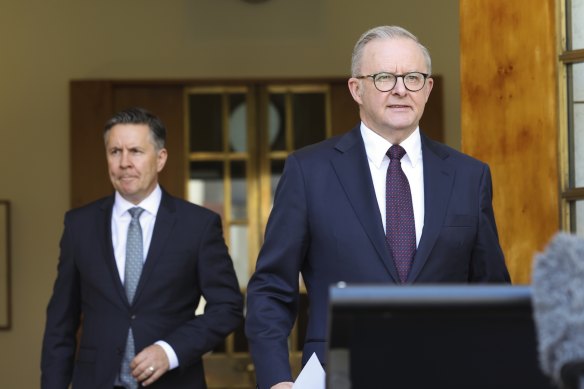
Prime Minister Anthony Albanese will make it cheaper for Australians to see a doctor by paying GPs more if they bulk-bill all adult patients, in an $8.5 billion Medicare boost aimed at middle Australia that will be a key plank of Labor’s re-election campaign.
Albanese will on Sunday unveil Labor’s plan for major health reform, which will extend bulk-billing bonuses to all adults – not just children and concession cardholders – while giving clinics that bulk-bill all patients extra funding and boosting the GP workforce. It will be the largest single investment in Medicare since it was created more than 40 years ago.
As the average out-of-pocket cost for a standard GP visit surpasses $46, and a rising number of Australians delay doctors’ appointments due to cost, Labor’s plan to reduce the fees for working adults will raise the stakes in an election contest over healthcare and the cost of living.
It gives Albanese a clear pitch to voters struggling with living costs in marginal seats that will decide the election and will force Opposition Leader Peter Dutton to match his offer or cede ground on a crucial issue while the Coalition fights Labor’s renewed “Mediscare” attack ahead of the federal poll to be held by May.
“Labor built Medicare. We will protect it and improve it for all Australians. I want every Australian to know they only need their Medicare card, not their credit card, to receive the healthcare they need,” Albanese said.
“No Australian should have to check their bank balance to see if they can afford to see a doctor. That is not who we are. That is not the future we want for Australia. This is a policy that lifts up our entire nation and ensures no one is held back, and no one is left behind.”
Bulk-billing rates for Australians have been declining since 2021 as Medicare rebates have failed to keep up with health inflation, Australians’ health needs have become more complex, and doctors stopped performing bulk-billed pandemic services such as vaccinations.
While 89 per cent of all GP services were bulk-billed in 2021 – meaning Medicare covered the full cost of a patient’s visit, and they did not pay any out-of-pocket costs – this had dropped to 77 per cent by 2023.
Labor’s injection of $3.5 billion to triple the bonus GPs are paid for bulk-billing children, pensioners, and concession cardholders lifted this to 78 per cent in 2024. For children, the bulk-billing rate lifted from 88 per cent to 90 per cent in a year, while for over 65s, it lifted from 86 per cent to 87 per cent.
General adult patients, however, have fared worse, with bulk-billing rates declining from 70 per cent to 69 per cent in a year.
But Sunday’s election commitment aims to turn things around for the millions of Australians who have historically not been eligible for bulk-billing incentives.
How the new payments will work
From November this year, if Labor is re-elected, doctors will get bonuses for bulk-billing all adult Australians – not just children and concession cardholders – while clinics that sign up to bulk-bill every patient will get even larger payments from the government.
The bonuses involve an extra $21.50 payment for each appointment that a GP bulk-bills in metropolitan areas. This lifts to $32.50 in regional centres and keeps increasing until it hits $41.10 per appointment in the most remote communities.
Labor’s free fee TAFE helping thousands in the ACT
Release Date: Thursday 13 February 2025, Media release
The Albanese Labor Government is building Australia’s future by investing in training, with new data showing there have been more than 3,700 enrolments across the ACT since the Free TAFE program began in January 2023.
We are continuing to deliver cost of living relief while encouraging more Australians into construction courses.
That’s why we’re making Free TAFE permanent.
It’s also why we’ve announced a $10,000 incentive payment for Australians in construction apprenticeships.
The Liberals voted to oppose making Free TAFE permanent and have confirmed their plans to cut funding for Free TAFE.
The most popular sectors across the ACT are:
- Care sector (more than 880 enrolments)
- Technology and Digital sector (more than 790 enrolments)
- Early Childhood Education and Care sector (more than 380 enrolments)
- Hospitality and Tourism sector (more than 200 enrolments)
Examples of student fee savings in the Australian Capital Territory include:
- A student studying a Certificate IV in Cyber Security can save up to $3,467
- A student studying a Certificate III in Early Childhood Education and Care can save up to $2,519
- A student studying a Certificate III in Business can save up to $1,375
- A student studying a Certificate IV in Community Services can save up to $2,438
- A student studying a Certificate IV in Mental Health can save up to $2,282
The Albanese Government has also provided $1.5 million in extra funding to the ACT to deliver an additional 340 new Free TAFE places in housing and construction from January 2025. This includes up to 80 pre-apprenticeship places to make it easier for Canberrans to train to get jobs in industries essential to the housing and construction sectors.

 Robin's Room