
Scott Turow Presumed Guilty Swift Press, February 2025.
Thank you, NetGalley, for providing me with this uncorrected proof for review.
This is not ‘just’ a legal procedural, although under Scott Turow’s experienced hand that would be enough. Presumed Guilty is an empathetic analysis of relationships and ageing as well as an insightful consideration of racism and the way in which status through familiarity and hierarchy can grant benefits to some while challenging others’ claims to justice. Although when I read Presumed Innocent many years ago, I was impressed, Presumed Guilty exceeds my expectations. It really is a dazzling encounter with the law and complex characters, and notable for its social commentary.
Rusty Sabich, who was introduced in Presumed Innocent, is now in his seventies, has a congenial partner, and with her has responsibility for her adopted son. Aaron has a criminal record and is now under investigation in a case biased against him as an African American in an almost exclusively white county. Rusty Sabich accepts the job of defending him, putting all his relationships, personal and professional, at risk. The legal exposition of the case Sabich and his investigator conduct is informative, so much so that it could undermine the momentum of the novel. Not so, it is engrossing. At the same time, the personal relationships are explored, in their grittiness, sensitivity, and pain. Truth telling and suspicion are pivotal throughout the narrative. See Books: Reviews for the complete review.
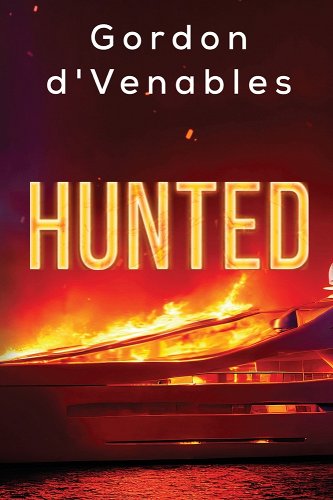
Gordon d’ Venables Hunted Vanguard Press, April 2023.
Gordon d’ Venables continues to combine an engrossing story line with a strong element of social commentary, characters who becoming increasingly engaging and writing that is a pleasure to read. Hunted is the third of d’ Venables’ novels, and having been impressed with his first, The Medusa Image, and thoroughly engrossed with the empathy he shows in Star of the South, I was pleased to have the opportunity to read yet another work. Hunted reintroduces Rhys Curtis and Rat, a MI6 agent. Again, they meet in Thailand at Noi’s restaurant, also familiar territory. Once more, the activities, food and surrounds are narrated in such detail that the reader could well be there. A tuk tuk seems to be just around the corner – if one could bear to leave the pages and hail it!
Hunted is a courageous work, taking as it does real life events, and weaving them into a narrative that resonates with political unease. These fears, looking from 2025 after the result of the Presidential election of 2016 has been repeated, are well worth revisiting. The racism, white supremacy and misogyny are all there in the events of Charlottesville and afterwards, the enthusiasm for guns and freedom of speech that destroys rather than uplifts – the latter is tamped down without mercy – the backdrop to today’s American political environment. See Books: Reviews for the complete review.
American Politics
Civil Discourse with Joyce Vance
Why We Have Due Process
Joyce Vance from Civil Discourse <joycevance@substack.com> Unsubscribe
Forwarded this email? Subscribe here for moreWhy We Have Due Process Joyce Vance Apr 2
Here’s a textbook explanation for why due process is so important: the case of Kilmar Armando Abrego Garcia, a native of El Salvador, who was included on the third plane full of aliens the Trump administration deported to that country on March 15. Only one problem, as the government now concedes in an affidavit filed in the case by Robert L. Cerna, the Acting Field Office Director for Enforcement and Removal Operations at ICE, “this removal was an error.”
Why was it an error? Because in 2019, an immigration judge entered an order that, while acknowledging Abrego Garcia was removable, granted a “witholding of removal” under a law that provides, “the Attorney General may not remove an alien to a country if the Attorney General decides that the alien’s life or freedom would be threatened in that country because of the alien’s race, religion, nationality, membership in a particular social group, or political opinion.” That order is still valid today—the government doesn’t contest that fact and Cerna acknowledges it in his affidavit. But Abrego Garcia was mistakenly added to a flight manifest as an alternate, and when others were removed from the list and he moved up, “The manifest did not indicate that Abrego Garcia should not be removed.”
So, now he’s in a hellhole of a prison in El Salvador at taxpayer expense. That’s your money and my money at work. The affidavit calls it “an administrative error,” an “oversight,” and says that “the removal was carried out in good faith.” I doubt that’s much consolation to Mr. Abrego Garcia and his family.
How many others were made? That’s what happens when you hustle people—yes, people, because those who are here without legal status are still human beings, no matter what this administration would have you believe—onto a plane and dispense them into a prison in a foreign country from which they have little, if any, recourse.
Press Secretary Karoline Leavitt claimed today that there was “a lot of evidence” Abrego Garcia was a convicted member of the gang MS-13, saying that “I saw it this morning.” But he has not been convicted or even prosecuted—a case a local U.S. Attorney would have likely been eager to take if it had merit—and reporting suggests that what the government has is little more than an informant’s claim he belonged to the gang. No one is suggesting Abrego Garcia isn’t deportable and shouldn’t be in ICE proceedings, but he was entitled to at least minimal due process given the pending withholding order before he was consigned to prison, and perhaps much worse, in violation of an immigration judge’s order.
If anyone can be swept up and taken away without recourse to a lawyer and court proceedings to determine the validity of the removal, then you or I could share Abrego Garcia’s fate. And according to the government, it’s too late. Once you’re in El Salvador’s custody, neither a habeas petition nor the order of a federal judge is sufficient to release you. You are at the mercy of the authorities of that foreign country.
Due Process.
It’s one of the foundations of the legal system that makes our democracy great. People are entitled to due process regardless of their citizenship or immigration status under the Fifth and Fourteenth Amendments of the U.S. Constitution. Today’s events help us understand why.
The press secretary insisted that she must be believed when she said that Abrego Garcia was affiliated with the MS-13 gang: “Fact No. 2, we also have credible intelligence proving that this individual was involved in human trafficking. Fact No. 3, this individual was a member, actually a leader, of the brutal MS-13 gang, which this president has designated as a foreign terrorist organization.” Maybe. But given that they made an admitted “clerical” error in deporting him despite the immigration judge’s order, I’d rather let due process take its course than trust the press secretary before the government takes irrevocable steps. You can see why this situation is a textbook explanation of the need for due process.
If you skipped Sunday night’s The Week Ahead post, you may want to go back and read the immigration section to put this into context. Why the rush and hurry on the part of ICE? Why did flights, as the New York Times has reported, fail to turn around and return to the United States after a federal judge ordered them to? One possible answer is the imposition of quotas that require ICE to detain and deport a set number of people every month. As I wrote to you Sunday night: There is a real cost in human terms when the law is disregarded. I’m a former federal prosecutor. I believe in enforcing the laws and keeping our communities safe. I also believe in following the law and believe that obligation falls on the government just as sharply, if not more so, than it does on private citizens.
The Trump administration uses the law to its advantage when it can, ignores it when it can’t, and makes the lines between the two muddy in hopes they can get away with it. But the judiciary has been holding the administration accountable so far, and continues to offer hope that we can hold on until the midterm elections. Today, a federal judge in New Jersey ruled that the government couldn’t defeat former Columbia student and immigration detainee Mahmoud Khalil’s ability to challenge his detention in court by moving him to Louisiana from New Jersey after his petition was filed. It is the small, precise, even mundane, steps like this that force compliance with the rule of law and forge a chance of protection for Americans and people without legal immigration status alike. Due process.
Today, New Jersey Senator Cory Booker, on his way to delivering the longest filibuster ever in the Senate and breaking the record held by South Carolina’s Strom Thurmond, asked if Americans thought they were better off than they were 72 days ago when Trump took power. There is little doubt that the answer is no. Trump is damaging our economy and our foreign partnerships in ways that feel inexplicable for someone who claims to be making America “great again.” Booker went beyond that, saying that this was our moral moment and that inaction was not enough: “Where does the Constitution live? On paper, or in our hearts?”
Here at Civil Discourse, it lives in our hearts and stays on our minds. Thank you for being here with me. I know you have lots of choices about where to get your facts, what’s most important, and how to process what this administration is doing to our democracy. I appreciate that you’re spending some of that time with me. Your paid subscriptions help me devote the necessary time and resources to writing the newsletter, and I’m very grateful. Thank you to everyone who cares about holding onto the American experiment and keeping the Republic. Our strength comes from being in community.
We’re in this together, Joyce
The Abrego Garcia Case: A Quick Update
Joyce Vance from Civil Discourse <joycevance@substack.com> Unsubscribe
I usually try to avoid riding the waves of the news cycle on a minute-by-minute basis, but for the reasons we’ve discussed, the Abrego Garcia case is important not just for his future but for all of us. So I wanted to update you on what has happened following last night’s post about the Supreme Court’s decision.
Shortly after it was issued, Judge Paula Xinis got to work, filing an order requiring the government to give her an update on Abrego Garcia’s location, custodial status, what efforts the government was making, and when it planned to return him. She ordered them to provide her with that information by 9:30 a.m. in advance of a 1 p.m. status conference in court.
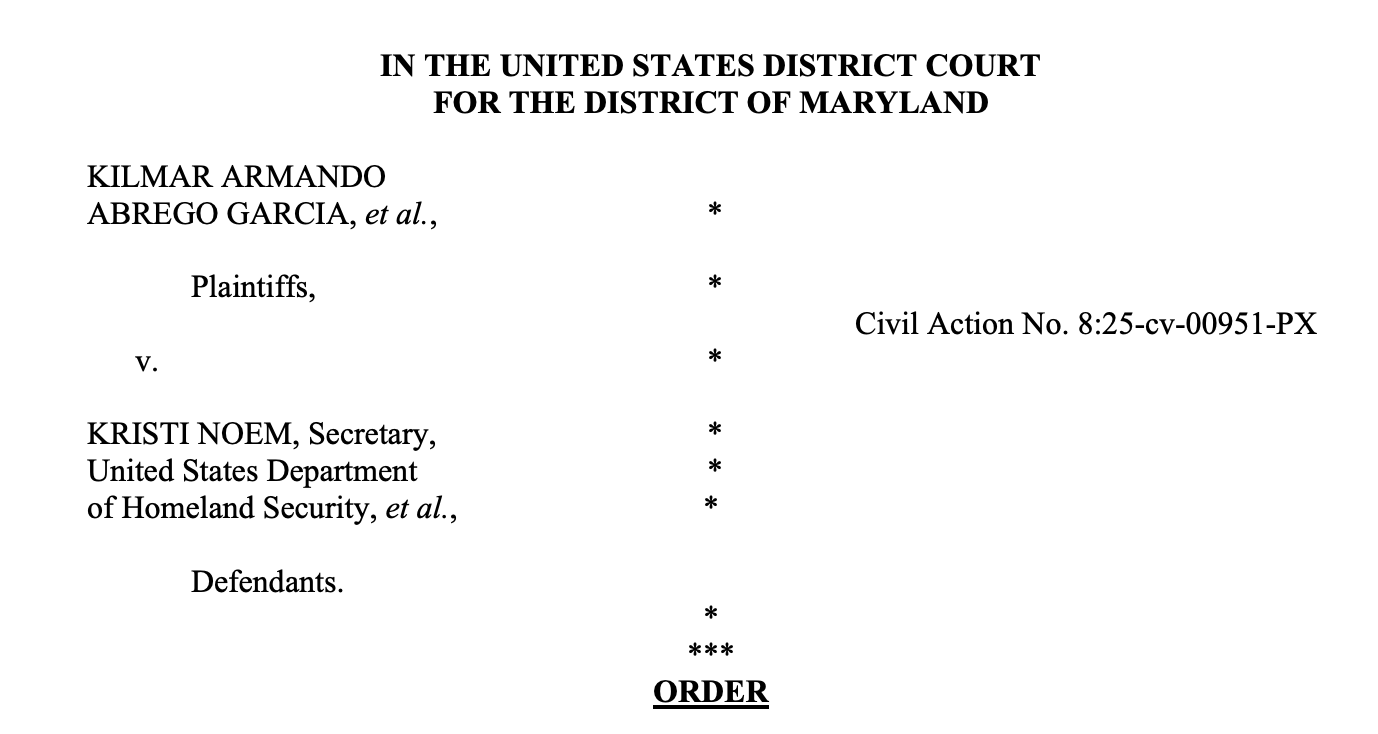
You can find the Judge’s order here. She didn’t waste any time helping the Supreme Court understand what she intended when she ordered the government to “effectuate” Abrego Garcia’s return to the U.S. She wrote that the Supreme Court had “directed that on remand, [that] this Court clarify its use of the term ‘effectuate,’ according proper deference to the Executive Branch in its conduct of foreign affairs…To this end, the Court hereby amends the Order to DIRECT that Defendants take all available steps to facilitate the return of Abrego Garcia to the United States as soon as possible.”
But the Trump administration, which has already conceded that it acted unlawfully when it deported Abrego Garcia, showed no signs of remorse in responding to Judge Xinis, even with the Supreme Court’s new order on the books. This morning, they wrote, “The initial deadline contained in the Amended Preliminary Injunction, which requires Defendants to provide the Court with a plan for diplomatic engagement a mere 30 minutes into the business day following the Supreme Court’s decision last night, is inconsistent with the Supreme Court’s instruction that this Court ‘clarify its directive[] with due regard for the deference owed to the Executive Branch in the conduct of foreign affairs.’”
Far from being impressed by the Supreme Court’s unanimous pronouncement (or at least one lacking any dissents), the government is emboldened by it. Clearly, they are contemplating resort to “diplomatic engagement” as a way around restoring Abrego Garcia. And that means they could do the same for any of us, as long as they managed to spirit us out of the country before we have due process. Sure, the Supreme Court says you have those rights, but as long as the government has a way around, those rights exist only on paper. The government may be headed there.
“It would also be impracticable for Defendants to comply with the Court’s 9:30AM deadline only a few hours after the Supreme Court issued an order in this case…Defendants propose that the Court modify its order to allow Defendants until 5:00 p.m. on Tuesday, April 15, 2025, to submit its supplemental declaration, and to reschedule any hearing on this matter until Wednesday, April 16, 2025.”
Judge Xinis gave the government until 11:30 a.m. ET to respond. She still intends to hold her hearing. She advised the government that:
- Its “act of sending Abrego Garcia to El Salvador was wholly illegal from the moment it happened, and Defendants have been on notice of the same. Indeed, as the Supreme Court credits, ‘the United States acknowledges that Abrego Garcia was subject to a withholding order forbidding his removal to El Salvador, and that the removal to El Salvador was therefore illegal.’”
- The government’s “suggestion that they need time to meaningfully review a four-page Order that reaffirms this basic principle blinks at reality.”
- Nothing the Supreme Court did prohibits the district court from acting quickly. “As the Supreme Court plainly stated, ‘the Government should be prepared to share what it can concerning the steps it has taken and the prospect of further steps,’…all against the backdrop of this Court’s needing to ‘ensure that the Government lives up to its obligations to follow the law.’”
The battle lines are drawn. As we discussed last night, the government is likely to go through another cycle of delay and appeal. In the meantime, Abrego Garcia continues to sit in a place far worse than any American prison, a place the district judge wrote, has “some of the most inhumane and squalid conditions known in any carceral system.”
There will be more news on this during the day, and we’ll follow it closely. I really appreciate that you’re here with me at Civil Discourse. As Americans, we’re all trying to answer the question, “What can we do to save our democracy?” right now. I try to address that question in different ways every time I write to you, whether it’s by keeping you informed or with specific suggestions. And the archive of older posts is available to paid subscribers, so you can go back and read through them when you need a little inspiration. Again, thank you all for your support. More than 635,000 people subscribe to Civil Discourse, and that number grows every day.
We’re in this together,
Joyce
Below is Joyce Vance’s Five Questions which is usually behind the pay wall. She felt that this interview was so important that it should be free to anyone who follows her column. I was fortunate to be one of those people and received the discussion below:
Five Questions with Olivia Troye
Former Pence advisor explains Trump’s EO’s targeting his own people

Joyce Vance , April 12, 2025.
Olivia Troye served as Vice President Mike Pence’s Homeland Security and Counterterrorism Advisor and in other leadership and advisory roles at the U.S. Department of Homeland Security until she resigned in June 2020 over concerns about how the administration was handling the Covid pandemic. Since leaving the administration, Troye has become an outspoken critic of Trump and campaigned on behalf of his Democratic rival Kamala Harris in 2024.
From her time in the first Trump administration, Troye is acquainted with others who became critical of the administration, or who, like her, were merely committed to telling the American people the truth and fell out of Trump’s good graces as a result. This week, two of those people, Miles Taylor and Chris Krebs, were targeted by Trump with executive orders.
The only thing a president can do in an executive order is order an executive branch agency to take or withhold specified actions. Trump has wielded them in an aggressive way, for instance, in an EO designed to suppress voter participation, directing executive agencies to withhold funding from states that don’t fall in line with his plans. But this use of EOs to target individuals Trump has decided are enemies because they didn’t support his fake narrative of voter fraud when he lost the 2020 elections is entirely new. There is no possible way to justify it as democratic. It is paradigmatic of a president who has set his sights on being a dictator.
There is no one better to help us understand this landscape than Olivia, and I’m delighted to have her as our guest for “Five Questions” tonight!
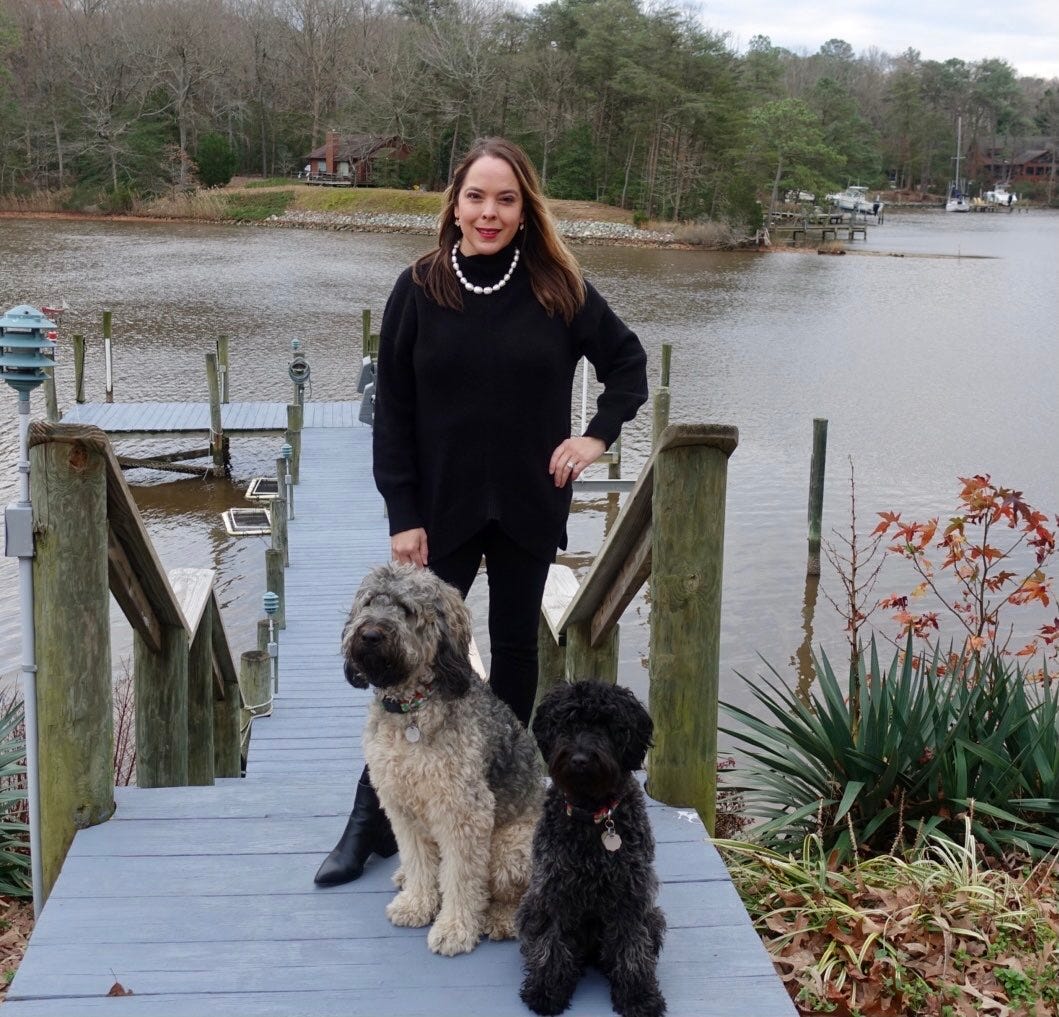
Olivia graduated from the University of Pennsylvania, the National Defense University’s College of International Security Affairs, and the Naval Postgraduate School’s Center for Homeland Defense and Security. She was raised in El Paso, Texas, and although she resides in and has spent most of her career traveling in and out of Washington, D.C., she still refers to El Paso as home. Olivia has started her own Substack, Olivia of Troye Unfiltered, if you want to stay in touch.
“Five Questions” is a feature for paid subscribers to Civil Discourse. The rest of my posts are available to free subscribers as well. This is my way of thanking people who are able to support my work financially so I can devote more time and resources to it. I value having all of you here. Subscribe
Joyce: Trump has issued two separate executive orders targeting your former colleagues, Christopher Krebs and Miles Taylor. Help us understand who they are, what roles they played in the first Trump administration, and why each of them ended up running afoul of Trump.
Olivia: Christopher Krebs led the Department of Homeland Security’s (DHS) Cybersecurity and Infrastructure Security Agency (CISA) during the first Trump Administration. After the 2020 election, Krebs stood up and said the quiet part out loud: that the election was secure and there was no widespread fraud. All he did was do his job, and Trump fired him via a tweet.
Miles Taylor worked at DHS as the chief of staff—he had a front-row seat to some of the most troubling and dangerous ideas being pushed during the first Trump administration. He saw a president who was unfit, erratic, and willing to use the Department of Homeland Security to further his personal agenda. I was witness to many of the policies and endeavors that Taylor expressed concerns about. And when Taylor began to speak out, Trump made him a target.
I served alongside Krebs and Taylor. I was at DHS at the start of the Trump administration and later served in the Vice President’s office. I saw firsthand how hard they worked and how committed they were to public service. They’re not radicals. They’re not partisans. They’re professionals who took their oaths seriously.
Both of these men were Republicans appointed by Trump. But when they put country first and refused to carry out his personal vendettas or lies—they became enemies. Clearly Trump is still holding on to his resentment, and it speaks to his ongoing obsession with the 2020 election.
Joyce: We understand that executive orders are tools presidents can use for compelling action or inaction within the executive branch, but not beyond it, at least not directly. What is Trump doing with each of these orders, and how will they impact Krebs and Taylor?
Olivia: Executive orders are tools meant to guide the executive branch—not to settle political scores. But what Trump is doing here is a dangerous abuse of power. He’s issuing executive orders that single out two former officials—Chris Krebs and Miles Taylor—not because they broke the law, but because they told the truth and wouldn’t bend to his will.
What’s most disturbing is the projection. Trump keeps accusing others of “weaponizing the government,” but this is exactly what that looks like. These orders direct agencies to dig into their records, imply criminality, and call for investigations—based on nothing more than personal grievance.
This kind of move doesn’t just impact Krebs or Taylor. It impacts their families, and potentially their careers, even their friendships. The stress, the potential reputational damage of just being “investigated,” the financial burden of defending yourself—it’s immense. I’ve lived through lawfare from Trump loyalists. It’s exhausting. And it’s meant to be. What they’re facing is an even graver abuse of power, one with potentially lasting consequences for their lives. Knowing that the president of the United States is actively using the power of the federal government to go after you—that’s not governance. That’s intimidation. And if this is what he’s doing out in the open, we have to ask ourselves: what else is happening behind the scenes? What are they planning? Who’s next? That’s what many who are potentially future targets of President Trump’s retribution are wondering. These aren’t isolated incidents–this is part of a broader strategy Trump is enacting.
Joyce: As a former DOJ employee, it’s shocking to me that a president would direct an attorney general to investigate people for what he views as their political opposition to him. He has perhaps dressed it up in the language of law enforcement, but it’s clear this action by Trump is motivated by revenge. It’s even more shocking that an attorney general who received a directive like this wouldn’t rebuke the president for issuing it and refuse to obey, resigning if not fired if it weren’t withdrawn. But of course, that’s not going to happen with Pam Bondi in office. What do you think happens next, and is this dangerous for democracy more broadly in addition to the people Trump has singled out?
Olivia: It’s deeply dangerous—both for our democracy and for every individual he targets. A president weaponizing the Department of Justice to punish those he sees as political enemies is the hallmark of an authoritarian regime. I worked in government. I know how serious it is when the machinery of federal law enforcement is turned inward—not to serve the country, but to serve one man’s grievances.
Pam Bondi won’t push back. She was selected precisely because she won’t. That’s the point. Trump has surrounded himself with loyalists, not rule-of-law leaders. And when the top law enforcement official refuses to draw a line, where are the checks within the system?
So what happens next? I worry we’ll see more of this—additional executive orders, expanded “investigations,” and increasingly chilling attempts to silence truth-tellers. And the broader danger is that we normalize it. That Americans become numb to the erosion of accountability. This isn’t just about Chris Krebs or Miles Taylor. It’s about whether anyone who disagrees with Trump or does something that is seen as noncompliant with his demands is safe from state retaliation. This pattern—targeting political opponents with the justice system—is a signature of deteriorating democratic systems worldwide. It’s what we’ve historically condemned in other nations while claiming American exceptionalism.
Joyce: Trump has used the word “treason” in discussing these executive orders. What are the implications of his framing the issue this way, and how does it impact your level of concern about what’s happening here?
Olivia: When the President invokes “treason” against his critics, he’s not just using harsh rhetoric—he’s wielding a loaded term with serious constitutional significance. It reframes honest dissent as an act of betrayal against the nation itself. The consequences go far beyond legal jeopardy—they invite public targeting, harassment, and even potential violence. This is a calculated attempt to silence legitimate criticism. By leveling such a grave accusation against these two individuals, Trump is sending a broader message—meant to instill fear not just across society, but within the government itself. It’s about making an example of them to keep others quiet.
When leaders label critics as traitors, they aren’t operating within democratic norms—they’re following the authoritarian playbook. This is Putin’s language, not America’s. Our system depends on debate, dissent, and whistleblowers holding our government accountable.
Trump has crossed a critical line by coupling accusations of treason with formal executive orders. This isn’t just rhetoric anymore—it’s state retaliation against critics, dressed in the language of national betrayal. The full weight of federal authority is now being deployed against those whose only offense was upholding their oath to the Constitution rather than pledging personal loyalty.
Joyce: Earlier this week, you posted on Threads that “Not one reporter asked about the Executive Orders targeting Chris Krebs & Miles Taylor during today’s Cabinet press conference. Not one. A sitting president abusing & using the power of DOJ to punish former officials who spoke out against him? That’s the stuff of banana republics. I waited. And waited. But the question never came. Why? Has the fear they want to instill already taken hold?” How concerned are you that Trump has created a culture where the last guardrails, including the press and lawyers, are becoming afraid to check him?
Olivia: That silence shook me. I watched that Cabinet press conference and waited for someone—anyone—to ask the question. But no one did. Not one. And that felt like a warning sign. Because if the press—the very people whose job it is to speak truth to power—are already hesitating to challenge him, then the fear he wants to instill may already be working.
When lawyers start giving in to Trump’s demands, when reporters pull punches, when public servants look the other way out of fear of being the next target—that’s when the system of checks and balances begins to collapse. These institutions are our last line of defense against presidential abuse.
If I had been in that press gaggle during the meeting, my questions would’ve gone straight to Attorney General Pam Bondi: What happened to the statements you made under oath during your confirmation hearing? You stated you would not politicize the Justice Department—that you wouldn’t use it to target people based on their politics. So what’s your response to these two executive orders targeting Republican appointed national security officials from the first Trump Administration?
I’ve lived through this once before. I’ve seen how intimidation works inside that administration. I’ve seen capable officials shrink from speaking uncomfortable truths out of fear of retribution. And I know how much courage it takes to speak out. But I also know this: if we shrink back now, there may soon be nothing left to protect. These executive orders aren’t abstract political theater—they’re the retribution Trump promised. He meant every word. Today it’s Krebs and Taylor, tomorrow it could be you, me, or anyone who dares criticize him. This calculated intimidation strategy aims to break our will—they want to make examples of the truth-tellers so the rest of us fall in line—we can’t let that work. If we normalize this, we lose more than our rights—we lose the courage to defend them. I, for one, will not be silenced. I will be here advocating for them and for others.
In a week where so much happened that it was impossible to focus on all of the important developments, let alone everything, the story of Trump’s revenge orders seemed too important to ignore. I’m grateful to Olivia for her courage and for helping us understand this issue at both a personal level and in the larger context of what it means for democracy. As with the deportation cases we’ve been studying this week, where this starts is not where this ends. Trump may have started with these orders pointed at two individuals, part of the cohort of revenge executive orders that have targeted law firms and others. But it will not end here.
We’re in this together,
Joyce

It’s that time of year, when Bendigo Art Gallery unveils its blockbuster exhibition. From now until July 13 fans of iconic Mexican artist Frida Kahlo are in for a treat.
Taking a different approach to telling the story of one of the most influential artists of the 20th century, the Frida Kahlo: In her own image uses artefacts, photographs and documents to explore her work and the artist’s life.

Sealed in a bathroom at her family home for 50 years, her make-up, clothing, accessories, medical items and personal belongings are on display in Australia for the first time, in a Bendigo exclusive.
The show was conceived and curated by Circe Henestrosa, fashion curator and head of the School of Fashion at LASALLE College of the Arts in Singapore.
Come for the exhibition, but stay for the Fiesta, a celebration of Kahlo and Mexico taking place at restaurants, galleries and public places across the region for the duration of the exhibition. If you’re not a Kahlo fan, you’ll leave one. And even if you don’t, you’ll still find something fabulous to do, see or eat.
Two articles from Women and Reading
The Best Literary Fiction Picks From Reese’s Book Club
BY DAMI KIMMARCH 26, 2025 1:00 PM EST
For avid readers, there’s nothing like getting lost in a beautifully crafted piece of fiction. The emotional rollercoaster, the lifelike characters you meet, and the captivating storytelling are some of the reasons you can’t stop turning the pages. As soon as you finish the book that left you in awe, you’re rushing to find the next good one, but with all of the books published year after year, finding your next amazing read can be a bit overwhelming.
That’s where book club picks and recommendations like those from Reese’s Book Club come in. Since its launch in 2017, Reese’s Book Club has become a trusted source for finding the next amazing book for readers from all demographics. Reese and her book club have mastered the art of selecting novels that amplify diverse voices, which are used to tell thought-provoking narratives. With a keen eye for literary fiction, her book club’s picks offer fresh and compelling perspectives that readers can resonate deeply with. And though you’re guaranteed a good read if you choose any book from Reese’s list, there are five literary fiction picks that we believe stand out above the rest.
The Henna Artist by Alka Joshi
Not only was Alka Joshi’s debut novel “The Henna Artist” one of May 2020’s historical fiction picks from Reese’s Book Club, but it was also nominated for Readers’ Favorite Debut Novel and Readers’ Favorite Historical Fiction of the Goodreads Choice Awards. The book gained worldwide recognition and earned spots on multiple best-seller lists, on top of being a New York Times best seller. This book is the beginning of the author’s Jaipur Trilogy series, and maintains a 4.18-star average with nearly 200,000 reviews on Goodreads.
“The Henna Artist” is set in 1950s Jaipur and tells the story of seventeen-year-old Lakshmi, who escaped an abusive marriage and built a new life as a skilled henna artist. She’s worked hard to pave her own path and is now the most sought-after henna artist by the wealthy women of the pink city. Not only has she won over their hearts with her captivating henna, but she’s also become a right-hand woman to some of them, offering well-grounded advice. Things seem to be going quite well for Lakshmi. But it might be too good to be true as her haunted past shows up on her doorstep — her abusive husband appears with a woman he claims is her sister. Will Lakshmi be able to protect the life she has built? Or will her haunting past unravel everything?
Throwback by Maurene Goo
When Maurene Goo’s “Throwback” was chosen as a Winter 2024 pick for Reese’s Book Club, their Book-Lover-In-Chief said, “We loved the blend of heart and humor in highlighting mother-daughter relationships, and we can’t wait to hear what you think about our Winter YA Pick!” The novel is a unique portrayal of life as an Asian American immigrant, a good mix of humor and heartfelt emotion, and time travel. It brilliantly captures the highs and lows, as well as the generational clashes, of a Gen Z teenager and her relationship with her mother.
Samantha Kang has a hard time understanding her mother, Priscilla. They see things too differently and have never really gotten along, and it sometimes even feels as if her mother is trying to live out her own high school wishes through her daughter. That is, until they get in a huge argument. Despite Samantha’s wishes to move forward, she’s taken back in time. Samantha wakes up to find herself in the ’90s, where she meets her mom as a high schooler. The craziest part is that Samantha feels like she could be friends with ’90s Priscilla. Her time-traveling journey helps her begin to understand her mother in a way she could never before. Will she be able to return to the present and mend their broken relationship for the future, with the understandings she’s gained from the past?
Eleanor Oliphant is Completely Fine by Gail Honeyman
Of all the books that receive buzz, one novel that is consistently named over and over again on reader top 10 lists is May 2017’s pick “Eleanor Oliphant is Completely Fine.” One kind deed changes Eleanor Oliphant’s carefully composed world. When she and Raymond, the scruffy and kind IT guy from work, help an elderly man named Sammy get back on his feet after a fall, the most unlikely friendship begins to form. Eleanor has spent years keeping human connection at bay, avoiding small talk and sticking to rigid routines. But her new bond with Raymond and Sammy brings her out of her shell of solitude, and she realizes the only way to heal from your past is by opening your heart.
With one Reddit user saying, “…it was one of the best books I’ve read in 20 years!” as they recommended it to users, this story will have you binge reading. What’s even more impressive is that Gail Honeyman wrote this debut novel while working a full-time job. The novel has been nominated for countless awards, such as the Lucy Cavendish Fiction Prize, and like many other popular BookTok titles, it’s in the works to be adapted into a film.
The Giver of Stars by Jojo Moyes
While “Me Before You” may be Jojo Moyes’s most famous book, “The Giver of Stars” was one of Reese’s picks for November 2019. In this work of historical fiction, Moyes explores compelling themes like female friendships, resilience, and the transformative power of books. This book will take you to 1930s Kentucky and delve into the lives of a group of women who come together to do something special and meaningful for people. Moyes writes an emotionally rich narrative and crafts a telling story about hope and purpose.
In 1930s Kentucky, there’s a group of women who deliver books on horseback, known as the Packhorse Librarians of Kentucky. Through these book deliveries, they not only deliver literature but also deliver courage, hope, and knowledge. Among these women is an Englishwoman named Alice Wright. She married an American man, hoping marriage would set her free. Instead, she finds herself feeling trapped in a small town and suffocated with her controlling father-in-law breathing down her neck. Desperate for another escape, she jumps at the opportunity to join Eleanor Roosevelt’s travel library and comes to discover an unexpected sisterhood with the other four women librarians. Together, these courageous women will go above and beyond to help people understand that stories can transform people’s lives. This story is a mighty tribute to the resilience of women, their powerful friendships, and their ability to overcome the most unthinkable adversities.
The Island of Missing Trees by Elif Shafak
Award-winning author Elif Shafak’s “The Island of Missing Trees” was a November 2021 pick for Reese’s book club, and it’s obvious why. Shafak works magic with her literary prose and tells a story of rich cultural history, the deepest emotional connections, and the intricacies of self-identity, which are sure to resonate with readers. The narrative will take you on a journey of love, loss, grief, and the power of memory.
Long ago, on an island, there stands a taverna with a beautiful tall fig tree. This tree was anything but an ordinary fig tree, as it could remember the past and observe the emotions many humans have felt. One day, the tree watches two teenagers, Kostas, a Greek Cypriot, and Define, a Turkish Cypriot, meet by chance and fall in love. The tree witnesses the two teens’ secret meetings and their unfortunate departures as war engulfs their lives. The war-torn island is changed forever, but the tree remains, holding people’s memories. Decades later, Ada is the daughter of Greek Cypriots and lives in the bustling city of London. In her garden is a beautiful ficus tree, and that tree and its roots are Ada’s only link to the dark secrets of her family’s past. The ficus tree will become an anchor in Ada’s life as she navigates years of history that unravel secrets to understand her family’s story, identity, and place in the world.
How we came up with this list
Reese’s Book Club has done an exceptional job at representing diverse voices from around the world, giving readers a glance into a wide range of cultures and perspectives. When selecting works for this list, we prioritized books that readers might consider unexpected, going beyond the more familiar picks by well-known authors. Of course, there were some already famous titles we just couldn’t resist and had to include.
With this list, we hope to introduce stories that will challenge our readers and expand their horizons. To that end, we reviewed each book’s synopsis, and opted for the ones that had compelling and intriguing narratives. After narrowing our list down to fifteen books, we combed through reader reviews on literature subreddits to gauge how each title was received, allowing us to determine our top five.
Read More: https://www.women.com/1819228/best-literary-fiction-picks-reese-book-club/
Here are the finalists for the Women’s Prize for Nonfiction.

By Literary Hub
March 26, 2025, 9:00am
Today, the Women’s Prize for Nonfiction—founded last year “to amplify female voices, whilst celebrating books that inform, challenge, disrupt, and offer solace and connection”—announced its 2025 shortlist: six books, whittled down from a longlist of 16, that span subjects from history to science to memoir.
“It’s an absolute pleasure to announce six books on our 2025 shortlist from across genres, that are united by an unforgettable voice, rigour, and unique insight,” said Kavita Puri, Chair of Judges, in a statement. “Included in our list are narratives that honour the natural world and its bond with humanity, meticulously researched stories of women challenging power, and books that illuminate complex subjects with authority, nuance and originality. These books will stay with you long after they have been read, for their outstanding prose, craftsmanship, and what they reveal about the human condition and our world. It was such a joy to embrace such an eclectic mix of narratives by such insightful women writers – we are thrilled and immensely proud of our final shortlist.”
The winner will be announced on June 12, and will receive £30,000 and a limited-edition artwork known as the “Charlotte,” gifted by the Charlotte Aitken Trust.
Here’s the shortlist:
Neneh Cherry, A Thousand Threads
Citation from judge Kavita Puri: “A story of a remarkable life and the many threads that made it. This is a book about belonging, family, how we find our place in society and, of course, music. The writing is exceptional, and effortless. It’s a complex portrayal full of warmth, honesty and integrity, and how Neneh came to be who she is today.”
Rachel Clarke, The Story of a Heart
Citation from judge Dr Elizabeth-Jane Burnett: “This book combines the author’s expertise with the emotional resonance of the subject to bring together an extraordinary story. It shows how advances in medical science and nursing care made it possible for one family to donate to another a gift that can never be repaid – the gift of life. It moves effortlessly between disciplines and is meticulously researched and superbly written.”
Chloe Dalton, Raising Hare
Citation from judge Elizabeth Buchan: “This is a beautiful meditation on the interactions between the human and the natural world that takes you under its spell. I really like how the book opens up questions of wildness; how do we let the wild into our lives, and what can we do in our own spaces to cultivate a relationship between us and the natural habitat?”
Clare Mulley, Agent Zo: The Untold Stories of Courageous WW2 Resistance Fighter Elżbieta Zawacka
Citation from judge Dr Leah Broad: “This is a masterfully written biography that brings Elżbieta’s extraordinary story to life in exceptional detail. Phenomenally well researched, it’s a window into World War Two stories that aren’t often told, seen through the life of an inspiring and powerful protagonist. The book follows Elżbieta right into the 21st century, showing the complexity of post-war politics – this is history that still resonates today.”
Helen Scales, What the Wild Sea Can Be: The Future of the World’s Ocean
Citation from judge Emma Gannon: “A heartfelt exploration of the deep sea, from coral to whales, to emperor penguins to kelp. The writing is urgent, spellbinding and gripping, showing the ways humans have accelerated climate change and how we can fight for a better future. This book is a delight and will make you appreciate how magical and fragile life is – and how we need to appreciate the life-giving nature of the Earth’s oceans.”
Yuan Yang, Private Revolutions: Coming of Age in a New China
Citation from judge Kavita Puri: “This book traces a moment of transition in China through the lives of four women who were growing up in the years after Tiananmen Square. These coming-of-age stories are ones you rarely hear of: individuals who want different lives from their parents and who are battling the system in the hope of a better life. It’s eye-opening, beautifully written and carefully researched.”
Babe at 30: Why this much-loved Australian film is one of the best cinematic adaptation of a children’s book

Kiera Vaclavik Apr 04, 2025, updated Apr 04, 2025

Actor James Cromwell never ate meat again after making Babe. Photo: Universal Pictures
This autumn, Babe is returning to selected cinemas to mark the 30th anniversary of its release in 1995.
The much-loved family film tells the deceptively simple but emotionally powerful story of a piglet who saves his bacon through intelligence, kindness and hard work.
So, what exactly is so special about Babe?
It was one of the first films which, thanks to the then-cutting edge combination of animatronics and visual effects, delivered convincing talking animals who, endowed with the gift of speech, could themselves “look like movie stars”.
But with all the jaw-dropping technological advances of the last 30 years, how has this film managed to stand the test of time so well?
The answer in part is that its source material is exceptionally strong. The Sheep Pig is written with restraint and economy, but also great warmth and relish.
King-Smith has immense fun, wallowing in words like the proverbial pig in muck, and putting it all to the service of a story whose core values are easy to get behind.
Babe becomes the trusted ally of both farmer and farmyard animals and, like so many Hollywood heroes before and since, he refuses to stay in his lane.
It’s a film which, on paper, really shouldn’t work and which sounds alarm bells to any self-respecting children’s literature scholar like me.
Directed by Chris Noonan – who also co-wrote the screenplay with George Miller – Babe was filmed in the Australian town of Robertson with a predominately Australian cast, including Magda Szubanski.
It takes an expertly crafted English children’s book with tasteful black-and-white illustrations – Dick King-Smith’s The Sheep Pig (1983) – and turns it into an all-singing, all-dancing technicolour extravaganza.
The film inserts new episodes and characters – an evil cat, a plucky duck and (most alarmingly) a brace of brattish kids. And it replaces a perfectly good, does-what-it-says-on-the-tin book title with the cutesy moniker of the piglet star.
It shouldn’t work … but it really, really does. In fact, I’d go so far as to say that it’s one of the most successful film adaptations of a children’s book of all time.
It met with both commercial and critical success, making over US$254 million ($400 million) at the box office and being nominated for no less than seven Academy Awards, one of which it secured for visual effects.
But the excellence of a film’s bookish bedrock is no guarantee of success.
Indeed, the brilliance of a book can often be something of a liability. Think of Tim Burton’s Alice in Wonderland, or any of the film and TV adaptations of Noel Streatfeild’s superb Ballet Shoes.
With Babe, though, the book is catalyst rather than straitjacket, an enabling prompt which initiates a new work of equal strength and quality.
The pacing is well judged, the look of the film lush, and there are several actual laugh-out-loud moments – including the duck’s panicked realisation that “Christmas means carnage!”
Above all, it’s a film with immense emotional intelligence and power.
Recognised for its visual effects, it also succeeds in large part because of the strength of its soundscape and score.
There’s one scene in particular which really soars, and which takes on the elephant in the room: the human habit of eating pigs.
Babe is so shocked and upset on learning this fact from the evil cat (who else?) that he loses the will not just to win in the sheepdog trial, but to live at all.
The supremely taciturn Father Hoggett must act to make amends and save his pig protégé.
In an astonishingly moving act of love, this man of few words takes the sickly and sick-at-heart pig onto his lap and sings to him.
At first a gentle crooning, the farmer’s expression of care and affection soon swells to an out-and-out bellow, accompanied by a wild, caution-to-the-wind dance.
It’s difficult to imagine a more lyrically apt song than the 1977 reggae-inflected hit based on the powerful tune of Camille Saint-Saëns’ Symphony No. 3 in C Minor: If I had words, it begins.
It’s a moment of huge emotional force and intensity, in which the gaping abyss of age and species difference are bridged through music and dance.
James Cromwell as Farmer Hoggett, here and throughout the film, is tremendous, his reserved performance a key factor in its success.
The role – which he almost didn’t take because of the paucity of lines – was career-defining, and prompted personal epiphanies which flow naturally from this scene.
First, Cromwell never ate meat again. Second, he has spoken (with visible emotion) of the delivery of the film’s final pithy-but-powerful line of approbation – “That’ll do pig, that’ll do” – as a moment of communion with his father on catching sight of his own artificially aged reflection in the camera lens.
“My life changed, and I owe it to a pig,” the actor concludes.
Babe is a film and an adaptation with many qualities. It’s wholesome without ever being sickly. But above all, it has an emotional force which worked on actors and audiences alike and which, 30 years later, remains undiminished.
Kiera Vaclavik is Professor of Children’s Literature & Childhood Culture at Queen Mary University of London.
- Babe is showing at selected cinemas across Australia and available to stream on Binge
Special Correspondent travelling from Canberra to Perth
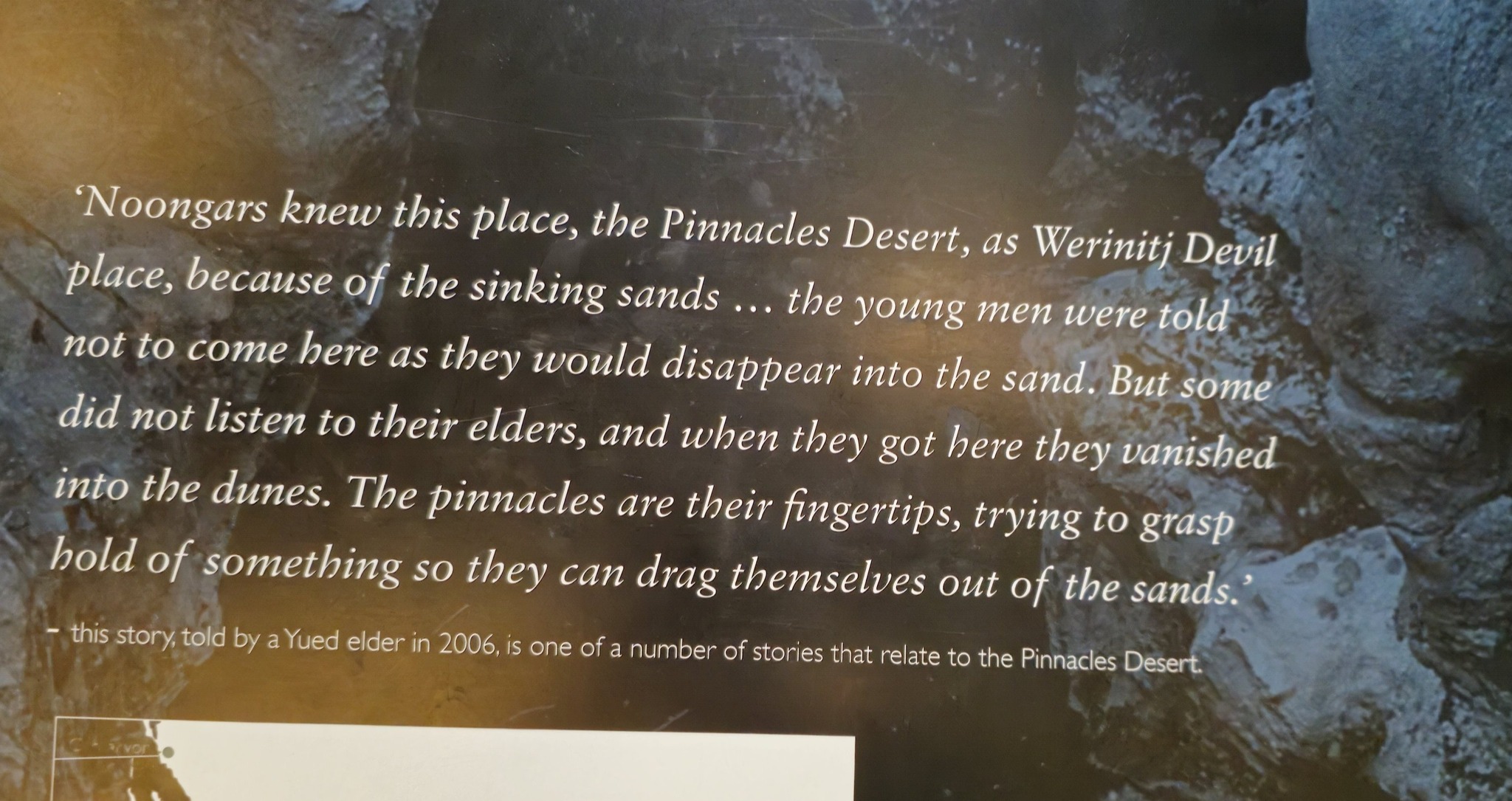
We are back on the road again, heading north to Geraldton and then back to Perth for a family gathering. Weather is fabulous, while chilly mornings are becoming a reality at home, here it is warm and balmy and definitely swimming weather. Days are flying by and fully occupied with driving, finding dump points and potable water filling stations as well as the more holiday aspects of exploring, beach walks and lots of reading. I have picked up all my books from community libraries along the way, finding a fair amount of dross of course as well as some rippers by familiar and unfamiliar authors. So life is pretty blissful really.
I actually hate those prints of sunsets you can buy so I’ve no idea why I feel compelled to take photos of same but they are just so incredible can’t help it.




Note from editor – I am glad that you succumbed!


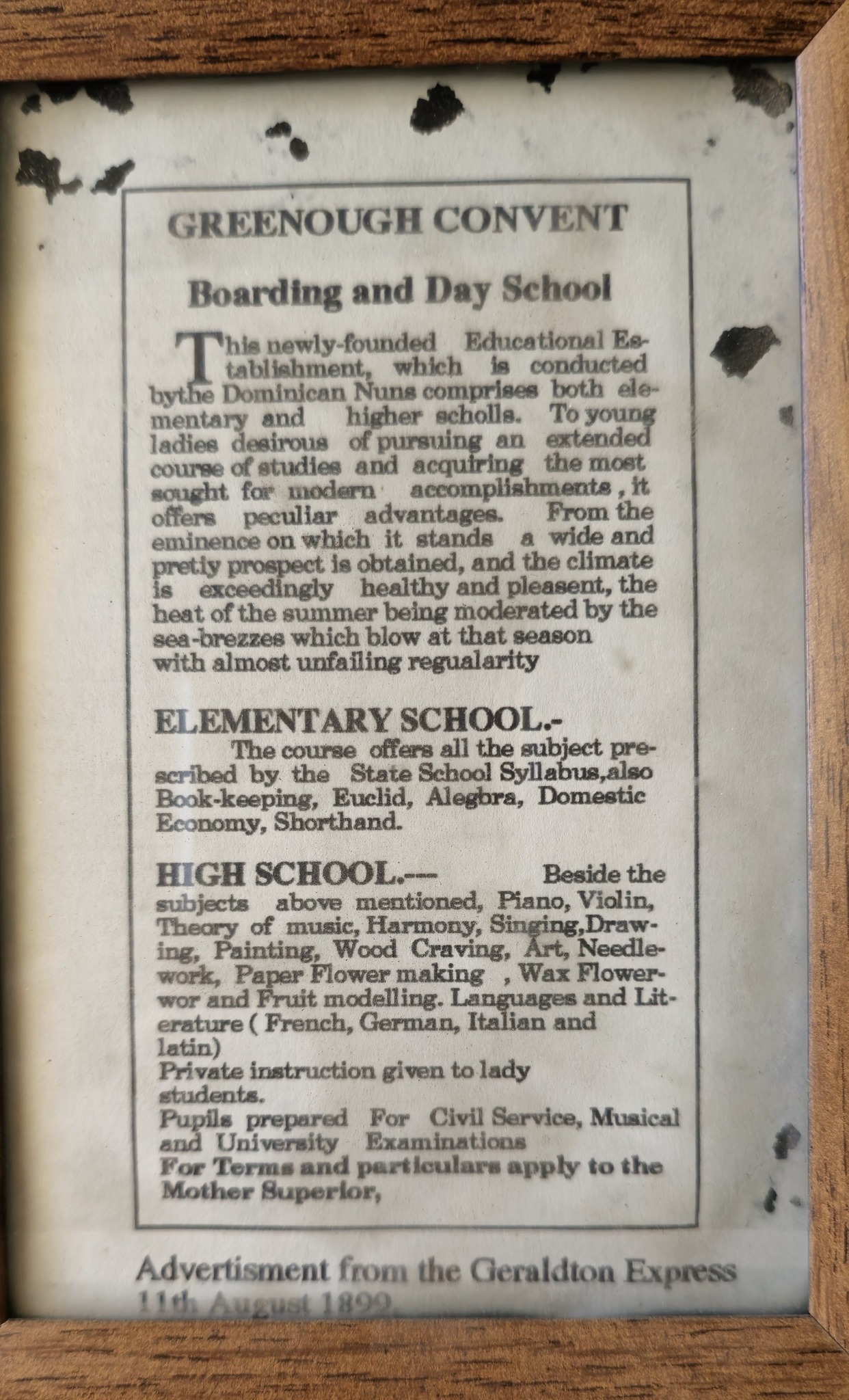


Greenough historic village was really good to visit







Cindy Lou enjoys some casual meals in Western Australia – Midland and Fremantle
Dome, Midland
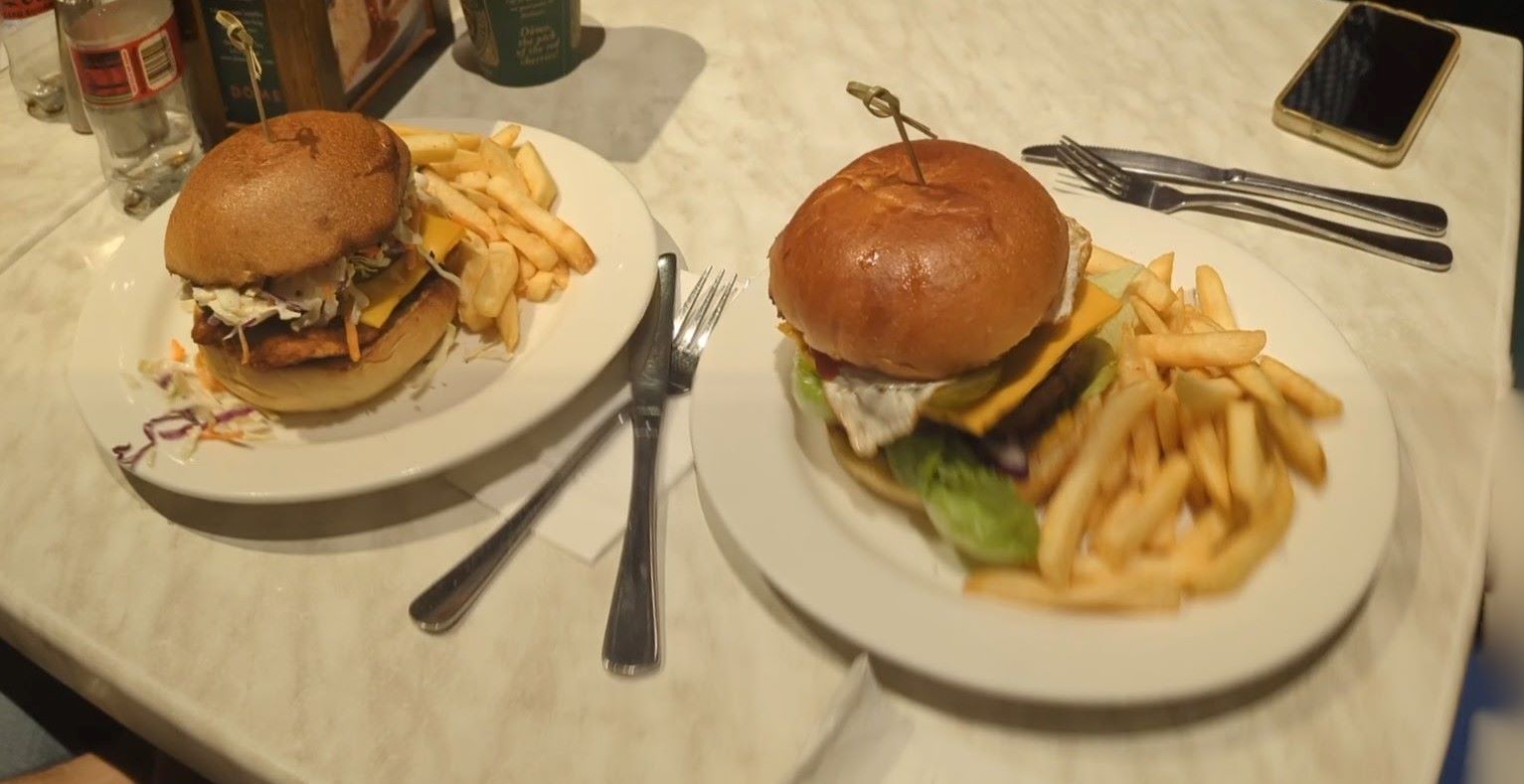
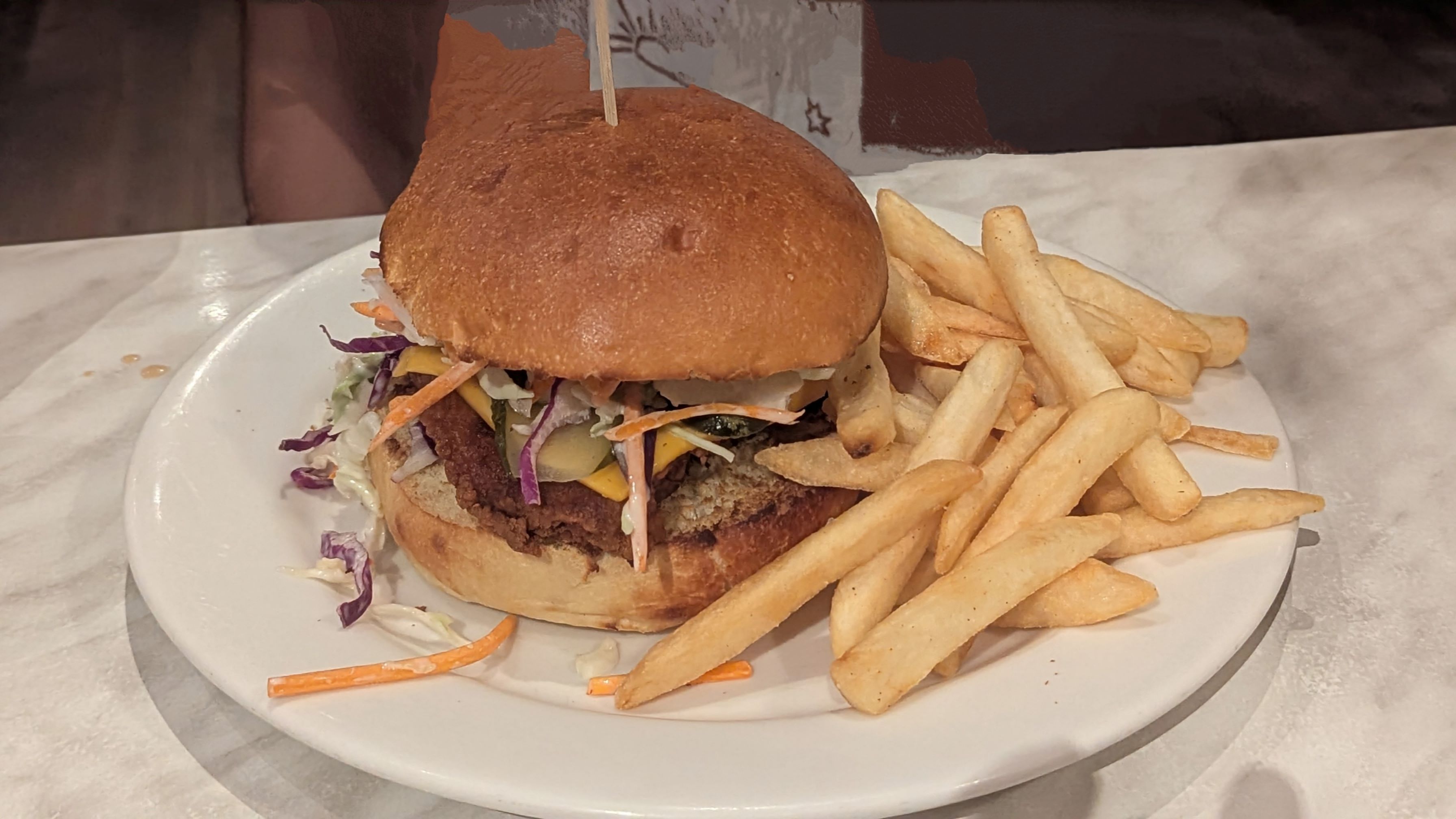
Dome is always worth a visit, and on this occasion, Dome Midland provided us with some very generous and flavoursome meals. I had the falafel salad – a good choice, with delicious falafel with crisp crusts and a soft inside. The burgers were enormous, with a generous serve of excellent chips. The bruschetta was a small meal but enhanced with a taco from someone else’s prawn taco order.



Briscola, Midland
This is a friendly pizza place, with great pizzas. Although they were a rather long time coming, the popularity of Briscola was evident as it was filled to capacity, with us having to take a seat in the back. Briscola has outdoor and indoor seating.


Breakfast – The Colony Coffee House and Turquoise, Midland
Coffee choices are abundant, and we chose Turquoise for coffee on two occasions. Their meals were large and very fancy, so not quite right for our breakfast. The simple offerings at The Colony were great for one morning.





Breakfast New Ritual, Midland
Meals here are generous, and there is indoor and outdoor seating. The staff is very efficient, smiling and helpful. Some of us enjoyed a lovely breakfast, and others had excellent coffees made to order -matcha, weak skinny latte and the popular flat white (large because we are in Australia, not London where they only serve small ones). The lunch menu is also very attractive.



Pasta at Vin Populi, Fremantle
Vin Populi is a lively restaurant with a pasta, risotto and dessert menu. The drinks menu is comprehensive, and our friends enjoyed some excellent reds. The clam pasta was a difficult eat, with its long linguine . Fortunately, I did not have to look at myself. My friends chose wisely, with a lovely looking risotto, and beef pastas with pasta shapes that were easy to devour – very neatly, indeed.



Coffee at Ginos
What a lovely place to sit in the sun, drinking a coffee made to my taste, and served by a pleasant smiling staff member. I mention the latter as usually there is no table service for coffees, but on this occasion as the crowd had not arrived, she brought our coffees to us.


 Robin's Room