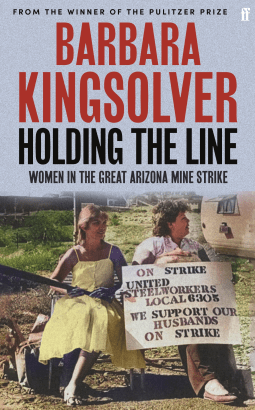
Barbara Kingsolver Holding the Line Women in the Great Arizona Mine Strike Faber and Faber Ltd, October 2024.
Thank you, NetGalley, for providing me with this uncorrected proof for review.
Barbara Kingsolver has written a non-fiction book that echoes the skill she demonstrates in her fiction. The preface is a wonderful insight into the author as well as her subject. Kingsolver’s future as a writer of impactful fiction is one of the joys to realise through this, one of her early works as a journalist. Here, we see the woman who has written so masterfully about issues while drawing the reader into a fictional world from which it is difficult to emerge unchallenged. Now, to the content of this non-fiction example of her work. The women portrayed in Holding the Line are engaging and confronting, at the same time as demanding awareness and empathy. They provide a valuable history of women’s contribution to this particular strike, while presenting a thoughtful understanding of the way in which so many women, their contributions unrecorded, may have contributed to industrial action.
Kingsolver sees the women’s stories as promoting hope, that they recognised that the goal should be seeking justice rather than revenge and their contribution to demonstrating that people who see themselves as ordinary can scale impregnable heights. She also has a word of warning – no-one is necessarily exempt from what happened during these women’s fight for justice. See Books: Reviews for the complete review.
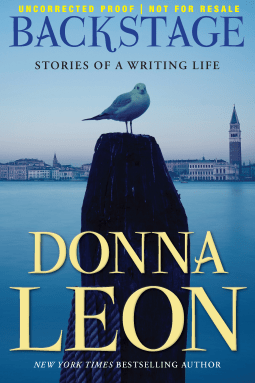
Donna Leon Backstage Stories of a Writing Life Grove Atlantic | Atlantic Monthly Press, August 2025.
Thank you, NetGalley, for providing me with this uncorrected proof for review.
Donna Leon’s Wandering through Life: A Memoir was a satisfying enough collection, particularly where she reflects upon her teaching English in Iran, China, and Saudi Arabia. Although this experience is also recalled in Backstage, I found the whole of this collection far more engaging. Here, another part of Donna Leon’s world is revealed, in sharper recall, more wholly reflecting her fictional work. Like Wanderings her welcome into this further world is open and honest. However, the attention it commands and, at times, background knowledge to fully appreciate it adds a valuable dimension. This world is introduced through opera, her own writing, others’ writing, her love for Venice and her work that seems so remote from Brunetti’s Venetian world but is indeed hers too. See Books: Reviews for the complete review.
American Politics
100 Days of the Trump Presidency
Since taking office, Trump’s has made extensive use of executive orders, some of which have tested the limits of executive authority, and others faced immediate legal challenges. A major focus has been on immigration reform, deportations, tariffs, limiting DEI practices, cutting federal spending, reducing the federal workforce, increasing executive authority, and implementing changes to foreign policy. (edited from Wikipedia).While the chaos of the Trump Presidency continues toward the important 100 days that is a significant marker of a presidential term it is worth reflecting upon the first 100 days of the Biden Presidency written about by Kelly Hyman in Build Back Better. The First 100 Days of the Biden Administration, and Beyond.
My review of this book appears below. The first 100 days of a presidential term took on symbolic significance during Franklin D. Roosevelt’s first term in office, and the period is considered a benchmark to measure the early success of a president.
In the meantime, the first 100 days of the second Trump Presidency began on January 20, 2025. The 100th day of his second presidency ends on April 30, 2025. As of March 16, 2025, President Trump has signed 92 executive orders, 22 memorandums, 17 proclamations and signed the Laken Riley Act: his first and so far, only legislation of his second term.
Adam Schiff Destroys Trump For 100 Days Of Crime, Lies, And Failure
Sen. Adam Schiff (D-CA) marked Trump’s first 100 days in office by calling out the president’s lies, false promises, and failures.
Few people have more direct experience investigating Donald Trump as a member of Congress than Sen. Adam Schiff. As chair of the House Intelligence Committee, Schiff led the first impeachment investigation of President Trump. After Trump was impeached the first time, Schiff was the lead House prosecutor to argue the case before the Senate, and he later served on the 1/6 Committee.
Promised during the campaign, in fact, to the degree that they were written about during the campaign in Project 2025, he tried to run away and disavow them. So, he doesn’t have a mandate to do what he’s doing, and I think it’s reflected in the already enormous voter dissatisfaction in his first a hundred days.
Yeah, no, people are just starting to feel the tariffs. They’re gonna feel them a lot more, which I imagine is going to be worse for him.
Schiff also talked about the purpose of Trump’s arresting judges:
I think it is, yeah. In a normal, rational world, you would have immigration authorities work with a courthouse.
And decide, okay, how do we work together? Or how do we at least not interfere with what each other are doing? You wouldn’t have the kind of confrontation and arrest that we saw, but the administration relishes this. They relish the opportunity to go after judges. They relish the opportunity to try to intimidate and shock people.
They talk, just gleefully about impeaching judges they disagree with. So it is part of a broader assault on the rule of law, a broader effort to intimidate. They’re intimidating. The universities, they’re intimidating the law firms. They’re intimidating corporations forcing them to come hat in hand, begging for exemptions from tariffs, and now they’re trying to intimidate the judiciary as well.
Trump’s first 100 days have been a historic failure, with the majority of Americans turning against him faster than any president in the history of polling.*However, as Sen. Schiff pointed out, Democrats cannot rely solely on Trump’s failure to regain power.
Democrats also need to devise an agenda that voters will want to support. However, it will probably be enough for Democrats to run on Trump’s failure to win back the House.
Republicans have hitched their wagons to a flaming dumpster, and the rest of the country is trying to prevent the blaze from spreading.
*realclear polling.com/poll
President Trump Job Approval
Biden Job Approval | Trump First Term Job Approval | Obama Job Approval | Bush Job Approval
Trump Approval on Issues: Economy | Foreign Policy | Immigration | Inflation | Russia/Ukraine | Direction of the Country See Further Commentary and Articles arising from Books* and continued longer articles as noted in the blog. for the table.
RealClearPolitics Poll Average 45.3 Approve 52.4 Disapprove -7.1

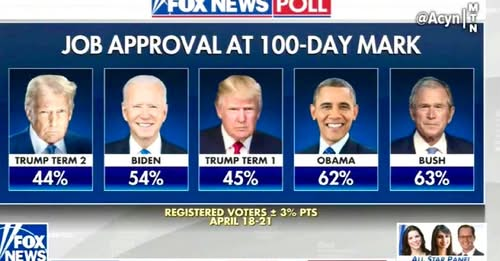
There were numerous books written about the first 100 days of the first Trump presidency. However, the latest information on the Trump Presidency appears to be in news articles and polls, rather than anyone having written a book about it. If anyone has the details of any book written about this presidency I would appreciate being able to make a comparison of that with the review I wrote of Kelly Hyman’s Build Back Better. The First 100 Days of the Biden Administration, and Beyond. See below.
Kelly Hyman Build Back Better. The First 100 Days of the Biden Administration, and Beyond Amplify Publishing, 2021.
Thank you NetGalley for providing me with this uncorrected proof for review.
As I finished reading Build Back Better, Brian Williams began The 11th Hour on MNSBC, with his familiar phrase enumerating the day of the current Presidency. Tonight, it was ‘Day 147 of the Biden Administration’. That Kelly Hyman has written in detail about only the first 100 days, and that the story continues, is not a defect. This is particularly so when her approach is that of a thoughtful observer and sometime advocate, rather than a writer who is ticking off the good and bad points of the administration, arriving at a number, and leaving the scene for someone else to analyse. Not that this work dwells on analysis. As is appropriate, Hyman provides a useful dialogue reflecting some of her thoughts and evaluation, some of the responses to President Biden and Vice President Harris initiatives, and at times, her hopes for the future.
Hyman provides a clear record of what has happened, including detail on the Executive Orders signed by President Biden, where policies have been introduced or changed between this administration and the last, and reflection on some of the proposed policies being devised and debated in Congress and between the Democratic and Republican Parties.
I admit that I had some misgivings about this author. Kelly Hyman appears on Fox and Friends, Newsmax, OAN and local Sinclair outlets at times and would accept invitations to speak on other right wing news outlets. At the same time, she is an acknowledged Democrat, has donated her time to working for the Party, and is a Democratic strategist, ‘a voice for the hope and values of the new administration’. She believes that conservative media consumers deserve to hear more than one opinion – and offers it. Indeed, she says, ‘This book is an open letter to my viewers on conservative media. Independents and Democrats are welcome as well’. I am glad that I decided to join her audience too.
Build Back Better provides a clear, authoritative account of the start of Joe Biden’s Presidency. It is a useful read for those interested in American politics in general, and for those who wish to follow this Presidency in particular. I found Kelly Hyman’s book a sound accompaniment to watching MSNBC political news, American political historian, Heather Cox Richardson’s column and podcasts, and local (Australian) news sources.
Rachel Maddow reflects on the 100 days
The real lesson… https://www.facebook.com/reel/666427602789738
Women’s work – historical insight into industrial relations: Frances Perkins
Heather Cox Richard’s historical newsletters are always valuable. This one seemed an appropriate newsletter to follow the book review for this week.
Heather Cox Richardson from Letters from an American <heathercoxrichardson@substack.com> Unsubscribe
Forwarded this email? Subscribe here for more
March 25, 2025Heather Cox RichardsonMar 26
On March 25, 1911, Frances Perkins was visiting with a friend who lived near Washington Square in New York City when they heard fire engines and screams. They rushed out to the street to see what the trouble was. A fire had broken out in a garment factory on the upper floors of a building on Washington Square, and the blaze ripped through the lint in the air. The only way out was down the elevator, which had been abandoned at the base of its shaft, or through an exit to the roof. But the factory owner had locked the roof exit that day because, he later testified, he was worried some of his workers might steal some of the blouses they were making.
“The people had just begun to jump when we got there,” Perkins later recalled. “They had been holding until that time, standing in the windowsills, being crowded by others behind them, the fire pressing closer and closer, the smoke closer and closer. Finally the men were trying to get out this thing that the firemen carry with them, a net to catch people if they do jump, the[y] were trying to get that out and they couldn’t wait any longer. They began to jump. The…weight of the bodies was so great, at the speed at which they were traveling that they broke through the net. Every one of them was killed, everybody who jumped was killed. It was a horrifying spectacle.” By the time the Triangle Shirtwaist Factory fire was out, 147 young people were dead, either from their fall from the factory windows or from smoke inhalation.
Perkins had few illusions about industrial America: she had worked in a settlement house in an impoverished immigrant neighborhood in Chicago and was the head of the New York office of the National Consumers League, urging consumers to use their buying power to demand better conditions and wages for workers. But even she was shocked by the scene she witnessed on March 25.
By the next day, New Yorkers were gathering to talk about what had happened on their watch. “I can’t begin to tell you how disturbed the people were everywhere,” Perkins said. “It was as though we had all done something wrong. It shouldn’t have been. We were sorry…. We didn’t want it that way. We hadn’t intended to have 147 girls and boys killed in a factory. It was a terrible thing for the people of the City of New York and the State of New York to face.”
The Democratic majority leader in the New York legislature, Al Smith—who would a few years later go on to four terms as New York governor and become the Democratic presidential nominee in 1928—went to visit the families of the dead to express his sympathy and his grief. “It was a human, decent, natural thing to do,” Perkins said, “and it was a sight he never forgot. It burned it into his mind. He also got to the morgue, I remember, at just the time when the survivors were being allowed to sort out the dead and see who was theirs and who could be recognized. He went along with a number of others to the morgue to support and help, you know, the old father or the sorrowing sister, do her terrible picking out.” “This was the kind of shock that we all had,” Perkins remembered. The next Sunday, concerned New Yorkers met at the Metropolitan Opera House with the conviction that “something must be done. We’ve got to turn this into some kind of victory, some kind of constructive action….” One man contributed $25,000 to fund citizens’ action to “make sure that this kind of thing can never happen again.” The gathering appointed a committee, which asked the legislature to create a bipartisan commission to figure out how to improve fire safety in factories. For four years, Frances Perkins was their chief investigator.
She later explained that although their mission was to stop factory fires, “we went on and kept expanding the function of the commission ’till it came to be the report on sanitary conditions and to provide for their removal and to report all kinds of unsafe conditions and then to report all kinds of human conditions that were unfavorable to the employees, including long hours, including low wages, including the labor of children, including the overwork of women, including homework put out by the factories to be taken home by the women. It included almost everything you could think of that had been in agitation for years. We were authorized to investigate and report and recommend action on all these subjects.” And they did. Al Smith was the speaker of the house when they published their report, and soon would become governor. Much of what the commission recommended became law.
Perkins later mused that perhaps the new legislation to protect workers had in some way paid the debt society owed to the young people who died in the Triangle Shirtwaist fire. “The extent to which this legislation in New York marked a change in American political attitudes and policies toward social responsibility can scarcely be overrated,” she said. “It was, I am convinced, a turning point.”
But she was not done. In 1919, over the fervent objections of men, Governor Smith appointed Perkins to the New York State Industrial Commission to help weed out the corruption that was weakening the new laws. She continued to be one of his closest advisers on labor issues. In 1929, when Franklin Delano Roosevelt replaced Smith as New York governor, he appointed Perkins to oversee the state’s labor department as the Depression worsened. When President Herbert Hoover claimed that unemployment was ending, Perkins made national news when she repeatedly called him out with figures proving the opposite and said his “misleading statements” were “cruel and irresponsible.” She began to work with leaders from other states to figure out how to protect workers and promote employment by working together. In 1933, after the people had rejected Hoover’s plan to let the Depression burn itself out, President-elect Roosevelt asked Perkins to serve as Secretary of Labor in his administration. She accepted only on the condition that he back her goals: unemployment insurance, health insurance, old-age insurance, a 40-hour work week, a minimum wage, and abolition of child labor. She later recalled: “I remember he looked so startled, and he said, ‘Well, do you think it can be done?’” She promised to find out.
Once in office, Perkins was a driving force behind the administration’s massive investment in public works projects to get people back to work. She urged the government to spend $3.3 billion on schools, roads, housing, and post offices. Those projects employed more than a million people in 1934.In 1935, FDR signed the Social Security Act, providing ordinary Americans with unemployment insurance; aid to homeless, dependent, and neglected children; funds to promote maternal and child welfare; and public health services.
In 1938, Congress passed the Fair Labor Standards Act, which established a minimum wage and maximum hours. It banned child labor. Frances Perkins, and all those who worked with her, transformed the horror of the Triangle Shirtwaist fire into the heart of our nation’s basic social safety net. “There is always a large horizon…. There is much to be done,” Perkins said. “It is up to you to contribute some small part to a program of human betterment for all time.”—*
Notes: https://chroniclingamerica.loc.gov/lccn/sn83045462/1933-02-19/ed-1/seq-23/https://francesperkinscenter.org/life-new/https://trianglefire.ilr.cornell.edu/primary/lectures/https://www.ssa.gov/history/perkins5.html
*See also, Blog – May 15, 2024, Ruth Cashin Monsell, Frances Perkins Champion of American Workers.
A Mighty Girl’s post
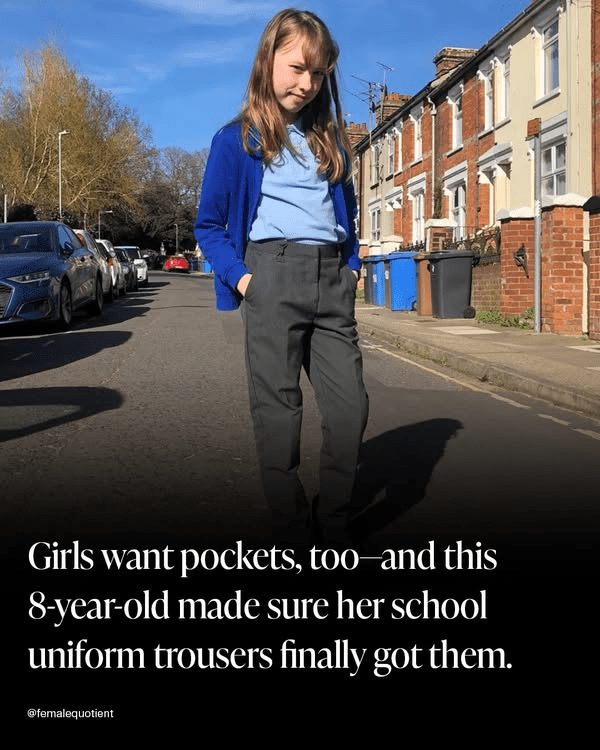
Congratulations to 8-year-old Georgia for her successful campaign to have functional pockets added to girls’ school trousers! While shopping for school clothing at Sainsbury’s in Ipswich, England, she was frustrated to see that the girls’ pants “didn’t have real pockets; they just had fake ones and then we went in the boys’ and they had pockets and I thought it was unfair, so I bought boys’ trousers.” Determined to speak up, Georgia first wrote a letter to the store explaining that “girls need to carry things too!” While she received a reply, no action appeared to have been taken so she decided to start a petition at her school and collected 56 signatures from her fellow students.
Her persistence has paid off splendidly! A representative from Sainsbury’s initially responded to her letter with a candid admission: “I’m sorry currently girls’ school trousers do not have pockets. I agree they should.” When Georgia returned to the store this year, she discovered the girls’ pants now featured the deep, functional pockets she had campaigned for. While Sainsbury’s hasn’t explicitly confirmed Georgia’s influence on their decision, they acknowledged that “customer feedback is really important to us and we share Georgia’s passion for offering a choice in style of school uniform.”
Thank you to this Mighty Girl for showing the change that can happen when we refuse to accept “that’s just how it is” and speak up about everyday inequalities!
For a fun picture book about a Mighty Girl on a quest to find the perfect dress for her outdoor adventures – one with pockets! – we recommend “A Dress With Pockets” for ages 4 to 8 at https://www.amightygirl.com/a-dress-with-pockets
For adult readers interested in the history of pockets and women’s clothing, there’s also a fascinating book “The Pocket: A Hidden History of Women’s Lives, 1660–1900” at https://bookshop.org/a/8011/9780300253740 (Bookshop) and https://amzn.to/32ce8wF (Amazon)
For an inspiring picture book about a girl who stood up to make change in her school, check out “Raise Your Hand” for ages 5 and up at https://www.amightygirl.com/raise-your-hand
For an excellent guide for girls on how to make real change on the issues they can care, we highly recommend “A Smart Girl’s Guide: Making A Difference” for ages 8 to 12 at https://www.amightygirl.com/smart-girl-s-guide-making-a…
For kids in general, we also recommend “How to Make a Better World: For Every Kid Who Wants to Make a Difference” for ages 7 and up at https://www.amightygirl.com/how-to-make-a-better-world
And to inspire children and teens with stories of real-life girls and women who made a difference on the issues they cared about, visit our blog post, “50 Books About Women Who Fought for Change,” at https://www.amightygirl.com/blog?p=14364
For an excellent guide for girls on how to make real change on the issues they can care, we highly recommend “A Smart Girl’s Guide: Making A Difference” for ages 8 to 12 at https://www.amightygirl.com/smart-girl-s-guide-making-a…

AMIGHTYGIRL.COM
Last day in Perth – visit to the Western Australian Art Gallery and Heathcote Arts Centre
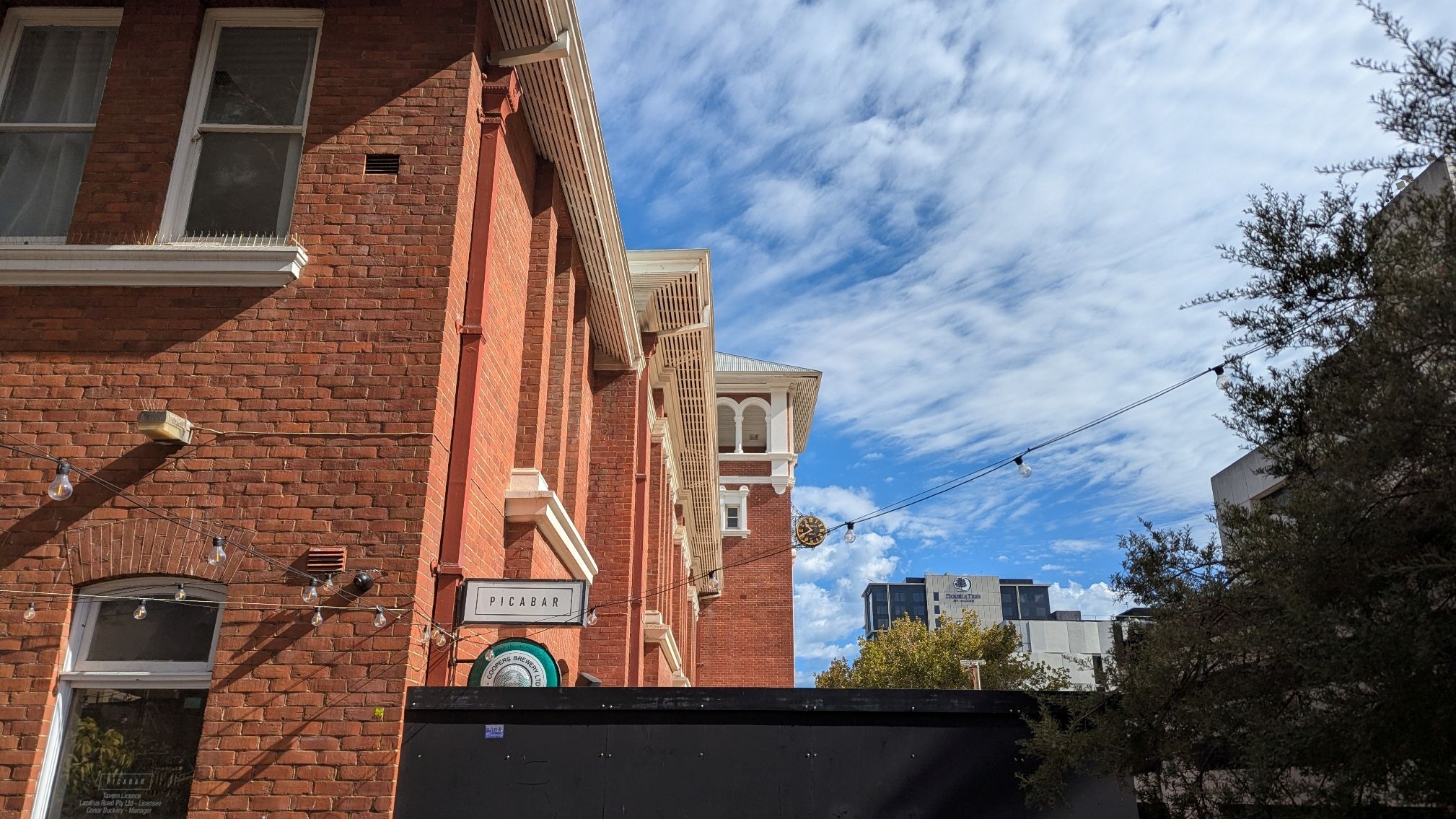
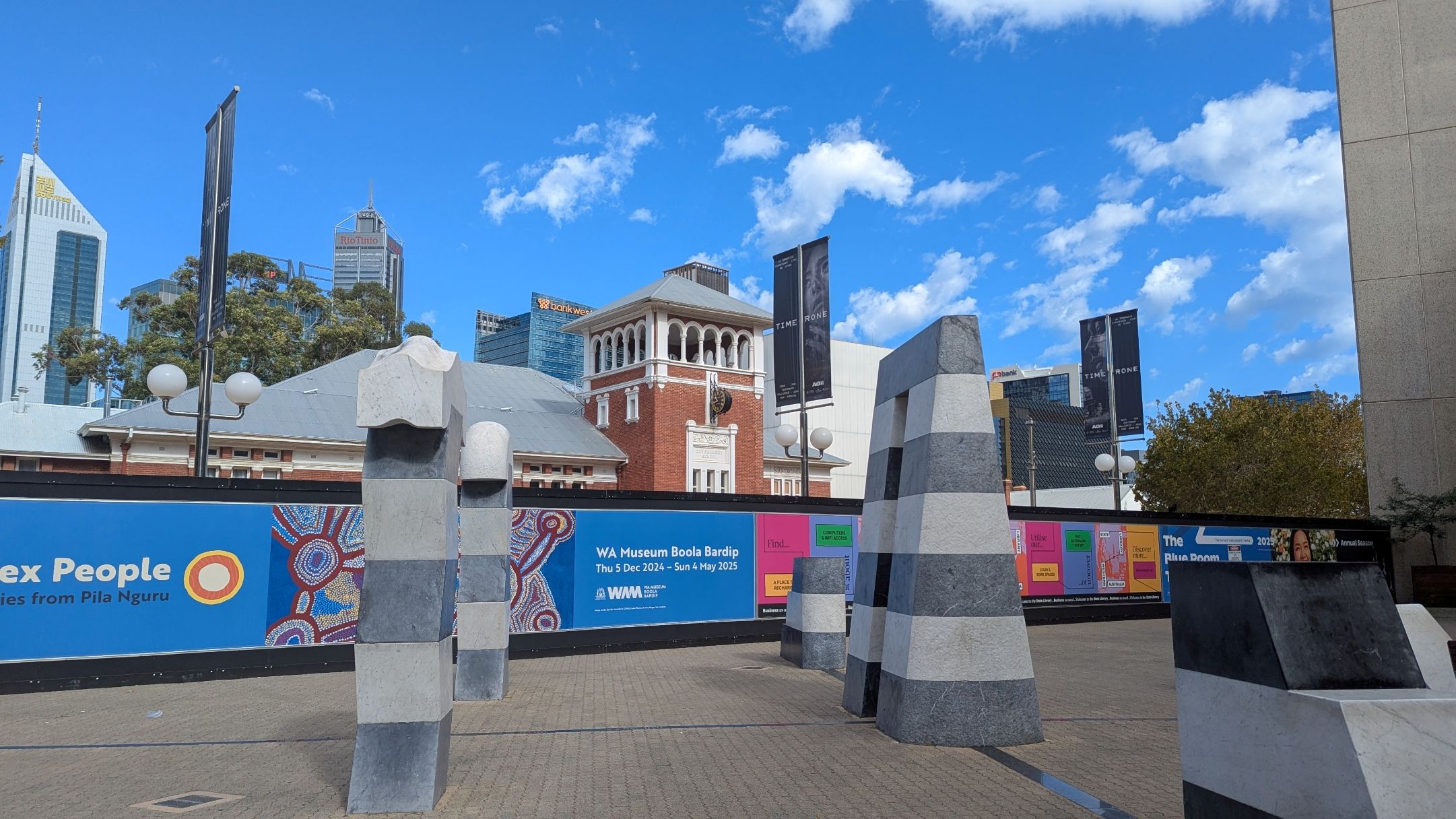
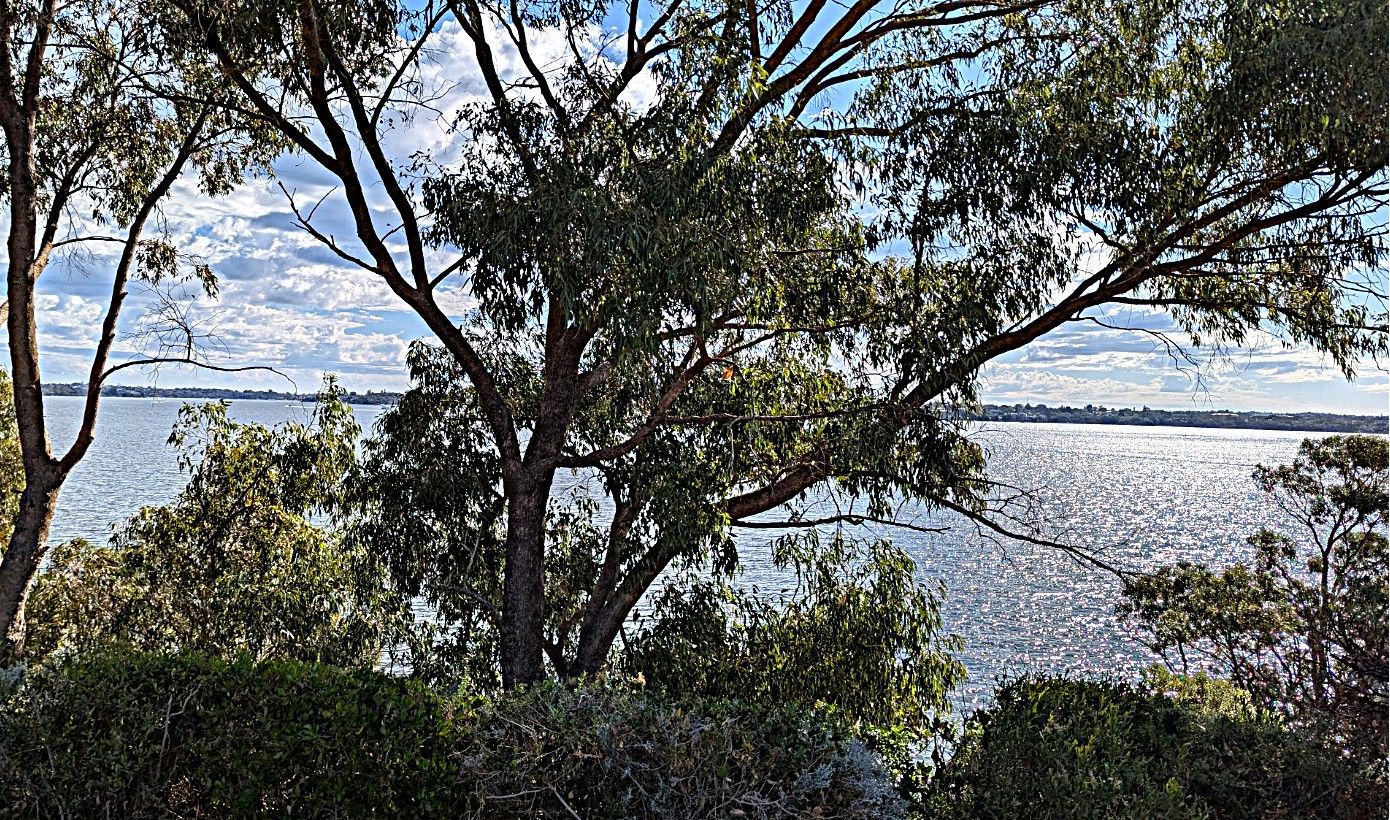
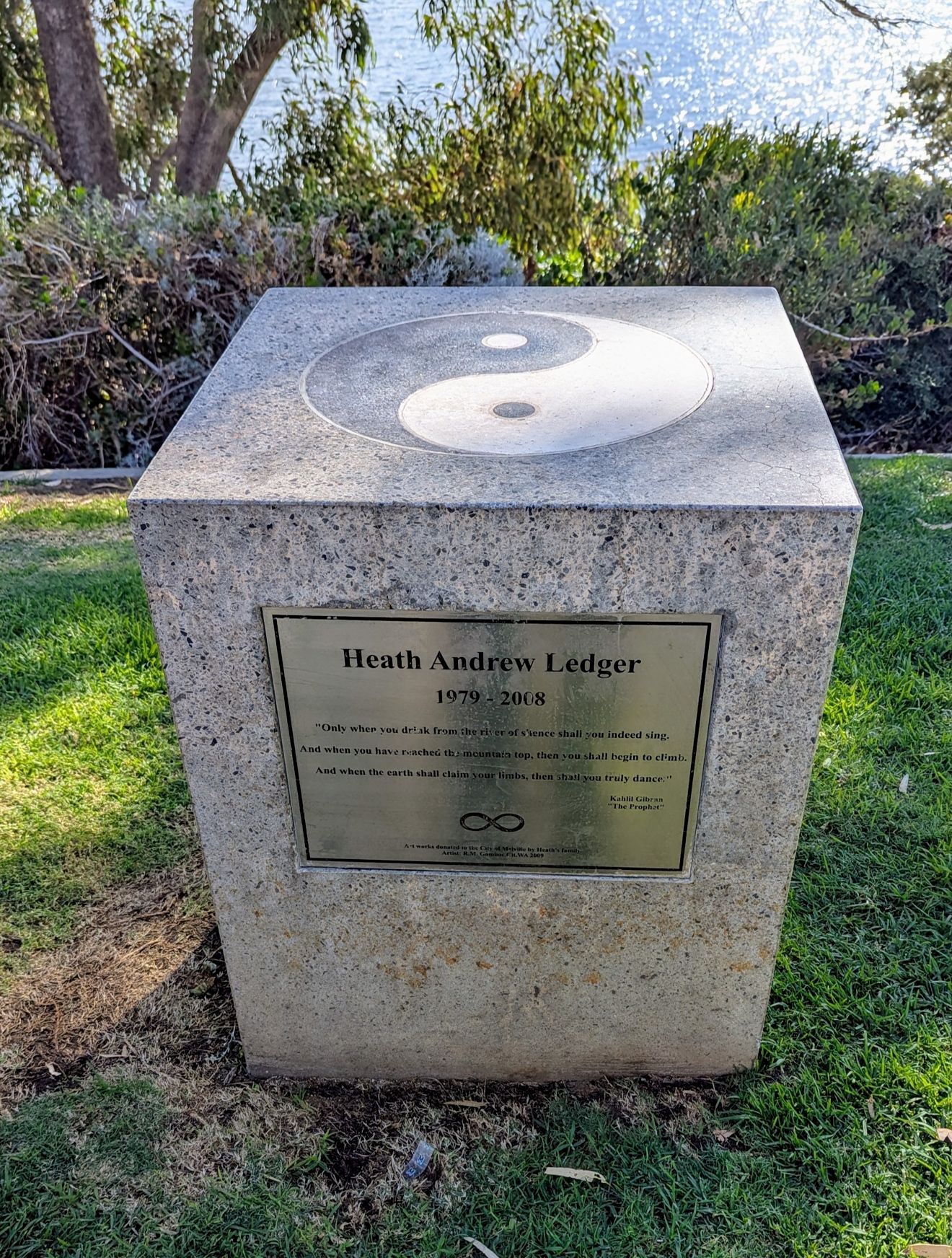
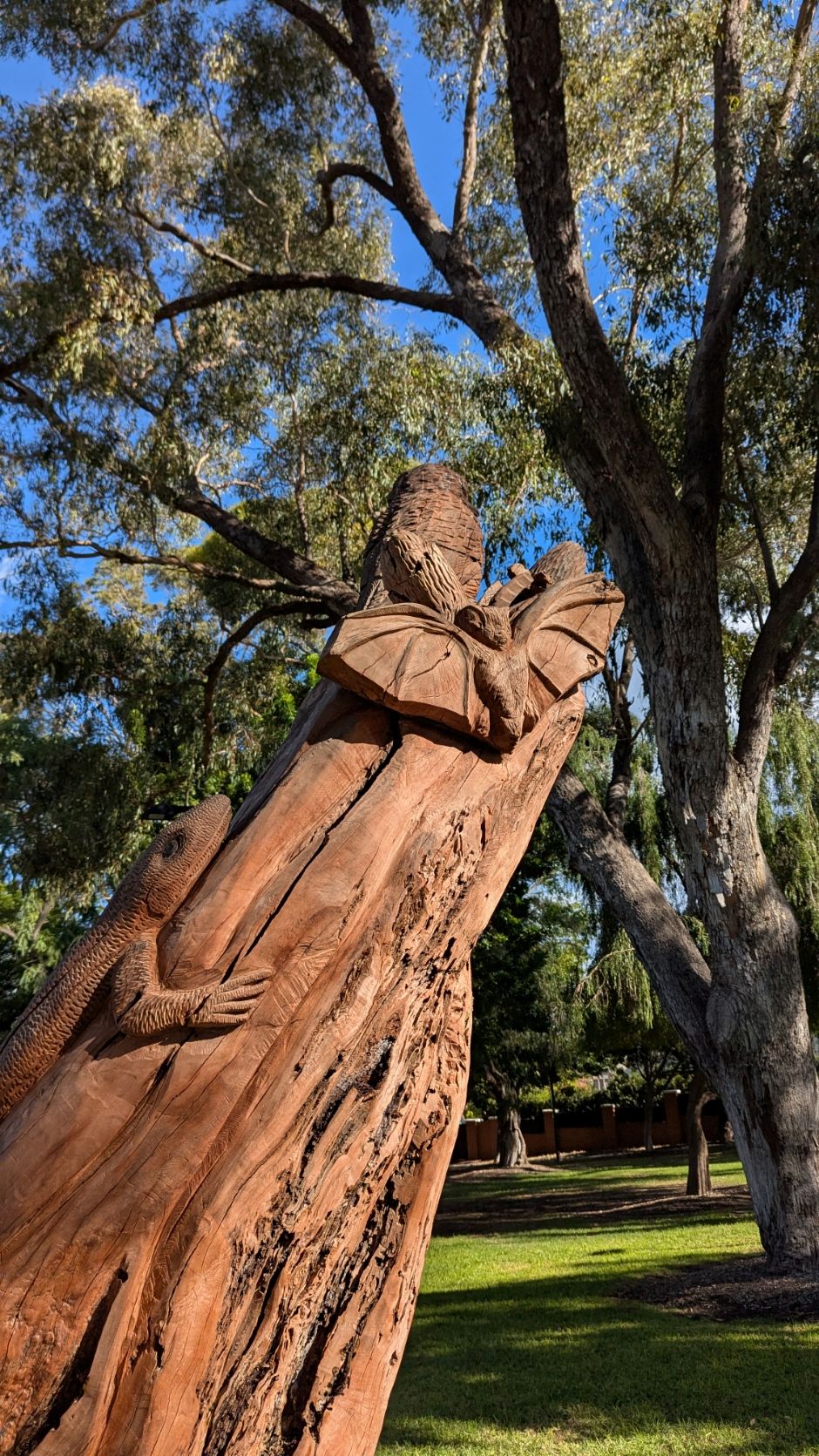
On the way to the gallery, I passed the old James Street Technical School where I was an art student, and consumer of jam donuts. The building is being refurbished, but the donuts are still there. Uneaten by me on this occasion, although fondly remembered together with my wonderful donut eating companion. I went to the Kimberly virtual reality exhibition which was uplifting and amazing. No photographs, of course, but none would provide the thrill (and shock as I teetered on cliffs) of the exhibition. Heathcote was less thrilling, despite the monument to Heath Ledger, but certainly more comfortable! The exhibition space was closed but some magnificent views and woodwork on dead trees made up for this.
James Street

Heathcote


Returning to Canberra – Leah, First Coffee and politics
The joy of picking up Leah and having a coffee in beautiful surrounds speak for themselves.
The Australian Electoral Commision statistics may be of interest. In particular, the commitment to early voting centres and overall number of polling places demonstrate the commitment to democracy, unlike the threat to democracy shown daily through the American media -despite themselves in some cases, unfortunately.
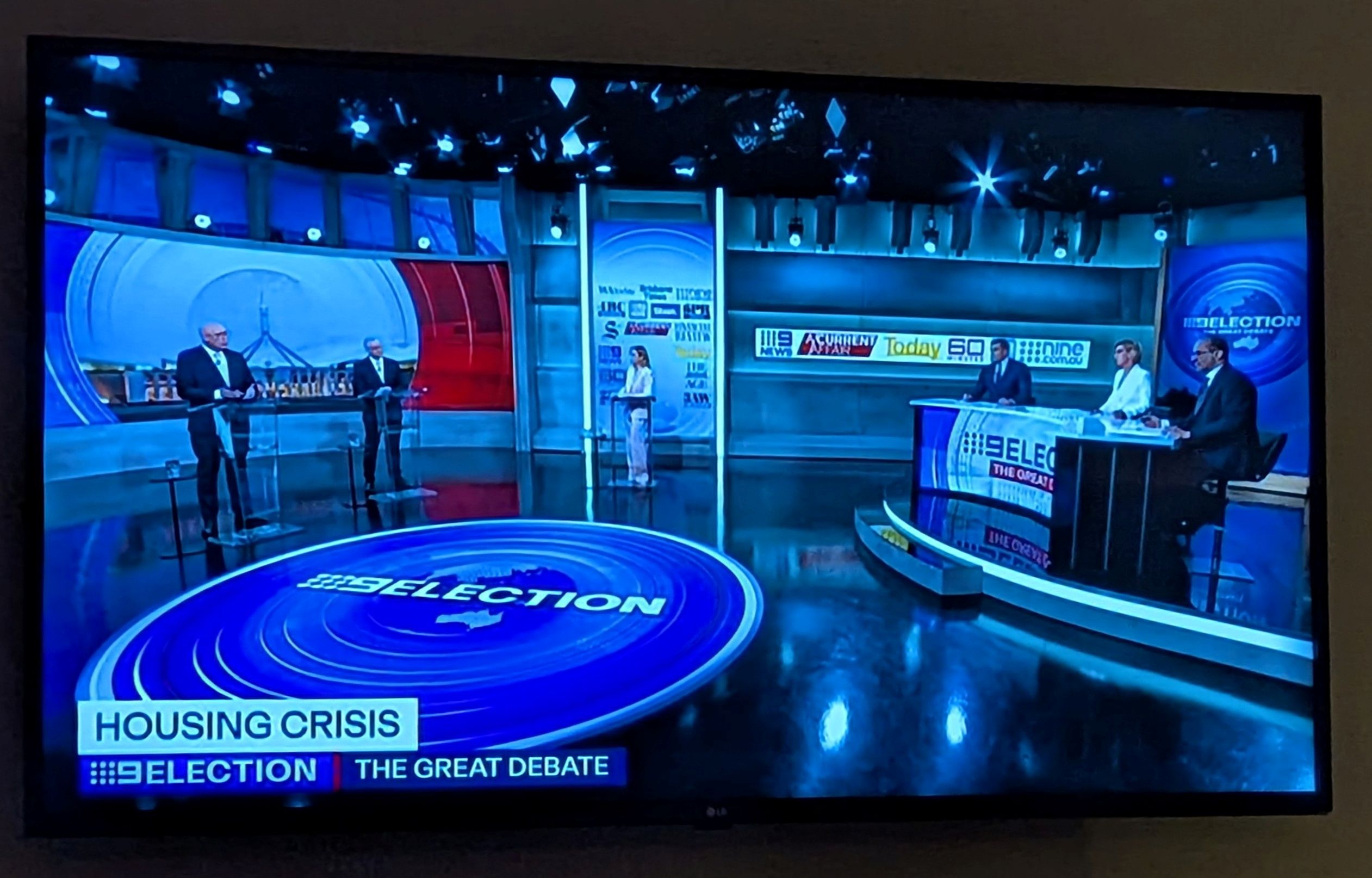
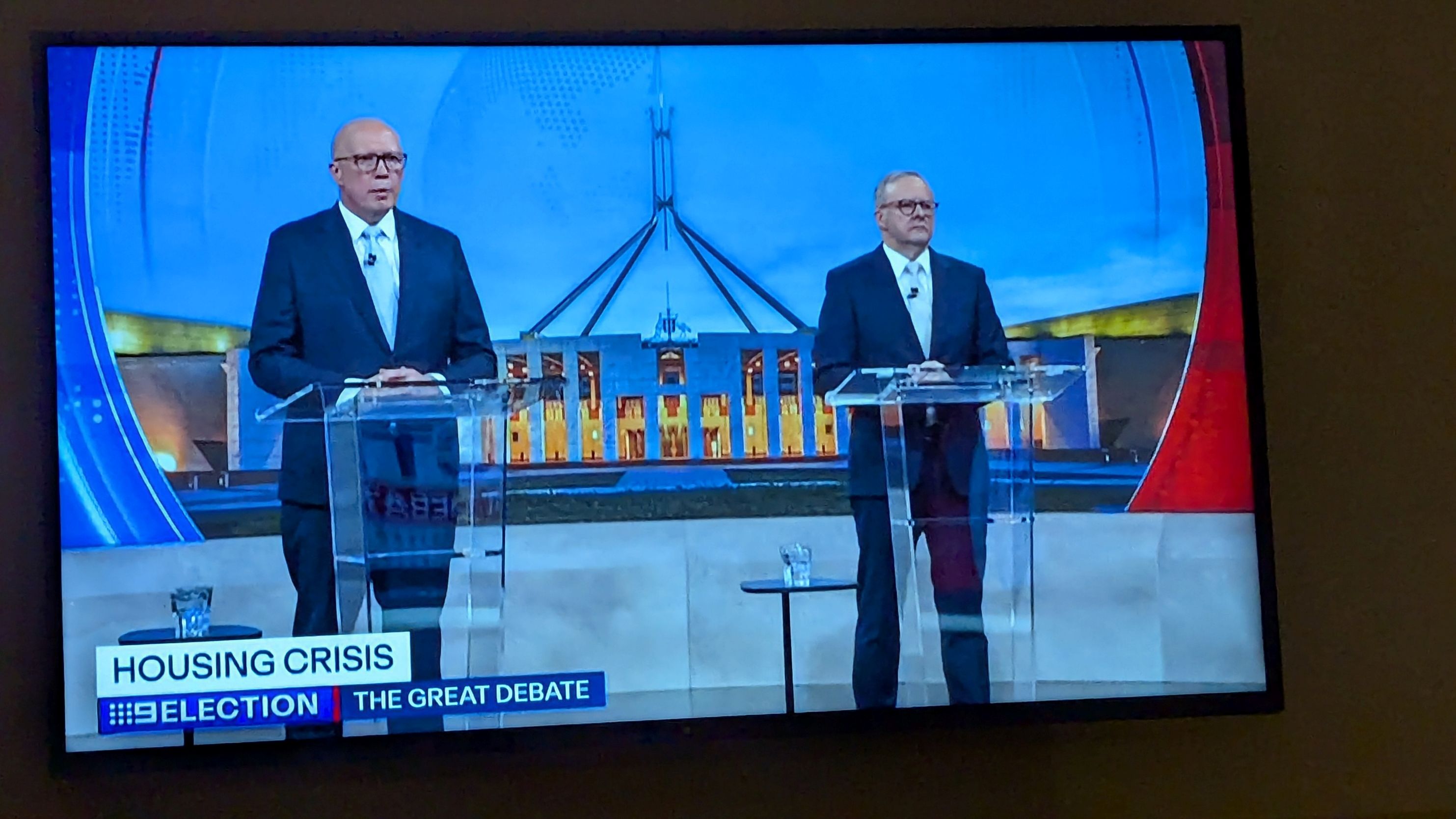
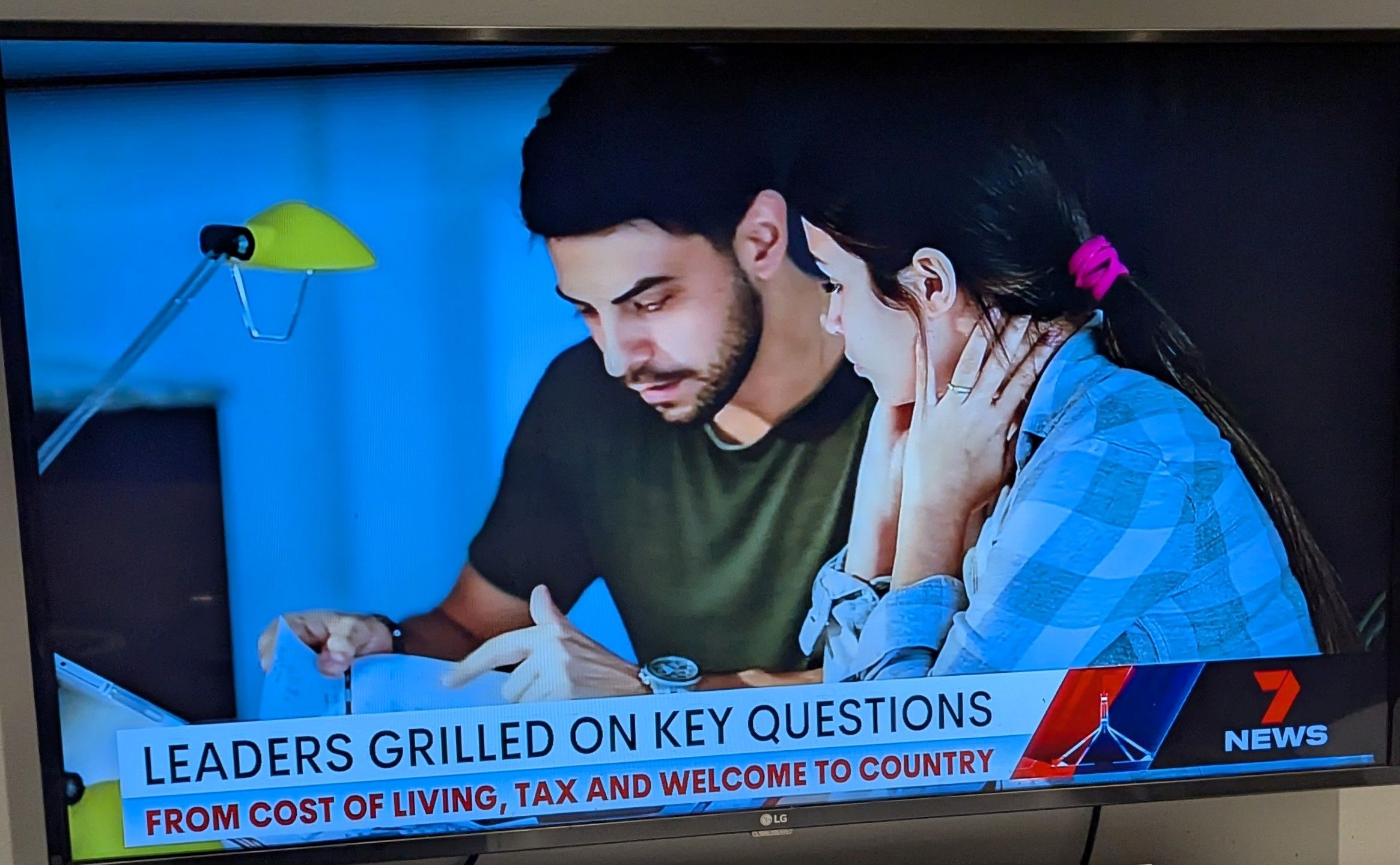
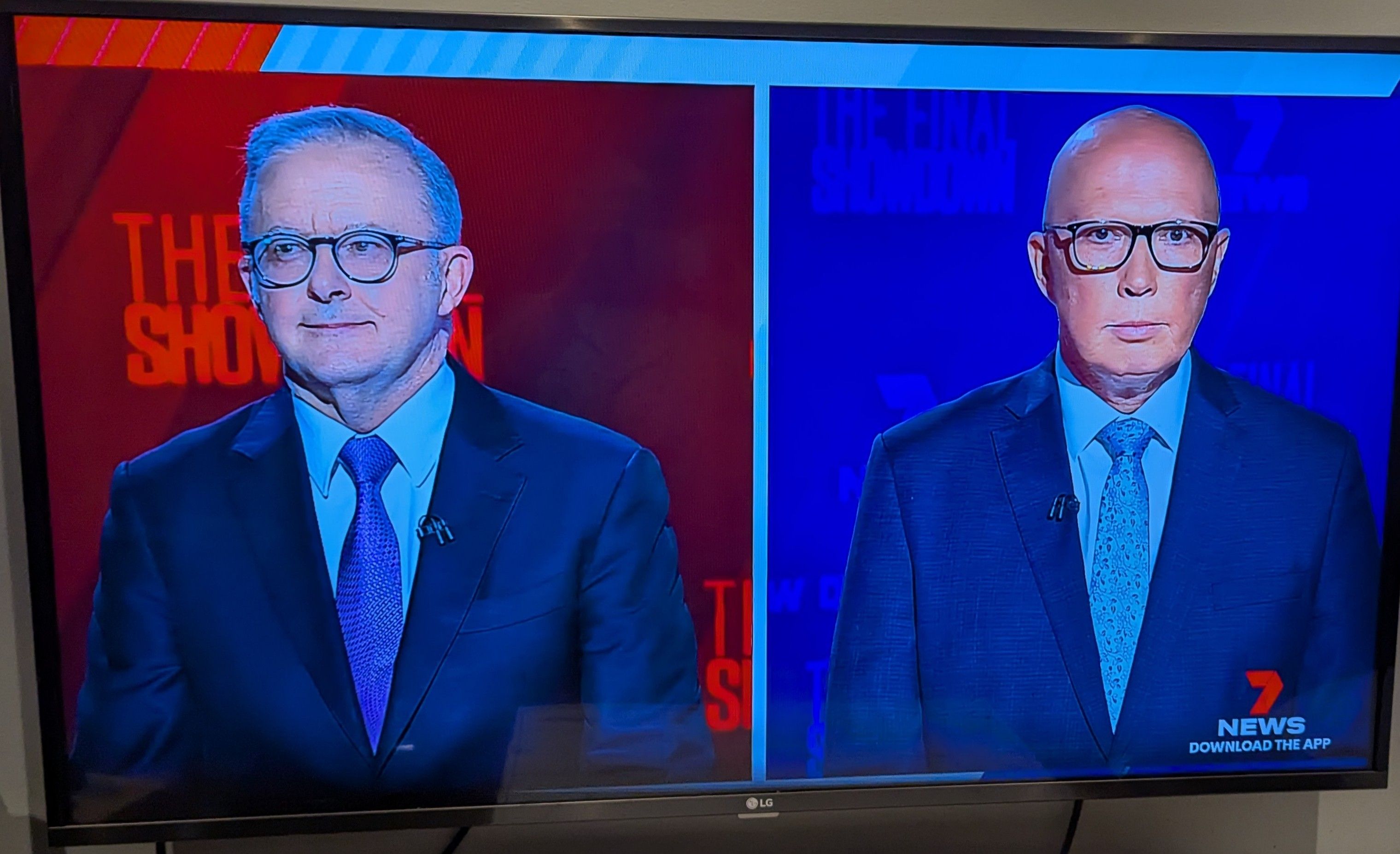
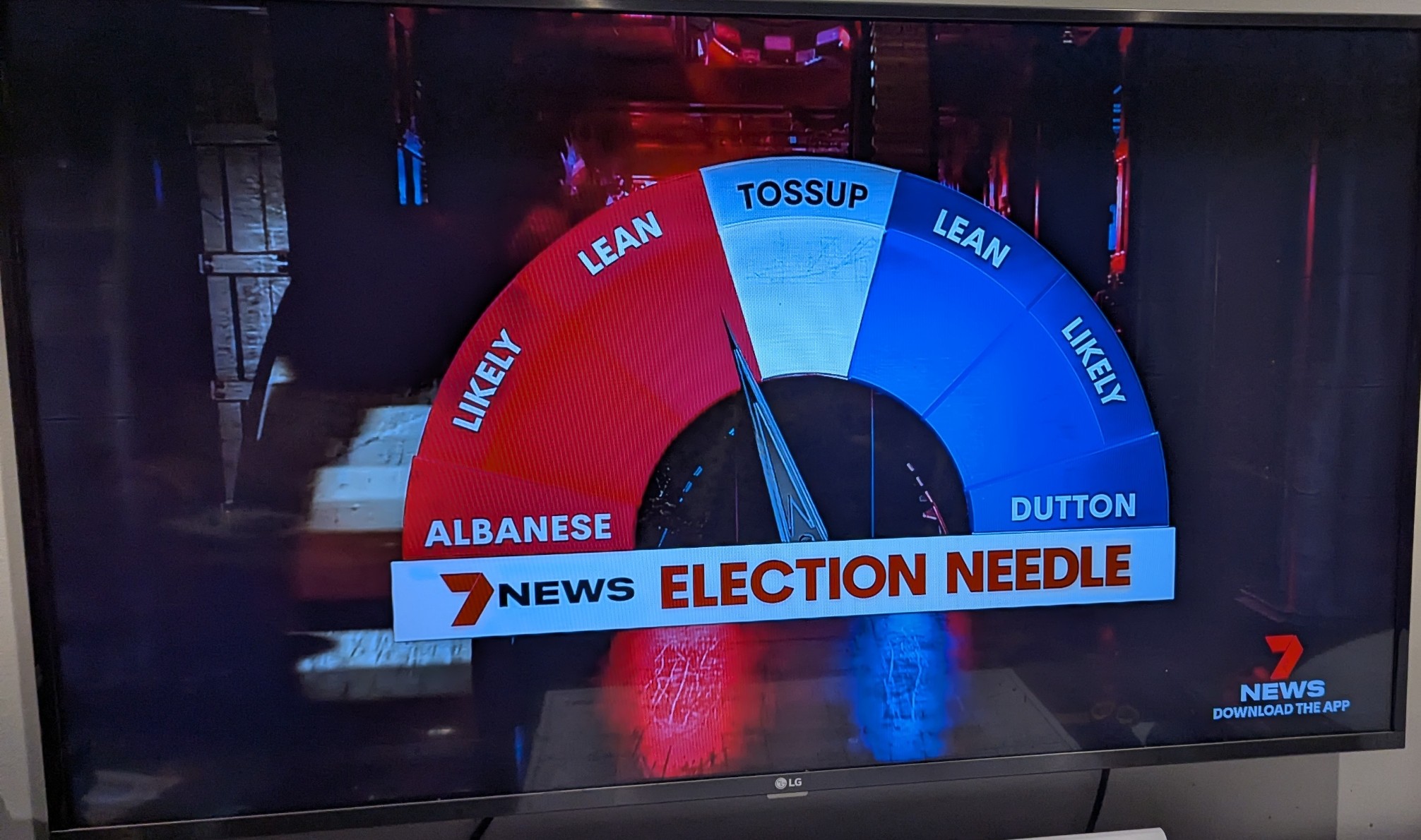
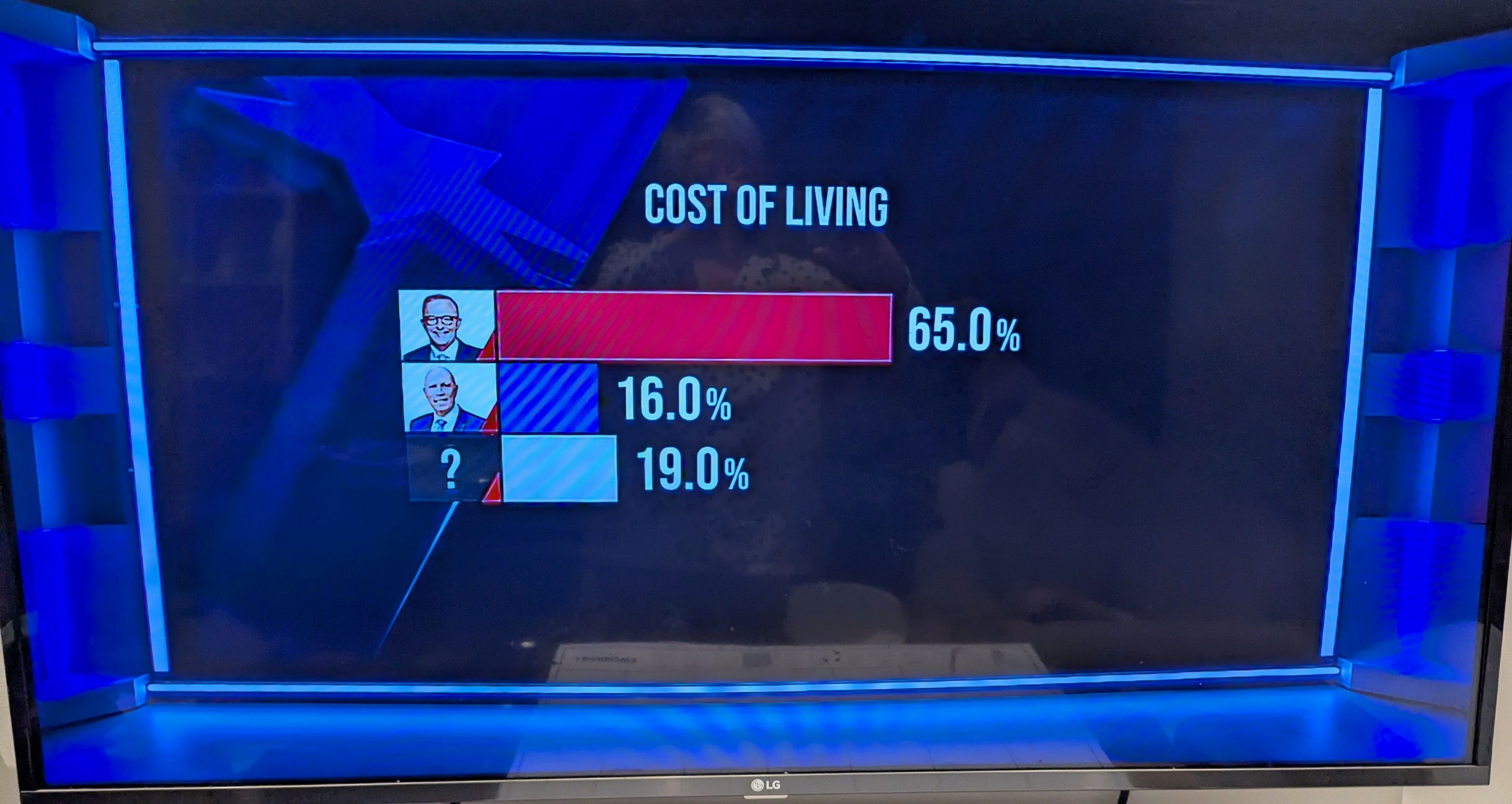
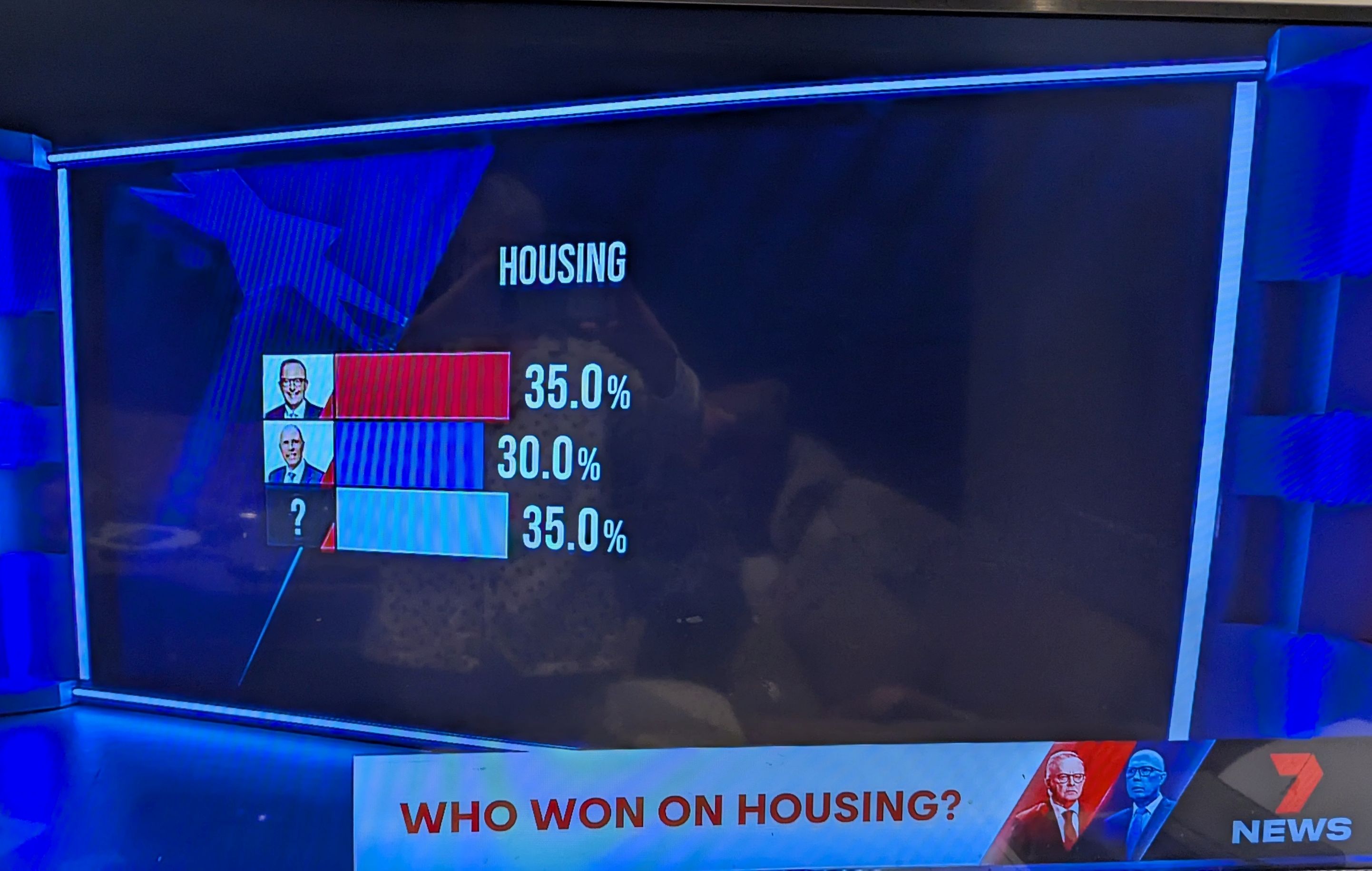
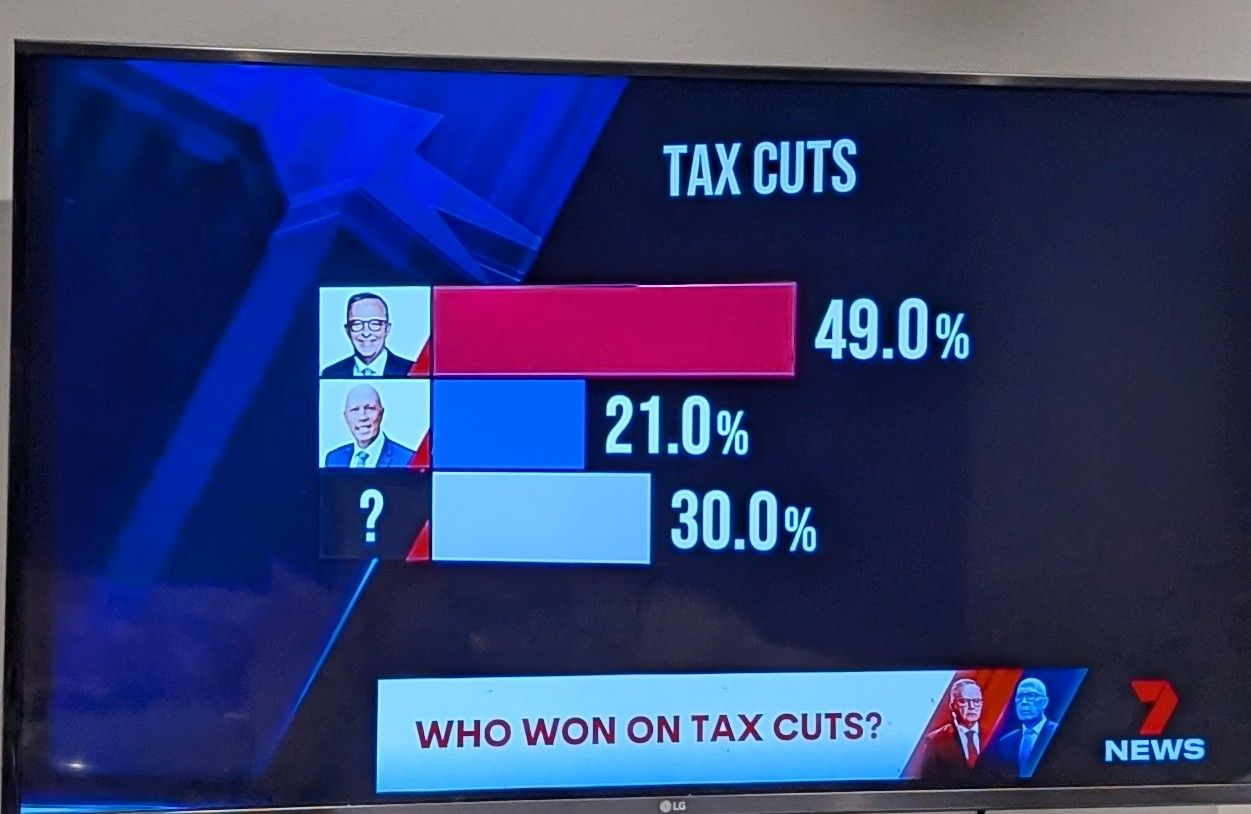
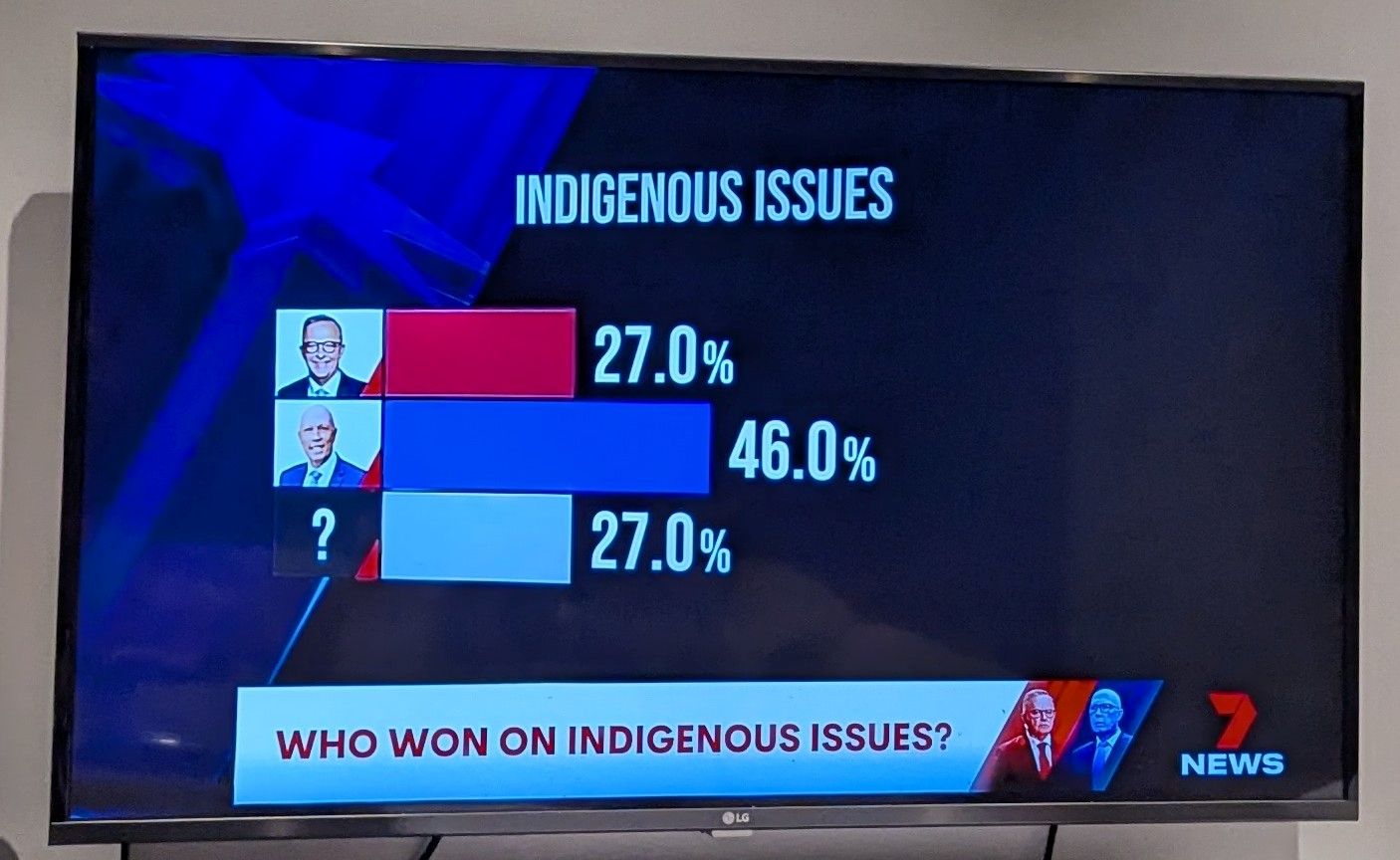
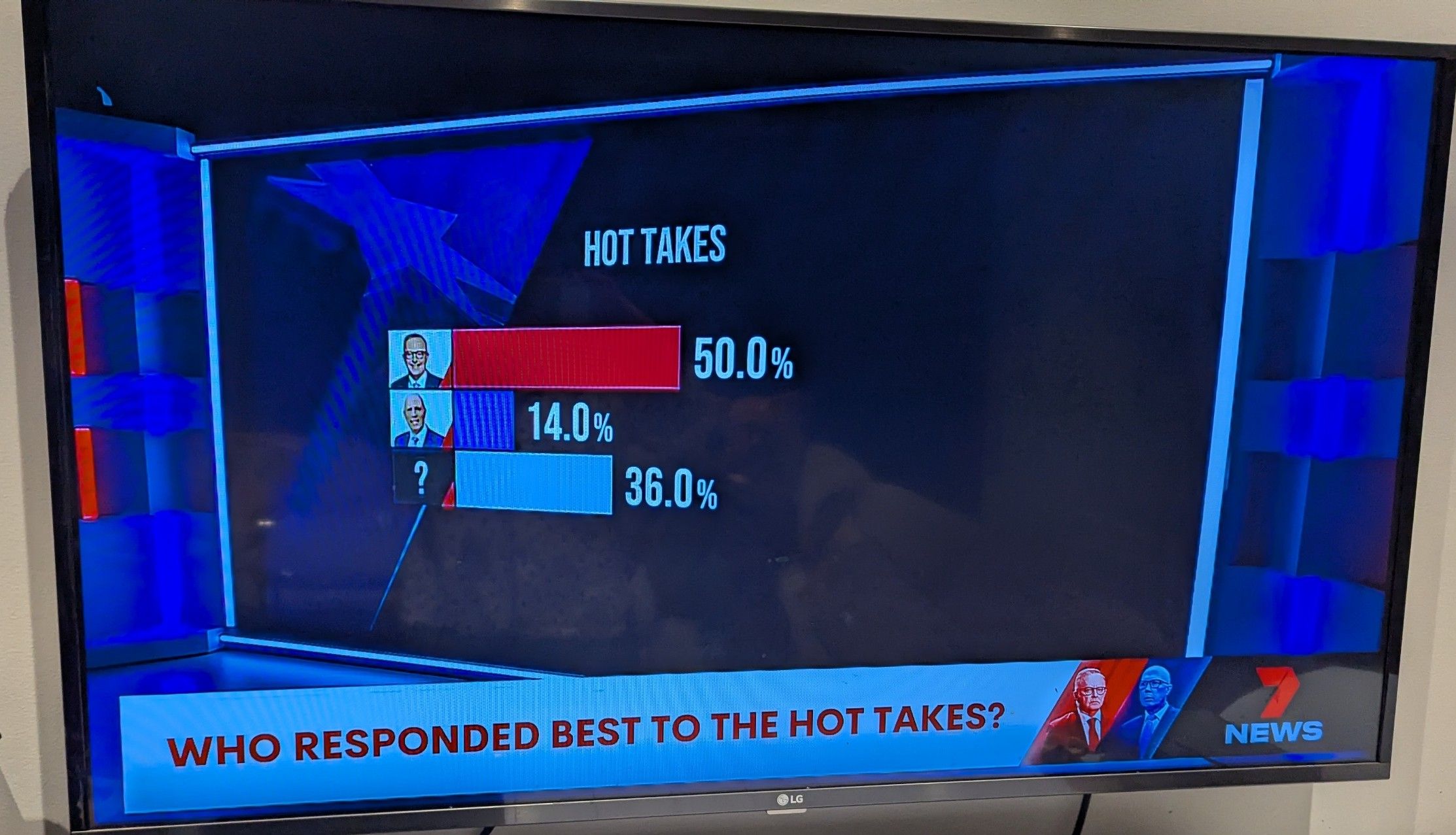
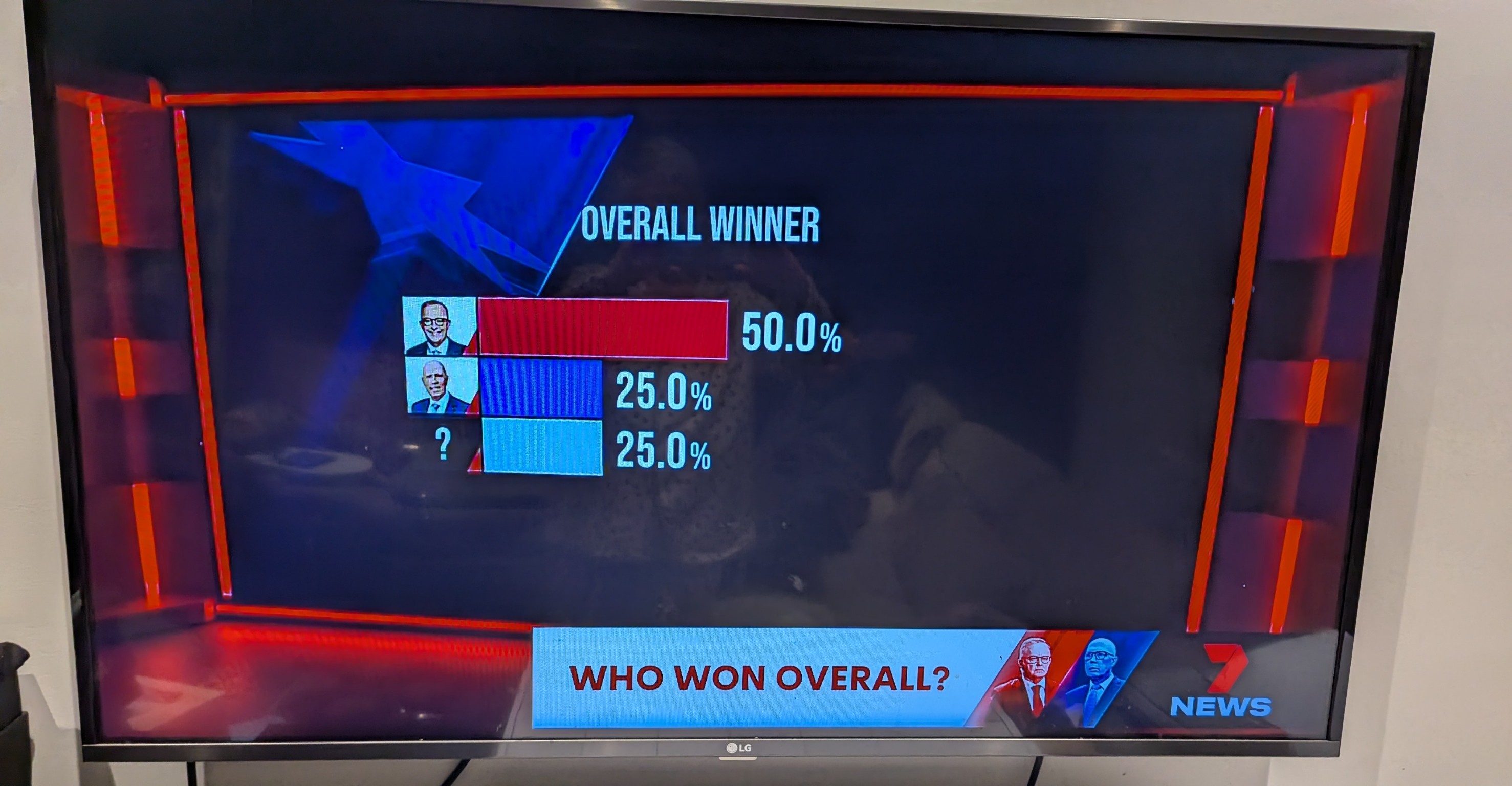
The debates – in this campaign four – are also an essential part of the Australian election campaign. David Speirs on the ABC, was deadly dull, helping create an uninspiring program despite some spirited debate. The best feature for me was that we were watching it with Western Australian friends, reminiscent of our watching President Joe Biden’s inauguration together. The debate moderated by Ally Langdon, was far better example of a good debate, with pithy questions and pleasant moderating. The last debate was an entertaining production, with an historical introduction of previous debates from their beginning. It has been criticised by other networks. However, the moderator, Mark Riley, clearly had a far better knowledge of his subject and subjects than the earlier moderators. Although Prime Minister Anthony Albanese won overall, his loss on Indigenous Issues was a sad moment. Another loss was on Defence. However, his response to the question about threats to Australia was appropriately Prime Ministerial. A good win for the PM was on cost of living, demonstrating that the audience understood the issues. The closeness of the result on housing is understandable, although Housing Minister, Clare O’Neil’s explanations of the Labor policy are strong. See https://www.facebook.com/reel/1264866738303889
Australia’s largest ever federal election kicks off
Updated: 28 March 2025
The 2025 federal election has been announced for Saturday 3 May 2025.
Australian Electoral Commissioner Jeff Pope said the announcement serves as the starter’s gun for the AEC’s work to deliver Australia’s largest ever election.
“There are more voters on the electoral roll than ever before, there’ll be more voting venues than ever – both within Australia and overseas, there’ll be greater accessibility options than we’ve ever had, and we again need around 100,000 staff to deliver it,” Mr Pope said.
Key statistics:
- 710,000 more people on the electoral roll (2022 federal election – end 2024)
- 570 early voting centres
- 7,000 polling places
- 100+ overseas voting centres
- 100,000 staff needed, 240,000 vests
- 250,000 pencils, 250,000 lengths of string
- 40,000 transport routes, 90,000 transport containers, 5,000 rolls of tamper proof tape
- 80,000 ballot boxes, 1.4 millions security seals
“We’re ready to go. You also need to be ready as well – check your enrolment now and please consider putting up your hand for paid election work. aec.gov.au allows you to do those things in just minutes.”




 Robin's Room