
Maya Golden Bethany The Senator Rising Action Publishing | Rising Action, April 2025.
Thank you, NetGalley, for providing me with this uncorrected proof for review.
This is a thriller with some positive features – the topic is pertinent, the characters interesting, and the story line logical and believable. There are no confected twists or illogical events, and the narrative combines personal relationships and political themes to good effect. Maya Golden Bethany clearly cares about her topic and has a commitment to raising social issues that resonate with contemporary concerns for the environment. The prologue introduces the topic with empathy, in turn ensuring that the reader is wholly aware that solving the case that brings journalist Alex Broussard and Senator Oliver Michaels together again is vital. On the negative side, I found the constant change from present to past text made for uneasy reading and the immense amount of detail often added little to the story. It might be this that reduces the fast pace that would have maintained the tension which is essential to creating a good thriller. See Books: Reviews for the complete review.

Priscilla Masters Bloodline Book 16 of A Joanna Piercy Mystery, Severn house, January 2025.
Thank you, NetGalley, for providing me with this uncorrected proof for review.
This is a tightly woven thriller with characters that are realistic, interesting, and complex and a story line that combines social commentary with a gripping narrative. It is fast paced without neglecting the ideas that are central to the plot – the moral compass of one character is explored thoroughly at the same time as punishment for several crimes is enacted; while hostage negotiations are markedly slow; and behind this dominant idea is another question about the responsibility an instructor might have for the information they impart. Masters’ ability to keep the tension throughout is ideal. See Books: Reviews for the complete reveiw.
Special Correspondent
A book picked up on the journey made a satisfying read for the special correspondent, and now I am enjoying it too. I am not particularly fond of short stories, although I omit Jane Gardam from that criticism, as I think all of her writing is superb. * Also, Zoe Fairbairns ** who conducts a course in short story writing for City Lit, London, uses Maeve Binchy’s short stories as examples of a valuable execution of the short story form.
The short stories are by another Irish writer, Sheila O’Flanagan. It is possible that some people could find her another Binchy, and I see some similarities.
The Moment We Meet (previously published as Destinations) Headline Review, 2018 is an excellent beach read. However, I think that the stories offer a little more. They make sharp observations of relationships, the meetings between the protagonists are natural, with none of the negative aspects of contrived encounters, characterisation and plot are very good indeed. Most characters are sympathetically observed, and those that are not, deserve to be disliked – intensely in one case. Some of the stories are very satisfying, particularly where the protagonists meet in another part of the collection. Some are less satisfying, needing resolution beyond that provided by O’Flanagan. However, for a beach read that provides something more, this collection is worthwhile reading.
*The collections include: The Pangs of Love and Other Stories (Abacus, 1993), Black Faces, White Faces (Abacus 1997), and The People on Privilege Hill and other stories (Abacus, 2007).
** Some facts from Wikipedia with my observations on where fact meets fiction in the novels.
Fairbairns studied at St Andrews University, Scotland, and the College of William and Mary, US, both of which I see as providing inspiration for the universities that feature in Daddy’s Girls (Mandarin, 1991) and Stand we at last (Mandarin, 1983 and kindle).
Fairbairns’ worked as a freelance journalist and a creative writing tutor; she has also held appointments as Writer in Residence at Bromley Schools (1981–83 and 1985–89), Deakin University, Geelong,Australia (1983), Sunderland Polytechnic (1983–85) and Surrey County Council (1989). She currently teaches Creative Writing at City Lit. Both Australia and Sunderland have appeared in her novels, Stand we at last featuring an important Australian component, and an episode based in Sunderland is in Closing (Mandarin, 1988).
Zoë Fairbairns has also focused on the short story as a form. This began with her work as a collective contributor to Tales I Tell My Mother and More Tales I Tell My Mother; she published her own collection, How Do You Pronounce Nulliparous (2004), and Write Short Stories and Get Them Published (2011).
WHN May 2025 Newsletter

News & Media
WHN Undergraduate Dissertation Prize 2024-2025
The Women’s History Network is offering one £250 prize for an undergraduate dissertation on any aspect of women’s or gender history (though with a strong focus on women) written during the 2024-2025 academic year. We welcome research on any period and place. We encourage entries from under-represented groups.
The winner will also receive free WHN membership for the following year (applicants must be members to apply).The deadline to apply is 11.59pm on 31st July 2025. For details on how to apply and the eligibility criteria, please see here; https://womenshistorynetwork.org/whn-undergraduate-dissertation-prize-2024-2025/
Exhibitions
Women in Revolt! Art and Activism in the UK 1970-1990 The Whitworth, The University of Manchester
7 March – 1 June 2025
This landmark exhibition at the Whitworth features over 90 women artists and collectives whose ideas have helped fuel the women’s liberation movement during a period of significant social, economic and political change.
Women in Revolt! explores six key themes, spanning two decades of art and activism. These include maternal and domestic experiences, anti-racist and LGBTQ+ activism, Greenham Common and the peace movement, and punk and independent music.
Celebrating Our Voice; Walking Women’s History
Near to Westminster Abbey, London
Sat, 21 Jun 2025, 11am – 12:30pm
“Join RIBA and SAVE Britain’s Heritage for a walking tour that brings to light the often-overlooked contributions of women to the built environment. As we wander through the city’s streets, parks, buildings, and public spaces, we uncover the stories of women who have helped shape London’s architectural landscape.
Led by RIBA and Henrietta Billings, Director at SAVE, we’ll explore how gender, social movements, and cultural changes have influenced the design and use of public spaces. Drawing on RIBA Collections, the tour features readings and landmark case studies, offering a powerful reflection on the legacy and visibility of women in design.
From suffragist landmarks to the legacy of pioneering female architects and local community leaders, uncover the subtle but powerful ways women have used their voice and power to change our built environment.
The Genius Myth, with author Helen Lewis*
Topping & Company Booksellers, Bath Wednesday 18th June
Join Helen Lewis, author of Sunday Times bestseller Difficult Women: A History of Feminism in 11 Fights, to celebrate her new book: The Genius Myth. Helen will be in conversation with Sarah Ditum. Sarah is a journalist (the Times) and the author of Toxic (Fleet, 2023). Taking us from the Renaissance Florence of Leonardo da Vinci to the Floridian rocket launches of Elon Musk’s SpaceX, Helen Lewis unravels a word that we all use – without really questioning what it means. Along the way, she uncovers the secret of the Beatles’ success, asks how biographers should solve the Austen Problem, and reveals why Stephen Hawking thought IQ tests were for losers (before taking one herself). And she asks if the modern idea of genius – a class of special people – is distorting our view of the world. For event details please visit the event page here.
*See my review of Helen Lewis’ book Difficult Women: A History of Feminism in 11 Fights in the blog, May 11, 2022, and Book reviews or also on NetGalley and Goodreads.

The review begins:
Helen Lewis has raised issues that ring with truth – feminism and feminists do not have a perfect history in which every fight was won by women whose ideology was impeccable, and whose contributions were entirely without some questionable aspects. Feminism and feminism have a living history, that was part of its time, as well as in advance, that was honourable, but on occasion might have us pondering motivations. And why should it be any different? Lewis makes an excellent feminist case for the difficult women who people her book: Caroline Norton, Annie Kenney, Marie Stopes, Lily Parr, Jayaben Desai, Erin Pizzey, Maureen Colquhoun, Sophia Jex-Blake, Selma James, Stella Creasey with their contributions based around the topics of divorce, the vote, sex, play, work, safety, love, education, time, and abortion. The eleventh fight is about ‘The Right to be Difficult’.
and ends:
Helen Lewis (who claims to be a difficult woman) has written a book that while joining her in being a difficult read at times (even for a difficult woman) is a wonderful experience. What an exhilarating read this would be for a feminist reading group!
Women’s History Walk
Samuel Johnson Birthplace Museum, Lichfield
Saturday 7 June, 2pm
Join the Samuel Johnson Birthplace Museum for a Women’s History Walk. This guided walking tour explores the lives of women with links to Lichfield across the centuries, showing how they demonstrated agency and achievement. The tour will last approximately 90 minutes. Tickets cost £6 per person. For further information, please visit the website here.
Making the Rounds: Stories of Workhouse Nurses Told in Textiles Exhibition Royal College of Nursing Library and Museum
Saturday 25 January – Saturday 7 June 2025
This textile art exhibition explores the lives and living conditions of workhouse nurses at the former Mitford and Launditch Union Workhouse (Gressenhall). It is based on a collaboration between Gressenhall Farm and Workhouse, museum volunteers and artist Connie Flynn. Between 1777 and 1948, Mitford and Launditch Union Workhouse – now Gressenhall Farm and Workhouse – was home to some of the most vulnerable people in rural Norfolk. Its purpose was to provide accommodation, food and work for ‘paupers’ who did not have enough money provide for themselves. The NHS had not yet been created, and many people turned to the workhouse because of illness, old age, disability, mental illness, or as a safe place to give birth. The day-to-day care of the sick and vulnerable inmates fell to just a handful of nurses. This exhibition is the result of a year-long collaboration between Norfolk-based artist Connie Flynn and volunteer researchers at Gressenhall Farm and Workhouse. Drawing on over 60 new nurse biographies and 150 years of welfare history, this captivating exhibition interweaves beautiful textile art pieces and the archival sources that inspired them.
Previously displayed at Gressenhall Farm and Workhouse, the exhibition is now on display in the RCN Library and Museum in London, incorporating new items from the RCN collection alongside the artworks and volunteer research. For further information please see here.
Women’s History Today – Share your Project/ Research
Women’s History Today is the journal of the Women’s History Network. As well as academic articles, which we always welcome, the journal publishes short features on different aspects of doing and researching women’s history. These include Spotlight on Funded Research, which showcases funded research projects; From the Archives, about using archives to explore women’s history and Doing History, which highlights community/public history projects with a focus on women’s and gender history.
We are also always open to ideas for ‘special’ themed issues. If you are interested in contributing to the journal in connection with any of the above, please contact: editor@womenshistorynetwork.org
Australian Politics (from an American perspective)
Politico
Biden Fumbled the Energy Debate. But Another World Leader Won on Clean Power.
Climate doesn’t usually win elections — but it can lose them. Australia is breaking the political logjam.

Australian Prime Minister Anthony Albanese reacts as he meets party faithful after winning a second term of the general election in Sydney, May 3, 2025. | Rick Rycroft/AP
By Debra Kahn
05/22/2025 05:00 AM EDT
Debra Kahn is the editor of POLITICO’s California Climate newsletter and author of Currents, a reported column on the conversations, conflicts and characters animating the energy, environment and climate debates.
Australian Prime Minister Anthony Albanese took office in 2022 pledging to end the country’s climate wars — and he may have just done it.
“The wars are on, but the good guys are winning them more,” Climate Change and Energy Minister Chris Bowen told me ahead of Albanese reappointing him to his post last week, after his Labor Party won its largest majority in 80 years.
Climate does not generally win elections — but it can help lose them, as demonstrated by four previous Australian prime ministers and the Greens’ recent losses in the EU. More often, it simply becomes a partisan cudgel, as in the United States, where Republicans are fast dismantling the Biden administration’s clean-energy agenda after Democrats failed to defend it in the 2024 election.
So the fact that Albanese became Australia’s first prime minister in 20 years to serve a full term and win another in part on his climate agenda is worth unpacking, even for politicians and energy leaders who have never heard of Warringah or Kooyong. His trajectory holds lessons for not only how to win on climate-friendly energy policies, but how to hold power while executing on them.
Key among his tactics is a relentless focus on positive economic messaging — namely, that Australia has hitched its economic engine to renewable energy. At the same time, he’s pursued a decidedly all-of-the-above energy policy that envisions continued exports of coal and natural gas from the country’s ample deposits. (Compare that to the indifference of national Democrats in the U.S. when party leaders in natural gas-rich states protested against former President Joe Biden’s moratorium on export permits.)
The campaign marked a new chapter in selling voters on not just the prospect of climate action, but the specific policies needed to get there. “The 2022 election, when we came to office, was a climate win,” Bowen said. “The 2025 election was an energy win.”
It also helped that Albanese and his party got a big assist from Donald Trump. The election was a toss-up until late February, when Trump and his trade wars began dragging down MAGA-embracing Liberal leader Peter Dutton in the polls.
But the climate formula is simple — not to say boring — to hear Bowen tell it. The win was not particularly sexy. It was basic economics and a willingness to course correct in response to voters’ anxieties about the cost of energy.
“Climate change in Australia has cost several prime ministers their job,” Bowen said. “We won the argument when we turned the debate around and didn’t accept the premise that action on climate change can come at an economic cost, but in fact was an economic opportunity for Australia.”
Albanese’s achievement in getting voters to accept this idea comes after a decade and a half of painful political lessons.
One key takeaway: double down on carrots over sticks. Where enervated Democrats in the U.S. are now backing away from climate policies in the name of “affordability,” Australia’s Labor fended off cost-of-living arguments by giving out $300 energy bill credits and corporate tax exemptions for electric vehicles. It handed out subsidies for renewable energy — rooftop solar in particular, which is now on a third of Australian homes, the highest concentration in the world — but also batteries and efficient appliances.
Another message other countries are already heeding is to jettison carbon pricing, the policy that toppled Labor’s Julia Gillard in 2013. Turning away from carbon taxes has proved a political winner in two hemispheres. It’s much the same story as in Canada, where, before Trump proved decisive to that election as well, now-Prime Minister Mark Carney’s first campaign move was to cut himself loose from Justin Trudeau’s consumer carbon tax (he kept a cap on big industrial emitters, though).
At the same time, on Australia’s right, worsening wildfires and heat waves eventually coalesced enough independents into a loose coalition known as the Teals that campaigned on climate change. In 2019, a Teal ousted Tony Abbott, the former Liberal prime minister who unseated Gillard six years earlier over her carbon tax.
That set up the 2025 election along a broad axis of nominal support for maintaining the country’s net-zero emission goal. But where Labor campaigned on more renewables to replace aging coal plants, the Liberals threw their weight behind nuclear power — complete with a $331 billion price tag, by their own estimate. Energy policy turned into an own goal, with Dutton losing his seat after he proposed putting a nuclear plant in his district.
“They weren’t vulnerable to cost of living being tied to their electricity policies or their car policies or anything, because the Liberals had already made a terrible blunder in going for really expensive nuclear,” said Mark Kenny, a professor at Australian National University and a former chief political correspondent for the Sydney Morning Herald.
Albanese also hasn’t made any moves away from the country’s considerable coal and natural gas reserves, which have made it the world’s second-largest exporter of both (after the U.S., for gas, and Indonesia, for coal).
“We are a traditional energy superpower, and we want to become a renewable energy superpower, but it takes time,” Bowen said. (Carney is similarly pledging, “We can be an energy superpower.”)
Bowen’s now seeking to secure Australia’s bid to host next year’s U.N. climate talks, on the basis of his record. “We’ll be making economic arguments to other countries,” he said. “Even if you don’t think this is a moral obligation, the economics can work pretty well for us.’”
That’s how Australia has arrived at something of a Goldilocks moment. When automakers protested Labor’s first-ever vehicle emissions standards, they scaled them back some. Not everything is kumbaya — farmers are still revolting over transmission lines being built across their property — but by and large, the wars have receded.
“You must thread the needle of economic benefit first and foremost, then climate benefit,” said Andrew Forrest, the Australian mining magnate turned climate evangelist who’s made his Fortescue iron mining empire into an advertisement for the economic benefits of going green.
If these policies sound a lot like Biden’s, who signed laws that were projected to unleash roughly $1 trillion for clean energy and infrastructure while presiding over a historic boom in both fossil fuels and renewables, it’s not a coincidence.
“My little slogan is, ‘The world’s climate emergency is Australia’s jobs opportunity,’” Bowen said. “That was, in part, to be fair to our American cousins, inspired by Joe Biden saying, ‘I see climate change and I see jobs.’ We’re really saying the same sorts of things, but we’ve been able to, I guess, continue to argue and continue to prosecute it.”
Yet for all the lessons other countries might take from Albanese’s win, Australia’s success in extricating climate from the culture wars into the realm of policy debates may not be replicable here.
As the Trump administration dismantles everything from fuel efficiency rules to power plant emissions standards, the biggest remaining question is whether Republicans will muster the motivation to maintain any scraps of the Inflation Reduction Act. There’s something almost quaint about Australians having actually had it out over a period of decades, compared to the U.S.’s trajectory of pushing Democrats’ profferings ever more irretrievably into the partisan fray.
Australians concede a certain cynicism is lacking from their politics — in part thanks to mandatory voting, which reduces the incentive for politicians to pander to their bases.
“They take what a politician says, as we say in Australia, with a pinch of salt, and look for the facts,” Forrest said. “And therefore you got a different result in Australia than you did in North America.”
Still, politicians in other countries around the world would do well to look to Australia for how to turn down the temperature.
American Politics
Heather Cox Richardson from Letters from an American <heathercoxrichardson@substack.com> Unsubscribe
Forwarded this email? Subscribe here for more
May 23, 2025Heather Cox Richardson May 24
I’m going to take an early night tonight, but I want to record three things that jumped out at me today because they seem to tell a story.
After S.V. Date of HuffPost noted last week that the White House had published fewer than 20% of Trump’s speeches, the White House has stopped publishing a database of official transcripts of President Donald J. Trump’s announcements, appearances, and speeches altogether and has taken down those it had published. Instead, it will just post videos. And yet it is publishing just a few of the videos of the president’s term: so far, fewer than 50 videos of the first 120 days of his term, according to Brian Stelter of CNN. A presidential administration traditionally publishes the president’s words promptly to establish a record. The Trump White House, in contrast, says removing the transcripts will enable people to get a better sense of Trump by watching his videos. But it’s likely closer to the truth that Trump’s appearances since he took office have been erratic, and removing the transcripts will make it harder for people to read his nonsensical rambles.
White House press secretary Karoline Leavitt said, “The Trump White House is the most transparent in history,” but of course, it’s objectively not. White House officials have made it impossible to tell who is making decisions at the Department of Government Efficiency, for example, or who gave the order to render migrants to El Salvador. Now the president’s words, too, will be hidden.
Trump’s erratic behavior was on full display this morning when he announced that he will impose a 50% tariff on goods from the European Union on June 1, suggesting he is frustrated because his promises of a new trade deal have failed to materialize. Trump had threatened to stop negotiating and simply dictate terms, and that is apparently the direction he’s moving. “I’m not looking for a deal,” he said this afternoon. “We’ve set the deal—it’s at 50%.” Trump also threatened a 25% tariff on Apple products unless the company begins to make the iPhone in the U.S.
Elisabeth Buchwald of CNN reported that three major European stock market indexes fell after Trump’s threat. U.S. stock market indexes fell for the fourth day. They rose from their lowest point after the White House said Trump’s tariff comments were not a formal statement of policy.So the president of the United States can tank world markets, only to have his own staff inform the media that his comments should not be taken seriously.
The third story is that the Federal Emergency Management Agency (FEMA) has denied North Carolina’s request that it honor a commitment made by President Joe Biden to pay for 100% of the costs for removal of debris after Hurricane Helene devastated the western part of the state in September 2024. That storm killed 107 people in western North Carolina and destroyed or damaged 75,000 homes, as well as destroying roads and leaving mounds of debris.
As Zack Colman of Politico reported yesterday, the storm hit in the last weeks of the 2024 presidential campaign, and Trump undermined FEMA’s response, lying that it was not present and telling North Carolinians that the Biden administration could not help them because it had taken money from FEMA for undocumented immigrants. None of what he was saying was true, but MAGA mouthpieces picked up his criticisms and exaggerated them, claiming that the federal government intended to steal people’s land, that Biden had directed the storm to western North Carolina, and that 28 babies had frozen to death in FEMA tents—all lies, but lies that slowed recovery as riled-up people who believed them refused assistance, threatened officials, and demanded investigations.
Trump suggested he would respond more effectively to voters in North Carolina, and two of the hardest-hit counties there, Avery and Haywood, backed him in 2024 by margins of 75.7% and 61.8%, respectively, similar to those it had given him in 2016 and 2020.Once in office, though, Trump began to talk of eliminating FEMA. Now the White House has told North Carolina residents they’re on their own as they try to dig out from Hurricane Helene.
Taken together, these stories from today seem to provide a snapshot of this moment in American history. They show an erratic president whose own officials discount his orders even as power is concentrating in the executive office and who won election through lies that are now being exposed as his policies disproportionately hurt the very people who backed him most enthusiastically.—
Notes: https://www.cnn.com/2025/05/22/media/donald-trump-media-white-house-transcript-purgehttps://www.niemanlab.org/2025/05/no-more-transcripts-of-trump-remarks-on-the-white-house-website-and-the-old-ones-are-gone-too/https://www.nbcnews.com/politics/donald-trump/white-house-purges-transcripts-trump-remarks-website-rcna208059https://www.cnn.com/2025/05/23/economy/trump-eu-tariffshttps://www.cnbc.com/2025/05/22/stock-market-today-live-updates.htmlhttps://www.politico.com/news/2025/05/22/trump-fema-north-carolina-hurricane-helene-00352614https://www.rollingstone.com/politics/politics-news/fema-denies-north-carolina-request-hurricane-helene-aid-1235347521/
The Guardian
World’s 50 Best Restaurants awards: chef Mindy Wood becomes first Australian to win Champions of Change
Story by Emma Joyce

Photograph: The World’s 50 Best Restaurants© Photograph: The World’s 50 Best Restaurants
Woods was awarded for her efforts to “preserve and share Indigenous culture through food,” said William Drew, director of content for the World’s 50 Best Restaurants.
Italy’s Caroline Caporossi and Jessica Rosval, who run an initiative training migrant chefs in Modena, and Brazilian chef João Diamante, who serves undervalued cuts of meat at restaurant Diamante Gastrobar, won the award in 2024.
Woods, the sixth recipient of the award, will receive an undisclosed financial donation from the organisers to support her Byron Bay initiative Karkalla On Country. “We are excited to support the continued development of her invaluable contributions,” said Drew.
“I believe food is a powerful way to connect people to culture, land, and history,” said Woods. “My goal is to continue creating spaces where we can all come together, embrace native and locally grown ingredients that not only honour the environment but also preserve the sustainable practices that have been passed down through generations.”
Named after the native plant also known as pigface, Karkalla On Country is inspired by the cook’s first Byron Bay restaurant called Karkalla which closed in 2024. There, Woods served dishes including crisp saltbush, and akoya oysters with macadamia and lemon myrtle. Karkalla On Country, which offers a combined cultural and dining experience, opened in Myocum, a short drive from Byron, last year.
Woods is also the author of cookbook Karkalla at Home: Native Foods and Everyday Recipes for Connecting to Country. On MasterChef Australia, Woods came in fourth place in season 4.
The award is one of several individual awards announced ahead of the World’s 50 Best Restaurants 2025 awards ceremony, which will be held in Italy on 19 June. Hong Kong restaurant Wing was commended for their front of house service, Thailand-Australian chef Pichaya “Pam” Soontornyanakij was named best female chef and Khufu’s restaurant in Cairo was tipped as “One to Watch”.
Cindy Lou – back to Courgette
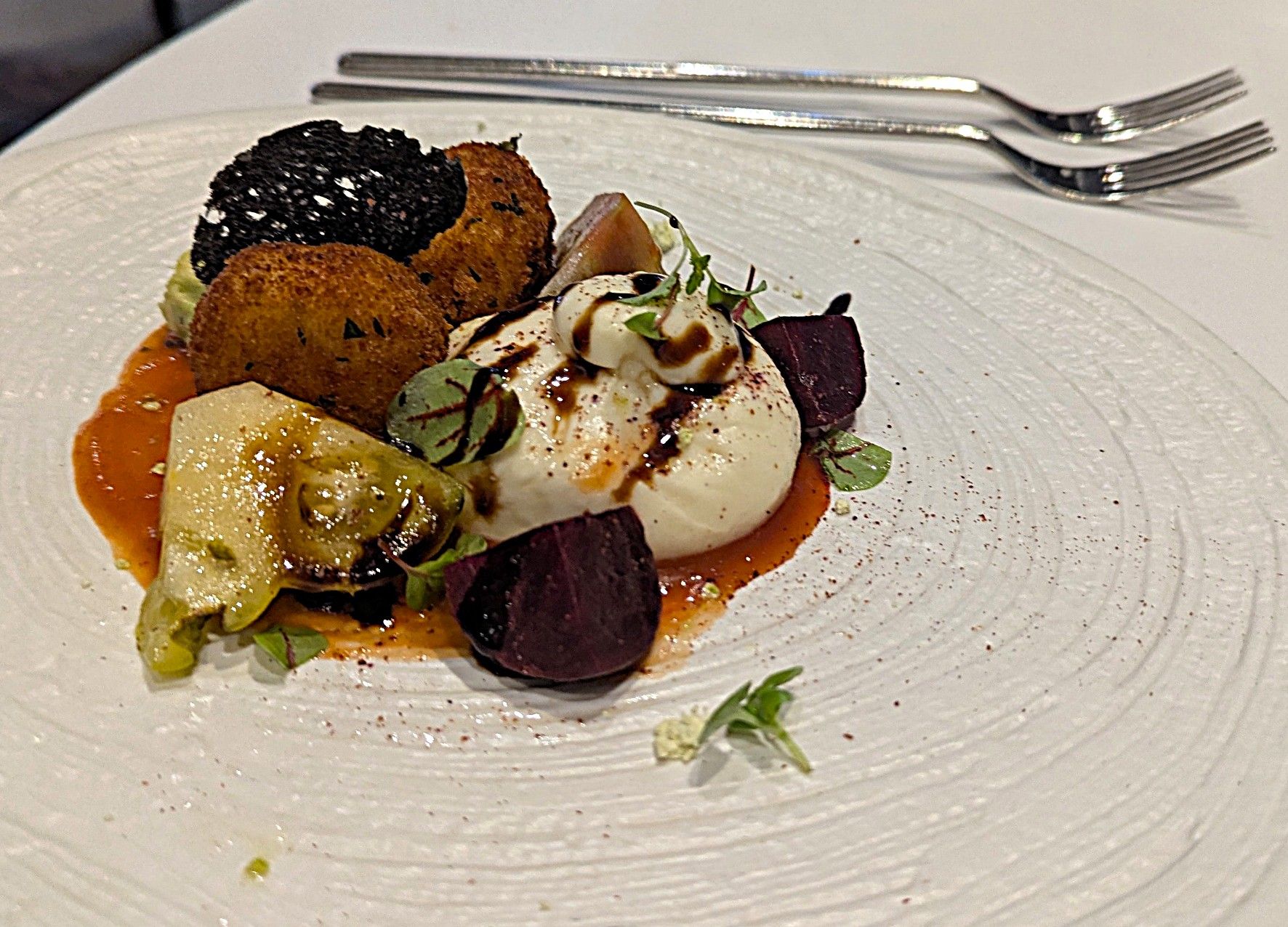
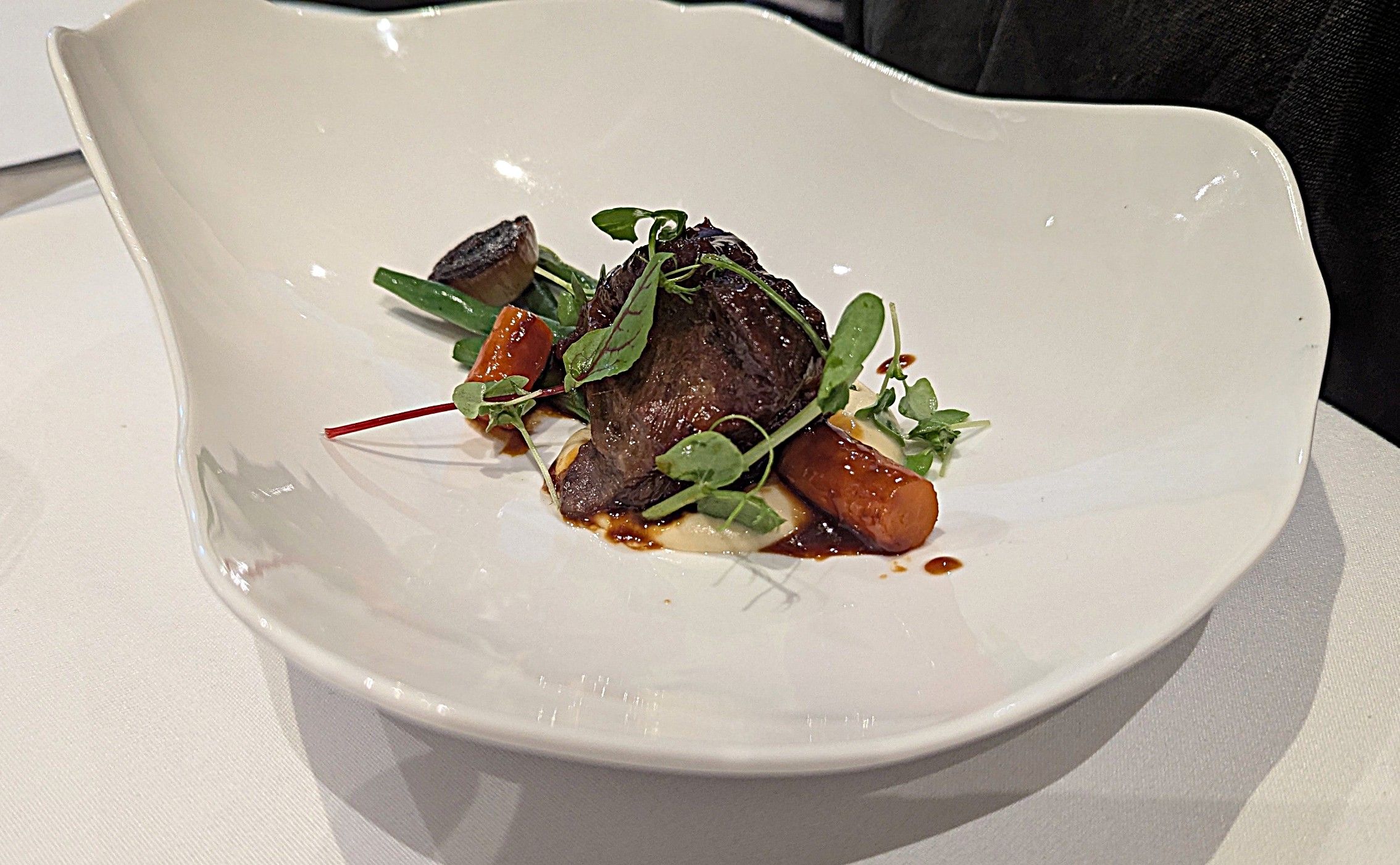
We had another lovely lunch at Courgette – making the most of the 21st birthday celebratory menu with special prices. We had the two-course menu, with entrees and main courses, and coffee to finish. As the coffee was served with huge white chocolate balls, I didn’t feel too deprived. However, next time I am having dessert as there are three excellent choices, of which I have eaten only one in the past. Below are the entrees of duck and pheasant which was beautiful – the duck was cooked really well; beef cheeks; and the burrito and tomato. The main courses are John Dory and sea trout on a prawn risotto (a little salty, I thought); and the excellent beef dish.




The West Wing
Advertised on Facebook this week

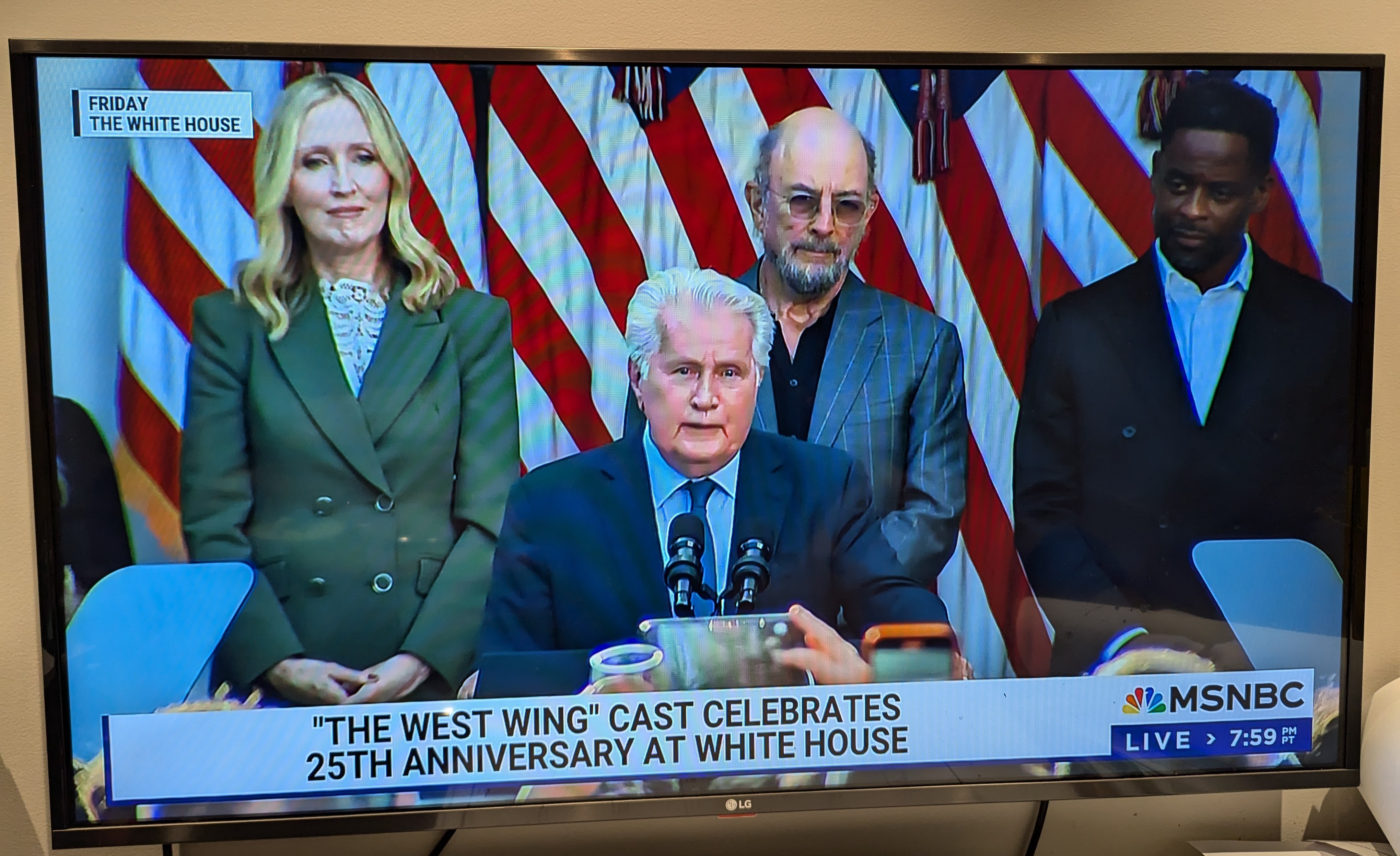
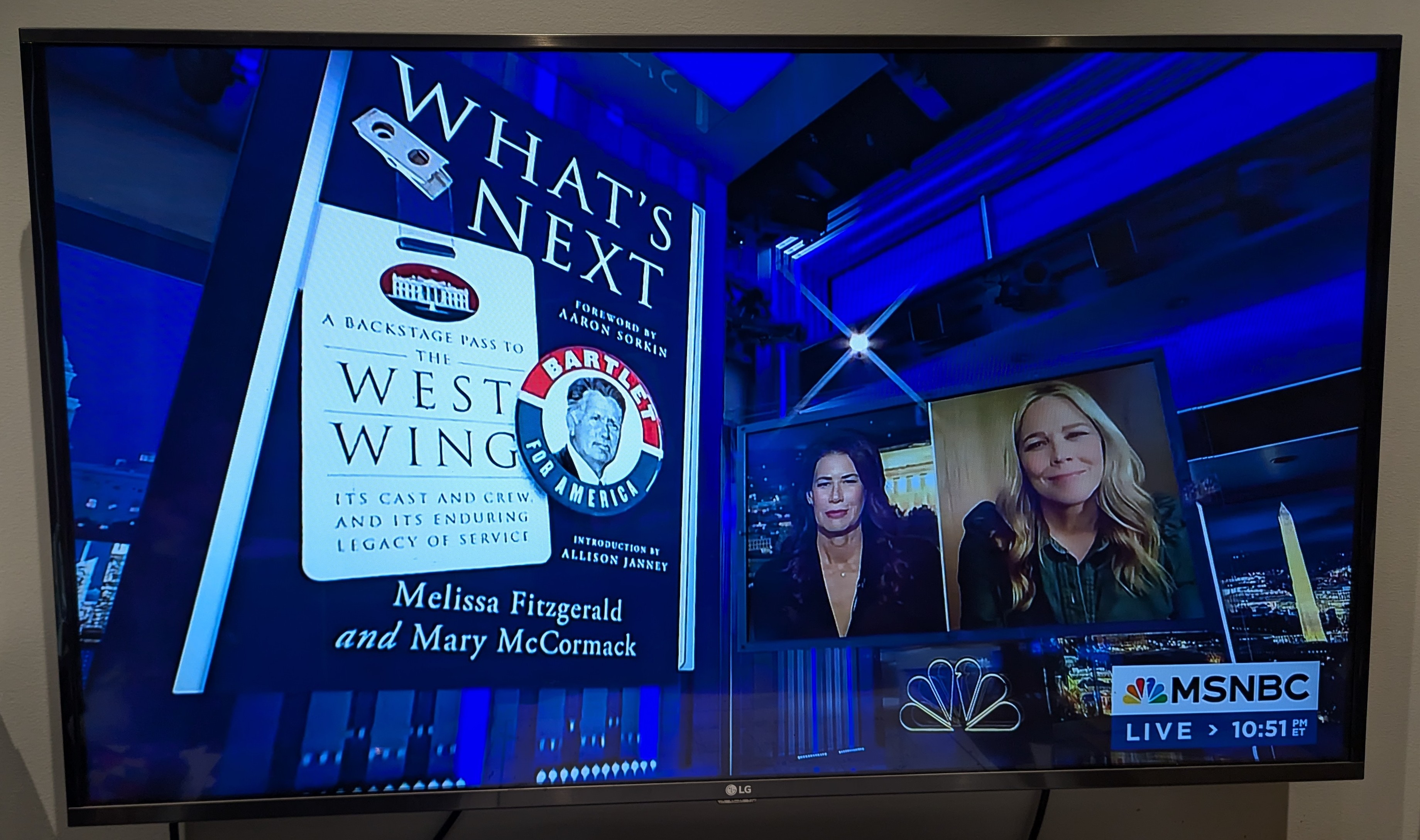
And some nostalgia from 2024 – President Joe Biden’s White house celebration of the 25th anniversary of The West Wing and Jan Psaki and Lawrence O’Donnel’s coverage of the new book about the West Wing, What’s Next, by Melissa Fitzgerald and Mary Mc Cormack.
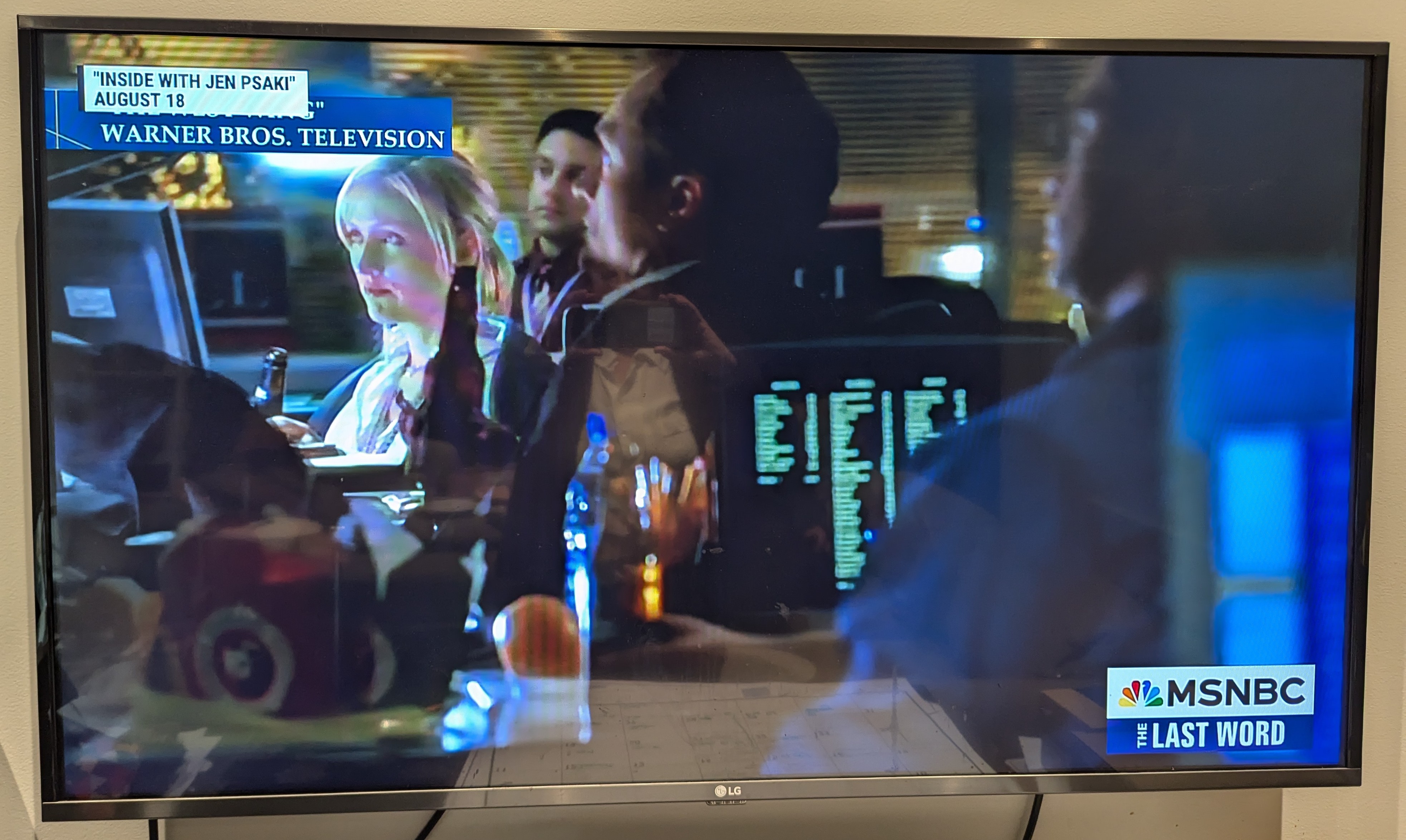


See also, review in the August 28, 2024 blog of Joshua Stein’s The Binge Watcher’s Guide to The West Wing Seasons One and Two.

 Robin's Room