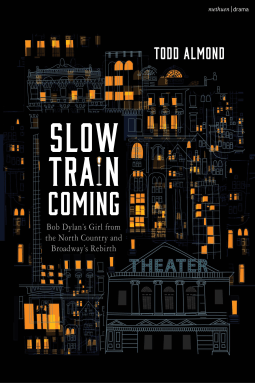
Todd Almond Slow Train Coming Bob Dylan’s Girl from the North Country and Broadway’s Rebirth Bloomsbury Academic | Methuen Drama, January 2025.
Thank you, NetGalley, for this uncorrected proof for review.
This is an intensely personal account of the challenges in staging a play on Broadway. The narrative concentrates strongly on Todd Almond’s experiences and responses, while including a massive range of quotations about the other actors’ experiences. For someone interested in the staging of Bob Dylan’s Girl from the North Country, its nuances, meanings and relevance, and achieving eventual success despite the difficulties that beset the actors and the opening because of covid, this makes an engaging read. See Books: Reviews

Derek Ronald Birks A Guide to the Wars of the Roses Pen & Sword | Pen & Sword History, January 2025.
Thank you, NetGalley and Pen & Sword for providing me with this uncorrected proof for review.
Having read some of Derek Ronald Birks’ witty comments I thought, what fun it will be reading this book! Then I recalled the equally descriptive graphic commentary on the fighting that took place during the conflicts – the use of cannon filled with lead shot or pebbles, arrows, swords, axes, handguns, and maces. All of these inflicted horrific injuries, particularly with the admonishment to any participant who might hesitate, that ‘no quarter’ should be given. These juxtaposed contrasts are woven throughout Birks’ essentially well-argued analysis of the Wars of the Roses. He takes a different approach from the popularly well-known understandings of the politics, economics and rivalries that characterise this era. Notably, he treats alternative historians’ views with respect, while making a fascinating case for his own. See Books: Reviews
Australian Politics
After 45 years watching politics, here’s my last wish for this government and its big mandate
Laura Tingle
7.30 ABC
Federal Parliament
“Dear government, don’t be terrible.”
There was no greater sin in journalism, back in the day, than using the personal pronoun in your copy.
It has proved a good rule to follow over the past 45 years. Not just in a style sense but in terms of the state of mind in which you write: it’s not about you, it’s about your readers, or viewers even.
When this column resumes in July, it will be contemplating more global matters, instead of Australian politics.
But the transition, the fact that this is the last column on Australian politics, suggests a small amount of indulgence or reflection may be allowed.
Postcards from the Edge
Political reporting can often have a Postcards from the Edge feeling about it: a report from a very different jungle to the one most normal people inhabit, with hopefully a bit of translation and explanation thrown in for good measure about how and why politicians act as they do.
But this particular column aims to turn things around a bit: a postcard sent back to our pollies, with a few reflections drawn from four decades of having to watch them in action, close up.
First, as an indulgence taken purely on behalf of readers, let us agree that the federal Coalition can be put aside. That seems only fair, given that the Coalition seems so determined to be irrelevant.
Please come back, opposition MPs, when you’ve remembered what you are there for, or possibly when you have something more intelligent to say.
In the meantime, try not to embarrass us all with your apparent complete lack of reflection on why you may have not only been rejected by the electorate, but now represent less than a third of the House of Representatives.
You have stumbled around, splitting and reunifying, slagging each other off, on matters of “high principle” which seem to be completely malleable to the number of positions various parties get on the frontbench.
Instead, let’s focus on the new government: the one that has won an exceptionally large number of seats in the House of Representatives and which is probably already doing stuff that’s affecting us voters.
Labor’s big mandate
All governments are new after an election, whether they realise it or not, whether they have been in power for years or not.
There are inevitably some different bums on seats.
But more importantly, the context in which the government of the day is thinking about issues will have totally changed: both the economic and global circumstances, and the political circumstances.
What new governments can do with their numbers in the House and in the Senate is regularly discussed.
But what they are able to do (important distinction) or should do is discussed less.
Having watched many federal elections (14) and therefore many transitions of government, it is never clear that new governments quite understand how their mandates, or more importantly, their scope for action may have changed.
It’s not just about the number of seats they hold in the House of Representatives and the Senate.
It’s about the relative power of the other parties and the messages that the electorate seems to have sent.
And it’s particularly about understanding what constraints that might have been shaping judgements for the past few years — constraints that have become so entrenched you don’t even realise they are there — may have shifted or been removed entirely.
The 2025 election has been generally seen as a message of a rejection of the fringes — at both ends — and a move to the centre.
The prime minister has spoken about the idea of “progressive patriotism” as being central to his campaign
“We spoke about doing things the Australian way, not looking towards any other method or ideology from overseas,” he said.
“At a time where there’s conflict in the world, where people are often divided on the basis of race or religion, here in Australia, we can be a microcosm for the world.”
So there’s a nice thought.
But whether you want to prosecute a case for a nice thought, or a really complex policy agenda, you need to be both able and willing to sell it.
A changing political landscape
The political landscape for the past 15 years has been treacherous, starting with the hyper-aggressive politics of Tony Abbott’s leadership of an opposition which sought to bring down the Gillard government on the floor of the parliament.
The biggest thing that the Albanese government has to get its head around is that the ultra-toxic nature of conservative attack politics has fundamentally shifted.
Sure, News Corp and its Sky After Dark franchise continues to prosecute a particular message.
But there is no clear and effective attack dog politician in the mould of Tony Abbott or Peter Dutton now obvious in the Coalition ranks.
And the ideological policy underpinnings which drove them — particularly Abbott — are also in splinters.
Think how that political agenda and it associated tactics have affected politics, and the caution of the Labor Party.
Labor embraced AUKUS, for example, without any apparent thought or contemplation, because it did not wish to be in a different position on foreign policy, defence and the US alliance to the Coalition.
This is not to suggest Labor should immediately abandon AUKUS. It’s just that, with the Coalition in disarray, the prospect of Labor being in power for two terms, and US President Donald Trump apparently determined to make the US look like the world’s most unreliable ally, Australia now has the space to consider what is actually in our best individual strategic interests.
That’s a space we have effectively never been in before, given our obsession with Great and Powerful Friends.
Political norms turned upside down
There are so many other underlying presumptions about political norms generated by the Coalition: the ones on debt and deficits; on personal wealth; on migration and dog whistling on race.
Once again, it is not a question of overturning policy, just of having the clear eyes to rewire politics without the fear of these political attacks necessarily cutting through.
There’s a couple of other ideas that are reinforced by watching a lifetime of political theatre.
The first is about only half remembered memories.
People speak ad nauseam of golden days when governments, and/or the parliament got things done.
From someone who lived and worked through those times: don’t get sucked into all the stuff about how social media makes it harder. Believe that none of the tax reforms, the social welfare reforms, the energy reforms, or whatever, were actually easy.
Everything was fought, as it is now, tooth and nail, whether that be by the Hawke/Keating governments or the Howard government.
The arguments only started to fail when politicians got too tired to keep prosecuting them. When the exasperation with “dumb” journalists or voters got too much.
In a famous bit of correspondence originally reported in 2008, the former Hawke and Keating government minister, Gordon Bilney, wrote a letter to a local government bureaucrat once he was on his way out the door.
“One of the great pleasures of private life is that I need no longer be polite to nincompoops, bigots, curmudgeons and twerps who infest local government bodies and committees such as yours,” it said.
“In the particular case of your committee, that pleasure is acute.”
To those who knew him, it was very Gordon Bilney. But it reflects the exhaustion people in the political process inevitably feel, and which can be the most debilitating limitation on getting things through.
One of the smartest people to occupy a senior ministerial advisory post once said that he knew it was time to go when he found himself thinking, when confronted by someone lobbying on a policy: “don’t you think we haven’t already thought of that?”
There’s a bit of that air around this government already. And if they are going to be successful in using this term to produce change, that has to change.
In Bradfield, the election is not yet over.* What happens when a seat count is ultra close?
Story by Graeme Orr for the Conversation
Election day was over four weeks ago. Yet the outcome in one House of Representatives seat remains unclear. That is the formerly Liberal Sydney electorate of Bradfield.
In real time, you can watch the lead tilt between Liberal hopeful, Gisele Kapterian and her teal independent rival, Nicolette Boele. The difference between them has been as small as one vote. As of Monday, that had shifted to 15 votes in the teal’s favour. Still too close even for Antony Green to call.
What are the processes for resolving ultra-marginal results? And, more broadly, what accountability is there for problems in campaigning or the running of the election, such as the allegation that voters in one New South Wales town were misled about how to vote?
First, to the Bradfield saga. The Australian Electoral Commission (AEC) has until 9 July to declare the result. It then certifies a list of successful candidates, which it “returns”, attached to the original writ the governor general used to formally begin the election.
Remarkably few seats are challenged in Australia. On the happy side, this is because our election agencies are very professional. It’s also a matter of legal principle, arithmetic and resources.
To succeed in a challenge, you must show the outcome was likely to have been affected, by errors or breaches of the Electoral Act. With more than 100,000 voting in House of Representatives electorates, even a 0.5% margin means convincing a judge that a 500-vote lead was uncertain.
The last successful petition nationally was 12 years ago. The AEC admitted some lost ballots meant that the last couple of Western Australian Senate seats could have been different. The whole race had to be re-run.
In Bradfield, there’s no suggestion of impropriety. So it’s not like the last unsuccessful petition, from 2019, where the Liberals survived claims that misleading how-to-vote posters, directed at Chinese language speakers, might have affected the result.
Instead, the Bradfield loser would focus on disputed ballots. That would mean, for example, votes where their scrutineers noted some uncertainty. Such as whether a “1” was a “7”. A judge can then give a binding ruling on the intent of the ballot.
The loser might also try to find evidence of people being wrongly denied a ballot or wrongly issued one. The 40-day period to marshal evidence is strict.
Besides time limits, a challenger needs lawyers and risks paying the other side’s (and perhaps the AEC’s) legal costs if they lose the hearing.
Counts and recounts
Australian election counts are very thorough. This is in contrast to the United Kingdom, where local officials literally rush to be the first to declare, in the wee hours of Friday morning after voting closes at 10pm on a Thursday.
The figures we see on election night are “indicative” only, drawing on counts in thousands of polling places. Every ballot is transferred to a more central location, for official tallying. Ballots for weaker candidates are reviewed multiple times, as they pass on according to each elector’s preferences.
When a seat is ultra-close, the law permits a complete recount. AEC policy is to conduct one whenever the result is within 100 votes: in Bradfield, the initial result was a mere eight votes.
A losing candidate can also request a recount. Teal independent Zoe Daniel did that in her Melbourne seat of Goldstein, where Liberal Tim Wilson finished 260 votes ahead.
Recounts are resource intensive. So the AEC agreed to review all “1” votes for those candidates, and ballots put in the “informal” or invalid pile. Wilson finally won by 175 votes. A challenge to a margin of that size seems very unlikely.
Bad form or protest? Informal votes
What of votes that couldn’t be counted? We call these “informal”. Given turning-out to vote is compulsory – and the requirement to give preferences – Australia has long had a lot of informal ballots.
Upwards of half tend to be accidental, caused by people misnumbering the ballot or not understanding the rules. The highest rates are in seats with many new citizens from overseas, especially as long ballots of many of candidates is becoming common.
Maybe more than half, however, are deliberate, intended as protests against the system or parties. These include blanks and those scribbled with (sometimes obscene) comments. As faith in parties has declined, informals have risen. Also, due to “automatic enrolment”, more people are enrolled than ever, including some who’d rather not be. Informal ballots this year reached 5.6% of turnout. For perspective, that’s up just 0.4%.
Related: Inside the Bradfield recount: painstaking and polite, but sometimes heartbreaking
Voters in the small town of Missabotti in the NSW seat of Cowper, however, were miffed to find their polling booth had a 45% informal rate. That’s quite an outlier, even for a seat where electors had to rank a dizzying 11 candidates.
There are allegations a polling official misled some electors, by telling them they only had to number “6” candidates for the House. That is the rule for the Senate, not the House.
As preferences are not mandatory at NSW state elections, it’s understandable voters may have heeded such advice rather than the actual rule on the ballot. Such an error would be embarrassing for the AEC. But it could hardly be grounds for an election challenge: the Nationals held Cowper by almost 5,500 votes.
Does that mean there’s no accountability? Anyone affected does not get to vote again. But the AEC is investigating. And after every election, it is grilled by a parliamentary inquiry that the public can contribute to.
In the end, every vote should be sacred. In reality, elections are huge logistical events and nothing is perfect. But there are courts and inquiries to offer remedies and improve things for the future.
• Graeme Orr is a professor of law at the University of Queensland. This article was first published in the Conversation.
Electoral challenges
Within 40 days of the writ being returned, any candidate or elector from the seat can “petition” its result. That’s not a petition calling for parliament to handle the matter. It means a formal pleading to the court of disputed returns. For national elections, that means the high court.
*The Independent won by 27 votes, reported today.
American Politics
Jess Piper from The View from Rural Missouri <jesspiper@substack.com> 29 May 2025, 23:23
| Forwarded this email? Subscribe here for more |
The “Real Americans” Plumbers and Harvard
I started my post-high school education at a technical school — Arkansas Valley Technical Institute in Ozark, Arkansas. A Vo-tech.
At 20, I enrolled in their nursing program. It was a fast-track program meant to get an LPN license and transition into an RN program.
The first two months were in-class, and I loved the lectures and learning about the human body. The next part of the program was hands-on, starting in nursing homes.
I didn’t mind the nursing home rotation, but let me go down a rabbit hole for just a minute and tell you a story about a resident I helped take care of during my first few days on the rotation. I’ll call him LeRoy.
I was only assigned two residents, which any nurses aide in an elder care facility will tell you is very light work.
After I received my report on the two residents, I went into the first room and I introduced myself to LeRoy. I told him that I would be taking care of him that day. His eyes lit up and he began to talk about needing to get up and get dressed. He obviously needed help. One of my duties was to help him into the shower.
LeRoy told me that he wouldn’t be able to make it into the shower because of “mobility” issues. He said the aides usually gave him a sponge bath — or a spit bath as he called it.
I went down the hall to grab the soap and shampoo and towels. As I rounded the corner with my arms full, an RN asked what I was doing. I told her that LeRoy needed some help with his bath.
She followed me back to the room and told LeRoy to get up and get into the shower. I was astonished to see him jump up and grab his things for his shower and walk down to the shower room by himself.
The RN said that LeRoy is perfectly capable of showering himself, but he could see a young, green nursing student a mile away and was willing to take the chance every time…he liked to lie back and have a young nursing student soap up his body.
I know it was very inappropriate, but it makes me laugh all these years later. Thank god for the seasoned, no-nonsense RN on duty.
I only made it 30 days into those clinical rotations at Vo-tech. I passed out during procedures. My brain would not stay awake during dressing changes or while trying to watch minor surgeries.
After trying to pack a particularly gruesome wound, and passing out in front of the fully-conscious patient, my instructor said that nursing school was likely not for me.
Agreed.
Several years later, I finished degrees in English and Teaching and I taught for 16 years in public schools. In fact, I taught Literature in schools with technical schools attached to the high school.
I was reminded of this when I watched a video from May 27, 2025 on Fox News with White House Press Secretary Karoline Leavitt.
Leavitt was on the outlet to speak on one of Trump’s rants about removing millions in funding for Harvard and sending it to trade schools across the country. Leavitt stated:
“The President is more interested in giving that taxpayer money to trade schools and programs and state schools where they are promoting American values, but most importantly, educating the next generation based on skills that we need in our economy and our society.”
“Apprenticeships, electricians, plumbers—we need more of those in our country and less LGBTQ graduate majors from Harvard University, and that’s what this administration’s position is.”
If Harvard and trade schools seem like they should both be able to co-exist, you are a rational person. However, the Press Secretary is not rational, and this is another culture war attack on higher education, but specifically the Ivy League sort.
I’ll start by saying I’m not sure why Leavitt chose to include the LGBT community in her condescending rant against Harvard…I am slightly inclined to think she meant to throw DEI under the bus, but used the wrong acronym. I am not surprised that she would disparage the LGBT community. Those are two different culture wars and even Leavitt should understand her bigotry was out of step in her tirade against Harvard.
Here’s the thing about the Trump regime’s attack on education in general and higher education in particular: they know educated folks are less likely to vote for Republican policies and even less likely to be MAGA. The attack on public education is older than I am and the goal is to create workers who can be exploited. Workers who won’t ask questions or join unions or demand better conditions.
Quiet, compliant workers.
The “real” Americans. The laborers. The folks who work with their hands.
Karoline has no idea what she is talking about.
The regime has something wrong — electricians and plumbers and trade workers aren’t stupid. The Karoline Leavitt’s of the world may think of tradespeople as uneducated, but I know too many of them to fall for that bullshit.
I am the daughter of a carpenter and the mother of a carpenter and soldier and I attended Vo-tech myself. I also taught American Lit to students who spent three hours a day learning a trade in the technical school attached to the high school.
I had people ask why “those kids” needed to read To Kill a Mockingbird or The Yellow Wallpaper or The Crucible or poetry. Why did I teach kids in the technical school how to write an essay before they went down to prime a truck for paint? Why did I teach them to dissect Letter From Birmingham Jail before they learned to blanch vegetables? Why did I teach them The Great Gatsby before they went to build a Habitat for Humanity house after class?
Why did I bother to teach Thoreau and Emerson and Malcom X and Maya Angelou and Steinbeck and Faulkner and Twain to kids going into welding and carpentry and auto body and the culinary arts?
Because everyone deserves an education to have a fighting chance against those who would take advantage of them. Because every person deserves the critical thinking skills that naturally follow reading and writing.
Every person deserves an education.
I know Karoline Leavitt went out to mock Harvard and those who attend prestigious institutions — the same institutions that Leavitt would likely want her own children to attend. Meanwhile, she speaks down to those in trades by insinuating that they don’t need “book learning.”
It’s not either or. It’s not an education or a trade. They can both exist together.
And, why is the government trying to tell people which jobs they are going to pursue in the first place?
They want to draw the ire of non-college educated folks, but Leavitt and those in the Trump regime are college educated. Imagine Trump trying to change a light bulb much less trying to turn a wrench. Hegseth fixing a leak? Leavitt using a MIG welder?
They want another culture war — the “real” Americans against the “elite” Americans who attend college.
We would do well to remember that while the oligarchs and those doing the bidding of the oligarchs push the “real” American rhetoric on us, they quietly enroll their children in the schools they wish to defund for the rest of us.
~Jess
A bit of optimism from Rachel Maddow
Forwarded this email? Subscribe here for more
The Daily is 100% independent and committed to delivering opinion and analysis that protects democracy and freedom.
Rachel Maddow said that Trump got the politics of immigration completely wrong and the American people will make him pay.
Sarah Jones & Jason EasleyJun 3
Trump Got Immigration Wrong
Trump’s approval rating on immigration has been falling for months. Trump ran on immigration. Trump thinks that he got elected because of immigration. Trump will tell anyone who will listen that he is doing what the American people want on immigration.
According to Rachel Maddow, Trump has gotten it all wrong.
Maddow said:
Imagine if that’s, that’s like what Trump rallies and Republican rallies had been like, right? Hey, hey, vote for me. Vote for us. We’ll bring back measles and AIDS. We are gonna legalize machine guns and we’re also, you know what we’re gonna do? We’re gonna destroy the greatest universities in the world. We are gonna decimate cancer research America. You will never again have to worry about the bane of cancer research anymore.
Gonna get rid of that. We’re ending that. I mean, imagine if they had run on these things, but of course they didn’t. Trump didn’t run on those things. What he ran on was in part. Promising to be really cruel to immigrants, right? The cruelty to immigrants. We can’t say, they didn’t warn us about it. Trump ran on that promise.
And I think that Trump thought, and all the people going into the Trump administration thought therefore that his cruelty to immigrants would be popular once he was in office, right? That the more people he and his agents arrested, the more cruel they were to people who are in this country who were not born here, the more the American people would like it and applaud for it and like him for doing it, it turns out they were really, really wrong about that.
That political calculation was incorrect. I mean, from the northeast in New England to the far southwest, to the Pacific Northwest, to Ohio, to Florida, to Arizona, to Texas, to Trump supporting rural Missouri, what they are doing in abusing immigrants.
They are arousing the ire of the American people with every single blundering step they take against these high school students and waitresses who they’re trying to tell us are the real monsters that we all need to be saved from.
They got the politics absolutely wrong here. They got the heart of the American people absolutely wrong on this issue, and now politically everywhere they are going to pay for it.
Trump had one issue that he ran on, and he completely screwed it up.
Remember, Trump killed the bipartisan immigration bill that Biden negotiated, because immigration was “his” issue.
Readers were asked for comments. I would love to think that Rachel is right. And while I hesitate to say she is, I recall her early introduction of the possibility of fraud in an attempt to overturn President Joe Biden’s win. She raised the issue of fraudulent Electoral College slates in several states being provided for counting instead of the correct slates. See below:
Maddow Exposes Trump Groups’ Shady Scheme To Overturn Biden’s Win
Shadow sets of Electoral College slates were sent from five states. Michigan’s attorney general said she had referred the matter to federal prosecutors.
MSNBC’s Rachel Maddow reported this week that Donald Trump’s allies sent the government fake second sets of Electoral College documents in 2020 that falsely declared the then-president to be the recipient of the states’ electors.
“It wasn’t one state, it wasn’t three states where they did this — it was at least five states where we have now obtained forged documents created by Republicans,” the MSNBC host said.
“And it’s not like they, again, created these documents to, like, hold close to their chest and fantasize that this had been the real outcome. It’s not like they created these documents just to keep themselves, as a keepsake.”
“They sent them in to the government as if they were real documents,” she added.
The documents were signed by Trump supporters who claimed to be the rightful electors in states that Democrat Joe Biden won, even though they did not have backing or sign-off from any election officials. The documents were meant to challenge the states’ official slates of electors, who represented the Electoral College votes favoring Biden, with alternative lists of people who would back Trump.
The fake documents from Georgia, Nevada, Wisconsin, Arizona and Michigan were first posted in March by the government watchdog group American Oversight, but they received renewed attention this week amid the intensifying investigation over the U.S. Capitol riot on Jan. 6, 2021. Politico reported Monday that the Jan. 6 committee has obtained the forged certificates sent in Arizona and Michigan via the secretaries of state for both swing states.
Correcting the record: Marcia Langton believes a new exhibition will change the way people see Indigenous art
65,000 Years: A Short History of Australian Art, curated by renowned Indigenous academic Marcia Langton, opens in Melbourne on Friday.

Installation view of 65,000 Years: A Short History of Australian Art, Potter Museum of Art, the University of Melbourne, 2025. Photography by Christian Capurro.
A new exhibition at the University of Melbourne’s Potter Museum will “correct the record” on the rich history of First Nations art, according to one of the country’s most renowned academics.
65,000 Years: A Short History of Australian Art features more than 400 works, encompassing bark paintings, sculptures, watercolour paintings, woven works and ceramics.

Meet the artist behind this year’s winning NAIDOC poster
Speaking to NITV News, senior curator and Distinguished Professor Marcia Langton said it was a blockbuster exhibition.
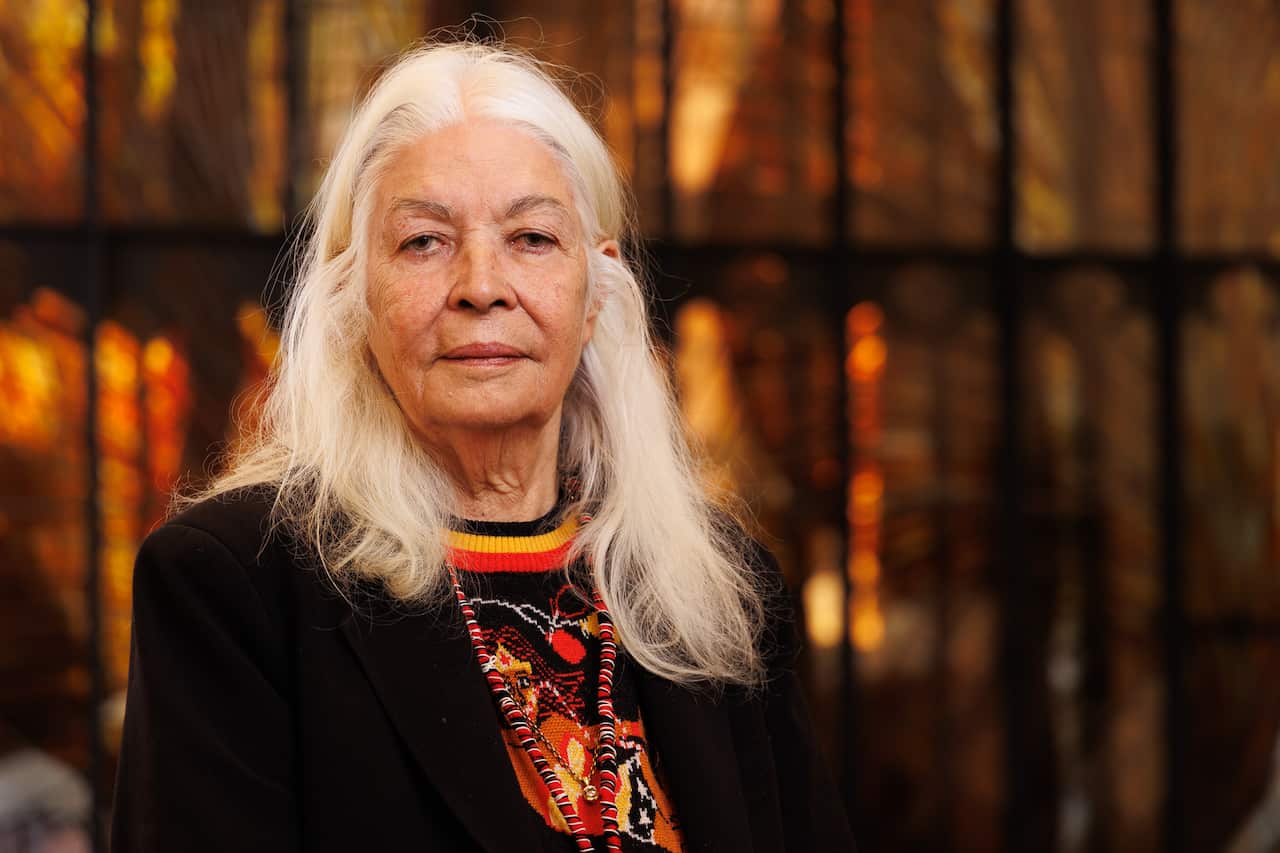
Distinguished Professor Marcia Langton AO is the senior curator on the exhibition. Photo by James Henry.
“This exhibition is a groundbreaking exhibition that will show I think for the first time – I’m convinced this is the first time ever – the enormous diversity of Aboriginal and Torres Strait Islander art traditions, movements, periods of art, the brilliance of individual artists, that has ever been exhibited in Australia,” she said.
“Clearly, this is a unique contribution to global humanity of art and its unique to Australia – all the other art traditions came from elsewhere in the world, from Britain and Europe.”
It will change the way that people think about Indigenous art in Australia.

Sacred Larrakia cultural artefacts return home after nearly a century in US museum
The title of the exhibition is an ironic reference to the late acceptance of Aboriginal and Torres Strait Islander works by the Australian art scene.
Professor Langton said it was unbelievable that such “brilliant” art traditions were not widely recognised or respected by universities, curators or critics until the 1980s and 1990s.
“We are correcting the record, visually, by having the best works by the greatest artists and also in context so that the meaning of the work and their history is very clear,” she said.
Many pieces in the exhibition provide rich historical background.
Some are from the frontiers and other pieces include paintings of Makassan and Dutch ships by Anindilyakwa artists from Groote Eylandt in the Northern Territory.
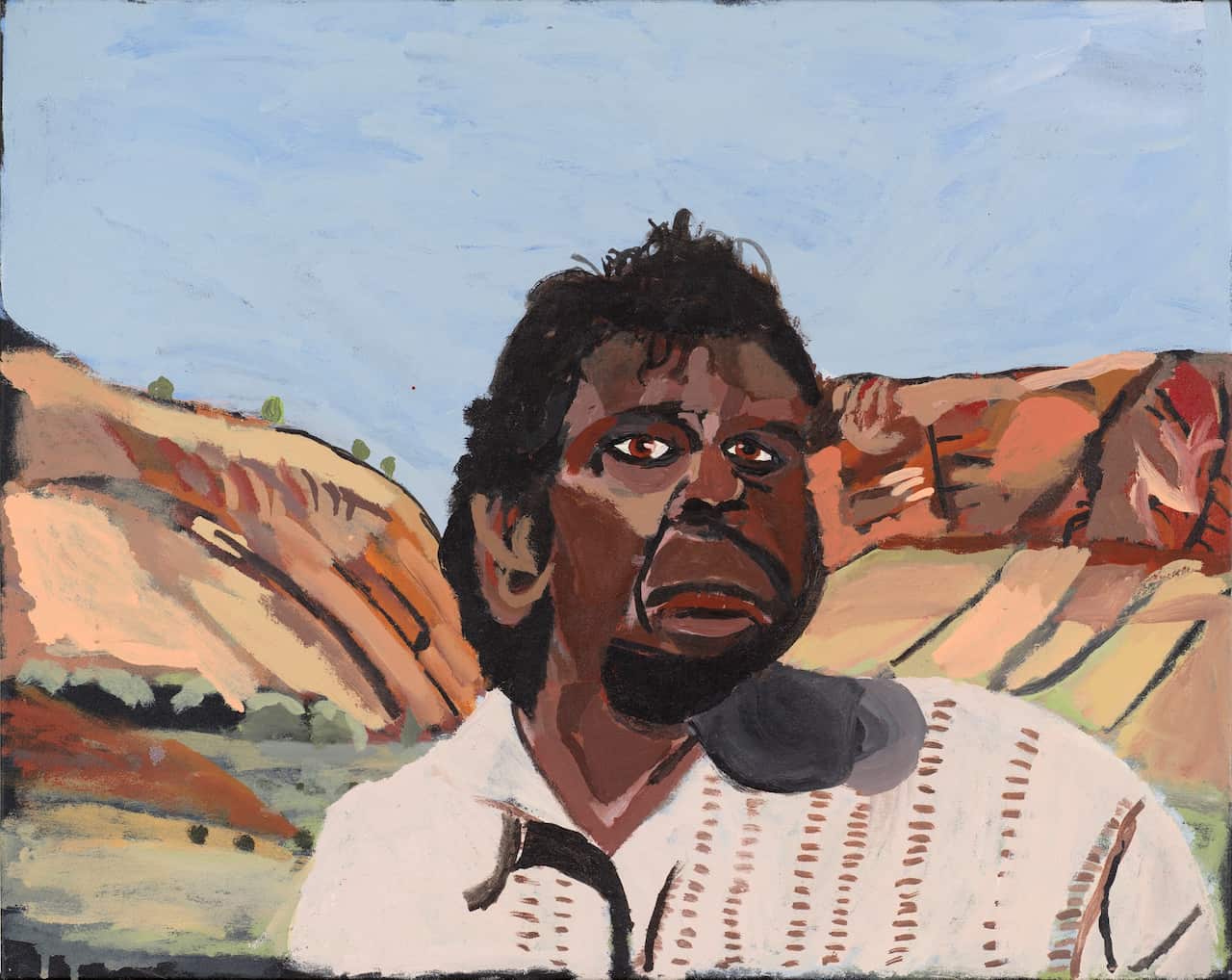
Albert Namatjira, painting by Vincent Namatjira. The University of Melbourne Art Collection. Supplied.
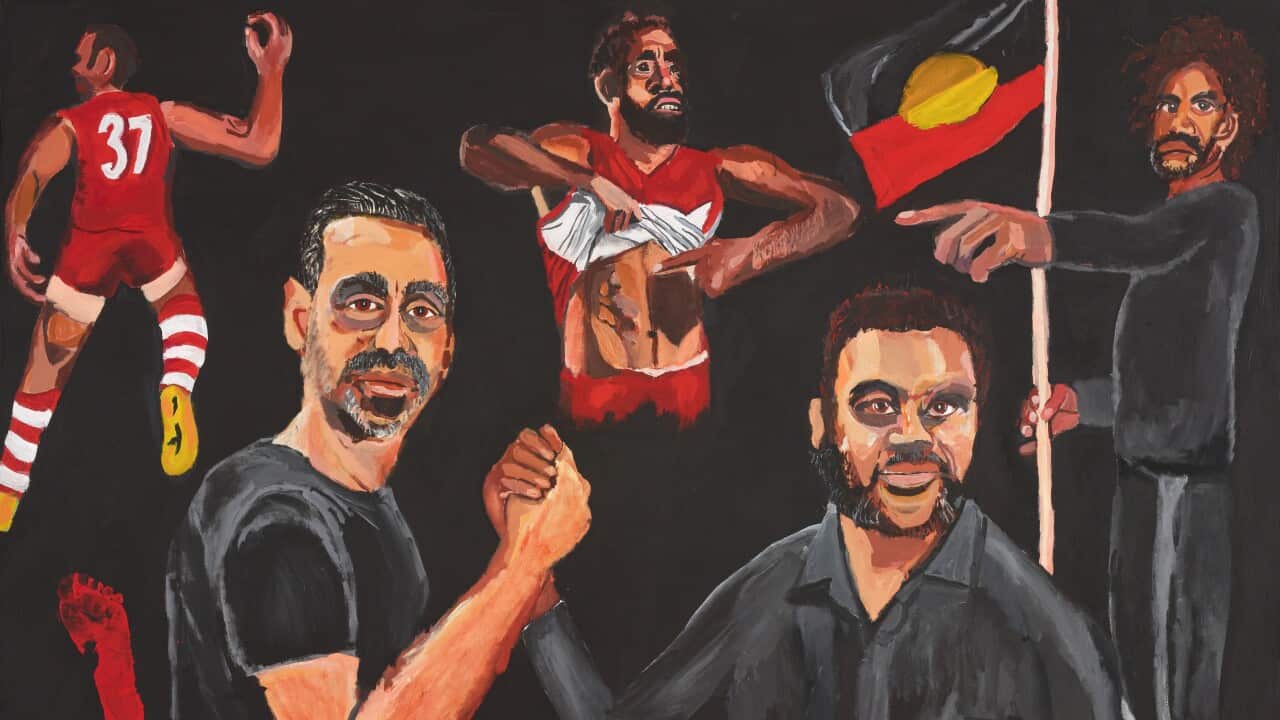
‘Stand Strong For Who You Are’: Vincent Namatjira wins Archibald Prize 2020
Eastern Arrernte woman and associate curator Shanysa McConville said there were also many private pieces in the exhibition that have never been publicly displayed before.
“There are over 400 works of art in this exhibition and 50 or so archival documents all of which really just want to get the point across that this is art – these people have been artists for thousands of years,” she said.
Almost 200 pieces have been loaned to the exhibition from 77 different public and private lenders, including from collectors in Europe – meaning many works will be seen by members of their artists’ communities for the first time in decades.
Artists from some of these communities have attended the exhibition preview to see how the works have been curated.
“We want communities and descendants to come and engage with this work and connect to the work of their kin,” Ms McConville said.
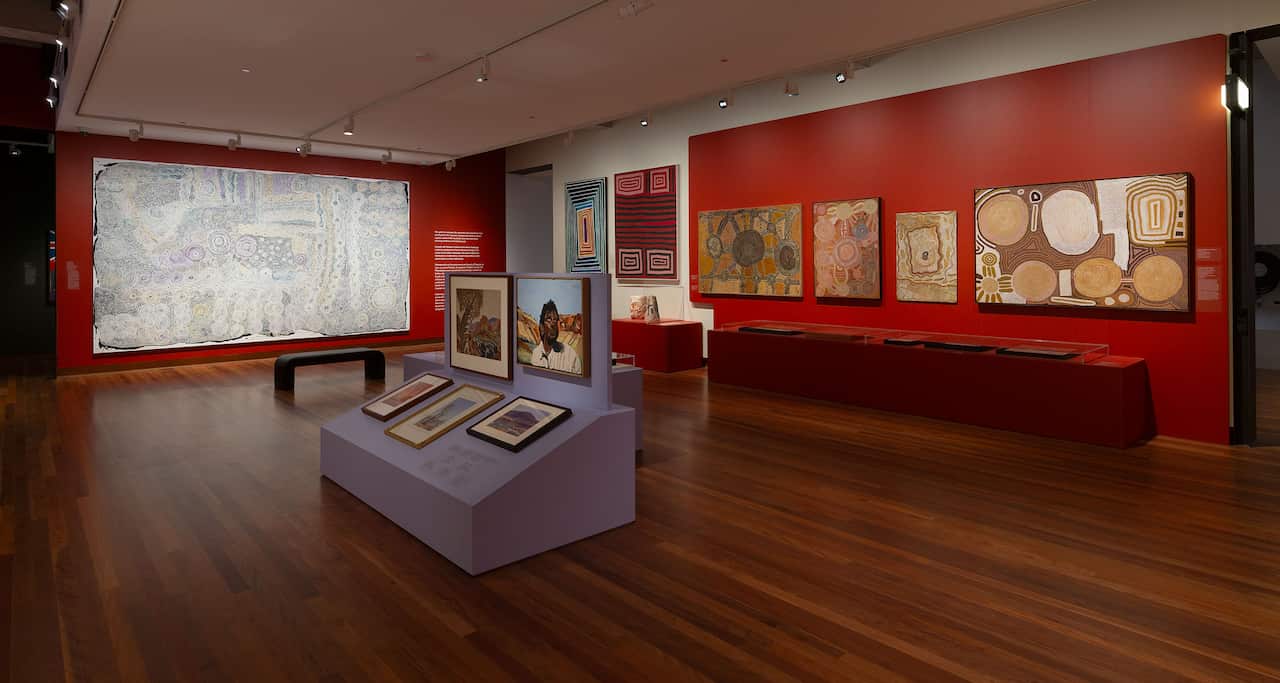
Installation view of 65,000 Years: A Short History of Australian Art, Potter Museum of Art, the University of Melbourne, 2025. Photography by Christian Capurro
Professor Langton said she was honoured that other items had been loaned directly to the museum from Traditional Owners, including works from groundbreaking 19th Century Wurundjeri artist and leader William Barak.
“Works by William Barak have been acquired recently at an auction in New York by the Wurundjeri Woi Wurrung, they’ve lent us these precious works, as have the Dja Dja Wurrung people lent us their cultural collection which they have recently repatriated,” she said.
The exhibition – opening at the tail end of Reconciliation Week – will be the first show at the Potter Museum of Art once it reopens to the public on Friday, after being closed for redevelopment since 2017.
It will be open to the public until November.
Published 30 May 2025 10:27am By Cameron Gooley Source: NITV
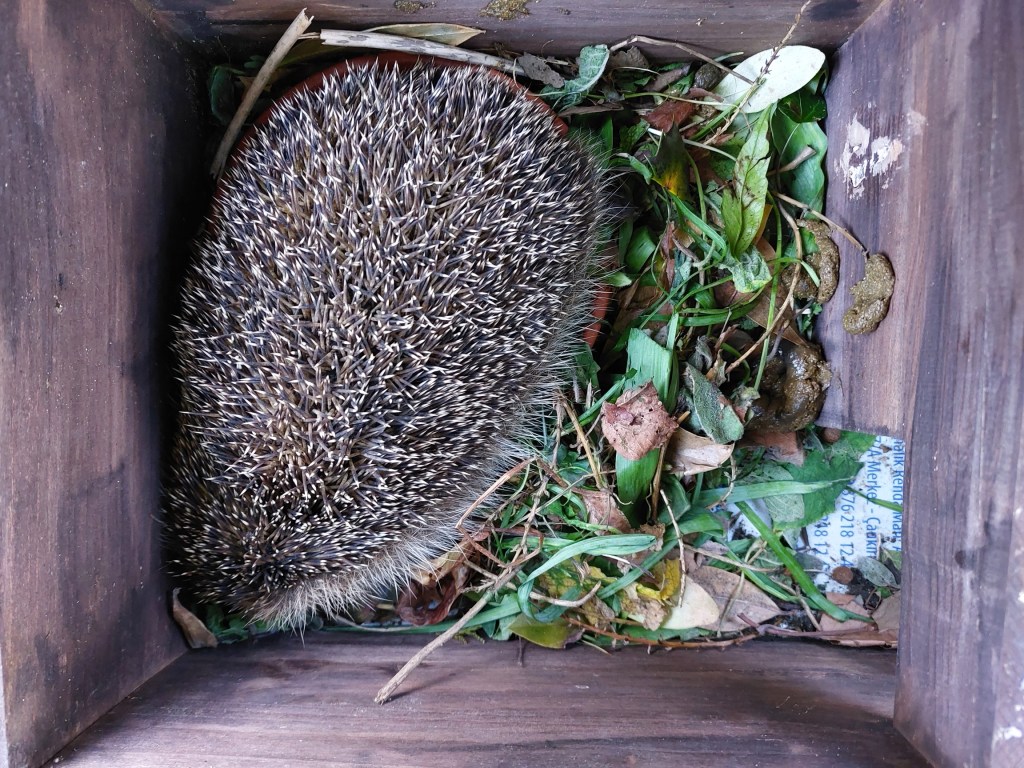
Hedgehog asleep in Wallingford
A wonderful photo from friends in Wallingford, England. I think this beats the statue of Agatha Christie reading on the green in Wallingford from a long-ago post!

 Robin's Room