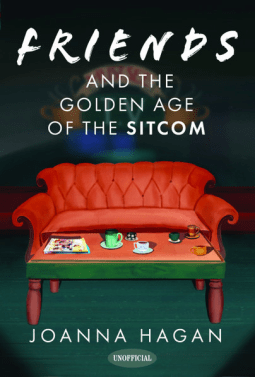
Joanna Hagan Friends and the Golden Age of the Sitcom Pen & Sword | White Owl, August 2024.
Thank you, NetGalley and Pen & Sword for providing me with this uncorrected proof for review.
There is a wealth of information about Friends, and other television shows that featured in the period in which the sit com was initially screened, between the covers of this exciting publication. Friends may or may not have been one of your favourite programs, but regardless, there is something here for anyone interested in television in the 1990s to the early 2000s. Seinfeld, Frasier, and comedies from the past such as I Love Lucy, feature; dramas, for example ER and The West Wing, are discussed; the introduction of reality shows, the first of which was Survivor, gain a mention; the start of Grey’s Anatomy and its enduring popularity are referred to. Importantly, the process of creating and producing a sit com is provided in detail as episode after episode of Friends is laid out, familiar situations and analysis featuring side by side.
The way in which the material is woven together is the strength of this work, with Friends usually the pivotal point from which the additional information extends, building an engaging look at this Golden Age from the perspective of one of its most popular examples from 1994 to 2005. Other sit coms, and their particular focus and idiosyncrasies – some successful, some not – are contrasted with significant effect. The attention to other sit coms provides valuable insight into the field of work in which Friends competed. Moving more widely into the dramas also in the field is also instructive, providing awareness of the range of television choices available while Friends maintained its impetus. See Books: Reviews for the complete review.

Tim Waggoner Just Add Writer A Complete Guide to Writing Tie-ins and IP, RDS Publishing|Guide Dog Books, May 2024.
Thank you, Net Galley, for providing me with this uncorrected proof for review.
Tim Waggoner has written an impressive guide for writing tie-ins – but more than that, there is so much material that applies to other forms of writing. I am not a fan of much of the material that he uses as examples ( Supernatural, Defender: Hyperswarm, Exalted: Shadow Over Heaven’s Eye, A Nightmare on Elm Street, for example and he refers to horror as a favourite genre) – but my prejudices are apparent from my sigh of relief when one of the contributors mentioned writing for Law and Order and Murder She Wrote. Something familiar at last! However, that said, I was drawn into Waggoner’s alien world through the almost magical lure of his writing style, the accessibility of his advice and the substantial and valuable guide to a wide range of writing beyond the topic for which this book could be seen as a ‘must read’. To add to Waggoner’s experience there are interviews with other tie in writers which strengthen the proposition that, although there are some broad guidelines that are worth following, writers have unique experiences as well as comparable ones that are also valuable. See Books: Reviews for the complete review.
The Aussie writer’s festival putting women’s stories first
Rose Scottwomen writers Women’s Voices


Feature image: Eda Gunaydin, Bastian Fox Phelan, Bronwyn Rennex, Beth Yahp. Photographer Connor Malanos.
We’ve all been asked that question: who would you invite to your dream dinner party, dead or alive?
For me, the answer is easy: Rose Scott. I often wonder what she would make of the organisations she helped found, and whether she’d recognise her legacy in our work today. There are moments when I find myself asking: what would Rose do? A reformer, suffragist, journalist, and one of Australia’s OG social entrepreneurs, Rose Scott was a woman of fierce intellect and conviction. She didn’t just create spaces for conversation, she championed women’s right to think, speak, and write their way into public life.*
This year marks the centenary of Rose Scott’s death, and yet her impact continues to resonate. In 1889, she co-founded the Women’s Literary Society – the first women’s organisation in Sydney to meet independently at night. As historian Judith A. Allen notes, many members had little or no formal education yet were determined to develop their critical thinking and influence philanthropy and public opinion in ways that would improve the position of women. They read widely, wrote papers, delivered lectures, and debated the major questions of their time: the value of higher education for women, the morality of marriage, the need for improved conditions for working women, and the political implications of suffrage. In asserting their right to serious cultural engagement, they laid the foundations for a tradition of women-led critical inquiry and public dialogue.
Rose Scott’s literary influence extended far beyond the parlour. She corresponded with Miles Franklin, who would later write Scott’s biography, and advocated fiercely for the visibility of women in music, literature, visual art and theatre. She understood that changing laws was only part of the work; shifting culture was just as crucial. In many ways, she anticipated the work of feminist thinkers like Beatrice Faust, believing that women needed not just the vote, but the intellectual tools to use it effectively.
The Rose Scott Women Writers Festival (RSWWF) carries forward that legacy. Established in 2013 by members of The Women’s Club, RSWWF is now Australia’s only literary festival created by women, for women writers.
It began with a simple, radical idea, that women’s stories matter, and they deserve a dedicated platform, one that respects their craft, pays their worth, and prioritises their voices.
Each year, the festival presents a vibrant mix of emerging and established writers across fiction, journalism, poetry, theatre, film, songwriting, and criticism. Our speakers explore the personal and the political, offering perspectives that are both provocative and reflective. From climate anxiety to sexual politics, historical reckonings to creative resistance, audiences can expect generous thinking, bold ideas, and sharp creative minds in dialogue.
The curation of the program is shaped by a working committee drawn from The Women’s Club’s membership including booksellers, editors, curators, marketers, and cultural producers, working in collaboration with writers, cultural partners, and expert festival moderators to shape every session. This is not a passive festival of readings and signings. The sessions are designed with the speakers themselves, built to challenge assumptions and ask timely questions. Writers like Sophie Gee and Sara Saleh have worked closely with us to frame conversations that speak directly to the current moment. This is a space where women’s voices drive the narrative and challenge who gets to define culture in the first place.
And yet, the need for such a platform remains. According to Creative Australia’s 2023 report Widening the Lens: Social Inequality and Arts Participation, women are consistently more likely to engage in reading for pleasure than men, a pattern also supported by Australia Reads and the Australian Society of Authors. This suggests that women not only read more, but are likely the primary purchasers of books, forming the foundation of the country’s literary economy. Yet, they remain underrepresented where it counts. The 2020 Stella Count revealed that books authored by women made up 55% of reviews in major Australian publications – up slightly from 53 per cent in 2019 – yet gender disparities persist across publishing, media coverage, and awards. The 2022 National Survey of Australian Book Authors, also found that women authors earn, on average, 30 per cent less than men, with a median income from creative work of just $18,200 per year. Visibility, viability, and fair recognition remain hard-won.
This is why the RSWWF is essential. It provides visibility and economic recognition by remunerating all contributors at the Australian Society of Authors’ recommended rates. But beyond that, it offers space for professional growth, collaboration, and connection. It affirms the value of women’s stories not as side notes, but as central to our cultural landscape.
If I ever did sit across from Rose Scott at that dream dinner, I’d hope she’d let me try on her famous feather boa. I imagine she’d be disappointed that we still need to ask the same fundamental questions about representation and equality. But I think she’d also be proud that women now hold the highest level of representation in federal parliament in Australian history, and that so many platforms, like ours, exist to elevate women’s voices. And I’d like to think she’d see, in this gathering of writers and readers, a living continuation of her vision and a future that still belongs to women who dare to speak.
So, how can you get involved? Show your support for women writers. Buy a ticket. Attend a session. Make a donation. Read more books by women. Share the program with your community. Support diverse and essential voices. Because in a world where women’s stories are still too often silenced, sidelined, or unpaid, festivals like ours are not just nice to have. They are necessary.
Women’s Agenda is published by the 100% women owned and run Agenda Media. Advertising and partnerships support our independent journalism.
© Women’s Agenda 2025. All rights reserved.
We acknowledge and pay respect to the past, present and future Traditional Custodians and Elders of this nation and the continuation of cultural, spiritual and educational practices of Aboriginal and Torres Strait Islander peoples.
*See last week’s blog for a review of Miles Franklin Undercover, by Kerrie Davies, in which there are references to Rose Scott.
A striking new 5.5-metre sculpture celebrating First Nations women is coming to Sydney’s harbourside
Half human and half whale, this major public artwork will stand more than five metres tall
Written by Alannah Sue Arts and Culture Editor, Time Out Sydney Thursday 12 June 2025

The Sydney landscape is dotted with some pretty iconic public art, like that crushed car in the middle of a roundabout in Walsh Bay, or that six-metre-tall marble fishing hook overlooking the sculptural sails of the Sydney Opera House. But when it comes to our city’s statues and the historical figures they commemorate, the spread is somewhat embarrassingly skewed to colonial and patriarchal figures. However, an ambitious new permanent public artwork coming to Circular Quay is set to shake up the status quo.
Titled ‘Badjgama Ngunda Whuliwulawala (Black Women Rising)’, the 5.5-metre-high cast bronze sculpture is the creation of Dharawal and Yuin artist Alison Page, developed in consultation with the Sydney Coastal Aboriginal Women’s Group and the Gujaga Foundation.
The sculpture depicts an Aboriginal woman rising powerfully from a body of water. Part woman and part whale, the figure represents the deep connection Aboriginal people have to Country and serves as an invitation for all women and all people to connect with her strength and resilience.
Speaking on the artwork, the artist said: “‘Badjgama Ngunda Whuliwulawala (Black Women Rising)’ emerges from the water below the city, a place of spiritual potency for Dharawal women. She is the mixing of the salt water and the fresh water, her energy and essence lives within the Aboriginal women of Sydney today. She is every black woman, every mother, daughter, sister, aunty. She is Country.”
Commissioned by Lendlease, the work will be produced by UAP foundry in Brisbane and is set to be unveiled outside of the Waldorf Astoria Sydney hotel development at Circular Quay in early 2027.
The news of Circular Quay’s new sculpture comes after the recent announcement of another major public art project paying tribute to Indigenous history, with the redeveloped Sydney Fish Market also unveiling a sculpture series that will honour Blackwattle Bay’s First Nations and maritime histories.
Stay in the loop: sign up for our free Time Out Sydney newsletter for more news, travel inspo and activity ideas, straight to your inbox.

The Penguin books that shaped us Celebrating 90 years of Penguin Books
https://www.penguin.co.uk/
Since 1935, Penguin has published books that have defined the world we live in. We’ve asked the experts, from editors and storytellers to musicians, podcasters and influencers, to help us gather the books that have shocked us, comforted us, raised us, and set our imaginations alight.
With each list comes the opportunity to vote for your favourite and help us create our ‘Readers’ Choice’ list, to be released on Penguin’s birthday on 30th July.
The lists cover: Inspired generations of young readers; challenged our view of the environment; created a pop culture phenomenon; shaped our everyday lives; saw us through hard times; shaped our political understanding; redefined love and relationships; shocked society.
Sign up to the Penguin Newsletter to receive the full document. I have provided some edited versions below. If you read books, then the Penguin newsletter is for you. Be the first to hear exclusive news about our latest and greatest reads.
Gain unique access to early extracts, bookish gift offers and events. Be inspired by our reading recommendations, explore big ideas or simply sit back and revisit cherished classics.
The Penguin books that ignited a pop culture phenomenon
To celebrate Penguin’s 90th birthday, we round up the books that left an indelible mark on popular culture, with help from TikTok pop culture influencer Jack Edwards.
Stephen Carlick and Jack Edwards 29 May 2025
Books and popular culture have always been symbiotic: since the printing press made cheap books widely available, up to the present ‘digital’ day, there simply hasn’t been one without the other. From classics to modern tomes, books have seeped from the page into other art forms, bringing them to life.
Someone who knows this better than most is Jack Edwards, TikTok influencer of books and pop culture. Below, he explains why books have such an impact – and the book that has influenced him the most. Plus, we reflect on the 10 Penguin books that have become pop culture classics over the past 90 years (you can jump straight to the list by clicking here).
Jack Edwards on the books that impacted pop culture
Without Nineteen Eighty-Four, we wouldn’t have Big Brother or Room 101. Without Pride and Prejudice, there’d be no Bridget Jones’s Diary or Bridgerton. Without Lord of the Flies, there’d be no Yellowjackets or Lost.
When Taylor Swift chimes that she’s “feeling so Gatsby”, Lana Del Rey quotes Lolita, or The Rolling Stones replace their heads with bugs for their Metamorphosis album cover… Penguin books are shaping culture.
Since their founding 90 years ago, Penguin books have ignited pop culture phenomena, whether it’s the modern classic The Secret History, which countless “dark academia” authors have been inspired by, In Cold Blood sparking a true crime craze, or The Fault in Our Stars banding together a community of like-minded readers on BookTube, Bookstagram, and – subsequently – BookTok. When someone is raving about the gem they’ve just (re-)discovered, look to the cover’s corner: chances are you’ll spot the iconic Penguin logo lurking there.
Penguin books have championed voices from around the world; they’ve even been banned for the way they challenge hegemonic ideologies, as Toni Morrison’s The Bluest Eye does. They are disruptive, galvanising, and empowering.
They’ve inspired modern retellings, like The Odyssey, and even introduced new terms to our lexicon – our concept of “nostalgia” originated as nostos in Homer’s epic poem. In fact, the Oxford English Dictionary added the adjectives Homeric, Kafkaesque, and Orwellian, codifying these authors’ immense impact in our language.
Over nine impressive decades, Penguin authors have explained and explored the world, and shaped it along the way.
Details of the books follow in the Penguin Newsletter.
The Penguin books that shaped our political understanding
To celebrate Penguin’s 90th birthday, we reflect on the books that reflected and shaped our political landscape, with help from comedian and presenter Nish Kumar.
Rachel Deeley and Nish Kumar29 May 2025
In today’s world, politics seems to be governed by soundbites, social media posts, and a steady drip-feed of leaks to the media. But books have always offered the necessary space for exploring important political issues with depth and nuance – sometimes with real-world impact.
Political writing is an intrinsic part of Penguin’s history. Take the Penguin Specials, a decades-long series of topical books by expert authors that began with a 1937 reprint of Germany Puts the Clock Back, which alerted the British public to the rise of fascism in Europe. Since then, countless more books have helped readers understand a rapidly changing world. We explore some of the most influential examples with the help of Nish Kumar, comedian and co-host of the Pod Save the UK podcast. (Jump straight to the full list by clicking here.)
Nish Kumar on the role of books in political discourse
We live in an information crisis. Unregulated tech platforms spew misinformation into our public sphere and their oligarch owners have spent the last decade slowly colonising our discourse and creating a monopoly on truth. All of this infects our politics. An alliance forms between the tech barons and a new era of despots, a nightmare symbiosis of state smashers and ethno-nationalist anti-democrats.
Just so you know, this is the kind of thing I say at dinner parties, and it’s the principal reason I’m rarely invited to them (others include: leafing through the host’s record collection and light stealing).
In the face of this chaos, the books on this list confront. Whether it’s George Orwell’s haunting warning against the dangers of totalitarianism or Naomi Klein’s rigorous investigation of disaster capitalism, these writers confront the most significant questions at the heart of our politics. Some are memoirs from inside the corridors of power, others are brickbats aimed squarely at the established order.
As our world shrinks into a phone screen, the books on this list urge us to be more expansive in our thinking and embrace complexity. The threat is existential, but the solutions are in our hands.
The Penguin books that redefined love and relationships
To celebrate Penguin’s 90th birthday, we take a look at the books that changed our views on love in all its forms, with help from Paloma Faith.
Katie Russell and Paloma Faith 29 May 2025
A good book makes you fall in love with its characters, but a great book makes you rethink the world around you – including your relationships. Penguin has always been at the forefront of this publishing, with novels and memoirs that have reshaped the romance genre, created new trends, and sparked conversations about our personal relationships.
Below, we’ve chosen 10 of the most influential Penguin books to redefine love and relationships over the past 90 years (and you can jump to our selection by clicking here). But first, musician, author and podcast host Paloma Faith shares her experience of witnessing how books can shape people’s relationships, and the Penguin title that changed her own perspective.
Paloma Faith on how books can redefine relationships
I have seen first-hand that books can shape relationships. After I published my memoir, MILF, one man approached me, crying, to thank me for saving his marriage. I was really moved by that. I’ve also had younger girls say thank you because they were giving their mum such a hard time about the fact she broke up with their dad. One girl came up to me and said, “I feel a lot of empathy for her now. I’ve called her and I’m taking her out for a meal on Saturday because I want to apologise.” I thought that was so sweet.
Books have changed my own perspective on relationships, too. I was raised by a feminist of the Sixties and my mother lent me The Female Eunuch by Germaine Greer when I was about 13. I also read Simone de Beauvoir and Anaïs Nin, but when I found Jeanette Winterson, it was like a shot of electricity. It was like a new generation of feminist writer, and it was bloody and beautiful at the same time. It was the beginning of my understanding of how feminism is always redefined throughout generations. And it made my mum’s feminist books look dated.
The Penguin books that inspired generations of young readers
To celebrate Penguin’s 90th birthday, we round up some of the books that inspired generations of young people to grow up with a love of reading, with help from Dame Jacqueline Wilson.
Katie Russell and Jacqueline Wilson 29 May 2025
Children’s books can inspire a lifelong love of reading – from bedtime stories to young adult novels, these books reflect real-life experiences, spark imaginations, and make young readers feel less alone. One author who knows that better than most is Dame Jacqueline Wilson.
To mark Penguin’s 90th birthday, the beloved author shares the impact of reading on her own life, and the children’s book that influenced her the most. Plus, we look through our archives to create a list of the 13 most significant Penguin books that shaped us into a nation of readers (you can jump to the list by clicking here).
Dame Jacqueline Wilson on the impact of children’s books
I was eight years old when I bought my first Puffin with my own pocket money (one shilling and sixpence!). I was attracted to its price, its format, and the beautiful bright green cover showing three girls in white party frocks. It was Ballet Shoes by Noel Streatfeild, and it’s remained my favourite children’s book ever since.
I went on to read many Puffin titles throughout my childhood: the groundbreaking The Family From One End Street and The Children Who Lived in a Barn, and lovely classics like Little Women, The Secret Garden, Five Children and It and The Railway Children. They turned me into a rapacious reader and have certainly influenced my own children’s books.
My adult academic daughter still has her own beloved collection of Puffins on her bookshelves, and I nearly always choose a Puffin title if I’m giving a child a little holiday present or needing to fill up a Christmas stocking. They give lasting pleasure to generations of children. They act as entertainment, instruction, inspire imaginary adventures, encourage empathy – and are still priced at pocket money level. You can’t say that about any electronic device!
Let’s use this cleverly chosen reading list of Puffins and Ladybirds and create keen readers of the future.
Go to https://www.penguin.co.uk/ for the complete article, which includes descriptions of the books referred to above, and in the other categories referred to in the article.
Secret London
A Renowned Photojournalism Exhibition Is Now Running In London – Showcasing Powerful Stories Of Life, Liberty, And Hope
One of the most prestigious showcases of photojournalism and documentary photography, the World Press Photo Exhibition is returning to London this week.
Vaishnavi Pandey – Staff Writer • 20 May, 2025
The World Press Photo Exhibition is making its much-anticipated return to London this week, bringing three months of breathtaking photography to the brand-new MPB Gallery at Here East.
One of the most prestigious showcases of photojournalism and documentary photography, this powerful exhibition takes visitors on a visual journey through some of the most defining moments shaping our world today.
After an incredible 2024 tour that drew over 3 million visitors across 66 locations worldwide, the exhibition continues to set the gold standard for visual storytelling. Since 1955, the World Press Photo Foundation has been shining a light on global stories through stunning, impactful imagery.
The World Press Photo Exhibition is making its much-anticipated return to London this week, bringing three months of breathtaking photography to the brand-new MPB Gallery at Here East.
One of the most prestigious showcases of photojournalism and documentary photography, this powerful exhibition takes visitors on a visual journey through some of the most defining moments shaping our world today.
After an incredible 2024 tour that drew over 3 million visitors across 66 locations worldwide, the exhibition continues to set the gold standard for visual storytelling. Since 1955, the World Press Photo Foundation has been shining a light on global stories through stunning, impactful imagery.
The World Press Photo Exhibition is making its much-anticipated return to London this week, bringing three months of breathtaking photography to the brand-new MPB Gallery at Here East.
One of the most prestigious showcases of photojournalism and documentary photography, this powerful exhibition takes visitors on a visual journey through some of the most defining moments shaping our world today.
After an incredible 2024 tour that drew over 3 million visitors across 66 locations worldwide, the exhibition continues to set the gold standard for visual storytelling. Since 1955, the World Press Photo Foundation has been shining a light on global stories through stunning, impactful imagery.
Dervla McTiernan Email
Hello hello!
Well, I’m back at my desk. The mad whirlwind of tour is over, the interview schedule is slowing down, and (apart from a very short upcoming trip to Ireland and NYC) my travel for the year is pretty much over.
Tour this year was, quite honestly, extraordinary. I’m told that I appeared in front of 5000 people across all my events, which is a number that seems far too big to be real, or would if I hadn’t seen everyone with my own two eyes, and met and talked to so many readers. People were beyond, beyond kind. More than ever, this tour felt like I was meeting old friends and new friends. There’s a natural bond, I think, between book lovers. One of the most joyous things about the tour for me was meeting all the little groups — the mums and daughters, the sisters, the book clubs, the couples and the friends. People came to the events and they brought the spirit of their sharing and their relationships with them. And I had the loveliest interviewers. I really want to include photos of everyone … but this Newsletter would explode and you would feel like you were stuck looking at someone’s slide show of their holiday or something. So here’re just a few from the road : )*
But tour had to end at some point, and really, I was very happy too to come home to Kenny and the kiddos and the menagerie, and our house and our quiet life in Perth. For most of the year I’m really very much a homebody. The quiet rhythm of our life suits me. Not to mention that I have a book to edit and another to write between now and Christmas! And I also have a cardigan to finish! I abandoned it when the pre-tour edit and promotion pressure got too much, and now I’ve lost track a bit, but when I get back from Ireland and NYC, that cardigan is going to be waiting for me.
With GRAVE well and truly launched, I’m turning my attention again to next year’s book. My working title is Three Boxes (the publication title will almost certainly be something else, so don’t get attached to that one!). I think I told you before that I did a pretty significant edit of the book earlier in the year, but it needs more work, and I’m about to dive in. I’ve had six weeks away from the book, which is a good amount of time. Sometimes you really need that kind of breathing space from it so that you can see the wood from the trees. I’m a little nervous right now. I always am before a re-read. By the time I send the book to my editor I’m confident that it’s a strong book and that it’s in good shape … but then the weeks tick by and the fear descends! What if I start to read and find that I’ve written complete rubbish?? Or … what if there are strong parts but the book has one fundamental flaw that I’ve somehow completely failed to recognise until just this moment? Argh! The only thing to do when those feelings descend is to take a deep breath and remember that I’ve felt this exact way before, and that the only way out is through.
As for my other work, I’ve been having so much fun doing research for the next next book. I’m really going deep for this one, because I want these characters to catch fire for me, and for you. I feel like there’s so much potential and I want to do the ideas justice. There’s a young barrister at the centre of the book, and I’ve been reading barrister memoirs in preparation …. My god, the stories I’ve found so far! None of it will go in verbatim into the book, but it’s all so colourful and fun and specific, and so much of it is unexpected. I’m dying to get into the writing of this now, but it will likely be six or eight weeks before I can start. That’s probably not a bad thing. By the time I sit down to write it I will be SO ready.
Here’s a little hint about the setting … any thoughts?**
My only bit of news is not really news, as I mentioned it in a previous newsletter. I’m off to NYC the week after next for Thrillerfest, where I’ll be moderating one panel and appearing on another. Thrillerfest is not like the writers’ festivals we have in Australia. It’s really aimed more at writers than readers, and it’s a great place to meet up with other writers and hang out and talk craft. I also have another excuse to go this year, because What Happened to Nina? has been nominated for an award.
Speaking of awards … you already know this if you follow me on social media, but Nina was also longlisted for a Silver Dagger Award in the UK, and Nina outright WON the ABIA Award for best General Fiction (ABIA stands for Australian Book Industry Award fyi). We had a great night out for the ABIAs in Melbourne right in the middle of tour.***
I have been pretty behind on this recently, but I’m ready to go again if you are! As always, no pressure. This is, after all, NOT a bookclub. If you like the sound of the book I’m reading and you feel like reading along this month, great. If not, there’s always next month : )
This month I’m reading The Trap by Catherine Ryan Howard. Catherine is an Irish writer. I’ve read her before and have always enjoyed her work, but someone missed her last couple of books, so it’s time to make up for it.
The premise of The Trap is that a young woman’s sister has disappeared. There’s been a string of disappearances and police suspect that a serial killer might have taken all of the missing women. So our protagonist does what any sensible woman would do (ahem). She puts herself out there as bait, on the lonely roads and streets where the serial killer is suspected to be active, in the hopes that he’ll try to take her and she can finally get to the truth about what happened to her sister.
Now that’s a hook! I’m a few chapters in and finding it to be the kind of story I just want to get back to. Let me know if you decide to read along!
Get your copy of The Trap below:
Amazon | Apple Books | Booktopia
Get your copy of The Unquiet Grave below:
Amazon | Apple Books | Booktopia
All my best,
Dervla.
| Copyright © 2025 Dervla McTiernan, All rights reserved. You are receiving this email because you opted in via dervlamctiernan.com |
*Graphics have been omitted.
**Opt into the email (see above) to see the relevant graphic.
***Reviewed in my blog on February 14, 2024.
American Politics
‘…politics is the mediation of differences…’ Jon Meacham, Pulitzer Prize–winning biographer and Political Historian, Morning Joe 13 June 2025.

Once, the spectacle of a demagogue threatening to send in troops while warning protestors to stay home would earn a rebuke from a stern-faced State Department spokesman.
But we’re not talking about some 1970s banana republic reeling under the manic grip of a corrupt strongman leader. This is the United States, where Donald Trump and his sidekicks are playing at dictators. It’s surreal watching the techniques of tyrants being applied in a country that once produced report cards on everyone else’s democracies.
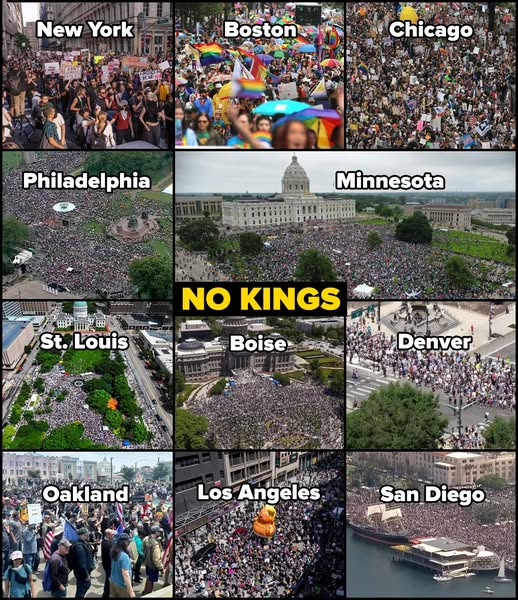
Everything happening right now in US streets is a product of the obsessions and grievances of Trump, whose volatile personality and quest for total dominance are fusing into an increasingly authoritarian approach to governance. After protests erupted against deportation sweeps for undocumented migrants in Los Angeles, Trump leapt at the chance to rush thousands of National Guard reserve troops to the city. Then, he dispatched 700 US Marines.
This was the first time since the 1960s civil rights era that reservists were mobilized against the wishes of a state governor. Back then, President Lyndon Johnson activated troops to protect the right to protest, rather than to suppress it. Trump claims that protests were raging out of control and that he prevented the City of Angels from being burned to the ground. In truth, while there was some violence, burning of cars and looting, unrest was confined to a small downtown area, and local officials say they had it largely under control.
History is full of stories of wannabe autocrats conjuring excuses to unleash the calvary. So far, Trump’s expeditionary force has largely been confined to protecting federal buildings. But the president made his point. He warned he wanted troops “everywhere” and that if his deportation sweeps caused protests, he’d take even stronger action. Trump traveled to Fort Bragg, one of the country’s largest military bases to deliver a speech in which he had troops cheering at his mocking attacks on his political opponents — obliterating the code that the military is non-partisan and fueling fears that Trump would like to enlist the military as his personal militia.
To use American troops to enforce a president’s whims on domestic soil against his adversaries would be taboo – but Trump has already said before he returned to power that he’d have no problem using the military against “the enemy from within” in his second term. Like many other voters in the western world, plenty of Americans sent a message in the last election that they are fed up with leaders’ handling of illegal immigration. There’s strong popular support for deporting undocumented migrants if they commit crimes. But the Trump administration’s extreme approach risks scaring off middle America.
Still, the White House is loving the confrontation.
Trump relishes looking tough. The last election was partly fought on the framing that he is strong and Democrats are weak. And his subordinates have endlessly argued this week that by opposing deportations, Democrats are standing with people who – according to the misleading and dehumanizing rhetoric of White House press secretary Karoline Leavitt – are “illegal alien murderers, rapists and pedophiles.”
Democrats have never really worked out how to handle Trump. Their outrage often comes across as hapless. But there are a few signs that they’re finding some steel as the president plays tyrant. California Gov. Gavin Newsom dared Trump to arrest him and warned US democracy was on the brink in a national address.
On Thursday, Democrats seized on an extraordinary scene in California when the state’s Democratic Sen. Alex Padilla was bundled out of a news conference by security after he tried to address Homeland Security Secretary Kristi Noem — one of the architects of Trump’s hardline deportation policy — at her news conference.
“This is the stuff of dictatorships,” said Democratic Sen. Brian Schatz.

Joyce Vance June 12, 2025. *
If you’ve been around Civil Discourse for more than a minute, you know I take issue with the federal courts’ failure to allow cameras in courtrooms, especially with new technology that’s available. It would benefit the courts to make their proceedings more accessible, so people can better understand how they work and, at least theoretically, have more confidence in them. But no. The courts have studied cameras, but unlike their brethren and sistren in state court systems across the country, they’ve declined to move into the modern era.
So the answer to the question, will there be cameras in the courts today in the hearing in the California case, the one involving the state’s request for a temporary restraining order against the federal government after it deployed National Guardsmen and Marines to Los Angeles in something new and refreshing. Will there be cameras in the courtroom? Sort of…
No party objected to the video recording. There will be cameras in in the courtroom.
In real time there will be a Zoom hearing, limited to 1000 participants… I’m told by friends who practice in Northern California that the video can be posted to the court’s website after the hearing if the judge allows it.
All of this is possible because the Northern District of California was part of a pilot program on cameras in the courts and when it ended, a number of their judges continued to use it. In September 2010, the Judicial Conference of the United States authorized a three-year pilot project to evaluate the effect of cameras in district court courtrooms. Each judge in the district had the ability to opt out in any particular case and the parties had to consent before a recording could be made. Recordings were posted on the courts’ website after the fact unless the judge decided against it. Northern California was one of 14 courts that participated in the pilot, which ran from 2011 to 2015.The pilot, which also ran in Middle Alabama, my neighboring district, was pretty successful. None of the disasters naysayers have frequently predicted if we allow cameras into courtroom ensued. No witnesses preened for the cameras, justice continued to be done. But, in its 2016 session, the Judicial Conference declined to change the standard policy prohibiting cameras. The Ninth Circuit, which includes California, opted to continue its “study program” to collect more data.
So [on 12 June] Americans [had] a chance to do more than just read news reports of a critical court proceeding that involves the future of our democracy. The hearing is a first step in deciding whether a president can deploy the military domestically, when the state doesn’t want them there and appears to be perfectly capable of handling its own police problems. It’s precisely the type of event we should have access to. Democracy is a participatory sport, not something we let other people do for us. This is a small thing in light of all that is going on around us but as we are learning, when it comes to keeping the Republic, process can matter as much as substance. This is a small, but significant development to be aware of. We need more of this…
We’re in this together,
Joyce
*Edited to bring the article up to date.
 Robin's Room