
Claire Allan The Perfect Mother Boldwood Books, February 2025.
Thank you, NetGalley and Boldwood Books for providing me with this uncorrected proof for review.
Claire Allan has combined a story line that engages, with complex characters and twists that are not only clever, but a logical part of the story. Allen has not fallen for the simplistic view that any twist is worthwhile, the confected twist that in so many novels in this genre makes little sense. Instead, she has woven the storyline and character development adroitly, providing clues along the way, and showing that the ending of the novel is the sound and satisfying outcome of the dilemmas faced by Mel, her husband, Ed, and the couple at the centre of their problems. Although I had my suspicious, it was a compellingly uneasy read to the conclusion.
Mel and Ed have been forced to abandon their home near Mel’s parents to move eighty miles away. Here they are supervising the renovation of their cottage, living in a caravan, and attempting to recover from the aftermath of the still birth of a friend’s baby. The grieving parents, Alice and Thomas had become friends as well as Mel’s clients in her business as a doula and hypnobirthing practitioner. Alice began a campaign against Mel and her practice, joined readily by others who were keen to decry the practice and Mel personally. The threatening atmosphere is introduced in the prologue, and even when the family move, is an ever-present tense background to their new life while they wait for the birth of their second baby. Mel has lost her business, friends, her contacts in online mothers’ groups, and her parents are conflicted about their care for their daughter, and disapproval of her former profession. Ed would have preferred to move much further away, and the prospect of Australia as a new home looms in Mel’s list of stressful situations. See Books: Reviews for the complete review.

Danit Brown Television for Women Melville Publishing House, June 2025.
Thank you, NetGalley, for providing me with this uncorrected proof for review.
I found this a profoundly disappointing reflection upon a woman’s first few months home with her baby. To Estie, her newborn is ‘the baby,’ until well after their departure from the safety of the hospital. In their home, in which the baby’s parents harbour disappointments, the baby at last becomes Rosie to her mother. This is a clever acknowledgement of the distance between Estie, the only source of food, and Rosie who is dependent upon her mother’s presence. That this is only a physical presence is conveyed well by the distancing language. However, this is the redeeming feature for me. Unfortunately, Estie’s self-regard, referred to herself as ‘hormonal’, and later, her behaviour the result of ‘depression’, was a stumbling block for my becoming immersed sympathetically in Estie’s undoubtably distressing and challenging first months of motherhood. See Books: Reviews for the complete review.


CÉZANNE TO GIACOMETTI
Until 21 Sep | Ticketed, under 18s free
Plan your memorable winter weekend in Kamberri/Canberra and experience the masterpieces of Paul Cézanne, Pablo Picasso, Georges Braque, Henri Matisse, Paul Klee and Alberto Giacometti.
Cézanne to Giacometti: highlights from Museum Berggruen / Neue Nationalgalerie is curated in partnership with Berlin’s Museum Berggruen. Presented alongside Australia’s national collection, the exhibition examines how the revolutionary ideas of modern art spread and inspired developments in both European and Australian modernism.
Book today to secure your tickets and experience more with the illustrated publication, free tours and audio guide. Drop into the Art Store at the Gallery to browse an exclusive product range produced for the exhibition.
Entry to Cézanne to Giacometti is free for visitors under 18 thanks to our supporters including Principal Patron Tim Fairfax AC, Exhibition Patrons, and donors to the 2024 Annual Appeal.

NAIDOC WEEK
Visiting the Gallery this month? Celebrate NAIDOC Week from 6–13 July with talks, workshops, exhibitions and digital content. Highlights include Nunga Screen film screenings, school holiday activities with Alick Tipoti and artists talks with Karla Dickens and Julie Gough.
 Axios interview: Ken Burns on the Revolution

Ken Burns told Axios’ Noah Bressner that his forthcoming six-part series — “The American Revolution” — has been in the works since December 2015 and required “years and years and years” of filming war reenactors across the 13 original colonies.
- The 12-hour film — directed by Burns, Sarah Botstein and David Schmidt — will premiere Nov. 16 on PBS and run for six consecutive nights.
Why it matters: “It’s about really big ideas, the biggest ideas in humankind, and it’s also an incredibly violent struggle,” the legendary filmmaker tells us.
- “I think that we’ve papered over the violence, maybe because we don’t have any photographs or newsreels.”
Burns’ other documentary epics — including “The Civil War,” “Baseball” and “The Vietnam War” — have heavily featured archival photographs and footage.
- This time, Burns “realized you had to get over an aversion” to reenactments, which he’s used sparingly in other projects.
- The film crew shot reenactors in nearly 100 locations “in every time of day and every season, mostly at dawn or dusk.”
“Then we used paintings,” Burns added. “I go and I say, ‘Do we have Continentals firing at the British?’ And we have a musket volley, very close up, very impressionistic. And we then have a returning British volley. And then that melds with the painting.”
- Burns said the film has more maps than in all of the other films he’s made combined — “and I’ve been doing this for a little while.”
Watch the trailer … Keep reading.
American Politics

Update: Abrego Garcia’s Civil & Criminal Cases
Joyce Vance from Civil Discourse <joycevance@substack.com>
The Civil Case
On March 24, 2025, Kilmar Abrego Garcia’s wife filed a civil lawsuit on his behalf in federal district court in Maryland. The defendants included Attorney General Pamela Bondi, DHS Secretary Kristi Noem, and Secretary of State Marco Rubio. The Trump administration had just deported Venezuelans it claimed were gang members to El Salvador, although ultimately it came to light that significant numbers of them weren’t. The Trump administration violated a district court’s order that the men not be turned over to El Salvador, which was ultimately reversed by the Supreme Court.
It’s not unusual for plaintiffs in civil cases to amend their initial complaint as new information comes to light. On Wednesday, Jennifer Stefania Vasquez Sura, Abrego Garcia’s wife, asked the court for permission to do so.
She explained that “the Government filed a motion to dismiss Plaintiffs’ Complaint as moot, arguing that because it had returned Abrego Garcia to the United States, Plaintiffs have received all the relief they sought.” She wanted to amend her complaint to “clarify that the relief they seek remains live, notwithstanding Abrego Garcia’s return to the United States.” Three new items are included in the amended complaint: “The proposed Amended Complaint details the Government’s defiance of court orders after this Court granted preliminary injunctive relief.”“[E]vidence that emerged in a June 2025 whistleblower disclosure from former DOJ official Erez Reuveni, who was previously counsel for the Government in this case. The new allegations include government officials internally acknowledging that Abrego Garcia’s removal was an “administrative error” while simultaneously working to prevent his return and to make post-hoc justifications. These revelations provide evidence of deliberate misconduct that was unavailable when the original Complaint was filed.”
“Abrego Garcia’s first-hand account of torture and mistreatment at CECOT, as well as developments regarding his return to the United States and the Government’s stated plan to remove him again.”
The proposed amended complaint, which is attached to the motion for permission to file it, contains predictable but still shocking revelations about conditions at CECOT. The conditions, as alleged, are more like a concentration camp than a prison in the United States, and there is little doubt that if established, the allegations made about those conditions would run afoul of the Constitution’s prohibition on cruel and unusual punishment. Although the government has maintained that once delivered to El Salvador, these men are no longer in U.S. custody, that argument is paper-thin, or at least it should be, since the U.S. government is paying El Salvador to house these men. The allegations made by Abrego Garcia will likely play prominently in litigation over this issue.
The new allegations in the amended complaint include the following:“Upon arrival at CECOT, the detainees were greeted by a prison official who stated, ‘Welcome to CECOT. Whoever enters here doesn’t leave.’ Plaintiff Abrego Garcia was then forced to strip, issued prison clothing, and subjected to physical abuse including being kicked in the legs with boots and struck on his head and arms to make him change clothes faster. His head was shaved with a zero razor, and he was frog-marched to cell 15, being struck with wooden batons along the way. By the following day, Plaintiff Abrego Garcia had visible bruises and lumps all over his body.In Cell 15, Plaintiff Abrego Garcia and 20 other Salvadorans were forced to kneel from approximately 9:00 PM to 6:00 AM, with guards striking anyone who fell from exhaustion. During this time, Plaintiff Abrego Garcia was denied bathroom access and soiled himself. The detainees were confined to metal bunks with no mattresses in an overcrowded cell with no windows, bright lights that remained on 24 hours a day, and minimal access to sanitation.”
And although the complaint alleges that El Salvadoran prison officials acknowledged that Abrego wasn’t a gang member, they threatened him with physical harm at the hands of gang members in the prison:“As reflected by his segregation, the Salvadoran authorities recognized that Plaintiff Abrego Garcia was not affiliated with any gang and, at around this time, prison officials explicitly acknowledged that Plaintiff Abrego Garcia’s tattoos were not gang-related, telling him ‘your tattoos are fine.’
While at CECOT, prison officials repeatedly told Plaintiff Abrego Garcia that they would transfer him to the cells containing gang members who, they assured him, would ‘tear’ him apart.
Indeed, Plaintiff Abrego Garcia repeatedly observed prisoners in nearby cells who he understood to be gang members violently harm each other with no intervention from guards or personnel. Screams from nearby cells would similarly ring out throughout the night without any response from prison guards on personnel.
During his first two weeks at CECOT, Plaintiff Abrego Garcia suffered a significant deterioration in his physical condition and lost approximately 31 pounds (dropping from approximately 215 pounds to 184 pounds).”During a conference call with District Judge Paula Xinis in Greenbelt, Maryland, the government acknowledged it intended to deport Abrego Garcia again, this time to a third country. That would not violate the withholding order that prevented them from sending him to Venezuela. The government’s lawyer represented that it didn’t have imminent plans for deportation, but Abrego Garcia’s lawyers told the court, “We have concerns that the government may try to remove Mr. Abrego Garcia quickly over the weekend, something like that.” They asked for an emergency order that would bring him to Maryland if he were released in Tennessee, where he is facing the criminal charges the government filed against him when they returned him from El Salvador. Abrego Garcia remains in federal custody in Tennessee while the Magistrate Judge considers whether to release him—she previously ruled he was entitled to release, but she was concerned about the deportation issue.
Judge Xinis set a July 7 court hearing in Maryland to discuss the emergency request and other matters. Today, she rejected the government’s request to delay the hearing to a later date.
The same week Abrego Garcia’s wife filed her original complaint, Defendant Kristi Noem traveled to El Salvador to “visit” CECOT prison. She posed for this photo in front of a cell full of prisoners.
A report from the CATO Institute suggests that although the government claims all of the men it sent to Venezuela are “illegal aliens,” in 50 of the 90 cases where they were able to identify how the men entered the United States, the men said that they entered the U.S. legally, with government permission, at an official border crossing point.”
The Criminal Case
The government attempted to save face when it returned Abrego Garcia from El Salvador by filing criminal charges against him involving the transportation of people who were known to be present in the U.S. without legal immigration status. Comments made by government officials went far beyond the facts alleged in the indictment—a clear violation of DOJ policy—in describing his conduct and claiming he was a serious violent criminal who, among other things, had sexually assaulted women.Last week, there were reports that the government’s key witness, Jose Ramon Hernandez Reyes, likely the owner of the car Abrego Garcia was driving during the incident he was charged with, was a three-time convicted felon. The deal the government cut with him allowed his early released early from federal prison to a halfway house in exchange for his cooperation in the case. An official with Homeland Security Investigations, part of ICE, testified Hernandez Reyes would have been deported but for his cooperation with the government. The Washington Post reported that he said in court that the government “is also likely to give him a work permit.”
In the meantime, Abrego Garcia’s attorneys have asked District Judge Waverly D. Crenshaw Jr. in Tennessee to enforce local rules that prohibit the Trump administration from making “extensive and inflammatory extrajudicial comments about Mr. Abrego that are likely to prejudice his right to a fair trial.” The motion continues, “These comments continued unabated—if anything they ramped up—since his indictment in this District, making clear the government’s intent to engage in a ‘trial by newspaper.’”
Abrego Garcia’s lawyers raise four points of concern in their pleading:“[T]he government has relentlessly attacked Mr. Abrego’s character and reputation in dozens of public statements … Many of the government’s statements have been highly prejudicial and serve no justifiable law enforcement purpose—and reflect nothing more than the lengths the government will go to in its efforts to paint Mr. Abrego as a dangerous criminal to deflect from its mistake.”“[T]he government has expressed opinions about Mr. Abrego’s guilt and the evidence in this case in ways that go far beyond the limited disclosures permitted” by local rules of court.“[T]he government’s statements have been contaminated with irrelevant and false claims that the DOJ ‘knows or reasonably should know are likely to be inadmissible as evidence in a trial or that would, if disclosed, create a substantial risk of prejudicing an impartial trial.”” As an example, they offer that, “at a press conference announcing these charges, Attorney General Bondi recounted allegations from unreliable alleged coconspirators that Mr. Abrego ‘abused undocumented alien females,’ ‘trafficked firearms and narcotics,’ ‘solicited nude photographs and videos of a minor,’ and ‘played a role in the murder of a rival gang member’s mother.’” They also objected to what they call unsubstantiated claims that Abrego Garcia is Mr. Abrego is a “wife beater” and “domestic abuser.” They conclude that “These assertions are not only irrelevant and inflammatory, but also based entirely on inadmissible hearsay.”“[S]ince the indictment was unsealed, the government has made nearly three dozen statements about the fact that it has charged Mr. Abrego with a crime, without reference to the presumption of innocence.”
In a normal administration, an Assistant United States Attorney who did any of these things would most likely be seriously sanctioned by internal DOJ disciplinary mechanisms. But here, the concern is about the Attorney General of the United States and other high-ranking officials. We are no longer surprised by much, but we should reclaim our ability to be shocked by the truly outrageous. Because that’s exactly what this is.
It is the job of defense lawyers to put the government on its back foot. But they’ve made the claims in this case knowing that they will be thoroughly tested. In their motion, Abrego Garcia’s lawyers ask the court for a very simple sanction: they want him to “issue an order directing the parties to comply with Local Criminal Rule 2.01,” the local rule that prohibits these out-of-court statements. This afternoon, Judge Crenshaw directed both sides to stop making public statements about the case. It’s not clear from his two-sentence ruling, “Motion (69) is GRANTED. All counsel are expected to comply with the Local Rules of this Court,” whether the order extends to DHS employees in addition to DOJ employees, which Abrego Garcia’s lawyers requested.Despite this limited action, the motion was a strategic one that hints at the kind of arguments that will be used to argue a guilty verdict, if the government obtains one, should be reversed because the jury pool was tainted by the government’s own statements to the public. The motion also recites that, “The Vice President, a Yale Law School graduate, went so far as to flatly lie about Mr. Abrego, calling him a ‘convicted MS-13 gang member,’ notwithstanding that Mr. Abrego in fact has never been convicted of any crime at all.” Abrego Garcia’s lawyers are busy making a record.
This case, which has brought issues of due process and the prospect of the executive branch of government ignoring orders issued by the judiciary to the forefront of Americans’ minds, will stand as one of the most important cases in American history. We don’t yet know how it will end. It is a very dangerous moment for our democracy, one we should all pay close attention to. Thanks for being here with me at Civil Discourse. Your support, and your paid subscriptions help me devote the time and resources necessary to this work.
We’re in this together,
Joyce
Heather Cox Richardson from Letters from an American <heathercoxrichardson@substack.com> UnsubscribeSun 6 Jul, 15:44 (19 hours ago)
Forwarded this email? Subscribe here for moreJuly 5, 2025Heather Cox RichardsonJul 6 READ IN APP
Yesterday afternoon, President Donald J. Trump signed the nearly 1,000-page budget reconciliation bill Republicans passed last week. Trump had demanded Congress pass the measure by July 4, and Republicans rammed it through despite the bill’s deep unpopularity and Congress’s lack of debate on it. When House speaker Mike Johnson (R-LA) presented Trump with the speaker’s gavel during the signing event, the symbolism of the gift was a little too on the nose.“
Today we are laying a key cornerstone of America’s new golden age,” Speaker Johnson said at the signing. The new law is the capstone to the dramatic changes MAGA Republicans have made to the U.S. government in the last six months.
The measure makes the 2017 Trump tax cuts for the wealthy and corporations, which were due to expire at the end of this year, permanent. At the bill’s signing, Trump harked back to the idea Republicans have embraced since 1980, claiming that tax cuts spark economic growth. He said: “After this kicks in, our country is going to be a rocket ship economically.”
In fact, tax cuts since 1981 have not driven growth, and a study by the nonpartisan Penn Wharton Budget Model of the University of Pennsylvania projects that the measure will decrease national productivity, known as gross domestic product (GDP), by 0.3% in ten years and drop the average wage by 0.4% in the same time frame.
From 1981 to 2021, tax cuts moved more than $50 trillion from the bottom 90% to the top 1%, and Penn Wharton projects the top 10% of households will receive about 80% of the total value of this law, too. Those in the top 20% of earners can expect to see nearly $13,000 a year from the bill, while those in the bottom 20% of households will lose about $885 in 2030 as the pieces of the law take effect.
Past tax cuts have also driven budget deficits and increases in the national debt, and like them, this law will increase the deficit by about $3.4 trillion over the next ten years, according to the nonpartisan Congressional Budget Office. The CBO also projects that interest payments on that debt will cost more than $1 trillion a year.
Sam Goldfarb and Justin Lahart of the Wall Street Journal noted on Thursday that economists, investors and politicians are sounding the alarm that the U.S. is “bingeing on debt” when there is no national emergency like a pandemic or a war to require taking on such debt. The measure will raise the nation’s debt ceiling by $5 trillion.
The Republican reliance on tax cuts to increase economic growth has inspired them to cut public programs since 1981. The Republicans’ new law continues the cuts begun as soon as Trump took office, cutting $890 billion from Medicaid over the next ten years, and about $230 billion out of the Supplemental Nutrition Assistance Program that provides food assistance for low-income Americans. It cuts tax credits for wind and solar power while promoting fossil fuels.
At the White House on Friday, Trump said: “I just want you to know, if you see anything negative put out by Democrats, it’s all a con job.” He claimed the new law is the “most popular bill ever signed.”But it is clear administration officials are well aware that polls showed Americans disapproving of the measure more than approving by the huge gap of around 20 points. They are now trying to sell the law to voters. Notably, the previously nonpartisan Social Security Administration sent an email to Social Security recipients yesterday claiming the bill “eliminates federal income taxes on Social Security benefits for most beneficiaries, providing relief to individuals and couples.” Except the law does not actually eliminate federal income taxes on Social Security benefits. Instead, it gives a temporary tax deduction of up to $6,000 for individuals older than 65 with annual incomes less than $75,000, or $12,000 for married couples with incomes less than $150,000.What the law does do, though, is pour $170.7 billion into immigration enforcement—more than the military budgets of all but fifteen countries. The law provides $51.6 billion to build a wall on the border, more than three times what Trump spent on the wall in his first term. It provides $45 billion for detention facilities for Immigration and Customs Enforcement, an increase of 265% in ICE’s annual detention budget. It provides $29.9 billion for ICE enforcement, a threefold increase in ICE’s annual budget.
According to Aaron Reichlin-Melnick of the American Immigration Council, the law gives ICE more funding than the Federal Bureau of Investigations; Drug Enforcement Administration; Bureau of Alcohol, Tobacco, Firearms, and Explosives; U.S. Marshals Service; and Bureau of Prisons combined. In fact, Reichlin-Melnick told Democracy Now!, the law will make ICE the largest federal law enforcement agency “in the history of the nation.”And now, with the MAGA Republican political realignment in place, we wait to see whether it delivers the golden age Trump and his MAGA loyalists promise.The early signs are not auspicious.
Within hours of Trump’s signing the bill into law, Gun Owners of America and a number of other pro-gun organizations filed a lawsuit claiming the measure makes the 1934 National Firearms Act (NFA) unconstitutional. That law regulated machine guns and short-barrel guns by imposing a tax on them and making owners register their weapons. The Supreme Court upheld that law as a tax law. The budget reconciliation bill ended those taxes and thus, the plaintiffs claim, the constitutional justification for the law.
In a press release, Gun Owners of America said its “team in Washington had been working behind the scenes with Congress since the November 2024 election to fully repeal the NFA,” and that the new law had teed up their lawsuit against the registry it called “an unconstitutional relic.”Scholars of authoritarianism are sounding the alarm over the new law. Timothy Snyder warned that the extensive concentration camps that Trump has called for and the new measure will fund will be tempting sites for slave labor. Undocumented immigrants make up 4% to 5% of the total U.S. workforce. In agriculture, food processing, and construction, they make up between 15% and 20% of the workforce.
Comparing the detention camps to similar programs in other countries, Snyder warns that incarcerated workers will likely be offered to employers on special terms, a concept Trump appears to have embraced with his suggestion that the administration will figure out how to put workers back in the fields and businesses by putting them under the authority of those hiring them. Trump has called the idea “owner responsibility.”“[T]hey’re going to be largely responsible for these people,” Trump said. This echoes the system legislators set up in the U.S. South during Reconstruction thanks to the fact the Thirteenth Amendment permits enslavement “as punishment for a crime whereof the party shall have been duly convicted.” That system permitted employers to pay the fines of incarcerated individuals and then to own their labor until those debts were paid. While we know that system from the chain gangs of that era, in fact employers in many different sectors used—and abused—such workers.
Today, according to the nonpartisan Economic Policy Institute, of the 1.2 million people incarcerated in state and federal prisons, nearly 800,000 are prison laborers, working in the facility itself or in government-run businesses or services like call centers or firefighting. About 3% work for private-sector employers, where they earn very low pay.
Snyder urges Americans to be aware that the law paves the way to establish this system.
Harvard sociologist Theda Skocpol identified “massive militarization of ICE” as “the real heart of this law.” She notes that American scholars have thought the federal system in the U.S., in which state and local governments control the police powers, bought the U.S. some protection against a police state.
But, Skocpol says, officials in the Trump administration “have figured out a devilishly clever workaround. Immigration is an area where a U.S. President can exercise virtually unchecked legal coercive power, especially if backed by a Supreme Court majority and corrupted Department of Justice. Now Congress has given ICE unprecedented resources—much of this windfall to be used for graft with private contractors Trump patronizes, but lots of to hire street agents willing to mask themselves and do whatever they are told against residents and fellow American citizens. [Administration officials] are not interested only in rounding up undocumented immigrants,” she wrote to Josh Marshall at Talking Points Memo. “They will step up using ICE and DOJ enforcements…to harass Democrats [and] citizen critics, and subvert future elections if they can.”
At an event in Des Moines, Iowa, on Thursday, Trump complained that Democrats had not supported the budget reconciliation bill. Less than three weeks after a gunman murdered a Democratic Minnesota lawmaker and her husband, and shot another legislator and his wife, Trump said Democrats had opposed the measure only “because they hate Trump. But I hate them, too. You know that? I really do, I hate them. I cannot stand them, because I really believe they hate our country.”—Notes:https://www.usatoday.com/story/news/politics/2025/07/04/donald-trump-signs-megabill-taxes-medicaid-border/84470497007/https://budgetmodel.wharton.upenn.edu/issues/2025/7/1/senate-reconciliation-bill-budget-economic-and-distributional-effectshttps://www.cnn.com/2025/07/03/business/trump-big-beautiful-bill-business-economyhttps://www.wsj.com/finance/investing/wall-street-crisis-deficits-default-mode-bf1f5940https://www.reuters.com/world/us/trump-tax-bill-averts-one-debt-crisis-makes-future-financial-woes-worse-2025-07-03/https://www.npr.org/2025/07/03/nx-s1-5454841/house-republicans-trump-tax-bill-medicaidhttps://abcnews.go.com/GMA/News/trump-big-beautiful-bill-cuts-SNAP-affordable-food-benefits/story?id=123415329https://www.theguardian.com/us-news/2025/jul/05/social-security-administration-email-trump-tax-billhttps://www.americanimmigrationcouncil.org/fact-sheet/house-reconciliation-bill-immigration-border-security/https://www.americanimmigrationcouncil.org/press-release/congress-approves-unprecedented-funding-mass-detention-deportation-2025/https://www.newsweek.com/trump-bill-sparks-gun-group-lawsuit-2094946https://www.gunowners.org/goa-to-file-one-big-beautiful-lawsuit-against-nfa-registry-as-one-big-beautiful-bill-heads-to-presidents-desk/https://www.epi.org/publication/rooted-racism-prison-labor/
The Daily with Sarah Jones <politicususa@substack.com>
Liberals, Conservatives, And Independents Form Initiative To Fight For Democracy And Freedom
Pete Buttigieg, Stacey Abrams, J. Michael Luttig, Sophia Bush and so many more launched a new initiative to fight for our democracy and freedom together – conservatives, liberals and independents.
This July Fourth was a raw wound and also a reminder of the fight it took to get us to our Independence Day in the first place.
Powerful people with agendas are always going to try to seize power, unravel progress and spit on the principles of democracy. They’ve done it throughout history and it seems it’s our turn again, right now.
This time, maybe more of us will stand together with one another, locked in arms, against the evil of fascism cloaked in racism and white nationalism.
To that end, conservative, liberal and independent leaders joined together to launch “We Hold These Truths,” an initiative to promote freedom, equality, and democracy.
The initiative brings together names like Sophia Bush, Pete Buttigieg, Stacey Abrams, Lynda Carter, Jodi Picoult, Celeste Ng, Wesley Clark, Jamie Raskin, Bradley Whitford, Julianne Moore and more to partner with “We Hold These Truths”.
Launched on Independence Day, the campaign is intended “to promote freedom, equality, and democracy by providing Americans with clear, reliable, and accessible facts about the protections provided under the U.S. Constitution for all people and the work required to safeguard our freedoms and nation’s ideals.”

Sophia Bush spoke for so many of us in an Instagram post on July 5th, detailing the love and pain of the Fourth this year (I’ve added paragraphs to make it easier to read):
“I spent a lot of time yesterday reflecting on a feeling I’ve been feeling deep in my bones this year … a mixture of the profound and the profane. The awe and love I hold for this country and what she is supposed to be. And the deep pain as I witness the way she’s being bastardized, gutted, and remade in the image of a terror state.”
“I have challenged myself, through decades of study and hard practice, to embrace dialectics. But this present opposition is stretching me to a point so difficult it feels nearly impossible some days .how are our simple human arms — and hearts — supposed to stretch this far? Supposed to encompass so much? I suspect that’s the point. They want us to be spread so thin that we break, give out, give UP.”
“But I’m not giving up on us. On you and me. Your families. Our children. Our ancestors. Our legacy. I’m not giving up on this place, however imperfect and brutal, because I’ve seen generations of known heroes and unnamed neighbors alike do the work of building. Creating the kinds of progress that inch us ever closer to our incredible founding ideals, making them what they were intended to be: for ALL. Even when such a notion was more grand than people in the past could imagine. It was still the entire point of the American experiment. Liberty and justice for all.
“And while it’s hideous and painful to watch a small group of even smaller-hearted men and women rip apart everything good? I refuse to let them do it without a fight. I refuse to drop my arms even though my muscles are burning and my eyes are watering. I refuse. And I know so many of you do too. I know you’re angry and enraged and heartbroken and afraid. I know you cannot fathom that the cruelty is the point, because who would want to live — or rule!? — that way.”
“Me too, friends. Me too. So here’s what I say… let’s take our scared rage, and our ferocious love — of our neighbors, families, and even our Constitution — and let’s pick ourselves and dust ourselves off and throw our fists up and stay in this fight.”
A post shared by @sophiabush
“We Hold These Truths” is an initiative committed to our future, together. It includes principles such as:

They ran full-page ads on July 4 in The New York Times, Arizona Republic, Cleveland Plain Dealer, Dallas Morning News, and San Francisco Chronicle.
Fighting Back Together
We each will find our way of fighting back, but the point of sharing initiatives like this is to let you know that we do not fight alone.
There are people in this country from every single political affiliation who do not agree with the abuses of this administration, who value freedom and equality so much that they are willing to put their name on the line to fight for it, like the protesters peacefully taking to the streets to object.
It takes bravery and courage to speak up when a fascist regime is trying to control the country and her people. Each person who speaks up spreads a ripple of hope. Each person standing up matters.
We all know what can happen to anyone speaking up, including protesters, bloggers, journalists, celebrities and judges — some are being used as an example, in an effort to silence The People. But when we band together, when we come together peacefully to say NO, WE DO NOT CONSENT, it is much harder for illiberal forces of autocracy to win.
The conclusion of this fight is not forgone. We have not lost the battle. We have only just begun.
British Politics

A year in power: The cabinet on their proudest wins and favourite moments

Daniel Green
One year since Labour returned to power, the government has begun in earnest the task of turning the party’s manifesto pledges into policy and undoing the ruin of more than a decade of Conservative rule.
As we mark the anniversary this week, LabourList has been asking a string of cabinet ministers over the past few weeks to reflect on what they’re proudest of achieving over the last 12 months.
‘Seeing Waterloo billboards light up with the Great British Railways logo’
Heidi Alexander is the Secretary of State for Transport

There have been a couple of standout moments, but by far my favourite was the Great British Railways takeover of Waterloo station on the morning the first publicly owned South Western service departed.
“Seeing every billboard light up with the logo and hearing the announcement ring out around the station really drove home the hard work we are doing to rebuild a rail network people can rely on and one that is fit for the 21st century.
‘Justice for mineworkers shows the difference politics can make’
Ed Miliband is Secretary of State for Energy and Net Zero
One policy I am particularly proud of in the first year is that this government delivered justice for the mineworkers affected by the Mineworkers’ Pension Scheme scandal.
Over 100,000 former mineworkers will receive a share of £1.5 billion of money that was kept from their pensions, overturning an historic injustice and ensuring fair payouts for years to come. Now, that scandal ends, and the money is rightfully transferred to the miners.
This is the difference politics can make- and a testament to the campaigners who fought tirelessly over the years.
‘Turning the page on years of neglect in arts, culture and creativity’
Lisa Nandy is the Secretary of State for Culture, Media and Sports
I’m proud that in our first year, we’ve turned the page on years of neglect by investing in arts, culture and creativity in every part of the country.
Under the Tories, arts, music, culture and creativity was erased from the curriculum and our communities. Our towns and villages lost their libraries, theatres and museums and the arts became the preserve of a privileged few.

Through our Creative Industries Sector Plan and Arts Everywhere Fund, we’re reversing that decline. We’re handing power to communities, backing their talent, institutions and ideas that make up the cultural life of this country – in every part of our country.
That’s how we drive investment and growth, and open up the arts to a generation of young people again.
‘Seeing Scottish Labour’s 36 MPs battling for their communities’
Ian Murray is the Secretary of State for Scotland
At the election last year, Labour asked Scots to stop sending a message to Westminster and send a government instead and Scotland delivered 37 Labour MPs to the government benches.
Scottish MPs on those Labour benches have delivered massively for working people already – a pay increase for 200,000 Scots, pensions justice for 7,000 Scottish mine workers, £150 discount on energy bills for over 500,000 Scottish families and the biggest ever budget settlement for the Scottish Parliament – £50 billion this year and an extra £9.1 billion over the next threat years.
That’s before the hat trick of trade deals which slash tariffs on Scottish whiskey and salmon, establishing GB energy owned by the public and in Aberdeen, the £200 million for Acorn development, the £750m for the UK’s national supercomputer to eb based in Edinburgh and £1.4 billion of local growth funding for Scottish communities that the Tories promised but never allocated a penny towards.
But the thing that makes me most proud looking back at the past year is seeing those 36 MPs battling for their communities. For a decade, Scotland had too many MPs who were only interested in their next tweet, not what was actually happening in their constituencies. Now we have 37 Scottish MPs at the heart of this Labour government, and this time next year we will have a Scottish Labour government at Holyrood too, led by Anas Sarwar as First Minister.
Subscribe here to our daily newsletter roundup of all things Labour – and follow us on Bluesky, WhatsApp, Threads, X or Facebook.
‘Port Talbot, money for public services and infrastructure funding for Wales’
Jo Stevens is the Secretary of State for Wales
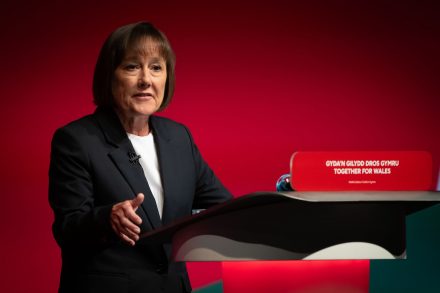
Firstly, Port Talbot steelworks and the steelworkers and their families – in ten months, we have managed to get £80m out of the door to help people, businesses, supply chains and regeneration projects in Port Talbot. That £80m was promised by the previous government, by the Tories, and was completely unfunded.
Secondly was the Autumn Budget, delivering the biggest budget settlement to the Welsh Government in the history of devolution, which has meant that they were able to invest hundreds of millions of pounds more into public services, and as a consequence of which, we saw waiting lists coming down in Wales for four consecutive months – the longest waits reduced by two-thirds, making a real difference to people on the ground.
Thirdly, the historic announcement in terms of nearly half a billion pounds of rail infrastructure money for Wales, reversing that underinvestment that we’d seen in the previous 14 years. Money for coal tips to keep people safe in our former mining communities, and local growth funds over £850m going into communities up and down Wales. Because of a multi-year spending review, Welsh Government have now got £5bn more to invest in our schools, our hospitals, transport, local councils – so it just shows you the benefit of two Labour governments working together.”
‘Labour’s showing this will be the most nature-positive government in history’
Steve Reed is the Secretary of State for Environment, Food and Rural Affairs
The Tories left Britain with record levels of sewage poisoning our rivers, lakes and seas. In just one year, Labour has banned water bosses’ unfair multi-million pound bonuses, ringfenced customers’ money so it can no longer be diverted to pay shareholders’ dividends, and secured £104bn private sector funding to fix our broken sewage pipes. Labour is clearing up the Tories’ toxic mess with sewage pollution set to be cut almost in half over the next five years.
Britain is one of the most nature-depleted countries on Earth with half our bird species and a third of our mammal species facing extinction. Labour is turning the corner on nature’s recovery with the biggest budget in history for nature and sustainable food production. We’ve reintroduced beavers into the wild 400 years after they were hunted to extinction. We’ve banned bee killing pesticides so our pollinators and bird populations can recover. We’re planting millions more trees, a new national forest, and restoring peatlands that capture carbon and protect the environment.
Our land-use framework will rewild whole landscapes while protecting the best agricultural land for nature-friendly food production, and our food strategy will put healthier food on people’s plates so we can end the scandal of rising food-bank use and childhood obesity.
With our seas choked by plastic pollution, we’ve committed to sign the Global Oceans Treaty to protect the high seas, and we’re banning destructive bottom trawling in our marine protected areas to protect underwater life on the sea beds. We’re tackling the throwaway society by moving towards a circular economy where materials are reused instead of discarded, and we’re tackling career fly-tippers by using drones to hunt them down so we can seize and crush their vehicles.
Labour is already showing that this will be the most nature-positive government in history.
Politics Essential  Iain Watson
Political correspondent
Hello and welcome to Politics Essential.
After Zarah Sultana announced she was quitting the Labour Party to work with Jeremy Corbyn, a new left-wing party seems likely to come into being. There are still questions, however, about its policy, its leadership and its name. My analysis on what it means for Labour – and other parties – below.
Plus, the BBC speaks to people in Birmingham about how they’re coping after six months of bin strikes. And test your knowledge with our quiz. If you’d like the team to answer your questions about politics, email us at politicsessential@bbc.co.uk.
More questions than answers over new left-wing party
Corbyn said “the democratic foundations of a new kind of political party will soon take shape”.
On the anniversary of Labour’s landslide victory, the attention is moving towards a previous Labour leader. The MP Zarah Sultana – who was suspended from the parliamentary Labour Party – has announced that she has jumped ship to co-lead the founding of a new left-wing party with Jeremy Corbyn. That, however, seems to have come as news to him.
Talks have been going on under the political radar for some time to turn the small group of independent MPs, co-ordinated by Corbyn, into an actual political party which could stand candidates at the local elections next year. But as I understand it, the question of leadership and the exact timing of the announcement hadn’t been settled when Sultana made her declaration. Corbyn praised her for leaving Labour, but has said “discussions are ongoing”.
Despite the difficult gestation, it seems likely a new party will be born. But this won’t be a reincarnation of the previous Corbyn project. Key figures on Labour’s left are not showing any signs of departing, including the former shadow chancellor John McDonnell – despite being currently suspended from the Labour whip. The chair of the Labour Party under Corbyn – Ian Lavery – told the BBC he didn’t intend to leave. That said, he believed there was a “huge appetite” for an alternative to the mainstream parties.
But how would a new party fare? We have to be cautious about polling. More In Common recently tested the sort of support a party to the left of Labour would have – specifically one led by Jeremy Corbyn. It suggested it could pick up 10% of the vote – reducing Labour’s standing by three points but far more dramatically eating into support for the Greens, which would fall from nine points to five points in the polls.
But we still don’t know what this new party’s policy programme would be; its leadership isn’t settled; and we don’t yet know if there would be a ‘non-aggression’ pact with the Greens – where they wouldn’t stand against each other in certain seats.
Independent MPs were elected last year in areas where voters felt Labour wasn’t taking a strong enough line on Israel’s actions in Gaza. We don’t know how resonant that issue will be at the next election, four years away.
But where Starmer’s strategists might be concerned, is that a new left-wing party might just reduce the Labour vote by enough in some seats to allow a second-placed Reform UK to sneak home. And Labour may have to be more mindful that it can lose votes on the left and not just the right.
The essential: The danger for Labour isn’t so much the direct loss of seats from a new left-wing party, but that its vote may be eroded in areas where Reform UK or the Conservatives might benefit.
Australian Politics
ACT chooses ‘care over cruelty’ by raising the age of criminal responsibility to 14
Advocates are urging other jurisdiction to follow the ACT’s lead and stop jailing kids as young as 10.*
In a historic move, the Australian Capital Territory has become the first jurisdiction in the country to raise the minimum age of criminal responsibility to 14 – a significant reform celebrated by legal advocates, health experts and Aboriginal and Torres Strait Islander leaders.
From July 1, children under 14 in the ACT can no longer be charged, prosecuted, or imprisoned under the criminal legal system, except for a limited number of excluded offences.
The change comes as part of a two-stage reform passed in 2023, which first raised the age from 10 to 12 and now to 14.
The Aboriginal Legal Service (NSW/ACT) welcomed the milestone, commending the ACT Government for a decision grounded in research and community wellbeing.
“This reform will keep more children where they belong: in their homes, communities, schools, playgrounds and sports fields, supported to thrive rather than being dragged through court and languishing in youth prisons,” ALS chief executive Karly Warner said.
“Evidence shows the younger a child is at first contact with the legal system, the more likely they are to keep coming back into contact with police and courts and to experience adult imprisonment.
“That’s why raising the age of legal responsibility to 14 is a commonsense move not only for children but for all members of our communities.”
While praising the ACT’s leadership, Ms Warner urged further reform, calling for the removal of exceptions that still allow children to be criminalised under certain circumstances.
The change follows decades of sustained advocacy from Aboriginal and Torres Strait Islander communities, health professionals and legal experts, who have long highlighted the harms of early criminalisation, particularly for Indigenous children, who remain disproportionately affected by the system.
A call for national action
Advocacy organisations, including Change the Record, the Justice and Equity Centre and the Human Rights Law Centre, also welcomed the reform, and called on all other jurisdictions to follow suit without delay.
“Every child deserves to grow with connection, not be locked up in prison cells,” Jade Lane, Change the Record chief executive, said.
“The ACT reforms are a crucial step toward choosing care over cruelty, especially for Aboriginal and Torres Strait Islander children, who are disproportionately targeted by police and the so-called justice system.”
Ms Lane urged other jurisdictions to end harmful, punitive youth justice practices and invest instead in community-led solutions that support young people.
“This change in the ACT signals a well-overdue time to invest in Aboriginal and Torres Strait Islander children to thrive, not trap them in cycles of criminalisation,” she said.
Maggie Munn, First Nations director at the Human Rights Law Centre, said the reform sets a precedent for the rest of the nation.
“Our kids deserve to thrive, not be caged in police watch houses and prison cells. This is a positive step forward which means that more children in the ACT will be cared for, rather than pipelined into prison,” Munn said.
“We call on every state and territory government to do the right thing for kids and communities, and raise the age of criminal responsibility to at least 14, with no exceptions.”
Chief executive of the Justice and Equity Centre Jonathon Hunyor told NITV that locking up children cruels their chances and takes them away from positive influences.
“What we do is place kids in a situation where they build criminal capital – they go to the university of crime,” he said.
“They get taught that they’re criminals and told that they’re criminals – and that’s exactly what we produce.
“So it’s very easy to talk tough and be all hairy-chested about being tough on crime, but the fact is, it’s not working, it’s never worked, and it’s never going to work.
“Unless we actually invest in kids, we invest in communities, we invest in solutions, we’re just saying the same stuff over and over again.”
Australia still lagging behind international standards*
Despite the ACT’s progress, Australia remains out of step with international human rights obligations.
The United Nations has repeatedly called on Australia to raise the minimum age to 14 “without exception,” citing evidence that children aged 10 to 13 lack the developmental capacity to be held criminally responsible.
Mr Hunyor said that raising the age is a catalyst for changing systems, taking the emphasis from criminalisation, from police and prisons, to where it can make a difference.
“And that’s intervening early, supporting children and families from a much younger age than even 10 so that problems that lead them to commit criminal offences don’t materialise or, if they do, that kids can get back on the right track,” he said.
“So it’s all the obvious stuff that we should be investing in community services, after school activities, mentoring for young people, mental health support and there’s support for families.
“We address things like homelessness and a lack of housing, disability supports that we need in our communities
“They’re all the things that we know are going to make a difference.”
Communities had a right to be angry that government is not investing in them and not investing in people’s capacity to do better, Mr Hunyor said.
“Instead, we park at the bottom of the cliff, we wait for kids to fall off, we chuck them in the paddy wagon, and we drive them back up and let them out again, and the whole cycle starts again,” he said.
“It’s just a ridiculous approach that we’re taking.
“And until more people look at the evidence like they are in the ACT, we’re not going to get better outcomes.”
In NSW, Queensland, and South Australia, the age of criminal responsibility remains at 10.
The former Northern Territory Labor government raised the age to 12 but when the Country Liberal Party swept to power in August last year, one of the first act’s of Lia Finocchiaro’s new government was to lower it back to 10.
Victoria has also kept the age at 10, and while that state has passed legislation to raise it to 12; the change has not yet been implemented and also includes new police powers targeting children as young as 10 and breaks a promise from former Premier Dan Andrews to raise the age to 14 by 2027.
Tasmania has committed to raising the age to 14 by 2029, while in Western Australia, the government has voted to raise the age to 14, but implementation is still pending.
“Kids deserve a childhood free from cages and isolation,” Ms Lane said.
“It’s time the rest of the country caught up.”
*This article was posted on Facebook by Jocelynne Scutt. She observes: ‘Remains at 10 years in the UK despite EU’s efforts at persuasion to have it raised … ‘. This suggests that Australia, as is the case for the UK, ‘out of step with international human rights obligations’.
Total Control – televison series’ representation of the issue

Episode 5 Episode #3.5 50 mins Determined to reform youth justice, Alex (Deborah Mailman) pushes forward with her radical plan in the House of Representatives. The amendment was opposed by the conservative Opposition.
*The television series, Total Control, adopts this issue in Series 3, episode 5. Deborah Mailman’s character, an Indigenous Member of Parliament, is successful in amending a law-and-order bill to raise the age of legal responsibility from 10 years of age to fourteen years of age. This episode first aired on February 11, 2024.
Record number of Indigenous students graduate but education gap remains
By National Education and Parenting Reporter Conor Duffy
Australian education’s racist past is not ancient history for teacher and proud Gamilaroi woman Jenadel Lane, but part of living memory and family lore.
“My mum who is alive still today, she always tells the story of the darker you were, the further down the back of the classroom you were,” said Ms Lane, the Deputy Principal at Dubbo College Senior Campus.
“So, it didn’t go on your intelligence, it went on the colour of your skin.”
Today, Ms Lane is at the heart of writing a more inclusive chapter in Australian education.
Her work was instrumental to Dubbo College having the highest number of Indigenous students graduate year 12 last year.
Figures supplied exclusively to ABC News by the NSW Education Department show these students were part of a record number of 1,934 students statewide to graduate.
“We had the most Koori kids that completed year 12, we had a few Koori kids that actually received high marks in their HSC. And we’re hoping that that’ll be bigger next year,” Ms Lane said.
“We still have kids that are coming through that are the first to graduate in their families. That’s uplifting.”
Last year’s graduating class included Ms Lane’s daughter, Retori Lane, who is this year studying to become a teacher.
“I’ve wanted to be a teacher since I was pretty much a baby because I’ve watched my mother help guide people and impact young children, especially Indigenous kids,”
Retori said.
“Some people, especially Indigenous kids, they have a really low self-esteem and don’t really understand what they can do.”
Jenadel Lane puts her school’s success down to a strong team that fosters cultural connections, pride and a sense of belonging, partnering each Indigenous student with a mentor.
The school also has cultural captains, leaders in the student body like Selwyn Kelly who can inspire other students.
One of 10 children, Selwyn has overcome challenges most teenagers can’t imagine.
For the last five years he’s lived in an Aboriginal hostel in Dubbo almost 400 kilometres away from his family in Bourke. And that’s left him feeling a loss of connection to family and culture.
“Going back on Country it means a lot to me,” Selwyn said.
Selwyn has come to love school, which he said turned him from an introvert to a confident, outgoing young man.
“It makes me feel proud of who I am and where I come from and my role as a leader at the school. I’m feeling really good about that because I’ll be the second person in my family to graduate year 12,” he said.
He hopes to pursue a teaching degree at university next year.
This year’s female cultural captain, Kolorah Newman, is also blazing a trail and hopes to become a police woman when she finishes school this year.
“I want to go into the police force to help Aboriginals within the community with law. Obviously a lot of people haven’t been treated right. I want to change that,” she said.
Until 1972 Indigenous students could be excluded if a parent complained
In parts of Australia there has been a backlash to Welcome to Country and Acknowledge of Country which Dubbo College prioritises.
But Jenadel Lane points again to recent history to demonstrate why there is a need to foster a sense of inclusion for Indigenous students.
Ms Lane was inspired to be a teacher by her grandmother Delma Trindall, a non-Indigenous woman who met and married her grandfather.
She said the family lived in fear of welfare authorities at a time when authorities opposed these unions.
“My dad tells the story of why his parents were droving so much when he was a child and it was to keep them all together, because the welfare was after him and his siblings,” Ms Lane said.
That promise she made to her grandmother Delma, known as Delly, inspired her through her own challenges with racism.
“I think that’s why Aboriginal people do what we do in education, in any institution for that matter, it’s to re-build that trust,” Ms Lane said.
It was just one of many stories of exclusion.
Professor Melitta Hogarth from the University of Melbourne also knows its sting.
She was born in New South Wales in 1974, just two years after the end of a policy called exclusion on demand.
The policy began in 1902 and could see Indigenous children kicked out of school if a single parent complained.
“Parents were able to put in complaints to principals to say the health and wellbeing of their own children were under duress because of Aboriginal children being in class and hence exclusion on demand,” Professor Hogarth said.
She said it was just one of many policies across Australia that excluded Indigenous people with impacts still being felt today.
“What that does is it means the schooling system is seen as not for us and it’s carried on through an intergenerational understanding that education is a place we’re going to struggle,” she said.
Over decades governments have worked hard to overcome this history but system-wide success in schools remains elusive despite investments in the billions.
The Indigenous Advancement Strategy announced in 2020 by the Commonwealth government allocated $1.24 billion for children and schooling over three years.
Last year, the federal government announced a further $110 million spend over four years to accelerate closing the education gap.
On top of that, state governments often have their own annual initiatives in the tens of millions.
Despite these investments most statistics still show a large achievement gap which Professor Hogarth said had implications later in life.
“What it means is these kids are going to have trouble going beyond year 10. Quite often we see that the transition into senior secondary is not as high for Indigenous students,” Professor Hogarth said.
“It limits the kinds of futures they can imagine for themselves.”
She said Indigenous people needed to be more involved in solutions.
Catherine Liddle, the CEO of SNAICC, a national voice for Indigenous children, said the achievement gap started young.
“Aboriginal and Torres Strait Islander children are nearly twice as likely as non-Indigenous children to fall behind in developmental milestones before starting school,” Ms Liddle said.
“We know that when our children start school behind, it’s harder for them — and for their teachers — to catch up. That shows up in results like NAPLAN, where Aboriginal and Torres Strait Islander children are failing at four times the rate of their non-Indigenous classmates.”
Ms Liddle said in remote areas as many as 90 per cent of Indigenous students weren’t meeting literacy and numeracy benchmarks.
She welcomed new government initiatives in early childhood education with one caveat.
“We need genuine partnerships with Aboriginal community-controlled organisations (ACCOs) to deliver early education services that are culturally strong, locally driven, and proven to work,” she said.
Back on the ground at Dubbo College Senior Campus, Jenadel Lane agrees it’s the secret sauce for writing a different history.
“Definitely recommend having someone who’s a go-to for every kid. Every Koori kid, they need a person that they can go to, either a mentor or for academics and wellbeing, but they need a go-to that can manage, support, motivate, inspire and push,” she said.
Australian Politics
Anthony Albanese to champion ‘Australian independence’ within US alliance
By foreign affairs reporter Stephen Dziedzic
Anthony Albanese will use a speech lionising Labor prime minister John Curtin to champion Australian independence within the US alliance, saying the legendary wartime leader is remembered “not just because he looked to America” but because he “spoke for Australia”.
The speech comes at a delicate moment in Australia’s key strategic relationship. The federal government is grappling with an unpredictable White House, along with uncertainties over the administration’s tariffs, the AUKUS pact, and the US’s trajectory under President Donald Trump.
On Saturday night the prime minister will deliver a speech at the John Curtin Research Centre marking the 80th anniversary of the former prime minister, who is often called the “father” of the Australia-US alliance.
Successive Labor prime ministers have claimed the alliance as a signature achievement for ALP foreign policy, and have lavished praise on Curtin for turning to America in the wake of the United Kingdom’s catastrophic defeat in Singapore in 1942.
While Mr Albanese will praise the alliance as a “pillar” of Australian foreign policy and the nation’s “most important defence and security partnership” he will also say that it was “product” of Curtin’s leadership and “not the extent of it”.
“Curtin’s famous statement that Australia ‘looked to America’ was much more than the idea of trading one strategic guarantor for another, or swapping an alliance with the old world for one with the new,” he is expected to say.
“It was a recognition that Australia’s fate would be decided in our region.”
The prime minister will also say that Curtin recognised that Australia realised that its security “could not be outsourced to London, or trusted to vague assurances from Britain”.
“We needed an Australian foreign policy anchored in strategic reality, not bound by tradition,” he will say.
“So we remember Curtin not just because he looked to America. We honour him because he spoke for Australia.”
Mr Albanese will also praise Curtin for withstanding pressure from both Roosevelt and Churchill to send Australian troops returning from the Middle East to Burma, rather than back home to defend Australia.
He will say that if the US and UK got their way, “hundreds if not thousands of Australians would have been killed, or taken prisoner” as Japanese forces took Burma, and John Curtin’s assertion of sovereignty prevented “a disaster every bit as crushing to national morale as the fall of Singapore”.
The prime minister will also seek to frame his government as the inheritor of Curtin’s economic agenda, comparing the government’s moves to bolster manufacturing to Curtin’s wartime industrial program.
While the Albanese government has doubled down on the AUKUS pact and its ambitious plan to develop nuclear powered submarines with the United States, it has also expressed deep frustration over the Trump administration’s so-called Liberation Day tariffs, pushed back against Washington’s demand that Australia radically increase defence spending, and fretted privately about the impact of the massive cuts to US aid programs.
And while Mr Albanese has had three phone calls with Mr Trump, he is yet to have a face-to-face meeting with the president since the US leader departed the G7 in Canada early ahead of American strikes on Iran.
‘Easily the most significant’ speech
James Curran from the University of Sydney told the ABC the speech was “easily the most significant” one Mr Albanese had delivered in office.
“It’s significant not just for the way in which Albanese invokes the Curtin legend, but the time in which he is doing it — when Australia is again under significant pressure from a great power to adopt policy courses not necessarily in Australia’s interests,” he said.
“He says Curtin’s wartime leadership was fundamentally about the defence of Australian sovereignty, that it was about safeguarding Australia’s security in the Pacific, and that Curtin, like other Australia leaders before him, was all too aware that great powers can play fast and loose with Australian interests. That it was simply not an option to rely on assurances from London or Washington as the basis for making Australian policy.”
Professor Curran said Mr Albanese was using the Curtin story to send a signal to both Washington and to Australians that “being in a close alliance does not mean you cannot stand up for Australian self-respect and self-regard”.
“[Also] that leadership is as much about tending to the domestic hearth and what we have built here as it is in safeguarding the continent’s security,” he said.
Cindy Lou breakfasts with friends in Canberra
Breakfast at Kopiku is always a treat. On this occasion, it was great to see the wonderful meals that they serve – a far cry from our modest eggs on toast (sometimes with an extra).



Found on Facebook: Ida Leeson, Mitchell Librarian
Thank you, R.R.

It’s been a special week as we celebrated the unveiling of a Blue Plaque honouring the life and contributions of Ida Leeson.
Ida Leeson (1885–1964) was a trailblazer who helped shape our magnificent Library. Her appointment as the first female Mitchell Librarian in 1932 was groundbreaking — no other woman had held a senior management role in an Australian library before.
Under her leadership, the Library cemented its position as the nation’s leading repository for Australian and Pacific materials. She was instrumental in acquiring nationally significant collections, including the Angus & Robertson collection.
Ida was known for her generous assistance to readers and researchers. She stood for everything we value today: public knowledge, inclusion, and the power of libraries.
We’re thrilled that Ida was nominated for a Heritage NSW Blue Plaque by Pride History Group. You can find it proudly displayed at the Mitchell.
And another thank you to M.M. who mentioned on Facebook that Sylvia Martin had written a biography of Ida Leeson. This comment led me to finding the following interview from the Speaker Series.
Speaker Series Inner West Council, NSW Government Ida Leeson: A Life Not a Blue Stocking Lady with Dr Sylvia Martin
Interviewer [00:00:00] Welcome to the Inner West Library Speaker series. Before we begin, I would like to acknowledge the Gadigal Wangal people of the Eora nation and pay my respects to the elders past, present and emerging. Today, we welcome author and historian Dr. Sylvia Martin, who has published widely. Our conversation will be about her award – winning biography, Ida Leeson A Life, Not a Bluestocking Lady.
Sylvia has written widely about feminist history and the neglected women in Australian history. In 1932, Ida Leeson became the first female librarian at Mitchell Library amidst a male dominated climate. Tying in with the podcast today. I would like to mention the large LGBTQI collection at Inner West Libraries and the podcast today is reflective of this collection. We have also named one of our balconies at Marrickville library after Ida.
[00:00:58] Welcome, Sylvia. Hello, Lysele. How are you? Good. How are you? Good.
[00:01:04] So what inspired you in writing the biography of Ida Leeson A Life?
Dr Sylvia Martin [00:01:11] Well, actually, a librarian inspired me. I was at the launch of my first book, Passionate Friends, which is about an Australian poet called Mary Fullerton. And her long term relationship with a woman called Mabel Singleton and her friendship with Miles Franklin. And I was at the launch of this book. And afterwards, this librarian came up to me and said, I think you should write about Ida Leeson. And I, the name, was familiar to me. And I went back and I found that Miles Franklin knew her really well. And she talked about her in her diary and in her letters. So I had a little bit of introduction and she sounded absolutely fascinating the more I looked into it. And I was fortunate enough to get the S.H. Carey Fellowship at the Mitchell Library to do my research on it.
Interviewer [00:01:59] It sounds fantastic.
[00:02:00] So when I was reading your book, I found the expression the bluestocking lady quite interesting. Could you talk a little bit about that?
Dr Sylvia Martin [00:02:09] Yeah. Yes. The Bluestocking lady was a disparaging
comment that was made by a former public librarian, John Metcalfe, who actually didn’t get the Mitchell Librarianship when Ida Leeson did. But he was promoted above her. So that’s a long story. But anyway, it was in the 80s he was retired and he made this comment about the early lady librarians, as he called them. And he said they were women who had a university degree but weren’t likely to get married. And he was really referring to women like Margaret Windeyer and Maude Fitz Harding, who were early
librarians, who came from the very upper class families. Margaret Windeyer’s father was a Supreme Court judge and Maud came from a very well known legal family, but Ida Leeson couldn’t have been further from that description. So that’s why I called her not a bluestocking lady, because she was born in Leichhardt and Leichhardt when she was born in 1885, was a very working class suburb. It was known as Struggle Town. Her father was a carpenter. And in the eighteen nineties depression, he went to Western Australia to find work and never came back. Her mother was a seamstress, so she brought up the children. There was no way that Ida was going to get to university except
under her own steam. So she got a scholarship to Sydney Girls High School and then she got a scholarship to Sydney University. And she was one of the early women graduates in 1906. And she did a B.A. in History honours and started at the public library in 1906, just after she graduated when she was 21.
Interviewer [00:04:03] That’s really, really fascinating, Sylvia. So how would you
describe Ida? Because, you know, apparently she was extraordinary.
Dr Sylvia Martin [00:04:11] Yes, she was extraordinary, she was extraordinary many ways. I mean, she was extraordinary because of her appearance. She was a very small woman. And there’s a picture of her in the front of my book. Actually, she’s sort of striding across the front of the page. She always wore a suit, a dark suit, but with a skirt and a collar and tie. And she always wore a hat and she wore a sort of a pork pie hat. And then in summer she might have worn a linen suit with a straw hat. And then she wore very sensible lace up shoes and lyle stockings. So she was she was quite unusual to look at, to start off with. And she was also extraordinary because she lived
with her partner, Florence Birch, for, well, they were together for 50 years. And she was extraordinary in her work because she was one which was certainly what we’d call today, a workaholic. She was an absolute, absolutely dedicated researcher. She, on her long service leave even when she was away on holidays in London, she found the missing Matthew Flinders log in a public record office in 1927. And she made other amazing discoveries. And, you know, yes, we certainly called her a workaholic.
Interviewer [00:05:25] So the Matthew Flinders Log is also very interesting because I actually come from Mauritius, and I do know, the story of Matthew Flinders being imprisoned on the island. I was quite fascinated reading that part. So in terms of Ida. She was very much instrumental in developing the collection and exhibitions at Mitchell Library. Yes. Why was that? Was that due to her passion or her initiative? What else can you tell me about that?
Dr Sylvia Martin [00:05:54] Well, I think it was her passion and her initiative. She was an amazing. She first started off in the Mitchell Library after she transferred from the public library when the Mitchell Library was started as a cataloguer. She learned cataloguing from the poet Christopher Brennan, who also worked there and cataloguing in those days was a pretty difficult subject. You know, it required quite a lot of research, it required her working in other languages. So she was a brilliant woman and she was just dedicated to her work there.
Interviewer [00:06:32] So I know that from your book, Ida was friendly with many people, but also she was quite stern with others. But I do remember her being very friendly with prominent people such as Miles Franklin and the Griffins.
[00:06:46] What attracted what had what attracted them to her? Well, Miles Franklin was one of the writers at the time, and she used to go into Mitchell nearly nearly every day, several days a week. She’d go in on the train from where she lived and come in and work in the Mitchell. And a lot of writers did. I mean, we might not realize today that the Mitchell Library was actually the hub of literary activity and intellectual activity in Sydney at the time that you couldn’t just go to a bookshop and buy a book. So Mitchell Library got all the new Australian books. So a lot of the writers used to actually go in to do their research, but also to read the latest writing. So many writers collected in the
library and Miles became friendly with Ida and used to bring her flowers from her garden. She’d have zinnias on her desk. And Ida also helped in proofreading, for instance, she proofread the woman I wrote my P.H.D on Mary Fullerton. She proofread a book of her poems that Miles was getting published. So there was a lot of interaction in the library.
[00:07:59] I think a very social person as well. I believe that she was very much involved in the, you know, the young theatrical productions that the Griffins put together.
Dr Sylvia Martin [00:08:10] Yes, she was. The Griffins and Ida are together because of will they come together because of Florence really. Florence Birch, Ida’s partner was a Theosophist. She was actually an anthroposothist which was the breakaway movement from theosophy. And so were Marion Mahony Griffin and Walter Burley Griffin. And Ida and Florence rented a house in Castlecrag, the suburb that the Griffins started as sort of the ideal suburb. And they lived in a Griffin house there. So that’s how they came to know the Griffins, who became very friendly with them.
[00:08:54] What’s the rest of your question.
Interviewer [00:08:55] So I think she was involved very much in doing the lighting for the productions that the Griffins put together.
Dr Sylvia Martin [00:09:01] Oh, yes, she was. She was. Yet there was the. Was an
amphitheatre in Castlecrag and Marion Mahony Griffin used to put on plays there. Florence was involved in them. And Ida was not a thespian, but there is a wonderful photo of her that’s in the Willoughby Library. And it’s reproduced in my book of Ida sitting in the audience.
[00:09:20] And she’s opened up in a winter coat and a hat and she’s holding a car headlamp at the stage to light the stage for one of the productions. Extremely eccentrically lady.
Interviewer [00:09:33] So you’ve mentioned a little bit about Florence Birch already. Could you expand more about the relationship between the two women and also how controversial that was for the time?
Dr Sylvia Martin [00:09:44] Well, it was controversial for the time, except that they just Ida just went around her way through her life. Florence was involved in everything she did. Everybody knew about her at the library. She used to bring her to functions. Florence was always there. And I don’t know that Ida ever mentioned the word lesbian, but they were an accepted couple and they were an open couple, which may have had something to do with the fact that it was very hard for Ida to get the Mitchell librarian position, although she was the most qualified for it in 1932. The word was that it was because she was a woman and that that position could never go to a woman. But I suspect that it had a bit to do with the fact that she was a lesbian as well. But anyway,
to get back to where she met Florence, I found it really hard to find out where they met this. There was nothing.
[00:10:40] Nobody remembered where they met. And I discovered that Florence worked for the YWCA in Sydney and she was a New Zealander. But she came and she worked in Sydney for the YWCA. And I looked through their records. And in 1910, Florence had a literary circle at the YWCA and Ida’s name is there. So I suspect that’s where they met. So they kind of met at a formal version of a book club, really in about 1910. And then Florence went back to New Zealand in 1912 because she got a very senior job with the YWCA there. And she opened a whole of different branches in New Zealand. She used to come back every year and stay with Ida. And then she actually retired. She
was really exhausted in 1923. So that’s quite a long time after they met. But then they moved in together for the first time and they, first of all, lived in a flat in Stanley Street just near the library. And then they moved to Castlecrag in 1930 and lived there for three years. And the rest of their lives, they lived in a flat in Kirribilli and they were together until Florence died in 1957.
[00:11:53] So as I mentioned before, obviously that was very controversial from the times. But it seems that the relationship was very strongly. Well, very strong and had a strong foundation.
[00:12:10] After Florence died a friend of theirs told me that when she met Ida just after Florence had died, she said Ida was pale yellow in colour and she asked her how she was feeling. And she said, I’m bleeding inside. So I found that incredibly touching and moving, very sad about her partner that she’d been with for 50 years.
Interviewer Yeah. Very sad as well.
Interviewer [00:12:37] Yeah. So, Sylvia, there’s been a lot of speculation about Ida’s bloomers. Can you talk about this?
Dr Sylvia Martin [00:12:46] I can. I can. There is I devoted a whole chapter at the end of the book called the spinsters bloomers Ida’s bloomers because it kept coming up. Whenever I interviewed anybody, there’s this Bloomers story would come up and others. It’s so weird. And I found out that it originated with the historian Manning Clark, who was in fact, very friendly with Ida and Florence, but he used to circulate the story about Ida’s bloomers, and he says that when Ida was the Mitchell Librarian and because she always wore a skirt, she didn’t wear slacks, but she would go up the ladder to get books and the readers would ask her to go up to the ladder because every day she had bloomers down to her knees and they would be have a different coloured bow on them. So the readers wouldn’t. It’s a complete myth. It never happened. Florence was the one who had bows and not Ida. And also Ida did didn’t go up. There was no ladder in the Mitchell Library where the Mitchell Library was then, is now the reader’s room. And the main Mitchell library was the public library. And so the old Mitchell Library didn’t have ladders to the shelves. The young readers didn’t read in. They were mainly well established researchers who read in there. And Ida wouldn’t have been climbing ladders us to fetch books for them. So I don’t know where the story comes from. But anyway, Manning Clark perpetuated it and told it everywhere. And it it’s a story that’s lived on.
Interviewer [00:14:22] How strange!
Dr Sylvia Martin [00:14:24] Well, I sort of think that Ida was a woman that men couldn’t quite cope with. They couldn’t. You know, she was such an unusual woman. And although it’s about bloomers. But she was a middle aged woman when he met her. And so it’s sort of not sexual, but it’s slightly prurient. I think it’s I think it’s a very, very weird story. And I do try to tease it out in the book. See Further Commentary and Articles arising from Books* and continued longer articles as noted in the blog for the complete discussion.

 Robin's Room